--- title: "Best Ryokans for Solo Travelers in Japan (2026 Guide)" excerpt: "8 verified solo-friendly ryokans across Japan — with single supplement costs, a direct-booking email template, and region-by-region solo-friendliness scores." lang: "en" ---
*A tatami room at Hamarikyu, Tokyo — the composed solitude of a solo ryokan stay — Photo by Yosuke Ota on Unsplash*
The first thing most people searching for the best ryokan for solo travelers in Japan want to know is whether they'll even be let through the door. It's a fair concern — the ryokan industry has a well-earned reputation for steering solo guests toward a double-occupancy rate or a polite decline. I've had both experiences, and they are genuinely different.
What nobody tells you before you arrive is the other side of it: when a ryokan does accept you as a solo guest, the experience scales differently than it does for two people. The okami (innkeeper) has one person to read. The attendant serving your kaiseki doesn't divide attention. The outdoor bath at 5:30am is entirely yours. Omotenashi — the philosophy of hospitality anticipating every need — lands with a completeness that is harder to achieve when a room is built around two guests.
This guide is not about making the best of a compromise. Solo is a legitimate and, for some purposes, optimal format for a ryokan stay. The challenge is identifying which properties understand that, and how to reach them without paying a penalty.
Below: eight verified solo-friendly ryokans across Japan, the real numbers on single supplements, a direct-booking email template, and a region-by-region comparison table. Every property has been confirmed to accept solo bookings in 2025–2026. Prices are verified as of May 2026.
---
Why solo is actually the best way to experience a ryokan
The standard narrative frames solo ryokan travel as a workaround — a compromise by someone who couldn't find a travel companion. The actual experience inverts this completely.
Omotenashi is fundamentally personal. It describes hospitality that anticipates what you need before you ask — but it scales to the individual. When staff are attending one person, they're reading one set of signals: how quickly you're moving through a dish, whether you've looked out the window twice in a row, whether your sake cup is half-empty. The service becomes specific in a way it can't be when split across two guests with different needs and rhythms.
Onsen is a meditative practice. This is not a Western wellness marketing claim — it's the original cultural intention. The ofuro ritual predates couple travel by centuries; monks, pilgrims, and solo merchants soaked alone as a matter of course. A private kashikiri bath reserved for your exclusive use at 6am, with no ambient conversation and no performance of relaxation for a companion's benefit, is the thing in its original form.
Kaiseki eaten alone demands complete attention. Twelve to fifteen small courses arrive over ninety minutes, each built around a single seasonal ingredient, a particular cooking technique, a specific vessel chosen to complement the dish. There's no socially polite reason to stop noticing all of that. You can take twenty seconds between bites to look at a yuzu rind without anyone waiting for you to re-engage.
The schedule is entirely yours. Onsen at 5am. Breakfast at 7:30. Checkout at the last possible minute. The negotiation that usually shapes a couple's itinerary disappears entirely.
Tip
Ryokan staff frequently describe solo international guests as their favorite visitors — curiosity is reciprocal. Come prepared with one question about the property's history or the local spring water, and the dynamic shifts entirely. Even a short exchange through a translation app is received warmly.
---
Why ryokans have historically resisted solo guests (and what has changed)
The reluctance is arithmetic, not attitude.
The [Japan Ryokan Association](https://www.ryokan.or.jp/past/english/prices/index.html) formalizes a pricing model where rates are charged per person per night, bundling accommodation, multi-course kaiseki dinner, breakfast, and all onsen access. A room designed for two generates two full-rate fees. A solo guest in that same room produces one fee while the property bears the full room cost: meal preparation for one, room cleaning, a dedicated staff member for check-in and check-out, and an occupied bath slot that blocks other guests.
For a small rural inn running twelve rooms on thin margins, that arithmetic isn't trivial. It's the difference between a viable evening and a loss, particularly on weekends when demand from couple and group travelers is highest. This is why the default response to a solo inquiry at a traditional property has historically been either a polite decline or a single supplement — a surcharge of anywhere from 5,000 to 10,000 yen above the standard per-person rate, or in some cases the full second-person rate charged outright.
What has genuinely changed since 2020: Japan's own culture shifted. The concept of *ohitori-sama* (respectful solo) leisure — solo dining, solo travel, solo onsen — became mainstream enough that Bunshun, one of Japan's leading publishers, now releases an annual guidebook reviewing over 300 solo-friendly onsen locations (the 2026 edition of *CREA Due* covers more than 300 properties [verified realgaijin.substack.com, 2026-05-02]). Hoshino Resorts launched a branded "HOSHINOYA Rewarding Solo Trip" program in 2025 across three properties. The [Japan Tourism Agency has since 2017 encouraged ryokans to separate meal fees from accommodation fees](https://www.statista.com/statistics/624452/japan-ryokan-hotel-numbers/), a structural change that makes solo stays financially more accessible by allowing accommodation-only plans.
Solo travel to Japan has grown in parallel. According to one Japan-specialist tour operator, 35% of their Japan clients were solo travelers in 2024 — a 12% increase year-on-year [Tourist Japan, 2024 — note: this is one operator's client data, not a national figure]. As travel writer and Japan solo-travel commentator at realgaijin.substack.com noted in a 2026 essay on the solo onsen boom: "The industry is no longer asking 'How do we accommodate solo travelers?' It is asking 'How do we optimize for them?'"
Tip
The single supplement is almost always negotiable for midweek stays between November and March. Calling the property directly — or using the email template later in this guide — yields better results than any OTA for solo bookings. Japanese holiday periods (Golden Week, Obon, Silver Week, New Year) are effectively closed to rate negotiation. Avoid them entirely or budget for full double-occupancy pricing.
---
How to identify genuinely solo-friendly ryokans before you book
The difference between a property that tolerates solo guests and one that has actually designed for them is visible before you make contact.
Look for ohitori-sama kan-gei (一人様歓迎, "one-person welcome") language on the property's Japanese-language page — its presence is a clear signal, its absence worth noting. Many properties that accept solo guests on abroad-facing English pages don't flag this, but the Japanese version will.
On booking platforms, the approach varies significantly:
- [Jalan (じゃらん)](https://www.jalan.net) and Rakuten Travel have explicit 1-person occupancy filters that surface genuine solo-rate plans. If a property shows "unavailable" for 1 person on these platforms during a given period, that's accurate and useful information. - Booking.com and Expedia don't distinguish between per-person and per-room pricing in search results — the single supplement is often buried until checkout. Use these platforms for initial research and English-language reviews, not for final price comparison. - Ikyu (一休.com, [English version](https://www.ikyu.com/en-us/)) has a dedicated solo filter in its onsen area searches and focuses on verified premium properties.
Room size is a useful proxy. Properties listing rooms in the 6–10 tatami range are more likely to have genuinely solo-sized spaces. A suite listed as "16 tatami with garden terrace" was designed for two; a 4.5-tatami *washitsu* was not.
Red flags: "minimum 2 guests" stated on the rate page, no single-person rate displayed, or an inventory consisting entirely of large suites. These aren't dealbreakers if you're willing to call directly, but they indicate the property hasn't made solo travel part of its default offering.
---
8 solo-friendly ryokans across Japan: verified, rated, and region-sorted
The eight properties below were selected based on confirmed solo-rate availability, English communication capability, solo guest reviews and policies current as of 2025–2026, and geographic spread across Japan's main ryokan regions.
Each entry is rated on four dimensions: - Solo supplement: None / Low / Medium / High - English-friendliness: 1–5 - Onsen access: Private / Shared / Both - Dining format: In-room / Dining hall / Both
---
1. Shima Onsen Kashiwaya Ryokan, Gunma — the benchmark for solo-friendly policy
*Traditional tatami room with shoji screens — the format most solo-friendly ryokan single rooms follow — Photo by Yosuke Ota on Unsplash*
[Shima Onsen Kashiwaya Ryokan](https://www.kashiwaya.org/e/) is the clearest example of a traditional Japanese inn that has made solo travel part of its identity, not an afterthought. As their official magazine puts it: "Traveling alone truly has its own unique charm. You can do things at your own pace without having to worry about bothering others." [kashiwaya.org/e/magazine, 2026-05-02]. That's not a booking platform blurb — it's the ryokan's own editorial voice.
The property explicitly promotes solo international travel on its English website — a level of intentionality that remains rare — and has designed specific single-occupancy rooms so there's no question of paying for space you aren't using. Shima Onsen (四万温泉) in Gunma Prefecture is one of Japan's designated 100 best hot springs, roughly 2.5–3 hours from Tokyo. The spring water is clean-tasting and moderately sulfurous; you feel it on your skin before you smell it. Kashiwaya sits beside the river, and the sound of it is constant in the quieter rooms.
What makes it solo-optimal
The property has dedicated single rooms — a rarity among the best solo ryokan options in Japan. Solo guests pay the per-person rate with no supplement. The dinner features Joshu beef kaiseki, served in-room, which removes any dining-alone anxiety before it starts. The official website has an English reservation system and full English content, so there's no language barrier at any stage. They also run a Tokyo bus service for an additional 5,200 yen round-trip — useful for solo travelers who don't want to manage rail connections.
The limitation: single rooms don't have private in-room onsen. The shared natural spring baths are excellent, but if a private rotenburo is your priority, you'll need to look elsewhere or upgrade to one of the two-person HANA or KAME rooms.
Solo stats
| | | |---|---| | Solo supplement | None (dedicated single rooms; per-person rate only) | | English-friendliness | 5/5 | | Onsen access | Shared natural hot spring (private in-room onsen in larger rooms only) | | Solo rate | 22,000–28,000 yen/night with two meals [verified kashiwaya.org, 2026-05-02] (~$145–185 USD) | | Best booking method | Direct via English website; online reservation system available |
---
2. Tsuchiya (Utsuroi Tsuchiya Annex), Kinosaki Onsen — a room built for one
[Tsuchiya](https://visitkinosaki.com/stay/tsuchiya/) in Kinosaki Onsen has done something most ryokans haven't bothered to: it created a room — the KIRI room — with a maximum occupancy of one guest. Not a double room with a reduced rate. A room designed from the outset for solo use.
Kinosaki Onsen (城崎温泉) in Hyogo Prefecture is one of Japan's most structurally solo-friendly destinations regardless of where you stay. The town's *soto-yu* (outside bathing) system means your ryokan's yukata is your passport to seven public bathhouses scattered along a willow-lined river canal. Solo movement between baths — on foot, in yukata and geta sandals — is the point of the town. The literary heritage adds texture: the writer Shiga Naoya came here to recuperate after a train accident in 1913, stayed for months, and wrote "At Kinosaki" (城の崎にて) — one of the defining works of modern Japanese prose. Coming alone is, historically, correct.
What makes it solo-optimal
The KIRI room solo plan (Plan No. 163) is accommodation-only — Tsuchiya offers no meals in this plan, which means you eat at Kinosaki's restaurants or street vendors. For many solo travelers this is actually preferable: the town has excellent *tajimagyu* beef, crab in season, and fresh grilled skewers along the main street. Two private onsen baths on the property are available free, no reservation needed (7am–10am and 3pm–10:30pm). The Yumepa pass covering all seven town public bathhouses per the Visit Kinosaki official site [visitkinosaki.com, 2026-05-02] is included.
The accommodation-only structure means the rate is among the lowest in this guide.
Solo stats
| | | |---|---| | Solo supplement | None (room designed for single occupancy) | | English-friendliness | 4/5 (Visit Kinosaki tourism site has strong English support) | | Onsen access | 2 private in-property baths + 7 town public baths (Yumepa pass included) | | Solo rate | ~11,000–20,000 yen/night accommodation only [Momondo/KAYAK aggregator, 2026-05-02] (~$75–135 USD) | | Best booking method | Direct via [visitkinosaki.com](https://visitkinosaki.com/stay/tsuchiya/plan/?mode=plan_detail&PlanNo=163) or Jalan with 1-person filter |
---
3. Mozumo, Okuhida Onsen-go (Takayama region) — private rotenburo, complete solitude
*Dusk on a traditional Japanese street — the quiet autonomy of solo travel by yukata and geta — Photo by Chloé Lefleur on Unsplash*
[Mozumo](https://www.mozumo.com/lang/eng/) sits in Hirayu Onsen in Okuhida, a valley between Takayama and Kamikochi — and has been identified as the top solo-friendly ryokan in the Takayama region [luxuryhotelkyoto.com, 2026-05-02]. The property is adults-only (20+), small, and specifically built around quiet time in a way that most inns only claim.
The defining characteristic is the onsen. Every room at Mozumo has its own private outdoor open-air hot spring bath fed directly from a source 200 meters away — no circulation, no reheating, kakenagashi (continuous fresh-flow) natural water. The water is a hydrogen carbonate spring, soft against the skin. In the evening, the forest around the baths is completely dark and completely quiet.
The Okuhida location makes the Takayama base camp approach straightforward. Day trips to Kamikochi (30 minutes), Norikura Skyline (60 minutes), and the Shinhotaka Ropeway (30 minutes) are all accessible without a car. Takayama's Sanmachi Suji historic district — sake breweries, lacquerware, morning markets — is 35 minutes by bus from Hirayu Terminal. The free pick-up service from the terminal (8 minutes away) removes the logistical friction of arriving alone.
What makes it solo-optimal
For solo travelers, the private in-room rotenburo is the key feature. You don't negotiate bath times. You don't book a 50-minute slot. You open the door from your room and the outdoor bath is there, available at any hour. This is the best solo onsen experience in Japan at its most structurally complete.
Important note: Mozumo's official site confirms each room holds up to 2 people, but the solo supplement policy is not explicitly stated. Contact the property directly before booking to confirm solo pricing. The adults-only policy at minimum ensures you won't share the atmosphere with families.
Solo stats
| | | |---|---| | Solo supplement | Not confirmed — contact directly to verify | | English-friendliness | 3/5 (English website and reservation available; limited phone support) | | Onsen access | Private outdoor rotenburo in every room | | Solo rate | ~47,000–52,000 yen/night with two meals [KAYAK recent booking data, 2026-05-02] (~$310–345 USD) | | Best booking method | Direct email via [mozumo.com](https://www.mozumo.com/lang/eng/) English inquiry; confirm solo policy first |
---
4. Fujiya, Kurokawa Onsen, Kyushu — the right-sized room in the right village
*Private onsen at Kinosaki, Hyogo — the still water and wooden architecture of a Japanese hot spring room — Photo by Roméo A. on Unsplash*
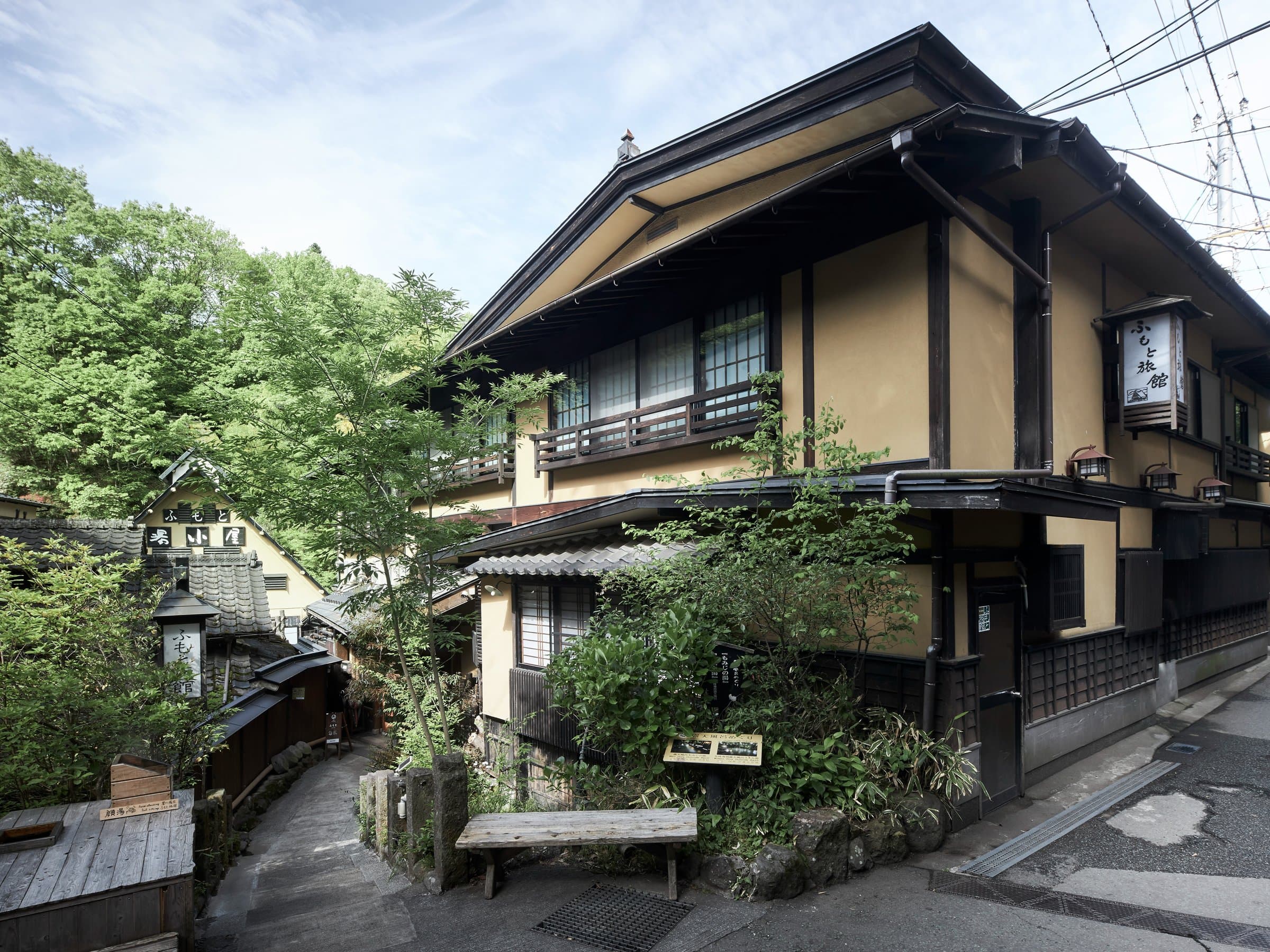
Kurokawa Onsen (黒川温泉) in Kumamoto Prefecture is a village of about 30 inns packed into a narrow forested gorge — no vending machines in sight, no chain restaurants, thatched-roof facades and clay walls right on the lane. Most of Kyushu's major hot spring towns have some degree of resort infrastructure around them. Kurokawa doesn't. It's dense and particular and worth going to alone.
The challenge: solo reservations are not popular here. Most Kurokawa inns operate on the traditional 2-person model and won't accept single bookings readily. [Fujiya](https://www.kurokawaonsen.or.jp/en/oyado/innInfo.php?intYKey=16) is one of the exceptions — specifically confirmed as a solo-accepting property by the Kurokawa Onsen region editorial [luxuryhotelkyoto.com, 2026-05-02]. It has a 4.5-tatami room — the traditional smallest unit of Japanese room measurement — that functions as a genuine single room, not a large room with a discount applied.
What makes it solo-optimal
Fujiya is in the center of the village. Walking to the other inns' baths is straightforward, which matters because Kurokawa's attraction for solo travelers is the *nyuto tegata* — a wooden bath-pass for 1,500 yen that grants entry to any three outdoor baths across the town's inns. Solo bath-hopping is the activity. You wander between properties in yukata, try a sulfur-scented cedar bath at one inn, a riverside stone bath at another. Each inn's water chemistry is slightly different; comparison is part of the experience.
Fujiya guests also have complimentary access to the larger communal baths at its affiliated sister property Oyado Noshiyu (five minutes on foot) — useful for solo travelers who want variety without additional cost.
The language barrier at Kurokawa is real. English-friendliness here rates 2–3 out of 5, lower than most properties in this guide. Google Translate voice mode handles check-in conversations reasonably well. The Kurokawa Onsen Association website ([kurokawaonsen.or.jp/en](https://www.kurokawaonsen.or.jp/en/oyado/innInfo.php?intYKey=16)) has English listings, which simplifies initial research.
Solo stats
| | | |---|---| | Solo supplement | Low (small room option avoids supplement; single pricing not separately confirmed) | | English-friendliness | 2–3/5 | | Onsen access | In-property baths + sister property access + nyuto tegata town pass (1,500 yen) | | Solo rate | ~22,000–27,500 yen/night with two meals [Kurokawa Onsen Association listing, 2026-05-02] (~$145–185 USD) | | Best booking method | Direct via kurokawaonsen.or.jp English listing, or Booking.com for initial confirmation |
---
5. Tsurunoyu Onsen, Nyuto Onsen, Akita — deep-forest milky baths for the truly off-grid solo stay
Nyuto Onsen (乳頭温泉郷) in Akita Prefecture sits deep in the mountains of Tohoku, a cluster of seven separate inn complexes spread through beech forest, each with its own spring source and water chemistry. No single English-language solo travel guide covers it thoroughly. That gap is itself useful information: this is where you go when the photogenic versions of ryokan travel feel too managed.
The water at [Tsurunoyu Onsen](https://tsurunoyu.com/en/) — the oldest and most celebrated inn in the cluster — is milky white from the sulfur content, and the main outdoor bath is an open-air stone pool surrounded by forest with no walls and no roof. The temperature drops sharply in October and plunges in January; neither deters solo regulars. Tsurunoyu was established in 1638, making it one of the oldest continuously operating ryokans in Japan [Tsurunoyu official site, 2026-05-02].
The *tegata* pass system mirrors Kurokawa's: a single pass gives access to the outdoor baths of all seven inn clusters in Nyuto, which means solo bath-hopping through a forested valley is the activity. You can spend a full day moving between the different water qualities — the iron-rich orange water at Ganiba Onsen, the milky-white at Tsurunoyu, the clear sodium spring at Kuroyu — without social obligation or schedule.
What makes it solo-optimal
The isolation is structural. Nyuto Onsen is an hour by bus from Tazawako Station (itself accessible by Shinkansen), and the inns close their gates to day visitors after a certain hour, leaving overnight guests in an undisturbed forest quiet that is genuinely difficult to replicate elsewhere. Solo travelers seeking the contemplative version of an onsen stay — rather than a picturesque one — should start here.
Caveat on solo booking: the inns here do not prominently advertise solo policies in English. Contact Tsurunoyu directly to confirm single-occupancy availability and supplement status before booking. The property receives international guests but English communication is limited; use the email template in this guide along with a DeepL-translated Japanese version.
Solo stats
| | | |---|---| | Solo supplement | Medium (not confirmed — contact directly) | | English-friendliness | 2/5 (limited; warm staff despite language gap; use translation tools) | | Onsen access | Multiple outdoor baths on-site + tegata pass for all 7 Nyuto cluster inns | | Solo rate | ~16,000–35,000 yen/night with two meals (estimated, unverified from official source — contact property directly) (~$105–230 USD est.) | | Best booking method | Direct inquiry via [tsurunoyu.com/en](https://tsurunoyu.com/en/) or Jalan with 1-person filter; book 3–4 months ahead for October–November |
---
6. Ginzanso, Ginzan Onsen, Yamagata — visually unmissable, but come prepared for the cost
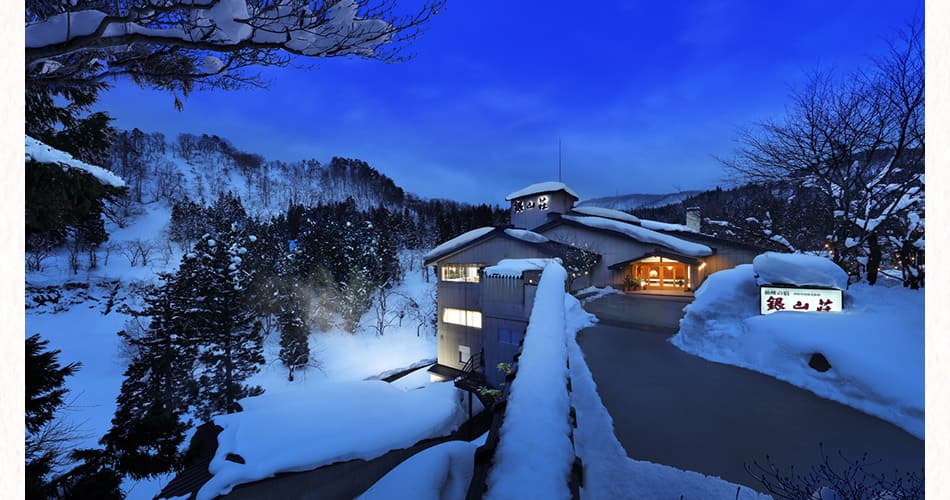
*A Taisho-era onsen town under snow — the visual solitude that draws solo travelers to Tohoku in winter — Photo by Chloe Evans on Unsplash*
I'm including [Ginzanso](https://www.ginzanso.jp/english/) and Ginzan Onsen with a specific caveat that no other English article has been honest about: solo travel here is expensive, and you should know that before you plan around it.
Ginzan Onsen (銀山温泉) in Yamagata is one of the most visually singular places in Japan — a narrow river gorge lined with Taisho-era wooden ryokan buildings, gas lanterns, and steam rising from the water, the whole scene buried under snow from December through March. It photographs like a film set because it has been: the visual aesthetic is often cited as an influence on Hayao Miyazaki's *Spirited Away*, though the claim is disputed (Dogo Onsen and Sekizenkan both hold competing claims to the association).
The problem for solo travelers: most Ginzan Onsen properties require payment for two people regardless of occupancy. Ginzanso's standard per-guest rate runs 19,800–23,100 yen, but solo travelers should budget for the full 2-person rate — approximately 39,600–46,200 yen per night [Ginzanso official website, KAYAK aggregator, 2026-05-02]. At current exchange rates, that's roughly $260–310 USD per night for one person. Winter and autumn foliage seasons push higher.
What makes it worth considering despite the cost
The visual experience of arriving here alone — walking the lantern-lit stone path in February with fresh snow on every surface — is genuinely difficult to replicate elsewhere. The solitude amplifies the atmosphere rather than diminishing it. Ginzanso has 46 rooms with shared gender-separated baths and some deluxe rooms with private attached baths. The shuttle from JR Oishida Station runs at set times (11:10, 13:40, 15:45 — advance booking required).
Properties here book out one year in advance for snow and autumn foliage seasons. If this is your target experience, plan accordingly.
Solo stats
| | | |---|---| | Solo supplement | High — effectively paying for 2 persons | | English-friendliness | 3/5 (English website; credit cards including Visa/Mastercard accepted) | | Onsen access | Shared indoor and outdoor baths; some deluxe rooms with private bath | | Solo rate | ~39,600–46,200 yen/night (paying double-occupancy equivalent) [Ginzanso official site, 2026-05-02] (~$260–310 USD) | | Best booking method | Direct via [ginzanso.jp/english](https://www.ginzanso.jp/english/); book 6–12 months ahead for peak season |
---
7. Wakamatsuya, Hijiori Onsen, Yamagata — no supplement, full stop
If the sole question is solo pricing fairness, [Wakamatsuya](https://hijiori.jp/en/) at Hijiori Onsen (肘折温泉) in Yamagata has the clearest answer: zero single supplement, year-round, including weekends and holidays. Solo guests pay the identical per-person rate as guests in group rooms. There are no exceptions in either direction.
Hijiori Onsen has a different history from the resort hot spring towns. This is a *toji* (湯治) destination — the traditional Japanese practice of extended therapeutic stays where guests would rent a room for a week or more, cook their own simple meals from a shared kitchen, and soak daily for healing purposes. Solo arrival was historically the norm here, not the exception. The cultural memory of solo therapeutic travel is embedded in how the town operates.
The spring is alkaline and slightly milky — a different texture from the cleaner mineral waters of Kinosaki or Hakone. The town sits in a deep valley in the Mogami district, remote enough that it sees minimal international visitors. For solo travelers seeking the introspective, undistracted version of a hot spring stay, this region delivers that without effort. The quietness is structural, not seasonal.
The trade-off is access and language. Hijiori Onsen requires Shinkansen to Shinjo and then local bus or taxi. English support at the inn is limited — use Rakuten Travel or Jalan for booking, and the email template in this guide with a DeepL Japanese translation for direct inquiries.
Price is estimated at 15,000–25,000 yen per night with meals — consistent with Tohoku inn pricing at this tier, though the figure is unverified from an official source and should be confirmed directly with the property [realgaijin.substack.com citing property policy, 2026-05-02; ~$100–165 USD estimated].
Solo stats
| | | |---|---| | Solo supplement | None — explicitly zero, all seasons | | English-friendliness | 2/5 (limited; use Rakuten Travel or Google Translate for inquiry) | | Onsen access | Shared communal baths (alkaline toji spring) | | Solo rate | ~15,000–25,000 yen/night with meals (estimated, unverified — contact directly) (~$100–165 USD est.) | | Best booking method | Rakuten Travel (1-person filter) or direct inquiry via [hijiori.jp/en](https://hijiori.jp/en/) |
---
8. HOSHINOYA Tokyo — solo ryokan without leaving the city
[HOSHINOYA Tokyo](https://hoshinoresorts.com/en/hotels/hoshinoyatokyo/) requires a slight redefinition of what "ryokan" means — it's a vertical urban property in Otemachi, central Tokyo, with a lobby on the 17th floor and traditional ryokan rooms above it. But the tatami floors, in-room yukata, kaiseki service, and below-ground natural hot spring are genuine. It is a ryokan that happens to be in a skyscraper.
Hoshino Resorts launched a dedicated solo travel program called "HOSHINOYA Rewarding Solo Trip" — including a Tokyo "Mindful Solo Onsen Stay" package available from April through December 2025. The official press release states: "HOSHINOYA believes solo travelers, free from the need to consider companions or time constraints, can enjoy a truly personal and fulfilling trip." [Hoshino Resorts official press release, 2025-05-02].
Tip
**2026 verification note**: The Mindful Solo Onsen Stay package ran April–December 2025. As of the publication date of this guide (May 2026), it is not confirmed whether an equivalent 2026 solo package has been announced. Check [hoshinoresorts.com](https://hoshinoresorts.com/en/hotels/hoshinoyatokyo/) directly for current solo program availability before booking. The room-only rate (71,740 yen/night) remains available year-round as a baseline [verified hoshinoresorts.com, 2026-05-02].
What makes it solo-optimal
The solo package (87,470 yen per night [verified Hoshino Resorts press release, 2026-05-02]; ~$580 USD) includes breakfast and a morning *kenjutsu* (swordsmanship) practice session — a cultural activity that works naturally alone and would be awkward to do as a couple. The hot spring beneath the building is a natural ancient seawater mineral spring (Otemachi Onsen) — geologically unusual for central Tokyo. The rooftop open-air bath has Tokyo skyline views.
For solo travelers who are already spending time in Tokyo and want one night of full ryokan experience without a domestic flight or 2-hour train ride, this is the most logistically effortless option on this list. If this is your first ryokan stay, our [first-time ryokan guide](/blog/first-time-ryokan-guide) covers what to expect from check-in through checkout.
Solo stats
| | | |---|---| | Solo supplement | None — solo package priced as single-occupancy per-person rate | | English-friendliness | 5/5 (international luxury brand standard) | | Onsen access | Communal cave-style indoor + open-air rooftop bath (natural onsen) | | Solo rate | 87,470 yen/night (2025 solo package, meals + activity) or 71,740 yen room-only [verified hoshinoresorts.com, 2026-05-02] (~$475–580 USD) — verify 2026 package status directly | | Best booking method | Direct via [hoshinoresorts.com](https://hoshinoresorts.com/en/hotels/hoshinoyatokyo/) English website |
---
Other regions worth knowing about
The eight entries above were chosen for verified solo policies, research depth, and regional spread. Two major ryokan destinations — Kyoto and Hakone — deserve a note, even though specific solo-confirmed properties there require more direct research than I can verify to the standard applied above.
Kyoto has a high concentration of small machiya-style townhouse inns with 6–10 rooms. The compact room sizes and in-room kaiseki service make many of them structurally suitable for solo stays; the challenge is that luxury Kyoto properties often don't publish solo-rate plans publicly. Search Ikyu with the solo filter, or contact properties directly using the email template earlier in this guide. Rates in Kyoto typically run 28,000–45,000 yen per night with meals at mid-range, higher at luxury properties.
Hakone has the highest density of private open-air baths (*kashikiri rotenburo*) in Japan — a genuine solo advantage, since you can reserve a private outdoor bath without needing a companion. The two-hour Romancecar Limited Express from Shinjuku makes it the cleanest Tokyo add-on for solo ryokan beginners. Search [luxuryhotelkyoto.com/hakone](https://luxuryhotelkyoto.com/hakone/top5-rankings/hotels-ryokans-for-solo-travelers/) for a list of Hakone solo-friendly properties with current reviews [luxuryhotelkyoto.com, 2026-05-02]. Solo rates run approximately 35,000–65,000 yen with meals at mid-to-luxury properties.
Nikko / Kinugawa (Tochigi Prefecture) is worth mentioning for first-time solo ryokan travelers. Two hours from Tokyo Asakusa on the Tobu Limited Express, English-friendliness is higher here than at Tohoku properties due to proximity to the international tourist circuit. Nikko's UNESCO World Heritage shrines give the solo day full cultural weight before the ryokan evening begins.
---
Region-by-region solo friendliness score: at a glance
*Best solo-friendly ryokan in Japan by region — solo supplement, English score, onsen type, and rate floor*
| Region | Property | Solo Supplement | English Score | Onsen Type | Solo Rate Floor | Best Season | |---|---|---|---|---|---|---| | Gunma (Shima Onsen) | Kashiwaya | None | 5/5 | Shared natural spring | 22,000 yen | Year-round | | Kinosaki, Kansai | Tsuchiya | None | 4/5 | Private (2 baths) + 7 town baths | ~11,000 yen (no meals) | Year-round; crab season (Nov–Mar) | | Okuhida / Takayama | Mozumo | Unconfirmed | 3/5 | Private rotenburo per room | ~47,000 yen | Autumn foliage; winter | | Kurokawa, Kyushu | Fujiya | Low | 2–3/5 | Shared + town tegata pass | 22,000 yen | Spring; autumn | | Nyuto Onsen, Tohoku | Tsurunoyu | Medium (unconfirmed) | 2/5 | Multiple outdoor baths + tegata pass | ~16,000 yen est. | Autumn; winter | | Ginzan Onsen, Tohoku | Ginzanso | High (pay 2x) | 3/5 | Shared indoor/outdoor | ~39,600 yen | Winter (costly) | | Hijiori Onsen, Tohoku | Wakamatsuya | None (all seasons) | 2/5 | Shared toji spring | ~15,000 yen est. | Autumn; winter | | Tokyo (central) | HOSHINOYA Tokyo | None | 5/5 | Communal + rooftop | 71,740 yen | Year-round |
Highest overall solo-friendliness: Kinosaki Onsen (town infrastructure built for solo movement) and Kashiwaya/Shima Onsen (explicit zero-supplement policy, English support, dedicated solo rooms).
Best solo onsen experience: Mozumo (private rotenburo per room) and Nyuto Onsen/Tsurunoyu (tegata pass through seven forest bath clusters).
Most budget-accessible: Kinosaki Tsuchiya (accommodation-only plan, ~11,000 yen); Wakamatsuya/Hijiori Onsen (zero supplement, mid-range pricing).
Language preparation required: Kurokawa, Ginzan, Hijiori, Nyuto — bring Google Translate for conversation, DeepL for written inquiries.
---
How to book a ryokan as a solo traveler: strategy that actually works
Weekday vs. weekend: the most impactful variable
The single most effective thing a solo traveler can do is choose Sunday-through-Thursday dates. Weekend demand at ryokans comes predominantly from couples and domestic travel groups — the bookings that fill rooms to double occupancy and make solo requests less financially attractive to the property. On a Tuesday in February, a room that would otherwise sit empty is genuinely better filled by one person than not filled at all. That changes the negotiation.
Japanese national holiday periods — Golden Week (late April to early May), Obon (mid-August), Silver Week (mid-September), and New Year (late December to early January) — are functionally closed to solo rate negotiation. Expect full double-occupancy pricing or outright unavailability.
Direct booking vs. OTA: what solo travelers should know
International OTAs (Booking.com, Expedia) are useful for initial research — English reviews, cancellation policy clarity, and photos. They're unreliable for solo pricing because the single supplement often doesn't appear until the payment stage.
[Jalan](https://www.jalan.net) and Rakuten Travel are Japan's domestic market leaders and have explicit 1-person filters. A property showing "unavailable for 1 guest" on Jalan during your target dates is telling you something real and useful. Ikyu ([ikyu.com/en-us](https://www.ikyu.com/en-us/)) focuses on premium properties and has a dedicated solo filter for onsen searches.
For the best outcome — particularly at properties that show unavailable for 1 person on OTAs — direct email contact is the highest-yield approach. Japanese innkeepers respond well to polite, specific English inquiries. The template below is structured to maximize positive response rate.
[CTA: See All Ryokans on Japan Ryokan Guide — Browse All Ryokans](/ryokans)
Tip
Ask whether the property has a "single plan" (*shinguru puran*) rather than asking them to reduce the standard rate. Framing the inquiry as "do you offer a product designed for solo guests?" is culturally better-received than "can I pay less?" — and it's more likely to surface plans that aren't visible on OTAs.
---
Direct-booking email template for solo ryokan guests (copy and use)
Tip
**Note:** The email template below is written in English and is intended to be sent directly to Japanese ryokans. Most properties in this guide have some degree of English communication capability, and a polite English inquiry will be understood. For properties with limited English support (Kurokawa, Ginzan Onsen, Hijiori Onsen, Nyuto Onsen), include a Japanese translation alongside the English — instructions follow the template.
``` Subject: Enquiry — Solo Guest Accommodation [Your Dates]
Dear [Ryokan Name] Team,
My name is [Your Name]. I am planning to visit [Region/Town] and would very much like to stay at your property.
I will be traveling alone and am enquiring about availability for a solo guest for the following dates:
Check-in: [Date] Check-out: [Date] Number of guests: 1 person
I would appreciate knowing: 1. Whether you have availability for a single guest on these dates 2. Whether you offer a single-guest rate plan (shinguru puran), and if so, the per-night rate including meals 3. Whether a single supplement applies, and its amount
Regarding my stay: - Dietary notes: [Any allergies or preferences; e.g., "no shellfish" or "vegetarian"] - Onsen preference: [Private bath / Shared communal bath / Both] - I am happy to dine in-room if that is the standard format
I look forward to hearing from you and hope to experience your hospitality.
With kind regards, [Your Name] [Your nationality / country] [Email address] [Phone number, optional] ```
Tip
For properties with limited English support (Kurokawa, Ginzan Onsen, Hijiori Onsen, Nyuto Onsen), paste this email into [DeepL](https://www.deepl.com) and send both the English and Japanese versions in the same message. Response rates increase significantly. DeepL handles ryokan-specific vocabulary more accurately than Google Translate for written correspondence.
---
Eating kaiseki alone: why it is better than you think
*Japanese ceramic bowls on a lacquer tray — the quiet completeness of a meal set for one — Photo by kofookoo.de on Unsplash*
The anxiety about dining alone at a ryokan is often more vivid in the planning stage than in the actual room. What you picture is conspicuous solitude at a table for two. What happens is different.
At mid-range and above ryokans — essentially everywhere on this list — dinner is served in-room. Your kaiseki arrives in your room on a lacquer tray while you're seated at the low table in yukata. The attendant explains each dish, lights the warming burner under the clay pot, and leaves. There is no shared dining room, no adjacent couple whose conversation you're aware of, no ambient awkwardness. It's a private meal in a room that belongs entirely to you for the night.
The kaiseki itself, typically twelve to fifteen small courses over ninety minutes, is structurally suited to solitary attention. Each course represents a specific technique — simmered, raw, grilled, steamed, vinegared — applied to one seasonal ingredient. There's a conversation between the cook and the diner embedded in every plate, and you can follow it completely when you're not also managing a conversation of your own.
Bring a small notebook. Writing during kaiseki is socially acceptable at a ryokan in a way it isn't at a Western fine dining restaurant. A few sentences per course — what the dish was, what you noticed, one detail about the vessel — gives the meal a different quality of attention.
For properties that do use a shared dining hall (typically budget-tier): arrive at opening time, usually 6pm, and tell the attending staff you are solo. They will almost always seat you near a window or in a position that feels intentional rather than incidental. Ordering a small carafe of local sake is entirely normal and often opens a brief, pleasant exchange about the region's rice or spring water.
---
The solo onsen advantage: why you should not wait for a partner
The common assumption that the onsen experience requires a companion is almost the opposite of the historical reality. Shared-gender bathing (*konyoku*) is rare at modern ryokans — in practice, the gender-separated large communal bath (*otoko-yu* / *onna-yu*) is where most guests spend their time. Whether you arrive alone or with a partner makes no observable difference to anyone around you.
What solo travel does change: the timing is entirely yours. The communal bath at 5:30am on a Wednesday is empty. That window — twenty minutes before the other early-risers, no ambient sound except the water, the wooden ceiling absorbing the steam — is the meditative experience the cultural context promises. Come at 8pm on Saturday and it's busier, more social, entirely different in character. Solo travel gives you the first version.
The private bath reservation (*kashikiri buro*) should be treated as a logistical priority, not an afterthought. Book your 50-minute slot at check-in — slots fill by mid-afternoon at popular properties. A private outdoor bath in November, with the temperature around 6°C outside and the water at 42°C, is one of those experiences that makes the pricing feel beside the point.
Standard onsen etiquette is unchanged by solo arrival: wash thoroughly at the shower station before entering the bath, no towels in the water, no photographs in any bath area, quiet is the default register.
One additional step for solo travelers with tattoos: screen properties before booking, as some traditional ryokans still maintain no-tattoo policies for communal baths. Our guide to [tattoo-friendly ryokans in Japan](/blog/tattoo-friendly-ryokans) covers which properties have removed restrictions and what the private bath alternative looks like.
---
Realistic solo ryokan budget: what one night actually costs
Additional costs to budget for any solo stay, regardless of tier:
- Onsen tax (*nyuto-zei*): 150–500 yen per person per night at most hot spring destinations — paid at checkout, unavoidable - Accommodation tax: 1,000–4,000 yen per person per night in some cities and prefectures (Tokyo and Kyoto both apply this) - Alcohol: Never included — sake, local beer, and *shochu* are ordered separately and charged at checkout. A carafe of house sake typically runs 700–1,500 yen - Private bath sessions: 0 yen at Yunoshimakan and similar; up to 8,800 yen for 70 minutes at luxury Kinosaki properties like Nishimuraya Honkan [selected-ryokan.com, 2026-05-02] - Transportation to remote onsen towns: factor Shinkansen or limited express fares for Tohoku properties; Ginzan Onsen from Tokyo is approximately 8,000–12,000 yen one-way by Shinkansen + local transfer
For comparison on the couple side, our [best ryokans for couples](/blog/best-ryokans-couples) covers the same price tiers from a two-person perspective.
---
*A Japanese room's circular window overlooking the garden — the stillness that ends a solo stay — Photo by Sunao Noguchi on Unsplash*
Find your solo ryokan
Every property listed on japanryokanguide.com has been verified to accept solo bookings. The best ryokan for solo travelers in Japan is not a compromise pick — it is the format in which omotenashi operates at its most precise.
[CTA: Browse Solo-Friendly Ryokans — /ryokans?filter=solo-friendly]
[CTA: Browse All Ryokans — /ryokans]
---
Frequently asked questions
Do ryokans accept solo travelers?
Many do, though not all. The ryokan industry has historically preferred two-person bookings because the per-person pricing model — which bundles accommodation with meals — means a solo guest generates half the revenue for a full room. However, a growing number of properties have introduced dedicated single rooms or solo-rate plans, particularly since 2020. The properties in this guide have all been verified to accept solo bookings.
How much extra do solo travelers pay at a ryokan (single supplement)?
It varies widely. At properties with dedicated single rooms (Kashiwaya in Shima Onsen, Tsuchiya in Kinosaki), there is no supplement — you pay the standard per-person rate. At properties with no solo-specific room, expect a supplement of 5,000–10,000 yen above the per-person rate on weekdays, or the full second-person rate on weekends. At Ginzan Onsen properties, solo travelers typically pay for two persons regardless of occupancy — effectively a 100% supplement. Weekday stays in off-peak seasons (January–March, June) significantly reduce or eliminate supplements at mid-range properties.
Can I eat kaiseki dinner alone at a ryokan?
Yes — and at most mid-range and above properties, this is structurally a non-issue because kaiseki is served in your room. You're not in a restaurant. The attendant explains the dishes, lights your tableside burner, and leaves. Solo in-room kaiseki is one of the better versions of the meal: you can pay full attention to each course without managing a conversation simultaneously.
Which ryokan regions in Japan are most solo-friendly?
Kinosaki Onsen (Hyogo) and Shima Onsen / Gunma are the most structurally solo-friendly — both have properties with zero-supplement solo rooms and strong English support. Takayama and its surrounding Okuhida area have high solo acceptance rates. Nyuto Onsen (Tohoku) is exceptional for the bath-hopping experience, though English support is limited. Kurokawa Onsen (Kyushu) has specific solo-accepting inns but requires more research. Ginzan Onsen is visually exceptional but costly for solo travelers.
How do I book a ryokan as a solo traveler without a Japanese-speaking travel agent?
Use the direct-booking email template in this guide. For platform searches, Rakuten Travel and Jalan (Japanese domestic OTAs) have 1-person filters that show accurate availability. Ikyu ([ikyu.com/en-us](https://www.ikyu.com/en-us/)) has an English version with a solo filter for onsen properties. [Japanese Guest Houses](https://www.japaneseguesthouses.com/) is an English-language concierge service that can negotiate solo bookings on your behalf for harder-to-reach rural properties.
Are ryokans solo-friendly for female travelers?
Japan ranks consistently among the safest solo travel destinations for female travelers. Ryokans specifically pose no heightened concern: rooms lock, gender-separated baths are standard, and staff are present throughout the property. The *ohitori-sama* travel movement in Japan skews significantly female — according to one Japan tour operator, 72% of their solo Japan clients in 2024 were women [Tourist Japan, 2024 — note: one operator's data, not a national statistic]. Properties with high English-friendliness (Kashiwaya, Tsuchiya Kinosaki, HOSHINOYA Tokyo) have the most international female solo traveler experience and are a low-friction starting point.
What happens if I have a tattoo and want to book a ryokan as a solo guest?
Tattoo policies vary by property and have been relaxing since 2020, particularly at properties that have added private baths. Ask directly before booking — specifically whether your tattoo would restrict access to the shared communal bath, and whether private bath options are available. The complete list of properties and their current policies is in our [tattoo-friendly ryokans guide](/blog/tattoo-friendly-ryokans).
This guide covers the best solo ryokan options in Japan across five regions. Whether your priority is zero supplement, private rotenburo, or simply a town built for solo movement, the eight properties above give you a verified starting point for planning your solo ryokan stay in Japan.
--- title: "日本獨自旅行旅館推薦(2026年版):8家真正歡迎單人入住的旅館" excerpt: "精選8家經過核實的獨旅友好型旅館,涵蓋單人附加費實況、旅館直接預訂電子郵件範本及各地區單人友好度評分,助您規劃日本一個人的旅行。" lang: "zh-tw" ---
*東京濱離宮附近旅館的和室——獨自住宿才有的沉靜氛圍 — Photo by Yosuke Ota on Unsplash*
在日本搜尋單人旅行最佳旅館時,多數人最先想知道的是:旅館是否接受單人預訂?這個顧慮完全合理——旅館業界長期以來的作法,要麼是禮貌婉拒,要麼是加收附加費。兩種情況我都遇過,體驗確實大不相同。
不過,許多攻略沒有說清楚的是另一面:當一家旅館真正接受你以單人身份入住時,那種體驗與兩人入住截然不同。女將(おかみ,旅館女主人)只需讀懂一位客人。為你端上懷石料理的服務人員不必分散注意力。清晨5點半的露天浴池只屬於你一人。「おもてなし」(款待之道,以預見需求為核心的日式待客精神)落在一個人身上,呈現出為兩位客人服務時難以企及的完整與精準。
本指南並非在講如何在將就中取得最好結果。獨自旅行是旅館體驗的一種正當形式,在某些維度上甚至是最佳選擇。關鍵在於:找到真正理解這一點的旅館,以及如何在不被加價的情況下完成預訂。
以下內容涵蓋:經過核實的全國8家單人友好型旅館、單人附加費的真實數字、旅館直接預訂電子郵件範本,以及各地區比較表。所有旅館均已確認在2025至2026年接受單人預訂。價格資訊截至2026年5月。
---
獨自旅行,為何反而是體驗旅館的最佳方式
一般的說法將旅館獨旅描述為一種變通——找不到旅伴之人的妥協之選。而實際體驗完全顛覆了這種認知。
おもてなし(款待之道)本質上是指向個人的。它描述的是在你開口之前便預知你所需的待客精神——而這種精神在面對單一客人時發揮得最為精準。當服務人員只服務一位客人時,他們讀取的是一組訊號:你用餐的節奏,你是否兩次望向窗外,你的酒杯還剩多少。服務變得專屬,而這種專屬感在同時照顧兩位需求和節奏各不相同的客人時是無法實現的。
溫泉泡浴本是一種冥想性的實踐。這並非西方健康行銷的說辭,而是其文化起源的本來意義。お風呂(泡浴)的儀式比雙人旅行早了幾百年;僧侶、香客和獨行商人單獨泡浴是理所當然的事。清晨6點,一處為你專屬預留的貸切(かしきり,包場)浴池,沒有閒聊,沒有為同伴表演放鬆的姿態,這才是這種文化最原初的形態。
獨自享用的懷石料理需要全神貫注。十二至十五道小菜在九十分鐘內依序呈上,每道菜都圍繞一種當季食材、一種烹調技法、一件專門搭配的器皿而展開。你沒有任何社交上必須分心的理由。你可以用二十秒時間端詳一片柚子皮,不必顧慮有人在等你回到對話中。
時間完全由你安排。清晨5點泡溫泉,7點半用早餐,盡可能晚地退房。那種通常圍繞兩人行程展開的協商,徹底消失了。
Tip
旅館工作人員常常將獨自旅行的外國客人列為最喜歡的訪客——好奇心是雙向的。提前準備一個關於旅館歷史或當地溫泉水質的問題,整個氛圍會隨之轉變。哪怕是透過翻譯軟體進行的簡短交流,也會得到熱情的回應。
---
旅館為何歷來對單人旅客有所保留(以及現狀的變化)
這種保留源於經濟邏輯,而非態度問題。
[日本旅館協會](https://www.ryokan.or.jp/past/english/prices/index.html)所確立的定價模式以每人每晚為計費單位,涵蓋住宿、多道懷石晚餐、早餐以及全部溫泉使用權。一間雙人房若住滿兩人,產生兩份全額費用。同一間房若只住一位單人旅客,收入僅為一份,而旅館承擔的營運成本不變:為一人備餐、打掃客房、安排專職人員辦理入住退房,以及占用一個浴池名額。
對於以微薄利潤經營十二間客房的小型鄉村旅館而言,這一差距並不微不足道。尤其在週末情侶和團體旅客需求最旺盛的時段,單人預訂在經濟上幾乎是虧損的。這也解釋了為何傳統旅館對單人詢問的預設回應,要麼是禮貌拒絕,要麼是在標準每人價格基礎上加收5,000至10,000日元(約NT$1,100–2,200元)的單人附加費,有時甚至直接按兩人收費。
2020年以來切實發生的變化:日本社會本身發生了轉變。「おひとり様(おひとりさま,一人出行)」文化——單人餐飲、單人旅行、單人泡溫泉——已足夠主流,以至於日本知名出版社文藝春秋如今每年推出介紹逾300處單人友好溫泉地的專題指南(2026年版《CREA Due》收錄超過300家旅館 [realgaijin.substack.com, 2026年5月2日核實])。星野度假村於2025年面向三處旅館推出品牌化「HOSHINOYA 獨旅奢享」項目。[日本觀光廳自2017年起鼓勵旅館將餐費與住宿費分開計算](https://www.statista.com/statistics/624452/japan-ryokan-hotel-numbers/),這一結構性變化透過允許純住宿方案,降低了單人旅行的經濟門檻。
赴日獨旅人數也在同步增長。據一家日本專線旅行社披露,2024年其日本客戶中有35%為單人旅行者,較前一年增長12%(此為單家業者數據,非全國統計數字)。旅遊作家兼日本獨旅評論者在realgaijin.substack.com於2026年發表的一篇關於單人溫泉熱潮的文章中寫道:「這個行業問的問題已不再是『如何接待單人旅客』,而是『如何為他們進行優化』。」
Tip
11月至3月期間的工作日,單人附加費幾乎都有協商空間。直接致電旅館——或使用本指南後文的電郵範本——比透過任何訂房平台預訂單人行程效果更好。黃金週(4月底至5月初)、お盆(8月中旬)、銀週(9月中旬)和新年(12月底至1月初)等日本假期實際上沒有價格談判空間。請避開這些時段,或做好按兩人價格支付的預算準備。
---
預訂前如何辨識真正的單人友好型旅館
一家僅僅容忍單人旅客的旅館,與真正為單人旅客設計服務的旅館,其差異在接觸前便可察覺。
在旅館的日文頁面上查找「一人様歓迎(いちにんさまかんげい,歡迎單人入住)」字樣——出現這種表述是明確的積極訊號,未出現則值得注意。許多在面向海外的英文頁面上接受單人旅客的旅館,未必在英文頁面標明此點,但日文頁面通常會有說明。
各訂房平台的處理方式存在顯著差異:
- [Jalan(じゃらん)](https://www.jalan.net)和樂天旅遊提供明確的單人入住篩選器,可直接顯示真實的單人價格方案。若某旅館在這些平台特定日期內顯示「單人不可預訂」,這是準確且有價值的資訊。 - Booking.com和Expedia的搜尋結果不區分每人價格與每間客房價格——單人附加費通常要到結帳時才會顯示。這些平台適合初步調研和查閱英文評價,不適合用於最終價格比較。 - 一休.com([英文版](https://www.ikyu.com/en-us/))在其溫泉搜尋中設有專屬單人篩選器,且專注於經認證的優質旅館。
客房面積是個有用的參考指標。列出6至10疊(約10至17平方公尺)客房的旅館,更有可能提供真正適合單人使用的空間。標注為「16疊附庭院露台」的套房是為兩人設計的;4.5疊的和室則不然。
警示訊號:價格頁面注明「最少2人入住」、未顯示單人價格,或客房清單全為大型套房。若你願意直接致電洽詢,這些不一定是一票否決的因素,但它們表明該旅館尚未將單人旅行納入其預設服務體系。
---
全國8家單人友好型旅館:已核實、有評分、依地區分類
以下8家旅館是根據已確認的單人價格可用性、英語溝通能力、2025至2026年單人旅客評價與政策,以及在日本主要旅館地區的地理分布綜合篩選的。
各條目按四個維度評分: - 單人附加費:無 / 低 / 中 / 高 - 英語友好度:1至5分 - 溫泉使用方式:包場 / 共享 / 兩者均有 - 用餐形式:客房送餐 / 餐廳用餐 / 兩者均有
---
1. 四萬溫泉 柏屋旅館(群馬縣)——單人友好政策的標竿
*帶障子格窗的傳統和室——多數單人友好型旅館單人客房所採用的標準格式 — Photo by Yosuke Ota on Unsplash*
[四萬溫泉 柏屋旅館(Shima Onsen Kashiwaya Ryokan)](https://www.kashiwaya.org/e/)是將單人旅行融入旅館本身定位的最典型案例,而非事後補充的應對措施。其官方雜誌寫道:「獨自旅行真的有其獨特的魅力。你可以按自己的節奏做事,不必擔心打擾他人。」這不是訂房平台的行銷文案——這是旅館自身的編輯立場。
旅館在英文網站上明確推廣單人國際旅行,這種程度的主動性在同類旅館中至今仍屬罕見。旅館還專門設計了單人入住客房,從根本上消除了為閒置空間付費的問題。群馬縣的四萬溫泉是日本百大名湯之一,距東京約2.5至3小時。泉水入口乾淨,含適度硫磺,先在皮膚上感受到,再聞到氣味。旅館緊鄰河邊,較安靜的客房裡始終可以聽到流水聲。
為何適合單人旅行
旅館設有專屬單人客房,這在日本最優質的單人旅館中屬於罕見配置。單人旅客按每人價格付費,無附加費。晚餐為上州牛懷石料理,以客房送餐形式提供,無需面對空盪盪的餐桌。官網設有英文預訂系統且全程提供英文服務,各環節無語言障礙。旅館還提供往返東京的巴士服務,額外收費5,200日元——對不想自行處理換乘的單人旅客很實用。
局限性:單人客房無專屬客房溫泉。共用的天然溫泉浴池品質上乘,但如果包場露天溫泉是你的首選,則需另擇其他旅館,或升級至雙人HANA或KAME客房。
單人旅行資料
| | | |---|---| | 單人附加費 | 無(專屬單人客房;僅收每人價格) | | 英語友好度 | 5/5 | | 溫泉使用方式 | 共享天然溫泉(僅較大客房設有專屬客房溫泉) | | 單人價格 | 每晚22,000至28,000日元(含兩餐)[kashiwaya.org 2026年5月2日核實](約NT$4,800–6,200元) | | 最佳預訂方式 | 透過英文官網直接預訂;線上預訂系統可用 |
---
2. 土屋(回音 土屋別館),城崎溫泉(兵庫縣)——專為一人而建的客房
[土屋(Tsuchiya)](https://visitkinosaki.com/stay/tsuchiya/)在城崎溫泉做到了大多數旅館不願費心去做的事:專門設計了一間最多入住一人的「KIRI客房」。這不是提供折扣的雙人房,而是從一開始便為單人使用設計的客房。
兵庫縣的城崎溫泉(きのさきおんせん)無論你選擇哪家旅館,都是日本結構上最適合單人旅行的目的地之一。小鎮的「外湯(そとゆ,外部浴池)」系統意味著旅館提供的浴衣就是你進入柳樹河畔七處公共浴室的通行證。獨自穿梭於各處浴池之間——穿著浴衣、踩著木屐——正是這座小鎮的精髓。文學淵源為其增添了另一層質感:作家志賀直哉於1913年因火車事故在此療養,住了數月,寫下《在城崎》(城の崎にて)——日本近代散文的代表作之一。獨自前來,在歷史上本就是正確的選擇。
為何適合單人旅行
KIRI客房單人方案(方案編號163)為純住宿方案——土屋此方案不提供餐食,意味著你需在城崎的餐廳或路邊攤用餐。對許多單人旅客來說,這實際上更為理想:小鎮供應優質但馬牛肉、當季螃蟹,以及主街上現烤的串燒。旅館內兩處包場溫泉浴池可免費使用,無需預約(上午7時至10時,下午3時至晚上10時30分)。根據Visit Kinosaki官網資訊,方案含可暢遊7處公共浴室的「湯漫步通行證」。
純住宿的結構使其價格成為本指南中最低的選項之一。
單人旅行資料
| | | |---|---| | 單人附加費 | 無(客房專為單人設計) | | 英語友好度 | 4/5(Visit Kinosaki旅遊網站提供完善英文支援) | | 溫泉使用方式 | 旅館內包場浴池2處 + 7處公共浴室(含湯漫步通行證) | | 單人價格 | 每晚約11,000至20,000日元(純住宿)[Momondo/KAYAK彙總, 2026年5月2日](約NT$2,400–4,400元) | | 最佳預訂方式 | 透過[visitkinosaki.com](https://visitkinosaki.com/stay/tsuchiya/plan/?mode=plan_detail&PlanNo=163)直接預訂,或使用Jalan單人篩選器 |
---
3. 奧飛驒溫泉鄉 Mozumo(高山地區)——私享露天溫泉,完全靜謐
*傳統日式街道的黃昏時分——穿浴衣踩木屐獨行的靜謐自由 — Photo by Chloé Lefleur on Unsplash*
[Mozumo(もずも)](https://www.mozumo.com/lang/eng/)位於奧飛驒的平湯溫泉,坐落於高山與上高地之間的山谷中,被認定為高山地區最適合單人旅行的旅館 [luxuryhotelkyoto.com, 2026年5月2日]。旅館成人專屬(20歲以上),規模小巧,對「安靜時光」的承諾不止於口頭,而是內嵌於設計之中。
旅館最顯著的特色是溫泉。Mozumo的每間客房均設有私人室外天然溫泉浴池,泉水從200公尺外的源頭直接引入——不循環,不加熱,天然掛け流し(源泉流放)。水質為重碳酸泉,觸感柔和。夜晚,浴池周圍的森林陷入完全的黑暗與寂靜之中。
旅館的地理位置使高山成為便利的大本營。前往上高地(30分鐘)、乗鞍天空線(60分鐘)和新穗高纜車(30分鐘)均無需自駕。高山的三町筋歷史街區——清酒酒莊、漆器工坊、晨市——乘巴士從平湯總站出發約35分鐘即達。旅館提供從總站(8分鐘路程)出發的免費接送服務,消除了獨自抵達時的行程摩擦。
為何適合單人旅行
對單人旅客而言,私人客房露天溫泉浴池是核心優勢。無需協商泡浴時間,無需預約50分鐘時段。打開客房的門,露天浴池隨時可用,任何時間皆可入浴。這是日本最完整結構化的單人溫泉體驗。
重要提示:Mozumo官網確認每間客房可容納2人,但未明確說明單人入住的附加費政策。預訂前請直接與旅館確認單人價格。成人專屬政策至少保證你不會與家庭旅客共享浴場氛圍。
單人旅行資料
| | | |---|---| | 單人附加費 | 未確認——請直接聯繫核實 | | 英語友好度 | 3/5(提供英文網站和預訂;電話支援有限) | | 溫泉使用方式 | 每間客房設私人室外露天溫泉浴池 | | 單人價格 | 每晚約47,000至52,000日元(含兩餐)[KAYAK近期訂房資料, 2026年5月2日](約NT$10,300–11,400元) | | 最佳預訂方式 | 透過[mozumo.com](https://www.mozumo.com/lang/eng/)英文表單發送詢問電郵;先確認單人政策 |
---
4. 藤屋,黑川溫泉(九州熊本縣)——合適的客房在合適的村落
*城崎·兵庫縣的包場溫泉——日本溫泉室的靜水與木造建築 — Photo by Roméo A. on Unsplash*
熊本縣的黑川溫泉(くろかわおんせん)是一個約有30家旅館擠在狹窄山谷之中的村落——沒有自動販賣機,沒有連鎖餐廳,茅草屋頂與泥土外牆就直面著小道。九州多數主要溫泉地都有不同程度的度假設施,而黑川沒有。它密實而獨特,值得獨自前往探訪。
挑戰在於:此處並不歡迎單人預訂。黑川多數旅館按傳統2人制運營,不輕易接受單人預訂。[藤屋(Fujiya)](https://www.kurokawaonsen.or.jp/en/oyado/innInfo.php?intYKey=16)是例外之一——經黑川溫泉地區編輯調研確認為接受單人入住的旅館 [luxuryhotelkyoto.com, 2026年5月2日]。旅館設有4.5疊客房——日本客房面積的傳統最小單位——真正作為單人間使用,而非大房打折。
為何適合單人旅行
藤屋位於村落中心。步行前往其他旅館的浴池輕而易舉,這一點至關重要——黑川對單人旅客的吸引力在於「入湯手形(にゅうとうてがた)」——一枚1,500日元的木製溫泉通行證,可入選三處各旅館的室外浴池。獨自泡湯漫遊才是這裡的主要活動。穿著浴衣在各旅館之間穿行,在一家體驗散發硫磺氣息的杉木浴池,在另一家體驗河邊石組浴池。每家旅館的泉質略有不同;比較本身就是體驗的一部分。
藤屋住客還可免費使用提攜姊妹旅館「お宿のし湯」(步行5分鐘)的大型公共浴池——對希望以零額外費用增加泡湯種類的單人旅客很有價值。
黑川的語言障礙是真實存在的。英語友好度約為5分中的2至3分,低於本指南多數旅館。入住手續的對話用Google翻譯語音模式基本可以應對。黑川溫泉旅館業協同組合網站([kurokawaonsen.or.jp/en](https://www.kurokawaonsen.or.jp/en/oyado/innInfo.php?intYKey=16))提供英文列表,可簡化初期調研。
單人旅行資料
| | | |---|---| | 單人附加費 | 低(小客房選項可規避附加費;單人定價未單獨確認) | | 英語友好度 | 2至3/5 | | 溫泉使用方式 | 旅館內浴池 + 姊妹館使用權 + 入湯手形(1,500日元) | | 單人價格 | 每晚約22,000至27,500日元(含兩餐)[黑川溫泉協會列表, 2026年5月2日](約NT$4,800–6,000元) | | 最佳預訂方式 | 透過kurokawaonsen.or.jp英文列表直接預訂,或使用Booking.com進行初步確認 |
---
5. 鶴之湯溫泉,乳頭溫泉鄉(秋田縣)——深山白濁溫泉,真正的離網單人體驗
秋田縣的乳頭溫泉鄉(にゅうとうおんせんきょう)深藏於東北山中,由七處獨立旅館群組成,分布於山毛欅森林之間,各自擁有獨立的水源與泉質。英文單人旅行指南對此地幾乎沒有深度介紹。這個空白本身就是有用資訊:這是當旅館旅行的「拍照版本」讓你感到過於刻意時,應該來的地方。
[鶴之湯溫泉(Tsurunoyu Onsen)](https://tsurunoyu.com/en/)——溫泉群中歷史最久、最負盛名的旅館——的泉水因含硫量高而呈乳白色,主露天浴池是一座四周環繞著森林、無牆無頂的石砌露天浴場。10月氣溫驟降,1月更是嚴寒,但這些都沒有阻止獨旅常客的腳步。鶴之湯創業於1638年,是日本持續運營時間最長的旅館之一 [鶴之湯官網, 2026年5月2日]。
「手形」通行證系統與黑川相似:一張通行證可進入乳頭溫泉鄉七處旅館群的所有室外浴池,意味著獨自在森林山谷間泡湯漫遊就是這裡的主要活動。你可以用一整天時間流連於不同水質之間——蟹場溫泉富含鐵質的橙色泉水、鶴之湯的乳白色泉水、黒湯的透明食鹽泉——沒有任何社交義務或時間表。
為何適合單人旅行
這裡的與世隔絕是結構性的。乳頭溫泉鄉距田澤湖站(可乘新幹線抵達)一小時車程,各旅館在特定時間後關閉對日間遊客的大門,讓住宿客人在其他地方難以複製的森林寂靜中度過夜晚。尋求溫泉體驗中冥想面向——而非風景面向——的單人旅客,應從這裡出發。
單人預訂注意事項:此處旅館並未以英文顯著告知單人政策。預訂前請直接聯繫鶴之湯,確認單人入住可用性及附加費情況。旅館接待國際住客,但英文溝通有限;請使用本指南的電郵範本,同時附上DeepL翻譯的日文版本。
單人旅行資料
| | | |---|---| | 單人附加費 | 中(未確認——請直接聯繫) | | 英語友好度 | 2/5(有限;員工熱情,語言不通;請使用翻譯工具) | | 溫泉使用方式 | 旅館內多處室外浴池 + 乳頭溫泉鄉全7處旅館通行手形 | | 單人價格 | 每晚約16,000至35,000日元(含兩餐,估算值,未獲官方來源核實——請直接聯繫旅館) | | 最佳預訂方式 | 透過[tsurunoyu.com/en](https://tsurunoyu.com/en/)直接諮詢,或使用Jalan單人篩選器;10至11月須提前3至4個月預訂 |
---
6. 銀山莊,銀山溫泉(山形縣)——視覺奇景,但須做好高額費用的心理準備
*大正時代溫泉小鎮的雪景——吸引單人旅客前往東北度過冬日的視覺力量 — Photo by Chloe Evans on Unsplash*
收錄[銀山莊(Ginzanso)](https://www.ginzanso.jp/english/)和銀山溫泉時,我需要先說明一點其他英文文章沒有誠實交代的事:在此地獨旅費用高昂——你應在制定計劃前充分了解這一點。
山形縣的銀山溫泉(ぎんざんおんせん)是日本視覺上最獨特的地方之一——大正時代木造旅館沿狹窄河谷一字排開,煤氣燈與水面升騰的熱氣交相輝映,從12月到3月整個場景被大雪掩埋。它像電影場景,因為它確實曾是:這裡的視覺美學常被引用為宮崎駿《神隱少女》的靈感來源,儘管這一說法尚存爭議(道後溫泉和積善館均持有相同的主張)。
單人旅客面臨的問題:銀山溫泉多數旅館無論入住人數多少均收取雙人費用。銀山莊的標準每人價格為19,800至23,100日元,但單人旅客應按兩人全額預算——約為每晚39,600至46,200日元 [銀山莊官網及KAYAK彙總, 2026年5月2日](約NT$8,700–10,100元)。冬季及秋葉季節價格更高。
為何儘管費用高昂仍值得考慮
獨自抵達此地的視覺體驗——在2月的新雪之中走過燈光映照的石板路——是其他地方真正難以複製的。孤獨感會放大氛圍,而非削弱它。銀山莊共有46間客房,設男女分開的共用浴室,部分豪華客房帶專屬私人浴室。JR大石田站的班車在固定時刻運行(11:10、13:40、15:45——須提前預訂)。
這裡的旅館雪季和秋葉季提前一年便會售罄。若這是你的目標體驗,請相應提前規劃。
單人旅行資料
| | | |---|---| | 單人附加費 | 高——實際支付兩人價格 | | 英語友好度 | 3/5(提供英文網站;接受Visa/Mastercard等信用卡) | | 溫泉使用方式 | 共享室內及室外浴池;部分豪華客房附帶私人浴室 | | 單人價格 | 每晚約39,600至46,200日元(相當於雙人價格)[銀山莊官網, 2026年5月2日] | | 最佳預訂方式 | 透過[ginzanso.jp/english](https://www.ginzanso.jp/english/)直接預訂;旺季須提前6至12個月 |
---
7. 若松屋,肘折溫泉(山形縣)——無附加費,毫無例外
若單人定價公平性是唯一的考量,山形肘折溫泉(ひじおりおんせん)的[若松屋(Wakamatsuya)](https://hijiori.jp/en/)答案最為明確:全年零單人附加費,週末和假日一律如此。單人旅客與團體客房旅客支付完全相同的每人價格,無一例外。
肘折溫泉有著與度假溫泉地截然不同的歷史。這是一處湯治(とうじ,湯治)目的地——日本的傳統養生文化,客人租房一週乃至更長時間,在共用廚房自行烹調簡單餐食,每日泡浴以達療癒目的。獨自抵達在歷史上是這裡的常態,而非例外。單人療養旅行的文化記憶已嵌入這座小鎮的運作方式之中。
泉質為鹼性,略呈白濁——與城崎或箱根較清澈礦泉水不同的手感。小鎮位於最上地區的深谷之中,偏遠至幾乎沒有國際遊客造訪。對尋求內省、不受打擾的溫泉體驗的單人旅客而言,這裡自然而然地提供了這一切,無需刻意營造。這種安靜是結構性的,而非季節性的。
代價是交通與語言。前往肘折溫泉需乘新幹線抵達新庄,再換乘地方巴士或計程車。旅館英語支援有限——建議透過樂天旅遊或Jalan預訂,直接諮詢時使用本指南的電郵範本並附上DeepL翻譯的日文版本。
價格估計為每晚15,000至25,000日元(含餐),與東北同檔次旅館定價相符,但該數字未獲官方來源核實,應直接向旅館確認 [realgaijin.substack.com引用旅館政策, 2026年5月2日核實](約NT$3,300–5,500元,估算)。
單人旅行資料
| | | |---|---| | 單人附加費 | 無——全季節明確零附加費 | | 英語友好度 | 2/5(有限;建議使用樂天旅遊或Google翻譯) | | 溫泉使用方式 | 公共共用浴池(鹼性湯治泉) | | 單人價格 | 每晚約15,000至25,000日元(含餐,估算,未核實——請直接確認) | | 最佳預訂方式 | 樂天旅遊(單人篩選)或透過[hijiori.jp/en](https://hijiori.jp/en/)直接諮詢 |
---
8. 星のや東京(HOSHINOYA Tokyo)——無需離開城市的旅館體驗
[HOSHINOYA Tokyo(星のや東京)](https://hoshinoresorts.com/en/hotels/hoshinoyatokyo/)需要對「旅館」的定義稍作延伸——這是一處位於東京大手町中心的垂直都市型旅館,大廳設在17樓,傳統旅館客房分布其上。但榻榻米地板、客房浴衣、懷石服務以及地下天然溫泉都是真實存在的。它是一家恰好位於摩天大樓之中的旅館。
星野度假村推出了名為「HOSHINOYA 獨旅奢享」的單人旅行專屬項目——包含2025年4月至12月期間可預訂的東京「心靈獨旅溫泉住宿」套餐。官方新聞稿寫道:「星のや相信,無需顧慮同行者或時間限制的單人旅客,能夠享受真正個人化且充實的旅程。」
Tip
**2026年核實說明**:心靈獨旅溫泉住宿套餐於2025年4至12月運行。截至本指南發布日(2026年5月),尚未確認是否推出同等的2026年單人套餐。預訂前請直接訪問[hoshinoresorts.com](https://hoshinoresorts.com/en/hotels/hoshinoyatokyo/)核實當前單人項目的最新狀態。純住宿價格(每晚71,740日元)全年提供,作為基準價格 [hoshinoresorts.com, 2026年5月2日核實]。
為何適合單人旅行
單人套餐(每晚87,470日元 [星野度假村新聞稿核實, 2026年5月2日];約NT$19,200元)含早餐及晨間劍術體驗——這是一項獨自進行頗為自然、但雙人同行時會顯得有些別扭的文化活動。建築地下的溫泉是大手町溫泉,一處起源於古代海水的天然礦泉,在東京市中心實屬罕見的地質現象。屋頂露天浴池可俯瞰東京天際線。
對於已在東京遊覽、希望無需國內航班或兩小時火車即可享受一晚完整旅館體驗的單人旅客而言,這是本指南中後勤程序最簡便的選擇。如果這是你第一次入住旅館,我們的[旅館初次入住指南](/blog/first-time-ryokan-guide)涵蓋從入住到退房的完整流程說明。
單人旅行資料
| | | |---|---| | 單人附加費 | 無——單人套餐按每人單占價格計費 | | 英語友好度 | 5/5(國際奢華品牌標準) | | 溫泉使用方式 | 洞窟式室內公共浴池 + 屋頂室外浴池(天然溫泉) | | 單人價格 | 每晚87,470日元(2025年單人套餐,含餐及活動)或71,740日元純住宿 [hoshinoresorts.com, 2026年5月2日核實]——請直接確認2026年套餐狀態 | | 最佳預訂方式 | 透過[hoshinoresorts.com](https://hoshinoresorts.com/en/hotels/hoshinoyatokyo/)英文網站直接預訂 |
---
其他值得了解的地區
以上8家旅館是基於已核實的單人政策、調研深度和地區覆蓋度篩選的。京都和箱根兩個主要旅館目的地值得單獨說明,儘管這兩個地區的單人已核實旅館需要比本指南所適用標準更多的直接調研。
京都有大量6至10間客房規模的町家(まちや,傳統城市宅邸)風格小旅館。緊湊的客房尺寸和客房內懷石服務使其中許多在結構上適合單人住宿;挑戰在於高檔京都旅館通常不公開發布單人價格方案。請使用一休.com的單人篩選器,或參照本指南前文的電郵範本直接聯繫旅館。京都中檔旅館每晚價格通常為28,000至45,000日元(含餐),高檔旅館更高。
箱根擁有日本最高密度的私人室外溫泉浴池(かしきりろてんぶろ,包場露天溫泉)——對單人旅客是真實的優勢,因為你可以獨自預約包場露天溫泉而無需同伴。從新宿乘羅曼史卡快車兩小時即到,是東京附近單人旅館入門者的最簡便選擇。箱根單人友好型旅館列表及最新評價可參考[luxuryhotelkyoto.com/hakone](https://luxuryhotelkyoto.com/hakone/top5-rankings/hotels-ryokans-for-solo-travelers/) [2026年5月2日]。中高檔旅館的單人價格約為每晚35,000至65,000日元(含餐)。
日光/鬼怒川(栃木縣)值得第一次獨旅旅館旅行者關注。從東京淺草乘東武特急約兩小時可達,由於緊鄰國際旅遊線路,英語友好度高於東北地區旅館。日光世界遺產的神社與廟宇為獨旅白天賦予完整的文化內容,映襯當晚的旅館體驗。
---
各地區單人友好度評分:一覽表
*日本各地區最佳單人友好型旅館——單人附加費、英語評分、溫泉類型及價格下限*
| 地區 | 旅館 | 單人附加費 | 英語評分 | 溫泉類型 | 單人價格下限 | 最佳季節 | |---|---|---|---|---|---|---| | 群馬(四萬溫泉) | 柏屋 | 無 | 5/5 | 共享天然溫泉 | 22,000日元 | 全年 | | 城崎(關西) | 土屋 | 無 | 4/5 | 包場2處 + 7處公共浴室 | 約11,000日元(純住宿) | 全年;螃蟹季(11至3月) | | 奧飛驒/高山 | Mozumo | 未確認 | 3/5 | 每間客房附私人露天溫泉 | 約47,000日元 | 秋葉;冬季 | | 黑川(九州) | 藤屋 | 低 | 2至3/5 | 共享 + 入湯手形 | 22,000日元 | 春季;秋季 | | 乳頭溫泉(東北) | 鶴之湯 | 中(未確認) | 2/5 | 多處室外浴池 + 手形 | 約16,000日元(估算) | 秋季;冬季 | | 銀山溫泉(東北) | 銀山莊 | 高(支付雙人價) | 3/5 | 共享室內/室外 | 約39,600日元 | 冬季(費用高) | | 肘折溫泉(東北) | 若松屋 | 無(全年) | 2/5 | 共享湯治泉 | 約15,000日元(估算) | 秋季;冬季 | | 東京(市中心) | 星のや東京 | 無 | 5/5 | 公共浴池 + 屋頂露天 | 71,740日元 | 全年 |
單人友好度綜合最高:城崎溫泉(小鎮基礎設施專為單人移動而建)和柏屋/四萬溫泉(明確的零附加費政策、英語支援、專屬單人客房)。
最佳單人溫泉體驗:Mozumo(每間客房附私人露天溫泉)和乳頭溫泉/鶴之湯(七處森林浴池的手形巡遊)。
最具性價比:城崎土屋(純住宿方案,約11,000日元);若松屋/肘折溫泉(零附加費,中檔價格)。
需做語言準備:黑川、銀山溫泉、肘折、乳頭溫泉——對話備用Google翻譯,書面溝通使用DeepL。
---
單人旅客預訂旅館的策略:真正有效的方法
工作日與週末:影響最大的變數
單人旅客能做的最有效之事,就是選擇週日至週四的日期。旅館週末的需求主要來自情侶和國內團體旅行——正是這些預訂以雙人入住填滿客房,使單人請求在經濟上吸引力較低。在二月的一個週二,一間否則空置的客房被一個人住滿,確實優於空著。這改變了談判的基礎。
日本國定假期——黃金週(4月底至5月初)、お盆(8月中旬)、銀週(9月中旬)和新年(12月底至1月初)——實際上沒有單人費率談判空間。請預計按雙人價格付費,或面臨根本無法預訂的情況。
直接預訂與線上訂房平台:單人旅客須知
國際線上訂房平台(Booking.com、Expedia)適合初步調研——查閱英文評價、了解取消政策、瀏覽照片。但因為單人附加費往往直到付款階段才顯示,這些平台的單人價格並不可靠。
[Jalan](https://www.jalan.net)和樂天旅遊是日本國內市場的領導者,提供明確的單人篩選器。若某旅館在Jalan顯示「1人不可預訂」,這是真實且有價值的資訊。一休.com([ikyu.com/en-us](https://www.ikyu.com/en-us/))專注於優質旅館,在溫泉搜尋中設有專屬單人篩選器。
獲得最佳結果的方式——尤其是在平台上顯示1人不可預訂的旅館——是直接發送電子郵件。日本旅館經營者對禮貌而具體的英文詢問有良好的回應率。以下範本經過結構設計,旨在最大化正面回應率。
[CTA: 瀏覽所有旅館 — /ryokans]
Tip
詢問旅館是否有「單人方案(シングルプラン,shinguru puran)」,而不是請求他們降低標準費率。將詢問框架設定為「你們是否有專為單人旅客設計的方案?」在文化上比「我可以少付一些嗎?」更容易被接受——也更有可能找出在平台上不可見的方案。
---
旅館直接預訂電子郵件範本(單人旅客用,可直接複製使用)
Tip
**注意**:以下電郵範本為英文,旨在直接發送給日本旅館。英語支援有限的旅館(黑川、銀山溫泉、肘折溫泉、乳頭溫泉)建議將英文電郵透過DeepL翻譯為日文,並將兩個版本一並發送。
``` Subject: Enquiry — Solo Guest Accommodation [Your Dates]
Dear [Ryokan Name] Team,
My name is [Your Name]. I am planning to visit [Region/Town] and would very much like to stay at your property.
I will be traveling alone and am enquiring about availability for a solo guest for the following dates:
Check-in: [Date] Check-out: [Date] Number of guests: 1 person
I would appreciate knowing: 1. Whether you have availability for a single guest on these dates 2. Whether you offer a single-guest rate plan (shinguru puran), and if so, the per-night rate including meals 3. Whether a single supplement applies, and its amount
Regarding my stay: - Dietary notes: [Any allergies or preferences; e.g., "no shellfish" or "vegetarian"] - Onsen preference: [Private bath / Shared communal bath / Both] - I am happy to dine in-room if that is the standard format
I look forward to hearing from you and hope to experience your hospitality.
With kind regards, [Your Name] [Your nationality / country] [Email address] [Phone number, optional] ```
Tip
對英語支援有限的旅館(黑川溫泉、銀山溫泉、肘折溫泉、乳頭溫泉),請將此電郵貼入[DeepL](https://www.deepl.com)翻譯後,在同一封郵件中同時發送英文和日文版本。回覆率會顯著提升。對書面往來而言,DeepL對旅館特定詞彙的處理比Google翻譯更為準確。
---
獨自用餐懷石料理:比你想像的更好
*漆盤上的日式陶器——為一人備置的餐食所具有的靜謐完整性 — Photo by kofookoo.de on Unsplash*
在旅館獨自用餐的焦慮,往往在計劃階段比實際到了房間裡更為強烈。你腦海中浮現的是:坐在雙人桌上引人注目的形單影隻。而實際發生的事完全不同。
在中檔及以上旅館——基本上涵蓋本指南的所有旅館——晚餐以客房送餐的形式提供。懷石料理盛在漆盤上送至你的房間,你已穿著浴衣在低矮桌旁就座。服務員介紹每道菜,點燃土鍋下的加熱器,然後離開。沒有共用的餐廳,沒有相鄰情侶的談話聲,沒有任何尷尬的氛圍。這是一頓私人餐食,整間房那晚只屬於你。
懷石料理本身,通常十二至十五道小菜歷經九十分鐘次第呈上,其結構適合獨自專注品鑑。每道菜代表一種技法——燉、生、烤、蒸、醋拌——施用於一種當季食材。每一盤菜都有廚師與食客之間的對話,當你不需要同時維持另一段對話時,可以完全跟隨這段對話。
帶一本小筆記本。在旅館用餐時寫字,在文化上是被接受的,這在西式高檔餐廳裡是做不到的。每道菜後寫幾句——菜品是什麼、你注意到什麼、器皿的某處細節——賦予這頓飯不同質量的專注。
對於確實使用共用餐廳的旅館(通常為經濟檔次):在開餐時間抵達,通常為下午6時,告知服務員你是獨自用餐。他們幾乎總會將你安排在靠窗或看起來是經過深思熟慮、而非隨意安排的座位。點一小瓶當地清酒完全正常,常常會由此開啟一段關於當地米飯或泉水的短暫愉快交流。
---
單人溫泉的優勢:不必等待同伴
對溫泉體驗需要同伴這一普遍假設,與歷史現實幾乎恰恰相反。混浴(こんよく)在現代旅館中十分罕見——實際上,多數客人時間都花在按性別分開的大浴場(男湯/女湯)。你獨自到來還是與同伴同行,對周圍的人沒有任何實質影響。
單人旅行改變的是:時間完全由你掌控。週三清晨5點半的大浴場是空的。那個時間窗口——比其他早起者提前二十分鐘,除了水聲沒有任何環境聲音,木質天花板吸收著蒸汽——正是這一文化語境所承諾的冥想體驗。週六晚8時前來則更熱鬧、更具社交性,完全是另一種體驗。單人旅行給你的是前者。
包場浴室預約(かしきりぶろ)應作為後勤優先事項而非事後想法來處理。在辦理入住手續時預約50分鐘時段——熱門旅館的時段下午中段便會告滿。11月,室外約6攝氏度、泉水約42攝氏度的包場室外浴池,是那種讓費用變得無關緊要的體驗之一。
標準溫泉禮儀不因獨自到來而改變:入浴前在淋浴區徹底清潔身體,不將毛巾放入浴池,任何浴場區域內均不拍照,安靜是預設的基調。
有刺青的單人旅客需額外注意:預訂前請先了解旅館政策,部分傳統旅館對公共浴場仍維持刺青禁入規定。我們關於[允許刺青的旅館](/blog/tattoo-friendly-ryokans)的指南涵蓋了哪些旅館已取消限制以及包場浴室替代方案的完整資訊。
---
實際單人旅行旅館預算:一晚究竟花多少錢
任何檔次單人住宿均需納入預算的額外費用:
- 入湯稅(にゅうとうぜい):多數溫泉目的地每人每晚150至500日元——退房時繳納,不可規避 - 住宿稅:部分城市及都道府縣徵收,每人每晚1,000至4,000日元(東京和京都均已徵收) - 酒類:從不包含在內——清酒、地方啤酒和燒酒均需單獨點單並在退房時結清。一壺自釀清酒通常為700至1,500日元 - 包場浴室費用:湯之島館等旅館免費;城崎高檔旅館西村屋本館70分鐘最高收費8,800日元 [selected-ryokan.com, 2026年5月2日] - 前往偏遠溫泉地的交通費:東北地區旅館需考慮新幹線或特急列車票價;從東京前往銀山溫泉,新幹線加地方接駁單程約8,000至12,000日元
對於情侶旅行的同等價格對比,我們的[情侶旅館推薦](/blog/best-ryokans-couples)從雙人視角涵蓋了相同的價格檔次。
---
*日式和室的圓形窗,俯瞰庭院——獨旅住宿結束時的那份靜謐 — Photo by Sunao Noguchi on Unsplash*
找到你的獨旅旅館
japanryokanguide.com 上列出的每一家旅館均已核實接受單人預訂。日本單人旅行最佳旅館並非妥協之選——它是おもてなし以其最精準形式運作的場合。
[CTA: 瀏覽單人友好型旅館 — /ryokans?filter=solo-friendly]
[CTA: 瀏覽所有旅館 — /ryokans]
---
常見問題
旅館接受單人旅客預訂嗎?
多數旅館接受,但並非全部。旅館業界歷來傾向於兩人預訂,因為按人計費的模式——捆綁住宿與餐食——意味著單人旅客為同一間客房產生的收入是兩人入住的一半。然而,自2020年以來,越來越多的旅館引入了專屬單人客房或單人價格方案。本指南收錄的所有旅館均已核實接受單人預訂。
單人旅客在旅館需額外支付多少附加費?
差異很大。在設有專屬單人客房的旅館(四萬溫泉柏屋、城崎土屋),無附加費——按標準每人價格支付。在沒有單人專用客房的旅館,工作日通常在每人價格基礎上加收5,000至10,000日元,週末則可能按兩人全額收費。銀山溫泉的旅館通常無論入住人數均按兩人收費——實際上相當於100%附加費。淡季(1至3月、6月)工作日,中檔旅館的附加費會大幅減少甚至取消。
可以在旅館獨自享用懷石晚餐嗎?
可以——在中檔及以上旅館,這在結構上根本不是問題,因為懷石料理是在房間內提供的。你不是在餐廳用餐。服務員介紹菜品、點燃桌旁的加熱器,然後離開。一人在房間內享用懷石料理是這道餐食較好的體驗形式之一:你可以全程專注於每道菜,而無需同時維持對話。
日本哪些旅館地區對單人旅客最為友好?
城崎溫泉(兵庫縣)和四萬溫泉/群馬縣在結構上最適合單人旅行——兩地均有零附加費單人客房和完善的英語支援。高山及其周邊奧飛驒地區單人接待率較高。乳頭溫泉(東北)的泡湯巡遊體驗出色,但英語支援有限。黑川溫泉(九州)有特定的單人接待旅館,但需要更多調研。銀山溫泉視覺奇絕但對單人旅客費用較高。
不會說日語的單人旅客如何在沒有代理人的情況下預訂旅館?
使用本指南的直接預訂電郵範本。平台搜尋方面,樂天旅遊和Jalan提供單人篩選器,可顯示準確的可用性。一休.com([ikyu.com/en-us](https://www.ikyu.com/en-us/))有英文版本,溫泉旅館搜尋設有單人篩選器。[Japanese Guest Houses](https://www.japaneseguesthouses.com/)是一項英語禮賓服務,可代表你與偏遠地區旅館協商單人預訂。
旅館對女性單人旅客是否安全友好?
日本在全球女性單人旅行安全目的地中名列前茅。旅館方面尤無特殊顧慮:客房有鎖,男女分開的浴場是標準配置,工作人員全程在旅館內部。日本的おひとり様旅行文化女性佔多數——據某旅行業者統計,2024年其日本單人旅行客戶中72%為女性(該數字為單家業者數據,非全國統計)。英語友好度較高的旅館(柏屋、城崎土屋、星のや東京)接待國際女性單人旅客經驗最為豐富,是入門的低門檻選擇。
有刺青的單人旅客如何處理?
刺青政策因旅館而異,自2020年以來整體有所鬆動——尤其是已增設包場浴室的旅館。預訂前請直接詢問——具體了解你的刺青是否會限制你進入公共大浴場,以及包場浴室選項是否可用。完整的旅館列表及當前政策詳見我們的[允許刺青旅館指南](/blog/tattoo-friendly-ryokans)。
本指南涵蓋日本五個地區的最佳單人旅館選擇。無論你的首要考量是零附加費、私人露天溫泉,還是專為單人移動而設計的溫泉小鎮,以上8家旅館都是你規劃日本單人旅館旅行的可靠出發點。
Ready to book?
Find Your Ryokan
Browse our curated collection of traditional ryokans. Filter by region, price, and amenities.
開始探索