
Ryokan Guide
Onsen Etiquette
The complete guide to bathing in Japanese hot springs — rules, customs, and tips for a perfect experience.
Onsen (温泉) bathing is one of Japan's most treasured traditions. For first-time visitors, the experience can feel intimidating — but the rules are simple, and once you know them, you'll wonder why bathing any other way ever seemed normal.
Step by Step
How to Bathe in an Onsen
Undress in the changing room
Leave all clothing in a locker or basket. Onsen are enjoyed completely nude — swimsuits are not allowed in traditional baths. Place your small towel on your head or beside the bath (never in the water).
Wash thoroughly before entering
Sit on a low stool at the washing station. Use the provided soap, shampoo, and a hand-held shower to clean your entire body. Rinse off all soap completely. This is the most important rule — the bath water must stay clean for everyone.
Enter the bath slowly
Lower yourself gradually into the hot water. Onsen temperatures range from 38°C to 44°C (100°F to 111°F). Take your time adjusting. If the water feels too hot, sit on the edge and ease in bit by bit.
Soak and relax quietly
Keep conversation to a minimum and at a low volume. Don't splash, swim, or submerge your head. Most people soak for 10-20 minutes at a time. It's perfectly fine to get out, cool down, and re-enter.
Dry off before returning to the changing room
Use your small towel to wipe yourself down before stepping back into the changing area. This keeps the floor dry and clean for others.
Do's & Don'ts
Do
- Tie long hair up so it doesn't touch the water
- Hydrate — drink water before and after bathing
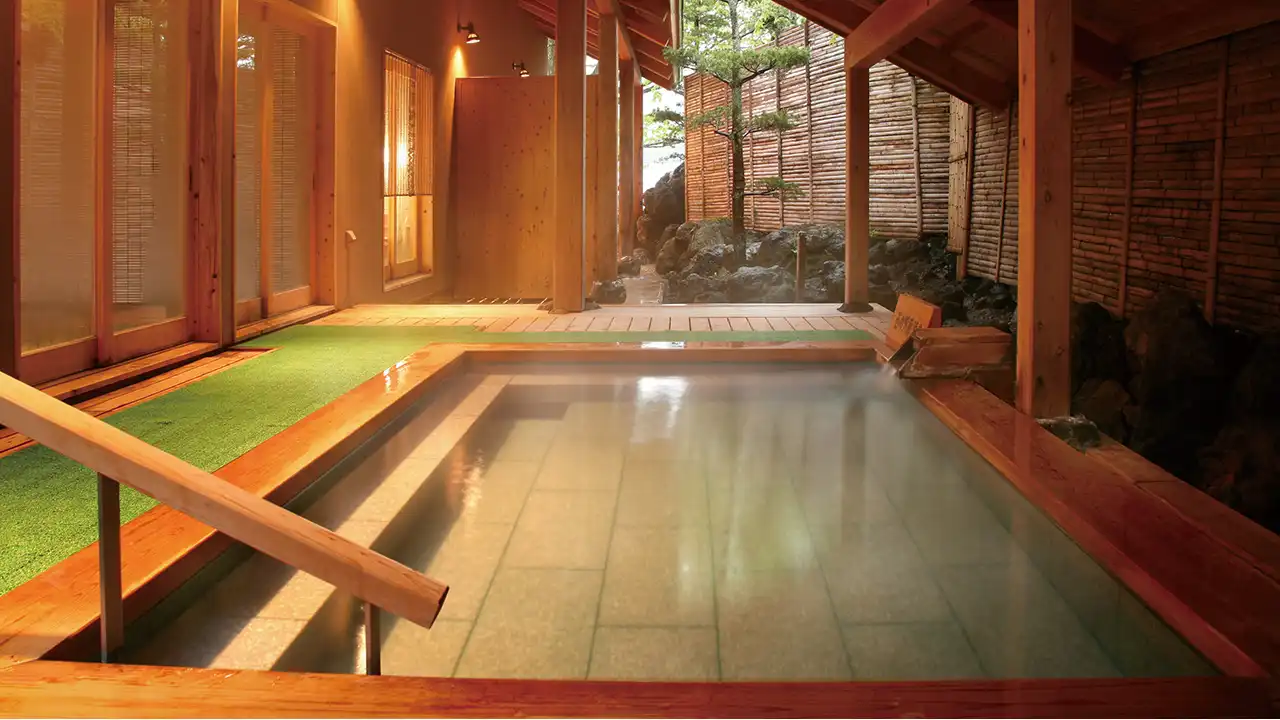
- Try the outdoor bath (rotenburo) if available
- Visit during off-peak hours for a quieter experience
- Check the water temperature before stepping in
- Take a morning bath — it's the locals' favorite time
Don't
- Don't bring your towel into the bath water
- Don't wear a swimsuit (unless specifically allowed)
- Don't take photos in the bathing area
- Don't enter if you're visibly intoxicated
- Don't run or splash in the bath area
- Don't soak immediately after a large meal
Common Questions
Frequently Asked Questions
Can I use an onsen if I have a tattoo?
Traditionally, many onsen ban visible tattoos due to their association with yakuza (organized crime) in Japan. However, attitudes are changing. Some ryokans offer private baths (kashikiri) that bypass this rule. Others now allow small tattoos or offer cover-up patches. Always ask the ryokan before booking. Our listings note tattoo-friendly properties.
Are onsen separated by gender?
Yes, almost all public onsen baths are gender-separated (男 = men, 女 = women). Some ryokans rotate the baths between genders at certain times. Mixed-gender baths (konyoku) exist but are rare. Private baths (kashikiri/kazoku-buro) are available for couples or families at many ryokans.
What should I bring?
Most ryokans provide everything: large bath towel, small wash towel, soap, shampoo, and conditioner. Just bring yourself. If visiting a public day-use onsen (soto-yu), you may need to rent or buy a towel at the entrance.
Is it safe for pregnant women?
The Japanese Ministry of the Environment removed pregnancy as a contraindication for onsen in 2014. However, be cautious with very hot temperatures and long soaking times. Consult your doctor beforehand.
What are the health benefits?
Different mineral compositions offer different benefits. Sulfur springs are said to help skin conditions. Sodium chloride springs warm the body deeply. Carbon dioxide springs may improve circulation. While scientific evidence varies, most bathers report feeling deeply relaxed, with improved sleep and reduced muscle tension.