
12 min de lectureMis à jour en juin 2026
Comparaison rapide
6 sélections| Ryokan | À partir de | Note | Caractéristiques | Réserver |
|---|---|---|---|---|
 | à partir de ≈219 € | 8.7 47 avis | Onsen privé | Réserver sur Booking.com |
 Shirafune Grand Hôtel Shirahone | à partir de ≈176 € | 8.6 28 avis | Anglais OKOnsen privé | Réserver sur Booking.com |
 Yumoto Saito Ryokan Shirahone | à partir de ≈219 € | 9.2 9 avis | Onsen privé | Réserver sur Agoda |
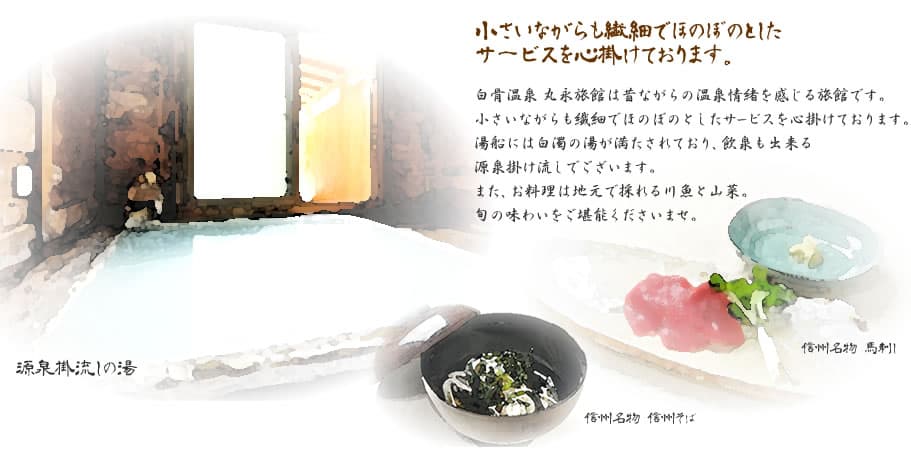 | à partir de ≈88 € | 9.4 562 avis | Onsen | Réserver sur Agoda |
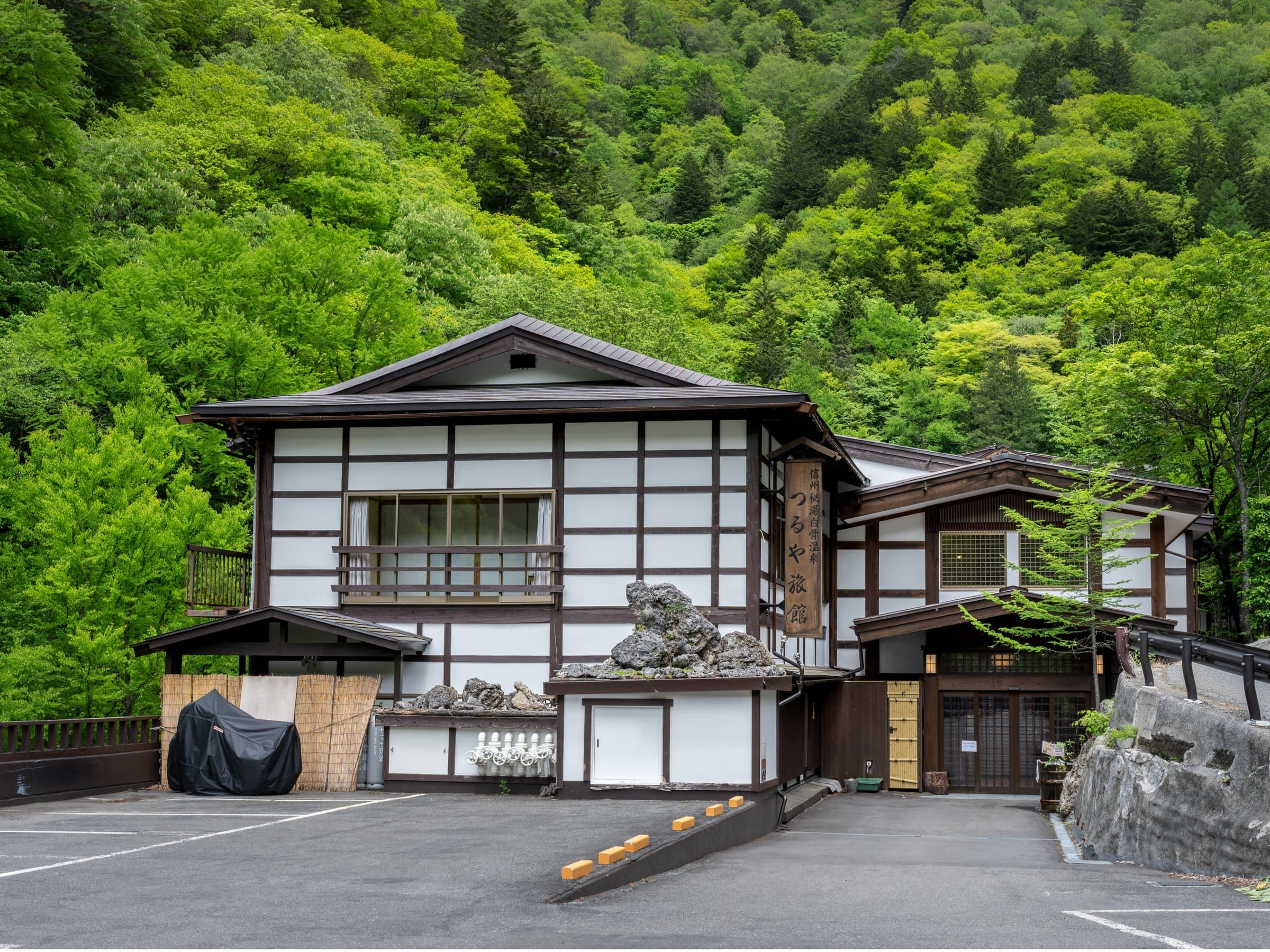 Oyado Tsuruya Shirahone | à partir de ≈132 € | 7.9 18 avis | Onsen | Réserver sur Booking.com |
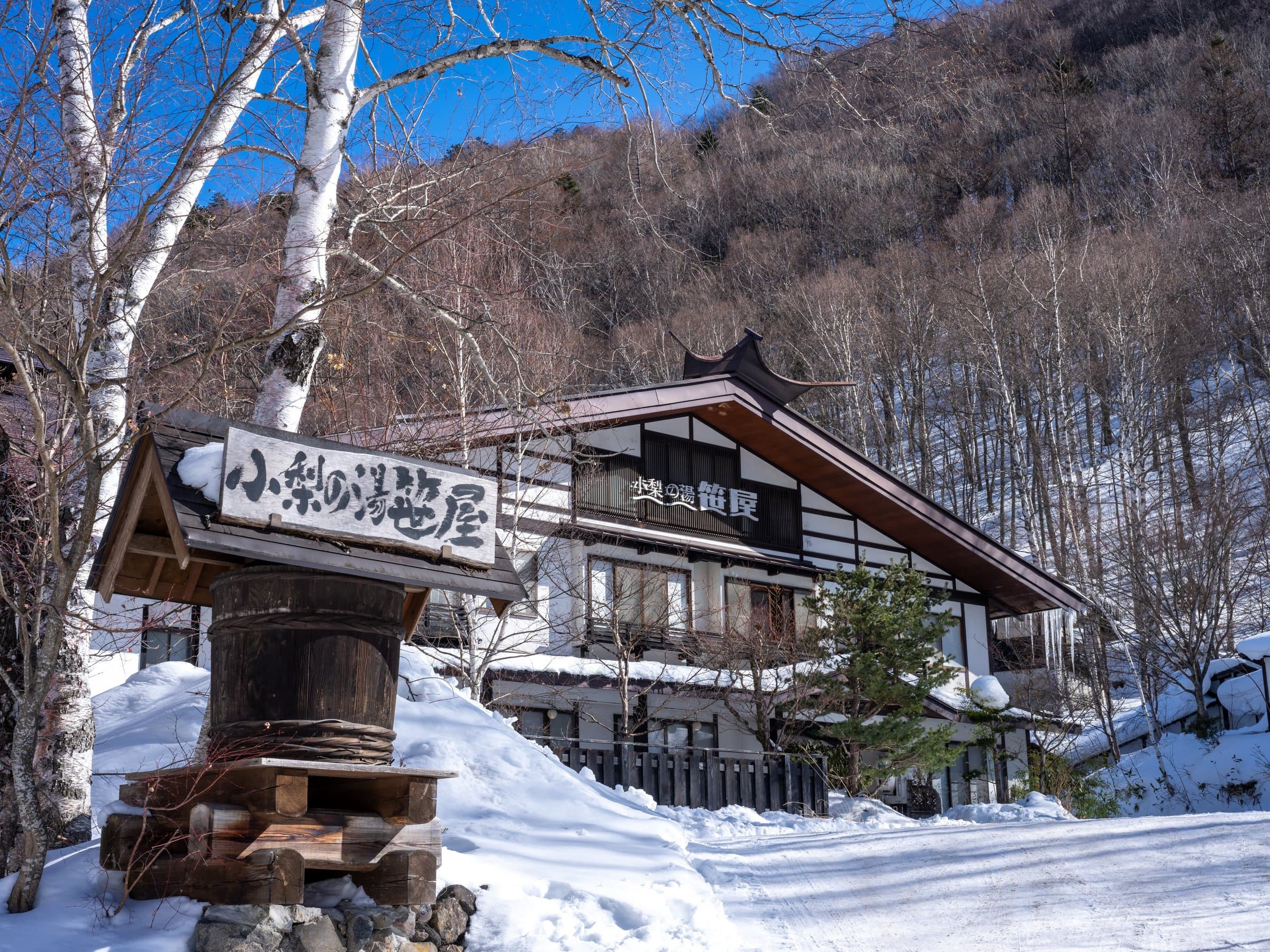 Konashi no Yu Sasaya Shirahone | à partir de ≈219 € | 8.4 14 avis | Onsen privé | Réserver sur Booking.com |
Shirafune Grand Hôtel
Shirahone
Yumoto Saito Ryokan
Shirahone
Oyado Tsuruya
Shirahone
Konashi no Yu Sasaya
Shirahone
Les prix indiqués sont des tarifs de départ approximatifs par personne et par nuit. Nous pouvons percevoir une commission sur les réservations.
Perché dans les Alpes japonaises du Nord, dans la préfecture de Nagano, Shirahone Onsen est un village isolé défini par son atout le plus célèbre : son eau. Le nom lui-même, qui signifie « os blanc », vient d'un dicton de l'époque d'Edo selon lequel ces sources riches en calcium fortifient les os de l'intérieur — la tradition locale note aussi que les dépôts calcifiés qui se forment sur le rebord des bains et sur les rochers en aval ressemblent à des os blanchis, ce qui a donné au village son nom en kanji source vérifiée Japan Alps Tourism 2026-01-15. Ce qui rend ce lieu vraiment à part, c'est la transformation spectaculaire de l'eau. Elle jaillit de terre parfaitement limpide mais, au contact de l'air, devient d'un blanc bleuté laiteux et opaque à mesure que les minéraux dissous précipitent — un processus que l'association touristique officielle de Shirahone Onsen décrit comme une eau qui « sort transparente mais blanchit avec le temps », et ce à travers plus d'une douzaine de sources naturelles source vérifiée Shirahone Onsen Tourist Association 2026-02-10. Vous pouvez littéralement observer ce phénomène géologique au bord de votre bain. Ce n'est pas un simple bain : c'est une immersion dans un phénomène naturel. Pour les voyageurs en quête d'une escapade onsen authentique en altitude, loin des sentiers battus, un séjour en ryokan à Shirahone est une expérience japonaise incontournable, à seulement 3,5 heures de Tokyo.
 Épingler sur Pinterest
Pourquoi choisir Shirahone Onsen, dans la préfecture de Nagano, pour un ryokan
L'attrait de Shirahone tient à son hydrogéologie unique et à son rôle de sanctuaire alpin. Le village se trouve à environ 1 400 mètres d'altitude, au sein du parc national de Chubu-Sangaku, dans le district d'Azumi de Matsumoto source vérifiée Japan Alps Tourism 2026-01-15. Les eaux sulfureuses d'un blanc laiteux de Shirahone doivent leur couleur à de fortes concentrations de carbonate de calcium et de magnésium ainsi que d'hydrogène sulfuré, qui restent dissous sous terre mais s'oxydent rapidement et précipitent en fines particules au contact de l'atmosphère — la source se peint en quelque sorte elle-même en blanc à mesure que les particules de soufre précipitent source vérifiée Japan Alps Tourism 2026-01-15. Ce processus ne crée pas seulement un bain visuellement mémorable : il donne aussi à l'eau une texture douce qui adoucit la peau. Les habitants tiennent depuis longtemps cette eau en haute estime et lui prêtent des vertus thérapeutiques ; une tradition courante consiste à boire un peu d'eau de source et à manger de l'*onsen-gayu*, une bouillie de riz cuite dans l'eau de source elle-même, dont les minéraux donnent au riz une teinte légèrement gris rosé source vérifiée Japan Alps Tourism 2026-01-15.
Au-delà de l'onsen, Shirahone sert de principale base en ryokan pour accéder à Kamikochi, l'un des parcs nationaux les plus spectaculaires du Japon. Ouverte chaque année du 17 avril au 15 novembre selon le calendrier officiel de la Kamikochi Tourism Association source vérifiée Kamikochi Tourism Association 2026-03-20, Kamikochi est une vallée alpine préservée à seulement 30 minutes en navette, ce qui fait de Shirahone une destination idéale en deux temps, entre détente et exploration de la montagne.
1. Awanoyu
Si vous ne devez séjourner que dans un seul ryokan à Shirahone, choisissez Awanoyu. Cette auberge historique — fondée en 1912, à la fin de l'ère Meiji, et forte aujourd'hui de plus d'un siècle d'activité dans la vallée source vérifiée Unique Nagano (Nagano Prefecture Tourism) 2026-02-05 — est indissociable du village lui-même, principalement grâce à son magnifique et vaste bain extérieur mixte (*konyoku rotenburo*), le plus grand et le plus emblématique du secteur, alimenté par un débit documenté de 1 730 litres d'eau minérale par minute source vérifiée Unique Nagano (Nagano Prefecture Tourism) 2026-02-05. C'est le bain que vous avez vu en photo : un vaste bassin d'un bleu laiteux sur fond de montagnes boisées. Bien qu'il soit mixte, l'opacité de l'eau assure une intimité naturelle, et il existe des entrées et des sections réservées aux femmes. Se baigner dans ce grand bain, en sentant le doux sédiment minéral sous ses pieds, c'est le moment Shirahone par excellence. Le ryokan équilibre son célèbre onsen avec des chambres traditionnelles en tatami et d'excellents repas *kaiseki* qui mettent en valeur les poissons de rivière locaux et les légumes de montagne. Pour vivre l'expérience ultime des eaux sulfureuses d'un blanc laiteux de Shirahone, Awanoyu est le champion incontesté.
Gamme de prix : Milieu de gamme à luxe (40 000–70 000 ¥/personne)
 Épingler sur Pinterest
2. Shirafune Grand Hotel
Plus grand établissement de Shirahone, le Shirafune Grand Hotel propose une gamme d'équipements plus étendue et une ambiance plus proche d'un complexe hôtelier. C'est un excellent choix pour les voyageurs qui apprécient le confort d'un hôtel mais souhaitent tout de même une expérience onsen authentique. L'hôtel dispose d'un ensemble de bains impressionnant, dont de spacieux bains intérieurs et rotenburo extérieurs (non mixtes) remplis de la même eau laiteuse de grande qualité, ainsi que des onsen privés réservables pour un bain plus intime. En raison de sa taille, il peut souvent accueillir des clients lorsque les petites auberges affichent complet, et offre un niveau de service fiable et confortable. Si vous voyagez en famille ou si c'est votre premier séjour en ryokan et que vous préférez des conforts plus familiers aux côtés des éléments traditionnels, le Shirafune Grand Hotel est un choix solide et accueillant.
Gamme de prix : Milieu de gamme (28 000–45 000 ¥/personne)
3. Yumoto Saito Bekkan
Pour un séjour véritablement raffiné et chargé d'histoire, Yumoto Saito Bekkan est sans égal. Fondé en 1772, ce ryokan est l'un des plus anciens de la région et offre une expérience intime, de type boutique, empreinte de tradition. Avec moins de chambres que ses voisins plus grands, l'accent est mis ici sur un service personnel irréprochable et l'excellence culinaire. Les repas *kaiseki* en sont le point fort : préparés avec minutie, ils mettent en valeur le meilleur des produits locaux de saison. Les bains onsen, plus petits et plus intimes que ceux d'Awanoyu, sont magnifiquement entretenus et offrent un cadre paisible pour profiter des eaux sulfureuses d'un blanc laiteux de Shirahone. Ce ryokan s'adresse au voyageur exigeant qui accorde autant de valeur au patrimoine, à la sophistication discrète et à la gastronomie qu'à l'onsen lui-même. C'est une folie qui offre une expérience de ryokan classique profondément mémorable.
Gamme de prix : Luxe (55 000–90 000 ¥/personne)
4. Maruei Ryokan
Maruei Ryokan offre le juste milieu idéal : une petite auberge familiale à l'atmosphère chaleureuse, avec la possibilité très prisée de chambres dotées de bains extérieurs privés. Pour les couples, les personnes tatouées ou quiconque recherche une intimité garantie, c'est un choix fantastique. L'auberge a un caractère personnel et sans prétention, qui vous donne l'impression d'être reçu dans une maison de famille. Si les bains communs sont excellents, le principal attrait est de réserver une formule incluant votre propre rotenburo, pour profiter de la célèbre eau laiteuse à votre rythme, de jour comme de nuit. L'hospitalité est sincère, et la cuisine est délicieuse, familiale, à la fois nourrissante et authentique. Maruei Ryokan prouve qu'il n'est pas nécessaire d'être grand pour offrir une expérience Shirahone parfaite.
Gamme de prix : Milieu de gamme (30 000–50 000 ¥/personne)
Tip
Les ryokans avec onsen privé comme Maruei sont très demandés. Réservez votre séjour, surtout si vous visez une chambre avec bain privé, au moins 3 à 6 mois à l'avance pour les hautes saisons comme l'automne.
5. Tsuruya Ryokan
Tsuruya Ryokan est un choix classique de milieu de gamme qui offre l'expérience Shirahone par excellence, sans chichis. Il incarne l'esprit traditionnel du ryokan avec ses chambres en tatami, son service attentionné et, surtout, ses merveilleux bains onsen remplis de l'eau opaque caractéristique. L'auberge dispose à la fois d'un bain intérieur et d'un agréable bain extérieur où vous détendre dans l'air alpin. Tsuruya est une option solide et fiable pour les voyageurs qui veulent se concentrer sur l'essentiel d'un séjour en ryokan — le bain, la chambre et la cuisine — à un prix plus accessible que les auberges de luxe. C'est une base honnête, traditionnelle et confortable pour explorer la région et profiter de ses célèbres sources.
Gamme de prix : Milieu de gamme (25 000–40 000 ¥/personne)
6. Sasaya Ryokan
Preuve qu'un voyage à Shirahone n'a pas à vous ruiner, Sasaya Ryokan est le meilleur choix petit budget du village. Cette petite auberge douillette propose une expérience plus compacte et simplifiée, mais ne fait aucun compromis sur la qualité de son onsen. Les bains sont remplis de la même eau laiteuse aux vertus thérapeutiques qui a fait la renommée de la région. Les chambres sont simples, propres et traditionnelles, et le service est chaleureux et accueillant. Pour les voyageurs solo, les routards ou quiconque souhaite profiter au maximum de l'onsen sans la dépense d'un dîner *kaiseki* élaboré ou d'équipements luxueux, Sasaya offre un excellent rapport qualité-prix et une porte d'entrée authentique vers cette ville thermale unique.
Gamme de prix : Petit budget (18 000–28 000 ¥/personne)
Informations pratiques
Accès : Depuis la gare de Shinjuku à Tokyo, prenez le train JR Limited Express Azusa jusqu'à Matsumoto (environ 2,5 heures), sur la ligne Chuo de JR East source vérifiée JR East 2026-03-01. Depuis le terminal de bus de Matsumoto, prenez le bus Alpico à destination de Shirahone Onsen (environ 90 minutes), exploité toute l'année par Alpico Kotsu source vérifiée Alpico Group (Nagano) 2026-03-12.
Meilleure saison : Shirahone se visite toute l'année. L'automne (de fin septembre à octobre) est saisissant avec ses couleurs automnales. L'été (juillet-août) offre une échappée fraîche loin de la chaleur urbaine et constitue la meilleure période pour randonner dans le proche Kamikochi (parc officiellement ouvert du 17 avril au 15 novembre chaque année source vérifiée Kamikochi Tourism Association 2026-03-20). L'hiver apporte une neige abondante, créant un paysage serein et isolé, parfait pour se prélasser dans l'onsen.
Budget : Comptez 18 000–28 000 ¥ par personne pour les auberges petit budget, 28 000–50 000 ¥ pour le milieu de gamme et 50 000 ¥ et plus pour les séjours de luxe, deux repas compris.
Tip
Le bus de Matsumoto à Shirahone circule rarement, généralement quelques fois par jour seulement. Consultez les horaires des bus Alpico en ligne et planifiez l'arrivée de votre train à Matsumoto en conséquence pour éviter une longue attente.
Quand visiter Shirahone
Shirahone se trouve à 1 400 m d'altitude dans les Alpes japonaises et la fenêtre de saison est étroite. De mi-octobre à mi-novembre pour les feuillages d'automne — les mélèzes virent à l'or et le bain d'un bleu laiteux sur fond d'érables rouges, c'est la photo à faire. De fin décembre à début mars pour la neige — le village reçoit 4 à 6 m de neige au total et le rotenburo face à la poudreuse fraîche est le grand classique de l'hiver. Évitez mai (Golden Week) et l'Obon d'août — petit village, route étroite, l'afflux de visiteurs y est inconfortable. La route d'accès ferme brièvement lors des grosses tempêtes, alors prévoyez un jour de marge de chaque côté en plein hiver. Réservez 8 à 12 semaines à l'avance pour le pic des feuillages d'octobre-novembre et 6 à 8 semaines à l'avance pour la période enneigée de décembre à février.
Ce que Shirahone fait de mieux (et ce qu'il ne fait pas)
Shirahone possède une signature chimique que presque aucun autre onsen du Japon n'égale — une source d'hydrogénocarbonate de calcium et de magnésium qui jaillit limpide à la source et devient naturellement d'un blanc trouble au contact de l'air en 5 à 10 minutes. C'est vraiment beau, et ce n'est pas une photo marketing : vous pouvez le voir se produire dans le bain. Ce que Shirahone ne propose pas, c'est la variété — le village compte 7 ryokans au total, aucun commerce, aucun restaurant en dehors des auberges, aucune vie nocturne. Le *kaiseki* a une orientation régionale de Nagano : soba du Shinshu, poissons de rivière (iwana), légumes de montagne. Si vous voulez un bain tranquille d'1 nuit dans les Alpes japonaises avec une eau à la chimie marquée, c'est la bonne réponse.
Tip
Buvez l'eau si vous le pouvez. La source de Shirahone est l'une des rares au Japon classées comme buvables à la source, et une petite tasse à l'arrivée est une tradition locale (le goût est minéral et crayeux, pas agréable à la première gorgée, mais la chimie est réellement efficace pour la digestion).
Associer Shirahone à Kamikochi et aux hauts plateaux de Norikura
L'altitude de montagne de Shirahone (environ 1 400 m) le place à l'intérieur du parc national de Chubu-Sangaku : la bonne façon de planifier un voyage à Shirahone est donc d'en faire l'ancrage onsen d'un itinéraire de randonnée de deux ou trois nuits dans les Alpes du Nord, et non une destination à part entière. L'association classique : Jour 1 — arrivée à Shirahone, bain dans l'eau sulfatée d'un blanc laiteux qui donne son nom à la ville (*shirahone* signifie littéralement « os blanc » — le carbonate de calcium précipite hors de l'eau de source et recouvre chaque surface d'une fine pellicule crayeuse), et repos. Jour 2 — prenez le premier bus pour Kamikochi (45 minutes depuis Shirahone), l'une des vallées alpines les plus photographiées du Japon, et parcourez la boucle facile de Kappa-bashi à Myojin-ike (2,5 heures, pente douce, adaptée aux non-randonneurs). Jour 3 — retour à Shirahone pour une deuxième nuit, ou continuation vers la Norikura Skyline pour une excursion à plus haute altitude.
Pourquoi cela fonctionne précisément avec Shirahone plutôt qu'avec Hirayu ou Shin-Hotaka : Shirahone se trouve au seul carrefour routier où convergent les bus pour Kamikochi, Norikura et Matsumoto. Hirayu est un arrêt de bus trop à l'ouest ; Shin-Hotaka est une vallée plus au nord. L'emplacement de Shirahone, ajouté à son nombre plus réduit de ryokans (15 établissements au total contre 50+ à Hirayu), vous donne l'accès alpin sans le trafic des bus touristiques.
Remarque saisonnière importante : Shirahone est une destination à accès restreint en hiver. Le bus de Matsumoto à Shirahone circule d'octobre à novembre et d'avril à juin presque à pleine capacité pour les saisons des feuillages et du vert tendre ; de juillet à septembre, c'est la haute saison de randonnée ; de décembre à mars, la plupart des ryokans ferment car le col est enneigé, et Kamikochi lui-même est fermé à tous les véhicules motorisés de mi-novembre à mi-avril. Réservez 6 à 8 semaines à l'avance pour les week-ends d'octobre et de juin. Les jours de semaine de juillet, hors saison, sont le secret le mieux gardé si vous pouvez assouplir votre programme.
Tip
L'eau sulfatée de Shirahone est exceptionnellement riche en calcium, ce qui fait que l'eau de source prend réellement une couleur blanc-bleu laiteuse (ce n'est pas l'éclairage — c'est une précipitation minérale). L'eau recouvre aussi l'intérieur des baignoires en bois d'une fine pellicule crayeuse que le personnel du ryokan gratte chaque année, si bien que les bâtiments des bains suivent des calendriers d'entretien en alternance. Vérifiez lors de la réservation que le rotenburo principal sera ouvert le jour de votre arrivée — trois des six ryokans de cette liste alternent leurs jours d'entretien en milieu de semaine.
Mon avis honnête après y avoir séjourné
J'ai séjourné à Awanoyu Ryokan fin octobre — le bain d'un bleu laiteux, les mélèzes virant à l'or au-dessus du pavillon des bains, l'air froid de la montagne à 1 400 m. Le *kaiseki* était bon sans être mémorable ; le bain était tout l'intérêt. Mon avis honnête : Shirahone est une étape d'1 nuit, pas une destination. Associez-le à Kamikochi (45 minutes en bus, également en altitude) pour une boucle de 2 jours dans les Alpes japonaises, et vous aurez l'un des meilleurs itinéraires hors des sentiers touristiques étrangers du centre du Japon.
L'eau d'un bleu laiteux de Shirahone est une signature chimique impossible à imiter — une source d'hydrogénocarbonate de calcium et de magnésium qui se trouble naturellement au contact de l'air. Les quatre choix ci-dessus sont les véritables ryokans du village (il n'y en a que sept au total). Réservez au moins 3 mois à l'avance pour les feuillages d'octobre-novembre — c'est la place dans le JR Azusa jusqu'à Matsumoto, plus le bus Alpico jusqu'au village, qui constitue la réservation limitante, pas la chambre. Ensuite : les ryokans ski et onsen dans l'ensemble des Alpes japonaises pour la région plus large des Alpes japonaises.
Prêt à réserver ?
Réservez l'un de ces ryokans favoris
Comparez les disponibilités et les tarifs sur les trois plateformes.
Les liens de réservation peuvent générer une commission sans coût supplémentaire.
Shirahone est l'une des nombreuses zones d'onsen de Nagano que nous classons — consultez les meilleurs ryokans de la préfecture de Nagano pour des alternatives à Hakuba, Nozawa et Yudanaka.
FAQ
Questions fréquentes
Pourquoi l'eau de Shirahone Onsen est-elle d'un blanc laiteux ?+
La source de Shirahone jaillit parfaitement limpide mais devient d'un blanc bleuté laiteux et opaque au contact de l'air. Cela s'explique par la richesse de l'eau en carbonate de calcium et de magnésium dissous ainsi qu'en hydrogène sulfuré, qui s'oxydent et précipitent en fines particules une fois exposés à l'atmosphère. Vous pouvez littéralement observer le changement au bord du bain en 5 à 10 minutes environ — c'est une précipitation minérale, pas un effet d'éclairage. Les minéraux donnent aussi à l'eau une texture douce qui adoucit la peau.
Comment se rendre à Shirahone Onsen depuis Tokyo ?+
Depuis la gare de Shinjuku, prenez le JR Limited Express Azusa jusqu'à Matsumoto (environ 2,5 heures), puis le bus Alpico à destination de Shirahone Onsen depuis le terminal de bus de Matsumoto (environ 90 minutes). Le bus ne circule que quelques fois par jour : consultez donc les horaires Alpico et planifiez l'arrivée de votre train à Matsumoto pour éviter une longue attente. Le temps de trajet total depuis Tokyo est d'environ 3,5 heures, et c'est la place dans l'Azusa plus le bus Alpico qui constitue la réservation limitante, pas la chambre.
Quel ryokan de Shirahone possède le célèbre bain extérieur mixte ?+
Awanoyu est l'établissement emblématique et abrite le plus grand rotenburo extérieur mixte (konyoku) de Shirahone — un vaste bassin d'un bleu laiteux sur fond de montagnes boisées, alimenté par un débit documenté de 1 730 litres d'eau minérale par minute. Fondé en 1912, c'est le bain que vous avez vu en photo. Bien qu'il soit mixte, l'opacité naturelle de l'eau assure l'intimité, et il existe des entrées et des sections séparées réservées aux femmes. À 40 000–70 000 ¥ par personne, c'est le séjour Shirahone par excellence.
Quel ryokan de Shirahone est le meilleur pour un bain extérieur privé ?+
Maruei Ryokan est le choix idéal pour une intimité garantie — une petite auberge familiale proposant des chambres avec bains extérieurs privés, parfaite pour les couples ou les personnes tatouées, à 30 000–50 000 ¥ par personne. Le Shirafune Grand Hotel, plus grand établissement du village, propose aussi des onsen privés réservables en plus de ses bains intérieurs et rotenburo extérieurs. Les chambres avec bain privé comme celles de Maruei sont très demandées : réservez donc 3 à 6 mois à l'avance pour les hautes saisons comme l'automne.
Quelle est la meilleure période pour visiter Shirahone Onsen ?+
Shirahone se trouve à 1 400 mètres d'altitude dans les Alpes japonaises : la fenêtre de saison est donc étroite. De mi-octobre à mi-novembre, c'est la meilleure période pour les feuillages d'automne, lorsque les mélèzes virent à l'or face au bain d'un bleu laiteux — réservez 8 à 12 semaines à l'avance pour ce pic. De fin décembre à début mars, la neige est abondante (le village en reçoit 4 à 6 mètres au total) pour le bain d'hiver classique — réservez 6 à 8 semaines à l'avance. Évitez la Golden Week en mai et l'Obon en août, lorsque le petit village et la route étroite rendent la foule inconfortable.
Shirahone Onsen est-il une bonne base pour visiter Kamikochi ?+
Oui — Shirahone est la principale base en ryokan pour Kamikochi, l'une des vallées alpines les plus spectaculaires du Japon, accessible par une courte navette (l'article cite environ 30 à 45 minutes). Kamikochi est ouvert chaque année du 17 avril au 15 novembre : l'été est donc idéal pour la randonnée, par exemple la boucle facile de Kappa-bashi à Myojin-ike. Le plan recommandé consiste à considérer Shirahone comme l'ancrage onsen d'une nuit au sein d'un itinéraire de deux à trois nuits dans les Alpes du Nord, plutôt que comme une destination à part entière.


