
22 min readUpdated July 2026
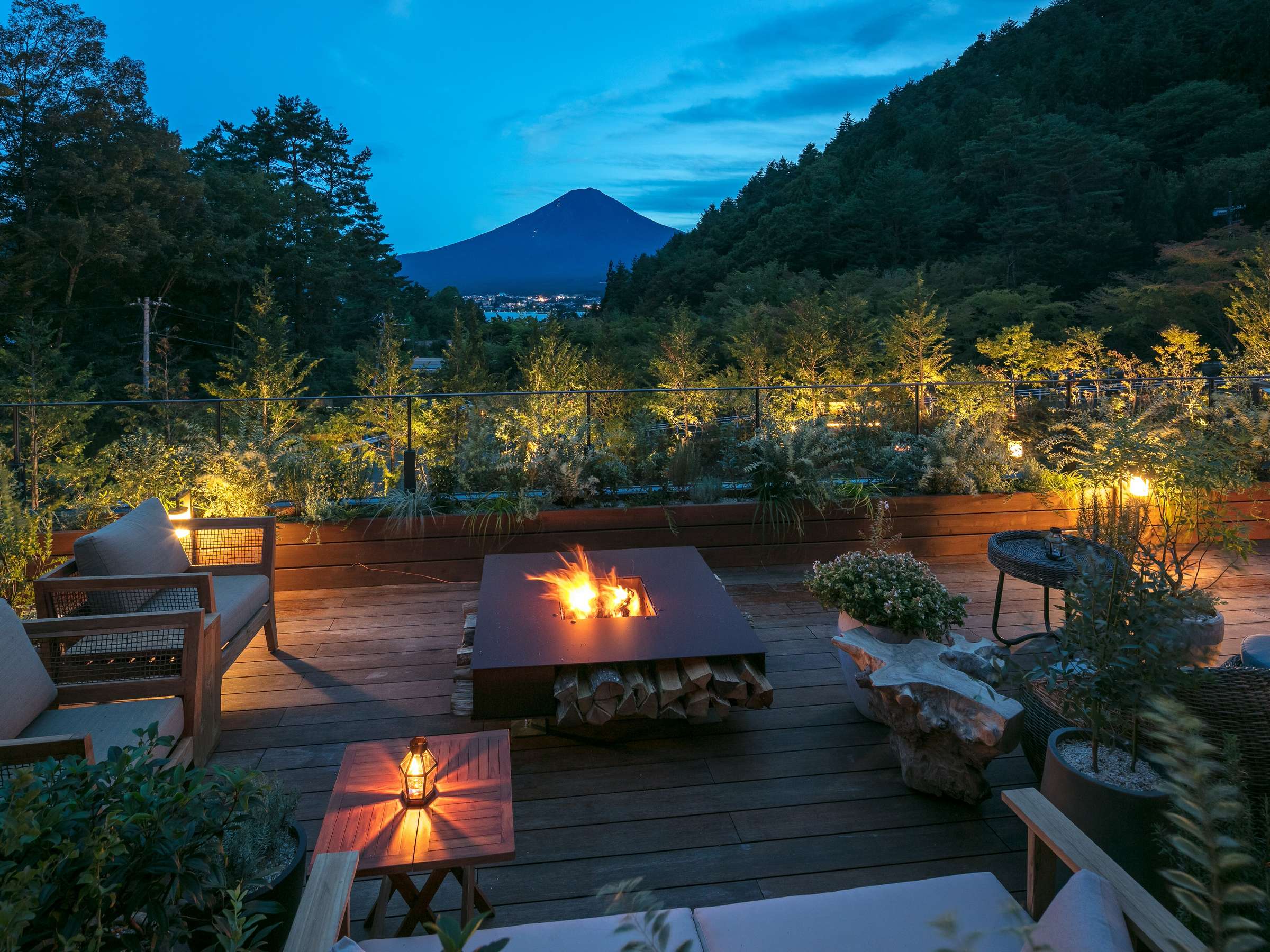
You have a milestone on the calendar. You already know what a ryokan is, you've probably done Kyoto twice, and you want one property that will make the occasion feel earned. This guide to the best ryokans for a Japan anniversary names eight of them — real, bookable, with verified prices and the honest answer to whether staff can actually coordinate a surprise in English.
These picks span six regions: Hakone, Kawaguchiko, Arima Onsen, Kinosaki, Kurokawa, and Ginzan. The connecting thread is not price tier but capability: every property on this list has a private bath in or directly attached to your room or villa, confirmed English-language staff, and the kitchen and housekeeping coordination to execute an anniversary request without you panicking the week before you fly.
For couples on their first ryokan stay, our best ryokans for couples covers the basics. This article skips that preamble entirely.
The 8 best anniversary ryokans at a glance
| Property | Area | Price From (USD/room) | Private Onsen | Tattoo Policy | Best For |
|---|---|---|---|---|---|
| Gora Kadan | Hakone | $500 | Yes — in-room | Private baths only | 25th+ / Imperial-estate luxury |
| Hakone Ginyu (箱根吟遊) | Hakone | $400 | Yes — in-room | Private baths only | 10th–20th / valley-view value |
| Kawaguchiko Fufu | Kawaguchiko | $700 | Yes — balcony | Private baths only | Couples who want the Fuji frame |
| Hashinoya Bekkan Ransui | Arima | $460 | Yes — in-room | Private baths only | Kansai-based / Kyoto add-on |
| Sumihei Bettei Tokitotoki | Kinosaki | from $318* | Yes — in-suite | Contact first | All-inclusive celebration ambience |
| Gekkoju | Kurokawa | $600 | Yes — villa | Private baths only | Seclusion / stargazing / Kyushu |
| Sanso Warabino | Yufuin | $270 | Yes — villa | Private baths only | All-villa privacy at accessible price |
| Ginzanso | Ginzan Onsen | $200 | Yes — select rooms | Cover-up required | Cinematic setting / mid-tier budget |
All prices are per room including two meals (breakfast and kaiseki dinner) unless stated. USD converted at approximately ¥150. *Tokitotoki's $318 floor reflects low season; typical rates run $415–$428 in high season, based on Trip.com listings as of mid-2026.
What makes a ryokan actually anniversary-worthy
Most ryokans can hand you a yukata and a cup of sake. Fewer can coordinate a cake presentation timed to your kaiseki dessert course, confirm the plan in English a week before, and have a room arrangement waiting on arrival without you chasing anyone. The gap between those two experiences is the point of this article.
Five criteria determined this list, and I'll use them to frame each property:
Private rotenburo vs. reservable kashikiri bath. An in-room rotenburo is attached to your suite — available at 2am, at sunrise, whenever. A kashikiri is a shared bath reserved exclusively for your group for a timed window, typically 45–60 minutes. At some properties you book it, pay ¥3,000–5,000 per session, and wait for your slot. At a 13-villa property like Sanso Warabino, where you have 13 baths for 13 guests, waits are effectively zero. At a 50-room property with four reservable baths, it is a different calculus. For a genuine anniversary stay, in-room is worth the premium if budget allows. Our ryokans with private onsen for couples goes deeper on this distinction.
Anniversary-plan execution in English. The real bottleneck is not whether a property offers a cake — most will, for a fee — but whether an English-language email sent three weeks out will actually result in that cake appearing at the right moment. Only Hakone Ginyu explicitly confirms this on their official website. Gora Kadan's Relais & Chateaux concierge standard implies full capability. The remaining six require direct contact, and I'd factor 4–6 weeks lead time for anything requiring kitchen coordination.
Kaiseki privacy. Some properties serve kaiseki in a shared dining room, others in your room. For an anniversary, in-room service removes the self-consciousness of milestone toasts in a communal space. Every property here offers in-room kaiseki or can arrange it — but confirm this at booking, as some room categories at larger properties default to shared dining.
English depth. There is a difference between "some staff speak English" and "someone can read and respond to a detailed anniversary request email in English." Confirmed English staff who handle coordination requests are noted explicitly per property below.
Tattoo accommodation. Six of these eight properties have private-bath-only or equivalent policies, which in practice means tattooed guests are completely unaffected — your private bath is your bath. The Japan National Tourism Organization's onsen etiquette guide explains the communal bath context. Two properties have unknown tattoo policies; contact directly before booking if this is relevant to your stay.
Tip
Honest note: the mid-range tier often delivers a better kaiseki per yen than splurge. The extra cost at the high end buys privacy architecture — a villa nobody else can walk near — not necessarily better food.
Budget reality check: what each price tier delivers for anniversaries
The per-person rate that matters for anniversaries is typically ¥40,000–80,000 (approx. $270–530), with meals included. Here's what each tier realistically delivers:
Mid-range (¥25,000–40,000/person, approx. $170–270). Expect a reservable private bath rather than in-room rotenburo at most properties in this range. Kaiseki is often served in a shared dining room with light-screens between tables, or in-room at smaller inns. Anniversary cake is possible with lead time but may require more coordination effort. Ginzanso (this list's only mid-tier pick) is the exception — it has private bath options and a larger English team than comparable-price alternatives. From this list, Ginzanso sits at the affordable end of this band, while Sanso Warabino's entry rooms fall near its top.
Luxury (¥40,000–80,000/person, approx. $270–530). Private in-room rotenburo is standard or available on upgrade. In-room kaiseki is common. English-coordination capability is meaningfully stronger. Anniversary packages are often semi-structured — you email the request, they have a system for it. Most of this list falls in this tier: Hakone Ginyu, Hashinoya Bekkan Ransui, Tokitotoki.
Splurge (¥80,000+/person, approx. $530+). Full-villa format. Anniversary coordination is part of the service design — mention it at booking and it happens. You are not managing a checklist, you are describing what you want. Gora Kadan, Kawaguchiko Fufu, and Gekkoju belong here. Peak-season rates at Gekkoju can reach ¥176,000/guest ($1,173/person) — budget accordingly for spring and autumn, as confirmed by current listings as of mid-2026.
Gora Kadan (強羅花壇) — the imperial-estate choice

Gora Kadan occupies the grounds of the Kan'in-no-miya imperial family's former summer retreat — a fact that explains the proportion of the estate, the way the garden terraces step down the Gora hillside, and the sense that the property was designed for people who expected complete privacy as a baseline. It opened as a ryokan in 1950 and has remained one of Hakone's most personally-scaled luxury operations ever since: 41 rooms and suites, small enough for the staff to know your name before you arrive.
The private baths here are stone and cedar, open-air, in-room — no scheduling. Gora Kadan is the only Hakone ryokan in the Relais & Chateaux portfolio, and that membership is the best English-language shorthand for what you're buying: concierge-standard anniversary coordination, kaiseki that has earned Michelin Key recognition, and an on-site restaurant (Sushi Kadan, opened 2023) helmed by the team behind Tokyo's three-Michelin-star Sushi Yoshitake. The kaiseki format varies by room category — some include in-room dining, others use the shared dining room — so confirm your preference at booking.
Tattoo policy: Private baths only — your in-room rotenburo is fully accessible, while communal baths are off-limits with visible tattoos.
Honest caveat: Gora Kadan does not publish a rate card. The $500–$1,200 range is consistent with current OTA listings, encompassing standard rooms through villa suites, and peak-season spring rates push toward the upper end. For the 25th or 30th anniversary, this is the Hakone call. For a 10th, Hakone Ginyu delivers the same private-rotenburo-in-every-room feature at roughly 30% less.
Rating: 9.5/10 (89 reviews) | Price: from $500/room, two meals | Booking: Trip.com, Booking.com, Expedia, direct
Hakone Ginyu (箱根吟遊) — private rotenburo at 30% below Gora Kadan

Every one of Ginyu's 20 rooms has a private open-air rotenburo on the balcony, and every one of them looks down into the Hayakawa Valley. This is not a premium upgrade — it is the baseline. The water is a sodium-chloride alkaline spring, warm-retaining and skin-softening, drawn from the property's own source.
What sets Ginyu apart in an anniversary context is something the official website states plainly: "The entire spa pavilion can be reserved from 9:00 PM to 11:00 PM, after the esthetic salon is closed. We can also accommodate weddings and anniversary surprises." That explicit coordination confirmation, in English, on their own site, is rarer than you'd expect. Contact them at the point of booking — not the week before you arrive — and specify what you want: cake presentation timing, room arrangement, sparkling wine. The staff team is small (20 rooms), which typically means that when they commit to something, it happens.
Room categories run from Tsuki (ground floor) to Kaze (fourth floor) — higher floors have better valley sightlines. The year-end/New Year window carries a ¥14,300 per-person surcharge on Category C rooms, per the official rates page.
Tattoo policy: Private baths only — your balcony rotenburo is fully accessible, while communal baths are off-limits with visible tattoos.
Honest caveat: Ginyu's view is down into the valley, not across a lake. If the definitive Japanese anniversary image is Fuji over water, Kawaguchiko Fufu is the call, at twice the price. If a forested valley with steam rising from your private bath is the image, Ginyu delivers it without the splurge surcharge.
Rating: 9.3/10 (124 reviews) | Price: from $400/room (¥42,500–54,600/person at official rates, two meals) | Booking: Trip.com, Booking.com, Expedia, direct
Kawaguchiko Fufu (ふふ 河口湖) — the private rotenburo with Mt. Fuji in frame
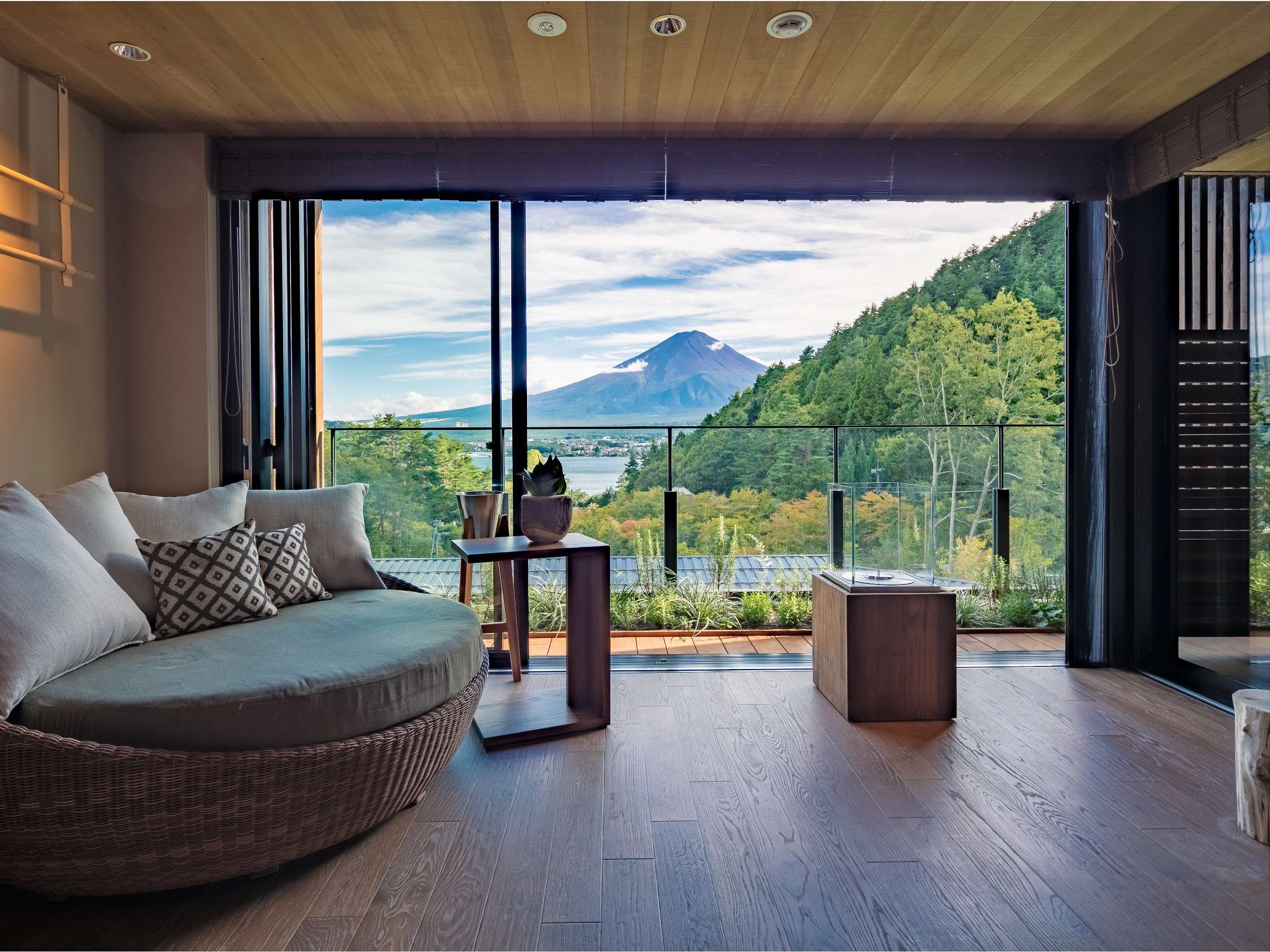
There is one specific thing Kawaguchiko Fufu delivers that no other property on this list can: every suite faces north across Lake Kawaguchi with the full Mt. Fuji summit framed from the balcony. Not a partial view through trees. Not an angle that requires leaning over the railing. The mountain, the lake, and your private volcanic-stone rotenburo in the same field of vision. The balcony also has a bioethanol fireplace — relevant for anniversary stays in autumn and winter when the air at altitude gets cold.
Fufu is an adults-only, all-suite property with approximately 32 suites and no gender-segregated communal baths anywhere on the property, which eliminates the tattoo-policy question for shared facilities entirely. The in-suite kaiseki is served in your room.
No formal tattoo policy has been confirmed to booking platforms, but tattooed guests are reported as welcome in private baths — and with no communal baths on the property, the question is largely academic. In practice, tattooed guests should have no issues, but confirm directly before booking to be certain.
Anniversary coordination: No specific plan was found on the official site or OTAs. Book via Trip.com or Booking.com for price protection, then email the property directly. The Fufu brand operates multiple high-end properties (Fufu Atami, Fufu Nara) and the service orientation is consistently premium — coordination is likely possible, but requires your direct request. Allow 4–6 weeks.
Honest caveat: Only 5 reviews across OTA platforms — this is a highly controlled, intimate operation that attracts guests who don't leave many OTA reviews. That's a different risk profile than Gora Kadan (89 reviews) or Ginyu (124). Rates run around ¥57,000–178,800 per guest as of mid-2026, per current listings, positioning it as a genuine splurge commitment.
Rating: 9.2/10 (5 reviews) | Price: from $700/room | Booking: Trip.com, Booking.com
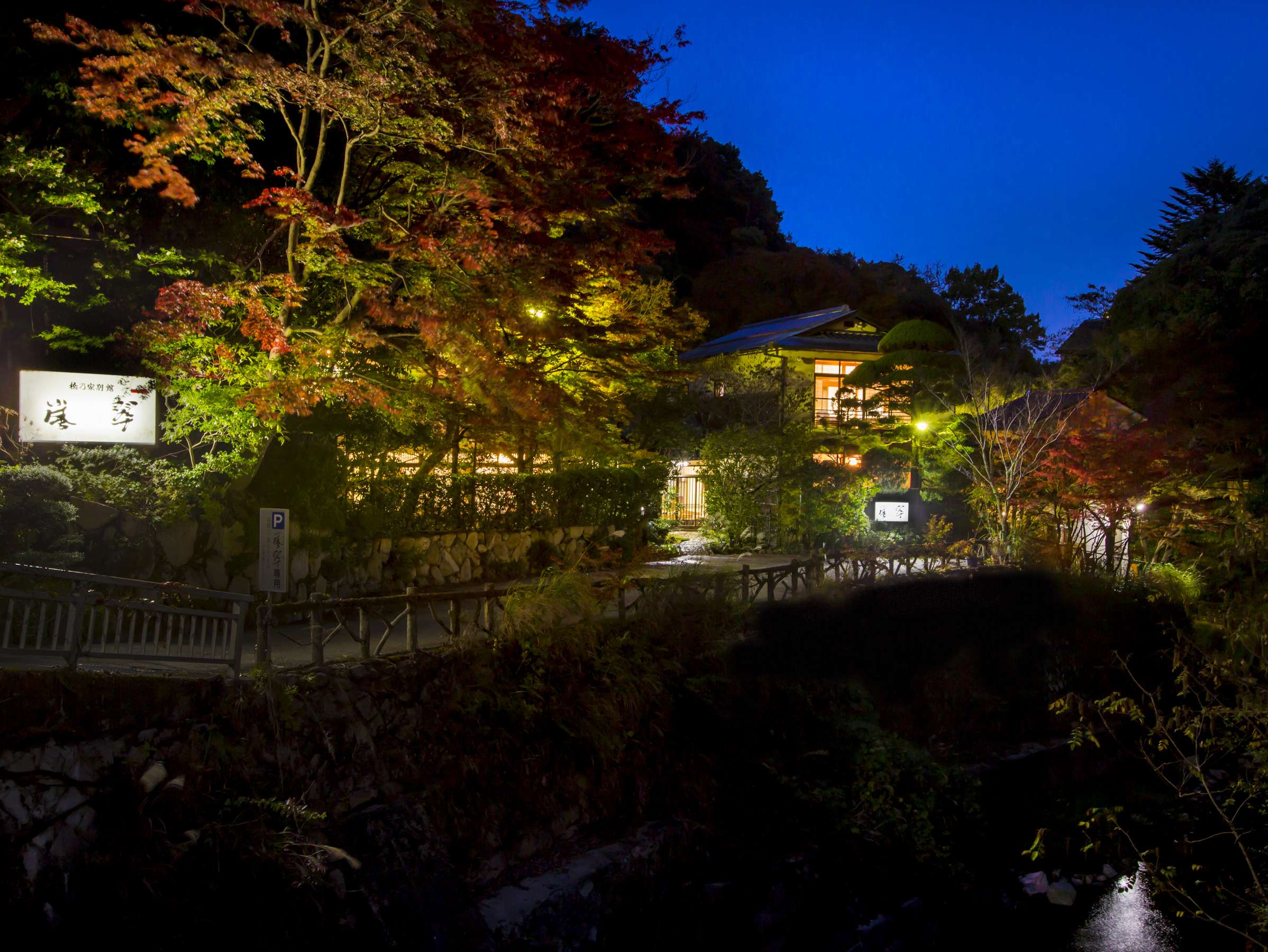
Hashinoya Bekkan Ransui (橋乃家別館 嵐翠) — Kansai's best anniversary ryokan
If your anniversary trip is pairing Kyoto with a onsen stay — which is a very common ten-day itinerary for repeat Japan visitors — Arima Onsen is the practical western-Japan anchor. It sits 40 minutes from Shin-Osaka by bus and 25 minutes from Sannomiya in Kobe. The question is which Arima property. Ransui answers that for couples who want intimacy over scale.
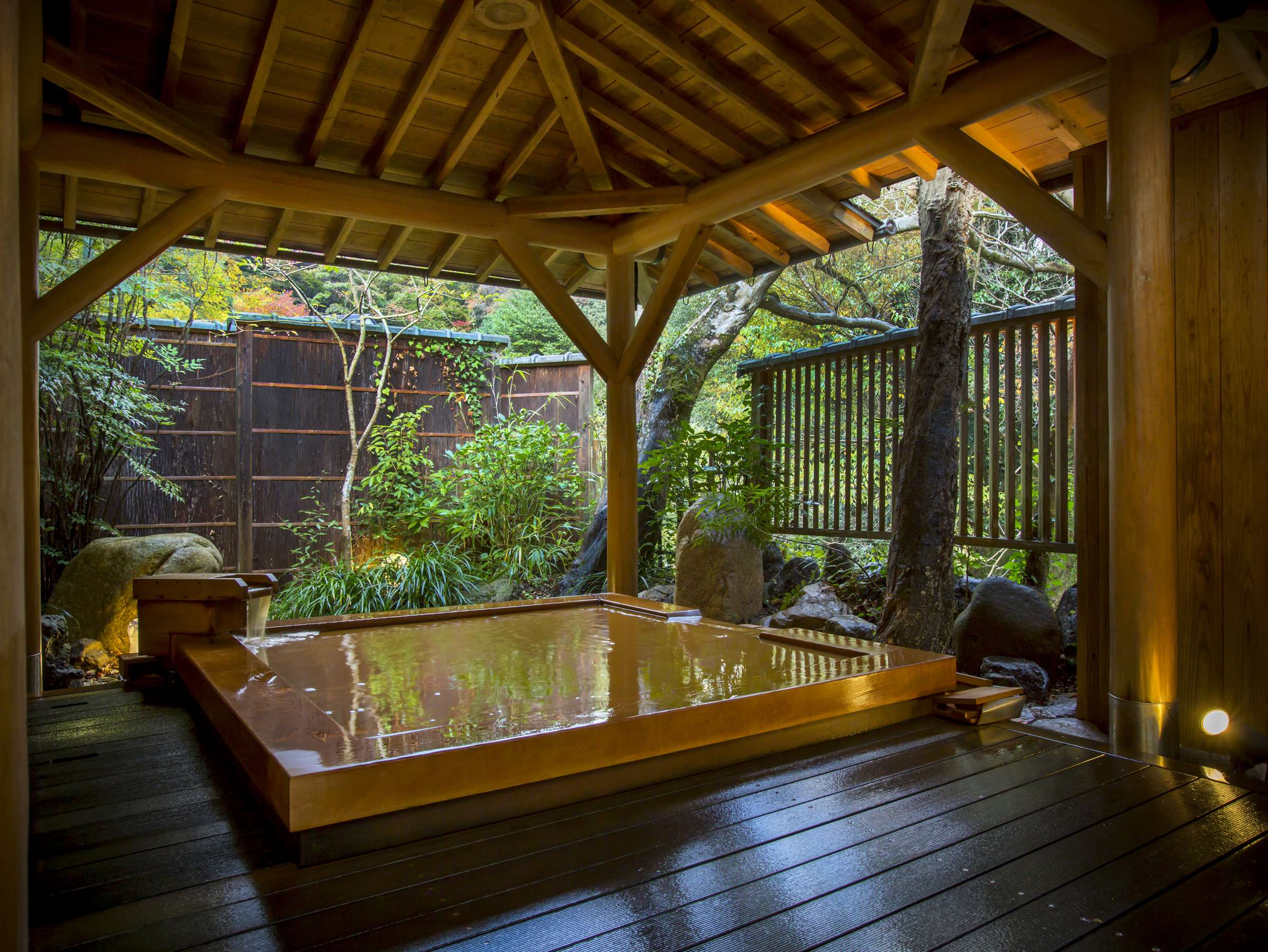
Nine rooms. A Meiji-era villa — each room was originally a private villa, with the property's age dating from the late 19th century. The private cypress baths here draw from Arima's kinsen (gold spring) source, which is amber-colored due to high iron content. That color is visually distinctive in a way that a clear alkaline spring is not. Anniversary photos taken in a kinsen bath have a quality that's hard to replicate elsewhere in Japan.
In-room kaiseki is confirmed, which removes the shared-dining-room dynamic entirely. English-friendly staff are confirmed. The anniversary coordination picture is that you will need to initiate: there is no pre-packaged plan listed on the site or OTAs, but a 9-room inn with confirmed English staff and in-room kaiseki is precisely the scale at which a direct request email gets personal attention. Three weeks minimum lead time; 5–6 weeks for peak season.
Tattoo policy: Tattoos welcome in your private bath; communal baths off-limits. The private cypress kinsen bath is fully accessible. The communal kinsen bath in town is off-limits with visible tattoos — but you have an in-room bath, so this is rarely a practical issue.
Honest caveat: Price from $460 with OTA evidence suggesting $700–$850 for deluxe rooms. The "from $460" floor covers entry-level rooms; a representative Arima anniversary stay in a better room runs toward $700. Worth knowing before you set your budget.
Rating: 9.7/10 (51 reviews) | Price: from $460/room | Booking: Trip.com, Booking.com, Expedia
Sumihei Bettei Tokitotoki (炭平別邸 季ト時) — anniversary all-inclusive with champagne lounge
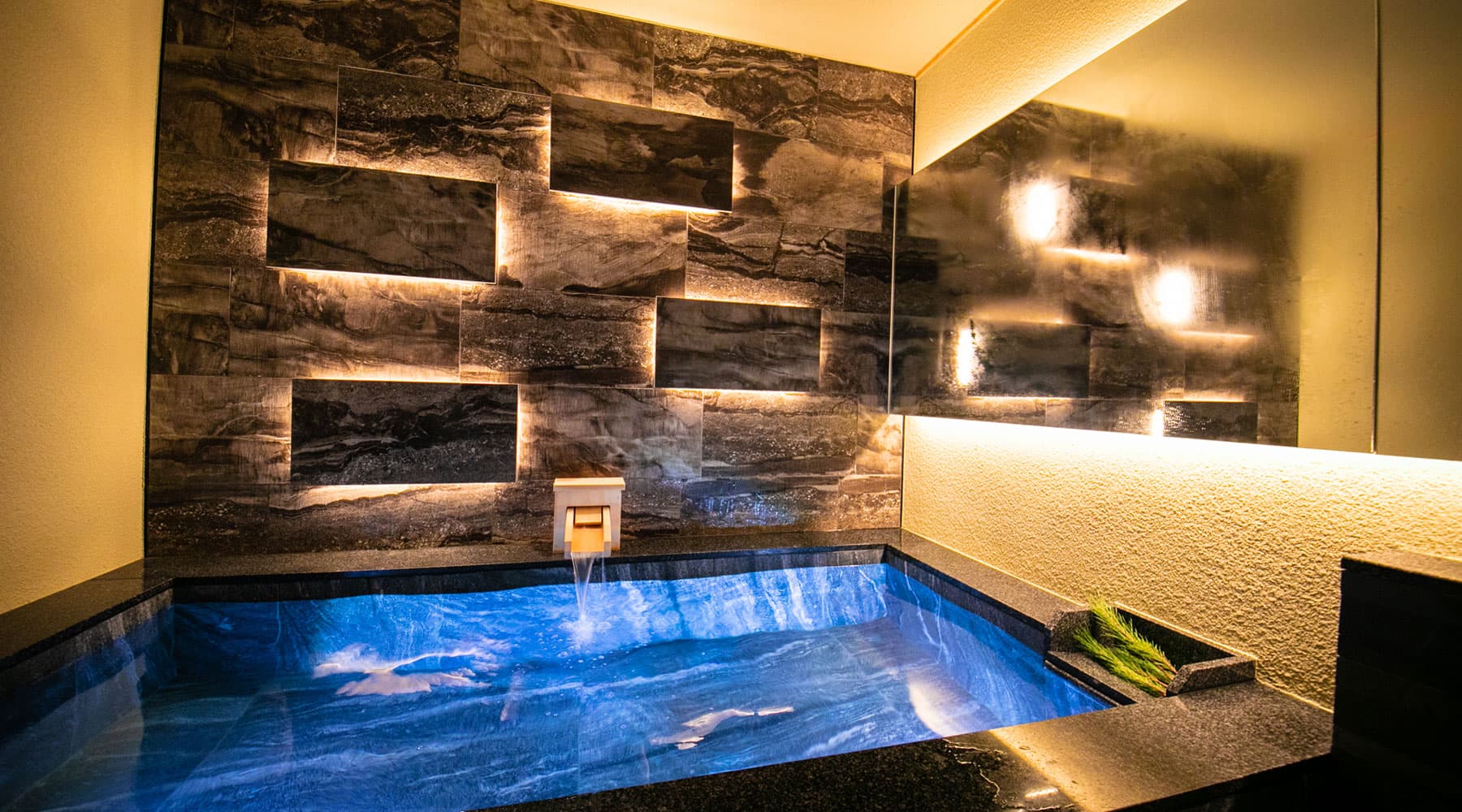
Most Kinosaki ryokans give you a sotoyu pass and send you into the town to hop between the seven public bathhouses. Tokitotoki does that too — but it also has a top-floor champagne club lounge included in the room rate. That lounge is the reason anniversary couples choose this property over everything else in Kinosaki: the celebration ambience is built into the architecture. You do not need to coordinate a special-occasion mood. It is there when you arrive.
Six suites. All-inclusive pricing covers kaiseki with seasonal ingredients — matsuba-gani (snow crab) from November through March, Tajima beef when the crab season ends. The onsen is kakenagashi, meaning water flows directly from the source without recycling or reheating. In Japan's onsen hierarchy, this is considered the highest quality format.
The sotoyu pass for Kinosaki's seven public bathhouses is included as standard, which gives anniversary couples a genuine evening activity: strolling the willow-lined canal street in yukata between bathhouses is one of the more romantically photogenic things you can do in a Japanese onsen town. One caveat: the public bathhouses have their own tattoo policies, which generally do not permit visible tattoos. If your partner has visible tattoos, the in-suite private bath is the main onsen experience — and it is more than sufficient.
Tattoo policy: Unknown. Contact the property directly before booking. See the note above about public bathhouses.
Pricing: The listed floor of $318 reflects a low-season rate. Trip.com snippets showed $415–$428 for February–March 2026 dates, per current OTA listings. Budget for the $415+ range in peak season, particularly during crab season (November–March) and cherry blossom.
Honest caveat: All-inclusive pricing means the headline rate is higher than it looks on OTAs. Confirm at booking exactly what is included (whether sparkling wine and cake are covered) versus what carries a supplement.
Rating: 9.5/10 (93 reviews) | Price: from $318 low season, typically $415+ high season | Booking: Trip.com, Booking.com, Expedia
Gekkoju (月洸樹) — Kyushu's most private anniversary retreat
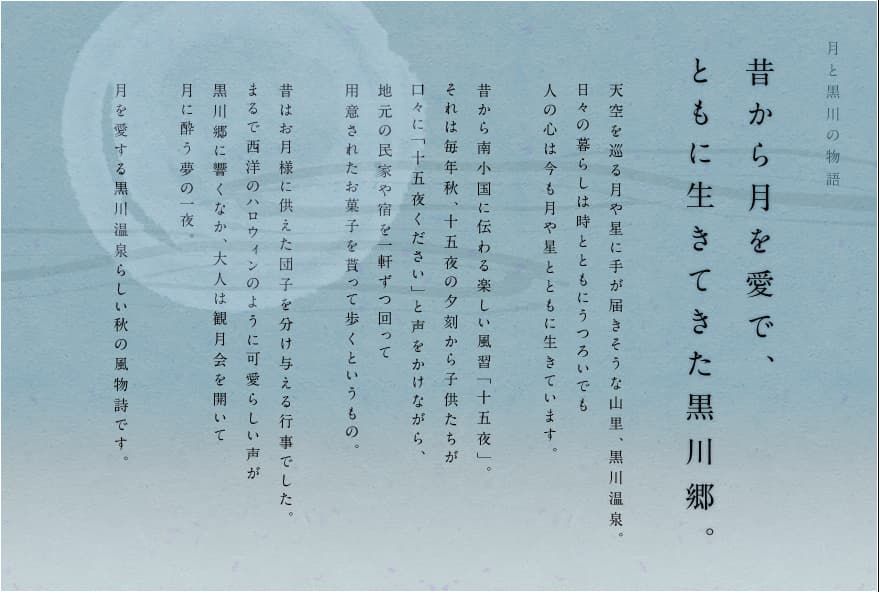
Gekkoju was built in 2016 with a specific design brief: eight villas on a 14,850-square-meter estate, each with both private indoor and outdoor baths, spaced far enough apart that guests rarely see one another during their stay. The outdoor rotenburo here has a near-zero light-pollution setting — the property explicitly describes star-gazing from the bath as a primary feature — and the per-guest rate (¥69,900–176,000 including meals) is the highest ceiling of any property on this list.
For a 30th anniversary couple who wants zero shared facilities and maximum Kyushu immersion, Gekkoju is the answer. Kurokawa as a village is less internationally known than Hakone but delivers comparable privacy architecture at comparable prices with far less tourist traffic. The trade-off is access: the drive from Fukuoka is 2+ hours by bus, and Beppu is 1.5 hours away. That distance is also what keeps the valley undisturbed.
At peak season — spring cherry blossom and autumn foliage — per-villa rates can reach approximately $2,347 per night. Don't let the $600 floor price anchor your expectations; budget for the upper end before committing.
Tattoo policy: Private-bath-only policy — villa onsen fully accessible. There are no gender-segregated communal baths on the property, so tattooed guests encounter no restrictions in practice.
Anniversary coordination: Direct contact strongly recommended. Kurokawa's village-scale inns do not have OTA infrastructure for coordinating surprise requests. Email the property weeks ahead — the official site has an English-language version at gekkoujyu.com. Allow 4–6 weeks.
Honest caveat: Kurokawa's bus connections are genuinely inconvenient from Tokyo or Osaka. This is a Kyushu trip — best combined with Fukuoka, Beppu, or Yufuin.
Rating: 9.5/10 (47 reviews) | Price: from $600/villa, two meals | Booking: Trip.com, Booking.com, Expedia
Sanso Warabino (山荘 わらび野) — all-villa seclusion above the valley
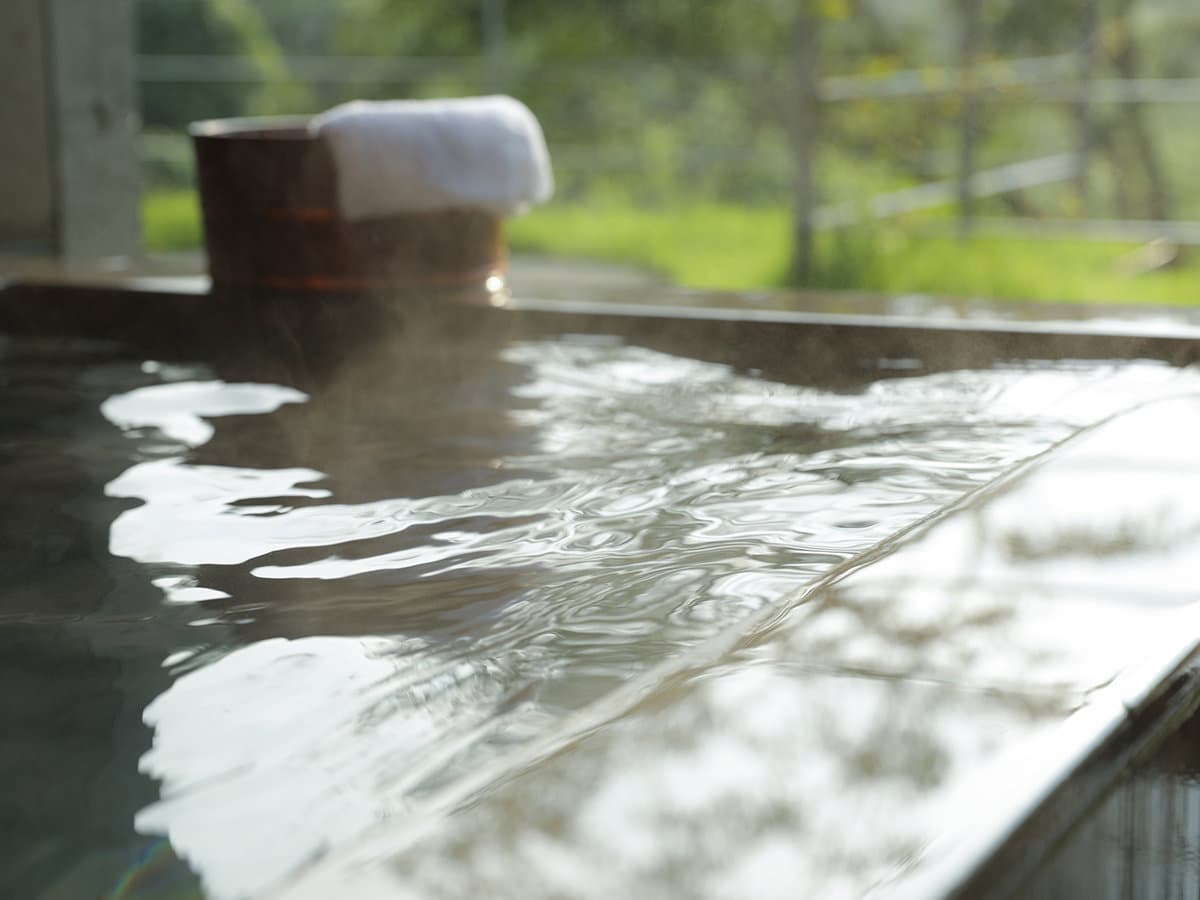
Thirteen detached villas above Yufuin, each with its own private free-flowing spring bath. No communal baths anywhere on the property — this is a total private-bath model. Warabino reopened in February 2019 after complete reconstruction following the 2016 Kumamoto Earthquake, which means the physical infrastructure is recent even though the property's character is deeply traditional.
The rating of 9.7/10 across 201 reviews makes this the best-reviewed all-villa property in Yufuin — a town that has several well-known competitors (Tamanoyu, Kamenoi Besso) with older reputations but higher prices and more limited international OTA availability. Warabino is the cleaner booking for a foreign couple: English-friendly confirmed, and the private-bath model means there are no shared facilities to navigate.
Kaiseki is served in the villa. For an anniversary, that means the celebration is entirely contained within your own space — no dining room interaction with other guests.
Tattoo policy: Private-bath-only policy — villa onsen fully accessible. With no communal baths on the property, this is a non-issue in practice.
OTA note: Trip.com and Expedia both list this property; Booking.com does not. For anniversary arrangements, email the property directly after booking — English contact is possible.
Honest caveat: Entry-level villas start around $270/room (¥41,800–93,600/guest with meals, per current listings). Representative stays for a well-appointed villa run $500–$600/night. The "from $270" floor is real but narrow.
Rating: 9.7/10 (201 reviews) | Price: from $270/villa, one dinner and breakfast | Booking: Trip.com, Expedia, direct for anniversary coordination
Ginzanso (仙峡の宿 銀山荘) — the cinematic wildcard
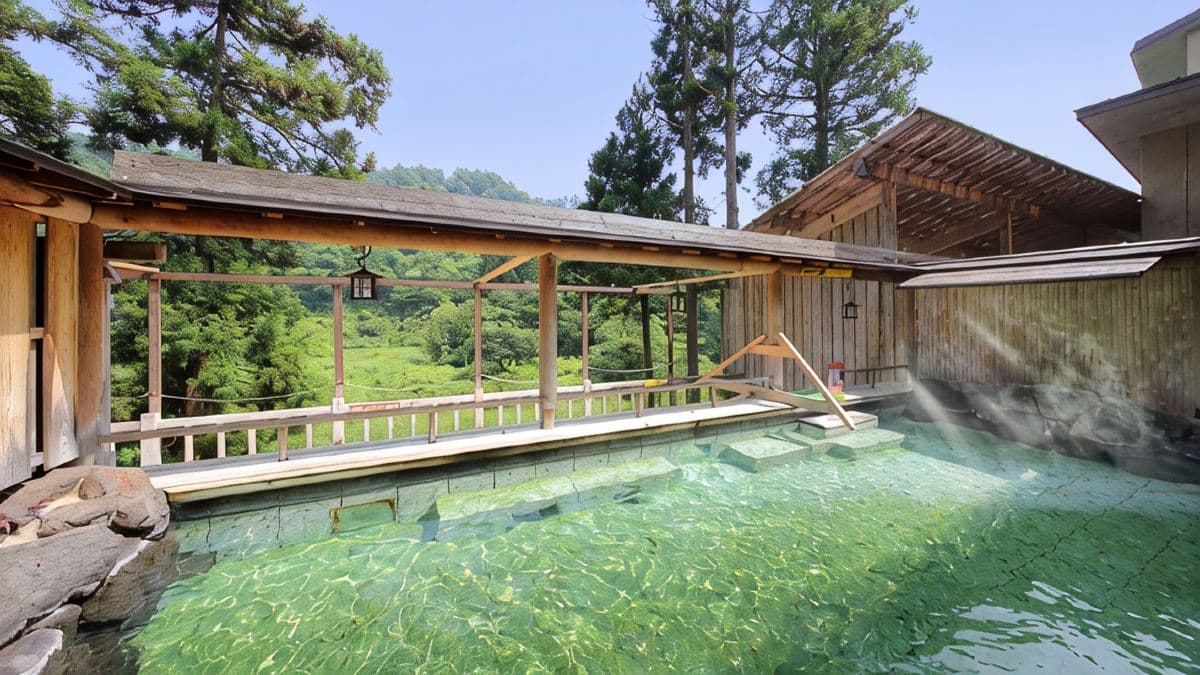
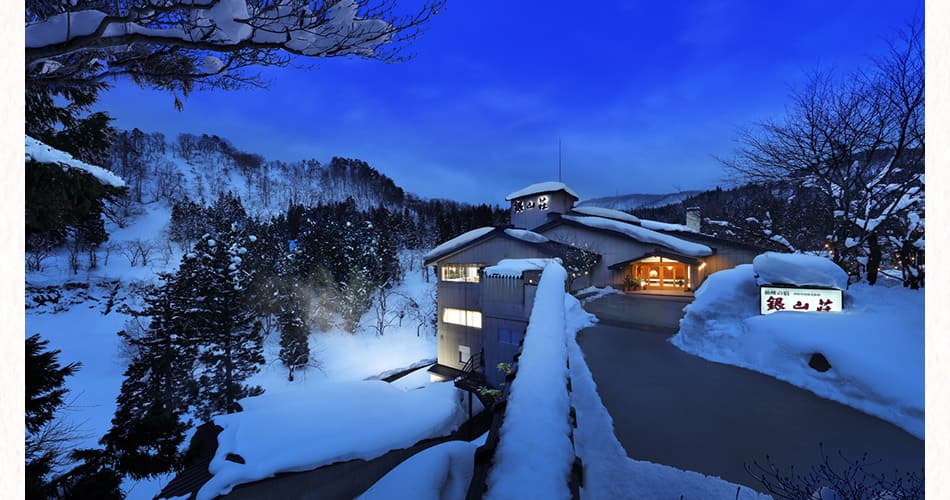
Ginzan Onsen exists in a narrow valley in Yamagata Prefecture where wooden Taisho-era inns overhang a narrow river on both banks. At dusk, the gas lamps come on. In January and February, snow accumulates on the rooflines and the river-reflection doubles the scene. In October and November, the maple canopy above the street turns copper-red. It is widely cited as looking like a scene from a Studio Ghibli film that somehow exists in real life.
Ginzanso is the largest and most English-capable property here: 40 rooms, a ganbanyoku (hot stone) spa, an outdoor lying-down bath facing the seasonal scenery, and private semi-outdoor baths in deluxe rooms. The official site confirms pricing at ¥19,800–23,100 per person per night (standard to deluxe, 2-guest occupancy, with meals) — at ¥150/USD, that is approximately $264–$308 per room, with peak-season rates reaching up to $450 per room.
Tattoo policy: Cover-up required (waterproof patch) for communal baths. Deluxe rooms include a private semi-outdoor bath accessible regardless of tattoo coverage.
Anniversary coordination: Ginzanso has a smaller dedicated English staff than the Hakone properties. Plan for 5–6 weeks lead time for anniversary requests. Coordination is possible — they have a National Geographic tour programme and are accustomed to international guests — but it requires more planning effort from your side than Hakone Ginyu or Gora Kadan.
Access: Yamagata Shinkansen from Tokyo (approximately 2h20m) to Oishida Station, then a free shuttle. This is a half-day journey. Build Ginzan as a dedicated 2-night stop, not a day-trip add-on. The setting rewards that commitment.
Honest caveat: Ginzan is the only mid-tier pick on this list, and the only one where the setting does more of the emotional work than the property itself. If your anniversary priorities are private kaiseki and luxury infrastructure, the Hakone or Kyushu picks are more appropriate. If you want the photograph that will make people ask where you went, this is it.
Rating: 9.5/10 (37 reviews) | Price: from $200/room, two meals | Booking: Trip.com, Booking.com, Expedia
Anniversary add-on costs decoded: what is standard vs. what you pay extra for
No competitor article gives line-item pricing for anniversary add-ons. Couples consistently report arriving to find charges they didn't anticipate, or surprise plans that didn't materialize because the OTA request field wasn't read. The table below draws on published ryokan anniversary add-on menus [reference: Shiratama no Yu Kaho anniversary menu, kahou.com] and general market norms — the actual costs at your specific property will vary, but these ranges are representative.
| Add-On | Typical Cost | Usually Included in Room Rate? | Notes |
|---|---|---|---|
| Anniversary cake (size 4) | ¥3,850–¥4,950 | No | Almost never included unless stated in package |
| Anniversary cake (size 5) | ¥4,950–¥6,000 | No | Specify size at booking |
| Room balloon decoration (standard) | ¥7,700 | No | Requires housekeeping pre-arrangement |
| Room balloon decoration (deluxe) | ¥11,000–¥16,500 | No | Includes more elaborate setup |
| Champagne / sparkling wine | ¥2,000–¥4,000 | Sometimes at splurge tier | Tokitotoki all-inclusive may cover this; Gekkoju and Fufu — confirm at booking |
| Bouquet / flower arrangement | ¥3,850–¥11,000 | No | Wide range based on size and flower type |
| Private bath upgrade (kashikiri, where applicable) | ¥3,000–¥5,000 per session | No | Irrelevant if you have in-room rotenburo |
| Late checkout | Often free on request | Free on request | Ask at booking, not at checkout |
| Commemorative photo in yukata | ¥3,000–¥10,000 | Varies | Some properties offer complimentary photo; ask |
Tip
Late checkout is more likely to be granted for anniversary guests than for standard bookings. Request it specifically in your initial coordination email — not on the morning of departure.
The key distinction: all-inclusive pricing at Tokitotoki likely bundles most celebration ambience costs into the rate. At splurge-tier villas (Gekkoju, Kawaguchiko Fufu), sparkling wine at check-in may be included by default. Confirm in writing before arrival so neither the cost nor the absence of something expected creates a problem on the day.
How to request anniversary arrangements in English (with a sample email)
The OTA special-request field — the box in Trip.com or Booking.com where you can type notes — is not reliably read by ryokan kitchen and housekeeping staff. It may reach the front desk. It will not reach the chef who needs to prepare a cake or the housekeeper who needs to dress the room. Treat it as a soft backup, not a primary coordination channel.
The reliable method is a direct email, sent at the point you receive your booking confirmation.
Timing: Contact the ryokan the same week you book. Three weeks minimum for smaller properties (Ransui's 9 rooms, Tokitotoki's 6 suites, Gekkoju's 8 villas). Six weeks ahead for peak season windows (late March, October, Golden Week), or for Ginzanso which has a slightly smaller English coordination team.
What to specify in writing: - The exact date your anniversary falls: "Our 20th wedding anniversary is [DATE]. We arrive [DATE]." - Your specific requests, each as a numbered item (easier to action than paragraphs) - Cake: yes/no, and preferred timing (with the dessert course of kaiseki / in-room after dinner / at check-in) - Room arrangement: yes/no (flowers / balloons — these are separate items with separate costs; confirm what you're requesting) - Sparkling wine: yes/no, and when you'd like it - Any kaiseki dietary restrictions (advance notice is essential for multi-course meals)
What not to do: Do not try to coordinate anniversary surprises at check-in. The front desk cannot action kitchen and housekeeping requests in real time. The surprise fails and it is not the staff's fault.
Here is a sample email to adapt:
*Dear [Ryokan Name] team,*
*We have a booking under [Name] for [dates], arriving [day].*
*We will be celebrating our [20th] wedding anniversary during this stay, with the anniversary date falling on [DATE].*
*We would like to request:* *1. An anniversary cake for two, to be presented in our room after the kaiseki dinner on [DATE].* *2. A small flower arrangement in the room on arrival.* *3. A bottle of sparkling wine or champagne at check-in.*
*Please let us know the cost for each item so we can confirm. We look forward to celebrating with you.*
*Thank you,* *[Name]*
Tip
If the property's website is Japanese-only, find the contact email address from the Booking.com or Trip.com listing page. Most traditional ryokans have a guest-relations staff member handling English email even when the website is not translated. The JNTO onsen etiquette guide is also useful context for first-time onsen guests in your party.
Which properties have confirmed English anniversary coordination: Hakone Ginyu (explicit on official site) and Gora Kadan (Relais & Chateaux concierge standard implies full capability). Direct contact required for all remaining six properties.
10th, 25th, 30th: how milestone anniversaries change what you should book
Anniversary travelers are not a monolith. A couple celebrating their 10th is in a different position than a couple marking their 30th — different budgets, different Japan experience, different priorities.
10th anniversary (ages ~33–38): Likely a first or second Japan trip. The ryokan format is still a discovery. Prioritize properties with strong English support and high visual impact — the "this is what Japan is" moment. Hakone Ginyu is the call here: valley-view private rotenburo in every room, confirmed English anniversary coordination, and a price roughly 30% below Gora Kadan. Ginzanso works for couples who want the cinematic setting over the luxury infrastructure. For first-time ryokan context, our first-time ryokan guide covers arrival protocol, yukata dressing, and kaiseki pacing.
20th–25th anniversary (ages ~43–50): Repeat Japan visitors who have done Kyoto and the major temple circuits. They know what kaiseki is. Now seeking stillness and privacy over itinerary density. The right picks for this cohort are Hashinoya Bekkan Ransui (Arima, for a Kansai-anchored trip), Sanso Warabino (Yufuin, for Kyushu), or Tokitotoki (Kinosaki, for something completely different in format). Tattoo policy starts to matter more in this age cohort — the properties with private-bath-only policies are the safest bets.
30th+ anniversary (ages ~53+): Treating this as a once-in-a-decade trip. Budget is highest. Privacy is non-negotiable. The relevant picks are Gora Kadan, Kawaguchiko Fufu, or Gekkoju — properties where the villa or suite is self-contained enough that you could spend two days barely leaving it and feel the time was well spent. These couples are least likely to want OTA friction — direct booking with a managed coordination call is the appropriate experience level.
Tattoo policies at these 8 ryokans: what you can actually use
The anniversary traveler cohort (ages 35–55) has meaningfully higher tattoo prevalence than younger honeymoon travelers. Yet no competitor article addresses tattoo policy per specific property in an anniversary context. Here is the plain-English breakdown.
What the policy categories mean in practice: - Private baths only: Communal baths are off-limits with visible tattoos. Your private in-room or villa bath is fully accessible, no restrictions. For an anniversary stay where you have a private rotenburo anyway, this policy is functionally a non-issue. - Cover-up required (waterproof patch): A waterproof patch allows access to communal baths. Private baths are usually accessible without any cover. Ginzanso falls here. - Unknown: The property has not confirmed their policy to us. Contact directly before booking.
| Property | Policy | What It Means for Your Stay |
|---|---|---|
| Gora Kadan | Private baths only | In-room rotenburo fully accessible; communal baths off-limits |
| Hakone Ginyu | Private baths only | In-room rotenburo fully accessible; communal baths off-limits |
| Kawaguchiko Fufu | Unknown (private baths permitted per property) | No communal baths on property; confirm directly |
| Hashinoya Bekkan Ransui | Private baths only | Private cypress kinsen bath fully accessible; communal bath off-limits |
| Sumihei Bettei Tokitotoki | Unknown | Contact property directly before booking; public sotoyu passes have their own policies |
| Gekkoju | Private baths only | Villa onsen fully accessible; no communal baths on property |
| Sanso Warabino | Private baths only | Villa onsen fully accessible; no communal baths on property |
| Ginzanso | Cover-up required | Waterproof patch for communal baths; deluxe room private bath accessible |
Six of these eight properties have private-bath-only or equivalent policies — and for five of those six, there are no communal baths on the property at all. If you have visible tattoos, you are not being excluded from the primary experience. You are being accommodated in your own bath. That is the point of an anniversary stay anyway.
Best season and booking timeline for an anniversary ryokan trip
Spring / cherry blossom (late March–mid April). The rotenburo-under-blossoms image is real and worth planning for. Caveat: book 3–4 months ahead minimum. Gora Kadan and Kawaguchiko Fufu can sell out 4–6 months in advance for late March dates. Ginzan's cherry blossom is less crowded than Hakone's and often bookable 6–8 weeks out with more flexibility. Japan welcomed 42.68 million international visitors in 2025 (JNTO) — the demand compression on popular windows is real.
Autumn / foliage (mid October–late November). Arguably the best light for photography. Maple canopy turns copper-red over the Hayakawa Valley at Ginyu, frames the Ginzan river at Ginzanso, and lines the entry path at Gora Kadan. Tokitotoki enters crab season in November — the kaiseki quality peaks here October through March. Book 2–3 months ahead. Slightly less competitive than spring.
Winter (December–February). Private rotenburo in snow is the most emotionally distinctive experience on this list. Ginzanso in January or February is transformative. Gekkoju's outdoor baths under light Kyushu snowfall are a different experience from anything in Honshu. Book 1–2 months ahead outside the New Year window.
Avoid New Year (December 28–January 3). Sold out across all tiers, prices elevated by 20–40%, staffing stretched, personalized service compressed. If your actual anniversary falls in this window, consider celebrating early or late.
Tip
Golden Week (late April–early May) and Obon (mid-August): book the day OTA availability opens, typically 6 months prior. All 8 properties here sell out for these windows before the discount-travel crowd arrives.
Frequently asked questions
Which ryokan in Japan is best for a wedding anniversary?
For luxury (splurge tier), Gora Kadan in Hakone or Kawaguchiko Fufu for a Fuji view. For the strongest mid-tier option, Hashinoya Bekkan Ransui in Arima offers the most intimate experience at the lowest entry price among the luxury-tier picks. For a mid-tier budget with a cinematic setting, Ginzanso in Ginzan Onsen. The "best" depends on your budget tier, Japan itinerary, and whether you're prioritizing landscape, privacy, or anniversary coordination confidence.
Do Japanese ryokans do anniversary packages?
Yes, but not in the Western hotel sense of a pre-packaged box. Most require direct contact ahead of arrival to arrange cake, flowers, and sparkling wine. The better question is whether the staff can coordinate your specific requests in English — which is the real bottleneck. Hakone Ginyu explicitly confirms anniversary surprise coordination on their official website. Use the email template in this article to initiate the request.
What is the difference between a private onsen and a kashikiri bath at a ryokan?
A private in-room rotenburo is attached to your suite, available 24 hours with no scheduling. A kashikiri is a shared bath reserved exclusively for your group for a timed window — typically 45–60 minutes, sometimes free, sometimes ¥3,000–5,000 per session. For an anniversary, in-room is superior if budget allows: zero interruptions, no time pressure. See our ryokans with private onsen for couples for a deeper breakdown.
Can I visit a Japanese ryokan if I have tattoos?
It depends entirely on the property. Six of the 8 ryokans on this list have private-bath-only or equivalent policies, meaning tattooed guests use their in-room or villa bath without restriction. Gekkoju and Sanso Warabino are the cleanest options — villa format with no shared bath interaction required. Ginzanso allows communal bath access with a waterproof patch cover-up. Tokitotoki and Kawaguchiko Fufu have unknown policies — contact directly before booking. See the tattoo policy table in this article for the full breakdown.
How far in advance should I book a ryokan for a spring anniversary?
3–4 months minimum for late March to mid-April. Gora Kadan and Kawaguchiko Fufu can sell out 4–6 months in advance during cherry blossom. For autumn, 2–3 months is usually sufficient. For Ginzan in winter, 6–8 weeks is often adequate outside the New Year window.
Is it better to book a ryokan directly or through Trip.com/Booking.com for anniversary trips?
Book via OTA for price protection and cancellation flexibility, then immediately follow up with a direct email to the ryokan for anniversary coordination. OTA special-request fields are not reliably actioned by kitchen and housekeeping at traditional ryokans. The email template in this article gives you the exact phrasing.
Planning your anniversary itinerary? Browse the full ryokan selection across each of these regions: Hakone · Arima Onsen · Yufuin · Kurokawa Onsen · Kinosaki Onsen · Kawaguchiko
Or browse all ryokans on JRG filtered by private onsen, budget tier, and area.
If you're forwarding this to a friend who just got engaged, our Japan honeymoon ryokan guide covers the first-timer framing: what to expect on arrival, how to eat kaiseki, and which properties suit couples who haven't stayed in a ryokan before — as well as ideas for marking anniversary milestones on a first Japan stay.
Ready to book?
Book one of these top picks
Compare live availability and prices across all three platforms.


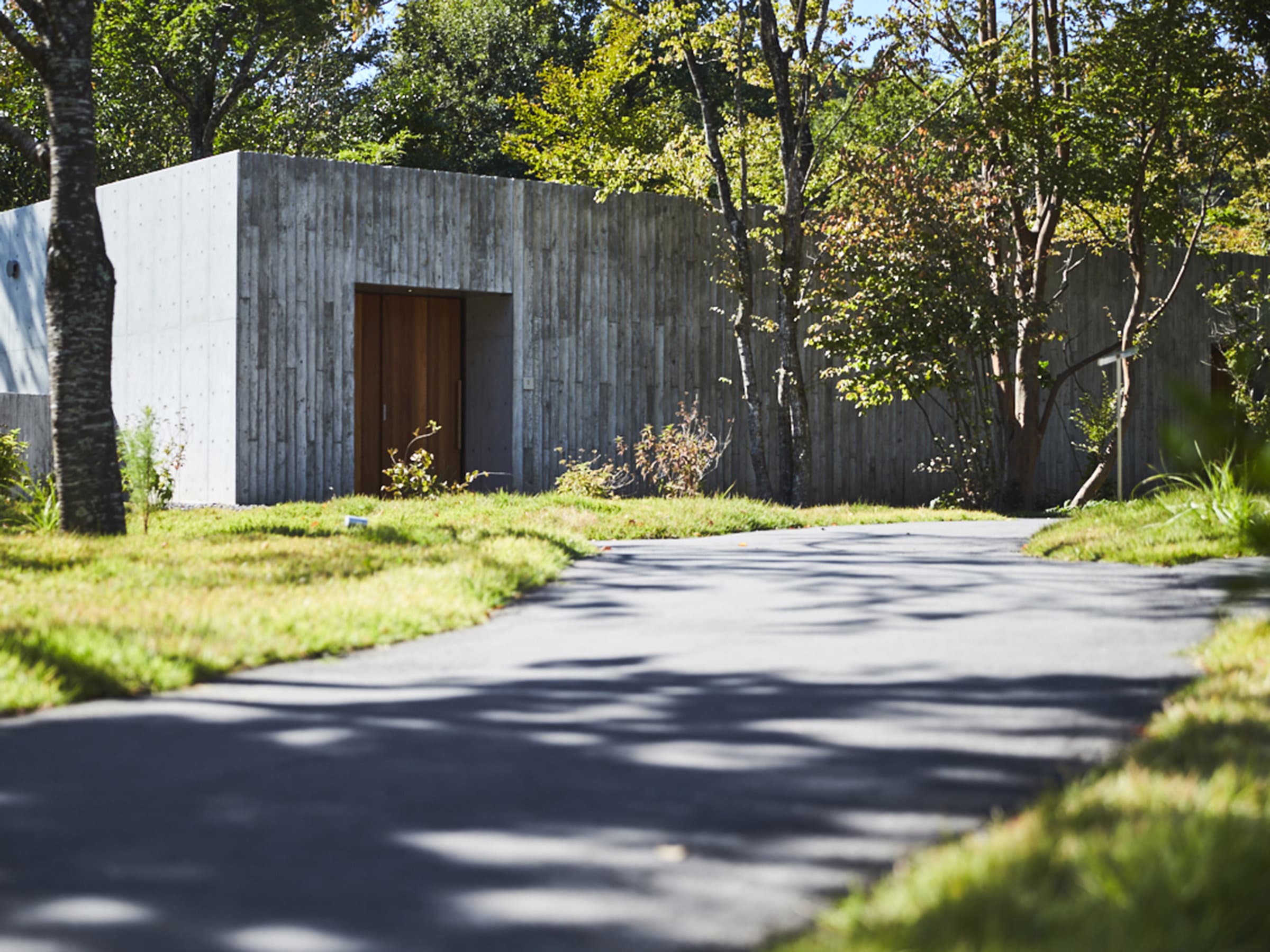
Booking links may earn us a commission at no extra cost to you.
FAQ
Frequently asked questions
Which ryokan in Japan is best for a wedding anniversary?+
For luxury (splurge tier), Gora Kadan in Hakone or Kawaguchiko Fufu for a Fuji view. For the strongest mid-tier option, Hashinoya Bekkan Ransui in Arima offers the most intimate experience at the lowest entry price among the luxury-tier picks. For a mid-tier budget with a cinematic setting, Ginzanso in Ginzan Onsen. The best depends on your budget tier, Japan itinerary, and whether you're prioritizing landscape, privacy, or anniversary coordination confidence.
Do Japanese ryokans do anniversary packages?+
Yes, but not in the Western hotel sense of a pre-packaged box. Most require direct contact ahead of arrival to arrange cake, flowers, and sparkling wine. The better question is whether the staff can coordinate your specific requests in English — which is the real bottleneck. Hakone Ginyu explicitly confirms anniversary surprise coordination on their official website. Use the email template in this article to initiate the request.
What is the difference between a private onsen and a kashikiri bath at a ryokan?+
A private in-room rotenburo is attached to your suite, available 24 hours with no scheduling. A kashikiri is a shared bath reserved exclusively for your group for a timed window — typically 45–60 minutes, sometimes free, sometimes ¥3,000–5,000 per session. For an anniversary, in-room is superior if budget allows: zero interruptions, no time pressure. See our ryokans with private onsen for couples guide for a deeper breakdown.
Can I visit a Japanese ryokan if I have tattoos?+
It depends entirely on the property. Six of the 8 ryokans on this list have private-bath-only policies, meaning tattooed guests use their in-room or villa bath without restriction. Gekkoju and Sanso Warabino are the cleanest options — villa format with no shared bath interaction required. Ginzanso allows communal bath access with a waterproof patch cover-up. Tokitotoki and Kawaguchiko Fufu have unknown policies — contact directly before booking. See the tattoo policy table in this article for the full breakdown.
How far in advance should I book a ryokan for a spring anniversary?+
3–4 months minimum for late March to mid-April. Gora Kadan and Kawaguchiko Fufu can sell out 4–6 months in advance during cherry blossom. For autumn, 2–3 months is usually sufficient. For Ginzan in winter, 6–8 weeks is often adequate outside the New Year window.
Is it better to book a ryokan directly or through Trip.com/Booking.com for anniversary trips?+
Book via OTA for price protection and cancellation flexibility, then immediately follow up with a direct email to the ryokan for anniversary coordination. OTA special-request fields are not reliably actioned by kitchen and housekeeping at traditional ryokans. The email template in this article gives you the exact phrasing.


