Pin to Pinterest
Two questions shape every ryokan booking decision for a woman traveling alone in Japan: will I have to be naked in front of strangers, men included? And will the staff understand me if something goes wrong? Everything else is secondary. If you're still weighing whether to do a ryokan solo at all, start with our general guide to solo ryokan stays, then come back here for the women-specific shortlist.
Japan ranked #1 in the Solo Female Travelers Club's 2025 wishlist survey — and yet 66% of solo female travelers cite personal safety as their top concern when choosing a destination [Solo Female Travelers Club 2025 survey]. That tension — the wanting and the worrying living side by side — is exactly what this guide is built to resolve. Not with reassuring words, but with a concrete filter applied to the 621 ryokans in our verified database: confirmed English-speaking staff staff and a confirmed private onsen. Those two data points answer both fears directly.
The 15 picks below were selected from 306 properties in our database that pass both filters. They span ten onsen towns, five price bands ($89 to $500 a night) and every major region of Japan, from Hokkaido to Shikoku.
The two-question filter every solo female traveler should apply
Fear 1: mixed bathing. The fix is a ryokan with a private onsen. That means the bath is yours alone — you step from your own room into an open-air rotenburo, or you reserve the shared kashikiri bath exclusively for your time slot. Either way, you never share the water with anyone you didn't choose.
Fear 2: language anxiety — or the subtler worry of feeling exposed and helpless if something goes wrong. The fix is English-speaking staff staff at the front desk: people who handle check-in in English, explain the meal options, and can call emergency services without you having to translate your own problem.
These aren't fuzzy signals. They're concrete database fields we verify for every property. And the competition tends to ignore both, listing "beautiful" ryokans by review score without filtering on either criterion.
Before going further, here's what private onsen actually means, because the terminology confuses even experienced Japan travelers:
Tip
What "private onsen" really means. An in-room rotenburo is an open-air bath attached directly to your room: you step out from your own bedroom and soak under the sky, completely alone. A kashikiri is a shared bath you can reserve exclusively for your time slot (usually 45 to 60 minutes), locked to your booking. Both mean you never share the water with strangers. A third type — gender-separated communal baths — is also the standard setup at most ryokans and is no different from a public pool changing room: same sex only, nudity is normal and not sexualized. A fourth type, konyoku (mixed bathing), is covered below. Every onsen-town property in the comparison table has confirmed rotenburo or kashikiri access.
Every pick in the table below has the English-speaking staff flag confirmed in our database — not inferred from promotional material, not guessed from a ryokan's website, but verified at the property level — and every pick except the Kyoto entry has the a private onsen flag confirmed as well.
Which onsen experiences to avoid, and which are perfectly safe
Gender-separated communal baths are the norm at the vast majority of Japan's ryokans and onsen resorts. In the popular destinations — Kinosaki, Hakone, Arima, Kusatsu — every public and hotel bath separates men and women. There is no exposure risk. Japanese women traveling alone use these baths routinely and without a second thought.
Konyoku (混浴), traditional mixed-gender bathing, is different. It still exists, mostly at remote mountain inns, and two names come up again and again in solo female travel forums as inns worth understanding before you book.
Takaragawa Onsen (Minakami, Gunma) is Japan's most famous konyoku resort. Three of its four riverside outdoor baths are mixed. Bathing garments (yu-ami) are mandatory in those three, and a fourth bath called Maya is reserved for women at all times. Takaragawa is genuinely spectacular — a wide river gorge, cedar-scented air, stone baths the size of small swimming pools — but if you want to bathe without men present, it isn't the place. It does not appear in our verified shortlist. [Source: Outdoor Japan, Japan Nature Stays]
Hoshi Onsen Chojukan (Minakami, Gunma) is a National Tangible Cultural Property, roughly 140 years old, with a famous wooden konyoku bath called Hoshi-no-Yu. Women can use Hoshi-no-Yu during women-only hours from 20:00, and a women-only bath, Choju-no-Yu, is always available as well. Hoshi Onsen's cultural pedigree is real — the roof architecture alone is worth seeing — but plan your bathing around those time slots. [Source: Hoshi Onsen Chojukan official website]
Neither inn is in our verified inventory, and neither passes our private onsen + English-friendly filter. They're mentioned here because they show up regularly in generic Japan roundups without a proper warning for solo female travelers. The practical takeaway: konyoku is rare, easy to identify in advance and entirely avoidable — and a ryokan with an in-room private bath removes the question altogether.
Which onsen towns work best for a solo female traveler: walkability, safety and atmosphere
 Pin to Pinterest
Not every onsen town is equally easy to navigate alone, especially if you're arriving by train and walking in the dark in a borrowed yukata. Here's an honest read on each town that appears in the shortlist below.
Kinosaki (Hyogo): the gold standard for solo female travelers
Kinosaki's ryokans occupy a single compact town in northern Hyogo, reached by limited express train from Kyoto in about 2.5 hours — no car needed. The town's signature experience is strolling between its seven public bathhouses (sento) at night in a yukata and wooden geta sandals. All seven are gender-separated: there is no konyoku anywhere in Kinosaki [Visit Kinosaki official FAQ]. The circuit is well lit, self-contained and busy with solo travelers, Japanese and international alike. There's an English-speaking information office near the station. If you're going to do exactly one onsen town alone, this is the one I'd recommend to a friend without hesitation.
Hakone (Kanagawa): the most popular onsen escape from Tokyo
Hakone's ryokans are about 85 minutes from Shinjuku on the Odakyu Romance Car, a reserved-seat sightseeing train that makes the ride itself part of the trip. Hakone is the most searched-for onsen destination among Tokyo-based travelers, and the surrounding national park means you arrive to cedar forest views and, on clear days, Mount Fuji. The Gora and Sengokuhara districts pair private-bath ryokans with Hakone's open-air sculpture museums, and the Hakone Free Pass covers the Romance Car plus local buses and the ropeway, making this one of the easiest car-free solo itineraries in the country. Our database records 19 properties there that meet the English-friendly + private onsen criteria — the second-largest supply in this entire inventory, after Kurokawa.
Yufuin (Oita): picturesque and walkable — book single rooms early
Yufuin's ryokans sit at the end of the Yufuin-no-Mori limited express from Hakata, a gorgeous mountain-view train ride of about 1 hour 10 minutes. The main street from the station is lined with willows, cafés and craft shops; it's safe and pleasant to wander alone. The honest caveat: Yufuin leans toward couples. Single-room availability can be thin, and some inns have historically charged solo guests the two-person rate. Book early and confirm single occupancy is accepted before you commit.
Arima (Hyogo): a direct train from Kobe and tattoo-friendly options
Arima's ryokans are about 30 minutes from Shin-Kobe by direct train — one of the easiest onsen escapes from Osaka or Kobe for a solo traveler who wants the option of being back in the city by midnight. Arima is one of the officially designated nihon santo (Japan's "three great hot springs"), alongside Gero and Kusatsu. Several picks in this area have their tattoo policy set to private_only, which means tattooed women can use the in-room private bath freely — removing a common source of anxiety.
Gero (Gifu) and Kusatsu (Gunma): budget-friendly with strong trust signals
Gero's ryokans are 2 hours from Nagoya on the direct JR Hida express, and Shogetsu — the Gero pick on this list — starts at $120 a night with 556 reviews behind it. Gero is the third member of the nihon santo trio, which means genuine hot-spring credibility alongside accessible prices. Reaching Kusatsu's ryokans takes a little more doing — train to Naganohara-Kusatsuguchi Station, then 25 minutes on the JR Bus Kanto to the terminal (¥780, covered by the JR East Pass) — but Kusatsu town itself is compact, well lit and heavily visited by Japanese women traveling alone. The safety-in-numbers feeling in the evenings is palpable.
Tip
Late arrival in Kusatsu: the last JR Bus Kanto from Naganohara-Kusatsuguchi leaves surprisingly early in the evening. If you're coming in on a late train, arrange a taxi in advance — there are no ride-hailing apps in the town.
Atami (Shizuoka): a direct 45-minute shinkansen from Tokyo
The Kodama shinkansen from Tokyo reaches Atami's ryokans in about 45 minutes, making Atami the most time-efficient private-onsen escape from the capital. Kakurezato, the Atami pick on this list, has just 8 rooms — a rare intimacy at a price ($157 a night) notably below most comparable properties. It's doable as a day trip if the budget is tight, though staying overnight is what unlocks the kaiseki dinner and the sunrise bath.
Kurokawa (Kumamoto): spectacular, but bus-only — plan ahead
Kurokawa's ryokans demand serious planning. There is no direct train. The most practical public-transport route is the Kyushu Odan Bus from Kumamoto Station to Kurokawa — about 3 hours and ¥3,400 each way, with only two daily departures from Kumamoto (08:16 and 12:27 as of 2026) [Kurokawa Onsen Ryokan Association official access guide]. Once you arrive, the village is compact and entirely walkable: the famous nyuto tegata pass lets you sample multiple onsen baths on foot. But Kurokawa is not a spontaneous last-minute trip, and it's the wrong pick for a train-only itinerary with no slack days.
15 verified ryokans for solo female travelers: private onsen + English-friendly staff
Every property below has English-speaking staff confirmed in our database — and every property except the Kyoto entry has a private onsen confirmed as well — selected from 306 qualifying properties across Japan. They're grouped by region, not ranked: your best pick depends on your route, your budget and whether a direct train matters to you. The price shown is the "from" rate per room per night in USD.
For Bettei Oborozukiyo (Dogo), Booking.com is not available per our database — book via Agoda or Trip.com only. For Okyakuya (Kurokawa), Agoda is not available — use Trip.com or Booking.com.
 Pin to Pinterest
| Ryokan | Area | From (USD) | Rating | English-friendly | Private onsen | Solo female note |
|---|---|---|---|---|---|---|
| Kinki / Hyogo — Kinosaki | ||||||
| Tsuchiya Ryokan | Kinosaki | $279 | 9.8 | Yes | Yes | A 12-room inn a short walk from the station. All 7 of Kinosaki's public bathhouses are gender-separated. |
| Mikuniya | Kinosaki | $89 | 9.6 | Yes | Yes | The cheapest pick in a town with a direct train and zero konyoku. |
| Kinki / Hyogo — Arima | ||||||
| Tocen Goshobo | Arima | $235 | 9.6 | Yes | Yes | 5 min walk from the station. 206 reviews. Tattoo policy: private onsen only. |
| Taketoritei Maruyama | Arima | $250 | 9.5 | Yes | Yes | The highest review count among the Arima picks (381). 8 min walk from the station. Tattoos: private only. |
| Kinki / Kyoto | ||||||
| Hiiragiya Ryokan | Kyoto | $500 | 9.6 | Yes | No | Founded in 1818 (per the inn's own stated history). A historic Kyoto ryokan with English-speaking staff, 5 min walk from the subway. Ideal for temple mornings and ryokan evenings. |
| Tokai / Shizuoka — Atami | ||||||
| Atami Kakurezato | Atami | $157 | 9.7 | Yes | Yes | Direct shinkansen from Tokyo (45 min). Just 8 rooms. Tattoos: private only. 237 reviews. |
| Chubu / Gifu — Gero | ||||||
| Shogetsu | Gero | $120 | 9.6 | Yes | Yes | 556 reviews — a huge trust signal. 72 rooms, big-hotel scale compared with most picks here; the communal vibe differs from the intimate inns above, but it has a solid track record with solo women and sits close to the station (10 min walk from Gero Station). Tattoos: cover-up required in shared baths; the private onsen sidesteps this entirely. |
| Kanto / Gunma — Kusatsu | ||||||
| Kusatsu Onsen Gensen Ichinoyu | Kusatsu | $97 | 9.6 | Yes | Yes | The only budget pick with a private onsen. 924 reviews. Tattoos: private only. 25 min by bus from the rail terminal. |
| Kanto / Tochigi — Nikko | ||||||
| Hotel Hana-An | Nikko | $247 | 9.6 | Yes | Yes | 1,653 reviews — the second-highest count in the shortlist. World Heritage temple country. A short taxi ride from Tobu-Nikko Station. |
| Kyushu / Oita — Yufuin | ||||||
| Hinoharu Ryokan | Yufuin | $200 | 9.7 | Yes | Yes | 11 rooms — intimate scale. A scenic 15-min walk from Yufuin Station. Book single rooms early. Tattoos: cover-up required in shared baths. |
| Yufuin Souan Kosumosu | Yufuin | $300 | 9.6 | Yes | Yes | 12 rooms. Tattoos: private only. 120 reviews. Luxury tier with an accessible entry price. |
| Kyushu / Kumamoto — Kurokawa | ||||||
| Okyakuya (Rekishi no Yado) | Kurokawa | $95 | 9.8 | Yes | Yes | 2,589 reviews — the highest count in the entire inventory. From $95. Bus-only from Kumamoto (3 h). Trip.com + Booking.com only. |
| Ryokan Sanga | Kurokawa | $250 | 9.6 | Yes | Yes | Tattoos: private only. Walkable village + nyuto tegata pass. Bus from Kumamoto (3 h). |
| Hokkaido — Noboribetsu | ||||||
| Takinoya | Noboribetsu | $350 | 9.6 | Yes | Yes | The only Hokkaido pick. 276 reviews. Tattoos: private only. 15 min by bus or taxi from JR Noboribetsu Station. |
| Shikoku / Ehime — Dogo | ||||||
| Bettei Oborozukiyo | Dogo | $350 | 9.6 | Yes | Yes | 8 min walk from Dogo Onsen Station. One of Japan's oldest hot spring resorts. Tattoos: private only. Agoda + Trip.com only. |
Ready to book?
Book one of these top picks
Compare live availability and prices across booking sites.
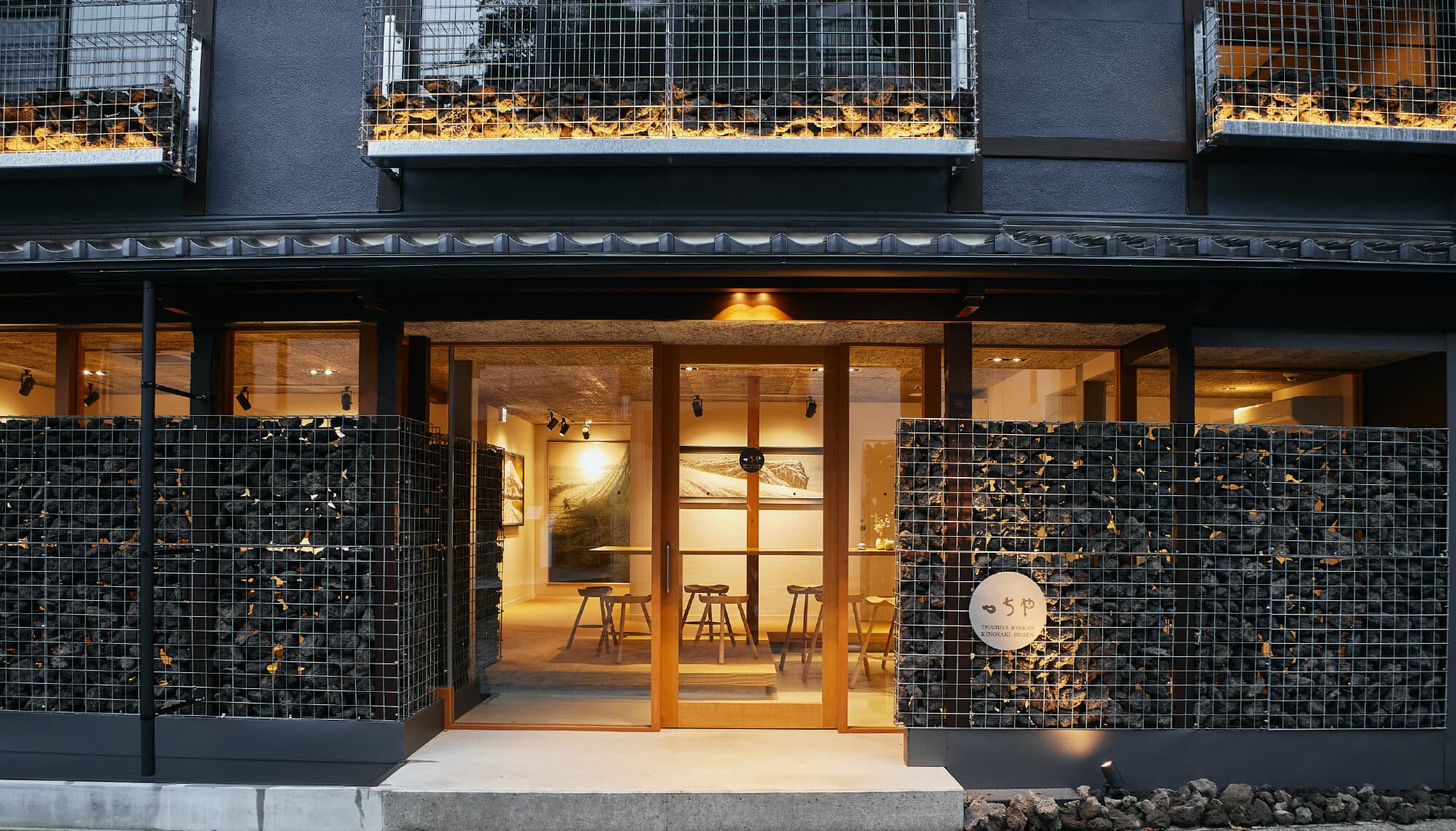
Tsuchiya Ryokan
城崎温泉つちや旅館
Kinosaki·Luxury
from US$279 · per person · per nightfrom ≈ US$558 total for 2 guests



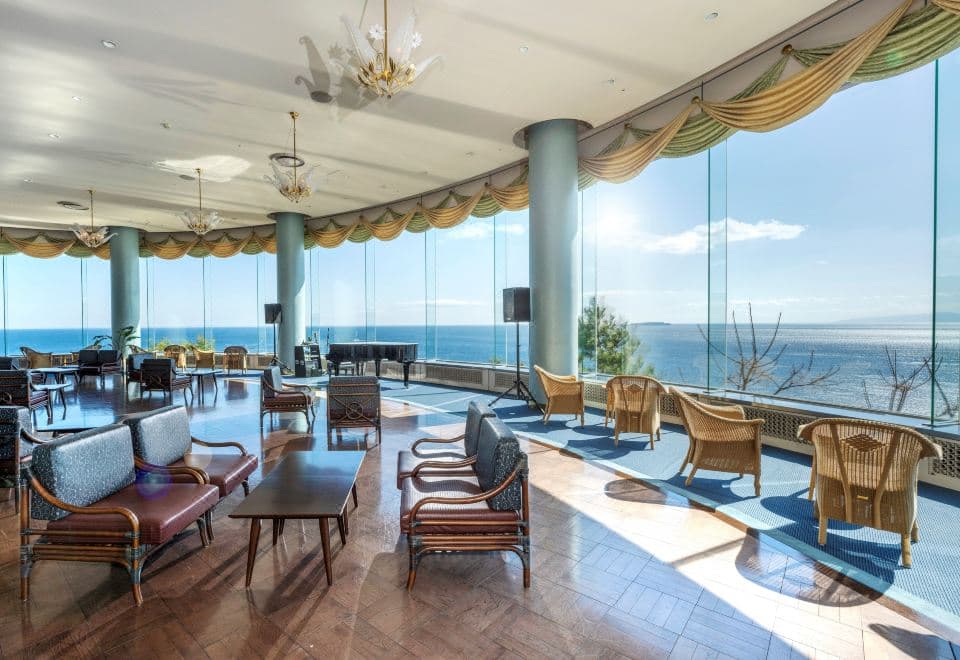
Atami Kakurezato
熱海の隠れ里
Atami·Luxury
from US$157 · per person · per nightfrom ≈ US$314 total for 2 guests
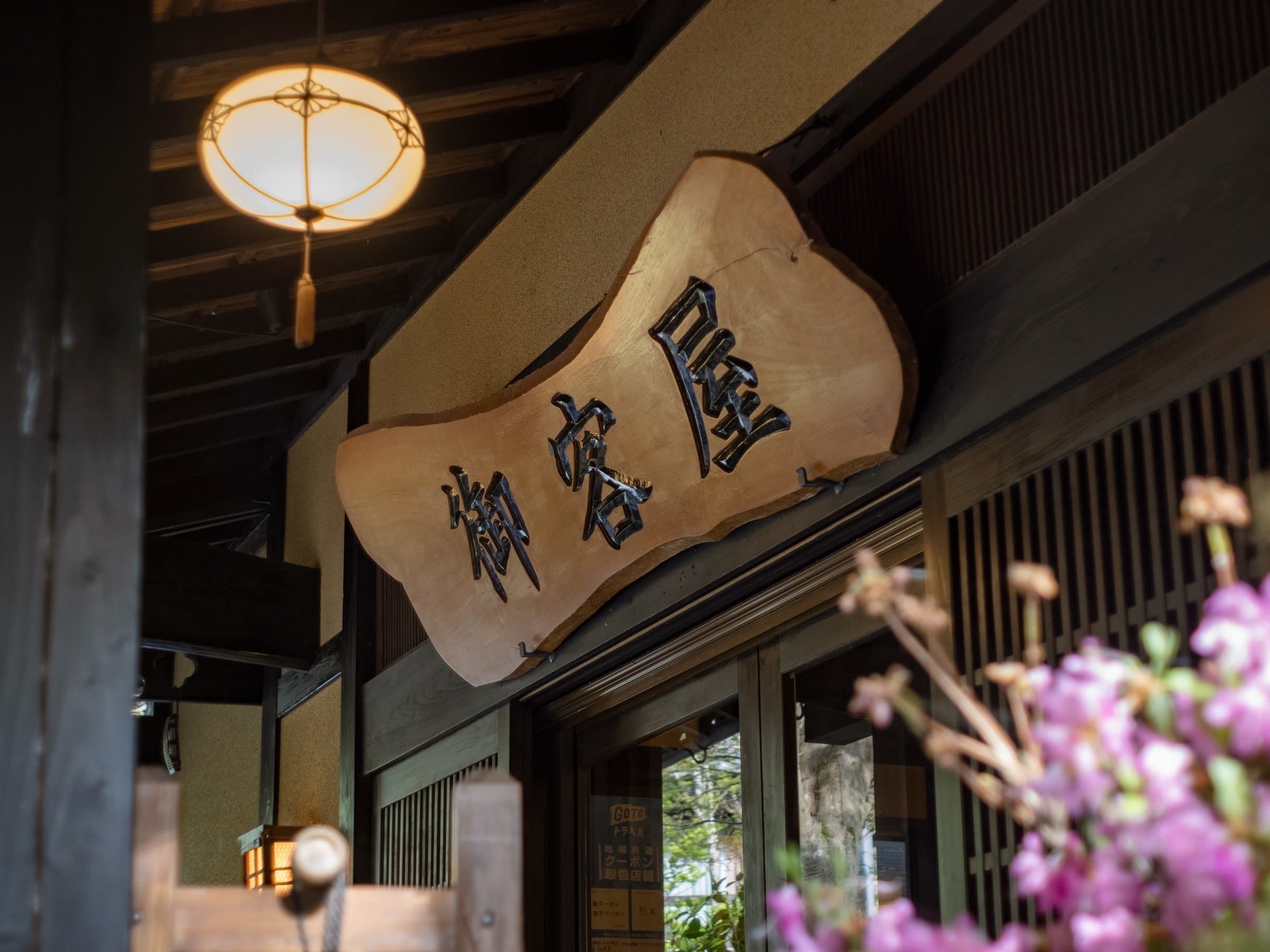
Okyakuya
歴史の宿 御客屋
Kurokawa·Mid-Range
from US$95 · per person · per nightfrom ≈ US$190 total for 2 guests
Shogetsu
しょうげつ
Gero·Mid-Range
from US$120 · per person · per nightfrom ≈ US$240 total for 2 guests

Hinoharu Ryokan
日の春旅館
Yufuin·Mid-Range
from US$200 · per person · per nightfrom ≈ US$400 total for 2 guests
Booking links may earn us a commission at no extra cost to you.
Explore all 306 English-friendly, private-onsen ryokans — see the full ryokan listing.
Dining alone at a ryokan: why solo kaiseki is better than you think
Anxiety about eating alone is something I hear regularly from women considering their first ryokan stay. It's also almost entirely unfounded, because at the great majority of Japanese ryokans kaiseki dinner is served in your room by a personal attendant. A solo traveler isn't sitting at a restaurant table trying to avoid eye contact. The attendant brings course after course — a small cold starter of seasonal vegetables in dashi, then something grilled, then sashimi, then a clay pot simmering over a tabletop burner — and leaves you in your yukata, on your cushion, at your low table, with exactly as much silence as you want.
Some larger ryokans do have communal dining rooms. If this worries you, ask when booking whether in-room dining is offered. English-friendly ryokans in Japan usually have staff who can communicate this clearly in advance.
Communicating dietary needs is easier than it looks. When booking through Agoda or Trip.com, use the special requests field to note any restriction: no meat, shellfish allergy, vegetarian. Most English-speaking staff inns answer direct emails in English within 24 hours if you need to confirm specifics. The kitchen staff at a well-reviewed ryokan have usually handled every dietary scenario before; what the solo traveler needs to supply is advance notice, not a Japanese translation of her needs.
The solo onsen landscape inside Japan has also shifted in ways that favor individual visitors. Women in their 40s and 50s are now the fastest-growing segment of solo onsen travelers, treating a ryokan night as a self-care retreat rather than a compromise [Real Gaijin / Substack, Japan's Solo Onsen Boom, 2026]. Kaiseki for one is no longer a novelty at most established ryokans: it's a routine booking configuration.
Do ryokans charge solo guests extra? (The honest answer)
Historically, many ryokans priced rooms per person with meals included, which meant a single guest in a double room could pay the full two-person rate — or face a surcharge of roughly ¥5,000 or more (about $31) per person [Ryokan Kashiwaya editorial on solo travelers]. That model persists at some inns, especially traditional family-run houses with small kitchens, where cooking for two is structurally baked into the price.
The market is shifting. The Japanese term to look for is hitori-domari OK (一人旅OK), meaning one-person stays are accepted. On Jalan.net, Japan's largest ryokan booking site, you can filter explicitly for properties that welcome solo travelers. On Rakuten Travel, the filter is 一人OK. Both surface inns that have explicitly flagged themselves as solo-friendly and usually show a transparent single-occupancy rate.
Tip
Booking tip: how to filter for solo-friendly ryokans on the Japanese sites. On Jalan.net, enter your destination and look for the 一人旅 (solo travel) category filter. On Rakuten Travel, filter by 一人OK. These filters surface inns that have explicitly marked themselves as welcoming to solo travelers, often with a single-occupancy room type and transparent pricing.
When you book through Agoda or Trip.com, displayed prices are per room, not per person. A solo traveler booking a double room pays the room rate. The practical caveat is that some ryokans list their smallest room type as the entry price — always check that the listed room actually accommodates one guest.
All 15 picks in this article accept solo bookings through the OTAs — something we confirmed during the research for this guide. If you're considering a property outside this list, email in English to ask whether they have a single-occupancy option and how the pricing works. Most English-speaking staff inns reply clearly and without fuss.
Safety signals worth checking before you book
 Pin to Pinterest
Japan ranked 10th in the 2026 Global Peace Index Institute for Economics and Peace / Vision of Humanity, [2026 Global Peace Index]. Its intentional homicide rate is roughly 0.2 per 100,000 people — about 20 times lower than the United States, per 2023 National Police Agency statistics [selfguidejapan.com]. That context matters, but it doesn't answer the specific question a solo female traveler is asking when she books accommodation.
The main reported harassment risk for women in Japan is chikan — groping on packed rush-hour commuter trains, overwhelmingly between 07:30–09:30 and 17:30–19:30 on major urban rail corridors. Women-only train cars exist on most major urban lines. Onsen towns have no commuter crush. The foot traffic at dusk is tourists in yukata.
A few specific things worth checking before you confirm a booking:
- Room locks. Every modern ryokan has card or key locks on guest room doors. If you're staying at a very small, very old inn and this matters to you, ask specifically before booking.
- Front desk hours. Smaller inns (10–15 rooms) may staff the front desk only from 07:00 to 22:00. If you're arriving on a late train or want the option of an overnight emergency contact, confirm the hours before you book.
- Station proximity. Properties near the train station give you the flexibility to arrive and leave at odd hours without depending on a taxi that may not exist at 23:00 in a rural town. The table above notes which picks have near a train station.
- Walking at night in a yukata. In the onsen towns built for it — Kinosaki, Dogo, Kusatsu, Yufuin — this is the town's signature cultural experience, not an unusual or risky activity. The ryokan provides a haori jacket for the cold. For the full bathing etiquette and yukata guidance, see our onsen etiquette guide.
A solo traveler who plans her transit windows in advance and books a property near the station has practically no scenario worth worrying about in any town on this list.
What to pack for a solo ryokan stay
The ryokan provides almost everything. What surprises many first-time visitors is how complete the provided kit is.
The ryokan provides: yukata, obi sash, haori jacket, toothbrush, razor, shampoo, conditioner, body wash, hair dryer, towels and room slippers. Most also set out a small pouch of cotton pads and facial cotton. You don't need to pack toiletries for the room.
Bring this:
- Any prescription medication and contact lens supplies — rural pharmacies may not stock your specific items
- Feminine hygiene products — smaller inns in rural areas don't always keep these in reserve
- A light cardigan or packable layer for air-conditioned shinkansen and highway buses on arrival
- One smart-casual outfit if you plan an evening out in town beyond the yukata circuit
- A compact folding umbrella — full-size umbrellas are awkward in small ryokan rooms and a nuisance in hallways in a yukata; a compact one is plenty
Skip this: full-size toiletry bottles (the room is already fully stocked) and outdoor shoes beyond the genkan — you leave street shoes at the entrance step and switch to the inn's slippers. Many solo travelers are also surprised that a small crossbody bag for the yukata stroll falls into this category: the ryokan usually provides a yukata bag or a small tote.
For tattooed travelers: if you have visible tattoos and want to use the shared baths beyond your private in-room one, bring small waterproof cover patches or medical tape. Some ryokans with a cover-up policy provide them on request — worth asking at check-in. Eight of the 15 picks in this guide have their tattoo policy set to private_only, meaning the in-room bath removes the question entirely.
Connectivity: get a Japan eSIM or rent a pocket WiFi before you arrive. Rural onsen towns — Kurokawa, Kinosaki, Shirahone — can have patchy mobile data coverage on foreign carriers, and you'll want offline maps on your phone for the walk from the bus stop to your inn.
A final thought
 Pin to Pinterest
The private bath is the single most important booking criterion for a woman traveling alone to a Japanese ryokan. Get that right and the other worries dissolve faster than you expect. The English-speaking front desk will help you find the right yukata size. The attendant bringing your dinner will set the dishes down in silence if that's what you prefer. The other guests — families, couples, the occasional solo man — are entirely absorbed in their own stay.
Of the 306 properties in our database that pass both filters, the 15 above represent the best-rated, most-reviewed picks across ten regions. They're a starting point for any solo traveler planning her first ryokan stay or her fifth. If your preferred town or exact budget isn't represented, private onsen ryokans in Japan digs specifically into in-room bath options, and the full filtered inventory is one click away.
Find your ryokan: filter by private onsen, area and budget — see the full ryokan listing.
FAQ
Frequently asked questions
Can solo female travelers stay at a ryokan in Japan?+
Yes — and arguably the structure of a ryokan suits solo travel better than a Western hotel does. In-room kaiseki service means you dine in your own room, not in a communal dining hall. The inn is small (typically 10 to 30 rooms), the atmosphere is quiet, and the front desk knows your name. The main things to confirm before booking are whether the inn accepts single occupancy (hitori-domari OK) and whether it has a private in-room bath, so you control your bathing time completely.
Do ryokans have private baths?+
Many do, but not all. A private in-room bath — either a rotenburo attached to your room or a reservable kashikiri — means you bathe completely alone. Every onsen-town property in the comparison table above has private onsen access confirmed in our database (the one exception, Hiiragiya in Kyoto, is a historic ryokan included for its English-speaking staff). This is the primary filter we applied to build this shortlist, and it's the most important criterion for solo female travelers who want full control over their bathing experience.
Is it safe to walk alone at night in a yukata in Japan?+
In the onsen towns built for it — Kinosaki, Dogo, Kusatsu, Yufuin — yes, completely. Strolling from bath to bath in a yukata and geta sandals at night is the town's central cultural activity. It isn't unusual or risky: it's what everyone is doing. The ryokan provides a haori jacket for the cold, and the circuits are well lit and compact. This is one of the experiences that makes a solo ryokan stay memorable rather than merely comfortable.
What's the difference between kashikiri, rotenburo and konyoku?+
A rotenburo is an open-air bath. When it's attached to your room, it's completely private: you step into it directly from your own bedroom. A kashikiri is a shared bath you can reserve exclusively for your time slot (usually 45 to 60 minutes), locked to your booking, with no other guests entering. Both mean you never share the water with strangers. Konyoku is traditional mixed-gender communal bathing, now rare in Japan and found mostly at remote mountain inns like Takaragawa. None of the picks in our comparison table involve konyoku — the onsen entries all offer rotenburo or kashikiri access.
Which onsen town is best for a solo female traveler?+
Kinosaki (Hyogo) is the most consistent recommendation: all seven public bathhouses are gender-separated, the town is compact with a direct train from Kyoto (about 2.5 h), and ryokans are available from $89 a night. Hakone is the fastest, most popular escape from Tokyo (about 85 min on the Romance Car; 19 qualifying properties in our database). Atami is the fastest shinkansen option (45 min, from $157). Yufuin is picturesque and walkable, but book ahead — single rooms sell out. Gero and Kusatsu offer excellent value and huge, reassuring review counts. Kurokawa is spectacular but requires a 3-hour bus from Kumamoto; plan accordingly.
Still deciding?
Browse ryokans across JapanBooking.com