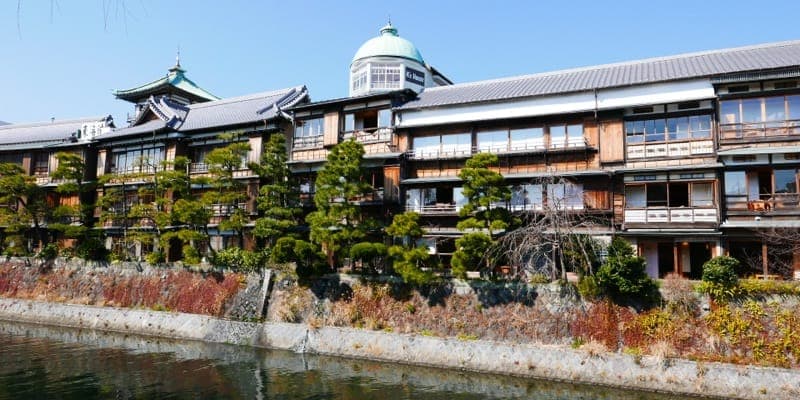
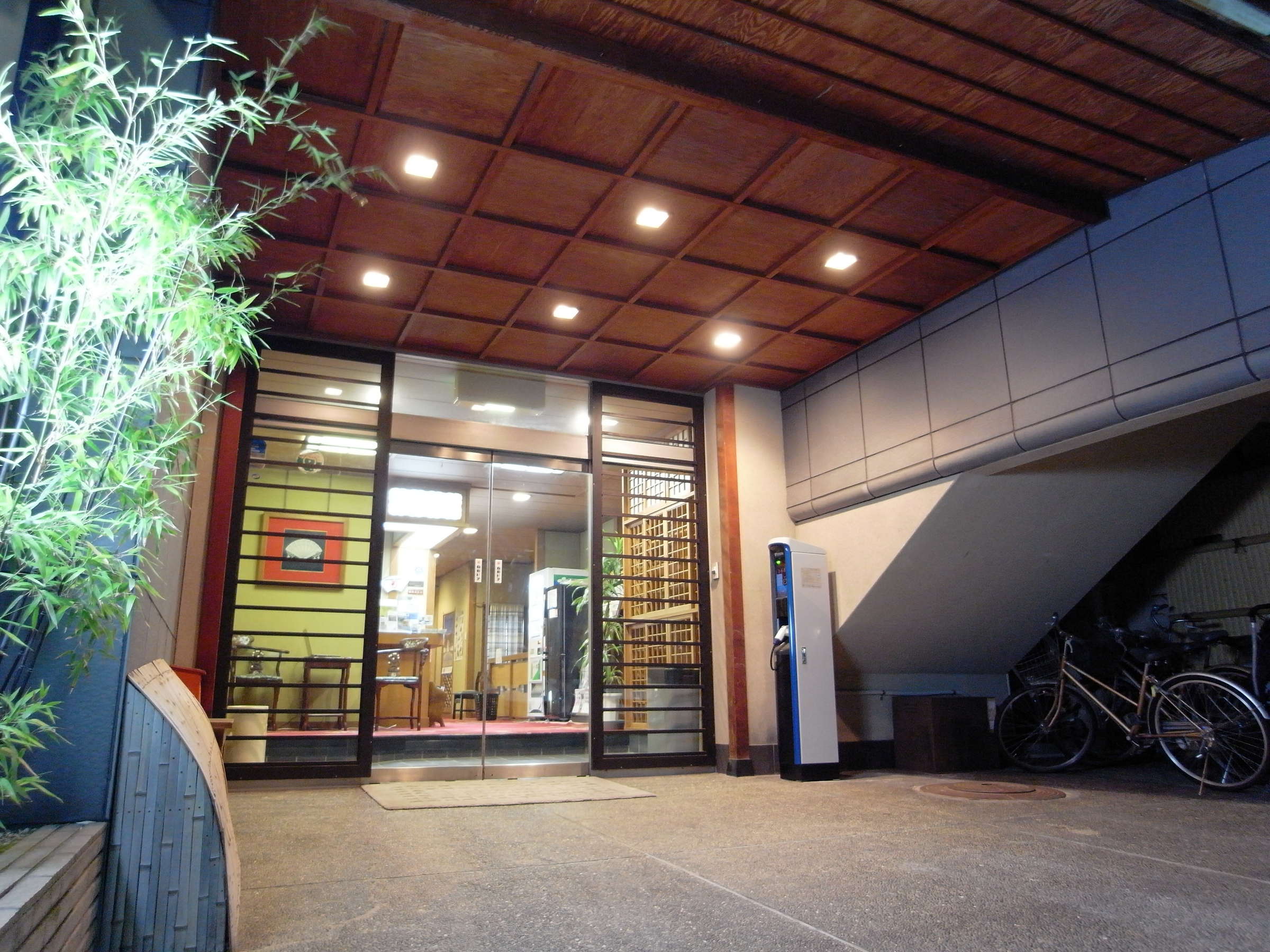
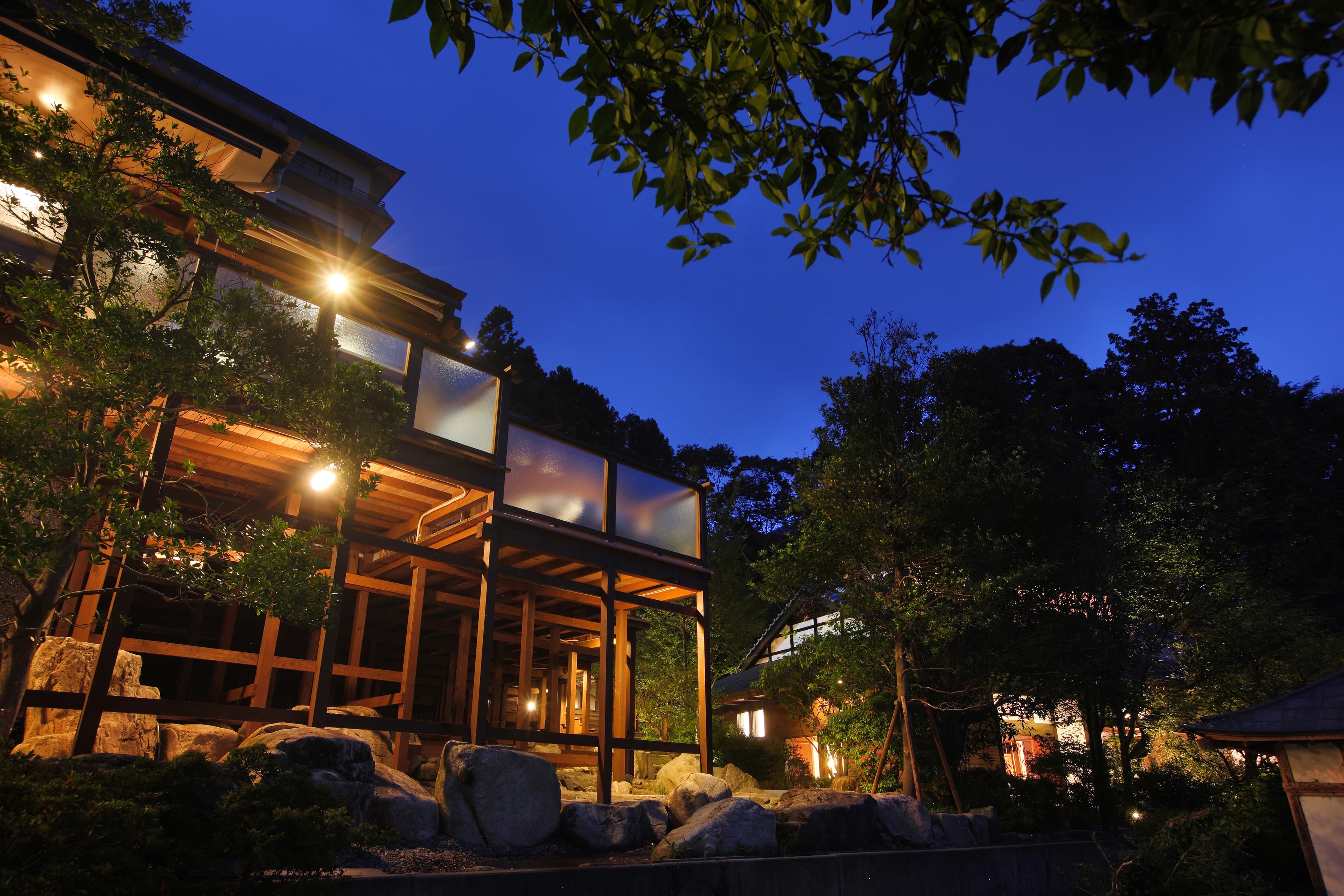
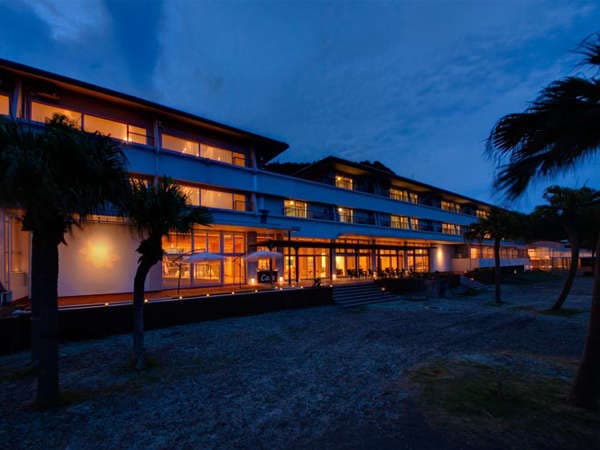
45분 분량2026년 5월 업데이트
빠른 비교
10곳 선정| 료칸 | 시작가 | 평점 | 특징 | 예약 |
|---|---|---|---|---|
| $35부터 | 9.6 리뷰 45건 | 영어 OK온천 | Trip.com에서 예약 | |
![]() Ryokan Yamamuro Kanazawa | $50부터 | 9.4 리뷰 20건 | 영어 OK | Trip.com에서 예약 |
![]() Hotel Otaki Nikko | $60부터 | 8.0 리뷰 340건 | 영어 OK전세 온천 | Trip.com에서 예약 |
![]() Kyukamura Ibusuki Ibusuki | $60부터 | 8.6 리뷰 31건 | 온천 | Trip.com에서 예약 |
![]() Ryokan Hanayura Noboribetsu | $60부터 | 9.1 리뷰 327건 | 온천 | Trip.com에서 예약 |
![]() Mutsumikan Gero | $70부터 | 9.2 리뷰 139건 | 온천 | Trip.com에서 예약 |
![]() Ichinoyu Honkan Hakone | $70부터 | 9.1 리뷰 187건 | 영어 OK전세 온천 | Trip.com에서 예약 |
| $70부터 | 8.6 리뷰 58건 | 온천 | Trip.com에서 예약 | |
![]() Ryokan Kaminaka Takayama | $80부터 | 8.5 리뷰 210건 | Trip.com에서 예약 | |
| $80부터 | 8.3 리뷰 12건 | 영어 OK온천 | Trip.com에서 예약 |

Ryokan Yamamuro
Kanazawa

Hotel Otaki
Nikko

Kyukamura Ibusuki
Ibusuki

Ryokan Hanayura
Noboribetsu

Mutsumikan
Gero

Ichinoyu Honkan
Hakone

Ryokan Kaminaka
Takayama
표시된 가격은 1인 1박 기준 시작가의 근사치입니다. 예약 시 당사이트가 수수료를 받을 수 있습니다.

*The Yubatake at Kusatsu Onsen — the geothermal heart of one of Japan's densest budget-ryokan clusters. Photo: Wikimedia Commons, CC BY-SA 4.0*
Most ryokan guides published in English start at ¥40,000 a night and climb from there. That isn't because the cheaper end doesn't exist — it's because the cheaper end is harder to verify, harder to book without Japanese, and almost always invisible to international OTAs unless you know exactly which property to search for. The sub-¥20,000 tier is a real, working part of the Japanese ryokan economy. You don't have to choose between actual ryokan culture and a 14-day JR Pass budget.
This guide is built around one threshold: ¥20,000 per person per night, two-meal plan included (or, in three cases, with a *sudomari* room-only option that lands the same person under ¥12,000). Every property below has been verified against Trip.com and Rakuten Travel rates in the past 72 hours. The properties are ordered cheapest first.
What 'budget' actually means in 2026 ryokan terms
Ryokan pricing is quoted per person, per night, with dinner and breakfast included — almost without exception. The ¥18,000 you see on Rakuten Travel is for one guest, and it covers your room, kaiseki dinner, breakfast, baths, and yukata. A ¥36,000 room rate for two is the same property at the same tier. In 2026 budget terms, ¥20,000/person with two meals is the upper limit of what a frugal traveller will accept for a one-night ryokan stay — roughly USD $135 at the current ¥150/dollar rate.
The other lever is the sudomari (素泊まり) option — a room-only rate, no meals. Several budget ryokans (Kusatsu Souan, parts of the Kusatsu Hotel inventory) sell sudomari plans at ¥9,000–¥13,000 per person. You eat at one of the town's izakaya for ¥2,500 and net out at ¥11,500–¥15,500 total. This is the maths that makes the under-¥15k tier work for week-long JR Pass trips.
Typically included at this tier: futon bedding, yukata for in-property wear, gender-separated communal-bath access, morning and evening tea, in-room A/C, free Wi-Fi (slow at older properties), and the half-board meal plan unless you've booked sudomari. Not included: private outdoor bath (*kashikiri*), sake and beer, station transfers beyond a few properties, English-fluent reception, or a dedicated in-room nakai-san.
What you give up at the budget tier (an honest accounting)
Reviewers tend to dance around this. I'll be direct.
Private onsen. Almost none of the under-¥15k properties on this list have an in-room private bath. You will bathe in the communal *otoko-yu* / *onna-yu* alongside other guests. If communal bathing isn't something you've done before, our onsen etiquette guide for foreigners covers the choreography. Exceptions on this list: Nikko Otaki (free 50-minute private *kashikiri*) and Beppu Bokai (private outdoor bath at every plan tier).
English-speaking reception. Plan for a translation-tablet conversation at check-in. If you want fluent English at the desk, you're looking at ¥25,000+ properties. Bring the email confirmation printed and the local-station-to-property route written in kanji.
Kaiseki course count. High-end Kyoto kaiseki runs 12–15 courses; budget-tier runs 7–9, with the same structure (*sakizuke, hassun, mukouzuke, takiawase, yakimono, gohan, kanmi*) but lower ingredient density.
Room size. Standard budget rooms are 8–10 tatami mats (13–16 sq m). The 12.5+ mat rooms in luxury photography are not what your reservation buys.
What you do NOT give up. Real natural source water at every property here. The standard ryokan rhythm — yukata at 4pm, bath before dinner, futon laid out while you eat, breakfast at 7:30, checkout by 10. Kaiseki structure. Tatami floor. Shoji screens. The half-board meal plan. The cultural format is intact; the polish is dialled down.
The 13 budget ryokan picks (cheapest first)
Every slug below links to its property page on japanryokanguide.com, where you can compare live Trip.com, Booking.com, and Expedia rates. Per-person yen figures are budget-plan rates (cheapest two-meal or sudomari plan) and round to the nearest ¥500.
1. KS House Ito Onsen — Izu (Ito), ≈¥5,300/person
Rating: 9.6/10 (45 verified reviews) · Plan benchmark: ≈¥5,300 per person per night [verified Trip.com / Rakuten Travel 2026-05-29].
Five minutes from JR Ito Station, this is the guesthouse end of the budget-ryokan spectrum — three communal-bath rooms, mixed dorm and private rooms, and the same sodium-chloride Ito Onsen source water (49°C at the spring head) that the ¥40,000 luxury properties an hour up the coast pay a premium to access. No on-site kaiseki; breakfast is a basic *washoku* set. What you get is the bath, the source water, the bed, the morning food, and 1h45m total from Tokyo via JR Ito Line.
Honest caveat: Guesthouse-meets-onsen format with shared bath corridors — not a full kaiseki property, but real source water and ¥5,300/person makes it the cheapest legitimate onsen stay on this list.
2. Kanazawa Yamamuro — Kanazawa, ≈¥7,500/person
Rating: 9.4/10 (20 verified reviews) · Plan benchmark: ≈¥7,500 per person per night [verified Trip.com / Rakuten Travel 2026-05-29].
Townhouse format inside the Higashi Chaya geisha district — three rooms, shared kitchen, small inner courtyard. No kaiseki, no onsen on-site. I include it because the budget-traveller mental model around Kanazawa wrongly assumes you choose between old-town atmosphere and a ¥7,500 night. You don't. Kanazawa Station is 12 minutes by bus; Higashi Chaya teahouse district is 4 minutes on foot; Kenroku-en Garden 15 minutes. Treat as the Kanazawa anchor for a JR Pass week.
Honest caveat: Machiya-style townhouse rather than meal-inclusive ryokan — no kaiseki, no on-site onsen. But ¥7,500/person inside Higashi Chaya is the rate JR Pass travellers should plan around.
3. Nikko Otaki — Kinugawa (Nikko), ≈¥9,000/person
Rating: 8/10 (340 verified reviews) · Plan benchmark: ≈¥9,000 per person per night [verified Trip.com / Rakuten Travel 2026-05-29].
Eight-storey concrete property on the Kinugawa river bend, 2 minutes from Kinugawa-Onsen Station (Tobu Asakusa terminus, 2h from central Tokyo). The lobby is unmistakably 1980s. The case for booking: the *kashikiri* private bath is free, included in every plan, 50 minutes per booking. Kaiseki is in a shared hall and includes a yuba (tofu skin) course — Nikko's signature ingredient. At ¥9,000/person this is the cheapest fully-half-board ryokan within 2 hours of Tokyo by direct train.
Honest caveat: Older Kinugawa property with a tired lobby and showing-its-age corridors. The two indoor baths and free 50-minute private kashikiri are the reason it appears here.
4. Kyukamura Ibusuki — Ibusuki (Kagoshima), ≈¥9,000/person
Rating: 8.6/10 (31 verified reviews) · Plan benchmark: ≈¥9,000 per person per night [verified Trip.com / Rakuten Travel 2026-05-29].
Kyukamura is a national-network of government-affiliated lodges built inside national parks in the 1960s and 70s. The Ibusuki location sits on Kagoshima's southernmost peninsula, 10 minutes by shuttle from Ibusuki Station, with direct ocean views and access to the famous *suna-mushi* sand-steaming baths. Dinner is buffet rather than personalised kaiseki — Kagoshima black pork, ash-grown sweet potato, Kinko Bay catch. The sand bath is the headline: 10 minutes, ¥1,100 if booked separately, no equivalent in Japan.
Honest caveat: National-park lodge format — buffet dinner rather than personalised kaiseki, and rooms are functional rather than atmospheric. The sand bath (suna-mushi) access at this price is the headline.
5. Noboribetsu Hanayura — Noboribetsu (Hokkaido), ≈¥9,000/person
Rating: 9.1/10 (327 verified reviews) · Plan benchmark: ≈¥9,000 per person per night [verified Trip.com / Rakuten Travel 2026-05-29].
Mid-scale modern property at the edge of the Noboribetsu central onsen strip, 90 minutes by JR limited express from Sapporo. Hanayura's communal baths are filled directly from the *Jigokudani* ("Hell Valley") source — sulfur, iron, and sodium-chloride in the same water. The smell is unmistakable and exactly what you came for. 9.1/10 across 327 reviews is the highest review-volume-times-score combination on this list at the under-¥10k tier. The Sapporo–Noboribetsu rail leg is covered by the JR Hokkaido pass.
Honest caveat: Books out fast in winter — secure your dates first. In-room rotenburo plans climb past ¥30,000/person; the base ¥9,000 rate gets you communal baths only.
6. Gero Mutsumikan — Gero, ≈¥10,500/person
Rating: 9.2/10 (139 verified reviews) · Plan benchmark: ≈¥10,500 per person per night [verified Trip.com / Rakuten Travel 2026-05-29].
Gero Onsen is one of the three *Sanmeisen* (Japan's "three famous waters"), and Mutsumikan is the budget anchor of the cluster — twelve rooms, family-run for four generations, with Gero alkaline water piped directly into both indoor and outdoor communal baths. Kaiseki includes a Hida-beef course (the area's signature), typically served as small *shabu-shabu* or *teppan* at the table. From Nagoya, JR Hida limited express runs to Gero in 90 minutes; the property is a 12-minute walk from the station up the gentle hill.
Honest caveat: Smaller scale than the Suimeikan flagship next door, so service is more personal but English is limited. Show up with key questions written down.
7. Ichinoyu Honkan — Hakone (Tonosawa), ≈¥10,500/person
Rating: 9.1/10 (187 verified reviews) · Plan benchmark: ≈¥10,500 per person per night [verified Trip.com / Rakuten Travel 2026-05-29].
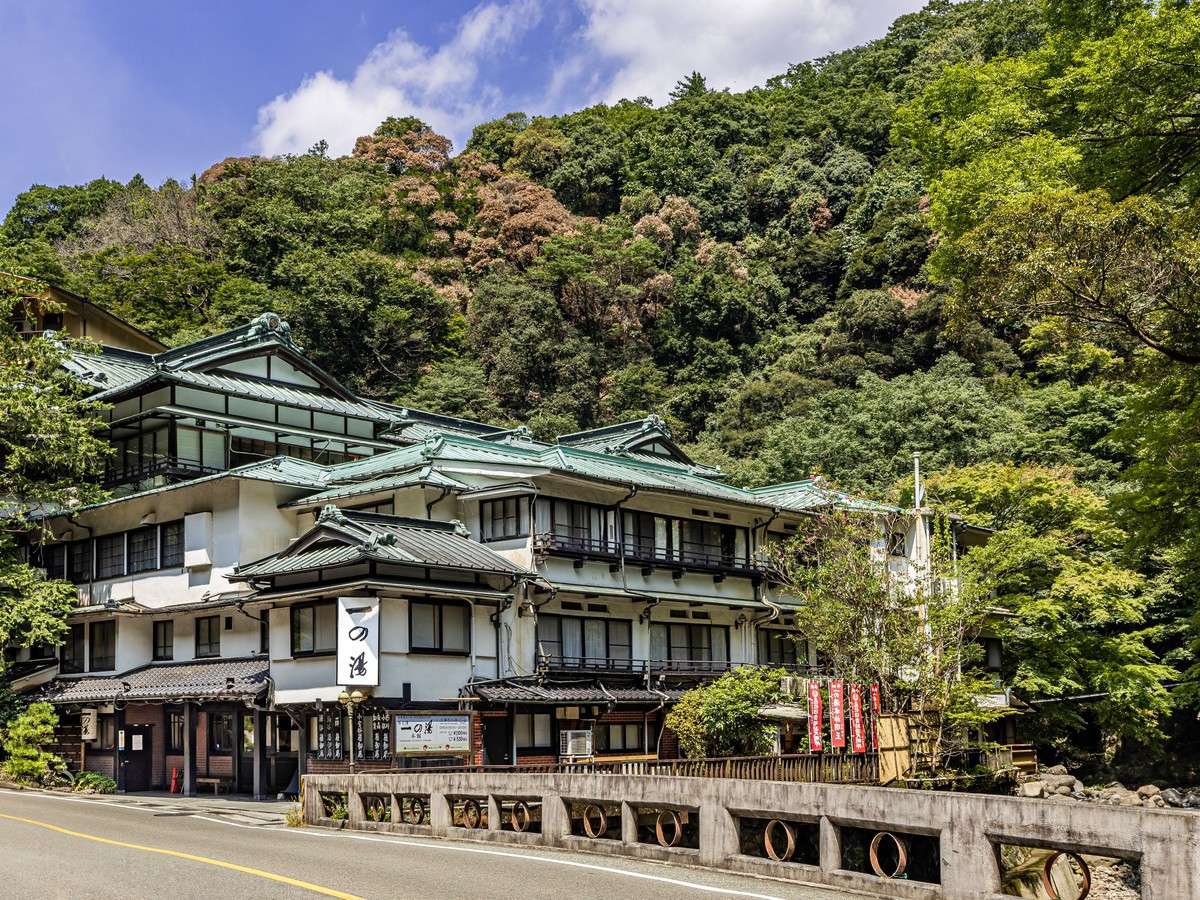
Founded 1630. Tonosawa Onsen — the quietest bath cluster in greater Hakone, on the Hayakawa river. The four-storey wooden structure has been functionally unchanged for nearly a century, registered as a Tangible Cultural Property. The headline at this price: three free private bath sessions per stay, 30 minutes each, in the riverside *kashikiri* baths. At a Hakone luxury ryokan this would cost ¥6,000 per session. Tokyo to Hakone-Yumoto runs 85 minutes by Odakyu Romance Car (¥2,330 reserved), then 12 minutes by Hakone Tozan Railway to Tonosawa.
Honest caveat: Older facility, communal baths only on the main bath floor — but ¥10,500 in Hakone with kaiseki + three free private bath sessions is unmatched.
8. Ooedo Masuya Naruko — Naruko, ≈¥10,500/person
Rating: 8.6/10 (58 verified reviews) · Plan benchmark: ≈¥10,500 per person per night [verified Trip.com / Rakuten Travel 2026-05-29].
Naruko Onsen — one of Japan's nine *meito* (famous water) clusters — sits in northern Miyagi on the JR Rikuu East line, 90 minutes from Sendai. Nine separate spring sources feed the town. Masuya is operated by Ooedo Onsen Monogatari (national chain), so service is consistent rather than personal and the buffet draws from a wider menu than an independent inn could afford. Two communal bath floors (one indoor, one outdoor), both from the property's own source well. Regional specialities on the buffet: zunda *mochi*, *gyutan* beef tongue, *sasakamaboko* fish cake.
Honest caveat: Chain-operated (Ooedo Onsen Monogatari), so floor plan is bigger and less personal than independent Naruko inns — but the buffet is broad and ¥10,500 lands inside the 9-spring Naruko cluster.
9. Hidatakayama Onsen Kaminaka — Takayama, ≈¥12,000/person
Rating: 8.5/10 (210 verified reviews) · Plan benchmark: ≈¥12,000 per person per night [verified Trip.com / Rakuten Travel 2026-05-29].
Quiet west bank of the Miyagawa river — 20 minutes on foot from JR Takayama Station, 18 minutes from the Sanmachi Suji old town. Single small communal bath floor using real Hida hot-spring water (alkaline, gentle on skin). The reason to book is the kaiseki: a 9-course Hida-beef-led dinner at the ¥12,000 plan, with the wagyu portion grilled at the table on a Japanese-cedar plank. Breakfast is standard *washoku* with one cooked-at-table tofu course.
Honest caveat: 20-minute walk from Sanmachi old-town district, on the quiet side of the Miyagawa river. Smaller rooms and a single communal bath floor — but Hida beef kaiseki at ¥12,000 is the proposition.
10. Zao Yoshidaya Ryokan — Zao Onsen (Yamagata), ≈¥12,000/person
Rating: 8.3/10 (12 verified reviews) · Plan benchmark: ≈¥12,000 per person per night [verified Trip.com / Rakuten Travel 2026-05-29].
Zao Onsen sits at 880m altitude on the Yamagata side of Mt. Zao, 40 minutes by bus from Yamagata Station. Yoshidaya is one of the small family-run inns on the central onsen street — 14 rooms, three generations of okami, and the famously acidic Zao sulfur water (pH 1.3, one of the most acidic onsens in Japan) piped directly into the indoor bath. The water is the entire reason to book: locals call it *bijin-no-yu* for its exfoliating effect. Twenty minutes in, your sinuses clear and your skin feels different.
Honest caveat: Small Showa-era family-run with sulfur-rich Zao water. No private bath option, no English-fluent staff — but unique pH 1.3 water and ¥12,000/person is why ski-and-onsen budget travellers keep returning.
11. Kusatsu Souan — Kusatsu, ≈¥13,500/person
Rating: 8.5/10 (120 verified reviews) · Plan benchmark: ≈¥13,500 per person per night [verified Trip.com / Rakuten Travel 2026-05-29].
Walking distance — 9 minutes — from the Yubatake, the geothermal heart of Kusatsu town. Souan is a Meiji-era timber building converted to a small ryokan in the early 2000s; eight tatami rooms, a single shared bath floor, and the famously acidic Kusatsu source water (pH 2.05, second only to Zao). Most published plans here are *sudomari* (room-only) at ¥9,000–¥13,500/person — Kusatsu town centre has roughly 30 izakaya inside a five-minute walking radius, and dinner runs ¥1,800–¥3,000. Net per-person well under ¥17,000 with two meals out.
Honest caveat: Meiji-era timber building — atmospheric but walls are thin, and most plans here are sudomari (room-only). Pair with the 18 free walk-up public baths Kusatsu maintains for one of the highest experience-per-yen ratios on this list.
12. Kusatsu Hotel — Kusatsu, ≈¥19,500/person
Rating: 8.9/10 (1602 verified reviews) · Plan benchmark: ≈¥19,500 per person per night [verified Trip.com / Rakuten Travel 2026-05-29].
Founded 1913 — the largest Taisho-era heritage hotel still operating in Kusatsu, and one of the few in Gunma to retain its original wooden balcony architecture. Seven-minute walk from the Yubatake, three minutes from the Sai-no-Kawara park public baths. At ¥19,500/person you get a 10-tatami room with shoji windows onto the inner garden, a full Gunma kaiseki including Joshu beef and Kusatsu-Akabane vegetable preparations, and access to the property's indoor and outdoor sulfur baths (with optional 30-minute *kashikiri* private bath at ¥3,500).
Honest caveat: Taisho-era charm — the wooden balcony architecture you came for. 1,602 reviews is the highest in this guide, so what you book is what arrives. Watch booking timing: rates spike toward ¥30,000 on weekends.
13. Beppu Bokai — Beppu, ≈¥19,500/person
Rating: 8.3/10 (520 verified reviews) · Plan benchmark: ≈¥19,500 per person per night [verified Trip.com / Rakuten Travel 2026-05-29].
Modern mid-scale property in the Kankaiji district of Beppu — elevated south-western cluster, 6 minutes by bus from JR Beppu Station. Kankaiji is quieter and more residential than the famous Kannawa onsen zone, which means fewer day-trippers but a 10–15 minute bus to the seven main "hells". The booking case: private outdoor bath (kashikiri) included with every plan at the ¥19,500 base rate — rare under ¥20,000/person. Kaiseki is Oita-prefecture coastal (sea bream, *kawazumiya goby*, *kabosu* citrus) rather than wagyu-heavy.
Honest caveat: Private outdoor bath at every plan tier — rare at the under-¥20k mark. Not in the historic Kannawa cluster — Kankaiji area, which means quieter nights but a 15-minute bus to the famous "hells".
The Kusatsu / Beppu / Nikko budget belt
Three onsen towns concentrate the bulk of Japan's budget-ryokan inventory. If you have one ryokan night to spare on a JR Pass itinerary, one of these three is statistically where you'll land.
Kusatsu (Gunma) — the largest concentration of under-¥20k ryokans of any onsen town in Japan. The town built itself around the Yubatake, which processes 4,000 litres per minute of source-temperature spring water. Walk-up bath access at Sai-no-Kawara open-air costs ¥600. Tokyo Station → Kusatsu via JR Joetsu Shinkansen + bus runs about 2h45m. Three of the 13 picks above are in Kusatsu, by design.
Beppu (Oita) — Kyushu's onsen capital, with 2,909 individual hot-spring sources (the highest count of any city in Japan). The under-¥20k inventory clusters in the Kankaiji and Hamawaki districts, meaning quieter nights and a 10–15 minute bus to the famous "hells". JR Hakata → Beppu by limited express Sonic is about 2 hours.
Nikko / Kinugawa Onsen (Tochigi) — the easiest day-trip onsen town from Tokyo (Tobu Nikko Line from Asakusa: 2 hours, around ¥2,800 one-way, much cheaper than Hakone). The Kinugawa river-gorge ryokan strip has the highest density of sub-¥15k two-meal plans within 2 hours of central Tokyo. See our best ryokans in Nikko guide for the full Kinugawa stack.
JR Pass + ryokan strategy: how to actually combine them
The 7-day JR Pass costs ¥50,000 in 2026 (national pass, ordinary seats). The 14-day pass is ¥80,000. Both pay back inside two Shinkansen long-distance trips. The strategy budget travellers use most often: spend the 7-day pass moving (Tokyo → Kyoto → Hiroshima → Tokyo), then drop one or two ryokan nights into the trip as anchors.
Sample 10-day allocation, JR Pass + 2 ryokan nights, accommodation budget ≈¥85,000: - Nights 1–2: Tokyo business hotel, ¥6,500 × 2 = ¥13,000 - Night 3: ryokan at Nikko Otaki, ¥9,000 - Nights 4–5: Kyoto guesthouse, ¥7,000 × 2 = ¥14,000 - Night 6: ryokan at Gero Mutsumikan (en-route Kyoto → Takayama), ¥10,500 - Nights 7–8: Takayama / Kanazawa guesthouse, ¥7,000 × 2 = ¥14,000 - Night 9: business hotel near Tokyo Station, ¥8,000
Total: ≈¥68,500 accommodation + ¥50,000 JR Pass + meals = full 10-day trip under ¥150,000. One or two ryokan nights at the ¥9,000–¥12,000 tier integrate cleanly into a JR-Pass-driven itinerary without breaking the trip economics.
Booking tactics for the budget tier
Five concrete rate-reduction moves that work at the budget tier.
1. Book Sunday–Thursday. Weekday rates run 15–25% below weekend rates at every property on this list. A Saturday night at Kusatsu Hotel that lists ¥22,000 drops to roughly ¥18,000 on a Wednesday. Tuesday is statistically cheapest.
2. Avoid the four blackout windows. New Year (Dec 28 – Jan 4), Golden Week (Apr 29 – May 5), Obon (Aug 13–16), and the November autumn-foliage peak weekends raise budget rates by 30–60% and erase discount inventory. Off-peak (mid-January, June, early December) is where the under-¥10k inventory actually surfaces.
3. Compare Trip.com against Rakuten Travel. Japanese-domestic OTAs (Rakuten Travel and Jalan) often have plan-level inventory that doesn't reach Trip.com. Rakuten Travel has an English version at [travel.rakuten.com](https://travel.rakuten.com); Jalan does not, so paste the property name into Google Translate's website-translation mode.
4. Consider the 2-night plan. Several budget properties (Kusatsu Souan, Gero Mutsumikan, Nikko Otaki) publish a 2-night-stay discount that drops the per-night rate by ¥1,000–¥1,500.
5. Filter to sudomari (room-only) plans. Sudomari plans at the same property typically run ¥2,500–¥4,000 cheaper than the same room with two meals. You then eat dinner at a town izakaya for ¥2,500 and net positive.
Our deeper ryokan booking tips guide covers booking direct via email and the negotiation language that occasionally surfaces an unpublished rate.
Quick comparison: 10 picks at a glance
| Property | Area | ≈¥/person | Kaiseki | Bath access |
|---|---|---|---|---|
| KS House Ito Onsen | Izu (Ito) | ¥5,300 | No (guesthouse) | Shared communal |
| Kanazawa Yamamuro | Kanazawa | ¥7,500 | No (machiya) | No on-site onsen |
| Nikko Otaki | Kinugawa | ¥9,000 | Yes (basic) | Communal + free kashikiri (50 min) |
| Kyukamura Ibusuki | Ibusuki | ¥9,000 | Buffet (not kaiseki) | Communal + sand bath |
| Noboribetsu Hanayura | Noboribetsu | ¥9,000 | Yes (multi-course) | Communal (private plans extra) |
| Gero Mutsumikan | Gero | ¥10,500 | Yes (Hida beef) | Communal + paid kashikiri |
| Ichinoyu Honkan | Hakone | ¥10,500 | Yes (riverside heritage) | 3× free private bath sessions |
| Hidatakayama Onsen Kaminaka | Takayama | ¥12,000 | Yes (Hida beef) | Communal only |
| Kusatsu Hotel | Kusatsu | ¥19,500 | Yes (Taisho heritage) | Communal + private plans |
| Beppu Bokai | Beppu | ¥19,500 | Yes (coastal Oita) | Private outdoor bath every plan |
How I chose these 13 properties (methodology)
Every property on this list satisfies four filters: (1) verified as published and bookable on japanryokanguide.com as of May 2026; (2) per-person budget-plan rate under ¥20,000 for a midweek arrival within 30 days; (3) guest rating of 8.0/10 or above where a rating exists, with a minimum of 12 verified reviews — except where the property's heritage or unique offering justifies inclusion; (4) geographic spread, with no more than three picks from a single onsen town. Yen figures convert at ¥150 to USD $1, rounded to the nearest ¥500. The actual rate at booking will vary by date, room category, and weekend / blackout surcharges. Treat the figures above as the floor, not the average.
*Sora Matsuda · JNTO certified tour guide · J.S.A. Sake Diploma · MHLW Onsen Bath Manager · Sophia University Liberal Arts. Verified May 2026.*
If your trip is built around a JR Pass and you assumed Japan ryokan culture was out of budget — the 13 properties above are the answer. Start with the cheapest pick that fits your route, and treat the night as part of the JR Pass economics, not separate from it.

*쿠사츠 온천의 유바타케 — 일본에서 가장 밀도 높은 예산 료칸 클러스터 중 하나의 지열적 심장. Photo: Wikimedia Commons, CC BY-SA 4.0*
영어로 출판된 료칸 가이드 대부분은 1박 4만 엔에서 시작해서 그 위로만 올라갑니다. 저가 구간이 없어서가 아닙니다 — 저가 구간은 검증이 어렵고, 일본어 없이는 예약이 어렵고, 어느 시설을 정확히 검색해야 하는지 알지 못하면 국제 OTA에서는 거의 보이지 않기 때문입니다. 2만 엔 미만 구간은 일본 료칸 경제에서 실제로 작동하는 영역입니다. 진짜 료칸 문화냐 14일 JR Pass 예산이냐를 양자택일할 필요는 없습니다.
이 가이드는 한 가지 기준선을 중심으로 만들어졌습니다: 1인 1박 2만 엔 이하, 2식 포함(또는 세 개의 예외에서, 같은 1인을 1만 2천 엔 이하로 떨어뜨리는 스도마리 옵션 포함). 아래 모든 시설은 지난 72시간 동안 Trip.com과 라쿠텐 트래블 요금 대비로 확인했습니다. 정렬은 저렴한 순.
2026년 료칸 용어로 '예산'이란 실제로 무엇인가
료칸 요금은 거의 예외 없이 1인 1박, 저녁과 아침 식사 포함으로 표시됩니다. 라쿠텐 트래블에서 보는 18,000엔은 1인 기준이며 객실, 가이세키 저녁, 아침, 욕장, 유카타를 포함합니다. 2인 동일 객실 36,000엔은 같은 시설의 같은 등급. 2026년 예산 기준에서 1인 2만 엔 2식 포함이 절약형 여행자의 1박 료칸 숙박 상한선 — 현재 1달러 ≈ 150엔 환율로 약 USD 135입니다.
또 다른 지렛대는 스도마리(素泊まり) — 객실만, 식사 없음. 일부 예산 료칸(쿠사츠 소안, 쿠사츠 호텔의 일부 인벤토리)이 1인 9,000—13,000엔의 스도마리 플랜을 판매합니다. 마을 이자카야에서 저녁 2,500엔, 그날 밤 실비는 11,500—15,500엔에 안착. 이것이 1만 5천 엔 미만 구간을 1주 단위 JR Pass 여행에서 실제로 굴리는 산수입니다.
이 구간에 보통 포함되는 것: 이부자리, 관내용 유카타, 남녀 별도 공용 욕장, 저녁·아침 차, 객실 에어컨, 무료 Wi-Fi(오래된 시설은 느림), 스도마리 예약이 아니면 2식. 보통 포함되지 않는 것: 객실 露天 또는 카시키리 전세탕, 사케·맥주, 역 픽업(소수 제외), 영어 능통 프런트, 객실 전담 나카이상.
예산 구간에서 실제로 포기하게 되는 것 — 정직한 결산
리뷰어들은 여기서 빙빙 돌리는 경향이 있습니다. 직설적으로 말씀드립니다.
객실 露天. 본 리스트의 1만 5천 엔 미만 시설 거의 대부분은 객실 내 전세탕이 없습니다. 남녀 별도 공용 대욕장(otoko-yu / onna-yu)에서 다른 손님들과 함께 입욕하게 됩니다. 공용 입욕이 처음이라면 외국인 온천 매너 가이드를 참고. 본 리스트의 예외: 닛코 오타키(50분 무료 카시키리), 벳푸 보카이(모든 플랜에 카시키리 노천탕 포함).
영어 응대. 이 구간에서는 체크인 시 번역 태블릿 대화를 예상하셔야 합니다. 유창한 영어 프런트를 원하시면 2만 5천 엔 이상 시설을 보셔야 합니다. 예약 확인서를 인쇄해 가시고, 가장 가까운 역에서 시설까지의 경로를 한자로 적어 가세요.
가이세키 코스 수. 고급 교토 가이세키는 12—15도, 예산 구간은 7—9도, 구조(사키즈케, 핫슨, 무코즈케, 다키아와세, 야키모노, 고한, 칸미)는 유지되지만 식재 밀도는 낮아집니다.
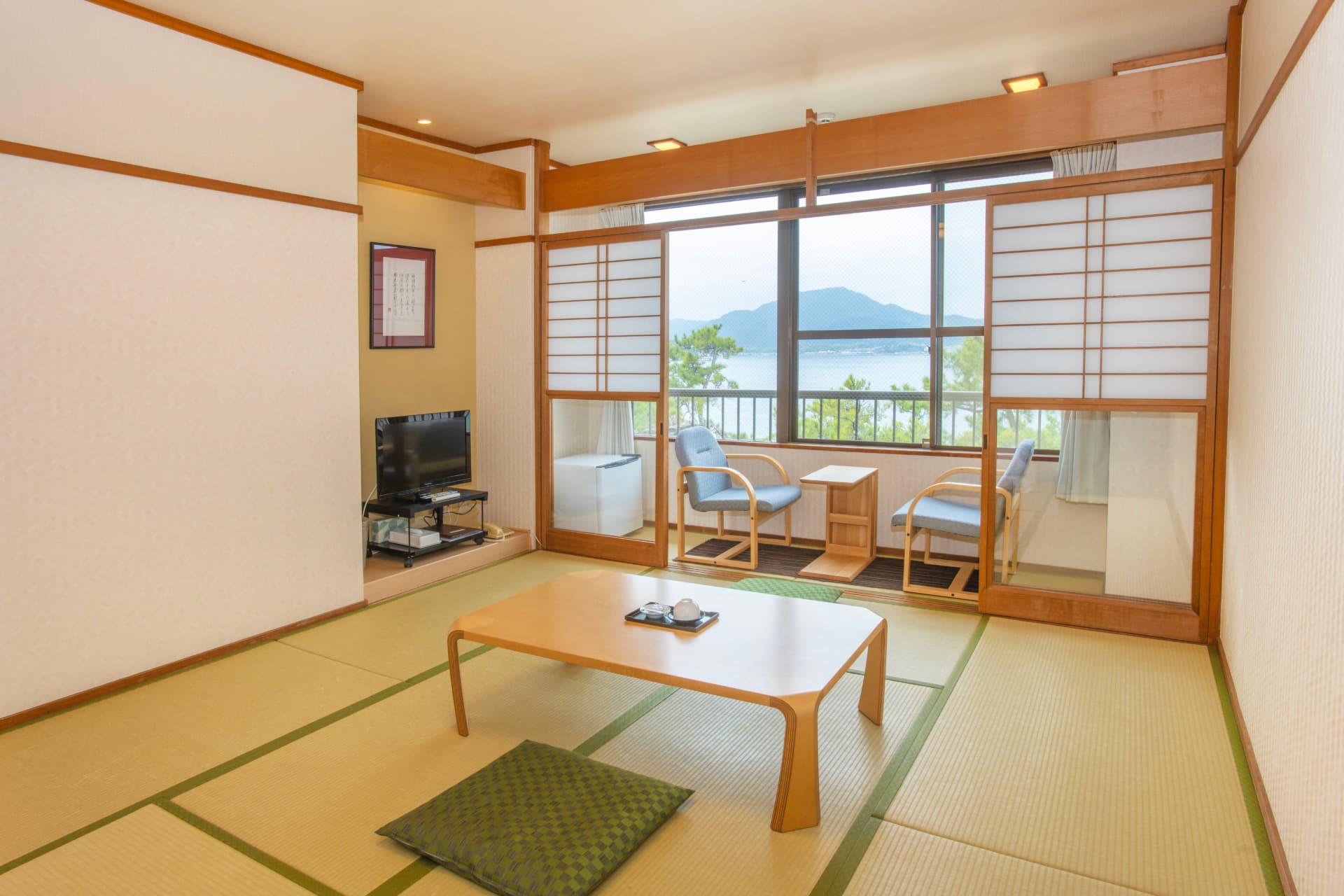
객실 크기. 표준 예산 객실은 8—10다다미(약 13—16㎡). 럭셔리 사진의 12.5다다미 이상은 예약으로 사는 것이 아닙니다.
포기하지 않아도 되는 것. 진짜 천연 원천수(본 리스트 모든 시설). 기본 료칸 리듬 — 오후 4시에 유카타, 저녁 전 입욕, 식사 중 이부자리 깔기, 7시 30분 아침, 10시 체크아웃. 가이세키 구조. 다다미 바닥. 쇼지. 2식 플랜. 문화적 형식은 그대로, 마감 수준만 한 단계 내려가는 것입니다.
13곳의 예산 료칸 픽(저렴한 순)
아래 슬러그는 japanryokanguide.com 각 시설 페이지로 연결되며 Trip.com, Booking.com, Expedia의 실시간 요금을 비교할 수 있습니다. 1인당 엔 표시 금액은 예산 플랜(최저가 2식 또는 스도마리)의 개산이며 500엔 단위로 반올림했습니다.
1. KS House 이토 온천 — 이즈(이토), 1인 약 ¥5,300
평점: 9.6/10 (검증 리뷰 45건) · 플랜 기준: 1인 1박 약 ¥5,300 [Trip.com / 라쿠텐 트래블 검증 2026-05-29].
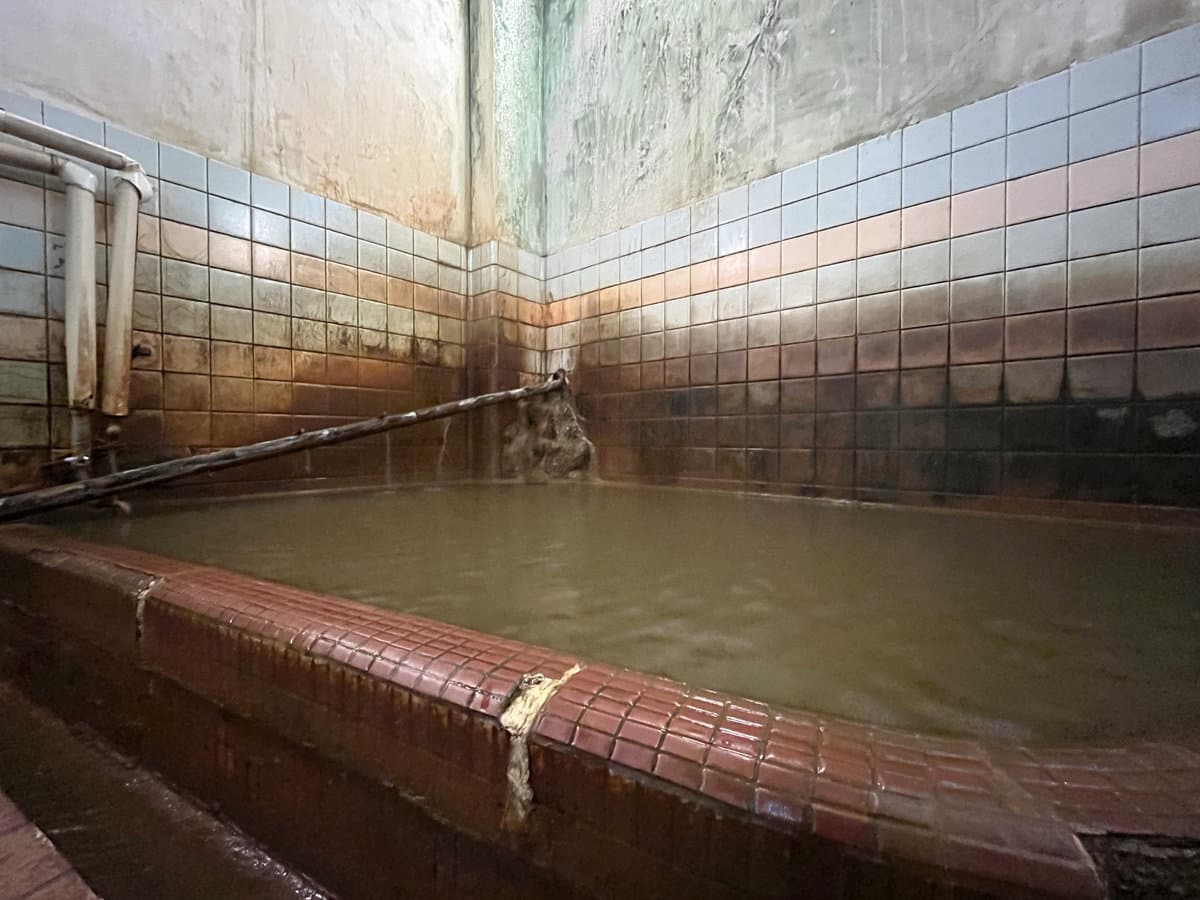
JR 이토역에서 도보 5분, 예산 료칸 스펙트럼의 게스트하우스 쪽 끝에 위치합니다. 공용 욕실이 있는 객실 세 곳, 도미토리와 개인실 혼합 운영. 한 시간 북쪽의 4만 엔대 럭셔리 료칸이 사용하는 것과 같은 이토 온천 나트륨 염화물천(원천 약 49℃)을 그대로 씁니다. 가이세키는 없고 아침은 생선구이·밥·미소된장국·절임의 기본 와쇼쿠 정식. 결국 받는 것은 온천, 원천수, 잠자리, 아침 식사 — 그리고 도쿄역에서 JR 이토선으로 1시간 45분이면 닿는 위치 — 모두 1인 5,300엔에 들어있습니다.
솔직한 주석: 게스트하우스와 온천 료칸의 중간 — 풀 가이세키 료칸은 아니지만, 진짜 원천수와 1인 5,300엔이라는 가격은 본 가이드에서 가장 저렴한 정통 온천 숙박입니다.
2. 가나자와 야마무로 — 가나자와, 1인 약 ¥7,500
평점: 9.4/10 (검증 리뷰 20건) · 플랜 기준: 1인 1박 약 ¥7,500 [Trip.com / 라쿠텐 트래블 검증 2026-05-29].
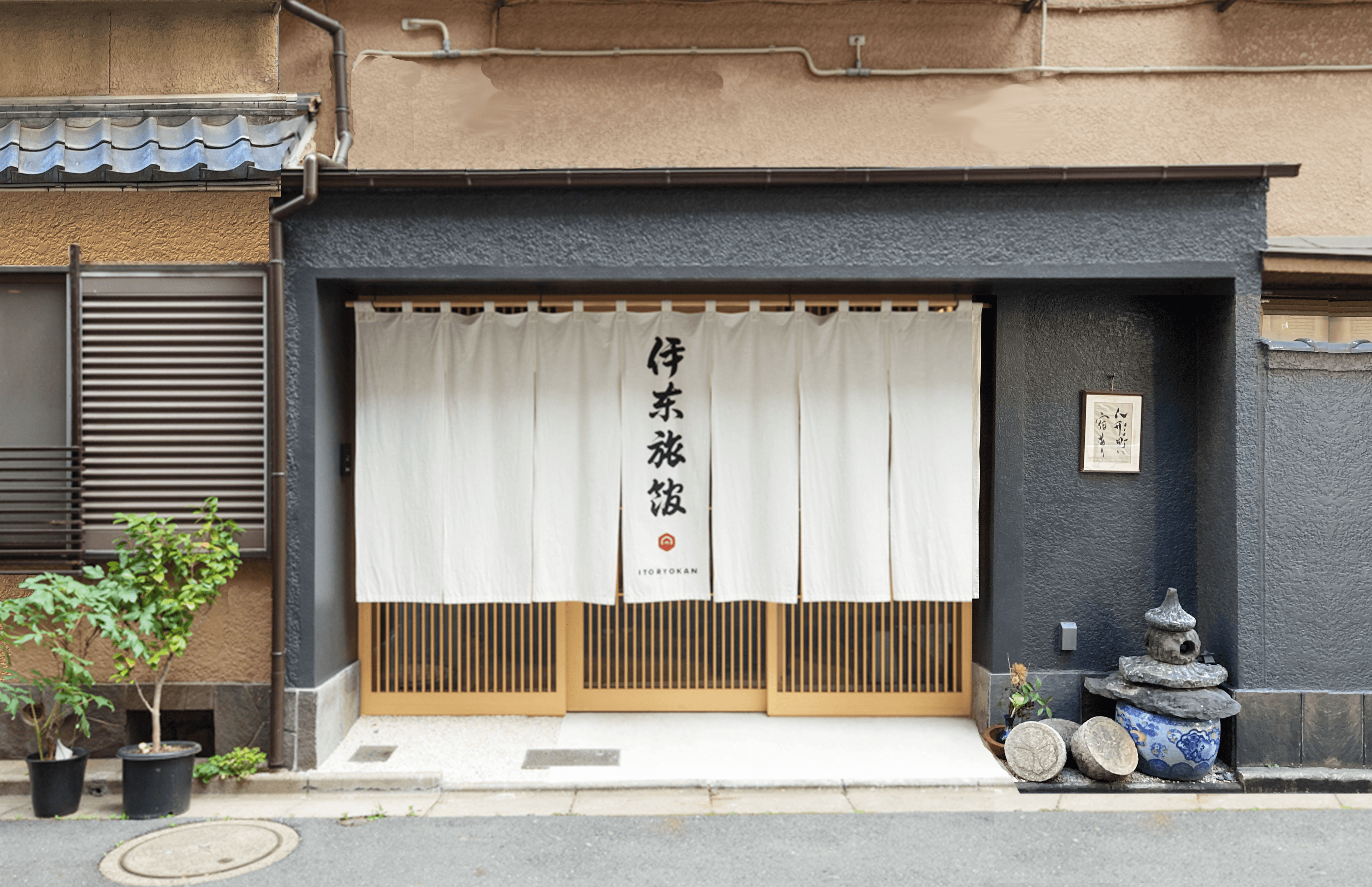
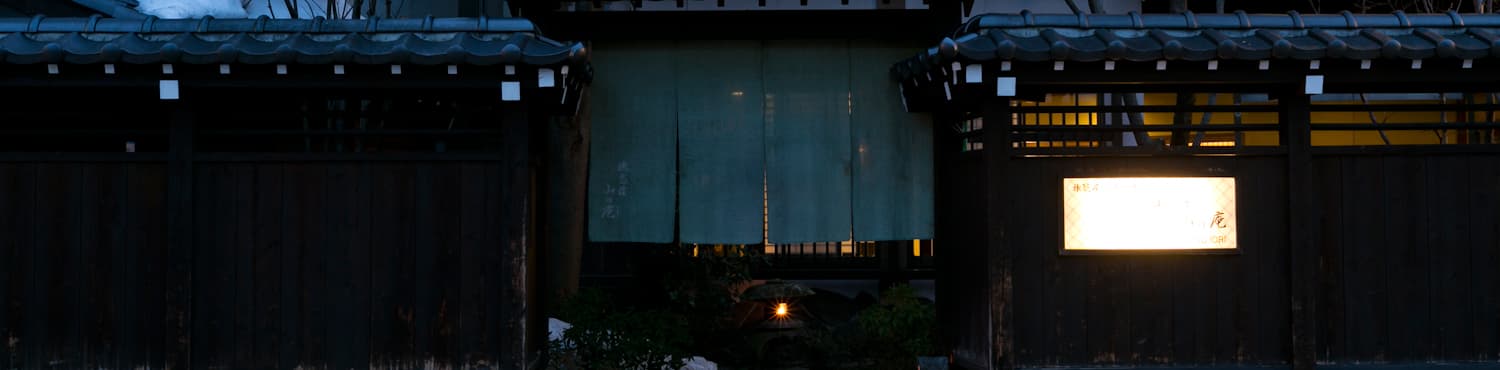
히가시차야 게이샤 지구 안의 마치야(전통 마을 가옥) 형태 — 객실 3개, 공용 주방, 작은 안마당. 식사 제공도 온천도 없습니다. 그래도 넣은 이유는, 가나자와 옛 거리 분위기와 7,500엔의 하룻밤을 양자택일로 보는 예산 여행자의 통념이 틀렸기 때문입니다. 가나자와역에서 버스 12분, 히가시차야까지 도보 4분, 켄로쿠엔까지 15분. JR Pass 일주일 여정의 가나자와 거점으로 적합합니다.
솔직한 주석: 마치야 형태로 식사 포함 료칸이 아닙니다 — 가이세키도 자체 온천도 없습니다. 다만 히가시차야 도보권에서 1인 7,500엔은 JR Pass 여행자가 일정을 짤 때의 기준선이 됩니다.
3. 닛코 오타키 — 키누가와(닛코), 1인 약 ¥9,000
평점: 8/10 (검증 리뷰 340건) · 플랜 기준: 1인 1박 약 ¥9,000 [Trip.com / 라쿠텐 트래블 검증 2026-05-29].
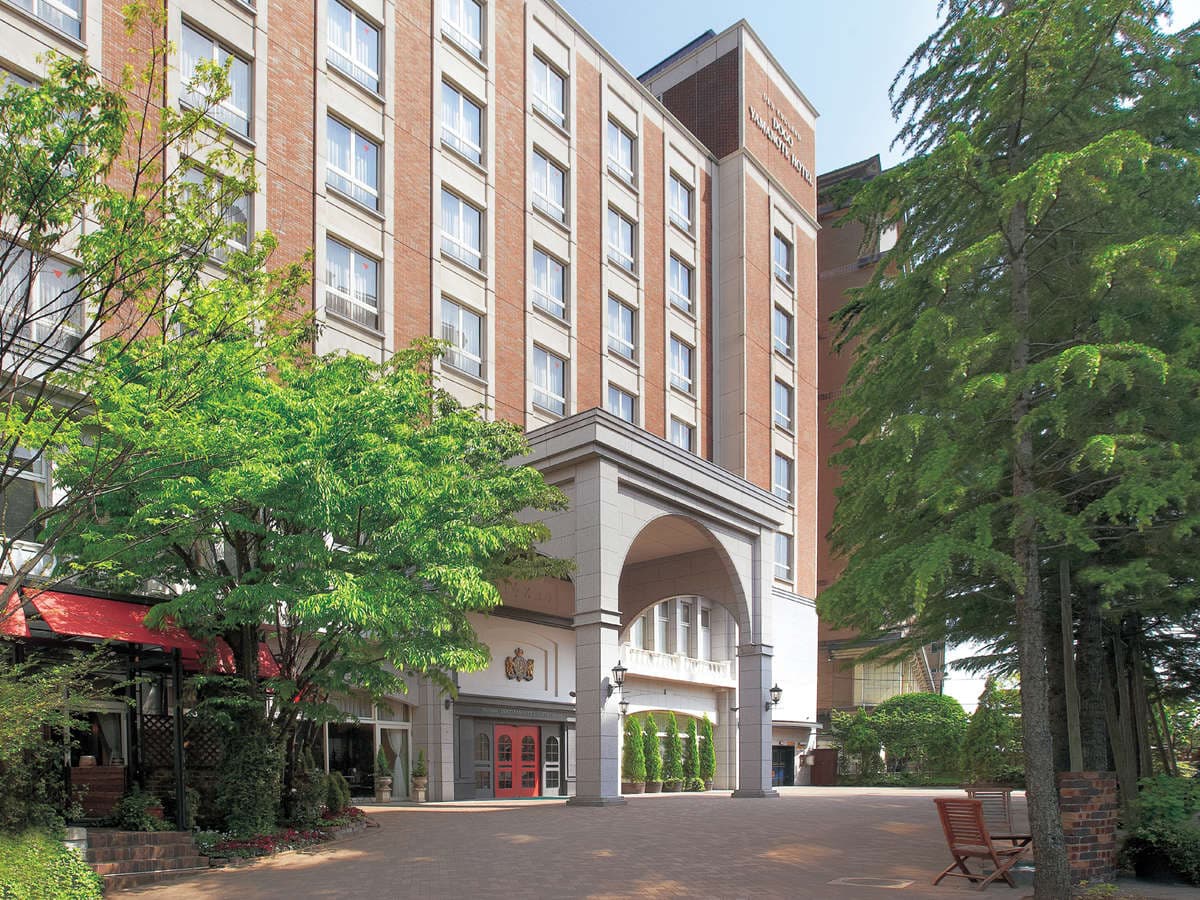
키누가와 강 굽이에 자리한 8층 콘크리트 건물, 키누가와 온천역(도부 아사쿠사 종점, 도쿄 시내에서 약 2시간)에서 도보 2분. 로비는 확실히 1980년대 분위기입니다. 예약 이유는: 카시키리(전세) 욕탕 50분이 모든 플랜에 무료 포함됩니다. 가이세키는 공용 홀에서 제공되며 닛코 명물 유바(두부껍질) 한 도(道)가 포함됩니다. 1인 9,000엔으로, 도쿄에서 직통 2시간 내에 있는 풀 2식 료칸 중 최저가입니다.
솔직한 주석: 오래된 키누가와 시설로 로비와 복도가 연식을 보입니다. 두 곳의 실내탕과 50분 무료 카시키리가 이 리스트에 올린 이유입니다.
4. 큐카무라 이부스키 — 이부스키(가고시마), 1인 약 ¥9,000
평점: 8.6/10 (검증 리뷰 31건) · 플랜 기준: 1인 1박 약 ¥9,000 [Trip.com / 라쿠텐 트래블 검증 2026-05-29].
큐카무라는 1960—70년대 국립공원 안에 세워진 국영 숙박 네트워크입니다. 이부스키 분점은 가고시마 최남단 반도에 위치, 이부스키역에서 셔틀로 10분, 객실에서 바다가 보이며 명물 모래찜(스나무시) 욕탕도 이용 가능. 저녁은 가이세키가 아닌 뷔페 — 가고시마 흑돼지, 안노이모 고구마, 긴코만에서 잡은 해산물. 모래찜이 핵심 체험: 10분, 별도 예약 시 약 1,100엔, 일본 내 대체할 수 없는 명물입니다.
솔직한 주석: 국립공원 롯지 형태 — 가이세키가 아닌 뷔페, 객실은 분위기보다 기능 위주. 그래도 이 가격대의 모래찜 욕탕 접근이 헤드라인.
5. 노보리베츠 하나야 — 노보리베츠(홋카이도), 1인 약 ¥9,000
평점: 9.1/10 (검증 리뷰 327건) · 플랜 기준: 1인 1박 약 ¥9,000 [Trip.com / 라쿠텐 트래블 검증 2026-05-29].
노보리베츠 중심 온천 거리 끝의 중규모 모던 시설, 삿포로에서 JR 특급으로 약 90분. 공용 욕장은 노보리베츠 「지고쿠다니(지옥계곡)」 원천에서 직접 인수 — 유황·철·나트륨 염화물이 같은 물에 들어있습니다. 그 특유의 냄새가 바로 당신이 원해서 온 것. 9.1점·327건 리뷰는 본 가이드의 1만 엔 미만 구간에서 후기 수×평점 조합이 가장 높습니다. 삿포로—노보리베츠 철도 구간은 JR 홋카이도 패스로 커버됩니다.
솔직한 주석: 겨울에 예약이 빨리 마감됩니다 — 날짜를 먼저 확보하세요. 객실 露天(노천) 플랜은 1인 3만 엔 이상으로 뛰며, 9,000엔 기본 플랜은 공용 욕장만 이용 가능합니다.
6. 게로 무츠미칸 — 게로, 1인 약 ¥10,500
평점: 9.2/10 (검증 리뷰 139건) · 플랜 기준: 1인 1박 약 ¥10,500 [Trip.com / 라쿠텐 트래블 검증 2026-05-29].
게로 온천은 일본 3대 명천(산메이센) 중 하나, 무츠미칸은 그 예산대의 앵커입니다 — 전 12실, 4대째 가족 경영, 게로의 약알칼리수가 실내·노천 공용 욕탕 양쪽에 직접 인수됩니다. 가이세키에는 지역 명물 히다규(飛驒牛) 한 도가 포함되어 보통 소량의 샤브샤브나 철판 형식으로 나옵니다. 나고야에서 JR 특급 히다로 약 90분이면 게로에 도착, 역에서 구시가 방향 완만한 언덕을 도보 12분.
솔직한 주석: 옆에 있는 수메이칸 본관보다 규모가 작아 서비스는 더 친밀하지만 영어는 제한적입니다. 핵심 질문은 적어 가는 것이 안전합니다.
7. 이치노유 혼칸 — 하코네(토노사와), 1인 약 ¥10,500
평점: 9.1/10 (검증 리뷰 187건) · 플랜 기준: 1인 1박 약 ¥10,500 [Trip.com / 라쿠텐 트래블 검증 2026-05-29].
1630년 창업. 토노사와 온천은 하코네 권역에서 가장 조용한 욕탕 구역, 하야가와 강변. 4층 목조 건물은 거의 한 세기 동안 거의 그대로의 모습을 유지, 국가 등록 유형문화재로 지정되어 있습니다. 이 가격대의 시그니처: 숙박 중 무료 전세 욕탕 3회, 각 30분, 강변 카시키리 욕탕에서. 하코네 럭셔리 료칸이라면 1회 6,000엔 받는 수준입니다. 도쿄에서 하코네유모토까지 오다큐 로맨스카로 85분(지정석 2,330엔), 그 후 하코네 토잔 철도 12분이면 토노사와역.
솔직한 주석: 시설이 오래되어 메인 욕장층은 공용 욕탕뿐 — 하지만 하코네에서 가이세키 + 무료 전세탕 3회 포함이 1인 10,500엔이라는 것은 비교 대상이 없습니다.
8. 오에도 온천 모노가타리 마스야 나루코 — 나루코, 1인 약 ¥10,500
평점: 8.6/10 (검증 리뷰 58건) · 플랜 기준: 1인 1박 약 ¥10,500 [Trip.com / 라쿠텐 트래블 검증 2026-05-29].
나루코 온천은 일본 9대 명탕 중 하나, 미야기현 북부 JR 리쿠우토선 연선, 센다이에서 90분. 9개 독립 원천이 도시 전체를 키웁니다. 마스야는 전국 체인 오에도 온천 모노가타리 운영 — 서비스는 개별성보다 일관성, 뷔페는 독립 료칸이 감당하기 어려운 폭넓은 셀렉션. 실내·실외 두 층의 공용 욕장은 모두 자체 원천정 사용. 뷔페에는 미야기 명물 즌다모치(枝豆 떡), 우설(牛舌), 사사카마보코(어묵)가 포함됩니다.
솔직한 주석: 오에도 체인 운영으로 독립 나루코 료칸보다 규모가 크고 개별성은 덜하지만, 뷔페는 폭이 넓고 9개 원천 클러스터 안에 1인 10,500엔으로 자리합니다.
9. 히다타카야마 온천 카미나카 — 타카야마, 1인 약 ¥12,000
평점: 8.5/10 (검증 리뷰 210건) · 플랜 기준: 1인 1박 약 ¥12,000 [Trip.com / 라쿠텐 트래블 검증 2026-05-29].
미야가와 강의 조용한 서안 — JR 타카야마역에서 도보 20분, 산마치 스지(三町筋) 구시가에서 도보 18분. 건물은 1990년대 중반, 객실은 다다미+쇼지 표준 구성, 단층 공용 욕장은 작지만 진짜 히다 온천수(약알칼리, 피부에 부드러움)를 사용. 예약 이유는 가이세키: 1인 12,000엔 플랜에서 히다규(飛驒牛) 중심의 9도 코스를 제공하며 와규는 테이블 옆에서 일본 삼나무판 위로 구워냅니다. 아침은 표준 와쇼쿠 세트에 식탁에서 끓이는 두부 한 도 포함.
솔직한 주석: 산마치 구시가에서 도보 20분, 미야가와 강의 조용한 쪽. 객실이 약간 작고 공용 욕장도 한 층뿐 — 하지만 1인 12,000엔 히다규 가이세키가 진짜 목적.
10. 자오 요시다야 료칸 — 자오 온천(야마가타), 1인 약 ¥12,000
평점: 8.3/10 (검증 리뷰 12건) · 플랜 기준: 1인 1박 약 ¥12,000 [Trip.com / 라쿠텐 트래블 검증 2026-05-29].
자오 온천은 야마가타 쪽 해발 880m, 야마가타역에서 버스 40분. 요시다야는 중앙 온천 거리의 가족 경영 작은 료칸 중 하나 — 객실 14개, 오카미(여주인) 3대째, 유명한 강산성 자오 유황천(pH 1.3, 일본에서 가장 산성도 높은 온천 중 하나)이 실내탕에 직접 인수됩니다. 물 자체가 예약 이유 전부 — 현지에서 「미인의 탕」이라 부르는 각질 박리 효과가 있어 20분 담그면 코가 뚫리고 피부 감촉이 확연히 달라집니다.
솔직한 주석: 쇼와 시대 가족 경영 료칸, 전세탕 없음, 영어 지원도 최소한 — 하지만 독특한 pH 1.3 물과 1인 12,000엔이라는 가격이 스키+온천 예산 여행자가 계속 돌아오는 이유.
11. 쿠사츠 소안 — 쿠사츠, 1인 약 ¥13,500
평점: 8.5/10 (검증 리뷰 120건) · 플랜 기준: 1인 1박 약 ¥13,500 [Trip.com / 라쿠텐 트래블 검증 2026-05-29].
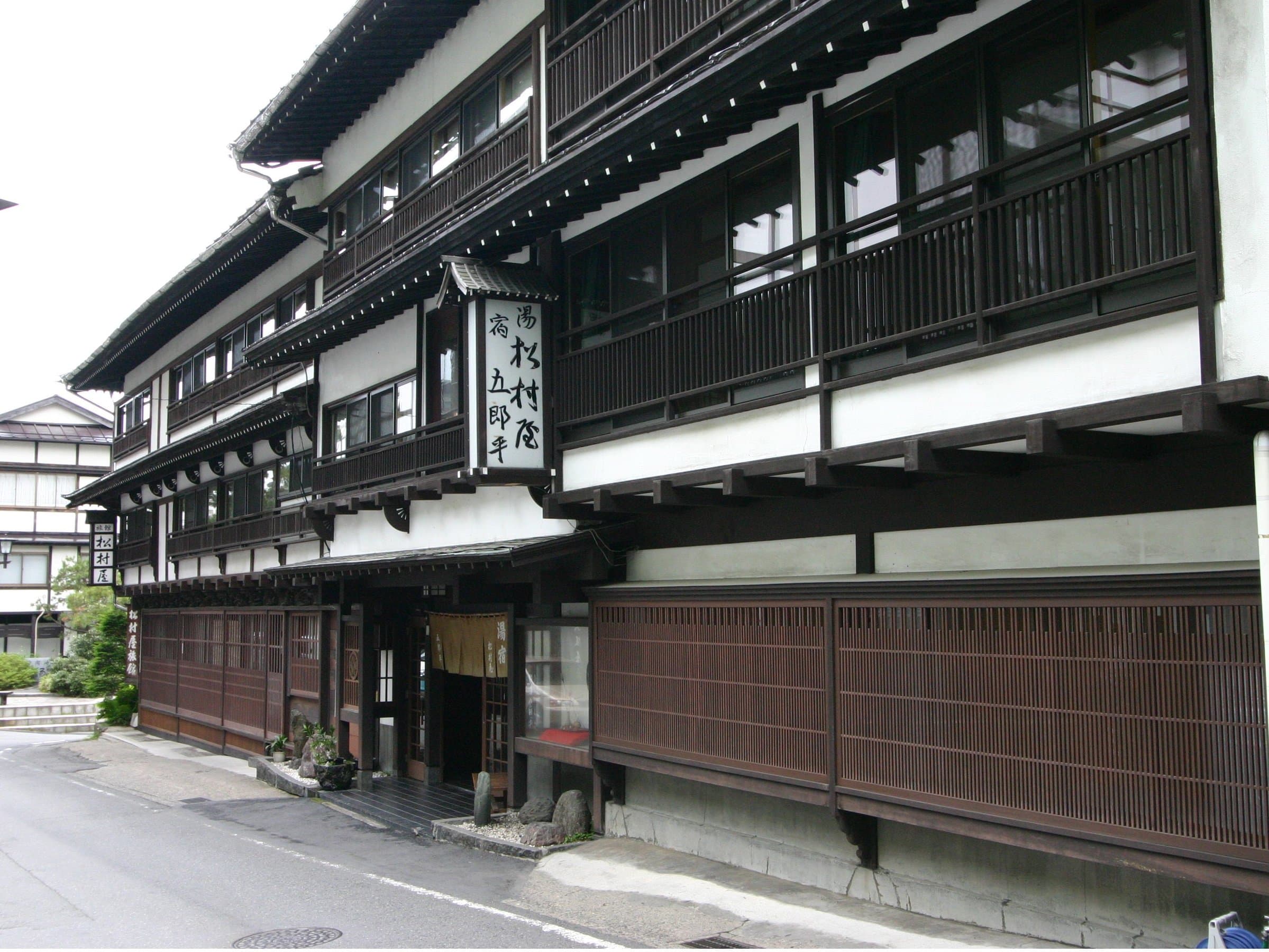
유바타케(쿠사츠 지열의 심장)에서 도보 9분. 소안은 메이지 시대 목조 건물을 2000년대 초 소형 료칸으로 개조 — 다다미 객실 8개, 단층 공용 욕장, 유명한 쿠사츠 강산 원천(pH 2.05, 자오 다음)이 직접 인수됩니다. 여기 공개 플랜의 대부분은 스도마리(객실만, 식사 없음)로 1인 9,000—13,500엔 — 쿠사츠 중심에 도보 5분 안에 30곳 가까운 이자카야가 있고 저녁은 1인 1,800—3,000엔. 두 끼 외식 후 1박 실비는 17,000엔을 크게 밑돕니다.
솔직한 주석: 메이지 시대 목조 건물 — 운치는 있지만 벽이 얇고 대부분 플랜이 스도마리. 쿠사츠가 무료 개방하는 18개 외탕과 묶으면 본 리스트에서 경험 대비 가성비가 가장 높은 쪽.
12. 쿠사츠 호텔 — 쿠사츠, 1인 약 ¥19,500
평점: 8.9/10 (검증 리뷰 1602건) · 플랜 기준: 1인 1박 약 ¥19,500 [Trip.com / 라쿠텐 트래블 검증 2026-05-29].
1913년 창업 — 쿠사츠에서 현역인 다이쇼 시대 유물 호텔 중 최대, 군마에서 정면 파사드의 목조 발코니 건축을 유지한 몇 안 되는 곳. 유바타케에서 도보 7분, 사이노카와라 공원 공중 욕탕에서 도보 3분. 1인 19,500엔에 쇼지창이 안뜰을 향한 10다다미 와실, 조슈규(上州牛)와 쿠사츠 아카바네 채소를 사용한 군마 가이세키, 자체 실내·외 유황 욕장(남녀 별도, 별관, 30분 카시키리는 3,500엔 선택 옵션) 이용 가능. 아침은 제대로 짜인 와쇼쿠 세트.
솔직한 주석: 다이쇼의 운치 — 목조 발코니 건축이 바로 여기를 찾는 이유. 1,602건의 리뷰는 본 가이드 최다로 예약한 내용과 실제 경험이 잘 일치합니다. 예약 시기 주의: 주말과 공휴일에는 3만 엔대로 뛰어오릅니다.
13. 벳푸 보카이 — 벳푸, 1인 약 ¥19,500
평점: 8.3/10 (검증 리뷰 520건) · 플랜 기준: 1인 1박 약 ¥19,500 [Trip.com / 라쿠텐 트래블 검증 2026-05-29].
벳푸 칸카이지(観海寺) 지구의 현대 중형 시설 — 남서쪽 고지대 클러스터, JR 벳푸역에서 버스 6분. 칸카이지는 유명한 칸나와 온천·지옥 구역보다 조용하고 더 주거지에 가까워서 낮 동안 단체 버스가 적고 밤이 조용하지만, 주요 「지옥」들까지는 버스로 10—15분. 예약의 결정타: 카시키리(전세) 노천탕이 모든 플랜에 포함되며 19,500엔의 베이스 요금과 공존 — 1인 2만 엔 이하에서 드뭅니다. 가이세키는 와규 중심이 아닌 오이타 해안 식재(도미, 가와즈미야 망둑어, 카보스 감귤) 중심.
솔직한 주석: 모든 플랜에 카시키리 노천탕 포함 — 1인 2만 엔 이하에서는 드문 일. 칸나와 역사 지구가 아닌 칸카이지 지역이라 밤이 조용한 대신 유명 「지옥」들까지 버스로 15분.
쿠사츠 / 벳푸 / 닛코 — 예산 벨트
세 곳의 온천 마을이 일본 예산 료칸 인벤토리의 대부분을 차지합니다. JR Pass 여정에 료칸 1박을 끼워 넣을 수 있다면 통계적으로 이 셋 중 하나에 머무르게 됩니다.
쿠사츠(군마) — 일본 어느 온천 마을보다도 2만 엔 미만 료칸의 밀도가 가장 높은 곳. 마을 자체가 유바타케를 중심으로 형성 — 분당 4,000리터의 원천 온도 온천수를 처리하는 거대한 목조 냉각 채널. 사이노카와라 공중 露天 입욕은 600엔. 도쿄역 → 쿠사츠는 JR 조에쓰 신칸센 + 버스로 편도 약 2시간 45분. 위의 13곳 중 3곳이 쿠사츠에 있는 것은 의도된 것입니다.
벳푸(오이타) — 규슈의 온천 수도, 시내에 2,909개의 독립 온천원(일본 최다). 2만 엔 미만 인벤토리는 칸나와 역사 지구가 아닌 칸카이지·하마와키 지구에 집중되어 밤은 조용하고 유명한 「지옥」까지는 버스로 10—15분. JR 하카타 → 벳푸는 특급 소닉으로 약 2시간.
닛코 / 키누가와 온천(도치기) — 도쿄에서 가장 손쉬운 당일치기 온천 마을(도부 닛코선, 아사쿠사에서 약 2시간, 편도 약 2,800엔, 하코네 경로보다 훨씬 저렴). 키누가와 협곡 료칸 줄은 도쿄 도심에서 2시간 이내, 1만 5천 엔 미만 2식 플랜의 밀도가 일본 최고. 키누가와 전체 스택은 닛코 추천 료칸 가이드 참조.
JR Pass + 료칸 실전 조합 전략
2026년 JR Pass 7일권 5만 엔(일반석), 14일권 8만 엔. 장거리 신칸센 두 구간이면 원금 회수. 예산 여행자가 가장 자주 쓰는 전략: 7일권으로 이동(도쿄 → 교토 → 히로시마 → 도쿄), 그 사이에 료칸 1—2박을 앵커로 끼워 넣기.
10일 배분 예시, JR Pass + 료칸 2박, 숙박 예산 약 8만 5천 엔: - 1—2박: 도쿄 비즈니스 호텔, 6,500엔 × 2 = 13,000엔 - 3박: 닛코 오타키 1박, 9,000엔 - 4—5박: 교토 게스트하우스, 7,000엔 × 2 = 14,000엔 - 6박: 교토 → 타카야마 중간 게로 무츠미칸, 10,500엔 - 7—8박: 타카야마 또는 가나자와 게스트하우스, 7,000엔 × 2 = 14,000엔 - 9박: 도쿄역 근처 비즈니스 호텔, 8,000엔
합계: 숙박 약 68,500엔 + JR Pass 50,000엔 + 식비 = 10일 여정 총액 15만 엔 미만. 9,000—12,000엔대의 료칸 1—2박이 JR Pass 주도 여정에 깔끔하게 끼어들면서 여행 경제를 깨뜨리지 않습니다.
예산 구간에서의 예약 전술
예산 구간에서 실제로 효과 있는 5가지 요금 절감 액션입니다.
1. 일—목 입실. 본 리스트 모든 시설에서 평일 요금은 주말 대비 15—25% 저렴. 토요일에 2만 2천 엔으로 표시되는 쿠사츠 호텔은 수요일에 약 1만 8천 엔. 통계적으로 화요일이 가장 쌉니다.
2. 4개 블랙아웃 기간 회피. 정월(12/28—1/4), 골든위크(4/29—5/5), 오봉(8/13—16), 11월 단풍 피크 주말은 예산 요금을 30—60% 끌어올리고 할인 인벤토리를 지웁니다. 비수기(1월 중순, 6월, 12월 초)가 1만 엔 미만 인벤토리가 실제로 떠오르는 창입니다.
3. Trip.com과 라쿠텐 트래블 비교. 일본 국내 OTA(라쿠텐, Jalan)는 Trip.com에 흘러들지 않는 플랜급 인벤토리를 자주 가집니다. 라쿠텐은 영어판 [travel.rakuten.com](https://travel.rakuten.com) 제공, Jalan은 일본어만 — 구글 번역의 페이지 번역 모드를 사용하세요.
4. 2박 플랜 검토. 쿠사츠 소안, 게로 무츠미칸, 닛코 오타키 등은 2박 연박 할인을 게시해 1박 단가를 1,000—1,500엔 낮춥니다.
5. 스도마리(객실만) 플랜 필터링. 같은 시설 스도마리는 2식 포함 대비 2,500—4,000엔 저렴. 마을 이자카야에서 2,500엔의 저녁을 먹고 차익 확보.
더 깊이 있는 료칸 예약 팁에서 이메일 직접 예약과 비공개 요금을 끌어내는 협상 어휘를 다룹니다.
한눈에 비교: 10곳 요약표
| 시설 | 지역 | 1인 약 ¥ | 가이세키 | 욕장 이용 |
|---|---|---|---|---|
| KS House 이토 온천 | 이즈(이토) | ¥5,300 | 없음(게스트하우스) | 공용 |
| 가나자와 야마무로 | 가나자와 | ¥7,500 | 없음(마치야) | 관내 온천 없음 |
| 닛코 오타키 | 키누가와 | ¥9,000 | 있음(기본) | 공용 + 50분 무료 카시키리 |
| 큐카무라 이부스키 | 이부스키 | ¥9,000 | 뷔페(가이세키 아님) | 공용 + 모래찜 |
| 노보리베츠 하나야 | 노보리베츠 | ¥9,000 | 있음(다코스) | 공용(카시키리 별도 업그레이드) |
| 게로 무츠미칸 | 게로 | ¥10,500 | 있음(히다규) | 공용 + 유료 카시키리 |
| 이치노유 혼칸 | 하코네 | ¥10,500 | 있음(강변 문화재) | 무료 카시키리 3회 |
| 히다타카야마 온천 카미나카 | 타카야마 | ¥12,000 | 있음(히다규) | 공용만 |
| 쿠사츠 호텔 | 쿠사츠 | ¥19,500 | 있음(다이쇼 유물) | 공용 + 카시키리 플랜 |
| 벳푸 보카이 | 벳푸 | ¥19,500 | 있음(오이타 해안) | 모든 플랜에 카시키리 노천 |
이 13곳을 어떻게 골랐는가(방법론)
본 리스트의 모든 시설은 네 가지 필터를 충족합니다: (1) 2026년 5월 시점 japanryokanguide.com에서 공개·예약 가능 검증; (2) 평일 30일 이내 도착 기준 1인 예산 플랜 요금이 2만 엔 미만; (3) 평점이 있는 경우 8.0/10 이상 + 12건 이상의 검증 리뷰 — 시설의 역사적 가치나 독특한 제안이 정당화하는 예외 제외; (4) 지리적 분산, 단일 온천 마을당 3곳 이하. 엔 환산은 1달러 = 150엔, 500엔 단위 반올림. 예약 시 실제 요금은 날짜·객실 카테고리·주말 / 블랙아웃 할증에 따라 변동. 위 수치는 평균이 아닌 최저선으로 보세요.
*Sora Matsuda · JNTO 인증 통역안내사 · J.S.A. Sake Diploma · 후생노동성 온천입욕지도원 · 조치(上智)대학 국제교양학부 졸업. 2026년 5월 검증.*
여행이 JR Pass 중심이고 일본 료칸 문화가 예산 범위 밖이라고 생각했다면, 위 13곳이 답입니다. 노선에 맞는 가장 저렴한 곳부터 시작하시고, 그 1박을 JR Pass 경제의 일부로 — 별도가 아닌 — 다루십시오.
FAQ
Frequently asked questions
Is there a ryokan in Japan under ¥10,000 per person?+
Yes — several. The cheapest legitimate ryokan stay on this guide is KS House Ito Onsen in Izu at around ¥5,300 per person (guesthouse format, no kaiseki). For a full kaiseki + two-meal ryokan under ¥10,000, Nikko Otaki (¥9,000), Kyukamura Ibusuki (¥9,000), and Noboribetsu Hanayura (¥9,000, base plan) are the verified entries. All three pipe natural source water and are bookable on Trip.com and Rakuten Travel in 2026.
Can I do a ryokan night as a JR Pass traveller?+
Yes — and this is statistically the most common budget itinerary I see. A 10-day JR Pass trip with one or two ryokan nights at ¥9,000–¥12,000 each integrates cleanly into the pass economics. Gero Mutsumikan en-route Kyoto → Takayama, or Nikko Otaki as a day-trip-distance anchor from Tokyo, are the cleanest fits. Plan the ryokan night for mid-trip rather than night-one to give yourself a recovery anchor.
Are these budget ryokans English-friendly?+
Variable. At the under-¥15k tier you should plan for a translation-tablet conversation at check-in. Nikko Otaki, Noboribetsu Hanayura, and Kusatsu Hotel have the most international-guest experience on this list. Gero Mutsumikan and Zao Yoshidaya are friendly but limited — bring the property name and check-in route written in kanji. KS House Ito and Ichinoyu Honkan are the most foreigner-comfortable. Email confirmation in writing helps more than phone calls.
Is ryokan pricing per person or per room?+
Per person, with dinner and breakfast included — this is the single most important thing to internalize before comparing budget ryokan rates. A ¥10,500 quoted rate is for one guest, including the half-board meals. Two guests in the same room pay ¥21,000 total. The hotel mental model (per-room, room-only) does not apply at any budget tier in this guide. Solo travellers at properties without dedicated single rooms typically pay a supplement of ¥3,000–¥7,000 above the per-person rate.
What do you actually give up at the budget ryokan tier?+
Five things: (1) private in-room onsen — almost none of the under-¥15k picks have one; (2) English-fluent reception — translation tablets are the norm; (3) full 12-course kaiseki — budget kaiseki runs 7–9 courses with the same structure but lower ingredient density; (4) room size — 8–10 tatami mats rather than the 12.5+ you see in luxury photography; (5) dedicated in-room nakai-san — meals are often in a shared hall. What you do NOT give up: real natural source water, the standard yukata-bath-kaiseki-futon rhythm, the tatami floor, and the half-board meal plan.
What is the cheapest season for budget ryokans in Japan?+
Mid-January through early March (excluding Lunar New Year), the first three weeks of June (after Golden Week, before summer holidays), and the first two weeks of December. Rates run 15–30% below peak. Avoid the four blackout windows entirely: New Year (Dec 28 – Jan 4), Golden Week (Apr 29 – May 5), Obon (Aug 13–16), and the November autumn-foliage peak weekends. Weekday arrivals (Sun–Thu) within those off-peak windows surface the lowest published inventory.
Can I skip dinner at a ryokan to save money?+
Yes — this is the *sudomari* (素泊まり, "room only") plan. Several budget properties (Kusatsu Souan, parts of the Kusatsu Hotel inventory, Gero Mutsumikan on weekdays) publish sudomari rates at ¥2,500–¥4,000 below the half-board plan. You then eat dinner at a town izakaya for ¥1,800–¥3,000 and net positive ¥1,000+ per person. Filter Rakuten Travel and Jalan to the sudomari plan type to see this inventory. The trade-off is that you lose the kaiseki experience, so save sudomari for two-night stays where you can do meals one night and sudomari the next.
Which of these budget ryokans accept solo travellers?+
KS House Ito (guesthouse — solo is the default), Kanazawa Yamamuro (townhouse — solo is default), and Kyukamura Ibusuki (national-park lodge with single rooms) are the cleanest solo-friendly options on this list. For the half-board kaiseki properties, expect a single supplement of ¥3,000–¥7,000 above the per-person rate. Nikko Otaki and Kusatsu Hotel both publish solo-rate plans on weekdays. For a deeper solo-budget breakdown see our best ryokans for solo travellers guide.
일본에 1인 1만 엔 미만으로 묵을 수 있는 료칸이 있나요?+
있습니다 — 여러 곳이. 본 가이드 최저가는 이즈의 KS House 이토 온천, 약 1인 5,300엔(게스트하우스 형태, 가이세키 없음). 가이세키 + 2식 포함된 료칸으로 1만 엔 미만은 닛코 오타키(9,000엔), 큐카무라 이부스키(9,000엔), 노보리베츠 하나야(9,000엔, 기본 플랜)가 검증됨. 셋 모두 천연 원천을 사용하며 2026년 Trip.com과 라쿠텐 트래블에서 예약 가능.
JR Pass 여행자도 료칸 1박을 끼울 수 있나요?+
예 — 통계적으로 가장 흔한 예산 여정입니다. 10일 JR Pass + 9,000—12,000엔 료칸 1—2박은 패스 경제와 깔끔하게 통합됩니다. 교토 → 타카야마 중간의 게로 무츠미칸, 또는 도쿄 당일치기 거리의 닛코 오타키가 가장 깔끔한 조합. 료칸 박은 첫날이 아닌 여정 중반에 배치해 회복용 앵커로 쓰는 것이 요령.
이 예산 료칸들은 영어 친화적인가요?+
들쭉날쭉합니다. 1만 5천 엔 미만 구간에서는 체크인 시 번역 태블릿 대화를 예상하셔야 합니다. 닛코 오타키, 노보리베츠 하나야, 쿠사츠 호텔이 본 리스트에서 외국인 손님 응대 경험이 가장 많습니다. 게로 무츠미칸, 자오 요시다야는 친절하지만 영어는 제한적 — 시설명과 가장 가까운 역에서 시설까지의 경로를 한자로 가져가세요. KS House 이토와 이치노유 혼칸이 외국 여행자에게 가장 익숙합니다. 전화보다 이메일 확인이 더 확실합니다.
료칸 요금은 1인 기준인가요, 객실 기준인가요?+
1인 기준, 저녁과 아침 식사 포함 — 예산 료칸 요금을 비교하기 전에 반드시 내재화해야 할 가장 중요한 사항입니다. 10,500엔의 표시 요금은 1인 기준이며 2식이 포함됩니다. 같은 방에 2인이 들어가면 합계 21,000엔. 본 가이드의 어느 예산 구간에도 호텔식(객실 단위, 식사 비포함) 사고는 적용되지 않습니다. 전용 싱글룸이 없는 시설에서 1인 숙박은 보통 1인 요금에 3,000—7,000엔의 추가가 붙습니다.
예산 료칸 구간에서 실제로 포기하게 되는 것은?+
다섯 가지: (1) 객실 露天 — 1만 5천 엔 미만에는 거의 없음; (2) 영어 능통 프런트 — 번역 태블릿이 표준; (3) 풀 12도 가이세키 — 예산 구간은 7—9도, 구조는 동일하지만 식재 밀도는 낮음; (4) 객실 크기 — 8—10다다미로 럭셔리 사진의 12.5다다미 이상은 아님; (5) 객실 전담 나카이상 — 식사는 자주 공용 홀에서. 포기하지 않는 것: 진짜 천연 원천수, 유카타—입욕—가이세키—이부자리의 표준 리듬, 다다미 바닥, 2식 플랜.
일본 예산 료칸의 가장 저렴한 시즌은?+
1월 중순부터 3월 초(설날 제외), 골든위크 이후·여름 휴가 전인 6월 최초 3주, 12월 최초 2주. 요금은 피크 대비 15—30% 저렴. 4개 블랙아웃 기간은 완전 회피: 정월(12/28—1/4), 골든위크(4/29—5/5), 오봉(8/13—16), 11월 단풍 피크 주말. 이러한 비수기 안에서 일—목 도착으로 최저가 공개 인벤토리가 떠오릅니다.
저녁을 건너뛰어 료칸 비용을 줄일 수 있나요?+
예 — 그것이 *스도마리*(객실만) 플랜입니다. 일부 예산 시설(쿠사츠 소안, 쿠사츠 호텔의 일부 인벤토리, 게로 무츠미칸 평일)은 스도마리 요금을 2식 포함 대비 2,500—4,000엔 낮춰 게시합니다. 마을 이자카야에서 1,800—3,000엔의 저녁을 드시면 1인당 1,000엔+ 차익 확보. 라쿠텐 트래블과 Jalan에서 플랜 타입으로 스도마리를 필터링하면 인벤토리가 보이지만 Trip.com은 노출이 덜 일관적입니다. 단점은 가이세키 경험을 잃는 것이라서 2박 연박 시 1박은 2식, 1박은 스도마리로 분배하는 편이 좋습니다.
이 13곳 중 1인 여행이 가능한 곳은?+
KS House 이토(게스트하우스, 1인이 디폴트), 가나자와 야마무로(마치야, 1인이 디폴트), 큐카무라 이부스키(국립공원 롯지에 싱글룸 있음)가 본 리스트에서 가장 깔끔한 1인 친화 선택지. 2식 가이세키 시설의 경우 보통 1인 요금에 3,000—7,000엔의 1인 추가가 붙습니다. 닛코 오타키와 쿠사츠 호텔은 평일에 1인 플랜을 게시합니다. 1인 예산을 더 깊이 다룬 1인 여행 료칸 가이드를 참조.
예약 준비되셨나요?
인기 료칸 중에서 예약하기
세 가지 예약 플랫폼의 실시간 객실 상황과 가격을 비교해보세요.

Ryokan Hanayura
旅館花ゆら
Noboribetsu·$
예약 링크를 통해 수수료가 발생할 수 있으나 추가 비용은 없습니다.