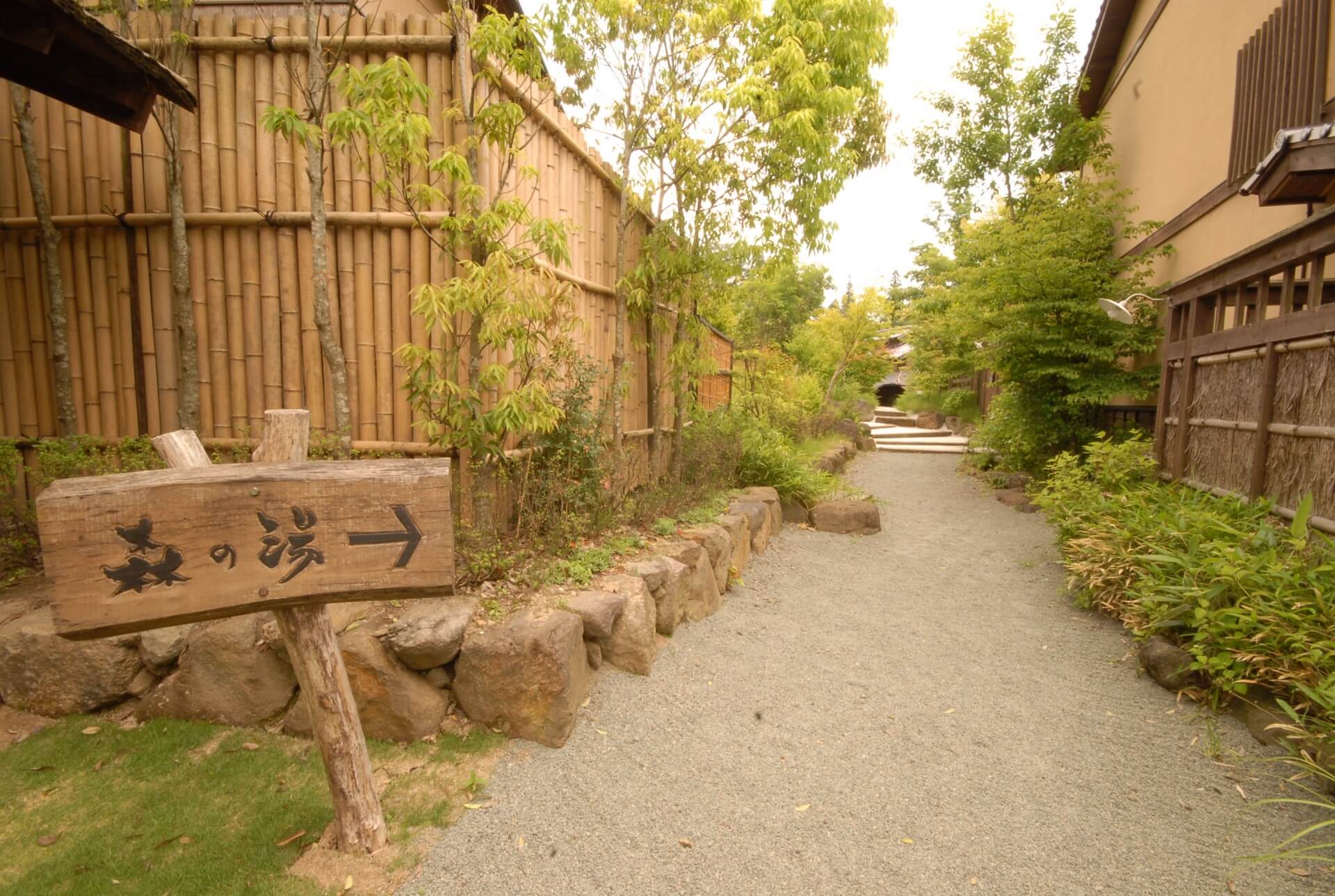
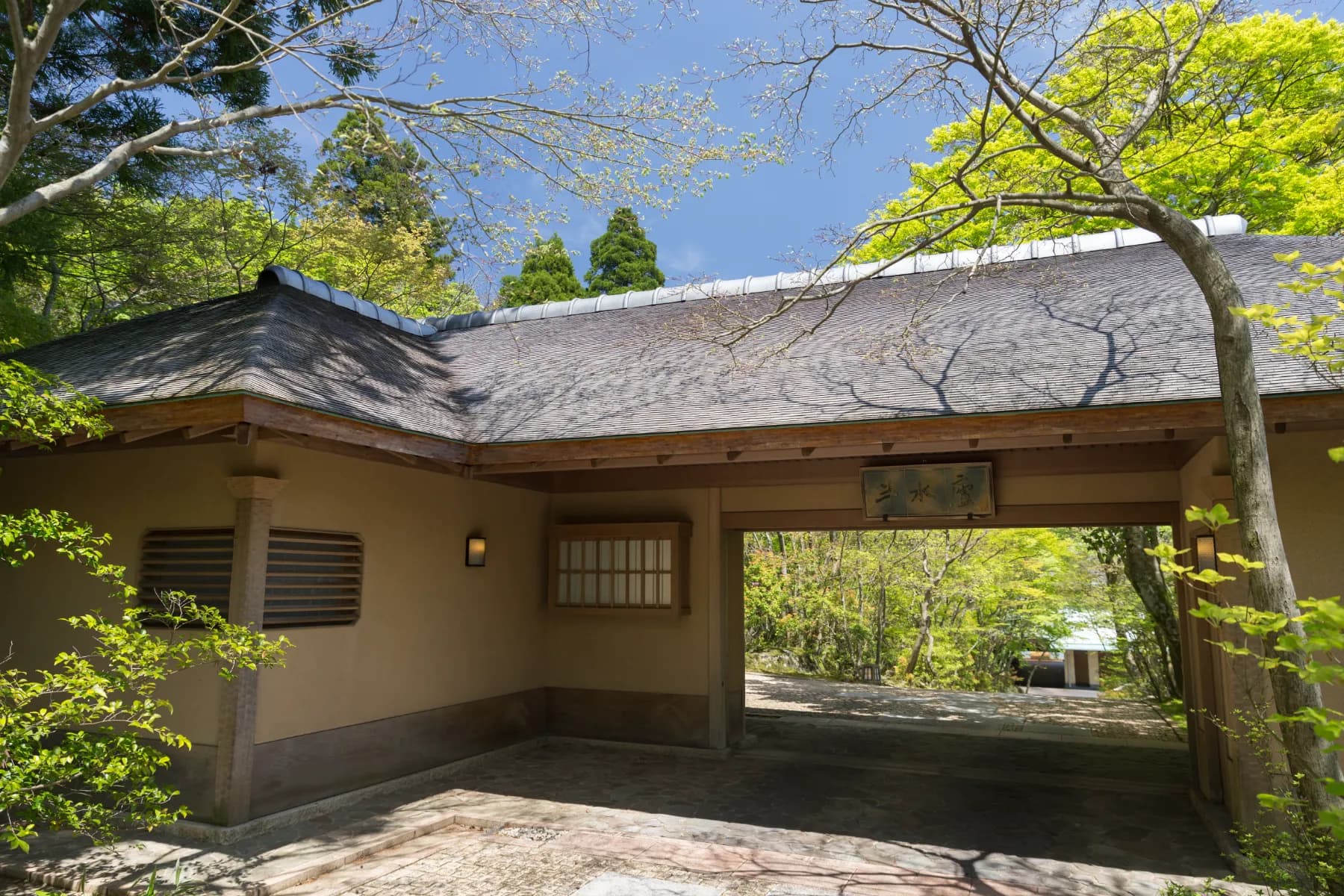
In Hayao Miyazaki's Spirited Away, there is a moment when Chihiro crosses a narrow bridge toward a glowing wooden bathhouse — red lanterns, steaming water, a three-story facade that feels like it has stood there for centuries. In Shima Onsen, Gunma Prefecture, one building really has: Sekizenkan's Genroku-era Honkan, constructed in 1691 and still standing on the bank of the Shima River, is often compared to it (Studio Ghibli says there was no single model). Sekizenkan — whose Honkan the inn says is believed to be Japan's oldest surviving wooden onsen-inn building, and which Gunma Prefecture has designated an important cultural property — is the definitive reason to choose Shima Onsen over every other Gunma hot-spring town.
But Shima (四万温泉) is more than one famous building. Eleven published ryokans line a forested valley where the spring water is credited by legend with healing 四万の病 — forty thousand illnesses — and the mountain air arrives clean enough that the town has no convenience stores, no chain hotels, and no commercial noise. The bus from Nakanojo drops you at the terminal, steam rises from the river, and the next 18 hours are entirely self-contained inside whichever ryokan you chose.
Why Shima Onsen is worth it in 2026
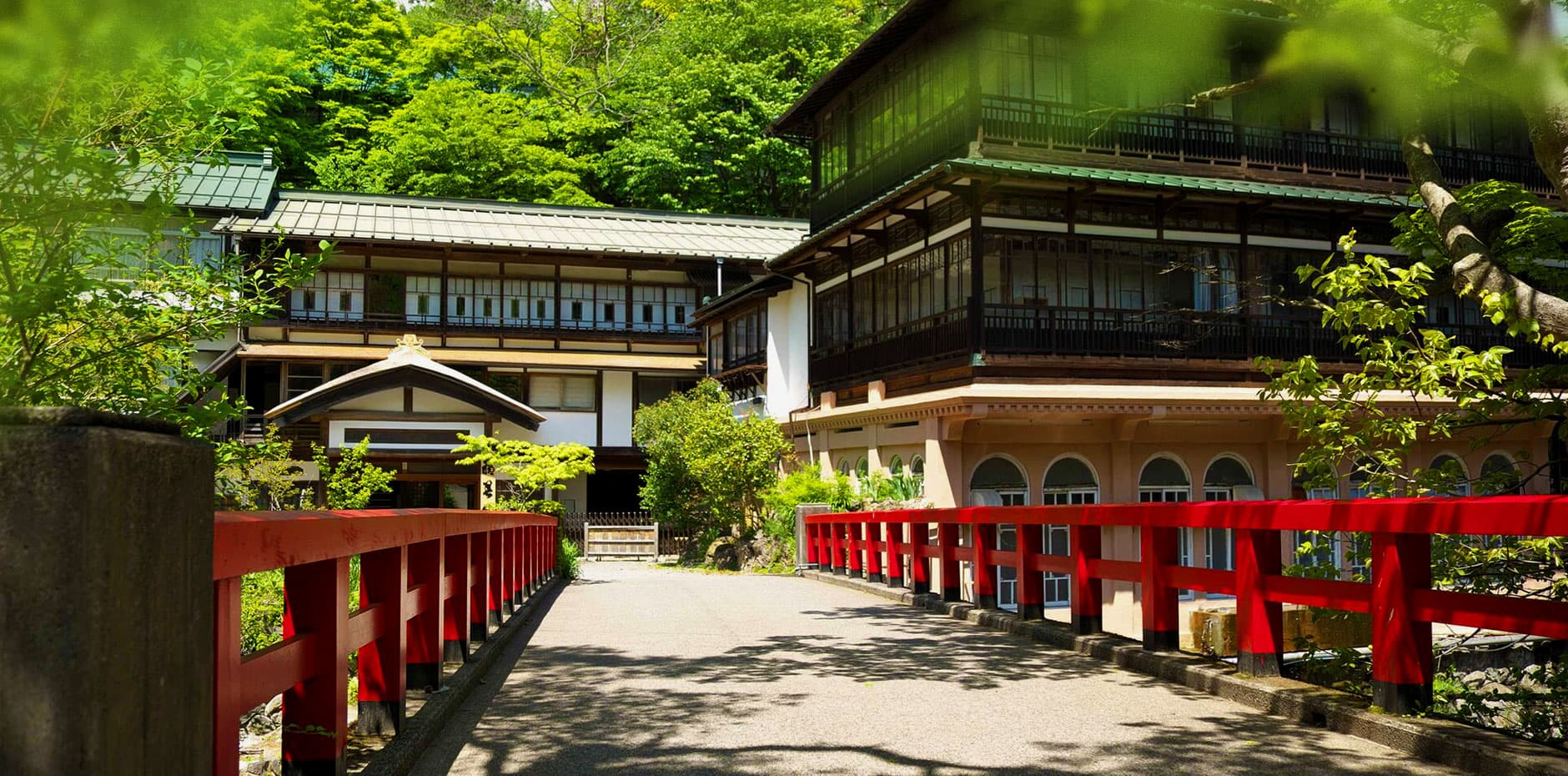
Shima Onsen earns its place on a Tokyo itinerary for three compounding reasons. First, the Spirited Away resemblance is easy to see — the Sekizenkan Honkan preceded the film by 310 years, and fans come for the likeness even though Studio Ghibli says there was no single model. The red bridge, the wooden staircase, the steam at the water's edge are there in 2026 exactly as they were. Second, the spring water is the real thing: a sodium-chloride bicarbonate spring of drinking quality, historically listed among Japan's designated 100 best hot springs and credited with therapeutic properties across centuries of use. Third, the valley has resisted commercialization in a way that most onsen towns near Tokyo have not — no pachinkos, no souvenir strips, no crowds. You arrive, you bathe, you eat kaiseki, you sleep to the sound of the river. That's Shima.
One thing to know before you go: Shima has no convenience stores in the valley. Pack snacks for the bus and any medications or toiletries you need. The ryokans provide yukata, toiletries, and towels — but the valley is genuinely self-contained. That is exactly the point.
Tip
Getting there: Tokyo Station → Joetsu Shinkansen to Takasaki (~50 min) → JR Joetsu Line to Shibukawa (~25 min) → JR Agatsuma Line to Nakanojo (~30 min) → Kan-etsu Kotsu bus to the Shima Onsen terminus (~40 min, ¥1,150). Total: about two and a half hours plus transfers. There is no route bus from Jomo-Kogen Station (a taxi takes about 60 minutes). Evening buses from Nakanojo thin out — check the timetable at Kan-etsu Kotsu before you travel.
How to get to Shima Onsen from Tokyo
Route 1 (rail via Nakanojo): Tokyo Station → Joetsu Shinkansen to Takasaki (about 50 minutes) → JR Joetsu Line to Shibukawa (about 25 minutes) → JR Agatsuma Line to Nakanojo (about 30 minutes) → Kan-etsu Kotsu bus to the Shima Onsen terminus (about 40 minutes, ¥1,150). Total: about two and a half hours plus transfer time. From Ueno, the limited express Kusatsu-Shima reaches Nakanojo in about 120 minutes without changing. Evening buses thin out, so check the timetable before you fix your ryokan check-in time.
Route 2 (direct bus): Kan-etsu Kotsu's Shima Onsen-go runs from Tokyo Station (Yaesu side) to Shima Onsen in about 210 minutes with no transfers. Jomo-Kogen Station on the Joetsu Shinkansen has no route bus to Shima; a taxi from there takes about 60 minutes.
JR Pass note: The JR sections (Shinkansen, Joetsu Line, Agatsuma Line and the limited express) are covered by the JR Pass. The Kan-etsu Kotsu buses are not — budget ¥1,150 for the bus from Nakanojo.
Quick comparison: 11 Shima Onsen ryokans at a glance
All prices are per room per night for two people. Every traditional ryokan below includes kaiseki dinner and Japanese breakfast in the rate. Shima Grand Hotel offers buffet dining instead of kaiseki. Private onsen refers to in-room or reservable private baths — all 11 properties have at least one private bath option. Tattoo policy reflects confirmed database records; 'unknown' means the property has not publicly confirmed a position and direct inquiry is recommended.
| Property | Price (USD/night) | Rating (/10) | Reviews | Private Bath | Tattoo Policy |
|---|---|---|---|---|---|
| Sekizenkan | from $344 | 9.5 | 311 | Yes | Cover-up |
| Kashiwaya | from $228 | 9.4 | 1,240 | Yes (3 free) | Allowed |
| Toshimaya | from $298 | 9.1 | 34 | Yes (3 baths) | Unknown |
| Yamabato | from $281 | 9.0 | — | Yes (3 free) | Unknown |
| Yoshimoto | from — | 9.0 | 1,038 | Yes (4 rooms) | Private only |
| Shojukan | from $232 | 9.0 | 375 | Yes (free) | Unknown |
| Shima Yamaguchikan | from — | 8.8 | 2,180 | Yes | Unknown |
| Yumoto Shimankan | from $130 | 8.6 | 45 | Yes (7 free) | Unknown |
| Tsuruya | from $215 | 8.0 | 262 | Yes (2 rental) | Unknown |
| Shima Tamura | from $147 | 8.0 | 22 | Yes (reservable) | Private only |
| Shima Grand Hotel | $133–189 | 7.6 | 2,530 | Yes (some rooms) | Unknown |
Yoshimoto and Shima Yamaguchikan price-from data not available in current database records — check Trip.com or Booking.com for current rates. All ratings verified against database records as of July 2026. Review counts from database; Yamabato review count not yet recorded. Tattoo policies confirmed from database field; 'unknown' requires direct inquiry with the property.
Top-rated ryokans in Shima Onsen
Sekizenkan — a Honkan said to be Japan's oldest wooden onsen inn, the Spirited Away lookalike (9.5/10, from $344)
Sekizenkan has been receiving guests since 1691. The main Honkan building — the one you see in photographs, the one across the Keiunbashi bridge — was constructed in the Genroku era and, in the inn's words, is believed to be the oldest surviving wooden onsen-inn building in Japan. It is an important cultural property designated by Gunma Prefecture (the Sanso wing is separately a nationally registered tangible cultural property). It is also the building most often compared to the Aburaya bathhouse in Spirited Away (2001) — Studio Ghibli says there was no single model, but fans point to the red bridge, lanterns, wooden facade, steam rising from the water in front of it. In 2026 you can walk up to it, cross the bridge, and see the resemblance for yourself.
You can stay in the Honkan itself as a self-service toji (bath-cure) stay, or in the hillside Sanso and Kashotei ryokan wings, reached from the Honkan via a tunnel passage cut through the mountain. Rooms are traditional tatami, and the baths draw from a single on-site spring. The spa town spring water here is the same sodium-chloride bicarbonate spring the Edo-period guests used.
Rating: 9.5/10 across 311 reviews. From $344/night for two, dinner and breakfast included. Tattoo policy: cover-up accepted in shared baths — stickers or arm covers required. Private baths available.
Worth knowing: Sekizenkan's reputation means it books out on weekends and in autumn foliage season 6–8 weeks in advance. Book early if those dates matter to you.
Tip
The Spirited Away visit: The Keiunbashi bridge and the Honkan facade are viewable from the outside without a stay — but the interior, the baths, and the tunnel passage to the Kashotei Sanso wing are for guests only. If you're visiting purely to see the building, the bus stop is a 5-minute walk from the front. If you're staying, the evening arrival — crossing the red bridge with your luggage in hand as steam rises from the river — is genuinely one of the more cinematic arrivals in Japan.
Kashiwaya — three free private open-air baths, tattoo-allowed, solo-friendly (9.4/10, from $228)
Kashiwaya occupies a specific position in Shima that no other property does: it is explicitly tattoo-friendly in the public bath, explicitly solo-friendly with no single supplement, and consistently the first result when international travelers search for Shima Onsen in English. TripAdvisor lists it first among Nakanojo stays, and the 9.4/10 rating across 1,240 reviews is the most statistically reliable high score on this list by review count.
The property has 14 rooms, all facing the Shima River. The three private open-air baths are reservable and free to all guests throughout the stay — no extra charge, no time limit beyond the reservation window. This is Kashiwaya's signature. Kaiseki dinners can be set to vegan or vegetarian on request, which is a genuine rarity among traditional Gunma ryokans.
Rating: 9.4/10 across 1,240 reviews. From $228/night for two, dinner and breakfast included. Tattoo policy: allowed in public bath. Private baths: three free reservable outdoor baths.
One practical note: the property is English-forward in a way that most Japanese inns are not — full English website, international booking capability, English-speaking staff. If this is your first ryokan and you want a soft landing, Kashiwaya is the one.
Toshimaya — 100% source-fed spring, three private baths, widest booking coverage (9.1/10, from $298)
Toshimaya is a 15-room riverside ryokan with one operational standard that sets it apart from many properties in the area: every bath runs on 100% free-flowing source water with no reheating and no dilution. In an onsen industry where temperature management sometimes involves adding cold tap water, Toshimaya's commitment to untreated kakenagashi water is a real differentiator for guests who care about water quality.
The bathing setup is three private baths plus guest rooms with their own open-air baths — a configuration that means every guest has private onsen access regardless of room tier booked. Kaiseki dinners highlight seasonal mountain vegetables and Gunma produce. The property has the broadest booking coverage of any inn in Shima — visible across Trip.com, Booking.com, and multiple domestic OTAs.
Rating: 9.1/10 across 34 reviews. From $298/night for two, dinner and breakfast included. Tattoo policy: not confirmed — contact directly if relevant. Private baths: yes, including room-attached open-air baths.
Mid-range ryokans in Shima Onsen ($215–298/night)
Yamabato — seven-room ravine inn, charcoal irori dining, top-100 small ryokan (9.0/10, from $281)
Yamabato is the most intimate property in Shima: seven rooms, a ravine setting deep in the valley, and a designation as one of Japan's top-100 small ryokan. The three open-air source baths are reservable and free to use at any time — an unusual policy that effectively gives solo or couple guests their own outdoor onsen for the evening.
The dinner is the real reason food-focused guests seek out Yamabato: a multi-course meal cooked over a charcoal irori hearth, centered on A5 Joshu beef from Gunma and okkirikomi — the prefecture's traditional flat-noodle mountain dish. The combination of that dinner format with the ravine setting and seven-room scale creates a genuinely quiet stay that feels remote even by Shima standards.
Rating: 9.0/10 (review count not yet recorded in database). From $281/night for two, dinner and breakfast included. Tattoo policy: not confirmed. Trip.com booking available.
Yoshimoto (Tokiwasurenoyado) — eight rooms, four with private open-air onsen, kaiseki focus (9.0/10, 1,038 reviews)
Yoshimoto — formally Tokiwasurenoyado Yoshimoto, meaning 'inn where time is forgotten' — is an eight-room kaiseki-focused property where the staying and eating are the point. Four of the eight rooms have a private open-air onsen bath attached; there is also a free reservable cypress bath for rooms without. The name 'time forgotten' is earned: the valley setting, the small scale, and the room-service kaiseki format mean most guests finish the evening without checking their phones.
It is a TripAdvisor Travelers' Choice inn and one of the best-reviewed small properties in Shima by volume — 9.0/10 across 1,038 reviews is a meaningful result for an eight-room inn. Price data is not confirmed in the current database — check Trip.com or Booking.com for current rates.
Tattoo policy: private baths only. Guests with tattoos can use the attached in-room onsen; public shared bathing is restricted.
Shojukan — Meiji-era wooden inn, drinkable spring on-site, no tour groups (9.0/10, from $232)
Shojukan is the best pick for guests who want old Japan without the Sekizenkan price premium. A Meiji-era wooden building with 17 rooms, it accepts only individual guests — no tour groups — which keeps the atmosphere quiet and the public baths uncrowded. The property taps its own spring, and the water at the source is drinkable — a practical demonstration of the same therapeutic water quality the Shima valley is known for.
Free private baths are included for all guests, and the open-air mixed public bath is a traditional format increasingly rare at commercial onsen properties. Rating: 9.0/10 across 375 reviews. From $232/night for two, dinner and breakfast included. Tattoo policy: not confirmed. Trip.com only (no Booking.com listing).
Shima Yamaguchikan — 67-room riverside flagship, steam corridor, kamishibai evenings (8.8/10, 2,180 reviews)
Shima Yamaguchikan is the largest traditional property in Shima — 67 rooms, river position, and an architectural detail that gets quoted in every Japanese onsen magazine: the 'steam corridor' connecting the main building to the outdoor rock bath and cypress riverside bath, where warm mist from the spring fills an enclosed passage. It is theatrical in the best sense.
Upper-floor suites have source-fed cypress open-air baths open around the clock. Kaiseki dinners feature A5 Joshu beef. The evening kamishibai (paper-theatre) performance is a cultural program that sets Yamaguchikan apart from every other property in the valley — not a perfunctory add-on but a genuine traditional art form presented by staff. Rating: 8.8/10 across 2,180 reviews — the second-highest review count in the database after Shima Grand Hotel. Price data not confirmed in current records; check Trip.com or Booking.com.
Value picks in Shima Onsen ($130–215/night)
Yumoto Shimankan — literary heritage inn, seven free private baths, painted ceiling (8.6/10, from $130)
Yumoto Shimankan carries a literary pedigree: the writers Osamu Dazai and Masuji Ibuse both stayed here, and the inn has preserved that connection in its interiors and presentation. The bathing infrastructure is the most varied of any smaller Shima property: seven free reservable private open-air baths, plus a landmark indoor bath with a painted ceiling that guests return to specifically for the aesthetic experience.
The 30 rooms keep a traditional character, and the inn draws entirely on free-flowing source water. Its position is roughly 25 minutes by bus from Nakanojo — closer to the valley entrance than most Shima inns, which makes it marginally easier to reach on a tighter schedule. From $130/night for two, dinner and breakfast included. Tattoo policy: not confirmed.
Shima Tamura — 500-year-old heritage ryokan, seven springs, forest grounds (8.0/10, from $147)
Shima Tamura was founded in 1563, making it the oldest inn in Shima by founding date (Sekizenkan's current wooden structure is older, but Tamura's operating history runs deeper). It sits within approximately 330,000 square metres of forest — an extraordinary amount of private land for a ryokan property — and draws on seven of its own hot-spring sources producing roughly 1,600 litres per minute in total.
The bathing options reflect this scale: waterfall baths, forest baths, reservable outdoor baths, and 47 rooms ranging from classic tatami to open-air-bath suites. The springs are historically counted among Japan's great therapeutic waters. From $147/night for two, dinner and breakfast included. Tattoo policy: private baths only. No public Booking.com listing; Trip.com is the primary international booking channel.
Tsuruya — ten rooms, signature four-source blended bath, Akagi beef sukiyaki (8.0/10, from $215)
Tsuruya takes its name from a cultural moment: the 'Shikanozoki no Yu' bath, where deer were spotted peering down from mountain paths above the spring. The bath itself blends water from four separate sources — a compositional approach unusual even in the source-conscious Shima valley — and looks out over the wooded hillside paths those deer still use.
Ten rooms across the main building and the Mizuki-an annex, two private rental baths, and guest rooms with semi-open-air baths. Kaiseki dinner features Akagi beef sukiyaki as the centerpiece — Akagi is a Gunma brand comparable in provenance to Joshu, less marketed internationally, worth seeking out. From $215/night for two, dinner and breakfast included. Tattoo policy: not confirmed.
Budget option: Shima Grand Hotel ($133–189/night)
Shima Grand Hotel is the most accessible entry point to the Shima valley — 99 rooms in a forest setting, a range of indoor and outdoor hot-spring baths drawing on a 500-year-old spring, and buffet dining (50-plus Japanese, Western, and Chinese dishes) instead of the kaiseki format that defines every other property in town.
It is the only property on this list that doesn't require you to commit to a multi-course dinner in your room — if that format isn't your preference, the buffet makes Shima viable. Some rooms carry private open-air baths. There is a Hello Kitty-themed room and café on-site, making it the most family-friendly option in the valley. Booking coverage is full — visible on Trip.com, Booking.com, Expedia and others.
Rating: 7.6/10 across 2,530 reviews — the highest review count in the database, reflecting its larger scale and wider audience. From $133/night for two. Tattoo policy: not confirmed — the large-scale format makes direct inquiry especially important.
The honest trade-off: you gain accessibility and lower pricing but lose the intimate, kaiseki-and-tatami format that is Shima's primary draw. If the ryokan experience is your goal, spend the extra $80–100 and book Kashiwaya or Shojukan instead.
Shima's blue water and the 四万の病 legend
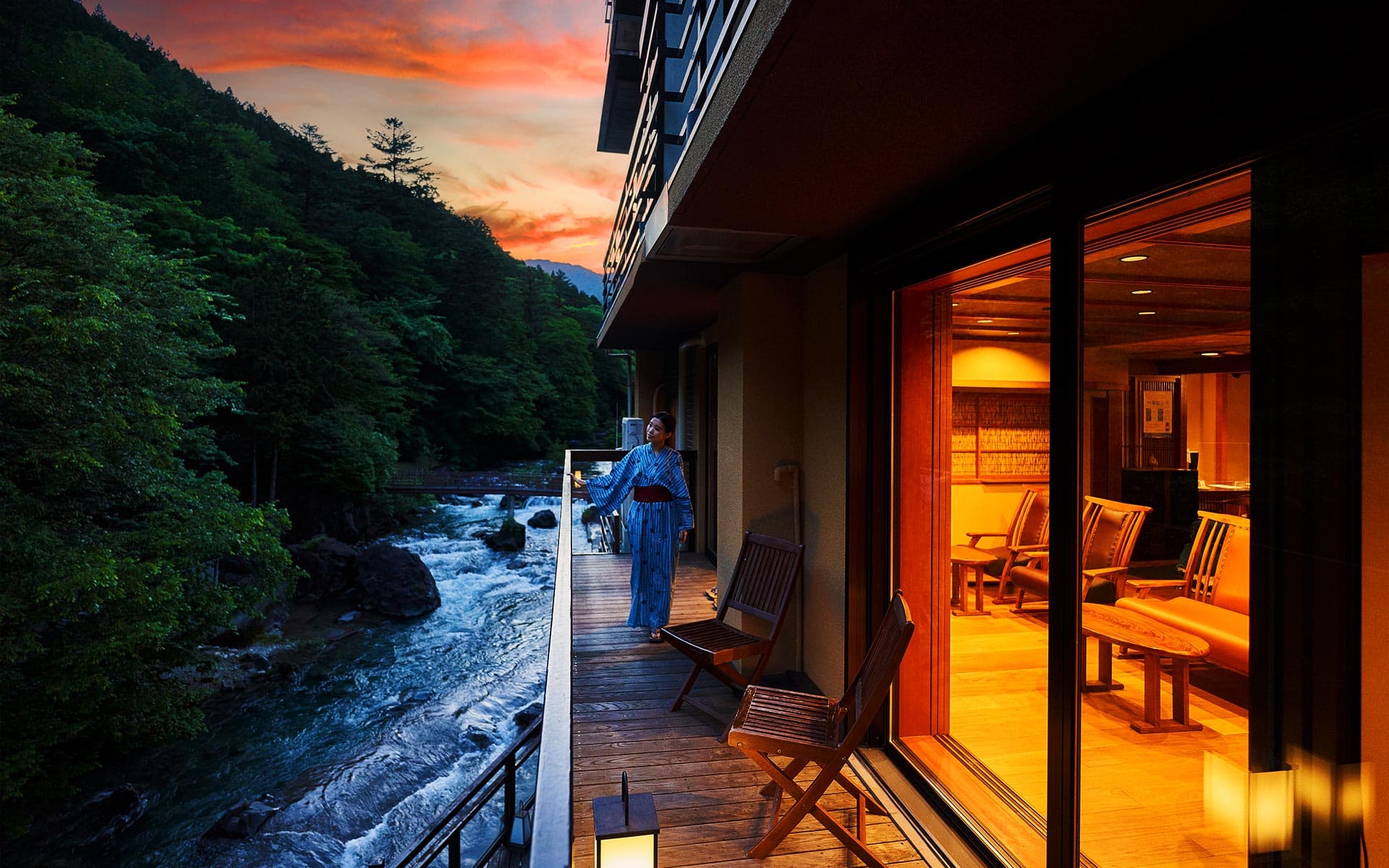
The Shima River — visible from the windows of almost every ryokan in the valley — carries a particular blue-green color that shows best in summer and early autumn, when the water level drops and the mineral content of the spring discharge makes the coloring visible. This is not an effect added by tourism marketing; it is the natural result of the spring water's sodium-chloride bicarbonate composition dissolving into the river channel.
The healing legend behind the name 四万温泉 (Shima Onsen) reads literally as 'forty thousand hot spring' — the 四万 (shima, forty thousand) referring to 四万の病 (shima no yamai), the forty thousand illnesses the spring water was said to cure. The earliest written records of the spring are from the Muromachi period (14th–15th century), when a wounded deer was said to have discovered the waters. By the Edo period the town had become a recognized therapeutic destination for domain lords and travelers seeking treatment for skin ailments, digestive disorders, and chronic fatigue — the same conditions that modern users of the spring water describe.
The spring chemistry today is a weakly alkaline sodium-chloride bicarbonate type. Several Shima ryokans — Shojukan prominently — tap a source where the spring water is drinkable at the point of emergence, and small cups of the water are offered to guests as a morning ritual. The temperature at source is approximately 38–44°C depending on which of the valley's springs you're drawing from. It is gentle on the skin, suitable for extended soaking, and produces none of the sulfur odor associated with Kusatsu's dramatically acidic water 40 kilometers to the northwest.
Private onsen and tattoo access: the honest breakdown
All 11 published ryokans in Shima have at least one private onsen option — reservable baths, in-room open-air baths, or family baths. This is the highest private-onsen density of any onsen town covered on this site, and it makes Shima specifically practical for guests with tattoos, guests who prefer not to share bathing space, or guests booking as a couple who want privacy.
The confirmed tattoo positions from our database:
Kashiwaya — tattoo-allowed in public bath. The only Shima property with this confirmation. Guests with full visible tattoos can use all shared baths without restriction.
Sekizenkan — cover-up required in shared baths. Stickers or arm/leg covers (often provided at the front desk on request) are sufficient.
Yoshimoto and Shima Tamura — private baths only. Guests with tattoos can use in-room or reservable private baths freely; shared public baths are restricted.
All other Shima properties — policy not publicly confirmed. For guests where this matters, direct pre-booking inquiry (by email or phone) is the reliable approach. In practice, ryokans with private bath options often apply the 'private bath, no problem' standard even when they don't publish a policy. A room-attached private onsen — available at Yoshimoto, Toshimaya, Shima Yamaguchikan suites, and Shima Grand Hotel upper rooms — removes the question entirely.
Tip
For the full tattoo-policy picture across 50+ ryokans in Japan: see our tattoo-friendly ryokans in Japan guide and the private onsen ryokans Japan guide — both include filterable data by area.
Budget spectrum and meal formats
Shima Onsen's price range is narrower than Hakone or Kyoto — all 11 properties sit in the mid-range or mid-luxury bracket, with no ultra-budget hostel options and no super-luxury $800+/night tier. This is consistent with the valley's character: a traditional onsen town where quality floors are high and ceilings are moderate.
Under $150/night: Shima Grand Hotel ($133–189) and Shima Tamura (from $147). Both offer private bath access and full hot-spring infrastructure. Grand Hotel is buffet; Tamura is kaiseki. The $147 Tamura rate for kaiseki dinner plus Japanese breakfast plus private spring access in a 500-year-old heritage property is arguably the best value proposition in the Shima database.
$150–250/night: Yumoto Shimankan (from $130 — check current rates), Kashiwaya (from $228), Shojukan (from $232). This bracket contains the best all-around value — Kashiwaya in particular delivers 9.4/10 quality, tattoo-allowed public baths, three free private outdoor baths, and English-friendly service at $228.
$250–350/night: Tsuruya (from $215), Toshimaya (from $298), Yamabato (from $281), Sekizenkan (from $344). This is the top tier for Shima. Sekizenkan at $344 includes the cultural property context and the Spirited Away resemblance; Toshimaya at $298 delivers 100% source-fed kakenagashi water with full private bath access.
Meal format: Every property except Shima Grand Hotel serves kaiseki dinner in-room or in a private dining room. Room-only rates exist on some OTAs but are impractical — there are no restaurants in the valley. Budget ¥5,000–¥12,000 per person for meals if you somehow end up with a room-only booking.
Combining Shima with Kusatsu: the Gunma two-night circuit
Shima and Kusatsu sit roughly 40 kilometers apart in western Gunma, and combining both in a single trip is the most efficient way to experience the full spectrum of Gunma onsen. The two towns sit at opposite ends of the water-chemistry scale: Shima's mildly alkaline sodium-chloride bicarbonate spring is among the gentlest in Japan, suitable for extended soaking and drinking-quality at several sources. Kusatsu's pH 2.0 sulfuric acid spring is the most acidic major onsen in Japan, famously aggressive on bacteria and metals alike — guests are warned not to wear silver jewelry in the bath or on the Yubatake streets.
Suggested circuit from Tokyo: Night 1 in Shima (arrive via Nakanojo, spend the evening at Sekizenkan or Kashiwaya); Day 2 bus from Shima Onsen → Nakanojo → Nagaohara-Kusatsuguchi → Kusatsu Onsen (approximately 2 hours total); Night 2 in Kusatsu. Return to Tokyo from Naganohara-Kusatsuguchi Station or by JR bus from Kusatsu to Karuizawa + Hokuriku Shinkansen.
For Kusatsu ryokan picks and the full Yubatake-side guide, see best ryokans in Kusatsu Onsen.
Best time to visit Shima Onsen
Autumn foliage (late October to mid-November): Peak color in the Shima valley arrives late October and holds through mid-November. The narrow valley concentrates the color — red maples directly above the river, steam rising through the canopy at dusk — in a way that open-country foliage destinations cannot replicate. Book weekend nights in this period 6–8 weeks in advance. Sekizenkan in particular fills first.
Spring cherry blossom (late March to mid-April): Cherry blossoms along the Shima River with far fewer crowds than Nikko, Hakone, or Kyoto in the same window. The valley's micro-climate delays blossom by a week or two compared to Tokyo, which means Shima's season often runs into mid-April when lowland Japan has gone fully green.
Summer (June–August): The least crowded season. Mountain air keeps the valley cooler than the cities; the river is at its most vivid blue-green; and ryokan rates drop 10–20% compared to autumn peaks. Evening fireflies along the river in July are a local event some ryokans organize viewing for.
Winter (December–February): Snow against the wooden ryokan buildings is genuinely beautiful. Yukimi-buro (snow-viewing open-air bath) in Shima's outdoor baths is the premium winter experience — the cold air makes the hot water feel more intense. Bus service to the valley can thin in heavy snow conditions; check Kan-etsu Kotsu advisories before traveling. Some properties offer weeknight discounts in January and February.
Avoid: Golden Week (late April to early May) and Obon (mid-August). Domestic tourism surge, advance bookings exhausted weeks ahead, and the valley's quiet atmosphere — its primary selling point — is temporarily lost.
Tip
Weather note for winter: The Shima valley receives significant snowfall, and the mountain road section of the bus route from Nakanojo can be affected by conditions. Check Kan-etsu Kotsu's service advisories before traveling in January and February. Your ryokan will typically monitor this and can advise on alternative access if necessary.
Frequently asked questions about Shima Onsen
Is Shima Onsen the same as the Spirited Away hot spring?
Not exactly, and the answer matters for expectations. Sekizenkan's Genroku-era Honkan (1691) is widely said to resemble the Aburaya bathhouse in Spirited Away — the building's exterior, the red bridge, the wooden facade are what fans point to. But Hayao Miyazaki has said there was no specific model for the bathhouse, and the film does not literally depict Sekizenkan's interiors. The building you see in Shima is real; the film's bathhouse is artistic synthesis.
Other onsen towns also claim a Spirited Away connection. The one bathhouse Miyazaki named is Dogo Onsen in Ehime, and Studio Ghibli says inns claiming to be the model do not appear to be correct. If the goal is standing in front of a building fans love for its resemblance to the film, Shima Onsen is a rewarding destination.
Can I day-trip to Shima Onsen from Tokyo?
Technically possible but not recommended. The round trip from Tokyo takes approximately 4 hours of transit time, leaving only 4–6 hours in the valley — not enough time to do a kaiseki dinner, and the valley has no restaurants for a day-trip meal. The onsen experience at most ryokans requires a check-in, and day-use bathing (higaeri nyuyoku) is limited and variable by property. If you can only spare a day, Hakone or Kusatsu are better structured for day-trip access. Shima rewards an overnight stay, and the value of the kaiseki-plus-onsen-morning format is worth the commitment.
Shima Onsen is a small valley with a long memory. The spring water has been flowing since before Japan was unified. The oldest building in the town predates the American Revolution by 85 years. The bus still drops you at the same terminal it has for decades, and the walk from there to the ryokan entrance is done in yukata at night.
The eleven picks in this guide cover the full range — from Sekizenkan's cultural property gravitas to the Grand Hotel's accessible buffet format, with Kashiwaya's tattoo-allowed policy and Tamura's seven springs in between. The Shima Onsen area page has the complete filterable database with booking links. If you're still deciding between Gunma onsen towns, our best ryokans near Tokyo guide compares Shima, Ikaho, Kinugawa, and Nikko with direct access timing from the city.
Ready to book?
Book one of these top picks
Compare live availability and prices across booking sites.
Sekizenkan
積善館
Shima·Mid-Range
from US$344 · per person · per nightfrom ≈ US$688 total for 2 guests



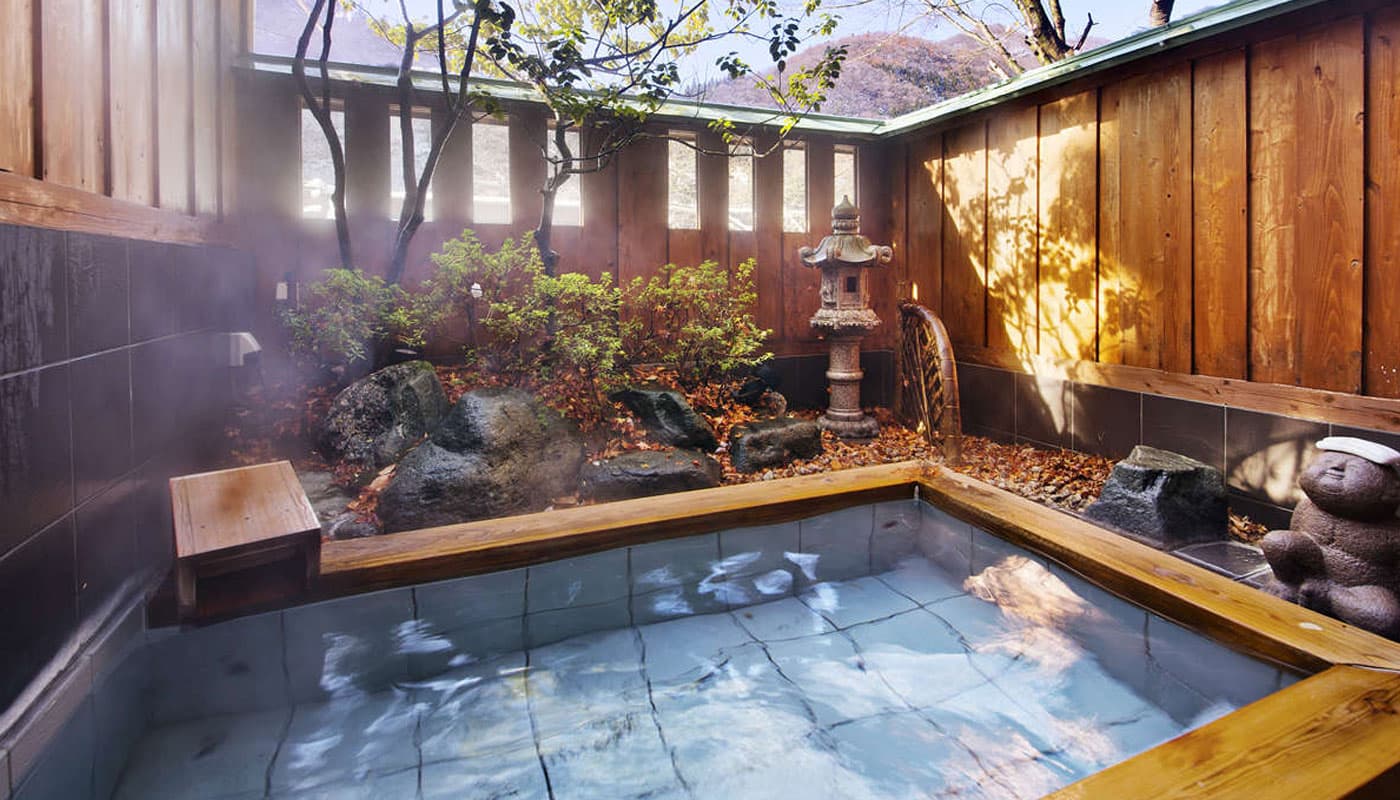
Shima Onsen Kashiwaya Ryokan
四万温泉 柏屋旅館
Shima·Mid-Range
from US$228 · per person · per nightfrom ≈ US$456 total for 2 guests
Shima Onsen Toshimaya
四万温泉 豊島屋
Shima·Mid-Range
from US$298 · per person · per nightfrom ≈ US$596 total for 2 guests
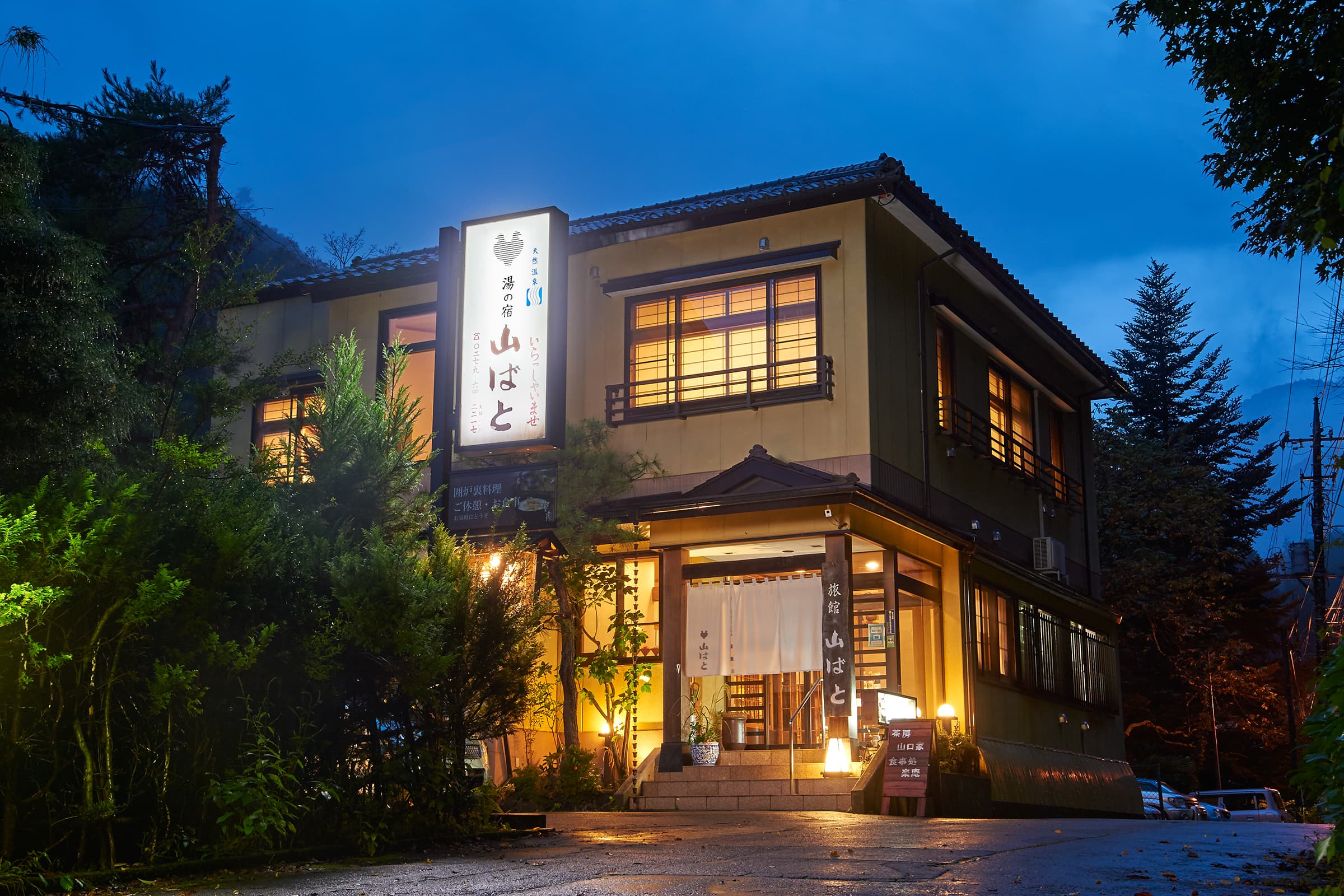
Yamabato
湯の宿 山ばと
Shima·Mid-Range
from US$281 · per person · per nightfrom ≈ US$562 total for 2 guests
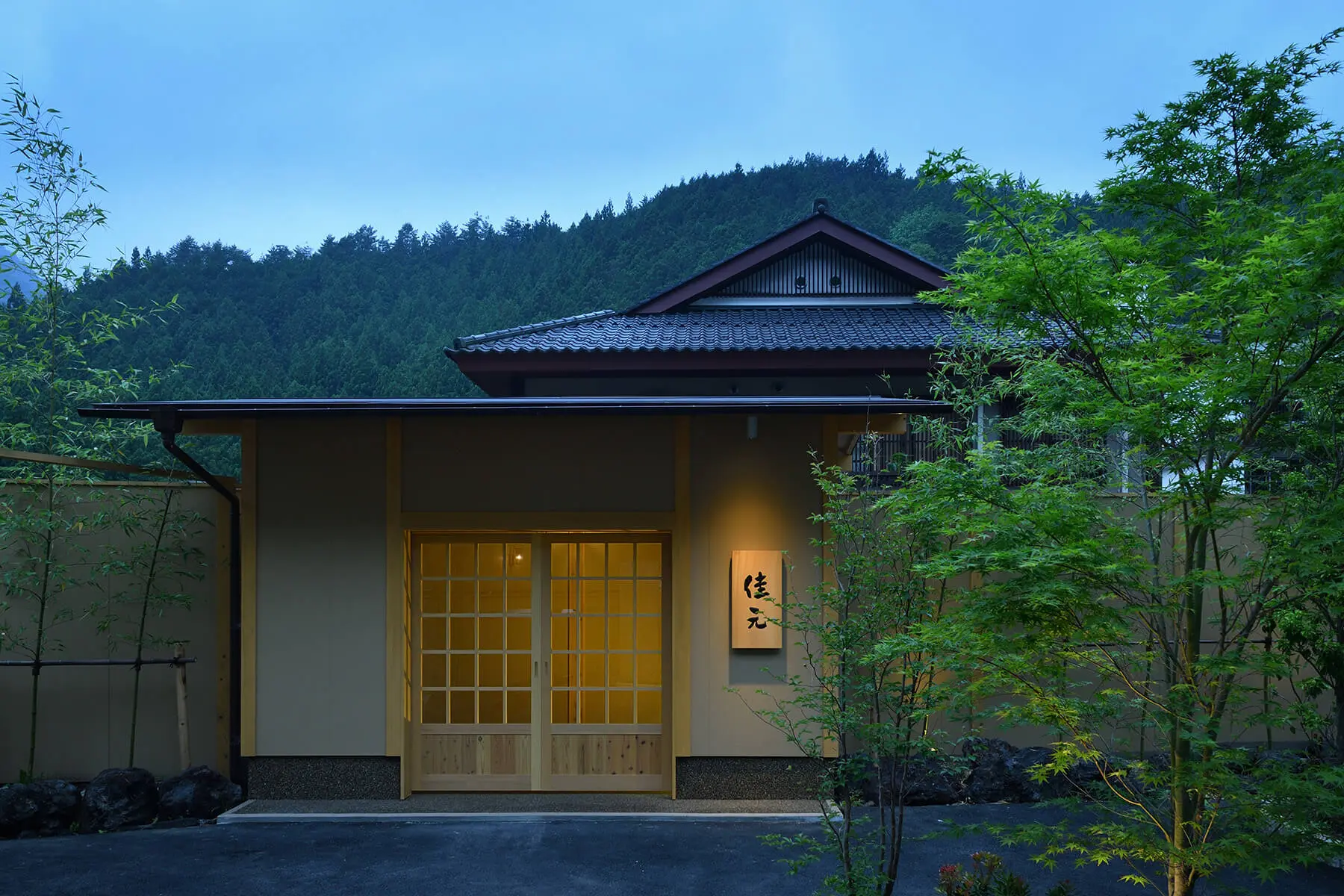
Booking links may earn us a commission at no extra cost to you.
FAQ
Frequently asked questions
Is Shima Onsen worth visiting from Tokyo in 2026?+
Yes, especially if you want an onsen town that hasn't been overrun. Shima sits about 2½ hours plus transfers from Tokyo Station and has no convenience stores, no chain restaurants, and no commercial strip — just a river valley, a dozen ryokans, and what the inn says is believed to be the oldest wooden onsen-inn building in Japan. The Spirited Away resemblance (Sekizenkan's Genroku-era Honkan is often said to look like the film's bathhouse) gives it a cultural hook no other Gunma onsen town can match. Combine it with a Kusatsu visit if you have two nights in Gunma.
Which Shima Onsen ryokan looks like the Spirited Away bathhouse?+
Sekizenkan (積善館), founded in 1691. Its Genroku-era Honkan — a wooden inn building reached across the red Keiunbashi bridge — is often compared to the Aburaya bathhouse in Hayao Miyazaki's 2001 film, and fans love the red bridge, lanterns, and wooden facade for the resemblance. Studio Ghibli, however, says there was no single model. The inn says its Honkan is believed to be Japan's oldest surviving wooden onsen-inn building. The Honkan is an important cultural property designated by Gunma Prefecture, and the Sanso wing is a nationally registered tangible cultural property. You can stay in the Honkan itself as a self-service toji (bath-cure) stay, or in the Sanso and Kashotei ryokan wings; the buildings are linked by indoor passages, including a tunnel.
How do I get to Shima Onsen from Tokyo?+
The standard rail route: Tokyo Station → Joetsu Shinkansen to Takasaki (about 50 minutes) → JR Joetsu Line to Shibukawa (about 25 minutes) → JR Agatsuma Line to Nakanojo (about 30 minutes) → Kan-etsu Kotsu bus to the Shima Onsen terminus (about 40 minutes, ¥1,150). Allow about two and a half hours including transfers. From Ueno, the limited express Kusatsu-Shima reaches Nakanojo in about 120 minutes without changing. There is also a direct Kan-etsu Kotsu bus from Tokyo Station (Yaesu side) to Shima Onsen, taking about 210 minutes. Jomo-Kogen Station on the Joetsu Shinkansen has no route bus to Shima — a taxi takes about 60 minutes. Evening buses from Nakanojo thin out, so check the Kan-etsu Kotsu timetable in advance.
Can I visit Shima Onsen with tattoos?+
Kashiwaya is the only Shima ryokan with a fully tattoo-allowed public bath — a genuine rarity in Japan. Sekizenkan allows tattoos with cover-up (stickers or arm/leg covers) in shared baths. Yoshimoto and Shima Tamura allow tattoos in private baths only. The remaining seven properties have unknown or unconfirmed policies — contact them directly if this matters. Every ryokan in Shima has at least one private bath option, so tattoo guests who book a room with a private onsen can bathe freely regardless of public bath policy.
What does 四万 (Shima) mean in Japanese?+
四万 (Shima) literally means 'forty thousand' — and the legend is that the spring water of Shima Onsen heals 四万の病 (shima no yamai): forty thousand illnesses. The town takes its name from this healing water legend, which dates back at least to the Edo period. The spring is a sodium-chloride bicarbonate type (neutral to mildly alkaline), drinking-quality at several ryokans, and historically listed among Japan's designated 100 best hot springs (日本三名泉 adjacent class).
What is the average cost of a ryokan in Shima Onsen?+
Budget: from $133/night (Shima Grand Hotel, 99-room forest hotel, buffet dining). Mid-range: $215–$298/night (Tsuruya, Yumoto Shimankan, Kashiwaya, Toshimaya). Luxury: from $281–$344+/night (Yamabato, Sekizenkan, Yoshimoto). All rates are per room for two people and almost universally include kaiseki dinner and Japanese breakfast — verify the meal inclusion on the OTA listing before booking. Shima has no restaurants outside the ryokans, making room-only bookings impractical unless you plan carefully.
Do Shima Onsen ryokans include meals?+
Yes — with one exception. Every traditional ryokan in Shima (Sekizenkan, Kashiwaya, Toshimaya, Yamabato, Yoshimoto, Shojukan, Shima Yamaguchikan, Yumoto Shimankan, Tsuruya, Shima Tamura) includes kaiseki dinner and Japanese breakfast in the rate. Shima Grand Hotel offers a large buffet format rather than kaiseki. There are no restaurants in the Shima valley outside the ryokans, so room-only rates are rarely a practical option. Kashiwaya specifically accommodates vegan and vegetarian kaiseki on request.
Which Shima Onsen ryokan is best for solo travelers?+
Kashiwaya is the standout solo option — it has dedicated single rooms with no supplement, an explicitly English-friendly setup, and a solo travel promotion on its official website that is rare in the Japanese ryokan world. Three free private open-air baths are available at no extra charge to all guests, so solo visitors get full access to the property's signature feature. It ranks first for Nakanojo stays on TripAdvisor (9.4/10, 1,240 reviews).
Are there English-speaking staff at Shima Onsen ryokans?+
Kashiwaya is the most confidently English-friendly property in Shima, with a full English website and international booking system. Sekizenkan and Toshimaya have English OTA listings and are accustomed to foreign guests. Most smaller inns (Yamabato, Shojukan, Yumoto Shimankan, Tsuruya) operate in Japanese only — but international OTA bookings work regardless, and a translation app handles most check-in situations. Pre-arrival email communication in Japanese (via translation tool) is always appreciated.
What is the best time to visit Shima Onsen?+
Autumn foliage (late October to mid-November) is the most dramatic — the narrow valley concentrates the color, and evening steam rising through red maples is one of the most atmospheric scenes in Gunma Prefecture. Spring (late March to mid-April) brings cherry blossoms along the river with far fewer crowds than Nikko or Hakone. Summer is quiet and green, with river sounds and cooler mountain air at night. Winter snowfall against the wooden ryokans is genuinely beautiful but bus service can thin in heavy snow — check conditions. Avoid Golden Week and Obon for pricing and advance booking reasons.
Still deciding?
Browse ryokans across JapanBooking.com