
![Japan Ryokan Tattoo Policy Registry 2026 — The 612-Property Database (Q3 Update) [Historical Q3 snapshot, superseded]](/_next/image?url=https%3A%2F%2Fwww.japanryokanguide.com%2Fapi%2Fimage-proxy%3Furl%3Dhttps%253A%252F%252Fupload.wikimedia.org%252Fwikipedia%252Fcommons%252Fthumb%252F4%252F4d%252F2023.04.26_Yubatake_%252528Kusatsu_Onsen%252529.jpg%252F1280px-2023.04.26_Yubatake_%252528Kusatsu_Onsen%252529.jpg&w=3840&q=75)
Historical snapshot — superseded. This bulletin reports the 2026-07-12 (Q3 2026) snapshot, classified under our earlier, looser method, which also counted policies we could not trace to the inn or its operator. It has been superseded by the 2026-09-29 official-source audit, which counts a policy only when the inn's or operator's official website states it, backed by a quote from that site, with the quoted text checked against the live page at the time of research. The figures below (612 properties, 325 classified, 85.8% friendly in some form) are kept as a historical record and should not be cited as current. For current figures, see the live tattoo-policy audit.
Correction (2026-09-29 official-source audit): Suginoi Hotel (Beppu) and Suimeikan (Gero), which this snapshot describes as cover-up properties, both state on their own official websites that guests with tattoos cannot use the shared baths; Suimeikan also states that no private-bath alternative is offered.
This is the Q3 2026 release of Japan Ryokan Guide's Japan Ryokan Tattoo Policy Registry — the first Japan-wide, free, primary-source database of how Japanese ryokans actually handle tattooed guests, now spanning 612 published properties, 325 of them with an editorially verified policy.
July 12, 2026 re-verification (Q3): Of the 612 ryokan in our registry, 325 carry a confirmed tattoo policy. Among those 325: 27 welcome tattoos openly, 126 accept them with a cover-up sticker, and 126 restrict tattooed guests to private or in-room baths — 279 verified properties (85.8%) work in some form. Only 46 ban tattoos outright. The remaining 287 properties are newer additions still awaiting verification: our H1 2026 area expansion more than doubled the registry from 293 to 612 properties, and new intake enters as unknown until it clears editorial review. (The original May 2026 analysis is retained below for methodology transparency.)
| Policy | Properties | What it means for you |
|---|---|---|
| Tattoos allowed openly | 27 | Use any bath — no cover needed |
| Cover-up sticker accepted | 126 | Shared baths OK once tattoos are covered |
| Private / in-room bath only | 126 | Book a private-bath time slot or a room with its own bath |
The Japanese onsen tattoo question has been miscategorized in English travel writing for a decade. Most blogs and forums frame it as a binary — "is this ryokan tattoo-friendly, yes or no?" — and then either declare Japan a no-go for anyone with ink or surface a small handful of inbound-friendly properties (often the same five Kinosaki addresses) as exceptions. Neither framing matches what is actually happening on the ground.
What is actually happening is a five-bucket spectrum. Some properties allow tattoos unconditionally. Some allow them if you cover them with a patch. Some redirect you to a private in-room bath or a reservable kashikiri family bath so the question never reaches the communal rotenburo. Some refuse outright, regardless of size, location, or your willingness to cover. And some — the honest answer for a large minority of the industry — have never published a policy and would need to be asked directly. Until now no public registry has captured all five categories at the national level.
Headline finding for the Q3 2026 snapshot. Of the 325 properties with a verified policy, 85.8% (279 properties) are tattoo-friendly in some form (allowed + cover-up + private-only) and 14.2% (46 properties) are strictly not-allowed. The remaining 287 of the registry's 612 properties are classified as unknown — a mix of newly added inns from the H1 2026 expansion awaiting verification and small family-run ryokans without a published English channel where the only path to a definitive answer is a phone call in Japanese [Japan Ryokan Guide 612-property editorial classification, 2026-07-12]. The single most surprising finding from the Q2 baseline still holds: only 27 properties (8.3% of verified policies) publish an unrestricted, conditions-free 'tattoos allowed in communal baths' policy. The de-facto industry consensus is conditional access, not blanket acceptance.
Download the full registry. The complete CSV — slug, name, area, prefecture, region, 5-value tattoo policy, private-onsen flag, English inquiry channel availability, aggregate rating, review count, verification date — is available at /data/tattoo-policy-registry.csv. Free to use under CC-BY 4.0 with attribution. Cite as: Japan Ryokan Guide. (2026). Japan Ryokan Tattoo Policy Registry [Dataset]. https://www.japanryokanguide.com/data/tattoo-policy-registry.csv. Note: the live CSV now reflects the 2026-09-29 official-source audit and does not reproduce this 2026-07-12 snapshot; no frozen copy of the snapshot is published.
Why this registry exists
Three forces converged in 2024-2026 that made a registry like this overdue.
Inbound demand is at multi-year highs. Japan welcomed a record 36.9 million international visitors in 2024 — surpassing the pre-pandemic 2019 record by roughly five million — and 2026 is tracking above that pace (Nippon.com / JNTO). Tattoo prevalence in our top inbound source markets is structurally high: 41% of US adults under 30 and 46% aged 30 to 49 have at least one tattoo per Pew Research Center (Pew Research Center), with similar or higher rates in Australia, the UK, and continental Europe. A meaningful share of the inbound traveler population needs an answer to the onsen question before they book, and they need it in English.
Existing English-language sources are thin and outdated. The most cited resource, tattoofriendlyonsen.com, lists roughly 80 properties nationwide and is heavily indexed to Kinosaki Onsen. TripAdvisor, Reddit's r/JapanTravel, and Lonely Planet forum threads surface anecdotes from individual stays — useful but unaggregated, unverified, and almost always year-old. No commercial database publishes the structured tattoo policy of 100+ ryokans in machine-readable form. The Japan Tourism Agency's 2015 industry survey of onsen tattoo policy — 56% of facilities refused tattooed guests, 31% permitted them unconditionally, and 13% allowed entry if tattoos were covered (Kashiwaya / Japan Tourism Agency 2015 survey) — is the most cited statistic in tattoo-friendly travel writing, and it is now more than ten years old.
Our database already has the structured data. Our 612-property catalog uses a five-value tattoo_policy enumeration — allowed, cover_up, private_only, not_allowed, unknown — that was first classified property-by-property by a four-person editorial team in May 2026 and re-verified for Q3 2026 in July, by reading official policy statements, Trip.com and Booking.com listing notes, and direct property correspondence where available. We built the structure for the website's faceted filter, not for journalism. Releasing it as a citable public registry is the natural next step.
Tip
Citation policy. Use this registry freely under CC-BY 4.0. The required citation is: Japan Ryokan Guide. (2026). Japan Ryokan Tattoo Policy Registry [Dataset]. https://www.japanryokanguide.com/data/tattoo-policy-registry.csv. Journalists, researchers, and travel publishers may quote any individual statistic from this bulletin with the attribution "Japan Ryokan Guide 612-property editorial classification, 2026." Press inquiries: press@japanryokanguide.com (template at /press).
The five-category framework, explained
Most English-language coverage of Japanese onsen tattoo policy uses a binary classification — allowed or not. The Japanese-language industry framework is more granular than that, and the registry follows the granular version because the binary loses information that materially affects how a traveler plans a trip.
Category 1: allowed (8.3% of verified policies). A property in this category publishes a policy stating that tattoos of any size are welcome in the communal rotenburo without conditions. 27 of the 325 verified-policy properties in our database publish such a policy. This is a real finding, not an artifact of measurement. The Japanese onsen industry's regulatory and cultural framework does not produce blanket-acceptance properties at any meaningful scale; the inbound-oriented chains — Hoshino Resorts KAI, the Hoshinoya flagships, the Yuen Bettei urban onsen — overwhelmingly use one of the conditional categories below rather than category 1 (KAI Unzen is the notable exception). The closest you will find is a ryokan that issues complimentary cover patches at check-in with no questions asked; we classify those as category 2.
Category 2: cover_up (38.8% of verified policies, 126 properties). One of the two largest categories (tied with private-only, also at 126). The property allows entry to the communal baths if visible tattoos are covered with an adhesive patch (typically a 5cm × 7cm or 10cm × 15cm waterproof sticker). Cover patches are usually sold or given free at the front desk. The practical limit is tattoo size — most cover-up properties cap covered area at roughly the size of a standard A6 sheet (~10.5cm × 14.8cm). Sleeve-scale or back-piece tattoos exceed any reasonable cover and effectively redirect the guest to category 3 or 4. Some cover-up properties also restrict the timing — the largest example in our dataset, Beppu Suginoi, runs a posted policy that requires tattooed guests to use the indoor baths only during morning hours when the property is least busy. Cover_up is the workhorse category, the actual industry default.
Category 3: private_only (38.8% of verified policies, 126 properties). The property cannot accept tattooed guests in the communal baths under any condition but offers an alternative: either an in-room rotenburo (rented as part of the room rate, often the higher categories) or a reservable kashikiri family bath (booked in 45-60 minute slots, typically ¥3,000-¥6,000 per slot, sometimes complimentary for guests of qualifying room categories). The practical experience for a tattooed traveler at a private_only property is excellent — you bathe in a private setting overlooking the same garden or mountain view as the communal bath, often with better water-pressure controls and zero crowd density. The downside is cost: private-onsen-equipped rooms typically run 25-60% above the base-rate room category for the same property. See our best ryokans with private onsen for the property-level breakdown.
Category 4: not_allowed (14.2% of verified policies, 46 properties). The property declines tattooed guests at the property level — not just the communal baths but check-in itself. No longer the smallest verified category (openly-allowed, at 27 properties, now holds that spot), it concentrates almost entirely in two segments: formal-traditional heritage properties (the Kyoto Michelin tier — Hiiragiya's communal baths, Sawaya Honten, Mugen; the Nikko grand-hotel tier — Kanaya, opened in 1873 and recognized as Japan's oldest Western-style resort hotel (Nikko Kanaya Hotel History House), Chuzenji Kanaya; the Takayama secluded tier — Wanosato) and a small number of large family-popular resorts that explicitly target the domestic Japanese family market and treat tattoo restriction as a brand signal. If a property is in category 4, no amount of cover-up patches, polite explanation, or willingness to pay for a private room will change the answer. Phone ahead is wasted time; pick a different property.
Category 5: unknown (46.9% of the registry, 287 properties). The property has not published a tattoo policy in any English-accessible channel, and our editorial team has not yet confirmed one through Trip.com or Booking.com listing notes or via direct correspondence. In the Q3 2026 registry this is the largest bucket by count, for a structural reason: our H1 2026 area expansion more than doubled the catalog (293 → 612 properties), and newly added inns enter the registry as unknown until they clear editorial verification. The long-standing core of the category remains small (under 20 rooms), family-run ryokans in rural areas — primarily Gero tattoo-tolerant ryokans, Shirahone, Wakura, Ginzan — where the proprietor speaks little to no English and the website is Japanese-only. The honest answer for these properties is: phone or have a Japanese-speaking friend phone before booking. We do not infer policy from indirect signals like "luxury formal kaiseki = probably not_allowed" — those rows stay classified as unknown. Treating unknown as a real category preserves dataset integrity.
National distribution: Q3 2026 snapshot
The full distribution across the 612-property population, as of the July 2026 (Q3) verification snapshot. Percentages are shares of all 612 published properties; the verified-policy base is 325.
| Category | Count | % of 612 | What it means in practice |
|---|---|---|---|
| allowed | 27 | 4.4% | Unrestricted communal bath access — 27 properties |
| cover_up | 126 | 20.6% | Communal bath access if visible tattoos are covered with patches |
| private_only | 126 | 20.6% | Communal bath off-limits; in-room or kashikiri bath available |
| not_allowed | 46 | 7.5% | Property-level refusal; no workaround |
| unknown | 287 | 46.9% | Policy not published or not yet verified; phone-ahead required |
[Japan Ryokan Guide 612-property editorial classification, 2026-07-12. Total n=612 published ryokans across 35 onsen areas; 325 with a verified policy.]
Rolling up to a tattoo-friendly-in-some-form bucket. If a traveler's question is "can I, a person with visible tattoos, find a way to bathe at this ryokan," the answer is yes for 279 of the 325 properties with a verified policy (85.8%) — categories 1, 2, and 3 combined. That is the headline rate this registry is built to surface. The previous best public estimate, the Japan Tourism Agency's 2015 survey of approximately 3,800 facilities, placed the outright-refusal rate at 56% (with 31% permitting unconditionally and 13% requiring cover) at the population level (Kashiwaya / Japan Tourism Agency 2015 survey). The eleven-year delta to our 85.8% is not a measurement artifact — it reflects the genuine policy liberalization that has happened in inbound-traveler-accessible inventory since 2015, plus our population's inbound-friendly selection bias relative to a national census.
For the bigger statistical picture — median prices, tattoo policy, and bath access across 612 inns — see our Japan Ryokan Index 2026.
Most tattoo-friendly onsen areas
Twelve onsen areas in our dataset (counting only areas with at least nine verified policies) sit at or above the national 85.8% friendly-of-verified rate — seven of them at a full 100%. These are the areas where a tattooed traveler can plan a trip without the policy question shaping the itinerary. The table below shows the top eight; shares are computed on each area's verified-policy base.
| Rank | Onsen Area | Region | Verified n | Friendly in some form | Cover-up share | Private-only share | Defining property |
|---|---|---|---|---|---|---|---|
| 1 | Beppu | Kyushu | 15 | 100% | 33% | 47% | Suginoi cover-up posted; GAHAMA, Kannawa Bettei, Sennari openly allow |
| 2 | Hakone | Kanto | 13 | 100% | 54% | 46% | Gora Kadan, Hakone Ginyu — every-room private rotenburo |
| 3 | Naruko | Tohoku | 11 | 100% | 0% | 45% | Highest openly-allowed share in the registry — 6 of 11 verified |
| 4 | Tamatsukuri | Chugoku | 10 | 100% | 30% | 70% | KAI Tamatsukuri — private-bath redirection standard |
| 5 | Yufuin | Kyushu | 12 | 100% | 42% | 58% | Sanso Murata, Kamenoi Besso — villa-style private onsen |
| 6 | Kurokawa | Kyushu | 12 | 100% | 42% | 50% | Fumoto, Sanga — every room with private bath |
| 7 | Gero | Chubu | 9 | 100% | 33% | 67% | Suimeikan — cover-up and private-bath mix, zero refusals |
| 8 | Kinosaki | Kansai | 16 | 94% | 31% | 44% | Tenbouen, Saigetsu, Yamamotoya openly allow; town-wide sotoyu culture |
[Japan Ryokan Guide 612-property editorial classification, 2026-07-12. n = properties with a verified policy per area; shares are of the verified base.]
Kurokawa (Kumamoto). Every verified property is friendly-in-some-form (12 of 12), with half redirecting to private baths; the Q3 caveat is that our Kyushu expansion added many small inns still awaiting verification (16 of the area's 28 rows are unknown). Kurokawa's village-preservation pact — coordinated aesthetics, shared visual standards, and the joint onsen pass (nyuto tegata, a 1,500-yen wooden token granting access to three of more than twenty participating ryokan baths) (Japan-Guide.com) — has produced a tight cluster of small (10-25 room) properties where almost every room ships with its own private rotenburo. For a tattooed traveler, Kurokawa remains one of the cleanest targets in Japan: pick any verified property in the village and you can bathe. See best ryokans in Kurokawa.
Yufuin (Oita). Twelve verified properties, 100% friendly-in-some-form — seven via private-bath redirection, five via cover-up — with 13 newer rows still unverified. Yufuin's art-ryokan scene over-indexes on architect-designed boutique properties (Sanso Murata, Kamenoi Besso, Souan Kosumosu, Gettouan) where every room is essentially a private suite with its own bath. The result is a market structure where the question "can a tattooed guest stay here" has been engineered out of the equation. See best ryokans in Yufuin.
Beppu and Noboribetsu. Two of the largest, oldest, most multi-bath resort destinations in Japan. Beppu is the standout of the Q3 verification: all 15 of its properties carry a confirmed policy — zero unknowns — and all 15 are friendly-in-some-form, split between private-bath redirection (7), cover-up (5), and three openly-allowed properties (Amane Resort GAHAMA, Kannawa Bettei, Sennari). Noboribetsu sits at 90% of verified (9 of 10, one refusal), with cover-up dominant. Beppu Suginoi (the dataset's largest) posts a formal cover-up policy in English and Chinese; Noboribetsu Dai-ichi Takimotokan operates a 35-bath complex spanning five different spring types (sulfur, salt, ferrous sulfate, sodium, and acidic alum) across roughly 1,500 tsubo (Dai-ichi Takimotokan official) and posts the same cover-up policy. These are the areas where a tattooed family group can plan a stay around the traditional communal-onsen experience with patches, rather than building the trip around a single private bath.
Hakone and Izu. The two onsen-belt destinations closest to Tokyo. Hakone joins Beppu as the only other fully verified area: all 13 properties carry a confirmed policy and all 13 are friendly-in-some-form, split between cover-up (7) and private-bath redirection (6). Gora Kadan, Hakone Ginyu, Mikawaya, Kansuiro, Gora Kansuirou — these are the properties built around the assumption that every guest, tattooed or not, gets a private bath. Izu is larger and less settled: 12 of its 14 verified properties (86%) are friendly, with two refusals, and half of its 28 rows are still awaiting verification. See best ryokans in Hakone.
Tokyo. Twenty urban ryokans (11 verified), the dataset's outlier on geography and still emphatically cover-up territory: 7 of 11 verified properties (64%) take the patch route versus 2 private-only. The driver is property format: urban Tokyo ryokans (Hoshinoya Tokyo, Yuen Bettei Daita, Asakusa Shigetsu, Sawanoya) are essentially hotel-format properties with a single communal bath, and the operational answer to tattoos at scale is patches at the front desk, not redirection to a private room that does not exist. See best ryokans in Tokyo.
Most restrictive onsen areas
Eight onsen areas with at least nine verified policies sit below the national 85.8% friendly-of-verified rate (one of them, Izu, misses it only by a rounding margin at 85.7%). The new bottom five are led by Takayama, where four verified properties (Wanosato, Honjin Hiranoya Kofukan, Hida Hotel Plaza, Hotel Ryu Resort) refuse tattoos outright — 33% of its verified base — followed by Nikko and Atami (29% each) and Kusatsu and Akiu (26% and 25%). None fall below two-thirds friendly, which is itself a finding: even the most restrictive destination in our sample has a clear majority of verified properties accommodating tattooed guests in some way.
| Rank | Onsen Area | Region | Verified n | Friendly in some form | Not-allowed share | Unknown share | Why restrictive |
|---|---|---|---|---|---|---|---|
| 35 | Takayama | Chubu | 12 | 67% | 33% | 45% | Formal secluded tier — Wanosato plus 3 large-resort refusals |
| 34 | Nikko | Kanto | 17 | 71% | 29% | 45% | Heritage grand-hotel tier — Kanaya 1873, Chuzenji Kanaya |
| 33 | Atami | Chubu | 17 | 71% | 29% | 35% | Large Showa-era resort properties; 5 verified refusals |
| 32 | Kusatsu | Kanto | 19 | 74% | 26% | 58% | Registry's largest area (45 inns); 5 refusals, 26 still unverified |
| 31 | Akiu | Tohoku | 12 | 75% | 25% | 8% | Polarized: 3 refusals alongside 3 openly-allowed properties |
[Japan Ryokan Guide 612-property editorial classification, 2026-07-12. Ranks count up from the most restrictive of the registry's 35 areas; friendly and not-allowed shares are of each area's verified-policy base, unknown share is of all its listed properties.]
Kyoto. Fifteen properties, every one verified — with Beppu and Hakone, one of only three fully verified areas in the registry. Three are strictly not_allowed (Seikoro, Sawaya Honten, Mugen), three are private_only (Togetsutei, Yachiyo, Hiiragiya), and nine permit cover-up. At 80% friendly-in-some-form Kyoto no longer sits in the registry's bottom five, but the not_allowed cluster shares a profile: formal-traditional heritage properties, often Michelin-listed kaiseki, that treat tattoo restriction as part of the brand signal. Kyoto is still the area where the tattoo question most materially shapes itinerary: if you want the Hiiragiya communal-bath experience, the answer is no (book a private bath slot instead); if you want a traditional Higashiyama machiya stay with onsen access, your realistic target is one of the cover-up properties (Watazen, Motonago, Gion Sano, Nishiyama, Izuyasu, Hirashin, Ryokan Sanga, Fujiya). See best ryokans in Kyoto.
Nikko. Thirty-one properties, 17 of them verified, five not_allowed: the heritage tier (Kanaya 1873 — Japan's oldest Western-style hotel, registered cultural property; Chuzenji Kanaya — log-house resort, formal) now joined by three verified refusals among the larger resort properties (Hotel Mikazuki, TAOYA Nikko Kirifuri, Tokanso). The Nikko market is anchored by heritage cultural properties whose policies were set in the early Showa era and have not materially relaxed. The twelve verified friendly properties — cover-up, private-only, and one openly allowed — plus neighboring Kinugawa Onsen, now tracked as its own area, are the targets for tattooed travelers. See best ryokans in Nikko.
Gero and Shirahone. Two rural onsen areas where restrictiveness was always partly an artifact of incomplete data — and the Q3 verification bears that out. Gero's nine verified properties are now 100% friendly-in-some-form, with three unknowns remaining (Mutsumikan, Kisoyaji, Suimeikan Bekkan). Shirahone's four verified properties are likewise all friendly, but five of its nine rows — including Tsuruya and Maruei Ryokan — remain unknown: small family-run properties without published English-language policies. The honest answer for these properties is to call ahead.
Practical guide for tattooed travelers
Reading the registry is one thing; using it to plan a trip is another. Three concrete workflows cover most of what a tattooed first-time visitor to Japan actually needs.
Workflow 1: I want the traditional communal-onsen experience. Pick a cover-up property (category 2) in an inbound-friendly area: Noboribetsu Dai-ichi Takimotokan, Hoshinoya Tokyo, Yufuin Sansuikan, Asakusa Shigetsu. Bring or buy at check-in a 10cm × 15cm waterproof cover patch (¥800-¥1,500 at most properties or pre-trip from Amazon Japan). The practical limit is total covered area — if your tattoos exceed roughly the area of a standard A6 sheet, the cover-up workflow breaks down and you should switch to workflow 2.
Workflow 2: My tattoos are too large to cover. Pick a private-only property (category 3) in Kurokawa, Yufuin, Hakone, or Izu where every room ships with an in-room rotenburo: Fumoto, Sanga, Sanso Murata, Souan Kosumosu, Gettouan, Gora Kadan, Hakone Ginyu, Mikawaya, Asaba, ABBA Resorts Izu Zagyosoh. Budget 25-60% above the property's base rate for an in-room-bath room category. The result is a private, garden-view onsen experience that exceeds the communal-bath experience in privacy and water-pressure control. For travelers planning their first private-onsen-led trip, our best ryokans with private onsen ranking covers the strongest 20 properties in the dataset.
Workflow 3: I want to confirm with the property before booking. Send an inquiry email in English (template below). Use Trip.com or Booking.com's message-the-property feature; bypass the form and use the direct email if available. Wait 24-72 hours for response — Japanese ryokans typically reply within a business day during weekday Japan hours. If the response confirms cover-up or private bath access, save the email — present it at check-in if needed.
Tip
English inquiry template.
Subject: Inquiry regarding tattoo policy
Dear [Property name],
I am planning to stay at your ryokan from [arrival date] to [departure date]. I have a [size: small / medium / large] tattoo on my [location: arm / back / leg]. Could you please advise whether I may use the communal bath with a cover patch, or whether I should reserve a private bath (kashikiri or in-room rotenburo) for my visit?
Thank you for your time. I look forward to your response.
[Your full name]
Keep the tone formal, the question specific, and the size/location detail honest. Properties that respond with cover-up acceptance can be trusted at check-in; properties that decline politely are doing you a favor — you would not have wanted that property anyway.
Tip
Japanese inquiry template (if you have a Japanese-speaking helper).
件名: 入れ墨について
[宿名] 御中
[到着日]から[出発日]まで、御宿への宿泊を予定しております。[腕/背中/脚]に[小さい/中程度/大きい]入れ墨がございます。シール等で隠した場合に大浴場をご利用いただけるか、または貸切風呂や客室露天風呂のご予約をお勧めいただけるか、ご教示いただけますと幸いです。
ご検討のほど、よろしくお願い申し上げます。
[氏名]
This is the form Japanese ryokans expect. Responses to a Japanese-language inquiry are typically faster (under 24 hours) and more specific than to an English-language inquiry.
Why some ryokans changed policy in 2020-2026
The 85.8% friendly-in-some-form rate we observe among verified policies in 2026 is materially above the 44% rate implied by the Japan Tourism Agency's 2015 survey (31% permitting unconditionally plus 13% with cover). The change is real, observable in the property-by-property data, and concentrated in three identifiable shifts.
Shift 1: Hoshino Resorts chain-wide policy alignment (2017-2022). When the Hoshino group standardized its inbound-traveler approach across the Hoshinoya, KAI, OMO, Risonare, and BEB brands (Hoshino Resorts official), the unified position was cover-up acceptance with patch provision at check-in. Eight properties in our dataset are Hoshino-group (Hoshinoya Tokyo, KAI Beppu, KAI Kinugawa, KAI Tamatsukuri, KAI Akiu, KAI Unzen, plus adjacent); every one with a verified policy is cover-up, private-only, or — in KAI Unzen's case — openly allowed. The aggregate effect across the chain pulled the national friendly-rate up by 1-2 percentage points on its own.
Shift 2: Inbound demand-driven cover-up adoption at large resort ryokans (2018-2024). Properties like Beppu Suginoi (647 rooms), Noboribetsu Dai-ichi Takimotokan (388 rooms), Kagaya (236 rooms), Asaya Hotel Nikko (227 rooms), and Suimeikan Gero (260 rooms) all formalized cover-up policies during this window. The driver was simple operational math: at 200+ rooms with 30%+ inbound bookings, refusing tattooed guests at scale was producing visible service incidents and Booking.com review damage. Posting a clear cover-up policy in English (and Chinese, Korean at the largest properties) eliminated the friction.
Shift 3: Private-onsen-as-product (2019-2026). The biggest structural change. The Kurokawa and Yufuin model — every room with its own private rotenburo — has been replicated across the high-end segment nationwide. Sanso Murata, Asaba, ABBA Resorts Izu Zagyosoh, Gora Kadan, Hakone Ginyu, Kachoan, Iiyama, Bourou Noguchi Noboribetsu, Notoraku, FUFU Nikko, Tsutsujitei, Showoen, Kannawaen — these are all luxury-tier properties whose unit-economics depend on every room having a private bath. The side-effect is that the entire luxury private_only segment is structurally tattoo-friendly without ever publishing a tattoo policy.
What hasn't changed: the formal-traditional Kyoto tier. The Kyoto Michelin-kaiseki cluster (Hiiragiya, Sawaya Honten, Mugen, Seikoro, Tawaraya — the last not in this registry but identical profile) has not relaxed and shows no signal of relaxing. Tattoo restriction in this tier is treated as part of the brand. The realistic path for tattooed travelers who want a heritage Kyoto experience is private-onsen redirection at Togetsutei, Hiiragiya, or Yachiyo — or substitute a Higashiyama machiya stay at a cover-up property.
Methodology notes and limitations
Several caveats apply to any individual citation of this registry.
Classification is editorial, not certified. The five-value tattoo_policy enumeration is assigned by the editorial team reading published policy statements, Trip.com and Booking.com listing notes, and property official-website tattoo pages where they exist. We do not certify policy compliance at the property level and cannot guarantee any individual stay outcome. If a classification is wrong, email press@japanryokanguide.com with the property slug and the source for the correction.
The 'unknown' classification is honest. As of the Q3 2026 verification, 287 of 612 properties (46.9%) are flagged unknown — up from sixteen of 224 (7.1%) at the May 2026 baseline, because the H1 2026 area expansion more than doubled the catalog and new intake enters as unknown until verified. We do not infer policy from indirect signals (e.g., "luxury formal kaiseki → probably not_allowed"). Treating unknown as a real category preserves the integrity of the other four. As verification works through the expansion intake, the unknown share will shrink back toward the historic single-digit baseline.
The dataset is curated, not census. Our 612 properties were selected over two years as representative of the inbound-traveler-accessible ryokan market. Properties without verifiable booking channels for foreign visitors are excluded, which biases the population toward English-friendly and toward larger or more inbound-oriented properties. A true national census of all ~40,000 Japanese ryokans would likely produce a friendly-rate closer to the Japan Tourism Agency's 2015 baseline (44% permitting with or without cover) than to our 85.8%. The same curated-not-census selection underlies our companion private onsen matrix, so its in-room and kashikiri counts should be read with the identical inbound-bias caveat.
Re-verification cadence. Quarterly. Q2 2026 baseline: 2026-05-30. Q3 2026 refresh: released early, on 2026-07-12, to absorb the H1 area expansion. Q4 2026 release: 2026-12-30. Any property whose policy changes between releases triggers a manual editorial note in the registry's change log. Press list members get advance access 48 hours before public release.
Property identity is canonical. Every row in the registry is tied to a slug in the japanryokanguide.com catalog; if a property closes, sells, or rebrands, the row is annotated in the next quarterly release. This is editorial overhead but it protects the dataset's long-run integrity for citations.
Download the full registry
The complete registry underpinning this bulletin is downloadable as CSV from /data/tattoo-policy-registry.csv. Note: the live CSV now reflects the 2026-09-29 official-source audit and does not reproduce this 2026-07-12 snapshot; no frozen copy of the snapshot is published.
| Column | Type | Description |
|---|---|---|
| slug | string | Stable identifier in the japanryokanguide.com catalog |
| name_en | string | English property name as registered with Trip.com primary listing |
| name_ja | string | Japanese property name in original kanji or kana |
| area_slug | string | Onsen area slug — one of 35 values |
| area_en | string | English area name |
| prefecture | string | Japanese prefecture (one of 47) |
| region | string | Geographic region — one of 8 values |
| tattoo_policy | string | 5-value scale: allowed / cover_up / private_only / not_allowed / unknown |
| is_tattoo_friendly_any_form | boolean | Convenience rollup: TRUE for allowed + cover_up + private_only |
| has_private_onsen | boolean | In-room rotenburo or reservable kashikiri bath confirmed |
| price_tier | string | Editorial tier: budget / mid / luxury |
| english_friendly | boolean | At least one English-capable booking or check-in channel |
| english_inquiry_channel | boolean | Convenience flag: traveler can send an English email inquiry |
| aggregate_rating | number | Guest rating normalized to a 0.0-10.0 scale |
| review_count | number | Trip.com review count at verification date |
| last_verified_date | date | ISO date of editorial verification (2026-07-12) |
Terms of use. CC-BY 4.0 with attribution to Japan Ryokan Guide. Required citation format: Japan Ryokan Guide. (2026). Japan Ryokan Tattoo Policy Registry [Dataset]. https://www.japanryokanguide.com/data/tattoo-policy-registry.csv. Commercial republication and derivative datasets permitted with attribution. Bulk redistribution without attribution is not permitted.
Update schedule. Q3 2026 refresh released 2026-07-12. Q4 2026 release: 2026-12-30. Subscribe to the Japan Ryokan Guide press list (press@japanryokanguide.com) for advance access 48 hours before public release.
How to cite this registry
Ready to book?
More ryokan you can book
Compare live availability and prices across booking sites.
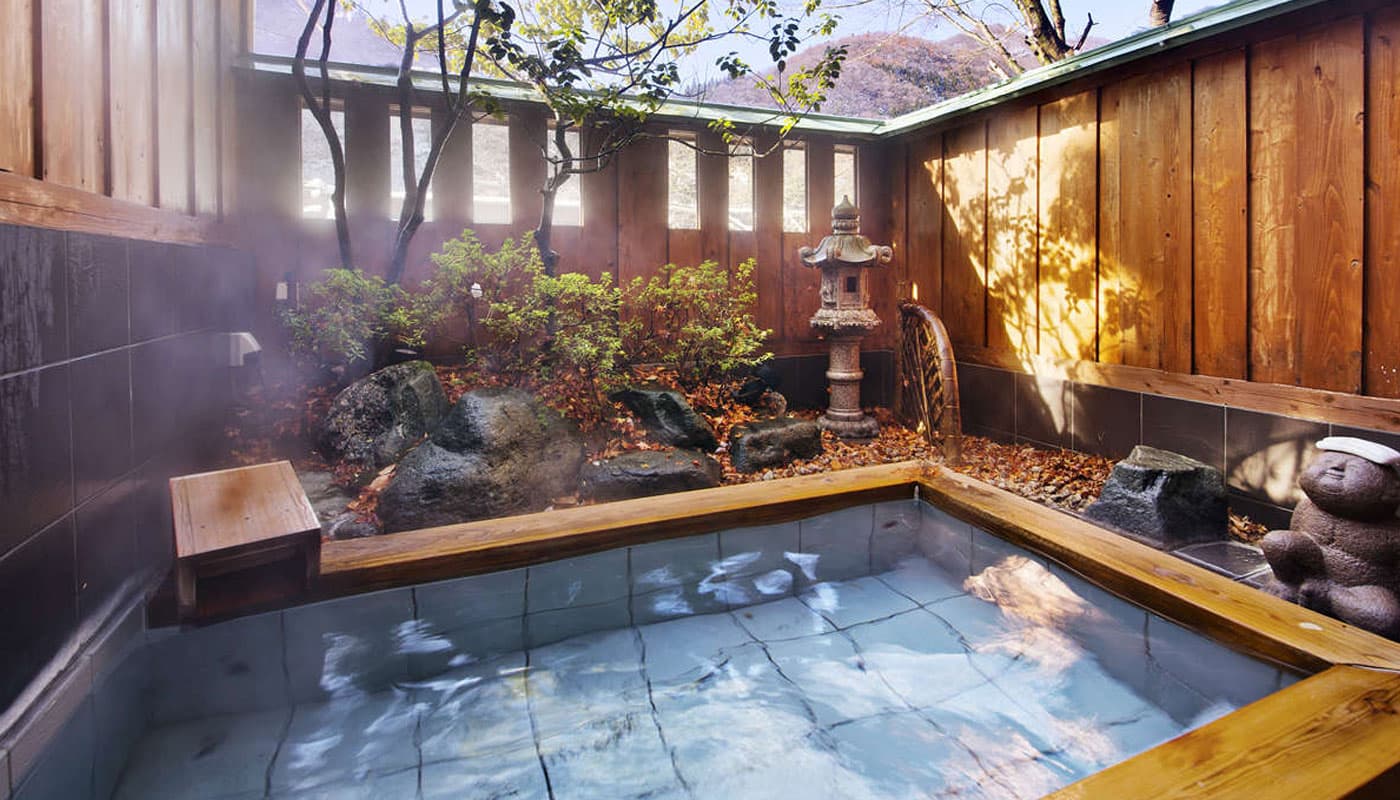
Shima Onsen Kashiwaya Ryokan
四万温泉 柏屋旅館
Shima·Mid-Range
from US$228 · per person · per nightfrom ≈ US$456 total for 2 guests



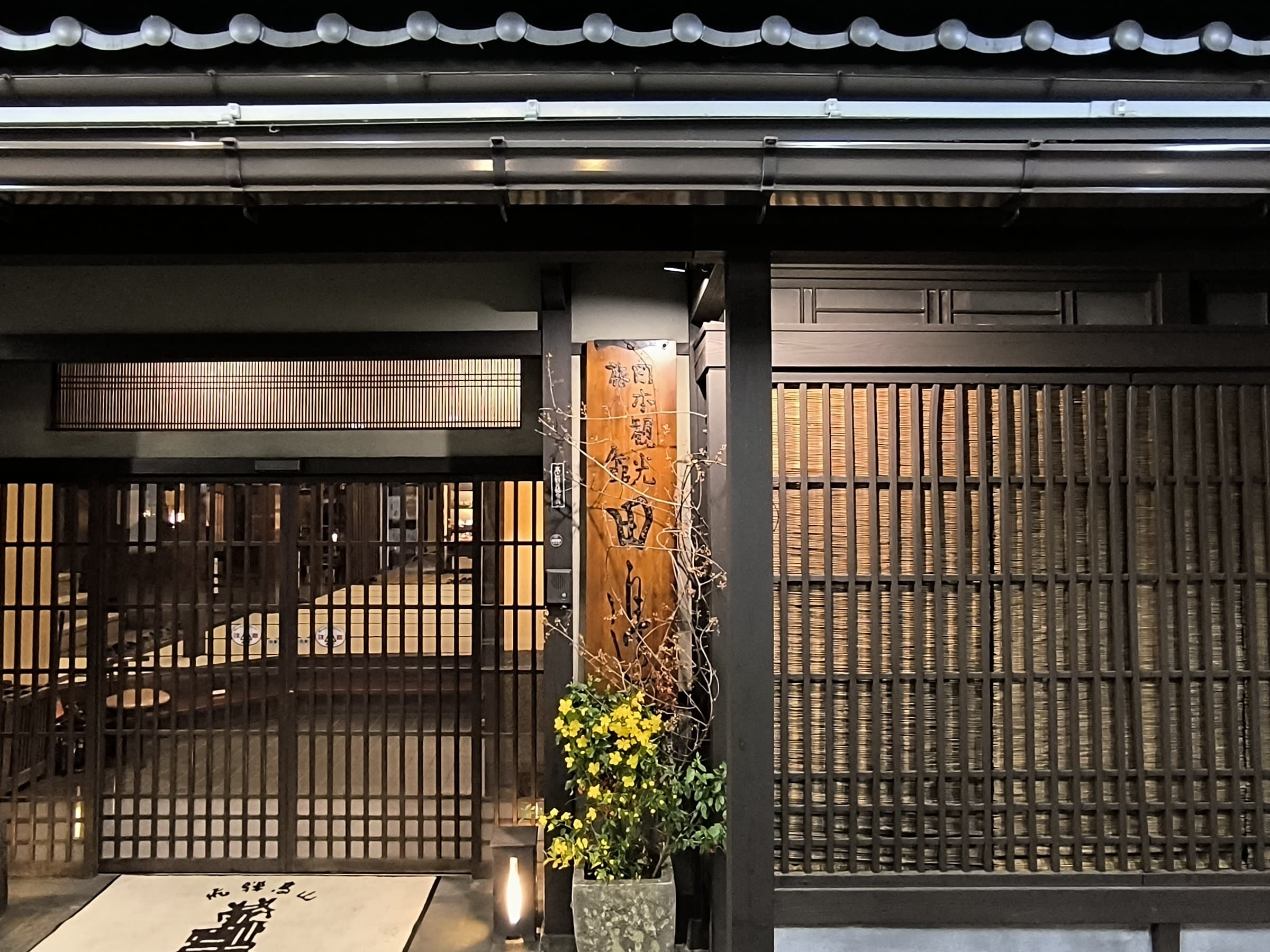
Ryokan Tanabe
旅館 田邊
Takayama·Luxury
from US$190 · per person · per nightfrom ≈ US$380 total for 2 guests
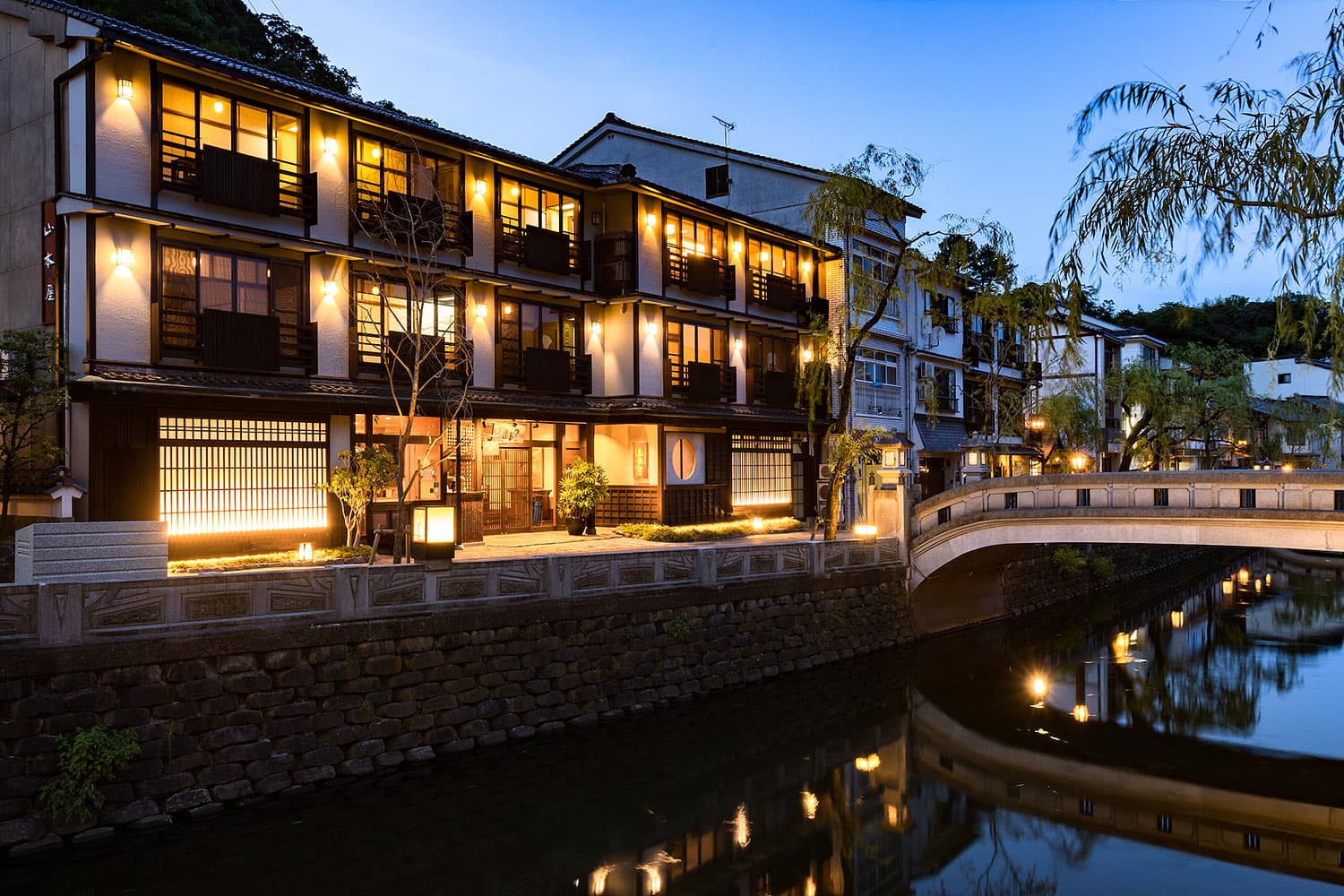
Yamamotoya
山本屋
Kinosaki·Mid-Range
from US$200 · per person · per nightfrom ≈ US$400 total for 2 guests
Booking links may earn us a commission at no extra cost to you.
Whether you are a travel journalist citing the friendly-in-some-form rate, an academic researcher building a longitudinal series on onsen industry liberalization, or a tourism analyst comparing Japan to peer markets, the following citation formats apply:
| Citation style | Format |
|---|---|
| APA | Japan Ryokan Guide. (2026). Japan Ryokan Tattoo Policy Registry [Dataset]. https://www.japanryokanguide.com/blog/tattoo-friendly-ryokans-japan-2026 |
| MLA | Japan Ryokan Guide. "Japan Ryokan Tattoo Policy Registry." 30 May 2026, www.japanryokanguide.com/blog/tattoo-friendly-ryokans-japan-2026 |
| Chicago | Japan Ryokan Guide. "Japan Ryokan Tattoo Policy Registry." May 30, 2026. https://www.japanryokanguide.com/blog/tattoo-friendly-ryokans-japan-2026 |
| Journalist short | Japan Ryokan Guide 612-property editorial classification, 2026 |
| Dataset DOI-equivalent | Japan Ryokan Guide / tattoo-policy-registry / 2026-07-12 |
Press inquiries: press@japanryokanguide.com. The press kit — including downloadable bulletin PDF, source charts in SVG, and the underlying CSV — is available at /press.
More tattoo-friendly ryokans we list
6 listed| Ryokan | From | Rating | Book |
|---|---|---|---|
| from US$228/person/night≈ US$456 for 2 | 9.4 1,240 reviews | Book on Agoda |
| from US$200/person/night≈ US$400 for 2 | 9.4 167 reviews | Book on Trip.com |
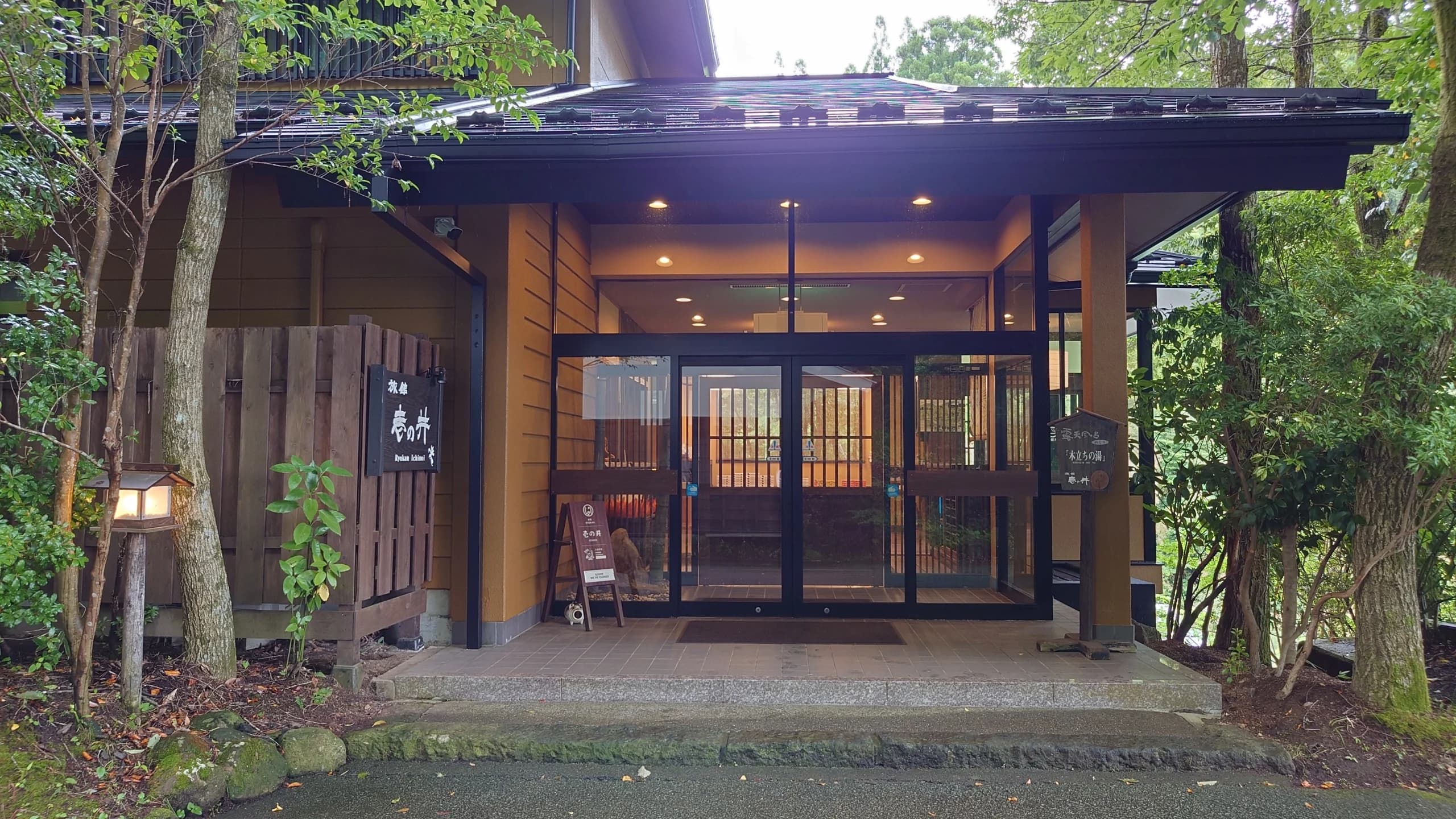 | from US$147/person/night≈ US$294 for 2 | 9.4 62 reviews | Book on Booking.com |
| from US$96/person/night≈ US$192 for 2 | 9.2 144 reviews | Book on Agoda | |
| from US$190/person/night≈ US$380 for 2 | 9.1 769 reviews | Book on Booking.com |
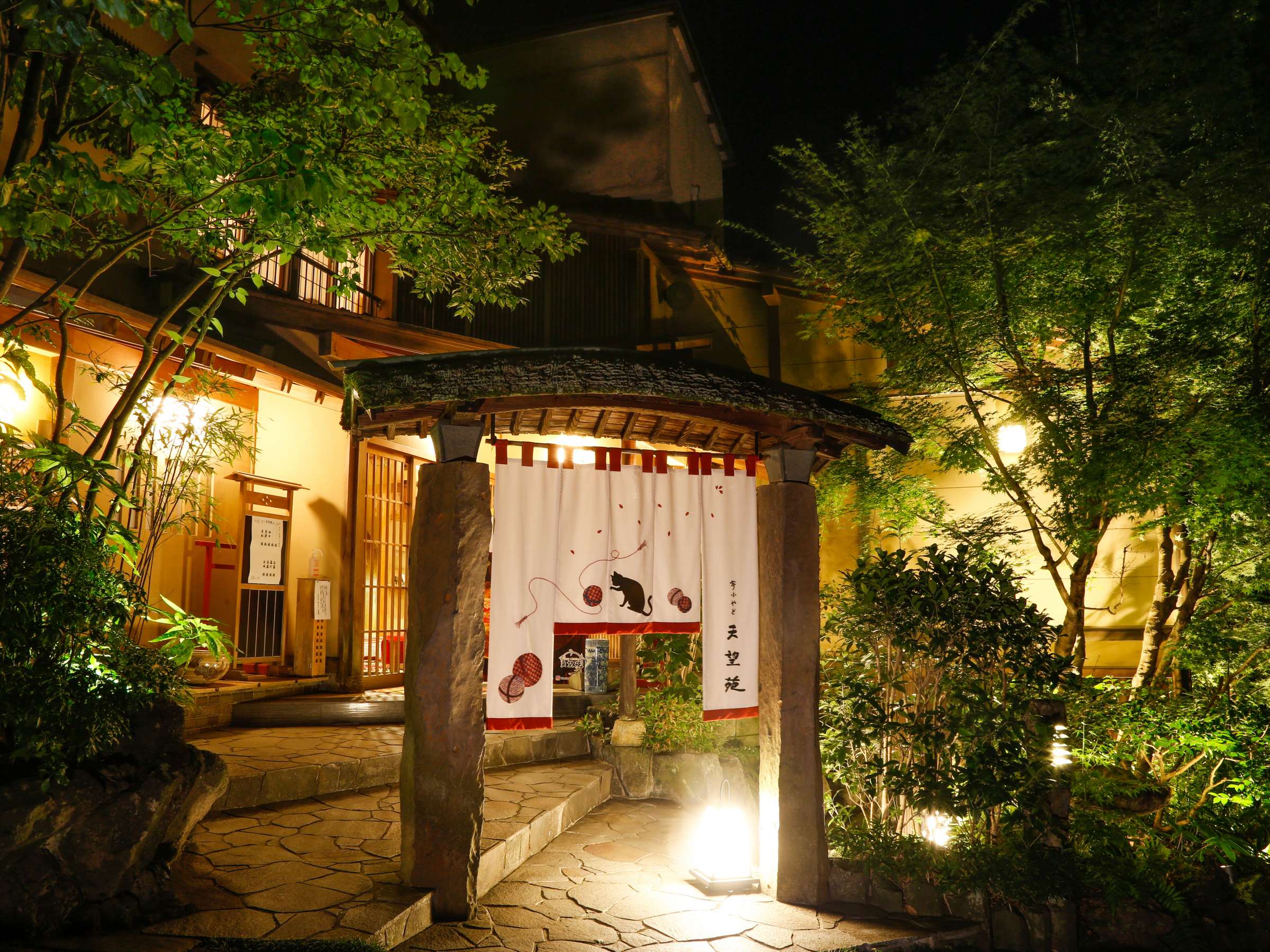 | from US$184/person/night≈ US$368 for 2 | 9.1 24 reviews | Book on Trip.com |
Yamamotoya
Kinosaki
Ryokan Ichinoi
Kurokawa
Ryokan Tanabe
Takayama
Kinosaki Yumekoyado Tenbouen
Kinosaki
Prices shown are approximate starting rates per person per night. We may earn a commission on bookings.
Ready to book?
More ryokan you can book
Compare live availability and prices across booking sites.
Shima Onsen Kashiwaya Ryokan
四万温泉 柏屋旅館
Shima·Mid-Range
from US$228 · per person · per nightfrom ≈ US$456 total for 2 guests
Ryokan Tanabe
旅館 田邊
Takayama·Luxury
from US$190 · per person · per nightfrom ≈ US$380 total for 2 guests
Yamamotoya
山本屋
Kinosaki·Mid-Range
from US$200 · per person · per nightfrom ≈ US$400 total for 2 guests
Booking links may earn us a commission at no extra cost to you.
FAQ
Frequently asked questions
Are ryokans in Japan tattoo-friendly in 2026?+
Historical 2026-07-12 snapshot (earlier, looser method), superseded by the 2026-09-29 official-source audit. For current figures, see the live audit. In some form, yes — among properties with a verified policy. Across 612 published ryokans, 325 carry a confirmed tattoo policy, and 85.8% of those (279 properties) accommodate tattooed guests through one of three workflows: cover-up patches (38.8%, 126 properties), private-bath redirection (38.8%, 126 properties), or unconditional acceptance (8.3%, 27 properties). 14.2% (46 properties) are strictly not-allowed, and 287 newer additions have not yet been verified [Japan Ryokan Guide 612-property editorial classification, 2026-07-12].
What does the 'cover-up' classification actually mean?+
The property allows you to use the communal baths if you cover visible tattoos with an adhesive waterproof patch (typically 5cm × 7cm or 10cm × 15cm). Patches are usually sold or given free at the front desk (¥800-¥1,500 per pair). The practical limit is total covered area — sleeve-scale or back-piece tattoos exceed any reasonable cover and effectively redirect to private-bath workflows [Japan Ryokan Guide 612-property editorial classification, 2026-07-12].
What does 'private_only' mean?+
The property cannot accept tattooed guests in the communal baths under any condition but offers an alternative — either an in-room rotenburo (rented as part of the room rate, often a higher room category) or a reservable kashikiri family bath (booked in 45-60 minute slots, typically ¥3,000-¥6,000 per slot, sometimes complimentary). For tattooed travelers, private-only often produces a better bathing experience than communal access [Japan Ryokan Guide 612-property editorial classification, 2026-07-12].
Which onsen area is the most tattoo-friendly?+
Historical 2026-07-12 snapshot (earlier, looser method), superseded by the 2026-09-29 official-source audit. For current figures, see the live audit. Beppu (Kyushu) and Hakone (Kanto) — the only two areas where every property carries a verified policy and 100% are friendly-in-some-form (n=15 and n=13). Naruko (Tohoku) has the registry's highest openly-allowed share (6 of 11 verified), and Tamatsukuri, Yufuin, Kurokawa, and Gero are also at 100% of their verified properties. See best ryokans in Kurokawa [Japan Ryokan Guide 612-property editorial classification, 2026-07-12].
Which onsen area is the most restrictive?+
Historical 2026-07-12 snapshot (earlier, looser method), superseded by the 2026-09-29 official-source audit. For current figures, see the live audit. On the verified-policy base, Takayama (Chubu), where 4 of 12 verified properties (33%) are strictly not_allowed — Wanosato, Honjin Hiranoya Kofukan, Hida Hotel Plaza, Hotel Ryu Resort. Nikko (5 of 17 verified, anchored by Kanaya 1873 and Chuzenji Kanaya) and Atami (5 of 17) follow. Kyoto's formal-traditional Michelin-kaiseki tier still refuses outright (Seikoro, Sawaya Honten, Mugen — 3 of 15), but at 80% friendly Kyoto no longer ranks in the bottom five. See best ryokans in Kyoto [Japan Ryokan Guide 612-property editorial classification, 2026-07-12].
Can journalists and researchers cite this registry freely?+
Yes. The dataset is CC-BY 4.0 with attribution. Required citation: Japan Ryokan Guide. (2026). Japan Ryokan Tattoo Policy Registry [Dataset]. https://www.japanryokanguide.com/data/tattoo-policy-registry.csv. Press inquiries and advance access to the next quarterly release: press@japanryokanguide.com.
How is this registry different from tattoofriendlyonsen.com or other lists?+
Historical 2026-07-12 snapshot (earlier, looser method), superseded by the 2026-09-29 official-source audit. For current figures, see the live audit. Three differences. (1) Scale — 612 properties (325 with verified policies) versus ~80 on the leading competing list. (2) Granularity — 5-value scale that captures cover-up and private-only as separate categories, versus binary allowed-or-not classifications elsewhere. (3) Geography — Japan-wide across 35 onsen areas, versus competing lists heavily indexed to one or two destinations (typically Kinosaki). Our registry is the first national, structured, citable database of its kind [Japan Ryokan Guide methodology, 2026].
How often is this registry updated?+
Quarterly. Q2 2026 baseline verified 2026-05-30; the Q3 2026 refresh was released 2026-07-12 to absorb the H1 registry expansion. Q4 release scheduled 2026-12-30. Any property whose policy changes between releases triggers a manual editorial note in the change log. Press list members get advance access 48 hours before public release [Japan Ryokan Guide release calendar, 2026].
Still deciding?
Browse ryokans across JapanBooking.com

