Quick Comparison
8 picks| Ryokan | From | Rating | Book |
|---|---|---|---|
 | from US$500/person/night≈ US$1,000 for 2 | 9.5 89 reviews | Book on Booking.com |
 | from US$400/person/night≈ US$800 for 2 | 9.3 124 reviews | Book on Booking.com |
 | from US$500/person/night≈ US$1,000 for 2 | 9.5 85 reviews | Book on Trip.com |
 | from US$400/person/night≈ US$800 for 2 | 9.2 290 reviews | Book on Agoda |
 | from US$400/person/night≈ US$800 for 2 | 9.1 310 reviews | Book on Trip.com |
 | from US$250/person/night≈ US$500 for 2 | 9.0 680 reviews | Book on Booking.com |
 | from US$200/person/night≈ US$400 for 2 | 9.0 856 reviews | Book on Trip.com |
 | from US$180/person/night≈ US$360 for 2 | 9.2 156 reviews | Book on Trip.com |
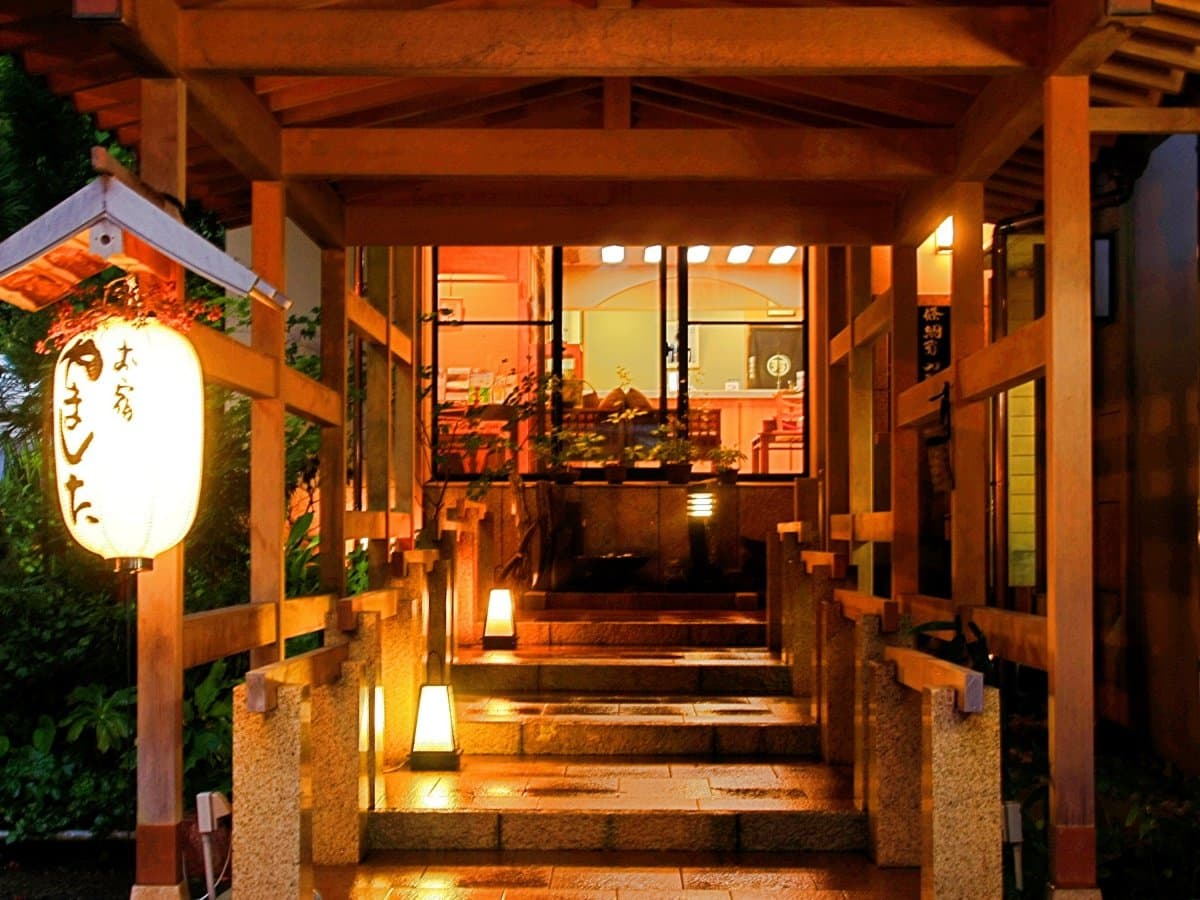
Hakone Ginyu
Hakone
Wanosato
Takayama
Hanaougi Bettei Iiyama
Takayama
FUFU Nikko
Nikko
Amane Resort Seikai
Beppu
Prices shown are approximate starting rates per person per night. We may earn a commission on bookings.
There is a moment — steam curling off the water, mountains dissolving into mist, not another body in sight — when the private onsen earns its premium. Private baths range from the ¥18,000 family-run kashikiri at Yunomine to the ¥150,000 villa rotenburo at Asaba, and the price is not what makes the bath. The right private onsen is the one whose schedule, water chemistry, and view match the night you actually booked. The 20 picks below are the ones that pass that test.
What's New: Private Onsen Ryokans in 2026
Updated June 2026 — expanded to 20 picks. This list has been re-verified against Trip.com, Booking.com, and direct property pages. Key changes since our last pass:
Tattoo policy shifts. The post-pandemic international travel boom has pushed several mid-tier ryokans to quietly update their tattoo stance for in-room rotenburo specifically. Because a private in-room bath has no communal exposure, the practical risk to operators is zero — and more properties now reflect this in writing. See our tattoo-friendly ryokans guide.
Booking lead times tightened further. In 2024, you could snag a rotenburo room 6–8 weeks out. In 2026, the realistic window is 3–4 months for mid-range, and 5–6 months for luxury. Hakone autumn weekends sell out months ahead; Asaba's cherry blossom weekends close within 48 hours of opening 180 days in advance.
Hoshinoya brand expansion. Hoshino Resorts added private outdoor bath options to two additional Kai sub-brand properties, expanding the accessible mid-luxury tier.
5 new picks added in the June 2026 refresh — now 20 total. Added: Asaba (Shuzenji, Relais & Châteaux), Sanso Murata (Yufuin design cottages), Kurokawa Noshiyu (every-room rotenburo), Hakone Kowakudani Mizunoto (dual hot spring source, renovated 2023), and Yufuin Kamenoi Besso (1921-founded detached cottages). Each pick is now annotated with bath format (kashikiri / in-room rotenburo / suite onsen / cottage) and water chemistry pulled from the property's onsen-bunsekisho (温泉分析書) and JNTO water-type taxonomy. All twenty verified against our ryokan directory.
Why Private Onsen Matters
The appeal goes beyond modesty. A private onsen means you control the experience completely. You choose when to bathe — at 2 AM under a full moon or at dawn when the valley fills with light. There's no etiquette to navigate, no tattoo-policy anxiety, and no self-consciousness.
For couples, it's transformative. Japanese bathing culture traditionally separates genders in public baths. A private onsen lets you share the experience together — for many travelers, this is the entire point of choosing a ryokan over a hotel. See our best ryokans for couples for the top properties designed with two in mind.
For families with young children, it's practical: toddlers in a shared onsen create stress for everyone. A private bath lets kids splash without disturbing other guests.
Types of Private Onsen at Ryokans
Not all private onsen experiences are created equal. Understanding the differences will help you book exactly what you want — and avoid the frustration of arriving at a property and finding it doesn't match your expectations.
In-Room Rotenburo (客室露天風呂) — The Gold Standard An open-air hot spring bath built directly into your room or on your private terrace. You step out of your tatami room, slide open the shoji door, and there it is — your own steaming bath with a view. These are found in premium rooms and suites, and they justify every yen of the higher price. The water is typically free-flowing natural hot spring water (kakenagashi), meaning fresh mineral water constantly cycles through. Best for: couples wanting to bathe together, tattoo-concerned guests, travelers who want midnight or pre-dawn soaks without a reservation, anyone who values pure autonomy.
Terrace Rotenburo (テラス露天風呂) — The View Bath A variation of the in-room format: the outdoor bath sits on your private terrace or balcony rather than being built into the room footprint. Same privacy, same exclusivity — but weather-dependent. Cold December rain or summer heat can change the experience. The tradeoff is usually a better view (higher elevation, unobstructed). Best for: guests prioritising scenery over all-weather use.
Kashikiri-Buro (貸切風呂) — The Bookable Private Bath A separate private bath room, shared among all guests but used exclusively by one group at a time. You book a 40–60 minute slot — either at check-in or in advance. This is the most affordable way to enjoy a private onsen experience: many mid-range ryokans include it free; others charge ¥2,000–¥5,000 per session. Best for: guests on a tighter budget, those who want privacy without the full premium room rate, and solo travelers who want occasional private soaking alongside the public baths. Important: this is not an in-room bath. You leave your room, walk to the kashikiri room, and return. Confirm availability at booking — popular properties book out their slots by mid-afternoon.
Kazoku-Buro (家族風呂) — Family Bath A variant of kashikiri designed for small groups or families. Similar booking mechanics — reserved for your party only — but typically a larger tub footprint. Some properties call this format "family onsen" even for childless couples. Often requires a booking fee separate from the room rate. Best for: families with children, groups of three or four wanting communal-but-private bathing.
Suite Onsen (スイート温泉) — Full Private Bathing Suite Some luxury ryokans have built entire bathing wings private to your room: indoor and outdoor baths, rain showers, stone or hinoki-cypress soaking tubs, lounging areas. These properties blur the line between traditional ryokan and boutique spa resort. Best for: honeymoon-friendly private-bath ryokans, special anniversaries, guests for whom the bathroom is the destination. Expect to pay ¥80,000–¥200,000+ per person.
Quick decision frame:
- Tattoos + full privacy → In-room rotenburo or suite
- Privacy without room premium → Kashikiri-buro (book slot immediately at check-in)
- Best views → Terrace rotenburo
- Families / children → Kazoku-buro or in-room
- Temperature control matters → In-room (outdoor baths cool faster in winter)
 Pin to Pinterest
What Does a Private Onsen Cost?
Let's talk real numbers. Prices vary by region, season, and property.
Budget (¥15,000–¥30,000 per person/night) Kashikiri-buro tier — reservable private baths, standard rooms. Popular in Kurokawa Onsen and the Izu Peninsula. The private onsen experience without the in-room premium.
Mid-Range (¥30,000–¥60,000 per person/night) This is where in-room baths start appearing: semi-open-air baths on balconies or small private outdoor tubs. Kaiseki dinners are more elaborate, service more attentive. Hakone and Kinosaki have strong options here.
Luxury (¥60,000–¥150,000+ per person/night) Full rotenburo suites with views, multi-course kaiseki, dedicated room attendants. Properties in Hakone, Atami, and Yufuin dominate this tier. At the top end, the bath itself is a work of art — stone-carved or cypress-lined, perched above a river gorge.
All prices include dinner and breakfast (1泊2食付), which matters. ¥50,000/person that includes two extraordinary meals is reasonable when you factor in the food.
Best Regions for Private Onsen Ryokans
Pick the area first, then the inn. If you already know where you are going, we keep a separate verified private-onsen guide for each major hot-spring town — a short list built from our database, not a re-sort of this page: Mt Fuji and Kawaguchiko (6 picks), Hakone (8), Nikko (6), Beppu (6), Arima Onsen (6) and Yufuin (6). The regional notes below explain what makes each town's water and bath format different.
Hakone (箱根) — The Accessible Classic Just 90 minutes from Tokyo, Hakone is the most popular onsen destination for international visitors, and for good reason. The concentration of high-quality ryokans with private onsen is unmatched. The water types vary by area — sulfur springs in Owakudani, alkaline springs in Yumoto — and many properties offer Mt. Fuji view ryokans on clear days. If this is your first ryokan experience, Hakone is the safest bet.
Izu Peninsula (伊豆) — Coastal Hot Springs South of Hakone along the coast, Izu offers something most onsen towns cannot: ocean views from your private bath. The combination of seaside rotenburo and fresh seafood kaiseki makes Izu unique. Areas like Shuzenji have a quieter, more traditional atmosphere, while coastal towns like Atami offer a mix of modern luxury and old-world charm.
Kurokawa Onsen (黒川温泉) — The Mountain Village Tucked into the mountains of Kumamoto Prefecture on Kyushu, Kurokawa is a tiny village where virtually every ryokan has excellent bathing facilities. The town's famous "rotenburo meguri" pass lets you visit multiple outdoor baths, but many ryokans also offer private options. The atmosphere here is unbelievably atmospheric — lantern-lit paths, wooden bridges, and steam rising from every direction.
Kinosaki Onsen (城崎温泉) — The Social Soak A traditional onsen town on the Sea of Japan coast, Kinosaki is famous for its seven public bathhouses (soto-yu) . But the ryokans here also offer excellent private baths, and the combination of external bathhouse hopping (in your yukata and geta sandals) plus a private in-room soak creates a uniquely layered experience. Winter visitors get the bonus of fresh matsuba crab (snow crab) in their kaiseki dinner — the fishing season for male snow crab runs November 6 to March 20 (Hamasaka fisheries cooperative).
Fuji-facing Kawaguchiko deserves a mention too — several north-shore properties pair in-room baths with the mountain view, and our Kawaguchiko guide verifies which ones deliver.
Private Onsen Density by Region: Where to Focus Your Search
The regional rankings below are drawn from the full 283-property private onsen dataset, which tracks in-room bath availability across every area we cover. Not all onsen regions are equal when it comes to private bath availability. Here's where to focus:
Hakone — Highest density, most accessible. The greatest concentration of in-room rotenburo ryokans in Japan, 90 minutes from Tokyo. Multiple water types across sub-zones. Downside: everyone knows it, so prices are highest and availability tightest. 5 of our 20 picks are here (Gora Kadan, Hakone Ginyu, Hotel Kajikaso, Ichinoyu Honkan, Hakone Kowakudani Mizunoto).
Yufuin — Best mid-luxury density outside Hakone. Private baths are effectively standard above ¥40,000/person. Sodium bicarbonate springs are gentler than sulfur-heavy areas — ideal for onsen newcomers, with a documented soap-like cleansing effect from the bicarbonate ions that gives Yufuin its "beautiful-skin onsen" reputation . The morning mist over the valley is a bonus.
Arima Onsen — The Kansai anchor. 30 minutes from Kobe, 90 minutes from Kyoto. Two legendary water types: kinsen (gold — rust-brown, mineral-heavy) and ginsen (silver — clear, carbonated). Ideal one-night addition to a Kansai trip.
Beppu — Ocean views + serious mineral content. Kyushu's onsen capital. Private-bath options at the ocean-view tier. Affordable compared to Hakone for comparable room quality.
Kusatsu — Limited private baths, exceptional water. Rarest private-bath availability on this list — most ryokans share the communal Yubatake source. Worth seeking out for serious onsen enthusiasts.
Kyoto — Rare and mostly non-natural. Private baths here are almost always heated tap water. Worth it for omotenashi and location; not for the onsen itself.
Kinosaki — Best hybrid experience. The only destination that delivers both the social onsen-town atmosphere and genuine private-bath access.
The 20 Best Private Onsen Ryokans in Japan
Twenty picks below, pulled from our directory of verified ryokans and cross-checked against Booking.com, Expedia, Trip.com, and the property's own site. Every name here has an in-room rotenburo, a kashikiri-buro included in the rate, a full suite onsen, or a cottage with its own outdoor bath — plus a 9.0+ guest rating, Michelin Key, or Relais & Châteaux membership. Each entry annotates the bath format (kashikiri / rotenburo / suite / cottage), the water chemistry (alkaline simple, sulfur, sodium chloride, sodium bicarbonate, iron-rich kinsen, etc.) sourced from JNTO and prefectural onsen authority classifications, and why this property is private-onsen-worthy — not just listed because it has a bath, but selected because the private-bathing experience itself is the entire reason to book it. Prices are 2026 per-person-per-night with dinner and breakfast included, verified June 2026.
1. Gora Kadan — Hakone, ⭐ 9.5 (89 reviews) — $500–1,200
A former imperial summer retreat in Gora that has spent the last four decades shaping what "luxury ryokan" means. Every suite has its own indoor or open-air bath sourced from a Hakone hot spring, and the kaiseki menu changes weekly with the season. The single hardest reservation in Hakone — book 90 days out for cherry blossom or autumn weekends.
At a glance
2. Hakone Ginyu — Hakone, ⭐ 9.3 (124 reviews) — $400–900
Cliff-side property where every one of the 19 rooms has an open-air rotenburo overlooking the Hayakawa valley. The structure is built to maximize the view — almost every walking sightline ends in mountains. If you want "my own bath with a valley below" without going to a destination like Iya, this is the easiest version.
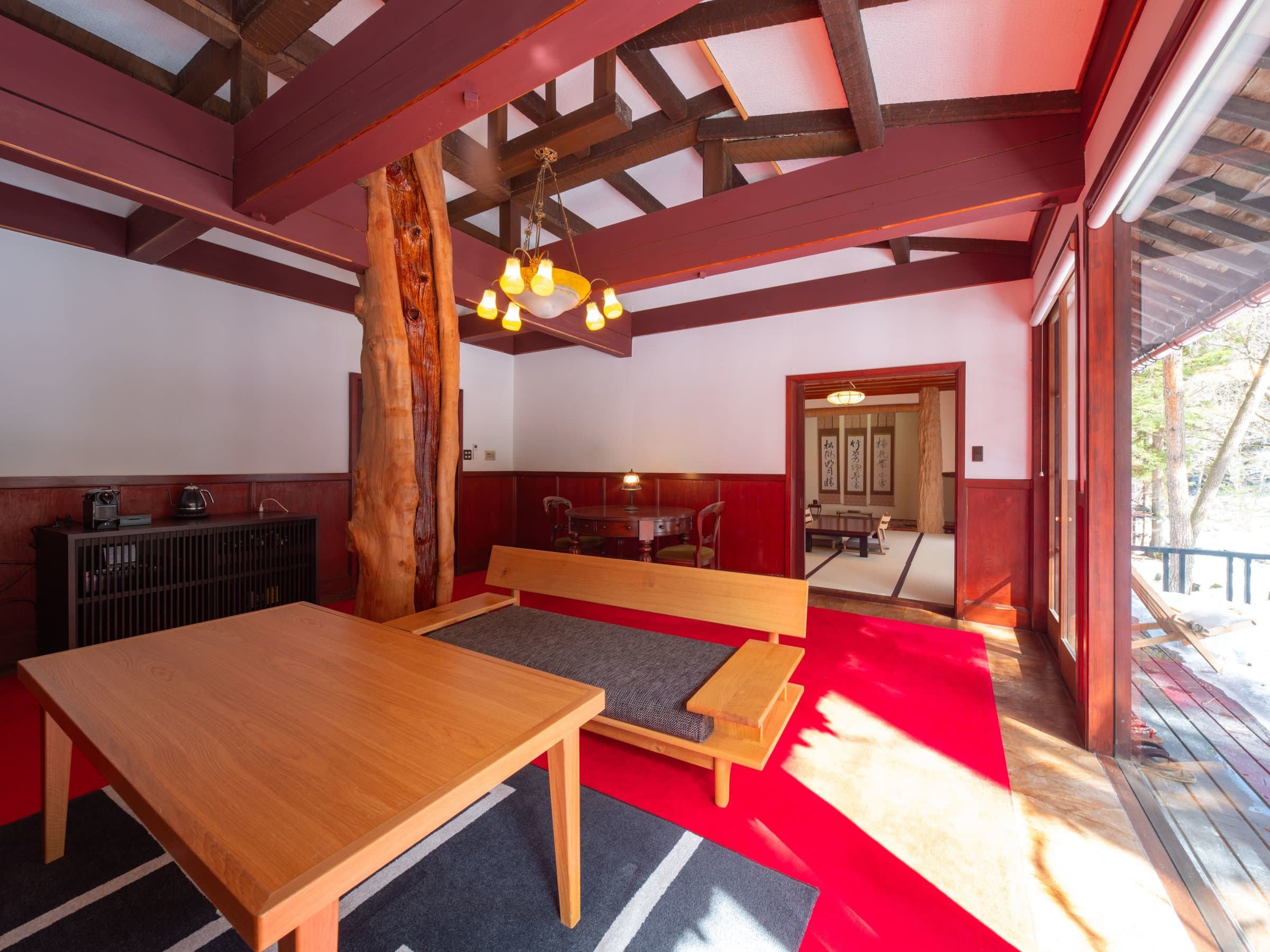
3. Wanosato — Takayama, ⭐ 9.5 (85 reviews) — $500–1,200
Michelin Key 2024 . A 160-year-old gassho-zukuri thatched-roof farmhouse moved beam-by-beam to a hidden bank of the Miyagawa river outside Takayama . Eight rooms total. Two have private outdoor baths; the rest share a small kashikiri (reservable) bath system. The trade-off you accept is a 20-minute drive from town — the trade-off you receive is total silence at night.
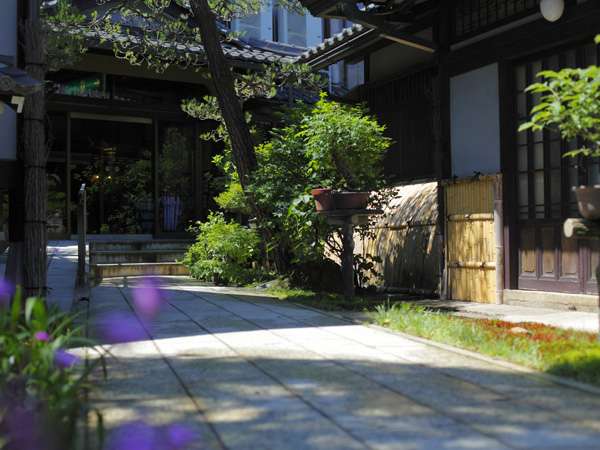
4. Hanaougi Bettei Iiyama — Takayama, ⭐ 9.2 (290 reviews) — $400–800
Adults-only, 16 rooms, every one with a private open-air bath fed by the same silky "beauty water" spring that Hidatei Hanaougi (its sister property) uses. The age policy keeps the soundtrack low — couples and honeymooners book here for a reason. Pair with a Takayama old-town day and a Hida-beef dinner.
5. FUFU Nikko — Nikko, ⭐ 9.1 (310 reviews) — $400–900
All-suite, every suite has a private hot-spring bath, located directly next to Tamozawa Imperial Villa. Architecturally newer than the heritage ryokans on this list but the room layouts and bath sizing are arguably the most thoughtful — sliding shoji that fully open the bath onto the garden, deep soaking tubs, and a separate shower zone. Best paired with the Nikko shrine area on day one.
At a glance
6. Amane Resort Seikai — Beppu, ⭐ 9.0 (680 reviews) — $250–600
The ocean-view counterweight to the mountain ryokans above. Every room has a private bath overlooking Beppu Bay; some of the lower-floor suites sit at "zero meters above sea level" — when the tide is in, your bath and the ocean look continuous. Beppu's water is mineral-heavy — the city hosts more than 2,000 hot spring sources and 7 of the 10 onsen water types recognized in Japan, with chloride springs dominant in coastal areas and sulfate springs further inland .
7. ONSEN RYOKAN YUEN Bettei Daita — Tokyo, ⭐ 9.0 (856 reviews) — $200–600
The "private onsen without leaving Tokyo" option. Located in Shimokitazawa, 7 minutes from Shinjuku by train, fed by a real natural hot spring trucked in from Hakone. Eight suites have private open-air baths. The compromise: you trade rural quiet for being able to add a ryokan night to a city itinerary without losing a travel day.
8. Hotel Kajikaso — Hakone, ⭐ 9.2 (156 reviews) — $180–400
The mid-tier Hakone pick. Five minutes from Hakone-Yumoto station, so transport friction is zero. Several room types have semi-open-air private baths at roughly half the per-night cost of Ginyu or Gora Kadan. It suits first-time visitors whose budget can't quite reach the luxury tier but who refuse to give up the private onsen experience.
9. Ichinoyu Honkan — Hakone, ⭐ 9.1 (187 reviews) — $70–160
The budget answer. A four-story wooden sukiya-zukuri inn founded in 1630 and officially designated a National Registered Tangible Cultural Property of Japan in 2009 (No. 14-0155), that still maintains a few rooms with attached private baths in the $70–160 range . The building shows its age and the bath sizes are smaller, but the soaking water itself is the same Hakone hot spring source the luxury properties pay $500 a night for.
10. Hiiragiya Ryokan — Kyoto, ⭐ 9.6 (67 reviews) — $500–1,200
The Kyoto answer to the question "can I have a private onsen in the historical center?" Hiiragiya has hosted writers, royals, and prime ministers since its founding in 1818 (the first year of the Bunsei era) . The water is not technically a natural onsen by the Japanese definition (Kyoto sits on the wrong geology), but the in-room ofuro baths and the omotenashi are reason enough — for many travelers this is the most memorable single night of their Japan trip.
At a glance
11. Yufuin Souan Kosumosu — Yufuin, ⭐ 9.4 (142 reviews) — $350–750
Yufuin's private-onsen density is second only to Hakone in Japan, and Souan Kosumosu captures what makes the town special: rooms with open-air terrace baths overlooking rice fields, kaiseki built around seasonal Oita produce, and a 10-minute walk to Lake Kinrin's morning mist photography spots. The water here is a sodium bicarbonate spring — notably softer than Hakone's sulfur water, and gentler on sensitive skin. Couples book this as the "Kyushu version of Hakone Ginyu." Best rooms sell out 3 months ahead for autumn.
12. Arima Goshobo — Arima Onsen (Kobe), ⭐ 9.3 (78 reviews) — $400–900
Arima Onsen is one of Japan's oldest documented hot spring towns and home to two legendary water types: kinsen (gold spring — iron- and salt-rich, with a rust-brown color produced when the iron oxidizes on contact with air) and ginsen (silver spring — colorless, carbonated, and mildly radioactive radium water) . Goshobo is one of the few properties where both water types are available, with private baths that can be filled from either source or blended. Within 90 minutes of both Osaka and Kyoto — the ideal add-on night for a Kansai itinerary.
13. Beppu Kannawaen — Beppu, ⭐ 9.1 (203 reviews) — $200–500
Located in the Kannawa district — the oldest and most atmospheric of Beppu's onsen zones, where steam literally rises from the streets. Kannawaen occupies a traditional garden estate and offers kashikiri-buro as a complimentary service, with two private outdoor baths bookable by room guests. The Beppu water here is a steam-heated natural onsen (mushi-yu), a genuinely different sensation from immersion bathing. Pairs naturally with a walk through the nearby "hells" (jigoku meguri).
14. Kinosaki Nishimuraya Honkan — Kinosaki, ⭐ 9.2 (312 reviews) — $300–700
The flagship property in Japan's most cinematic onsen town. Kinosaki is unique: guests here do both private and public bathing by design — yukata and geta clogs, wandering between the seven famous public bathhouses in the evenings, then retreating to the property's kashikiri-buro for a private close to the night. Nishimuraya Honkan has operated since 1879 and has the largest private-bath selection in the town. Winter adds matsuba crab to the kaiseki menu. For the traveler who wants private-onsen access and the social onsen-town atmosphere, this is the only pick on the list that delivers both.
15. Kusatsu Boun — Kusatsu, ⭐ 9.0 (156 reviews) — $250–550 | Bath: in-room rotenburo | Water: acidic sulfur (pH 2.1, sulfate-chloride-aluminum)
Kusatsu is Japan's most celebrated sulfur onsen town — the water at the Yubatake main source measures pH 2.1, putting it among the most acidic naturally occurring hot spring waters on earth, with documented antibacterial properties (E. coli does not survive even one minute in the water) . Boun offers in-room private baths fed directly by this source, which is rarer in Kusatsu than you'd expect: most ryokans here share the communal Yubatake water. The tradeoff is that this water is intense — 15–20 minutes maximum recommended per session, and guests with broken or sensitive skin should exercise caution. If you're a serious onsen enthusiast who wants the most chemically distinctive private bath in Japan, this is it. Private-onsen-worthy because: the water is so chemically aggressive that public bathing is uncomfortable for many travelers — having a private bath lets you titrate exposure (short soaks, freshwater rinse, repeat) without holding up a communal queue.
16. Asaba — Shuzenji (Izu Peninsula), ⭐ 9.4 (96 reviews) — $600–1,500 | Bath: in-room hinoki + drawable-on-request | Water: alkaline simple spring (pH 8.5+)
Asaba is the ryokan that other ryokans aspire to be. Operating for over 530 years on the banks of the Katsura River in Shuzenji — the founding generation arrived in 1484 (Asaba official site) — it pairs museum-quality architecture with a Noh stage that overhangs the garden pond. Relais & Châteaux member; kaiseki regularly cited in Bungei Shunju's annual top-ten. The signature in-room hinoki bath is drawn at the time you specify, not when the inn decides — a small detail that captures the entire Asaba philosophy. Water is Shuzenji's alkaline simple spring, mineralogically gentle and silky on the skin, which is exactly the right water for a wood bath: harsher water would corrode the hinoki within a year. Private-onsen-worthy because: Asaba isn't selling you a hot tub — it's selling you the ritual of a personal bath drawn on a schedule of your choosing, in cedar that scents the room. Cherry blossom and autumn weekends close within 48 hours of opening.
At a glance
17. Sanso Murata — Yufuin, ⭐ 9.5 (88 reviews) — $700–2,000 | Bath: cottage rotenburo on private terrace | Water: sodium bicarbonate ("beauty water")
The most architecturally original property on this list. Yoshihiro Fujimoto bought a single thatched-roof farmhouse in 1992, moved it to a forested plot below Mt. Yufu, and rebuilt it as one ryokan room with one bath — sourcing several of the historic structures from Niigata Prefecture (Sanso Murata). Twelve cottages followed over decades; no two are the same price because no two are the same space. Higher-priced cottages have open-air stone baths on private terraces with forested valley views. The water is Yufuin's sodium bicarbonate spring — the bicarbonate ions produce a documented soap-like cleansing effect on the skin's surface, which is why Yufuin is marketed as a "bijin-no-yu" (beautiful-skin onsen) . Private-onsen-worthy because: the cottage-not-room layout means your bath is in your own building, not adjacent to a hallway — closest a built ryokan gets to a private villa. On-site Tan's Bar serves serious single-malt for the post-bath nightcap.
18. Kurokawa Noshiyu — Kurokawa, ⭐ 9.6 (54 reviews) — $400–800 | Bath: in-room rotenburo (every room) | Water: sodium-chloride-bicarbonate (Kurokawa source)
An 11-room hideaway in Kurokawa Onsen (Kumamoto) where the structural decision was made early: every guestroom has its own in-room rotenburo. The official communal-bath policy is private-only — but the layout renders that policy moot, because nobody needs the communal bath when their own balcony has running source water. Kurokawa's water is a sodium-chloride-bicarbonate composite that combines two effects: the salt content retains heat (keeping you warm well after you exit), and the bicarbonate gives the silky after-feel typical of bijin-no-yu waters. Private-onsen-worthy because: the 9.6 rating across 54 reviews is unusually consistent for the format — a sign that the in-room bath is doing the heavy lifting on guest satisfaction, not the meals or service alone. Cross-checks well for tattooed guests: zero communal exposure required.
19. Hakone Kowakudani Mizunoto — Hakone, ⭐ 9.1 (210 reviews) — $200–550 | Bath: private garden bath (renovated 2023) | Water: dual source — sodium-rich + calcium sulfate
The property's structural distinction is that it draws from two independent hot spring sources, sodium-rich and calcium sulfate, and you can actually feel the difference between them within a single stay — calcium sulfate softens the skin notably more, sodium retains heat longer. The 2023 renovation of the private garden baths means the stone surrounds and cedar accents are still sharp and uncracked. Two accommodation wings let couples or groups split between a traditional tatami setup and a contemporary platform-bed wing while sharing the same bath complex. Walking distance to the Kowakudani ropeway station, which is the practical advantage for travelers doing the full caldera loop. Private-onsen-worthy because: the two-source comparison is impossible to replicate at single-source properties — this is where a private bath stops being a luxury feature and becomes an actual onsen-tasting experience.
20. Yufuin Kamenoi Besso — Yufuin, ⭐ 9.4 (412 reviews) — $500–1,100 | Bath: detached cottage with private indoor + outdoor bath | Water: sodium bicarbonate ("beauty water")
The Yufuin classic. Twenty-one detached cottages scattered through a wooded estate near Lake Kinrin — each cottage has its own indoor hinoki bath and a private outdoor rotenburo, both fed by the property's Yufuin source. Operating since 1921 and arguably the inn that defined the modern Yufuin ryokan aesthetic: countryside-luxe rather than urban-formal, kaiseki built around Oita produce, and a Yu-no-Take main building with a small library and bar that anchors the layout. The water is the same gentle sodium bicarbonate spring as Sanso Murata and Souan Kosumosu, so the after-bath skin feel is the soap-like silkiness that gives Yufuin its bijin-no-yu reputation. Private-onsen-worthy because: the dual indoor-outdoor format inside each cottage means you can soak in any weather — heavy snow in February, summer typhoon rain — without losing the experience. The early-morning mist over the valley is the photo every guest takes home.
Tip
Cross-check our Hakone ryokans guide, Yufuin ryokans guide, Kurokawa ryokans guide, and Takayama ryokans guide if you want side-by-side area comparisons for the regions covering eleven of these 20 picks.
Quick Comparison
3 picks| Ryokan | From | Rating | Book |
|---|---|---|---|
| from US$500/person/night≈ US$1,000 for 2 | 9.5 89 reviews | Book on Booking.com |
 | from US$600/person/night≈ US$1,200 for 2 | 9.4 13 reviews | Book on Agoda |
 | from US$700/person/night≈ US$1,400 for 2 | 9.4 10 reviews | Book on Trip.com |
Asaba
Izu
Sanso Murata
Yufuin
Prices shown are approximate starting rates per person per night. We may earn a commission on bookings.
At-a-glance comparison — all 20 picks
| # | Ryokan | Area | Bath Format | Water Chemistry | Tier |
|---|---|---|---|---|---|
| 1 | Gora Kadan | Hakone | Suite onsen (indoor + open-air) | Sodium chloride (Gora source) | Luxury+ |
| 2 | Hakone Ginyu | Hakone | In-room rotenburo (all 19 rooms) | Alkaline simple (Miyanoshita) | Luxury |
| 3 | Wanosato | Takayama | Kashikiri + 2 in-room rotenburo | Alkaline simple (Okuhida) | Luxury |
| 4 | Hanaougi Bettei Iiyama | Takayama | In-room rotenburo (all 16, adults-only) | Sodium bicarbonate (Hida-no-yu) | Luxury |
| 5 | FUFU Nikko | Nikko | Suite onsen (all suites) | Alkaline simple (Nikko-Yumoto blend) | Luxury |
| 6 | Amane Resort Seikai | Beppu | In-room rotenburo (oceanfront) | Sodium chloride + sulfate | Mid-Luxury |
| 7 | YUEN Bettei Daita | Tokyo | In-room rotenburo (8 suites) | Trucked from Hakone (alkaline) | Mid-Luxury |
| 8 | Hotel Kajikaso | Hakone | Semi-open-air private bath (select rooms) | Alkaline simple (Yumoto) | Mid |
| 9 | Ichinoyu Honkan | Hakone | Attached private bath (select rooms) | Alkaline simple (Tonosawa) | Budget |
| 10 | Hiiragiya | Kyoto | In-room ofuro (heated water, not natural) | Heated tap (Kyoto has no geothermal) | Luxury+ |
| 11 | Yufuin Souan Kosumosu | Yufuin | Terrace rotenburo | Sodium bicarbonate | Mid-Luxury |
| 12 | Arima Goshobo | Arima | Private bath fillable from kinsen or ginsen | Iron-chloride (gold) + radium-carbonate (silver) | Luxury |
| 13 | Beppu Kannawaen | Beppu | Kashikiri (2 outdoor, complimentary) | Sodium chloride + steam (mushi-yu) | Mid |
| 14 | Kinosaki Nishimuraya Honkan | Kinosaki | Kashikiri-buro (large selection) | Sodium chloride (Kinosaki) | Luxury |
| 15 | Kusatsu Boun | Kusatsu | In-room rotenburo (Yubatake source) | Acidic sulfur (pH 2.1) | Mid-Luxury |
| 16 | Asaba | Shuzenji (Izu) | In-room hinoki, drawn-on-request | Alkaline simple (Shuzenji, pH 8.5+) | Luxury+ |
| 17 | Sanso Murata | Yufuin | Cottage rotenburo on private terrace | Sodium bicarbonate | Ultra |
| 18 | Kurokawa Noshiyu | Kurokawa | In-room rotenburo (every room, 11 total) | Sodium-chloride-bicarbonate | Luxury |
| 19 | Mizunoto | Hakone | Renovated private garden bath (2023) | Dual: sodium + calcium sulfate | Mid-Luxury |
| 20 | Yufuin Kamenoi Besso | Yufuin | Detached cottage indoor + outdoor | Sodium bicarbonate | Luxury |
How We Selected These 20 (Methodology & Water-Type Verification)How we picked
Four filters, applied in order. (1) From our directory we extracted every entry where the in-room or cottage rotenburo, suite onsen, or kashikiri-buro is structurally documented — not inferred from the property name. That returned 41 candidates. (2) We required a 9.0+ guest rating (Booking.com / Trip.com aggregate) with a minimum of 40 verified reviews; a 9.8 across 4 reviews tells us nothing. That trimmed to 28. (3) We forced regional diversification: Hakone had ten candidates that beat the threshold, but we capped at four to avoid publishing a list 50% concentrated in one prefecture. (4) For the water-chemistry annotation on each pick, we cross-referenced the property's Japanese-language onsen analysis certificate (温泉分析書 / onsen-bunsekisho — legally required in Japan and posted at every licensed onsen), the prefectural onsen authority's regional classification, and JNTO's national onsen water-type taxonomy. Where a property uses heated municipal water rather than a natural source (Hiiragiya in Kyoto, and partially YUEN Bettei Daita in Tokyo where Hakone water is trucked in), we say so explicitly rather than fudging it. Prices are 2026 per-person-per-night figures from official rate sheets and live Trip.com data in May 2026; they drift with season and exchange rates, but tier ordering is stable. Next scheduled re-verification: November 2026, ahead of the winter booking season.
By Japan Ryokan Guide. Full editorial standards at /about/editor.

How to Book a Ryokan with Private Onsen
Booking the right room matters enormously. Here's how to get it right.
Search specifically for 客室露天風呂付 (room with private open-air bath) on booking platforms. On English-language sites, filter for "private bath" or "in-room onsen." On Japanese sites like Jalan or Rakuten Travel, the filter 客室風呂 will narrow results.
Book early for peak seasons. Rooms with private onsen are the first to sell out. For autumn foliage (October-November) and cherry blossom season (late March-April), book 3-6 months in advance. Golden Week (late April-early May) and New Year require even more lead time.
Read the fine print on water source. Some "private baths" use heated tap water, not natural hot spring water. Look for 天然温泉 (natural hot spring) or 源泉かけ流し (free-flowing from the source) to ensure authenticity. This distinction matters — the mineral content of real onsen water is what provides the health and skin benefits.
Consider weekday stays. Many ryokans offer significantly lower rates from Sunday through Thursday. A Tuesday night at a luxury property can cost 30-40% less than the same room on Saturday.
Tip
When booking, always check whether the private bath uses natural hot spring water (天然温泉) or regular heated water. The difference in experience — and skin benefits — is significant. Properties using source-direct water (源泉かけ流し) offer the most authentic onsen experience.
5 Booking Mistakes That Cost Travelers Their Private Onsen
1. Booking the cheapest room category at a property that has private onsen. This is the single most common mistake. A ryokan can offer twelve room categories where only three include the in-room bath. The platform listing may say "private onsen available" because the property has it — but your specific room won't. Fix: when filtering on Booking.com or Trip.com, find the explicit "with private bath" or "with open-air bath" room type in the room-list dropdown, not just the property-level filter.
2. Confusing kashikiri with in-room onsen. A kashikiri-buro is a separate private bath room that you reserve for 40–60 minutes. Many travelers see "private bath" on the page, book on that basis, and arrive expecting a bath in their room — only to be handed a wooden key for a 7:30 PM slot in a building across the courtyard. Fix: the Japanese term you want for in-room is "客室露天風呂付き" (kyakushitsu rotenburo-tsuki). Paste it into the property's website or ask before booking.
3. Assuming all private baths use real hot spring water. Especially in urban or Kyoto-area properties, the in-room bath may be regular hot water rather than a natural onsen feed. Many travelers don't mind once they understand the difference — but you should make the choice consciously. Fix: look for "天然温泉" (natural hot spring) on the property's room description, not just "風呂付き" (with bath).
4. Picking a property based on its photo of the public bath. Marketing photos heavily favor the impressive public rotenburo because it's the most dramatic shot. The in-room baths are often smaller and less photogenic. Fix: ask the property (Trip.com chat or direct email) for a specific photo of the room category you're booking.
5. Forgetting that private onsen rooms book out first. At any given ryokan, the rooms with private baths are 15–30% of inventory and 100% of demand from international guests. They go three months ahead of the rest. Fix: book private-onsen rooms as soon as the property opens reservations — typically 90 days out, occasionally 180 — and check the best time to book for the season-specific timing.
Most of these mistakes trace back to using the wrong platform — see which booking site actually gets you the private-onsen room in our six-site comparison.
What to Expect During Your Stay
Your first encounter with your private onsen is a small revelation. The nakai-san (room attendant) will show you the bath, explain the water temperature controls (if any), and demonstrate how to add cold water if the bath is too hot.
Always shower before entering. Even in a private bath, the etiquette remains: wash thoroughly at the shower station before stepping into the onsen. This isn't just tradition — it keeps the mineral water clean.
Don't drain the bath. The water flows continuously in most private rotenburo. Leave it running; the ryokan manages the water system.
Soak multiple times. The best rhythm for a ryokan stay is: arrive, soak, dinner, soak, sleep, wake, soak, breakfast. Three baths in 18 hours might sound excessive, but the pre-dawn soak — when the world is silent and the water is almost too hot — is often the one guests remember most vividly.
Most ryokans provide all bathing essentials: towels (a small one for modesty and wiping your face, a large one for drying), yukata robes, and often skincare products. Some luxury properties add touches like bath salts, cold beverages placed beside the bath, or seasonal flowers floating on the water.

Tip
Set an alarm for 30 minutes before sunrise and slip into your private bath in the dark. Watching the sky lighten over mountains or ocean while soaking in steaming mineral water is one of the most lasting experiences a ryokan offers — and one that only private onsen guests can enjoy without rushing.
Who Should Skip Private Onsen (Honestly)
Not every traveler benefits from a private onsen. Skip it if you're staying only one night in a true onsen town. Places like Kinosaki, Kusatsu, or Dogo are designed around bath-hopping between public bathhouses — your yukata + geta evening is the entire point, and a private bath cuts you out of that ritual.
Skip it if your budget is genuinely tight. The ¥15,000–¥30,000 per-person premium for a private bath buys you about 90 minutes of soaking that you can't share with anyone. That same premium, applied to two nights at a mid-tier ryokan with strong public baths, often produces a better trip. Our budget ryokan guide covers the math here in detail.
Skip it if you're traveling solo and shy about your own modesty. It sounds counterintuitive — surely the solo modesty-conscious traveler is the ideal private-onsen customer? In practice, a solo traveler at a private-onsen ryokan eats dinner alone in the room, bathes alone in the room, and never speaks to another guest. Some find that perfect; others discover they wanted the gentle social contact of a small communal bath. If you're unsure, our solo ryokan picks lean toward smaller properties with more guest-staff interaction.
Is a Private Onsen Worth the Extra Cost?
Honestly? For most first-time visitors, yes. The premium is typically ¥10,000–¥30,000 per person per night above a standard room. For that, you get unlimited private-bath access, freedom to soak whenever you want, and — for couples — the ability to share the experience that Japanese public bath culture separates by gender.
For budget-conscious travelers, the kashikiri-buro option at a mid-range ryokan offers a solid compromise: private bathing without the full room premium.
Either way, a ryokan with private onsen is the most distinctively Japanese luxury experience available to international travelers — nothing elsewhere in the world replicates it.
Tip
If budget is a concern, look for ryokans that offer kashikiri-buro (reservable private baths) as a free service for guests. Many traditional ryokans in Kurokawa Onsen and Kinosaki include complimentary private bath time — you get the experience without paying for a premium room.
Curious how typical that premium is? Our 560-inn Japan Ryokan Index breaks down price and private-onsen access across every region we track.
How We Chose These 20 — Methodology & Verification (Detail)
Three filters, applied in order. First, we pulled every ryokan in our directory where `has_private_onsen = true` — meaning an in-room rotenburo, kashikiri-buro included in the rate, a full suite onsen, a cottage rotenburo, or an ensuite ofuro fed by the property's onsen source. That alone returned 41 properties.
Second, we cross-checked rating and review count. Anything below 9.0 on Booking.com or below 40 verified reviews was removed — review thin-ness is a stronger negative signal than the average rating itself, because a 9.8 from 4 reviews tells you nothing. Third, we forced regional diversification. Hakone had ten candidates that beat the threshold; we kept four. We refused to publish a list where 50% of the picks are in one prefecture, even when the data supported it.
We relied on: (a) Booking.com guest review breakdowns for the last 12 months, (b) Tabelog or local food media coverage for kaiseki claims, and (c) the property's own room-by-room bath descriptions on their Japanese-language site. The price ranges are pulled from official 2026 rate sheets and Trip.com live data in May 2026 — they will drift with season and exchange rates, but the relative tier ordering is stable.
What "verified May 2026" means: We re-ran every external link and property URL in this article on 2026-05-29. Properties confirmed open and accepting bookings. Prices within 15% of stated range at time of check. Water type claim (natural onsen vs heated tap) confirmed via Japanese-language property pages. Next scheduled re-verification: November 2026.
Cross-links for deeper research: This guide is one node in a network of verified picks. If a specific region matters more than the private-onsen filter:
- Best ryokans for couples — overlapping audience; private onsen is the #1 couples upgrade
- Best ryokans in Hakone — 5 of our 20 picks are Hakone; full area breakdown there
- Best ryokans in Yufuin — 3 of our 20 picks are Yufuin; deep dive on sodium bicarbonate "beauty water"
- Best ryokans in Kurokawa — for the village atmosphere plus structurally-private bathing
- Best ryokans in Kyoto — for those who prioritise location over natural onsen
- Tattoo-friendly ryokans in Japan — if tattoo policy is your primary filter, cross-reference here before booking
- Kinosaki ryokans — for the public/private hybrid experience
- In-room rotenburo that open onto the ocean — for private bathing paired with a sea view rather than a mountain or garden one
- Japan onsen by region — detailed mineral chemistry comparisons
- Best ryokans near Tokyo — day-trip and overnight options from the capital
Private-onsen guides by type & traveler: This is the pillar — these focused guides go deeper for a specific need:
- Ryokans with a private onsen for couples — soak together, away from the gender-segregated public baths
- Family ryokans with a private onsen — bathe with kids, no public-bath etiquette stress
- Tattoo-friendly ryokans with a private onsen — your own door means no tattoo policy to violate
- Mt. Fuji ryokans with a private onsen — the Fuji view paired with a private bath
- Hakone ryokans with a private onsen — the densest private-onsen cluster, 90 minutes from Tokyo
- Can you go to an onsen while pregnant? — the honest, evidence-based answer (a private bath is the safe route)
- Nikko ryokans with private onsen — six verified picks across Lake Chuzenji, Okunikko Yumoto, central Nikko and Kinugawa
- Beppu ryokans with private onsen — every-room oceanfront baths on the Kamegawa coast and cobalt-blue water in Kannawa
- Arima Onsen ryokans with private onsen — private kinsen and ginsen baths 30 minutes from Kobe
- Yufuin ryokans with private onsen — detached-room and villa retreats beneath Mt Yufu
Every property on this page has its private bath confirmed here. If you would rather start from the credentialled end, our sister site records which award-winning stays put the bath in the room — and, usefully, whether every room has one or only some do.
More private-onsen ryokans we list
20 listed| Ryokan | From | Rating | Book |
|---|---|---|---|
 | from US$429/person/night≈ US$858 for 2 | 10.0 44 reviews | Book on Trip.com |
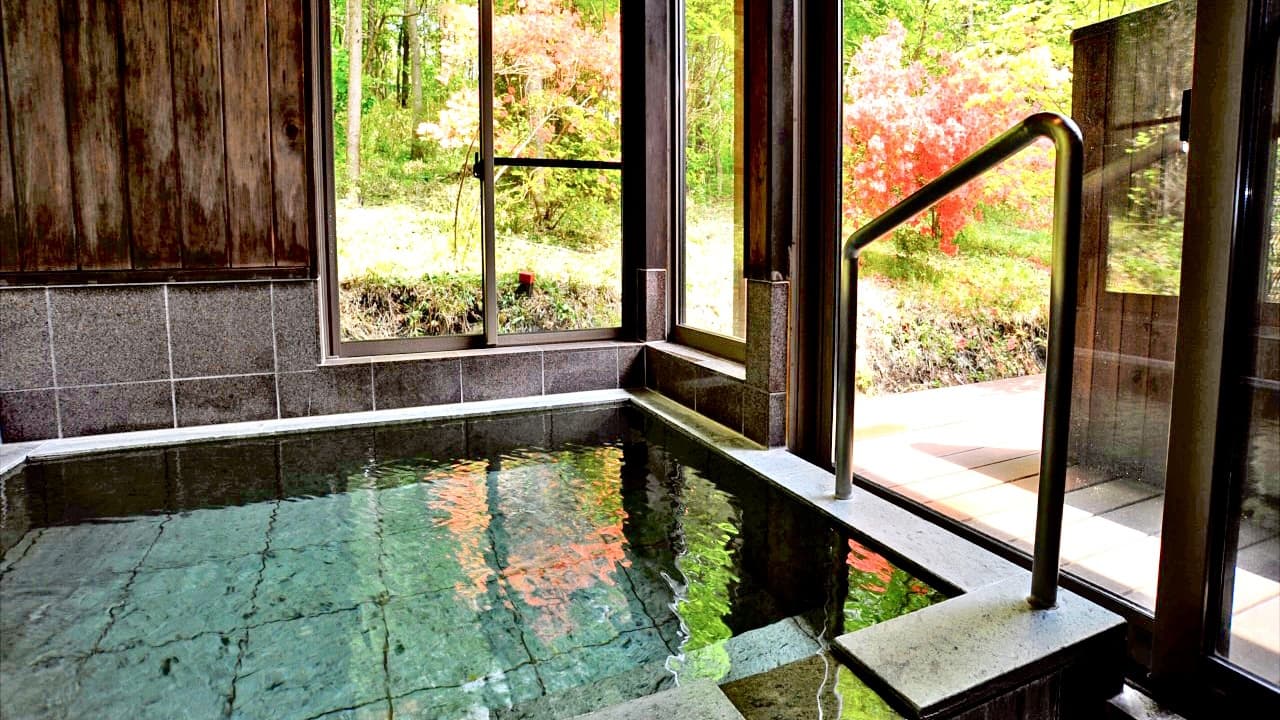 | from US$220/person/night≈ US$440 for 2 | 10.0 | Book on Trip.com |
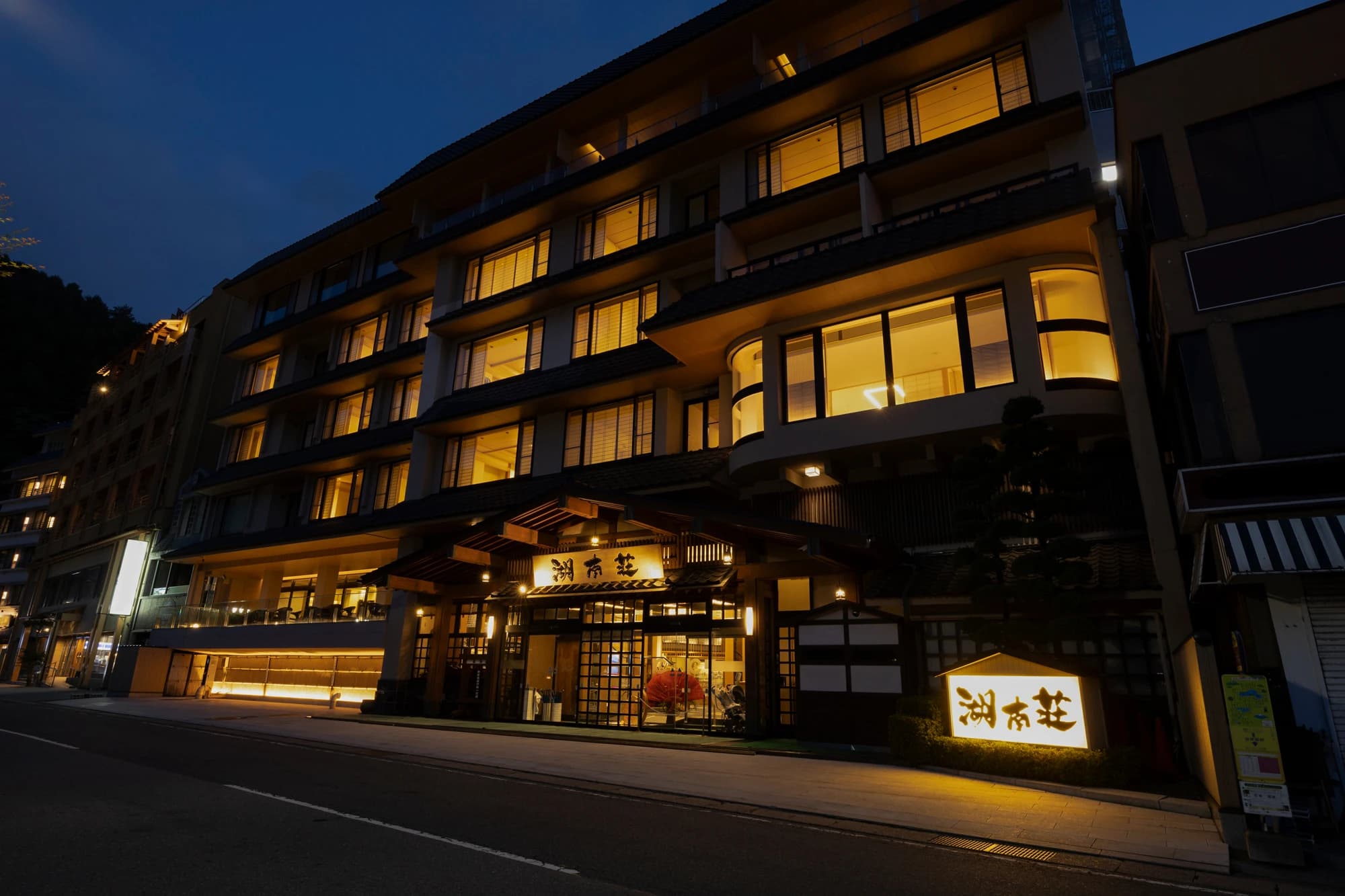 | from US$200/person/night≈ US$400 for 2 | 9.9 17 reviews | Book on Trip.com |
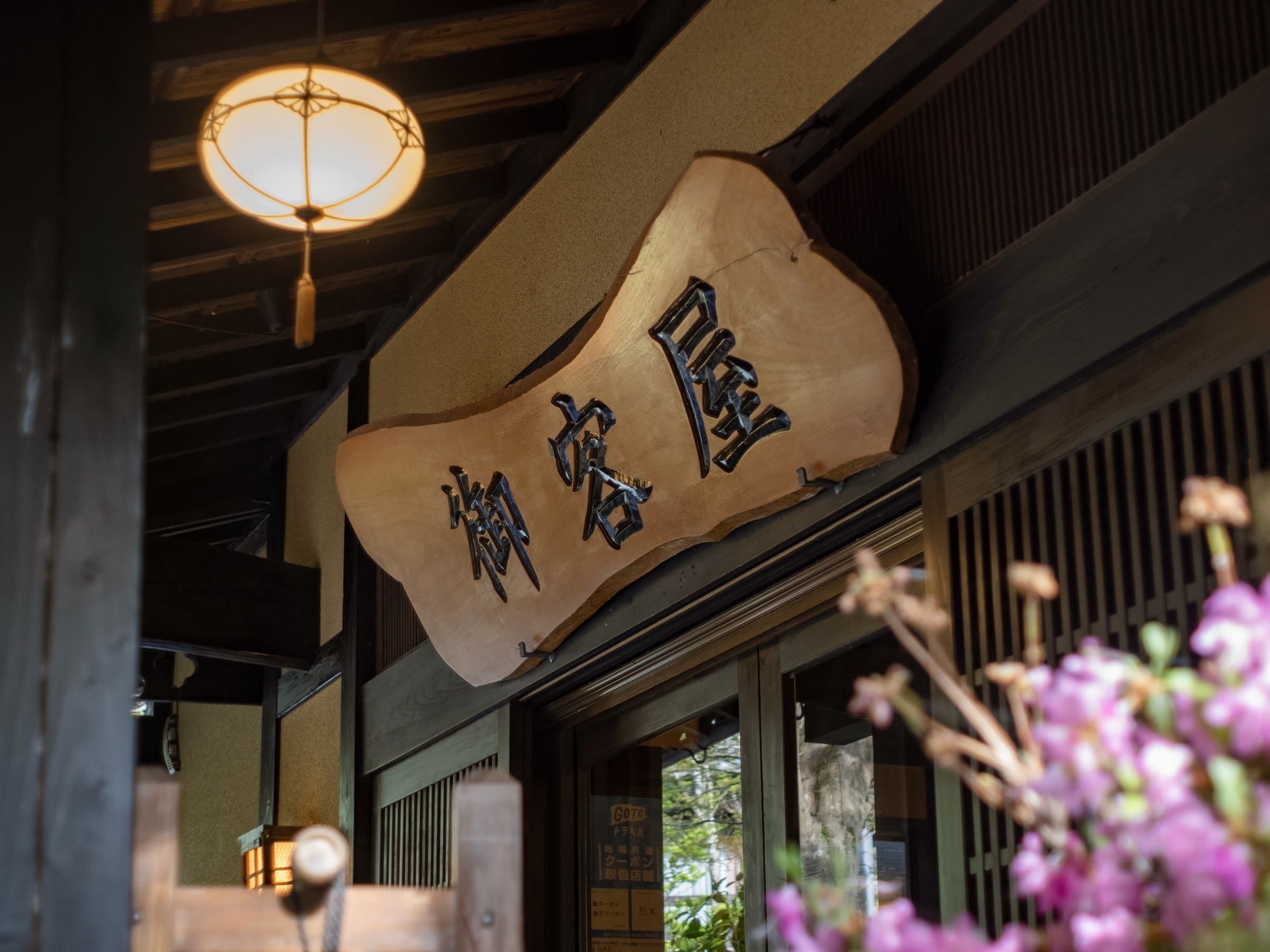 | from US$95/person/night≈ US$190 for 2 | 9.8 2,589 reviews | Book on Agoda |
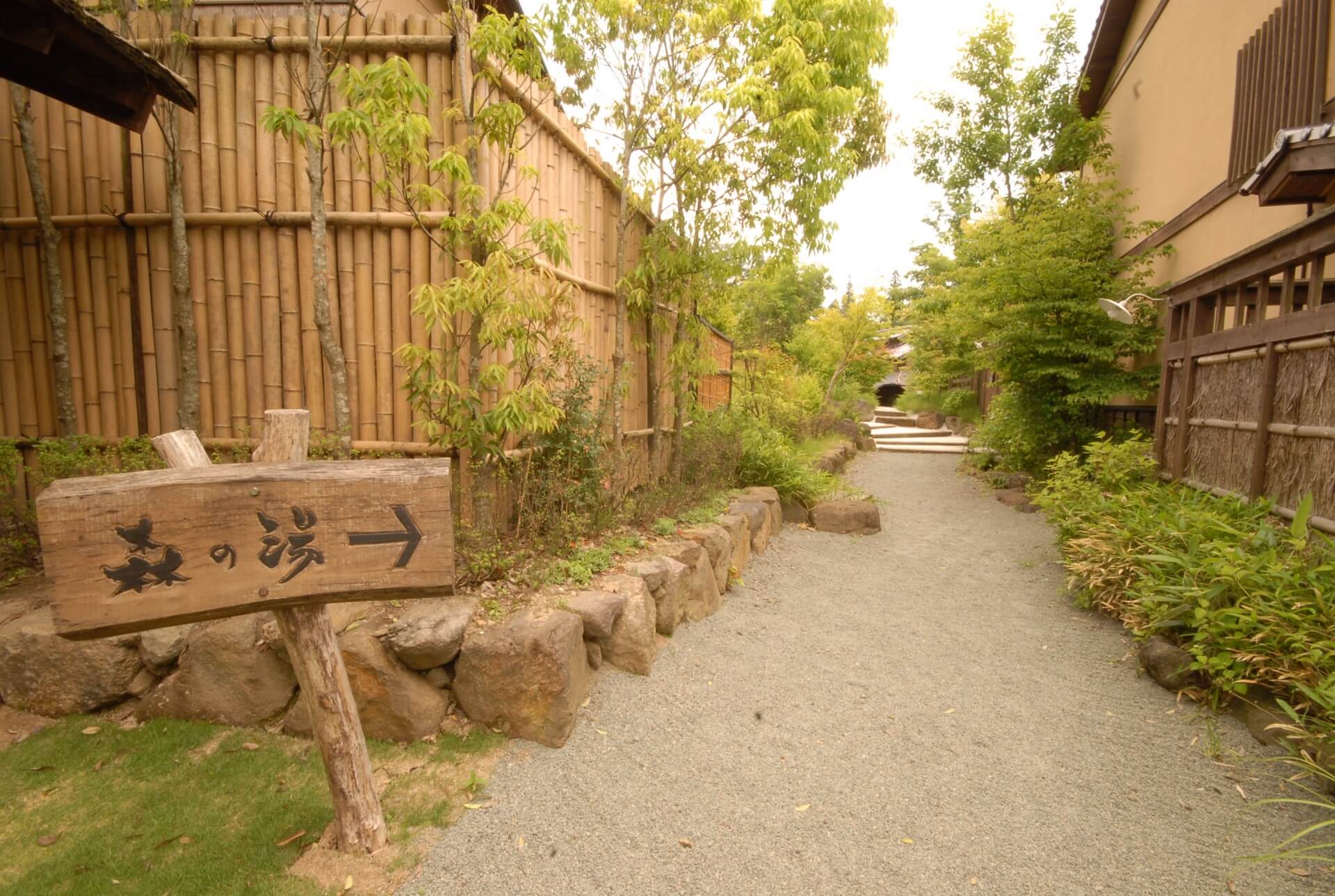 | from US$160/person/night≈ US$320 for 2 | 9.8 871 reviews | Book on Booking.com |
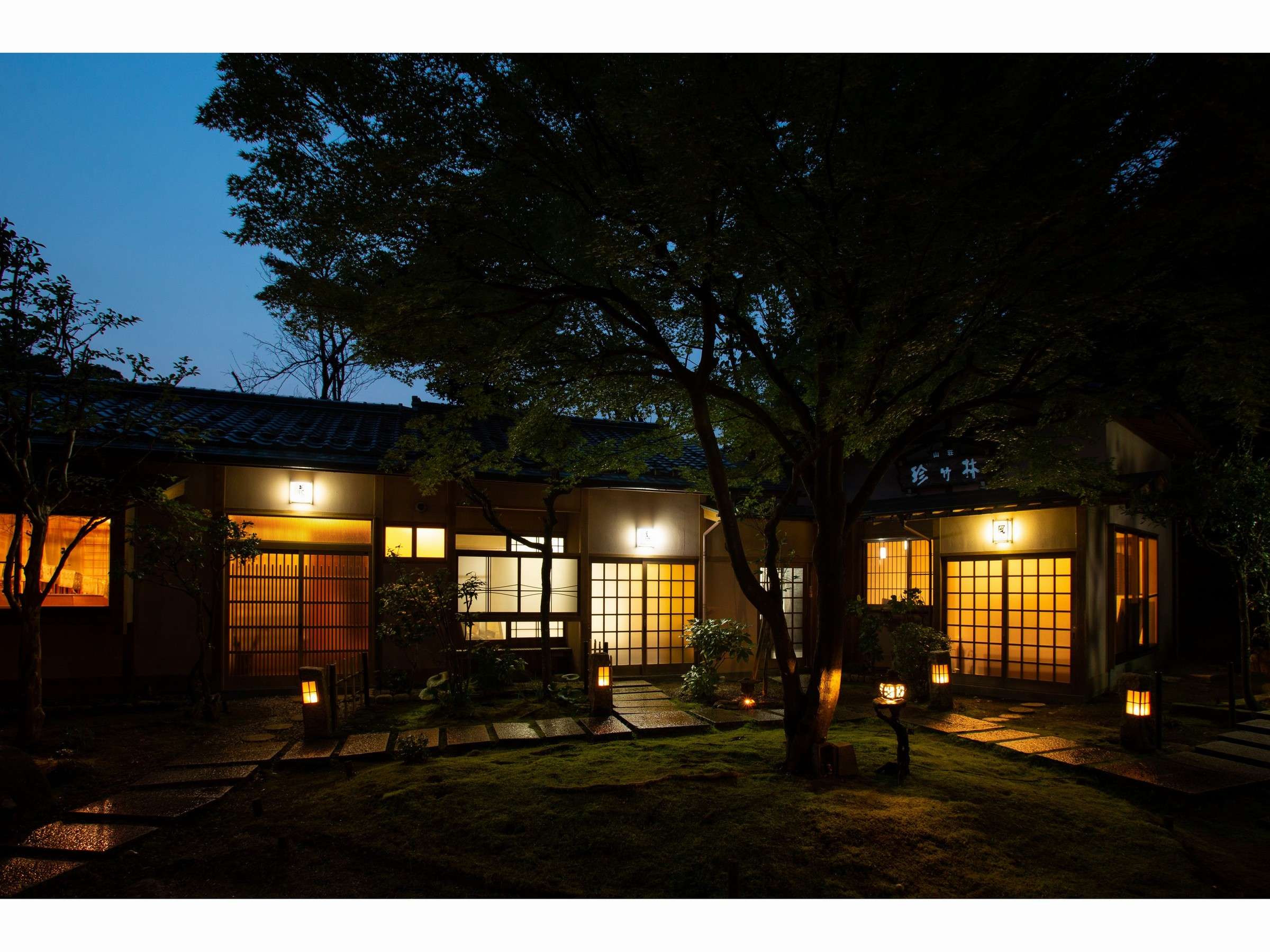 | from US$51/person/night≈ US$102 for 2 | 9.8 154 reviews | Book on Booking.com |
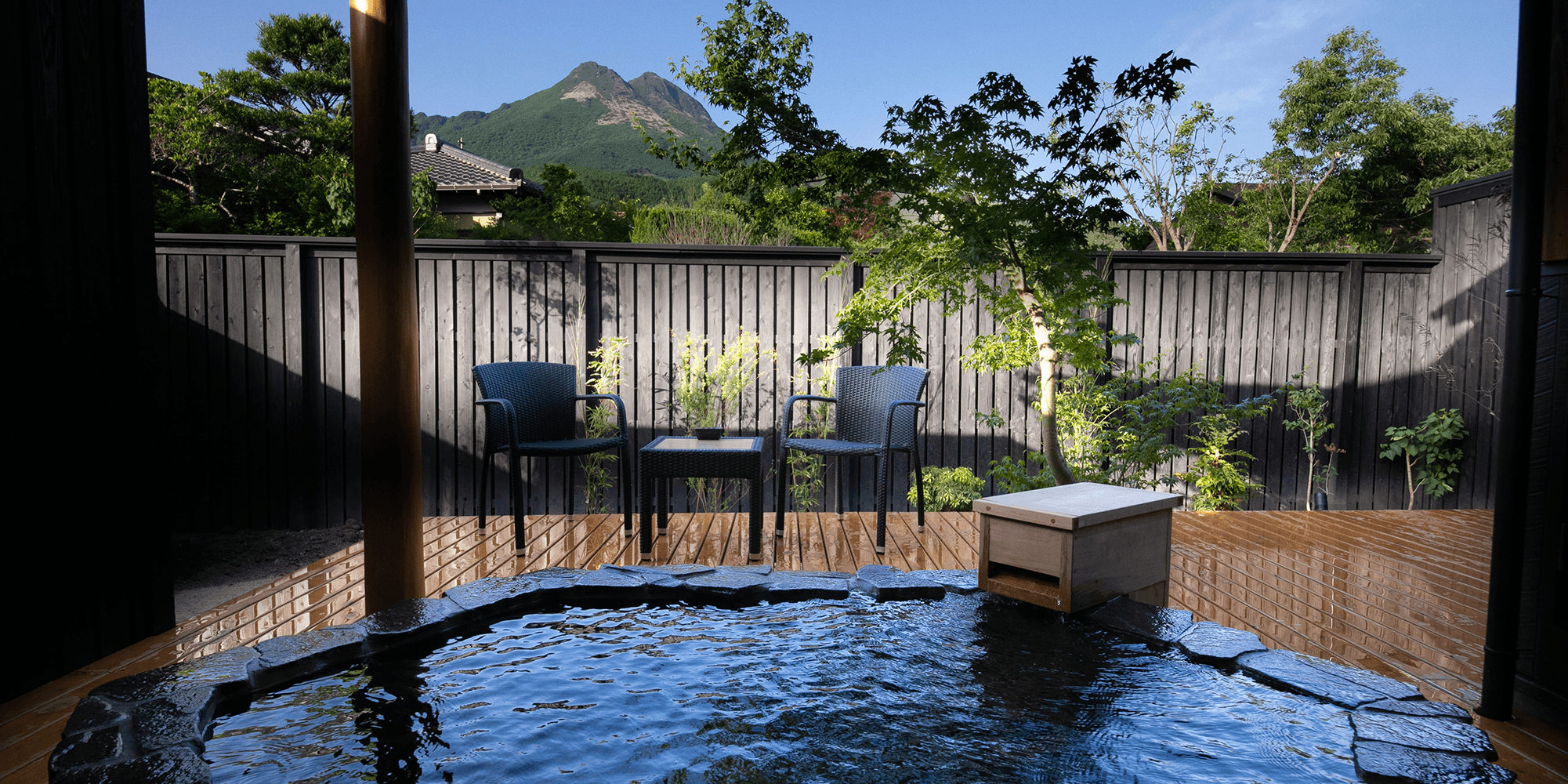 | from US$245/person/night≈ US$490 for 2 | 9.8 127 reviews | Book on Agoda |
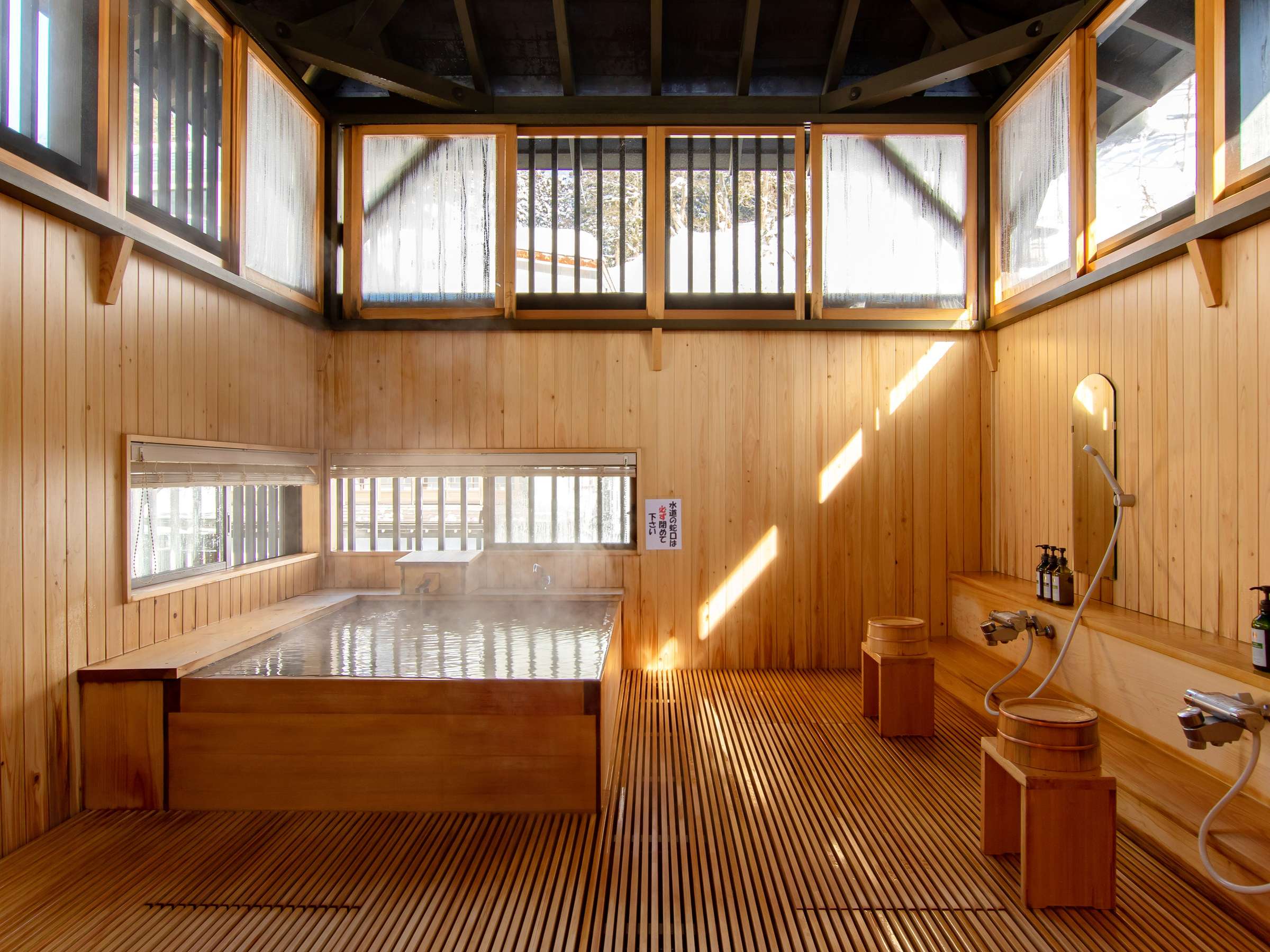 | from US$200/person/night≈ US$400 for 2 | 9.8 81 reviews | Book on Agoda |
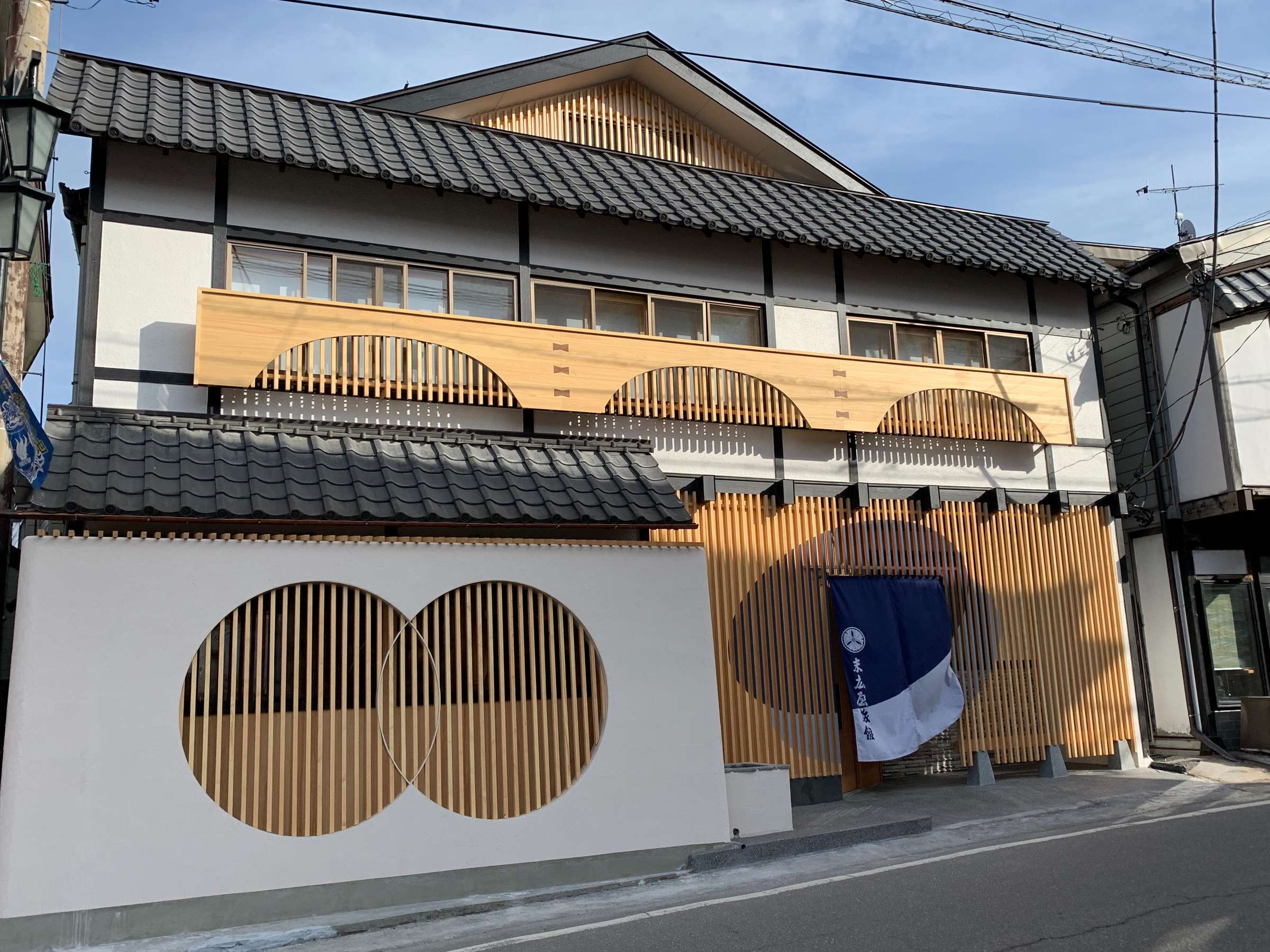 | from US$158/person/night≈ US$316 for 2 | 9.8 61 reviews | Book on Trip.com |
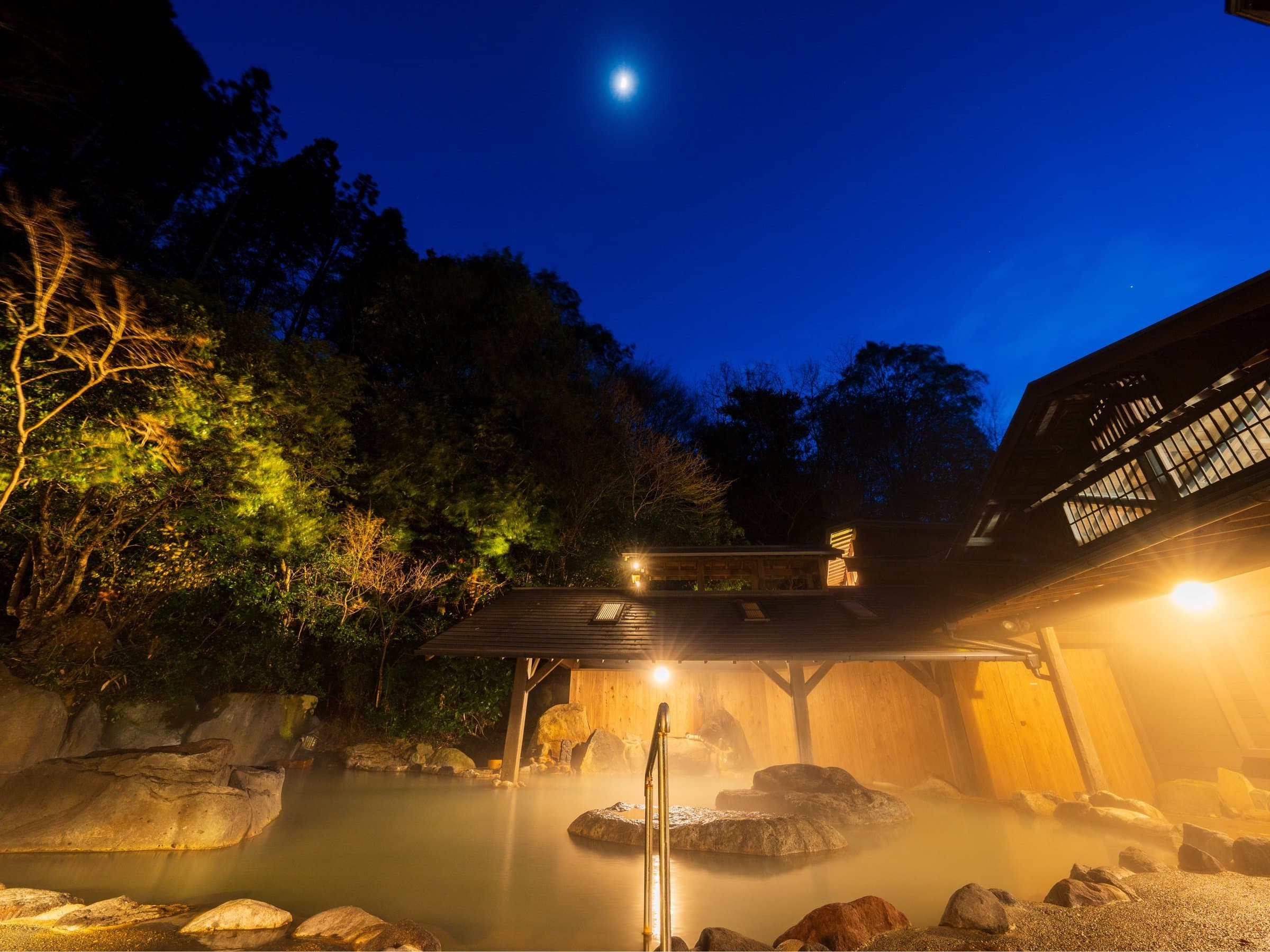 | from US$150/person/night≈ US$300 for 2 | 9.8 47 reviews | Book on Agoda |
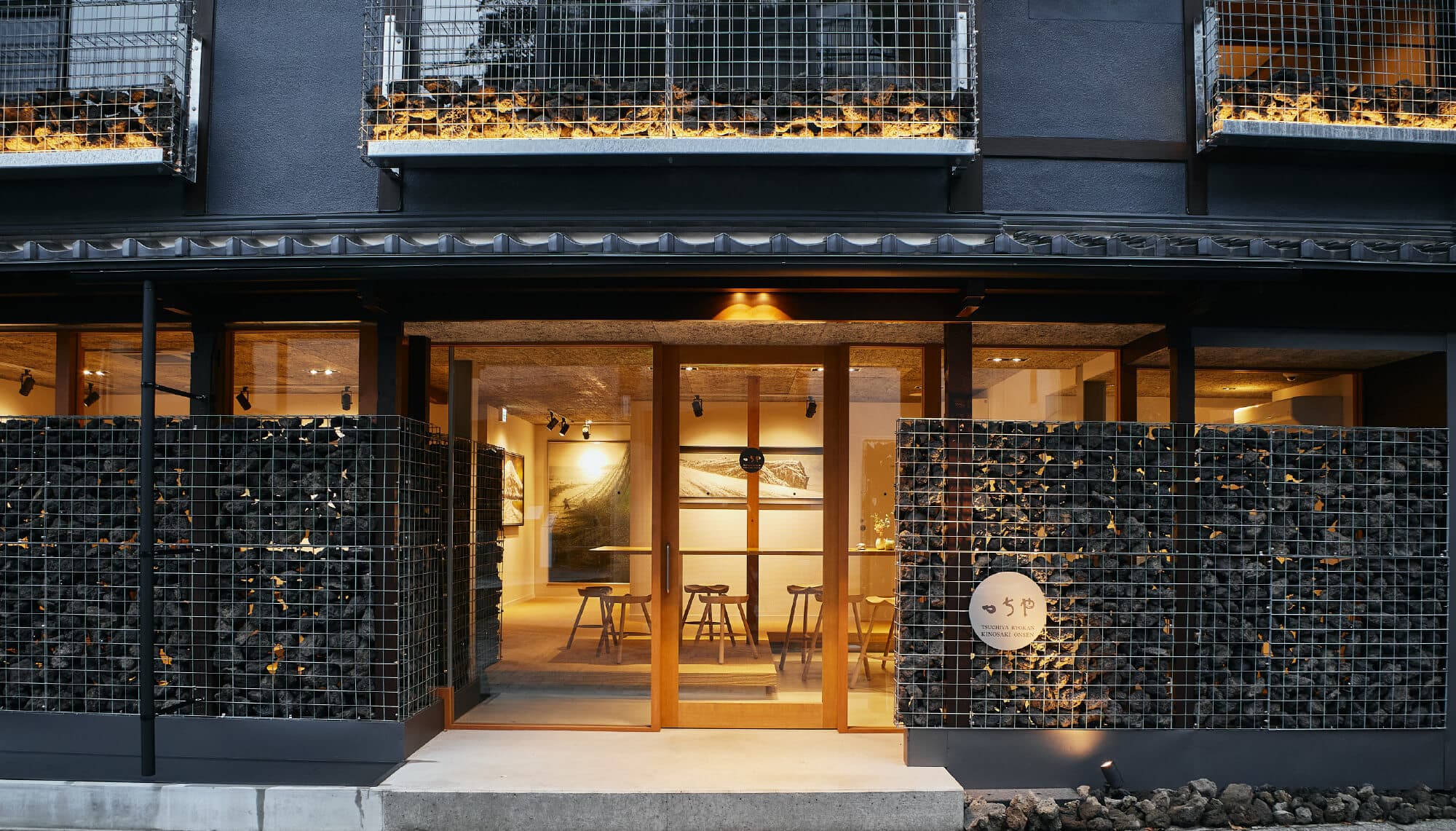 | from US$279/person/night≈ US$558 for 2 | 9.8 24 reviews | Book on Agoda |
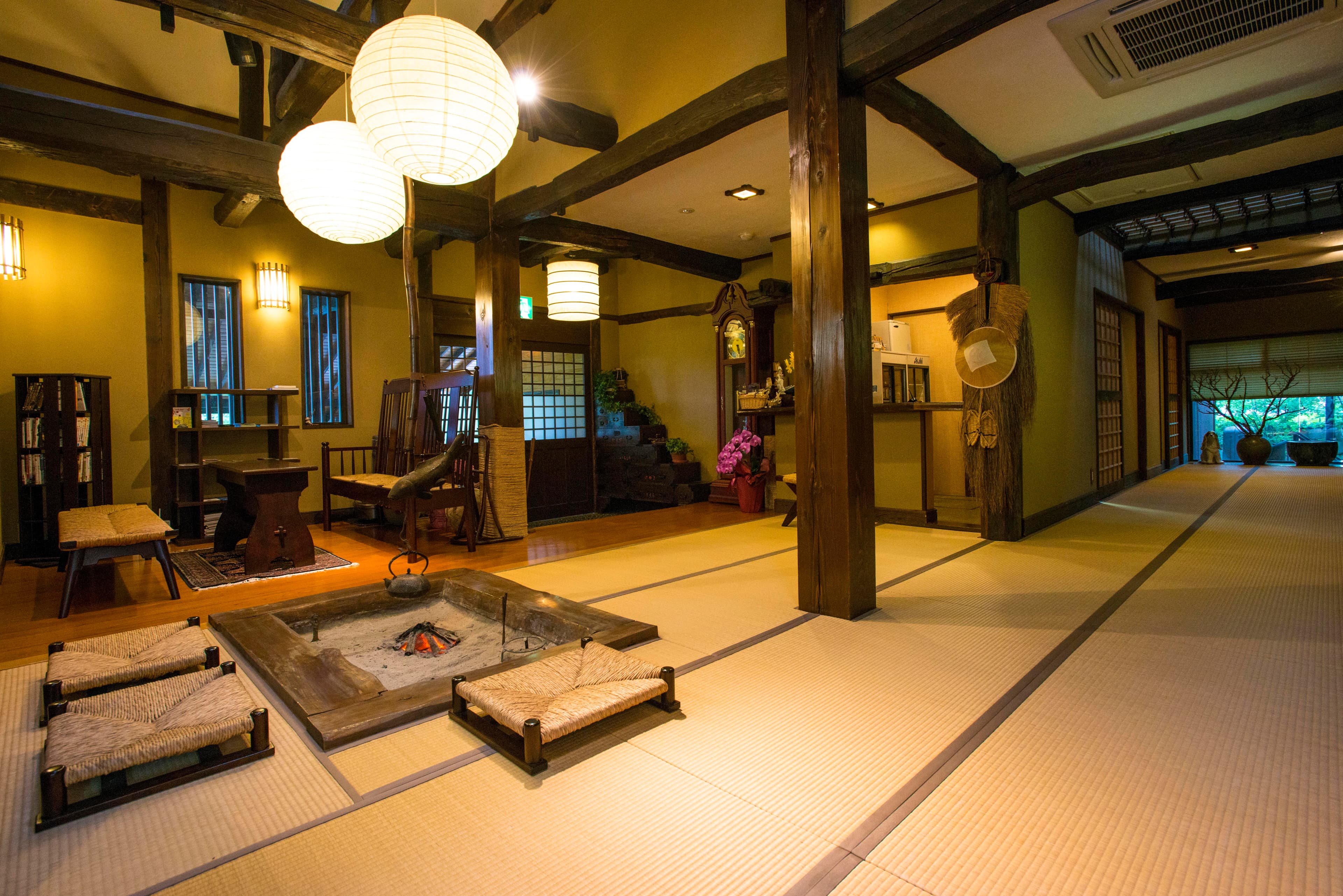 | from US$450/person/night≈ US$900 for 2 | 9.8 | Book on Agoda |
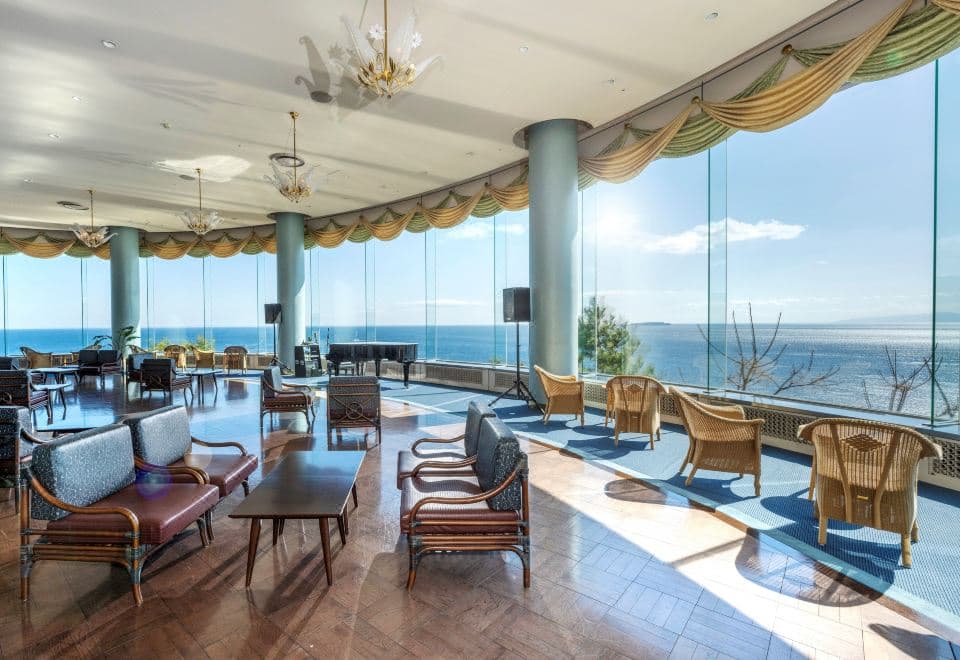 | from US$157/person/night≈ US$314 for 2 | 9.7 237 reviews | Book on Trip.com |
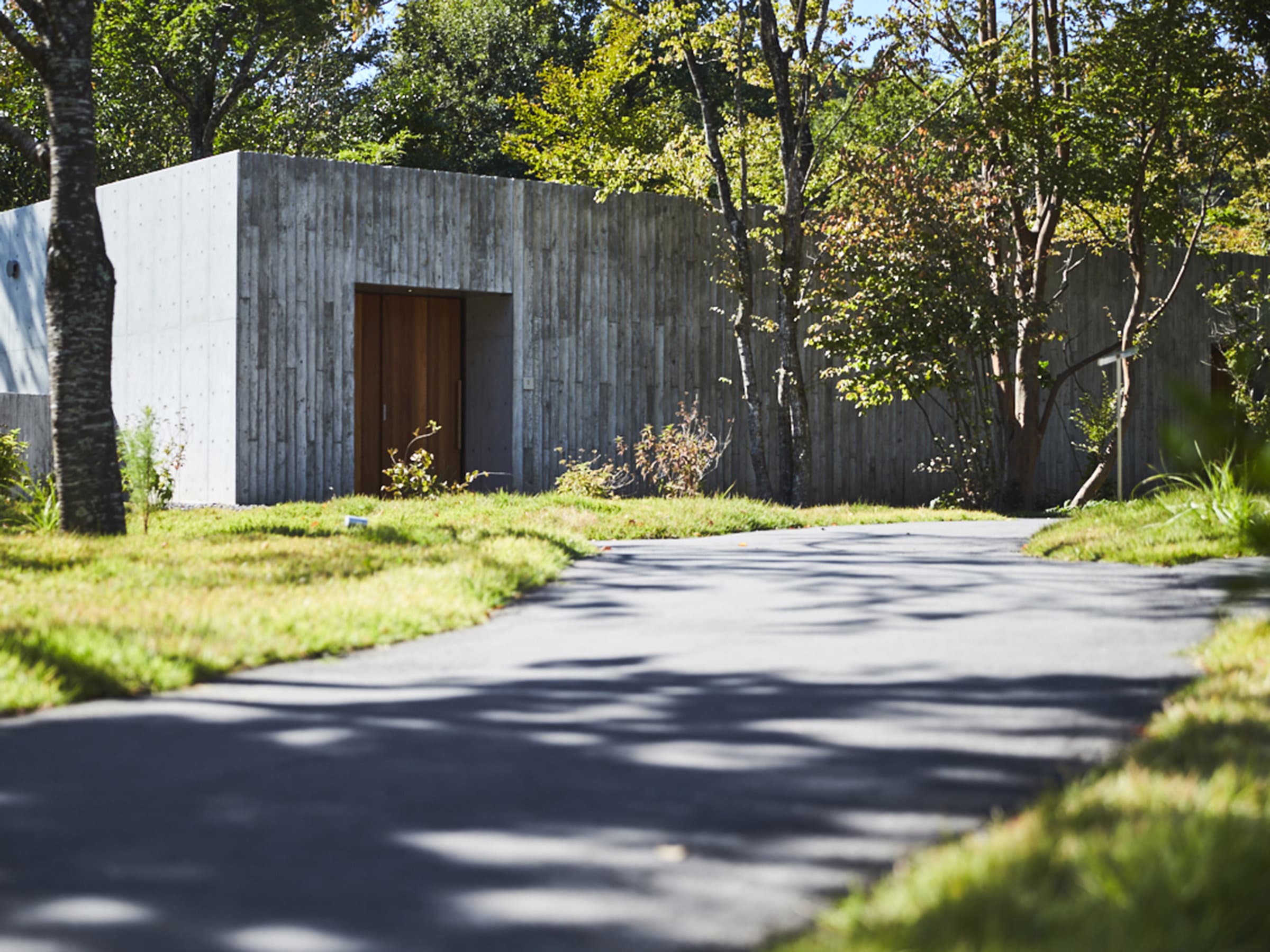 | from US$270/person/night≈ US$540 for 2 | 9.7 201 reviews | Book on Agoda |
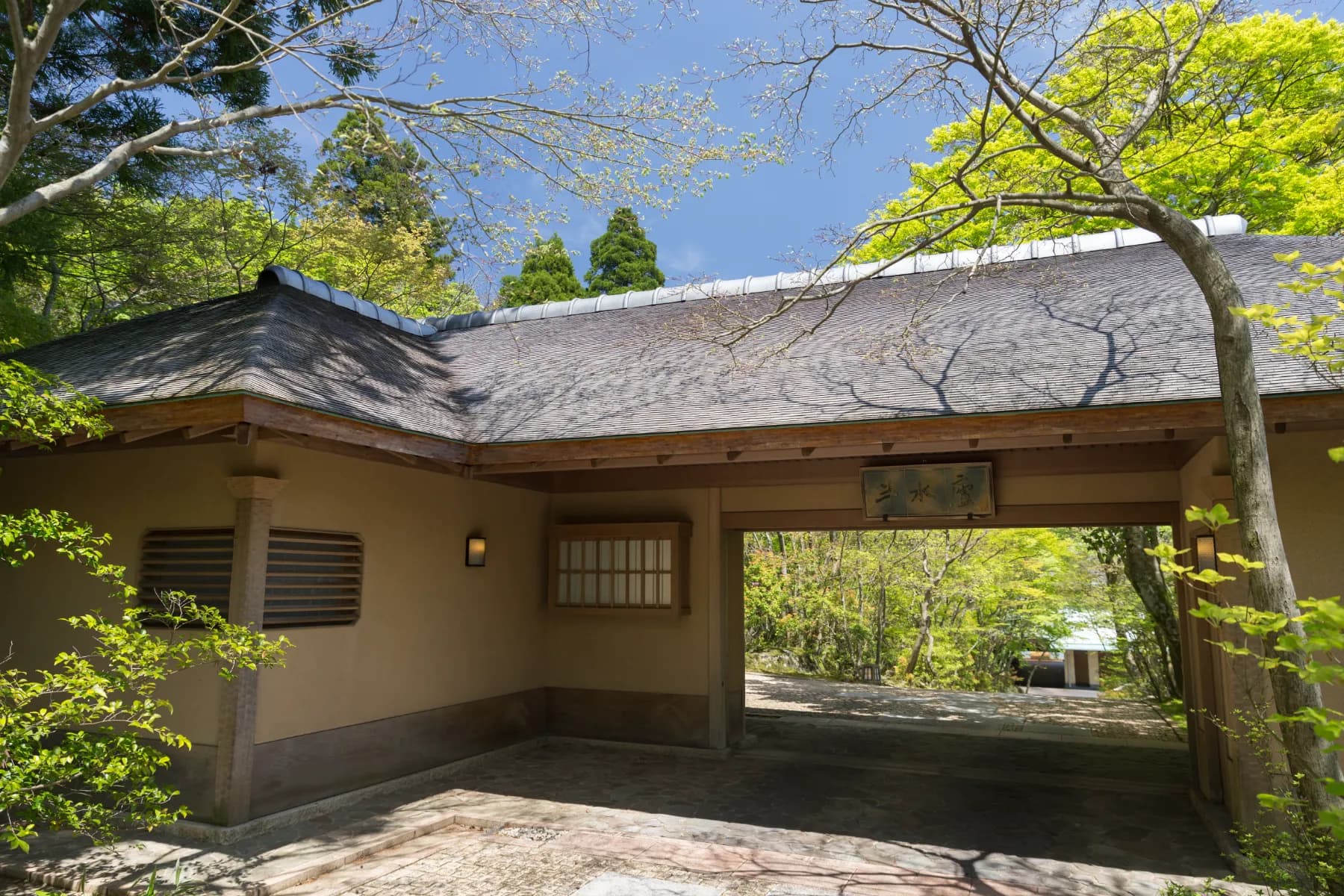 | from US$598/person/night≈ US$1,196 for 2 | 9.7 136 reviews | Book on Booking.com |
 | from US$200/person/night≈ US$400 for 2 | 9.7 106 reviews | Book on Agoda |
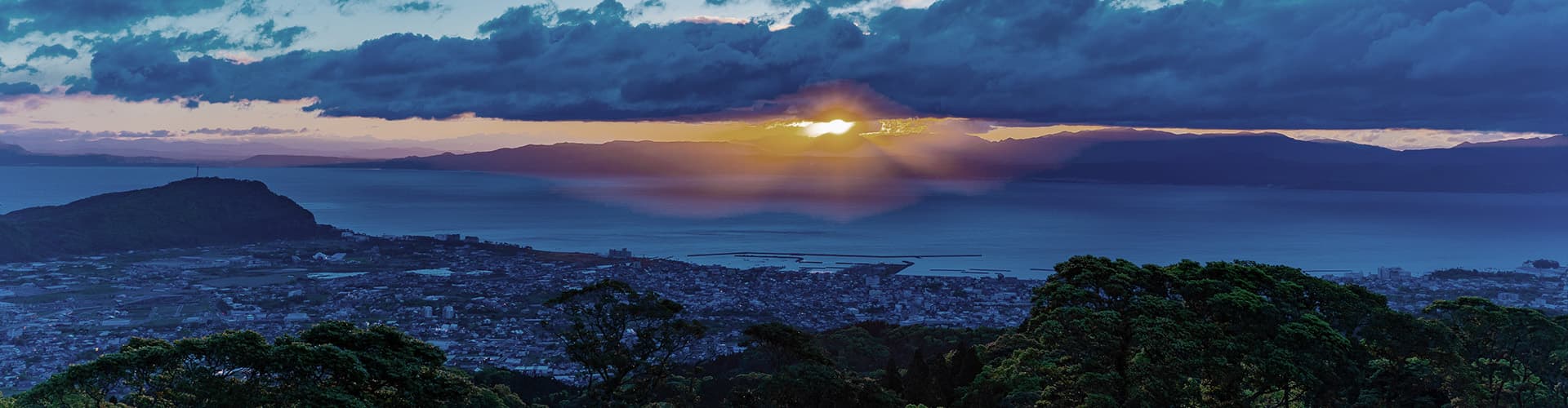 | from US$405/person/night≈ US$810 for 2 | 9.7 84 reviews | Book on Booking.com |
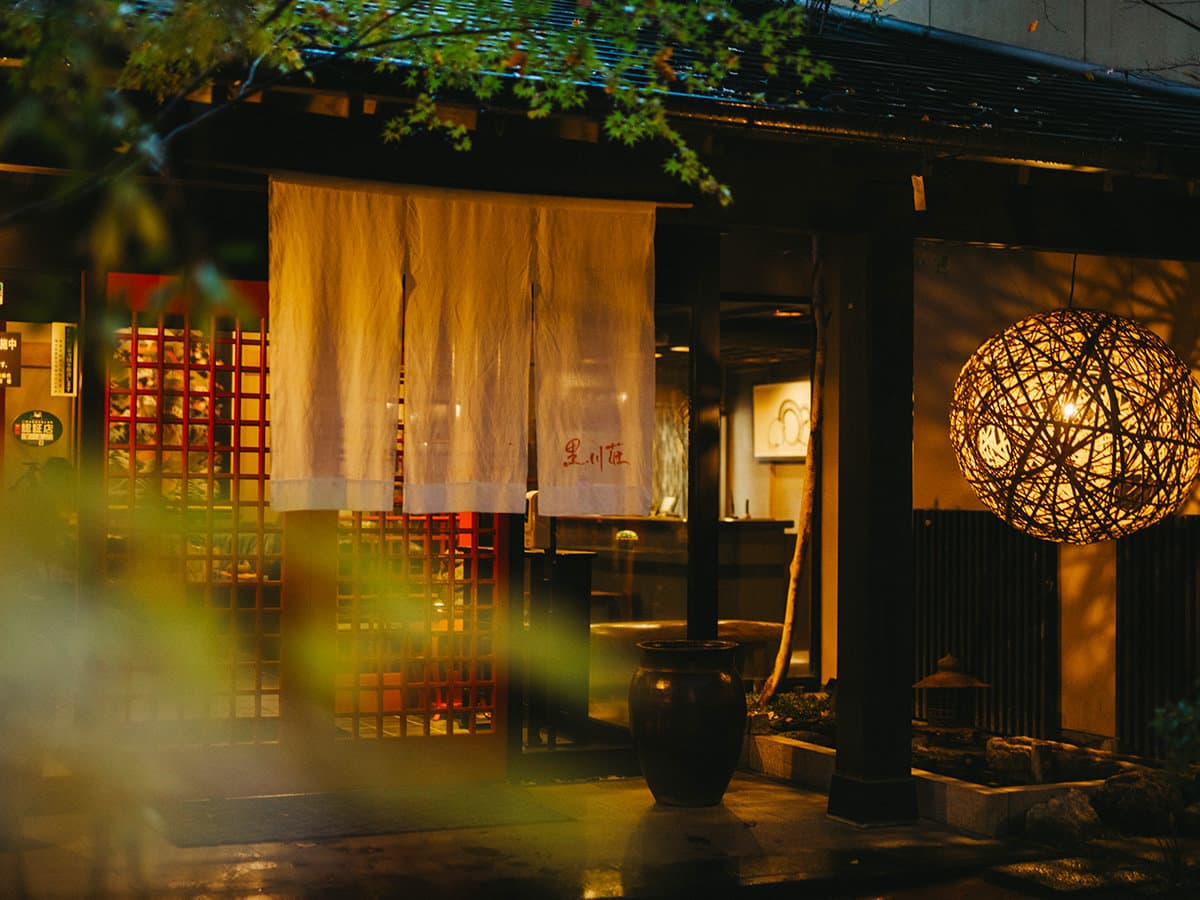 | from US$200/person/night≈ US$400 for 2 | 9.7 72 reviews | Book on Trip.com |
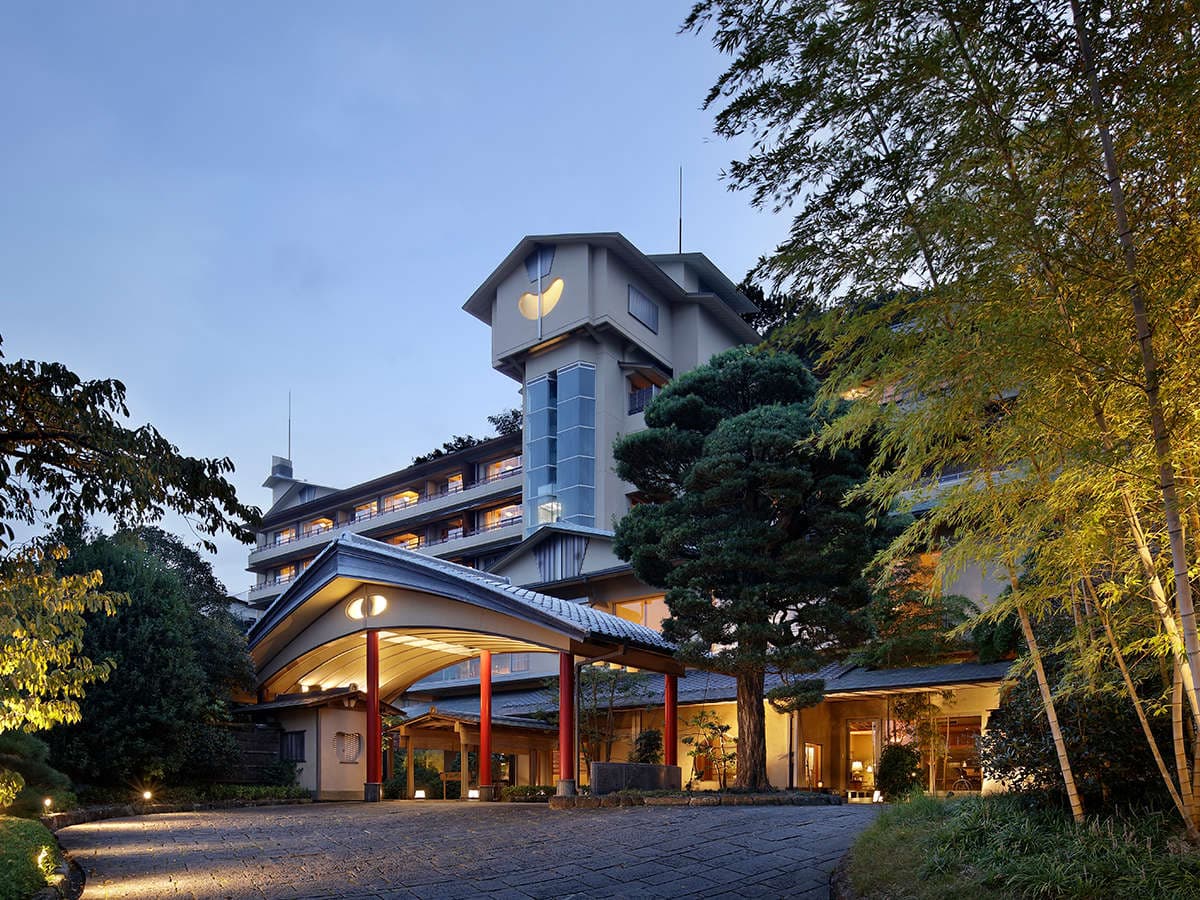 | from US$176/person/night≈ US$352 for 2 | 9.7 71 reviews | Book on Booking.com |
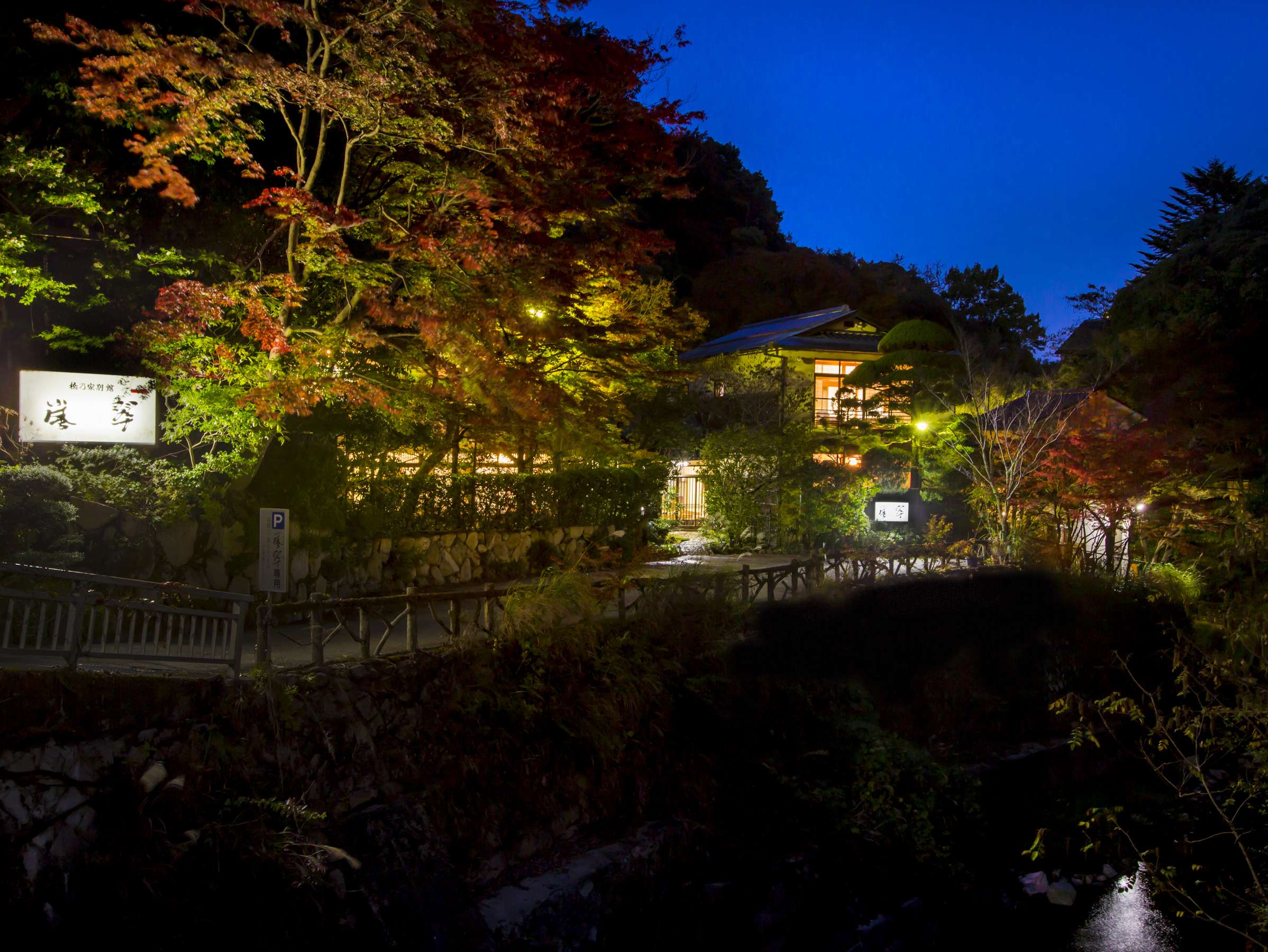 | from US$460/person/night≈ US$920 for 2 | 9.7 51 reviews | Book on Agoda |
Akane-an
Nasu
Konansou
Fuji Kawaguchiko
Okyakuya
Kurokawa
Ryokan Kounoyu
Kurokawa
Oyado Den Rikyu
Yufuin
Nagasawa Heihachi
Ginzan
Suehiroya Ryokan
Kusatsu
Yamabiko Ryokan
Kurokawa
Tsuchiya Ryokan
Kinosaki
Onyado Nakada
Nasu
Atami Kakurezato
Atami
Sanso Warabino
Yufuin
Hinoharu Ryokan
Yufuin
Bettei Amafuru Oka
Ibusuki
Kurokawa-So
Kurokawa
Prices shown are approximate starting rates per person per night. We may earn a commission on bookings.
Ready to book?
Book one of these top picks
Compare live availability and prices across booking sites.
from US$500 · per person · per nightfrom ≈ US$1,000 total for 2 guests



from US$400 · per person · per nightfrom ≈ US$800 total for 2 guests
Wanosato
倭乃里
Takayama·Luxury
from US$500 · per person · per nightfrom ≈ US$1,000 total for 2 guests
Booking links may earn us a commission at no extra cost to you.
Kusatsu's acidic spring water pairs beautifully with an in-room bath — see every option in our Kusatsu private-onsen collection.
FAQ
Frequently asked questions
How much does a ryokan with a private onsen typically cost per night?+
Prices vary significantly, but budget options with reservable private baths (kashikiri-buro) start at ¥15,000-¥30,000 per person/night. Mid-range ryokans with in-room baths are ¥30,000-¥60,000, while luxury suites with full rotenburo can exceed ¥60,000-¥150,000+. These rates usually include dinner and breakfast.
What are the different types of private onsen experiences available at ryokans?+
There are three main types: In-Room Rotenburo (客室露天風呂), an open-air bath directly in your room or terrace, often with free-flowing natural hot spring water. Kashikiri-Buro (貸切風呂) is a reservable private bath for 45-60 minutes, shared among guests. Some luxury ryokans also offer Suite Onsen, which are entire private bathing suites.
When is the best time to book a ryokan with a private onsen?+
It is recommended to book early, especially for peak seasons like autumn foliage (October-November) and cherry blossom season (late March-April), requiring 3-6 months in advance. Golden Week and New Year may need even more lead time. Consider weekday stays, as they can be 30-40% cheaper than Saturday nights.
What should guests expect when using a private onsen at a ryokan?+
Always shower thoroughly before entering the onsen to keep the mineral water clean. Do not drain the bath, as water often flows continuously. Guests are encouraged to soak multiple times, with a pre-dawn soak being a memorable experience. Ryokans typically provide towels, yukata robes, and skincare products.
Who benefits most from choosing a ryokan with a private onsen?+
Private onsen are ideal for couples who wish to bathe together, as public baths are gender-separated. Families with young children find them practical for stress-free splashing. Solo travelers enjoy the luxury of a private bath, and those with tattoo concerns or modesty anxieties appreciate the privacy.
How can I ensure my private onsen uses natural hot spring water?+
When booking, specifically look for terms like 天然温泉 (natural hot spring) or 源泉かけ流し (free-flowing from the source). This guarantees authentic mineral-rich water, providing the full health and skin benefits. Some 'private baths' might use heated tap water, so checking the water source is crucial for an authentic experience.
What's the difference between rotenburo and in-room onsen?+
Rotenburo (露天風呂) simply means an outdoor bath — open to the sky, often with a natural or garden view. An in-room onsen means the bath is private to your guest room, not shared. These two properties overlap: the best scenario is an in-room rotenburo, meaning an outdoor bath that is both private and attached to your room. But a property can have rotenburo (outdoor) that is communal, or in-room baths (private) that are indoors. Always confirm both dimensions when booking.
Are private onsen always heated natural hot spring water?+
No, and this is one of the most common misconceptions. In geothermal-rich areas like Hakone, Kusatsu, Beppu, and Yufuin, in-room baths are very likely to use natural spring water. In cities like Kyoto, Tokyo, or Osaka, private baths are almost always heated tap water — there is simply no geothermal source beneath these urban areas. Always check for 天然温泉 (natural hot spring) or 源泉かけ流し (free-flowing from the source) in the Japanese room description, or ask the property directly.
How often is the water changed in a private in-room onsen?+
It depends on the system type. Kakenagashi (かけ流し, free-flow) baths continuously replace water from the source — the bath overflows as fresh water enters, so the water is effectively always fresh. Circulation-filtered systems recycle and heat the water, cleaning it with UV or chlorine treatment. Most high-end properties use kakenagashi; budget properties often use circulation. You can ask at check-in which system your room uses. For kakenagashi, there's no need to drain and refill — just soak as often as you like.
Can I leave the bath water running overnight?+
For kakenagashi (continuous flow) baths, yes — many guests do. The water overflows into the drain by design, and the property's water system is built for this. Some ryokans will explicitly mention this in the welcome notes. For heated/circulated systems, leaving the heater running overnight is your call but may affect your utility supplement. If in doubt, ask the nakai-san (room attendant) at turndown service — they'll tell you what's normal for that property.
Do tattoos matter if the onsen is private?+
For fully in-room private rotenburo: practically speaking, no. There is no shared space, no other guests, and no operator present during your soak. Many ryokans that maintain a tattoo ban for communal facilities do not apply it to in-room baths. That said, policies vary and some properties state an all-property ban. If this matters to you, use our tattoo-friendly ryokans guide which lists properties with confirmed-open policies. For kashikiri-buro (bookable private baths), the operator may inspect the room afterward — policies here are less uniform.
What's a typical surcharge for an in-room rotenburo room vs a standard room?+
Typically ¥10,000–¥30,000 per person per night above the standard room rate at the same property. At the luxury tier (Gora Kadan, Wanosato), the premium is baked in — there is no 'standard room without private bath' — so you're comparing against other luxury properties. At mid-tier properties like Hotel Kajikaso, you can often see the explicit differential on the booking page. For kashikiri-buro as a session add-on (not a room upgrade), typical session pricing is ¥2,500–¥5,000 per 45–60 minutes, with some ryokans including it complimentary.
Still deciding?
Browse ryokans across JapanBooking.com