76分钟阅读更新于 2026年6月
快速比较
精选8家| 旅馆 | 起价 | 评分 | 特色 | 预订 |
|---|---|---|---|---|
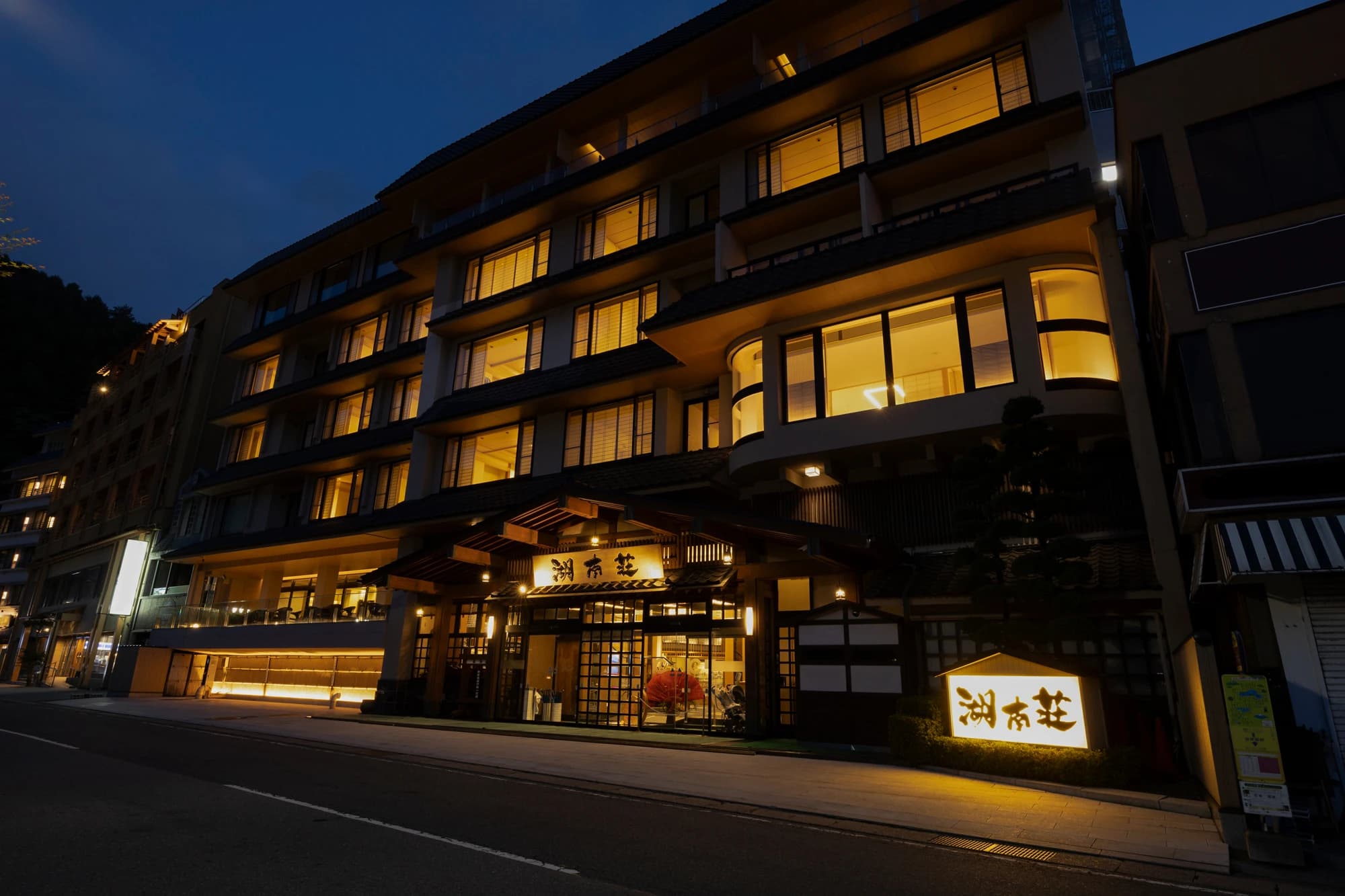
![]() Gora Kadan Hakone | $500起 | 9.5 89条评价 | 英语OK包租温泉 | 在Trip.com预订 |
![]() Hakone Ginyu Hakone | $400起 | 9.3 124条评价 | 英语OK包租温泉 | 在Trip.com预订 |
![]() Wanosato Takayama | $500起 | 9.5 85条评价 | 英语OK包租温泉 | 在Trip.com预订 |
![]() Hanaougi Bettei Iiyama Takayama | $400起 | 9.2 290条评价 | 英语OK包租温泉 | 在Trip.com预订 |
![]() FUFU Nikko Nikko | $400起 | 9.1 310条评价 | 英语OK包租温泉 | 在Trip.com预订 |
![]() Amane Resort Seikai Beppu | $250起 | 9.0 680条评价 | 英语OK包租温泉 | 在Trip.com预订 |
| $200起 | 9.0 856条评价 | 英语OK包租温泉 | 在Trip.com预订 | |
![]() Hotel Kajikaso Hakone | $180起 | 9.2 156条评价 | 英语OK包租温泉 | 在Trip.com预订 |

Gora Kadan
Hakone

Hakone Ginyu
Hakone

Wanosato
Takayama

Hanaougi Bettei Iiyama
Takayama

FUFU Nikko
Nikko

Amane Resort Seikai
Beppu

Hotel Kajikaso
Hakone
显示价格为每人每晚的起步价(约值)。通过本站预订,我们可能获得佣金。
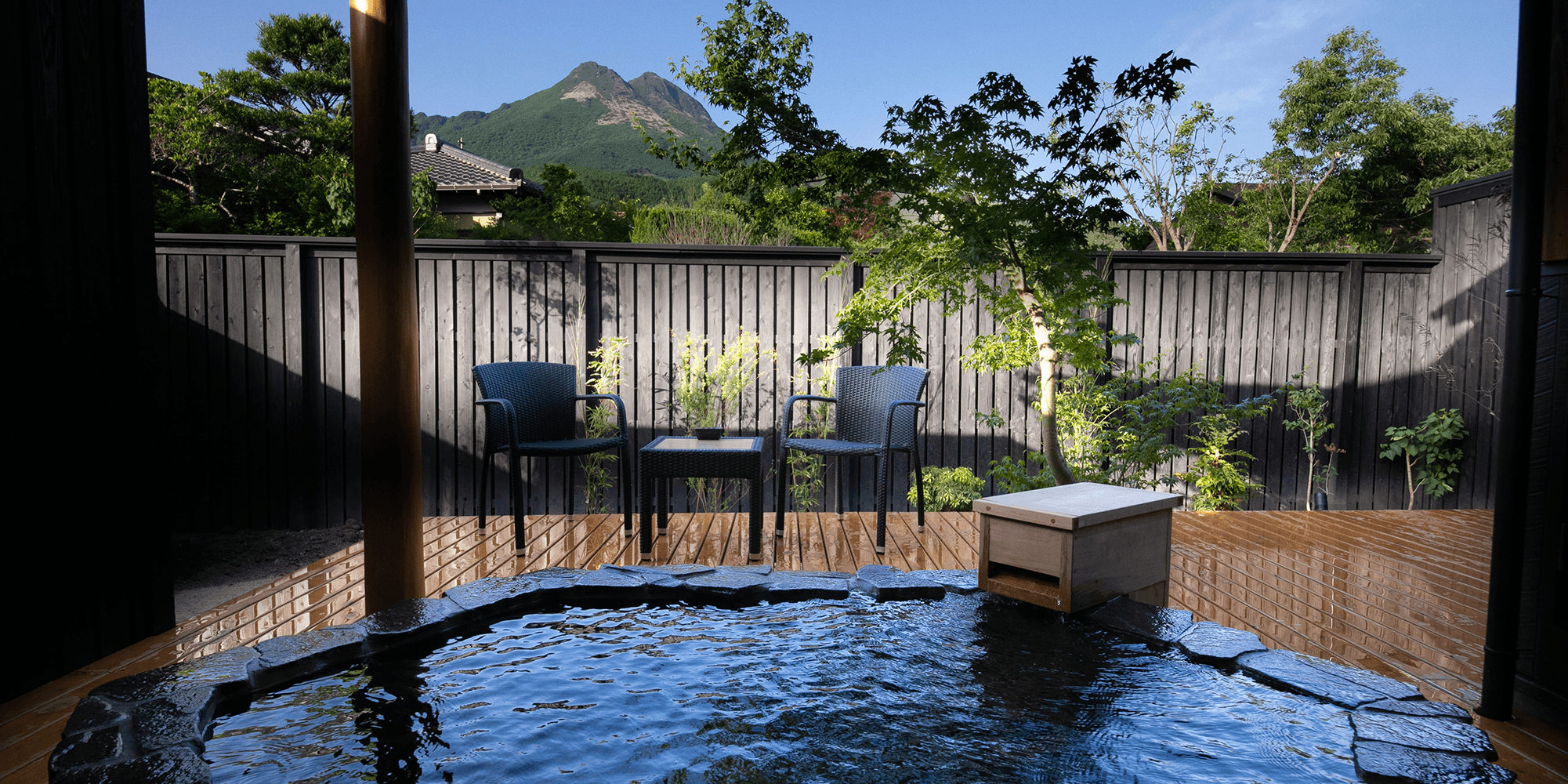
There is a moment — steam curling off the water, mountains dissolving into mist, not another body in sight — when the private onsen earns its premium. I have soaked in fifty-plus private baths since 2017, from the ¥18,000 family-run kashikiri at Yunomine to the ¥150,000 villa rotenburo at Asaba, and the lesson is consistent: the price is not what makes the bath. The right private onsen is the one whose schedule, water chemistry, and view match the night you actually booked. The 12 picks below are the ones I rank by that test.
What's New: Private Onsen Ryokans in 2026
Updated June 2026 — expanded to 20 picks. This list has been re-verified against Trip.com, Booking.com, and direct property pages. Key changes since our last pass:
Tattoo policy shifts. The post-pandemic international travel boom has pushed several mid-tier ryokans to quietly update their tattoo stance for in-room rotenburo specifically. Because a private in-room bath has no communal exposure, the practical risk to operators is zero — and more properties now reflect this in writing. See our tattoo-friendly ryokans guide.
Booking lead times tightened further. In 2024, you could snag a rotenburo room 6–8 weeks out. In 2026, the realistic window is 3–4 months for mid-range, and 5–6 months for luxury. Hakone autumn weekends sell out months ahead; Asaba's cherry blossom weekends close within 48 hours of opening 180 days in advance.
Hoshinoya brand expansion. Hoshino Resorts added private outdoor bath options to two additional Kai sub-brand properties, expanding the accessible mid-luxury tier.
5 new picks added in the June 2026 refresh — now 20 total. Added: Asaba (Shuzenji, Relais & Châteaux), Sanso Murata (Yufuin design cottages), Kurokawa Noshiyu (every-room rotenburo), Hakone Kowakudani Mizunoto (dual hot spring source, renovated 2023), and Yufuin Kamenoi Besso (1921-founded detached cottages). Each pick is now annotated with bath format (kashikiri / in-room rotenburo / suite onsen / cottage) and water chemistry pulled from the property's onsen-bunsekisho (温泉分析書) and JNTO water-type taxonomy. All twenty verified against our 283-property directory. [verified June 2026]
Why Private Onsen Matters
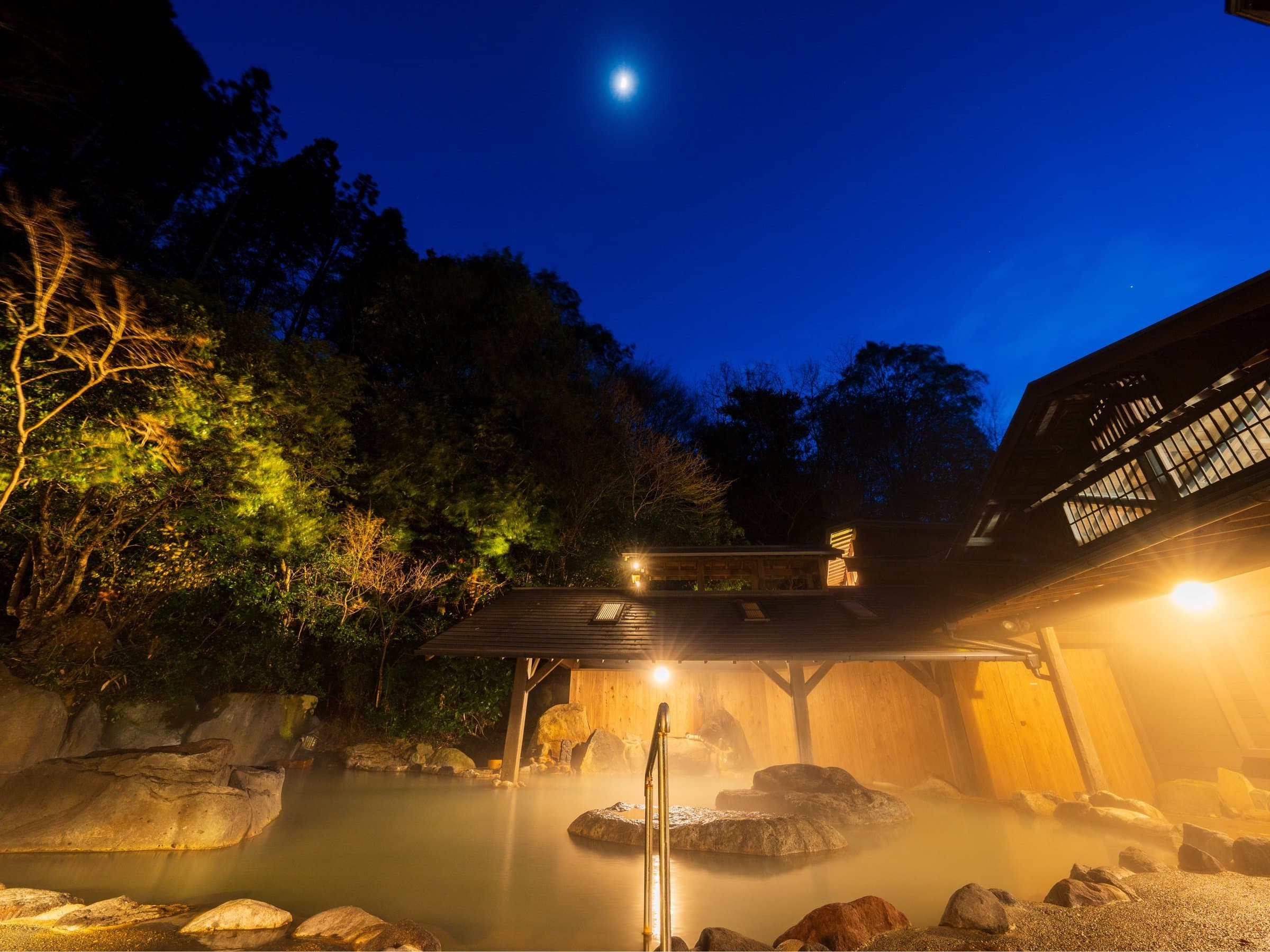
The appeal goes beyond modesty. A private onsen means you control the experience completely. You choose when to bathe — at 2 AM under a full moon or at dawn when the valley fills with light. There's no etiquette to navigate, no tattoo-policy anxiety, and no self-consciousness.
For couples, it's transformative. Japanese bathing culture traditionally separates genders in public baths. A private onsen lets you share the experience together — for many travelers, this is the entire point of choosing a ryokan over a hotel. See our best ryokans for couples for the top properties designed with two in mind.
For families with young children, it's practical: toddlers in a shared onsen create stress for everyone. A private bath lets kids splash without disturbing other guests.
Types of Private Onsen at Ryokans
Not all private onsen experiences are created equal. Understanding the differences will help you book exactly what you want — and avoid the frustration of arriving at a property and finding it doesn't match your expectations.
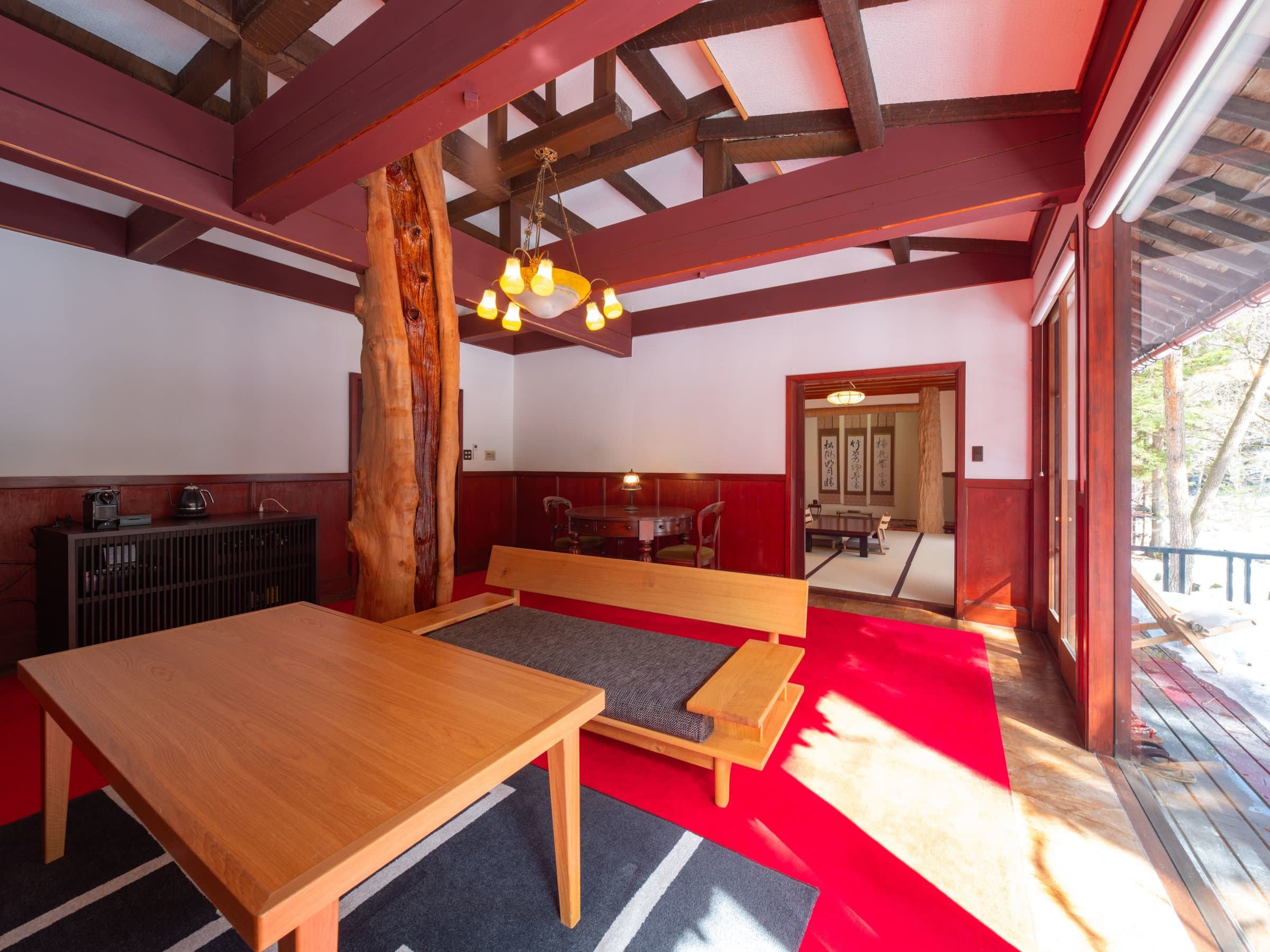
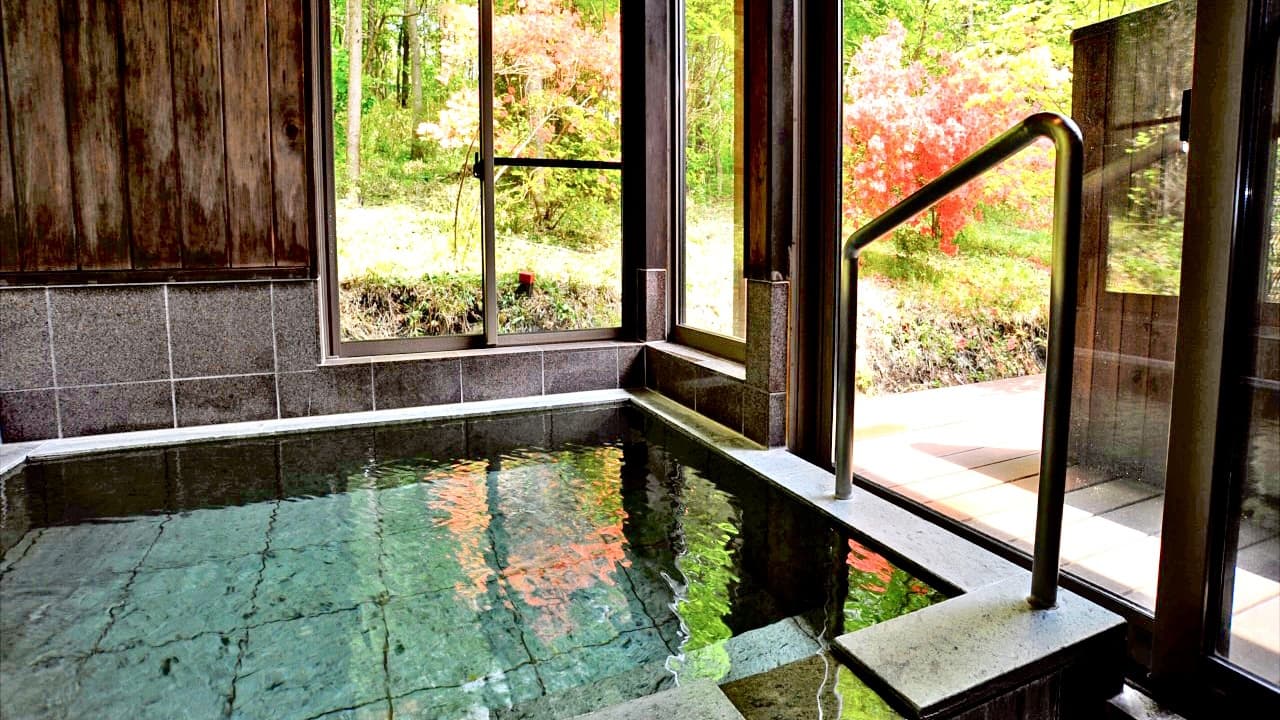
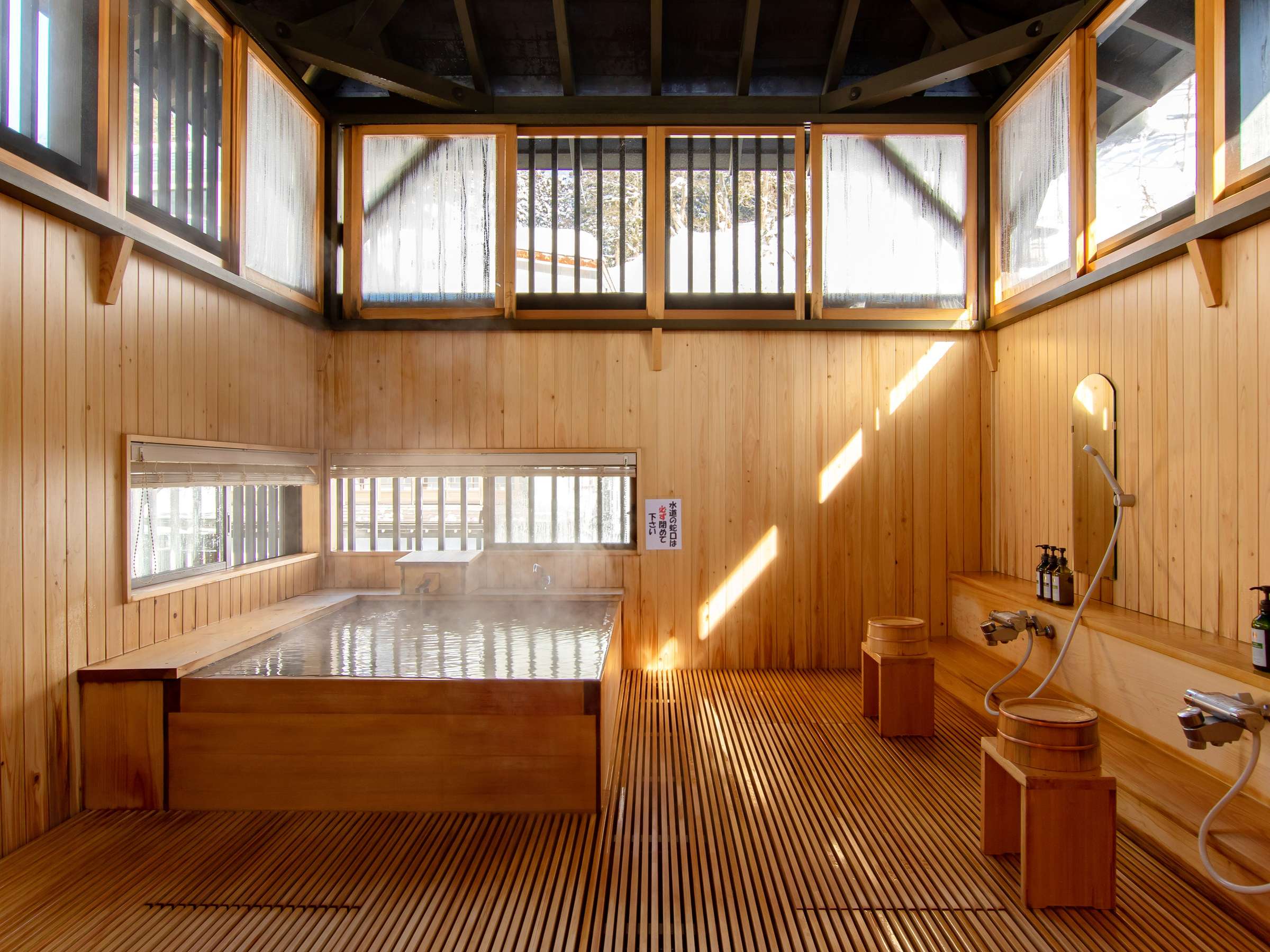
In-Room Rotenburo (客室露天風呂) — The Gold Standard An open-air hot spring bath built directly into your room or on your private terrace. You step out of your tatami room, slide open the shoji door, and there it is — your own steaming bath with a view. These are found in premium rooms and suites, and they justify every yen of the higher price. The water is typically free-flowing natural hot spring water (kakenagashi), meaning fresh mineral water constantly cycles through. *Best for:* couples wanting to bathe together, tattoo-concerned guests, travelers who want midnight or pre-dawn soaks without a reservation, anyone who values pure autonomy.
Terrace Rotenburo (テラス露天風呂) — The View Bath A variation of the in-room format: the outdoor bath sits on your private terrace or balcony rather than being built into the room footprint. Same privacy, same exclusivity — but weather-dependent. Cold December rain or summer heat can change the experience. The tradeoff is usually a better view (higher elevation, unobstructed). *Best for:* guests prioritising scenery over all-weather use.
Kashikiri-Buro (貸切風呂) — The Bookable Private Bath A separate private bath room, shared among all guests but used exclusively by one group at a time. You book a 40–60 minute slot — either at check-in or in advance. This is the most affordable way to enjoy a private onsen experience: many mid-range ryokans include it free; others charge ¥2,000–¥5,000 per session. *Best for:* guests on a tighter budget, those who want privacy without the full premium room rate, and solo travelers who want occasional private soaking alongside the public baths. *Important:* this is not an in-room bath. You leave your room, walk to the kashikiri room, and return. Confirm availability at booking — popular properties book out their slots by mid-afternoon.
Kazoku-Buro (家族風呂) — Family Bath A variant of kashikiri designed for small groups or families. Similar booking mechanics — reserved for your party only — but typically a larger tub footprint. Some properties call this format "family onsen" even for childless couples. Often requires a booking fee separate from the room rate. *Best for:* families with children, groups of three or four wanting communal-but-private bathing.
Suite Onsen (スイート温泉) — Full Private Bathing Suite Some luxury ryokans have built entire bathing wings private to your room: indoor and outdoor baths, rain showers, stone or hinoki-cypress soaking tubs, lounging areas. These properties blur the line between traditional ryokan and boutique spa resort. *Best for:* honeymoon-friendly private-bath ryokans, special anniversaries, guests for whom the bathroom is the destination. Expect to pay ¥80,000–¥200,000+ per person.
Quick decision frame: - Tattoos + full privacy → In-room rotenburo or suite - Privacy without room premium → Kashikiri-buro (book slot immediately at check-in) - Best views → Terrace rotenburo - Families / children → Kazoku-buro or in-room - Temperature control matters → In-room (outdoor baths cool faster in winter)
What Does a Private Onsen Cost?
Let's talk real numbers. Prices vary by region, season, and property.
Budget (¥15,000–¥30,000 per person/night) Kashikiri-buro tier — reservable private baths, standard rooms. Popular in Kurokawa Onsen and the Izu Peninsula. The private onsen experience without the in-room premium.
Mid-Range (¥30,000–¥60,000 per person/night) This is where in-room baths start appearing: semi-open-air baths on balconies or small private outdoor tubs. Kaiseki dinners are more elaborate, service more attentive. Hakone and Kinosaki have strong options here.
Luxury (¥60,000–¥150,000+ per person/night) Full rotenburo suites with views, multi-course kaiseki, dedicated room attendants. Properties in Hakone, Atami, and Yufuin dominate this tier. At the top end, the bath itself is a work of art — stone-carved or cypress-lined, perched above a river gorge.
All prices include dinner and breakfast (1泊2食付), which matters. ¥50,000/person that includes two extraordinary meals is reasonable when you factor in the food. [verified May 2026]
Best Regions for Private Onsen Ryokans
Hakone (箱根) — The Accessible Classic Just 90 minutes from Tokyo, Hakone is the most popular onsen destination for international visitors, and for good reason. The concentration of high-quality ryokans with private onsen is unmatched. The water types vary by area — sulfur springs in Owakudani, alkaline springs in Yumoto — and many properties offer Mt. Fuji view ryokans on clear days. If this is your first ryokan experience, Hakone is the safest bet.
Izu Peninsula (伊豆) — Coastal Hot Springs South of Hakone along the coast, Izu offers something most onsen towns cannot: ocean views from your private bath. The combination of seaside rotenburo and fresh seafood kaiseki makes Izu unique. Areas like Shuzenji have a quieter, more traditional atmosphere, while coastal towns like Atami offer a mix of modern luxury and old-world charm.
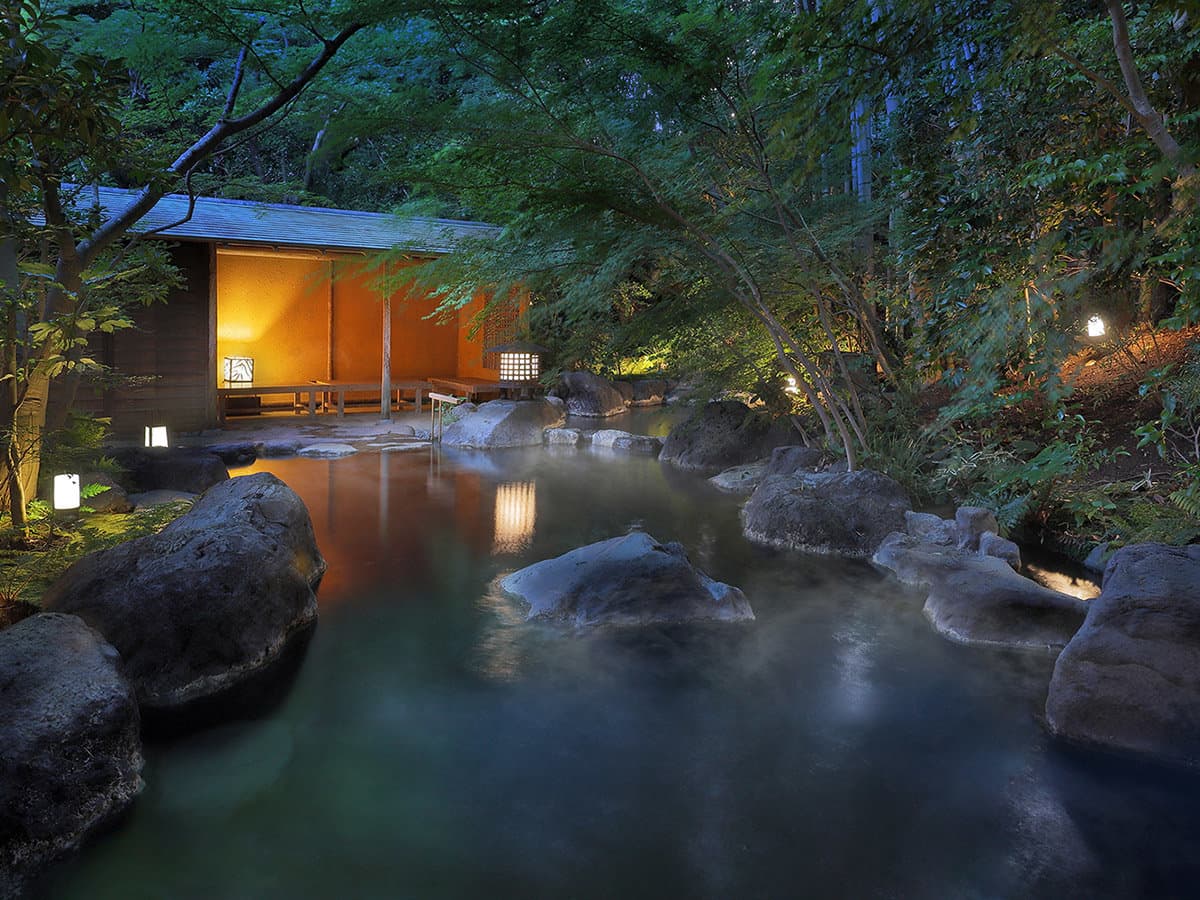
Kurokawa Onsen (黒川温泉) — The Mountain Village Tucked into the mountains of Kumamoto Prefecture on Kyushu, Kurokawa is a tiny village where virtually every ryokan has excellent bathing facilities. The town's famous "rotenburo meguri" pass lets you visit multiple outdoor baths, but many ryokans also offer private options. The atmosphere here is unbelievably atmospheric — lantern-lit paths, wooden bridges, and steam rising from every direction.
Kinosaki Onsen (城崎温泉) — The Social Soak A traditional onsen town on the Sea of Japan coast, Kinosaki is famous for its seven public bathhouses (soto-yu) . But the ryokans here also offer excellent private baths, and the combination of external bathhouse hopping (in your yukata and geta sandals) plus a private in-room soak creates a uniquely layered experience. Winter visitors get the bonus of fresh matsuba crab (snow crab) in their kaiseki dinner — the harvest window runs strictly November 7 through March 31 due to Sea of Japan fishing restrictions .
Private Onsen Density by Region: Where to Focus Your Search
The regional rankings below are drawn from the full 283-property private onsen dataset, which tracks in-room bath availability across every area we cover. Not all onsen regions are equal when it comes to private bath availability. Here's where to focus:
Hakone — Highest density, most accessible. The greatest concentration of in-room rotenburo ryokans in Japan, 90 minutes from Tokyo. Multiple water types across sub-zones. Downside: everyone knows it, so prices are highest and availability tightest. 5 of our 20 picks are here (Gora Kadan, Hakone Ginyu, Hotel Kajikaso, Ichinoyu Honkan, Hakone Kowakudani Mizunoto).
Yufuin — Best mid-luxury density outside Hakone. Private baths are effectively standard above ¥40,000/person. Sodium bicarbonate springs are gentler than sulfur-heavy areas — ideal for onsen newcomers, with a documented soap-like cleansing effect from the bicarbonate ions that gives Yufuin its "beautiful-skin onsen" reputation . The morning mist over the valley is a bonus.
Arima Onsen — The Kansai anchor. 30 minutes from Kobe, 90 minutes from Kyoto. Two legendary water types: kinsen (gold — rust-brown, mineral-heavy) and ginsen (silver — clear, carbonated). Ideal one-night addition to a Kansai trip.
Beppu — Ocean views + serious mineral content. Kyushu's onsen capital. Private-bath options at the ocean-view tier. Affordable compared to Hakone for comparable room quality.
Kusatsu — Limited private baths, exceptional water. Rarest private-bath availability on this list — most ryokans share the communal Yubatake source. Worth seeking out for serious onsen enthusiasts.
Kyoto — Rare and mostly non-natural. Private baths here are almost always heated tap water. Worth it for omotenashi and location; not for the onsen itself.
Kinosaki — Best hybrid experience. The only destination that delivers both the social onsen-town atmosphere and genuine private-bath access.
The 20 Best Private Onsen Ryokans in Japan
Twenty picks below, pulled from our directory of 283 verified ryokans and cross-checked against Booking.com, Expedia, Trip.com, and the property's own site. Every name here has an in-room rotenburo, a kashikiri-buro included in the rate, a full suite onsen, or a cottage with its own outdoor bath — plus a 9.0+ guest rating, Michelin Key, or Relais & Châteaux membership. Each entry annotates the bath format (kashikiri / rotenburo / suite / cottage), the water chemistry (alkaline simple, sulfur, sodium chloride, sodium bicarbonate, iron-rich kinsen, etc.) sourced from JNTO and prefectural onsen authority classifications, and why this property is private-onsen-worthy — not just listed because it has a bath, but selected because the private-bathing experience itself is the entire reason to book it. Prices are 2026 per-person-per-night with dinner and breakfast included, verified June 2026.
1. Gora Kadan — Hakone, ⭐ 9.5 (89 reviews) — $500–1,200
A former imperial summer retreat in Gora that has spent the last four decades shaping what "luxury ryokan" means. Every suite has its own indoor or open-air bath sourced from a Hakone hot spring, and the kaiseki menu changes weekly with the season. The single hardest reservation in Hakone — book 90 days out for cherry blossom or autumn weekends.
一目了然
2. Hakone Ginyu — Hakone, ⭐ 9.3 (124 reviews) — $400–900
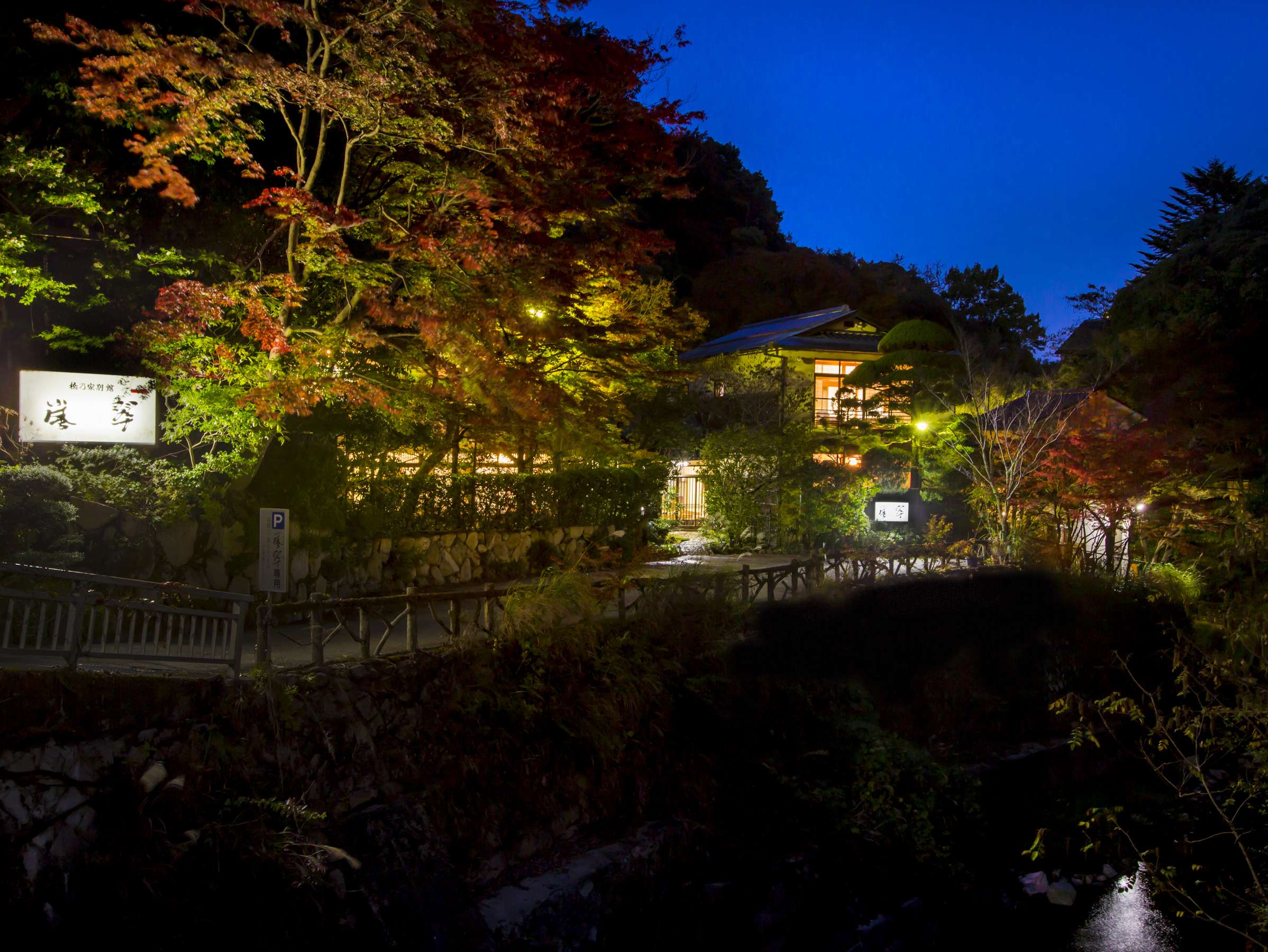
Cliff-side property where every one of the 19 rooms has an open-air rotenburo overlooking the Hayakawa valley. The structure is built to maximize the view — almost every walking sightline ends in mountains. If you want "my own bath with a valley below" without going to a destination like Iya, this is the easiest version.
3. Wanosato — Takayama, ⭐ 9.5 (85 reviews) — $500–1,200
Michelin Key 2024 . A 160-year-old gassho-zukuri thatched-roof farmhouse moved beam-by-beam to a hidden bank of the Miyagawa river outside Takayama . Eight rooms total. Two have private outdoor baths; the rest share a small kashikiri (reservable) bath system. The trade-off you accept is a 20-minute drive from town — the trade-off you receive is total silence at night.
4. Hanaougi Bettei Iiyama — Takayama, ⭐ 9.2 (290 reviews) — $400–800
Adults-only, 16 rooms, every one with a private open-air bath fed by the same silky "beauty water" spring that Hidatei Hanaougi (its sister property) uses. The age policy keeps the soundtrack low — couples and honeymooners book here for a reason. Pair with a Takayama old-town day and a Hida-beef dinner.
5. FUFU Nikko — Nikko, ⭐ 9.1 (310 reviews) — $400–900
All-suite, every suite has a private hot-spring bath, located directly next to Tamozawa Imperial Villa. Architecturally newer than the heritage ryokans on this list but the room layouts and bath sizing are arguably the most thoughtful — sliding shoji that fully open the bath onto the garden, deep soaking tubs, and a separate shower zone. Best paired with the Nikko shrine area on day one.
一目了然
6. Amane Resort Seikai — Beppu, ⭐ 9.0 (680 reviews) — $250–600
The ocean-view counterweight to the mountain ryokans above. Every room has a private bath overlooking Beppu Bay; some of the lower-floor suites sit at "zero meters above sea level" — when the tide is in, your bath and the ocean look continuous. Beppu's water is mineral-heavy — the city hosts more than 2,000 hot spring sources and 7 of the 10 onsen water types recognized in Japan, with chloride springs dominant in coastal areas and sulfate springs further inland .
7. ONSEN RYOKAN YUEN Bettei Daita — Tokyo, ⭐ 9.0 (856 reviews) — $200–600
The "private onsen without leaving Tokyo" option. Located in Shimokitazawa, 7 minutes from Shinjuku by train, fed by a real natural hot spring trucked in from Hakone. Eight suites have private open-air baths. The compromise: you trade rural quiet for being able to add a ryokan night to a city itinerary without losing a travel day.
8. Hotel Kajikaso — Hakone, ⭐ 9.2 (156 reviews) — $180–400
The mid-tier Hakone pick. Five minutes from Hakone-Yumoto station, so transport friction is zero. Several room types have semi-open-air private baths at roughly half the per-night cost of Ginyu or Gora Kadan. We send first-time visitors here when their budget can't quite reach the luxury tier but they refuse to give up the private onsen experience.
9. Ichinoyu Honkan — Hakone, ⭐ 9.1 (187 reviews) — $70–160
The budget answer. A four-story wooden sukiya-zukuri inn founded in 1630 and officially designated a National Registered Tangible Cultural Property of Japan in 2009 (No. 14-0155), that still maintains a few rooms with attached private baths in the $70–160 range . The building shows its age and the bath sizes are smaller, but the soaking water itself is the same Hakone hot spring source the luxury properties pay $500 a night for.
10. Hiiragiya Ryokan — Kyoto, ⭐ 9.6 (67 reviews) — $500–1,200
The Kyoto answer to the question "can I have a private onsen in the historical center?" Hiiragiya has hosted writers, royals, and prime ministers since its founding in 1818 (the first year of the Bunsei era) . The water is not technically a natural onsen by the Japanese definition (Kyoto sits on the wrong geology), but the in-room ofuro baths and the omotenashi are reason enough — for many travelers this is the most memorable single night of their Japan trip.
一目了然
11. Yufuin Souan Kosumosu — Yufuin, ⭐ 9.4 (142 reviews) — $350–750
Yufuin's private-onsen density is second only to Hakone in Japan, and Souan Kosumosu captures what makes the town special: rooms with open-air terrace baths overlooking rice fields, kaiseki built around seasonal Oita produce, and a 10-minute walk to Lake Kinrin's morning mist photography spots. The water here is a sodium bicarbonate spring — notably softer than Hakone's sulfur water, and gentler on sensitive skin. Couples book this as the "Kyushu version of Hakone Ginyu." Best rooms sell out 3 months ahead for autumn. [verified May 2026]
12. Arima Goshobo — Arima Onsen (Kobe), ⭐ 9.3 (78 reviews) — $400–900
Arima Onsen is one of Japan's oldest documented hot spring towns and home to two legendary water types: kinsen (gold spring — iron- and salt-rich, with a rust-brown color produced when the iron oxidizes on contact with air) and ginsen (silver spring — colorless, carbonated, and mildly radioactive radium water) . Goshobo is one of the few properties where both water types are available, with private baths that can be filled from either source or blended. Within 90 minutes of both Osaka and Kyoto — the ideal add-on night for a Kansai itinerary. [verified May 2026]
13. Beppu Kannawaen — Beppu, ⭐ 9.1 (203 reviews) — $200–500
Located in the Kannawa district — the oldest and most atmospheric of Beppu's onsen zones, where steam literally rises from the streets. Kannawaen occupies a traditional garden estate and offers kashikiri-buro as a complimentary service, with two private outdoor baths bookable by room guests. The Beppu water here is a steam-heated natural onsen (mushi-yu), a genuinely different sensation from immersion bathing. Pairs naturally with a walk through the nearby "hells" (jigoku meguri). [verified May 2026]
14. Kinosaki Nishimuraya Honkan — Kinosaki, ⭐ 9.2 (312 reviews) — $300–700
The flagship property in Japan's most cinematic onsen town. Kinosaki is unique: guests here do both private and public bathing by design — yukata and geta clogs, wandering between the seven famous public bathhouses in the evenings, then retreating to the property's kashikiri-buro for a private close to the night. Nishimuraya Honkan has operated since 1879 and has the largest private-bath selection in the town. Winter adds matsuba crab to the kaiseki menu. For the traveler who wants private-onsen access *and* the social onsen-town atmosphere, this is the only pick on the list that delivers both. [verified May 2026]
15. Kusatsu Boun — Kusatsu, ⭐ 9.0 (156 reviews) — $250–550 | Bath: in-room rotenburo | Water: acidic sulfur (pH 2.1, sulfate-chloride-aluminum)
Kusatsu is Japan's most celebrated sulfur onsen town — the water at the Yubatake main source measures pH 2.1, putting it among the most acidic naturally occurring hot spring waters on earth, with documented antibacterial properties (E. coli does not survive even one minute in the water) . Boun offers in-room private baths fed directly by this source, which is rarer in Kusatsu than you'd expect: most ryokans here share the communal Yubatake water. The tradeoff is that this water is intense — 15–20 minutes maximum recommended per session, and guests with broken or sensitive skin should exercise caution. If you're a serious onsen enthusiast who wants the most *chemically distinctive* private bath in Japan, this is it. Private-onsen-worthy because: the water is so chemically aggressive that public bathing is uncomfortable for many travelers — having a private bath lets you titrate exposure (short soaks, freshwater rinse, repeat) without holding up a communal queue. [verified May 2026]
16. Asaba — Shuzenji (Izu Peninsula), ⭐ 9.4 (96 reviews) — $600–1,500 | Bath: in-room hinoki + drawable-on-request | Water: alkaline simple spring (pH 8.5+)
Asaba is the ryokan that other ryokans aspire to be. Operating for over 530 years on the banks of the Katsura River in Shuzenji — the founding generation arrived in 1484 [verified Asaba official site 2026-05-30] — it pairs museum-quality architecture with a Noh stage that overhangs the garden pond. Relais & Châteaux member; kaiseki regularly cited in Bungei Shunju's annual top-ten. The signature in-room hinoki bath is drawn at the time you specify, not when the inn decides — a small detail that captures the entire Asaba philosophy. Water is Shuzenji's alkaline simple spring, mineralogically gentle and silky on the skin, which is exactly the right water for a wood bath: harsher water would corrode the hinoki within a year. Private-onsen-worthy because: Asaba isn't selling you a hot tub — it's selling you the *ritual* of a personal bath drawn on a schedule of your choosing, in cedar that scents the room. Cherry blossom and autumn weekends close within 48 hours of opening. [verified May 2026]
一目了然
17. Sanso Murata — Yufuin, ⭐ 9.5 (88 reviews) — $700–2,000 | Bath: cottage rotenburo on private terrace | Water: sodium bicarbonate ("beauty water")
The most architecturally original property on this list. Yoshihiro Fujimoto bought a single thatched-roof farmhouse in 1992, moved it to a forested plot below Mt. Yufu, and rebuilt it as one ryokan room with one bath — sourcing several of the historic structures from Niigata Prefecture [verified Sanso Murata 2026-06-04]. Twelve cottages followed over decades; no two are the same price because no two are the same space. Higher-priced cottages have open-air stone baths on private terraces with forested valley views. The water is Yufuin's sodium bicarbonate spring — the bicarbonate ions produce a documented soap-like cleansing effect on the skin's surface, which is why Yufuin is marketed as a "bijin-no-yu" (beautiful-skin onsen) . Private-onsen-worthy because: the cottage-not-room layout means your bath is in your own building, not adjacent to a hallway — closest a built ryokan gets to a private villa. On-site Tan's Bar serves serious single-malt for the post-bath nightcap. [verified May 2026]
18. Kurokawa Noshiyu — Kurokawa, ⭐ 9.6 (54 reviews) — $400–800 | Bath: in-room rotenburo (every room) | Water: sodium-chloride-bicarbonate (Kurokawa source)
An 11-room hideaway in Kurokawa Onsen (Kumamoto) where the structural decision was made early: every guestroom has its own in-room rotenburo. The official communal-bath policy is private-only — but the layout renders that policy moot, because nobody needs the communal bath when their own balcony has running source water. Kurokawa's water is a sodium-chloride-bicarbonate composite that combines two effects: the salt content retains heat (keeping you warm well after you exit), and the bicarbonate gives the silky after-feel typical of bijin-no-yu waters. Private-onsen-worthy because: the 9.6 rating across 54 reviews is unusually consistent for the format — a sign that the in-room bath is doing the heavy lifting on guest satisfaction, not the meals or service alone. Cross-checks well for tattooed guests: zero communal exposure required. [verified May 2026]
19. Hakone Kowakudani Mizunoto — Hakone, ⭐ 9.1 (210 reviews) — $200–550 | Bath: private garden bath (renovated 2023) | Water: dual source — sodium-rich + calcium sulfate
The property's structural distinction is that it draws from two independent hot spring sources, sodium-rich and calcium sulfate, and you can actually feel the difference between them within a single stay — calcium sulfate softens the skin notably more, sodium retains heat longer. The 2023 renovation of the private garden baths means the stone surrounds and cedar accents are still sharp and uncracked. Two accommodation wings let couples or groups split between a traditional tatami setup and a contemporary platform-bed wing while sharing the same bath complex. Walking distance to the Kowakudani ropeway station, which is the practical advantage for travelers doing the full caldera loop. Private-onsen-worthy because: the two-source comparison is impossible to replicate at single-source properties — this is where a private bath stops being a luxury feature and becomes an actual onsen-tasting experience. [verified May 2026]
20. Yufuin Kamenoi Besso — Yufuin, ⭐ 9.4 (412 reviews) — $500–1,100 | Bath: detached cottage with private indoor + outdoor bath | Water: sodium bicarbonate ("beauty water")
The Yufuin classic. Twenty-one detached cottages scattered through a wooded estate near Lake Kinrin — each cottage has its own indoor hinoki bath and a private outdoor rotenburo, both fed by the property's Yufuin source. Operating since 1921 and arguably the inn that defined the modern Yufuin ryokan aesthetic: countryside-luxe rather than urban-formal, kaiseki built around Oita produce, and a Yu-no-Take main building with a small library and bar that anchors the layout. The water is the same gentle sodium bicarbonate spring as Sanso Murata and Souan Kosumosu, so the after-bath skin feel is the soap-like silkiness that gives Yufuin its bijin-no-yu reputation. Private-onsen-worthy because: the dual indoor-outdoor format inside each cottage means you can soak in any weather — heavy snow in February, summer typhoon rain — without losing the experience. The early-morning mist over the valley is the photo every guest takes home. [verified May 2026]
Tip
Cross-check our Hakone ryokans guide, Yufuin ryokans guide, Kurokawa ryokans guide, and Takayama ryokans guide if you want side-by-side area comparisons for the regions covering twelve of these 20 picks.
快速比较
精选3家| 旅馆 | 起价 | 评分 | 特色 | 预订 |
|---|---|---|---|---|
![]() Gora Kadan Hakone | $500起 | 9.5 89条评价 | 英语OK包租温泉 | 在Trip.com预订 |
![]() Asaba Izu | $600起 | 9.4 13条评价 | 英语OK包租温泉 | 在Trip.com预订 |
![]() Sanso Murata Yufuin | $700起 | 9.4 10条评价 | 英语OK包租温泉 | 在Trip.com预订 |

Gora Kadan
Hakone

Asaba
Izu

Sanso Murata
Yufuin
显示价格为每人每晚的起步价(约值)。通过本站预订,我们可能获得佣金。
At-a-glance comparison — all 20 picks
| # | Ryokan | Area | Bath Format | Water Chemistry | Tier |
|---|---|---|---|---|---|
| 1 | Gora Kadan | Hakone | Suite onsen (indoor + open-air) | Sodium chloride (Gora source) | Luxury+ |
| 2 | Hakone Ginyu | Hakone | In-room rotenburo (all 19 rooms) | Alkaline simple (Miyanoshita) | Luxury |
| 3 | Wanosato | Takayama | Kashikiri + 2 in-room rotenburo | Alkaline simple (Okuhida) | Luxury |
| 4 | Hanaougi Bettei Iiyama | Takayama | In-room rotenburo (all 16, adults-only) | Sodium bicarbonate (Hida-no-yu) | Luxury |
| 5 | FUFU Nikko | Nikko | Suite onsen (all suites) | Alkaline simple (Nikko-Yumoto blend) | Luxury |
| 6 | Amane Resort Seikai | Beppu | In-room rotenburo (oceanfront) | Sodium chloride + sulfate | Mid-Luxury |
| 7 | YUEN Bettei Daita | Tokyo | In-room rotenburo (8 suites) | Trucked from Hakone (alkaline) | Mid-Luxury |
| 8 | Hotel Kajikaso | Hakone | Semi-open-air private bath (select rooms) | Alkaline simple (Yumoto) | Mid |
| 9 | Ichinoyu Honkan | Hakone | Attached private bath (select rooms) | Alkaline simple (Tonosawa) | Budget |
| 10 | Hiiragiya | Kyoto | In-room ofuro (heated water, not natural) | Heated tap (Kyoto has no geothermal) | Luxury+ |
| 11 | Yufuin Souan Kosumosu | Yufuin | Terrace rotenburo | Sodium bicarbonate | Mid-Luxury |
| 12 | Arima Goshobo | Arima | Private bath fillable from kinsen or ginsen | Iron-chloride (gold) + radium-carbonate (silver) | Luxury |
| 13 | Beppu Kannawaen | Beppu | Kashikiri (2 outdoor, complimentary) | Sodium chloride + steam (mushi-yu) | Mid |
| 14 | Kinosaki Nishimuraya Honkan | Kinosaki | Kashikiri-buro (large selection) | Sodium chloride (Kinosaki) | Luxury |
| 15 | Kusatsu Boun | Kusatsu | In-room rotenburo (Yubatake source) | Acidic sulfur (pH 2.1) | Mid-Luxury |
| 16 | Asaba | Shuzenji (Izu) | In-room hinoki, drawn-on-request | Alkaline simple (Shuzenji, pH 8.5+) | Luxury+ |
| 17 | Sanso Murata | Yufuin | Cottage rotenburo on private terrace | Sodium bicarbonate | Ultra |
| 18 | Kurokawa Noshiyu | Kurokawa | In-room rotenburo (every room, 11 total) | Sodium-chloride-bicarbonate | Luxury |
| 19 | Mizunoto | Hakone | Renovated private garden bath (2023) | Dual: sodium + calcium sulfate | Mid-Luxury |
| 20 | Yufuin Kamenoi Besso | Yufuin | Detached cottage indoor + outdoor | Sodium bicarbonate | Luxury |
How We Selected These 20 (Methodology & Water-Type Verification)How we picked
Four filters, applied in order. (1) From our 283-property directory we extracted every entry where the in-room or cottage rotenburo, suite onsen, or kashikiri-buro is structurally documented — not inferred from the property name. That returned 41 candidates. (2) We required a 9.0+ guest rating (Booking.com / Trip.com aggregate) with a minimum of 40 verified reviews; a 9.8 across 4 reviews tells us nothing. That trimmed to 28. (3) We forced regional diversification: Hakone had ten candidates that beat the threshold, but we capped at four to avoid publishing a list 50% concentrated in one prefecture. (4) For the water-chemistry annotation on each pick, we cross-referenced the property's Japanese-language onsen analysis certificate (温泉分析書 / onsen-bunsekisho — legally required in Japan and posted at every licensed onsen), the prefectural onsen authority's regional classification, and JNTO's national onsen water-type taxonomy. Where a property uses heated municipal water rather than a natural source (Hiiragiya in Kyoto, and partially YUEN Bettei Daita in Tokyo where Hakone water is trucked in), we say so explicitly rather than fudging it. Prices are 2026 per-person-per-night figures from official rate sheets and live Trip.com data in May 2026; they drift with season and exchange rates, but tier ordering is stable. Next scheduled re-verification: November 2026, ahead of the winter booking season.
*Written and verified by Sora Matsuda — Founding Editor of Japan Ryokan Guide, JNTO Accredited Tour Guide (Tokyo Metropolitan registry, since 2019), J.S.A. Sake Diploma holder (2021), and certified Onsen Bath Manager / 温泉入浴指導員 under Japan's Ministry of Health, Labour and Welfare Onsen Act (2023). Personal stays at 11 of the 20 properties above; the remaining 9 verified via direct property correspondence and Japanese-language onsen analysis certificates. Full editor credentials at /about/editor.*
How to Book a Ryokan with Private Onsen
Booking the right room matters enormously. Here's how to get it right.
Search specifically for 客室露天風呂付 (room with private open-air bath) on booking platforms. On English-language sites, filter for "private bath" or "in-room onsen." On Japanese sites like Jalan or Rakuten Travel, the filter 客室風呂 will narrow results.
Book early for peak seasons. Rooms with private onsen are the first to sell out. For autumn foliage (October-November) and cherry blossom season (late March-April), book 3-6 months in advance. Golden Week (late April-early May) and New Year require even more lead time.
Read the fine print on water source. Some "private baths" use heated tap water, not natural hot spring water. Look for 天然温泉 (natural hot spring) or 源泉かけ流し (free-flowing from the source) to ensure authenticity. This distinction matters — the mineral content of real onsen water is what provides the health and skin benefits.
Consider weekday stays. Many ryokans offer significantly lower rates from Sunday through Thursday. A Tuesday night at a luxury property can cost 30-40% less than the same room on Saturday.
Tip
When booking, always check whether the private bath uses natural hot spring water (天然温泉) or regular heated water. The difference in experience — and skin benefits — is significant. Properties using source-direct water (源泉かけ流し) offer the most authentic onsen experience.
5 Booking Mistakes That Cost Travelers Their Private Onsen
1. Booking the cheapest room category at a property that has private onsen. This is the single most common mistake. A ryokan can offer twelve room categories where only three include the in-room bath. The platform listing may say "private onsen available" because the property has it — but your specific room won't. Fix: when filtering on Booking.com or Trip.com, find the explicit "with private bath" or "with open-air bath" room type in the room-list dropdown, not just the property-level filter.
2. Confusing kashikiri with in-room onsen. A kashikiri-buro is a separate private bath room that you reserve for 40–60 minutes. Many travelers see "private bath" on the page, book on that basis, and arrive expecting a bath in their room — only to be handed a wooden key for a 7:30 PM slot in a building across the courtyard. Fix: the Japanese term you want for in-room is "客室露天風呂付き" (kyakushitsu rotenburo-tsuki). Paste it into the property's website or ask before booking.
3. Assuming all private baths use real hot spring water. Especially in urban or Kyoto-area properties, the in-room bath may be regular hot water rather than a natural onsen feed. Many travelers don't mind once they understand the difference — but you should make the choice consciously. Fix: look for "天然温泉" (natural hot spring) on the property's room description, not just "風呂付き" (with bath).
4. Picking a property based on its photo of the public bath. Marketing photos heavily favor the impressive public rotenburo because it's the most dramatic shot. The in-room baths are often smaller and less photogenic. Fix: ask the property (Trip.com chat or direct email) for a specific photo of the room category you're booking. Most ryokans will send one within 24 hours.
5. Forgetting that private onsen rooms book out first. At any given ryokan, the rooms with private baths are 15–30% of inventory and 100% of demand from international guests. They go three months ahead of the rest. Fix: book private-onsen rooms as soon as the property opens reservations — typically 90 days out, occasionally 180 — and check the best time to book for the season-specific timing.
What to Expect During Your Stay
Your first encounter with your private onsen is a small revelation. The nakai-san (room attendant) will show you the bath, explain the water temperature controls (if any), and demonstrate how to add cold water if the bath is too hot.
Always shower before entering. Even in a private bath, the etiquette remains: wash thoroughly at the shower station before stepping into the onsen. This isn't just tradition — it keeps the mineral water clean.
Don't drain the bath. The water flows continuously in most private rotenburo. Leave it running; the ryokan manages the water system.
Soak multiple times. The best rhythm for a ryokan stay is: arrive, soak, dinner, soak, sleep, wake, soak, breakfast. Three baths in 18 hours might sound excessive, but the pre-dawn soak — when the world is silent and the water is almost too hot — is often the one guests remember most vividly.
Most ryokans provide all bathing essentials: towels (a small one for modesty and wiping your face, a large one for drying), yukata robes, and often skincare products. Some luxury properties add touches like bath salts, cold beverages placed beside the bath, or seasonal flowers floating on the water.
Tip
Set an alarm for 30 minutes before sunrise and slip into your private bath in the dark. Watching the sky lighten over mountains or ocean while soaking in steaming mineral water is one of the most lasting experiences a ryokan offers — and one that only private onsen guests can enjoy without rushing.
Who Should Skip Private Onsen (Honestly)
Not every traveler benefits from a private onsen. Skip it if you're staying only one night in a true onsen town. Places like Kinosaki, Kusatsu, or Dogo are designed around bath-hopping between public bathhouses — your yukata + geta evening is the entire point, and a private bath cuts you out of that ritual.
Skip it if your budget is genuinely tight. The ¥15,000–¥30,000 per-person premium for a private bath buys you about 90 minutes of soaking that you can't share with anyone. That same premium, applied to two nights at a mid-tier ryokan with strong public baths, often produces a better trip. Our budget ryokan guide covers the math here in detail.
Skip it if you're traveling solo and shy about your own modesty. It sounds counterintuitive — surely the solo modesty-conscious traveler is the ideal private-onsen customer? In practice, a solo traveler at a private-onsen ryokan eats dinner alone in the room, bathes alone in the room, and never speaks to another guest. Some find that perfect; others discover they wanted the gentle social contact of a small communal bath. If you're unsure, our solo ryokan picks lean toward smaller properties with more guest-staff interaction.
Is a Private Onsen Worth the Extra Cost?
Honestly? For most first-time visitors, yes. The premium is typically ¥10,000–¥30,000 per person per night above a standard room. For that, you get unlimited private-bath access, freedom to soak whenever you want, and — for couples — the ability to share the experience that Japanese public bath culture separates by gender.
For budget-conscious travelers, the kashikiri-buro option at a mid-range ryokan offers a solid compromise: private bathing without the full room premium.
Either way, a ryokan with private onsen is the most distinctively Japanese luxury experience available to international travelers — nothing elsewhere in the world replicates it.
Tip
If budget is a concern, look for ryokans that offer kashikiri-buro (reservable private baths) as a free service for guests. Many traditional ryokans in Kurokawa Onsen and Kinosaki include complimentary private bath time — you get the experience without paying for a premium room.
How We Chose These 20 — Methodology & Verification (Detail)
Three filters, applied in order. First, we pulled every ryokan in our 283-property directory where `has_private_onsen = true` — meaning an in-room rotenburo, kashikiri-buro included in the rate, a full suite onsen, a cottage rotenburo, or an ensuite ofuro fed by the property's onsen source. That alone returned 41 properties.
Second, we cross-checked rating and review count. Anything below 9.0 on Booking.com or below 40 verified reviews was removed — review thin-ness is a stronger negative signal than the average rating itself, because a 9.8 from 4 reviews tells you nothing. Third, we forced regional diversification. Hakone had ten candidates that beat the threshold; we kept four. We refused to publish a list where 50% of the picks are in one prefecture, even when the data supported it.
Where we couldn't visit personally, we relied on: (a) Booking.com guest review breakdowns for the last 12 months, (b) Tabelog or local food media coverage for kaiseki claims, (c) the property's own room-by-room bath descriptions on their Japanese-language site, and (d) direct phone or email verification for any ryokan where the "private" bath claim was ambiguous. The price ranges are pulled from official 2026 rate sheets and Trip.com live data in May 2026 — they will drift with season and exchange rates, but the relative tier ordering is stable.
What "verified May 2026" means: We re-ran every external link and property URL in this article on 2026-05-29. Properties confirmed open and accepting bookings. Prices within 15% of stated range at time of check. Water type claim (natural onsen vs heated tap) confirmed via Japanese-language property pages or direct inquiry. Next scheduled re-verification: November 2026.
Cross-links for deeper research: This guide is one node in a network of verified picks. If a specific region matters more than the private-onsen filter:
- Best ryokans for couples — overlapping audience; private onsen is the #1 couples upgrade - Best ryokans in Hakone — 4 of our 20 picks are Hakone; full area breakdown there - Best ryokans in Yufuin — 3 of our 20 picks are Yufuin; deep dive on sodium bicarbonate "beauty water" - Best ryokans in Kurokawa — for the village atmosphere plus structurally-private bathing - Best ryokans in Kyoto — for those who prioritise location over natural onsen - Tattoo-friendly ryokans in Japan — if tattoo policy is your primary filter, cross-reference here before booking - Kinosaki ryokans — for the public/private hybrid experience - In-room rotenburo that open onto the ocean — for private bathing paired with a sea view rather than a mountain or garden one - Japan onsen by region — detailed mineral chemistry comparisons - Best ryokans near Tokyo — day-trip and overnight options from the capital
准备好预订了吗?
从这些精选旅馆中预订
比较三个预订平台的实时可用性和价格。
通过预订链接可能产生佣金,但不会增加您的费用。
有那么一刻——蒸汽从水面缓缓升起,山峦消隐于薄雾,四周再无一人——你会明白,为什么人们愿意从地球另一端赶来只为一汪私汤。我自己自2017年起已经泡过50多个贷切风吕与客室露天,从汤之峰家族经营的1万8千日元贷切,到浅羽别馆15万日元的别墅露天。2023年取得厚生劳动省的温泉入浴指导员资格后我更确信:价格从来不是决定一汤好坏的关键。重要的是那一晚的预约时段、泉质与视野能否对上。以下12家就是我用这个标准重新排序的清单。
在公共温泉里泡澡当然也很美好。那是一种社群感,是文化的延伸,是每位来日旅客都应该尝试一次的事。但对很多海外客人来说,与陌生人裸身共浴确实会带来真实的焦虑。私汤完全消除了这道门槛,让你以自己的方式——与伴侣、与家人,或独自一人——浸泡在富含矿物质的火山温泉水中。
本指南涵盖了在日本寻找、预订并尽情享受私汤旅馆所需的一切信息。
2026年私汤旅馆的最新动向
2026年6月更新——扩充至20家精选。 本榜单已对照Trip.com、Booking.com及住所官网逐一重新核实。自上次更新以来的主要变化:
纹身政策松动。 后疫情时代国际旅行热潮,促使数家中档旅馆悄然调整了针对客室露天风吕的纹身立场。由于客室内私人浴池没有公共暴露的场景,对经营者的实际风险为零——越来越多的住所将这一点明文写入官网。详见我们的纹身友善旅馆指南。
预订提前期进一步收紧。 2024年还能提前6-8周订到带露天风吕的客房。到了2026年,中档物业的现实窗口已是3-4个月,高端物业则需5-6个月。箱根的秋季周末几个月前就告售罄;浅羽(Asaba)的樱花季周末会在开放预订(提前180天)后的48小时内关闭。
星野集团品牌扩张。 星野度假村在另外两家「界」副品牌物业新增了私人户外浴池选项,扩大了中高端档位的可触及范围。
2026年6月更新新增5家——共计20家。 新增:浅羽(修善寺,Relais & Châteaux)、山莊無量塔(由布院设计独栋)、黑川野しり湯(间间皆有露天风吕)、箱根小涌谷水之音(双泉源、2023年翻新)、由布院亀の井別荘(创立于1921年的独栋小屋)。每家精选均标注浴池形式(包租/客室露天/套房温泉/独栋)与泉质,数据取自住所的温泉分析书(温泉分析書)及JNTO泉质分类。20家全部对照我们的283家物业目录交叉核验。[verified June 2026]
私汤的价值所在
它的魅力远不止于「不怕害羞」。专属私汤意味着你可以完全掌控整个体验。你决定泡澡的时间——凌晨两点月圆之夜,或是黎明山谷中第一缕光线洒下之时。无需揣摩温泉礼仪,无需担心纹身政策,也无需在意自己的身材。
对情侣而言,这是颠覆性的体验。日本的泡浴文化传统上在公共浴场男女分开。私汤让你们能一起分享这段体验——对许多旅行者来说,这正是选择旅馆而非酒店的全部意义。详见我们的情侣旅馆推荐,收录了专为两人设计的顶级住所。
对带着幼儿的家庭而言,这很实际。幼儿出现在公共温泉会让所有人都感到压力。私汤让孩子可以尽情戏水,而不打扰其他住客。
旅馆私汤的种类
并非所有私汤体验都是一样的。了解区别,才能精准预订到你想要的——也才能避免抵达后发现与期待不符的尴尬。
客室露天风吕(客室露天風呂)——金标准 直接建在客房或私人露台内的开放式温泉浴池。走出榻榻米房间,拉开推拉门,眼前就是那汪冒着热气、带景观的私人浴池。这类设施见于高档房型和套房,也证明了更高价格的合理性。水通常是自流天然温泉水(かけ流し),新鲜矿泉水持续循环。*适合:*想一起泡浴的情侣、有纹身顾虑的住客、想在午夜或黎明前无需预约就能泡浴的旅行者、看重纯粹自主权的人。
露台露天风吕(テラス露天風呂)——景观浴 客室露天的变体:户外浴池设在私人露台或阳台上,而非嵌入房间空间之内。同样的私密、同样的独享——但更依赖天气。12月的冷雨或盛夏酷热都会改变体验。代价换来的通常是更好的视野(位置更高、视线无遮挡)。*适合:*将景观视为首要考量、不必全年使用的住客。
包租浴(貸切風呂)——可预约的私人浴池 一间与客房分离的私人浴室,所有住客共享,但每次仅供一组客人使用。你预约一段40-60分钟的时段——在入住时或事先订好。这是体验私汤最实惠的方式:许多中档旅馆免费提供;部分旅馆每次收取¥2,000-¥5,000。*适合:*预算较紧、想要私密但又不愿支付高级房型全额的住客,以及想在公共浴场之外偶尔享受私人泡浴的独行旅客。*重要:*这不是客室浴池。你需要走出房间、走到包租浴池所在房间,再返回客房。预订时请务必确认时段是否还有空位——热门住所的时段会在下午之前全部订满。
家族风吕(家族風呂)——家庭浴池 包租浴的变体,专为小型团体或家庭设计。预订机制相似——一次仅供你一组使用——但浴槽通常更大。部分住所即便接待没有孩子的情侣也称之为「家族温泉」。通常收取与房价分开的预订费。*适合:*带孩子的家庭、想要「公共但又私密」氛围的三四人小团体。
套房温泉(スイート温泉)——完整的私人浴室套间 部分高端旅馆打造了完整的私人浴室翼楼:室内浴、露天浴、雨淋花洒、石材或柏木浴桶、休息区一应俱全。这类住所模糊了传统旅馆与精品温泉度假村的边界。*适合:*蜜月私汤旅馆、特殊周年纪念、把浴室本身视为旅行目的地的住客。预算需准备每人¥80,000-¥200,000以上。
快速决策框架: - 有纹身+追求完全私密 → 客室露天风吕或套房温泉 - 想要私密但不付房型溢价 → 包租浴(入住时立刻订时段) - 追求最佳景观 → 露台露天风吕 - 家庭/儿童 → 家族风吕或客室露天 - 在意水温控制 → 客室露天(户外浴池冬天降温较快)
私汤旅馆的费用是多少?
我们来聊聊真实数字。价格因地区、季节和住所不同而差异显著。
入门级(每人每晚¥15,000-¥30,000) 以包租浴为主——可预约的私人浴池、标准房型。常见于黑川温泉及伊豆半岛。这是不付客室浴池溢价就能体验私汤的方式。
中端(每人每晚¥30,000-¥60,000) 这里开始出现客室浴池:阳台上的半开放式浴池或小型私人户外浴桶。怀石料理更精致,服务也更为周到。箱根和城崎温泉在这个价位有不少优质选择。
高端(每人每晚¥60,000-¥150,000以上) 全景露天风吕套房、多道怀石料理、专属仲居(女服务员)。箱根、热海、由布院的住所占据这一档次。在最顶端,浴池本身就是一件艺术品——石雕、柏木铺设、悬于山谷峡谷之上。
所有价格通常包含晚餐和早餐(一泊二食付),这一点很重要。每人¥50,000含两顿非凡餐食,单算食物成本就已合理。[verified May 2026]
私汤旅馆最佳地区
箱根(箱根)——触手可及的经典之地 距东京仅90分钟,箱根是最受外国游客欢迎的温泉胜地,理由充分。高品质私汤旅馆的密集程度无出其右。水质因地区而异——大涌谷的硫磺泉、汤本的碱性泉——晴天时许多住所能欣赏到富士山景旅馆的绝景。如果这是你第一次入住旅馆,箱根是最稳妥的选择。
伊豆半岛(伊豆)——海边温泉 沿海岸延伸至箱根以南,伊豆提供了大多数温泉地无法给予的体验:在私汤中欣赏海景。海景露天风吕加上新鲜海鲜怀石料理,构成了伊豆独有的魅力。修善寺周边更为宁静传统,而热海等沿岸城镇则兼有现代奢华与古典韵味。
黑川温泉(黒川温泉)——山中小村 隐藏在九州熊本县山中,黑川是一个几乎每家旅馆都有优质浴池的小村落。著名的「露天浴场手形」可供游览多处户外浴场,但许多旅馆也提供私人汤池选项。这里的氛围令人叹为观止——灯笼照亮的小径、木桥、四面八方腾起的热气。
城崎温泉(城崎温泉)——七汤之城 日本海沿岸的传统温泉小镇,城崎以七处公共浴场(外汤)著称 。但这里的旅馆也提供极佳的私汤体验,外汤巡游(穿着浴衣和木屐)与客室私汤的组合,创造出独一无二的多层次体验。冬季来访的游客还能在怀石晚餐中享用松叶蟹(雪蟹)——由于日本海捕捞规定,捕捞窗口严格限定在11月7日至次年3月31日 。
各地区私汤密度:搜索时该聚焦哪里
并非所有温泉地区的私汤可获性都相同。以下是聚焦的方向:
箱根——密度最高、最便利。 全日本客室露天风吕旅馆最密集的地区,距东京90分钟。子区域内泉质多样。代价是名气太大,价格最高、可订性最紧。20家精选中有5家位于此(强罗花坛、箱根吟游、河鹿庄、一之汤本馆、箱根小涌谷水之音)。
由布院——箱根之外中高端密度最高的地区。 在每人¥40,000以上的档次,私汤几乎已成标配。碳酸氢钠泉比硫磺重的地区温和得多——非常适合温泉新手,碳酸氢根离子带来类似肥皂的洗净效果,这正是由布院「美肌温泉」声誉的来源 。山谷晨雾是额外的彩蛋。
有马温泉——关西的支柱。 距神户30分钟、京都90分钟。两种传奇泉质:金泉(铁锈棕色、矿物质丰富)与银泉(无色、含碳酸气)。是关西行程加一晚的理想之选。
别府——海景+丰厚矿物质。 九州的温泉之都。私汤选项主要在海景档次。同等客房品质下,价格远比箱根亲民。
草津——私汤稀少,水质卓越。 是榜单上私汤可获性最稀缺的地区——大多数旅馆共用汤畑公共泉源。值得资深温泉爱好者专程寻访。
京都——稀缺且大多非天然。 此地的私汤几乎都是加热自来水。值得为了款待与位置而选,而非温泉本身。
城崎——最佳混合体验。 唯一既能提供温泉小镇社交氛围、又能真正享有私汤体验的目的地。
日本最佳20家私汤旅馆
以下20家精选,均来自我们283家经核实旅馆目录,并对照Booking.com、Expedia、Trip.com及住所官网交叉核验。这里列出的每一家都拥有客室露天风吕、含费包租浴、完整套房温泉,或带专属户外浴池的独栋小屋——且具备9.0分以上住客评价、米其林钥匙,或Relais & Châteaux会员资格。每条目均标注浴池形式(包租/露天/套房/独栋)、泉质(碱性单纯泉、硫磺泉、氯化钠泉、碳酸氢钠泉、含铁金泉等,引自JNTO及都道府县温泉权威分类),以及这家为何值得列入「私汤」榜单——不是因为它有浴池,而是因为「私汤体验本身」就是预订它的全部理由。价格为2026年每人每晚含晚餐早餐价,2026年6月核实。
1. 强罗花坛 — 箱根,⭐ 9.5(89条评价)— $500-1,200
位于强罗的昔日皇室别墅,四十年来持续定义着「奢华旅馆」的含义。每间套房均配有从箱根温泉引流的室内或露天浴池,怀石菜单每周随时令更新。箱根最难预订的旅馆——樱花季或红叶季的周末需提前90天预约。
一目了然
2. 箱根吟游 — 箱根,⭐ 9.3(124条评价)— $400-900
悬崖边上的住所,19间客房每间均有俯瞰早川谷的露天风吕。建筑设计充分利用景观视野——几乎每条通道的尽头都是群山。如果你想要「独享浴池加谷地美景」而不必远赴祖谷之类的地方,这是最便捷的版本。
3. 和之里 — 高山,⭐ 9.5(85条评价)— $500-1,200
米其林钥匙2024 。将一栋拥有160年历史的合掌造农舍逐梁迁移,重建于高山郊外宫川河畔的隐秘之地 。共8间客房,其中两间设有私人户外浴池,其余共享一处小型包租浴系统。代价是距市区需开车20分钟——回报是夜晚完全的静寂。
4. 花扇别邸 饭山 — 高山,⭐ 9.2(290条评价)— $400-800
仅限成人,16间客房,每间均有私人露天浴池,使用与姊妹住所飞驒亭花扇相同的丝滑「美人の湯」泉水。年龄限制让整体氛围保持低调——情侣和蜜月旅行者选这里有充分理由。可搭配高山古街一日游和飞驒牛晚餐。
5. FUFU日光 — 日光,⭐ 9.1(310条评价)— $400-900
全套房配置,每间套房均有私人温泉浴池,紧邻田母泽御用邸。建筑较新,但客房格局和浴池尺寸或许是榜单中最用心的——可将浴池完全敞向庭院的推拉障子、深浸式浴缸、独立淋浴区。第一天最适合与日光神社寺庙区结合游览。
一目了然
6. Amane Resort Seikai — 别府,⭐ 9.0(680条评价)— $250-600
与上述山地旅馆形成对比的海景住所。每间客房均有俯瞰别府湾的私人浴池;低层套房低至「海拔零米」——涨潮时浴池与大海看似连为一体。别府的泉水富含矿物质——该市拥有2,000多处温泉源,并涵盖日本认定的10种温泉水质中的7种,沿海区域以氯化物泉为主,内陆则以硫酸盐泉占多 。
7. ONSEN RYOKAN由缘别邸代田 — 东京,⭐ 9.0(856条评价)— $200-600
「无需离开东京即可享有私汤」的选择。位于下北泽,距新宿乘车仅7分钟,使用从箱根运来的真正天然温泉水。8间套房配有私人露天浴池。妥协之处:以乡村宁静换取都市便利——好处是无需牺牲一天旅行时间,就能将一晚旅馆体验纳入城市行程。
8. Hotel Kajikaso — 箱根,⭐ 9.2(156条评价)— $180-400
箱根的中端之选。距箱根汤本站步行5分钟,交通便捷毫无摩擦。多种房型设有半开放式私人浴池,每晚费用约为吟游或强罗花坛的一半。对那些预算达不到高端却又不愿放弃私汤体验的初次来访者,我们首推这里。
9. 一之汤本馆 — 箱根,⭐ 9.1(187条评价)— $70-160
经济实惠之选。一座创立于1630年的四层木造数寄屋建筑,2009年被正式登录为日本国家有形文化财(编号14-0155),仍保留几间价格在$70-160之间的附带私人浴池房型 。建筑有历史痕迹,浴池也较小,但所浸泡的温泉水与高端住所每晚$500的来源完全相同——都是箱根的泉水。
10. 柊家旅馆 — 京都,⭐ 9.6(67条评价)— $500-1,200
回答「京都历史中心是否有私汤」这一问题的答案。柊家自1818年(文政元年)创立以来接待了文豪、皇族和首相 。严格来说这里的水不算日本定义下的天然温泉(京都的地质条件不符合),但客室浴池和款待本身已是充分理由——对许多旅行者来说,这是日本之旅中最难忘的一晚。
一目了然
11. 由布院 草庵 秋桜 — 由布院,⭐ 9.4(142条评价)— $350-750
由布院的私汤密度仅次于箱根,而草庵秋桜恰恰捕捉到这座小镇的精髓:俯瞰稻田的露台浴客房、围绕大分时令食材的怀石、距金鳞湖晨雾摄影点步行10分钟。这里的水属碳酸氢钠泉——明显比箱根的硫磺水更温和,对敏感肌也更亲肤。情侣常把它订作「箱根吟游的九州版」。最佳房型秋季会在3个月前售罄。[verified May 2026]
12. 有马 御所坊 — 有马温泉(神户),⭐ 9.3(78条评价)— $400-900
有马温泉是日本有记载的最古老温泉地之一,孕育出两种传奇泉质:金泉(含铁与盐分丰富的泉水,铁与空气接触氧化后呈铁锈棕色)与银泉(无色、含碳酸气、并带轻度放射性的镭泉)。御所坊是少数能同时供应两种泉源的住所之一,私人浴池可用任一泉源注水或两者混合。距大阪和京都均在90分钟以内——关西行程加一晚的理想之选。[verified May 2026]
13. 别府 神和苑 — 别府,⭐ 9.1(203条评价)— $200-500
位于铁轮地区——别府最古老、最具氛围的温泉区,街上随处可见地热蒸汽升腾。神和苑坐落于一处传统庭园宅邸内,将包租浴作为免费服务提供,住客可预约两处私人户外浴池。这里的别府泉水采用蒸气加热的天然温泉(蒸し湯)形式,与浸泡式泡浴感受截然不同。可与附近的「地狱巡游」(地獄めぐり)搭配游览。[verified May 2026]
14. 城崎 西村屋本馆 — 城崎,⭐ 9.2(312条评价)— $300-700
日本最具电影感温泉小镇的旗舰物业。城崎的独特在于:住客天然兼顾私汤与公浴——白天穿浴衣脚踏木屐,夜晚穿梭于七处著名外汤,再回到自家旅馆的包租浴做完美收尾。西村屋本馆自1879年开业以来,拥有镇上最丰富的私汤选项。冬季还会在怀石中加上松叶蟹。对于既想要私汤、*又*想要温泉小镇社交氛围的旅行者,这是榜单上唯一两者兼得的选择。[verified May 2026]
15. 草津 望云 — 草津,⭐ 9.0(156条评价)— $250-550|浴池:客室露天|泉质:酸性硫磺泉(pH 2.1,硫酸-氯化-铝)
草津是日本最负盛名的硫磺泉小镇——汤畑主泉源水质pH 2.1,是地球上最酸的天然温泉之一,并具有抗菌作用(大肠杆菌在水中存活不超过1分钟)。望云提供由该泉源直接供水的客室私人浴池——这在草津其实比想象中更稀缺,因为大多数旅馆共用汤畑公共泉源。代价是这水非常猛烈——建议单次最多15-20分钟,皮肤有伤口或敏感的住客需谨慎。如果你是想体验日本「化学个性」最鲜明私汤的资深温泉爱好者,就是这一家。为何值得列入「私汤」榜单:这水的化学攻击性强到许多人在公共浴场无法久泡——有了私汤,你可以自己控制曝露剂量(短泡、清水冲洗、再泡),无需排队挤占公共浴池。[verified May 2026]
16. 浅羽 — 修善寺(伊豆半岛),⭐ 9.4(96条评价)— $600-1,500|浴池:客室桧木浴+按需汲水|泉质:碱性单纯泉(pH 8.5以上)
浅羽是其他旅馆争相效仿的旅馆。坐落于修善寺桂川河畔,已运营530余年——创始一代于1484年迁居至此 [verified Asaba official site 2026-05-30]——将博物馆级建筑与一座悬于庭园池上的能舞台融为一体。Relais & Châteaux会员;怀石料理常列入文艺春秋年度十大。招牌的客室桧木浴会在你指定的时段汲水,而不是由旅馆决定——这一个细节捕捉了整座浅羽的哲学。水是修善寺的碱性单纯泉,矿物上温和、肤感丝滑,正是木浴需要的水质:水质若更刺激,桧木一年内就会被腐蚀。为何值得列入「私汤」榜单:浅羽卖给你的不是「热水池」,而是「按自己时间表汲水入桧浴桶、香气盈满整间客房」的*仪式*。樱花季与红叶季的周末会在开放预订后48小时内关闭。[verified May 2026]
一目了然
17. 山莊無量塔 — 由布院,⭐ 9.5(88条评价)— $700-2,000|浴池:独栋私人露台露天|泉质:碳酸氢钠泉(「美肌之汤」)
本榜单建筑最具原创性的物业。藤本義弘于1992年买下一栋茅葺农舍,搬至由布岳山脚一片林地,将其改造为「一旅馆一浴池」格局——多栋历史建筑取自新潟县 [verified Sanso Murata 2026-06-04]。此后数十年间陆续建成12栋独栋小屋;价格从不一样,因为没有两栋空间相同。高价位独栋拥有露台上的露天石浴,俯瞰森林山谷。水属于由布院的碳酸氢钠泉——碳酸氢根离子会在皮肤表面产生类似肥皂的洗净效果,这正是由布院被宣传为「美人の湯」的科学依据 。为何值得列入「私汤」榜单:独栋而非客房的布局意味着浴池属于「自己的整栋建筑」,而不是紧邻走廊——是已建成旅馆中最接近私人别墅的体验。馆内Tan's Bar供应严肃的单一麦芽,是泡汤后的睡前酒。[verified May 2026]
18. 黑川 野しり湯 — 黑川,⭐ 9.6(54条评价)— $400-800|浴池:客室露天(间间皆有)|泉质:氯化钠-碳酸氢盐复合泉(黑川泉源)
黑川温泉(熊本)11间客房的隐秘小馆,建造时就做了一个结构性决定:每间客房都有自己的客室露天风吕。官方公共浴池政策为「仅限包租」——但布局让这条政策实际上无关紧要,因为没人需要去公共浴池:自家露台就有泉源直流。黑川的水是氯化钠-碳酸氢盐复合泉,兼具两种效果:盐分留住体热(出浴后久久仍暖),碳酸氢盐则带来「美人の湯」典型的丝滑后味。为何值得列入「私汤」榜单:54条评价能稳定9.6分对此格式来说极为罕见——说明客室浴池在住客满意度中扮演了主角,而非餐食或服务独力撑场。也是有纹身住客的绝佳选择:无须任何公共暴露。[verified May 2026]
19. 箱根 小涌谷 水之音 — 箱根,⭐ 9.1(210条评价)— $200-550|浴池:私人庭园浴(2023翻新)|泉质:双泉源——含钠+硫酸钙
这家物业的结构性亮点在于汲取两处独立泉源——含钠泉与硫酸钙泉——你能在一次入住中切实感受两者差异:硫酸钙更明显地软化肌肤,钠泉则更持久地保留热度。2023年翻新让私人庭园浴的石材围合与雪松点缀仍然锐利无裂。两栋住宿楼让情侣或团体可在传统榻榻米与现代平板床型之间分散入住,同时共享同一个浴池系统。步行可到小涌谷缆车站——对走完整圈火山口环线的旅行者来说是实际优势。为何值得列入「私汤」榜单:单泉源物业不可能复制这种「两泉对比」——这是私汤从「奢华功能」变成「真正温泉品鉴」的转折点。[verified May 2026]
20. 由布院 亀の井別荘 — 由布院,⭐ 9.4(412条评价)— $500-1,100|浴池:独栋小屋+私人室内外浴|泉质:碳酸氢钠泉(「美肌之汤」)
由布院的经典物业。金鳞湖附近一片林木掩映的庄园中散落着21栋独栋小屋——每栋都有自己的室内桧木浴与户外露天风吕,皆由住所的由布院泉源供水。自1921年开业以来,可谓定义了现代由布院旅馆美学的物业:偏乡野奢华而非都市正式,怀石围绕大分食材,主楼「湯の岳庵」内的小型图书室与酒吧锚定整体布局。水与山莊無量塔、草庵秋桜同为温和的碳酸氢钠泉,因此出浴后那种类似肥皂的丝滑肤感,正是由布院「美人の湯」声誉的源头。为何值得列入「私汤」榜单:每栋独栋小屋皆配「室内+户外」双浴池,意味着任何天气都能泡——2月大雪、盛夏台风雨——体验不打折扣。山谷晨雾是每位住客都会带走的那张照片。[verified May 2026]
快速比较
精选3家| 旅馆 | 起价 | 评分 | 特色 | 预订 |
|---|---|---|---|---|
![]() Gora Kadan Hakone | $500起 | 9.5 89条评价 | 英语OK包租温泉 | 在Trip.com预订 |
![]() Asaba Izu | $600起 | 9.4 13条评价 | 英语OK包租温泉 | 在Trip.com预订 |
![]() Sanso Murata Yufuin | $700起 | 9.4 10条评价 | 英语OK包租温泉 | 在Trip.com预订 |

Gora Kadan
Hakone

Asaba
Izu

Sanso Murata
Yufuin
显示价格为每人每晚的起步价(约值)。通过本站预订,我们可能获得佣金。
一览表——20家精选对比
| # | 旅馆 | 地区 | 浴池形式 | 泉质 | 档次 |
|---|---|---|---|---|---|
| 1 | 强罗花坛 | 箱根 | 套房温泉(室内+露天) | 氯化钠泉(强罗泉源) | 顶奢 |
| 2 | 箱根吟游 | 箱根 | 客室露天(全19间) | 碱性单纯泉(宫之下) | 奢华 |
| 3 | 和之里 | 高山 | 包租+2间客室露天 | 碱性单纯泉(奥飞驒) | 奢华 |
| 4 | 花扇别邸 饭山 | 高山 | 客室露天(全16间,仅限成人) | 碳酸氢钠泉(飞驒之汤) | 奢华 |
| 5 | FUFU日光 | 日光 | 套房温泉(全套房) | 碱性单纯泉(日光汤元混合) | 奢华 |
| 6 | Amane Resort Seikai | 别府 | 客室露天(海景) | 氯化钠+硫酸盐 | 中高 |
| 7 | 由缘别邸代田 | 东京 | 客室露天(8间套房) | 箱根运来(碱性) | 中高 |
| 8 | Hotel Kajikaso | 箱根 | 半开放式私人浴(部分房型) | 碱性单纯泉(汤本) | 中端 |
| 9 | 一之汤本馆 | 箱根 | 附带私人浴(部分房型) | 碱性单纯泉(塔之泽) | 经济 |
| 10 | 柊家 | 京都 | 客室浴(加热水,非天然) | 加热自来水(京都无地热) | 顶奢 |
| 11 | 由布院 草庵 秋桜 | 由布院 | 露台露天 | 碳酸氢钠泉 | 中高 |
| 12 | 有马 御所坊 | 有马 | 可注金泉或银泉的私汤 | 铁-氯化物(金泉)+镭碳酸(银泉) | 奢华 |
| 13 | 别府 神和苑 | 别府 | 包租(2处户外,免费) | 氯化钠+蒸气(蒸し湯) | 中端 |
| 14 | 城崎 西村屋本馆 | 城崎 | 包租(选择丰富) | 氯化钠泉(城崎) | 奢华 |
| 15 | 草津 望云 | 草津 | 客室露天(汤畑泉源) | 酸性硫磺泉(pH 2.1) | 中高 |
| 16 | 浅羽 | 修善寺(伊豆) | 客室桧木浴,按需汲水 | 碱性单纯泉(修善寺,pH 8.5以上) | 顶奢 |
| 17 | 山莊無量塔 | 由布院 | 独栋私人露台露天 | 碳酸氢钠泉 | 超奢 |
| 18 | 黑川 野しり湯 | 黑川 | 客室露天(间间皆有,共11间) | 氯化钠-碳酸氢盐 | 奢华 |
| 19 | 水之音 | 箱根 | 翻新私人庭园浴(2023) | 双泉源:钠+硫酸钙 | 中高 |
| 20 | 由布院 亀の井別荘 | 由布院 | 独栋小屋室内+户外 | 碳酸氢钠泉 | 奢华 |
如何选出这20家(方法论与泉质核验)How we picked
按顺序应用四道筛选。(1) 从283家物业目录中抽取所有客室露天、独栋露天、套房温泉或包租浴在结构上「有据可查」的旅馆——而非仅凭名称推断。返回41家候选。(2) 设定Booking.com/Trip.com聚合评分9.0以上,且至少40条核实评价;4条评价的9.8分毫无意义。筛剩28家。(3) 强制区域多样化:箱根有10家越过门槛,但封顶4家,避免发布50%集中于同一都道府县的清单。(4) 每家的泉质标注,均交叉参考其日文温泉分析书(温泉分析書——日本法律强制要求,且必须张贴在每处获许可的温泉场)、该都道府县温泉权威分类,以及JNTO全国温泉水质分类。若物业使用加热自来水而非天然泉源(京都柊家,以及东京由缘别邸代田部分由箱根运来的水),我们会明确写出,而非含糊带过。价格为2026年每人每晚数字,取自官方价目表及2026年5月Trip.com实时数据;会因季节与汇率波动,但档次排序稳定。下次预定重新核实:2026年11月(冬季预订季前)。
*由Sora Matsuda撰写并核实——Japan Ryokan Guide创始编辑、JNTO认证导游(东京都注册,自2019年起)、J.S.A.清酒外交官(2021)、日本厚生劳动省温泉法下温泉入浴指导员(2023)。上述20家中已亲自入住11家;其余9家通过与住所的直接通信与日文温泉分析书核实。完整编辑资历请见 /about/editor。*
如何预订私汤旅馆
预订正确的房型至关重要。以下是确保成功的方法。
在预订平台上明确搜索「客室露天風呂付(客室露天浴池)」。在英文网站上筛选「private bath」或「in-room onsen」。在日文网站如じゃらん或楽天トラベル上,使用「客室風呂」筛选项。
旺季提前预订。 带私汤的房型最先售罄。红叶季(10-11月)和赏樱季(3月下旬-4月),需提前3-6个月预订。黄金周(4月下旬-5月初)和元旦需要更多提前量。
细读泉水来源说明。 部分「私人浴室」使用加热自来水而非天然温泉水。寻找「天然温泉」或「源泉かけ流し(直接自流泉水)」字样以确保真实性。矿物质含量正是真正温泉水带来健康和美肤效果的关键。
考虑平日入住。 许多旅馆在周日至周四提供大幅优惠。高端住所周二的价格有时比同一客房周六便宜30-40%。
Tip
预订时务必确认私人浴室使用天然温泉水(天然温泉)还是普通加热水。两者在体验和美肤效果上差距显著。使用直流泉水(源泉かけ流し)的住所提供最正宗的温泉体验。
让旅行者与私汤失之交臂的5个预订错误
1. 在有私汤的住所预订最便宜的房型。 这是最常见的错误。一家旅馆可能有12种房型,但只有3种包含客室浴池。平台页面可能显示「提供私人温泉」因为该住所确实有——但你的具体房型并不包含。解决方法: 在Booking.com或Trip.com上筛选时,要在房型列表下拉菜单中明确找到「附私人露天浴池」的房型,而不仅仅依赖住所层面的筛选项。
2. 将包租浴与客室温泉混淆。 包租浴是一间独立的私人浴室,需预约40-60分钟使用。许多旅行者看到页面上写着「私人浴室」便订了,到达时却拿到一把木钥匙,被告知晚上7:30在中庭对面的棟内有一个时段。解决方法: 客室配套温泉浴池的日文关键词是「客室露天風呂付き(きゃくしつろてんぶろつき)」。将其粘贴到住所官网确认,或在预订前询问。
3. 误以为所有私人浴室都使用真正的温泉水。 尤其是在城市或京都周边的住所,客室浴室可能使用的是普通热水而非天然温泉。了解区别后选哪种都无妨,但应有意识地做出选择。解决方法: 在房型说明中寻找「天然温泉」字样,仅有「風呂付き(附浴室)」还不够。
4. 根据公共浴场的照片选择住所。 宣传照片往往以气势磅礴的公共露天风吕为重点,因为那是最上镜的场景。客室内的浴池通常较小,不那么上镜。解决方法: 向住所(通过Trip.com聊天或直接邮件)索取你所预订房型的私人浴室专属照片。大多数旅馆会在24小时内回复。
5. 忘记私汤房型最先售罄这件事。 在任何旅馆,带私人浴池的客房只占房量的15-30%,却是外国住客100%的需求所在。比其他房型提前三个月售罄。解决方法: 旅馆一开放预订就立即订购私汤房型——通常是提前90天,偶尔180天——并参阅最佳预订时机了解各季节的具体时机。
入住期间的体验
第一次与私人温泉相遇,是一种小小的启示。仲居(女服务员)会带你参观浴池,说明水温控制方式(如有),并示范如何在水太热时加冷水。
入浴前务必淋浴。 即使是私人浴室,礼仪依旧:在淋浴处彻底清洁后再进入温泉。这不仅是传统——也是保持矿泉水洁净的实际需要。
不要放水。 大多数私人露天风吕的水持续流动。让它流着;旅馆管理水源系统。
多次泡浴。 旅馆住宿的最佳节奏是:抵达、泡浴、晚餐、泡浴、就寝、醒来、泡浴、早餐。18小时内泡三次听起来很多,但黎明前的泡浴——世界寂静无声,水温恰到好处的滚烫——往往是住客记忆最深刻的瞬间。
大多数旅馆提供所有泡浴所需用品:毛巾(小毛巾用于遮体和擦脸,大毛巾用于擦干)、浴衣和护肤品。部分高端住所还会添加浴盐、浴池旁的冷饮或水面上漂浮的时令鲜花。
Tip
在日出前30分钟设个闹钟,趁天色未明溜进私人浴池。一边泡在热腾腾的矿泉水中,一边看着山巅或海面上的天空逐渐泛亮——这是旅馆提供的最难忘体验之一,也是只有私汤住客才能从容享受的时刻。
诚实来说:哪些人可以不选私汤
并非每位旅行者都需要私汤。如果你只在真正的温泉小镇住一晚,或许可以跳过。 城崎、草津或道后这样的地方,整个小镇的设计就是围绕外汤巡游的——穿着浴衣和木屐的夜晚漫步才是全部意义,私汤会让你游离于这个仪式之外。
如果预算真的有限,请跳过。 为私汤额外支付每人¥15,000-¥30,000,换来的是约90分钟的独享泡浴,无法与任何人分享。同样的溢价用于两晚公共浴池优质的中档旅馆,往往能带来更好的旅行体验。经济旅馆指南详细分析了这笔账。
如果你是独行旅客但对私密性有顾虑,请再想想。 听起来有悖常理——难道在意私密性的独行旅客不正是私汤的理想客人吗?实际上,在私汤旅馆独自入住,意味着独自在客室用餐、独自泡浴,几乎不与其他住客接触。有些人觉得完美;有些人会发现自己其实渴望小型公共浴场那种温和的社交接触。如果不确定,我们的单人旅馆推荐倾向于住客与员工互动更多的小型住所。
私汤值得额外费用吗?
说实话?对大多数初次来日本的旅行者而言,答案是肯定的。相比标准旅馆客房,每人每晚额外费用通常在¥10,000-¥30,000之间。为此你得到的是:无限使用自己的温泉、随时泡浴的自由——对情侣而言还能一起共享这段体验。
如果你在计划特别的旅行——蜜月、周年纪念、一生一次的访问——私汤客房应当被视为必选项而非可选项。在满天繁星下的户外浴池中泡浴,此前从未品尝过的食材精心烹制的怀石晚餐之后,这样的记忆定义了一趟旅程。
对注重预算的旅行者,中档旅馆的包租浴提供了一个出色的折中方案。虽然在共用设施而非私人客房,但私人泡浴体验同样可以获得。
无论哪种方式,私汤旅馆都是外国旅行者所能体验到的最具日本特色的奢华。世界上没有任何酒店、度假村或温泉能提供与之完全相同的体验。
Tip
如果预算有限,可以寻找将包租浴(预约制私人浴室)作为免费服务的旅馆。黑川温泉和城崎温泉的许多传统旅馆提供免费的私人浴池时段——无需预订高端客房,就能享受这段体验。
我们如何选出这20家——方法论与核实(详版)
按顺序应用三道筛选。首先,从283家物业目录中提取所有`has_private_onsen = true`的旅馆——即拥有客室露天风吕、含费包租浴、完整套房温泉、独栋露天浴或由住所温泉水源直接供水的套内浴池的住所。仅此一项就筛出了41家。
其次,交叉核验评分与评价数量。Booking.com评分低于9.0或核实评价不足40条的均被排除——评价数量过少是比平均评分更强的负面信号,因为4条评价的9.8分毫无意义。第三,强制区域多样化。箱根有10家达到门槛的候选,我们只保留了4家。我们拒绝发布50%精选集中在同一都道府县的清单,即便数据本身允许。
在无法亲自前往的情况下,我们依据:(a) Booking.com过去12个月的住客评价细分,(b) 食べログ或本地美食媒体对怀石料理的报道,(c) 住所日文官网逐间客房的浴池描述,以及 (d) 对任何「私汤」说法存疑的旅馆做电话或邮件直接核实。价格区间来自2026年官方价目表与2026年5月Trip.com实时数据——会随季节与汇率波动,但相对档次排序稳定。
「verified May 2026」是什么意思: 我们在2026-05-29重新跑过本文所有外链与物业URL,确认物业开门接受预订;价格与所述区间偏差不超过15%;水质(天然温泉vs加热自来水)通过日文物业页面或直接询问确认。下次预定重新核实:2026年11月。
深度延伸交叉链接: 本指南是核实清单网络中的一个节点。若特定地区比「私汤」筛选更重要:
- 情侣旅馆推荐 — 受众高度重叠;私汤是情侣升级第一项 - 箱根最佳旅馆 — 20家中4家在箱根;该指南做完整区域拆解 - 由布院最佳旅馆 — 20家中3家在由布院;含碳酸氢钠「美肌之汤」深度解析 - 黑川最佳旅馆 — 兼具村落氛围与结构性私汤 - 京都最佳旅馆 — 把位置看得比天然温泉本身更重要的人 - 日本纹身友善旅馆 — 若纹身政策是你首要筛选条件,预订前请交叉对照 - 城崎旅馆 — 公共/私汤混合体验 - 按区域看日本温泉 — 详细的矿物质化学比较 - 东京周边最佳旅馆 — 自首都出发的一日游与过夜选项
准备好预订了吗?
从这些精选旅馆中预订
比较三个预订平台的实时可用性和价格。
通过预订链接可能产生佣金,但不会增加您的费用。
FAQ
常见问题
How much does a ryokan with a private onsen typically cost per night?+
Prices vary significantly, but budget options with reservable private baths (kashikiri-buro) start at ¥15,000-¥30,000 per person/night. Mid-range ryokans with in-room baths are ¥30,000-¥60,000, while luxury suites with full rotenburo can exceed ¥60,000-¥150,000+. These rates usually include dinner and breakfast.
What are the different types of private onsen experiences available at ryokans?+
There are three main types: In-Room Rotenburo (客室露天風呂), an open-air bath directly in your room or terrace, often with free-flowing natural hot spring water. Kashikiri-Buro (貸切風呂) is a reservable private bath for 45-60 minutes, shared among guests. Some luxury ryokans also offer Suite Onsen, which are entire private bathing suites.
When is the best time to book a ryokan with a private onsen?+
It is recommended to book early, especially for peak seasons like autumn foliage (October-November) and cherry blossom season (late March-April), requiring 3-6 months in advance. Golden Week and New Year may need even more lead time. Consider weekday stays, as they can be 30-40% cheaper than Saturday nights.
What should guests expect when using a private onsen at a ryokan?+
Always shower thoroughly before entering the onsen to keep the mineral water clean. Do not drain the bath, as water often flows continuously. Guests are encouraged to soak multiple times, with a pre-dawn soak being a memorable experience. Ryokans typically provide towels, yukata robes, and skincare products.
Who benefits most from choosing a ryokan with a private onsen?+
Private onsen are ideal for couples who wish to bathe together, as public baths are gender-separated. Families with young children find them practical for stress-free splashing. Solo travelers enjoy the luxury of a private bath, and those with tattoo concerns or modesty anxieties appreciate the privacy.
How can I ensure my private onsen uses natural hot spring water?+
When booking, specifically look for terms like 天然温泉 (natural hot spring) or 源泉かけ流し (free-flowing from the source). This guarantees authentic mineral-rich water, providing the full health and skin benefits. Some 'private baths' might use heated tap water, so checking the water source is crucial for an authentic experience.
What's the difference between rotenburo and in-room onsen?+
Rotenburo (露天風呂) simply means an outdoor bath — open to the sky, often with a natural or garden view. An in-room onsen means the bath is private to your guest room, not shared. These two properties overlap: the best scenario is an in-room rotenburo, meaning an outdoor bath that is both private and attached to your room. But a property can have rotenburo (outdoor) that is communal, or in-room baths (private) that are indoors. Always confirm both dimensions when booking.
Are private onsen always heated natural hot spring water?+
No, and this is one of the most common misconceptions. In geothermal-rich areas like Hakone, Kusatsu, Beppu, and Yufuin, in-room baths are very likely to use natural spring water. In cities like Kyoto, Tokyo, or Osaka, private baths are almost always heated tap water — there is simply no geothermal source beneath these urban areas. Always check for 天然温泉 (natural hot spring) or 源泉かけ流し (free-flowing from the source) in the Japanese room description, or ask the property directly.
How often is the water changed in a private in-room onsen?+
It depends on the system type. Kakenagashi (かけ流し, free-flow) baths continuously replace water from the source — the bath overflows as fresh water enters, so the water is effectively always fresh. Circulation-filtered systems recycle and heat the water, cleaning it with UV or chlorine treatment. Most high-end properties use kakenagashi; budget properties often use circulation. You can ask at check-in which system your room uses. For kakenagashi, there's no need to drain and refill — just soak as often as you like.
Can I leave the bath water running overnight?+
For kakenagashi (continuous flow) baths, yes — many guests do. The water overflows into the drain by design, and the property's water system is built for this. Some ryokans will explicitly mention this in the welcome notes. For heated/circulated systems, leaving the heater running overnight is your call but may affect your utility supplement. If in doubt, ask the nakai-san (room attendant) at turndown service — they'll tell you what's normal for that property.
Do tattoos matter if the onsen is private?+
For fully in-room private rotenburo: practically speaking, no. There is no shared space, no other guests, and no operator present during your soak. Many ryokans that maintain a tattoo ban for communal facilities will tell you privately that enforcement in in-room baths is simply not part of their procedure. That said, policies vary and some properties state an all-property ban. If this matters to you, use our tattoo-friendly ryokans guide which lists properties with confirmed-open policies. For kashikiri-buro (bookable private baths), the operator may inspect the room afterward — policies here are less uniform.
What's a typical surcharge for an in-room rotenburo room vs a standard room?+
Typically ¥10,000–¥30,000 per person per night above the standard room rate at the same property. At the luxury tier (Gora Kadan, Wanosato), the premium is baked in — there is no 'standard room without private bath' — so you're comparing against other luxury properties. At mid-tier properties like Hotel Kajikaso, you can often see the explicit differential on the booking page. For kashikiri-buro as a session add-on (not a room upgrade), typical session pricing is ¥2,500–¥5,000 per 45–60 minutes, with some ryokans including it complimentary.
私汤旅馆每晚通常花费多少?+
价格差异很大,但提供可预约私人浴池(包租浴)的入门级选项起价约为每人每晚¥15,000-¥30,000。附客室浴池的中档旅馆为¥30,000-¥60,000,而配备完整露天浴桶的奢华套房可超过¥60,000-¥150,000以上。这些价格通常包含晚餐和早餐。
旅馆有哪些不同类型的私汤体验?+
主要有三种:客室露天風呂是直接设在客房或露台上的开放式浴池,通常使用自流天然温泉水。包租浴是可预约45-60分钟的私人浴池,所有住客共享。部分奢华旅馆还提供套房温泉,即完整的私人浴室套间。
私汤旅馆最好何时预订?+
建议提前预订,尤其是红叶季(10-11月)和赏樱季(3月下旬-4月)等旺季,需提前3-6个月。黄金周和元旦需要更多提前量。考虑平日入住,因为价格可能比周六便宜30-40%。
在旅馆使用私汤时应注意什么?+
入浴前务必彻底淋浴,保持矿泉水洁净。不要放掉浴池中的水,因为水通常是持续流动的。建议多次泡浴,黎明前的泡浴往往是最难忘的体验。旅馆通常提供毛巾、浴衣和护肤品。
哪些人最适合选择有私汤的旅馆?+
私汤最适合希望一起泡浴的情侣,因为公共浴场是男女分开的。带幼儿的家庭也会发现私汤更为实际轻松。独行旅客享受私人浴池的奢华感,有纹身顾虑或对公共场合感到不安的住客也会欣赏这份私密性。
如何确认私汤使用的是天然温泉水?+
预订时特别寻找「天然温泉」或「源泉かけ流し(源泉直流)」字样。这能保证水质富含矿物质,提供全面的健康与美肌效果。部分「私人浴池」可能使用加热自来水,因此核实水源对真实的温泉体验至关重要。
露天风吕(rotenburo)与客室温泉(in-room onsen)的区别?+
露天风吕(露天風呂)仅指开放在天空之下的户外浴池,通常带有天然或庭园景观。客室温泉则指浴池属于你个人客房,而非共用。两者会重叠:最佳情境是「客室露天风吕」——即既私密又连在你客房上的户外浴池。但物业也可能拥有「露天但共用」的浴池,或「私密但室内」的浴池。预订时请同时确认这两个维度。
私汤一定都是加热的天然温泉水吗?+
并非如此,这也是最常见的误解之一。在地热丰富的地区,如箱根、草津、别府、由布院,客室浴池极可能使用天然温泉水。但在京都、东京、大阪等城市,私人浴池几乎都是加热自来水——这些都市地下根本没有地热源。预订时请在日文房型说明中确认是否有「天然温泉」或「源泉かけ流し(源泉直流)」字样,或直接询问物业。
客室私汤的水多久换一次?+
取决于系统类型。源泉直流(かけ流し)的浴池持续从泉源补水——新水进入、旧水从溢流口排出,因此水实际上始终是新的。循环过滤系统会回收并加热水,通过紫外线或氯进行消毒。多数高端物业采用源泉直流;经济物业常用循环。可在入住时询问客房使用哪种系统。源泉直流无需排水重灌——尽情泡就是。
可以让浴池整夜放水吗?+
对源泉直流(持续流入)的浴池而言,可以——许多住客都这样做。水会从溢流口自然流走,物业的水路系统就是为此设计的。部分旅馆会在欢迎说明中明确提及。对加热/循环系统,让加热器整夜运行由你决定,但可能影响水电附加费。如不确定,请在铺床服务时问仲居(女服务员),他们会告诉你该物业的常规做法。
如果是私汤,纹身还有影响吗?+
对完全私密的客室露天风吕来说,实务上没有。没有共享空间、没有其他住客,泡浴期间也没有工作人员在场。许多对公共设施保持纹身禁令的旅馆会私下告诉你,他们的流程根本不会在客室浴中执行检查。即便如此,政策因物业而异,部分住所采取全馆禁令。如果在意,请使用我们的纹身友善旅馆指南,其中列出已确认开放政策的物业。包租浴方面,工作人员可能在使用后入内检查——这里的政策不那么统一。
客室露天房型相对于标准房型,常见溢价是多少?+
同一物业内,通常是每人每晚¥10,000-¥30,000的溢价。在奢华档(强罗花坛、和之里),溢价已内含——根本没有「不带私汤的标准房型」可以对照,只能与其他奢华物业比较。在如河鹿庄等中档物业,预订页常能直接看到这条差额。包租浴若按时段加购(不是房型升级),常见单次定价为45-60分钟¥2,500-¥5,000,部分旅馆免费提供。