혼자 여행하기 좋은 일본 료칸 베스트 8선 (2026): 1인 추가요금 · 예약 팁 · 지역별 비교
Photo: Yosuke Ota / Unsplash
여행 계획|May 2026|11 min read

혼자 여행하기 좋은 일본 료칸 베스트 8선 (2026): 1인 추가요금 · 예약 팁 · 지역별 비교

--- title: "Best Ryokans for Solo Travelers in Japan (2026 Guide)" excerpt: "8 verified solo-friendly ryokans across Japan — with single supplement costs, a direct-booking email template, and region-by-region solo-friendliness scores." lang: "en" ---

Traditional Japanese tatami room with low lacquer table, shoji screens, and a garden view beyond — the intimate scale of a single-occupant ryokan room

*A tatami room at Hamarikyu, Tokyo — the composed solitude of a solo ryokan stay — Photo by Yosuke Ota on Unsplash*

The first thing most people searching for the best ryokan for solo travelers in Japan want to know is whether they'll even be let through the door. It's a fair concern — the ryokan industry has a well-earned reputation for steering solo guests toward a double-occupancy rate or a polite decline. I've had both experiences, and they are genuinely different.

What nobody tells you before you arrive is the other side of it: when a ryokan does accept you as a solo guest, the experience scales differently than it does for two people. The okami (innkeeper) has one person to read. The attendant serving your kaiseki doesn't divide attention. The outdoor bath at 5:30am is entirely yours. Omotenashi — the philosophy of hospitality anticipating every need — lands with a completeness that is harder to achieve when a room is built around two guests.

This guide is not about making the best of a compromise. Solo is a legitimate and, for some purposes, optimal format for a ryokan stay. The challenge is identifying which properties understand that, and how to reach them without paying a penalty.

Below: eight verified solo-friendly ryokans across Japan, the real numbers on single supplements, a direct-booking email template, and a region-by-region comparison table. Every property has been confirmed to accept solo bookings in 2025–2026. Prices are verified as of May 2026.

---

Why solo is actually the best way to experience a ryokan

The standard narrative frames solo ryokan travel as a workaround — a compromise by someone who couldn't find a travel companion. The actual experience inverts this completely.

Omotenashi is fundamentally personal. It describes hospitality that anticipates what you need before you ask — but it scales to the individual. When staff are attending one person, they're reading one set of signals: how quickly you're moving through a dish, whether you've looked out the window twice in a row, whether your sake cup is half-empty. The service becomes specific in a way it can't be when split across two guests with different needs and rhythms.

Onsen is a meditative practice. This is not a Western wellness marketing claim — it's the original cultural intention. The ofuro ritual predates couple travel by centuries; monks, pilgrims, and solo merchants soaked alone as a matter of course. A private kashikiri bath reserved for your exclusive use at 6am, with no ambient conversation and no performance of relaxation for a companion's benefit, is the thing in its original form.

Kaiseki eaten alone demands complete attention. Twelve to fifteen small courses arrive over ninety minutes, each built around a single seasonal ingredient, a particular cooking technique, a specific vessel chosen to complement the dish. There's no socially polite reason to stop noticing all of that. You can take twenty seconds between bites to look at a yuzu rind without anyone waiting for you to re-engage.

The schedule is entirely yours. Onsen at 5am. Breakfast at 7:30. Checkout at the last possible minute. The negotiation that usually shapes a couple's itinerary disappears entirely.

Tip

Ryokan staff frequently describe solo international guests as their favorite visitors — curiosity is reciprocal. Come prepared with one question about the property's history or the local spring water, and the dynamic shifts entirely. Even a short exchange through a translation app is received warmly.

---

Why ryokans have historically resisted solo guests (and what has changed)

The reluctance is arithmetic, not attitude.

The [Japan Ryokan Association](https://www.ryokan.or.jp/past/english/prices/index.html) formalizes a pricing model where rates are charged per person per night, bundling accommodation, multi-course kaiseki dinner, breakfast, and all onsen access. A room designed for two generates two full-rate fees. A solo guest in that same room produces one fee while the property bears the full room cost: meal preparation for one, room cleaning, a dedicated staff member for check-in and check-out, and an occupied bath slot that blocks other guests.

For a small rural inn running twelve rooms on thin margins, that arithmetic isn't trivial. It's the difference between a viable evening and a loss, particularly on weekends when demand from couple and group travelers is highest. This is why the default response to a solo inquiry at a traditional property has historically been either a polite decline or a single supplement — a surcharge of anywhere from 5,000 to 10,000 yen above the standard per-person rate, or in some cases the full second-person rate charged outright.

What has genuinely changed since 2020: Japan's own culture shifted. The concept of *ohitori-sama* (respectful solo) leisure — solo dining, solo travel, solo onsen — became mainstream enough that Bunshun, one of Japan's leading publishers, now releases an annual guidebook reviewing over 300 solo-friendly onsen locations (the 2026 edition of *CREA Due* covers more than 300 properties [verified realgaijin.substack.com, 2026-05-02]). Hoshino Resorts launched a branded "HOSHINOYA Rewarding Solo Trip" program in 2025 across three properties. The [Japan Tourism Agency has since 2017 encouraged ryokans to separate meal fees from accommodation fees](https://www.statista.com/statistics/624452/japan-ryokan-hotel-numbers/), a structural change that makes solo stays financially more accessible by allowing accommodation-only plans.

Solo travel to Japan has grown in parallel. According to one Japan-specialist tour operator, 35% of their Japan clients were solo travelers in 2024 — a 12% increase year-on-year [Tourist Japan, 2024 — note: this is one operator's client data, not a national figure]. As travel writer and Japan solo-travel commentator at realgaijin.substack.com noted in a 2026 essay on the solo onsen boom: "The industry is no longer asking 'How do we accommodate solo travelers?' It is asking 'How do we optimize for them?'"

Tip

The single supplement is almost always negotiable for midweek stays between November and March. Calling the property directly — or using the email template later in this guide — yields better results than any OTA for solo bookings. Japanese holiday periods (Golden Week, Obon, Silver Week, New Year) are effectively closed to rate negotiation. Avoid them entirely or budget for full double-occupancy pricing.

---

How to identify genuinely solo-friendly ryokans before you book

The difference between a property that tolerates solo guests and one that has actually designed for them is visible before you make contact.

Look for ohitori-sama kan-gei (一人様歓迎, "one-person welcome") language on the property's Japanese-language page — its presence is a clear signal, its absence worth noting. Many properties that accept solo guests on abroad-facing English pages don't flag this, but the Japanese version will.

On booking platforms, the approach varies significantly:

- [Jalan (じゃらん)](https://www.jalan.net) and Rakuten Travel have explicit 1-person occupancy filters that surface genuine solo-rate plans. If a property shows "unavailable" for 1 person on these platforms during a given period, that's accurate and useful information. - Booking.com and Expedia don't distinguish between per-person and per-room pricing in search results — the single supplement is often buried until checkout. Use these platforms for initial research and English-language reviews, not for final price comparison. - Ikyu (一休.com, [English version](https://www.ikyu.com/en-us/)) has a dedicated solo filter in its onsen area searches and focuses on verified premium properties.

Room size is a useful proxy. Properties listing rooms in the 6–10 tatami range are more likely to have genuinely solo-sized spaces. A suite listed as "16 tatami with garden terrace" was designed for two; a 4.5-tatami *washitsu* was not.

Red flags: "minimum 2 guests" stated on the rate page, no single-person rate displayed, or an inventory consisting entirely of large suites. These aren't dealbreakers if you're willing to call directly, but they indicate the property hasn't made solo travel part of its default offering.

---

8 solo-friendly ryokans across Japan: verified, rated, and region-sorted

The eight properties below were selected based on confirmed solo-rate availability, English communication capability, solo guest reviews and policies current as of 2025–2026, and geographic spread across Japan's main ryokan regions.

Each entry is rated on four dimensions: - Solo supplement: None / Low / Medium / High - English-friendliness: 1–5 - Onsen access: Private / Shared / Both - Dining format: In-room / Dining hall / Both

---

1. Shima Onsen Kashiwaya Ryokan, Gunma — the benchmark for solo-friendly policy

Spacious traditional Japanese room with tatami floor, shoji paper screens filtering afternoon light, and a low lacquer table — typical solo room scale at a mid-range ryokan

*Traditional tatami room with shoji screens — the format most solo-friendly ryokan single rooms follow — Photo by Yosuke Ota on Unsplash*

[Shima Onsen Kashiwaya Ryokan](https://www.kashiwaya.org/e/) is the clearest example of a traditional Japanese inn that has made solo travel part of its identity, not an afterthought. As their official magazine puts it: "Traveling alone truly has its own unique charm. You can do things at your own pace without having to worry about bothering others." [kashiwaya.org/e/magazine, 2026-05-02]. That's not a booking platform blurb — it's the ryokan's own editorial voice.

The property explicitly promotes solo international travel on its English website — a level of intentionality that remains rare — and has designed specific single-occupancy rooms so there's no question of paying for space you aren't using. Shima Onsen (四万温泉) in Gunma Prefecture is one of Japan's designated 100 best hot springs, roughly 2.5–3 hours from Tokyo. The spring water is clean-tasting and moderately sulfurous; you feel it on your skin before you smell it. Kashiwaya sits beside the river, and the sound of it is constant in the quieter rooms.

What makes it solo-optimal

The property has dedicated single rooms — a rarity among the best solo ryokan options in Japan. Solo guests pay the per-person rate with no supplement. The dinner features Joshu beef kaiseki, served in-room, which removes any dining-alone anxiety before it starts. The official website has an English reservation system and full English content, so there's no language barrier at any stage. They also run a Tokyo bus service for an additional 5,200 yen round-trip — useful for solo travelers who don't want to manage rail connections.

The limitation: single rooms don't have private in-room onsen. The shared natural spring baths are excellent, but if a private rotenburo is your priority, you'll need to look elsewhere or upgrade to one of the two-person HANA or KAME rooms.

Solo stats

| | | |---|---| | Solo supplement | None (dedicated single rooms; per-person rate only) | | English-friendliness | 5/5 | | Onsen access | Shared natural hot spring (private in-room onsen in larger rooms only) | | Solo rate | 22,000–28,000 yen/night with two meals [verified kashiwaya.org, 2026-05-02] (~$145–185 USD) | | Best booking method | Direct via English website; online reservation system available |

---

2. Tsuchiya (Utsuroi Tsuchiya Annex), Kinosaki Onsen — a room built for one

[Tsuchiya](https://visitkinosaki.com/stay/tsuchiya/) in Kinosaki Onsen has done something most ryokans haven't bothered to: it created a room — the KIRI room — with a maximum occupancy of one guest. Not a double room with a reduced rate. A room designed from the outset for solo use.

Kinosaki Onsen (城崎温泉) in Hyogo Prefecture is one of Japan's most structurally solo-friendly destinations regardless of where you stay. The town's *soto-yu* (outside bathing) system means your ryokan's yukata is your passport to seven public bathhouses scattered along a willow-lined river canal. Solo movement between baths — on foot, in yukata and geta sandals — is the point of the town. The literary heritage adds texture: the writer Shiga Naoya came here to recuperate after a train accident in 1913, stayed for months, and wrote "At Kinosaki" (城の崎にて) — one of the defining works of modern Japanese prose. Coming alone is, historically, correct.

What makes it solo-optimal

The KIRI room solo plan (Plan No. 163) is accommodation-only — Tsuchiya offers no meals in this plan, which means you eat at Kinosaki's restaurants or street vendors. For many solo travelers this is actually preferable: the town has excellent *tajimagyu* beef, crab in season, and fresh grilled skewers along the main street. Two private onsen baths on the property are available free, no reservation needed (7am–10am and 3pm–10:30pm). The Yumepa pass covering all seven town public bathhouses per the Visit Kinosaki official site [visitkinosaki.com, 2026-05-02] is included.

The accommodation-only structure means the rate is among the lowest in this guide.

Solo stats

| | | |---|---| | Solo supplement | None (room designed for single occupancy) | | English-friendliness | 4/5 (Visit Kinosaki tourism site has strong English support) | | Onsen access | 2 private in-property baths + 7 town public baths (Yumepa pass included) | | Solo rate | ~11,000–20,000 yen/night accommodation only [Momondo/KAYAK aggregator, 2026-05-02] (~$75–135 USD) | | Best booking method | Direct via [visitkinosaki.com](https://visitkinosaki.com/stay/tsuchiya/plan/?mode=plan_detail&PlanNo=163) or Jalan with 1-person filter |

---

3. Mozumo, Okuhida Onsen-go (Takayama region) — private rotenburo, complete solitude

Single person walking a narrow traditional Japanese street lined with wooden merchant buildings at dusk in Kyoto, evoking solo evening freedom in Japan's historic towns

*Dusk on a traditional Japanese street — the quiet autonomy of solo travel by yukata and geta — Photo by Chloé Lefleur on Unsplash*

[Mozumo](https://www.mozumo.com/lang/eng/) sits in Hirayu Onsen in Okuhida, a valley between Takayama and Kamikochi — and has been identified as the top solo-friendly ryokan in the Takayama region [luxuryhotelkyoto.com, 2026-05-02]. The property is adults-only (20+), small, and specifically built around quiet time in a way that most inns only claim.

The defining characteristic is the onsen. Every room at Mozumo has its own private outdoor open-air hot spring bath fed directly from a source 200 meters away — no circulation, no reheating, kakenagashi (continuous fresh-flow) natural water. The water is a hydrogen carbonate spring, soft against the skin. In the evening, the forest around the baths is completely dark and completely quiet.

The Okuhida location makes the Takayama base camp approach straightforward. Day trips to Kamikochi (30 minutes), Norikura Skyline (60 minutes), and the Shinhotaka Ropeway (30 minutes) are all accessible without a car. Takayama's Sanmachi Suji historic district — sake breweries, lacquerware, morning markets — is 35 minutes by bus from Hirayu Terminal. The free pick-up service from the terminal (8 minutes away) removes the logistical friction of arriving alone.

What makes it solo-optimal

For solo travelers, the private in-room rotenburo is the key feature. You don't negotiate bath times. You don't book a 50-minute slot. You open the door from your room and the outdoor bath is there, available at any hour. This is the best solo onsen experience in Japan at its most structurally complete.

Important note: Mozumo's official site confirms each room holds up to 2 people, but the solo supplement policy is not explicitly stated. Contact the property directly before booking to confirm solo pricing. The adults-only policy at minimum ensures you won't share the atmosphere with families.

Solo stats

| | | |---|---| | Solo supplement | Not confirmed — contact directly to verify | | English-friendliness | 3/5 (English website and reservation available; limited phone support) | | Onsen access | Private outdoor rotenburo in every room | | Solo rate | ~47,000–52,000 yen/night with two meals [KAYAK recent booking data, 2026-05-02] (~$310–345 USD) | | Best booking method | Direct email via [mozumo.com](https://www.mozumo.com/lang/eng/) English inquiry; confirm solo policy first |

---

4. Fujiya, Kurokawa Onsen, Kyushu — the right-sized room in the right village

A private indoor-outdoor onsen pool at Kinosaki, Japan — still water reflecting soft light in a traditional wooden bath enclosure

*Private onsen at Kinosaki, Hyogo — the still water and wooden architecture of a Japanese hot spring room — Photo by Roméo A. on Unsplash*

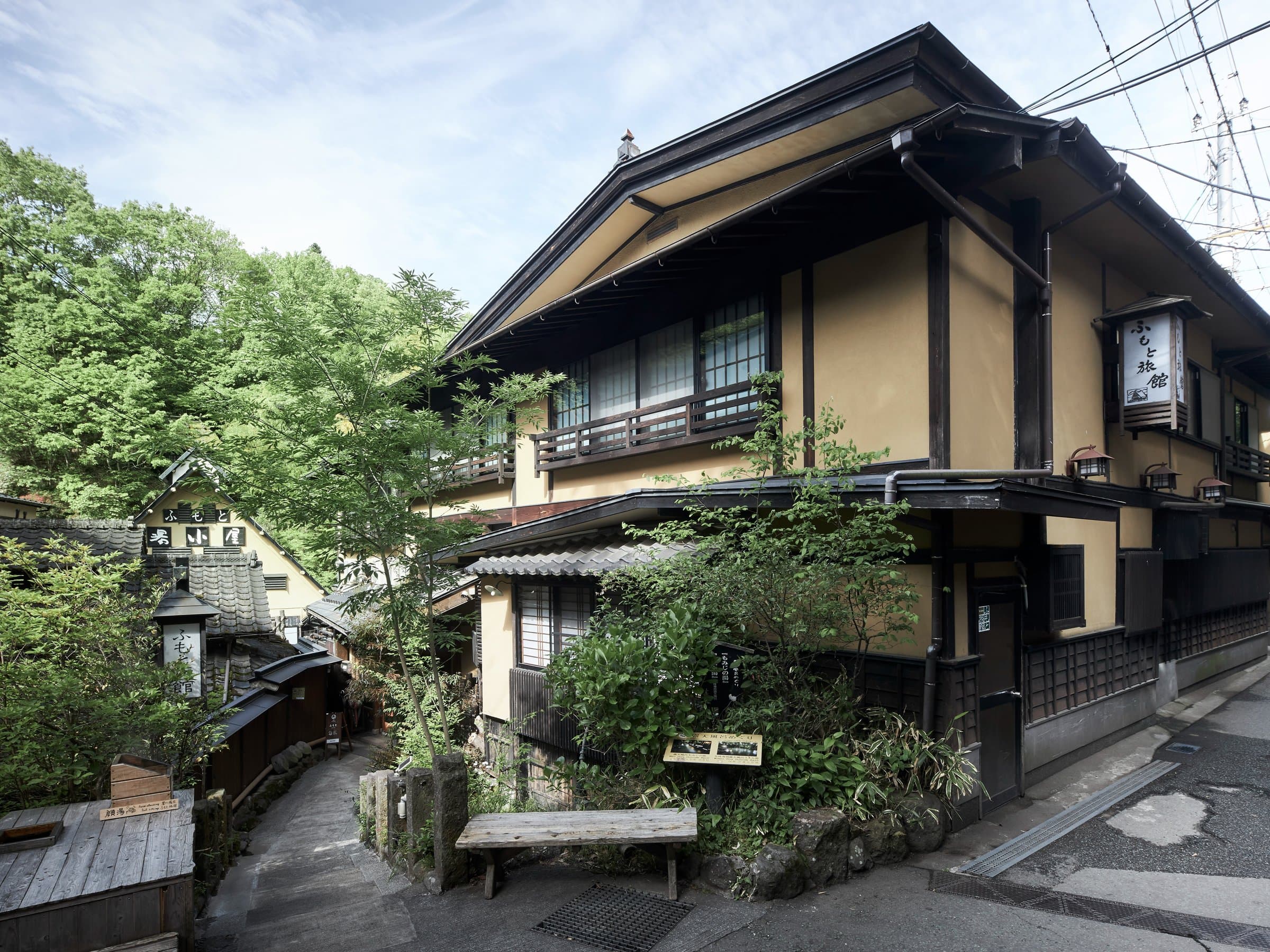
Kurokawa Onsen (黒川温泉) in Kumamoto Prefecture is a village of about 30 inns packed into a narrow forested gorge — no vending machines in sight, no chain restaurants, thatched-roof facades and clay walls right on the lane. Most of Kyushu's major hot spring towns have some degree of resort infrastructure around them. Kurokawa doesn't. It's dense and particular and worth going to alone.

The challenge: solo reservations are not popular here. Most Kurokawa inns operate on the traditional 2-person model and won't accept single bookings readily. [Fujiya](https://www.kurokawaonsen.or.jp/en/oyado/innInfo.php?intYKey=16) is one of the exceptions — specifically confirmed as a solo-accepting property by the Kurokawa Onsen region editorial [luxuryhotelkyoto.com, 2026-05-02]. It has a 4.5-tatami room — the traditional smallest unit of Japanese room measurement — that functions as a genuine single room, not a large room with a discount applied.

What makes it solo-optimal

Fujiya is in the center of the village. Walking to the other inns' baths is straightforward, which matters because Kurokawa's attraction for solo travelers is the *nyuto tegata* — a wooden bath-pass for 1,500 yen that grants entry to any three outdoor baths across the town's inns. Solo bath-hopping is the activity. You wander between properties in yukata, try a sulfur-scented cedar bath at one inn, a riverside stone bath at another. Each inn's water chemistry is slightly different; comparison is part of the experience.

Fujiya guests also have complimentary access to the larger communal baths at its affiliated sister property Oyado Noshiyu (five minutes on foot) — useful for solo travelers who want variety without additional cost.

The language barrier at Kurokawa is real. English-friendliness here rates 2–3 out of 5, lower than most properties in this guide. Google Translate voice mode handles check-in conversations reasonably well. The Kurokawa Onsen Association website ([kurokawaonsen.or.jp/en](https://www.kurokawaonsen.or.jp/en/oyado/innInfo.php?intYKey=16)) has English listings, which simplifies initial research.

Solo stats

| | | |---|---| | Solo supplement | Low (small room option avoids supplement; single pricing not separately confirmed) | | English-friendliness | 2–3/5 | | Onsen access | In-property baths + sister property access + nyuto tegata town pass (1,500 yen) | | Solo rate | ~22,000–27,500 yen/night with two meals [Kurokawa Onsen Association listing, 2026-05-02] (~$145–185 USD) | | Best booking method | Direct via kurokawaonsen.or.jp English listing, or Booking.com for initial confirmation |

---

5. Tsurunoyu Onsen, Nyuto Onsen, Akita — deep-forest milky baths for the truly off-grid solo stay

Nyuto Onsen (乳頭温泉郷) in Akita Prefecture sits deep in the mountains of Tohoku, a cluster of seven separate inn complexes spread through beech forest, each with its own spring source and water chemistry. No single English-language solo travel guide covers it thoroughly. That gap is itself useful information: this is where you go when the photogenic versions of ryokan travel feel too managed.

The water at [Tsurunoyu Onsen](https://tsurunoyu.com/en/) — the oldest and most celebrated inn in the cluster — is milky white from the sulfur content, and the main outdoor bath is an open-air stone pool surrounded by forest with no walls and no roof. The temperature drops sharply in October and plunges in January; neither deters solo regulars. Tsurunoyu was established in 1638, making it one of the oldest continuously operating ryokans in Japan [Tsurunoyu official site, 2026-05-02].

The *tegata* pass system mirrors Kurokawa's: a single pass gives access to the outdoor baths of all seven inn clusters in Nyuto, which means solo bath-hopping through a forested valley is the activity. You can spend a full day moving between the different water qualities — the iron-rich orange water at Ganiba Onsen, the milky-white at Tsurunoyu, the clear sodium spring at Kuroyu — without social obligation or schedule.

What makes it solo-optimal

The isolation is structural. Nyuto Onsen is an hour by bus from Tazawako Station (itself accessible by Shinkansen), and the inns close their gates to day visitors after a certain hour, leaving overnight guests in an undisturbed forest quiet that is genuinely difficult to replicate elsewhere. Solo travelers seeking the contemplative version of an onsen stay — rather than a picturesque one — should start here.

Caveat on solo booking: the inns here do not prominently advertise solo policies in English. Contact Tsurunoyu directly to confirm single-occupancy availability and supplement status before booking. The property receives international guests but English communication is limited; use the email template in this guide along with a DeepL-translated Japanese version.

Solo stats

| | | |---|---| | Solo supplement | Medium (not confirmed — contact directly) | | English-friendliness | 2/5 (limited; warm staff despite language gap; use translation tools) | | Onsen access | Multiple outdoor baths on-site + tegata pass for all 7 Nyuto cluster inns | | Solo rate | ~16,000–35,000 yen/night with two meals (estimated, unverified from official source — contact property directly) (~$105–230 USD est.) | | Best booking method | Direct inquiry via [tsurunoyu.com/en](https://tsurunoyu.com/en/) or Jalan with 1-person filter; book 3–4 months ahead for October–November |

---

6. Ginzanso, Ginzan Onsen, Yamagata — visually unmissable, but come prepared for the cost

Snow-covered wooden ryokan buildings lining a narrow river gorge at a Japanese onsen town in winter, lit by warm light against deep snow — the visual atmosphere of Tohoku's hot spring towns

*A Taisho-era onsen town under snow — the visual solitude that draws solo travelers to Tohoku in winter — Photo by Chloe Evans on Unsplash*

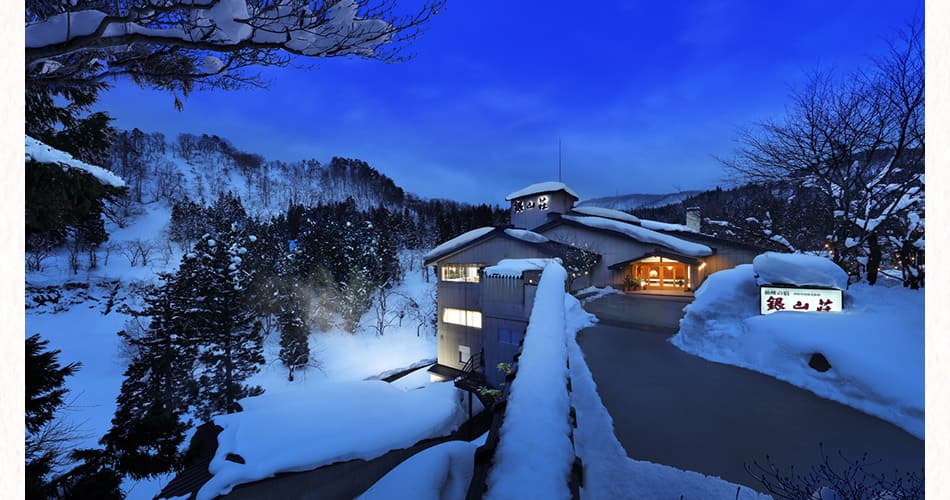
I'm including [Ginzanso](https://www.ginzanso.jp/english/) and Ginzan Onsen with a specific caveat that no other English article has been honest about: solo travel here is expensive, and you should know that before you plan around it.

Ginzan Onsen (銀山温泉) in Yamagata is one of the most visually singular places in Japan — a narrow river gorge lined with Taisho-era wooden ryokan buildings, gas lanterns, and steam rising from the water, the whole scene buried under snow from December through March. It photographs like a film set because it has been: the visual aesthetic is often cited as an influence on Hayao Miyazaki's *Spirited Away*, though the claim is disputed (Dogo Onsen and Sekizenkan both hold competing claims to the association).

The problem for solo travelers: most Ginzan Onsen properties require payment for two people regardless of occupancy. Ginzanso's standard per-guest rate runs 19,800–23,100 yen, but solo travelers should budget for the full 2-person rate — approximately 39,600–46,200 yen per night [Ginzanso official website, KAYAK aggregator, 2026-05-02]. At current exchange rates, that's roughly $260–310 USD per night for one person. Winter and autumn foliage seasons push higher.

What makes it worth considering despite the cost

The visual experience of arriving here alone — walking the lantern-lit stone path in February with fresh snow on every surface — is genuinely difficult to replicate elsewhere. The solitude amplifies the atmosphere rather than diminishing it. Ginzanso has 46 rooms with shared gender-separated baths and some deluxe rooms with private attached baths. The shuttle from JR Oishida Station runs at set times (11:10, 13:40, 15:45 — advance booking required).

Properties here book out one year in advance for snow and autumn foliage seasons. If this is your target experience, plan accordingly.

Solo stats

| | | |---|---| | Solo supplement | High — effectively paying for 2 persons | | English-friendliness | 3/5 (English website; credit cards including Visa/Mastercard accepted) | | Onsen access | Shared indoor and outdoor baths; some deluxe rooms with private bath | | Solo rate | ~39,600–46,200 yen/night (paying double-occupancy equivalent) [Ginzanso official site, 2026-05-02] (~$260–310 USD) | | Best booking method | Direct via [ginzanso.jp/english](https://www.ginzanso.jp/english/); book 6–12 months ahead for peak season |

---

7. Wakamatsuya, Hijiori Onsen, Yamagata — no supplement, full stop

If the sole question is solo pricing fairness, [Wakamatsuya](https://hijiori.jp/en/) at Hijiori Onsen (肘折温泉) in Yamagata has the clearest answer: zero single supplement, year-round, including weekends and holidays. Solo guests pay the identical per-person rate as guests in group rooms. There are no exceptions in either direction.

Hijiori Onsen has a different history from the resort hot spring towns. This is a *toji* (湯治) destination — the traditional Japanese practice of extended therapeutic stays where guests would rent a room for a week or more, cook their own simple meals from a shared kitchen, and soak daily for healing purposes. Solo arrival was historically the norm here, not the exception. The cultural memory of solo therapeutic travel is embedded in how the town operates.

The spring is alkaline and slightly milky — a different texture from the cleaner mineral waters of Kinosaki or Hakone. The town sits in a deep valley in the Mogami district, remote enough that it sees minimal international visitors. For solo travelers seeking the introspective, undistracted version of a hot spring stay, this region delivers that without effort. The quietness is structural, not seasonal.

The trade-off is access and language. Hijiori Onsen requires Shinkansen to Shinjo and then local bus or taxi. English support at the inn is limited — use Rakuten Travel or Jalan for booking, and the email template in this guide with a DeepL Japanese translation for direct inquiries.

Price is estimated at 15,000–25,000 yen per night with meals — consistent with Tohoku inn pricing at this tier, though the figure is unverified from an official source and should be confirmed directly with the property [realgaijin.substack.com citing property policy, 2026-05-02; ~$100–165 USD estimated].

Solo stats

| | | |---|---| | Solo supplement | None — explicitly zero, all seasons | | English-friendliness | 2/5 (limited; use Rakuten Travel or Google Translate for inquiry) | | Onsen access | Shared communal baths (alkaline toji spring) | | Solo rate | ~15,000–25,000 yen/night with meals (estimated, unverified — contact directly) (~$100–165 USD est.) | | Best booking method | Rakuten Travel (1-person filter) or direct inquiry via [hijiori.jp/en](https://hijiori.jp/en/) |

---

8. HOSHINOYA Tokyo — solo ryokan without leaving the city

[HOSHINOYA Tokyo](https://hoshinoresorts.com/en/hotels/hoshinoyatokyo/) requires a slight redefinition of what "ryokan" means — it's a vertical urban property in Otemachi, central Tokyo, with a lobby on the 17th floor and traditional ryokan rooms above it. But the tatami floors, in-room yukata, kaiseki service, and below-ground natural hot spring are genuine. It is a ryokan that happens to be in a skyscraper.

Hoshino Resorts launched a dedicated solo travel program called "HOSHINOYA Rewarding Solo Trip" — including a Tokyo "Mindful Solo Onsen Stay" package available from April through December 2025. The official press release states: "HOSHINOYA believes solo travelers, free from the need to consider companions or time constraints, can enjoy a truly personal and fulfilling trip." [Hoshino Resorts official press release, 2025-05-02].

Tip

**2026 verification note**: The Mindful Solo Onsen Stay package ran April–December 2025. As of the publication date of this guide (May 2026), it is not confirmed whether an equivalent 2026 solo package has been announced. Check [hoshinoresorts.com](https://hoshinoresorts.com/en/hotels/hoshinoyatokyo/) directly for current solo program availability before booking. The room-only rate (71,740 yen/night) remains available year-round as a baseline [verified hoshinoresorts.com, 2026-05-02].

What makes it solo-optimal

The solo package (87,470 yen per night [verified Hoshino Resorts press release, 2026-05-02]; ~$580 USD) includes breakfast and a morning *kenjutsu* (swordsmanship) practice session — a cultural activity that works naturally alone and would be awkward to do as a couple. The hot spring beneath the building is a natural ancient seawater mineral spring (Otemachi Onsen) — geologically unusual for central Tokyo. The rooftop open-air bath has Tokyo skyline views.

For solo travelers who are already spending time in Tokyo and want one night of full ryokan experience without a domestic flight or 2-hour train ride, this is the most logistically effortless option on this list. If this is your first ryokan stay, our [first-time ryokan guide](/blog/first-time-ryokan-guide) covers what to expect from check-in through checkout.

Solo stats

| | | |---|---| | Solo supplement | None — solo package priced as single-occupancy per-person rate | | English-friendliness | 5/5 (international luxury brand standard) | | Onsen access | Communal cave-style indoor + open-air rooftop bath (natural onsen) | | Solo rate | 87,470 yen/night (2025 solo package, meals + activity) or 71,740 yen room-only [verified hoshinoresorts.com, 2026-05-02] (~$475–580 USD) — verify 2026 package status directly | | Best booking method | Direct via [hoshinoresorts.com](https://hoshinoresorts.com/en/hotels/hoshinoyatokyo/) English website |

---

Other regions worth knowing about

The eight entries above were chosen for verified solo policies, research depth, and regional spread. Two major ryokan destinations — Kyoto and Hakone — deserve a note, even though specific solo-confirmed properties there require more direct research than I can verify to the standard applied above.

Kyoto has a high concentration of small machiya-style townhouse inns with 6–10 rooms. The compact room sizes and in-room kaiseki service make many of them structurally suitable for solo stays; the challenge is that luxury Kyoto properties often don't publish solo-rate plans publicly. Search Ikyu with the solo filter, or contact properties directly using the email template earlier in this guide. Rates in Kyoto typically run 28,000–45,000 yen per night with meals at mid-range, higher at luxury properties.

Hakone has the highest density of private open-air baths (*kashikiri rotenburo*) in Japan — a genuine solo advantage, since you can reserve a private outdoor bath without needing a companion. The two-hour Romancecar Limited Express from Shinjuku makes it the cleanest Tokyo add-on for solo ryokan beginners. Search [luxuryhotelkyoto.com/hakone](https://luxuryhotelkyoto.com/hakone/top5-rankings/hotels-ryokans-for-solo-travelers/) for a list of Hakone solo-friendly properties with current reviews [luxuryhotelkyoto.com, 2026-05-02]. Solo rates run approximately 35,000–65,000 yen with meals at mid-to-luxury properties.

Nikko / Kinugawa (Tochigi Prefecture) is worth mentioning for first-time solo ryokan travelers. Two hours from Tokyo Asakusa on the Tobu Limited Express, English-friendliness is higher here than at Tohoku properties due to proximity to the international tourist circuit. Nikko's UNESCO World Heritage shrines give the solo day full cultural weight before the ryokan evening begins.

---

Region-by-region solo friendliness score: at a glance

*Best solo-friendly ryokan in Japan by region — solo supplement, English score, onsen type, and rate floor*

| Region | Property | Solo Supplement | English Score | Onsen Type | Solo Rate Floor | Best Season | |---|---|---|---|---|---|---| | Gunma (Shima Onsen) | Kashiwaya | None | 5/5 | Shared natural spring | 22,000 yen | Year-round | | Kinosaki, Kansai | Tsuchiya | None | 4/5 | Private (2 baths) + 7 town baths | ~11,000 yen (no meals) | Year-round; crab season (Nov–Mar) | | Okuhida / Takayama | Mozumo | Unconfirmed | 3/5 | Private rotenburo per room | ~47,000 yen | Autumn foliage; winter | | Kurokawa, Kyushu | Fujiya | Low | 2–3/5 | Shared + town tegata pass | 22,000 yen | Spring; autumn | | Nyuto Onsen, Tohoku | Tsurunoyu | Medium (unconfirmed) | 2/5 | Multiple outdoor baths + tegata pass | ~16,000 yen est. | Autumn; winter | | Ginzan Onsen, Tohoku | Ginzanso | High (pay 2x) | 3/5 | Shared indoor/outdoor | ~39,600 yen | Winter (costly) | | Hijiori Onsen, Tohoku | Wakamatsuya | None (all seasons) | 2/5 | Shared toji spring | ~15,000 yen est. | Autumn; winter | | Tokyo (central) | HOSHINOYA Tokyo | None | 5/5 | Communal + rooftop | 71,740 yen | Year-round |

Highest overall solo-friendliness: Kinosaki Onsen (town infrastructure built for solo movement) and Kashiwaya/Shima Onsen (explicit zero-supplement policy, English support, dedicated solo rooms).

Best solo onsen experience: Mozumo (private rotenburo per room) and Nyuto Onsen/Tsurunoyu (tegata pass through seven forest bath clusters).

Most budget-accessible: Kinosaki Tsuchiya (accommodation-only plan, ~11,000 yen); Wakamatsuya/Hijiori Onsen (zero supplement, mid-range pricing).

Language preparation required: Kurokawa, Ginzan, Hijiori, Nyuto — bring Google Translate for conversation, DeepL for written inquiries.

---

How to book a ryokan as a solo traveler: strategy that actually works

Weekday vs. weekend: the most impactful variable

The single most effective thing a solo traveler can do is choose Sunday-through-Thursday dates. Weekend demand at ryokans comes predominantly from couples and domestic travel groups — the bookings that fill rooms to double occupancy and make solo requests less financially attractive to the property. On a Tuesday in February, a room that would otherwise sit empty is genuinely better filled by one person than not filled at all. That changes the negotiation.

Japanese national holiday periods — Golden Week (late April to early May), Obon (mid-August), Silver Week (mid-September), and New Year (late December to early January) — are functionally closed to solo rate negotiation. Expect full double-occupancy pricing or outright unavailability.

Direct booking vs. OTA: what solo travelers should know

International OTAs (Booking.com, Expedia) are useful for initial research — English reviews, cancellation policy clarity, and photos. They're unreliable for solo pricing because the single supplement often doesn't appear until the payment stage.

[Jalan](https://www.jalan.net) and Rakuten Travel are Japan's domestic market leaders and have explicit 1-person filters. A property showing "unavailable for 1 guest" on Jalan during your target dates is telling you something real and useful. Ikyu ([ikyu.com/en-us](https://www.ikyu.com/en-us/)) focuses on premium properties and has a dedicated solo filter for onsen searches.

For the best outcome — particularly at properties that show unavailable for 1 person on OTAs — direct email contact is the highest-yield approach. Japanese innkeepers respond well to polite, specific English inquiries. The template below is structured to maximize positive response rate.

[CTA: See All Ryokans on Japan Ryokan Guide — Browse All Ryokans](/ryokans)

Tip

Ask whether the property has a "single plan" (*shinguru puran*) rather than asking them to reduce the standard rate. Framing the inquiry as "do you offer a product designed for solo guests?" is culturally better-received than "can I pay less?" — and it's more likely to surface plans that aren't visible on OTAs.

---

Direct-booking email template for solo ryokan guests (copy and use)

Tip

**Note:** The email template below is written in English and is intended to be sent directly to Japanese ryokans. Most properties in this guide have some degree of English communication capability, and a polite English inquiry will be understood. For properties with limited English support (Kurokawa, Ginzan Onsen, Hijiori Onsen, Nyuto Onsen), include a Japanese translation alongside the English — instructions follow the template.

``` Subject: Enquiry — Solo Guest Accommodation [Your Dates]

Dear [Ryokan Name] Team,

My name is [Your Name]. I am planning to visit [Region/Town] and would very much like to stay at your property.

I will be traveling alone and am enquiring about availability for a solo guest for the following dates:

Check-in: [Date] Check-out: [Date] Number of guests: 1 person

I would appreciate knowing: 1. Whether you have availability for a single guest on these dates 2. Whether you offer a single-guest rate plan (shinguru puran), and if so, the per-night rate including meals 3. Whether a single supplement applies, and its amount

Regarding my stay: - Dietary notes: [Any allergies or preferences; e.g., "no shellfish" or "vegetarian"] - Onsen preference: [Private bath / Shared communal bath / Both] - I am happy to dine in-room if that is the standard format

I look forward to hearing from you and hope to experience your hospitality.

With kind regards, [Your Name] [Your nationality / country] [Email address] [Phone number, optional] ```

Tip

For properties with limited English support (Kurokawa, Ginzan Onsen, Hijiori Onsen, Nyuto Onsen), paste this email into [DeepL](https://www.deepl.com) and send both the English and Japanese versions in the same message. Response rates increase significantly. DeepL handles ryokan-specific vocabulary more accurately than Google Translate for written correspondence.

---

Eating kaiseki alone: why it is better than you think

Red and green ceramic bowls arranged on a brown wooden tray — Japanese tableware set for a single diner in the kaiseki tradition

*Japanese ceramic bowls on a lacquer tray — the quiet completeness of a meal set for one — Photo by kofookoo.de on Unsplash*

The anxiety about dining alone at a ryokan is often more vivid in the planning stage than in the actual room. What you picture is conspicuous solitude at a table for two. What happens is different.

At mid-range and above ryokans — essentially everywhere on this list — dinner is served in-room. Your kaiseki arrives in your room on a lacquer tray while you're seated at the low table in yukata. The attendant explains each dish, lights the warming burner under the clay pot, and leaves. There is no shared dining room, no adjacent couple whose conversation you're aware of, no ambient awkwardness. It's a private meal in a room that belongs entirely to you for the night.

The kaiseki itself, typically twelve to fifteen small courses over ninety minutes, is structurally suited to solitary attention. Each course represents a specific technique — simmered, raw, grilled, steamed, vinegared — applied to one seasonal ingredient. There's a conversation between the cook and the diner embedded in every plate, and you can follow it completely when you're not also managing a conversation of your own.

Bring a small notebook. Writing during kaiseki is socially acceptable at a ryokan in a way it isn't at a Western fine dining restaurant. A few sentences per course — what the dish was, what you noticed, one detail about the vessel — gives the meal a different quality of attention.

For properties that do use a shared dining hall (typically budget-tier): arrive at opening time, usually 6pm, and tell the attending staff you are solo. They will almost always seat you near a window or in a position that feels intentional rather than incidental. Ordering a small carafe of local sake is entirely normal and often opens a brief, pleasant exchange about the region's rice or spring water.

---

The solo onsen advantage: why you should not wait for a partner

The common assumption that the onsen experience requires a companion is almost the opposite of the historical reality. Shared-gender bathing (*konyoku*) is rare at modern ryokans — in practice, the gender-separated large communal bath (*otoko-yu* / *onna-yu*) is where most guests spend their time. Whether you arrive alone or with a partner makes no observable difference to anyone around you.

What solo travel does change: the timing is entirely yours. The communal bath at 5:30am on a Wednesday is empty. That window — twenty minutes before the other early-risers, no ambient sound except the water, the wooden ceiling absorbing the steam — is the meditative experience the cultural context promises. Come at 8pm on Saturday and it's busier, more social, entirely different in character. Solo travel gives you the first version.

The private bath reservation (*kashikiri buro*) should be treated as a logistical priority, not an afterthought. Book your 50-minute slot at check-in — slots fill by mid-afternoon at popular properties. A private outdoor bath in November, with the temperature around 6°C outside and the water at 42°C, is one of those experiences that makes the pricing feel beside the point.

Standard onsen etiquette is unchanged by solo arrival: wash thoroughly at the shower station before entering the bath, no towels in the water, no photographs in any bath area, quiet is the default register.

One additional step for solo travelers with tattoos: screen properties before booking, as some traditional ryokans still maintain no-tattoo policies for communal baths. Our guide to [tattoo-friendly ryokans in Japan](/blog/tattoo-friendly-ryokans) covers which properties have removed restrictions and what the private bath alternative looks like.

---

Realistic solo ryokan budget: what one night actually costs

Additional costs to budget for any solo stay, regardless of tier:

- Onsen tax (*nyuto-zei*): 150–500 yen per person per night at most hot spring destinations — paid at checkout, unavoidable - Accommodation tax: 1,000–4,000 yen per person per night in some cities and prefectures (Tokyo and Kyoto both apply this) - Alcohol: Never included — sake, local beer, and *shochu* are ordered separately and charged at checkout. A carafe of house sake typically runs 700–1,500 yen - Private bath sessions: 0 yen at Yunoshimakan and similar; up to 8,800 yen for 70 minutes at luxury Kinosaki properties like Nishimuraya Honkan [selected-ryokan.com, 2026-05-02] - Transportation to remote onsen towns: factor Shinkansen or limited express fares for Tohoku properties; Ginzan Onsen from Tokyo is approximately 8,000–12,000 yen one-way by Shinkansen + local transfer

For comparison on the couple side, our [best ryokans for couples](/blog/best-ryokans-couples) covers the same price tiers from a two-person perspective.

---

Traditional Japanese room with a circular window framing lush garden greenery — the quiet view from a solo ryokan room

*A Japanese room's circular window overlooking the garden — the stillness that ends a solo stay — Photo by Sunao Noguchi on Unsplash*

Find your solo ryokan

Every property listed on japanryokanguide.com has been verified to accept solo bookings. The best ryokan for solo travelers in Japan is not a compromise pick — it is the format in which omotenashi operates at its most precise.

[CTA: Browse Solo-Friendly Ryokans — /ryokans?filter=solo-friendly]

[CTA: Browse All Ryokans — /ryokans]

---

Frequently asked questions

Do ryokans accept solo travelers?

Many do, though not all. The ryokan industry has historically preferred two-person bookings because the per-person pricing model — which bundles accommodation with meals — means a solo guest generates half the revenue for a full room. However, a growing number of properties have introduced dedicated single rooms or solo-rate plans, particularly since 2020. The properties in this guide have all been verified to accept solo bookings.

How much extra do solo travelers pay at a ryokan (single supplement)?

It varies widely. At properties with dedicated single rooms (Kashiwaya in Shima Onsen, Tsuchiya in Kinosaki), there is no supplement — you pay the standard per-person rate. At properties with no solo-specific room, expect a supplement of 5,000–10,000 yen above the per-person rate on weekdays, or the full second-person rate on weekends. At Ginzan Onsen properties, solo travelers typically pay for two persons regardless of occupancy — effectively a 100% supplement. Weekday stays in off-peak seasons (January–March, June) significantly reduce or eliminate supplements at mid-range properties.

Can I eat kaiseki dinner alone at a ryokan?

Yes — and at most mid-range and above properties, this is structurally a non-issue because kaiseki is served in your room. You're not in a restaurant. The attendant explains the dishes, lights your tableside burner, and leaves. Solo in-room kaiseki is one of the better versions of the meal: you can pay full attention to each course without managing a conversation simultaneously.

Which ryokan regions in Japan are most solo-friendly?

Kinosaki Onsen (Hyogo) and Shima Onsen / Gunma are the most structurally solo-friendly — both have properties with zero-supplement solo rooms and strong English support. Takayama and its surrounding Okuhida area have high solo acceptance rates. Nyuto Onsen (Tohoku) is exceptional for the bath-hopping experience, though English support is limited. Kurokawa Onsen (Kyushu) has specific solo-accepting inns but requires more research. Ginzan Onsen is visually exceptional but costly for solo travelers.

How do I book a ryokan as a solo traveler without a Japanese-speaking travel agent?

Use the direct-booking email template in this guide. For platform searches, Rakuten Travel and Jalan (Japanese domestic OTAs) have 1-person filters that show accurate availability. Ikyu ([ikyu.com/en-us](https://www.ikyu.com/en-us/)) has an English version with a solo filter for onsen properties. [Japanese Guest Houses](https://www.japaneseguesthouses.com/) is an English-language concierge service that can negotiate solo bookings on your behalf for harder-to-reach rural properties.

Are ryokans solo-friendly for female travelers?

Japan ranks consistently among the safest solo travel destinations for female travelers. Ryokans specifically pose no heightened concern: rooms lock, gender-separated baths are standard, and staff are present throughout the property. The *ohitori-sama* travel movement in Japan skews significantly female — according to one Japan tour operator, 72% of their solo Japan clients in 2024 were women [Tourist Japan, 2024 — note: one operator's data, not a national statistic]. Properties with high English-friendliness (Kashiwaya, Tsuchiya Kinosaki, HOSHINOYA Tokyo) have the most international female solo traveler experience and are a low-friction starting point.

What happens if I have a tattoo and want to book a ryokan as a solo guest?

Tattoo policies vary by property and have been relaxing since 2020, particularly at properties that have added private baths. Ask directly before booking — specifically whether your tattoo would restrict access to the shared communal bath, and whether private bath options are available. The complete list of properties and their current policies is in our [tattoo-friendly ryokans guide](/blog/tattoo-friendly-ryokans).

This guide covers the best solo ryokan options in Japan across five regions. Whether your priority is zero supplement, private rotenburo, or simply a town built for solo movement, the eight properties above give you a verified starting point for planning your solo ryokan stay in Japan.

--- title: "혼자 여행하기 좋은 일본 료칸 베스트 8선 (2026): 1인 추가요금 · 예약 팁 · 지역별 비교" excerpt: "일본 전역에서 검증된 솔로 친화 료칸 8곳 — 1인 추가요금, 직접 예약용 이메일 템플릿, 그리고 지역별 솔로 친화도 점수까지." lang: "ko" ---

낮은 옻칠 테이블, 쇼지(障子) 창호, 그리고 너머의 정원이 보이는 전통 일본식 다다미 방 — 1인 투숙객을 위한 료칸 객실의 아늑한 규모

*도쿄 하마리큐(浜離宮)의 다다미 객실 — 솔로 료칸 스테이의 차분한 고독 — Photo by Yosuke Ota on Unsplash*

일본에서 혼자 여행하기 좋은 료칸을 검색하는 분들이 가장 먼저 알고 싶어 하는 것은, 과연 자신이 문턱을 넘을 수 있을지 여부입니다. 이는 충분히 합리적인 걱정입니다 — 료칸 업계는 솔로 게스트를 2인 객실 요금으로 유도하거나 정중하게 거절하는 경향으로 잘 알려져 왔습니다. 저는 두 경우 모두를 경험해 봤고, 실제로 그 차이는 분명합니다.

도착 전에는 아무도 알려주지 않는 또 다른 측면이 있습니다. 료칸이 솔로 게스트를 받아들이면, 그 경험은 2인일 때와는 전혀 다른 차원으로 펼쳐집니다. 오카미(女将, 료칸 여주인)는 한 사람의 호흡을 읽으면 됩니다. 가이세키를 서빙하는 직원은 주의를 분산시킬 필요가 없습니다. 새벽 5시 30분의 노천탕은 온전히 당신의 것입니다. 손님의 모든 필요를 미리 알아채고 응대하는 철학인 오모테나시(おもてなし)는, 두 명을 위해 설계된 객실에서는 도달하기 어려운 완성도로 다가옵니다.

이 가이드는 타협을 잘 견뎌내는 법에 관한 글이 아닙니다. 솔로는 료칸 스테이의 정당한 형식이며, 어떤 목적에서는 오히려 최적의 방식입니다. 관건은 그것을 진심으로 이해하는 료칸을 식별하고, 추가요금이라는 페널티 없이 그곳에 닿는 방법을 아는 것입니다.

아래에서 다룹니다: 일본 전역에서 검증된 솔로 친화 료칸 8곳, 1인 추가요금에 대한 실제 수치, 직접 예약용 이메일 템플릿, 그리고 지역별 비교표. 모든 료칸은 2025–2026년에도 솔로 예약을 받는 것으로 확인되었으며, 가격은 2026년 5월 기준입니다.

---

솔로가 료칸을 가장 잘 경험할 수 있는 방식인 이유

일반적인 서사는 솔로 료칸 여행을 — 동행을 구하지 못한 사람의 임시방편이자 타협으로 — 그려냅니다. 그러나 실제 경험은 이 구도를 완전히 뒤집습니다.

오모테나시는 본질적으로 개인적인 것입니다. 묻기 전에 필요한 것을 알아채는 환대를 의미하는데, 이것이 가장 잘 작동하는 단위는 한 사람입니다. 직원이 한 사람을 응대할 때, 그들은 한 가지 신호 세트만 읽으면 됩니다 — 한 가지 요리를 얼마나 빨리 비우는지, 창밖을 두 번 연속으로 바라보았는지, 사케 잔이 반쯤 비어 있는지. 서비스는 두 게스트의 서로 다른 리듬과 필요로 분산될 때 결코 도달할 수 없는 차원의 구체성을 갖게 됩니다.

온천은 명상적 수행입니다. 이는 서구의 웰니스 마케팅 문구가 아니라 본래의 문화적 의도입니다. 오후로(お風呂) 의식은 커플 여행보다 수 세기를 앞섭니다. 승려와 순례자, 홀로 길을 떠난 상인들이 일상적으로 혼자 몸을 담갔습니다. 새벽 6시, 함께 떠드는 사람도 동행을 위한 휴식 연기도 없이, 오롯이 당신만을 위해 예약된 가시키리(貸切) 전용탕은 온천 본연의 모습 그 자체입니다.

가이세키를 혼자 먹는 것은 완전한 집중을 요구합니다. 90분에 걸쳐 12–15가지의 작은 코스가 차례로 나오는데, 각 코스는 하나의 제철 식재료, 특정한 조리 기법, 그리고 그 요리를 보완하기 위해 신중히 선택된 식기 위에서 빚어집니다. 그 모든 것을 알아차리지 않을 사회적 이유가 없습니다. 누구도 당신의 재진입을 기다리지 않으니, 한 입과 다음 한 입 사이에 유자 껍질을 20초간 바라봐도 괜찮습니다.

스케줄은 온전히 당신의 것입니다. 새벽 5시 온천. 7시 30분 조식. 마지막 1분까지 미루는 체크아웃. 커플의 일정에 늘 따라붙는 협의가 완전히 사라집니다.

Tip

료칸 직원들은 솔로 외국인 게스트를 가장 좋아하는 손님으로 자주 꼽습니다 — 호기심은 상호적입니다. 료칸의 역사나 지역 온천수에 관한 질문 하나만 준비해 가도 분위기는 완전히 달라집니다. 번역 앱을 통한 짧은 대화일지라도 따뜻하게 받아들여집니다.

---

료칸이 솔로 게스트를 꺼려온 역사적 이유 (그리고 무엇이 바뀌었는가)

망설임의 본질은 태도가 아니라 산수입니다.

[일본료칸협회](https://www.ryokan.or.jp/past/english/prices/index.html)는 숙박비, 다코스 가이세키 저녁, 조식, 온천 무제한 이용을 모두 묶어 1인 1박 기준으로 요금을 부과하는 가격 모델을 공식화했습니다. 2인용으로 설계된 객실은 정가 요금을 두 번 발생시킵니다. 같은 객실에 묵는 솔로 게스트는 한 번의 요금만 발생시키지만, 료칸은 객실 전체 비용을 부담합니다 — 1인분의 식사 준비, 객실 청소, 체크인·체크아웃을 전담하는 직원, 그리고 다른 손님이 사용할 수 없게 되는 가시키리 욕탕 슬롯까지 포함해서요.

객실 12개로 박한 마진을 운영하는 시골의 작은 료칸에게 이 산수는 결코 사소하지 않습니다. 특히 커플과 단체 여행객의 수요가 가장 높은 주말에는, 영업이 성립하느냐와 손실이냐를 가르는 차이가 됩니다. 이것이 전통적인 료칸이 솔로 문의에 정중한 거절, 또는 1인 1박 정가에 5,000–10,000엔(약 45,000–90,000원)이 추가되는 1인 추가요금 — 어떤 경우엔 두 번째 사람의 요금 전액 — 으로 응답해 온 이유입니다.

2020년 이후로 진정으로 바뀐 것은 일본 사회 자체입니다. *오히토리사마(おひとりさま, "한 분 손님"에 대한 정중한 표현)* 여가의 개념 — 혼밥, 혼행, 혼자 즐기는 온천 — 이 주류로 자리 잡았고, 일본의 대표 출판사 분슌은 매년 300곳 이상의 솔로 친화적 온천을 리뷰하는 가이드북을 발행할 정도가 되었습니다(*CREA Due* 2026년 판은 300곳 이상의 료칸을 다룹니다 [realgaijin.substack.com 검증, 2026년 5월 2일]). 호시노 리조트는 2025년에 자사 3개 료칸에서 "호시노야 리워딩 솔로 트립" 프로그램을 런칭했습니다. [일본 관광청은 2017년부터 료칸이 식사비와 숙박비를 분리하도록 권고해 왔는데](https://www.statista.com/statistics/624452/japan-ryokan-hotel-numbers/), 이는 숙박만 예약하는 플랜을 가능하게 만들어 솔로 스테이의 재정 접근성을 구조적으로 높여 줍니다.

일본을 향한 솔로 여행도 함께 성장했습니다. 한 일본 전문 투어 오퍼레이터에 따르면 2024년 일본 클라이언트의 35%가 솔로 여행자였으며, 이는 전년 대비 12% 증가한 수치입니다 [Tourist Japan, 2024 — 단, 한 오퍼레이터의 클라이언트 데이터로 국가 통계는 아님]. realgaijin.substack.com의 일본 솔로 여행 평론가는 솔로 온천 붐을 다룬 2026년 에세이에서 이렇게 적었습니다. "이제 업계는 '솔로 여행자를 어떻게 수용할 것인가'를 묻지 않는다. '솔로 여행자에 어떻게 최적화할 것인가'를 묻고 있다."

Tip

11월부터 3월 사이의 주중 숙박이라면 1인 추가요금은 거의 항상 협상 가능합니다. 솔로 예약에서는 료칸에 직접 전화하거나, 이 가이드 후반부의 이메일 템플릿을 사용하는 편이 어떤 OTA보다 좋은 결과를 가져옵니다. 일본의 연휴 시즌(골든위크, 오봉, 실버위크, 신정)은 사실상 요금 협상이 닫히는 기간입니다. 이 시기는 피하거나, 2인 정가를 예산으로 잡으세요.

---

예약 전에 진정으로 솔로 친화적인 료칸을 식별하는 방법

솔로 게스트를 단지 받아주는 료칸과, 솔로를 위해 실제로 설계한 료칸의 차이는 연락하기 전에 이미 드러납니다.

료칸의 일본어 페이지에서 오히토리사마 칸게이(一人様歓迎, "한 분 손님 환영")라는 표현을 찾아보세요 — 그 존재는 분명한 신호이며, 부재 또한 의미 있는 정보입니다. 영어 페이지에서는 명시하지 않더라도 일본어 버전에서 솔로 게스트를 받는다는 점을 표시하는 료칸이 많습니다.

예약 플랫폼별로 접근 방식은 크게 다릅니다.

- [자란(じゃらん)](https://www.jalan.net)과 라쿠텐 트래블에는 명시적인 1인 점유 필터가 있어 진짜 솔로 요금 플랜을 보여줍니다. 특정 기간에 대해 1인 검색 결과가 "예약 불가"로 뜬다면, 그것은 정확하고 유용한 정보입니다. - 부킹닷컴과 익스피디아는 검색 결과에서 1인 기준과 객실당 요금을 구분하지 않습니다 — 1인 추가요금은 결제 단계까지 숨어 있는 경우가 많습니다. 초기 리서치와 영어 리뷰 확인용으로 사용하되, 최종 가격 비교에는 부적합합니다. - 이큐(一休.com, [영어판](https://www.ikyu.com/en-us/))은 온천 지역 검색에 전용 솔로 필터를 두었으며, 검증된 프리미엄 료칸에 집중합니다.

객실 크기는 유용한 대용지표입니다. 6–10조(畳, 다다미) 범위의 객실을 보유한 료칸은 진짜 솔로용 공간을 가질 가능성이 높습니다. "16조 + 정원 테라스"로 표기된 스위트는 2인용으로 설계된 것이고, 4.5조 *와시쓰(和室)*는 그렇지 않습니다.

적신호: 요금 페이지에 "최소 2인부터"가 명시되어 있거나, 1인 요금이 표시되지 않거나, 모든 객실 인벤토리가 대형 스위트로만 구성된 경우. 직접 전화할 의향이 있다면 거래가 깨지지는 않지만, 해당 료칸이 솔로 여행을 기본 상품에 포함시키지 않았다는 신호로 읽힙니다.

---

일본 전역의 솔로 친화 료칸 8곳: 검증, 평가, 지역별 정렬

아래 8곳의 료칸은 솔로 요금 가용성 확인, 영어 커뮤니케이션 능력, 2025–2026년 기준 솔로 게스트 리뷰 및 정책, 그리고 일본 주요 료칸 권역에 걸친 지리적 분포를 기준으로 선정했습니다.

각 항목은 다음 네 가지 차원에서 평가합니다. - 솔로 추가요금: 없음 / 낮음 / 중간 / 높음 - 영어 친화도: 1–5 - 온천 이용 형태: 전용 / 공용 / 양쪽 모두 - 식사 형식: 객실 식사 / 식당 / 양쪽 모두

---

1. 시마 온천 가시와야 료칸 (군마) — 솔로 친화 정책의 기준점

다다미 바닥, 오후 빛을 부드럽게 거르는 쇼지 창호, 낮은 옻칠 테이블이 놓인 넓은 전통 일본식 객실 — 중급 료칸의 전형적인 솔로 객실 규모

*쇼지 창호가 있는 전통 다다미 객실 — 가장 솔로 친화적인 료칸 1인실의 전형적 형태 — Photo by Yosuke Ota on Unsplash*

[시마 온천 가시와야 료칸](https://www.kashiwaya.org/e/)은 솔로 여행을 부수적 항목이 아닌 정체성의 일부로 받아들인 전통 료칸의 가장 분명한 사례입니다. 료칸 공식 매거진은 이렇게 표현합니다. "혼자 떠나는 여행에는 정말로 그것만의 매력이 있습니다. 누군가에게 폐를 끼친다는 부담 없이, 자신의 페이스대로 움직일 수 있지요." [kashiwaya.org/e/magazine, 2026년 5월 2일]. 이는 예약 플랫폼의 마케팅 문구가 아니라 료칸 자체의 편집자 목소리입니다.

이 료칸은 영어 웹사이트에서 솔로 국제 여행을 명시적으로 홍보합니다 — 여전히 보기 드문 수준의 의도성입니다 — 그리고 사용하지 않는 공간에 대해 비용을 지불할 일이 없도록 1인 전용 객실을 별도로 설계해 두었습니다. 군마현의 시마 온천(四万温泉)은 일본 100대 명천 중 하나로 도쿄에서 약 2.5–3시간 거리에 있습니다. 온천수는 깨끗한 맛에 적당한 유황 향이 있고, 향을 맡기 전에 피부로 먼저 느껴집니다. 가시와야는 강가에 자리해 있고, 조용한 객실에서는 강물 소리가 끊이지 않습니다.

솔로에 최적화된 점

이 료칸에는 별도의 1인 객실이 있습니다 — 일본 솔로 친화 료칸 중에서도 드문 사례입니다. 솔로 게스트는 1인 1박 정가만 지불하며 추가요금이 없습니다. 저녁은 죠슈규(上州牛) 가이세키가 객실에서 제공되어, 혼자 식사하는 부담이 시작되기도 전에 사라집니다. 공식 웹사이트에는 영어 예약 시스템과 완전한 영어 콘텐츠가 갖춰져 있어 어느 단계에서도 언어 장벽이 없습니다. 5,200엔(약 47,000원) 왕복 도쿄 셔틀버스도 운행하는데, 철도 환승을 직접 관리하기 부담스러운 솔로 여행자에게 유용합니다.

한계: 1인실에는 객실 내 전용 온천이 없습니다. 공용 천연 온천탕은 훌륭하지만, 전용 노천탕(露天風呂)을 우선시한다면 다른 곳을 보거나 2인용 HANA 또는 KAME 객실로 업그레이드해야 합니다.

솔로 통계

| | | |---|---| | 솔로 추가요금 | 없음 (1인 전용 객실, 1인 1박 정가만 부과) | | 영어 친화도 | 5/5 | | 온천 이용 | 공용 천연 온천탕 (객실 내 전용 온천은 더 큰 객실에 한함) | | 솔로 요금 | 1박 22,000–28,000엔(약 198,000–252,000원), 2식 포함 [kashiwaya.org 검증, 2026년 5월 2일] (~$145–185 USD) | | 추천 예약 방식 | 영어 공식 웹사이트 직접 예약, 온라인 예약 시스템 제공 |

---

2. 쓰치야(우쓰로이 쓰치야 별관), 기노사키 온천 — 1인을 위해 만들어진 객실

[쓰치야](https://visitkinosaki.com/stay/tsuchiya/)는 기노사키 온천에서 대부분의 료칸이 시도하지 않은 일을 했습니다. 최대 수용 인원이 1명인 KIRI 객실을 만든 것입니다. 할인된 가격의 2인용 객실이 아니라, 처음부터 1인용으로 설계된 객실입니다.

효고현의 기노사키 온천(城崎温泉)은 어디에 묵든 일본에서 가장 구조적으로 솔로 친화적인 목적지 중 하나입니다. 마을의 *소토유(外湯, 외부 목욕)* 시스템 덕분에, 료칸의 유카타가 곧 버드나무가 늘어선 강을 따라 펼쳐진 7개 공중 온천탕의 출입증이 됩니다. 유카타와 게타를 신고 도보로 탕과 탕 사이를 이동하는 솔로 동선이 이 마을의 본질입니다. 문학적 배경도 결을 더합니다 — 작가 시가 나오야는 1913년 열차 사고 후 요양차 이곳에 와 몇 달을 머물며 「기노사키에서(城の崎にて)」를 썼는데, 이는 일본 근대 산문의 결정적인 작품 중 하나입니다. 혼자 오는 것이, 역사적으로도 이 마을의 정석입니다.

솔로에 최적화된 점

KIRI 객실 솔로 플랜(플랜 No. 163)은 숙박만 포함합니다 — 쓰치야는 이 플랜에서 식사를 제공하지 않으므로, 식사는 기노사키의 식당이나 길거리 음식점에서 해결합니다. 많은 솔로 여행자에게는 오히려 이쪽이 더 좋은 선택입니다. 마을에는 훌륭한 *다지마규(但馬牛)*, 제철 게, 메인 거리의 신선한 꼬치구이가 있습니다. 료칸 내 전용 온천 2곳은 무료이며 예약이 필요 없습니다(오전 7시–10시, 오후 3시–10시 30분). 비짓 기노사키 공식 사이트 [visitkinosaki.com, 2026년 5월 2일] 안내대로 마을의 7개 공중 온천 전체를 이용할 수 있는 유메파(ゆめぱ) 패스가 포함됩니다.

숙박만 포함하는 구조 덕분에 요금은 이 가이드 중 가장 낮은 수준에 속합니다.

솔로 통계

| | | |---|---| | 솔로 추가요금 | 없음 (1인 전용 객실 설계) | | 영어 친화도 | 4/5 (Visit Kinosaki 관광 사이트의 영어 지원이 강력) | | 온천 이용 | 료칸 내 전용탕 2곳 + 마을 공중탕 7곳 (유메파 패스 포함) | | 솔로 요금 | 1박 약 11,000–20,000엔(약 99,000–180,000원), 숙박만 [Momondo/KAYAK 집계, 2026년 5월 2일] (~$75–135 USD) | | 추천 예약 방식 | [visitkinosaki.com](https://visitkinosaki.com/stay/tsuchiya/plan/?mode=plan_detail&PlanNo=163) 직접 예약 또는 자란의 1인 필터 |

---

3. 모즈모, 오쿠히다 온천향 (다카야마 권역) — 전용 노천탕, 완전한 고독

해질 무렵 교토의 좁은 전통 거리를 혼자 걷는 사람, 양옆에 늘어선 목조 상가 건물 — 일본 옛 마을에서의 솔로 저녁 산책의 자유로움

*해질녘 전통 일본 거리 — 유카타와 게타 차림 솔로 여행의 조용한 자율성 — Photo by Chloé Lefleur on Unsplash*

[모즈모](https://www.mozumo.com/lang/eng/)는 다카야마와 가미코치 사이의 계곡, 오쿠히다의 히라유 온천에 자리 잡고 있으며, 다카야마 권역에서 가장 솔로 친화적인 료칸으로 꼽혀 왔습니다 [luxuryhotelkyoto.com, 2026년 5월 2일]. 성인 전용(만 20세 이상), 객실 수가 적고, 대부분의 료칸이 말로만 약속하는 "조용한 시간"을 실제 구조로 구현한 료칸입니다.

핵심은 온천입니다. 모즈모의 모든 객실에는 200미터 떨어진 원천에서 직접 끌어오는 전용 노천탕(露天風呂)이 딸려 있습니다 — 순환도 없고 재가열도 없는 *가케나가시(掛け流し)* 자연 용출수입니다. 수질은 탄산수소염천으로 피부에 부드럽게 닿습니다. 저녁이 되면 욕탕을 둘러싼 숲은 완벽한 어둠과 완벽한 정적에 잠깁니다.

오쿠히다라는 입지 덕분에 다카야마 베이스캠프 방식이 손쉬워집니다. 가미코치(30분), 노리쿠라 스카이라인(60분), 신호타카 로프웨이(30분) 당일 여행이 모두 자동차 없이 가능합니다. 다카야마의 산마치스지(三町筋) 보존지구 — 사케 양조장, 옻칠 공예점, 아침 시장 — 는 히라유 터미널에서 버스로 35분 거리입니다. 터미널(8분 거리)에서의 무료 픽업 서비스는 혼자 도착하는 데 따르는 동선의 마찰을 없애 줍니다.

솔로에 최적화된 점

솔로 여행자에게는 객실 내 전용 노천탕이 결정적인 요소입니다. 욕탕 시간을 협의할 필요도, 50분 슬롯을 예약할 필요도 없습니다. 객실 문을 열면 바로 노천탕이 있고, 어떤 시간이든 이용 가능합니다. 일본에서 가장 구조적으로 완성도 높은 솔로 온천 경험입니다.

중요 사항: 모즈모 공식 사이트는 각 객실이 최대 2인 수용임을 확인해 주지만, 솔로 추가요금 정책은 명시되어 있지 않습니다. 예약 전에 료칸에 직접 연락해 솔로 가격을 확인하세요. 적어도 성인 전용 정책 덕분에 가족 단위와 분위기를 공유하지는 않게 됩니다.

솔로 통계

| | | |---|---| | 솔로 추가요금 | 미확인 — 직접 문의 필요 | | 영어 친화도 | 3/5 (영어 웹사이트와 예약 가능, 전화 응대는 제한적) | | 온천 이용 | 모든 객실에 전용 노천탕(露天風呂) | | 솔로 요금 | 1박 약 47,000–52,000엔(약 423,000–468,000원), 2식 포함 [KAYAK 최근 예약 데이터, 2026년 5월 2일] (~$310–345 USD) | | 추천 예약 방식 | [mozumo.com](https://www.mozumo.com/lang/eng/) 영어 문의 폼으로 직접 이메일, 솔로 정책 먼저 확인 |

---

4. 후지야, 구로카와 온천, 규슈 — 알맞은 마을의, 알맞은 크기의 객실

고요한 물이 부드러운 빛을 반사하는 전통 목조 욕실의 일본 기노사키 전용 실내·외 일체형 온천탕

*효고현 기노사키의 전용 온천탕 — 일본 온천 객실의 잔잔한 수면과 목조 건축 — Photo by Roméo A. on Unsplash*

구마모토현의 구로카와 온천(黒川温泉)은 좁은 산림 협곡에 30여 곳의 료칸이 빽빽이 들어앉은 마을입니다 — 자판기도, 체인 식당도 보이지 않고, 초가지붕과 흙벽이 골목길에 그대로 이어져 있습니다. 규슈의 주요 온천 마을 대부분에는 어느 정도 리조트 인프라가 따라붙지만 구로카와는 그렇지 않습니다. 밀도 있고 개성 있으며, 혼자 가볼 만한 가치가 있는 곳입니다.

문제는, 솔로 예약이 이곳에서는 환영받지 못한다는 점입니다. 구로카와의 대부분 료칸은 전통적인 2인 모델로 운영되며 1인 예약을 잘 받지 않습니다. [후지야](https://www.kurokawaonsen.or.jp/en/oyado/innInfo.php?intYKey=16)는 그 예외 중 하나로, 구로카와 온천 권역 편집 자료에서 솔로 게스트를 받는 료칸으로 명확히 확인된 곳입니다 [luxuryhotelkyoto.com, 2026년 5월 2일]. 4.5조(일본 객실 측정의 전통적 최소 단위)의 객실이 있어, 큰 객실에 할인을 적용한 것이 아니라 진짜 1인용 객실로 기능합니다.

솔로에 최적화된 점

후지야는 마을 중심부에 있습니다. 다른 료칸의 욕탕까지 걸어가기 쉽다는 점이 중요한데, 구로카와의 솔로 매력은 *뉴토 데가타(入湯手形, 목제 입욕 패스)* — 1,500엔(약 13,500원)에 마을 료칸들의 노천탕 3곳을 이용할 수 있는 — 에 있기 때문입니다. 솔로 탕 호핑이 곧 활동이 됩니다. 유카타 차림으로 료칸과 료칸 사이를 거닐며, 한 곳에서는 유황 향의 삼나무탕을, 다른 곳에서는 강가의 돌탕을 경험합니다. 료칸마다 수질이 미묘하게 다르므로, 비교가 경험의 일부입니다.

후지야 게스트는 자매 료칸인 오야도 노시유(도보 5분 거리)의 더 큰 공용탕도 무료로 이용할 수 있어, 추가 비용 없이 다양성을 확보하려는 솔로 여행자에게 유용합니다.

구로카와의 언어 장벽은 실재합니다. 영어 친화도는 5점 만점에 2–3점으로, 이 가이드의 다른 료칸들보다 낮습니다. 구글 번역 음성 모드는 체크인 대화를 그럭저럭 처리해 줍니다. 구로카와 온천 관광협회 웹사이트([kurokawaonsen.or.jp/en](https://www.kurokawaonsen.or.jp/en/oyado/innInfo.php?intYKey=16))에는 영어 페이지가 있어 초기 리서치를 단순화해 줍니다.

솔로 통계

| | | |---|---| | 솔로 추가요금 | 낮음 (작은 객실 옵션으로 추가요금을 피함, 1인 가격은 별도 미확인) | | 영어 친화도 | 2–3/5 | | 온천 이용 | 료칸 내 욕탕 + 자매 료칸 이용 + 마을 뉴토 데가타 패스 (1,500엔, 약 13,500원) | | 솔로 요금 | 1박 약 22,000–27,500엔(약 198,000–248,000원), 2식 포함 [구로카와 온천 관광협회 등재, 2026년 5월 2일] (~$145–185 USD) | | 추천 예약 방식 | kurokawaonsen.or.jp 영어 페이지로 직접 예약 또는 부킹닷컴으로 1차 확인 |

---

5. 쓰루노유 온천, 뉴토 온천, 아키타 — 진정한 오프그리드 솔로 스테이를 위한 깊은 숲속의 유백색 욕탕

아키타현의 뉴토 온천(乳頭温泉郷)은 도호쿠 산맥 깊숙이 자리 잡은, 너도밤나무 숲에 흩어진 7개의 독립된 료칸 단지로 이루어진 클러스터로, 각각 고유의 수원과 수질을 가지고 있습니다. 이곳을 충실히 다룬 영어 솔로 여행 가이드는 사실상 없습니다. 그 공백 자체가 유용한 정보입니다 — 이곳은 사진에 잘 나오는 료칸 여행이 너무 잘 짜여 있다고 느낄 때 가는 곳입니다.

가장 오래되고 가장 사랑받는 료칸인 [쓰루노유 온천](https://tsurunoyu.com/en/)의 물은 유황 함유량 덕분에 유백색을 띠며, 메인 노천탕은 벽도 지붕도 없는 숲속 한가운데의 돌 욕조입니다. 10월에 기온이 급격히 떨어지고 1월에는 영하로 곤두박질치지만, 어느 쪽도 단골 솔로 손님들을 가로막지는 못합니다. 쓰루노유는 1638년에 개업해 일본에서 가장 오래 연속 영업 중인 료칸 중 하나입니다 [쓰루노유 공식 사이트, 2026년 5월 2일].

*데가타(手形)* 패스 시스템은 구로카와의 그것을 닮았습니다. 패스 한 장으로 뉴토의 7개 료칸 단지의 노천탕을 모두 이용할 수 있어, 숲 계곡을 따라 솔로로 탕 호핑을 하는 것이 곧 일과가 됩니다. 가니바 온천의 철분 풍부한 주황빛 물, 쓰루노유의 유백색, 구로유의 투명한 나트륨천 — 사회적 의무도 시간표도 없이 하루 종일 서로 다른 수질 사이를 옮겨 다닐 수 있습니다.

솔로에 최적화된 점

고립은 구조적입니다. 뉴토 온천은 다자와코역(신칸센으로 접근 가능)에서 버스로 한 시간 거리이며, 료칸들은 일정 시각 이후 당일 손님에게 문을 닫습니다. 이로 인해 1박 손님만이 다른 어디서도 재현하기 어려운, 흐트러지지 않은 숲속의 정적에 머물게 됩니다. 그림 같은 풍경보다 명상적 온천 스테이를 추구하는 솔로 여행자라면 이곳에서 시작하는 것이 좋습니다.

솔로 예약 시 유의사항: 이곳 료칸들은 영어로 솔로 정책을 적극적으로 광고하지 않습니다. 예약 전에 쓰루노유에 직접 연락해 1인 가용성과 추가요금 여부를 확인하세요. 외국인 손님을 받기는 하지만 영어 소통은 제한적이므로, 이 가이드의 이메일 템플릿과 함께 DeepL로 번역한 일본어 버전을 함께 보내세요.

솔로 통계

| | | |---|---| | 솔로 추가요금 | 중간 (미확인 — 직접 문의 필요) | | 영어 친화도 | 2/5 (제한적이지만 직원은 따뜻함, 번역 도구 활용 권장) | | 온천 이용 | 료칸 내 다수의 노천탕 + 뉴토 7개 료칸 데가타 패스 | | 솔로 요금 | 1박 약 16,000–35,000엔(약 144,000–315,000원), 2식 포함 (추정치, 공식 출처에서 미확인 — 직접 문의 필요) (~$105–230 USD 추정) | | 추천 예약 방식 | [tsurunoyu.com/en](https://tsurunoyu.com/en/) 직접 문의 또는 자란의 1인 필터, 10–11월은 3–4개월 전 예약 |

---

6. 긴잔소, 긴잔 온천, 야마가타 — 시각적으로는 놓치기 아쉬우나 비용을 각오해야

겨울 일본 온천 마을의 좁은 강 협곡을 따라 늘어선 눈 덮인 목조 료칸 건물들, 깊은 눈 위로 따뜻한 빛이 비치는 — 도호쿠 온천 마을의 시각적 분위기

*눈 속에 묻힌 다이쇼(大正) 시대 온천 마을 — 도호쿠 솔로 여행자를 겨울로 이끄는 시각적 고독 — Photo by Chloe Evans on Unsplash*

[긴잔소](https://www.ginzanso.jp/english/)와 긴잔 온천을 다른 어떤 영어 기사도 솔직히 다루지 않은 단서와 함께 포함합니다: 이곳에서의 솔로 여행은 비싸며, 일정을 짜기 전에 그 사실을 알아야 합니다.

야마가타의 긴잔 온천(銀山温泉)은 일본에서 가장 시각적으로 독보적인 장소 중 하나입니다 — 좁은 강 협곡을 따라 다이쇼 시대 목조 료칸이 늘어서 있고, 가스등이 켜지며, 물에서 김이 피어오르고, 12월부터 3월까지 모든 풍경이 눈 아래 묻힙니다. 영화 세트처럼 사진이 찍히는데, 실제로 그렇게 쓰여 왔습니다 — 이곳의 시각적 미학은 미야자키 하야오의 *센과 치히로의 행방불명*에 영향을 주었다는 이야기가 자주 인용되지만, 이는 논쟁의 대상입니다(도고 온천과 세키젠칸 또한 같은 연관성을 주장합니다).

솔로 여행자에게 문제는, 긴잔 온천의 대부분 료칸이 점유 인원과 무관하게 2인 요금을 요구한다는 점입니다. 긴잔소의 1인 표준 요금은 19,800–23,100엔이지만, 솔로 여행자는 2인 정가 — 1박 약 39,600–46,200엔(약 356,000–416,000원) — 를 예산으로 잡아야 합니다 [긴잔소 공식 웹사이트, KAYAK 집계, 2026년 5월 2일]. 현재 환율로 1인 1박 약 $260–310 USD 수준이며, 겨울과 가을 단풍 시즌에는 더 높아집니다.

비용에도 불구하고 고려할 만한 이유

이곳에 혼자 도착하는 시각적 경험 — 2월에 모든 표면에 갓 내린 눈을 두고 가스등이 비추는 돌길을 걷는 — 은 다른 어디서도 재현하기 어렵습니다. 고독은 분위기를 흐리는 것이 아니라 오히려 증폭시킵니다. 긴잔소는 객실 46개를 보유하며 남녀 분리 공용탕, 그리고 일부 디럭스 객실에는 전용 욕탕이 딸려 있습니다. JR 오이시다역에서의 셔틀은 정해진 시간에 운행됩니다(11:10, 13:40, 15:45 — 사전 예약 필수).

이곳 료칸들은 눈과 가을 단풍 시즌에는 1년 전부터 마감됩니다. 이 경험이 목적이라면 일정을 그렇게 짜야 합니다.

솔로 통계

| | | |---|---| | 솔로 추가요금 | 높음 — 사실상 2인분 지불 | | 영어 친화도 | 3/5 (영어 웹사이트, Visa/Mastercard 등 신용카드 사용 가능) | | 온천 이용 | 공용 실내·노천탕, 일부 디럭스 객실에 전용탕 | | 솔로 요금 | 1박 약 39,600–46,200엔(약 356,000–416,000원, 2인 정가 상당) [긴잔소 공식 사이트, 2026년 5월 2일] (~$260–310 USD) | | 추천 예약 방식 | [ginzanso.jp/english](https://www.ginzanso.jp/english/) 직접 예약, 성수기는 6–12개월 전 예약 |

---

7. 와카마쓰야, 히지오리 온천, 야마가타 — 1인 추가요금 제로, 그것으로 끝

솔로 가격의 공정성만이 유일한 질문이라면, 야마가타 히지오리 온천(肘折温泉)의 [와카마쓰야](https://hijiori.jp/en/)가 가장 명확한 답을 가지고 있습니다. 1년 내내, 주말과 공휴일 포함, 1인 추가요금 제로. 솔로 게스트는 단체 객실 게스트와 동일한 1인 1박 정가를 지불합니다. 어느 방향으로도 예외가 없습니다.

히지오리 온천은 리조트형 온천 마을과는 다른 역사를 가지고 있습니다. 이곳은 *도지(湯治)* 목적지 — 손님이 일주일 이상 객실을 빌려 공용 주방에서 직접 간단한 식사를 만들고 매일 치유 목적으로 입욕하는, 일본의 전통적인 장기 요양 관행 — 입니다. 여기서는 솔로로 도착하는 것이 역사적으로 예외가 아닌 규칙이었습니다. 솔로 치료 여행의 문화적 기억이 마을 운영 방식에 녹아 있습니다.

수질은 알칼리성에 약간 유백색을 띠며 — 기노사키나 하코네의 더 깨끗한 미네랄수와는 다른 질감입니다. 마을은 모가미 지역 깊숙한 골짜기에 자리해 외국인 방문이 매우 적은, 외진 위치에 있습니다. 내성적이고 산만함 없는 온천 스테이를 추구하는 솔로 여행자에게는 이 권역이 별다른 노력 없이도 그 경험을 제공해 줍니다. 정적은 계절적인 것이 아니라 구조적인 것입니다.

대가는 접근성과 언어입니다. 히지오리 온천에 가려면 신칸센으로 신조까지, 그리고 시내버스나 택시를 타야 합니다. 료칸의 영어 지원은 제한적이므로 라쿠텐 트래블이나 자란을 이용하고, 직접 문의 시에는 이 가이드의 이메일 템플릿과 DeepL 일본어 번역을 함께 사용하세요.

가격은 식사 포함 1박 15,000–25,000엔으로 추정됩니다 — 같은 등급의 도호쿠 료칸 가격과 일관성이 있지만, 공식 출처에서 미확인된 수치이므로 료칸에 직접 확인해야 합니다 [realgaijin.substack.com이 인용한 료칸 정책, 2026년 5월 2일; 약 $100–165 USD 추정].

솔로 통계

| | | |---|---| | 솔로 추가요금 | 없음 — 사계절 명시적 제로 | | 영어 친화도 | 2/5 (제한적, 라쿠텐 트래블 또는 구글 번역 활용) | | 온천 이용 | 공용 도지 알칼리천 | | 솔로 요금 | 1박 약 15,000–25,000엔(약 135,000–225,000원), 식사 포함 (추정치, 미확인 — 직접 문의 필요) (~$100–165 USD 추정) | | 추천 예약 방식 | 라쿠텐 트래블(1인 필터) 또는 [hijiori.jp/en](https://hijiori.jp/en/) 직접 문의 |

---

8. 호시노야 도쿄 — 도시를 떠나지 않는 솔로 료칸

[호시노야 도쿄](https://hoshinoresorts.com/en/hotels/hoshinoyatokyo/)는 "료칸"의 정의를 살짝 재조정해야 합니다 — 도쿄 도심 오테마치에 위치한 수직형 도시 료칸으로, 17층에 로비가 있고 그 위로 전통 료칸 객실이 이어집니다. 하지만 다다미 바닥, 객실 유카타, 가이세키 서비스, 지하의 천연 온천은 모두 진짜입니다. 마침 마천루에 자리한 료칸이라고 보면 됩니다.

호시노 리조트는 "호시노야 리워딩 솔로 트립"이라는 전용 솔로 여행 프로그램을 런칭했으며, 도쿄 점에서는 2025년 4월부터 12월까지 "마인드풀 솔로 온천 스테이" 패키지를 제공했습니다. 공식 보도자료는 이렇게 밝힙니다. "호시노야는 동행이나 시간 제약을 고려할 필요가 없는 솔로 여행자야말로 진정으로 개인적이고 충만한 여행을 즐길 수 있다고 믿습니다." [호시노 리조트 공식 보도자료, 2025년 5월 2일].

Tip

**2026 검증 노트**: 마인드풀 솔로 온천 스테이 패키지는 2025년 4월–12월에 운영되었습니다. 본 가이드 발행일(2026년 5월) 기준으로 2026년에 동일한 솔로 패키지가 발표되었는지는 확인되지 않았습니다. 예약 전 [hoshinoresorts.com](https://hoshinoresorts.com/en/hotels/hoshinoyatokyo/)에서 현행 솔로 프로그램 가용성을 직접 확인하세요. 객실만 이용하는 요금(1박 71,740엔, 약 645,000원)은 연중 베이스라인으로 유지되고 있습니다 [hoshinoresorts.com 검증, 2026년 5월 2일].

솔로에 최적화된 점

솔로 패키지(1박 87,470엔, 약 787,000원 [호시노 리조트 보도자료 검증, 2026년 5월 2일]; ~$580 USD)에는 조식과 아침 *겐주쓰(剣術, 검술)* 수행 세션이 포함되는데, 이는 혼자일 때 자연스럽고 커플로는 어색해질 수 있는 문화 활동입니다. 건물 지하의 온천은 천연 고대 해수 미네랄 온천(오테마치 온센)으로, 도쿄 도심에서는 지질학적으로 보기 드뭅니다. 옥상의 노천탕에서는 도쿄 스카이라인이 펼쳐집니다.

이미 도쿄에 머물고 있고 국내선 항공이나 두 시간짜리 열차 없이 하룻밤 본격 료칸 경험을 원하는 솔로 여행자에게는, 이 리스트에서 동선상 가장 부담 없는 선택지입니다. 첫 료칸이라면 [첫 료칸 가이드](/blog/first-time-ryokan-guide)에서 체크인부터 체크아웃까지 무엇을 기대해야 할지 확인하세요.

솔로 통계

| | | |---|---| | 솔로 추가요금 | 없음 — 솔로 패키지가 1인 점유 기준 1인 1박 정가로 책정됨 | | 영어 친화도 | 5/5 (글로벌 럭셔리 브랜드 표준) | | 온천 이용 | 동굴식 공용 실내탕 + 옥상 노천탕 (천연 온천) | | 솔로 요금 | 1박 87,470엔(약 787,000원, 2025 솔로 패키지, 식사+활동 포함) 또는 객실만 71,740엔(약 645,000원) [hoshinoresorts.com 검증, 2026년 5월 2일] (~$475–580 USD) — 2026 패키지 운영 여부는 직접 확인 필요 | | 추천 예약 방식 | [hoshinoresorts.com](https://hoshinoresorts.com/en/hotels/hoshinoyatokyo/) 영어 웹사이트 직접 예약 |

---

알아두면 좋을 다른 권역들

위의 8개 항목은 검증된 솔로 정책, 리서치 깊이, 권역 분포를 기준으로 선정했습니다. 두 곳의 주요 료칸 목적지 — 교토와 하코네 — 도 짚고 넘어갈 가치가 있습니다. 다만, 이곳에서 솔로가 확인된 구체적 료칸은 위 기준과 동일한 수준으로 검증할 만큼 직접적인 리서치가 더 필요합니다.

교토에는 객실 6–10개의 작은 마치야(町家)식 료칸이 밀집해 있습니다. 작은 객실 크기와 객실 내 가이세키 서비스 덕분에 구조적으로 솔로 스테이에 적합한 곳이 많습니다. 다만, 교토의 럭셔리 료칸은 솔로 요금 플랜을 공개하지 않는 경우가 많습니다. 이큐의 솔로 필터로 검색하거나, 이 가이드 앞부분의 이메일 템플릿으로 직접 연락하세요. 교토의 가격은 보통 식사 포함 1박 28,000–45,000엔(약 252,000–405,000원) 중급, 럭셔리는 그 이상입니다.

하코네는 일본에서 전용 노천탕(*가시키리 로텐부로*) 밀도가 가장 높은 권역입니다 — 동행 없이도 전용 노천탕을 예약할 수 있다는 점은 솔로의 진정한 강점입니다. 신주쿠에서 두 시간짜리 로망스카 특급으로 연결되어 솔로 료칸 입문자에게 가장 깔끔한 도쿄 인접 옵션입니다. 현행 리뷰가 반영된 하코네 솔로 친화 료칸 리스트는 [luxuryhotelkyoto.com/hakone](https://luxuryhotelkyoto.com/hakone/top5-rankings/hotels-ryokans-for-solo-travelers/)에서 확인하세요 [luxuryhotelkyoto.com, 2026년 5월 2일]. 솔로 요금은 중·럭셔리 료칸의 식사 포함 약 35,000–65,000엔(약 315,000–585,000원) 수준입니다.

닛코 / 기누가와(도치기현)도 첫 솔로 료칸 여행자에게 언급할 가치가 있습니다. 도쿄 아사쿠사에서 도부 특급으로 두 시간 거리이며, 국제 관광 동선에 가까워 영어 친화도가 도호쿠 료칸들보다 높습니다. 닛코의 유네스코 세계유산 사찰들은 료칸 저녁 전에 솔로 하루를 문화적으로 묵직하게 채워 줍니다.

---

지역별 솔로 친화도 점수: 한눈에 보기

*권역별 일본 솔로 친화 료칸 — 1인 추가요금, 영어 점수, 온천 형태, 요금 하한*

| 권역 | 료칸 | 솔로 추가요금 | 영어 점수 | 온천 형태 | 솔로 요금 하한 | 추천 시즌 | |---|---|---|---|---|---|---| | 군마(시마 온천) | 가시와야 | 없음 | 5/5 | 공용 천연 온천 | 22,000엔 | 연중 | | 기노사키, 간사이 | 쓰치야 | 없음 | 4/5 | 전용탕 2 + 마을 공중탕 7 | 약 11,000엔 (식사 미포함) | 연중, 게 시즌(11–3월) | | 오쿠히다 / 다카야마 | 모즈모 | 미확인 | 3/5 | 객실별 전용 노천탕 | 약 47,000엔 | 가을 단풍, 겨울 | | 구로카와, 규슈 | 후지야 | 낮음 | 2–3/5 | 공용탕 + 마을 데가타 패스 | 22,000엔 | 봄, 가을 | | 뉴토 온천, 도호쿠 | 쓰루노유 | 중간(미확인) | 2/5 | 다수 노천탕 + 데가타 패스 | 약 16,000엔 추정 | 가을, 겨울 | | 긴잔 온천, 도호쿠 | 긴잔소 | 높음(2배 지불) | 3/5 | 공용 실내·노천탕 | 약 39,600엔 | 겨울(고비용) | | 히지오리 온천, 도호쿠 | 와카마쓰야 | 없음(사계절) | 2/5 | 공용 도지천 | 약 15,000엔 추정 | 가을, 겨울 | | 도쿄(도심) | 호시노야 도쿄 | 없음 | 5/5 | 공용 + 옥상탕 | 71,740엔 | 연중 |

종합 솔로 친화도 최고: 기노사키 온천(솔로 동선에 맞춰 설계된 마을 인프라)과 가시와야 / 시마 온천(명시적 추가요금 제로 정책, 영어 지원, 솔로 전용 객실).

최고의 솔로 온천 경험: 모즈모(객실별 전용 노천탕)와 뉴토 온천 / 쓰루노유(7개 숲속 료칸 클러스터를 잇는 데가타 패스).

가장 가성비 좋은 선택: 기노사키 쓰치야(숙박만 플랜, 약 11,000엔), 와카마쓰야 / 히지오리 온천(추가요금 제로, 중급 가격).

언어 준비가 필요한 곳: 구로카와, 긴잔, 히지오리, 뉴토 — 대화는 구글 번역, 서면 문의는 DeepL을 챙겨 가세요.

---

솔로 여행자가 료칸을 예약하는 법: 실제로 통하는 전략

평일 vs 주말: 가장 영향력 큰 변수

솔로 여행자가 할 수 있는 가장 효과적인 한 가지는 일요일–목요일 일정을 선택하는 것입니다. 료칸의 주말 수요는 주로 커플과 국내 단체 여행객에서 옵니다 — 객실을 2인 점유로 채워 주는 예약이라, 료칸 입장에서 솔로 요청은 재정적으로 덜 매력적이게 됩니다. 2월의 화요일에는, 그렇지 않았다면 비어 있을 객실을 한 사람이라도 채워 주는 편이 비워 두는 것보다 낫습니다. 협상의 판이 그렇게 바뀝니다.

일본의 국가 휴일 — 골든위크(4월 말~5월 초), 오봉(8월 중순), 실버위크(9월 중순), 신정(12월 말~1월 초) — 은 솔로 요금 협상이 사실상 닫히는 기간입니다. 2인 정가 또는 아예 만실을 각오해야 합니다.

직접 예약 vs OTA: 솔로 여행자가 알아야 할 것

국제 OTA(부킹닷컴, 익스피디아)는 초기 리서치 — 영어 리뷰, 취소 정책 명료성, 사진 — 에 유용합니다. 솔로 가격 측면에서는 신뢰하기 어려운데, 1인 추가요금이 결제 단계까지 표시되지 않는 경우가 잦기 때문입니다.

[자란](https://www.jalan.net)과 라쿠텐 트래블은 일본 국내 시장의 양대 OTA로 명시적인 1인 필터를 제공합니다. 자란에서 목표 일자에 "1인 예약 불가"가 뜨는 료칸은, 진짜로 그 정보가 정확하다는 신호입니다. 이큐([ikyu.com/en-us](https://www.ikyu.com/en-us/))는 프리미엄 료칸에 집중하며, 온천 검색에서 전용 솔로 필터를 제공합니다.

가장 좋은 결과 — 특히 OTA에서 1인 예약이 불가로 뜨는 료칸 — 를 얻으려면 직접 이메일 컨택이 가장 수율 높은 접근입니다. 일본의 료칸 주인들은 정중하고 구체적인 영어 문의에 잘 응답합니다. 아래 템플릿은 긍정적 응답률을 극대화하도록 구성되어 있습니다.

[CTA: Japan Ryokan Guide에서 모든 료칸 보기 — 전체 료칸 둘러보기](/ryokans)

Tip

표준 요금을 깎아 달라고 요청하기보다는, 료칸에 "싱구루 푸란(*シングルプラン*, 1인 플랜)"이 있는지 묻는 편이 좋습니다. "솔로 게스트를 위해 설계된 상품이 있나요?"라는 프레임이 "더 싸게 해 줄 수 있나요?"보다 문화적으로 훨씬 잘 받아들여지며, OTA에 표시되지 않는 플랜이 드러날 가능성도 더 큽니다.

---

솔로 료칸 게스트를 위한 직접 예약 이메일 템플릿 (복사해서 사용)

Tip

**노트:** 아래 이메일 템플릿은 영어로 작성되어 있으며, 일본 료칸에 직접 보내는 것을 전제로 합니다. 본 가이드의 대부분 료칸은 일정 수준의 영어 소통이 가능하므로, 정중한 영어 문의는 충분히 이해됩니다. 영어 지원이 제한적인 료칸(구로카와, 긴잔 온천, 히지오리 온천, 뉴토 온천)에는 영어와 함께 일본어 번역을 첨부하세요 — 방법은 템플릿 아래에 있습니다.

``` Subject: Enquiry — Solo Guest Accommodation [Your Dates]

Dear [Ryokan Name] Team,

My name is [Your Name]. I am planning to visit [Region/Town] and would very much like to stay at your property.

I will be traveling alone and am enquiring about availability for a solo guest for the following dates:

Check-in: [Date] Check-out: [Date] Number of guests: 1 person

I would appreciate knowing: 1. Whether you have availability for a single guest on these dates 2. Whether you offer a single-guest rate plan (shinguru puran), and if so, the per-night rate including meals 3. Whether a single supplement applies, and its amount

Regarding my stay: - Dietary notes: [Any allergies or preferences; e.g., "no shellfish" or "vegetarian"] - Onsen preference: [Private bath / Shared communal bath / Both] - I am happy to dine in-room if that is the standard format

I look forward to hearing from you and hope to experience your hospitality.

With kind regards, [Your Name] [Your nationality / country] [Email address] [Phone number, optional] ```

Tip

영어 지원이 제한적인 료칸(구로카와, 긴잔 온천, 히지오리 온천, 뉴토 온천)에는 위 이메일을 [DeepL](https://www.deepl.com)에 붙여 넣어 영어와 일본어 두 버전을 같은 메일에 함께 보내세요. 응답률이 눈에 띄게 올라갑니다. 서면 문의에서는 DeepL이 료칸 특유의 어휘를 구글 번역보다 정확하게 다룹니다.

---

가이세키를 혼자 먹는 것: 생각보다 훨씬 좋은 이유

갈색 나무 쟁반에 정갈하게 놓인 빨강·녹색 도자기 그릇 — 가이세키 전통 속 1인용으로 차려진 일본 식기

*옻칠 쟁반 위 일본 도자기 그릇 — 1인을 위한 식사의 조용한 완전함 — Photo by kofookoo.de on Unsplash*

료칸에서 혼자 식사하는 데 대한 불안은 보통 객실에서의 실제보다 계획 단계에서 훨씬 더 선명합니다. 머릿속에 그려지는 것은 두 명을 위한 테이블에 앉은 도드라진 고독이지만, 실제로 일어나는 일은 다릅니다.

중급 이상의 료칸 — 본질적으로 이 리스트의 모든 곳 — 에서는 저녁이 객실에서 제공됩니다. 유카타 차림으로 낮은 테이블에 앉아 있으면, 가이세키가 옻칠 쟁반에 담겨 객실로 옵니다. 직원이 각 요리를 설명하고, 토기 냄비 아래 가열기를 켜준 뒤 자리를 뜹니다. 공유 식당도, 옆 테이블 커플의 대화도, 분위기 어색함도 없습니다. 그날 밤 온전히 당신의 것이 된 객실에서의 사적인 식사입니다.

가이세키 자체 — 보통 90분에 걸쳐 12–15가지 작은 코스 — 는 구조적으로 혼자만의 집중에 적합합니다. 각 코스는 하나의 제철 식재료에 적용된 하나의 기법(조림, 생식, 구이, 찜, 초절임)을 대표합니다. 모든 접시에는 요리사와 식객 사이의 대화가 새겨져 있고, 자신의 대화를 동시에 관리할 필요가 없을 때 그 대화를 온전히 따라갈 수 있습니다.

작은 노트를 가져가세요. 가이세키 도중의 메모는 서양식 파인 다이닝과 달리 료칸에서는 사회적으로 자연스럽게 받아들여집니다. 코스마다 몇 문장씩 — 어떤 요리였는지, 무엇을 알아챘는지, 식기에 대한 한 가지 디테일 — 적어 두면 식사의 집중도가 달라집니다.

공용 식당을 사용하는 료칸(보통 가성비 등급)이라면, 보통 오후 6시인 오픈 시간에 도착해 솔로임을 알리세요. 직원은 거의 언제나 창가나, 우연이 아니라 의도된 자리처럼 느껴지는 위치에 안내해 줍니다. 지역 사케 한 잔을 작은 술병에 주문하는 것은 지극히 자연스러운 일이며, 그 지역 쌀이나 온천수에 대한 짧고 즐거운 대화로 이어지기도 합니다.

---

솔로 온천의 강점: 동행을 기다리지 말아야 할 이유

온천 경험에 동행이 필요하다는 흔한 가정은 역사적 사실과 거의 반대입니다. 혼욕(*콘요쿠*)은 현대 료칸에서는 드물고 — 실제로는 성별 분리 대형 공용탕(*오토코유* / *온나유*)에서 대부분의 시간을 보냅니다. 혼자 도착하든 동행과 함께 도착하든, 주변에서 보기에는 차이가 없습니다.

솔로 여행이 바꾸는 것은 타이밍이 온전히 당신의 것이 된다는 점입니다. 수요일 새벽 5시 30분의 공용탕은 비어 있습니다. 다른 일찍 일어나는 손님들보다 20분 앞선 그 시간 — 물소리 외에 어떤 소음도 없고, 목조 천장이 김을 흡수하는 — 이야말로 문화적 맥락이 약속한 명상적 경험입니다. 토요일 저녁 8시에 가면 더 붐비고, 더 사교적이며, 성격이 완전히 다릅니다. 솔로 여행은 첫 번째 버전을 선사합니다.

전용탕 예약(*가시키리부로*)은 부수적 항목이 아니라 동선상의 우선순위로 다뤄야 합니다. 체크인 시 50분 슬롯을 예약하세요 — 인기 료칸은 오후 중반이면 슬롯이 마감됩니다. 11월에 바깥 기온 6도, 수온 42도의 노천탕은, 가격이 부차적으로 느껴지는 그런 경험 중 하나입니다.

표준 온천 에티켓은 솔로 도착으로 바뀌지 않습니다. 욕탕에 들어가기 전 샤워 자리에서 충분히 몸을 씻고, 수건은 물에 넣지 않으며, 욕탕 구역에서는 사진 촬영 금지, 정적이 기본 모드입니다.

타투가 있는 솔로 여행자에게는 한 단계가 추가됩니다 — 일부 전통 료칸은 여전히 공용탕에 노타투 정책을 유지하므로, 예약 전에 료칸을 사전 검토하세요. [일본의 타투 친화 료칸 가이드](/blog/tattoo-friendly-ryokans)에서 어떤 료칸들이 제한을 풀었는지, 그리고 전용탕 대안이 어떤 형태인지 확인할 수 있습니다.

---

현실적인 솔로 료칸 예산: 1박에 실제로 드는 비용

등급과 무관하게, 솔로 스테이의 예산에 추가로 잡아야 할 비용:

- 온천세(*뉴토제이, 入湯税*): 대부분의 온천 목적지에서 1인 1박 150–500엔 — 체크아웃 시 지불, 피할 수 없음 - 숙박세: 일부 도시·도도부현에서 1인 1박 1,000–4,000엔(도쿄와 교토 모두 부과) - 주류: 절대 포함되지 않음 — 사케, 지역 맥주, *쇼추(焼酎)*는 별도 주문이며 체크아웃 시 정산. 하우스 사케 한 술병은 보통 700–1,500엔 - 전용탕 세션: 유노시마칸 등 일부는 0엔, 니시무라야 혼칸 같은 럭셔리 기노사키 료칸은 70분에 최대 8,800엔까지 [selected-ryokan.com, 2026년 5월 2일] - 외진 온천 마을까지의 교통비: 도호쿠 료칸은 신칸센 또는 특급 요금을 계산에 넣을 것. 도쿄에서 긴잔 온천까지 신칸센+로컬 환승 편도가 약 8,000–12,000엔(약 72,000–108,000원)

커플 측면의 비교는 [커플을 위한 료칸 베스트](/blog/best-ryokans-couples)에서 같은 가격 등급으로 다룹니다.

---

무성한 정원의 녹음을 둥근 창으로 담아낸 전통 일본식 객실 — 솔로 료칸 객실에서 바라본 고요한 풍경

*정원을 바라보는 일본 객실의 둥근 창 — 솔로 스테이의 마지막을 마무리하는 정적 — Photo by Sunao Noguchi on Unsplash*

당신의 솔로 료칸을 찾기

japanryokanguide.com에 등재된 모든 료칸은 솔로 예약 가능 여부가 검증되었습니다. 일본에서 가장 좋은 솔로 료칸은 차선의 선택이 아닙니다 — 오모테나시가 가장 정밀하게 작동하는 형식 그 자체입니다.

[CTA: 솔로 친화 료칸 둘러보기 — /ryokans?filter=solo-friendly]

[CTA: 전체 료칸 둘러보기 — /ryokans]

---

자주 묻는 질문

료칸은 솔로 여행자를 받나요?

많은 료칸이 받지만, 모두는 아닙니다. 료칸 업계는 1인 1박 기준 요금 모델이 — 숙박과 식사를 묶어 부과하기 때문에 — 솔로 게스트가 한 객실에서 절반의 매출만 발생시킨다는 이유로 전통적으로 2인 예약을 선호해 왔습니다. 그러나 2020년 이후로 1인 전용 객실이나 솔로 요금 플랜을 도입한 료칸이 점점 늘고 있습니다. 본 가이드의 모든 료칸은 솔로 예약을 받는 것으로 검증되었습니다.

솔로 여행자는 료칸에서 얼마나 더 지불하나요(1인 추가요금)?

폭이 큽니다. 1인 전용 객실이 있는 료칸(시마 온천 가시와야, 기노사키 쓰치야)에서는 추가요금이 없으며 표준 1인 1박 정가만 지불합니다. 솔로 전용 객실이 없는 료칸에서는 평일 1인 정가에 5,000–10,000엔이 추가되거나, 주말에는 두 번째 사람의 요금 전액이 추가될 수 있습니다. 긴잔 온천 료칸에서는 점유 인원과 무관하게 솔로 여행자도 보통 2인분 — 사실상 100% 추가요금 — 을 지불합니다. 비수기(1–3월, 6월) 평일 숙박은 중급 료칸에서 추가요금을 크게 줄이거나 없앨 수 있습니다.

료칸에서 가이세키 저녁을 혼자 먹어도 되나요?

네 — 그리고 대부분의 중급 이상 료칸에서는 가이세키가 객실에서 제공되므로, 구조적으로 문제가 되지 않습니다. 식당이 아니라 자기 객실에 있는 셈입니다. 직원이 요리를 설명하고, 테이블 위 가열기를 켜주고 자리를 뜹니다. 솔로 객실 가이세키는 가이세키의 가장 좋은 버전 중 하나입니다 — 대화를 동시에 관리할 필요 없이 코스 하나하나에 온전히 집중할 수 있기 때문입니다.

일본의 어느 권역이 가장 솔로 친화적인가요?

기노사키 온천(효고)과 시마 온천(군마)이 구조적으로 가장 솔로 친화적입니다 — 둘 다 추가요금 제로의 솔로 객실과 강력한 영어 지원을 갖춘 료칸이 있습니다. 다카야마와 그 인접 권역인 오쿠히다는 솔로 수용률이 높습니다. 뉴토 온천(도호쿠)은 탕 호핑 경험이 탁월하지만 영어 지원은 제한적입니다. 구로카와 온천(규슈)에는 솔로를 받는 특정 료칸이 있지만 추가 리서치가 필요합니다. 긴잔 온천은 시각적으로 탁월하지만 솔로 여행자에게는 비용이 큽니다.

일본어가 가능한 여행사 없이 솔로 여행자가 료칸을 어떻게 예약하나요?

본 가이드의 직접 예약 이메일 템플릿을 사용하세요. 플랫폼 검색에서는 라쿠텐 트래블과 자란(일본 국내 OTA)에 1인 필터가 있어 정확한 가용성을 보여줍니다. 이큐([ikyu.com/en-us](https://www.ikyu.com/en-us/))에는 영어판이 있고 온천 료칸을 위한 솔로 필터가 있습니다. [Japanese Guest Houses](https://www.japaneseguesthouses.com/)는 영어 컨시어지 서비스로, 접근이 까다로운 시골 료칸의 솔로 예약을 대신 협상해 줍니다.

여성 솔로 여행자에게도 료칸은 친화적인가요?

일본은 여성 솔로 여행자에게 가장 안전한 목적지 중 하나로 꾸준히 평가됩니다. 료칸 자체가 특별히 더 우려되는 점은 없습니다 — 객실은 잠기고, 성별 분리 욕탕이 표준이며, 직원이 료칸 곳곳에 상주합니다. 일본의 *오히토리사마* 여행 흐름은 여성 비중이 두드러집니다 — 한 일본 투어 오퍼레이터에 따르면 2024년 솔로 일본 클라이언트의 72%가 여성이었습니다 [Tourist Japan, 2024 — 한 오퍼레이터의 데이터로 국가 통계 아님]. 영어 친화도가 높은 료칸(가시와야, 기노사키 쓰치야, 호시노야 도쿄)은 외국인 여성 솔로 여행자 응대 경험이 가장 풍부해, 마찰이 적은 출발점이 됩니다.

타투가 있는데 솔로 게스트로 료칸을 예약하면 어떻게 되나요?

타투 정책은 료칸마다 다르며, 특히 전용탕을 추가한 료칸을 중심으로 2020년 이후 완화되어 왔습니다. 예약 전에 직접 문의하세요 — 구체적으로 타투가 공용탕 이용을 제한하는지, 전용탕 옵션이 있는지를 확인하세요. 료칸별 현행 정책 전체 리스트는 [타투 친화 료칸 가이드](/blog/tattoo-friendly-ryokans)에 정리되어 있습니다.

본 가이드는 일본 5개 권역에 걸친 최고의 솔로 료칸 옵션을 다룹니다. 추가요금 제로가 우선이든, 전용 노천탕이 우선이든, 단지 솔로 동선에 맞게 설계된 마을이 우선이든, 위의 8개 료칸은 일본에서의 솔로 료칸 스테이를 계획하는 데 검증된 출발점이 되어 줍니다.

Ready to book?

Find Your Ryokan

Browse our curated collection of traditional ryokans. Filter by region, price, and amenities.

탐색 시작하기