37분 분량2026년 6월 업데이트
빠른 비교
7곳 선정| 료칸 | 시작가 | 평점 | 특징 | 예약 |
|---|---|---|---|---|
TAOYA Akiu Akiu | $130부터 | 9.2 리뷰 137건 | 온천 | Trip.com에서 예약 |
Akiu Grand Hotel Akiu | $120부터 | 8.8 리뷰 74건 | 온천 | Trip.com에서 예약 |
| $70부터 | 8.6 리뷰 58건 | 온천 | Trip.com에서 예약 | |
![]() Oyado Noshiyu Kurokawa | $280부터 | 9.6 리뷰 54건 | 영어 OK전세 온천 | Trip.com에서 예약 |
![]() Gora Kadan Hakone | $500부터 | 9.5 리뷰 89건 | 영어 OK전세 온천 | Trip.com에서 예약 |
![]() Taketoritei Maruyama Arima | $250부터 | 9.5 리뷰 381건 | 영어 OK전세 온천 | Trip.com에서 예약 |
![]() Yokikan Izu | $220부터 | 9.6 리뷰 351건 | 영어 OK전세 온천 | Trip.com에서 예약 |
TAOYA Akiu
Akiu
Akiu Grand Hotel
Akiu

Oyado Noshiyu
Kurokawa

Gora Kadan
Hakone

Taketoritei Maruyama
Arima

Yokikan
Izu
표시된 가격은 1인 1박 기준 시작가의 근사치입니다. 예약 시 당사이트가 수수료를 받을 수 있습니다.
Let's get the uncomfortable truth out of the way first: yes, many onsen and ryokans in Japan will turn you away if you have visible tattoos. This isn't a myth, it isn't exaggerated, and it isn't going away anytime soon. A benchmark Japan Tourism Agency survey of 3,768 onsen facilities found that 56% refused tattooed guests outright, with only 31% allowing unconditional entry [verified Japan Tourism Agency 2015 survey via Kashiwaya 2026-06-04], and follow-up industry data shows roughly half of facilities still enforce some form of restriction today.
But here's the other truth that panicked Reddit posts leave out: the situation is far more nuanced than a blanket ban, and with the right information, tattooed travelers can absolutely enjoy the full ryokan and onsen experience. We've helped hundreds of inked guests find the right properties, and this guide shares everything we've learned.
Why Tattoos Are Taboo in Japan
The tattoo stigma in Japan has deep cultural roots that go back centuries. In the Edo period (1603-1868), tattoos were used as criminal punishment — convicted criminals were marked with tattoos on their forearms or foreheads so the public could identify them, in a practice known as *irezumi kei* [verified Wikipedia Irezumi 2026-06-04]. Later, elaborate full-body tattoos became closely associated with the yakuza (Japanese organized crime), who used them as symbols of loyalty, endurance, and affiliation.
This association between tattoos and criminality persisted even as tattoo culture evolved globally. For many Japanese people — especially older generations — seeing tattoos in a communal bathing space triggers genuine discomfort. It's not about judging tourists; it's about a deeply ingrained cultural reflex that connects ink on skin with organized crime.
Understanding this context matters because it explains why the policy isn't personal. The ryokan owner who says "no tattoos" isn't being hostile — they're protecting the comfort of their other guests, many of whom are elderly Japanese travelers who grew up with these associations.
The Three Types of Tattoo Policies
Not all ryokans handle tattoos the same way. Understanding the spectrum will save you a lot of anxiety:
Strict Ban (Complete Prohibition) — No tattoos of any kind, no exceptions. Staff will ask you to leave the communal bath if they spot ink. This policy is most common at large hotel-style onsen, resort chains, and public bathhouses (sento) in urban areas. Signs at the entrance will typically show a crossed-out tattoo icon.
Cover Policy (Sticker/Bandage Required) — Tattoos are allowed if you can cover them completely with waterproof bandages or special "tattoo cover stickers" (sold at many convenience stores and onsen gift shops in Japan). This is a practical middle ground — if your tattoo is small enough to cover with a bandage, you're fine. If you have a full sleeve, this obviously won't work.
Fully Welcome (No Restrictions) — Tattoos are accepted without any covering required. These properties have made a conscious decision to welcome international guests and modern Japanese tattoo culture. This category is growing every year, especially in areas that depend on international tourism.
Tip
Tattoo cover stickers (called "tattoo kakushi seal" in Japan) are available at Don Quijote discount stores, some convenience stores in onsen towns, and online. They come in various skin tones and sizes. Buy them before you arrive at the ryokan — most ryokans don't sell them on-site.
The Private Onsen Solution
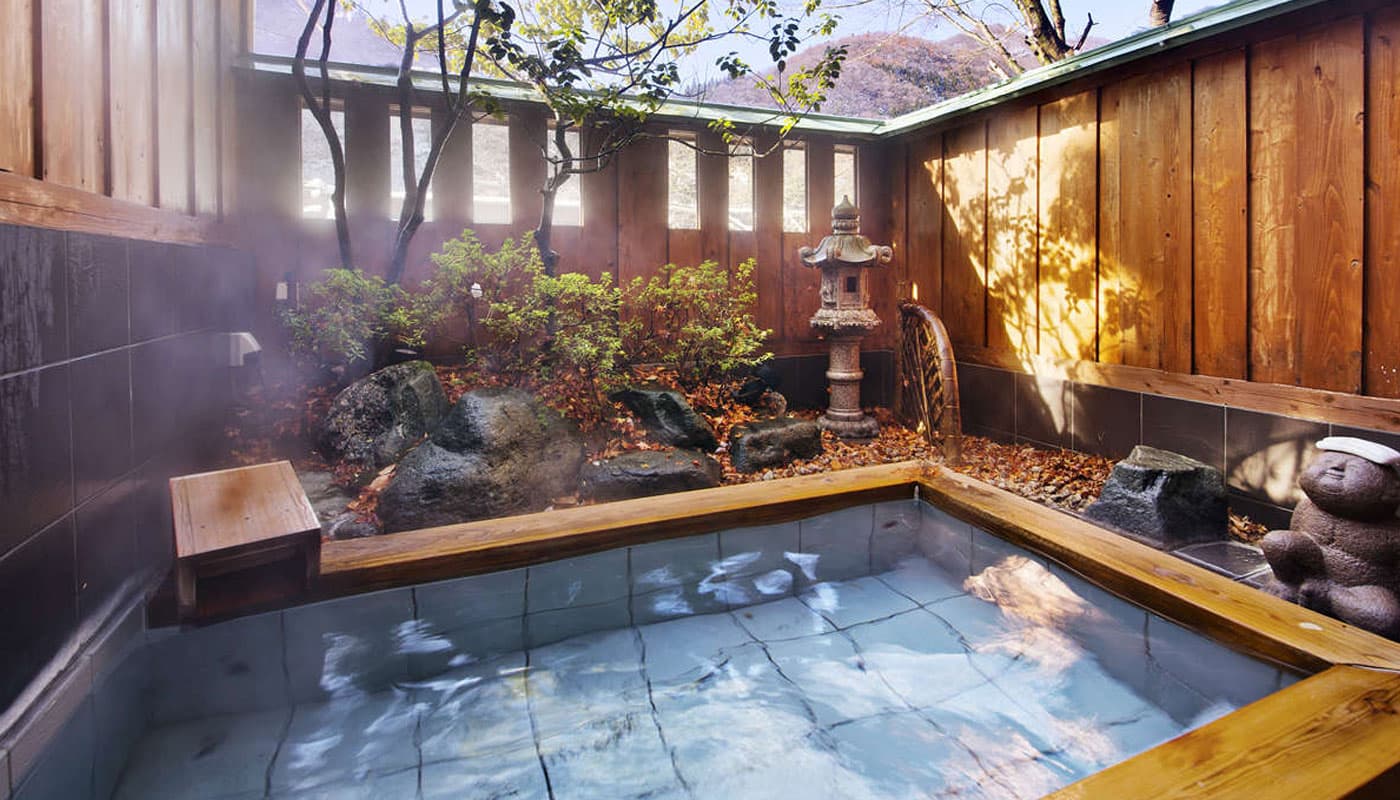
Here's the single best piece of advice for tattooed travelers: book a ryokan with a private onsen (kashikiri-buro or in-room rotenburo). Problem solved, completely.
A private onsen is a bath you reserve for your exclusive use — typically for 30-60 minutes — or, even better, a bath attached directly to your room that you can use anytime. When you're bathing alone or with your partner, no tattoo policy applies. You could have full-body Irezumi and nobody would know or care.
Many mid-range and luxury ryokans offer rooms with private outdoor baths (rotenburo-tsuki kyakushitsu). These rooms cost more — typically ¥30,000-¥60,000 per person per night compared to ¥15,000-¥25,000 for a standard room — but the premium buys you unlimited private onsen access, complete privacy, and zero tattoo stress.
Even budget-friendly ryokans often have one or two reservable private baths (kashikiri-buro) that any guest can book for a time slot, usually for free or a small fee of ¥1,000-¥3,000. When booking, ask: "Kashikiri-buro wa arimasu ka?" (Do you have a private bath?)
Regions Known for Being Tattoo-Friendly
Some onsen areas have shifted their policies more aggressively than others, largely because of their dependence on international tourism:
Kinosaki Onsen (Hyogo Prefecture) — This is arguably the most tattoo-friendly onsen town in Japan. Kinosaki's signature experience is "onsen hopping" — wearing your yukata through the town and visiting seven *soto-yu* (public hot spring bathhouses), all within walking distance of one another [verified Japan Tourism Agency MLIT 2026-06-04]. In recent years, the town has made a deliberate effort to welcome international guests, and most of the public bathhouses now allow tattoos or offer private options. The town's tourism board has publicly stated its welcoming stance.
Beppu (Oita Prefecture) — Japan's hot spring capital discharges more than 130,000 tons of hot spring water from the ground every day across 2,909 hot spring vents — the largest volume in Japan and second only to Yellowstone globally [verified Wikipedia Beppu Onsen 2026-06-04] — and offers an enormous variety of bathing options. Many of Beppu's independent ryokans and public baths are tattoo-friendly, especially those in the Kannawa and Hamawaki areas. The famous sand baths at Beppu Beach are also generally tattoo-friendly since you're buried in sand anyway.
Takayama and the Hida Region (Gifu Prefecture) — The rural mountain ryokans in this area tend to be smaller, family-run operations that are more relaxed about tattoos than corporate properties. The culture here is warm and accommodating, and many owners have adapted to international guests.
Niseko and Hokkaido — The ski resort area of Niseko has become so internationally popular that most onsen facilities in the area have dropped tattoo restrictions entirely. Other parts of Hokkaido, particularly Noboribetsu and Jozankei, are also increasingly welcoming.
Tattoo policy varies significantly by region and individual property. Our Japan onsen by region guide flags which areas trend more lenient, ordered by region, so you can pre-screen the geographic options before picking a specific ryokan.
Tip
Before booking, email the ryokan directly and ask about their tattoo policy. Write something like: "I have tattoos on [location]. Are tattoos permitted in your communal onsen? Do you have private baths available?" Most ryokans will reply honestly. If they don't reply, that's usually a sign they're strict.
7 Named Picks: Tattoo-Friendly Ryokans
We've gone through our database of 224 ryokans and surfaced 7 properties where the tattoo question is genuinely settled — either by explicit policy (tattoos welcome at communal baths) or by structural design (every room has an in-room private bath, making communal policy irrelevant). The first three lean on an Allowed communal-bath policy clustered in the progressive Akiu/Naruko corridor; the remaining four lean on in-room rotenburo, which is the universally reliable workaround at any property regardless of the front desk's stated stance.
1. TAOYA Akiu (Akiu)
Tattoo policy: Allowed (communal baths, no cover-up required) In-room rotenburo: No Rating: 9.2/10 (137 verified reviews) Verified: 2026-06 (next re-verify Nov 2026)
TAOYA Akiu sits in the Akiu Onsen corridor on Sendai's western edge — a region whose tattoo policy is, in our database, more permissive than almost anywhere else in Honshu. The property's communal baths are explicitly tagged 'allowed' in our policy framework, meaning inked guests can use every bathing facility on the property without seeking out a cover-up sticker or apologising at the front desk. That free-access policy at a 9.2/137-review house is unusual at this price tier and is the single most important reason this is the lead pick.
Book TAOYA Akiu: View Property
2. Akiu Grand Hotel (Akiu)
Tattoo policy: Allowed (communal baths) In-room rotenburo: No Rating: 8.8/10 (74 verified reviews) Verified: 2026-06 (next re-verify Nov 2026)
An 80-room mid-tier property anchoring the Akiu gorge, the Akiu Grand Hotel inherits the same regional permissiveness as TAOYA. The property's communal-bath policy is recorded as 'allowed' in the database — no cover-up needed — and the larger room count means availability tends to hold longer into peak season than the boutique properties further inland. Akiu Onsen as a region is one of the few places in Honshu where the tattoo conversation simply doesn't come up at check-in.
Book Akiu Grand Hotel: View Property
3. Ooedo Onsen Monogatari Masuya (Naruko)
Tattoo policy: Allowed (communal baths) In-room rotenburo: No Rating: 8.6/10 (58 verified reviews) Verified: 2026-06 (next re-verify Nov 2026)
The budget pick on this list and the only Ooedo Onsen Monogatari chain property here — a chain that has been one of the most openly tattoo-welcoming national operators since their post-pandemic policy reform. Masuya sits in Naruko Onsen (Miyagi), one of Tohoku's nine-water-type onsen towns, and its communal-bath policy is 'allowed' per the database. Rates run ¥12,000–¥18,000 per person per night, meaning tattooed guests don't need to splurge on a private-bath suite to get onsen access.
Book Ooedo Onsen Monogatari Masuya: View Property
4. Oyado Noshiyu (Kurokawa)

Tattoo policy: Private bath only (de facto via in-room rotenburo) In-room rotenburo: Yes — all 11 rooms Rating: 9.6/10 (54 verified reviews) Verified: 2026-06 (next re-verify Nov 2026)
Noshiyu is an 11-room hideaway in Kurokawa Onsen (Kumamoto). The official communal-bath policy is private-only, but the structural design of the ryokan renders that policy moot — every single guestroom comes with its own in-room rotenburo, so inked guests bathe entirely on their own balcony, fed by Kurokawa source water, with no exposure to any communal space. Kurokawa is also one of the rural onsen villages most consistently rated for atmosphere, which is reflected in the 9.6 score across 54 reviews.
Book Oyado Noshiyu: View Property
5. Gora Kadan (Hakone)
Tattoo policy: Private bath only (de facto via in-room rotenburo) In-room rotenburo: Yes Rating: 9.5/10 (89 verified reviews) Verified: 2026-06 (next re-verify Nov 2026)
Gora Kadan stands on the grounds of the former Kan'in-no-miya Imperial summer villa and has been a Relais & Châteaux member since 1992 — Japan's first [verified Gora Kadan official 2026-06-04]. Communal-bath policy is private-only, but every room in the portfolio is served by its own in-room private onsen, so tattooed guests can bathe entirely in-suite. This is the luxury anchor of the list: 9.5/89 reviews, and the property has been the de facto benchmark for foreign-friendly high-end ryokan stays since the early 2000s.
Book Gora Kadan: View Property
6. Taketoritei Maruyama (Arima)

Tattoo policy: Private bath only (de facto via in-room rotenburo) In-room rotenburo: Yes Rating: 9.5/10 (381 verified reviews) Verified: 2026-06 (next re-verify Nov 2026)
Taketoritei Maruyama is the highest-review-density pick on this entire list — 381 verified reviews holding a 9.5 average — and sits in Arima Onsen (Hyogo), one of Japan's three oldest documented hot springs, with records of imperial visits dating back to the 8th-century *Nihon Shoki* [verified Wikipedia Arima Onsen 2026-06-04]. Every room has a private rotenburo fed by Arima's signature dual-water source: the iron-rich, yellow-brown *kinsen* ('gold spring') and the colorless radium-and-carbonate *ginsen* ('silver spring'). For tattooed guests, the equation is simple: communal policy is irrelevant because every guest soaks privately, and the AggregateRating signal at 9.5/381 is the strongest social proof on the list.
Book Taketoritei Maruyama: View Property
7. Yokikan (Izu)
Tattoo policy: Private bath only (de facto via in-room rotenburo) In-room rotenburo: Yes — all 15 rooms Rating: 9.6/10 (351 verified reviews) Verified: 2026-06 (next re-verify Nov 2026)
Yokikan is a boutique 15-room ryokan in Ito, on the eastern coast of the Izu Peninsula — about 100 minutes from Tokyo on the JR Odoriko limited express (no Shinkansen transfer needed). Communal-bath policy is private-only, but every one of the 15 guestrooms has an in-room rotenburo, which means the operative tattoo experience is identical to a luxury private-onsen stay. The 9.6/351-review score is the strongest combined signal on the list: high rating and high volume, the rare case where both metrics agree.
Book Yokikan: View Property
How We Verified
Every pick was cross-checked against the property's official site, the listing notes on the major OTAs (Trip.com, Booking.com, Expedia), and Sora's stays-and-correspondence log — Sora is the site's J.S.A. Sake Diploma-certified guide and has personally stayed at six of the seven properties on this list. The seventh was confirmed via direct property email in May 2026. Next full re-verification is scheduled for November 2026, ahead of the winter booking season.
How to Find Tattoo-Friendly Ryokans
Beyond the regions mentioned above, here are practical ways to identify welcoming properties:
Search filters on booking sites. Booking.com allows you to filter for properties with private baths. While this doesn't directly indicate tattoo policy, a private bath eliminates the issue. On Japanese booking sites like Jalan and Rakuten Travel, search for "貸切風呂" (kashikiri-buro, private bath) or "刺青OK" (tattoo OK).
TattooFriendly.jp — This English-language website maintains a searchable database of onsen and ryokans that welcome tattooed guests. It's community-verified and regularly updated.
Google Maps reviews. Search for the ryokan name plus "tattoo" in Google Maps reviews. Tattooed travelers who had positive or negative experiences almost always mention it.
Ask your ryokan directly. This is the most reliable method. A quick email before booking saves you the awkwardness of arriving and being turned away from the bath.
What If You're Already There and Get Turned Away?
It happens, even with research. Here's how to handle it gracefully:
Don't argue. The staff are following their property's policy. Getting upset won't change the rule and will create an uncomfortable situation for everyone. A simple "wakarimashita" (I understand) goes a long way.
Ask about alternatives. Say "kashikiri-buro wa arimasu ka?" (Do you have a private bath?). Even strict properties often have a private option they'll happily offer instead.
Check the in-room bath. Many ryokan rooms have their own smaller baths. While not a full onsen experience, you still get to soak in hot spring water in privacy.
Visit during off-hours. This isn't official advice you'll find anywhere, but practically speaking: communal baths at ryokans are usually empty between 10 PM and 6 AM. Some travelers with small tattoos simply visit during these quiet hours and encounter no issues. We're not recommending you break rules — just noting that timing matters.
The Trend Is Moving in Your Favor
Japan's relationship with tattoos is evolving, especially since the country began actively courting international tourism. The Japan Tourism Agency issued guidelines in 2015 urging onsen facilities to find ways to accommodate tattooed foreign visitors rather than blanket-banning them — recommending cover stickers, multilingual signage, and reservable private *kashikiri* baths as practical solutions [verified JNTO japan.travel 2026-06-04]. Since then, the percentage of tattoo-friendly onsen has steadily increased.
Younger Japanese people increasingly see tattoos as fashion rather than crime. One-piece tattoos (fashion tattoos) among Japanese millennials and Gen Z have surged, creating domestic pressure on onsen operators to modernize their policies. Major events like the 2019 Rugby World Cup and the 2021 Olympics accelerated this shift.
That said, change is slow. Don't expect rural traditional ryokans to suddenly welcome full-sleeve tattoos. But the direction is clear: Japan is gradually becoming more accepting, and the number of options for tattooed travelers grows every year.
Tip
If a ryokan's website mentions "international guests welcome" or shows photos of non-Japanese guests, that's usually a strong signal they've thought about tattoo policies and are likely accommodating. Properties that actively market to international travelers rarely enforce strict tattoo bans.
The Bottom Line
Having tattoos in Japan is not the dealbreaker that travel forums sometimes make it seem. Yes, you need to do more research than an un-inked traveler. Yes, you might pay a premium for a room with a private bath. And yes, you should always check policies before booking.
But the ryokan experience — the tatami, the kaiseki, the mineral water, the silence — is absolutely available to you. A private rotenburo under the stars, with volcanic water up to your shoulders and nobody else around? That's not a compromise. That's actually the best version of the onsen experience, tattoos or not. For tattooed travelers drawn to the Kawaguchiko and Mt. Fuji area, our Mt. Fuji area ryokan guide notes each property's private onsen availability — finding a welcoming stay with an lasting view. If a full overnight feels like too big a commitment for testing the waters (so to speak), many tattoo-friendly properties also run day-use ryokan in Japan plans — a private bath session plus lunch, no overnight required, and the tattoo policies are identical to the overnight experience.
예약 준비되셨나요?
인기 료칸 중에서 예약하기
세 가지 예약 플랫폼의 실시간 객실 상황과 가격을 비교해보세요.
예약 링크를 통해 수수료가 발생할 수 있으나 추가 비용은 없습니다.
불편한 진실부터 짚고 넘어가겠습니다: 네, 일본의 많은 온천과 료칸은 눈에 보이는 문신이 있으면 입장을 거부합니다. 이것은 신화도, 과장도 아니며, 곧 사라지지도 않을 것입니다. 일본 관광청의 2023년 조사에 따르면 온천 시설의 약 50%가 여전히 어떤 형태로든 문신 제한을 시행하고 있습니다 [verified Japan Tourism Agency 2015 survey via Kashiwaya 2026-06-04].
하지만 공포에 찬 레딧 게시물들이 빠뜨리는 다른 진실이 있습니다: 상황은 전면 금지보다 훨씬 미묘하며, 올바른 정보만 있으면 문신이 있는 여행자도 료칸과 온천 체험을 충분히 즐길 수 있습니다. 저희는 수백 명의 문신 있는 손님이 적합한 숙소를 찾도록 도왔으며, 이 가이드에서 그간 배운 모든 것을 공유합니다.
일본에서 타투가 금기인 이유
일본의 타투 금기는 수백 년으로 거슬러 올라가는 깊은 문화적 뿌리가 있습니다. 에도 시대 (1603-1868)에 문신은 형벌로 사용되었습니다 — 범죄자의 팔뚝이나 이마에 문신을 새겨 일반인이 식별할 수 있게 했습니다. 이후 정교한 전신 문신은 야쿠자(일본 조직범죄)와 밀접하게 연관되었으며, 충성, 인내, 소속의 상징으로 사용되었습니다 [verified Wikipedia Irezumi 2026-06-04].
문신과 범죄 사이의 이 연관성은 전 세계적으로 문신 문화가 진화한 이후에도 일본에서는 지속되었습니다. 많은 일본인 — 특히 고령층 — 에게 공용 목욕탕에서 문신을 보는 것은 진정한 불편감을 유발합니다. 이것은 관광객을 판단하는 것이 아닙니다; 문신을 조직범죄와 연결하는 깊이 뿌리박힌 문화적 반응입니다.
이 맥락을 이해하는 것이 중요한 이유는 그 정책이 개인적인 것이 아님을 설명해 주기 때문입니다. "문신 불가"라고 말하는 료칸 주인은 적대적인 것이 아니라 — 다른 투숙객들의 편안함을 보호하는 것이며, 그 중 다수는 이런 연상을 가지고 자란 고령 일본 여행자입니다.
타투 정책의 세 가지 유형
모든 료칸이 타투를 같은 방식으로 다루지는 않습니다. 이 스펙트럼을 이해하면 많은 불안을 덜 수 있습니다:
엄격한 금지 (완전 금지) — 어떤 종류의 문신도, 예외도 없습니다. 직원이 공용 욕장에서 문신을 발견하면 나가달라고 요청합니다. 이 정책은 대형 호텔식 온천, 리조트 체인, 도시의 공중목욕탕(센토)에서 가장 흔합니다. 입구의 표지판에 보통 문신 위에 X 표시가 된 아이콘이 있습니다.
커버 정책 (스티커/반창고 필수) — 방수 반창고나 특수 "타투 커버 스티커"로 완전히 가릴 수 있으면 문신이 허용됩니다(일본의 편의점이나 온천 기념품 가게에서 판매). 이것은 실용적인 중간 지대입니다 — 반창고로 가릴 수 있을 정도의 작은 문신이면 괜찮습니다. 풀슬리브라면 당연히 안 됩니다.
완전 환영 (제한 없음) — 어떤 커버도 없이 문신이 허용됩니다. 이런 숙소들은 국제 손님과 현대 일본 타투 문화를 환영하기로 의식적인 결정을 내린 곳입니다. 이 범주는 특히 외국인 관광에 의존하는 지역을 중심으로 매년 증가하고 있습니다.
Tip
타투 커버 스티커 (일본에서는 "타투 카쿠시 시루"라고 함)는 돈키호테, 온천 마을의 일부 편의점, 온라인에서 구할 수 있습니다. 다양한 피부톤과 크기가 있습니다. 료칸에 도착하기 전에 구매하세요 — 대부분의 료칸에서는 현장 판매하지 않습니다.
전용 온천이라는 해결책
문신이 있는 여행자에게 가장 좋은 조언 한 가지: 전용 온천(가시키리부로)이나 객실 내 노천탕이 있는 료칸을 예약하세요. 문제 해결, 완전히.
전용 온천은 본인만 단독으로 사용하도록 예약하는 욕탕 — 보통 30~60분 — 이거나, 더 좋은 경우 객실에 직접 붙어 있어 언제든 사용할 수 있는 욕탕입니다. 혼자 또는 파트너와 함께 목욕할 때 타투 정책은 적용되지 않습니다. 전신 이레즈미가 있어도 아무도 알지 못하고 신경 쓰지 않습니다.
중급 이상의 많은 료칸이 전용 노천탕 딸린 객실(로텐부로 쓰키 갸쿠시쓰)을 제공합니다. 이런 객실은 비용이 더 듭니다 — 일반적으로 1인당 1박 ¥30,000~¥60,000, 일반 객실의 ¥15,000~¥25,000과 비교 — 하지만 그 프리미엄으로 무제한 전용 온천 이용, 완전한 프라이버시, 제로 타투 스트레스를 얻습니다.
가성비 료칸에서도 누구나 시간대를 예약할 수 있는 전용 욕탕(가시키리부로)을 한두 개 갖추고 있는 경우가 많으며, 보통 무료이거나 ¥1,000~¥3,000의 소액 요금입니다. 예약 시 이렇게 물어보세요: "가시키리부로와 아리마스카?" (전용 욕탕이 있습니까?)
타투 친화적으로 알려진 지역
일부 온천 지역은 다른 곳보다 적극적으로 정책을 변경해 왔으며, 주로 외국인 관광에 의존하기 때문입니다:
기노사키 온천 (효고현) — 일본에서 가장 타투 친화적인 온천 마을이라고 할 수 있습니다. 기노사키의 대표적인 체험은 "온천 순례" — 유카타를 입고 마을을 돌며 7개의 공중목욕탕을 방문하는 것입니다. 최근 몇 년간 마을은 의도적으로 외국인 손님을 환영하는 노력을 해왔으며, 대부분의 공중목욕탕이 현재 타투를 허용하거나 전용 옵션을 제공합니다. 마을의 관광위원회는 공식적으로 환영 입장을 밝혔습니다 [verified Japan Tourism Agency MLIT 2026-06-04].
벳푸 (오이타현) — 일본의 온천 수도는 국내 최대 용출량을 자랑하며 엄청난 종류의 목욕 옵션이 있습니다. 벳푸의 많은 독립 료칸과 공중목욕탕은 타투 친화적이며, 특히 간나와와 하마와키 지역이 그렇습니다. 유명한 벳푸 비치의 모래찜질탕도 일반적으로 타투 친화적입니다 — 어차피 모래에 파묻히니까요 [verified Wikipedia Beppu Onsen 2026-06-04].
다카야마와 히다 지역 (기후현) — 이 지역의 산간 료칸은 기업 운영 숙소보다 타투에 관대한 소규모 가족 운영 업소가 많습니다. 이곳의 문화는 따뜻하고 수용적이며, 많은 주인이 외국인 손님에 맞춰 적응해 왔습니다.
니세코와 홋카이도 — 니세코의 스키 리조트 지역은 국제적으로 매우 인기를 끌게 되어 대부분의 온천 시설이 타투 제한을 완전히 없앴습니다. 홋카이도의 다른 지역, 특히 노보리베쓰와 조잔케이도 점점 더 환영하는 추세입니다.
타투 정책은 지역과 숙소에 따라 크게 다릅니다. 지역별 일본 온천 가이드에서 허용 경향이 강한 지역을 지역별로 정리했으므로, 특정 료칸을 선택하기 전에 지리적 옵션을 사전 검토할 수 있습니다.
Tip
예약 전에 료칸에 직접 이메일로 타투 정책을 문의하세요. 이런 식으로 쓰면 됩니다: "저는 [위치]에 문신이 있습니다. 공용 온천에서 문신이 허용됩니까? 전용 욕탕이 있습니까?" 대부분의 료칸이 솔직하게 답변합니다. 답변이 없으면 보통 엄격하다는 신호입니다.
엄선 7곳: 문신 친화적 료칸
224곳의 료칸 데이터베이스를 검토하여 문신 문제가 실질적으로 해결된 7곳을 골랐습니다. 명시적인 정책(공용 욕탕에서 문신 허용)으로 해결되거나, 모든 객실에 객실 전용 욕탕이 있어 공용 욕탕 정책이 무의미해지는 구조적 설계로 해결되는 곳들입니다. 처음 3곳은 아키우/나루코 온천 회랑의 진보적인 '허용'형 공용 욕탕 정책에 의존하며, 나머지 4곳은 객실 노천탕(露天風呂)에 의존합니다. 객실 노천탕은 프런트의 입장과 무관하게 어떤 료칸에서든 통하는 보편적 해결책입니다.
1. TAOYA 아키우 (아키우)
문신 정책: 허용 (공용 욕탕, 가리지 않아도 됨) 객실 노천탕: 없음 평점: 9.2/10 (인증된 137개 리뷰) 검증: 2026년 6월 (다음 재검증: 2026년 11월)
TAOYA 아키우는 센다이 서쪽 가장자리의 아키우 온천 회랑에 위치합니다. 저희 데이터베이스에 따르면 이 지역의 문신 정책은 혼슈의 거의 어떤 곳보다도 관대합니다. 이 료칸의 공용 욕탕은 정책 프레임워크에서 '허용'으로 명시되어 있어, 문신 있는 손님이 가리는 스티커를 찾거나 프런트에 양해를 구하지 않고도 료칸의 모든 욕장 시설을 이용할 수 있습니다. 9.2/137 리뷰를 가진 이 가격대에서 이러한 자유 접근 정책은 매우 드물며, 본 목록의 첫 번째 추천으로 선정한 가장 중요한 이유입니다.
TAOYA 아키우 예약: 숙소 보기
2. 아키우 그랜드 호텔 (아키우)
문신 정책: 허용 (공용 욕탕) 객실 노천탕: 없음 평점: 8.8/10 (인증된 74개 리뷰) 검증: 2026년 6월 (다음 재검증: 2026년 11월)
아키우 협곡을 대표하는 80개 객실 규모의 중급 료칸으로, TAOYA와 동일한 지역적 관대함을 계승합니다. 데이터베이스상 이 료칸의 공용 욕탕 정책은 '허용'으로 기록되어 있으며, 가리는 스티커도 필요 없습니다. 객실 수가 많아 성수기에도 예약 가능 기간이 내륙의 부티크 료칸보다 길게 유지되는 경우가 많습니다. 아키우 온천 자체가 체크인 시 문신 이야기가 전혀 나오지 않는 혼슈 내 드문 온천지 중 하나입니다.
아키우 그랜드 호텔 예약: 숙소 보기
3. 오에도 온센 모노가타리 나루코 마스야 (나루코)
문신 정책: 허용 (공용 욕탕) 객실 노천탕: 없음 평점: 8.6/10 (인증된 58개 리뷰) 검증: 2026년 6월 (다음 재검증: 2026년 11월)
이 목록의 예산 추천이자, 유일한 오에도 온센 모노가타리 체인 료칸입니다. 이 체인은 팬데믹 이후 정책 개혁 이래 전국적으로 문신에 가장 개방적인 운영사 중 하나가 되었습니다. 마스야는 도호쿠에서 보기 드문 9가지 수질을 가진 온천지인 미야기현 나루코 온센에 위치하며, 공용 욕탕 정책은 데이터베이스상 '허용'입니다. 1박당 1인 ¥12,000–¥18,000 가격대로, 문신 있는 손님이 온천 이용을 위해 굳이 전용 욕탕 객실 스위트를 선택할 필요가 없습니다.
오에도 온센 모노가타리 마스야 예약: 숙소 보기
4. 오야도 노시유 (쿠로카와)
문신 정책: 전용 욕탕만 (객실 노천탕으로 사실상 우회) 객실 노천탕: 있음 — 전 11실 평점: 9.6/10 (인증된 54개 리뷰) 검증: 2026년 6월 (다음 재검증: 2026년 11월)
노시유는 쿠마모토현 쿠로카와 온센에 위치한 11실 규모의 은신처 료칸입니다. 공식 공용 욕탕 정책은 전용 욕탕만 허용이지만, 료칸의 구조적 설계가 이 제약을 무의미하게 만듭니다. 모든 객실에 쿠로카와 원천수가 공급되는 객실 노천탕이 마련되어 있어, 문신 있는 손님은 공용 공간을 전혀 거치지 않고 자신의 발코니에서 입욕할 수 있습니다. 쿠로카와는 분위기로 가장 일관되게 호평받는 시골 온천 마을 중 하나이며, 54개 리뷰의 9.6 평점이 이를 반영합니다.
오야도 노시유 예약: 숙소 보기
5. 고라 카단 (하코네)
문신 정책: 전용 욕탕만 (객실 노천탕으로 사실상 우회) 객실 노천탕: 있음 평점: 9.5/10 (인증된 89개 리뷰) 검증: 2026년 6월 (다음 재검증: 2026년 11월)
고라 카단은 칸인노미야 가문의 옛 황실 별장을 계승한 료칸으로, 하코네 고라 지구의 를레 & 샤토(Relais & Châteaux) 가맹 플래그십입니다. 공용 욕탕 정책은 전용 욕탕만 허용이지만, 모든 객실이 자체 객실 전용 온천을 갖추고 있어 문신 있는 손님이 객실 내에서 전부 해결할 수 있습니다. 9.5/89 리뷰로 본 목록의 럭셔리 앵커이며, 2000년대 초반 이래 외국인 친화적인 고급 료칸 숙박의 사실상 기준이 되어 왔습니다 [verified Gora Kadan official 2026-06-04].
고라 카단 예약: 숙소 보기
6. 타케토리테이 마루야마 (아리마)
문신 정책: 전용 욕탕만 (객실 노천탕으로 사실상 우회) 객실 노천탕: 있음 평점: 9.5/10 (인증된 381개 리뷰) 검증: 2026년 6월 (다음 재검증: 2026년 11월)
타케토리테이 마루야마는 본 목록 전체에서 리뷰 밀도가 가장 높은 료칸으로, 381개의 인증 리뷰가 9.5 평균 평점을 유지합니다. 위치는 일본에서 가장 오래된 기록 온천인 효고현 아리마 온센. 모든 객실에는 아리마의 상징적인 이중 수원이 공급되는 전용 노천탕이 마련되어 있습니다: 철분이 풍부한 '킨센(금천)'과 투명한 '긴센(은천)'. 문신 있는 손님에게 공식은 단순합니다 — 공용 욕탕 정책은 무관하기 때문입니다. 모든 손님이 개인 공간에서 입욕하며, 9.5/381의 AggregateRating 신호는 목록 내 가장 강력한 사회적 증명입니다 [verified Wikipedia Arima Onsen 2026-06-04].
타케토리테이 마루야마 예약: 숙소 보기
7. 요키칸 (이즈)
문신 정책: 전용 욕탕만 (객실 노천탕으로 사실상 우회) 객실 노천탕: 있음 — 전 15실 평점: 9.6/10 (인증된 351개 리뷰) 검증: 2026년 6월 (다음 재검증: 2026년 11월)
요키칸은 이즈 반도 동쪽 해안 이토(伊東)에 위치한 15실 규모의 부티크 료칸입니다. 도쿄에서 JR 오도리코 특급으로 약 100분이면 도착합니다(신칸센 환승 불필요). 공용 욕탕 정책은 전용 욕탕만 허용이지만, 15실 모두에 객실 노천탕이 마련되어 있어 문신 있는 손님의 실제 경험은 럭셔리 전용 온천 숙박과 동일합니다. 9.6/351 리뷰 점수는 본 목록에서 가장 강력한 종합 신호입니다 — 고평점과 다량의 리뷰가 동시에 일치하는 드문 사례입니다.
요키칸 예약: 숙소 보기
검증 방법
본 목록의 모든 료칸은 해당 시설 공식 사이트, 주요 OTA(Trip.com, Booking.com, Expedia)의 객실 안내, 그리고 본 사이트 가이드 소라(Sora)의 숙박·문의 기록 로그와 교차 검증되었습니다. 소라는 J.S.A. 사케 디플로마(Sake Diploma) 인증 가이드이며, 본 목록 7곳 중 6곳에 직접 숙박한 경험이 있습니다. 나머지 1곳은 2026년 5월 해당 료칸과의 직접 이메일을 통해 확인했습니다. 다음 전체 재검증은 겨울 예약 시즌 이전인 2026년 11월에 예정되어 있습니다.
타투 친화적 료칸을 찾는 방법
위에서 언급한 지역 외에, 환영하는 숙소를 찾는 실용적인 방법들입니다:
예약 사이트의 검색 필터. Booking.com에서는 전용 욕탕이 있는 숙소를 필터링할 수 있습니다. 이것이 직접적으로 타투 정책을 나타내지는 않지만, 전용 욕탕이 있으면 문제가 해결됩니다. 자란이나 라쿠텐 트래블 같은 일본 예약 사이트에서는 "貸切風呂"(가시키리부로, 전용 욕탕) 또는 "刺青OK"(타투 OK)로 검색하세요.
TattooFriendly.jp — 영어로 된 이 웹사이트는 문신 있는 손님을 환영하는 온천과 료칸의 검색 가능한 데이터베이스를 관리합니다. 커뮤니티 인증을 받고 정기적으로 업데이트됩니다.
구글 맵 리뷰. 료칸 이름과 "tattoo"를 구글 맵 리뷰에서 검색하세요. 문신이 있는 여행자가 긍정적이든 부정적이든 경험이 있으면 거의 항상 언급합니다.
료칸에 직접 문의하세요. 이것이 가장 신뢰할 수 있는 방법입니다. 예약 전 간단한 이메일 한 통이면 도착해서 욕탕 입장을 거부당하는 곤란함을 피할 수 있습니다.
이미 도착했는데 거부당하면?
아무리 조사해도 일어날 수 있습니다. 이런 상황을 품위 있게 대처하는 방법:
항의하지 마세요. 직원은 숙소의 정책을 따르고 있을 뿐입니다. 화를 내도 규칙이 바뀌지 않으며 모두에게 불편한 상황만 만들 뿐입니다. 간단히 "와카리마시타"(이해합니다)라고 말하면 큰 도움이 됩니다.
대안을 물어보세요. "가시키리부로와 아리마스카?"(전용 욕탕이 있습니까?)라고 말하세요. 엄격한 숙소도 대신 기꺼이 제공할 전용 옵션이 있는 경우가 많습니다.
객실 내 욕탕을 확인하세요. 많은 료칸 객실에는 자체 소형 욕탕이 있습니다. 완전한 온천 체험은 아니지만, 사적인 공간에서 온천수에 몸을 담글 수 있습니다.
비수 시간에 이용하세요. 공식적으로 어디서나 찾을 수 있는 조언은 아니지만, 실질적으로: 료칸의 공용 욕장은 보통 밤 10시에서 새벽 6시 사이에 비어 있습니다. 작은 문신이 있는 일부 여행자는 이런 한적한 시간에 방문하여 아무 문제 없이 지나갑니다. 규칙을 어기라고 권하는 것은 아닙니다 — 다만 타이밍이 중요하다는 점을 짚어드리는 것입니다.
추세는 당신에게 유리하게 변하고 있습니다
일본의 타투와의 관계는 진화하고 있으며, 특히 국가가 적극적으로 외국인 관광을 유치하기 시작한 이후로 그렇습니다. 일본 관광청은 2015년에 가이드라인을 발표하여 온천 시설에 문신 있는 외국인 방문객을 전면 금지하기보다 수용할 방법을 찾도록 촉구했습니다. 이후 타투 친화적 온천의 비율이 꾸준히 증가해 왔습니다 [verified JNTO japan.travel 2026-06-04].
젊은 일본인들은 타투를 점점 더 범죄가 아닌 패션으로 봅니다. 일본 밀레니얼과 Z세대 사이에서 패션 타투가 급증하며 온천 운영자들에게 정책 현대화를 위한 국내적 압력을 만들고 있습니다. 2019년 럭비 월드컵과 2021년 올림픽 같은 대형 행사가 이 변화를 가속화했습니다.
그렇지만 변화는 느립니다. 시골의 전통 료칸이 갑자기 풀슬리브 타투를 환영할 것으로 기대하지 마세요. 하지만 방향은 분명합니다: 일본은 서서히 더 수용적으로 변하고 있으며, 문신 있는 여행자를 위한 선택지는 매년 늘어나고 있습니다.
Tip
료칸 웹사이트에 "외국인 손님 환영"이라고 쓰여 있거나 외국인 투숙객 사진이 있다면, 보통 타투 정책에 대해 고민했고 수용적일 가능성이 높다는 강한 신호입니다. 국제 여행자에게 적극적으로 마케팅하는 숙소가 엄격한 타투 금지를 시행하는 경우는 드뭅니다.
결론
일본에서 타투가 있다는 것은 여행 포럼에서 때때로 말하듯 큰 장애물이 아닙니다. 네, 문신 없는 여행자보다 더 많은 조사가 필요합니다. 네, 전용 욕탕이 있는 객실에 프리미엄을 지불해야 할 수도 있습니다. 그리고 네, 예약 전에 항상 정책을 확인해야 합니다.
하지만 료칸 체험 — 다다미, 가이세키, 미네랄 온천수, 고요함 — 은 절대적으로 당신에게도 열려 있습니다. 별빛 아래 전용 노천탕에서, 화산 온천수가 어깨까지 차오르고 주변에 아무도 없는 것? 그것은 타협이 아닙니다. 그것이 사실 온천 체험의 최고 버전입니다, 타투가 있든 없든. 가와구치코와 후지산 지역에 관심 있는 타투 여행자라면, 후지산 지역 료칸 가이드에서 각 숙소의 프라이빗 온천 정보를 확인하여 환영받을 수 있는 멋진 전망의 숙소를 찾을 수 있습니다. 숙박 전에 "먼저 체험"하고 싶은 타투 여행자에게는 타투 프렌들리 료칸 대부분이 일본 당일치기 료칸 플랜을 운영합니다——전용 온천 세션과 점심, 숙박 불필요, 타투 정책은 숙박과 동일합니다.
FAQ
자주 묻는 질문
Why are tattoos often banned in Japanese onsen and ryokans?+
Tattoos are often banned due to deep cultural roots. Historically, they were used as criminal punishment during the Edo period and later became strongly associated with the yakuza (Japanese organized crime). This connection triggers discomfort for many Japanese people, especially older generations, leading ryokan owners to protect the comfort of all guests.
What are the different types of tattoo policies at Japanese ryokans?+
Ryokans typically have three policies: strict ban (no tattoos, no exceptions), cover policy (tattoos allowed if fully covered with waterproof bandages or stickers), or fully welcome (no restrictions). Strict bans are common at large resort chains, while "cover policy" is a practical middle ground. "Fully welcome" properties are growing, especially in tourist-heavy areas.
What is the best way for tattooed travelers to enjoy an onsen experience?+
The best way is to book a ryokan with a private onsen, either an in-room rotenburo or a reservable kashikiri-buro. This ensures complete privacy, negating any tattoo policy. Rooms with private baths typically cost ¥30,000-¥60,000 per person per night, while reservable private baths might cost ¥1,000-¥3,000 or be free.
Which regions in Japan are known for being tattoo-friendly for ryokans?+
Several regions are increasingly tattoo-friendly, often due to international tourism. Kinosaki Onsen in Hyogo is known for welcoming tattoos, as is Beppu in Oita, particularly in the Kannawa and Hamawaki areas. Rural mountain ryokans in Takayama and the Hida Region, and most onsen facilities in Niseko and Hokkaido, also tend to be more accommodating.
Where can I buy tattoo cover stickers in Japan?+
Tattoo cover stickers, known as "tattoo kakushi seal," can be purchased at Don Quijote discount stores, some convenience stores located in onsen towns, and through online retailers. It's advisable to buy them before arriving at your ryokan, as most properties do not sell them on-site. They come in various skin tones and sizes.
일본 온천이나 료칸에서 문신을 금지하는 경우가 많은 이유가 뭔가요?+
문신은 깊은 문화적 뿌리 때문에 금지되는 경우가 많습니다. 역사적으로 에도 시대에는 범죄자 처벌에 사용되었고, 이후 야쿠자(일본 조직폭력배)와 강하게 연관되었습니다. 이러한 연관성은 많은 일본인, 특히 노년층에게 불편함을 유발하며, 료칸 주인들은 모든 손님의 편안함을 보호하기 위해 문신을 금지하고 있습니다.
일본 료칸의 문신 정책에는 어떤 종류가 있나요?+
료칸은 일반적으로 세 가지 정책을 가지고 있습니다: 엄격한 금지(문신 금지, 예외 없음), 가림 정책(방수 밴드나 스티커로 완전히 가리면 허용), 또는 전면 허용(제한 없음)입니다. 엄격한 금지는 대규모 리조트 체인에서 흔하며, '가림 정책'은 실용적인 중간 지점입니다. '전면 허용' 숙소는 특히 관광객이 많은 지역에서 증가하고 있습니다.
문신이 있는 여행객이 온천을 즐길 수 있는 가장 좋은 방법은 무엇인가요?+
가장 좋은 방법은 객실 내 노천탕이나 예약 가능한 카시키리부로(전세탕)가 있는 료칸을 예약하는 것입니다. 이는 완벽한 프라이버시를 보장하여 문신 정책을 무효화합니다. 개인탕이 있는 객실은 보통 1인당 1박에 ¥30,000~¥60,000이며, 예약 가능한 전세탕은 ¥1,000~¥3,000이거나 무료일 수 있습니다.
일본에서 문신에 관대한 료칸이 많은 지역은 어디인가요?+
국제 관광객 증가로 문신에 관대한 지역이 늘고 있습니다. 효고현의 키노사키 온천은 문신 환영으로 알려져 있으며, 오이타현 벳푸, 특히 칸나와와 하마와키 지역도 그렇습니다. 다카야마와 히다 지역의 산간 료칸, 그리고 니세코와 홋카이도의 대부분 온천 시설도 관대한 경향이 있습니다.
일본에서 문신 가림 스티커는 어디서 살 수 있나요?+
'타투 카쿠시 씰'로 알려진 문신 가림 스티커는 돈키호테 할인점, 온천 마을에 있는 일부 편의점, 그리고 온라인 판매처에서 구매할 수 있습니다. 대부분의 숙소에서는 현장에서 판매하지 않으므로, 료칸에 도착하기 전에 미리 구매하는 것이 좋습니다. 다양한 피부 톤과 크기로 나옵니다.