36分鐘閱讀更新於 2026年6月
快速比較
精選7家| 旅館 | 起價 | 評分 | 特色 | 預訂 |
|---|---|---|---|---|
TAOYA Akiu Akiu | $130起 | 9.2 137則評價 | 溫泉 | 在Trip.com預訂 |
Akiu Grand Hotel Akiu | $120起 | 8.8 74則評價 | 溫泉 | 在Trip.com預訂 |
| $70起 | 8.6 58則評價 | 溫泉 | 在Trip.com預訂 | |
![]() Oyado Noshiyu Kurokawa | $280起 | 9.6 54則評價 | 英語OK包租溫泉 | 在Trip.com預訂 |
![]() Gora Kadan Hakone | $500起 | 9.5 89則評價 | 英語OK包租溫泉 | 在Trip.com預訂 |
![]() Taketoritei Maruyama Arima | $250起 | 9.5 381則評價 | 英語OK包租溫泉 | 在Trip.com預訂 |
![]() Yokikan Izu | $220起 | 9.6 351則評價 | 英語OK包租溫泉 | 在Trip.com預訂 |
TAOYA Akiu
Akiu
Akiu Grand Hotel
Akiu

Oyado Noshiyu
Kurokawa

Gora Kadan
Hakone

Taketoritei Maruyama
Arima

Yokikan
Izu
顯示價格為每人每晚的起價(約值)。透過本站預訂,我們可能獲得佣金。
Let's get the uncomfortable truth out of the way first: yes, many onsen and ryokans in Japan will turn you away if you have visible tattoos. This isn't a myth, it isn't exaggerated, and it isn't going away anytime soon. A benchmark Japan Tourism Agency survey of 3,768 onsen facilities found that 56% refused tattooed guests outright, with only 31% allowing unconditional entry [verified Japan Tourism Agency 2015 survey via Kashiwaya 2026-06-04], and follow-up industry data shows roughly half of facilities still enforce some form of restriction today.
But here's the other truth that panicked Reddit posts leave out: the situation is far more nuanced than a blanket ban, and with the right information, tattooed travelers can absolutely enjoy the full ryokan and onsen experience. We've helped hundreds of inked guests find the right properties, and this guide shares everything we've learned.
Why Tattoos Are Taboo in Japan
The tattoo stigma in Japan has deep cultural roots that go back centuries. In the Edo period (1603-1868), tattoos were used as criminal punishment — convicted criminals were marked with tattoos on their forearms or foreheads so the public could identify them, in a practice known as *irezumi kei* [verified Wikipedia Irezumi 2026-06-04]. Later, elaborate full-body tattoos became closely associated with the yakuza (Japanese organized crime), who used them as symbols of loyalty, endurance, and affiliation.
This association between tattoos and criminality persisted even as tattoo culture evolved globally. For many Japanese people — especially older generations — seeing tattoos in a communal bathing space triggers genuine discomfort. It's not about judging tourists; it's about a deeply ingrained cultural reflex that connects ink on skin with organized crime.
Understanding this context matters because it explains why the policy isn't personal. The ryokan owner who says "no tattoos" isn't being hostile — they're protecting the comfort of their other guests, many of whom are elderly Japanese travelers who grew up with these associations.
The Three Types of Tattoo Policies
Not all ryokans handle tattoos the same way. Understanding the spectrum will save you a lot of anxiety:
Strict Ban (Complete Prohibition) — No tattoos of any kind, no exceptions. Staff will ask you to leave the communal bath if they spot ink. This policy is most common at large hotel-style onsen, resort chains, and public bathhouses (sento) in urban areas. Signs at the entrance will typically show a crossed-out tattoo icon.
Cover Policy (Sticker/Bandage Required) — Tattoos are allowed if you can cover them completely with waterproof bandages or special "tattoo cover stickers" (sold at many convenience stores and onsen gift shops in Japan). This is a practical middle ground — if your tattoo is small enough to cover with a bandage, you're fine. If you have a full sleeve, this obviously won't work.
Fully Welcome (No Restrictions) — Tattoos are accepted without any covering required. These properties have made a conscious decision to welcome international guests and modern Japanese tattoo culture. This category is growing every year, especially in areas that depend on international tourism.
Tip
Tattoo cover stickers (called "tattoo kakushi seal" in Japan) are available at Don Quijote discount stores, some convenience stores in onsen towns, and online. They come in various skin tones and sizes. Buy them before you arrive at the ryokan — most ryokans don't sell them on-site.
The Private Onsen Solution
Here's the single best piece of advice for tattooed travelers: book a ryokan with a private onsen (kashikiri-buro or in-room rotenburo). Problem solved, completely.
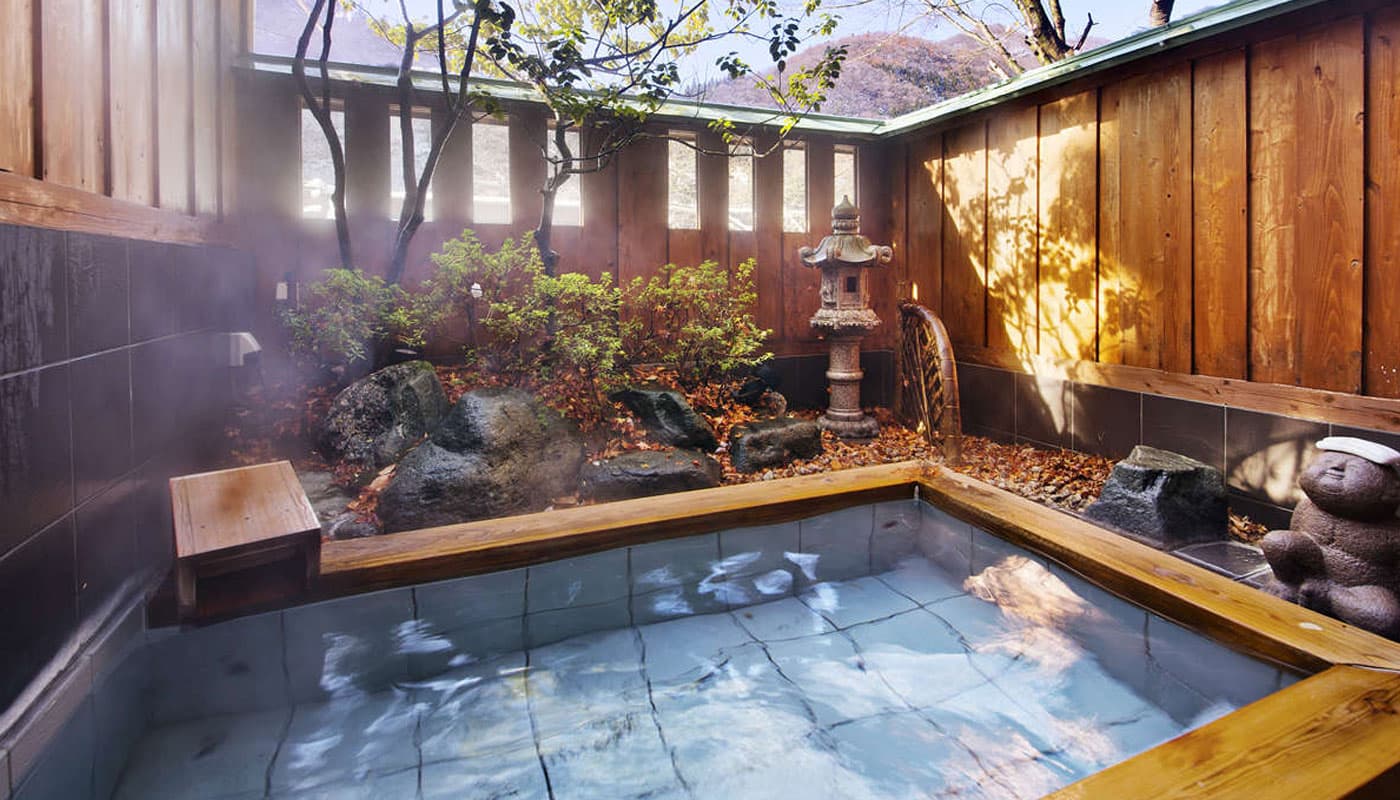
A private onsen is a bath you reserve for your exclusive use — typically for 30-60 minutes — or, even better, a bath attached directly to your room that you can use anytime. When you're bathing alone or with your partner, no tattoo policy applies. You could have full-body Irezumi and nobody would know or care.
Many mid-range and luxury ryokans offer rooms with private outdoor baths (rotenburo-tsuki kyakushitsu). These rooms cost more — typically ¥30,000-¥60,000 per person per night compared to ¥15,000-¥25,000 for a standard room — but the premium buys you unlimited private onsen access, complete privacy, and zero tattoo stress.
Even budget-friendly ryokans often have one or two reservable private baths (kashikiri-buro) that any guest can book for a time slot, usually for free or a small fee of ¥1,000-¥3,000. When booking, ask: "Kashikiri-buro wa arimasu ka?" (Do you have a private bath?)
Regions Known for Being Tattoo-Friendly
Some onsen areas have shifted their policies more aggressively than others, largely because of their dependence on international tourism:
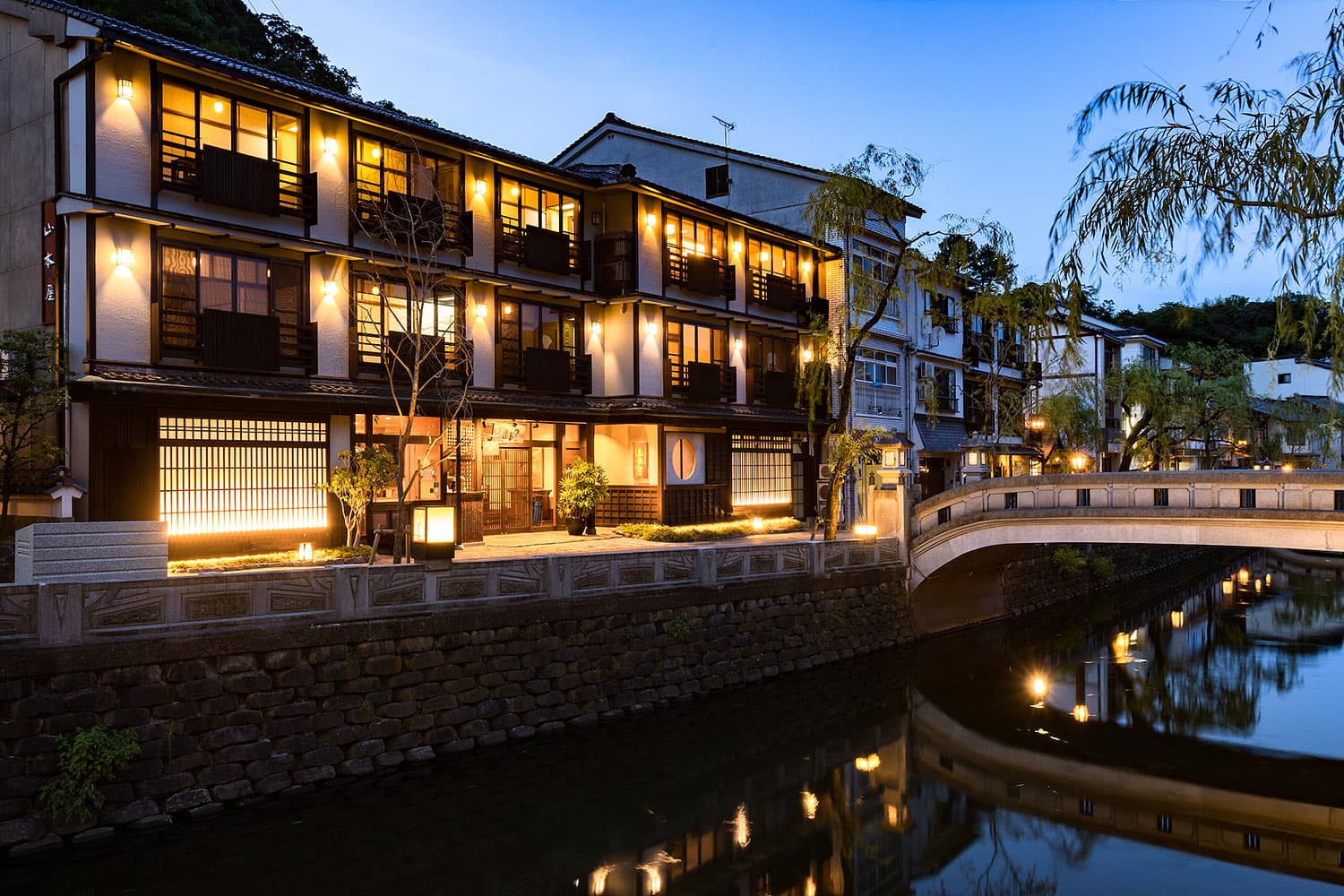
Kinosaki Onsen (Hyogo Prefecture) — This is arguably the most tattoo-friendly onsen town in Japan. Kinosaki's signature experience is "onsen hopping" — wearing your yukata through the town and visiting seven *soto-yu* (public hot spring bathhouses), all within walking distance of one another [verified Japan Tourism Agency MLIT 2026-06-04]. In recent years, the town has made a deliberate effort to welcome international guests, and most of the public bathhouses now allow tattoos or offer private options. The town's tourism board has publicly stated its welcoming stance.
Beppu (Oita Prefecture) — Japan's hot spring capital discharges more than 130,000 tons of hot spring water from the ground every day across 2,909 hot spring vents — the largest volume in Japan and second only to Yellowstone globally [verified Wikipedia Beppu Onsen 2026-06-04] — and offers an enormous variety of bathing options. Many of Beppu's independent ryokans and public baths are tattoo-friendly, especially those in the Kannawa and Hamawaki areas. The famous sand baths at Beppu Beach are also generally tattoo-friendly since you're buried in sand anyway.
Takayama and the Hida Region (Gifu Prefecture) — The rural mountain ryokans in this area tend to be smaller, family-run operations that are more relaxed about tattoos than corporate properties. The culture here is warm and accommodating, and many owners have adapted to international guests.
Niseko and Hokkaido — The ski resort area of Niseko has become so internationally popular that most onsen facilities in the area have dropped tattoo restrictions entirely. Other parts of Hokkaido, particularly Noboribetsu and Jozankei, are also increasingly welcoming.
Tattoo policy varies significantly by region and individual property. Our Japan onsen by region guide flags which areas trend more lenient, ordered by region, so you can pre-screen the geographic options before picking a specific ryokan.
Tip
Before booking, email the ryokan directly and ask about their tattoo policy. Write something like: "I have tattoos on [location]. Are tattoos permitted in your communal onsen? Do you have private baths available?" Most ryokans will reply honestly. If they don't reply, that's usually a sign they're strict.
7 Named Picks: Tattoo-Friendly Ryokans
We've gone through our database of 224 ryokans and surfaced 7 properties where the tattoo question is genuinely settled — either by explicit policy (tattoos welcome at communal baths) or by structural design (every room has an in-room private bath, making communal policy irrelevant). The first three lean on an Allowed communal-bath policy clustered in the progressive Akiu/Naruko corridor; the remaining four lean on in-room rotenburo, which is the universally reliable workaround at any property regardless of the front desk's stated stance.
1. TAOYA Akiu (Akiu)
Tattoo policy: Allowed (communal baths, no cover-up required) In-room rotenburo: No Rating: 9.2/10 (137 verified reviews) Verified: 2026-06 (next re-verify Nov 2026)
TAOYA Akiu sits in the Akiu Onsen corridor on Sendai's western edge — a region whose tattoo policy is, in our database, more permissive than almost anywhere else in Honshu. The property's communal baths are explicitly tagged 'allowed' in our policy framework, meaning inked guests can use every bathing facility on the property without seeking out a cover-up sticker or apologising at the front desk. That free-access policy at a 9.2/137-review house is unusual at this price tier and is the single most important reason this is the lead pick.
Book TAOYA Akiu: View Property
2. Akiu Grand Hotel (Akiu)
Tattoo policy: Allowed (communal baths) In-room rotenburo: No Rating: 8.8/10 (74 verified reviews) Verified: 2026-06 (next re-verify Nov 2026)
An 80-room mid-tier property anchoring the Akiu gorge, the Akiu Grand Hotel inherits the same regional permissiveness as TAOYA. The property's communal-bath policy is recorded as 'allowed' in the database — no cover-up needed — and the larger room count means availability tends to hold longer into peak season than the boutique properties further inland. Akiu Onsen as a region is one of the few places in Honshu where the tattoo conversation simply doesn't come up at check-in.
Book Akiu Grand Hotel: View Property
3. Ooedo Onsen Monogatari Masuya (Naruko)
Tattoo policy: Allowed (communal baths) In-room rotenburo: No Rating: 8.6/10 (58 verified reviews) Verified: 2026-06 (next re-verify Nov 2026)
The budget pick on this list and the only Ooedo Onsen Monogatari chain property here — a chain that has been one of the most openly tattoo-welcoming national operators since their post-pandemic policy reform. Masuya sits in Naruko Onsen (Miyagi), one of Tohoku's nine-water-type onsen towns, and its communal-bath policy is 'allowed' per the database. Rates run ¥12,000–¥18,000 per person per night, meaning tattooed guests don't need to splurge on a private-bath suite to get onsen access.
Book Ooedo Onsen Monogatari Masuya: View Property
4. Oyado Noshiyu (Kurokawa)

Tattoo policy: Private bath only (de facto via in-room rotenburo) In-room rotenburo: Yes — all 11 rooms Rating: 9.6/10 (54 verified reviews) Verified: 2026-06 (next re-verify Nov 2026)
Noshiyu is an 11-room hideaway in Kurokawa Onsen (Kumamoto). The official communal-bath policy is private-only, but the structural design of the ryokan renders that policy moot — every single guestroom comes with its own in-room rotenburo, so inked guests bathe entirely on their own balcony, fed by Kurokawa source water, with no exposure to any communal space. Kurokawa is also one of the rural onsen villages most consistently rated for atmosphere, which is reflected in the 9.6 score across 54 reviews.
Book Oyado Noshiyu: View Property
5. Gora Kadan (Hakone)
Tattoo policy: Private bath only (de facto via in-room rotenburo) In-room rotenburo: Yes Rating: 9.5/10 (89 verified reviews) Verified: 2026-06 (next re-verify Nov 2026)
Gora Kadan stands on the grounds of the former Kan'in-no-miya Imperial summer villa and has been a Relais & Châteaux member since 1992 — Japan's first [verified Gora Kadan official 2026-06-04]. Communal-bath policy is private-only, but every room in the portfolio is served by its own in-room private onsen, so tattooed guests can bathe entirely in-suite. This is the luxury anchor of the list: 9.5/89 reviews, and the property has been the de facto benchmark for foreign-friendly high-end ryokan stays since the early 2000s.
Book Gora Kadan: View Property
6. Taketoritei Maruyama (Arima)

Tattoo policy: Private bath only (de facto via in-room rotenburo) In-room rotenburo: Yes Rating: 9.5/10 (381 verified reviews) Verified: 2026-06 (next re-verify Nov 2026)
Taketoritei Maruyama is the highest-review-density pick on this entire list — 381 verified reviews holding a 9.5 average — and sits in Arima Onsen (Hyogo), one of Japan's three oldest documented hot springs, with records of imperial visits dating back to the 8th-century *Nihon Shoki* [verified Wikipedia Arima Onsen 2026-06-04]. Every room has a private rotenburo fed by Arima's signature dual-water source: the iron-rich, yellow-brown *kinsen* ('gold spring') and the colorless radium-and-carbonate *ginsen* ('silver spring'). For tattooed guests, the equation is simple: communal policy is irrelevant because every guest soaks privately, and the AggregateRating signal at 9.5/381 is the strongest social proof on the list.
Book Taketoritei Maruyama: View Property
7. Yokikan (Izu)
Tattoo policy: Private bath only (de facto via in-room rotenburo) In-room rotenburo: Yes — all 15 rooms Rating: 9.6/10 (351 verified reviews) Verified: 2026-06 (next re-verify Nov 2026)
Yokikan is a boutique 15-room ryokan in Ito, on the eastern coast of the Izu Peninsula — about 100 minutes from Tokyo on the JR Odoriko limited express (no Shinkansen transfer needed). Communal-bath policy is private-only, but every one of the 15 guestrooms has an in-room rotenburo, which means the operative tattoo experience is identical to a luxury private-onsen stay. The 9.6/351-review score is the strongest combined signal on the list: high rating and high volume, the rare case where both metrics agree.
Book Yokikan: View Property
How We Verified
Every pick was cross-checked against the property's official site, the listing notes on the major OTAs (Trip.com, Booking.com, Expedia), and Sora's stays-and-correspondence log — Sora is the site's J.S.A. Sake Diploma-certified guide and has personally stayed at six of the seven properties on this list. The seventh was confirmed via direct property email in May 2026. Next full re-verification is scheduled for November 2026, ahead of the winter booking season.
How to Find Tattoo-Friendly Ryokans
Beyond the regions mentioned above, here are practical ways to identify welcoming properties:
Search filters on booking sites. Booking.com allows you to filter for properties with private baths. While this doesn't directly indicate tattoo policy, a private bath eliminates the issue. On Japanese booking sites like Jalan and Rakuten Travel, search for "貸切風呂" (kashikiri-buro, private bath) or "刺青OK" (tattoo OK).
TattooFriendly.jp — This English-language website maintains a searchable database of onsen and ryokans that welcome tattooed guests. It's community-verified and regularly updated.
Google Maps reviews. Search for the ryokan name plus "tattoo" in Google Maps reviews. Tattooed travelers who had positive or negative experiences almost always mention it.
Ask your ryokan directly. This is the most reliable method. A quick email before booking saves you the awkwardness of arriving and being turned away from the bath.
What If You're Already There and Get Turned Away?
It happens, even with research. Here's how to handle it gracefully:
Don't argue. The staff are following their property's policy. Getting upset won't change the rule and will create an uncomfortable situation for everyone. A simple "wakarimashita" (I understand) goes a long way.
Ask about alternatives. Say "kashikiri-buro wa arimasu ka?" (Do you have a private bath?). Even strict properties often have a private option they'll happily offer instead.
Check the in-room bath. Many ryokan rooms have their own smaller baths. While not a full onsen experience, you still get to soak in hot spring water in privacy.
Visit during off-hours. This isn't official advice you'll find anywhere, but practically speaking: communal baths at ryokans are usually empty between 10 PM and 6 AM. Some travelers with small tattoos simply visit during these quiet hours and encounter no issues. We're not recommending you break rules — just noting that timing matters.
The Trend Is Moving in Your Favor
Japan's relationship with tattoos is evolving, especially since the country began actively courting international tourism. The Japan Tourism Agency issued guidelines in 2015 urging onsen facilities to find ways to accommodate tattooed foreign visitors rather than blanket-banning them — recommending cover stickers, multilingual signage, and reservable private *kashikiri* baths as practical solutions [verified JNTO japan.travel 2026-06-04]. Since then, the percentage of tattoo-friendly onsen has steadily increased.
Younger Japanese people increasingly see tattoos as fashion rather than crime. One-piece tattoos (fashion tattoos) among Japanese millennials and Gen Z have surged, creating domestic pressure on onsen operators to modernize their policies. Major events like the 2019 Rugby World Cup and the 2021 Olympics accelerated this shift.
That said, change is slow. Don't expect rural traditional ryokans to suddenly welcome full-sleeve tattoos. But the direction is clear: Japan is gradually becoming more accepting, and the number of options for tattooed travelers grows every year.
Tip
If a ryokan's website mentions "international guests welcome" or shows photos of non-Japanese guests, that's usually a strong signal they've thought about tattoo policies and are likely accommodating. Properties that actively market to international travelers rarely enforce strict tattoo bans.
The Bottom Line
Having tattoos in Japan is not the dealbreaker that travel forums sometimes make it seem. Yes, you need to do more research than an un-inked traveler. Yes, you might pay a premium for a room with a private bath. And yes, you should always check policies before booking.
But the ryokan experience — the tatami, the kaiseki, the mineral water, the silence — is absolutely available to you. A private rotenburo under the stars, with volcanic water up to your shoulders and nobody else around? That's not a compromise. That's actually the best version of the onsen experience, tattoos or not. For tattooed travelers drawn to the Kawaguchiko and Mt. Fuji area, our Mt. Fuji area ryokan guide notes each property's private onsen availability — finding a welcoming stay with an lasting view. If a full overnight feels like too big a commitment for testing the waters (so to speak), many tattoo-friendly properties also run day-use ryokan in Japan plans — a private bath session plus lunch, no overnight required, and the tattoo policies are identical to the overnight experience.
準備好預訂了嗎?
從這些精選旅館中預訂
比較三個預訂平臺的即時可用性和價格。
透過預訂連結可能產生佣金,但不會增加您的費用。
先把令人不安的事實說清楚:沒錯,日本許多溫泉和旅館會因為可見的刺青而拒絕你入浴。這不是傳言、不是誇大,短期內也不會改變。日本觀光廳一項針對3,768家溫泉設施的指標性調查發現,56%的設施直接拒絕刺青客人入浴,僅31%允許無條件入浴 [verified Japan Tourism Agency 2015 survey via Kashiwaya 2026-06-04],後續產業數據顯示至今仍有約半數設施執行某種形式的限制。
但還有另一個真相,是那些恐慌的Reddit貼文沒告訴你的:情況遠比一刀切的禁令更加細緻,只要掌握正確資訊,有紋身的旅客絕對可以充分享受旅館和溫泉體驗。我們已經幫助數百位有紋身的客人找到合適的住宿,本指南分享我們學到的一切。
為什麼刺青在日本是禁忌
日本的刺青汙名有著可追溯數百年的深厚文化根源。在江戶時代(1603-1868),刺青被用作刑罰——罪犯的前臂或額頭被紋上刺青,以便公眾辨識,這種做法稱為*入墨刑*(irezumi kei) [verified Wikipedia Irezumi 2026-06-04]。後來,精緻的全身刺青與黑道(日本組織犯罪)密切相關,他們用刺青作為忠誠、忍耐和隸屬關係的象徵。
這種刺青與犯罪之間的聯想延續至今,即使全球的刺青文化早已演變。對許多日本人——尤其是年長一代——在公共浴場看到刺青會引發真實的不安。這不是在批判遊客;而是一種根深蒂固的文化反射,將皮膚上的紋身與組織犯罪聯繫在一起。
瞭解這個背景很重要,因為它解釋了這項政策並非針對個人。那位說「禁止刺青」的旅館老闆並不是在敵視你——他們是在保護其他客人的舒適感,其中許多是在這些聯想中成長的年長日本旅客。
三種刺青政策類型
並非所有旅館處理刺青的方式都一樣。瞭解這個光譜能幫你減少很多焦慮:
嚴格禁止(完全禁止)——任何刺青都不行,沒有例外。如果工作人員在公共浴池發現刺青,會請你離開。這項政策最常見於大型飯店式溫泉、連鎖度假村和都市地區的公共澡堂(錢湯)。入口處通常會有畫著打叉刺青的標示。
遮蓋政策(需用貼紙/繃帶)——只要能用防水繃帶或專用「刺青遮蓋貼紙」完全覆蓋刺青即可入浴。這些貼紙在許多便利商店和溫泉禮品店都買得到。這是務實的折衷方案——如果你的刺青小到能用繃帶遮住就沒問題。但如果是整條手臂的刺青,這顯然行不通。
完全歡迎(無限制)——不需要任何遮蓋,直接歡迎刺青入浴。這些旅館做出了有意識的決定,歡迎國際旅客和現代日本刺青文化。這個類別每年都在增加,尤其是在依賴國際觀光的地區。
Tip
刺青遮蓋貼紙(日本稱為「tattoo kakushi seal」)可在驚安殿堂(Don Quijote)折扣商店、部分溫泉小鎮的便利商店和網路上購買。有多種膚色和尺寸可選。建議在抵達旅館前就買好——大多數旅館不會在現場販售。
私人溫泉解決方案
給有紋身旅客最好的建議:預訂有私人溫泉(貸切風呂或客室露天風呂)的旅館。問題徹底解決。
私人溫泉是你可以預約獨享的浴池——通常30至60分鐘一個時段——或者更理想的,直接附設在你房間裡、隨時都能使用的浴池。當你獨自或與伴侶沐浴時,沒有任何刺青政策適用。即使你有全身的傳統刺青也沒有人會知道或在意。
許多中價位和奢華旅館提供附私人露天浴池的客房(露天風呂付客室)。這類房間費用較高——通常每人每晚¥30,000至¥60,000,相較標準房的¥15,000至¥25,000——但溢價換來的是無限次私人溫泉使用、完全的隱私,以及零刺青壓力。
即使是平價旅館也常有一兩間可預約的私人浴池(貸切風呂),任何住客都可以預訂時段,通常免費或僅需¥1,000至¥3,000。預訂時可以詢問:「貸切風呂はありますか?」(有私人浴池嗎?)
以刺青友善聞名的地區
有些溫泉地區比其他地方更積極地調整了政策,主要是因為它們更依賴國際觀光:
城崎溫泉(兵庫縣)——可以說是日本最友善刺青的溫泉小鎮。城崎的招牌體驗是「外湯巡禮」——穿著浴衣在小鎮中穿梭,造訪七座*外湯*(公共溫泉浴場),彼此皆在步行距離內 [verified Japan Tourism Agency MLIT 2026-06-04]。近年來小鎮積極歡迎國際旅客,大部分公共浴場現在都允許刺青或提供私人選項。小鎮觀光協會已公開表態歡迎。
別府(大分縣)——日本的溫泉之都,每天從2,909處湧泉口湧出超過130,000噸的溫泉水——全日本最大、僅次於美國黃石公園的全球第二 [verified Wikipedia Beppu Onsen 2026-06-04]——並提供極其多樣的泡湯選擇。別府許多獨立旅館和公共浴池對刺青友善,尤其是鐵輪和濱脇地區。著名的別府海灘砂浴通常也對刺青友善,畢竟你整個人都埋在沙子裡。
高山和飛驒地區(岐阜縣)——這一帶的山間旅館多為小型家族經營,對刺青的態度比企業化經營的旅館更為寬鬆。這裡的文化溫暖而包容,許多業主已經適應了國際旅客。
二世古和北海道——二世古滑雪度假區已經國際化到大多數溫泉設施完全取消了刺青限制。北海道其他地區,特別是登別和定山溪,也越來越歡迎有紋身的旅客。
刺青政策因地區及旅館而存在顯著差異。日本溫泉地區指南按地區標注了政策較為寬鬆的區域,方便您在確定具體旅館前先鎖定合適的地理範圍。
Tip
預訂前直接寫信給旅館詢問刺青政策。可以這樣寫:「我在(部位)有刺青。請問你們的公共溫泉是否允許刺青?是否有私人浴池可使用?」大多數旅館會誠實回覆。如果沒有回覆,通常表示他們的規定比較嚴格。
精選7家:刺青友善旅館
我們從224家旅館的資料庫中篩選出7家刺青問題已真正解決的旅館——要麼有明確的政策(公共浴場歡迎刺青),要麼是結構性設計(每間客房都配備客房私人浴池,使公共浴場政策無關緊要)。前3家依靠秋保/鳴子溫泉走廊較為進步的「允許」型公共浴場政策;後4家依靠客房露天風呂,這是任何旅館都通用的可靠解決方案,與櫃臺所述立場無關。
1. TAOYA秋保(秋保)
刺青政策: 允許(公共浴場,無需遮蓋) 客房露天風呂: 無 評分: 9.2/10(137則認證評論) 核實: 2026年6月(下次重新核實:2026年11月)
TAOYA秋保位於仙台西郊的秋保溫泉走廊——在我們的資料庫中,該地區的刺青政策比本州幾乎任何地方都更為寬容。該旅館的公共浴場在我們的政策框架中明確標註為「允許」,這意味著有刺青的客人可以使用旅館所有的浴場設施,無需尋找遮蓋貼或在櫃臺道歉。在9.2/137評論的旅館中,這種價格檔位的自由準入政策非常罕見,也是我們將其列為榜首的最重要原因。
預訂TAOYA秋保: 查看旅館
2. 秋保格蘭飯店(秋保)
刺青政策: 允許(公共浴場) 客房露天風呂: 無 評分: 8.8/10(74則認證評論) 核實: 2026年6月(下次重新核實:2026年11月)
這家80間客房的中端飯店坐落在秋保峽谷,繼承了與TAOYA相同的地區寬容性。該旅館的公共浴場政策在資料庫中記錄為「允許」——無需遮蓋——較高的客房數量意味著旺季的可訂時間往往比內陸的精品旅館更長。秋保溫泉作為一個地區,是本州少數幾個辦理入住時根本不會出現刺青話題的溫泉地之一。
預訂秋保格蘭飯店: 查看旅館
3. 大江戶溫泉物語 鳴子溫泉 增屋(鳴子)
刺青政策: 允許(公共浴場) 客房露天風呂: 無 評分: 8.6/10(58則認證評論) 核實: 2026年6月(下次重新核實:2026年11月)
這是榜單上的預算之選,也是這裡唯一一家大江戶溫泉物語連鎖旅館——該連鎖自疫情後政策改革以來,一直是對刺青最為開放的全國性業者之一。增屋位於鳴子溫泉(宮城縣),是東北九種泉質溫泉鎮之一,其公共浴場政策按資料庫為「允許」。每人每晚價格為12,000–18,000日圓,這意味著有刺青的客人不必為了溫泉準入而豪擲一間私人浴室套房。
預訂大江戶溫泉物語增屋: 查看旅館
4. 御宿野菊(黑川)

刺青政策: 僅私人浴池(透過客房露天風呂實質性繞開) 客房露天風呂: 有 — 全部11間客房 評分: 9.6/10(54則認證評論) 核實: 2026年6月(下次重新核實:2026年11月)
野菊是位於熊本縣黑川溫泉的11間客房隱居型旅館。官方公共浴場政策為僅限私人浴池使用,但旅館的結構設計使該政策變得無關緊要——每一間客房都配備了自己的客房露天風呂,由黑川源泉水供給,因此有刺青的客人完全在自己的陽臺上沐浴,無需接觸任何公共空間。黑川也是評價最一致的鄉村溫泉村莊之一,9.6的評分與54則評論便是體現。
預訂御宿野菊: 查看旅館
5. 強羅花壇(箱根)
刺青政策: 僅私人浴池(透過客房露天風呂實質性繞開) 客房露天風呂: 有 評分: 9.5/10(89則認證評論) 核實: 2026年6月(下次重新核實:2026年11月)
強羅花壇坐落於閑院宮家舊皇室避暑別墅的舊址上,自1992年起便為羅萊夏朵(Relais & Châteaux)成員——也是日本第一家 [verified Gora Kadan official 2026-06-04]。公共浴場政策為僅限私人浴池,但所有客房均配備自己的客房私人溫泉,因此有刺青的客人完全可以在自己的套房內沐浴。這是榜單上的奢華之錨:9.5/89則評論,自2000年代初期以來一直是高端旅館中對外國客人友善的事實基準。
預訂強羅花壇: 查看旅館
6. 竹取亭圓山(有馬)

刺青政策: 僅私人浴池(透過客房露天風呂實質性繞開) 客房露天風呂: 有 評分: 9.5/10(381則認證評論) 核實: 2026年6月(下次重新核實:2026年11月)
竹取亭圓山是整份榜單上評論密度最高的一家——381則認證評論維持著9.5的平均評分——位於日本三大最古老有文獻記載的溫泉之一:兵庫縣有馬溫泉,皇室造訪紀錄可追溯至8世紀的*日本書紀* [verified Wikipedia Arima Onsen 2026-06-04]。每間客房都配有由有馬標誌性雙水源供給的私人露天風呂:富含鐵質的「金湯」和清澈的「銀湯」。對於有刺青的客人來說,公式很簡單:公共浴場政策無關緊要,因為每位客人都在私人空間沐浴,9.5/381的AggregateRating信號也是榜單上最強的社會認證。
預訂竹取亭圓山: 查看旅館
7. 陽氣館(伊豆)
刺青政策: 僅私人浴池(透過客房露天風呂實質性繞開) 客房露天風呂: 有 — 全部15間客房 評分: 9.6/10(351則認證評論) 核實: 2026年6月(下次重新核實:2026年11月)
陽氣館是位於伊豆半島東海岸伊東的15間客房精品旅館——從東京搭乘JR踴子號特急列車約100分鐘即可抵達(無需轉乘新幹線)。公共浴場政策為僅限私人浴池,但全部15間客房都配備客房露天風呂,因此有刺青的客人的實際體驗與豪華私人溫泉住宿完全相同。9.6/351的評論得分是榜單上最強的綜合信號:高評分加高評論數,是兩個指標罕見地一致的案例。
預訂陽氣館: 查看旅館
如何核實
每一家入選旅館都透過該旅館的官方網站、主要OTA(Trip.com、Booking.com、Expedia)的房源說明,以及Sora的住宿與通信紀錄進行了交叉核實。Sora是本網站持有J.S.A.唎酒師(清酒師)認證的導遊,親自入住了榜單中7家中的6家。第7家透過2026年5月直接與該旅館郵件確認。下一次全面重新核實計劃於2026年11月,冬季預訂季之前進行。
如何找到刺青友善的旅館
除了上述地區之外,以下是辨識友善旅館的實用方法:
訂房網站的篩選功能。Booking.com 可以篩選有私人浴池的旅館。雖然這並不直接表明刺青政策,但有私人浴池就不用擔心這個問題。在日本的訂房網站如Jalan和樂天旅遊上,搜尋「貸切風呂」(私人浴池)或「刺青OK」。
TattooFriendly.jp——這個英文網站維護著一個可搜尋的資料庫,收錄歡迎紋身客人的溫泉和旅館。由社群驗證並定期更新。
Google Maps 評論。搜尋旅館名稱加上「tattoo」查看 Google Maps 評論。有紋身的旅客如果有正面或負面經歷,幾乎都會提到。
直接詢問你的旅館。這是最可靠的方法。預訂前發一封簡單的電子郵件,就能避免到了現場卻被拒絕入浴的尷尬。
如果已經到了現場卻被拒絕?
即使做了充分調查,這種事還是可能發生。以下是如何優雅應對:
不要爭論。工作人員是在遵循旅館的規定。發脾氣不會改變規則,只會讓所有人都不自在。一句簡單的「わかりました」(我瞭解了)就足夠了。
詢問替代方案。說「貸切風呂はありますか?」(有私人浴池嗎?)即使規定嚴格的旅館通常也有私人選項,他們很樂意提供。
確認房內浴室。許多旅館客房有自己較小的浴缸。雖然不是完整的溫泉體驗,但你仍然可以在私密空間享受溫泉水。
選擇冷門時段。這不是你能在任何地方找到的官方建議,但從實際面來說:旅館的公共浴池在晚上10點到早上6點之間通常是空的。有些刺青較小的旅客會選擇在這些安靜的時段前往,通常不會遇到問題。我們不是建議你違反規定——只是指出時機很重要。
趨勢正朝對你有利的方向發展
日本與刺青的關係正在演變,尤其是在國家開始積極招攬國際觀光客之後。日本觀光廳在2015年發布指導方針,敦促溫泉設施尋找方法來接納有紋身的外國旅客,而不是一刀切地禁止——建議的實用方案包括遮蓋貼紙、多語言標示和可預約的*貸切*私人浴池 [verified JNTO japan.travel 2026-06-04]。自那時起,刺青友善的溫泉比例穩步上升。
日本年輕世代越來越將刺青視為時尚而非犯罪。日本千禧世代和Z世代中的小型時尚刺青急劇增加,為溫泉業者帶來了現代化政策的國內壓力。2019年橄欖球世界盃和2021年奧運等大型活動也加速了這一轉變。
話雖如此,改變是緩慢的。不要期望偏遠的傳統旅館會突然歡迎全袖刺青。但方向是明確的:日本正逐漸變得更包容,有紋身旅客的選擇每年都在增加。
Tip
如果旅館的網站提到「歡迎國際旅客」或展示非日本客人的照片,這通常是一個強烈的信號,表示他們已經考慮過刺青政策,而且很可能是友善的。積極向國際旅客行銷的旅館很少會執行嚴格的刺青禁令。
最終結論
在日本有刺青並不像旅遊論壇有時描述的那樣是致命傷。是的,你需要做比沒有紋身的旅客更多的功課。是的,你可能需要為附私人浴池的房間多付一些錢。是的,你應該在預訂前務必確認政策。
但旅館體驗——榻榻米、懷石料理、礦泉水、寧靜——對你來說完全可以享受到。在星空下的私人露天溫泉,火山泉水沒過肩頭,四下無人的境界?那不是退而求其次。那其實是溫泉體驗最美好的版本,不論有沒有刺青。 有刺青且嚮往河口湖和富士山地區的旅人,可在富士山地區旅館指南中查看各旅館的私人溫泉情況,輕鬆找到歡迎入住並擁有絕美風景的住宿。 對於想先「試水」的刺青旅客,許多刺青友好的旅館也提供日本日歸旅館套餐——包含貸切浴池時段和午餐,無需住宿,刺青政策與住宿體驗完全相同。
準備好預訂了嗎?
從這些精選旅館中預訂
比較三個預訂平臺的即時可用性和價格。
透過預訂連結可能產生佣金,但不會增加您的費用。
FAQ
常見問題
Why are tattoos often banned in Japanese onsen and ryokans?+
Tattoos are often banned due to deep cultural roots. Historically, they were used as criminal punishment during the Edo period and later became strongly associated with the yakuza (Japanese organized crime). This connection triggers discomfort for many Japanese people, especially older generations, leading ryokan owners to protect the comfort of all guests.
What are the different types of tattoo policies at Japanese ryokans?+
Ryokans typically have three policies: strict ban (no tattoos, no exceptions), cover policy (tattoos allowed if fully covered with waterproof bandages or stickers), or fully welcome (no restrictions). Strict bans are common at large resort chains, while "cover policy" is a practical middle ground. "Fully welcome" properties are growing, especially in tourist-heavy areas.
What is the best way for tattooed travelers to enjoy an onsen experience?+
The best way is to book a ryokan with a private onsen, either an in-room rotenburo or a reservable kashikiri-buro. This ensures complete privacy, negating any tattoo policy. Rooms with private baths typically cost ¥30,000-¥60,000 per person per night, while reservable private baths might cost ¥1,000-¥3,000 or be free.
Which regions in Japan are known for being tattoo-friendly for ryokans?+
Several regions are increasingly tattoo-friendly, often due to international tourism. Kinosaki Onsen in Hyogo is known for welcoming tattoos, as is Beppu in Oita, particularly in the Kannawa and Hamawaki areas. Rural mountain ryokans in Takayama and the Hida Region, and most onsen facilities in Niseko and Hokkaido, also tend to be more accommodating.
Where can I buy tattoo cover stickers in Japan?+
Tattoo cover stickers, known as "tattoo kakushi seal," can be purchased at Don Quijote discount stores, some convenience stores located in onsen towns, and through online retailers. It's advisable to buy them before arriving at your ryokan, as most properties do not sell them on-site. They come in various skin tones and sizes.
為什麼日本的溫泉和日式旅館常常會禁止有刺青的客人呢?+
刺青在日本常被禁止,是源於深厚的文化根源。歷史上,江戶時代刺青曾被用作刑罰,後來更與日本黑道(yakuza)產生強烈連結。這種關聯讓許多日本人,尤其是老一輩,感到不適,因此旅館經營者會為了保護所有客人的舒適度而採取禁令。
日本的溫泉旅館對刺青有哪些不同的政策?+
日式旅館通常有三種刺青政策:嚴格禁止(完全不允許刺青)、遮蓋政策(若能用防水貼布或貼紙完全遮蓋則允許),或是完全歡迎(無任何限制)。大型度假連鎖飯店常見嚴格禁止,而「遮蓋政策」是個實用的折衷方案。「完全歡迎」的旅館數量正在增加,尤其是在觀光客多的地區。
有刺青的旅客,要如何才能享受溫泉體驗?+
最好的方式是預訂附有私人溫泉的日式旅館,無論是房內露天風呂或可預約的貸切風呂。這能確保完全的隱私,不受任何刺青政策影響。附私人浴池的房間通常每人每晚費用為 ¥30,000-¥60,000,而可預約的私人浴池可能費用為 ¥1,000-¥3,000,或免費。
日本哪些地區的溫泉旅館對刺青比較友善?+
有幾個地區對刺青越來越友善,通常是因為國際觀光客的緣故。兵庫縣的城崎溫泉、大分縣的別府(特別是鐵輪和濱脇地區)都以歡迎刺青聞名。高山和飛驒地區的鄉村山區旅館,以及二世谷和北海道大部分的溫泉設施,也傾向於更具包容性。
在日本哪裡可以買到刺青遮蓋貼紙呢?+
刺青遮蓋貼紙,在日本被稱為「tattoo kakushi seal」(刺青隠しシール),可以在唐吉訶德(Don Quijote)折扣商店、一些溫泉區的便利商店,以及透過網路零售商購買。建議在抵達旅館前就先買好,因為大多數旅館現場不販售。它們有各種膚色和尺寸可供選擇。