一人旅で泊まれる日本の旅館おすすめ8選(2026年版):一人追加料金・予約のコツ・地域別比較
Photo: Yosuke Ota / Unsplash
旅の計画|May 2026|11 min read

一人旅で泊まれる日本の旅館おすすめ8選(2026年版):一人追加料金・予約のコツ・地域別比較

--- title: "Best Ryokans for Solo Travelers in Japan (2026 Guide)" excerpt: "8 verified solo-friendly ryokans across Japan — with single supplement costs, a direct-booking email template, and region-by-region solo-friendliness scores." lang: "en" ---

Traditional Japanese tatami room with low lacquer table, shoji screens, and a garden view beyond — the intimate scale of a single-occupant ryokan room

*A tatami room at Hamarikyu, Tokyo — the composed solitude of a solo ryokan stay — Photo by Yosuke Ota on Unsplash*

The first thing most people searching for the best ryokan for solo travelers in Japan want to know is whether they'll even be let through the door. It's a fair concern — the ryokan industry has a well-earned reputation for steering solo guests toward a double-occupancy rate or a polite decline. I've had both experiences, and they are genuinely different.

What nobody tells you before you arrive is the other side of it: when a ryokan does accept you as a solo guest, the experience scales differently than it does for two people. The okami (innkeeper) has one person to read. The attendant serving your kaiseki doesn't divide attention. The outdoor bath at 5:30am is entirely yours. Omotenashi — the philosophy of hospitality anticipating every need — lands with a completeness that is harder to achieve when a room is built around two guests.

This guide is not about making the best of a compromise. Solo is a legitimate and, for some purposes, optimal format for a ryokan stay. The challenge is identifying which properties understand that, and how to reach them without paying a penalty.

Below: eight verified solo-friendly ryokans across Japan, the real numbers on single supplements, a direct-booking email template, and a region-by-region comparison table. Every property has been confirmed to accept solo bookings in 2025–2026. Prices are verified as of May 2026.

---

Why solo is actually the best way to experience a ryokan

The standard narrative frames solo ryokan travel as a workaround — a compromise by someone who couldn't find a travel companion. The actual experience inverts this completely.

Omotenashi is fundamentally personal. It describes hospitality that anticipates what you need before you ask — but it scales to the individual. When staff are attending one person, they're reading one set of signals: how quickly you're moving through a dish, whether you've looked out the window twice in a row, whether your sake cup is half-empty. The service becomes specific in a way it can't be when split across two guests with different needs and rhythms.

Onsen is a meditative practice. This is not a Western wellness marketing claim — it's the original cultural intention. The ofuro ritual predates couple travel by centuries; monks, pilgrims, and solo merchants soaked alone as a matter of course. A private kashikiri bath reserved for your exclusive use at 6am, with no ambient conversation and no performance of relaxation for a companion's benefit, is the thing in its original form.

Kaiseki eaten alone demands complete attention. Twelve to fifteen small courses arrive over ninety minutes, each built around a single seasonal ingredient, a particular cooking technique, a specific vessel chosen to complement the dish. There's no socially polite reason to stop noticing all of that. You can take twenty seconds between bites to look at a yuzu rind without anyone waiting for you to re-engage.

The schedule is entirely yours. Onsen at 5am. Breakfast at 7:30. Checkout at the last possible minute. The negotiation that usually shapes a couple's itinerary disappears entirely.

Tip

Ryokan staff frequently describe solo international guests as their favorite visitors — curiosity is reciprocal. Come prepared with one question about the property's history or the local spring water, and the dynamic shifts entirely. Even a short exchange through a translation app is received warmly.

---

Why ryokans have historically resisted solo guests (and what has changed)

The reluctance is arithmetic, not attitude.

The [Japan Ryokan Association](https://www.ryokan.or.jp/past/english/prices/index.html) formalizes a pricing model where rates are charged per person per night, bundling accommodation, multi-course kaiseki dinner, breakfast, and all onsen access. A room designed for two generates two full-rate fees. A solo guest in that same room produces one fee while the property bears the full room cost: meal preparation for one, room cleaning, a dedicated staff member for check-in and check-out, and an occupied bath slot that blocks other guests.

For a small rural inn running twelve rooms on thin margins, that arithmetic isn't trivial. It's the difference between a viable evening and a loss, particularly on weekends when demand from couple and group travelers is highest. This is why the default response to a solo inquiry at a traditional property has historically been either a polite decline or a single supplement — a surcharge of anywhere from 5,000 to 10,000 yen above the standard per-person rate, or in some cases the full second-person rate charged outright.

What has genuinely changed since 2020: Japan's own culture shifted. The concept of *ohitori-sama* (respectful solo) leisure — solo dining, solo travel, solo onsen — became mainstream enough that Bunshun, one of Japan's leading publishers, now releases an annual guidebook reviewing over 300 solo-friendly onsen locations (the 2026 edition of *CREA Due* covers more than 300 properties [verified realgaijin.substack.com, 2026-05-02]). Hoshino Resorts launched a branded "HOSHINOYA Rewarding Solo Trip" program in 2025 across three properties. The [Japan Tourism Agency has since 2017 encouraged ryokans to separate meal fees from accommodation fees](https://www.statista.com/statistics/624452/japan-ryokan-hotel-numbers/), a structural change that makes solo stays financially more accessible by allowing accommodation-only plans.

Solo travel to Japan has grown in parallel. According to one Japan-specialist tour operator, 35% of their Japan clients were solo travelers in 2024 — a 12% increase year-on-year [Tourist Japan, 2024 — note: this is one operator's client data, not a national figure]. As travel writer and Japan solo-travel commentator at realgaijin.substack.com noted in a 2026 essay on the solo onsen boom: "The industry is no longer asking 'How do we accommodate solo travelers?' It is asking 'How do we optimize for them?'"

Tip

The single supplement is almost always negotiable for midweek stays between November and March. Calling the property directly — or using the email template later in this guide — yields better results than any OTA for solo bookings. Japanese holiday periods (Golden Week, Obon, Silver Week, New Year) are effectively closed to rate negotiation. Avoid them entirely or budget for full double-occupancy pricing.

---

How to identify genuinely solo-friendly ryokans before you book

The difference between a property that tolerates solo guests and one that has actually designed for them is visible before you make contact.

Look for ohitori-sama kan-gei (一人様歓迎, "one-person welcome") language on the property's Japanese-language page — its presence is a clear signal, its absence worth noting. Many properties that accept solo guests on abroad-facing English pages don't flag this, but the Japanese version will.

On booking platforms, the approach varies significantly:

- [Jalan (じゃらん)](https://www.jalan.net) and Rakuten Travel have explicit 1-person occupancy filters that surface genuine solo-rate plans. If a property shows "unavailable" for 1 person on these platforms during a given period, that's accurate and useful information. - Booking.com and Expedia don't distinguish between per-person and per-room pricing in search results — the single supplement is often buried until checkout. Use these platforms for initial research and English-language reviews, not for final price comparison. - Ikyu (一休.com, [English version](https://www.ikyu.com/en-us/)) has a dedicated solo filter in its onsen area searches and focuses on verified premium properties.

Room size is a useful proxy. Properties listing rooms in the 6–10 tatami range are more likely to have genuinely solo-sized spaces. A suite listed as "16 tatami with garden terrace" was designed for two; a 4.5-tatami *washitsu* was not.

Red flags: "minimum 2 guests" stated on the rate page, no single-person rate displayed, or an inventory consisting entirely of large suites. These aren't dealbreakers if you're willing to call directly, but they indicate the property hasn't made solo travel part of its default offering.

---

8 solo-friendly ryokans across Japan: verified, rated, and region-sorted

The eight properties below were selected based on confirmed solo-rate availability, English communication capability, solo guest reviews and policies current as of 2025–2026, and geographic spread across Japan's main ryokan regions.

Each entry is rated on four dimensions: - Solo supplement: None / Low / Medium / High - English-friendliness: 1–5 - Onsen access: Private / Shared / Both - Dining format: In-room / Dining hall / Both

---

1. Shima Onsen Kashiwaya Ryokan, Gunma — the benchmark for solo-friendly policy

Spacious traditional Japanese room with tatami floor, shoji paper screens filtering afternoon light, and a low lacquer table — typical solo room scale at a mid-range ryokan

*Traditional tatami room with shoji screens — the format most solo-friendly ryokan single rooms follow — Photo by Yosuke Ota on Unsplash*

[Shima Onsen Kashiwaya Ryokan](https://www.kashiwaya.org/e/) is the clearest example of a traditional Japanese inn that has made solo travel part of its identity, not an afterthought. As their official magazine puts it: "Traveling alone truly has its own unique charm. You can do things at your own pace without having to worry about bothering others." [kashiwaya.org/e/magazine, 2026-05-02]. That's not a booking platform blurb — it's the ryokan's own editorial voice.

The property explicitly promotes solo international travel on its English website — a level of intentionality that remains rare — and has designed specific single-occupancy rooms so there's no question of paying for space you aren't using. Shima Onsen (四万温泉) in Gunma Prefecture is one of Japan's designated 100 best hot springs, roughly 2.5–3 hours from Tokyo. The spring water is clean-tasting and moderately sulfurous; you feel it on your skin before you smell it. Kashiwaya sits beside the river, and the sound of it is constant in the quieter rooms.

What makes it solo-optimal

The property has dedicated single rooms — a rarity among the best solo ryokan options in Japan. Solo guests pay the per-person rate with no supplement. The dinner features Joshu beef kaiseki, served in-room, which removes any dining-alone anxiety before it starts. The official website has an English reservation system and full English content, so there's no language barrier at any stage. They also run a Tokyo bus service for an additional 5,200 yen round-trip — useful for solo travelers who don't want to manage rail connections.

The limitation: single rooms don't have private in-room onsen. The shared natural spring baths are excellent, but if a private rotenburo is your priority, you'll need to look elsewhere or upgrade to one of the two-person HANA or KAME rooms.

Solo stats

| | | |---|---| | Solo supplement | None (dedicated single rooms; per-person rate only) | | English-friendliness | 5/5 | | Onsen access | Shared natural hot spring (private in-room onsen in larger rooms only) | | Solo rate | 22,000–28,000 yen/night with two meals [verified kashiwaya.org, 2026-05-02] (~$145–185 USD) | | Best booking method | Direct via English website; online reservation system available |

---

2. Tsuchiya (Utsuroi Tsuchiya Annex), Kinosaki Onsen — a room built for one

[Tsuchiya](https://visitkinosaki.com/stay/tsuchiya/) in Kinosaki Onsen has done something most ryokans haven't bothered to: it created a room — the KIRI room — with a maximum occupancy of one guest. Not a double room with a reduced rate. A room designed from the outset for solo use.

Kinosaki Onsen (城崎温泉) in Hyogo Prefecture is one of Japan's most structurally solo-friendly destinations regardless of where you stay. The town's *soto-yu* (outside bathing) system means your ryokan's yukata is your passport to seven public bathhouses scattered along a willow-lined river canal. Solo movement between baths — on foot, in yukata and geta sandals — is the point of the town. The literary heritage adds texture: the writer Shiga Naoya came here to recuperate after a train accident in 1913, stayed for months, and wrote "At Kinosaki" (城の崎にて) — one of the defining works of modern Japanese prose. Coming alone is, historically, correct.

What makes it solo-optimal

The KIRI room solo plan (Plan No. 163) is accommodation-only — Tsuchiya offers no meals in this plan, which means you eat at Kinosaki's restaurants or street vendors. For many solo travelers this is actually preferable: the town has excellent *tajimagyu* beef, crab in season, and fresh grilled skewers along the main street. Two private onsen baths on the property are available free, no reservation needed (7am–10am and 3pm–10:30pm). The Yumepa pass covering all seven town public bathhouses per the Visit Kinosaki official site [visitkinosaki.com, 2026-05-02] is included.

The accommodation-only structure means the rate is among the lowest in this guide.

Solo stats

| | | |---|---| | Solo supplement | None (room designed for single occupancy) | | English-friendliness | 4/5 (Visit Kinosaki tourism site has strong English support) | | Onsen access | 2 private in-property baths + 7 town public baths (Yumepa pass included) | | Solo rate | ~11,000–20,000 yen/night accommodation only [Momondo/KAYAK aggregator, 2026-05-02] (~$75–135 USD) | | Best booking method | Direct via [visitkinosaki.com](https://visitkinosaki.com/stay/tsuchiya/plan/?mode=plan_detail&PlanNo=163) or Jalan with 1-person filter |

---

3. Mozumo, Okuhida Onsen-go (Takayama region) — private rotenburo, complete solitude

Single person walking a narrow traditional Japanese street lined with wooden merchant buildings at dusk in Kyoto, evoking solo evening freedom in Japan's historic towns

*Dusk on a traditional Japanese street — the quiet autonomy of solo travel by yukata and geta — Photo by Chloé Lefleur on Unsplash*

[Mozumo](https://www.mozumo.com/lang/eng/) sits in Hirayu Onsen in Okuhida, a valley between Takayama and Kamikochi — and has been identified as the top solo-friendly ryokan in the Takayama region [luxuryhotelkyoto.com, 2026-05-02]. The property is adults-only (20+), small, and specifically built around quiet time in a way that most inns only claim.

The defining characteristic is the onsen. Every room at Mozumo has its own private outdoor open-air hot spring bath fed directly from a source 200 meters away — no circulation, no reheating, kakenagashi (continuous fresh-flow) natural water. The water is a hydrogen carbonate spring, soft against the skin. In the evening, the forest around the baths is completely dark and completely quiet.

The Okuhida location makes the Takayama base camp approach straightforward. Day trips to Kamikochi (30 minutes), Norikura Skyline (60 minutes), and the Shinhotaka Ropeway (30 minutes) are all accessible without a car. Takayama's Sanmachi Suji historic district — sake breweries, lacquerware, morning markets — is 35 minutes by bus from Hirayu Terminal. The free pick-up service from the terminal (8 minutes away) removes the logistical friction of arriving alone.

What makes it solo-optimal

For solo travelers, the private in-room rotenburo is the key feature. You don't negotiate bath times. You don't book a 50-minute slot. You open the door from your room and the outdoor bath is there, available at any hour. This is the best solo onsen experience in Japan at its most structurally complete.

Important note: Mozumo's official site confirms each room holds up to 2 people, but the solo supplement policy is not explicitly stated. Contact the property directly before booking to confirm solo pricing. The adults-only policy at minimum ensures you won't share the atmosphere with families.

Solo stats

| | | |---|---| | Solo supplement | Not confirmed — contact directly to verify | | English-friendliness | 3/5 (English website and reservation available; limited phone support) | | Onsen access | Private outdoor rotenburo in every room | | Solo rate | ~47,000–52,000 yen/night with two meals [KAYAK recent booking data, 2026-05-02] (~$310–345 USD) | | Best booking method | Direct email via [mozumo.com](https://www.mozumo.com/lang/eng/) English inquiry; confirm solo policy first |

---

4. Fujiya, Kurokawa Onsen, Kyushu — the right-sized room in the right village

A private indoor-outdoor onsen pool at Kinosaki, Japan — still water reflecting soft light in a traditional wooden bath enclosure

*Private onsen at Kinosaki, Hyogo — the still water and wooden architecture of a Japanese hot spring room — Photo by Roméo A. on Unsplash*

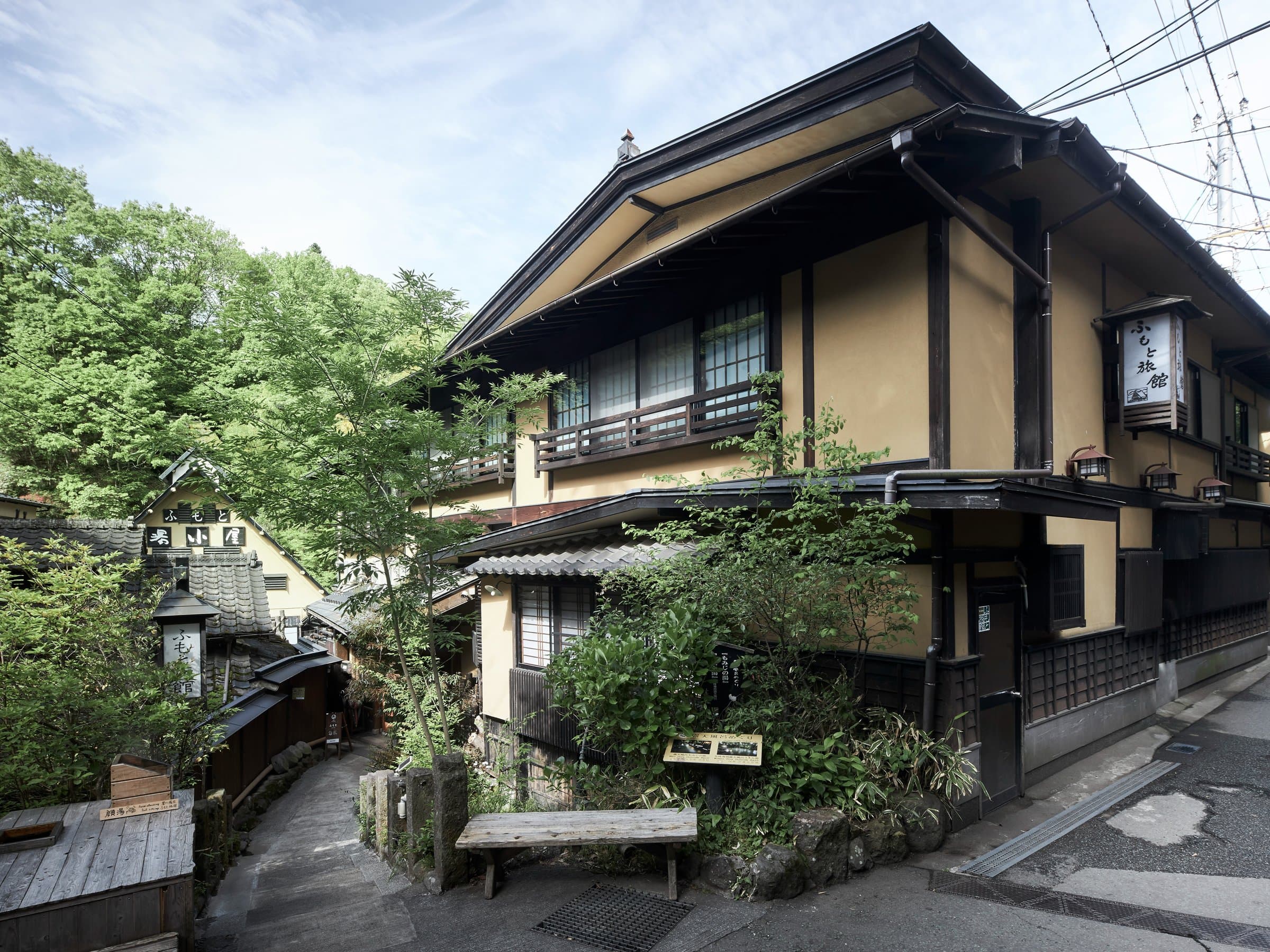
Kurokawa Onsen (黒川温泉) in Kumamoto Prefecture is a village of about 30 inns packed into a narrow forested gorge — no vending machines in sight, no chain restaurants, thatched-roof facades and clay walls right on the lane. Most of Kyushu's major hot spring towns have some degree of resort infrastructure around them. Kurokawa doesn't. It's dense and particular and worth going to alone.

The challenge: solo reservations are not popular here. Most Kurokawa inns operate on the traditional 2-person model and won't accept single bookings readily. [Fujiya](https://www.kurokawaonsen.or.jp/en/oyado/innInfo.php?intYKey=16) is one of the exceptions — specifically confirmed as a solo-accepting property by the Kurokawa Onsen region editorial [luxuryhotelkyoto.com, 2026-05-02]. It has a 4.5-tatami room — the traditional smallest unit of Japanese room measurement — that functions as a genuine single room, not a large room with a discount applied.

What makes it solo-optimal

Fujiya is in the center of the village. Walking to the other inns' baths is straightforward, which matters because Kurokawa's attraction for solo travelers is the *nyuto tegata* — a wooden bath-pass for 1,500 yen that grants entry to any three outdoor baths across the town's inns. Solo bath-hopping is the activity. You wander between properties in yukata, try a sulfur-scented cedar bath at one inn, a riverside stone bath at another. Each inn's water chemistry is slightly different; comparison is part of the experience.

Fujiya guests also have complimentary access to the larger communal baths at its affiliated sister property Oyado Noshiyu (five minutes on foot) — useful for solo travelers who want variety without additional cost.

The language barrier at Kurokawa is real. English-friendliness here rates 2–3 out of 5, lower than most properties in this guide. Google Translate voice mode handles check-in conversations reasonably well. The Kurokawa Onsen Association website ([kurokawaonsen.or.jp/en](https://www.kurokawaonsen.or.jp/en/oyado/innInfo.php?intYKey=16)) has English listings, which simplifies initial research.

Solo stats

| | | |---|---| | Solo supplement | Low (small room option avoids supplement; single pricing not separately confirmed) | | English-friendliness | 2–3/5 | | Onsen access | In-property baths + sister property access + nyuto tegata town pass (1,500 yen) | | Solo rate | ~22,000–27,500 yen/night with two meals [Kurokawa Onsen Association listing, 2026-05-02] (~$145–185 USD) | | Best booking method | Direct via kurokawaonsen.or.jp English listing, or Booking.com for initial confirmation |

---

5. Tsurunoyu Onsen, Nyuto Onsen, Akita — deep-forest milky baths for the truly off-grid solo stay

Nyuto Onsen (乳頭温泉郷) in Akita Prefecture sits deep in the mountains of Tohoku, a cluster of seven separate inn complexes spread through beech forest, each with its own spring source and water chemistry. No single English-language solo travel guide covers it thoroughly. That gap is itself useful information: this is where you go when the photogenic versions of ryokan travel feel too managed.

The water at [Tsurunoyu Onsen](https://tsurunoyu.com/en/) — the oldest and most celebrated inn in the cluster — is milky white from the sulfur content, and the main outdoor bath is an open-air stone pool surrounded by forest with no walls and no roof. The temperature drops sharply in October and plunges in January; neither deters solo regulars. Tsurunoyu was established in 1638, making it one of the oldest continuously operating ryokans in Japan [Tsurunoyu official site, 2026-05-02].

The *tegata* pass system mirrors Kurokawa's: a single pass gives access to the outdoor baths of all seven inn clusters in Nyuto, which means solo bath-hopping through a forested valley is the activity. You can spend a full day moving between the different water qualities — the iron-rich orange water at Ganiba Onsen, the milky-white at Tsurunoyu, the clear sodium spring at Kuroyu — without social obligation or schedule.

What makes it solo-optimal

The isolation is structural. Nyuto Onsen is an hour by bus from Tazawako Station (itself accessible by Shinkansen), and the inns close their gates to day visitors after a certain hour, leaving overnight guests in an undisturbed forest quiet that is genuinely difficult to replicate elsewhere. Solo travelers seeking the contemplative version of an onsen stay — rather than a picturesque one — should start here.

Caveat on solo booking: the inns here do not prominently advertise solo policies in English. Contact Tsurunoyu directly to confirm single-occupancy availability and supplement status before booking. The property receives international guests but English communication is limited; use the email template in this guide along with a DeepL-translated Japanese version.

Solo stats

| | | |---|---| | Solo supplement | Medium (not confirmed — contact directly) | | English-friendliness | 2/5 (limited; warm staff despite language gap; use translation tools) | | Onsen access | Multiple outdoor baths on-site + tegata pass for all 7 Nyuto cluster inns | | Solo rate | ~16,000–35,000 yen/night with two meals (estimated, unverified from official source — contact property directly) (~$105–230 USD est.) | | Best booking method | Direct inquiry via [tsurunoyu.com/en](https://tsurunoyu.com/en/) or Jalan with 1-person filter; book 3–4 months ahead for October–November |

---

6. Ginzanso, Ginzan Onsen, Yamagata — visually unmissable, but come prepared for the cost

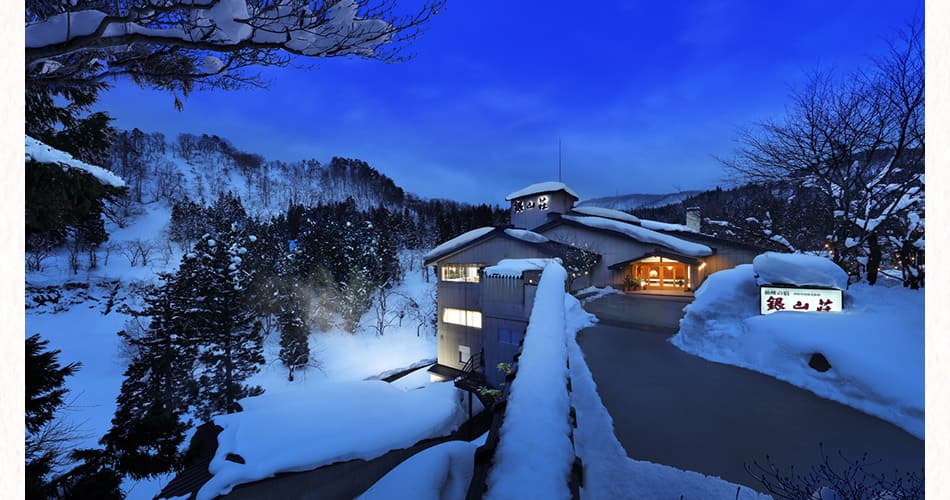
Snow-covered wooden ryokan buildings lining a narrow river gorge at a Japanese onsen town in winter, lit by warm light against deep snow — the visual atmosphere of Tohoku's hot spring towns

*A Taisho-era onsen town under snow — the visual solitude that draws solo travelers to Tohoku in winter — Photo by Chloe Evans on Unsplash*

I'm including [Ginzanso](https://www.ginzanso.jp/english/) and Ginzan Onsen with a specific caveat that no other English article has been honest about: solo travel here is expensive, and you should know that before you plan around it.

Ginzan Onsen (銀山温泉) in Yamagata is one of the most visually singular places in Japan — a narrow river gorge lined with Taisho-era wooden ryokan buildings, gas lanterns, and steam rising from the water, the whole scene buried under snow from December through March. It photographs like a film set because it has been: the visual aesthetic is often cited as an influence on Hayao Miyazaki's *Spirited Away*, though the claim is disputed (Dogo Onsen and Sekizenkan both hold competing claims to the association).

The problem for solo travelers: most Ginzan Onsen properties require payment for two people regardless of occupancy. Ginzanso's standard per-guest rate runs 19,800–23,100 yen, but solo travelers should budget for the full 2-person rate — approximately 39,600–46,200 yen per night [Ginzanso official website, KAYAK aggregator, 2026-05-02]. At current exchange rates, that's roughly $260–310 USD per night for one person. Winter and autumn foliage seasons push higher.

What makes it worth considering despite the cost

The visual experience of arriving here alone — walking the lantern-lit stone path in February with fresh snow on every surface — is genuinely difficult to replicate elsewhere. The solitude amplifies the atmosphere rather than diminishing it. Ginzanso has 46 rooms with shared gender-separated baths and some deluxe rooms with private attached baths. The shuttle from JR Oishida Station runs at set times (11:10, 13:40, 15:45 — advance booking required).

Properties here book out one year in advance for snow and autumn foliage seasons. If this is your target experience, plan accordingly.

Solo stats

| | | |---|---| | Solo supplement | High — effectively paying for 2 persons | | English-friendliness | 3/5 (English website; credit cards including Visa/Mastercard accepted) | | Onsen access | Shared indoor and outdoor baths; some deluxe rooms with private bath | | Solo rate | ~39,600–46,200 yen/night (paying double-occupancy equivalent) [Ginzanso official site, 2026-05-02] (~$260–310 USD) | | Best booking method | Direct via [ginzanso.jp/english](https://www.ginzanso.jp/english/); book 6–12 months ahead for peak season |

---

7. Wakamatsuya, Hijiori Onsen, Yamagata — no supplement, full stop

If the sole question is solo pricing fairness, [Wakamatsuya](https://hijiori.jp/en/) at Hijiori Onsen (肘折温泉) in Yamagata has the clearest answer: zero single supplement, year-round, including weekends and holidays. Solo guests pay the identical per-person rate as guests in group rooms. There are no exceptions in either direction.

Hijiori Onsen has a different history from the resort hot spring towns. This is a *toji* (湯治) destination — the traditional Japanese practice of extended therapeutic stays where guests would rent a room for a week or more, cook their own simple meals from a shared kitchen, and soak daily for healing purposes. Solo arrival was historically the norm here, not the exception. The cultural memory of solo therapeutic travel is embedded in how the town operates.

The spring is alkaline and slightly milky — a different texture from the cleaner mineral waters of Kinosaki or Hakone. The town sits in a deep valley in the Mogami district, remote enough that it sees minimal international visitors. For solo travelers seeking the introspective, undistracted version of a hot spring stay, this region delivers that without effort. The quietness is structural, not seasonal.

The trade-off is access and language. Hijiori Onsen requires Shinkansen to Shinjo and then local bus or taxi. English support at the inn is limited — use Rakuten Travel or Jalan for booking, and the email template in this guide with a DeepL Japanese translation for direct inquiries.

Price is estimated at 15,000–25,000 yen per night with meals — consistent with Tohoku inn pricing at this tier, though the figure is unverified from an official source and should be confirmed directly with the property [realgaijin.substack.com citing property policy, 2026-05-02; ~$100–165 USD estimated].

Solo stats

| | | |---|---| | Solo supplement | None — explicitly zero, all seasons | | English-friendliness | 2/5 (limited; use Rakuten Travel or Google Translate for inquiry) | | Onsen access | Shared communal baths (alkaline toji spring) | | Solo rate | ~15,000–25,000 yen/night with meals (estimated, unverified — contact directly) (~$100–165 USD est.) | | Best booking method | Rakuten Travel (1-person filter) or direct inquiry via [hijiori.jp/en](https://hijiori.jp/en/) |

---

8. HOSHINOYA Tokyo — solo ryokan without leaving the city

[HOSHINOYA Tokyo](https://hoshinoresorts.com/en/hotels/hoshinoyatokyo/) requires a slight redefinition of what "ryokan" means — it's a vertical urban property in Otemachi, central Tokyo, with a lobby on the 17th floor and traditional ryokan rooms above it. But the tatami floors, in-room yukata, kaiseki service, and below-ground natural hot spring are genuine. It is a ryokan that happens to be in a skyscraper.

Hoshino Resorts launched a dedicated solo travel program called "HOSHINOYA Rewarding Solo Trip" — including a Tokyo "Mindful Solo Onsen Stay" package available from April through December 2025. The official press release states: "HOSHINOYA believes solo travelers, free from the need to consider companions or time constraints, can enjoy a truly personal and fulfilling trip." [Hoshino Resorts official press release, 2025-05-02].

Tip

**2026 verification note**: The Mindful Solo Onsen Stay package ran April–December 2025. As of the publication date of this guide (May 2026), it is not confirmed whether an equivalent 2026 solo package has been announced. Check [hoshinoresorts.com](https://hoshinoresorts.com/en/hotels/hoshinoyatokyo/) directly for current solo program availability before booking. The room-only rate (71,740 yen/night) remains available year-round as a baseline [verified hoshinoresorts.com, 2026-05-02].

What makes it solo-optimal

The solo package (87,470 yen per night [verified Hoshino Resorts press release, 2026-05-02]; ~$580 USD) includes breakfast and a morning *kenjutsu* (swordsmanship) practice session — a cultural activity that works naturally alone and would be awkward to do as a couple. The hot spring beneath the building is a natural ancient seawater mineral spring (Otemachi Onsen) — geologically unusual for central Tokyo. The rooftop open-air bath has Tokyo skyline views.

For solo travelers who are already spending time in Tokyo and want one night of full ryokan experience without a domestic flight or 2-hour train ride, this is the most logistically effortless option on this list. If this is your first ryokan stay, our [first-time ryokan guide](/blog/first-time-ryokan-guide) covers what to expect from check-in through checkout.

Solo stats

| | | |---|---| | Solo supplement | None — solo package priced as single-occupancy per-person rate | | English-friendliness | 5/5 (international luxury brand standard) | | Onsen access | Communal cave-style indoor + open-air rooftop bath (natural onsen) | | Solo rate | 87,470 yen/night (2025 solo package, meals + activity) or 71,740 yen room-only [verified hoshinoresorts.com, 2026-05-02] (~$475–580 USD) — verify 2026 package status directly | | Best booking method | Direct via [hoshinoresorts.com](https://hoshinoresorts.com/en/hotels/hoshinoyatokyo/) English website |

---

Other regions worth knowing about

The eight entries above were chosen for verified solo policies, research depth, and regional spread. Two major ryokan destinations — Kyoto and Hakone — deserve a note, even though specific solo-confirmed properties there require more direct research than I can verify to the standard applied above.

Kyoto has a high concentration of small machiya-style townhouse inns with 6–10 rooms. The compact room sizes and in-room kaiseki service make many of them structurally suitable for solo stays; the challenge is that luxury Kyoto properties often don't publish solo-rate plans publicly. Search Ikyu with the solo filter, or contact properties directly using the email template earlier in this guide. Rates in Kyoto typically run 28,000–45,000 yen per night with meals at mid-range, higher at luxury properties.

Hakone has the highest density of private open-air baths (*kashikiri rotenburo*) in Japan — a genuine solo advantage, since you can reserve a private outdoor bath without needing a companion. The two-hour Romancecar Limited Express from Shinjuku makes it the cleanest Tokyo add-on for solo ryokan beginners. Search [luxuryhotelkyoto.com/hakone](https://luxuryhotelkyoto.com/hakone/top5-rankings/hotels-ryokans-for-solo-travelers/) for a list of Hakone solo-friendly properties with current reviews [luxuryhotelkyoto.com, 2026-05-02]. Solo rates run approximately 35,000–65,000 yen with meals at mid-to-luxury properties.

Nikko / Kinugawa (Tochigi Prefecture) is worth mentioning for first-time solo ryokan travelers. Two hours from Tokyo Asakusa on the Tobu Limited Express, English-friendliness is higher here than at Tohoku properties due to proximity to the international tourist circuit. Nikko's UNESCO World Heritage shrines give the solo day full cultural weight before the ryokan evening begins.

---

Region-by-region solo friendliness score: at a glance

*Best solo-friendly ryokan in Japan by region — solo supplement, English score, onsen type, and rate floor*

| Region | Property | Solo Supplement | English Score | Onsen Type | Solo Rate Floor | Best Season | |---|---|---|---|---|---|---| | Gunma (Shima Onsen) | Kashiwaya | None | 5/5 | Shared natural spring | 22,000 yen | Year-round | | Kinosaki, Kansai | Tsuchiya | None | 4/5 | Private (2 baths) + 7 town baths | ~11,000 yen (no meals) | Year-round; crab season (Nov–Mar) | | Okuhida / Takayama | Mozumo | Unconfirmed | 3/5 | Private rotenburo per room | ~47,000 yen | Autumn foliage; winter | | Kurokawa, Kyushu | Fujiya | Low | 2–3/5 | Shared + town tegata pass | 22,000 yen | Spring; autumn | | Nyuto Onsen, Tohoku | Tsurunoyu | Medium (unconfirmed) | 2/5 | Multiple outdoor baths + tegata pass | ~16,000 yen est. | Autumn; winter | | Ginzan Onsen, Tohoku | Ginzanso | High (pay 2x) | 3/5 | Shared indoor/outdoor | ~39,600 yen | Winter (costly) | | Hijiori Onsen, Tohoku | Wakamatsuya | None (all seasons) | 2/5 | Shared toji spring | ~15,000 yen est. | Autumn; winter | | Tokyo (central) | HOSHINOYA Tokyo | None | 5/5 | Communal + rooftop | 71,740 yen | Year-round |

Highest overall solo-friendliness: Kinosaki Onsen (town infrastructure built for solo movement) and Kashiwaya/Shima Onsen (explicit zero-supplement policy, English support, dedicated solo rooms).

Best solo onsen experience: Mozumo (private rotenburo per room) and Nyuto Onsen/Tsurunoyu (tegata pass through seven forest bath clusters).

Most budget-accessible: Kinosaki Tsuchiya (accommodation-only plan, ~11,000 yen); Wakamatsuya/Hijiori Onsen (zero supplement, mid-range pricing).

Language preparation required: Kurokawa, Ginzan, Hijiori, Nyuto — bring Google Translate for conversation, DeepL for written inquiries.

---

How to book a ryokan as a solo traveler: strategy that actually works

Weekday vs. weekend: the most impactful variable

The single most effective thing a solo traveler can do is choose Sunday-through-Thursday dates. Weekend demand at ryokans comes predominantly from couples and domestic travel groups — the bookings that fill rooms to double occupancy and make solo requests less financially attractive to the property. On a Tuesday in February, a room that would otherwise sit empty is genuinely better filled by one person than not filled at all. That changes the negotiation.

Japanese national holiday periods — Golden Week (late April to early May), Obon (mid-August), Silver Week (mid-September), and New Year (late December to early January) — are functionally closed to solo rate negotiation. Expect full double-occupancy pricing or outright unavailability.

Direct booking vs. OTA: what solo travelers should know

International OTAs (Booking.com, Expedia) are useful for initial research — English reviews, cancellation policy clarity, and photos. They're unreliable for solo pricing because the single supplement often doesn't appear until the payment stage.

[Jalan](https://www.jalan.net) and Rakuten Travel are Japan's domestic market leaders and have explicit 1-person filters. A property showing "unavailable for 1 guest" on Jalan during your target dates is telling you something real and useful. Ikyu ([ikyu.com/en-us](https://www.ikyu.com/en-us/)) focuses on premium properties and has a dedicated solo filter for onsen searches.

For the best outcome — particularly at properties that show unavailable for 1 person on OTAs — direct email contact is the highest-yield approach. Japanese innkeepers respond well to polite, specific English inquiries. The template below is structured to maximize positive response rate.

[CTA: See All Ryokans on Japan Ryokan Guide — Browse All Ryokans](/ryokans)

Tip

Ask whether the property has a "single plan" (*shinguru puran*) rather than asking them to reduce the standard rate. Framing the inquiry as "do you offer a product designed for solo guests?" is culturally better-received than "can I pay less?" — and it's more likely to surface plans that aren't visible on OTAs.

---

Direct-booking email template for solo ryokan guests (copy and use)

Tip

**Note:** The email template below is written in English and is intended to be sent directly to Japanese ryokans. Most properties in this guide have some degree of English communication capability, and a polite English inquiry will be understood. For properties with limited English support (Kurokawa, Ginzan Onsen, Hijiori Onsen, Nyuto Onsen), include a Japanese translation alongside the English — instructions follow the template.

``` Subject: Enquiry — Solo Guest Accommodation [Your Dates]

Dear [Ryokan Name] Team,

My name is [Your Name]. I am planning to visit [Region/Town] and would very much like to stay at your property.

I will be traveling alone and am enquiring about availability for a solo guest for the following dates:

Check-in: [Date] Check-out: [Date] Number of guests: 1 person

I would appreciate knowing: 1. Whether you have availability for a single guest on these dates 2. Whether you offer a single-guest rate plan (shinguru puran), and if so, the per-night rate including meals 3. Whether a single supplement applies, and its amount

Regarding my stay: - Dietary notes: [Any allergies or preferences; e.g., "no shellfish" or "vegetarian"] - Onsen preference: [Private bath / Shared communal bath / Both] - I am happy to dine in-room if that is the standard format

I look forward to hearing from you and hope to experience your hospitality.

With kind regards, [Your Name] [Your nationality / country] [Email address] [Phone number, optional] ```

Tip

For properties with limited English support (Kurokawa, Ginzan Onsen, Hijiori Onsen, Nyuto Onsen), paste this email into [DeepL](https://www.deepl.com) and send both the English and Japanese versions in the same message. Response rates increase significantly. DeepL handles ryokan-specific vocabulary more accurately than Google Translate for written correspondence.

---

Eating kaiseki alone: why it is better than you think

Red and green ceramic bowls arranged on a brown wooden tray — Japanese tableware set for a single diner in the kaiseki tradition

*Japanese ceramic bowls on a lacquer tray — the quiet completeness of a meal set for one — Photo by kofookoo.de on Unsplash*

The anxiety about dining alone at a ryokan is often more vivid in the planning stage than in the actual room. What you picture is conspicuous solitude at a table for two. What happens is different.

At mid-range and above ryokans — essentially everywhere on this list — dinner is served in-room. Your kaiseki arrives in your room on a lacquer tray while you're seated at the low table in yukata. The attendant explains each dish, lights the warming burner under the clay pot, and leaves. There is no shared dining room, no adjacent couple whose conversation you're aware of, no ambient awkwardness. It's a private meal in a room that belongs entirely to you for the night.

The kaiseki itself, typically twelve to fifteen small courses over ninety minutes, is structurally suited to solitary attention. Each course represents a specific technique — simmered, raw, grilled, steamed, vinegared — applied to one seasonal ingredient. There's a conversation between the cook and the diner embedded in every plate, and you can follow it completely when you're not also managing a conversation of your own.

Bring a small notebook. Writing during kaiseki is socially acceptable at a ryokan in a way it isn't at a Western fine dining restaurant. A few sentences per course — what the dish was, what you noticed, one detail about the vessel — gives the meal a different quality of attention.

For properties that do use a shared dining hall (typically budget-tier): arrive at opening time, usually 6pm, and tell the attending staff you are solo. They will almost always seat you near a window or in a position that feels intentional rather than incidental. Ordering a small carafe of local sake is entirely normal and often opens a brief, pleasant exchange about the region's rice or spring water.

---

The solo onsen advantage: why you should not wait for a partner

The common assumption that the onsen experience requires a companion is almost the opposite of the historical reality. Shared-gender bathing (*konyoku*) is rare at modern ryokans — in practice, the gender-separated large communal bath (*otoko-yu* / *onna-yu*) is where most guests spend their time. Whether you arrive alone or with a partner makes no observable difference to anyone around you.

What solo travel does change: the timing is entirely yours. The communal bath at 5:30am on a Wednesday is empty. That window — twenty minutes before the other early-risers, no ambient sound except the water, the wooden ceiling absorbing the steam — is the meditative experience the cultural context promises. Come at 8pm on Saturday and it's busier, more social, entirely different in character. Solo travel gives you the first version.

The private bath reservation (*kashikiri buro*) should be treated as a logistical priority, not an afterthought. Book your 50-minute slot at check-in — slots fill by mid-afternoon at popular properties. A private outdoor bath in November, with the temperature around 6°C outside and the water at 42°C, is one of those experiences that makes the pricing feel beside the point.

Standard onsen etiquette is unchanged by solo arrival: wash thoroughly at the shower station before entering the bath, no towels in the water, no photographs in any bath area, quiet is the default register.

One additional step for solo travelers with tattoos: screen properties before booking, as some traditional ryokans still maintain no-tattoo policies for communal baths. Our guide to [tattoo-friendly ryokans in Japan](/blog/tattoo-friendly-ryokans) covers which properties have removed restrictions and what the private bath alternative looks like.

---

Realistic solo ryokan budget: what one night actually costs

Additional costs to budget for any solo stay, regardless of tier:

- Onsen tax (*nyuto-zei*): 150–500 yen per person per night at most hot spring destinations — paid at checkout, unavoidable - Accommodation tax: 1,000–4,000 yen per person per night in some cities and prefectures (Tokyo and Kyoto both apply this) - Alcohol: Never included — sake, local beer, and *shochu* are ordered separately and charged at checkout. A carafe of house sake typically runs 700–1,500 yen - Private bath sessions: 0 yen at Yunoshimakan and similar; up to 8,800 yen for 70 minutes at luxury Kinosaki properties like Nishimuraya Honkan [selected-ryokan.com, 2026-05-02] - Transportation to remote onsen towns: factor Shinkansen or limited express fares for Tohoku properties; Ginzan Onsen from Tokyo is approximately 8,000–12,000 yen one-way by Shinkansen + local transfer

For comparison on the couple side, our [best ryokans for couples](/blog/best-ryokans-couples) covers the same price tiers from a two-person perspective.

---

Traditional Japanese room with a circular window framing lush garden greenery — the quiet view from a solo ryokan room

*A Japanese room's circular window overlooking the garden — the stillness that ends a solo stay — Photo by Sunao Noguchi on Unsplash*

Find your solo ryokan

Every property listed on japanryokanguide.com has been verified to accept solo bookings. The best ryokan for solo travelers in Japan is not a compromise pick — it is the format in which omotenashi operates at its most precise.

[CTA: Browse Solo-Friendly Ryokans — /ryokans?filter=solo-friendly]

[CTA: Browse All Ryokans — /ryokans]

---

Frequently asked questions

Do ryokans accept solo travelers?

Many do, though not all. The ryokan industry has historically preferred two-person bookings because the per-person pricing model — which bundles accommodation with meals — means a solo guest generates half the revenue for a full room. However, a growing number of properties have introduced dedicated single rooms or solo-rate plans, particularly since 2020. The properties in this guide have all been verified to accept solo bookings.

How much extra do solo travelers pay at a ryokan (single supplement)?

It varies widely. At properties with dedicated single rooms (Kashiwaya in Shima Onsen, Tsuchiya in Kinosaki), there is no supplement — you pay the standard per-person rate. At properties with no solo-specific room, expect a supplement of 5,000–10,000 yen above the per-person rate on weekdays, or the full second-person rate on weekends. At Ginzan Onsen properties, solo travelers typically pay for two persons regardless of occupancy — effectively a 100% supplement. Weekday stays in off-peak seasons (January–March, June) significantly reduce or eliminate supplements at mid-range properties.

Can I eat kaiseki dinner alone at a ryokan?

Yes — and at most mid-range and above properties, this is structurally a non-issue because kaiseki is served in your room. You're not in a restaurant. The attendant explains the dishes, lights your tableside burner, and leaves. Solo in-room kaiseki is one of the better versions of the meal: you can pay full attention to each course without managing a conversation simultaneously.

Which ryokan regions in Japan are most solo-friendly?

Kinosaki Onsen (Hyogo) and Shima Onsen / Gunma are the most structurally solo-friendly — both have properties with zero-supplement solo rooms and strong English support. Takayama and its surrounding Okuhida area have high solo acceptance rates. Nyuto Onsen (Tohoku) is exceptional for the bath-hopping experience, though English support is limited. Kurokawa Onsen (Kyushu) has specific solo-accepting inns but requires more research. Ginzan Onsen is visually exceptional but costly for solo travelers.

How do I book a ryokan as a solo traveler without a Japanese-speaking travel agent?

Use the direct-booking email template in this guide. For platform searches, Rakuten Travel and Jalan (Japanese domestic OTAs) have 1-person filters that show accurate availability. Ikyu ([ikyu.com/en-us](https://www.ikyu.com/en-us/)) has an English version with a solo filter for onsen properties. [Japanese Guest Houses](https://www.japaneseguesthouses.com/) is an English-language concierge service that can negotiate solo bookings on your behalf for harder-to-reach rural properties.

Are ryokans solo-friendly for female travelers?

Japan ranks consistently among the safest solo travel destinations for female travelers. Ryokans specifically pose no heightened concern: rooms lock, gender-separated baths are standard, and staff are present throughout the property. The *ohitori-sama* travel movement in Japan skews significantly female — according to one Japan tour operator, 72% of their solo Japan clients in 2024 were women [Tourist Japan, 2024 — note: one operator's data, not a national statistic]. Properties with high English-friendliness (Kashiwaya, Tsuchiya Kinosaki, HOSHINOYA Tokyo) have the most international female solo traveler experience and are a low-friction starting point.

What happens if I have a tattoo and want to book a ryokan as a solo guest?

Tattoo policies vary by property and have been relaxing since 2020, particularly at properties that have added private baths. Ask directly before booking — specifically whether your tattoo would restrict access to the shared communal bath, and whether private bath options are available. The complete list of properties and their current policies is in our [tattoo-friendly ryokans guide](/blog/tattoo-friendly-ryokans).

This guide covers the best solo ryokan options in Japan across five regions. Whether your priority is zero supplement, private rotenburo, or simply a town built for solo movement, the eight properties above give you a verified starting point for planning your solo ryokan stay in Japan.

--- title: "一人旅におすすめの旅館8選|2026年版・シングル料金と予約方法を徹底解説" excerpt: "一人旅を歓迎する全国8つの旅館を検証済みデータで紹介。一人部屋の料金・追加料金の実態・旅館への予約メールテンプレートと、地域別おひとり様対応スコアをまとめています。" lang: "ja" ---

低い漆塗りのテーブル、障子、庭の眺め。一人旅に適した静かな和室の佇まい

*東京・浜離宮付近の旅館の和室。一人で泊まるからこそ際立つ、凛とした静けさ — Photo by Yosuke Ota on Unsplash*

一人旅で旅館を探しているとき、多くの方がまず気にするのは「そもそも一人で泊まれるのか」という点ではないでしょうか。これは決して杞憂ではありません。旅館業界には長らく、おひとり様の予約を断るか、割増料金を提示するという慣習があったのも事実です。

しかし、実際に一人で泊まってみると、まったく別の景色が見えてきます。女将は一人のお客様の気分を丁寧に読み取ります。懐石を運んでくれる仲居さんは、その視線を二人に分散させる必要がありません。朝5時半の露天風呂は、あなた一人のものです。おもてなしは本来、「個」に向けて発揮されるものであり、二人分の気遣いに分散したときよりも、はるかに深く、完全なかたちで届きます。

このガイドは、妥協の産物ではありません。一人旅は旅館体験の「正式なかたち」のひとつであり、目的によっては最善の選択です。問題は、それを理解している宿を見つけること、そして割増なしで予約する方法を知ることです。

以下に、全国8軒の検証済みおひとり様歓迎旅館を紹介します。シングル料金の実態、旅館への予約メールテンプレート、そして地域別の比較表を掲載しています。掲載全宿は2025〜2026年に一人予約が可能であることを確認済みです。料金は2026年5月現在の情報に基づいています。

---

一人旅こそ、旅館体験の本質に近い理由

おひとり様での旅館泊を「妥協」とみなす通説がありますが、実際の体験はまったく逆のことを示しています。

おもてなしは本質的に個人に向けられるものです。求められる前にお客様のニーズを察知するこの哲学は、一人のお客様に向けるとき、もっとも精度が高くなります。スタッフは一組のシグナルだけを読みます。お料理の進み具合、窓の外に何度も視線が向いていること、お猪口の残量。サービスは、二人のゲストの異なるリズムに分散されたときには出せない、固有の精度を帯びます。

温泉は、本来、瞑想的な行為です。これは現代のウェルネスマーケティングの言葉ではなく、湯治文化の原点そのものです。お風呂の習慣は、カップル旅行よりも何百年も前から存在しており、僧侶も旅人も商人も、当たり前のように一人で湯につかっていました。朝6時に誰にも気兼ねなく使える貸切風呂は、その文化の最も純粋なかたちです。

懐石は一人で食べるとき、完全な集中を要求します。12〜15品のお料理が90分かけて運ばれ、それぞれが一つの旬の食材、ひとつの調理技法、その器との対話で構成されています。誰かとの会話を管理しながらでは、気づけないことがあります。ゆずの皮の香りを20秒かけて確かめても、急かされることはありません。

時間はすべて自分のものです。朝5時に温泉へ。7時半に朝食。チェックアウトは最後の最後まで。カップルの日程調整で生まれる妥協が、きれいに消えます。

Tip

旅館のスタッフは、外国人のおひとり様ゲストを「特に好きなお客様」として挙げることがよくあります。好奇心は双方向のものです。宿の歴史や源泉の特徴について一つ質問を用意しておくと、距離がぐっと縮まります。翻訳アプリを通じた短いやりとりでも、温かく受け取ってもらえます。

---

旅館がおひとり様の予約を敬遠してきた理由と、変わりつつある現実

この敬遠は態度の問題ではなく、経営の問題です。

[日本旅館協会](https://www.ryokan.or.jp/past/english/prices/index.html)が定式化している料金体系では、料金は1人1泊単位で設定されており、宿泊・多品目の懐石夕食・朝食・温泉入浴がすべてセットになっています。2人用に設計された客室で2人が泊まれば、2人分の料金が発生します。同じ部屋におひとり様が泊まると、料金は1人分ですが、宿が負担するコストは変わりません。1人分の夕食準備、客室清掃、チェックインとアウトへのスタッフ配置、他のお客様の入浴時間を圧迫する浴槽の占有。

12室を薄利で経営している小さな地方の旅館にとって、この差は小さくありません。特に週末はカップルやグループ客からの需要が高いため、おひとり様の予約はどうしても不利になります。そのため、伝統的な旅館でのおひとり様問い合わせに対する従来の回答は、丁重なお断りか、1人あたり5,000〜10,000円の割増料金(場合によっては2人分の料金)でした。

2020年以降に起きた真の変化:日本社会そのものが変わりました。「おひとり様」文化——一人飯、一人旅、一人温泉——が完全に主流になり、文藝春秋は年間300軒以上のおひとり様歓迎温泉地を特集するガイドブックを刊行するようになりました(2026年版『CREA Due』は300軒超を掲載 [realgaijin.substack.com, 2026年5月2日確認])。星野リゾートは2025年に「HOSHINOYA お一人様の贅沢旅」プログラムを3施設でスタートしました。[観光庁は2017年以降、旅館に宿泊料と食事料の分離を促してきており](https://www.statista.com/statistics/624452/japan-ryokan-hotel-numbers/)、これが素泊まりプランの普及を通じておひとり様旅の経済的ハードルを下げています。

インバウンドにおける一人旅も増えています。日本専門の某ツアーオペレーターによると、2024年の日本向けクライアントの35%が一人旅客で、前年比12%増でした(この数字は特定の事業者のデータであり、全国統計ではありません)。旅行ライターでソロ温泉文化の論者でもある realgaijin.substack.com の筆者は2026年のエッセイにこう書いています。「業界はもはや『いかにおひとり様に対応するか』ではなく、『いかにおひとり様に最適化するか』を問うようになっている」

Tip

11月〜3月の平日であれば、シングル割増料金はほぼ交渉できます。予約サイト経由よりも、旅館への直接電話またはこのガイド後半の予約メールテンプレートが効果的です。ゴールデンウィーク、お盆、シルバーウィーク、年末年始などの繁忙期は、料金交渉が実質不可能です。これらの時期は諦めるか、2名分の料金を覚悟しましょう。

---

予約前に「本当のおひとり様歓迎旅館」を見分ける方法

おひとり様を「黙認している」宿と、「設計から受け入れている」宿の違いは、問い合わせ前から判別できます。

宿の日本語ページで「一人様歓迎」という言葉を探してください。これがあれば明確なシグナルです。外国人向けの英語ページにこの表記がなくても、日本語ページには記載があることがよくあります。

予約プラットフォームごとのアプローチは大きく異なります。

- [じゃらん(Jalan)](https://www.jalan.net)と楽天トラベルには、1人部屋で検索できる明示的なフィルターがあり、正確なおひとり様プランを表示します。対象期間で「1名では予約不可」と表示された場合、それは正確な情報です。 - Booking.comとExpediaは検索結果で1人料金と部屋料金を区別していないため、シングル割増料金が決済直前まで見えないことがよくあります。英語レビューの参照や初期調査には使えますが、最終的な料金比較には使わないでください。 - 一休.com([英語版](https://www.ikyu.com/en-us/))は温泉検索においておひとり様フィルターがあり、厳選された高品質な宿を掲載しています。

客室の広さも判断材料になります。6〜10畳の部屋を設けている宿は、本当の意味でのひとり使いの空間を持っている可能性が高いです。「16畳・庭園テラス付き」のスイートは2人用に設計されており、4.5畳の和室はそうではありません。

注意サイン:料金ページに「最少2名」と明記されている、1名料金の表示がない、または大部屋スイートしかラインナップにない——これらは即座のNGではありませんが、宿がおひとり様旅行を標準的な選択肢として組み込んでいないことを示しています。

---

全国おひとり様歓迎旅館8選:検証・評価・地域別

以下の8軒は、おひとり様料金の確認状況、英語対応力、2025〜2026年時点でのゲストレビューと方針、そして主要な温泉地域への地理的バランスを基準に選定しました。

各施設は4つの観点で評価しています。 - シングル割増:なし / 低 / 中 / 高 - 英語対応度:1〜5 - 温泉形態:貸切 / 共同 / 両方 - 夕食形式:部屋食 / 食事処 / 両方

---

1. 四万温泉 柏屋旅館(群馬)——おひとり様対応の基準となる宿

午後の光をやわらかく透かす障子、低い漆のテーブル——中堅旅館の一人部屋に多い客室のスケール感

*和室と障子——おひとり様向け旅館の多くが採用するスタンダードな部屋の形式 — Photo by Yosuke Ota on Unsplash*

[四万温泉 柏屋旅館(Shima Onsen Kashiwaya Ryokan)](https://www.kashiwaya.org/e/)は、おひとり様旅行を「後付けの対応」ではなく宿のアイデンティティの一部とした最も明確な例です。宿の公式マガジンにはこう記されています。「一人旅はやっぱり違う。他人に気を使わず、自分のペースで行動できる」——これは予約サイトの惹句ではなく、宿自身の言葉です。

柏屋は英語サイト上でも明示的に一人旅を推奨しており、この種の発信をしている旅館はまだ珍しい存在です。また、一人用専用室を設けることで、使わないスペースへの支払いという問いを最初から排除しています。群馬県の四万温泉(しまおんせん)は日本の「名湯100選」に選ばれており、東京から約2時間半〜3時間の距離です。源泉は飲んでもくせのない適度な硫黄泉で、香りよりも先に肌でその存在を感じます。川のすぐそばに建つ柏屋では、川の音が静かな部屋にいつも聞こえています。

おひとり様に向いている理由

専用の一人部屋があることが最大の強みで、最上位のおひとり様旅館として取り上げられることが多い理由のひとつです。おひとり様は割増なしで1人料金のみを払います。夕食は上州牛の懐石料理で、部屋食のため、食事処での一人席という緊張感もありません。英語の予約システムが完備されており、すべての段階で言語の壁がありません。東京からのバス送迎(往復5,200円追加)も便利で、一人で電車の乗り継ぎを管理したくない旅行者に向いています。

制約:一人部屋には部屋付き温泉がありません。共同の天然温泉浴場は質が高いですが、貸切露天風呂が必須であれば、2名用の「HANA」または「KAME」室へのアップグレードが必要です。

おひとり様データ

| | | |---|---| | シングル割増 | なし(専用一人部屋あり;1人料金のみ) | | 英語対応度 | 5/5 | | 温泉形態 | 天然温泉共同浴場(広い部屋のみ部屋付き温泉あり) | | おひとり様料金 | 1泊22,000〜28,000円(2食付き)[kashiwaya.org 2026年5月2日確認](約¥22,000〜¥28,000) | | 最適予約方法 | 英語サイト(柏屋公式)から直接予約;オンライン予約システムあり |

---

2. 土屋(うつろい 土屋別館)、城崎温泉(兵庫)——最初から一人のための部屋

[土屋(Tsuchiya)](https://visitkinosaki.com/stay/tsuchiya/)は、ほとんどの旅館が実行してこなかったことを実現しています。最大定員が1名の「KIRIルーム」を作ったのです。割引された2人部屋ではありません。最初から一人のために設計された部屋です。

兵庫県の城崎温泉(きのさきおんせん)は、どの宿に泊まるかを問わず、日本で最も構造的におひとり様向けの温泉地のひとつです。旅館の浴衣を着て柳並木の川沿いに並ぶ7つの外湯を自由にめぐる「外湯めぐり」こそが、この町のコンセプト。浴衣と下駄で外湯から外湯へひとり歩く——それが城崎の本来の楽しみ方です。文学との縁も深く、作家・志賀直哉が1913年に電車事故の療養のためにこの地を訪れ、数ヶ月を過ごして書いた「城の崎にて」は、近代日本文学を代表する作品のひとつです。一人で訪れることは、歴史的に見ても「正解」です。

おひとり様に向いている理由

KIRIルームのおひとり様プラン(プランNo.163)は素泊まりプランです。つまり、城崎の飲食店や屋台で食事をとります。これは多くのひとり旅者にとって実はうれしい選択で、但馬牛、旬のカニ、本通りの炭火焼きなど選択肢が豊富です。宿内には貸切温泉浴場が2か所あり、予約不要・無料で利用できます(7〜10時、15〜22時半)。Visitきのさき公式サイト記載の7外湯入り放題「湯めぱ」付き。

素泊まりという構造のため、このガイドのなかでも特に低価格です。

おひとり様データ

| | | |---|---| | シングル割増 | なし(1名定員の専用部屋) | | 英語対応度 | 4/5(Visitきのさきのサイトが充実) | | 温泉形態 | 宿内貸切2か所+7外湯(湯めぱ付き) | | おひとり様料金 | 1泊約11,000〜20,000円(素泊まり)[Momondo/KAYAKアグリゲーター, 2026年5月2日] | | 最適予約方法 | [visitkinosaki.com](https://visitkinosaki.com/stay/tsuchiya/plan/?mode=plan_detail&PlanNo=163) 直接予約、またはじゃらんで1名フィルター使用 |

---

3. 奥飛騨温泉郷 もずも(高山エリア)——完全なプライベート露天風呂、完全な孤独

黄昏時の歴史的な京都の路地を歩くひとつの人影。日本の古都でのひとり旅の自由な時間を想起させる

*黄昏時の伝統的な日本の路地——浴衣と下駄でひとり歩く静かな自由 — Photo by Chloé Lefleur on Unsplash*

[もずも(Mozumo)](https://www.mozumo.com/lang/eng/)は、高山と上高地の間の谷間・奥飛騨の平湯温泉に位置し、高山エリアで最もおひとり様向けの旅館として評価されています [luxuryhotelkyoto.com, 2026年5月2日]。大人専用(20歳以上)の小さな宿で、多くの宿が言葉だけで言うような「静かな時間」が、本当に設計のなかに組み込まれています。

特徴はやはり温泉です。もずもの全室に、200メートル先の源泉から直接引いたかけ流しの露天風呂が付いています。循環なし、加温なし、天然のかけ流し。水質は重炭酸泉で、肌にやわらかく感じます。夜になると、浴場を囲む森は完全な暗闇と完全な静寂に包まれます。

奥飛騨という立地から、高山を拠点にした日帰り観光もしやすい環境です。上高地(30分)、乗鞍スカイライン(60分)、新穂高ロープウェイ(30分)はすべて車なしでアクセスできます。高山の三町筋——造り酒屋、漆器、朝市——は平湯バスターミナルからバスで35分。ターミナルからの無料送迎(8分)が、ひとりで到着する際の手間を省いてくれます。

おひとり様に向いている理由

ひとり旅において、部屋付き露天風呂は最大の強みです。入浴時間の交渉も、50分枠の予約も不要。部屋のドアを開ければ、いつでも露天風呂があります。これが、日本のおひとり様温泉体験としてもっとも完成度の高いかたちです。

注記:もずもの公式サイトでは各部屋の定員は2名とされていますが、一人利用時の割増料金については明示されていません。予約前に直接確認してください。大人専用という方針だけでも、家族連れと空気を共有しないことは保証されます。

おひとり様データ

| | | |---|---| | シングル割増 | 未確認——直接問い合わせて確認を | | 英語対応度 | 3/5(英語サイトと予約あり;電話対応は限定的) | | 温泉形態 | 全室に専用露天風呂 | | おひとり様料金 | 1泊約47,000〜52,000円(2食付き)[KAYAKデータ, 2026年5月2日](約¥47,000〜¥52,000) | | 最適予約方法 | [mozumo.com](https://www.mozumo.com/lang/eng/) 英語フォームからメール;まず一人利用方針を確認すること |

---

4. 黒川温泉 藤屋(熊本)——ちょうどいい部屋と、ちょうどいい集落

木造の浴室を包む静かな水面。木と石で作られた伝統的な浴槽に柔らかい光が反射している

*城崎・兵庫の貸切温泉——日本の温泉室の静水と木造建築 — Photo by Roméo A. on Unsplash*

熊本県の黒川温泉(くろかわおんせん)は、約30軒の旅館が狭い山間の渓谷に密集した集落です。自販機も見当たらず、チェーン飲食店もなく、茅葺き屋根と土壁が露地に面して並んでいます。九州の主要温泉地の多くはリゾート施設に囲まれていますが、黒川にはそれがありません。ひとりで行く価値のある、密度と個性のある場所です。

課題は、ここでのおひとり様予約が歓迎されにくい点です。黒川の多くの宿は伝統的な2名制で運営しており、1名予約を容易には受け付けません。[藤屋(Fujiya)](https://www.kurokawaonsen.or.jp/en/oyado/innInfo.php?intYKey=16)はその例外のひとつで、黒川温泉エリアの編集調査でおひとり様受け入れ宿として確認されています [luxuryhotelkyoto.com, 2026年5月2日]。4.5畳——日本の客室面積の伝統的な最小単位——の部屋があり、大部屋に割引を適用したものではなく、本来的な一人用の部屋です。

おひとり様に向いている理由

藤屋は集落の中心に位置しています。他の旅館の浴場まで歩いてすぐの立地が重要で、黒川でのひとり旅の醍醐味である入湯手形(1,500円で3か所の露天風呂を選んで入れる木製手形)を存分に使えます。硫黄が香る杉板の浴槽の宿、川のほとりの石組みの湯の宿——それぞれに異なる泉質を比べる楽しさがあります。

藤屋のゲストは、提携先の姉妹館「お宿のし湯」(徒歩5分)の共同浴場も無料で利用できます。追加費用なく湯めぐりの幅を広げたいひとり旅者に便利です。

黒川での言語の壁は本物です。英語対応度は5段階中2〜3で、このガイドの他の宿より低め。チェックインの会話はGoogle翻訳の音声モードでおおむね対応できます。黒川温泉観光旅館業協同組合のウェブサイト([kurokawaonsen.or.jp/en](https://www.kurokawaonsen.or.jp/en/oyado/innInfo.php?intYKey=16))に英語リストがあり、初期調査には役立ちます。

おひとり様データ

| | | |---|---| | シングル割増 | 低(小部屋の選択で割増回避の可能性;1名料金の個別確認は未完了) | | 英語対応度 | 2〜3/5 | | 温泉形態 | 宿内浴場+姉妹館利用+入湯手形(1,500円) | | おひとり様料金 | 1泊約22,000〜27,500円(2食付き)[黒川温泉組合リスト, 2026年5月2日] | | 最適予約方法 | kurokawaonsen.or.jp 英語リストから直接予約、またはBooking.comで初期確認 |

---

5. 乳頭温泉郷 鶴の湯(秋田)——深い森のにごり湯、本当のオフグリッド一人旅

秋田県の乳頭温泉郷(にゅうとうおんせんきょう)は、東北の山奥深く、それぞれ独自の源泉と水質を持つ7つの宿が山毛欅の森に点在する温泉群です。英語のひとり旅ガイドでここを徹底的に紹介しているものはほとんどありません。そのギャップ自体が情報になります。旅館旅行の「絵になる版」が管理されすぎていると感じるとき、行くべき場所がここです。

[鶴の湯(Tsurunoyu Onsen)](https://tsurunoyu.com/en/)——この温泉群で最も古く、最も名高い宿——の湯は、硫黄成分により乳白色を呈しており、主浴場は屋根も壁もない、森に囲まれた露天の石風呂です。10月に気温が下がり、1月には本格的な寒さになっても、ひとりの常連たちを止める要因にはなりません。鶴の湯は1638年の創業で、日本で最も長く営業を続けている旅館のひとつです [鶴の湯公式サイト, 2026年5月2日]。

手形パスのシステムは黒川と同様です。1枚の手形で乳頭温泉郷7つすべての浴場に入れるため、ひとりで森の谷間を湯めぐりするのが活動の軸になります。蟹場温泉の鉄分を含む橙色の湯、鶴の湯の乳白色の湯、黒湯の透明な食塩泉——泉質の比較が体験そのものです。

おひとり様に向いている理由

この孤立性は構造的なものです。乳頭温泉郷は田沢湖駅(新幹線でアクセス可)からバスで1時間かかり、宿は一定の時間帯以降に日帰り客を締め出します。宿泊客は、他では本当に得難い森の静けさのなかで過ごすことになります。景観よりも内省を求めるひとり旅者は、ここから始めるべきです。

おひとり様予約の注意点:ここの宿は英語でのおひとり様方針を積極的には告知していません。予約前に鶴の湯へ直接問い合わせて1名利用の空きと割増の有無を確認してください。外国人ゲストの受け入れ実績はありますが英語対応は限定的です。このガイドの予約メールテンプレートと、DeepLによる日本語訳を一緒に送ることをお勧めします。

おひとり様データ

| | | |---|---| | シングル割増 | 中(未確認——直接確認を) | | 英語対応度 | 2/5(限定的;スタッフは親切。翻訳ツール推奨) | | 温泉形態 | 複数の露天浴場+乳頭温泉郷7宿手形 | | おひとり様料金 | 1泊約16,000〜35,000円(2食付き、推定・未公式確認——直接問い合わせを)(約¥16,000〜¥35,000) | | 最適予約方法 | [tsurunoyu.com/en](https://tsurunoyu.com/en/)から直接問い合わせ、またはじゃらん1名フィルター;10〜11月は3〜4ヶ月前予約を |

---

6. 銀山荘、銀山温泉(山形)——絶景だが費用を覚悟して来ること

冬の日本の温泉街、狭い川沿いの渓谷に雪をかぶった木造旅館が並び、暖かい光を放っている——東北の温泉町の冬の空気感

*大正時代の温泉街が雪に包まれる——東北の冬にひとり旅者を引き寄せる光景 — Photo by Chloe Evans on Unsplash*

[銀山荘(Ginzanso)](https://www.ginzanso.jp/english/)と銀山温泉については、他の英語記事がなかなか正直に書かない点をあらかじめ述べます。ここでの一人旅は高い——それを知った上で計画してください。

山形県の銀山温泉(ぎんざんおんせん)は、大正時代の木造旅館が並ぶ狭い川沿いの渓谷にガス灯の光と湯けむりが立ちのぼる、日本で最も印象的な景観のひとつです。12月から3月は全景が雪に埋まります。その映像的な美しさから、宮崎駿監督の『千と千尋の神隠し』のモデルとも言われますが、道後温泉や積善館も同様の主張をしており、真偽は定かではありません。

おひとり様にとっての問題:ここの多くの宿は、宿泊人数に関わらず2名分の料金を要求します。銀山荘の通常1人料金は19,800〜23,100円ですが、おひとり様の場合は2名分——1泊約39,600〜46,200円を見込んでください [銀山荘公式サイト・KAYAKアグリゲーター, 2026年5月2日]。現在の為替レートで、1人当たり1泊約39,600〜46,200円です。冬や紅葉シーズンはさらに上がります。

それでも検討する価値がある理由

2月の雪の石畳をひとりで歩き、ガス灯の前に立つ体験は、本当にほかでは得難いものです。孤独が雰囲気を削ぐのではなく、増幅させます。銀山荘は46室を持ち、男女別の共同浴場と、一部の特別室に専用浴室があります。JR大石田駅からのシャトルバスは時刻が決まっています(11:10、13:40、15:45発——要事前予約)。

ここの宿は、雪景色シーズンや紅葉シーズンには1年前から予約が埋まります。この体験を目指すなら、それを前提に計画してください。

おひとり様データ

| | | |---|---| | シングル割増 | 高——実質2人分の支払い | | 英語対応度 | 3/5(英語サイトあり;VisaやMastercardのクレジットカード利用可) | | 温泉形態 | 男女別共同浴場;一部特別室に専用浴場 | | おひとり様料金 | 1泊約39,600〜46,200円(2名分料金相当)[銀山荘公式サイト, 2026年5月2日] | | 最適予約方法 | [ginzanso.jp/english](https://www.ginzanso.jp/english/)から直接予約;繁忙期は6〜12ヶ月前に |

---

7. 若松屋、肘折温泉(山形)——割増なし、例外なし

料金の公平さだけを問うなら、山形・肘折温泉(ひじおりおんせん)の[若松屋(Wakamatsuya)](https://hijiori.jp/en/)の答えは明確です。シングル割増ゼロ、年間を通じて、週末も祝日も例外なし。おひとり様も、グループのゲストと同じ1名料金を払います。一切の例外はありません。

肘折温泉は、リゾート系温泉地とはまったく異なる歴史を持ちます。ここは湯治の宿場で、病気の療養や体の回復を目的に1週間以上滞在し、共同炊事場で自炊しながら毎日入浴するという、日本古来の文化が根付いた場所です。おひとり様での来訪が歴史的な常態であり、例外ではありませんでした。一人での療養旅行という文化的記憶が、今も町の動かし方に刻まれています。

泉質はアルカリ性でやや白濁——城崎や箱根のすっきりした鉱泉とは異なる肌ざわりです。最上地方の深い谷間に位置し、国際的な観光客はほとんど訪れません。思索的でなにも邪魔されない温泉体験を求めるひとり旅者にとって、意図せずともそれが手に入る地です。

アクセスと言語が課題です。肘折温泉へは新幹線で新庄まで行き、そこからバスまたはタクシーが必要です。宿の英語対応は限定的——予約はRakuten Travelやじゃらん、問い合わせはこのガイドのメールテンプレートにDeepLの日本語訳を添えて。

料金は1泊15,000〜25,000円(食事込み)と推定されます——東北の同価格帯の宿と整合的ですが、公式ソースによる確認はとれていないため、宿への直接確認が必要です [realgaijin.substack.com 宿方針引用, 2026年5月2日確認]。

おひとり様データ

| | | |---|---| | シングル割増 | なし——全シーズン明示的にゼロ | | 英語対応度 | 2/5(限定的;楽天トラベルかGoogle翻訳を活用) | | 温泉形態 | 共同浴場(アルカリ性湯治泉) | | おひとり様料金 | 1泊約15,000〜25,000円(食事付き、推定・未確認——直接確認を) | | 最適予約方法 | 楽天トラベル(1名フィルター)または[hijiori.jp/en](https://hijiori.jp/en/)から直接問い合わせ |

---

8. HOSHINOYA Tokyo——都市を離れずに泊まれる旅館

[HOSHINOYA Tokyo(星のや東京)](https://hoshinoresorts.com/en/hotels/hoshinoyatokyo/)は、「旅館」の定義を少し広げる必要があります。東京・大手町の都市型施設で、17階にロビーを持ち、その上階に旅館の客室が並ぶ垂直構造ですが、畳の客室、浴衣、懐石サービス、地下の天然温泉はすべて本物です。高層ビルのなかにある、本物の旅館です。

星野リゾートは「HOSHINOYA お一人様の贅沢旅」という専用のプログラムを展開しており、2025年4月〜12月には「マインドフル・ソロ温泉ステイ」プランを東京で提供しました。公式プレスリリースにはこうあります。「星のやは、同行者や時間の制約から解放されたひとり旅者こそ、真に個人的で豊かな旅を楽しめると考えています」

Tip

**2026年版注記**:「マインドフル・ソロ温泉ステイ」は2025年4〜12月のプランでした。本ガイドの公開日(2026年5月)現在、2026年の同等プランの発表は未確認です。ご予約前に[hoshinoresorts.com](https://hoshinoresorts.com/en/hotels/hoshinoyatokyo/)で最新のソロプラン情報をご確認ください。室料のみのプラン(1泊71,740円)は通年で提供されています [hoshinoresorts.com, 2026年5月2日確認]。

おひとり様に向いている理由

ソロプラン(1泊87,470円 [星野リゾートプレスリリース確認, 2026年5月2日])には朝食と朝の剣術体験が含まれています。剣術は一人で行う活動として自然であり、カップルで参加するには少し変わった体験です。建物の地下にある温泉は、大手町温泉という地中深くの古代海水を起源とする天然鉱泉です——都心部では地質学的に珍しい存在です。屋上の露天風呂からは東京の夜景を楽しめます。

すでに東京に滞在していて、国内線や2時間の電車移動なしに一泊だけ旅館体験をしたいひとり旅者にとって、このリストで最も手続きが少ない選択肢です。旅館に初めて泊まる場合は、チェックインからチェックアウトまでの流れを解説した[初めての旅館ガイド](/blog/first-time-ryokan-guide)もご参照ください。

おひとり様データ

| | | |---|---| | シングル割増 | なし——ソロプランは1名分の料金設定 | | 英語対応度 | 5/5(国際的なラグジュアリーブランド水準) | | 温泉形態 | 洞窟型大浴場+屋上露天風呂(天然温泉) | | おひとり様料金 | 1泊87,470円(2025年ソロプラン、食事+アクティビティ込み)または室料のみ71,740円 [hoshinoresorts.com, 2026年5月2日確認]——2026年プランの状況は直接確認を | | 最適予約方法 | [hoshinoresorts.com](https://hoshinoresorts.com/en/hotels/hoshinoyatokyo/)英語サイトから直接 |

---

その他の注目地域

上記8軒は、おひとり様方針の確認状況、調査の深さ、および地域的バランスを基準に選んでいます。京都と箱根というふたつの主要旅館地については言及しておく価値がありますが、そこでのおひとり様確認済み物件は、本ガイドの基準に沿った検証を行う余裕がありませんでした。

京都には6〜10室規模の小さな町家宿が多く集まっています。コンパクトな客室サイズと部屋食の懐石が、構造的にひとり旅に向いている宿が多い理由です。課題は、高級京都旅館の多くがおひとり様プランを公開していないこと。一休.comのおひとり様フィルターか、このガイドの予約メールテンプレートで直接問い合わせてください。京都の中級クラスは1泊28,000〜45,000円(2食込み)が目安で、高級クラスはさらに上です。

箱根は日本で最も貸切露天風呂の密度が高い温泉地で、ひとり旅には本質的に有利です。同行者なしで貸切の露天を確保できるためです。新宿からロマンスカーで2時間というアクセスも、東京在住・滞在のひとり旅者には最もシンプルな選択肢になります。箱根でのおひとり様歓迎旅館リストと最新レビューは[luxuryhotelkyoto.com/hakone](https://luxuryhotelkyoto.com/hakone/top5-rankings/hotels-ryokans-for-solo-travelers/)で確認できます [2026年5月2日]。ひとり旅料金は中〜高級クラスで1泊35,000〜65,000円(2食込み)程度です。

日光・鬼怒川(栃木県)は初めてのひとり旅旅館を考えている方にお勧めです。東武の特急で浅草から2時間、国際観光ルートに近いため英語対応度が東北の宿より高め。日光の世界遺産の神社仏閣が日中の観光に充実した文化的内容を与え、夕方からの旅館体験を際立たせます。

---

地域別おひとり様対応スコア:早見表

*全国おすすめおひとり様旅館——シングル割増・英語対応・温泉タイプ・料金下限*

| 地域 | 旅館 | シングル割増 | 英語対応 | 温泉タイプ | 料金下限 | ベストシーズン | |---|---|---|---|---|---|---| | 群馬(四万温泉) | 柏屋 | なし | 5/5 | 天然共同温泉 | 22,000円 | 年間 | | 城崎(関西) | 土屋 | なし | 4/5 | 貸切2か所+7外湯 | 約11,000円(素泊まり) | 年間;カニシーズン(11〜3月) | | 奥飛騨/高山 | もずも | 未確認 | 3/5 | 全室露天風呂付き | 約47,000円 | 紅葉;冬 | | 黒川(九州) | 藤屋 | 低 | 2〜3/5 | 共同+入湯手形 | 22,000円 | 春;秋 | | 乳頭温泉(東北) | 鶴の湯 | 中(未確認) | 2/5 | 複数露天浴場+手形 | 約16,000円(推定) | 秋;冬 | | 銀山温泉(東北) | 銀山荘 | 高(2名分) | 3/5 | 共同(内風呂・露天) | 約39,600円 | 冬(高額) | | 肘折温泉(東北) | 若松屋 | なし(全シーズン) | 2/5 | 共同湯治泉 | 約15,000円(推定) | 秋;冬 | | 東京(都心) | 星のや東京 | なし | 5/5 | 大浴場+屋上露天 | 71,740円 | 年間 |

総合おひとり様対応最高:城崎温泉(街全体がひとり移動のために設計されている)、柏屋・四万温泉(明示的な割増なし方針、英語対応、専用一人部屋)。

最良の温泉体験:もずも(全室露天風呂付き)、乳頭温泉・鶴の湯(7宿手形での森の湯めぐり)。

最も予算に優しい:城崎・土屋(素泊まりプラン、約11,000円);若松屋・肘折温泉(割増なし、中価格帯)。

言語対策が必要:黒川、銀山、肘折、乳頭温泉——会話はGoogle翻訳、文書問い合わせはDeepL。

---

ひとり旅者のための旅館予約戦略:実際に効くこと

平日と週末:最も効果的な変数

ひとり旅者ができる最も効果的なことのひとつは、日曜〜木曜の日程を選ぶことです。週末の旅館はカップルや国内グループ旅行の需要が大半を占め、2名分の部屋を埋めてくれる予約を優先します。2月の火曜日なら、そうでなければ空く部屋を1人で埋めてもらえる方が、宿にとっても良い選択です。それが交渉の前提を変えます。

ゴールデンウィーク(4月下旬〜5月初旬)、お盆(8月中旬)、シルバーウィーク(9月中旬)、年末年始(12月下旬〜1月上旬)は、料金交渉が実質的に不可能な時期です。2名分の料金か予約不可のどちらかを想定してください。

直接予約とOTA:ひとり旅者が知っておくべきこと

国際系OTA(Booking.com、Expedia)は初期調査——英語レビューのチェック、キャンセルポリシーの確認、写真の閲覧——に有用です。ただし、シングル割増が決済直前まで表示されないため、ひとり料金の確認には不向きです。

[じゃらん](https://www.jalan.net)と楽天トラベルは国内市場のリーダーで、1名フィルターが機能します。じゃらんで「1名では予約不可」と表示されれば、それは正確な情報です。一休.com([ikyu.com/en-us](https://www.ikyu.com/en-us/))は高品質な宿に絞った掲載で、温泉検索にソロフィルターがあります。

最も効果的なのは直接メール。OTAで1名予約不可の宿でも、礼儀正しく具体的な英語のメールへの返答率は高いです。以下のテンプレートは返答率を最大化する構成になっています。

[CTA: おひとり様歓迎旅館を全部見る — /ryokans?filter=solo-friendly]

Tip

「シングルプランはありますか?」と聞く方が、「割引してもらえますか?」と聞くよりも文化的に受け入れられやすいです。「おひとり様向けのプランを設けていますか?」という聞き方は、OTAでは見えないプランを引き出す可能性も高くなります。

---

旅館へのおひとり様直接予約メールテンプレート(コピーしてご使用ください)

Tip

**ご注意**:以下のメールテンプレートは英語で書かれており、旅館のスタッフに直接送ることを想定しています。このガイド掲載の旅館の多くは英語での問い合わせに対応できますが、英語対応が限定的な宿(黒川、銀山温泉、肘折温泉、乳頭温泉)には、DeepLで翻訳した日本語版も同じメールに添付して送ることをお勧めします。

``` Subject: Enquiry — Solo Guest Accommodation [Your Dates]

Dear [Ryokan Name] Team,

My name is [Your Name]. I am planning to visit [Region/Town] and would very much like to stay at your property.

I will be traveling alone and am enquiring about availability for a solo guest for the following dates:

Check-in: [Date] Check-out: [Date] Number of guests: 1 person

I would appreciate knowing: 1. Whether you have availability for a single guest on these dates 2. Whether you offer a single-guest rate plan (shinguru puran), and if so, the per-night rate including meals 3. Whether a single supplement applies, and its amount

Regarding my stay: - Dietary notes: [Any allergies or preferences; e.g., "no shellfish" or "vegetarian"] - Onsen preference: [Private bath / Shared communal bath / Both] - I am happy to dine in-room if that is the standard format

I look forward to hearing from you and hope to experience your hospitality.

With kind regards, [Your Name] [Your nationality / country] [Email address] [Phone number, optional] ```

Tip

英語対応が限定的な宿(黒川、銀山温泉、肘折温泉、乳頭温泉)へ問い合わせる場合は、このメールを[DeepL](https://www.deepl.com)で翻訳して、英語版と日本語版を同じメールに入れて送ってください。返答率が大きく上がります。文書での問い合わせにおいて、DeepLはGoogle翻訳よりも旅館特有の語彙を正確に扱います。

---

懐石を一人で食べること——想像よりずっとよい理由

漆のお盆に並ぶ赤と緑の陶器の器——懐石の伝統における一人分の食卓

*漆のお盆に載った陶器の器——一人分の食事に宿る静かな完全性 — Photo by kofookoo.de on Unsplash*

旅館での一人食事に対する不安は、実際の食事よりも計画段階の方が大きい場合がほとんどです。2名用テーブルでの目立つ孤独を想像しがちですが、実際に起きることはまったく違います。

中級以上の旅館——このリストのほぼすべてで——夕食は部屋食です。浴衣のまま低いテーブルについていると、懐石が漆のお盆に載って部屋に届きます。仲居さんが各料理を説明し、土鍋の下の固形燃料に火をつけて部屋を出ます。共用の食事処も、隣のカップルの会話も、気まずさも、何もありません。その夜だけ完全にあなただけのものになった部屋での、プライベートな食事です。

懐石は通常12〜15品、90分かけて運ばれ、煮物・生・焼・蒸・酢物など異なる調理技法が旬の食材ひとつずつに施された構成です。料理人と食べる人の間の会話が各皿に埋め込まれており、自分の会話を管理しなくていいとき、その会話を完全に追うことができます。

小さなノートを持っていきましょう。懐石を食べながら書くことは、西洋の高級レストランでは許されない行為ですが、旅館ではまったく自然です。1品ごとに数行——何の料理だったか、気づいたこと、器の細部——を書くと、食事への注意の質が変わります。

共用の食事処を使う宿(主に低価格帯)に泊まる場合:開店の6時に行き、スタッフに一人旅であることを伝えましょう。窓際か、偶然ではなく意図的に見える席に案内してもらえることがほとんどです。地酒の小瓶を注文するのは当たり前のことで、その地域の米や水について少し話が弾むことがよくあります。

---

おひとり様の温泉アドバンテージ——連れを待つ必要はない

温泉体験に同行者が必要という思い込みは、歴史的な実態とほぼ正反対です。混浴(混浴)は現代の旅館ではまれで、多くのゲストが過ごすのは男湯・女湯という性別別の大浴場です。一人で来ても連れと来ても、周囲の人に実質的な違いはありません。

一人旅が変えること:時間が完全にあなたのものになる点です。水曜の朝5時半の共同浴場は空です。その時間——他の早起きの誰かが来る20分前、水の音以外は静かで、蒸気を吸い込む木の天井があるだけの時間——が、温泉文化の約束する瞑想体験の本体です。土曜の夜8時に行けばにぎやかで社交的な、まったく別の場所になります。一人旅は前者を与えてくれます。

貸切風呂の予約は、オプションではなく優先事項として扱ってください。チェックイン時に50分枠を確保しましょう——人気の宿では午後の中頃には埋まります。11月に、外気温6度、湯温42度の貸切露天風呂に入ると、料金のことが考える価値のない問いになります。

温泉のマナーは一人で来ても変わりません。湯船に入る前にシャワーで体を洗う、タオルを湯に入れない、浴場内での写真撮影は禁止、会話は控えめが基本です。

タトゥーのあるひとり旅者は予約前に必ず確認してください。大浴場にタトゥー禁止ポリシーを維持している旅館もあります。制限が撤廃されている宿や貸切風呂の代替手段については、[タトゥー歓迎旅館ガイド](/blog/tattoo-friendly-ryokans)をご覧ください。

---

ひとり旅の旅館予算:1泊でかかる実際の費用

宿泊料金に加えて、一人旅のどのグレードでも発生する追加費用:

- 入湯税:温泉地では1人1泊150〜500円——チェックアウト時に徴収、回避不可 - 宿泊税:自治体によって1人1泊1,000〜4,000円(東京・京都の両方で導入済み) - アルコール類:原則料金に含まれない——日本酒、地ビール、焼酎は別注文でチェックアウト時に精算。地酒の小瓶は通常700〜1,500円 - 貸切風呂:宿によって無料;城崎の高級宿・西村屋本館では70分8,800円まで [selected-ryokan.com, 2026年5月2日] - 山間部温泉地への交通費:東北方面は新幹線または特急料金を試算に入れること。東京から銀山温泉は新幹線+ローカル接続で片道約8,000〜12,000円

カップルでの同価格帯の旅館については、[カップル向けおすすめ旅館](/blog/best-ryokans-couples)で2名目線の料金比較をしています。

---

丸窓から緑の庭が見える日本の部屋——おひとり様の滞在を締めくくる静寂な眺め

*庭を望む丸窓——ひとりの滞在の終わりにある静けさ — Photo by Sunao Noguchi on Unsplash*

あなたにぴったりのひとり旅旅館を探す

japanryokanguide.com に掲載されているすべての物件は、おひとり様予約が可能であることを確認済みです。日本でひとり旅に最適な旅館は「妥協の選択」ではありません。おもてなしがもっとも精密に機能するかたちが、一人旅なのです。

[CTA: おひとり様歓迎旅館を見る — /ryokans?filter=solo-friendly]

[CTA: すべての旅館を見る — /ryokans]

---

よくあるご質問

旅館はひとり旅の予約を受け付けていますか?

多くは受け付けています。ただし全ての宿ではありません。旅館業界はこれまで、宿泊と食事が一体になった料金体系のため、1名ゲストが部屋の収益の半分しか生まない「おひとり様」を敬遠してきました。しかし2020年以降、専用の一人部屋やおひとり様プランを導入する宿が増えています。このガイドの全宿はおひとり様予約可能であることが確認済みです。

ひとり旅者は旅館でいくら割増になりますか?

差は大きいです。専用一人部屋がある宿(四万温泉の柏屋、城崎の土屋)では割増なしで通常の1名料金を払います。おひとり様専用室がない宿では、平日で1人あたり5,000〜10,000円の割増が一般的です。週末は2名分の全額になることも。銀山温泉では実質2名分を請求されることが多いです(実質100%割増)。オフシーズン(1〜3月、6月)の平日は中級クラスで割増がほぼなくなります。

旅館で懐石を一人で食べても大丈夫ですか?

問題ありません——中級以上の旅館のほとんどで、懐石は部屋食として提供されます。レストランではなく、あなたの部屋です。仲居さんが料理を説明し、固形燃料に火をつけて部屋を去ります。一人での部屋食懐石は食事の良い形式のひとつで、同時に会話を管理する必要なく、すべての品に完全に集中できます。

おひとり様に最も向いている旅館地域はどこですか?

城崎温泉(兵庫)と四万温泉・群馬が最も構造的におひとり様向けです——どちらも割増なしの一人部屋と英語対応を備えています。高山・奥飛騨エリアも一人受け入れ率が高い。乳頭温泉(東北)は湯めぐり体験として突出していますが英語対応は限定的。黒川温泉(九州)はおひとり様を受け入れる旅館が特定されていますが、要調査。銀山温泉は景観は圧倒的ですが費用がかかります。

日本語が話せないひとり旅者が、旅館を旅行代理店なしで予約するには?

このガイドの予約メールテンプレートを使ってください。予約プラットフォームでは、楽天トラベルとじゃらんに1名フィルターがあり正確な空き情報が得られます。一休.com([ikyu.com/en-us](https://www.ikyu.com/en-us/))は英語版があり温泉旅館にソロフィルターがあります。[Japanese Guest Houses](https://www.japaneseguesthouses.com/)は英語でおひとり様予約の交渉を代行してくれるコンシェルジュサービスです。

女性のひとり旅者に旅館は安全ですか?

日本は女性一人旅の安全性が世界トップクラスの国のひとつです。旅館については特に懸念事項はありません。部屋には鍵がかかり、男女別浴場が標準で、スタッフが館内に常駐しています。日本の「おひとり様」旅行は女性が多数を占めており、某旅行事業者の調査では2024年の日本ひとり旅クライアントの72%が女性でした(特定事業者のデータであり、全国統計ではありません)。英語対応の高い宿(柏屋、城崎・土屋、星のや東京)は国際的な女性ひとり旅者の実績が豊富で、最初の一歩として選びやすい宿です。

タトゥーがある場合はどうすれば?

タトゥーに関するポリシーは宿によって異なり、2020年以降は緩和傾向にあります——特に貸切風呂を新設した宿では。予約前に直接確認してください。特に共同大浴場への入浴制限の有無と、貸切風呂の利用可否を聞いてみましょう。[タトゥー歓迎旅館ガイド](/blog/tattoo-friendly-ryokans)に制限撤廃済みの宿の一覧と貸切代替案があります。

このガイドは、全国5つの地域にまたがる日本のおひとり様旅館選びの最善手を紹介しています。割増なし、プライベート露天風呂、あるいは一人移動のために設計された温泉街——どの優先順位であっても、ここに挙げた8軒が、日本でのおひとり様旅館旅行計画の確かな出発点になります。

Ready to book?

Find Your Ryokan

Browse our curated collection of traditional ryokans. Filter by region, price, and amenities.

旅館を探す