Quick Comparison
5 picks| Ryokan | From | Rating | Book |
|---|---|---|---|
 | from US$500/person/night≈ US$1,000 for 2 | 9.5 89 reviews | Book on Booking.com |
 | from US$200/person/night≈ US$400 for 2 | 8.4 680 reviews | Book on Agoda |
 | from US$150/person/night≈ US$300 for 2 | 9.6 93 reviews | Book on Agoda |
 | from US$266/person/night≈ US$532 for 2 | 8.4 306 reviews | Book on Trip.com |
 | from US$250/person/night≈ US$500 for 2 | 8.7 47 reviews | Book on Agoda |
Fujiya Inn
Ginzan
Awanoyu Ryokan
Shirahone
Prices shown are approximate starting rates per person per night. We may earn a commission on bookings.
Each autumn, a wave of crimson and gold washes down the Japanese archipelago. This is the koyo zenzen, or 'autumn foliage front,' a predictable southward march that transforms mountains, gorges, and temple gardens into works of striking color. For travelers, this period offers a sensory experience that rivals the famed cherry blossoms. The crisp air, the scent of woodsmoke, and the visual feast of red maple (momiji) and golden ginkgo create the perfect backdrop for a traditional ryokan stay. Experiencing Japan's koyo (autumn foliage) season from the comfort of a hot spring bath or through the window of a beautifully appointed tatami room is one of the country's most profound travel pleasures. Securing a room at a prime location, however, requires careful planning — autumn is Japan's second-busiest travel season, and the best properties sell out months ahead of peak color.
 Pin to Pinterest
Quick picks: best ryokans for autumn foliage in Japan
| # | Ryokan / Category | Area | Typical peak | From (USD) | Foliage angle | Best for |
|---|---|---|---|---|---|---|
| 1 | Gora Kadan | Hakone | Early–mid Nov | $500 | Garden + hillside maples | Luxury, Tokyo base |
| 2 | Tawaraya (editorial) | Kyoto | Mid Nov–early Dec | ¥100k+ | Private garden rooms | Ultra-luxury, traditional |
| 3 | Hiiragiya | Kyoto | Mid Nov–early Dec | $500 | Higashiyama district temples | Kyoto luxury, cultural |
| 4 | Chuzenji Kanaya | Nikko | Mid Oct–early Nov | $200 | Lake Chuzenji lakeside | Early season, families |
| 5 | Okunikko Yuno-mori | Nikko (Yumoto) | Early–mid Oct | $264 | Highland forest, private bath | Private onsen in alpine color |
| 6 | Yamamizuki | Kurokawa | Mid–late Nov | $250 | Riverside rotenburo maples | Rotenburo-in-foliage |
| 7 | Fujiya Inn | Ginzan Onsen | Early Nov | $500 | Historic gas-lit townscape | Architecture + design |
| 8 | Awanoyu (editorial ref) | Shirahone | Mid Oct | $250 | Alpine birch + milky bath | Early alpine, adventurers |
| 9 | Yusaya Ryokan | Naruko Gorge | Late Oct | $259 | Gorge-side forest baths | Tohoku, gorge scenery |
| 10 | Wakamatsuya | Zao Onsen | Mid–late Oct | $200 | Beech forest sulfur spring | History + Tohoku early color |
| 11 | Konansou | Fuji-Kawaguchiko | Mid–late Nov | $200 | Lake Kawaguchi + Fuji backdrop | Fuji + foliage dual view |
| 12 | Saryo Soen | Akiu (Sendai) | Mid–late Oct | $380 | Forested compound rotenburo | Sendai base, Tohoku color |
When does autumn foliage peak? A region-by-region calendar
The timing of autumn's peak colors is governed by elevation and latitude. The foliage front moves south at roughly 50 km per day, starting in Hokkaido in late September and wrapping up in southern Kyushu in early December. This predictability is a gift to planners — and a constraint on availability. The Japan Meteorological Corporation publishes detailed koyo forecasts each September based on Japan Meteorological Agency sample-tree observations, which ryokan booking patterns follow with almost uncanny precision. The 10-day window around any area's predicted peak is fiercely competitive.
For the 2026 season, specific peak dates will be published by forecasters in mid-September. What follows are the typical peak windows based on long-term observation — they hold in most years, with variation of roughly one to two weeks depending on summer temperatures.
| Region | Typical peak window | Nearby onsen area | Our pick |
|---|---|---|---|
| Hokkaido (Daisetsuzan) | Late Sept–early Oct | Noboribetsu, Jozankei | Noboribetsu Takinoya |
| Tohoku highlands (Zao, Naruko) | Mid–late Oct | Zao Onsen, Naruko Onsen | Wakamatsuya / Yusaya Ryokan |
| Tohoku valleys (Ginzan, Akiu) | Late Oct–early Nov | Ginzan Onsen, Akiu Onsen | Fujiya Inn / Saryo Soen |
| Japan Alps (Shirahone, Norikura) | Mid Oct | Shirahone Onsen | Awanoyu (editorial) |
| Nikko (Chuzenji plateau) | Mid Oct–early Nov | Nikko / Yumoto Onsen | Chuzenji Kanaya / Yuno-mori |
| Fuji Five Lakes (Kawaguchiko) | Mid–late Nov | Fuji-Kawaguchiko Onsen | Konansou |
| Hakone | Early–mid Nov | Gora / Kowakidani Onsen | Gora Kadan |
| Kyoto / Kansai | Mid Nov–early Dec | Kyoto Onsen, Arima Onsen | Hiiragiya / Tawaraya |
| Kyushu (Kurokawa, Yufuin) | Mid–late Nov | Kurokawa Onsen, Yufuin | Yamamizuki |
Tip
The northern-to-southern progression means a strategic traveler can catch peak color in two or three regions on a single trip. A classic two-week autumn circuit: Zao/Naruko in mid-October → Nikko in late October → Hakone in early November → Kyoto in mid-November. Book each leg 3–4 months in advance; October and November peak weekends fill first.
When to book: For top ryokans in the peak corridor (Kyoto, Hakone, Nikko), aim to reserve 6–9 months ahead for November dates. Mid-tier properties in Tohoku and Kyushu can typically be secured 2–4 months out. The single most reliable rule: if you know your travel window by spring, book in spring. Autumn is the one season where procrastination reliably costs you your first-choice property.
The 12 best ryokans for autumn foliage in Japan
The 12 properties below are ordered roughly by foliage timing (earliest peak first), so you can match them to your travel window. Booking links are provided for all DB-verified published properties.
1. Okunikko Yuno-mori (Nikko National Park)
Best for: Alpine foliage with a private open-air bath in the same frame.
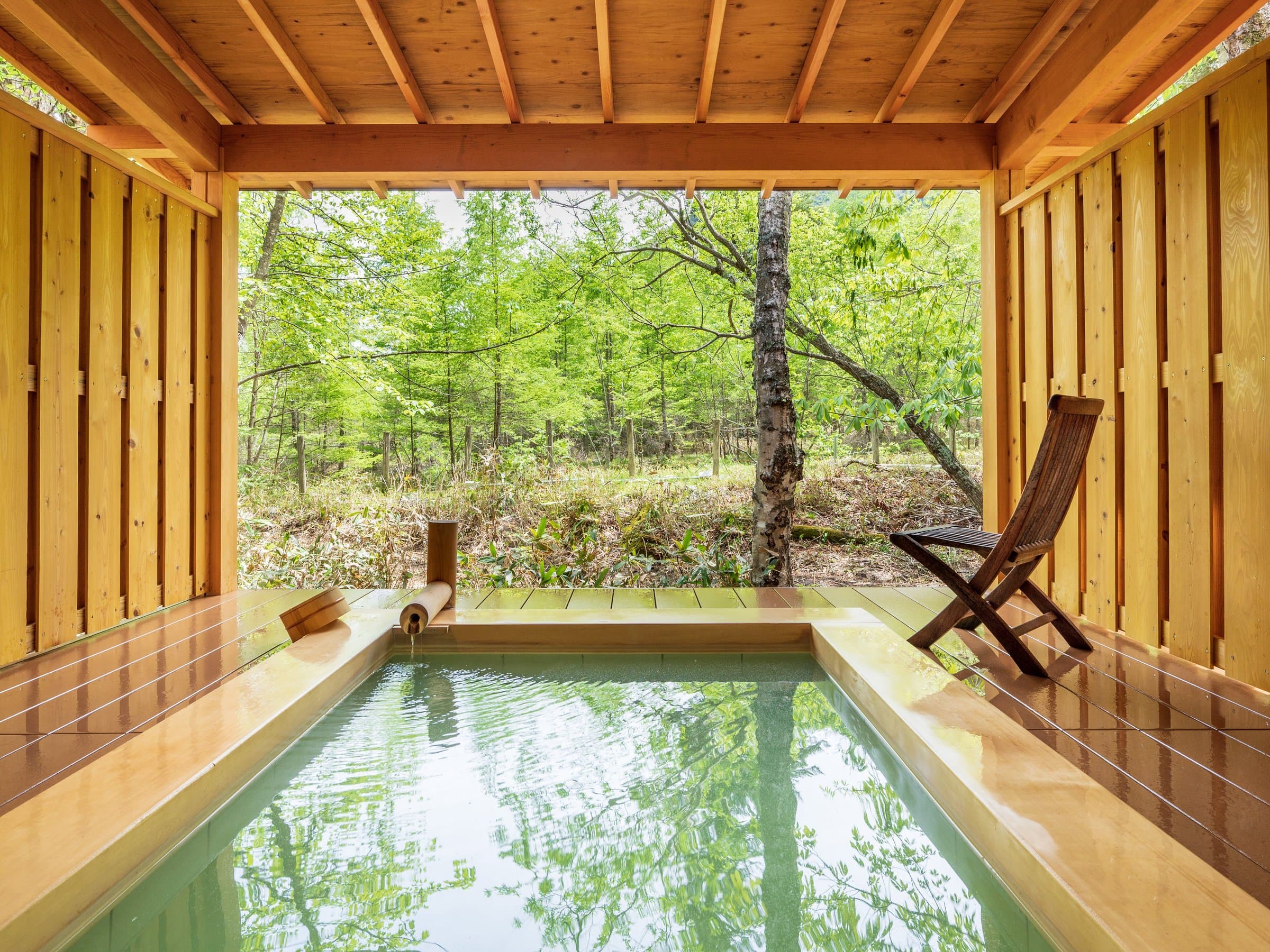
Okunikko Yumoto Onsen sits at the far upper end of Nikko National Park — above the famous shrine complex and above Lake Chuzenji — in a highland sulfur-spring district where the milky white water flows year-round. With just 12 rooms, each with its own source-fed open-air bath, this is an intimate property. Autumn at this elevation means the larches and beeches turn before most of Kanto — typically early to mid-October — so guests here get the first real color of the season while Kyoto and Hakone are still green.
The hotel's kaiseki dinners use local mountain vegetables and seasonal fish, and English-speaking staff make the logistics comfortable for international visitors. For those who want genuinely solitary bathing in alpine autumn color, it is one of the strongest combinations in the guide.
- Peak foliage: Early–mid October
- Price from: $264 per person
- Rating: 9.6/10
- Private onsen: Yes (in-room)
Tip
Yumoto Onsen is a 40-minute bus ride from Nikko's main shrine area. Combine an afternoon at Tosho-gu and Kegon Falls with an evening arrival at Yuno-mori for an efficient Nikko two-night stay.
2. Awanoyu (Shirahone Onsen, Nagano Alps)
Best for: Early alpine autumn and the most distinctive bath water in Japan.
For an early taste of autumn, head to the Japan Alps. Shirahone Onsen's foliage peaks in mid-October, well before the crowds descend on Kyoto and Hakone. The Awanoyu ryokan is the main draw here — it is famous for its large outdoor bath filled with naturally milky, calcium-bicarbonate water believed to have restorative properties, flowing at one of the largest source-rates in Nagano Prefecture. The experience of soaking in those recognizable baths, with crisp mountain air on your face and the surrounding Norikura highlands ablaze in alpine color, is rustic, invigorating, and genuinely hard to find elsewhere in Japan.
Awanoyu does not have a current DB listing that allows us to provide a direct booking link, but it is bookable via Jalan or Ikyu directly. This is a choice for adventurers and onsen connoisseurs seeking an authentic, off-the-beaten-path experience.
- Peak foliage: Mid-October
- Price tier: Mid-range (approx. ¥25,000–¥45,000 per person)
- Private onsen: Yes
3. Wakamatsuya (Zao Onsen, Yamagata)
Best for: Tohoku's first autumn color, historical depth, and sulfur baths.
Zao Onsen in Yamagata is best known as a winter destination — its snow monsters (juhyo) are among Tohoku's most photographed phenomena — but the surrounding beech and maple forests turn some of the most saturated reds and yellows in Tohoku before much of Japan has even noticed the season changing. Peak typically runs mid to late October.
Wakamatsuya has been welcoming guests since 1655, drawing from its own private sulfur spring. The ryokan has a direct connection to the Taisho-era poet Saito Mokichi, whose work celebrated Zao's landscapes, and the building reflects that literary and historical grounding. Three communal baths, including a reservable private bath, are fed by the property's own source. Kaiseki meals here use handmade seasonal preparations emphasizing local Yamagata ingredients.
- Peak foliage: Mid–late October
- Price from: $200 per person
- Rating: 9.6/10
- Private onsen: Yes
4. Yusaya Ryokan (Naruko Onsen, Miyagi)
Best for: Naruko Gorge foliage, rare spring types, and a building with genuine heritage.
Naruko Onsen in Miyagi Prefecture is consistently ranked among Tohoku's top koyo destinations. The Naruko Gorge (Naruko-kyo) — a 100-meter deep ravine carved by the Edo River, accessible via a short walk from town — turns crimson and gold in late October, drawing photographers from across Japan. Most ryokan guests in town get the gorge view; guests at Yusaya get it with a 370-year-old building around them.
Yusaya is a registered cultural property (Registered Tangible Cultural Property of Japan) with three distinct hot springs including the signature unagi-yu (eel bath) — a milky, alkaline spring with a slick feel that the inn has been known for across its history. A reservable private bath is available. The town also produces Japan's famous kokeshi wooden dolls, sold at workshops throughout the main street — a low-key cultural counterpoint to the foliage.
- Peak foliage: Late October
- Price from: $259 per person
- Rating: 9.6/10
- Private onsen: Yes
Tip
Naruko Gorge's peak typically falls within the last week of October. The viewing platform at Ofukazawa Bridge is the standard vantage point — arrive before 9am on weekdays to avoid tour buses. The ryokan is a 15-minute walk from Naruko Onsen Station on the JR Rikunan Line from Sendai.
5. Saryo Soen (Akiu Onsen, Sendai)
Best for: Sendai-accessible Tohoku foliage with the best kaiseki in greater Sendai.
Akiu Onsen sits in the Natori River gorge, about 35 minutes from Sendai by car or bus, making it the most city-accessible Tohoku onsen destination in this guide. The surrounding river gorge turns a reliable crimson-and-gold in mid to late October, and several properties here have in-compound foliage viewing. Saryo Soen takes this furthest.
The 26-room property is organized around a working tea ceremony pavilion — a structural commitment to a slower, more considered pace than most ryokans. Rooms are scattered across a forested compound; many include private in-room outdoor rotenburo. The kaiseki dinner is widely considered the strongest in greater Sendai, multi-course and seasonal, and the tea ceremony experience is available to guests as an optional activity. If you are spending time in Sendai and want a night or two in genuinely excellent surroundings, Saryo Soen is the practical choice.
- Peak foliage: Mid–late October
- Price from: $380 per person
- Rating: 9.6/10
- Private onsen: Yes
6. Fujiya Inn (Ginzan Onsen, Yamagata)
Best for: Architectural design in a historic setting, early November Tohoku color.
Ginzan Onsen in Yamagata Prefecture is a flawlessly preserved Taisho-period (1912–1926) town along a gas-lit river that consistently appears on lists of Japan's most photogenic destinations. At its heart is Fujiya Inn, a historic property reimagined by world-renowned architect Kengo Kuma. The exterior respects the town's traditional aesthetic; the interior is a composition of light and shadow, delicate bamboo screens, and filtered glass that frames the views of the historic street and the colorful hills beyond. In early November, when the surrounding hillsides turn, the ryokan's windows become living paintings.
For travelers who appreciate both history and considered contemporary design, Fujiya Inn offers an experience that is rare in Japan's traditional inn landscape — and the gas-lit evening walk along the river is one of the most memorable atmospheric moments in any season.
- Peak foliage: Early November
- Price from: $500 per person
- Rating: 8.4/10
- Private onsen: Yes
7. Chuzenji Kanaya Hotel (Nikko)
Best for: Lakeside views, early-season Kanto color, and deep heritage.
For those seeking autumn's splendor earlier in the season — and closer to Tokyo — Nikko is an ideal choice. The Chuzenji Kanaya Hotel sits directly on the shores of Lake Chuzenji, a mountain lake formed by an ancient volcanic eruption at 1,269 metres elevation. Its location offers views of the lake and the cone of Mount Nantai, with the surrounding forests turning brilliant shades of red, orange, and yellow in mid-October, roughly three to four weeks ahead of Kyoto.
The Kanaya Hotel lineage traces back to the 1870s Kanaya Cottage Inn, and the property has a history of welcoming international guests that makes it one of Japan's most accessible classic properties. Waking to a view of the lake reflecting the autumn colors — Kegon Falls is a 15-minute drive — is a very specific kind of Japan travel memory. The hotel does not have private in-room onsen, but the communal baths and accessible location compensate.
- Peak foliage: Mid-October to early November
- Price from: $200 per person
- Rating: 8.4/10
- Private onsen: No
 Pin to Pinterest
8. Gora Kadan (Hakone)
Best for: Modern luxury amid classic foliage, 90 minutes from Tokyo.
Hakone is Tokyo's most-visited autumn escape, and Gora Kadan is its most prestigious ryokan address. Built on the grounds of the Kan'in-no-miya family's former summer villa — an Edo-period imperial branch house — this Relais & Châteaux property (the first Japanese member, admitted 1992) blends considered modern design with the tranquility of a traditional ryokan setting.
Its location in Gora provides a base for Hakone's main foliage spots: the Hakone Ropeway over the Owakudani valley and the scenic cruise on Lake Ashi, both of which offer views of maple-covered mountainsides in early to mid-November. The ryokan's own gardens are meticulously maintained, providing a private spectacle of color. Many rooms feature private open-air stone baths on their balconies, which face the surrounding hillside.
- Peak foliage: Early–mid November
- Price from: $500 per person
- Rating: 9.5/10
- Private onsen: Yes
Tip
If you can only book one luxury ryokan for an early-November trip from Tokyo, Gora Kadan is the most direct option. Book the new wing for expansive views; book the original villa suite if the imperial heritage appeals.
9. Konansou (Fuji-Kawaguchiko)
Best for: The Fuji + foliage dual view, rated the highest of any ryokan in this guide.
The Fuji Five Lakes region offers one of autumn's most photographed combinations: crimson maple and ginkgo trees with the white cone of Fuji in the background. Lake Kawaguchiko's northern shore is the canonical vantage point, and Konansou occupies a position on that same stretch. The property is rated 9.9/10 — the highest of any ryokan in this guide — and offers private open-air baths fed by a gensen (source-direct) hot spring. The summary positions it as an honest value pick against the more expensive lakefront competition: same north-shore stretch, same spring source, roughly ¥15,000 less per head.
Peak foliage at Kawaguchiko typically runs mid to late November. On a clear morning, the combination of the turning maples on the far bank and Fuji reflected in still water is among the most distinctive autumn scenes in all of Japan.
- Peak foliage: Mid–late November
- Price from: $200 per person
- Rating: 9.9/10
- Private onsen: Yes
10. Hiiragiya Ryokan (Kyoto)
Best for: Kyoto luxury with over 200 years of continuous operation.
Hiiragiya has been the standard of Kyoto ryokan hospitality since 1818, operating continuously from a quiet street near Nijo Castle. The property has hosted royalty, artists, and literary figures across its history, and each room is a considered expression of traditional Japanese design — tatami, shoji, private garden views.
For autumn foliage, Hiiragiya's Kyoto location is its defining advantage. The city's top koyo spots — Tofuku-ji's garden (widely considered Japan's finest designed foliage garden), Eikan-do, and the Arashiyama bamboo grove surrounds — are accessible by short taxi rides. Kyoto's foliage season runs mid-November to early December, which means the city is simultaneously at its most beautiful and most crowded. Staying at Hiiragiya provides a quiet base inside the noise. Private onsen baths are available in the property.
- Peak foliage: Mid-November to early December
- Price from: $500 per person
- Rating: 9.6/10
- Private onsen: Yes
11. Tawaraya (Kyoto) — editorial mention
Best for: The ultimate in traditional hospitality and private autumn beauty.
Considered by many to be Japan's finest ryokan, Tawaraya is an institution. Founded in 1709 by a textile merchant and operated continuously by the same family for 12 generations, a stay here is less a booking and more an immersion into a world of flawless aesthetics and deeply attentive service. Each of its 18 rooms is a precisely curated space with a private garden view. In autumn, these enclosed gardens become jewel boxes of color, offering a deeply personal and tranquil foliage experience.
We cannot provide a direct booking link as Tawaraya does not have a current listing in our database, but the property is bookable via Ikyu, Relais & Châteaux, or through top-tier hotel concierges. Booking is competitive and often requires advance planning of 6–12 months for November dates.
- Peak foliage: Mid-November to early December
- Price tier: Ultra-luxury (¥100,000+ per person)
- Private onsen: Yes
12. Yamamizuki (Kurokawa Onsen, Kyushu)
Best for: The finest riverside rotenburo foliage experience in Japan, at a fair price point.
Kurokawa Onsen in the Aso mountain region of Kumamoto Prefecture is one of Japan's most atmospheric hot spring towns — a tight cluster of inns along the Tanoharu River, connected by a forest path lined with lanterns. Yamamizuki, rated 9.6/10 and the highest-rated property in Kurokawa with a current booking link, sits close to the river with its signature rotenburo (outdoor bath) positioned along the water. In late November, when Kyushu's maples reach their peak, the riverside baths are framed by overhanging crimson branches.
Kurokawa has significantly smaller crowds than Kyoto or Hakone in the same November window. If you're traveling Kyushu in late autumn, this is the most compelling onsen + foliage combination in the south.
- Peak foliage: Mid–late November
- Price from: $250 per person
- Rating: 9.6/10
- Private onsen: Yes
Koyo from the bath: open-air onsen with foliage views
The most distinctive combination this season offers is one the rest of the world cannot replicate: soaking in a hot spring while autumn leaves fall around you. This is the intersection that defines the best autumn ryokan stays. Here are the properties in this guide where the rotenburo-meets-foliage experience is most direct and most memorable.
Yamamizuki (Kurokawa) — the riverside rotenburo here is positioned close enough to the Tanoharu River that the overhanging maples above the water create a canopy directly over the bath in late November. This is the most cited in-bath foliage experience in this guide.
Okunikko Yuno-mori (Nikko) — each of the 12 rooms has its own source-fed open-air bath in a highland sulfur-spring zone. Soaking at the edge of Nikko National Park forest in early October, when the larch trees turn gold, is a private experience that shared communal baths cannot match.
Gora Kadan (Hakone) — the outdoor baths and private balcony baths face the surrounding Gora hillside. In early November, that hillside runs red and orange. The maples do not overhang the baths directly, but the distance framing is effective.
Awanoyu (Shirahone) — the large communal outdoor bath here, filled with milky-white calcium-bicarbonate water, is ringed by the birch and maple forest of the Norikura highlands. At peak color in mid-October, the contrast of white water and burning autumn color is unusually strong.
Saryo Soen (Akiu) — rooms with private in-room rotenburo overlook the forested compound. The tea ceremony pavilion at the center of the property is specifically beautiful when the surrounding maples turn in mid-October.
Tip
For the strongest visual effect, book a dawn or dusk bath slot. The low-angle light of early morning and late afternoon makes the red and gold momiji appear to glow from within — the same quality of light that makes autumn photography so compelling.
Booking strategy for peak koyo season
Autumn is the single most rate-compressed season for Japanese ryokans. Properties in the foliage corridor (Nikko, Hakone, Kyoto) routinely sell out their October–November weekends 12–16 weeks ahead of peak. For top-tier properties in Kyoto and Hakone, the realistic booking window is 6–9 months.
Work back from peak colour, not from today. Twelve to sixteen weeks before peak is the line. For the 2026 season that means Tohoku (Zao, Naruko) by early August for late-October colour, Nikko by mid-August for its mid-October to early-November window, Hakone by late August for early-to-mid November, and Kyoto by early September for mid-November into early December. Top-tier Kyoto and Hakone rooms move 6–9 months out and are effectively gone by those dates. Arriving at this in September or later? The marquee corridor weekends will be gone, and three moves still work. Shift mid-week — the weekday gap detailed below is at its widest in autumn, and it opens rooms at properties showing sold out. Go higher or later — early October at altitude (Shirahone, Zao, Okunikko) and late November once the corridor has dropped both still catch colour, at 20–30% below peak. Or change region: Kurokawa in Kyushu and the Fuji Five Lakes peak mid-to-late November, after the Nikko and Tohoku rush has cleared. Weekday advantage: The price and availability difference between Friday-Saturday and Tuesday-Wednesday is larger during autumn than any other season. If your schedule is flexible, mid-week stays in the same foliage window can save 20–30% and guarantee availability at properties that are completely sold out on weekends.
Cancellation windows: Most Japanese ryokans operate a sliding cancellation fee: typically 30–50% for cancellations within 3 days, and 100% on the day. Some premium properties charge from 30 days out during peak season. Read the cancellation terms before booking — cancellations during autumn peak are a real cost.
Rate surcharges: Autumn is the peak pricing period for most ryokans. Rates during November in Kyoto and Hakone typically run 30–50% above standard prices, and some properties apply a koyo surcharge on specific peak-color weekends. Budget for ¥60,000–¥150,000 per person at luxury properties during prime November weekends. Off-peak dates in early October or late November after the color drops can save 20–30% while still catching color at higher-elevation destinations.
Tip
Agoda, Trip.com and Ikyu (Japanese platform, English available) all list real-time availability for most properties in this guide. Booking.com covers the mid-range and international-friendly tier well. For Tawaraya and the ultra-luxury Kyoto tier, Ikyu is the most reliable Japanese platform — it shows waitlist availability that international OTAs don't surface.
Beyond the ryokan: pairing foliage spots with your stay
Each ryokan in this guide is positioned within a broader foliage zone. The best autumn ryokan trips pair the in-property experience with one or two nearby spots for half-day excursions.
Nikko area — The Irohazaka switchback road (48 hairpin turns ascending to Chuzenji) is the most dramatic approach to any foliage zone in Japan. The road itself turns red in mid-October. From Chuzenji, Kegon Falls and Ryuzu Falls (the latter often more colorful than Kegon) are 20–30 minutes by car.
Hakone area — The Hakone Ropeway over Owakudani offers a bird's-eye view of the autumn canopy when conditions allow. The Hakone Open-Air Museum's sculpture grounds in Chokoku-no-Mori are excellent in autumn without the ropeway crowds.
Kyoto area — Tofuku-ji Temple's Tsutenkyo Bridge is Japan's most celebrated maple garden design. Book a timed entry online in advance. Eikan-do Zenrin-ji, a 10-minute walk from the Keage metro, has a pond-side maple setting that is less crowded than Tofuku-ji.
Kurokawa area — The forest path connecting Kurokawa's 24 inns is lined with maples that create a tunnel of color in late November. The nyuto tegata (bathing passport) allows access to three rotenburo across different inns, a pleasant half-day of in-forest onsen hopping.
Naruko area — Naruko Gorge's Ofukazawa Bridge viewpoint is the top photography spot. The narrow canyon forces the light to create intense color saturation on clear days.
Ginzan area — The town's preserved streetscape is its own foliage backdrop; the surrounding hills provide color from the hillsides that frame the main street. The evening when the gas lamps are lit and the leaves are still turning is the Ginzan experience at its most concentrated.
Frequently asked questions
When is the best time to see autumn foliage at Japanese ryokans?
Peak timing depends entirely on elevation and latitude. Alpine ryokans like Awanoyu in Shirahone Onsen (Nagano Alps) peak in mid-October at roughly 1,000m. Hakone and Nikko peak late October to early November. Kyoto's Arashiyama and Higashiyama temple gardens peak mid to late November. Kurokawa Onsen in Kyushu follows in late November. Track the Nihon Kisho Kyokai (Japan Weather Association) koyo forecast, updated weekly from September — it predicts peak by region within a week's accuracy.
Which is the best area in Japan for a ryokan + autumn foliage combination?
Hakone is the most accessible for Tokyo-based travelers — 90 minutes from Shinjuku, with maple-lined gorges surrounding top ryokans like Gora Kadan. Kyoto delivers the most photographed foliage at Hiiragiya and Tawaraya, but crowds and prices peak significantly in November. For a less-visited alternative, Kurokawa Onsen in Kyushu offers riverside rotenburo surrounded by crimson momiji at Yamamizuki — smaller crowds and a more intimate atmosphere than the major tourist zones.
How far in advance should I book a ryokan for autumn foliage season?
Top-tier properties in Kyoto (Tawaraya, Hiiragiya) and Hakone (Gora Kadan) require 6–12 months advance booking for November dates. Ginzan Onsen's Fujiya Inn books out 3–6 months ahead. Mid-range options in regional areas like Kurokawa or Naruko can often be secured 2–3 months out. Avoid searching last-minute: October–November is Japan's peak ryokan season alongside cherry blossom — a booking 3 months out for a non-Kyoto destination is the realistic minimum.
Do ryokan prices increase during autumn foliage season?
Yes, significantly. Autumn is the peak pricing period for most Japanese ryokans — rates during November in Kyoto and Hakone typically run 30–50% above standard prices, and some properties apply a koyo surcharge on specific peak-color weekends. Budget for ¥60,000–¥150,000 per person at luxury properties during prime November weekends. Off-peak dates in early October or late November after peak drop can save 20–30% while still catching excellent color at alpine destinations.
What is the difference between momiji and koyo in Japan?
Koyo (紅葉) refers to the entire autumn foliage phenomenon — the seasonal color change across multiple tree species. Momiji specifically refers to Japanese maple trees, which produce the intense scarlet and crimson colors that dominate ryokan garden photography. Ginkgo (ichou) trees turn gold simultaneously, usually peaking 1–2 weeks later than momiji. The best ryokan gardens contain both — Gora Kadan and Kurokawa's riverside rotenburo areas are famous for mixed momiji-and-ginkgo color that extends the viewing window.
Are there any ryokans where you can see autumn foliage from the outdoor bath?
Several properties are specifically prized for this. Yamamizuki in Kurokawa Onsen has riverside rotenburo directly beneath overhanging maple trees — the best of any property in this guide for in-bath foliage. Gora Kadan's outdoor baths face the surrounding hillside which turns red in early November. Awanoyu in Shirahone has forest-encircled milky-white baths that peak in mid-October when birch and maple color simultaneously. Book a dawn or dusk slot when direct light makes the colors appear to glow.
Which region has the earliest autumn foliage in Japan for ryokan trips?
Ginzan Onsen in Yamagata Prefecture (Tohoku) and Shirahone Onsen in the Nagano Alps both peak in mid-October — roughly three to four weeks ahead of Kyoto and Hakone. Hokkaido's onsen areas peak even earlier: late September to early October at Noboribetsu and the Daisetsuzan mountain region. Traveling in October rather than November offers meaningfully lower prices and smaller crowds while still catching full color at these higher-elevation destinations.
When is autumn foliage in Japan in 2026?
The 2026 koyo forecasts will be published by the Japan Meteorological Corporation in mid-September 2026, once summer temperature data is available. In typical years: Hokkaido peaks late September to early October, Tohoku highlands (Zao, Naruko) peak mid to late October, Nikko and the Japan Alps peak mid-October to early November, Hakone peaks early to mid-November, and Kyoto peaks mid-November to early December. Subscribe to the Nihon Kisho Kyokai weekly forecast from September for real-time updates specific to each area.
Can I visit ryokans for autumn foliage without booking far in advance?
For the top destinations in Kyoto, Hakone, and Nikko during peak weekends (late October through mid-November), last-minute availability is extremely limited — most sought-after properties are fully booked months ahead. However, mid-week stays in secondary destinations like Kurokawa, Naruko, or Zao can often be found 4–8 weeks out. Cancellation checking via Trip.com or Ikyu in early October can occasionally surface openings at peak properties as travel plans change.
Your autumn foliage ryokan checklist
Before you book and before you go, run through these:
Booking
- Book 12–16 weeks before your area's peak — August to early September for Kyoto, Hakone and Nikko
- Compare weekday vs. weekend rates — the difference is often 20–30% during koyo season
- Read the cancellation policy carefully; autumn peak cancellation fees can be 100% within 3 days
- Check if your target property requires a Japanese phone number for booking (some mid-tier properties do — Trip.com and Booking.com typically handle this for you)
Timing
- Identify your preferred area's typical peak window (use the table above)
- Build in a 2–3 day buffer on either side of predicted peak; color doesn't arrive on a single day
- If covering multiple regions, order itinerary north-to-south (Tohoku → Kanto → Kansai → Kyushu)
In the ryokan
- Request the bath slots around dawn and dusk for the best light
- Ask the ryokan staff about their specific view timing — they know which trees in the compound peak first
- Pack layers for evening walks; onsen town evenings in October–November run 5–12°C in most zones
Foliage spots
- Arrive at major viewpoints (Tofuku-ji, Naruko Gorge, Irohazaka) before 9am on weekdays to avoid tour groups
- Many top temple gardens now require timed entry reservations purchased online — book these before your trip, not on the day
Tip
The koyo season rewards flexibility. If you can move your travel by 3–5 days based on the September forecast, you have a significantly better chance of hitting true peak color at your chosen destination. Set a reminder for mid-September and check the weekly forecast before confirming non-refundable bookings.
Booking a ryokan during autumn is about securing a front-row seat to peak foliage with hot water in the same frame. The 12 picks above are sorted by typical peak-foliage date (early-October alpine down through late-November Kyushu) so you can build the itinerary around the leaf calendar rather than the rail map. Book well before peak for October–November colour — autumn is the single most rate-compressed season for ryokans, and foliage-corridor properties sell out 12–16 weeks ahead. Next: best season for ryokan for the cross-season comparison, or browse our Kyoto autumn ryokan guide for a deeper Kyoto focus.
Ready to book?
Book one of these top picks
Compare live availability and prices across booking sites.
from US$500 · per person · per nightfrom ≈ US$1,000 total for 2 guests



from US$150 · per person · per nightfrom ≈ US$300 total for 2 guests
Okunikko Yuno-mori
奥日光ゆの森
Nikko·Luxury
from US$264 · per person · per nightfrom ≈ US$528 total for 2 guests
Booking links may earn us a commission at no extra cost to you.
For November color with Mt. Fuji behind it, Kawaguchiko's maple corridor is hard to beat — our Kawaguchiko ryokan guide covers the lakeside stays.
FAQ
Frequently asked questions
When is the best time to see autumn foliage at Japanese ryokans?+
Peak timing depends entirely on elevation and latitude. Alpine ryokans like Awanoyu in Shirahone Onsen (Nagano Alps) peak in mid-October at roughly 1,000m. Hakone and Nikko peak late October to early November. Kyoto's Arashiyama and Higashiyama temple gardens peak mid to late November. Kurokawa Onsen in Kyushu follows in late November. Track the Nihon Kisho Kyokai (Japan Weather Association) koyo forecast, updated weekly from September — it predicts peak by region within a week's accuracy.
Which is the best area in Japan for a ryokan + autumn foliage combination?+
Hakone is the most accessible for Tokyo-based travelers — 90 minutes from Shinjuku, with maple-lined gorges surrounding top ryokans like Gora Kadan. Kyoto delivers the most photographed foliage at Hiiragiya and Tawaraya, but crowds and prices peak significantly in November. For a less-visited alternative, Kurokawa Onsen in Kyushu offers riverside rotenburo surrounded by crimson momiji at Yamamizuki — smaller crowds and a more intimate atmosphere than the major tourist zones.
How far in advance should I book a ryokan for autumn foliage season?+
Top-tier properties in Kyoto (Tawaraya, Hiiragiya) and Hakone (Gora Kadan) require 6–12 months advance booking for November dates. Ginzan Onsen's Fujiya Inn books out 3–6 months ahead. Mid-range options in regional areas like Kurokawa or Naruko can often be secured 2–3 months out. Avoid searching last-minute: October–November is Japan's peak ryokan season alongside cherry blossom — a booking 3 months out for a non-Kyoto destination is the realistic minimum.
Do ryokan prices increase during autumn foliage season?+
Yes, significantly. Autumn is the peak pricing period for most Japanese ryokans — rates during November in Kyoto and Hakone typically run 30–50% above standard prices, and some properties apply a koyo surcharge on specific peak-color weekends. Budget for ¥60,000–¥150,000 per person at luxury properties during prime November weekends. Off-peak dates in early October or late November after peak drop can save 20–30% while still catching excellent color at alpine destinations.
What is the difference between momiji and koyo in Japan?+
Koyo (紅葉) refers to the entire autumn foliage phenomenon — the seasonal color change across multiple tree species. Momiji specifically refers to Japanese maple trees, which produce the intense scarlet and crimson colors that dominate ryokan garden photography. Ginkgo (ichou) trees turn gold simultaneously, usually peaking 1–2 weeks later than momiji. The best ryokan gardens contain both — Gora Kadan and Kurokawa's riverside rotenburo areas are famous for mixed momiji-and-ginkgo color that extends the viewing window.
Are there any ryokans where you can see autumn foliage from the outdoor bath?+
Several properties are specifically prized for this. Yamamizuki in Kurokawa Onsen has riverside rotenburo directly beneath overhanging maple trees — the best of any property in this guide for in-bath foliage. Gora Kadan's outdoor baths face the surrounding hillside which turns red in early November. Awanoyu in Shirahone has forest-encircled milky-white baths that peak in mid-October when birch and maple color simultaneously. Book a dawn or dusk slot when direct light makes the colors appear to glow.
Which region has the earliest autumn foliage in Japan for ryokan trips?+
Ginzan Onsen in Yamagata Prefecture (Tohoku) and Shirahone Onsen in the Nagano Alps both peak in mid-October — roughly three to four weeks ahead of Kyoto and Hakone. Hokkaido's onsen areas peak even earlier: late September to early October at Noboribetsu and the Daisetsuzan mountain region. Traveling in October rather than November offers meaningfully lower prices and smaller crowds while still catching full color at these higher-elevation destinations.
When is autumn foliage in Japan in 2026?+
The 2026 koyo forecasts will be published by the Japan Meteorological Corporation in mid-September 2026. In typical years: Hokkaido peaks late September to early October, Tohoku highlands (Zao, Naruko) peak mid to late October, Nikko and the Japan Alps peak mid-October to early November, Hakone peaks early to mid-November, and Kyoto peaks mid-November to early December. Subscribe to the Nihon Kisho Kyokai weekly forecast from September for real-time regional updates.
Can I visit ryokans for autumn foliage without booking far in advance?+
For top destinations in Kyoto, Hakone, and Nikko during peak weekends, last-minute availability is extremely limited. However, mid-week stays in secondary destinations like Kurokawa, Naruko, or Zao can often be found 4–8 weeks out. Checking Trip.com or Ikyu for cancellations in early October can occasionally surface openings at peak properties.
Still deciding?
Browse ryokans across JapanBooking.comTravelling this season?
See Booking.com's current deals on staysBooking.com