Quick Comparison
10 picks| Ryokan | From | Rating | Book |
|---|---|---|---|
 | from US$700/person/night≈ US$1,400 for 2 | 9.2 5 reviews | Book on Trip.com |
 | from US$300/person/night≈ US$600 for 2 | 9.2 767 reviews | Book on Agoda |
 | from US$300/person/night≈ US$600 for 2 | 9.0 154 reviews | Book on Trip.com |
 | from US$200/person/night≈ US$400 for 2 | 9.9 17 reviews | Book on Trip.com |
 | from US$135/person/night≈ US$270 for 2 | 9.1 906 reviews | Book on Trip.com |
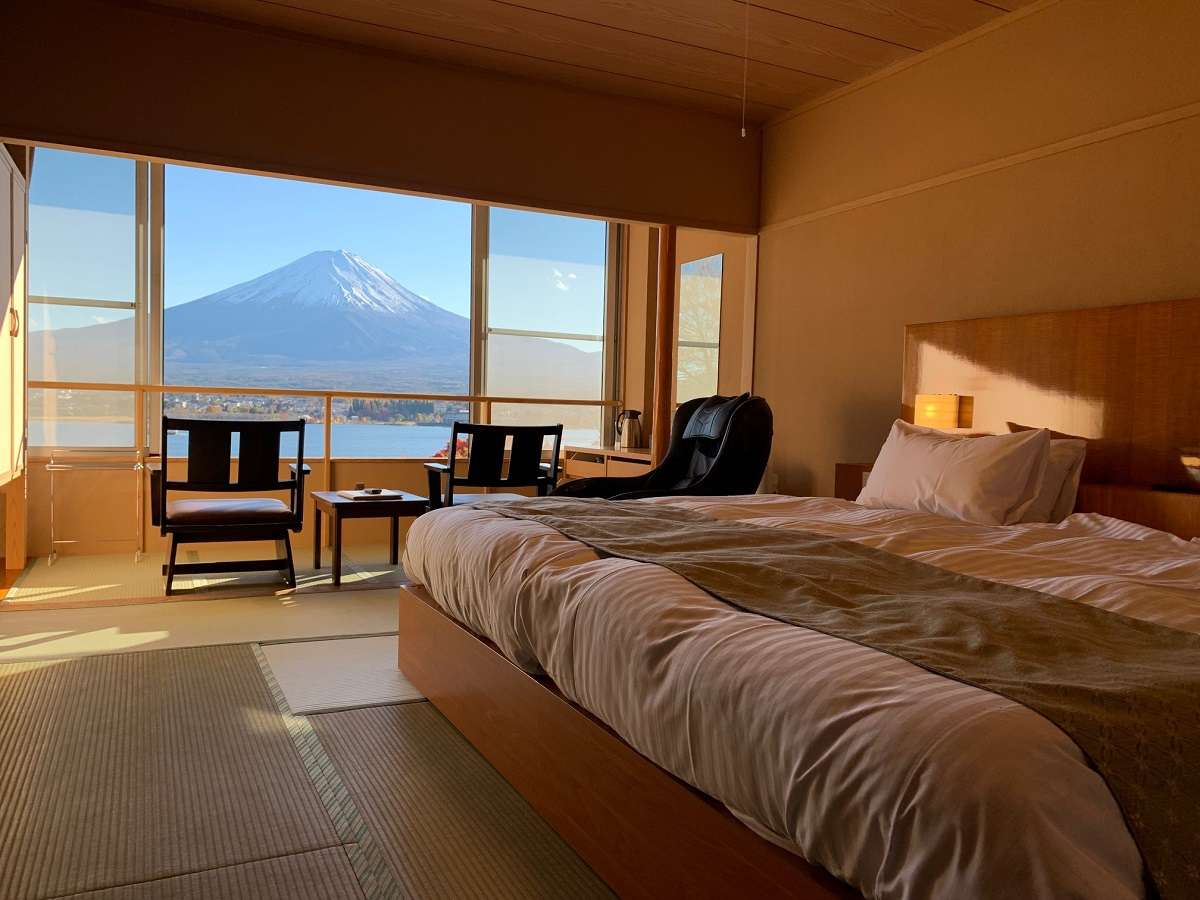 | from US$230/person/night≈ US$460 for 2 | 8.8 127 reviews | Book on Agoda |
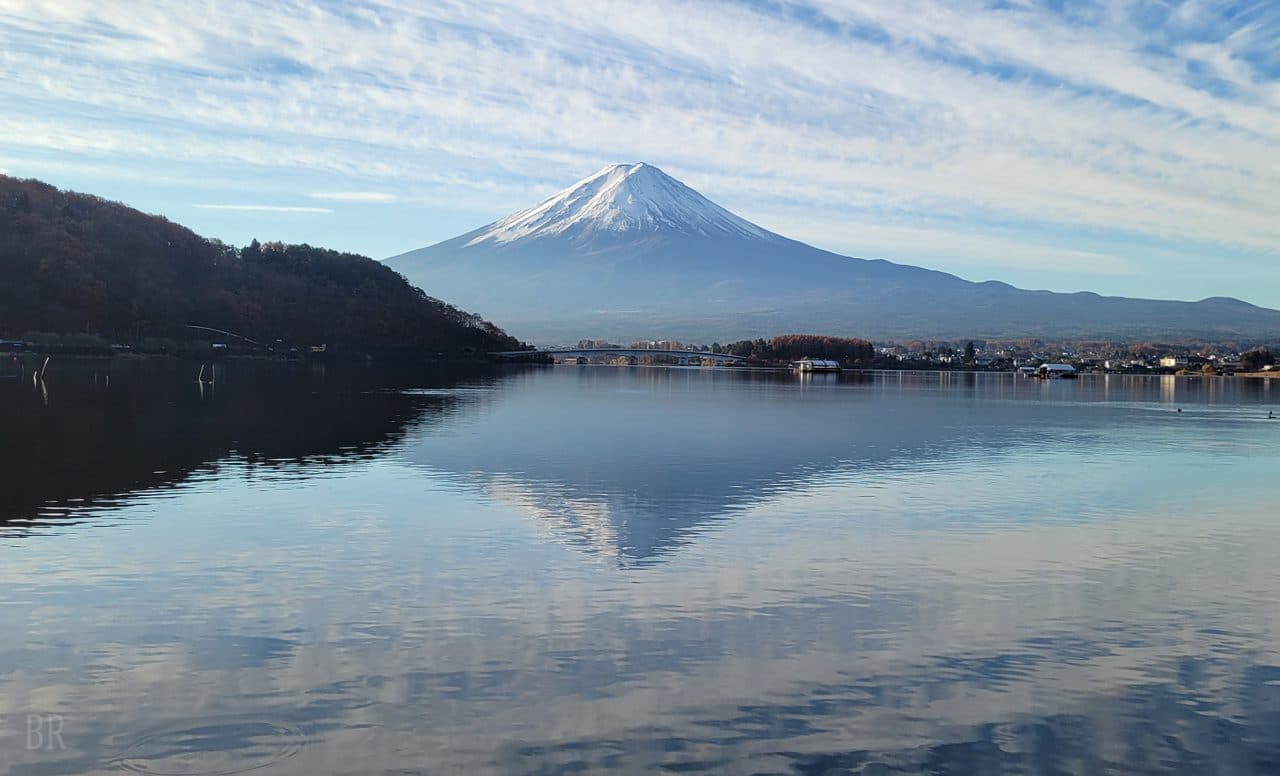 | from US$165/person/night≈ US$330 for 2 | 9.4 43 reviews | Book on Agoda |
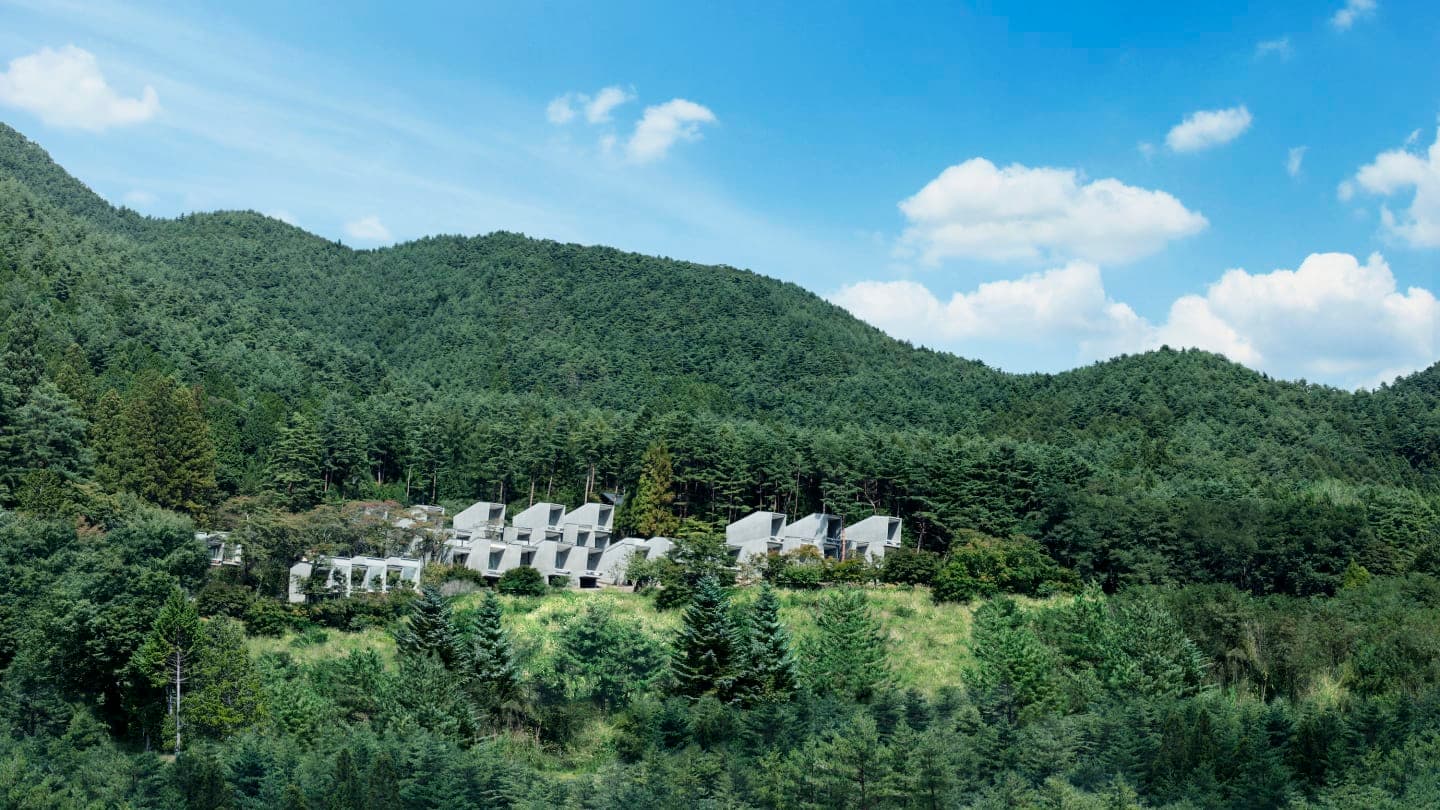 | from US$436/person/night≈ US$872 for 2 | 9.5 130 reviews | Book on Trip.com |
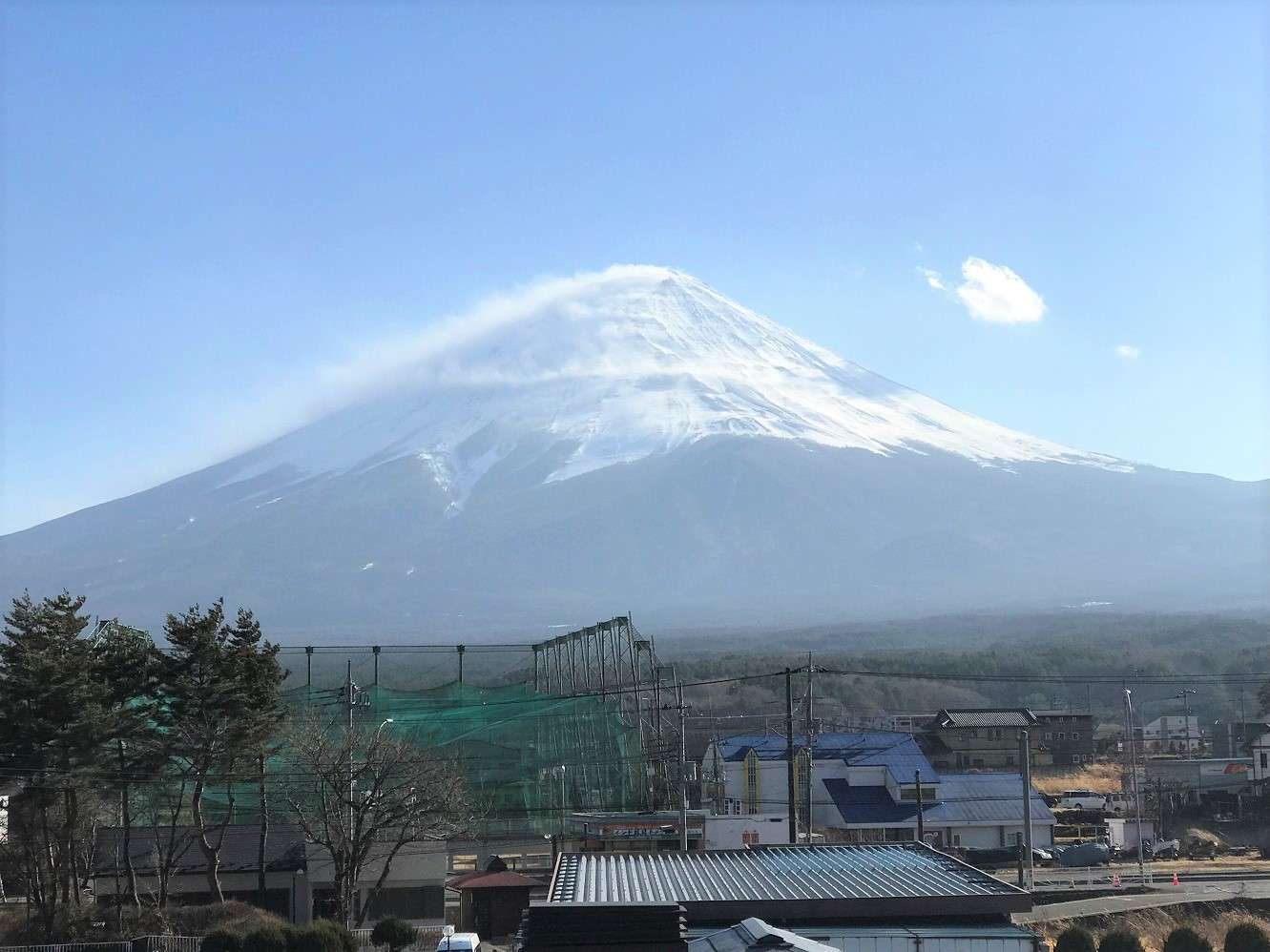 | from US$20/person/night≈ US$40 for 2 | 8.2 119 reviews | Book on Trip.com |
| — | 9.6 743 reviews | Book on Agoda |
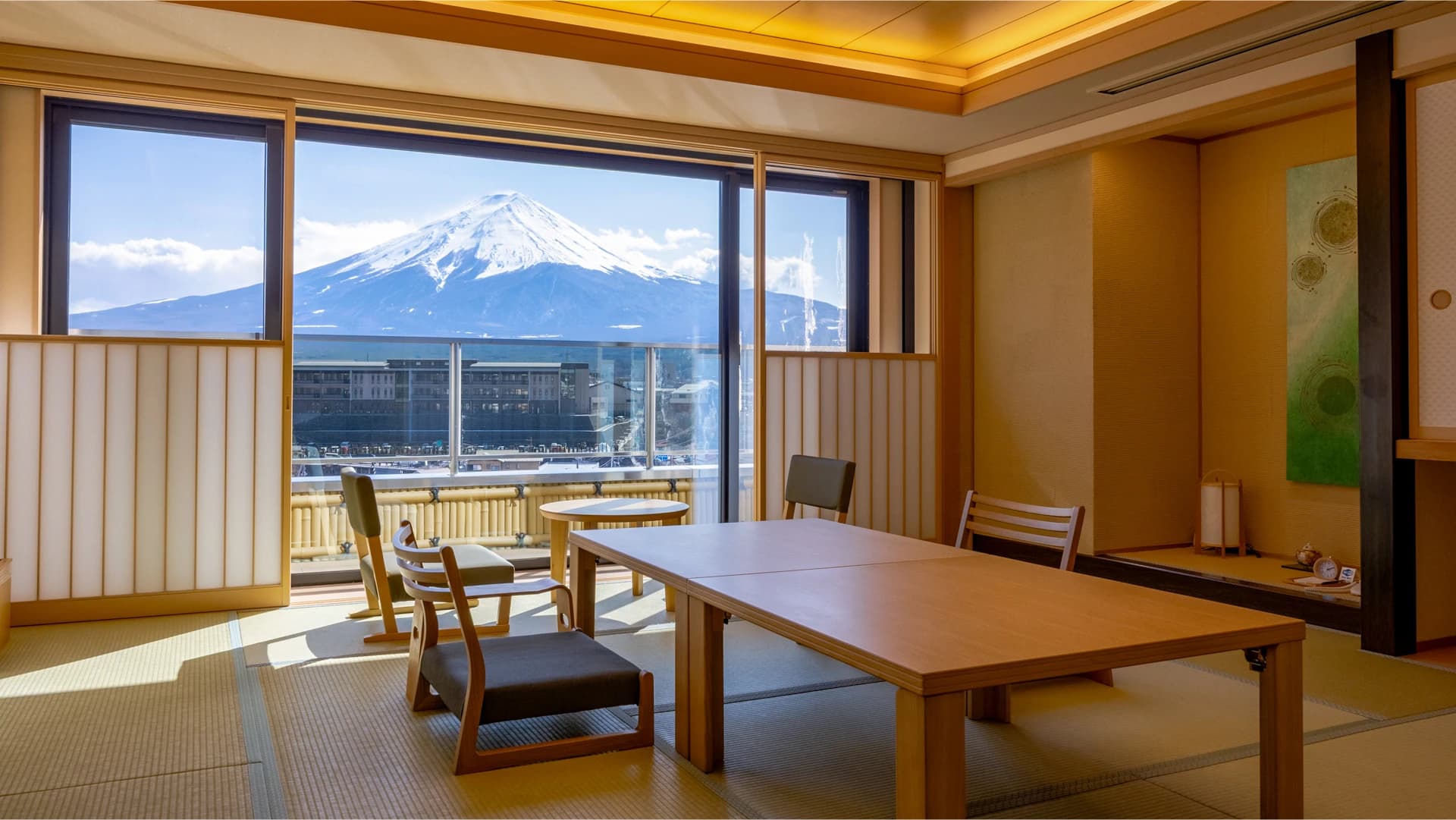
Kozantei Ubuya
Fuji Kawaguchiko
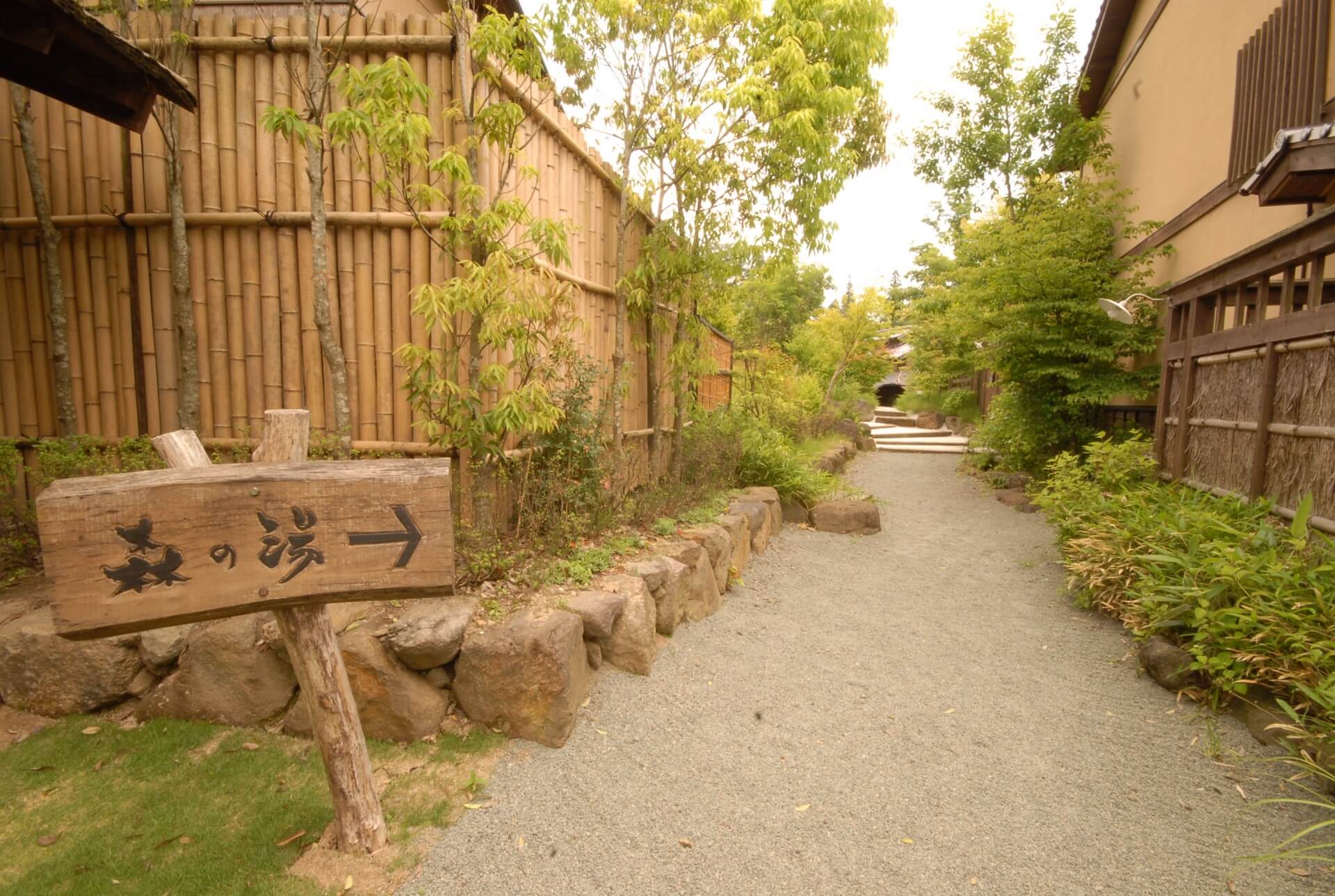
Fuji Onsenji Yumedono
Fuji Kawaguchiko
La Vista Fuji Kawaguchiko
Fuji Kawaguchiko
Sunnide Resort
Fuji Kawaguchiko
Hotel Asafuji
Fuji Kawaguchiko
HOSHINOYA Fuji
Fuji Kawaguchiko
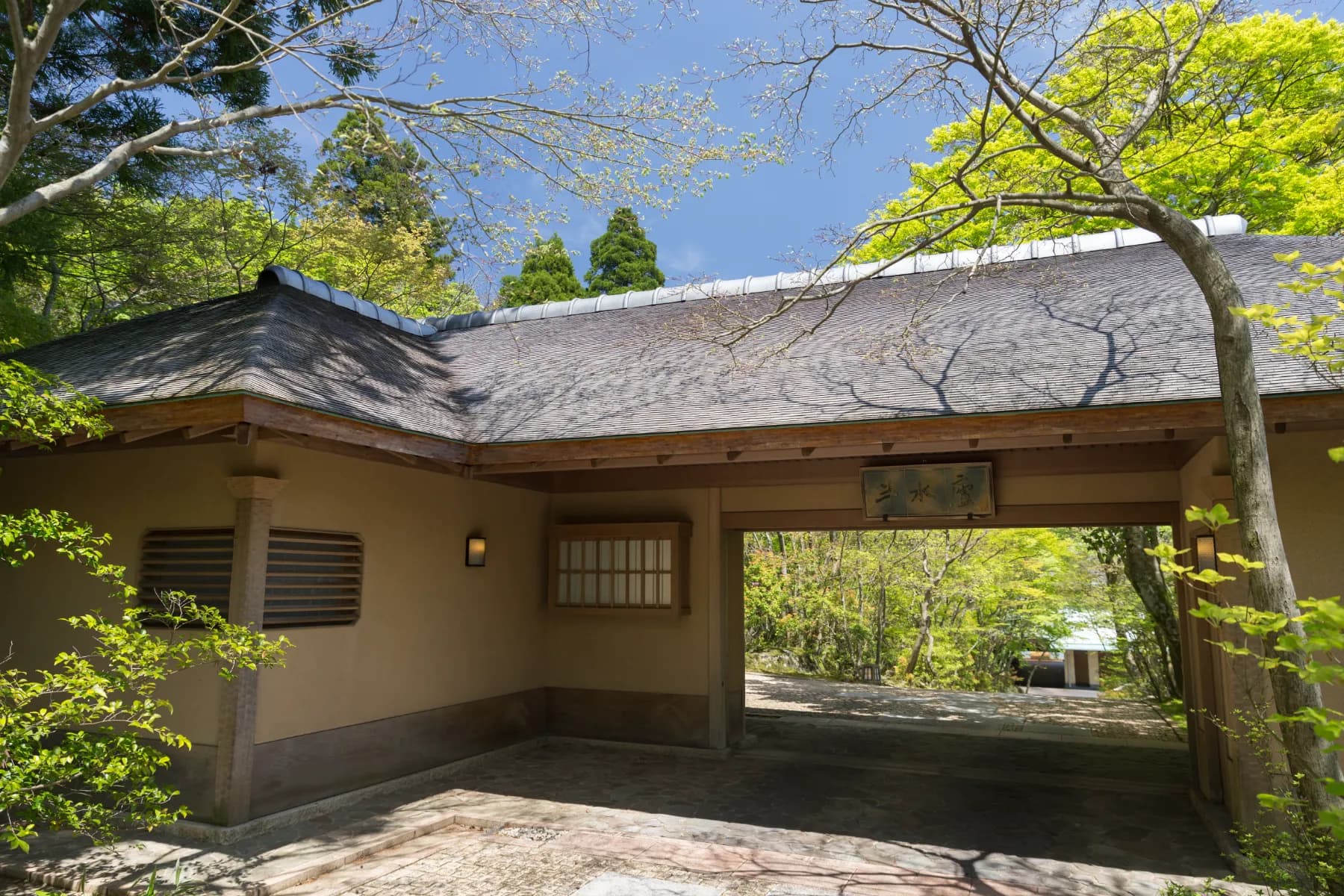
Shuhokaku Kogetsu
Fuji Kawaguchiko
Prices shown are approximate starting rates per person per night. We may earn a commission on bookings.
Kawaguchiko is the most visited of the Fuji Five Lakes region and the primary base for foreign visitors seeking that iconic shot: a symmetrical white cone reflected in still water. The lake sits at 830m elevation, and the north shore is where the postcard happens. But the viewing window is narrower than most travel content admits — and choosing the wrong side of the lake, or arriving in summer without a plan, can turn a $500-a-night room into a grey cloud and a lot of breakfast regret.
This guide covers 19 traditional ryokans plus two non-ryokan alternatives (HOSHINOYA Fuji for glamping, K's House Fuji View for budget travellers), with verified shore positions, Fuji-view room types, onsen details, tattoo policies, and real price data as of July 2026. No ryokan on this list is perfect for every traveller, and we'll say so where it matters.
Stay planner
Find the ryokan that fits your stay
Set the essentials once. We will narrow this article's recommendations and carry your dates and party size to the booking site.
Article selection
21 ryokans to compare
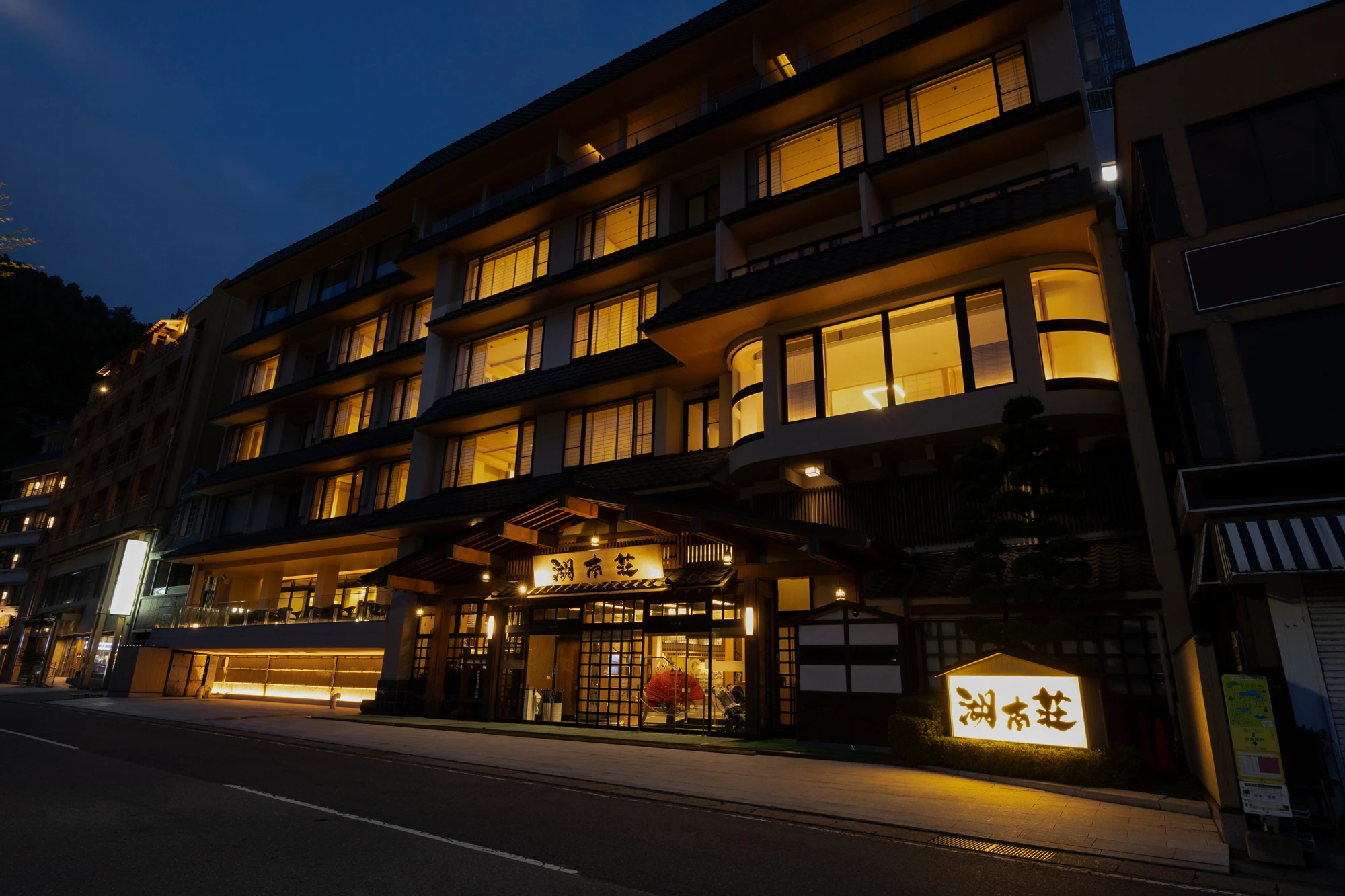
Fuji Kawaguchiko
Konansou
US$400 total / night, 2 guests
US$200 · per person · per night
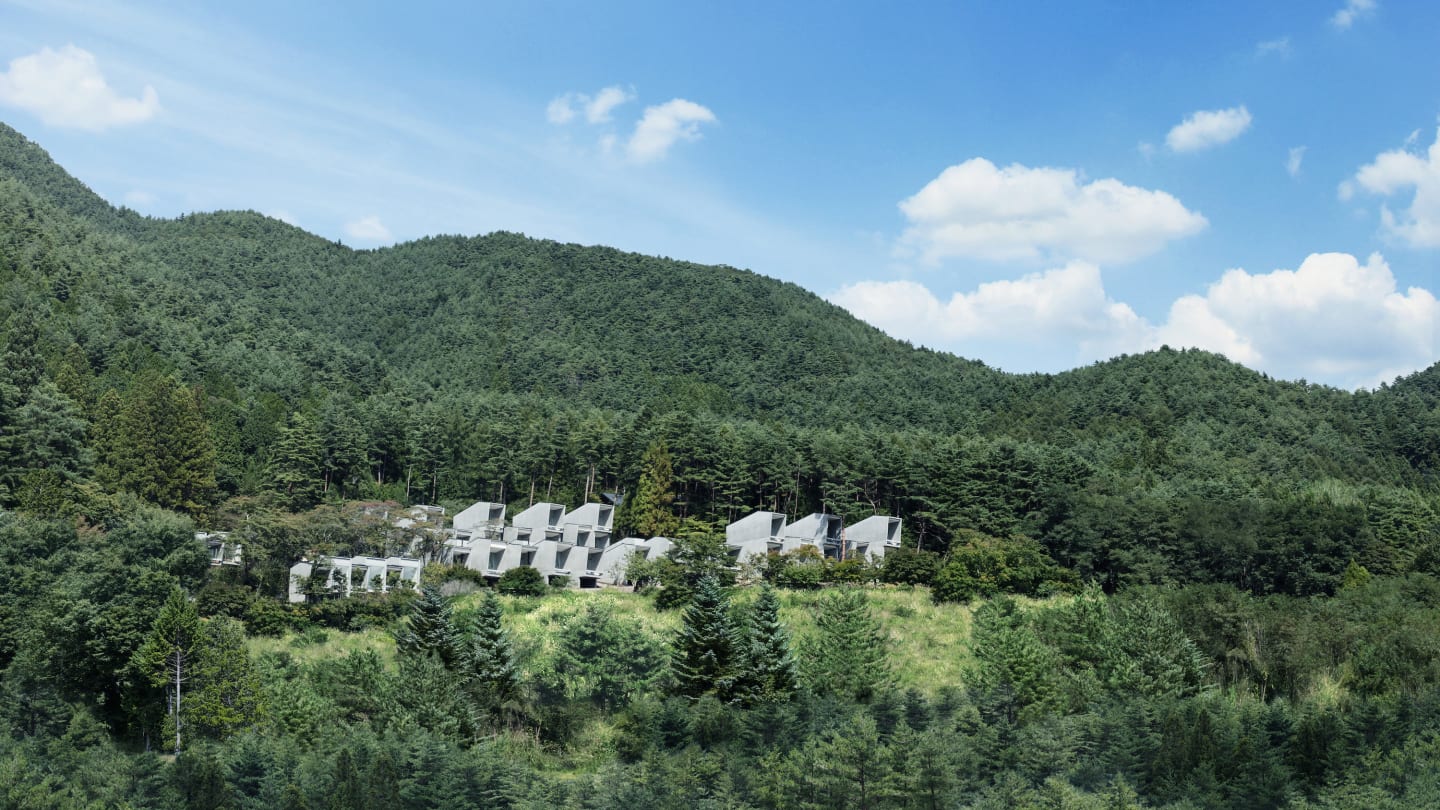
Fuji Kawaguchiko
HOSHINOYA Fuji
US$872 total / night, 2 guests
US$436 · per person · per night
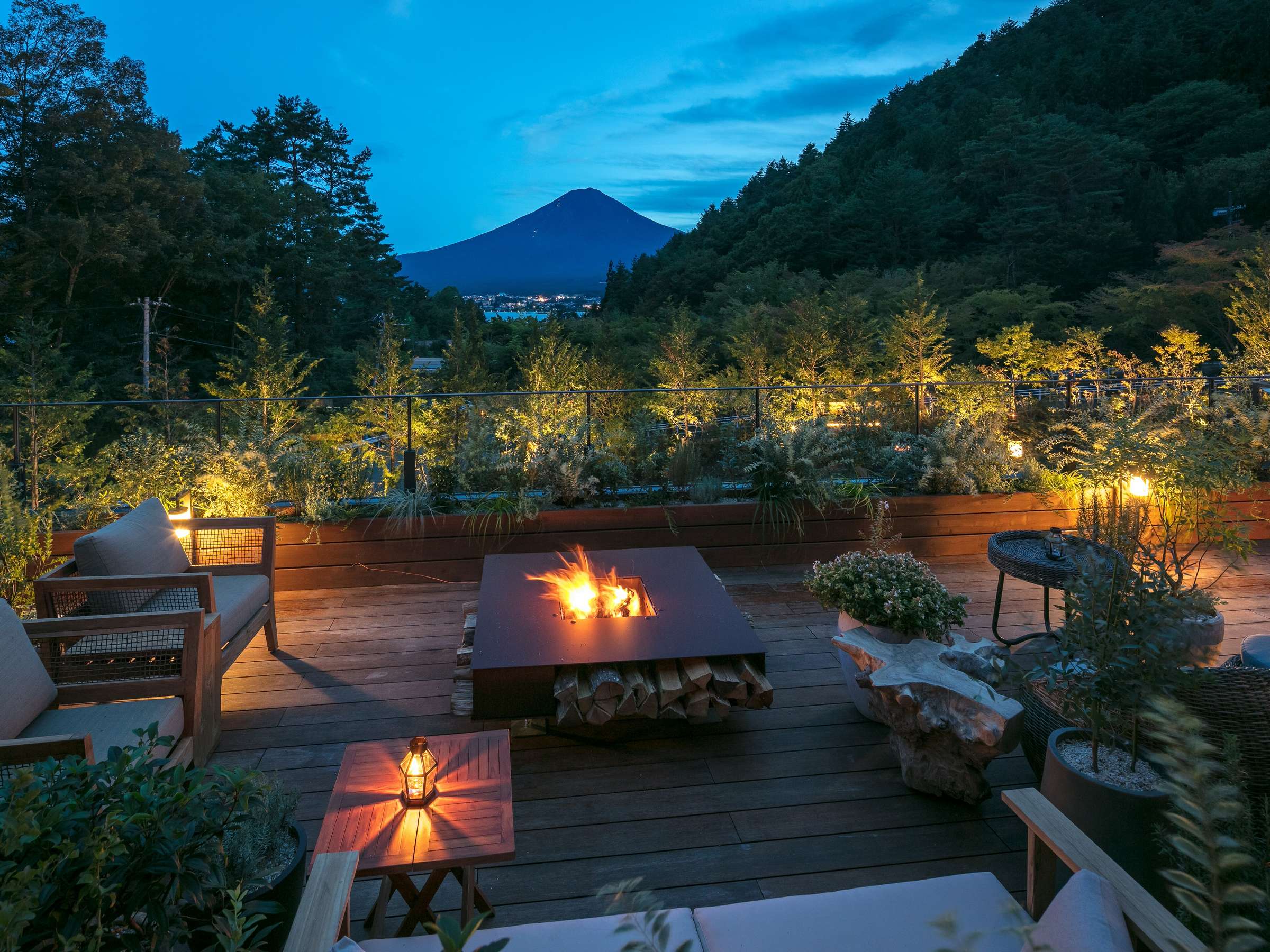
Fuji Kawaguchiko
Hotel Asafuji
US$330 total / night, 2 guests
US$165 · per person · per night
Fuji Kawaguchiko
Kawaguchiko Fufu
US$1,400 total / night, 2 guests
US$700 · per person · per night
Fuji Kawaguchiko
Kozantei Ubuya
US$600 total / night, 2 guests
US$300 · per person · per night
Fuji Kawaguchiko
THE KUKUNA
US$328 total / night, 2 guests
US$164 · per person · per night
Fuji Kawaguchiko
Kasuitei Ooya
US$248 total / night, 2 guests
US$124 · per person · per night
Fuji Kawaguchiko
Hotel Koryu
US$192 total / night, 2 guests
US$96 · per person · per night
Fuji Kawaguchiko
La Vista Fuji Kawaguchiko
US$270 total / night, 2 guests
US$135 · per person · per night
Fuji Kawaguchiko
Koraku Onyado Fuji Ginkei
US$370 total / night, 2 guests
US$185 · per person · per night
Fuji Kawaguchiko
Fuji Onsenji Yumedono
US$600 total / night, 2 guests
US$300 · per person · per night
Fuji Kawaguchiko
Fuji Lake Hotel
US$290 total / night, 2 guests
US$145 · per person · per night
Fuji Kawaguchiko
Wakakusa no Yado Maruei
US$240 total / night, 2 guests
US$120 · per person · per night
Fuji Kawaguchiko
Kawaguchiko Park Hotel
US$176 total / night, 2 guests
US$88 · per person · per night
Fuji Kawaguchiko
Sunnide Resort
US$460 total / night, 2 guests
US$230 · per person · per night
Fuji Kawaguchiko
Lakeland Hotel Mizunosato
US$212 total / night, 2 guests
US$106 · per person · per night
Fuji Kawaguchiko
Ooike Hotel
US$314 total / night, 2 guests
US$157 · per person · per night
Fuji Kawaguchiko
Yamagishi Ryokan
US$188 total / night, 2 guests
US$94 · per person · per night
Fuji Kawaguchiko
K's House Fuji View
US$40 total / night, 2 guests
US$20 · per person · per night
Fuji Kawaguchiko
Hotel Mifujien
US$200 total / night, 2 guests
US$100 · per person · per night
North shore vs south shore: why your ryokan's position changes everything
How the lake geography determines your Fuji frame
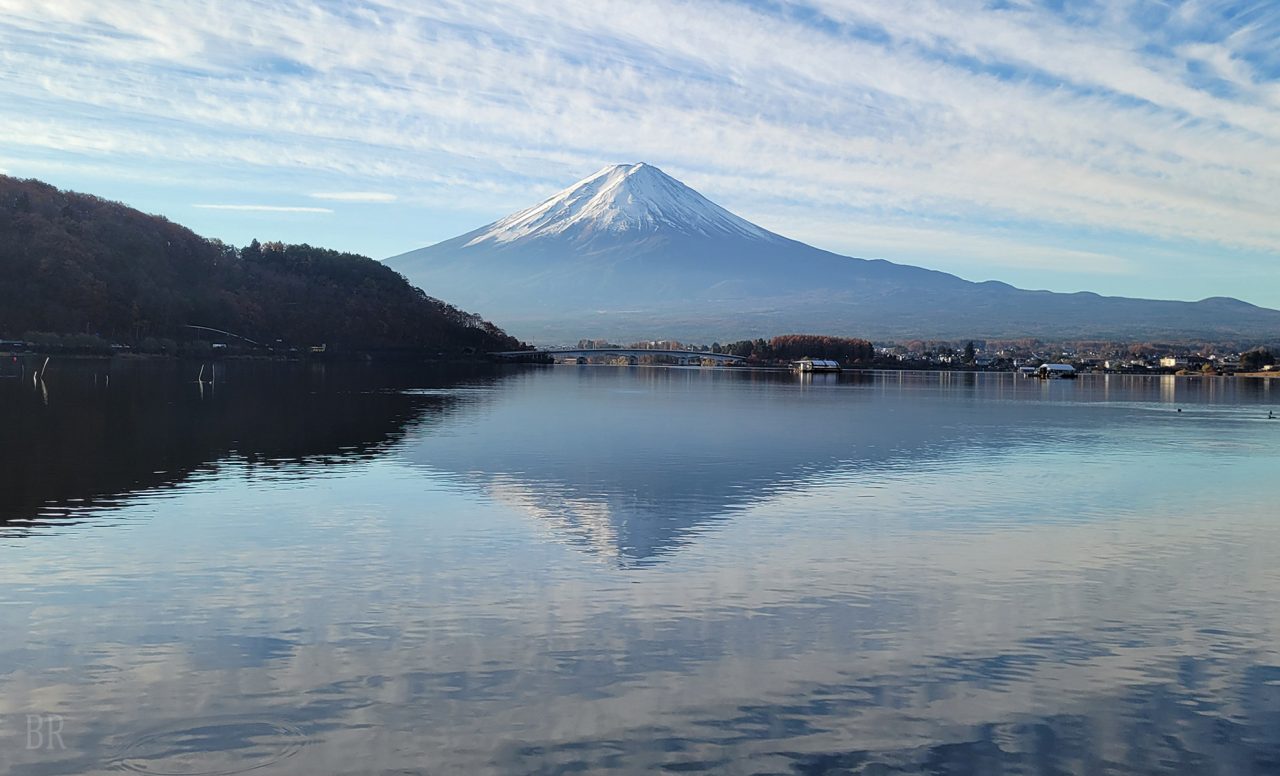
Mt. Fuji sits about 17 km to the south of Lake Kawaguchi. That means a north-shore room looks south across the water straight at the mountain — the lake fills the foreground, the cone floats behind it, and on calm mornings the whole thing reflects like a painting. This is Oishi Park's "Sakasa Fuji" viewpoint, the canonical shot you see on every Japan travel thumbnail.
A south-shore room faces north up the lake — meaning Fuji is behind the building, not in front of it. Inns on that side still sell Fuji views, and many of them are real: the mountain rises over the town on the inland side, and rooftop baths and upper floors on the south shore are built to face it. What you lose is the water in the foreground. The distinction is rarely spelled out in OTA listings, which is why people end up paying for a "lake view" that delivers the lake and nothing else, or a "Fuji view" that looks over a car park at the cone.
Which shore the best-rated ryokans sit on
The twenty-one properties in this guide are spread across five shoreline districts, and which one you land in decides what your window frames. Oishi (northwest) and Kawaguchi (north) are the true north shore — Fuji across open water. Asakawa (northeast) looks southwest down the lake and gets much the same picture. Funatsu (southeast, where the station and most of the inns are) and Kodachi (south) face north up the lake, so their Fuji views come from rooftops, upper floors and inland-facing rooms rather than from the water.
| District | What you see | Properties here | Verdict |
|---|---|---|---|
| Oishi (northwest) | Fuji across open water | Sunnide Resort, HOSHINOYA Fuji | The reflection view, and the quietest shore |
| Kawaguchi (north) | Fuji across open water | Shuhokaku Kogetsu | The same frame as Oishi, from the one inn on this stretch |
| Asakawa (northeast) | Fuji southwest down the lake | Kozantei Ubuya, THE KUKUNA, Fuji Ginkei, Hotel Mifujien, Hotel Koryu | Lake in the frame, and the densest cluster of good inns |
| Funatsu (southeast) | Fuji inland over the town | Konansou, Hotel Asafuji, La Vista, Kawaguchiko Fufu, Fuji Onsenji Yumedono, K's House Fuji View, Fuji Lake Hotel, Ooike Hotel, Kasuitei Ooya, Yamagishi Ryokan, Park Hotel | Walkable to the station; view depends on the room or the roof |
| Kodachi (south) | Fuji inland; lake to the north | Wakakusa no Yado Maruei, Lakeland Hotel Mizunosato | Quiet, and honest about which rooms miss the mountain |
One caveat on the district labels: they describe where the building stands, not what every room sees. Hotel Asafuji is in Funatsu and states that every one of its rooms faces Mt. Fuji; Maruei is in Kodachi and states the opposite about its own lake-side rooms. Read the per-property entries below for what each inn claims about its own windows — that is the number that decides your night, not the compass.
The Mt. Fuji visibility reality check (read before you book)
Why the clouds win by mid-morning
Mt. Fuji is famously shy. The mountain generates its own weather — orographic lift pushes warm, moist air up the slope, and a cloud cap forms over the summit by 9–10 AM on most days from May through September. By lunchtime on a humid summer day, you often can't tell the mountain is there at all. Clear, full-mountain views are the exception rather than the rule in the warmer months.
This is the thing nobody puts in the headline. You can spend ¥80,000 on two nights at a lake-view suite and watch clouds all weekend. It happens. The mountain is not a lamp you can switch on.
The 6 AM rotenburo strategy
Your best odds of seeing Mt. Fuji clearly are 06:00–09:00, any season, any month — and especially on clear winter mornings from roughly November through February, shortly after sunrise, before daytime thermals build cloud around the summit. Before the heat of the day, the air is clearer and the orographic cloud cycle hasn't kicked in. On windless mornings, the reflection on the lake is so sharp it looks digitally altered.
The practical implication: if you're staying at a ryokan with a private balcony rotenburo — Kozantei Ubuya, Konansou (select room types), Kawaguchiko Fufu, Sunnide's Sen Ikkei wing, or Fuji Onsenji Yumedono — you can be in the water by 05:45 in a yukata, watching the mountain without competing for a spot in the communal bath. This is the single best thing about private onsen at Kawaguchiko ryokans, and it's worth the premium if Fuji visibility is your primary reason for coming.
Tip
Booking tip: If a Fuji view is your main goal, prioritise December–February and book a room with a private rotenburo. You control the timing — 06:00 AM in a private bath beats queuing for the communal bath at 07:30 when the sky is already hazeing over.
Best months for clear sightlines
| Season | Months | Fuji clarity | Cloud risk | Crowd level | Notes |
|---|---|---|---|---|---|
| Winter (best) | Dec–Feb | Highest | Low | Low–med | Snow-capped peak, cold and dry; crystal clear mornings |
| Autumn | Oct–Nov | High | Low–med | High (koyo) | Momiji Festival all November; book early |
| Spring | Mar–Apr | Medium | Medium | Very high | Cherry blossom books out 3–4 months ahead |
| Summer | Jun–Sep | Low | High | Highest | Rainy season + heat haze; least recommended for Fuji views |
Kawaguchiko ryokan comparison: all 21 properties at a glance
Before the deep-dives, here's everything in one table. Ratings are on a 10-point scale from verified booking platforms. The price column mixes two units, and the inns are the reason: the nine properties this guide started with publish room rates, while the twelve added since publish per person with two meals, which is the normal Japanese ryokan convention. Rows on the second basis are marked pp — eleven of them, because the twelfth, Shuhokaku Kogetsu, publishes no floor we could reproduce. Never compare a pp figure with a plain one, and see the price decoder section below.
For tattoo policy specifics, see our guide to tattoo-friendly ryokans in Japan.
| Property | District | Fuji view from the room | Private bath | Tattoo policy (public bath) | From USD | Rating |
|---|---|---|---|---|---|---|
| Konansou | Funatsu | Most room types yes | Yes (12 types + 3 rental) | Unknown — contact property | $200 | 9.9 |
| Shuhokaku Kogetsu | Kawaguchi | Yes — the inn states every room | Yes (8 of 14 room types) | Unknown — contact property | — | 9.6 |
| Hotel Asafuji | Funatsu | Yes — every room | No (shared onsen) | Unknown — contact property | $165 | 9.4 |
| Kozantei Ubuya | Asakawa | Yes (all windows) | Yes (balcony rotenburo) | Cover-up required | $300 | 9.2 |
| Kawaguchiko Fufu | Funatsu | Yes — all suites | Yes (private balcony rotenburo) | Unknown — contact property | $700 | 9.2 |
| THE KUKUNA | Asakawa | Yes — the inn states every room | Yes (2 terrace types) | Unknown — contact property | $164 pp | 9.2 |
| Kasuitei Ooya | Funatsu | One room type only (Shinkan, over rooftops) | Yes (2 suites — not hot spring) | Unknown — contact property | $124 pp | 9.2 |
| Hotel Koryu | Asakawa | No claim — lake and South Alps | Yes (rental bath, fee) | Allowed with conditions | $96 pp | 9.2 |
| Fuji Ginkei | Asakawa | Nearly all rooms | No (rooftop Fuji bath) | Unknown — contact property | $185 pp | 9.1 |
| La Vista Fuji Kawaguchiko | Funatsu | Fuji-facing rooms available | Yes (4 rental) | Unknown — contact property | $135 | 9.1 |
| Fuji Onsenji Yumedono | Funatsu | Yes (verify with property) | Yes (all rooms, private garden bath) | Unknown — contact property | $300 | 9.0 |
| Fuji Lake Hotel | Funatsu | Lake-facing; Fuji from upper floors | Yes (rotenburo rooms are onsen; view-bath rooms are not) | Unknown — contact property | $145 pp | 9.0 |
| Wakakusa no Yado Maruei | Kodachi | No — the inn states lake-side rooms cannot | Yes (in-room baths not hot spring) | Not allowed (incl. transfers) | $120 pp | 9.0 |
| Kawaguchiko Park Hotel | Funatsu | Two rooms only (Superior Twin 405, 406) | No | Unknown — contact property | $88 pp | 9.0 |
| Sunnide Resort | Oishi | Lake Annex wing yes | Yes (Sen Ikkei wing) | Unknown — contact property | $230 | 8.8 |
| Lakeland Hotel Mizunosato | Kodachi | No claim on rooms; two baths face Fuji | Yes (in-room baths not hot spring) | Unknown — contact property | $106 pp | 8.7 |
| Ooike Hotel | Funatsu | Many types; 5F bath faces Fuji | Yes (not hot spring — onsen is the big bath) | Unknown — contact property | $157 pp | 8.6 |
| Yamagishi Ryokan | Funatsu | No claim — lake and night view | No (four communal baths, none rentable) | Unknown — contact property | $94 pp | 8.4 |
| Hotel Mifujien | Asakawa | Yes — every room type (one has a roofline in frame) | No (7F bath faces Fuji) | Unknown — contact property | $100 pp | 8.1 |
| HOSHINOYA Fuji | Oishi | Yes — every cabin | No private bath confirmed | Unknown — contact property | $436 | — |
| K's House Fuji View | Funatsu | Fuji-facing rooms available | No | N/A (no onsen) | $20 | — |
Note: HOSHINOYA Fuji (glamping resort, $436+) and K's House Fuji View (hostel, from $20) are covered separately below — neither is a traditional ryokan.
The headline findings: Konansou holds the highest rating in the database, though its 9.9 is based on 17 reviews — a small sample worth noting. Six inns guarantee a Fuji view from the whole house on their own sites — Hotel Asafuji, Shuhokaku Kogetsu, THE KUKUNA, Kozantei Ubuya, Kawaguchiko Fufu and Hotel Mifujien — and HOSHINOYA Fuji says the same of every cabin, though it is glamping rather than a ryokan. Their prices are not comparable with each other: Asafuji, Ubuya and Fufu publish room rates, Mifujien and KUKUNA publish per person with two meals, and Kogetsu publishes no floor at all. Three properties publish a tattoo policy at all: Kozantei Ubuya (cover-up), Hotel Koryu (allowed, with conditions) and Maruei (refused). Seventeen say nothing, and K's House has no onsen to have a policy about. La Vista has 906 reviews at 9.1. Fuji Ginkei holds the same score across 2,671, and Ooike has 5,506 behind its 8.6 — those are the samples to trust if review depth is what you weigh.
Compare three by price first
3 picks| Ryokan | From | Rating | Book |
|---|---|---|---|
| from US$135/person/night≈ US$270 for 2 | 9.1 906 reviews | Book on Trip.com |
| from US$300/person/night≈ US$600 for 2 | 9.2 767 reviews | Book on Agoda |
| from US$700/person/night≈ US$1,400 for 2 | 9.2 5 reviews | Book on Trip.com |
Prices shown are approximate starting rates per person per night. We may earn a commission on bookings.
Luxury ryokans in Kawaguchiko ($300–$700+ per night)
Kawaguchiko Fufu — the all-suite flagship
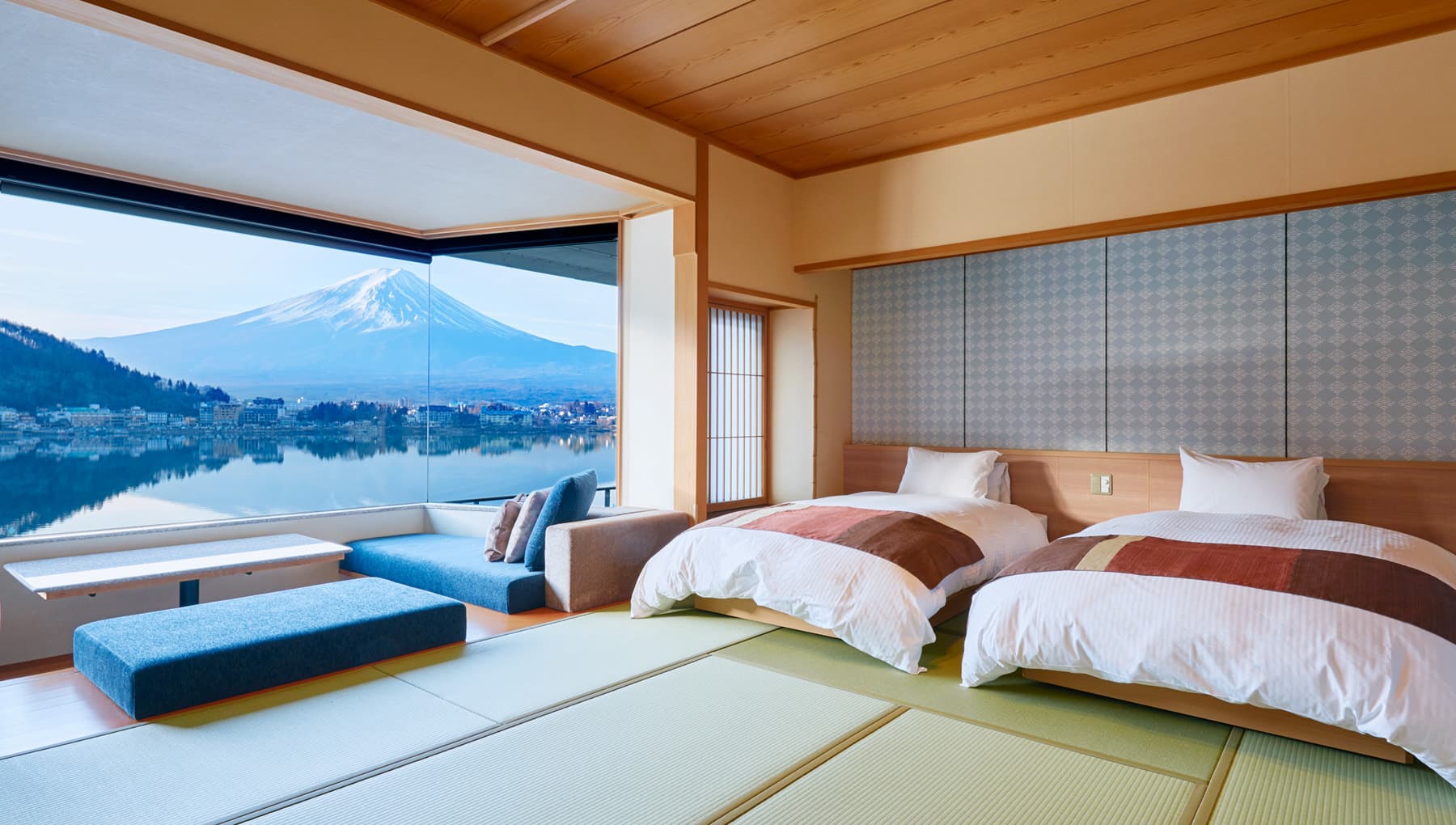
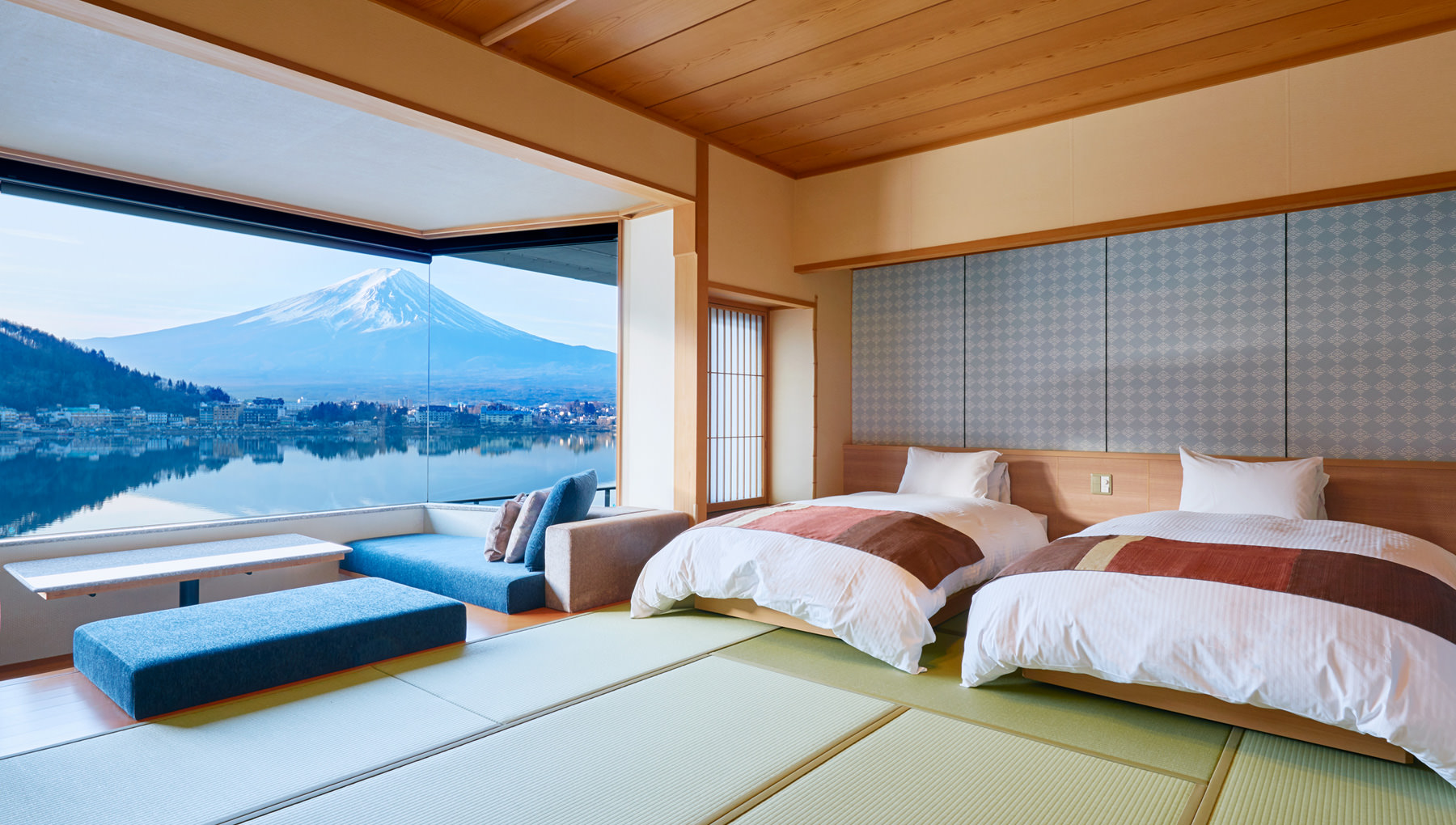
Kawaguchiko Fufu runs 32 suites, all of which it sells on the mountain view, each with a private rotenburo on the balcony. That last part matters: you're not booking a view — you're booking access to the view at any hour, regardless of what's happening in the communal bath. The kaiseki kitchen uses Yamanashi wagyu and Suruga Bay seafood, and at this price point (from $700/night) that level of sourcing is expected.
The honest caveat: our database holds just 5 reviews for Kawaguchiko Fufu, which makes the 9.2 rating preliminary rather than conclusive. External travel coverage is consistently strong, and the property books out months ahead during cherry blossom and autumn windows. Tattoo policy is unverified — contact the property directly before booking if this applies to you.
Best for: Honeymooners and anniversary stays who want the guaranteed Fuji frame from their own rotenburo, and for whom the kaiseki experience is part of the point.
Kozantei Ubuya — every window faces the lake, and the tattoo policy is in writing
With 767 reviews at 9.2, Kozantei Ubuya is one of three inns on this lake that publish a tattoo policy at all. The policy: cover-up required in public baths, but the balcony private rotenburo rooms are fully accessible regardless of tattoos. Of the three it is the only luxury option — Hotel Koryu is a budget buffet hotel and Maruei refuses tattooed guests outright — so for a tattooed traveller who wants the top of the market, this is where you know in advance where you stand.
The 51 rooms all look across the water at Fuji — this was a deliberate architectural decision and it shows. Onsen water here is a calcium/sodium chloride and sulfate spring (mildly alkaline hypotonic), good for skin and muscle recovery. Three dining formats are available: kaiseki buffet, shabu-shabu with dashi broth, or meat kaiseki. Prices start from $300/night; external sources quote approximately ¥83,000 (~$520) per 2 people.
A warning: at peak season — sakura window, November weekends — the property's size (51 rooms) means the communal outdoor baths can get crowded before 08:00. Book a balcony rotenburo room if private soaking time is non-negotiable. For a primer on what to expect your first time, see our guide on what to expect at a traditional ryokan.
Best for: Tattooed travellers who want luxury without uncertainty; couples who want the lake in the window from every room.
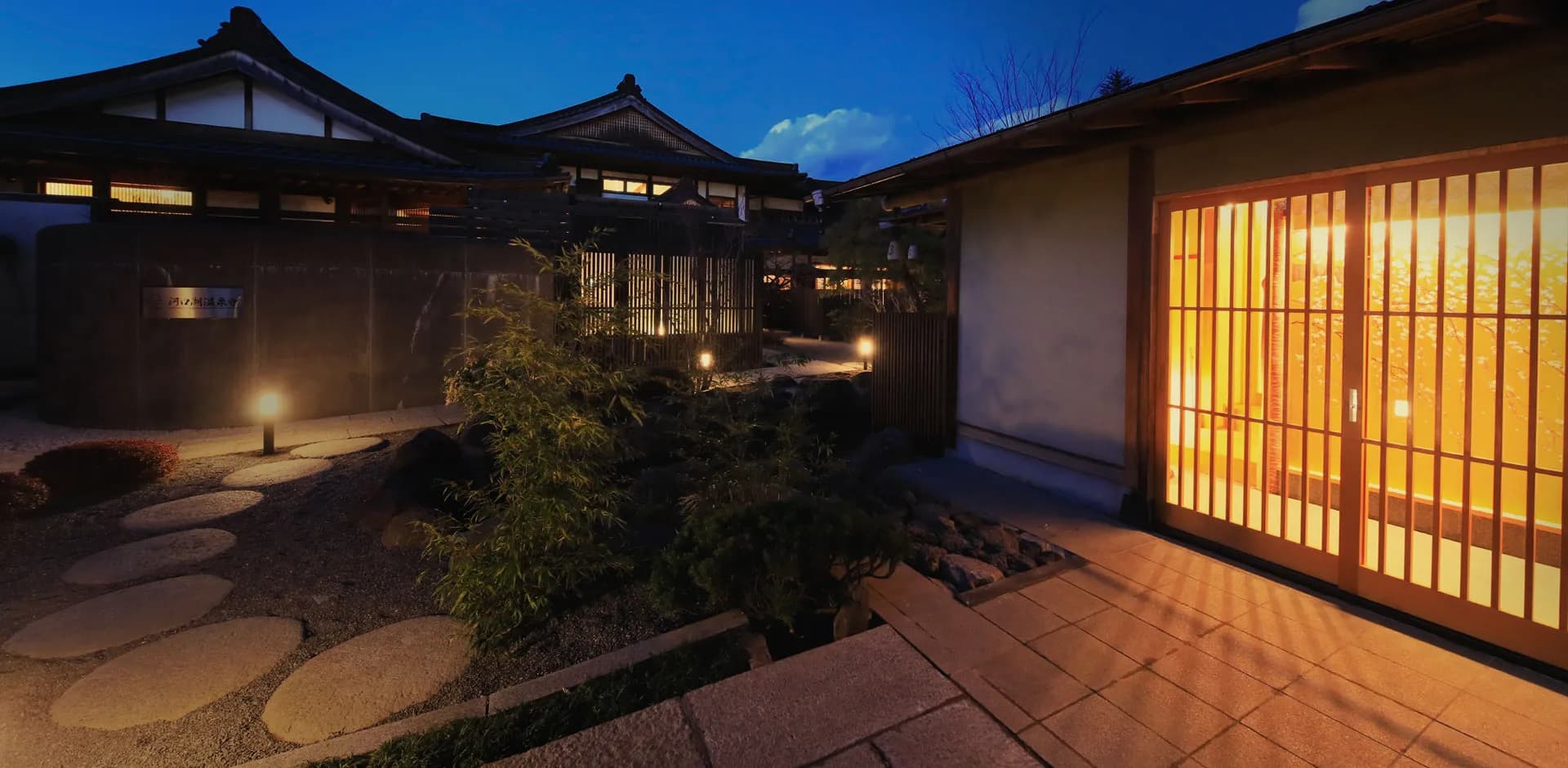
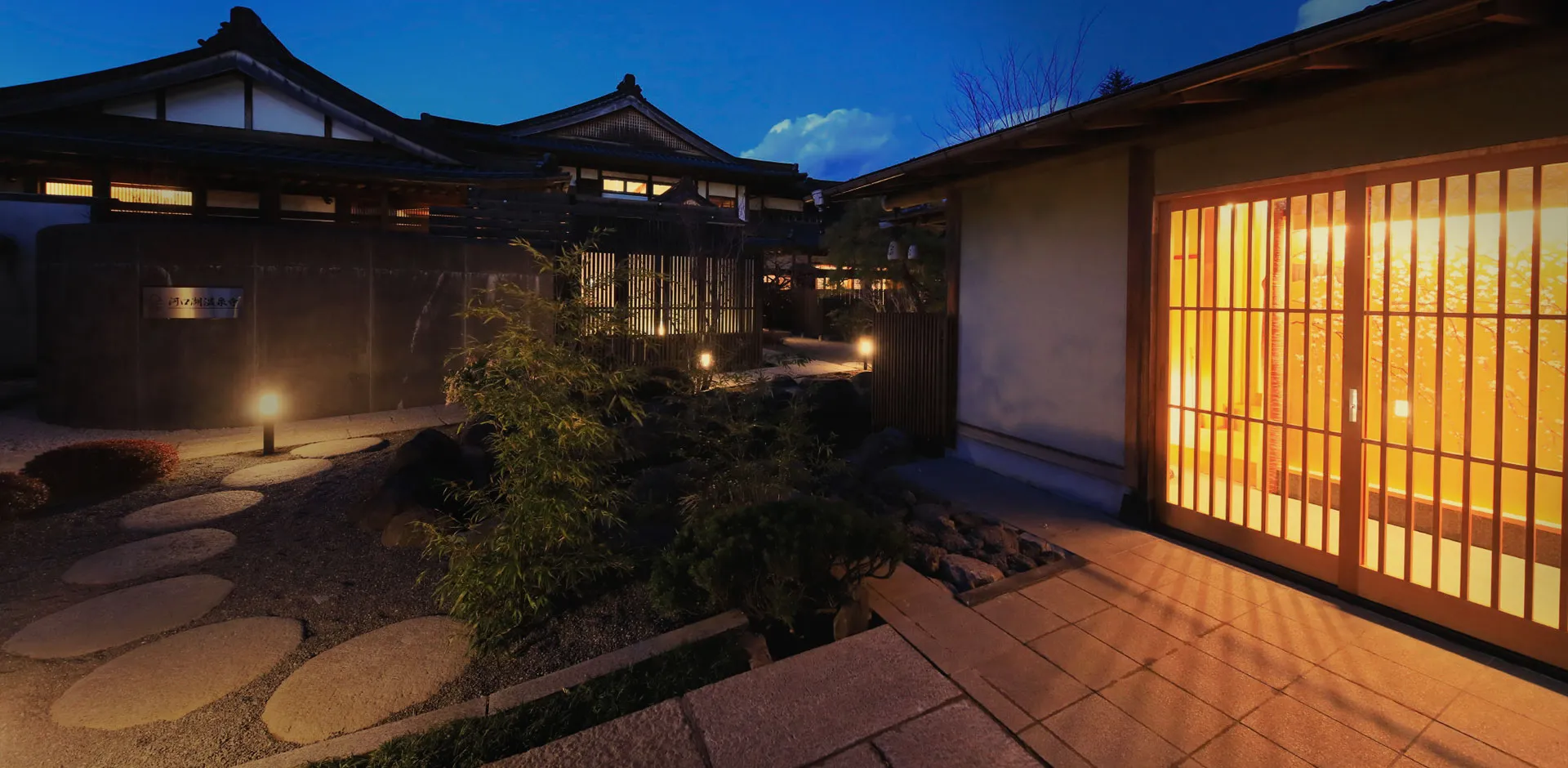
Fuji Onsenji Yumedono — 9-room boutique with private garden baths
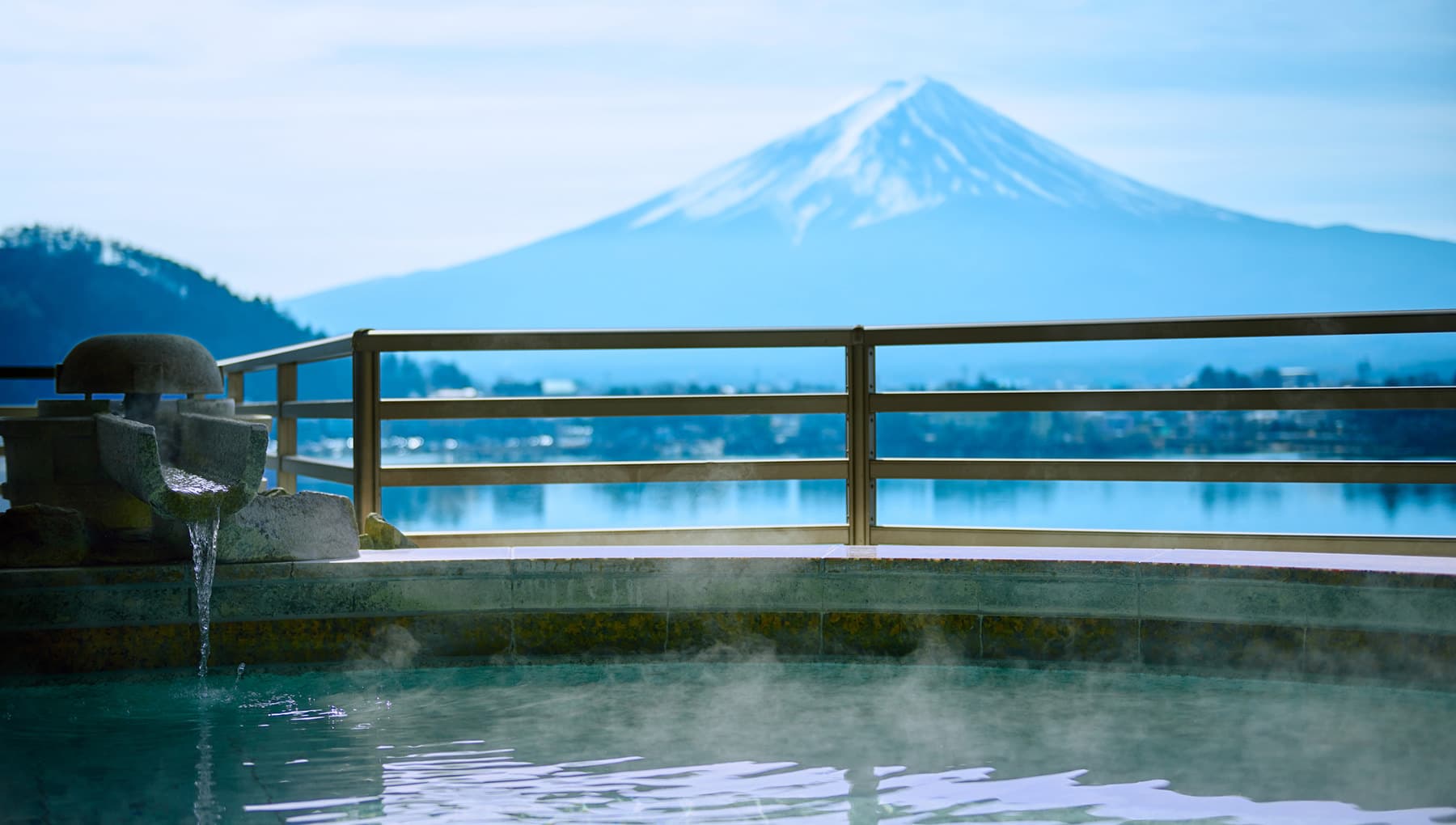
Nine rooms. That's the number. Fuji Onsenji Yumedono is not trying to scale — it's a villa-scale property where every room comes with a private garden bath fed by genuine gensen (source-direct) onsen water. The kaiseki dinner tilts heavily toward local Yamanashi produce. The property rates 9.0 across 154 reviews — a meaningful sample for a 9-room inn, which adds real weight to the score.
The location is listed as "south side / Funatsu" in our database, placing it at the inland edge of Funatsu, away from the water. The property claims Fuji views, and being set back from the water it can look at the mountain directly — for this inn it is the lake that is behind you, not Fuji. But the garden baths are walled, so confirm which of them has the sightline before booking. A 20-minute taxi or car ride from the station is also a practical consideration if you're arriving by bus.
Prices start from $300 and reach $665/night; external sources quote approximately ¥67,000 (~$420) per 2 people. Book at minimum 3 months ahead — 9 rooms disappear fast, and there's no waiting list equivalent.
Best for: Travellers who want the most complete traditional ryokan experience — private garden bath, gensen onsen, serious kaiseki — and are willing to accept limited availability and car-dependent logistics.
Mid-range ryokans in Kawaguchiko ($135–$500 per night)
Konansou — highest-rated in the database (9.9)
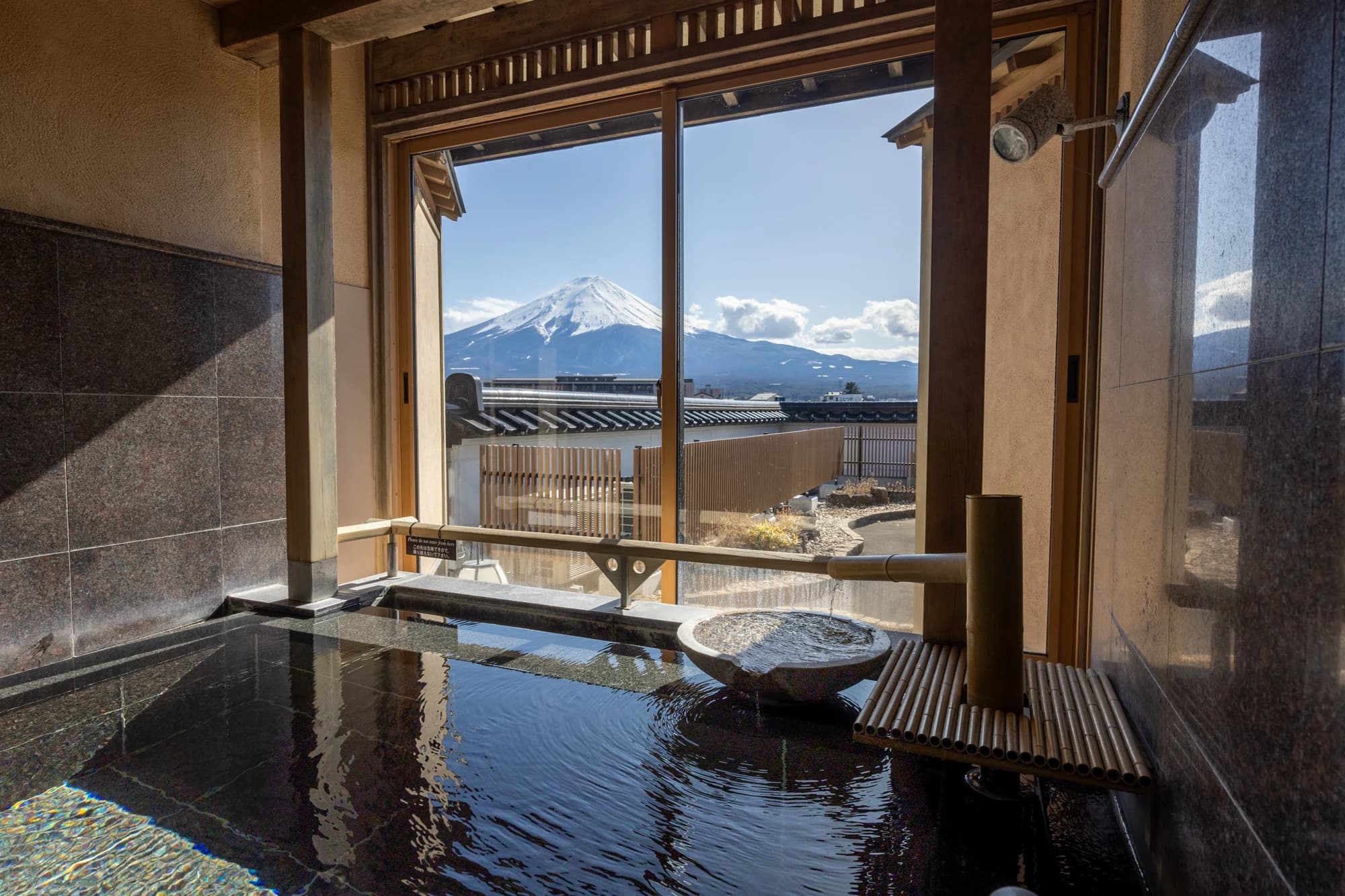
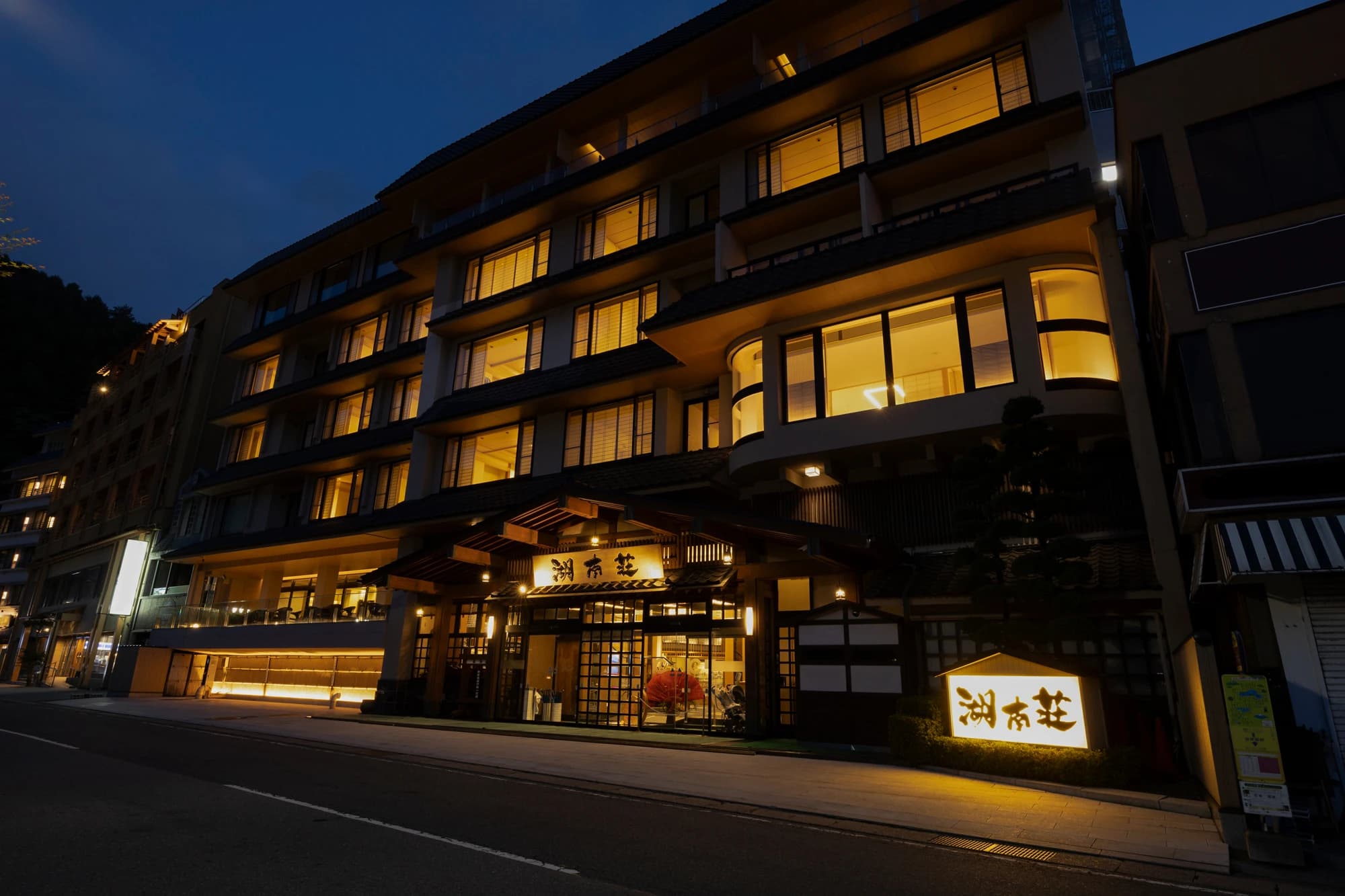
Among the best ryokans in Kawaguchiko for value, Konansou sits in Funatsu, on the station side of the lake, and holds a 9.9 rating across 17 reviews — the highest score in the entire Fuji Kawaguchiko inventory, and the second-highest ranked property on TripAdvisor Fujikawaguchiko. The 17-review caveat is real: that's a small sample, and a single bad visit could shift the number significantly. What can be said is that the specifics back up the score — 12 room types, many with private onsen, a rooftop foot-bath with an unobstructed Fuji panorama, and three rental private onsens bookable at ¥3,300 per 50 minutes. The hot spring water is gensen, rising directly from the source.
At $200–$400/night, this is notably more affordable than Kozantei Ubuya, though the two are not the same product: Ubuya is on the Asakawa shore with the lake between it and the mountain, and Konansou is in Funatsu with the town in between. External sources put the per-person-with-meals rate at approximately ¥67,000 per 2 people (~$420). The property holds 51 rooms and is English-friendly, which matters more than most guides admit — fumbling a ryokan check-in or onsen reservation in Japanese is a stressful way to start an expensive trip.
The honest downside: with only 17 reviews, there's less data to work from than at La Vista or Kozantei Ubuya. Book it with confidence, but note that the 9.9 score will likely normalize as more reviews come in.
Best for: The value-conscious traveller who wants private-onsen access without paying luxury-bracket prices. Couples, solo travellers who appreciate English support.
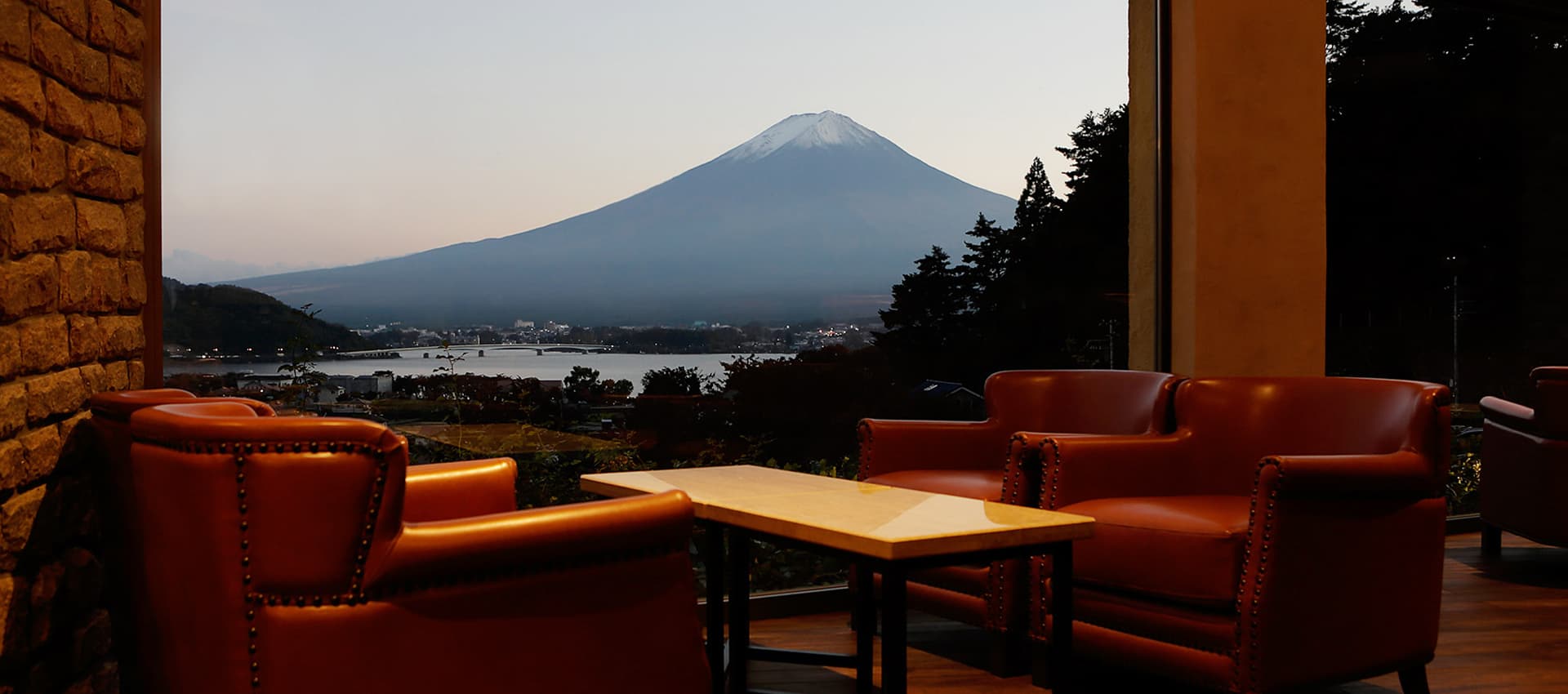
La Vista Fuji Kawaguchiko — best value with a Fuji-facing room
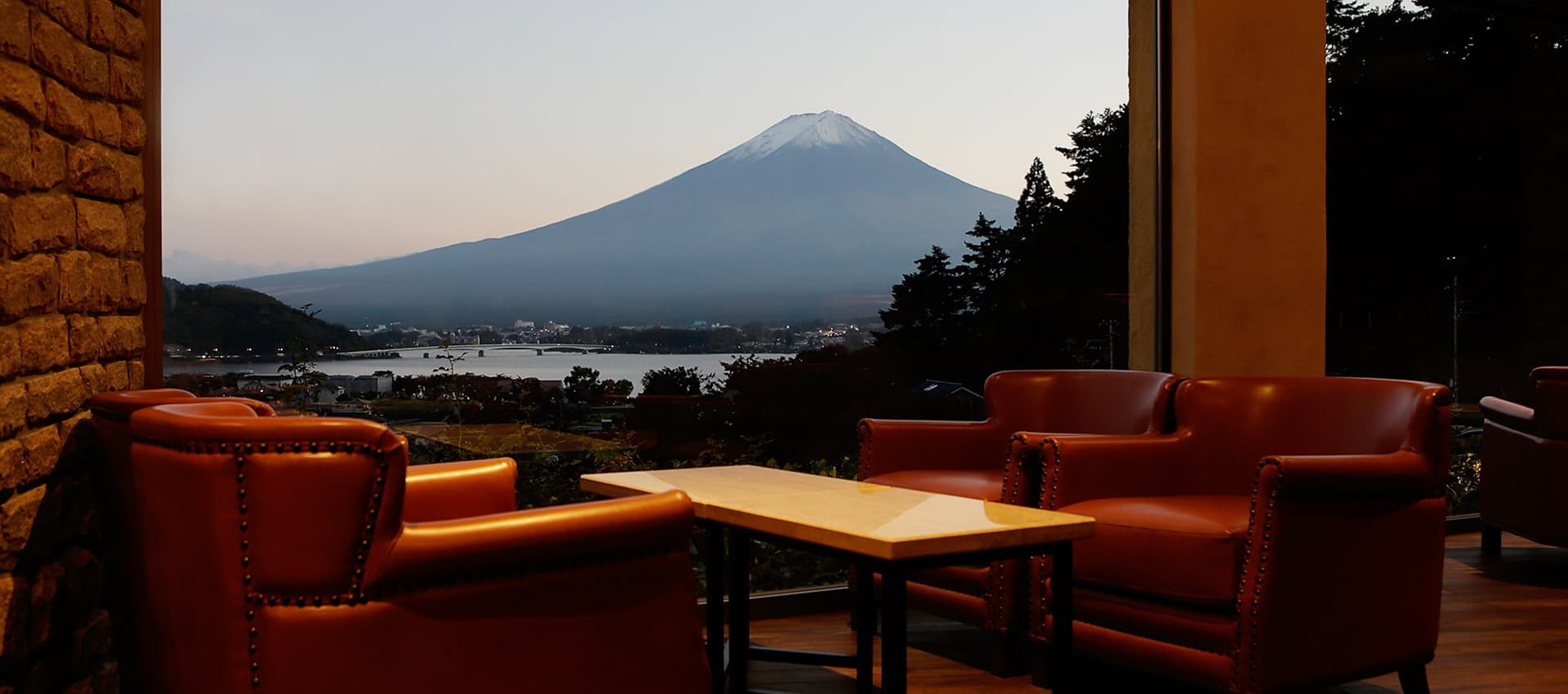
At 83 rooms, La Vista is the largest property in this cluster, and its 9.1 rests on 906 reviews — a deep sample for a property this size, though Fuji Ginkei holds the same score across 2,671 and Ooike has 5,506. Entry price starts at $135/night as a room rate. External sources put the per-2-person-with-meals rate around ¥54,000 (~$340).
The design skews European rather than strictly traditional, with four rental private onsens available if you want a private soak without paying for a premium room category. The public bath has Fuji sightlines. Specify a Fuji-facing room category when booking — at 83 rooms, not every one is.
For first-time visitors to any ryokan kawaguchiko with onsen, La Vista is a good entry point: large enough to be familiar (clear signage, English staff), priced low enough that if the experience doesn't resonate, you haven't over-committed. Read our first-time onsen etiquette guide before you arrive — it covers the essentials.
Best for: First-time ryokan visitors, groups, travellers prioritising budget efficiency over boutique scale.
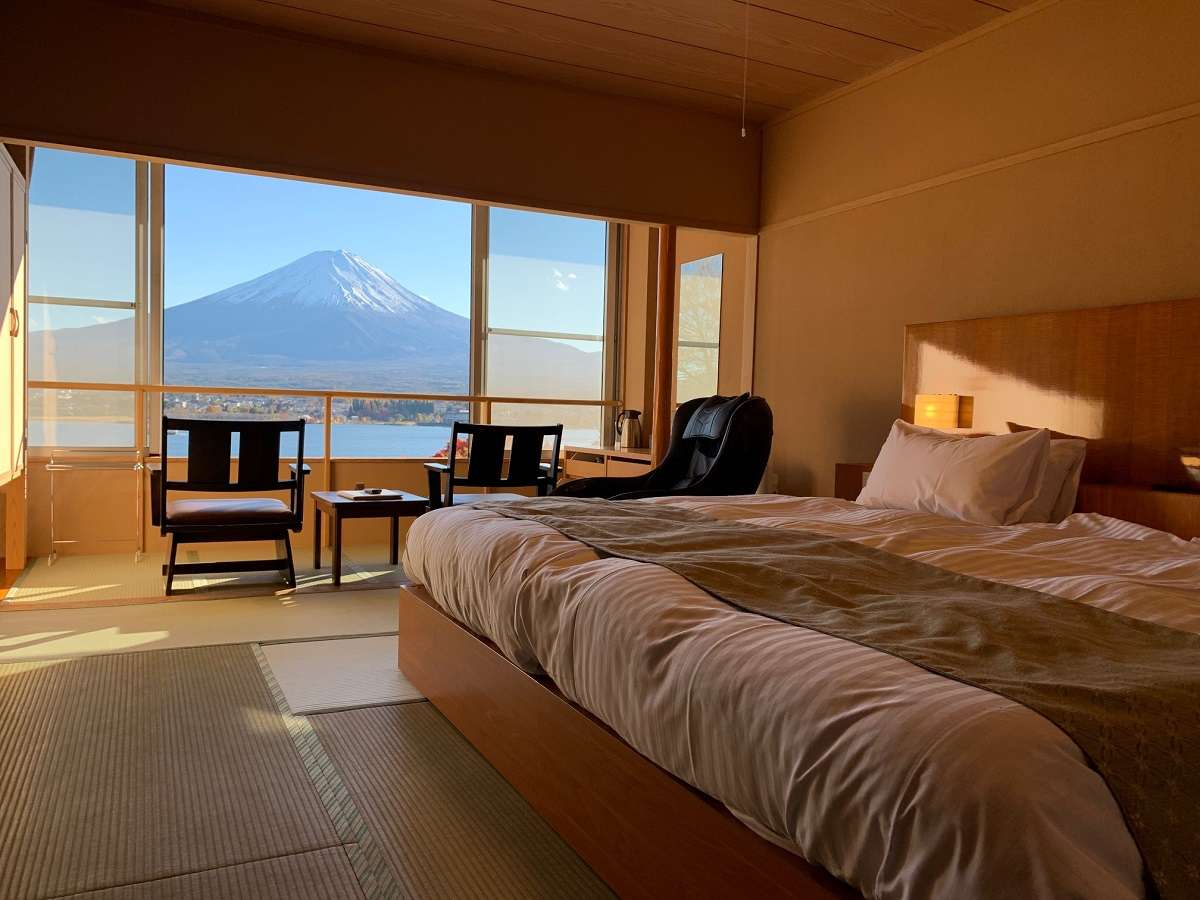
Sunnide Resort — boutique lakefront with private rotenburo wing
Sunnide Resort keeps 20 rooms and two distinct guest experiences under one roof. The standard wing offers lake and Fuji views. The Lake Annex "Sen Ikkei" wing is the reason to book here: private rotenburo with the lake below you and Mt. Fuji across the water, at a price roughly 30% below Kawaguchiko Fufu. The property is 6 minutes from the station, which puts it in the more accessible tier.
Rating sits at 8.8 across 127 reviews — lower than the top picks, but still strong. Tattoo policy is unconfirmed; contact the property before booking if this applies to you.
Best for: Couples who want a private rotenburo experience at mid-range pricing, without committing to an ultra-luxury all-suite property.
Hotel Asafuji — every single room faces Mt. Fuji
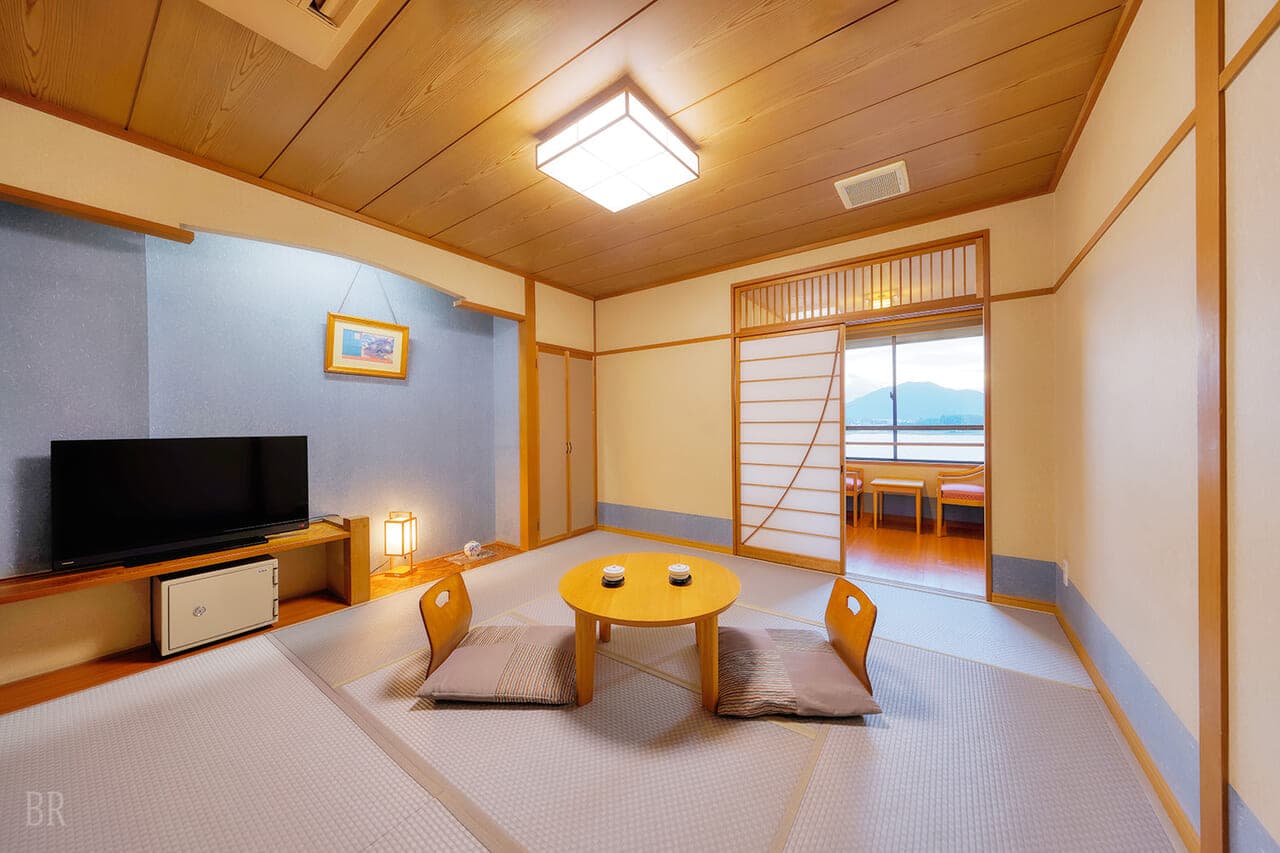
Hotel Asafuji is 13 rooms. Every one of them — without exception, without premium upcharge — has a verified Mt. Fuji and lake view. That's the distinguishing fact and it's worth stating plainly, because most ryokans at this price point ($165–$370/night) have garden-facing rooms and parking-lot-facing rooms mixed in with the view rooms. At Asafuji, the entire inventory faces the mountain.
The trade-off: no private onsen. The shared onsen is on-site, but if a private balcony soak is your priority, look at Konansou or Sunnide's Sen Ikkei wing instead. The property rates 9.4 across 43 reviews and is 6 minutes from the station. It's English-friendly.
At this price, in this location, with this view guarantee, it is in our view the most underrated pick on the list. The low review count keeps it under the radar.
Best for: Travellers who want a guaranteed Fuji view from every room without paying for private onsen facilities. Couples, small groups.
Shuhokaku Kogetsu — every room sees Fuji, and every bath is genuinely onsen
Kogetsu sits on the Kawaguchi shore at the north end with 43 rooms across fourteen types, and its own FAQ puts the question in writing and answers it: 「お部屋から富士山は見えますか? / はい、全室からご覧いただけます」 — yes, from every room. Five other inns here guarantee the whole house too, but Kogetsu is the only one that also states its open-air baths and its foot bath are all hot spring — which is not true of several neighbours. Eight of the fourteen room types add a private open-air bath. Dinner is kaiseki served privately, the water is a hypotonic weakly alkaline calcium-sodium sulphate spring, and a shuttle runs from Kawaguchiko Station between 14:30 and 18:30.
The honest caveat: we could not pin a single price floor. Three reads of the same plan page returned ¥26,000, ¥27,000 and ¥29,000 — all mid-tier, none reproducible, so we have left the figure out rather than print one we cannot stand behind. At 9.6 across 743 reviews it scores higher than any other inn here with a review base that large; Rakuten independently gives 9.4 from 581, so read it as a band. Konansou's 9.9 is higher still, but rests on 17 reviews.
Best for: Anyone who does not want to gamble on the view a room category gives them. If you also want a bath of your own, note that only eight of the fourteen types have one — the hot-spring guarantee here covers the communal open-air baths and the foot bath.
THE KUKUNA — every room faces the lake, and the dining is not kaiseki
KUKUNA repeats the same sentence on all seven of its room pages — 「全客室から雄大な富士山を望むことができる」 — and its rooms are built as 座室, low-seated Japanese rooms: 25 are 和室 and 25 more 和洋室, with only two Western-bedded types. Those two are the ones with a hot-spring open-air bath on a private water terrace. The bathhouses 星 and 月 rotate between men and women overnight on a sodium-calcium chloride spring. It took Jalan's 2024 award for Yamanashi.
The honest caveat: it brands itself a resort and spa, and on dining that is what it is. The main restaurant serves a Western-based course with a half buffet, supported by a teppanyaki room and a sushi counter — there is no kaiseki kitchen. If the meal is the reason you book a ryokan, this is not the one.
Best for: Travellers who want the tatami room and the guaranteed lake frame without committing to a two-hour Japanese dinner.
Fuji Ginkei — 2,671 reviews, and the bath is on the roof
Fuji Ginkei sits on the Asakawa stretch of the north shore and puts its bathing on the top floor: 富士見の湯 looks straight at the mountain. Of its 33 rooms, 14 are 和室 and 17 和洋室, and the inn says 「33室の客室は、ほぼ全てのお部屋で富士山と河口湖の雄大な景色を眺めながら滞在できます」 — nearly all of them, not all. Dinner is kaiseki. Its 9.1 rests on 2,671 Rakuten reviews — the second-deepest sample here, behind Ooike's 5,506.
The honest caveat: there is no reservable bath and no room with an onsen of its own. The rooftop soak is the trade. Note also that the "31 rooms" printed on its own facilities page counts only those with a bath and toilet — the house is 33.
Best for: Anyone who reads review counts before ratings, and who would rather have a rooftop view than a private tub.
Fuji Lake Hotel — on the water since 1932, with a real onsen split
The oldest continuously operating hotel on the lake, and Japanese-Western almost throughout: 58 of its 70 rooms are 和洋室, three are 和室, and only six are plain Western twins. Two reservable lake-view private baths run ¥4,400 an hour. The detail worth knowing before you pick a room is that the bath in every 露天風呂付客室 here is hot spring — which is not true of most inns on this lake.
The honest caveat, and it is the reverse of the usual one: the 西館 view-bath suites are labelled 温泉ではございません by the hotel itself. They are a view with tap water, a different product from the 露天風呂付 rooms. The default dinner and breakfast are a Japanese-Western buffet — the house says plainly it offers no Western course — and the per-person 富士和会席 is an upgrade at ¥39,600 against ¥23,100 for the buffet plan.
Best for: Readers who want an in-room onsen bath that is genuinely onsen, and who will read the room name carefully enough to get the right one.
Ooike Hotel — 5,506 reviews and a national Rakuten award, three years running
Ooike opened in 1974 on the Funatsu shore and trades under its full name, 富士山の見える温泉旅館 大池ホテル. Dinner is kaiseki with private-room dining from the Deluxe grade up. Bathing is layered: a fifth-floor 富士山展望大浴場, two garden rotenburo that rotate between men and women, and two reservable garden baths. It holds three consecutive Rakuten Travel national first places on a review base of 5,506 — the deepest sample of any property in this guide.
The honest caveat, and read it before booking a room by its name: many types are sold as 富士山展望風呂付 or 露天風呂付, and the hotel states in two places that those tubs are not hot spring water — 「貸切露天風呂は温泉ではありません」 on its spa page and 「温泉は大浴場のみでございます」 in its own booking FAQ. The onsen is the big bath.
Best for: Families and groups who want depth of review evidence and do not need the hot spring to be in the room.
Kasuitei Ooya — running since 1923, and dinner comes to the room
Ooya has been on the Funatsu shore for a century and is the most straightforwardly ryokan of the association's members: 40 of its 46 rooms are 和室, four more 和洋室, and only two Western. Dinner is kaiseki served in the room. Bathing is layered — rooftop baths 天空の湯 and 天女の湯 over the lake, 清流の湯 and 湖汀の湯 below, and a reservable 展望貸切風呂 浮舟 in fifty-minute sessions. Two suites add a private open-air bath, one in hinoki and one in Shigaraki ware. It runs its own English site.
The honest caveat: the celebrated rooftop baths are lake-view, not Fuji-view — the inn describes them as 「河口湖を一望できます」 and claims no mountain. Only one room type, 【新館】富士山側のお部屋, sees Fuji, and it sees it over the town rooftops in good weather. The two suite baths are deliberately not hot spring: 「あえて温泉にはしておりません」.
Best for: Anyone who came for in-room kaiseki and a hundred-year house rather than for the mountain.
Wakakusa no Yado Maruei — the most honest inn on the lake about what you cannot see
Maruei runs 46 rooms sleeping 220 on the Kodachi shore, every one 和室 or 和洋室 — there is no purely Western room type. Dinner is a 味覚会席 served either in your room or in a private dining room, though the inn assigns which. The reservable 貸切展望風呂 芙蓉の湯 looks out at Mt. Fuji — over the town, not over the water, which is the direction the inn itself rules out — and costs ¥1,650 for thirty minutes for up to four people, bookable only on arrival.
The honest caveat is one the inn writes itself, on a page titled 富士山の眺めについて: 「湖側のお部屋から富士山をご覧いただくことはできません」 — the lake-side rooms cannot see Fuji, and that includes its flagship 野の花亭 floor. The mountain arrives via the rooftop bath and the reservable one. Rooms with a private open-air bath are sold here, and the inn states those tubs are not hot spring water. Tattoos are refused, and the notice extends to stick-on transfers.
Best for: Readers who value an inn that tells them what they will not get. Not for tattooed guests, and not if the Fuji view has to be from the room.
Budget ryokans in Kawaguchiko (under $110 per person, with two meals)
Lakeland Hotel Mizunosato — named a hotel, built like a ryokan
Whatever the word hotel in its name suggests, all ten of Mizunosato's room types are 和室 or 和洋室, and dinner is 地元の食材を使った和食会席. Its water is 河口湖温泉, published by the inn as a calcium-sodium sulphate-chloride spring, and the reservable 貸切風呂 富士の雫 costs ¥2,750 for forty minutes for up to three people. Rates start around ¥16,800 per person with two meals.
The honest caveat comes in two parts. Dinner is served in the 29-seat lake-view restaurant 花みずき, not in the room. And despite its name, 富士の雫 claims no view at all — the inn describes it only as a reservable bath with a washing area. The baths that do see Fuji are 水楽 and 天の川, and 天の川 closes in January and February for ice. The rooms sold with a private open-air bath are the exception to the onsen: the inn's own room pages say those tubs are not hot spring water.
Best for: Budget travellers who want a genuine kaiseki dinner and tatami rather than the cheapest bed on the lake.
Hotel Mifujien — not one purely Western room type
Mifujien is named a hotel, and not one of the room types it publishes is purely Western: 44 和室 and four 和洋室, the latter pairing beds with a tatami area. That accounts for 48 of the 49 rooms it reports; the forty-ninth is not itemised anywhere we could find. Every room type is sold with a view of both Fuji and the lake, and the seventh-floor bath has an open-air section facing the mountain — which makes its plan copy, 「富士山一望!お部屋から♪大浴場から♪」, accurate rather than aspirational. Rates start at ¥15,400 per person with two meals.
The honest caveat: there is no reservable bath and no room with its own onsen. Rooms have a private unit bath, which is not the same thing. One room type, the 和室12.5畳, has a neighbouring roofline in the frame. Three review sources cluster tightly at 8.0–8.3, so the score is well established even though each sample is small.
Best for: The cheapest way to get a Fuji view from a tatami room and from the big bath at the same time.
Kawaguchiko Park Hotel — 26 rooms, a board chef, and a named spring
Park Hotel is an inn of 26 rooms behind the hotel name, 17 of them 和室, where dinner is a per-person 和食会席 cooked by a 板前 rather than laid out as a buffet. Its water is named — 河口湖温泉 芙蓉の湯, a calcium-sodium sulphate-chloride spring at around 40°C — in men's and women's baths with an open-air section, open 15:00–24:00 and again 05:00–09:30. Seventy years on the lake, and Jalan rates it 9.0 from 1,087 reviews.
The honest caveat: exactly two rooms in the building face Fuji, the Superior Twins 405 and 406, and no other room type carries a view claim. The hot spring 芙蓉の湯 makes no view claim either. There is no reservable private bath. And the ¥14,000 two-meal floor is a date-limited rate on the property's own booking engine — the standard plan sits above it, so treat that number as the best case rather than the usual one.
Best for: Small-inn atmosphere and a real chef at the lowest per-person price in this guide, if you are not booking for the view.
Hotel Koryu — tatami, a buffet, and a rare written answer on tattoos
Koryu is a large onsen hotel that leads with tatami: its room list opens with a lake-view 和室 with a private open-air bath and a plain 和室10畳, with 和洋室 and a single Western twin alongside. Bathing is generous — 大浴場 白糸 and 音止 with a pounding bath and a walking bath, a garden rotenburo, and a private bath for a fee. Unusually for this lake, it answers the tattoo question directly on its own English site, and the answer is yes, with conditions. Rates start at ¥15,295 per person with two meals.
Two honest caveats. Its 展望露天風呂 has been closed since the earthquake of 26 June 2026, which the inn reports as structural damage with no reopening date. And both meals are a buffet — dinner from 18:00 with free-flow drinks, breakfast from 07:00 — so there is no kaiseki and no per-person service. The inn also publishes its own warning that third-party agents have resold its rooms and mis-described which have an in-room bath.
Best for: Tattooed travellers, who have very few answers in writing to work with on this lake. Not for anyone who came for the meal.
Yamagishi Ryokan — the big, plain-spoken one
Yamagishi is among the larger inns on the Funatsu side: 59 rooms, of which 56 are 和室, sleeping up to 300. Its four baths are all communal — 湖上風呂 and 雲上風呂 indoors, plus open-air baths facing the lake and a Japanese garden — on a calcium-sodium sulphate-chloride spring the inn publishes itself. Day visitors pay ¥1,200 to use it. Dinner plans start with ninety minutes of all-you-can-eat beef shabu-shabu, which is where the ¥13,637 floor comes from.
The honest caveat: none of the four baths is reservable, so this is not the inn for a private soak, and no room or bath page here claims a Fuji view — its baths are sold on the lake, the night view and the Kachi Kachi Yama ropeway. At 8.4 across 418 reviews it is the second-lowest-scoring inn we list on this lake, above Hotel Mifujien at 8.1, with complaints clustering on ageing rooms rather than on service.
Best for: Groups and families who want space and volume at the bottom of the price range, and who are not here for the mountain.
Two more options: HOSHINOYA Fuji (glamping) and K's House Fuji View (budget guesthouse)
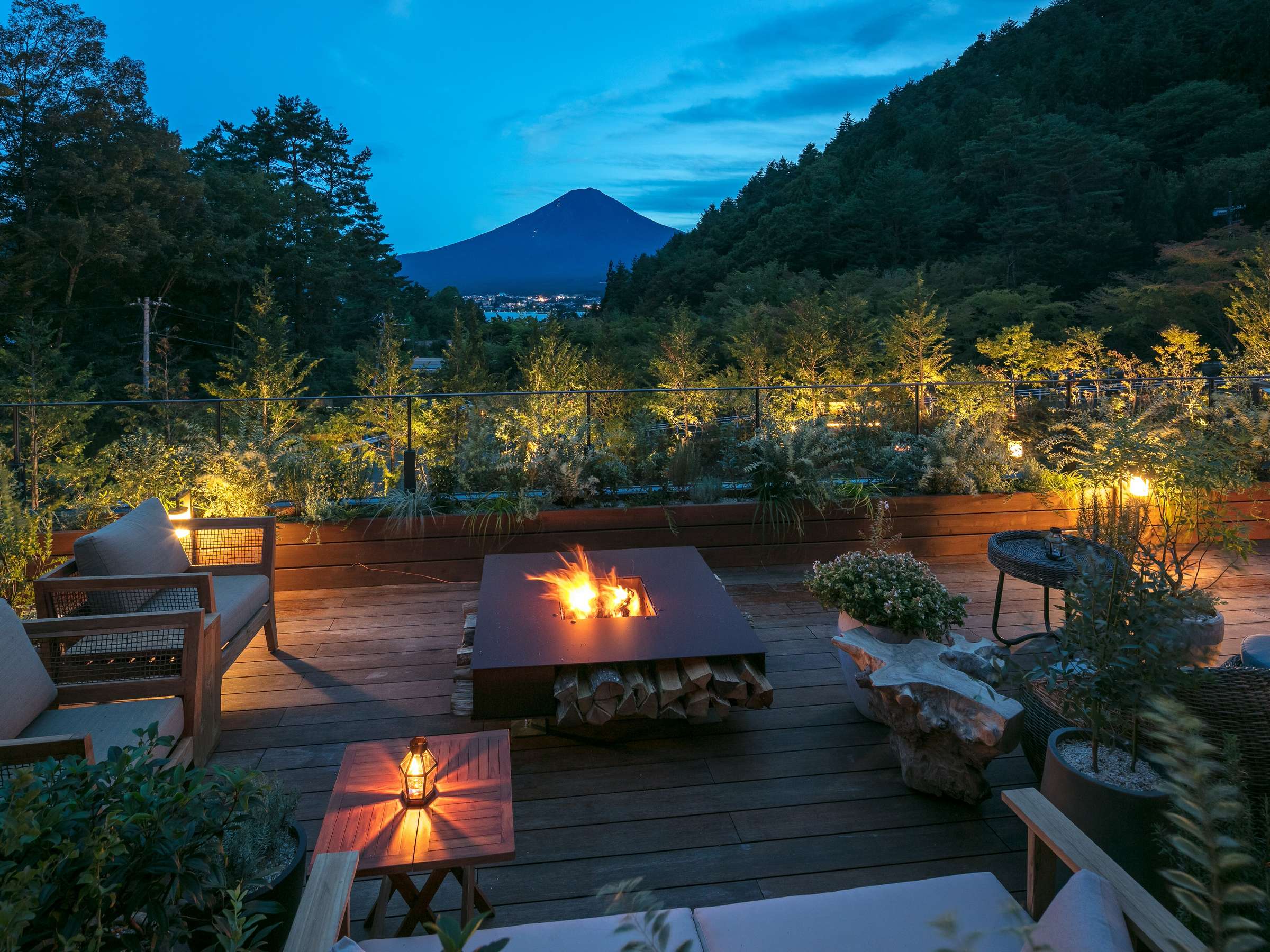
HOSHINOYA Fuji — Japan's first luxury glamping resort
HOSHINOYA Fuji is not a traditional ryokan. There is no tatami, no yukata laid out on a low table, no kaiseki served in your room with sliding shoji screens. It is a luxury glamping resort — Japan's first — built from 40 treetop cedar cabins elevated above Lake Kawaguchi in a red pine forest. Architect Rie Azuma designed the structures; every cabin faces Mt. Fuji through floor-to-ceiling glass.

The Fuji view is genuinely one of the best on this list. Resident "Glamping Masters" run forest and lakeside activities, and the property runs on solar power with rainwater harvesting. Prices range from $436 to $1,000/night. It rates 9.5 across 130 reviews.
Important 2026 flag: The dining area is closed May 6 – August 5, 2026 for renovation. In-room dining is available during this period, but if on-site communal dining matters to your experience, verify current status before booking. Check the HOSHINOYA Fuji official site for updates.
No private onsen is confirmed; the property has shared onsen facilities, but the type is not fully documented in our database.
Best for: Adventurous couples who want a luxury Fuji-view experience outside the traditional ryokan format, and are comfortable with forest-cabin living over tatami-room tradition.
K's House Fuji View — budget Fuji views without the ryokan experience
K's House Fuji View is part of a hostel and guesthouse chain — not a ryokan, no onsen, no kaiseki. What it does offer is private tatami rooms with verified Mt. Fuji views at $20–$100/night, in Funatsu, 13 minutes from the station. If you're a solo traveller or backpacker who wants location and views without the full ryokan budget, this is the most practical option in the area.
Rated 8.2 across 119 reviews. English-friendly. No onsen on-site.
Best for: Budget-conscious solo travellers, backpackers, travellers who want the Fuji view experience without the traditional ryokan format or price.
Tattoo policy at Kawaguchiko ryokans: what to expect
Here is what the data actually says: three of the twenty-one publish a policy at all. Hotel Koryu allows tattoos with conditions, and states so on its own English site — the only inn here that answers "allowed" at all. Kozantei Ubuya requires cover-up in the public baths, and its private balcony rotenburo rooms are fully accessible. Wakakusa no Yado Maruei refuses tattooed guests outright, and its notice extends to stick-on transfers.
Of the twenty-one, the other seventeen leave the policy unconfirmed — none of them publishes one, in Japanese or in English. K's House has no onsen, so the question does not arise there. Contact the property directly before booking. Do not assume.
The general Japan onsen rule: traditional shared rotenburo typically prohibit visible tattoos. Private baths — whether in-room, balcony, or rentable kashikiri slots — are almost always accessible regardless of tattoos, because access restrictions apply to communal facilities only.
The practical solution: book a room with a private or rental onsen (available at Konansou, La Vista, Kawaguchiko Fufu, Fuji Onsenji Yumedono, Sunnide Sen Ikkei wing) and you bypass the communal bath question entirely.
Tip
If tattoos are a concern: book any room with an in-room or rental private bath and you will have no restrictions in practice. Kozantei Ubuya will also let you into its public bath with the tattoo covered, and Hotel Koryu will let you in with conditions — those two are the only public baths on this lake you can plan on.
| Property | Public bath tattoo policy | Private bath available |
|---|---|---|
| Hotel Koryu | Allowed with conditions — stated on its own English site | Yes (rental bath, fee) |
| Kozantei Ubuya | Cover-up required | Yes (balcony rotenburo) |
| Wakakusa no Yado Maruei | Not allowed — the notice extends to stick-on transfers | Yes (in-room baths, not hot spring) |
| Shuhokaku Kogetsu | Unknown — contact property | Yes (8 of 14 room types) |
| Konansou | Unknown — contact property | Yes (room types + 3 rental) |
| Hotel Asafuji | Unknown — contact property | No |
| La Vista Fuji Kawaguchiko | Unknown — contact property | Yes (4 rental) |
| Kawaguchiko Fufu | Unknown — contact property | Yes (all suites) |
| THE KUKUNA | Unknown — contact property | Yes (2 terrace types) |
| Kasuitei Ooya | Unknown — contact property | Yes (2 suites, not hot spring) + rental 浮舟 |
| Fuji Ginkei | Unknown — contact property | No |
| Fuji Onsenji Yumedono | Unknown — contact property | Yes (all rooms) |
| Fuji Lake Hotel | Unknown — contact property | Yes (2 rental, ¥4,400/hr) |
| Kawaguchiko Park Hotel | Unknown — contact property | No |
| Sunnide Resort | Unknown — contact property | Yes (Sen Ikkei wing) |
| Lakeland Hotel Mizunosato | Unknown — contact property | Yes (rental 富士の雫, ¥2,750/40min) |
| Ooike Hotel | Unknown — contact property | Yes (2 rental, not hot spring) |
| Yamagishi Ryokan | Unknown — contact property | No |
| Hotel Mifujien | Unknown — contact property | No |
| HOSHINOYA Fuji | Unknown — contact property | No private bath confirmed |
| K's House Fuji View | N/A (no onsen) | No |
For properties beyond Kawaguchiko, see our full guide to tattoo-friendly ryokans in Japan.
Onsen types at Kawaguchiko: rotenburo, kashikiri, and private balcony baths
The Kawaguchiko onsen district opened in 1992, with hot spring water rising from 1,500 meters underground, according to Onsenista's Kawaguchiko area guide. The water is classified as sodium-calcium chloride and sulfate springs — mildly alkaline hypotonic, which means it's gentle on skin and good for muscle recovery. Most properties in this guide draw from this same source.
Three bath types show up across the best ryokans fuji kawaguchiko has to offer, and the distinction matters for how you plan your stay:
Communal rotenburo (shared outdoor bath, gender-separated): the classic ryokan experience. Good for soaking at scale, social atmosphere, large facility. The restriction is the same as most Japanese onsen: visible tattoos are typically prohibited. Best represented here at La Vista (Fuji sightlines from the communal bath) and Kozantei Ubuya (with cover-up policy confirmed).
Kashikiri-buro (reservable private slot, 45–60 min): you book a time block and have a private bath to yourself. No communal restrictions apply. Konansou offers three rental onsens at ¥3,300 per 50 minutes. La Vista offers four rental baths. Good middle-ground option if you want privacy without paying for a premium room category.
In-room or balcony rotenburo (highest tier): your own private outdoor bath accessible any time you're in the room. Kozantei Ubuya (balcony), Kawaguchiko Fufu (every suite), Sunnide Sen Ikkei wing, and Fuji Onsenji Yumedono (private garden baths on all rooms) all offer this. This is what makes the 06:00 AM Fuji-watch strategy possible without alarms, queuing, or competing for space.
For everything you need to know before your first soak, read our first-time onsen etiquette guide.
Getting to Kawaguchiko from Tokyo: 3 routes compared
The journey from central Tokyo takes roughly 1h45m to 2h30m depending on your route. You don't need a car for most of these ryokans — most are within 10 minutes of Kawaguchiko Station, and all provide shuttle pick-up.
| Route | Depart | Duration | Fare (JPY) | Booking | Best for |
|---|---|---|---|---|---|
| Highway bus (Shinjuku) | Busta Shinjuku | ~1h45m | ¥2,200 (¥2,000 online) | Willer / Japan Bus Online | Most travellers — cheapest, most direct |
| Highway bus (Tokyo Station) | Yaesu exit | ~2h | ¥2,300 | Counter / online | East-side Tokyo stays |
| Fuji Excursion train | Shinjuku | ~1h55m | ¥4,200 | JR Ticket office | Scenic route, no transfer, reserved seat |
| Chuo + Fujikyu | Shinjuku | ~2h05–2h35m | ¥2,580–¥4,200 | IC card OK | Budget train option |
| Car | Chuo Expressway | ~1h30m | Toll + fuel | — | Oishi-area ryokans, families |
Transport data sourced from japan-guide.com, verified July 2026.
The highway bus from Busta Shinjuku is what most visitors take. It runs roughly every 30 minutes, costs less than the train, and drops you directly at Kawaguchiko Station. The Fuji Excursion limited express is a better experience — reserved seats, scenic views through the valley — but at nearly twice the price. Drive if you're staying at Sunnide (Oishi area) or HOSHINOYA Fuji (30 minutes from the station, remote location), or if you're travelling with luggage that makes bus transfers annoying.
The Lake Line sightseeing bus covers north-shore stops including Oishi Park once you're in Kawaguchiko. No car needed for day-trip exploration if you're based near the station.
Best time to visit Kawaguchiko: cherry blossoms, autumn leaves, and Fuji views
Cherry blossom season (late March–mid April): book 3–4 months ahead
The Fujikawaguchiko Cherry Blossom Festival typically runs late March through mid-April — the 2026 festival ran March 28–April 12, according to the official Fujikawaguchiko tourism site. Around 200 Someiyoshino cherry trees line the north-shore walking trail near Kawaguchiko Circular Hall, with evening illuminations that make the combination of blossom, reflection, and mountain genuinely affecting.
The logistical reality: north-shore ryokans sell out during this window 3–4 months ahead. If you want a lake-view room for the festival, book by January at the latest. The Chureito Pagoda (a 20-minute Fujikyu train ride from Kawaguchiko to Shimoyoshida, then a 400-step climb) delivers the other iconic cherry blossom + Fuji combination — red pagoda, white mountain, pink foreground. It's free and worth a half-day if you're staying two nights.
Autumn koyo season (October–November): the Momiji Corridor
The Fujikawaguchiko Momiji Autumn Leaves Festival runs November 1–30 every year, per the official Fujikawaguchiko tourism calendar. The focal point is the Momiji Corridor — approximately 60 large maple trees lining the Nashigawa River near Icchiku Kubota Art Museum, with night illuminations until 21:30. The Momiji Highway is a 1.2-km stretch of road lined with maples on both sides; in late October it turns into an orange and red tunnel.
Colours typically peak in early-to-mid November. Avoid weekends if possible — traffic and crowd congestion can be significant. The Koyodai observation deck offers elevated foliage views into mid-to-late November.
Tip
Two-night tip: One morning for the north-shore dawn onsen view. One morning for Oishi Park at sunrise. If you only stay one night, you have to choose.
Winter (December–February): clearest Fuji views, lowest crowds
This is the best window for seeing Mt. Fuji clearly. Cold, dry air keeps the sky transparent, and the snow-capped summit is at its sharpest — the cone reads as a white triangle against blue sky rather than a grey shape dissolving into haze. On windless mornings before 07:00, the "Sakasa Fuji" mirror reflection at Oishi Park is visible in conditions that don't exist in warmer months. Crowds are lower, and midweek ryokan rates may be better.
 Pin to Pinterest
What does a Kawaguchiko ryokan actually cost? The per-person price decoder
Most Kawaguchiko ryokans quote rates that include kaiseki dinner and Japanese breakfast — two meals, the core of the traditional ryokan package. The confusion arises because OTA listings don't all present this consistently. Some list per-person rates, some list per-room rates, and some strip out meals and show a "room-only" rate that looks attractively cheap until you realize the kaiseki dinner alone costs ¥15,000+ per person.
A worked example from the mid-range tier: Konansou's room rate starts at $200/night. Our database reflects the room total; external sources put the per-person-with-meals figure at approximately ¥67,000 for 2 people (~$420). Kozantei Ubuya starts from $300 room rate; external sources quote approximately ¥83,000 (~$520) for 2 people. La Vista comes in around ¥54,000 (~$340) per 2 people from external sources.
Tip
OTA price check: Sometimes OTAs list the per-room rate without meals. Always check the inclusions tab. A ¥15,000 room-only booking plus a ¥15,000 kaiseki dinner ordered à la carte nearly equals the ¥28,000/person all-in bundled rate — and the bundled rate usually offers better courses. For a full breakdown of what's typically included, see what's included in a ryokan stay.
| Tier | Properties | Per night USD | What's typically included |
|---|---|---|---|
| Budget (guesthouse) | K's House Fuji View | $20–$100, room only | Room only; no onsen; no meals |
| Budget ryokan | Park Hotel, Yamagishi, Hotel Koryu, Mifujien, Mizunosato | $88–$110 per person, two meals included | Room + 2 meals + shared onsen; kaiseki at some, buffet at others |
| Mid-range | Kasuitei Ooya, Maruei, La Vista, Fuji Lake Hotel, Ooike, THE KUKUNA, Hotel Asafuji, Fuji Ginkei, Konansou, Shuhokaku Kogetsu, Sunnide | $120–$500 | Room + 2 meals + shared or rental onsen. Mixed units — see the note below. Shuhokaku Kogetsu is banded here on its tier, not on a price: we could not pin its floor. |
| Luxury ryokan | Kozantei Ubuya, Kawaguchiko Fufu, Fuji Onsenji Yumedono | $300–$1,500 | Room + kaiseki + private onsen |
| Glamping (not ryokan) | HOSHINOYA Fuji | $436–$1,000 | Room + activities; in-room dining |
A warning about that column: it mixes the same two units as the comparison table, and for the same reason. The budget-ryokan row is entirely per person with two meals. The mid-range row is split — La Vista, Hotel Asafuji, Konansou and Sunnide publish room rates, six more publish per person, and Shuhokaku Kogetsu publishes nothing — so its $120–$500 band is not a range of comparable numbers. The guesthouse, luxury and glamping rows are room rates. One more thing about the bands: each floor is the lowest figure in the comparison table for that tier, but the ceilings come from higher room grades that table does not carry — it lists entry rates only. The worked example above shows what a room rate turns into once two dinners are added.
For context, Booking.com lists the average Fujikawaguchiko ryokan at approximately $313/night — representing their filtered listing average for the area.
One night or two? Our honest recommendation
One night works in a specific scenario: a winter midweek visit when Fuji visibility is high, crowds are manageable, and you have a private rotenburo room. You get one clear early-morning window, breakfast, and you're done. It's a valid trip.
Two nights is the right call for cherry blossom season, autumn koyo, or any first visit. The logic is simple: the first morning you calibrate — figure out the bath timing, get oriented, watch the mountain appear and disappear. The second morning you optimize — you're in the rotenburo by 05:50, you know which window to sit at, you've already made your peace with the clouds.
Two nights also opens up your evenings. Lake boat tours run from the Kawaguchiko shore. The Mt. Tenjo Ropeway on the south side offers a panoramic platform view at 1,075 meters. The town itself has enough to fill an evening without feeling thin.
How to choose the right Kawaguchiko ryokan for you

Here's the short version, by traveller type:
- Best overall: Konansou — highest-rated in the database, private onsen options, mid-range price (though note the 9.9 is based on 17 reviews — caveat the sample size if this is your primary criterion). The clear pick if you don't have a specific constraint.
- Best guaranteed Fuji view from every room: Hotel Asafuji (every room, no upcharge) or Kawaguchiko Fufu (all suites with private rotenburo).
- Best for tattooed travellers: Hotel Koryu if the answer matters more than the room — it is the only inn on this lake that answers "allowed" at all, with conditions, published on its own English site. Kozantei Ubuya if you want the luxury end: cover-up in the public baths, and a private balcony rotenburo where the question does not arise.
- Best value: La Vista Fuji Kawaguchiko — from $135/night as a room rate, 9.1 across 906 reviews. If you can read a per-person price, Hotel Mifujien is $100 pp with two meals and guarantees the view from every room type.
- Most exclusive: Fuji Onsenji Yumedono — 9 rooms, all with private garden baths, gensen onsen. Book 3+ months ahead.
- Best non-traditional experience: HOSHINOYA Fuji (glamping, not ryokan) — striking Fuji views from treetop cedar cabins; note dining area closed May 6–Aug 5, 2026.
The best ryokans in Kawaguchiko all share one thing: the early morning is the point. Set an alarm for 05:45. Get into the bath or stand at the window before the cloud cycle starts. The rest — the kaiseki, the yukata, the cedar smell of a well-kept tatami room — follows from that.
Browse our full collection of Kawaguchiko ryokans or explore our complete Mt. Fuji ryokan guide to compare the broader region.
FAQ
Frequently asked questions
Which ryokans in Kawaguchiko actually have a Fuji view from the room?+
Nine of the twenty-one make a claim, and six of them are ryokans covering the whole house. Hotel Asafuji claims every room without exception; Shuhokaku Kogetsu and THE KUKUNA both state it of every room on their own sites; Kozantei Ubuya says all windows face the lake and mountain; Kawaguchiko Fufu covers all 32 of its suites, and it is an all-suite house; Hotel Mifujien sells every room type on the view, and is the only one of the six in the budget tier. HOSHINOYA Fuji makes the same claim of every cabin but is glamping, not a ryokan. Two hedge: Fuji Ginkei at nearly all of its 33, and Fuji Onsenji Yumedono, which claims the view but asks you to confirm the direction. Everywhere else it depends on the category — at La Vista and Konansou, garden-facing rooms exist and you must specify. Because Fuji is south of the lake, the window you want faces south, not north: ask for a Fuji-facing room in writing and confirm the room type, not the compass direction, since the inns on the Funatsu side face the mountain across the town rather than across the water.
Is the Mt. Fuji view guaranteed?+
No view of Mt. Fuji is weather-guaranteed. The mountain is famously cloud-prone — its own topography generates cloud cover that can obscure the summit by mid-morning, particularly from May through September. The clearest window is 06:00–09:00 any day, before orographic clouds build over the summit. Book December–February for the best overall odds. Which shore you are on changes what the view contains, not how often the mountain is out — a clear morning is clear from Funatsu too. It cannot override cloud cover either way.
How much does a ryokan in Kawaguchiko cost per night?+
The range is wide. Budget guesthouse (K's House Fuji View): from $20/night, no onsen, no meals. Mid-range ryokans: $135 (La Vista) to $500 (Sunnide top), typically including kaiseki dinner and breakfast. Luxury: $300 (Kozantei Ubuya) to $1,500 (Kawaguchiko Fufu top suites). Booking.com lists the Fujikawaguchiko average at approximately $313/night. Most ryokans include 2 meals; per-person-with-meals cost will be higher than the room rate shown on OTAs.
Do Kawaguchiko ryokans allow tattoos in the onsen?+
Three of the twenty-one publish one. Hotel Koryu allows tattoos with conditions and says so on its own English site. Kozantei Ubuya requires cover-up in the communal baths, though its balcony private rotenburo rooms are fully accessible. Maruei refuses tattooed guests, transfers included. Seventeen say nothing either way — contact them directly before booking — and K's House has no onsen, so it has nothing to say. The practical solution for any property: book a room with an in-room or rental private bath and you avoid the communal bath question entirely.
Are Kawaguchiko ryokans English-friendly?+
At most of them, yes. Every property in the luxury and mid-range sections has English-capable service confirmed in our database, and Hotel Koryu and Kasuitei Ooya both run their own English sites. The budget inns are the exception — Yamagishi and Park Hotel are small Japanese houses where you should not count on it. Where English is confirmed, check-in, onsen reservations and meal timing are all workable in it. That said, if you have specific dietary restrictions, accessibility needs, or unusual arrival logistics, it's worth emailing ahead in both English and Japanese to confirm — the simpler you make the request, the faster you get a clear answer.
How do I get from Tokyo to Kawaguchiko?+
Three main options: highway bus from Busta Shinjuku (~1h45m, ¥2,200, most popular and direct); Fuji Excursion limited express train from Shinjuku (~1h55m, ¥4,200, scenic, reserved seat required, 8 daily round trips); or Chuo Line local to Otsuki then transfer to Fujikyu Railway (~2h05–2h35m, from ¥2,580). The bus is the cheapest and runs most frequently. See the transport comparison table above for the full breakdown.
Do I need a car to stay at a Kawaguchiko ryokan?+
No, for most properties. Most of the twenty-one are within 10 minutes of Kawaguchiko Station, and all provide shuttle pick-up. The Lake Line sightseeing bus covers north-shore stops including Oishi Park. A car is useful for Fuji Onsenji Yumedono (20 min from station) and HOSHINOYA Fuji (approximately 30 min from the station, remote location). Parking is available at all properties.
What is the best time of year to visit Kawaguchiko?+
For clearest Mt. Fuji views: December–February. For cherry blossoms against a Fuji backdrop: late March–mid April (book 3–4 months ahead). For autumn foliage and the Momiji Corridor night illuminations: October–November, with the Momiji Festival running the entire month of November. Summer (June–September) has the most cloud cover and highest crowds — the least recommended window for Fuji views specifically.
Is Kawaguchiko better than Hakone for Mt. Fuji views?+
Different strengths. Kawaguchiko delivers the lake-reflection Fuji — the mountain rising behind the water when you look south from the north or northeast shore, with the lake in the foreground. It is closer to Fuji and more explicitly oriented around the mountain as the main attraction. Hakone offers ryokan culture, hot springs, and mountain landscapes, but Mt. Fuji appears at a greater angle and views are more intermittent. If the lake-reflection Fuji photo is the goal, Kawaguchiko wins. For a broader comparison across all four main Fuji regions, see our Mt. Fuji ryokan region guide.
Ready to book?
Book one of these top picks
Compare live availability and prices across booking sites.
Kawaguchiko Fufu
ふふ 河口湖
Fuji Kawaguchiko·Luxury
from US$700 · per person · per nightfrom ≈ US$1,400 total for 2 guests



from US$300 · per person · per nightfrom ≈ US$600 total for 2 guests
Konansou
湖南荘
Fuji Kawaguchiko·Mid-Range
from US$200 · per person · per nightfrom ≈ US$400 total for 2 guests
Booking links may earn us a commission at no extra cost to you.
Still deciding?
Browse ryokans across JapanBooking.com