본문으로 건너뛰기
료칸 1박 비용은 얼마일까? 224개 숙소 2026년 실제 데이터
Photo: Unsplash
guides|May 2026|10 min read

료칸 1박 비용은 얼마일까? 224개 숙소 2026년 실제 데이터

The word "ryokan" does a lot of heavy lifting. It covers a $35-a-night guesthouse in a converted fishing village and a $2,000-a-night hilltop villa where a private butler draws your cypress-wood bath before dinner. Both are genuine ryokans. Both are listed on Trip.com.

That 57× gap is why the simple question — *how much does a ryokan cost?* — never has a simple answer. The headline number: the median ryokan rate across 224 properties is $315 per person per night (¥48,500 at ¥154/USD) [Japan Ryokan Guide 224-property analysis, verified 2026-05-19]. If you have ¥50,000 per head to spend, you're right in the middle of the market — not splurging, not slumming. But if your budget is $120 or $600, what you actually get looks completely different depending on which of Japan's 25 onsen areas you choose.

This article maps every area, every price tier, and the features that come with each — so your budget decision is based on real numbers, not vague impressions.

Data: 224 published ryokans across 25 onsen areas, curated rate ranges verified against Trip.com and official property sites as of Q1 2026. Rates are per person per night and include dinner and breakfast at mid and luxury tiers (see the "What the Rate Includes" section below). The middle 50% of all properties sits between $200 and $425 [Japan Ryokan Guide 224-property analysis, verified 2026-05-19].

The 60-second answer: what a ryokan costs in 2026

If you only read one table in this article, make it this one.

TierPropertiesLow medianMidpoint medianHigh median
**Budget**31 (13.8%)$70 / ¥10,800$115 / ¥17,700$160 / ¥24,600
**Mid**99 (44.2%)$130 / ¥20,000$250 / ¥38,500$350 / ¥53,900
**Luxury**94 (42.0%)$280 / ¥43,100$450 / ¥69,300$600 / ¥92,400

[Japan Ryokan Guide 224-property analysis, verified 2026-05-19. USD/JPY: ¥154 (BOJ mid-rate proxy, May 2026). JPY figures rounded to ¥100.]

Three things to flag upfront. First, these rates are per person, not per room — a distinction every competitor article glosses over, and the main reason the same ryokan can look either expensive or cheap depending on which site you're reading. A $250 per-person rate for a couple is $500 per room — higher than a decent Shinjuku business hotel, but it includes a multi-course dinner and breakfast that would cost another $100–$200 on top at a hotel restaurant.

Second, the overall range in our database is $35 (K's House Ito Onsen, Izu) to $2,000 (Sanso Murata, Yufuin) [Japan Ryokan Guide 224-property analysis, verified 2026-05-19]. That 57× spread is not an anomaly — it reflects genuinely different categories of experience that happen to share a name.

Third, the mid-tier is where 44% of all properties live. At $250 median, it's the practical entry point for most foreign visitors: 91% of mid-tier ryokans are English-friendly, 43% include a private onsen, and a proper kaiseki dinner is standard [Japan Ryokan Guide 224-property analysis, verified 2026-05-19].

For strategies on finding the best budget deals, see our guide to [budget ryokan tips](/en/blog/budget-ryokan-tips).

How we built this dataset: 224 ryokans, 25 onsen areas

Before you trust a single number in this article, you should know exactly where it came from.

We built and refined a curated database of every ryokan listed on japanryokanguide.com — 224 properties, 25 onsen areas, 8 regions. Each property has a representative low and high USD nightly rate per person, manually verified against published rate cards on Trip.com and official ryokan sites. That verification was last completed in Q1 2026.

What this data is: a cross-section of published price ranges for 224 specific, named ryokans. It tells you what properties actually charge — by area, by tier, by feature set.

What this data is not: a live transactional database. We don't have daily-rate scrapes tied to specific travel dates. The per-property high and low rates reflect the full published range across room types and demand periods — they're the best honest proxy for seasonal variance we can offer without a real-time scrape pipeline.

Tip

**Methodology and limitations.** Price figures are drawn from japanryokanguide.com's curated database of 224 published ryokans across 25 onsen areas. Each ryokan has a representative low and high USD nightly rate per person, manually verified against published rate cards (Trip.com, official sites) as of Q1 2026. These are representative published ranges, not live transaction prices — actual rates on a specific date will vary. USD/JPY conversions use ¥154/USD (BOJ Tokyo mid-rate proxy, May 2026). Areas with n≤6 (Nara n=5, Ibusuki n=5, Shirahone n=6) are flagged with an asterisk — treat their medians as indicative rather than definitive. For real-time pricing on specific dates, consult Trip.com or the ryokan's official site. Sources: [Bank of Japan foreign exchange statistics](https://www.boj.or.jp/statistics/index.htm) | [Japan Tourism Agency accommodation survey](https://www.mlit.go.jp/kankocho/siryou/toukei/shukuhakutoukei.html)

A useful external calibration: the Japan Ryokan Association lists member ryokan rates spanning ¥5,000 to ¥119,000 per person [Japan Ryokan Association, verified 2026-05-19]. Our database runs slightly wider — $35 to $2,000 (approximately ¥5,400 to ¥308,000) — because it includes a handful of ultra-luxury non-JRA members and a few budget guesthouses that classify themselves as ryokans.

Foreign visitors now account for 14.8% of all ryokan guests, up from 9.9% in 2019 [Japan Tourism Agency inbound consumption survey 2024, via FindMyRyokan]. If you're reading this as a foreign traveler, the English-friendliness figures and the mid-tier data in this article are directly relevant to how your experience will go.

Ryokan prices by region and onsen area

The most useful thing our 224-property dataset does that no competitor article does: it gives you actual median prices for each of Japan's 25 main onsen areas — not vague labels like "affordable" or "splurge-worthy."

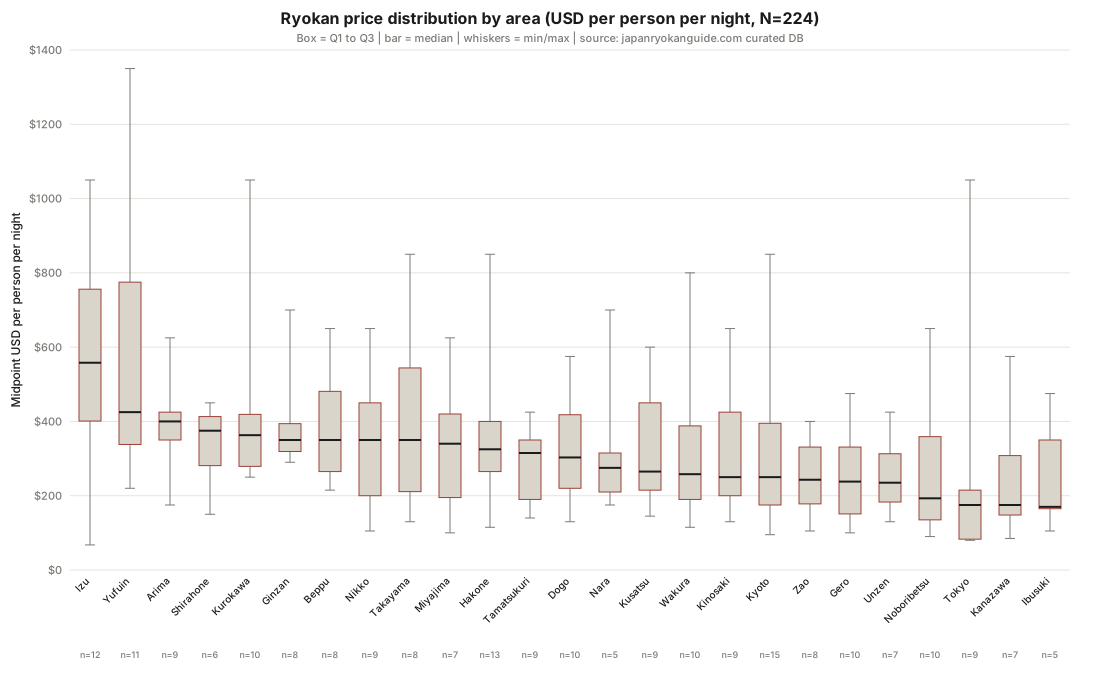
The range is wider than most travelers expect. Izu's average ryokan price is $558 per person per night — 3.3× Ibusuki's $170 [Japan Ryokan Guide 224-property analysis, verified 2026-05-19]. Both are genuine onsen destinations. The difference is density of luxury boutiques, proximity to major cities, and the concentration of high-end kaiseki operations.

그림 1

Ryokan price distribution across 25 onsen areas

Box plot showing median, Q1, Q3, and min/max price range for 224 ryokans across 25 onsen areas, sorted by median descending. Izu has the highest median at $558; Ibusuki the lowest at $170.

출처: japanryokanguide.com curated database — 224 properties, Q1 2026

원본 데이터 보기
Ryokan price distribution by onsen area — median, Q1, Q3, min, max (USD/person/night)
Onsen AreaMedian USDQ1 USDQ3 USDMin USDMax USD

Here's the full 25-area breakdown — the table you won't find anywhere else.

RankAreaRegionnPrice range (USD)Median (USD)Median (JPY)Tier mix (B/M/L)
1IzuChubu12$67–$1,050**$558**¥85,9001/6/5
2YufuinKyushu11$220–$1,350**$425**¥65,5000/4/7
3ArimaKansai9$175–$625**$400**¥61,6000/4/5
4Shirahone*Chubu6$150–$450**$375**¥57,8000/4/2
5KurokawaKyushu10$250–$1,050**$363**¥55,9000/4/6
6GinzanTohoku8$290–$700**$350**¥53,9000/5/3
7BeppuKyushu8$215–$650**$350**¥53,9000/4/4
8NikkoKanto9$105–$650**$350**¥53,9001/4/4
9TakayamaChubu8$130–$850**$350**¥53,9000/4/4
10MiyajimaChugoku7$100–$625**$340**¥52,4001/2/4
11HakoneKanto13$115–$850**$325**¥50,1002/5/6
12TamatsukuriChugoku9$140–$425**$315**¥48,5001/6/2
13DogoShikoku10$130–$575**$303**¥46,7001/6/3
14Nara*Kansai5$175–$700**$275**¥42,4000/4/1
15KusatsuKanto9$145–$600**$265**¥40,8001/4/4
16WakuraChubu10$115–$800**$258**¥39,7001/7/2
17KinosakiKansai9$130–$650**$250**¥38,5000/7/2
18KyotoKansai15$95–$850**$250**¥38,5002/7/6
19ZaoTohoku8$105–$400**$243**¥37,4001/6/1
20GeroChubu10$100–$475**$238**¥36,7001/6/3
21UnzenKyushu7$130–$425**$235**¥36,2001/5/1
22NoboribetsuHokkaido10$90–$650**$193**¥29,7002/5/3
23TokyoKanto9$80–$1,050**$175**¥27,0005/1/3
24KanazawaChubu7$85–$575**$175**¥27,0003/2/2
25Ibusuki*Kyushu5$105–$475**$170**¥26,2001/3/1

*Areas with n≤6 have wider confidence intervals — treat medians as indicative. [Japan Ryokan Guide 224-property analysis, verified 2026-05-19]

그림 2

10 most expensive vs 10 most affordable onsen areas

Side-by-side horizontal bar chart comparing the 10 most expensive onsen areas (vermilion) and 10 most affordable (green). Izu leads at $558 median; Ibusuki sits at $170 median.

출처: japanryokanguide.com curated database — 224 properties, Q1 2026

원본 데이터 보기
Most expensive vs most affordable onsen areas by median nightly rate (USD/person)
CategoryOnsen AreaMedian USDn

For a month-by-month timing guide to plan around price swings, see [our guide to best season for ryokan stays](/en/blog/best-season-ryokan).

The premium pocket: Izu, Yufuin, and Arima

These three areas account for a disproportionate share of Japan's luxury-tier ryokan inventory — and the pricing reflects it.

Izu (Shizuoka Prefecture, 2–3 hours from Tokyo) has 12 properties in our database, five of them luxury-tier. The coastal setting, direct Shinkansen access from Tokyo, and a cluster of boutique kaiseki operations have kept the average ryokan price elevated. The [Hakone area guide](/en/area/hakone) covers the accessible alternative at rank 11 ($325 median) — 13 properties spanning a full range from $115 to $850, close enough for Tokyo day-trippers who want a shorter trip.

Yufuin (Oita Prefecture) is the sharpest contrast in the data: 11 properties, seven of them luxury-tier, with a published range of $220 to $1,350. That ceiling is the widest of any area except Tokyo's anomalous $1,050 high (driven by one ultra-luxury urban ryokan). Yufuin's art-ryokan scene — small, often architect-designed properties with seasonal menus — drives prices up while the lack of large resort-scale hotels keeps volume low.

Arima (Hyogo Prefecture, 30 minutes from Osaka) carries the designation of one of Japan's three oldest onsen towns, alongside Dogo and Kusatsu. Nine properties, five luxury-tier. The proximity to Osaka and Kyoto makes it a frequent overnight add-on for international itineraries, which supports pricing above the national median.

Best value regions: Hokkaido, Tohoku, and Northern Kyushu

Budget doesn't have to mean compromise on the onsen experience. These regions offer the best price-to-experience ratio in the dataset.

Noboribetsu (Hokkaido, $193 median) is driven by large resort-style ryokans with multiple shared and semi-private bath facilities, kaiseki-style dinners at mid-tier prices, and the volcanic Jigokudani landscape nearby. Four of the top-10 widest pricing bands in the entire database are Noboribetsu properties — a signal that these big ryokans flex significantly between weekday and premium pricing. For travelers searching for cheap ryokan Japan options, Noboribetsu is the most reliable starting point in Hokkaido.

[Kusatsu onsen](/en/area/kusatsu) ($265 median, rank 15) is the strongest mid-range value proposition in Kanto. Its sulfuric acid springs — among the most acidic of any onsen in Japan, long attributed with medicinal properties — don't require a luxury price tag. One property, Yubatake Souan, starts at $90 and still delivers a private onsen.

[Kinosaki Onsen](/en/area/kinosaki) ($250 median, rank 17) is the Kansai value pick. Seven of its nine properties are mid-tier, giving you a traditional seven-bathhouse town experience with a yukata walk between outdoor baths for well under $300 per person. It's one of the few areas where the setting — a single preserved streetscape of willow-lined canals — is entirely free to access once you're checked in.

Ryokan cost by tier: what $115, $250, and $450 per night actually gets you

The median number matters, but the feature data is where budgeting decisions actually get made.

FeatureBudget (¥10k–¥24k)Mid (¥20k–¥54k)Luxury (¥43k–¥92k+)
Median low rate$70 / ¥10,800$130 / ¥20,000$280 / ¥43,100
Median midpoint rate**$115 / ¥17,700****$250 / ¥38,500****$450 / ¥69,300**
Median high rate$160 / ¥24,600$350 / ¥53,900$600 / ¥92,400
Private onsen10%43%81%
English-friendly65%**91%**84%
Vegetarian meals10%51%72%
Near train station71%65%57%
Halal meals0%0%0%
Avg room count24 rooms67 rooms41 rooms
Typical onsen setupShared large-bathShared + private mixPredominantly private
Kaiseki styleSimplified multi-courseFull multi-course kaisekiMulti-course kaiseki, often with local premium ingredients

[Japan Ryokan Guide 224-property analysis, verified 2026-05-19]

A few things in this table deserve attention.

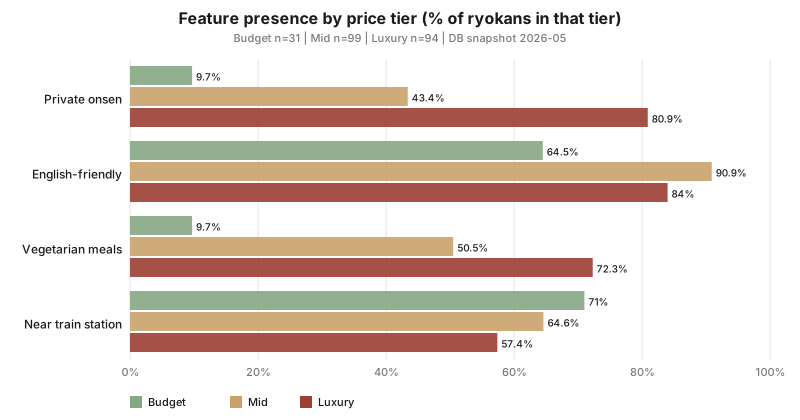
Private onsen is the feature with the steepest tier gradient: 10% at budget, 43% at mid, 81% at luxury — an 8× swing from budget to luxury [Japan Ryokan Guide 224-property analysis, verified 2026-05-19]. If a private onsen is non-negotiable, your realistic entry point is mid-tier, and even then it's not guaranteed. For properties where a private onsen is confirmed, see our dedicated list of [best ryokans with private onsen](/en/blog/best-ryokans-private-onsen).

English-friendliness peaks in mid-tier (91%), not luxury (84%) [Japan Ryokan Guide 224-property analysis, verified 2026-05-19]. This surprised us when we ran the numbers. The practical explanation: mid-tier properties in popular areas actively court international guests and invest in multilingual staff and translated menus. Many luxury ryokans — particularly the smaller boutique properties in Yufuin and Kurokawa — cater primarily to domestic high-net-worth guests and have less infrastructure for English-speaking visitors. Worth confirming before you book.

Halal meals: 0 of 224 properties [Japan Ryokan Guide 224-property analysis, verified 2026-05-19]. This is a real gap, not an oversight. The traditional kaiseki format — which uses dashi (fish-based stock) and often includes pork-based dishes — is structurally difficult to adapt. Muslim travelers should contact properties directly; some can prepare simpler vegetarian or seafood-only meals on request, but certification is not available in this dataset.

Station proximity inverts with price: budget ryokans are closest to train stations (71%), luxury are furthest (57%). Luxury properties trade transit convenience for remote valley settings — which means transport logistics for getting to and from the ryokan need to factor into your actual trip cost.

For our curated list of top luxury picks, see our [luxury ryokans in Japan](/en/blog/luxury-ryokans-japan) guide.

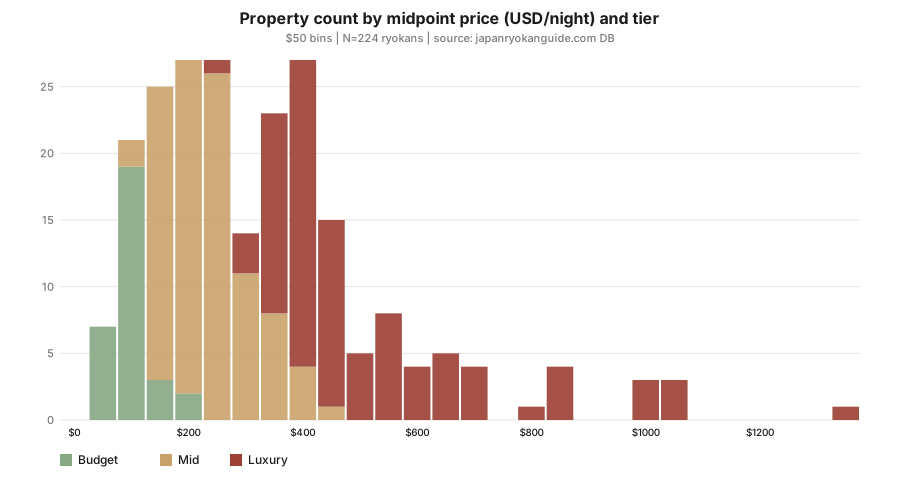
그림 3

How many ryokans sit at each price point — by tier

Stacked histogram showing count of ryokans in $50 price bins from $0 to $1,400, colored by tier. Mid-tier dominates the $150–$350 range. Luxury properties extend into $400–$700 with a long tail above $800.

출처: japanryokanguide.com curated database — 224 properties, Q1 2026

원본 데이터 보기
Count of ryokans by midpoint price bin ($50 intervals) and tier
Price bin (USD)Budget countMid countLuxury countTotal

그림 4

Private onsen, English support, vegetarian meals, and station access — by tier

Horizontal grouped bar chart showing percentage of ryokans offering private onsen, English friendliness, vegetarian meals, and near-station location across budget, mid, and luxury tiers. Private onsen climbs from 10% in budget to 81% in luxury.

출처: japanryokanguide.com curated database — 224 properties, Q1 2026

Feature availability by price tier (% of properties)
FeatureBudget %Mid %Luxury %

A note on what the nightly rate includes

The trickiest part of comparing ryokan cost per night to hotel rates is what's inside the price. Budget tier is the variable one: some properties include a simplified multi-course dinner; others are room-only (yado-only plans). Always confirm before booking — the gap matters.

At mid and luxury tiers, the rate almost always folds in one night in a traditional tatami room with two meals — kaiseki dinner and a Japanese-style breakfast. Yukata, slippers, in-room green tea, and access to communal indoor and outdoor baths come standard. What stays *outside* the headline price varies more than you'd think — and that's what the next section covers.

Standalone kaiseki at a Kyoto restaurant runs ¥10,000–¥30,000 per person (drinks extra), and Michelin-starred kaiseki can hit ¥20,000–¥50,000+ [InsideKyoto.com kaiseki guide, verified 2026-05-19; Bespoke Discovery luxury dining guide, verified 2026-05-19]. So a mid-tier ryokan at $250/night with two kaiseki-grade meals embedded is structurally cheaper than dining out twice and paying for a hotel room separately.

[Browse mid-tier ryokans on Trip.com](https://www.trip.com/hotels/?allianceid=8201747&sid=RYOKAN_MIDTIER){rel="nofollow sponsored noopener"}

How much prices swing: the per-property band (peak vs off-peak)

그림 5

Each ryokan's low vs high rate — the per-property pricing band

Scatter plot with each of 224 ryokans plotted by low rate on x-axis and high rate on y-axis. Dots above the parity diagonal indicate peak-premium. Budget properties cluster bottom-left; luxury top-right. Several luxury outliers extend to $1,350–$2,000 on the y-axis.

출처: japanryokanguide.com curated database — 224 properties, Q1 2026

원본 데이터 보기
Sample of 25 ryokans showing per-property pricing band — low rate, high rate, and peak premium
PropertyTierLow (USD)High (USD)Peak premium

Across 224 properties, the median high rate is 2.4× the low rate [Japan Ryokan Guide 224-property analysis, verified 2026-05-19]. A ryokan that starts at $130 on a quiet February weekday will typically peak at around $312 during busy periods. That ratio holds remarkably consistent across tiers: the budget-tier swing median is +130%, luxury is +120% — both tiers flex by roughly 2.2–2.4× regardless of starting price.

The widest band we measured belongs to Dogashima New Ginsui in Izu: $100 to $400, a 300% intra-property swing [Japan Ryokan Guide 224-property analysis, verified 2026-05-19]. It's a mid-tier property — large enough to run weekday rack rates, premium enough to push aggressively on holiday weekends.

That dynamic helps explain a regional pattern worth knowing: four of the top-ten widest-banded properties cluster in Noboribetsu [Japan Ryokan Guide 224-property analysis, verified 2026-05-19]. Big resort-scale ryokans flex harder than small boutiques — they hold basic weekday inventory at one price and premium banquet-season packages at another, and the gap between those two is where the spread lives. Even the most price-stable property in the database still shows an 80% peak premium — there is no flat-rate ryokan in this dataset.

The table above shows the top-10 widest swings and a sample of specific properties. The full scatter (Figure 5) plots every property's low against its high so you can see exactly where your shortlisted ryokan sits relative to the field.

Tip

**Practical rule of thumb:** multiply any ryokan's published low rate by 2.4 to estimate what you might pay during peak demand periods. If a property lists $200 as its starting rate, build $480 into your budget for busy periods. For a real price on your specific dates, check Trip.com directly — published ranges are a guide, not a guarantee.

Hidden costs foreigners often miss

The rate you see at booking is rarely the final bill. Here's what adds on top — with specific amounts.

National consumption tax (10%) is already included in published rates on Trip.com, Booking.com, and official ryokan sites. No surprise here — it's baked in [TravelClassroom.net Japan Accommodation Tax Guide, verified 2026-05-19].

Onsen / bathing tax (入湯税) is typically ¥150 per person per night at most onsen towns, collected at checkout, not listed in online rates. Noboribetsu, Lake Akan, and some Izu properties charge ¥300. Yufuin charges ¥150–¥2,500 depending on the property's declared room rate [TravelClassroom.net Japan Bathing Tax Complete Guide 2026, verified 2026-05-19]. It sounds trivial — and for most stays it is — but the real surprise is that booking platforms don't mention it at all.

City and prefectural accommodation tax (宿泊税) is where the real variance hides. As of March 1, 2026, Kyoto operates a tiered system:

Kyoto room rate (per person)Accommodation tax
Under ¥6,000¥200
¥6,000–¥19,999¥400
¥20,000–¥49,999¥1,000
¥50,000–¥99,999¥4,000
¥100,000+¥10,000

[Japanspecialist.com — Kyoto hotel tax 2026, effective March 1, 2026]

At a luxury Kyoto ryokan charging ¥80,000 per person, that's ¥4,000 in accommodation tax per person per night, on top of everything else. 17 prefectures and cities now have some form of accommodation tax [MATCHA Japan Accommodation Tax Guide 2026, verified 2026-05-19]. Tokyo adds ¥100–¥200/person/night (none under ¥10,000/night); Osaka adds ¥200–¥500.

These government-set levies fund local infrastructure and you pay them on-site. The next category sits in a different bucket entirely — fees the property sets itself, not the prefecture.

Service charge is where individual ryokans have the most discretion. Many traditional ryokans add a 10–15% service charge (covering 24-hour service and the work of the room attendant, or *nakai*); ultra-luxury properties may bill 20–25%. This isn't a fixed legal rate — it varies property by property, and some budget and mid-tier ryokans fold it into the published per-person rate entirely. Confirm at booking [multiple travel publishers, industry practice consensus — not a legally mandated rate, verified 2026-05-19].

Room-upgrade supplements apply for premium rooms: detached villa, ocean-view, or oversized suite categories typically add 30–60% above the base rate. The published "from" price is the smallest room.

Drinks at dinner are almost never included in the MAP plan. Expect ¥2,000–¥5,000 per person if you order sake, beer, or shochu with your kaiseki dinner. High-end properties often charge markups on mid-market bottles.

Child pricing: children aged 3–12 typically pay 50–70% of the adult rate. Under-3 is usually free (no meals, shared futon).

Tip

**Always ask the ryokan to confirm the all-inclusive total per person before booking.** At luxury properties, the headline rate can understate the final bill by 20–30% once accommodation tax, service charge, and evening drinks are added. A worked example: a ¥80,000-per-person Kyoto ryokan that adds a ¥4,000 Kyoto accommodation tax, ¥150 onsen tax, and ¥10,000 separate service charge comes to ¥94,150 — 18% above the listed rate.

7 genuine bargains: private onsen + kaiseki under $120/night

Only 7 of 224 ryokans — 3.1% of the entire database — offer a private onsen for under $120 per person per night [Japan Ryokan Guide 224-property analysis, verified 2026-05-19]. These are genuinely rare. The list below is complete: there are no other properties in the database meeting this filter.

1. Hotel Otaki — Nikko, Tochigi Starting from $60 per person per night ($60–$150 published range), this is the cheapest private-onsen entry in the entire 224-property database [Japan Ryokan Guide 224-property analysis, verified 2026-05-19]. It's a budget-tier property in the temple forests of Nikko — austere rather than luxurious, but the private bath exists, the Nikko setting is one of Japan's most atmospheric, and the price-to-experience gap is real. Book well ahead for weekends.

[Check rates on Trip.com](https://www.trip.com/hotels/?allianceid=8201747&keyword=Hotel+Otaki+Nikko){rel="nofollow sponsored noopener"}

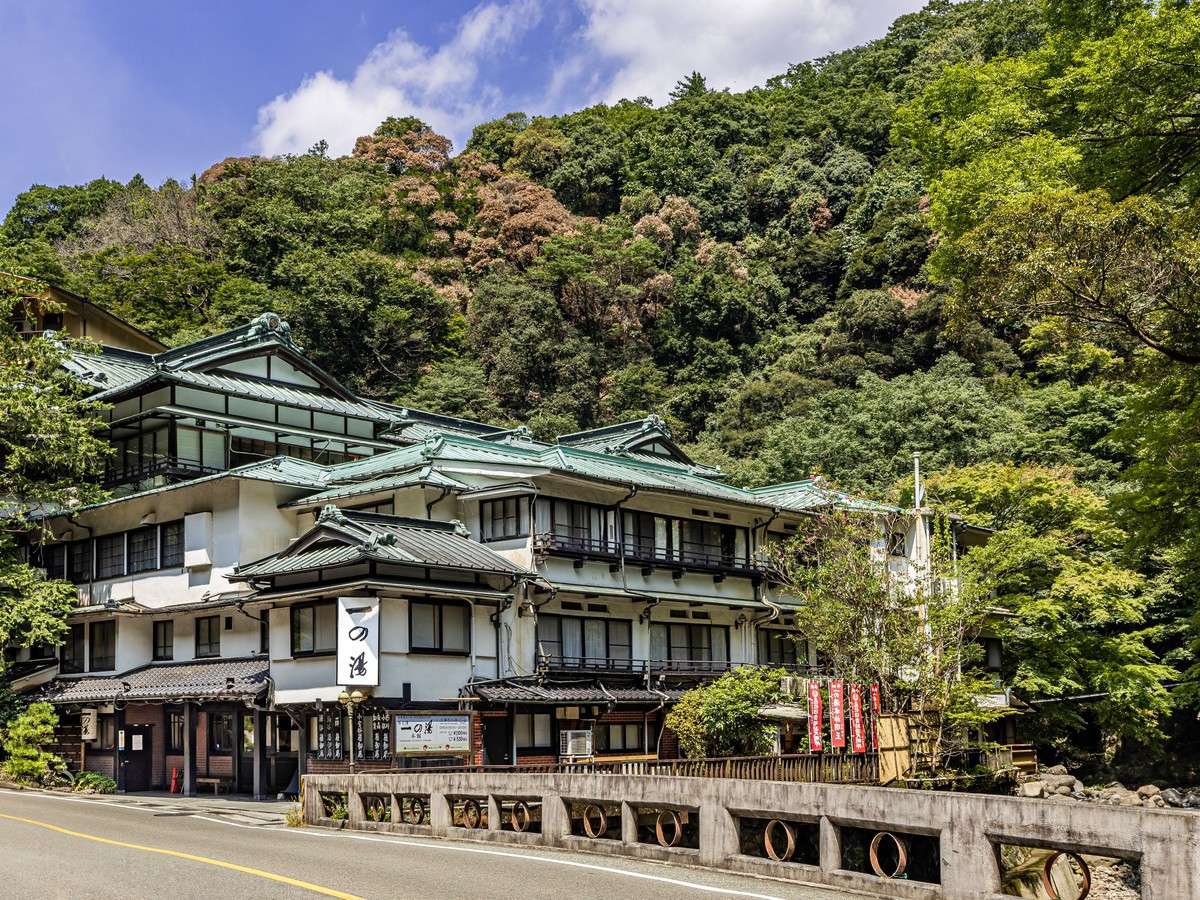
2. Ichinoyu Honkan — Hakone, Kanagawa $70–$160 per person — steps from Hakone-Yumoto station, which means you don't need a taxi from the train. Ichinoyu Honkan is a registered cultural property, built in 1630 and expanded through the Meiji era. The wooden corridors creak in exactly the way you hope they will. Private onsen here is a time-slot arrangement (kashikiri-buro), not an en-suite room, but it counts. See the full [Hakone onsen town](/en/area/hakone) guide for context.

[Check rates on Trip.com](https://www.trip.com/hotels/?allianceid=8201747&keyword=Ichinoyu+Honkan+Hakone){rel="nofollow sponsored noopener"}

3. Yubatake Souan — Kusatsu, Gunma $90–$200 per person — overlooks the yubatake, the famous hot-water field at the center of Kusatsu town where hot-spring water is cooled by wooden paddles before piped distribution. Kusatsu's waters are among the most acidic in Japan (pH around 2.1), which gives them a distinctive tingling quality. Yubatake Souan puts you directly above the source. See our [Kusatsu hot spring town](/en/area/kusatsu) guide for more properties.

[Check rates on Trip.com](https://www.trip.com/hotels/?allianceid=8201747&keyword=Yubatake+Souan+Kusatsu){rel="nofollow sponsored noopener"}

4. Shogetsu — Gero, Gifu $120–$350 per person — riverside setting in Gero, one of Japan's three historically designated great onsen towns (alongside Arima and Kusatsu). At the low end of this range, you're paying mid-tier money for a full kaiseki dinner, private access to the Hida River views from the rotenburo, and one of the most unpretentious onsen towns in Central Honshu. A solid cheap ryokan Japan option for the Gifu region.

[Check rates on Trip.com](https://www.trip.com/hotels/?allianceid=8201747&keyword=Shogetsu+Gero){rel="nofollow sponsored noopener"}

5. Takayama Ouan — Takayama, Gifu $120–$280 per person — Takayama's old merchant-town machiya (townhouse) aesthetic, a kaiseki menu that features Hida beef (the local wagyu), and a private onsen in the $120 low-season entry window. The old town itself is 15 minutes' walk, and the morning market near Jinya ruins sells local pickles and sake that pair well with the previous night's dinner.

[Check rates on Trip.com](https://www.trip.com/hotels/?allianceid=8201747&keyword=Takayama+Ouan){rel="nofollow sponsored noopener"}

6. Hoseikan — Tamatsukuri, Shimane $120–$350 per person — Tamatsukuri Onsen in Shimane Prefecture is known as Japan's "cosmetics spring" — an alkaline sodium bicarbonate spring said to soften and smooth skin after a single soak. Whether or not you believe the cosmetic claims, the water quality is genuinely distinctive, the town is quiet, and the average ryokan price here sits well below the national median. A strong pick if you're traveling through the San'in coast. [Kinosaki area](/en/area/kinosaki) is two hours north and worth adding to the same itinerary.

[Check rates on Trip.com](https://www.trip.com/hotels/?allianceid=8201747&keyword=Hoseikan+Tamatsukuri){rel="nofollow sponsored noopener"}

7. Unzen Kanko Hotel — Unzen, Nagasaki $120–$350 per person — the most architecturally unusual property on this list. Built in 1935 in a Western Colonial style during Unzen's era as a foreign resort destination, it has private onsen alongside the unusual hybrid of tatami rooms and European-style drawing rooms. The Unzen jigoku (volcanic hell vents) are a five-minute walk. [Beppu](/en/area/beppu) is three hours north, with a $350 median but budget-range options at the lower end of its $215 floor that approach this price tier.

[Check rates on Trip.com](https://www.trip.com/hotels/?allianceid=8201747&keyword=Unzen+Kanko+Hotel){rel="nofollow sponsored noopener"}

Tip

**These 7 properties fill up fast on weekends and during peak demand periods.** If your travel dates fall on a Friday or Saturday, book at least 3–4 weeks ahead. For weekday stays at budget and low-mid properties, 7–14 days lead time is usually sufficient. For tips on finding and securing cheap ryokan Japan deals, see our [budget ryokan guide](/en/blog/budget-ryokan-tips).

[Search All Available Ryokans on Trip.com](https://www.trip.com/hotels/?allianceid=8201747){rel="nofollow sponsored noopener"}

FAQ: ryokan prices in Japan

How much does a ryokan cost per night in Japan?

The median rate across our database of 224 ryokans is $315 per person per night (¥48,500 at ¥154/USD). Budget ryokans start from around $35–$120; mid-tier runs $130–$350; luxury is $280–$600+. The full range in our database is $35 to $2,000 per person [Japan Ryokan Guide 224-property analysis, verified 2026-05-19]. Ryokan rates are per person, not per room, and at mid and luxury tiers they typically include dinner and breakfast — which changes the value equation significantly compared to hotel pricing.

Is a ryokan more expensive than a hotel in Japan?

At the midpoint, yes — but ryokans include meals that hotel rates exclude. A $250 per-person ryokan rate covers a multi-course kaiseki dinner and a traditional Japanese breakfast. At a standalone Kyoto restaurant, a comparable kaiseki dinner costs ¥10,000–¥30,000 per person [InsideKyoto.com kaiseki guide, verified 2026-05-19]. Add breakfast and you're looking at $100–$200+ in restaurant costs on top of a hotel room rate. When you account for included meals, mid-tier ryokans are often comparable in total cost to a 4-star business hotel plus dining.

What is the cheapest ryokan in Japan with a private onsen?

Based on our database of 224 ryokans, Hotel Otaki in Nikko is the most affordable property with a private onsen — starting from around $60 per person per night. Only 7 of 224 ryokans (3.1%) offer a private onsen for under $120/night [Japan Ryokan Guide 224-property analysis, verified 2026-05-19]. Other options under $120 include Ichinoyu Honkan in Hakone ($70+) and Yubatake Souan in Kusatsu ($90+). Availability at these three properties in particular is limited — book early, especially for weekend stays.

How much more expensive are ryokans during peak season?

Across 224 properties, the median high rate is 2.4× the low rate [Japan Ryokan Guide 224-property analysis, verified 2026-05-19]. A property starting at $150 typically peaks around $360. The widest single-property band in the database is Dogashima New Ginsui in Izu: $100 to $400, a 300% peak premium. Even the most stable properties still show an 80% peak premium — there is no flat-rate ryokan in this dataset. For exact rates on your specific dates, check Trip.com directly — published ranges are indicative, not guaranteed.

Which onsen area has the best value ryokans?

For value — quality relative to price — [Kinosaki Onsen](/en/area/kinosaki) ($250 median), Gero ($238), and Noboribetsu ($193) consistently deliver mid-tier experiences below the national average. [Kusatsu onsen](/en/area/kusatsu) ($265) offers famous medicinal springs for under the national median of $315. For budget travelers willing to go off the tourist trail, Ibusuki ($170 median) in Kagoshima — known for its sand baths where guests are buried in naturally volcanic-heated black sand — has the lowest area median in the entire database. The [Hakone properties](/en/area/hakone) ($325 median) remain the best luxury-value pick for Tokyo visitors with limited travel time.

Where to go from here

So how much does a ryokan cost? The median $315 per person per night tells you where the market sits. The more useful number is the 57× spread — $35 to $2,000 — which tells you this is a genuinely stratified market where knowing your tier and your area matters more than knowing the average ryokan price.

For most first-time foreign visitors, the mid-tier is the right starting point: $130–$350 per person, 91% of properties English-friendly, 43% with private onsen, kaiseki dinner and breakfast included. The best mid-tier value areas are Kinosaki Onsen and Kusatsu onsen if you want authentic onsen towns; Hakone if you want easy access from Tokyo.

Budget travelers: Ibusuki, Noboribetsu, and the seven private-onsen-under-$120 properties above are your entry points. Book early — especially for weekends. These represent the best cheap ryokan Japan options in the entire database.

Splurge budget: Yufuin and Izu have the highest concentration of luxury boutiques. Expect to pay $425–$558 median and up. The kaiseki at the top end of this range is genuinely exceptional — multi-course meals built around seasonal ingredients that change monthly, presented by chefs who trained for years in the kaiseki tradition. The price is real. So is the gap between that dinner and anything you'll find outside a top-tier ryokan.

Only 7 properties in the entire 224-ryokan database offer a private onsen under $120/night. If that combination is your priority, act early — that window closes fast.

[Browse All 224 Ryokans by Area and Price Tier](/en/ryokans)

"료칸(旅館)"이라는 단어 하나가 감당하는 범위는 생각보다 넓다. 어촌 마을을 개조한 1박 $35짜리 게스트하우스부터, 전용 집사가 저녁 식사 전에 노송나무 욕조에 물을 채워주는 1박 $2,000짜리 언덕 위 빌라까지—모두 정식 료칸이고, 모두 Trip.com에 등록된 숙소다.

이 57배의 가격 차이가 바로 "료칸 요금이 얼마예요?"라는 단순한 질문에 단순한 답이 없는 이유다. 핵심 수치를 먼저 공개하자면, 224개 숙소의 중앙값은 1인당 1박 $315(¥48,500 / 약 ₩430,000, ¥154/$1 (2026년 5월 기준)) 이다 [Japan Ryokan Guide 224-property analysis, verified 2026-05-19]. 1인당 ¥50,000 정도 예산이 있다면 시장 한가운데—과도한 사치도 아니고 저가형도 아닌—에 정확히 위치하는 셈이다. 하지만 예산이 $120이든 $600이든, 일본의 25개 온천 지역 중 어디를 선택하느냐에 따라 실제 경험은 전혀 달라진다.

이 글은 지역별, 가격대별로 모든 데이터를 정리하고 각 가격대에서 실제로 무엇을 얻을 수 있는지 보여준다. 막연한 인상이 아닌 실제 수치를 바탕으로 예산 결정을 내릴 수 있도록.

데이터: 25개 온천 지역 224개 료칸, 2026년 1분기 기준 Trip.com과 공식 숙소 사이트를 교차 검증한 요금 범위. 요금은 1인당 1박 기준이며, 중급 및 고급 등급에서는 저녁과 아침 식사가 포함된다(아래 "요금에 포함되는 항목" 섹션 참조). 전체 숙소의 중간 50%는 $200~$425 사이에 분포한다 [Japan Ryokan Guide 224-property analysis, verified 2026-05-19].

60초 요약: 2026년 료칸 요금 한눈에 보기

이 글에서 표를 하나만 읽는다면, 바로 이 표다.

등급숙소 수최저 중앙값중간 중앙값최고 중앙값
**저가형**31개 (13.8%)$70 / ¥10,800$115 / ¥17,700$160 / ¥24,600
**중급형**99개 (44.2%)$130 / ¥20,000$250 / ¥38,500$350 / ¥53,900
**고급형**94개 (42.0%)$280 / ¥43,100$450 / ¥69,300$600 / ¥92,400

[Japan Ryokan Guide 224-property analysis, verified 2026-05-19. USD/JPY: ¥154 (BOJ 중간 환율 기준, 2026년 5월). 엔화 금액은 ¥100 단위로 반올림.]

세 가지를 먼저 짚고 넘어가야 한다. 첫째, 이 요금은 1실 기준이 아니라 1인 기준이다. 경쟁 사이트들이 대부분 넘어가는 부분이고, 같은 료칸이 어떤 사이트에서는 비싸 보이고 어떤 사이트에서는 저렴해 보이는 주된 이유다. 2인 커플 기준 1인당 $250이면 1실 $500—도심 비즈니스 호텔보다 비싸 보이지만, 호텔 레스토랑에서 따로 먹으면 $100~$200이 더 드는 저녁과 아침 식사가 모두 포함된 가격이다.

둘째, 데이터베이스의 전체 범위는 $35(이즈의 K's House Ito Onsen)부터 $2,000(유후인의 Sanso Murata)까지다 [Japan Ryokan Guide 224-property analysis, verified 2026-05-19]. 이 57배의 차이는 예외적인 이상값이 아니라—같은 이름을 공유하지만 본질적으로 다른 경험의 카테고리를 반영한다.

셋째, 전체 숙소의 44%가 중급형에 속한다. 중앙값 $250에서, 외국인 여행자 대부분에게 실질적인 진입점이 된다. 중급 료칸의 91%가 영어 가능 직원을 두고 있고, 43%는 전세 온천(가시키리)을 갖추고 있으며, 가이세키(懐石) 저녁 식사가 기본으로 제공된다 [Japan Ryokan Guide 224-property analysis, verified 2026-05-19].

저예산으로 최고의 딜을 찾는 전략은 [저가형 료칸 가이드](/ko/blog/budget-ryokan-tips)를 참고하자.

데이터 구축 방법: 224개 료칸, 25개 온천 지역

이 글의 수치를 신뢰하려면 그 출처를 정확히 알아야 한다.

japanryokanguide.com에 등록된 모든 료칸으로 데이터베이스를 구축하고 정제했다—224개 숙소, 25개 온천 지역, 8개 광역. 각 숙소에는 1인당 1박 USD 기준 대표 최저·최고 요금이 있으며, Trip.com 및 공식 료칸 사이트의 공시 요금표와 수작업으로 대조 검증했다. 검증은 2026년 1분기에 완료됐다.

이 데이터가 제공하는 것: 224개 구체적 료칸의 공시 요금 범위 단면. 지역별, 등급별, 시설 구성별로 숙소가 실제로 청구하는 금액을 보여준다.

이 데이터가 제공하지 않는 것: 실시간 거래 데이터베이스. 특정 여행 날짜에 연동된 일별 요금 스크래핑은 없다. 숙소별 최고·최저 요금은 객실 유형과 수요 기간 전반에 걸친 공시 범위를 반영하며—실시간 스크래핑 없이 제공할 수 있는 최선의 계절 변동 지표다.

Tip

**방법론 및 한계.** 가격 수치는 japanryokanguide.com의 25개 온천 지역 224개 료칸 데이터베이스에서 도출했다. 각 료칸에는 2026년 1분기 기준 Trip.com 및 공식 사이트 공시 요금표를 수작업으로 검증한 1인당 1박 USD 대표 최저·최고 요금이 있다. 대표적인 공시 범위이지, 실시간 거래 가격이 아니므로—특정 날짜의 실제 요금은 다를 수 있다. USD/JPY 환산은 ¥154/USD(BOJ 도쿄 중간 환율 기준, 2026년 5월)를 사용한다. n≤6인 지역(나라 n=5, 이부스키 n=5, 시라호네 n=6)은 별표(*)로 표시—해당 중앙값은 참고치로만 활용할 것. 특정 날짜의 실시간 요금 확인은 Trip.com 또는 료칸 공식 사이트를 이용하자. 출처: [일본은행 외환 통계](https://www.boj.or.jp/statistics/index.htm) | [일본 관광청 숙박 통계](https://www.mlit.go.jp/kankocho/siryou/toukei/shukuhakutoukei.html)

외부 참조 데이터로 검증하면, 일본 료칸 협회는 회원 료칸 요금을 1인당 ¥5,000~¥119,000으로 제시한다 [Japan Ryokan Association, verified 2026-05-19]. 우리 데이터베이스는 $35~$2,000(약 ¥5,400~¥308,000)으로 범위가 약간 더 넓은데, JRA 비회원 초고급 숙소와 자체적으로 료칸으로 분류하는 일부 저가 게스트하우스가 포함되기 때문이다.

외국인 관광객이 전체 료칸 투숙객의 14.8%를 차지하며, 2019년의 9.9%에서 증가했다 [Japan Tourism Agency inbound consumption survey 2024, via FindMyRyokan]. 외국인 여행자라면, 이 글의 영어 가능 여부 수치와 중급형 데이터가 실제 여행 경험에 직결된다.

지역별·온천 지역별 료칸 요금

224개 숙소 데이터셋이 다른 어떤 사이트보다 유용한 이유가 있다면—일본 25개 주요 온천 지역 각각의 실제 중앙값 요금을 제공한다는 것이다. "합리적" 또는 "사치스러운" 같은 모호한 표현이 아니라.

편차는 대부분의 여행자 예상보다 훨씬 크다. 이즈 온천의 평균 료칸 요금은 1인당 $558—이부스키 $170의 3.3배다 [Japan Ryokan Guide 224-property analysis, verified 2026-05-19]. 둘 다 정통 온천 여행지다. 차이는 고급 부티크 료칸의 밀집도, 대도시 접근성, 그리고 하이엔드 가이세키 운영 비중에서 비롯된다.

그림 1

25개 온천 지역별 료칸 요금 분포

중앙값 기준 내림차순으로 정렬된 25개 온천 지역 224개 료칸의 중앙값, Q1, Q3, 최소·최대 요금 범위를 나타낸 상자 그림. 이즈가 중앙값 $558로 최고; 이부스키가 $170으로 최저.

출처: japanryokanguide.com 데이터베이스 — 224개 숙소, 2026년 1분기

원본 데이터 보기
Ryokan price distribution by onsen area — median, Q1, Q3, min, max (USD/person/night)
Onsen AreaMedian USDQ1 USDQ3 USDMin USDMax USD

아래가 25개 지역 전체 분석표다—다른 어디서도 찾을 수 없는 표다.

순위지역광역숙소 수요금 범위 (USD)중앙값 (USD)중앙값 (JPY)등급 구성 (저/중/고)
1이즈주부12$67–$1,050**$558**¥85,9001/6/5
2유후인규슈11$220–$1,350**$425**¥65,5000/4/7
3아리마간사이9$175–$625**$400**¥61,6000/4/5
4시라호네*주부6$150–$450**$375**¥57,8000/4/2
5구로카와규슈10$250–$1,050**$363**¥55,9000/4/6
6긴잔도호쿠8$290–$700**$350**¥53,9000/5/3
7벳푸규슈8$215–$650**$350**¥53,9000/4/4
8닛코간토9$105–$650**$350**¥53,9001/4/4
9다카야마주부8$130–$850**$350**¥53,9000/4/4
10미야지마주고쿠7$100–$625**$340**¥52,4001/2/4
11하코네간토13$115–$850**$325**¥50,1002/5/6
12다마쓰쿠리주고쿠9$140–$425**$315**¥48,5001/6/2
13도고시코쿠10$130–$575**$303**¥46,7001/6/3
14나라*간사이5$175–$700**$275**¥42,4000/4/1
15쿠사쓰간토9$145–$600**$265**¥40,8001/4/4
16와쿠라주부10$115–$800**$258**¥39,7001/7/2
17키노사키간사이9$130–$650**$250**¥38,5000/7/2
18교토간사이15$95–$850**$250**¥38,5002/7/6
19자오도호쿠8$105–$400**$243**¥37,4001/6/1
20게로주부10$100–$475**$238**¥36,7001/6/3
21운젠규슈7$130–$425**$235**¥36,2001/5/1
22노보리베쓰홋카이도10$90–$650**$193**¥29,7002/5/3
23도쿄간토9$80–$1,050**$175**¥27,0005/1/3
24가나자와주부7$85–$575**$175**¥27,0003/2/2
25이부스키*규슈5$105–$475**$170**¥26,2001/3/1

*n≤6인 지역은 신뢰구간이 넓으므로—중앙값은 참고치로만 활용할 것. [Japan Ryokan Guide 224-property analysis, verified 2026-05-19]

그림 2

가장 비싼 온천 지역 10곳 vs 가장 합리적인 온천 지역 10곳
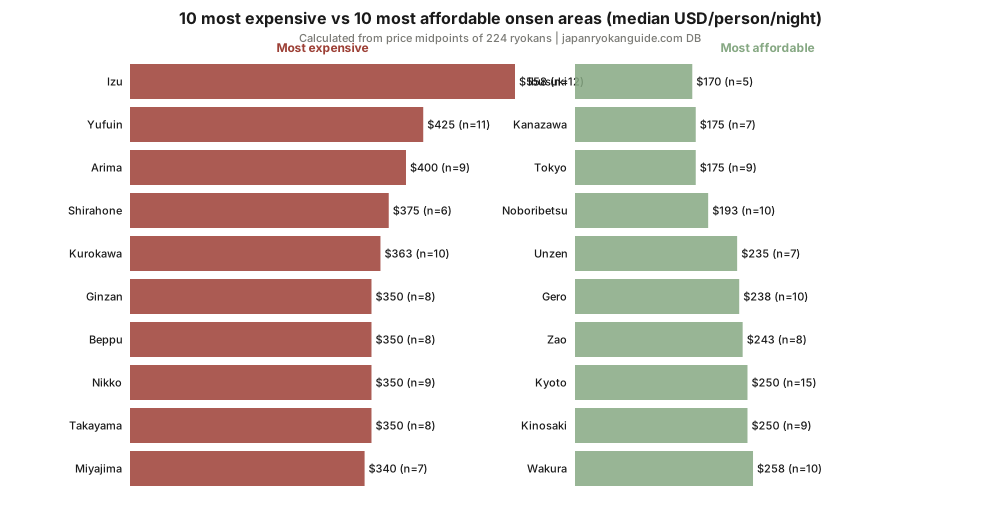
가장 비싼 온천 지역 10곳(주홍색)과 가장 합리적인 10곳(녹색)을 비교한 가로 막대 그래프. 이즈가 중앙값 $558로 선두; 이부스키가 $170으로 최저.

출처: japanryokanguide.com 데이터베이스 — 224개 숙소, 2026년 1분기

원본 데이터 보기
Most expensive vs most affordable onsen areas by median nightly rate (USD/person)
CategoryOnsen AreaMedian USDn

요금 변동에 맞춰 여행 시기를 조율하는 월별 가이드는 [료칸 여행 최적 시기 가이드](/ko/blog/best-season-ryokan)를 참고하자.

프리미엄 지역: 이즈, 유후인, 아리마

이 세 지역은 일본 고급 료칸 재고의 불균형하게 큰 비중을 차지하며—그 가격이 이를 반영한다.

이즈(시즈오카현, 도쿄에서 2~3시간 거리)는 데이터베이스에 12개 숙소가 있으며, 그 중 5개가 고급형이다. 해안 입지, 도쿄에서의 직통 신칸센 접근성, 그리고 부티크 가이세키 료칸의 집중이 평균 요금을 높게 유지시킨다. [하코네 지역 가이드](/ko/area/hakone)는 11위($325 중앙값)의 접근 가능한 대안을 다룬다—$115~$850의 폭넓은 범위에 걸쳐 13개 숙소가 있으며, 도쿄 당일치기도 가능할 만큼 가깝다.

유후인(오이타현)은 데이터에서 가장 극적인 대비를 보여준다: 11개 숙소 중 7개가 고급형, 공시 요금 범위가 $220~$1,350. 이 상한선은 도쿄의 이례적인 $1,050 최고가(초고급 도심 료칸 한 곳이 끌어올리는)를 제외하면 모든 지역 중 가장 넓다. 유후인의 아트 료칸 씬—소규모의 종종 건축가 설계 료칸으로 계절 메뉴 제공—이 가격을 끌어올리는 반면, 대형 리조트 호텔이 없어 전체 볼륨은 낮다.

아리마(효고현, 오사카에서 30분)는 도고·쿠사쓰와 함께 일본 3대 고탕(古湯) 중 하나로 꼽힌다. 9개 숙소 중 5개가 고급형. 오사카·교토와의 근접성 덕분에 국제 여행 일정의 1박 추가 코스로 자주 선택되며, 그것이 전국 중앙값을 웃도는 요금을 뒷받침한다.

가성비 지역: 홋카이도, 도호쿠, 북규슈

저예산이 온천 경험의 타협을 의미하지는 않는다. 이들 지역은 데이터셋에서 가격 대비 경험 비율이 가장 뛰어나다.

노보리베쓰(홋카이도, 중앙값 $193)는 복수의 공용·반전용 욕탕 시설을 갖춘 대형 리조트형 료칸, 중급 가격대의 가이세키 스타일 저녁 식사, 그리고 인근 화산 지고쿠다니(지옥 계곡) 풍경으로 구성된다. 데이터베이스 전체에서 가격 변동폭이 가장 넓은 상위 10개 숙소 중 4개가 노보리베쓰 소재—평일 기본 요금과 성수기 프리미엄 패키지 사이의 격차가 큰 대형 료칸임을 나타내는 신호다. 홋카이도에서 저렴한 료칸을 찾는 여행자에게 노보리베쓰가 가장 안정적인 출발점이다.

[쿠사쓰 온천](/ko/area/kusatsu)($265 중앙값, 15위)은 간토 지역에서 중가형 가성비가 가장 뛰어나다. 일본에서 가장 산성이 강한 온천 중 하나로 꼽히는 황산 온천—예로부터 약효가 있다고 전해지는—을 즐기는 데 고급 요금이 필요하지 않다. 유바타케 소안(Yubatake Souan)은 $90부터 시작하면서 전세 온천을 제공한다.

[키노사키 온천](/ko/area/kinosaki)($250 중앙값, 17위)은 간사이 지역의 가성비 픽이다. 9개 숙소 중 7개가 중급형으로, 1인당 $300 이하로 유카타(浴衣)를 입고 야외 온천 사이를 걷는 일곱 개 목욕탕 전통 마을 체험을 즐길 수 있다. 버드나무가 늘어선 수로의 보존된 거리—체크인 후 완전 무료로 접근 가능한—가 있는 몇 안 되는 지역 중 하나다.

등급별 료칸 비용: $115, $250, $450에서 실제로 무엇을 얻는가

중앙값 수치도 중요하지만, 예산 결정이 실제로 이루어지는 곳은 시설 데이터다.

시설저가형 (¥10k–¥24k)중급형 (¥20k–¥54k)고급형 (¥43k–¥92k+)
최저 중앙값 요금$70 / ¥10,800$130 / ¥20,000$280 / ¥43,100
중간 중앙값 요금**$115 / ¥17,700****$250 / ¥38,500****$450 / ¥69,300**
최고 중앙값 요금$160 / ¥24,600$350 / ¥53,900$600 / ¥92,400
전세 온천(노천탕)10%43%81%
영어 소통 가능65%**91%**84%
채식 식사10%51%72%
기차역 근접71%65%57%
할랄 식사0%0%0%
평균 객실 수24실67실41실
온천 구성대형 공용탕공용탕 + 전세탕 혼합주로 전세 온천
가이세키 형태간소화된 다코스 식사정식 다코스 가이세키다코스 가이세키, 지역 프리미엄 식재료 활용

[Japan Ryokan Guide 224-property analysis, verified 2026-05-19]

이 표에서 주목해야 할 것들이 있다.

전세 온천은 등급 간 차이가 가장 가파른 시설이다: 저가형 10%, 중급형 43%, 고급형 81%—저가에서 고급으로 갈수록 8배 차이 [Japan Ryokan Guide 224-property analysis, verified 2026-05-19]. 전세 온천이 필수 조건이라면, 현실적인 진입점은 중급형이다—그조차 보장되지는 않는다. 전세 온천이 확인된 숙소 목록은 [전세 온천이 있는 베스트 료칸](/ko/blog/best-ryokans-private-onsen)을 참고하자.

영어 소통은 고급형(84%)이 아닌 중급형(91%)에서 더 높다 [Japan Ryokan Guide 224-property analysis, verified 2026-05-19]. 수치를 분석했을 때 우리도 놀랐다. 실용적 설명은 이렇다: 인기 지역의 중급 료칸은 외국인 투숙객을 적극적으로 유치하고 다국어 직원과 번역 메뉴에 투자한다. 반면 많은 고급 료칸—특히 유후인이나 구로카와의 소규모 부티크 숙소들—은 주로 국내 고액 자산가를 대상으로 하며 영어권 투숙객을 위한 인프라가 상대적으로 부족하다. 예약 전 반드시 확인하자.

할랄 식사: 224개 숙소 중 0곳 [Japan Ryokan Guide 224-property analysis, verified 2026-05-19]. 이것은 누락이 아닌 실제 공백이다. 다시(생선 육수)를 기반으로 하고 돼지고기 요리가 포함되는 전통 가이세키 형식은 구조적으로 적응이 어렵다. 무슬림 여행자는 숙소에 직접 문의하는 것이 좋다. 일부 숙소는 요청 시 간단한 채식 또는 해산물 위주 식사를 준비할 수 있지만, 인증은 이 데이터셋에는 없다.

역 근접성은 가격과 반비례한다: 저가형 료칸이 기차역에 가장 가깝고(71%), 고급형이 가장 멀다(57%). 고급 숙소는 교통 편의성 대신 외딴 계곡 입지를 선택하므로—료칸까지의 교통편이 실제 여행 비용에 포함되어야 한다.

최고급 숙소 큐레이션 목록은 [일본 럭셔리 료칸 가이드](/ko/blog/luxury-ryokans-japan)를 참고하자.

그림 3

각 가격대별 료칸 수 — 등급별

$0에서 $1,400까지 $50 구간으로 나뉜 막대그래프, 등급별로 색상 구분. 중급형이 $150~$350 구간을 지배. 고급형 숙소는 $400~$700까지 확장되며 $800 이상에서 긴 꼬리를 형성.

출처: japanryokanguide.com 데이터베이스 — 224개 숙소, 2026년 1분기

원본 데이터 보기
Count of ryokans by midpoint price bin ($50 intervals) and tier
Price bin (USD)Budget countMid countLuxury countTotal

그림 4

전세 온천, 영어 지원, 채식 식사, 역 접근성 — 등급별

저가형, 중급형, 고급형 등급별로 전세 온천, 영어 소통 가능, 채식 식사, 역 근접 여부를 제공하는 료칸 비율을 나타낸 가로 막대그래프. 전세 온천은 저가형 10%에서 고급형 81%로 상승.

출처: japanryokanguide.com 데이터베이스 — 224개 숙소, 2026년 1분기

Feature availability by price tier (% of properties)
FeatureBudget %Mid %Luxury %

1박 요금에 포함되는 항목

료칸의 1박 요금을 호텔 요금과 비교할 때 가장 까다로운 부분은 무엇이 포함되는지다. 저가형이 가장 변동이 크다: 간소화된 다코스 저녁 식사가 포함되는 숙소도 있고, 객실만 제공(야도노미 플랜)하는 곳도 있다. 예약 전 반드시 확인—차이가 크다.

중급 및 고급형에서는 요금에 다다미(畳) 전통 객실 1박과 두 끼 식사—가이세키 저녁과 일본식 아침—가 거의 항상 포함된다. 유카타, 슬리퍼, 객실 내 녹차, 실내외 공용 욕탕 이용이 기본 제공된다. 반면 기본 요금에 *포함되지 않는* 항목은 생각보다 다양하다—그것이 다음 섹션에서 다루는 내용이다.

교토 료칸에서의 단품 가이세키 정식은 1인당 ¥10,000~¥30,000(음료 별도)이며, 미슐랭 가이세키는 ¥20,000~¥50,000+ 에 달한다 [InsideKyoto.com kaiseki guide, verified 2026-05-19; Bespoke Discovery luxury dining guide, verified 2026-05-19]. 따라서 두 끼 가이세키 식사가 포함된 중급 료칸 $250/박은 구조적으로 외식 두 번과 별도 호텔 요금을 합친 것보다 저렴한 경우가 많다.

[Trip.com에서 중급 료칸 둘러보기](https://www.trip.com/hotels/?allianceid=8201747&sid=RYOKAN_MIDTIER){rel="nofollow sponsored noopener"}

요금이 얼마나 변동하는가: 숙소별 가격 폭(성수기 vs 비수기)

그림 5

각 료칸의 최저·최고 요금 — 숙소별 가격 변동 폭
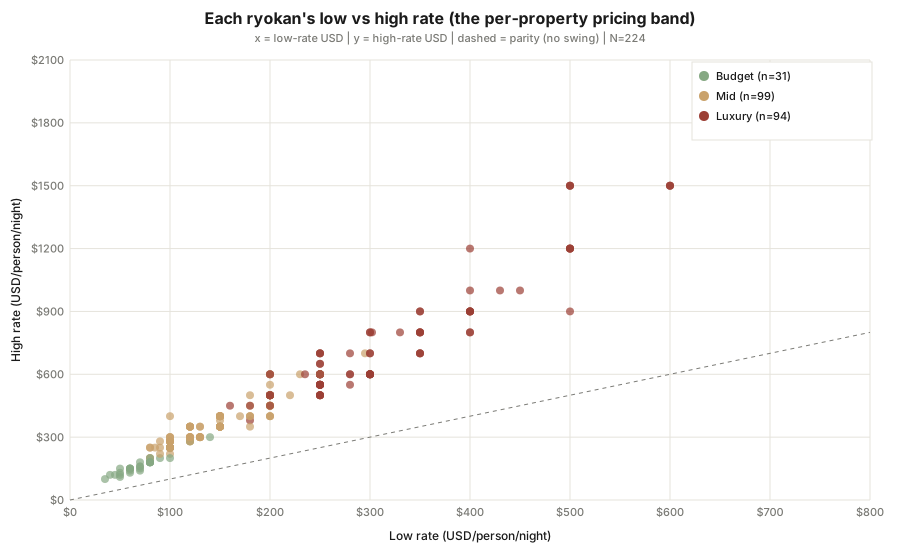
224개 료칸 각각을 x축(최저 요금)과 y축(최고 요금)으로 표시한 산점도. 등가선 위의 점들은 성수기 프리미엄을 나타냄. 저가형 숙소는 좌하단에 집중; 고급형은 우상단. 일부 고급 숙소는 y축에서 $1,350~$2,000까지 확장.

출처: japanryokanguide.com 데이터베이스 — 224개 숙소, 2026년 1분기

원본 데이터 보기
Sample of 25 ryokans showing per-property pricing band — low rate, high rate, and peak premium
PropertyTierLow (USD)High (USD)Peak premium

224개 숙소 전체에서 최고 요금 중앙값은 최저 요금의 2.4배다 [Japan Ryokan Guide 224-property analysis, verified 2026-05-19]. 조용한 2월 평일에 $130로 시작하는 료칸은 성수기에 보통 $312까지 오른다. 이 비율은 등급 간에도 놀랍도록 일관적으로 유지된다: 저가형 변동 중앙값 +130%, 고급형 +120%—출발 요금과 무관하게 양 등급 모두 약 2.2~2.4배 차이를 보인다.

측정된 가장 넓은 변동 폭은 이즈의 도가시마 뉴 긴스이(Dogashima New Ginsui)로: $100~$400, 숙소 내 300% 변동 [Japan Ryokan Guide 224-property analysis, verified 2026-05-19]. 중급형 숙소로—평일 기본 요금을 운영할 만큼 규모가 있고, 휴일 주말에는 공격적으로 프리미엄을 적용할 만큼 수준이 있는 곳이다.

이런 역학이 알아두면 유용한 지역 패턴을 설명한다: 변동 폭 상위 10개 숙소 중 4개가 노보리베쓰에 집중되어 있다 [Japan Ryokan Guide 224-property analysis, verified 2026-05-19]. 소규모 부티크보다 대형 리조트형 료칸이 더 크게 변동한다—평일 기본 재고는 한 가격으로, 연회 시즌 프리미엄 패키지는 다른 가격으로 운영하며, 그 사이의 격차가 바로 변동 폭이다. 데이터베이스에서 가격이 가장 안정적인 숙소도 80% 성수기 프리미엄을 보이므로—이 데이터에 균일 요금 료칸은 없다.

위 표는 변동 폭이 가장 넓은 상위 10개 숙소와 일부 개별 숙소 샘플을 보여준다. 전체 산점도(그림 5)는 224개 숙소 각각의 최저·최고 요금을 플롯하므로, 후보로 올린 료칸이 전체 대비 어느 위치에 있는지 정확히 파악할 수 있다.

Tip

**실용 기준:** 료칸의 공시 최저 요금에 2.4를 곱하면 성수기 수요 기간에 지불할 금액을 추정할 수 있다. 어떤 숙소의 시작 요금이 $200이라면, 성수기에는 $480을 예산으로 잡자. 특정 날짜의 실제 요금 확인은 Trip.com에서 직접—공시 범위는 참고치이지 보장이 아니다.

외국인이 놓치기 쉬운 숨겨진 비용

예약 시 표시되는 요금이 최종 청구액인 경우는 드물다. 추가로 붙는 항목들—구체적인 금액과 함께 정리한다.

소비세(10%)는 Trip.com, Booking.com, 공식 료칸 사이트의 공시 요금에 이미 포함되어 있다. 별도 항목 없음—이미 반영된 금액이다 [TravelClassroom.net Japan Accommodation Tax Guide, verified 2026-05-19].

온천세(入湯税)는 대부분 온천 마을에서 1인당 1박 ¥150로, 체크아웃 시 수납되며 온라인 요금에는 표시되지 않는다. 노보리베쓰, 아칸 호, 일부 이즈 숙소는 ¥300을 부과한다. 유후인은 숙소 공시 객실 요금에 따라 ¥150~¥2,500을 청구한다 [TravelClassroom.net Japan Bathing Tax Complete Guide 2026, verified 2026-05-19]. 금액 자체는 대부분의 경우 크지 않지만—예약 플랫폼에서 전혀 언급하지 않는다는 점이 진짜 놀라움이다.

시·도 숙박세(宿泊税)에서 진짜 편차가 숨어 있다. 2026년 3월 1일부터 교토는 단계별 요금 체계를 운영한다:

교토 객실 요금 (1인당)숙박세
¥6,000 미만¥200
¥6,000–¥19,999¥400
¥20,000–¥49,999¥1,000
¥50,000–¥99,999¥4,000
¥100,000 이상¥10,000

[Japanspecialist.com — Kyoto hotel tax 2026, effective March 1, 2026]

1인당 ¥80,000을 청구하는 교토 고급 료칸이라면 1인당 1박 ¥4,000의 숙박세가 추가된다. 현재 17개 광역 및 도시에 숙박세 제도가 있다 [MATCHA Japan Accommodation Tax Guide 2026, verified 2026-05-19]. 도쿄는 1인당 ¥100~¥200을 부과(¥10,000/박 미만은 면제); 오사카는 ¥200~¥500.

이 세금들은 지방 인프라 재원으로 현장에서 납부한다. 다음 항목은 성격이 다르다—광역이 아닌 숙소가 직접 정하는 비용이다.

서비스 요금은 개별 료칸이 가장 많은 재량을 갖는 항목이다. 많은 전통 료칸이 10~15% 서비스 요금을 추가하며(24시간 서비스와 객실 담당 직원, 즉 나카이(仲居)의 업무 포함); 초고급 숙소는 20~25%를 청구하기도 한다. 법정 요율이 아니라 숙소마다 다르며, 일부 저가·중급 료칸은 공시 1인당 요금에 완전히 포함시킨다. 예약 시 확인하자 [multiple travel publishers, industry practice consensus — not a legally mandated rate, verified 2026-05-19].

객실 업그레이드 추가 요금은 프리미엄 객실—독채 빌라, 오션뷰, 초대형 스위트—에 적용되며 기본 요금 대비 보통 30~60% 추가된다. 공시된 "시작가"는 가장 작은 객실 기준이다.

저녁 식사 음료는 MAP 플랜에 거의 포함되지 않는다. 가이세키 저녁에 사케, 맥주, 소주를 주문하면 1인당 ¥2,000~¥5,000을 예상하자. 고급 숙소는 중가 와인에도 상당한 마진을 붙이는 경우가 많다.

어린이 요금: 만 3~12세는 보통 성인 요금의 50~70%. 만 3세 미만은 대부분 무료(식사 없음, 이불 공유).

Tip

**예약 전 반드시 1인당 총 포함 금액을 료칸에 확인하자.** 고급 숙소의 경우 숙박세, 서비스 요금, 저녁 음료를 더하면 최종 청구액이 공시 요금보다 20~30% 높아질 수 있다. 실제 계산 예: 교토 료칸 1인당 ¥80,000에 교토 숙박세 ¥4,000, 온천세 ¥150, 별도 서비스 요금 ¥10,000을 더하면 ¥94,150—공시 요금보다 18% 높은 금액이다.

알짜배기 7곳: 전세 온천 + 가이세키 1인당 $120 이하

224개 숙소 중 단 7곳—전체 데이터베이스의 3.1%—만이 1인당 $120 이하에 전세 온천을 제공한다 [Japan Ryokan Guide 224-property analysis, verified 2026-05-19]. 진짜 희귀한 조합이다. 아래 목록이 완전판으로: 이 조건을 충족하는 다른 숙소는 데이터베이스에 없다.

1. 호텔 오타키(Hotel Otaki) — 닛코, 도치기현 1인당 $60부터 (공시 범위 $60~$150). 224개 숙소 전체 데이터베이스에서 전세 온천이 있는 가장 저렴한 숙소다 [Japan Ryokan Guide 224-property analysis, verified 2026-05-19]. 닛코 사찰 숲 속의 저가형 숙소—호화롭기보다는 소박하지만, 전세 욕탕이 있고 닛코의 분위기는 일본 최고 수준이며, 가격 대비 경험의 차이는 실재한다. 주말 예약은 일찍 해두자.

[Trip.com에서 요금 확인](https://www.trip.com/hotels/?allianceid=8201747&keyword=Hotel+Otaki+Nikko){rel="nofollow sponsored noopener"}

2. 이치노유 혼칸(Ichinoyu Honkan) — 하코네, 가나가와현 1인당 $70~$160 — 기차에서 내리자마자 걸어갈 수 있는 하코네유모토역 바로 옆에 위치해 택시가 필요 없다. 이치노유 혼칸은 1630년 창건되어 메이지 시대에 걸쳐 증축된 등록 문화재다. 나무 복도는 기대했던 방식으로 삐걱거린다. 전세 온천은 스위트룸 전용이 아닌 시간대 예약 방식(가시키리부로)이지만 해당된다. 자세한 정보는 [하코네 온천 마을](/ko/area/hakone) 가이드 참고.

[Trip.com에서 요금 확인](https://www.trip.com/hotels/?allianceid=8201747&keyword=Ichinoyu+Honkan+Hakone){rel="nofollow sponsored noopener"}

3. 유바타케 소안(Yubatake Souan) — 쿠사쓰, 군마현 1인당 $90~$200 — 뜨거운 온천수를 나무 노로 저어 식힌 후 배관으로 분배하는 쿠사쓰 마을 중심부의 명물 유바타케(湯畑)가 내려다보인다. 쿠사쓰의 온천수는 일본에서 산성이 가장 강한 것으로 꼽히며(pH 약 2.1), 특유의 피부 자극감이 있다. 유바타케 소안은 바로 그 수원 바로 위에 위치한다. 더 많은 숙소 정보는 [쿠사쓰 온천 마을](/ko/area/kusatsu) 가이드를 참고하자.

[Trip.com에서 요금 확인](https://www.trip.com/hotels/?allianceid=8201747&keyword=Yubatake+Souan+Kusatsu){rel="nofollow sponsored noopener"}

4. 쇼게쓰(Shogetsu) — 게로, 기후현 1인당 $120~$350 — 아리마·쿠사쓰와 함께 일본 3대 명탕으로 역사적으로 지정된 게로 온천의 강변 입지. 이 요금 범위 최저가에서 가이세키 저녁 식사, 노천탕에서의 히다 강 전망, 그리고 혼슈 중부에서 가장 꾸밈없는 온천 마을 중 하나를 즐길 수 있다. 기후 지역에서 저렴한 료칸을 찾는다면 확실한 선택이다.

[Trip.com에서 요금 확인](https://www.trip.com/hotels/?allianceid=8201747&keyword=Shogetsu+Gero){rel="nofollow sponsored noopener"}

5. 다카야마 오안(Takayama Ouan) — 다카야마, 기후현 1인당 $120~$280 — 다카야마 전통 상인 마을 특유의 마치야(町家, 상가 주택) 분위기, 히다 쇠고기(지역 와규)를 사용한 가이세키 메뉴, 그리고 $120 비수기 진입가에 전세 온천까지. 구시가지는 도보 15분 거리고, 진야 터 인근 아침 시장에서 지역 특산 절임 반찬과 사케를 구입하면 전날 저녁 식사와 잘 어울린다.

[Trip.com에서 요금 확인](https://www.trip.com/hotels/?allianceid=8201747&keyword=Takayama+Ouan){rel="nofollow sponsored noopener"}

6. 호세이칸(Hoseikan) — 다마쓰쿠리, 시마네현 1인당 $120~$350 — 시마네현 다마쓰쿠리 온천은 일본의 "미인 온천"으로 알려진 곳으로, 한 번 목욕만으로도 피부를 부드럽고 매끄럽게 해준다는 알칼리성 탄산수소나트륨 온천이다. 피부 미용 효과를 믿든 안 믿든, 수질이 독특하고 마을은 조용하며 평균 료칸 요금은 전국 중앙값을 크게 밑돈다. 산인 해안을 여행하는 일정이라면 강력 추천. [키노사키 지역](/ko/area/kinosaki)은 북쪽으로 두 시간 거리에 있어 같은 여정에 추가할 만하다.

[Trip.com에서 요금 확인](https://www.trip.com/hotels/?allianceid=8201747&keyword=Hoseikan+Tamatsukuri){rel="nofollow sponsored noopener"}

7. 운젠 칸코 호텔(Unzen Kanko Hotel) — 운젠, 나가사키현 1인당 $120~$350 — 이 목록에서 건축적으로 가장 독특한 숙소. 운젠이 외국인 리조트 지역이던 시절인 1935년에 서양 식민지 스타일로 건축되었으며, 다타미 객실과 유럽식 응접실이 공존하는 독특한 혼합 공간에 전세 온천도 갖추고 있다. 운젠 지고쿠(화산 분기공) 지역은 도보 5분 거리. [벳푸](/ko/area/beppu)는 북쪽으로 3시간 거리로, 중앙값 $350이지만 $215 최저가 범위에서 이 가격대에 가까운 저렴한 옵션도 있다.

[Trip.com에서 요금 확인](https://www.trip.com/hotels/?allianceid=8201747&keyword=Unzen+Kanko+Hotel){rel="nofollow sponsored noopener"}

Tip

**이 7개 숙소는 주말과 성수기에 빠르게 마감된다.** 여행 날짜가 금·토요일이라면 최소 3~4주 전에 예약하자. 저가형 및 저가 중급형 숙소의 평일 체크인은 7~14일 전이면 대체로 충분하다. 저렴한 일본 료칸을 찾고 예약하는 요령은 [저가형 료칸 가이드](/ko/blog/budget-ryokan-tips)를 참고하자.

[Trip.com에서 224개 전체 료칸 검색하기](https://www.trip.com/hotels/?allianceid=8201747){rel="nofollow sponsored noopener"}

자주 묻는 질문: 일본 료칸 요금

일본 료칸 1박 요금은 얼마인가요?

224개 료칸 데이터베이스의 중앙값은 1인당 1박 $315(¥154/$1 기준 ¥48,500)다. 저가형 료칸은 약 $35~$120부터 시작하고, 중급형은 $130~$350, 고급형은 $280~$600+다. 데이터베이스 전체 범위는 1인당 $35~$2,000이다 [Japan Ryokan Guide 224-property analysis, verified 2026-05-19]. 료칸 요금은 1실이 아닌 1인 기준이며, 중급 및 고급형에서는 저녁과 아침 식사가 통상 포함되어—호텔 요금과의 가치 비교 구조 자체가 달라진다.

료칸이 일본 호텔보다 더 비싼가요?

중간 가격대 기준으로는 그렇다—하지만 료칸에는 호텔 요금에서 제외되는 식사가 포함된다. 1인당 $250의 료칸 요금에는 다코스 가이세키 저녁과 전통 일본식 아침 식사가 포함된다. 교토 단품 레스토랑에서 동급 가이세키 저녁은 1인당 ¥10,000~¥30,000이다 [InsideKyoto.com kaiseki guide, verified 2026-05-19]. 여기에 아침 식사를 더하면 호텔 요금 외에 $100~$200+의 식비가 추가된다. 식사 포함을 감안하면, 중급 료칸은 4성급 비즈니스 호텔과 식비를 합친 총액과 크게 다르지 않은 경우가 많다.

전세 온천이 있는 가장 저렴한 일본 료칸은 어디인가요?

224개 료칸 데이터베이스 기준, 닛코의 호텔 오타키가 전세 온천이 있는 가장 저렴한 숙소로—1인당 약 $60부터 시작한다. 224개 중 단 7곳(3.1%)만이 1박 $120 이하에 전세 온천을 제공한다 [Japan Ryokan Guide 224-property analysis, verified 2026-05-19]. $120 이하의 다른 옵션으로는 하코네의 이치노유 혼칸($70+)과 쿠사쓰의 유바타케 소안($90+)이 있다. 특히 이 세 곳은 가용 객실이 한정되어 있으므로—주말 예약은 일찍 진행하자.

성수기에 료칸 요금이 얼마나 오르나요?

224개 숙소 전체에서 최고 요금 중앙값은 최저 요금의 2.4배다 [Japan Ryokan Guide 224-property analysis, verified 2026-05-19]. $150에서 시작하는 숙소는 성수기에 보통 $360까지 오른다. 데이터베이스에서 단일 숙소 기준 가장 넓은 변동 폭은 이즈의 도가시마 뉴 긴스이로: $100~$400, 300% 성수기 프리미엄이다. 가격이 가장 안정적인 숙소도 80% 성수기 프리미엄을 보이므로—이 데이터에 균일 요금 료칸은 없다. 특정 날짜의 정확한 요금은 Trip.com에서 직접 확인하자—공시 범위는 참고치다.

가성비 좋은 온천 지역은 어디인가요?

가성비—가격 대비 품질—면에서 [키노사키 온천](/ko/area/kinosaki)($250 중앙값), 게로($238), 노보리베쓰($193)가 전국 평균 이하의 요금으로 꾸준히 중급형 경험을 제공한다. [쿠사쓰 온천](/ko/area/kusatsu)($265)은 전국 중앙값 $315 이하에서 유명한 약수 온천을 즐길 수 있다. 관광지를 벗어나려는 저예산 여행자에게는 가고시마의 이부스키($170 중앙값)—뜨거운 화산 지열로 가열된 검은 모래에 몸을 묻는 모래찜질로 유명한 곳—가 전체 데이터베이스에서 가장 낮은 지역 중앙값을 자랑한다. 이동 시간이 제한적인 도쿄 출발 여행자에게는 [하코네 숙소](/ko/area/hakone)($325 중앙값)가 가성비 최고의 고급 선택지다.

다음 단계

료칸 비용이 얼마냐고? 1인당 중앙값 $315라는 숫자가 시장의 현재 위치를 알려준다. 더 유용한 숫자는 57배 차이—$35~$2,000—로, 이것이 진정한 계층화 시장이며 평균 료칸 요금보다 자신의 등급과 지역을 아는 것이 훨씬 중요하다는 것을 보여준다.

처음 일본을 방문하는 외국인 여행자 대부분에게 중급형이 올바른 출발점이다: 1인당 $130~$350, 숙소의 91%가 영어 소통 가능, 43%는 전세 온천, 가이세키 저녁과 아침 식사 포함. 정통 온천 마을을 원한다면 키노사키 온천과 쿠사쓰가 중급 가성비 최고; 도쿄에서 쉽게 접근하고 싶다면 하코네가 최선이다.

저예산 여행자: 이부스키, 노보리베쓰, 그리고 위의 전세 온천 $120 이하 7개 숙소가 진입점이다. 일찍 예약하자—특히 주말은. 전체 데이터베이스에서 저렴한 일본 료칸의 최선을 대표하는 곳들이다.

고급 예산: 유후인과 이즈에 고급 부티크 료칸이 가장 집중되어 있다. 중앙값 $425~$558 이상을 예상하자. 이 범위 최상위의 가이세키는 진짜로 특별하다—매달 바뀌는 제철 식재료로 구성된 다코스 요리를, 가이세키 전통에서 수년간 수련한 요리사가 선보인다. 가격은 실재하고, 그 저녁 식사와 최고급 료칸 밖에서 찾을 수 있는 어떤 것과의 차이도 실재한다.

전체 224개 료칸 데이터베이스에서 단 7개 숙소만이 1박 $120 이하에 전세 온천을 제공한다. 그 조합이 우선순위라면, 일찍 행동하자—그 자리는 빠르게 채워진다.

[지역별·가격대별 전체 224개 료칸 보기](/ko/ryokans)

FAQ

Frequently asked questions

How much does a ryokan cost per night in Japan?+

The median rate across our database of 224 ryokans is **$315 per person per night** (¥48,500 at ¥154/USD). Budget ryokans start from around $35–$120; mid-tier runs $130–$350; luxury is $280–$600+. The full range in our database is $35 to $2,000 per person [Japan Ryokan Guide 224-property analysis, verified 2026-05-19]. Ryokan rates are per person, not per room, and at mid and luxury tiers they typically include dinner and breakfast — which changes the value equation significantly compared to hotel pricing.

Is a ryokan more expensive than a hotel in Japan?+

At the midpoint, yes — but ryokans include meals that hotel rates exclude. A $250 per-person ryokan rate covers a multi-course kaiseki dinner and a traditional Japanese breakfast. At a standalone Kyoto restaurant, a comparable kaiseki dinner costs ¥10,000–¥30,000 per person [InsideKyoto.com kaiseki guide, verified 2026-05-19]. Add breakfast and you're looking at $100–$200+ in restaurant costs on top of a hotel room rate. When you account for included meals, mid-tier ryokans are often comparable in total cost to a 4-star business hotel plus dining.

What is the cheapest ryokan in Japan with a private onsen?+

Based on our database of 224 ryokans, Hotel Otaki in Nikko is the most affordable property with a private onsen — starting from around $60 per person per night. Only 7 of 224 ryokans (3.1%) offer a private onsen for under $120/night [Japan Ryokan Guide 224-property analysis, verified 2026-05-19]. Other options under $120 include Ichinoyu Honkan in Hakone ($70+) and Yubatake Souan in Kusatsu ($90+). Availability at these three properties in particular is limited — book early, especially for weekend stays.

How much more expensive are ryokans during peak season?+

Across 224 properties, the median high rate is **2.4× the low rate** [Japan Ryokan Guide 224-property analysis, verified 2026-05-19]. A property starting at $150 typically peaks around $360. The widest single-property band in the database is Dogashima New Ginsui in Izu: $100 to $400, a 300% peak premium. Even the most stable properties still show an 80% peak premium — there is no flat-rate ryokan in this dataset. For exact rates on your specific dates, check Trip.com directly — published ranges are indicative, not guaranteed.

Which onsen area has the best value ryokans?+

For value — quality relative to price — [Kinosaki Onsen](/en/area/kinosaki) ($250 median), Gero ($238), and Noboribetsu ($193) consistently deliver mid-tier experiences below the national average. [Kusatsu onsen](/en/area/kusatsu) ($265) offers famous medicinal springs for under the national median of $315. For budget travelers willing to go off the tourist trail, Ibusuki ($170 median) in Kagoshima — known for its sand baths where guests are buried in naturally volcanic-heated black sand — has the lowest area median in the entire database. The [Hakone properties](/en/area/hakone) ($325 median) remain the best luxury-value pick for Tokyo visitors with limited travel time. ---

일본 료칸 1박 요금은 얼마인가요?+

224개 료칸 데이터베이스의 중앙값은 **1인당 1박 $315**(¥154/$1 기준 ¥48,500)다. 저가형 료칸은 약 $35~$120부터 시작하고, 중급형은 $130~$350, 고급형은 $280~$600+다. 데이터베이스 전체 범위는 1인당 $35~$2,000이다 [Japan Ryokan Guide 224-property analysis, verified 2026-05-19]. 료칸 요금은 1실이 아닌 1인 기준이며, 중급 및 고급형에서는 저녁과 아침 식사가 통상 포함되어—호텔 요금과의 가치 비교 구조 자체가 달라진다.

료칸이 일본 호텔보다 더 비싼가요?+

중간 가격대 기준으로는 그렇다—하지만 료칸에는 호텔 요금에서 제외되는 식사가 포함된다. 1인당 $250의 료칸 요금에는 다코스 가이세키 저녁과 전통 일본식 아침 식사가 포함된다. 교토 단품 레스토랑에서 동급 가이세키 저녁은 1인당 ¥10,000~¥30,000이다 [InsideKyoto.com kaiseki guide, verified 2026-05-19]. 여기에 아침 식사를 더하면 호텔 요금 외에 $100~$200+의 식비가 추가된다. 식사 포함을 감안하면, 중급 료칸은 4성급 비즈니스 호텔과 식비를 합친 총액과 크게 다르지 않은 경우가 많다.

전세 온천이 있는 가장 저렴한 일본 료칸은 어디인가요?+

224개 료칸 데이터베이스 기준, 닛코의 호텔 오타키가 전세 온천이 있는 가장 저렴한 숙소로—1인당 약 $60부터 시작한다. 224개 중 단 7곳(3.1%)만이 1박 $120 이하에 전세 온천을 제공한다 [Japan Ryokan Guide 224-property analysis, verified 2026-05-19]. $120 이하의 다른 옵션으로는 하코네의 이치노유 혼칸($70+)과 쿠사쓰의 유바타케 소안($90+)이 있다. 특히 이 세 곳은 가용 객실이 한정되어 있으므로—주말 예약은 일찍 진행하자.

성수기에 료칸 요금이 얼마나 오르나요?+

224개 숙소 전체에서 최고 요금 중앙값은 **최저 요금의 2.4배**다 [Japan Ryokan Guide 224-property analysis, verified 2026-05-19]. $150에서 시작하는 숙소는 성수기에 보통 $360까지 오른다. 데이터베이스에서 단일 숙소 기준 가장 넓은 변동 폭은 이즈의 도가시마 뉴 긴스이로: $100~$400, 300% 성수기 프리미엄이다. 가격이 가장 안정적인 숙소도 80% 성수기 프리미엄을 보이므로—이 데이터에 균일 요금 료칸은 없다. 특정 날짜의 정확한 요금은 Trip.com에서 직접 확인하자—공시 범위는 참고치다.

가성비 좋은 온천 지역은 어디인가요?+

가성비—가격 대비 품질—면에서 [키노사키 온천](/ko/area/kinosaki)($250 중앙값), 게로($238), 노보리베쓰($193)가 전국 평균 이하의 요금으로 꾸준히 중급형 경험을 제공한다. [쿠사쓰 온천](/ko/area/kusatsu)($265)은 전국 중앙값 $315 이하에서 유명한 약수 온천을 즐길 수 있다. 관광지를 벗어나려는 저예산 여행자에게는 가고시마의 이부스키($170 중앙값)—뜨거운 화산 지열로 가열된 검은 모래에 몸을 묻는 모래찜질로 유명한 곳—가 전체 데이터베이스에서 가장 낮은 지역 중앙값을 자랑한다. 이동 시간이 제한적인 도쿄 출발 여행자에게는 [하코네 숙소](/ko/area/hakone)($325 중앙값)가 가성비 최고의 고급 선택지다. ---

예약 준비되셨나요?

Find Your Ryokan

Browse our curated collection of traditional ryokans. Filter by region, price, and amenities.

탐색 시작하기