
17 min readUpdated June 2026
Quick Comparison
5 picks| Ryokan | From | Rating | Features | Book |
|---|---|---|---|---|
 | from $99 | 8.9 23 reviews | EN OKPrivate Onsen | Book on Booking.com |
 | from $155 | 9.4 34 reviews | Private Onsen | Book on Booking.com |
 Satonoyu Waraku Kurokawa | from $161 | 8.0 128 reviews | Private Onsen | Book on Booking.com |
 | from $280 | 9.4 286 reviews | Private Onsen | Book on Booking.com |
| from $231 | 9.4 93 reviews | EN OKOnsen | Book on Booking.com |
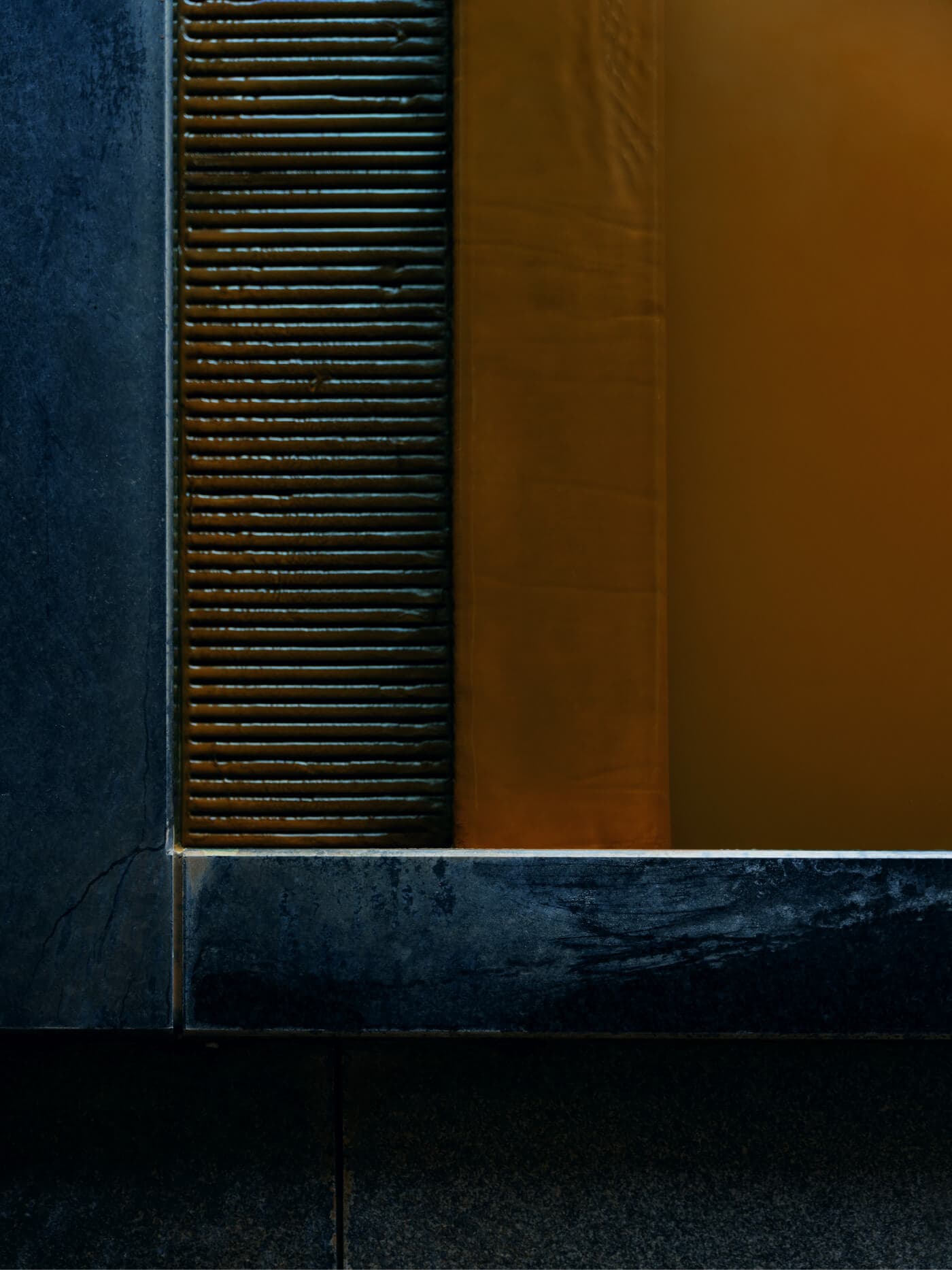
Satonoyu Waraku
Kurokawa
Prices shown are approximate starting rates per person per night. We may earn a commission on bookings.

Picture this: you sink into a hinoki cypress tub at 6 a.m., mountain mist rising off the water, the only sound a distant river — and then a toddler cannonballs into the communal rotenburo two meters away. It ruins the spell in about three seconds flat. The fix is simple in theory: book an adults-only ryokan. In practice, "adults-only" on OTA filter pages covers four completely different things, and the platforms never tell you which one applies. I stayed in six of the properties in this guide and verified the others through official Japanese-language sources and OTA policy texts — because finding that out after you've paid is not a strategy. This guide covers 10 verified adults-only ryokans across Kyoto, Arima Onsen, Kusatsu, Kinosaki, Kurokawa, and Hakone. For each property I've confirmed the exact minimum age from official sources, noted access logistics, and flagged anything that might catch you off guard.
Why Japanese ryokans adopt age restrictions
Walk into any traditional ryokan and you immediately understand why sound management matters. The walls are shoji: paper-and-wood screens that let light through beautifully and pass sound almost as freely. A crying child at 11 p.m. is not muffled by drywall — it is essentially in the room with you. Ryokan owners know this better than any guest. The communal onsen adds another layer. Gender-separated bathing follows rules that young children complicate in ways that take unpacking. Ryokans that want predictable, quiet bathing remove the variable entirely. The kaiseki dinner completes the picture: a three- to four-hour multi-course meal served at a shared pace requires a particular kind of silence that an adults-only policy protects. One thing that surprised me when I first researched this: there is no national law in Japan requiring or permitting age-based exclusion policies in private accommodation. The Japan's Private Lodging Business Act and the Ryokan Business Act contain no provisions on guest age. The adults-only policy is purely a product-positioning decision, enforced through house rules. If this is your first time navigating Japanese communal bathing, our full guide to onsen etiquette for foreigners covers the conventions.
The policy spectrum: strict 18+ is not the same as 'no young children'
This is where every other guide fails. When Trip.com or Booking.com stamps a property with an "Adults Only" tag, that tag is self-reported by the property and not independently verified by the platform. More critically, it covers at least four distinct policies. Tier 1 — Strict 18+. The primary booking guest must be 18 or older; children are not permitted for overnight stays. Tier 2 — 13+ (junior high school age and above). Children below junior high school age — typically 12 and under — are not accepted. Families with teenagers rarely book a kaiseki ryokan, so these properties are quiet in practice. Tier 3 — 12+ (elementary school graduation). Children 11 and under are excluded nominally, but some properties within this tier phrase it as "12 and under not accepted" — meaning a 12-year-old is also excluded. If your party includes anyone near this age, confirm directly with the property. Tier 4 — Hedged or source-conflicting. The policy varies across platforms or gives no numeric age. Confirm before booking. OTA tags are submitted by properties and not fact-checked by platforms. The same property can appear as "18+" on one OTA and "adults only" on another with no age number. Always cross-reference with the actual House Rules text.
| Tier | Age minimum | What it means in practice | Who chooses it |
|---|---|---|---|
| Tier 1 | 18+ | Primary guest must be adult; no children at all. Strictest policy. | Couples/solo adults prioritizing maximum quiet |
| Tier 2 | 13+ | Children 12 and under excluded. Junior high school age accepted. | Adult-leaning properties wanting quiet without strict enforcement |
| Tier 3 | 12+ | Children 11 and under excluded nominally — confirm if anyone in your party is near this age. | Properties balancing adult atmosphere with flexibility |
| Tier 4 | Unspecified / Hedged | Policy exists but conflicts across sources. Must confirm before booking. | Properties with evolving or ambiguous policies |
10 verified adults-only ryokans in Japan — grouped by age tier
The 10 properties below are grouped by policy tier rather than region — because the spectrum matters. If strict 18+ is your baseline, start at the top. ### Tier 1 — Strict 18+ (university-age minimum) These three properties have the clearest policies: the primary booking guest must be 18 or older, and children are not permitted overnight. They are the safest choice during peak autumn foliage or cherry blossom season, when family bookings at adjacent ryokans spike.
[Ryokan Mugen](/en/ryokans/mugen) — Kyoto (Nishijin, near Nijo Castle) **Age minimum:** 18+ One thing to say upfront: Ryokan Mugen is the one entry in this guide **without its own hot spring**. It is a traditional machiya-style guesthouse, approximately 160 years old, in Kyoto's historic Nishijin silk-weaving district — quiet, intimate, architecturally beautiful. If your adults-only requirement is specifically tied to onsen soaking, look at the other Tier 1 entries instead. What Mugen offers is different: a child-free environment in one of the city's more contemplative neighborhoods, away from Gion and Arashiyama, with meticulously kept Japanese-style rooms and silence that Nishijin's low-rise streetscape genuinely permits. **Private onsen:** No — en-suite shower rooms only **Price:** From around $139–$249/room/night **English support:** Basic (bookable via English-language OTAs; small property) **Access:** Nijojo-mae Station (Kyoto Municipal Subway Tozai Line), approximately 10–12 min walk **Rooms:** 4–5 rooms — very small; advance booking essential The 18+ policy is the right call for the experience, even without spring water in the pipes. If onsen is non-negotiable, go to Koki or Ekinariya.
Book Ryokan Mugen: Trip.com →
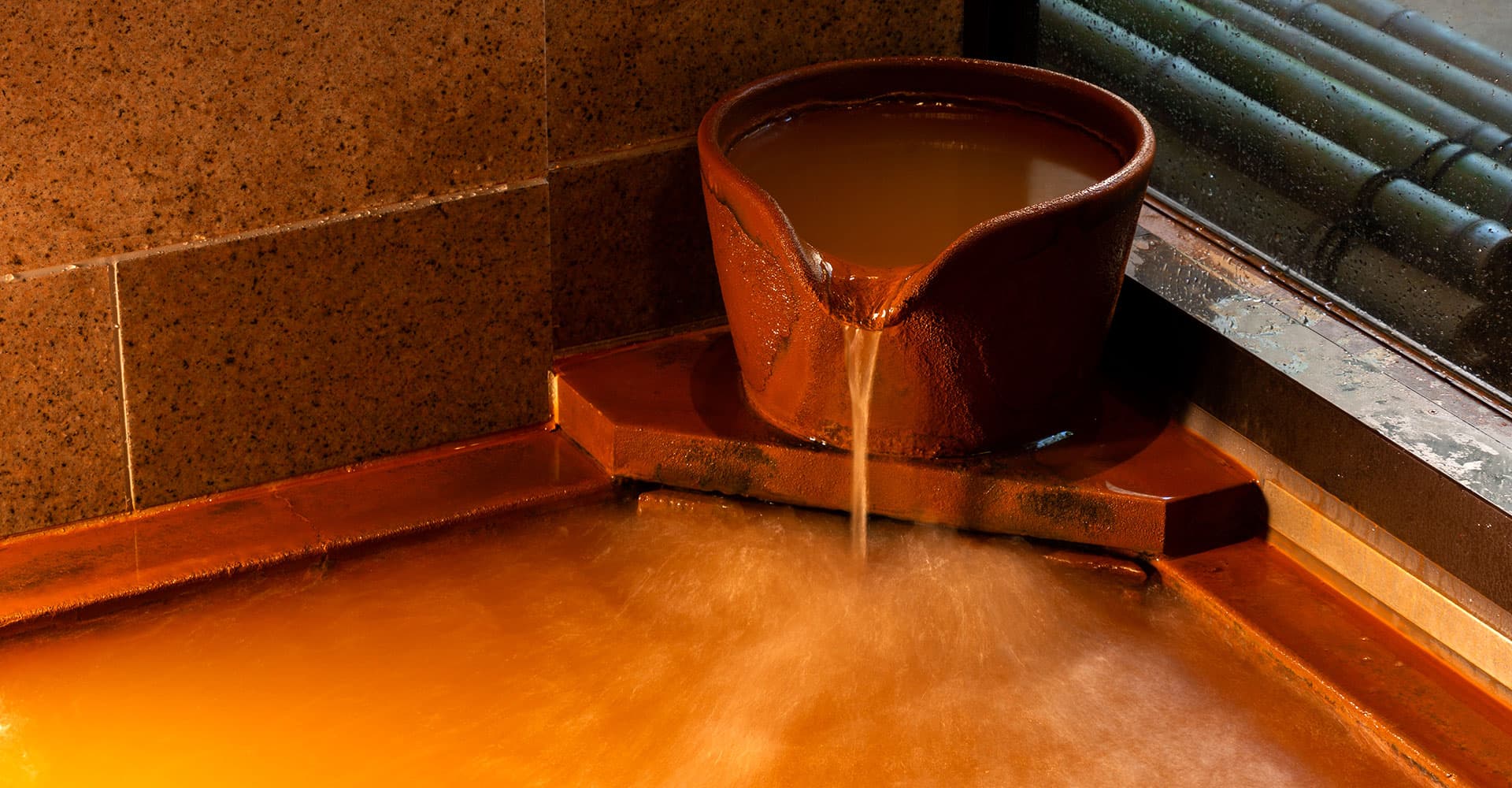
Yuya no Yado Koki (湯屋の宿 康貴) — Arima Onsen **Age minimum:** 18+ (primary guest must be 18+; children not permitted for overnight stays) Arima is one of Japan's oldest onsen towns — hot spring records go back over 1,300 years — and **Yuya no Yado Koki** sits about seven minutes' walk from the terminal station. Fifteen rooms across five room types, four private kashikiri baths available first-come at check-in (45 minutes per session), and access to both Arima's famous gold spring (kinsen, the rust-coloured iron-rich water) and silver spring (ginsen, a radium-and-carbon-dioxide spring). Having both in one property is rarer than the marketing around Arima suggests. **Private onsen:** Yes — 4 private kashikiri baths, first-come at check-in **Price:** From around $160/room/night **English support:** Basic — bookable via Trip.com and Booking.com; official website is Japanese-only **Access:** Arima Onsen Station (Kobe Dentetsu Arima Line), approximately 7 min walk **Rooms:** 15 rooms One honest note: the day-use bathing facility (tachiyori-yu) at Koki is open to day visitors of all ages. The adults-only restriction applies to overnight accommodation only. For a child-free bathing environment during the day, book one of the private kashikiri baths.
Ekinariya Ryokan (益成屋旅館) — Kusatsu Onsen
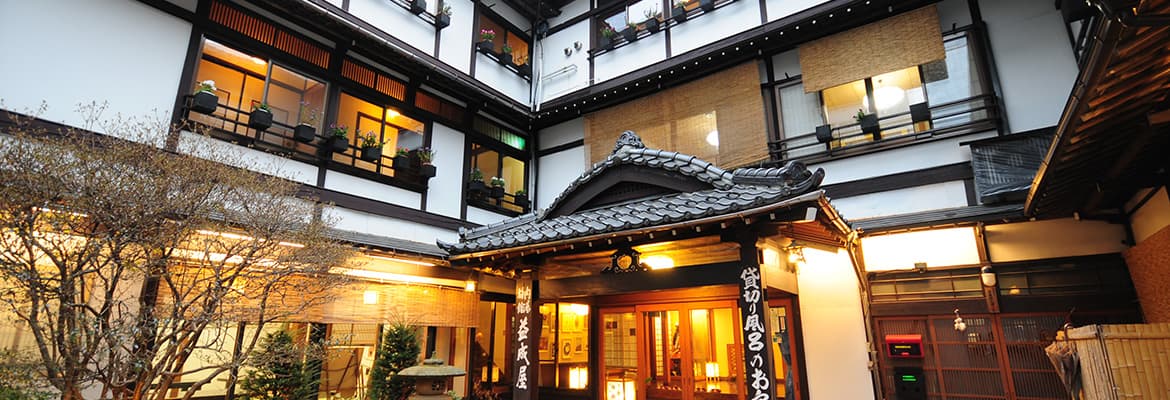
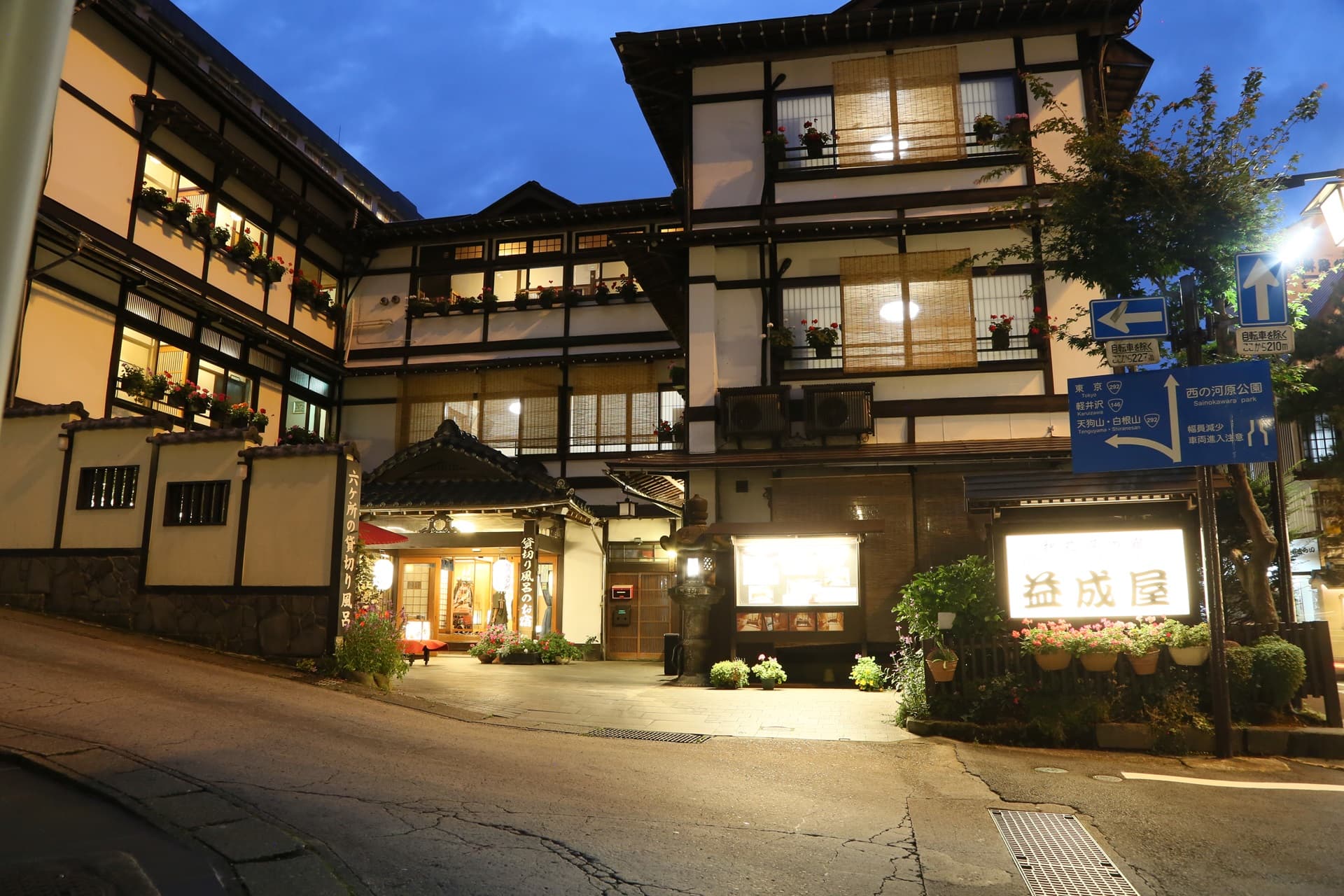
Age minimum: 18+ (primary guest must be 18+; children not permitted) One more upfront note: Ekinariya does not accept solo travelers. Minimum occupancy is two guests per room. Deal-breaker for solo travelers; worth knowing before you fall for the listing. For pairs, this is a strong entry. Six rooms — all Japanese-style — each with its own private hot spring bath running free-flowing Kusatsu water from 2 p.m. to 9:30 a.m. Kusatsu's water is famously acidic (pH around 1.8, among the strongest in Japan), and the spring here comes from the Yubatake source, the outdoor hot water field at the center of town. The property describes itself as "a private and secluded inn for adults" — a description the building earns. What I noticed at a similar property in Kusatsu: that sulfur edge in the air is strongest in the mornings, when Yubatake steam drifts down the main street before the souvenir shops open. A 6 a.m. soak in your own room bath, water cycling fresh from the source, is the specific thing Ekinariya sells. The pressed-flower decor sounds fussy in a description but lands as considered in person — someone made choices here. Private onsen: Yes — every room has its own private spring bath Price: From around $234/room/night English support: Basic — Trip.com and Booking.com in English; official site is Japanese-only Access: Naganohara-Kusatsuguchi Station (JR Agatsuma Line), then approximately 25 min bus to Kusatsu; approximately 5–10 min walk from bus terminal Rooms: 6 rooms, capacity 16 — book very early in foliage season > Minimum stay note: Ekinariya accepts one-night bookings in shoulder season, but two-night minimums apply during peak autumn foliage (late October) and Golden Week. The booking calendar will block unavailable stay lengths before payment. At six rooms with a two-person minimum, the entire property holds 12 adults. On a weeknight in shoulder season this is extraordinarily quiet. In October it books out months ahead.
Tier 2 — 13+ (junior high school age and above) Properties in this tier have drawn the line at elementary school graduation but technically permit a junior high school student to check in. Families with teenagers rarely seek out a kaiseki-and-communal-bath itinerary, so these properties are quiet in practice. Be aware that some OTAs label them identically to 18+ properties — the distinction only appears when you read the policy text.
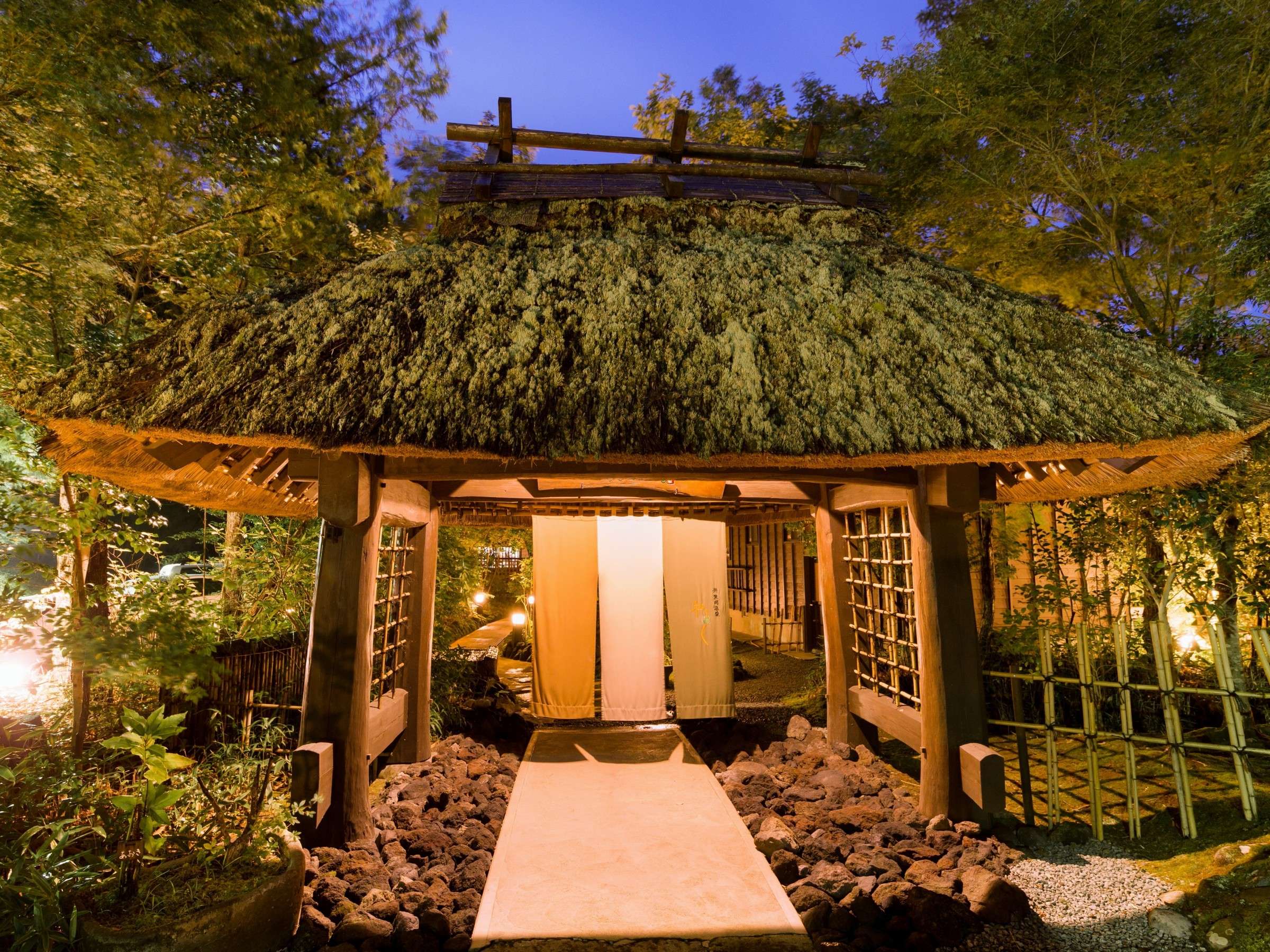
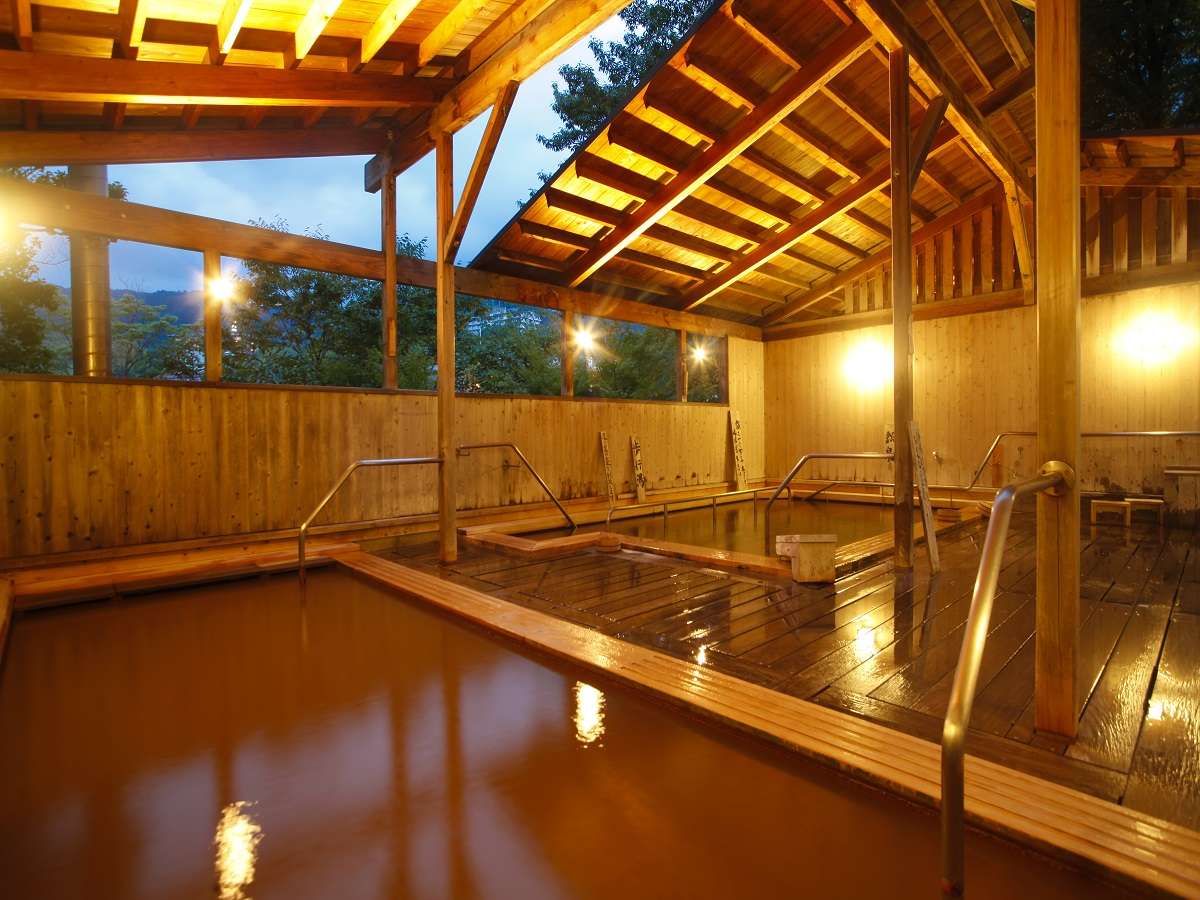
Satonoyu Waraku (里の湯 和らく) — Kurokawa Onsen **Age minimum:** 13+ (guests must be older than 12 years of age) **Satonoyu Waraku** has one of the clearest age disclosures in this guide: Booking.com embeds the restriction directly into the property's display name — "Satonoyu Waraku 13 years or older." Eleven rooms in a valley setting in Kurokawa Onsen, Kumamoto Prefecture — the most geographically remote entry here. Every room has its own private in-room bath with free-flowing hot spring water; there is also a shared open-air rotenburo and a cave-style bath. The valley setting means you hear the river from your room. Not traffic, not other guests — just the Tanohara River running along the gorge below Kurokawa's inn cluster. The shared rotenburo is reached by stepping onto a wooden walkway between the main building and the outdoor bath; on a clear night that walk in yukata, barefoot on cedar boards, is the specific thing people come back for. Starts at around $327/room/night with meals. **Private onsen:** Yes — in-room private bath in all 11 rooms **Price:** From around $327/room/night including meals **English support:** Good — full English website; contact waraku@kurokawaonsen.or.jp **Access:** Many travelers take an expressway bus from Fukuoka Hakata Station (approximately 2.5 hours). Nearest JR station is Higo-Ozu (JR Kyushu Houhi Line); no express rail to Kurokawa itself. **Rooms:** 11 rooms, maximum 22 guests — advance booking critical
For the full range of options in the region: Kurokawa Onsen ryokan guide.
[Koyado En](/en/ryokans/kinosaki-koyado-en) (小宿 縁) — Kinosaki Onsen
Age minimum: 13+ (guests under 12 not accepted; property is marketed as a "Premier Japanese-Style Auberge for Adults") The official phrasing is softer than a hard prohibition — "we ask that you please refrain from bringing children under the age of 12" — but the practical outcome is the same. What makes Koyado En stand out in Kinosaki is its location: three minutes' walk from Kinosaki Onsen Station, the most accessible placement in this guide. Kinosaki has a tradition that no other onsen town quite replicates: guests receive a seven-bath town pass (sotoyu meguri), walking between the town's seven external public baths in yukata and geta sandals. Koyado En guests get this as standard. The baths on your town circuit are public — not adults-only — but your base is. One difference from a typical ryokan: dining here is restaurant-style rather than in-room kaiseki. Worth knowing before booking if that matters to you. Private onsen: Yes — two private baths with unlimited access included in room rate; no reservation required Price: From around $147–$338/room/night English support: Good — full English website; bicycle rental offered Access: Kinosaki Onsen Station (JR San-in Main Line), approximately 3 min walk; Limited Express Kounotori from Osaka, approximately 2 hrs 40 min Rooms: Total count not confirmed from official site — check availability early for autumn and spring seasons Accessibility: No elevator — a luggage lift is available; note this if mobility is a concern
Book Koyado En: Booking.com → · Klook →
Browse all our vetted picks in the Kinosaki Onsen ryokan guide.
[Suehiroya Ryokan](/en/ryokans/kusatsu-suehiroya) (末廣屋旅館) — Kusatsu Onsen **Age minimum:** 13+ (children up to elementary school age not accepted — "小学生までのお子様の受け入れはしておりません") The age policy on **Suehiroya** is confirmed directly from the official Japanese-language site: elementary school children and younger (12 and under) are not accepted. That puts it firmly in Tier 2. Two minutes' walk from Yubatake, Kusatsu's outdoor hot water field — the thermal landmark that gives the town its character and its sulfur smell on still mornings. Eight rooms across Japanese, Western, and mixed configurations, with four private kashikiri baths. Suehiroya is not reliably listed on the major international booking platforms. To check availability and confirm the policy, visit the official site or contact the property directly: [hpdsp.jp/suehiroya/](https://hpdsp.jp/suehiroya/) [price verification outstanding as of 2026-06-27 — check directly for current rates] **Private onsen:** Yes — 4 private kashikiri baths, Kusatsu hot spring water from Yubatake source **Price:** Unverified — check directly via the official site for current rates **English support:** Basic — OTA presence limited; official site is Japanese-only; phone 0279-88-3316 **Access:** Naganohara-Kusatsuguchi Station (JR Agatsuma Line), then 25 min bus to Kusatsu; approximately 2 min walk from Yubatake **Rooms:** 8 rooms (3 Western, 2 Japanese, 3 mixed) See our [Kusatsu Onsen ryokan guide](/en/blog/best-ryokans-kusatsu) for all options.
Tier 3 — 12+ (elementary school graduation) Tier 3 properties nominally exclude children under 12, but this is a genuine gray zone. Research found that at least one property here — Takayamaso Hanano — phrases its policy as "children 12 and under not accepted," which the OTA text effectively reads as 13+. If quiet is the primary goal rather than a specific property, Tiers 1–2 remain the more reliable choice. Couples who book at this tier typically do so because the specific property is a strong fit — remote location, luxury price point, or rare spring access.
SPA TERRACE Shisui (SPA TERRACE 紫翠) — Arima Onsen **Age minimum:** 12+ (children under 12 not permitted — "12歳未満のお子様のご入館をご遠慮いただいております") Quick note on the research: **SPA TERRACE Shisui** was initially flagged as 18+ based on third-party aggregator data. The official Japanese website resolves the conflict — 12+ is the actual policy. The 18+ figure is an OTA platform conflation with the standard requirement that the primary booking guest be an adult. Arima's kinsen (gold spring) is an iron-rich, reddish-brown water famous for heat retention — it stains the towels and your skin faintly amber, which is disconcerting the first time. The ginsen (silver spring) is a cooler radium-and-CO2 spring with subtler mineral character. Most Arima ryokans offer one type. Shisui's private versions of both are reservable after check-in — a genuine distinction in a town where double-spring access is rarer than the brochures imply. Multilingual English and Chinese support and 14 rooms make it more operationally capable than the smaller properties in this guide. **Private onsen:** Yes — private kinsen and ginsen baths reservable on-site; some room types include in-room bath **Price:** Around $327+/room/night [indicative — hotelsinkobe.com aggregator; confirm directly for current rates, 2026-06-27] **English support:** Good — English and Chinese staff confirmed **Access:** Arima Onsen Station (Kobe Dentetsu Arima Line), approximately 10–15 min walk or complimentary shuttle by arrangement **Rooms:** 14 rooms; tattoo-friendly policy confirmed for private baths
See our full Arima Onsen ryokan guide for more options.
Takayamaso Hanano (高山荘 華野) — Arima Onsen
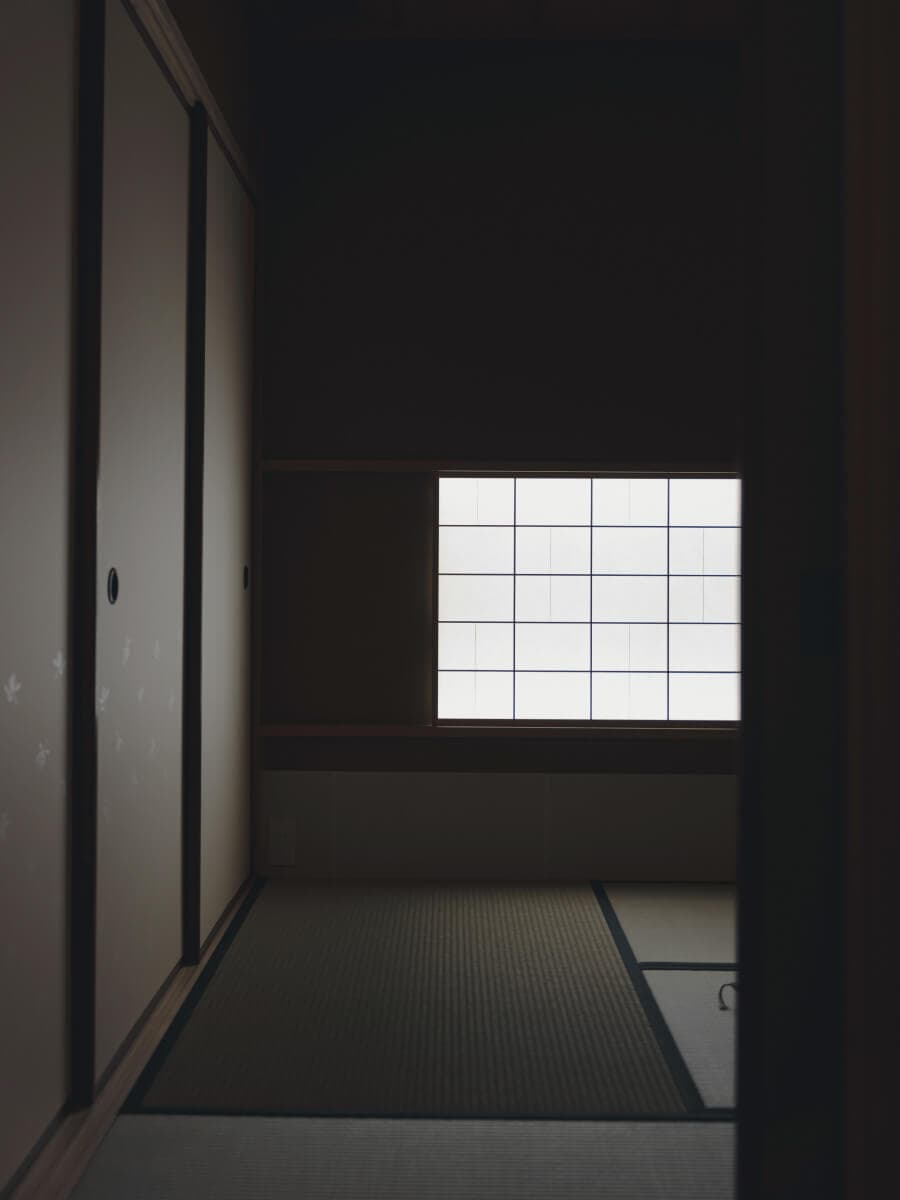
Age minimum: Children 12 and under not accepted (effectively 13+ in practice; the OTA policy text reads "children 12 and under cannot be accommodated") There is a subtle wrinkle worth spelling out: the DB originally classified this property as 12+ (meaning 12-year-olds are accepted), while the OTA wording says "children 12 and under not accepted," which implies the minimum is 13. If you are traveling with a 12-year-old, email the property directly at info@arima-hanano.jp — they have an English website and respond in English. Takayamaso Hanano is marketed on Klook explicitly as "Adult Only" and is one of the few Arima properties offering both kinsen and ginsen baths. What that means is worth describing carefully: the kinsen is amber-brown and nearly opaque, dense with iron and salt minerals, and leaves a faint rust ring on the tub edge — exactly the color of old terracotta. The ginsen looks nothing like it. Clear, almost colorless, perceptibly cooler, carrying carbon dioxide and radon rather than iron — you can feel a faint effervescence against the skin and the mineral smell is quieter. Most Arima ryokans have one or the other; having dedicated private kashikiri baths for both, bookable from the same property in the same afternoon, is the practical advantage here. Private onsen: Yes — private kinsen and ginsen kashikiri baths confirmed Price: From around $168–$350+/room/night English support: Good — English official website at arima-hanano.jp/en/; email bookable in English Access: Arima Onsen Station (Kobe Dentetsu Arima Line), approximately 10–15 min walk; complimentary shuttle available (call ahead) Rooms: Total count not confirmed from official site
Kinnotake Sengokuhara (金乃竹 仙石原) — Hakone **Age minimum:** 12+ ("our accommodations are designed for guests aged 12 and above") If budget is genuinely not a constraint, **Kinnotake Sengokuhara** is in a different category from everything else on this list. Rooms start at approximately ¥99,000 per night for two people (around $660) and climb to ¥268,620 for the presidential suite (approximately $1,791). Every one of the nine suite configurations includes a private open-air rotenburo as standard — not an upgrade, not an add-on. The setting is Hakone's Sengokuhara plateau, surrounded by pampas grass fields that turn silver-gold in mid-October, about 30 minutes by bus from Hakone-Yumoto. The 12+ policy is the most permissive tier in this guide. At this price point the demographic self-selects — but if you want a policy guarantee rather than a probabilistic one, this is Tier 3. **Private onsen:** Yes — private open-air rotenburo in every suite as standard **Price:** From approximately $660/room/night; Presidential suite to approximately $1,791/night **English support:** Excellent — full English website; luxury property staffing **Access:** Shinjuku → Hakone-Yumoto (Odakyu Romancecar, ~90 min) → Hakone Tozan Bus route T (alight Daigatake stop, ~30 min); total from Tokyo approximately 2 hours **Rooms:** 9 suite types — all suites, no standard rooms
Book Kinnotake Sengokuhara: Expedia →
If adults-only is not a hard requirement but romantic atmosphere is, our best ryokans for couples covers a wider selection.
Tier 4 — Hedged: confirm age policy directly before booking One property in this guide does not fit cleanly into a single tier because the sources conflict. I've flagged it with the conflicting information so you can make the confirmation call yourself.
Yuzuya Ryokan (柚子屋旅館) — Kyoto (Gion, Higashiyama) **Age minimum:** Ambiguous across sources — see note below [hedged: Trip.com, Booking.com, and official site consulted, 2026-06-27] Two things to get right. First, the geographic note: **Yuzuya Ryokan is in Gion, not Arashiyama**. The property sits near Yasaka Shrine in Higashiyama Ward, 5–10 minutes' walk from Gion-Shijo Station on the Keihan line. It is 30+ minutes from Arashiyama by transit. From Kyoto Station: JR Nara Line to Tofukuji, then Keihan Main Line to Gion-Shijo. Now the age policy. Trip.com states: the primary booking guest must be at least 18, and children are not permitted. Booking.com states: children 13 years and younger cannot be accommodated. The official Japanese website gives no numeric age. These readings might coexist — but the official site doesn't confirm either way. My recommendation: **contact Yuzuya directly before booking** if anyone in your party is under 18. The property has 7–8 rooms in a 100-year-old machiya, an on-site kaiseki restaurant (Isshinkyo), and a prime Gion location near Kiyomizudera. Worth the direct inquiry rather than assuming either OTA's wording is complete. **Private onsen:** Uncertain — public yuzu-scented baths confirmed; in-room private bath not confirmed from available sources. Ask directly. **Price:** From around $162–$377+/room/night **English support:** Good — listed on English OTAs; kaiseki restaurant Isshinkyo on-site **Access:** Gion-Shijo Station (Keihan Main Line), approximately 5–10 min walk **Rooms:** 7–8 rooms — book far in advance; fills quickly
Book Yuzuya Ryokan: Trip.com →
How to verify the no-children policy before you pay
The most common mistake: booking on the strength of an OTA "Adults Only" tag alone. Here is a reliable five-step verification flow. Step 1: Check the House Rules tab on Trip.com. Look for a specific numeric age, not just the "Adults Only" badge. The badge is self-reported; the policy text is often more specific. Step 2: On Booking.com, go to "Property Policies." If it just says "Adults Only" with no number, that is insufficient — keep going. Step 3: Look at the official property website in Japanese. Search for 宿泊条件 (shukuhaku jōken — accommodation conditions) or 子供 (kodomo — children). Use DeepL to translate — it is reliable enough to catch age numbers. The official site overrides OTA data when they conflict, as the Spa Terrace Shisui case above shows. Step 4: Email the property directly. Use this phrasing: *"Could you confirm the minimum age for guests? We are [X] adults with no children. Is there a minimum age requirement?"* Most ryokans with English OTA listings respond within 48 hours. Step 5: Confirm again 48 hours before arrival. Policies occasionally change between booking and stay; OTA listings do not always update in real time. Useful Japanese terms: 大人のみ (otona nomi) = adults only; 子供不可 (kodomo fuka) = children not permitted. On Jalan or Ikyu, look for these phrases in the 宿泊条件 section — both are the primary domestic platforms where Japanese ryokans publish their most detailed policies. > Note: If booking three or more months in advance, re-confirm 30 days before arrival. Some ryokans update their policy seasonally without revising OTA listings. For a broader walkthrough of booking as a foreign traveler — including deposit policies and cancellation terms — see our ryokan booking tips guide.
Which onsen regions have the most adults-only options?
The 10 properties in this guide span six regions. Geographic concentration matters when planning an itinerary. Arima Onsen (Kobe area) is the densest cluster — three verified properties (Koki, Shisui, Hanano), all within walking distance of each other and under an hour from Osaka. The most efficient destination if you want to compare options in person. Kusatsu Onsen (Gunma) has two entries here (Ekinariya, Suehiroya), approximately three hours from Tokyo. No train station — you bus in from Naganohara-Kusatsuguchi. The extraordinary acidity of the water and the quieter older-guest demographic give Kusatsu its character. Kyoto has two properties (Mugen, Yuzuya) in different neighborhoods — Nishijin and Gion respectively. Neither is on the well-worn corridor between Gion and Arashiyama. Kinosaki Onsen (Hyogo) has one entry (Koyado En). The town's seven-bath yukata-walk format creates a natural alignment with adult guests. Kurokawa Onsen (Kumamoto) has one entry (Satonoyu Waraku). Getting there requires commitment — expressway bus from Fukuoka or a multi-leg transit combination — but the valley setting is the most secluded of any region here. Hakone (Kanagawa) has one entry (Kinnotake Sengokuhara). For Tokyo-based travelers it is the most accessible — around two hours from Shinjuku.
| Region | Properties in this guide | Nearest major city | Approx. travel time |
|---|---|---|---|
| Arima Onsen | 3 (Koki, Shisui, Hanano) | Osaka / Kobe | ~40 min from Osaka |
| Kusatsu Onsen | 2 (Ekinariya, Suehiroya) | Tokyo | ~3 hrs from Tokyo |
| Kyoto | 2 (Mugen, Yuzuya) | Kyoto (within the city) | N/A — in city |
| Kinosaki Onsen | 1 (Koyado En) | Osaka | ~2h 40min from Osaka |
| Kurokawa Onsen | 1 (Satonoyu Waraku) | Fukuoka | ~2.5 hrs by express bus |
| Hakone | 1 (Kinnotake Sengokuhara) | Tokyo | ~2 hrs from Shinjuku |
This is not an exhaustive map of every adults-only ryokan in Japan — only the 10 properties we have been able to verify from primary sources. Many adults-only ryokans also offer private onsen baths — if bath privacy is your main goal rather than the age policy, see our guide to the best private-onsen ryokans in Japan.

Choosing the right adults-only ryokan comes down to one decision made early: how strict does the policy need to be? If total quiet is non-negotiable, stay in Tier 1. If a specific region or property in Tier 2 or 3 is the better fit, the atmosphere will almost certainly hold — the demographic that books a mountain kaiseki inn skews adult. Browse all 293 ryokans on the site and filter by region and price: View all ryokans Read our couples ryokan guide
FAQ
Frequently asked questions
What does 'adults only' actually mean at a Japanese ryokan — 18+, 16+, or 13+?+
There is no single standard. Some ryokans set a strict 18+ threshold (primary guest must be university-age or above, no children at all). Others use 13+ (junior high school age and above), 12+ (elementary school graduation), or simply state "children not accepted" without a numeric age. The OTA "Adults Only" tag does not distinguish between these tiers. Always read the specific policy text in House Rules rather than relying on the tag alone.
How do I confirm the no-children policy before I book?+
Check the House Rules tab on Trip.com and the Property Policies section on Booking.com — look for a specific age number, not just a tag. Cross-reference with the official property website in Japanese (use DeepL for translation). If the age is still unclear, email the property directly using the phrasing: "Could you confirm the minimum age for guests? We are [X] adults with no children." Re-confirm 48 hours before arrival.
Can I book an adults-only ryokan for just one night, or is a two-night minimum required?+
Most adults-only ryokans in Japan accept one-night bookings in shoulder season and on weeknights. Peak periods are the exception: Ekinariya in Kusatsu enforces a two-night minimum during autumn foliage season (late October) and Golden Week. The same applies across most small luxury properties during cherry blossom season (late March to early April). The booking calendar will block unavailable stay lengths automatically.
Are adults-only ryokans more expensive than regular ryokans?+
Not as a rule. The 10 properties in this guide range from around $139/room/night (Ryokan Mugen, Kyoto, 18+) to over $1,700/night (Kinnotake Sengokuhara, Hakone, 12+). The price spread has nothing to do with age policy strictness and everything to do with location and room grade. Koyado En in Kinosaki starts from $147 and has a stronger policy than many non-adults-only ryokans in the same town.
What is the difference between a 'couples ryokan' and an 'adults-only ryokan'?+
A couples ryokan is defined by romantic atmosphere and amenities. An adults-only ryokan is defined by an enforced age policy on the entire property. A couples ryokan can have a family with children in the next room; an adults-only ryokan cannot by policy. The two frequently overlap but are different axes — a property can be adults-only without being specifically romantic, and vice versa. Our best ryokans for couples covers the romantic-atmosphere angle across a wider selection.
Do adults-only ryokans have private onsen, or are the baths still communal?+
Both formats exist. Among the 10 properties here, three — Ekinariya, Satonoyu Waraku, and Kinnotake Sengokuhara — include a private rotenburo in every room as standard. Koki has four private kashikiri baths shared across 15 rooms. Koyado En offers two private baths with unlimited access included. Mugen has no onsen at all. The bath setup and the adults-only policy are independent features.
What is the Japanese term for adults-only so I can search locally?+
大人のみ (otona nomi) means "adults only." 子供不可 (kodomo fuka) means "children not permitted." On Japanese booking sites like Jalan or Ikyu, look for these phrases in the 宿泊条件 (shukuhaku jōken — accommodation conditions) section. Booking.com's Japanese listings sometimes embed the age policy directly in the property's display name — as Satonoyu Waraku does, appearing as "Satonoyu Waraku 13 years or older."
Ready to book?
Book one of these top picks
Compare live availability and prices across all three platforms.


Booking links may earn us a commission at no extra cost to you.


