Most people who visit a Japanese onsen stay one night. They soak once, eat kaiseki, sleep on a futon, and leave before noon. That is a lovely evening — but it is not toji.
Toji (湯治) is Japan's 1,000-year-old tradition of multi-day therapeutic hot spring bathing. A toji ryokan stay is structured around rest, repeated immersion in mineral water, and doing almost nothing else. Where a standard ryokan night is a highlight, this is a discipline. The difference matters, and this guide is built around it.
Every inn recommended here has been verified as bookable online with live pricing. Recommendations are honest — pros and cons, explicit notes on which towns require Japanese-language booking. Our overview of the best onsen towns in Japan gives a wider frame before narrowing to therapeutic bathing towns specifically.
Tip
Health disclaimer: Toji is a centuries-old cultural wellness practice. None of the health indications in this article are medical claims — they reflect Japan's traditional balneotherapy framework and should not be taken as medical advice. If you have a serious health condition, consult your physician before undertaking a healing stay.
What Is Toji? (湯治 — Hot Water, Heal)
The kanji tell the story directly. 湯 (yu) means hot water. 治 (chi) means to heal. Put them together and you get toji — pronounced "toh-jee" — a word describing therapeutic bathing since at least the Nara Period (710–794 CE), when records first document monks and aristocrats making long journeys to specific springs.
The practice spread to commoners during the Edo period (1603–1868), when farmers and fishermen used the agricultural off-season to travel to a tojiba — a town built around therapeutic long stays — spending weeks recovering from seasonal labor. Edo-period commoners submitted a formal petition to their domain lord known as a toji-negai (therapeutic bathing leave request) before departing. The springs were medicine, as understood by a society with scarce physicians and no antibiotics.
The classical stay was organized around a unit called a hitomawari — one cycle. The practice was structured around 7-day cycles; the ideal was roughly 21 days (three hitomawari). By the late Edo period, shorter visits had become accepted, eventually giving rise to petit toji — typically three to four nights, the realistic framework for most foreign travelers.
What separates a tojiba from a sightseeing resort is the entire orientation of the place. Towns like Naruko, Sukayu, and Hijiori Onsen have sparse nightlife, communal bath schedules, self-catering (jisui) accommodation options, and mineral waters formally classified by Japan's Ministry of the Environment as therapeutic-quality springs. Hakone has mountain views and a Shinkansen connection; Naruko has eight distinct spring types and ryokans built around month-long convalescence stays. These are genuinely different categories.
For a detailed breakdown of how Japan officially classifies its onsen waters, see our Japan's onsen water types explained.
 Pin to Pinterest
The 6 Water Types and Their Traditional Therapeutic Indications
Japan's Ministry of the Environment currently recognizes 10 therapeutic spring types (療養泉, ryoyosen), each carrying officially listed general indications (tekiou-shou) per Ministry of Environment spring classifications. These are traditional balneotherapy categories, not clinical evidence of efficacy.
The six types most relevant to therapeutic bathing destinations:
Sulfur springs (io-sen) — milky white or pale blue-green water with that unmistakable scent. Traditionally associated with skin conditions and circulatory disorders. Found at Noboribetsu, Manza, and Sukayu. The color can stain towels and swimwear.
Sodium chloride springs (salt springs, enkabutsu-sen) — nicknamed nure-yu ("moistening bath") because the salt film keeps warmth in the body long after you step out. Traditionally indicated for cold sensitivity and chronic skin conditions. Shima Onsen's 1954 government designation is partly built on this type.
Hydrogen carbonate springs (bicarbonate springs, tansansuiso-en-sen) — the so-called bijin-no-yu ("beauty water"), leaving a characteristically silky feel on the skin. Traditionally associated with skin care and minor wounds. One of Naruko's eight spring types.
Iron springs (gantetsu-sen) — the water turns rust-brown as iron oxidizes on contact with air. Traditionally associated with circulatory support and iron deficiency when consumed as a drinking cure.
Strongly acidic springs (sansei-sen) — pH below 3, with strong antiseptic properties. Traditionally used for atopic dermatitis and skin conditions. Kusatsu (pH ~2), Zao (pH ~1.25–1.6), Sukayu, and Tamagawa all fall here. Important note: prolonged exposure can irritate sensitive skin and open wounds. A peer-reviewed study at Narugo Spa found localized dermatitis symptoms in 9.5% of bathers per J-Stage balneal reaction study.
Radioactive springs (radon springs, hoshanotsu-sen) — trace radon gas in the water. Traditionally associated with gout and rheumatoid arthritis. Tamagawa Onsen is the most prominent example. The hormesis hypothesis (that low-dose radiation may benefit health) is scientifically contested, and high-dose radon is a documented carcinogen per PubMed PMC7796069. Do not treat radioactive springs as general wellness experiences.
See the full guide to Japan's onsen water types for all ten types with mineral data.
Toji Town Comparison at a Glance
Not every onsen town is a tojiba. The towns below have a living therapeutic-bathing culture. The first six have verified bookable inventory for foreign travelers; the remaining towns are for the dedicated purist who books in Japanese.
| Town | Prefecture | Signature Water | Toji Depth | From (USD) | English-Friendly | Bookable |
|---|---|---|---|---|---|---|
| Naruko Onsen | Miyagi | 8 of Japan's 10 spring types (sulfur, chloride, carbonate, iron + more) | ANCHOR — living toji heritage, maximum mineral variety | $75 (Kanshichiyu) | Yes (Ohnuma English site) | Yes |
| Kusatsu Onsen | Gunma | Strongly acidic sulfur (pH ~2) | STRONG — Japan's #1-rated onsen town; living jikanyu time-bath ritual at Chiyo-no-yu | $97 (Gensen Ichinoyu) | Yes (multiple inns) | Yes |
| Zao Onsen | Yamagata | Strongly acidic sulfur (pH ~1.25–1.6) | STRONG — ~1,900-year therapeutic tradition by traditional account, one of Japan's most potent cure waters | $172 (Tsuruya) | Yes (Tsuruya) | Yes |
| Shima Onsen | Gunma | Mild chloride / sulfate | STRONG — one of Japan's first three government-certified National Health Resort Hot Springs (1954) | $228 (Kashiwaya) | Yes (multiple inns) | Yes |
| Noboribetsu | Hokkaido | 9 spring types from single source (sulfur, salt, iron, aluminum + more) | STRONG — widest single-town mineral menu in Hokkaido; Ainu therapeutic heritage | $120 (Takimotokan) | Yes (multiple inns) | Yes |
| Akiu Onsen | Miyagi | Mild sulfate / sodium chloride | MODERATE — one of Japan's Three Imperial Hot Springs; 30 min from Sendai | $220 (Hotel Sakan) | Yes (Hotel Sakan) | Yes |
| Ginzan Onsen | Yamagata | Sulfur-chloride | LIGHT — atmospheric Taisho-era town; gentle healing stay rather than hardcore tojiba | $250 (Notoya) | No (Trip.com EN listing only) | Limited |
| Sukayu Onsen | Aomori | Strongly acidic sulfur | DEEP PURIST — iconic sennin-buro; Japanese phone booking only | Not quoted | No | Prose only / JP |
| Tamagawa Onsen | Akita | Extremely acidic (pH ~1.2) + radioactive hokutolite | DEEP PURIST — therapeutic pilgrimage only; medical consultation required before visit | Not quoted | No | Prose only / JP |
| Osawa Onsen | Iwate | Bicarbonate / sodium chloride | DEEP PURIST — last surviving jisui inn; primarily Japanese on-site communication | Not quoted | Limited | Prose only / JP |
| Hijiori Onsen | Yamagata | Volcanic sulfur-chloride | DEEP PURIST — volcanic caldera; yukata street culture; Japanese booking only | Not quoted | No | Prose only / JP |
| Manza Onsen | Gunma | Strong milky sulfur (~1,800m altitude) | PURIST-ADJACENT — highest major onsen in Japan; limited English booking | Not quoted | Limited | Prose only / JP |
Naruko Onsen, Miyagi — The Anchor Toji Destination
Naruko is the strongest argument for therapeutic bathing as a physical practice rather than a philosophical one. Across the valley, researchers have identified 8 of Japan's 10 officially recognized spring types — the widest mineral variety concentrated in a single small area anywhere in the country per Tohoku Tourism Board. Sulfur, hydrogen carbonate, iron, chloride — rotate between chemically distinct waters within a 20-minute walk of each other. That mineral rotation is what serious therapeutic bathing originally meant.
Edo-period farming communities from across Tohoku traveled here during winter off-seasons to soak away the labor of the harvest. The inns grew up around the springs specifically, oriented toward long convalescent stays — not the reverse.
Ryokan Ohnuma — The Flagship Pick
Ryokan Ohnuma is the inn we would direct a foreign traveler to first. Over 120 years old per the inn's official toji page, it has eight hot spring baths — five available for private use without reservation — fed by three different spring types. The inn frames its philosophy explicitly around Slow Onsen: structured rest between baths, meals timed around your bathing schedule. There is an English-language website and international phone support, which matters in a valley where most inns communicate only in Japanese.
Pros: Widest spring-type variety in one property; genuine therapeutic framing; English booking. Con: Tattoo policy limits shared baths — private onsen only for tattooed guests (the five private baths handle most needs). From $140/night.
 Pin to Pinterest
Yusaya Ryokan sits at the top of the Naruko ratings (9.6) with a strong sulfur spring and private onsen. At $259/night, it suits travelers who want premium comfort alongside serious water chemistry. Con: no English booking interface — use Trip.com or Booking.com directly.
Ryokan Kanshichiyu earns its place for two reasons: it is one of the most affordable proper entries at $75/night, and it is explicitly tattoo-allowed in shared baths — genuinely rare at a rural therapeutic inn. Rating of 7.6 reflects simple facilities rather than poor hospitality. The closest available approximation of the historical experience.
Ryokan Sugawara fills the mid-range gap at $120/night, rated 9.0, with private onsen access. A practical second choice if Ohnuma is fully booked.
Getting there: From Sendai, take the Tohoku Shinkansen to Furukawa (~15 minutes), then the JR Rikuu East Line to Naruko-Onsen Station (~40 minutes). One critical detail: trains on the Rikuu East Line run only every two to three hours — check the JR East timetable before departing.
Minimum for a meaningful stay: Three nights to rotate through different water types without hurrying. See our full Naruko ryokan guide for the complete inventory.
Kusatsu Onsen, Gunma — Japan's Top-Rated Town with Living Toji Ritual
Kusatsu has been voted Japan's #1 onsen town by Jalan for three consecutive years through 2026, across a survey of over 12,500 people and 333 competing destinations per Tokyo Weekender. That reputation rests on the water: sulfur at around pH 2 — strongly acidic — with a concentration that turns the famous Yubatake source field a pale turquoise-green.
More than the water itself, Kusatsu retains two living communal-bathing traditions. The first is jikanyu at Chiyo-no-yu: supervised group bathing at set times (9:30am, 11am, 1pm, 3pm), with intense heat and mandatory rest afterward — the original therapeutic rhythm formalized for a public bath. The second is yumomi at Netsu-no-yu: performers stir the scalding source water with 180cm cedar paddles while singing traditional songs, a practical cooling technique because the spring water arrives too hot to bathe in directly. Six yumomi sessions run daily at around ¥600 per adult.
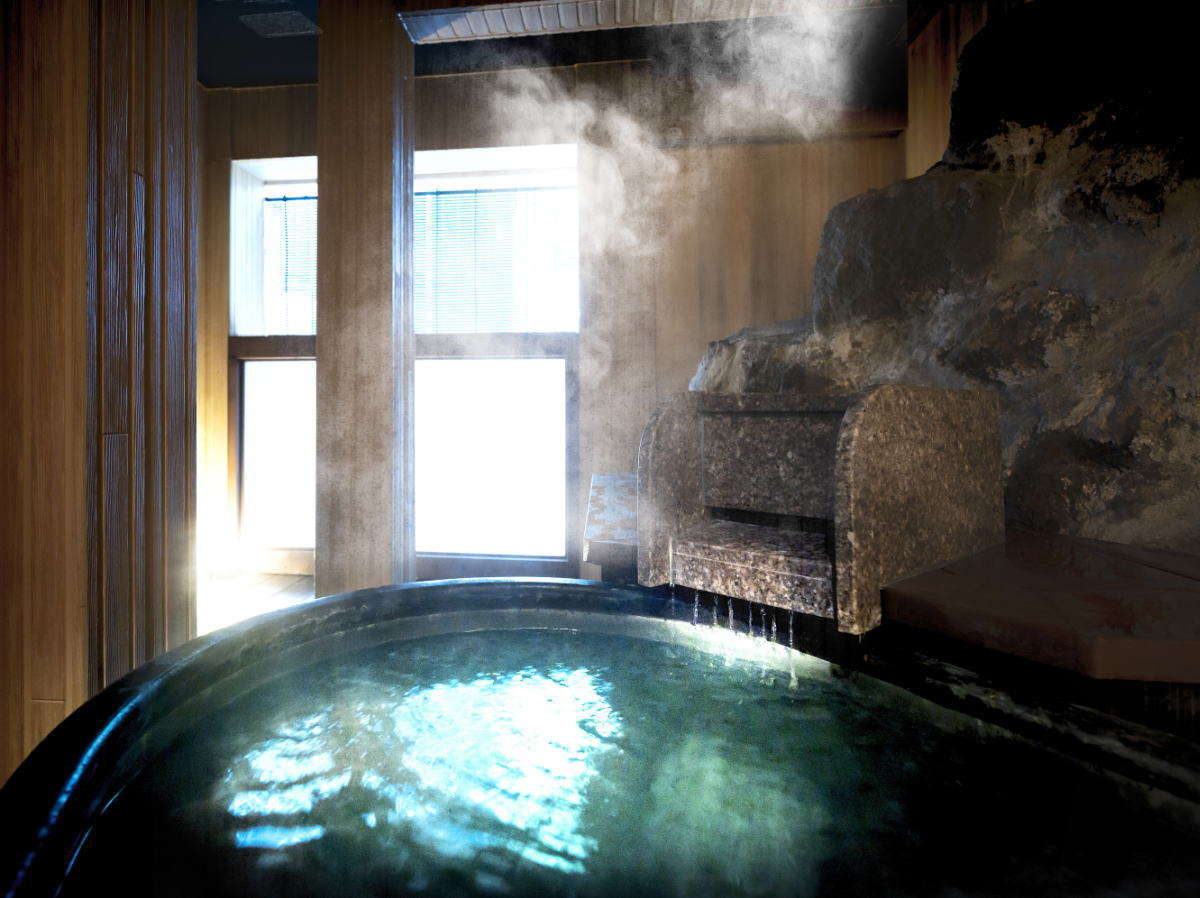
Kusatsu Onsen Gensen Ichinoyu draws its water directly from the source (gensen = origin spring), is English-friendly, has private onsen access, and starts at $97/night with a 9.6 rating. The best value English-accessible cure-stay base in town.
Ryokan Tamura at $100/night (rating 9.4, English-friendly, private onsen) is the practical first pick for travelers who want easy communication and solid water without luxury-tier pricing.
Naraya ($350/night, rating 9.0, English-friendly) is the upper-tier pick for historic atmosphere alongside the water. Kusatsu Hotel 1913 ($130/night, rating 8.9, English-friendly) occupies a century-old wooden building — better atmospheric texture than modern inns at this price point.
Tattoo note: most Kusatsu inns above operate private onsen that sidestep the shared-bath restriction, but policies vary — confirm before booking.
Getting there: From Tokyo Ueno Station, the Limited Express Kusatsu takes approximately 2.5 hours to Naganohara-Kusatsuguchi (~¥5,480 one-way), then a 30-minute bus to Kusatsu town. The bus is covered by the Japan Rail Pass and JR East Pass.
 Pin to Pinterest
Zao Onsen, Yamagata — Extreme Acidity, ~1,900 Years of Skin-Toji Tradition (by Traditional Account)
Zao's spring water carries a pH of approximately 1.25–1.6, making it among the most acidic open-to-foreigners therapeutic springs in Japan per Japan Ski Guide. The traditional attribution dates therapeutic use here to around 110 AD — a traditional attribution rather than modern archival verification. The water is traditionally indicated for skin conditions and circulation, within Japan's official balneotherapy framework.
Wakamatsuya (rating 9.6, $200/night) is the definitive Zao stay: private onsen in strongly acidic sulfur water, highest-rated property in town. Con: no English booking interface — use Trip.com or Booking.com. Worth the extra step.
Gokan no Yu Tsuruya (rating 9.2, $172/night) is the English-friendly alternative with private onsen access. For non-Japanese speakers, the sensible starting point.
One warning specific to Zao: the intensity of this water means two baths per day is a reasonable maximum for any extended stay. Rest periods are not optional at this pH — they are physiologically necessary. From Yamagata Shinkansen Station, a bus reaches Zao Onsen in about 50 minutes. Full Zao ryokan guide for the complete list.
Shima Onsen, Gunma — Government-Certified Therapeutic Resort
In 1954, Japan's Ministry of Health and Welfare formally designated Shima Onsen as one of Japan's first three National Health Resort Hot Springs (kokumin hoyo onsen) — alongside Sukayu Onsen in Aomori and Nikko Yumoto in Tochigi per Samurai Sauna Magazine citing Ministry records. This is the closest thing Japan has to a government certification of a therapeutic-stay destination.
The water is mild chloride and sulfate — gentler than Zao or Kusatsu, suited to long, repeated soaking. If strongly acidic springs feel harsh after two days, Shima feels like permission to stay a week. A legitimately good choice for first-timers and those with sensitive skin.
Sekizenkan (rating 9.5, $344/night) is the showpiece: established in 1691, with a Honkan the inn says is believed to be the oldest surviving wooden onsen-inn building in Japan, and one of the inns often compared to the bathhouse in Miyazaki's Spirited Away. English-friendly, private onsen access, tattoo policy cover-up. The price reflects a genuine heritage building — every corridor shows it.
Shima Onsen Kashiwaya Ryokan (rating 9.4, $228/night, English-friendly) is explicitly tattoo-allowed in shared baths — rare at any Japanese inn, particularly rare at a rural therapeutic destination. For tattooed travelers planning a multi-night stay, the clear pick. Our tattoo-friendly ryokans in Japan guide has wider policy context.
Shojukan (rating 9.0, $232/night, English-friendly) has a riverside setting and an unusual feature: the inn serves the spring water as a beverage — a drinking-cure tradition (iryousui) that extends the logic of therapeutic bathing beyond the bath itself.
Getting there: About 3 hours from Tokyo via Shinkansen to the Nakanojo area, then a local bus. Remote enough to feel like a genuine commitment; accessible enough that it does not require a full Tohoku expedition. Shima Onsen ryokan guide for the full inventory.
 Pin to Pinterest
Noboribetsu, Hokkaido — Nine Spring Types Under One Roof
Noboribetsu is the Hokkaido equivalent of Naruko: the widest mineral variety in a single town. What makes it distinctive is the geology — all nine spring types flow from a single volcanic source, the Hell Valley (Jigokudani), producing around 10,000 litres of scalding water per day and distributing it across town as chemically distinct streams per Jeepe Hokkaido Guide. The Ainu people used these springs therapeutically long before the Edo period formalized the practice. That history deserves acknowledgment: the therapeutic use of this water is not an Edo-era invention.
Dai-ichi Takimotokan (rating 9.4, $120/night) is the practical sampler: 35 baths across the nine spring types under one roof, English-friendly, tattoo cover-up policy. Rotating through meaningfully different water chemistry within a single property — a compressed hitomawari — is genuinely achievable here in a way that is unusual outside Naruko. Con: scale can feel more resort than retreat.
Takinoya (rating 9.6, $350/night) is the quieter luxury alternative: private onsen, English-friendly, top-rated in town. The stronger choice if contemplative rest matters more than variety.
From Sapporo, JR reaches Noboribetsu in about an hour. Noboribetsu ryokan guide · best ryokans in Hokkaido.
Two More Worth Knowing: Akiu (Miyagi) and Ginzan (Yamagata)
Akiu Onsen sits 30 minutes from Sendai and carries one of Japan's older therapeutic designations: it is recognized as one of the Three Imperial Hot Springs (Nihon Sandai Goyu, 三大御湯), a status traditionally traced to Emperor Kinmei (reigned 539–571 CE), who reportedly bathed here and named it Natori-no-Miyu per Discover Sendai. The companion springs in this designation are Bessho Onsen and Nozawa Onsen, both in Nagano. The water itself is mild sulfate and sodium chloride: gentle, appropriate as a two-night addition to a Tohoku loop.
Hotel Sakan (rating 8.6, $220/night) is the sole verified English-friendly bookable inn at Akiu with private onsen. Con: the inn's therapeutic credentials rest more on the spring's history than the water's intensity.
Akiu ryokan guide for more.
Ginzan Onsen in Yamagata is genuinely atmospheric but sits at the lighter end of the therapeutic spectrum — sulfur-chloride water that is solid, not exceptional by serious therapeutic standards. Position it as a quiet, beautiful multi-night stay rather than a mineral-cure destination.
Notoya Ryokan (rating 9.6, $250/night) is a registered cultural property (torokyu-ukei-bunkazai) with private onsen access. The inn operates entirely in Japanese, but Trip.com lists Notoya in English — that link works for reservations.
Ginzan ryokan guide · Yamagata ryokan guide if you are building a Tohoku loop.
For the Purist: Five Towns Where the Tradition Is Most Alive (Japanese Booking Required)
These five towns are where therapeutic bathing culture is most authentic — and least accessible to travelers who cannot book in Japanese. Described for cultural completeness, not as booking recommendations.
Sukayu Onsen, Aomori — sukayu onsen therapeutic stay
Sukayu opened in approximately 1684, giving it around 340 years of continuous operation at roughly 925 meters elevation in the Hakkoda Mountains per Voyapon. One of Japan's first three government-certified National Health Resort Hot Springs, designated 1954 alongside Shima and Nikko Yumoto.
The centrepiece is the sennin-buro — the "1,000-person bath" — a 248 square metre hiba-cypress bathhouse divided into four distinct sections, with mixed-gender bathing and women-only hours (8–9am and 8–9pm). The water is a strongly acidic milky-white sulfur spring. Sukayu offers nurse consultation services for formal cure programs. Booking is direct telephone in Japanese; viable as a day trip from Aomori City for those who cannot navigate a Japanese phone reservation. A regional overview lives in our Tohoku onsen guide.
Tamagawa Onsen, Akita — the most cautionary entry
Tamagawa requires the most careful treatment of any destination in this article.
The spring sits at pH 1.2 — Japan's most acidic hot spring, one of the most acidic in the world per Semboku City official page. It also contains hokutolite, a naturally radioactive mineral (barium and lead sulfate with traces of radium) found in only two places on earth: Tamagawa and Beitou in Taiwan. Radiation levels at the site are approximately 15–20 mSv per year — roughly 10 times standard background radiation per documented data cited by Wikipedia.
For generations, Tamagawa has been a pilgrimage site for people with cancer and serious chronic illness. That pilgrimage is not because the water has been proven to cure anything — it is because it is traditionally believed to offer relief, a belief deeply held and culturally significant. Japan Today has documented cancer patients traveling here as "one final hope" per Japan Today — a framing that captures the human reality without functioning as a medical endorsement.
The hormesis hypothesis (that low-dose radiation may stimulate beneficial biological effects) is actively debated. What is not contested: high-dose radon is a documented carcinogen per PubMed PMC7796069. This is not a casual wellness experience. Do not visit without medical consultation if you have any existing health condition. Booking requires direct Japanese-language contact.
Osawa Onsen Jisuibu, Iwate (Hanamaki)
The most historically intact surviving example of jisui in Japan. Osawa Onsen Jisuibu occupies a Taisho-era wooden building (pre-1925) with communal cooking facilities and shared bathrooms. Vendors arrive daily with fish, tofu, and seasonal produce per official Iwate Tourism page. Japan's beloved poet Kenji Miyazawa was a frequent long-stay guest here in his childhood. This is how the tradition worked before kaiseki became standard.
The property is listed on Trip.com in English; on-site communication is primarily in Japanese. No CTA here — it falls outside our verified bookable set.
Hijiori Onsen, Yamagata — hijiori onsen toji ryokan
Hijiori sits in a volcanic caldera with around 20 small traditional ryokans clustered along a quiet street. The defining culture is yukata street-strolling: guests wrap in the inn's yukata and wander between public baths and the small shops that exist entirely to serve long-stay guests. The water is a volcanic sulfur-chloride spring. Almost the entire guest population is Japanese, which tells you something about the authenticity and the booking complexity. Wider Yamagata context in our Yamagata ryokan guide.
Manza Onsen, Gunma
At approximately 1,800 meters elevation, Manza is the highest major onsen area in Japan. The milky-sulfur water is strong and traditionally indicated for respiratory and skin conditions. English booking options are very limited. If you are building a Gunma loop, Manza adds a high-altitude sulfur note to complement Kusatsu's intensity and Shima's gentleness.
 Pin to Pinterest
How to Do a Realistic Toji as a Foreign Traveler: The 3-Night Petit-Toji Plan
Three nights is the modern petit-toji — not the classical 21 days, but enough to feel the cumulative effect and genuinely step off the sightseeing treadmill. For broader duration thinking, see how many nights at a ryokan.
Day 1 — Arrive and decompress. Check in by 3pm. Take one bath in the evening, no longer than 30 minutes. Eat dinner. Go to bed early. Day one is not about bathing volume — it is about letting your body understand that you have stopped moving.
Day 2 — The core day. Morning bath before breakfast (20–30 minutes). Rest for two to three hours — read, nap, sit in the common area. Afternoon bath (20 minutes). Rest again. Evening bath after dinner (20 minutes), then sleep. Three baths maximum.
Here is where we want to introduce a concept almost entirely absent from English-language writing about onsen: nuki (also called yuatari, 湯あたり). Nuki is hot spring sickness from overbathing. Symptoms include fatigue, appetite loss, nausea, headache, and in stronger cases dizziness and an inability to walk steadily. A peer-reviewed study at Narugo Spa found that over 90% of bathers who bathed six or more times per day experienced a balneal reaction per J-Stage. More is not better. If you feel heavy or dizzy after a bath, skip the next one entirely.
At strongly acidic springs — Zao, Kusatsu, Tamagawa — nuki arrives faster. Beginners should cap at two baths per day at these destinations. Shima and Noboribetsu allow slightly more latitude. Our onsen etiquette guide for foreigners covers bathing protocol in full.
Day 3 — Wind down. One gentle morning bath. Light breakfast. Check out without rushing to the next destination. Resist the instinct to pivot immediately to a train and the next city.
Tip
On timing: Long-stay guests traditionally prefer weekdays. Many healing-stay inns discount extended visits — discounts of 10–20% off five or more nights are common at traditional tojiba. Enquire directly when booking, as rates are not always published online.
Jisui vs. Served Meals: The Cost and Culture of Toji Dining
No English-language competitor covers this. It is central to understanding what the practice actually is.
Jisui (自炊) means self-cook. Historically, guests stayed for weeks and managed costs by cooking their own food in communal inn kitchens. Osawa Onsen Jisuibu is the clearest surviving example: vendors arrive daily with fish, tofu, and seasonal vegetables; guests share kitchen facilities and prepare meals between baths. This was the norm — not an exception — when the practice meant three weeks of convalescence.
The cost gap between jisui and meal-included stays is significant. A jisui room typically runs ¥3,000–¥6,000 per night for accommodation only. Standard ippaku-nishoku (one night, two meals included) plans at mid-range inns run ¥10,000–¥20,000 per night. Luxury inns — Naraya in Kusatsu, Takinoya in Noboribetsu — reach ¥25,000–¥50,000. For a three-night petit-toji at a mid-range inn with two meals included, budget roughly ¥30,000–¥60,000 total. For Osawa Jisuibu specifically, enquire directly — no single rate is published and self-catering costs vary.
Discounts of 10–20% off five or more nights are common at traditional tojiba — historically because the inn wanted guests to stay, not sprint through on a highlight reel. Ask explicitly when you book. See ryokan meal plan options explained for a systematic breakdown.
What to Pack and What to Know Before You Go
Packing for a multi-night toji stay
The inn will issue a yukata for daytime use between baths — pack loose layers as backup for early mornings. Prescription medications are essential; rural pharmacies at these destinations are limited and primarily Japanese-language.
Skincare matters more than most people expect: strongly acidic and sulfur waters are genuinely drying over multiple days. Bring a gentle fragrance-free moisturiser and avoid harsh actives — retinoids, exfoliants — during the stay. At Zao or Sukayu especially, keep topical product use minimal. Pack entertainment for the downtime: a book, a journal, a puzzle. The absence of scheduled activity is the point. See the full ryokan packing list.
Tattoos, booking, and getting there by train
Rural therapeutic inns are generally more lenient about tattoos than city resort onsen — the clientele skews toward long-stay guests rather than day-tripping groups. Most verified inns above offer private onsen options that sidestep the shared-bath restriction. Ryokan Kanshichiyu (Naruko) and Kashiwaya Ryokan (Shima) are explicitly tattoo-allowed in shared baths. Our tattoo-friendly ryokans in Japan guide has full per-property policy detail. For solo travelers, our solo traveler ryokan guide has relevant logistics.
Train access by destination:
- Naruko: Tohoku Shinkansen to Furukawa (~15 min) + JR Rikuu East Line (~40 min). Trains run every 2–3 hours — check the timetable.
- Kusatsu: Limited Express Kusatsu from Ueno (~2.5 hr, ~¥5,480) + 30-min bus to town (JR Pass / JR East Pass covers the bus).
- Shima: Shinkansen to Nakanojo area + local bus (~3 hr total from Tokyo).
- Noboribetsu: JR from Sapporo (~1 hr).
- Zao: Bus from Yamagata Shinkansen Station (~50 min).
A Final Word
 Pin to Pinterest
The cultural weight behind this practice runs deep — the Edo-period farmer writing a formal petition to soak for three weeks, the Taisho-era poet making childhood visits to a communal kitchen in Iwate, the generations who traveled to Tamagawa as an act of last hope. A multi-night stay carries a depth that sightseeing cannot replicate. Three nights is enough to feel it.
FAQ
Frequently asked questions
What is toji in Japan?+
Toji (湯治) is Japan's tradition of multi-day therapeutic hot spring bathing — distinct from a recreational one-night onsen stay. It developed during the Edo period, when farmers and fishermen spent seasonal off-time at designated tojiba (therapeutic bathing towns) to recover from physical labor. These towns are oriented around rest and healing, not sightseeing.
What does toji mean in Japanese?+
The kanji break down into 湯 (yu = hot water or hot spring) and 治 (chi = to heal or cure). Pronounced "toh-jee." The combination literally translates as "hot-spring healing" or "hot-water cure."
How long should a toji stay be?+
Historically, one hitomawari (one cycle) was seven days; the classical ideal was 21 days (three cycles). Today, three to four nights — the petit-toji — is the accepted modern version. Even two nights is meaningfully different from one if rest is prioritized over activity. Our how many nights at a ryokan guide helps frame the decision.
What is the difference between toji and a regular onsen visit?+
Duration (multi-day versus one night), intention (therapeutic rest versus resort entertainment), bathing rhythm (two to three scheduled baths per day with mandatory rest versus one casual soak), and environment (tojiba are quiet, sparse, rest-oriented, versus resort towns with restaurants, gift shops, and day-trip crowds).
Can foreigners do toji in Japan?+
Yes, with planning. Naruko, Kusatsu, Shima, and Noboribetsu all have English-friendly inns with online booking. The purist towns — Sukayu, Tamagawa, Osawa, Hijiori — require Japanese-language booking or direct telephone contact, though some have Trip.com listings. Bathing protocol at all locations is in our onsen etiquette for foreigners guide.
What is a jisui ryokan?+
Jisui (自炊) means self-catering — a room-only stay where guests cook their own meals in a shared kitchen. The historical norm for long-stay therapeutic bathing; dramatically cheaper than kaiseki-included stays. Accommodation typically runs ¥3,000–¥6,000 per night. Osawa Onsen Jisuibu in Hanamaki, Iwate, is the best-preserved surviving example.
How many times a day should you bathe during toji?+
Two to three baths maximum, with genuine rest between each. At strongly acidic springs — Zao, Kusatsu, Tamagawa — limit to two baths per day. Nuki (or yuatari, 湯あたり) is hot spring sickness from overbathing: fatigue, nausea, dizziness. A peer-reviewed study at Narugo Spa found over 90% of those bathing six or more times daily experienced a balneal reaction per J-Stage. Rest matters as much as bathing itself.
Is toji therapy scientifically proven?+
Honestly: partially and with significant caveats. Japan's Ministry of the Environment formally classifies spring types with traditional therapeutic indications — balneotherapy (onsen iryou) is a recognized clinical practice in Japan with licensed practitioners. Some documented relaxation and cardiovascular benefits exist in the literature. Large-scale RCTs by Western standards are sparse. Frame it clearly: the practice is complementary rest, not a medical cure. For radioactive springs like Tamagawa, the controversy is more acute — high-dose radon is a documented carcinogen and the hormesis debate is unresolved. See Japan onsen by region for a regional overview without the health-claim context.
Ready to book?
Book one of these top picks
Compare live availability and prices across booking sites.

Ryokan Ohnuma
旅館 大沼
Naruko·Mid-Range
from US$140 · per person · per nightfrom ≈ US$280 total for 2 guests



Kusatsu Onsen Gensen Ichinoyu
源泉一乃湯
Kusatsu·Budget
from US$97 · per person · per nightfrom ≈ US$194 total for 2 guests
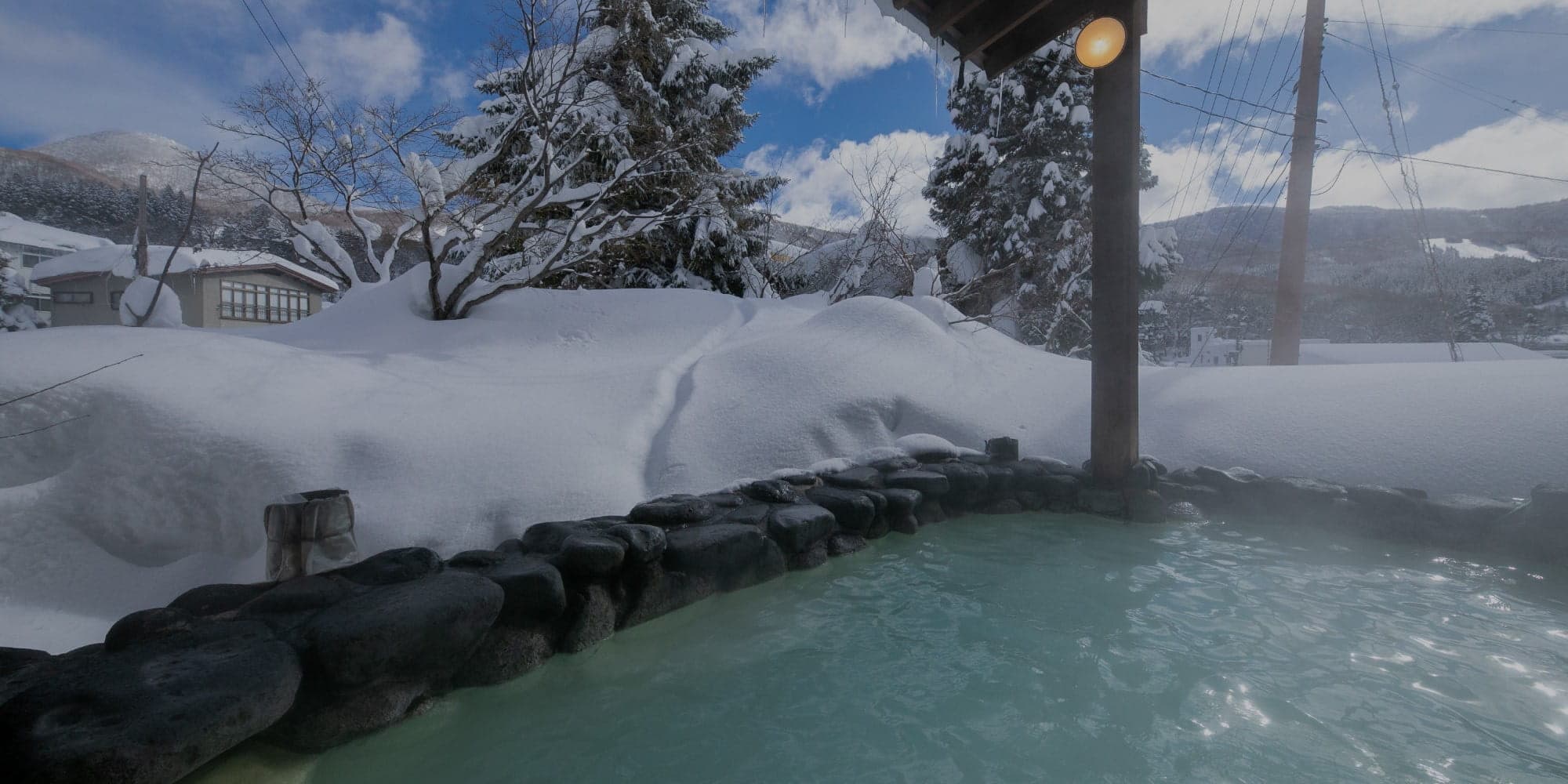
Gokan no Yu Tsuruya
五感の湯つるや
Zao·Luxury
from US$172 · per person · per nightfrom ≈ US$344 total for 2 guests
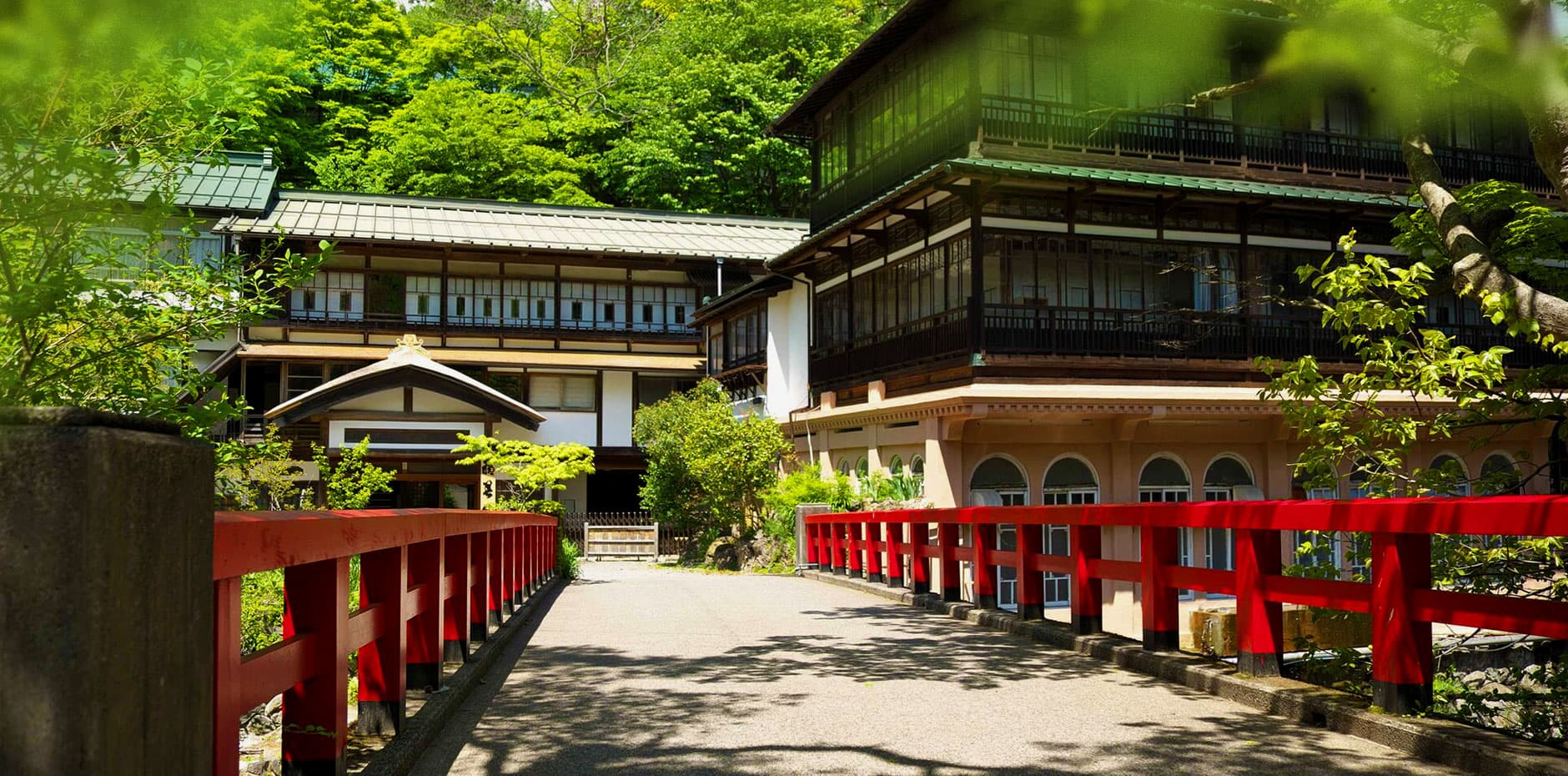
Sekizenkan
積善館
Shima·Mid-Range
from US$344 · per person · per nightfrom ≈ US$688 total for 2 guests
Booking links may earn us a commission at no extra cost to you.
Still deciding?
Browse ryokans across JapanBooking.com