Quick Comparison
9 picks| Ryokan | From | Rating | Book |
|---|---|---|---|
 | from US$600/person/night≈ US$1,200 for 2 | 9.4 13 reviews | Book on Agoda |
 | from US$429/person/night≈ US$858 for 2 | 10.0 44 reviews | Book on Trip.com |
 | from US$500/person/night≈ US$1,000 for 2 | 9.5 26 reviews | Book on Agoda |
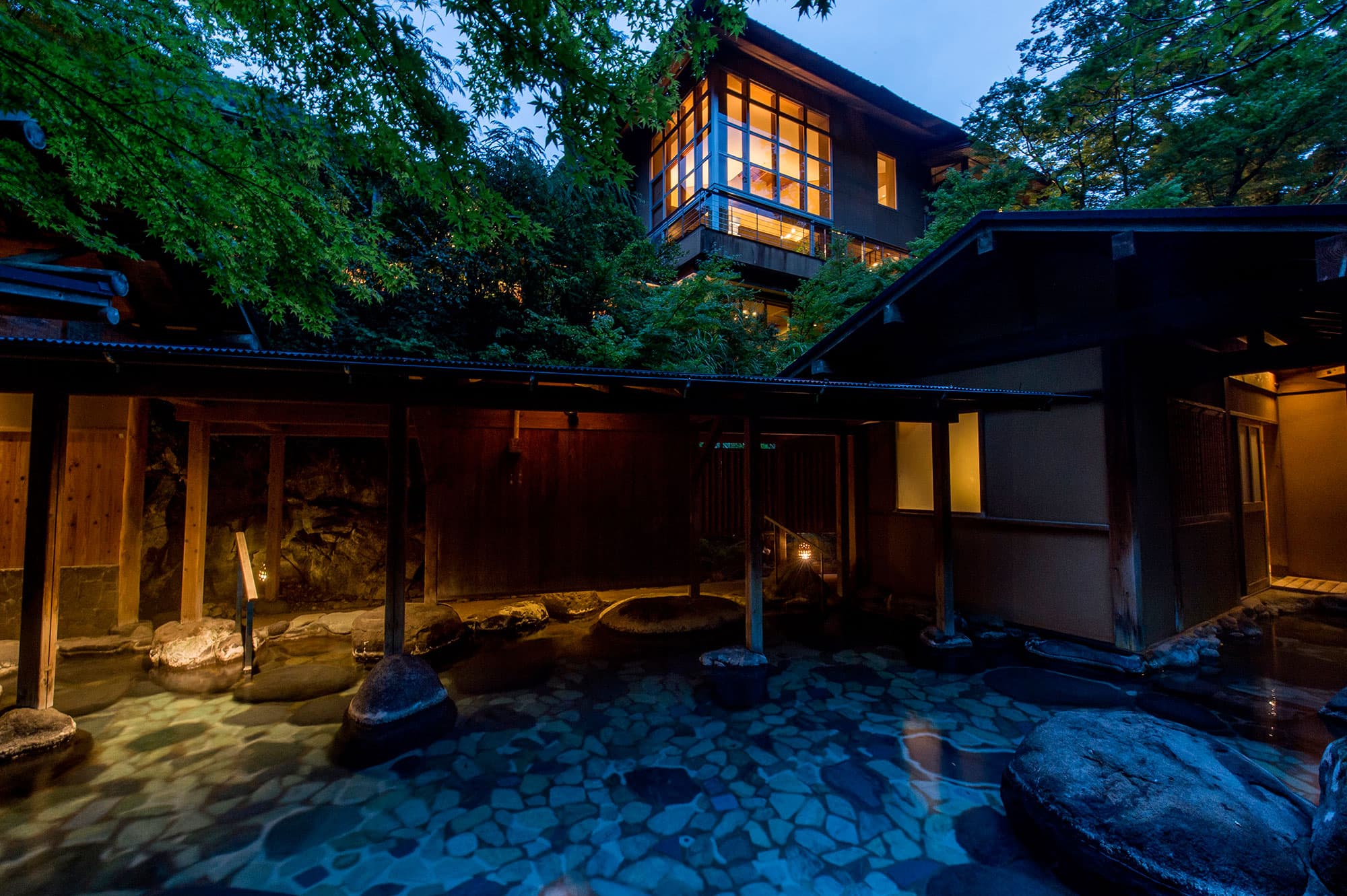 | from US$385/person/night≈ US$770 for 2 | 9.6 413 reviews | Book on Trip.com |
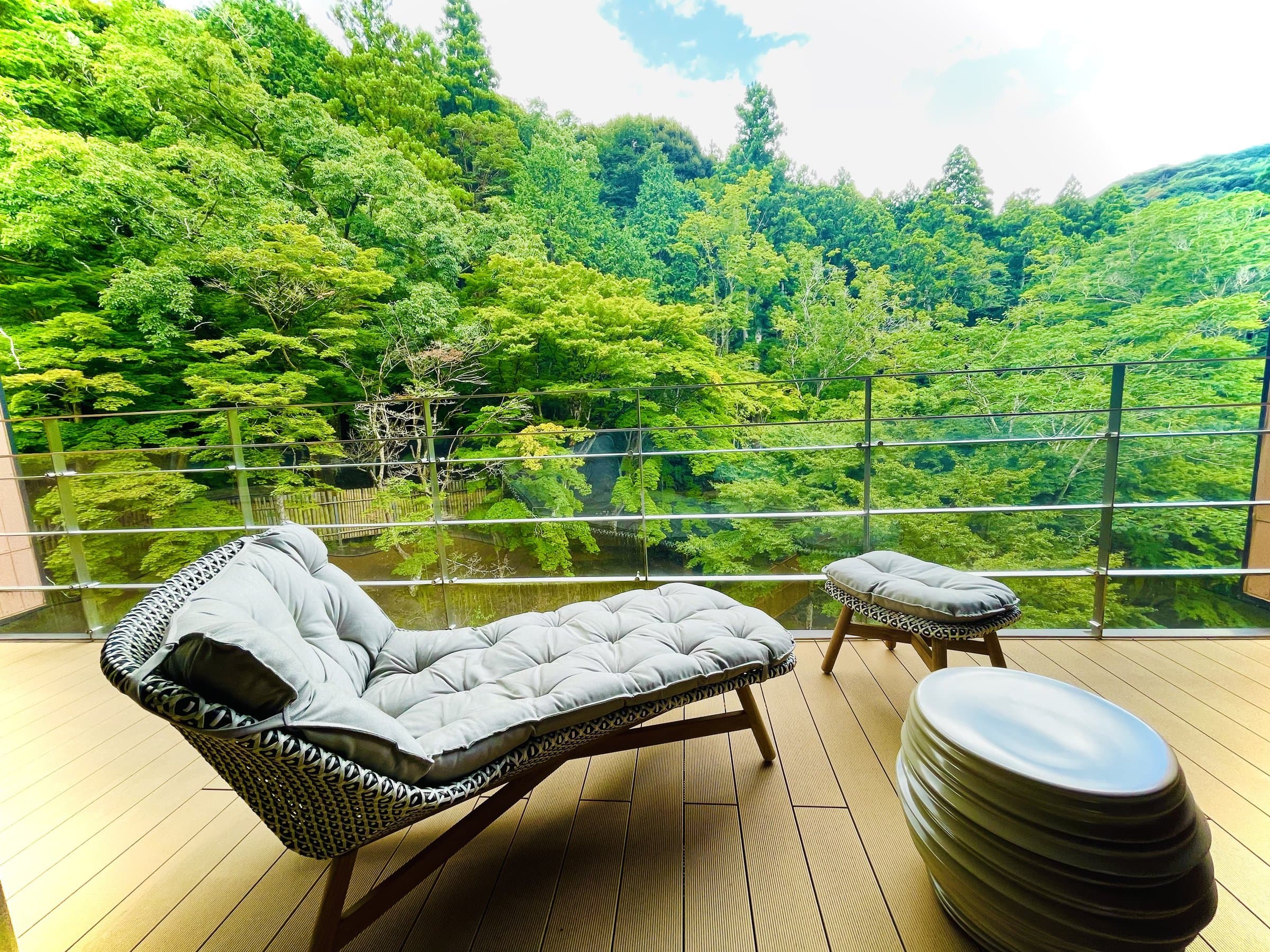 | from US$284/person/night≈ US$568 for 2 | 9.4 633 reviews | Book on Booking.com |
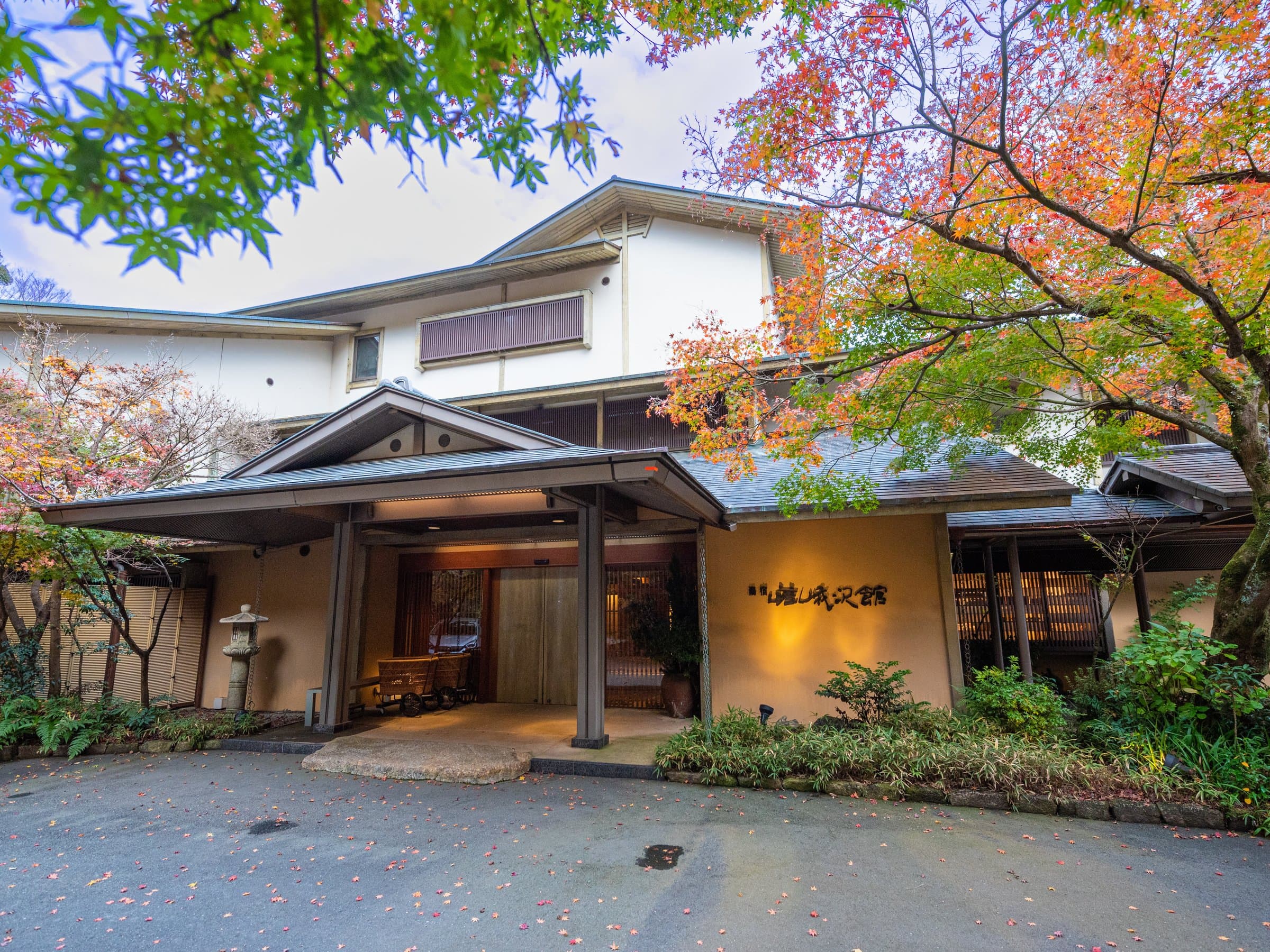 | from US$434/person/night≈ US$868 for 2 | 9.3 67 reviews | Book on Agoda |
 | from US$230/person/night≈ US$460 for 2 | 9.3 91 reviews | Book on Trip.com |
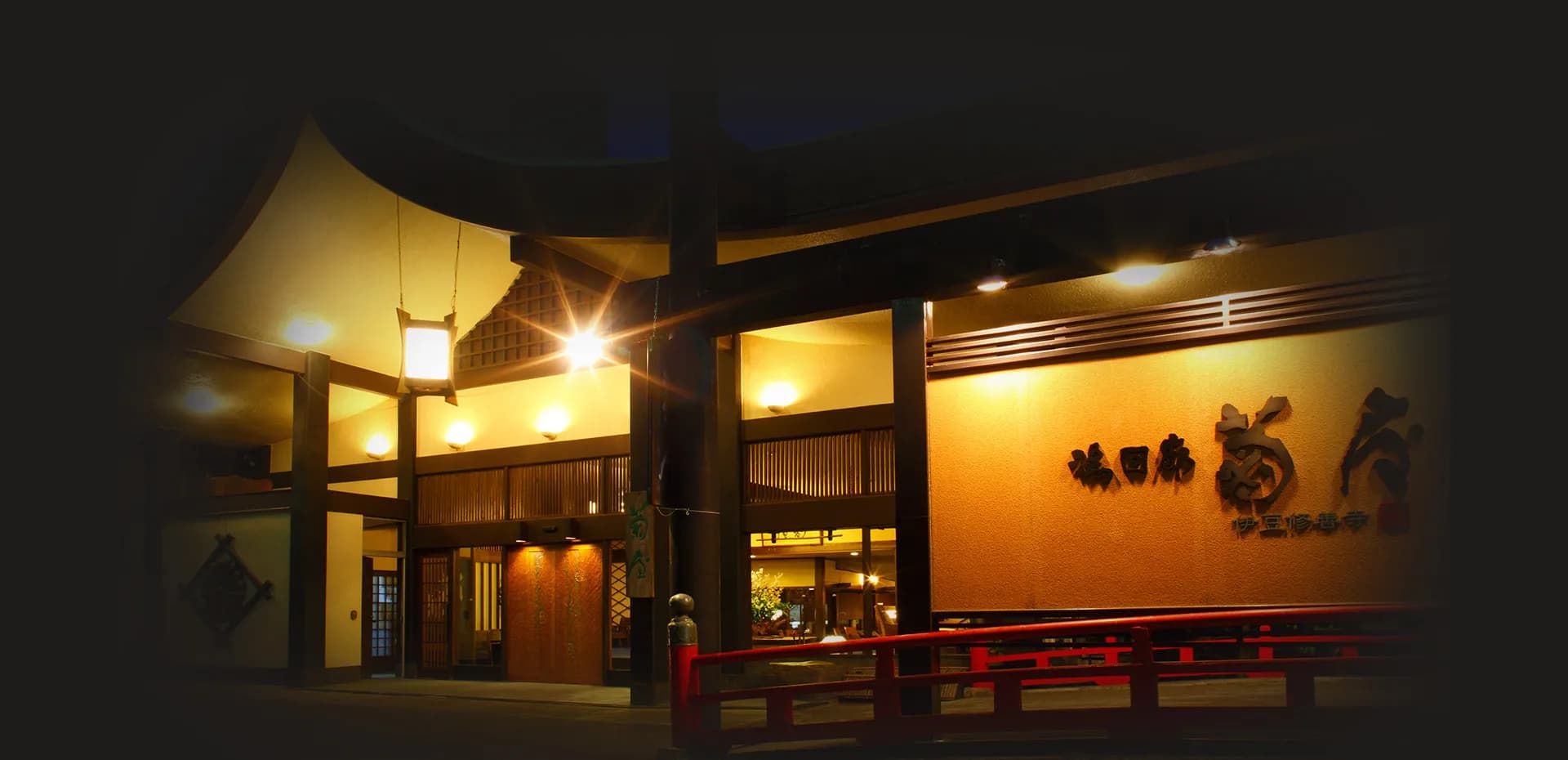 | from US$179/person/night≈ US$358 for 2 | 9.2 3,174 reviews | Book on Trip.com |
 | from US$184/person/night≈ US$368 for 2 | 8.5 432 reviews | Book on Trip.com |
Arai Ryokan
Izu
Prices shown are approximate starting rates per person per night. We may earn a commission on bookings.
Shuzenji is traditionally regarded as the oldest onsen town on the Izu Peninsula, and the two inns that best justify the trip sit at opposite ends of the price range: Asaba, which has operated continuously since 1484 and holds three Michelin Keys as of 2025, and Yu-Kairo Kikuya, a 380-year-old inn where a preserved room lets you stand in the exact space where Natsume Soseki nearly died in 1910.
Called the "Little Kyoto of Izu" for its cobbled lanes, 1,200-year-old temple, five vermilion bridges crossing the Katsura River, and a 300-metre bamboo grove path, Shuzenji rewards slower travel in a way that the larger resort towns on the Izu coast rarely do. This guide covers the 9 inns currently bookable through our site, ranked by tier and editorial judgment — with verified from-prices, private-onsen confirmation, and tattoo policy for every property, details you will not find together anywhere else in English.
This is written for travellers choosing between Shuzenji and Hakone, solo visitors who want the quieter literary atmosphere, couples looking for private in-room onsen, and tattooed guests trying to understand exactly where they can soak. If you are still deciding which onsen town suits you, our guide to onsen ryokans near Tokyo covers the broader region.
What Makes Shuzenji Worth the Trip
A Town Founded on Legend
According to tradition, the hot springs here were discovered in 807 AD when the Buddhist monk Kukai — known posthumously as Kobo Daishi, the founder of Shingon Buddhism — came across a boy washing his ailing father in the cold Katsura River. Moved by the scene, he struck a river rock with his tokko, a single-pronged vajra ritual implement, and released a natural hot spring. That spring, Tokko-no-Yu, still sits in the centre of town. Shuzen-ji Temple was established on the same tradition and is said to be the oldest on the peninsula.
The physical character of the town remains compact enough to walk in a morning. Five red bridges cross the Katsura River; the Chikurin-no-Komichi bamboo grove path runs roughly 300 metres along the river, linking the bridges past Tokko-no-Yu; and the town's century-old ryokan share the same narrow streets with small shops and tea houses. Shuzenji's nickname — the "Little Kyoto of Izu" — is earned, not marketing.
Samurai Exile and a Novelist's Near-Death
Two historical episodes give Shuzenji a depth that resort competitors rarely match. The first concerns Minamoto no Yoriie, the second shogun of the Kamakura Shogunate. Stripped of power in a political struggle between the Hiki and Hojo clans, Yoriie was exiled to Shuzenji in 1203 and assassinated in July 1204 by agents of the Hojo leadership while under house arrest. His grave remains visitable in town. Playwright Okamoto Kido dramatised the assassination in his 1911 play "Shuzenji Monogatari" — a work that has kept the story alive on stage for over a century.
The second episode belongs to Natsume Soseki, Japan's most celebrated modern novelist. In the summer of 1910, Soseki came to Shuzenji to convalesce. On August 17, he suffered a massive gastric haemorrhage at Kikuya inn and briefly lost consciousness — an episode known as the "Shuzenji no Taikan," or the Catastrophe at Shuzenji. He survived and later wrote about the near-death experience in his essay "Omoidasu Koto Nado" (Reminiscences). The room he occupied, the Ume-no-Ma (Plum Room), is preserved at Kikuya to this day. Asaba, the town's flagship inn, earned three Michelin Keys in 2025 — one of the highest formal recognitions in Japanese hospitality; see the full Michelin Key ryokan guide for context on what that distinction means.
All 9 Shuzenji Ryokans at a Glance
Every inn in this selection has a private in-room onsen, which means tattooed guests can soak without restriction in their own room's bath regardless of the communal-bath policy. The from-prices below are USD per-night ballparks sourced from our database; actual rates vary by season, room type, and OTA.
| Ryokan | Tier | From (per night) | Private onsen | Tattoo policy | Rating | Standout |
|---|---|---|---|---|---|---|
| Asaba | Luxury | $600–$1,500 | Yes | Private baths only | 9.4/10 | Founded 1484; private Noh stage; 3 Michelin Keys; R&C since 1989 |
| Chiketei Yagyu-no-Sho | Luxury | $429+ | Yes | Contact inn | 10.0/10 | Highest-rated; bamboo garden; kaiseki with Amagi wasabi |
| Ochiairo (Yugashima) | Luxury | $500–$1,200 | Yes | Private baths only | 9.5/10 | Registered Cultural Property; literary guests; river confluence setting |
| Tanigawa-no-Yu Asebino (Yugashima) | Luxury | $385+ | Yes | Contact inn | 9.6/10 | All 18 rooms with private rotenburo; forest-stream atmosphere |
| SORA Togetsuso Kinryu | Luxury | $284+ | Yes | Contact inn | 9.4/10 | Open-air bath framing Shuzen-ji Temple; hillside garden setting |
| Yuyado Sagasawakan | Luxury | $434+ | Yes | Contact inn | 9.3/10 | All rooms on Kano River; 11 onsen baths; free station shuttle |
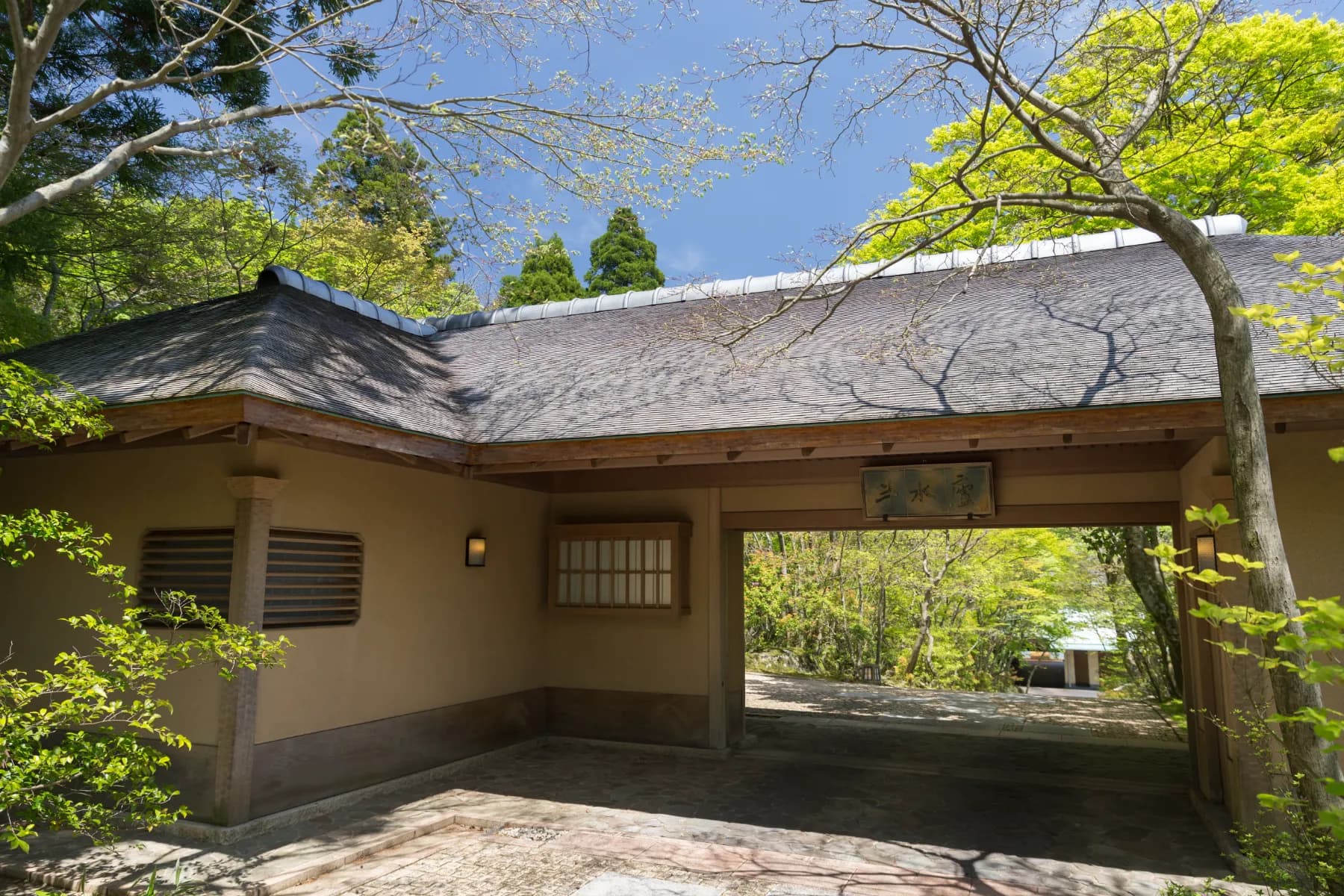
| Arai Ryokan | Mid | $230–$600 | Yes | Private baths only | 9.3/10 | Founded 1872; 15 buildings designated Cultural Properties; Nihonga artists |
| Yu-Kairo Kikuya | Mid | $179+ | Yes | Contact inn | 9.2/10 | Natsume Soseki's 1910 illness room preserved; highest review volume |
| Sanshi Suimei | Value | $184+ | Yes | Cover-up allowed | 8.5/10 | Largest property; covered tattoos in public baths; possible Fuji view |
Tip
Booking tip: Asaba books 3–6 months ahead for autumn weekends and peak periods. Mid-range properties — Arai Ryokan, Kikuya, SORA — typically have availability 4–6 weeks out, except Golden Week, the koyo peak in late November, and New Year.
Luxury Ryokans in Shuzenji (from ~$284/night)
 Pin to Pinterest
Asaba — The Benchmark ($600–$1,500/night)
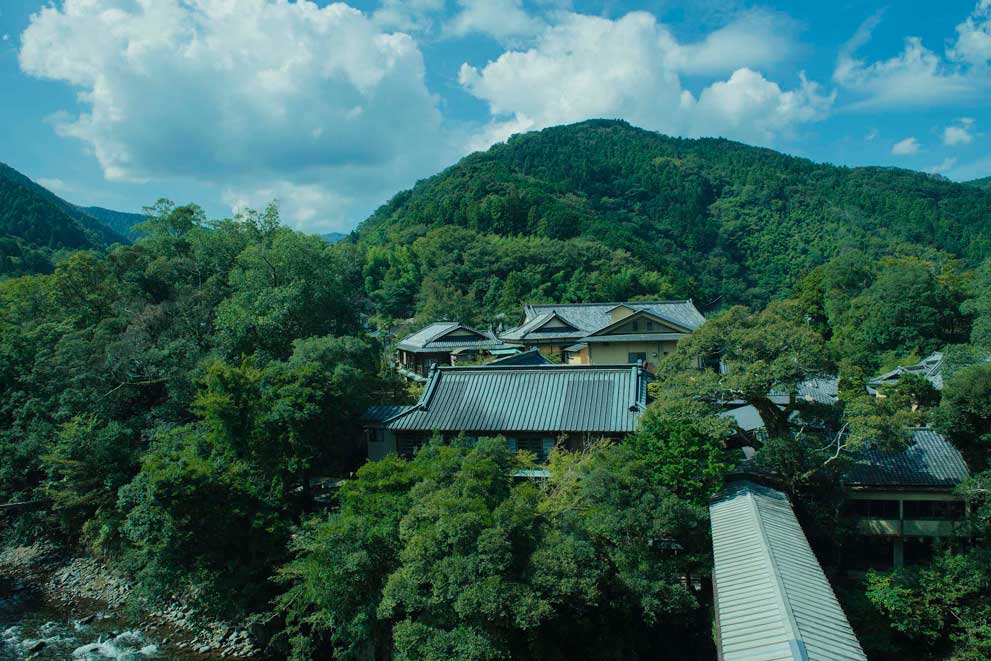
Asaba has been in continuous operation since 1484, when Yakuro Yukitada Asaba opened an inn across the road from Shuzen-ji Temple. The family has kept it across more than ten generations. In 1989 Asaba became the first Japanese ryokan to join Relais & Chateaux, and in 2025 it received three Michelin Keys — as deep a recognition as the guide currently issues.
The detail that sets Asaba apart physically is the Noh stage. Relocated from Tokyo in the late Meiji period by the seventh-generation owner, the stage sits on a platform above a carp pond and small waterfall at the centre of the garden. Noh is performed here on the property — a setting that exists nowhere else in the world quite like this. Fewer than 20 rooms keeps the inn quiet; you are not sharing corridors with coach groups.
Tattooed guests may use the private in-room baths freely. The public communal baths are not accessible for visible tattoos. Weekends in autumn book out 3–6 months ahead — plan accordingly. This is the inn you choose when Shuzenji is the centrepiece of the Japan trip, not a detour.
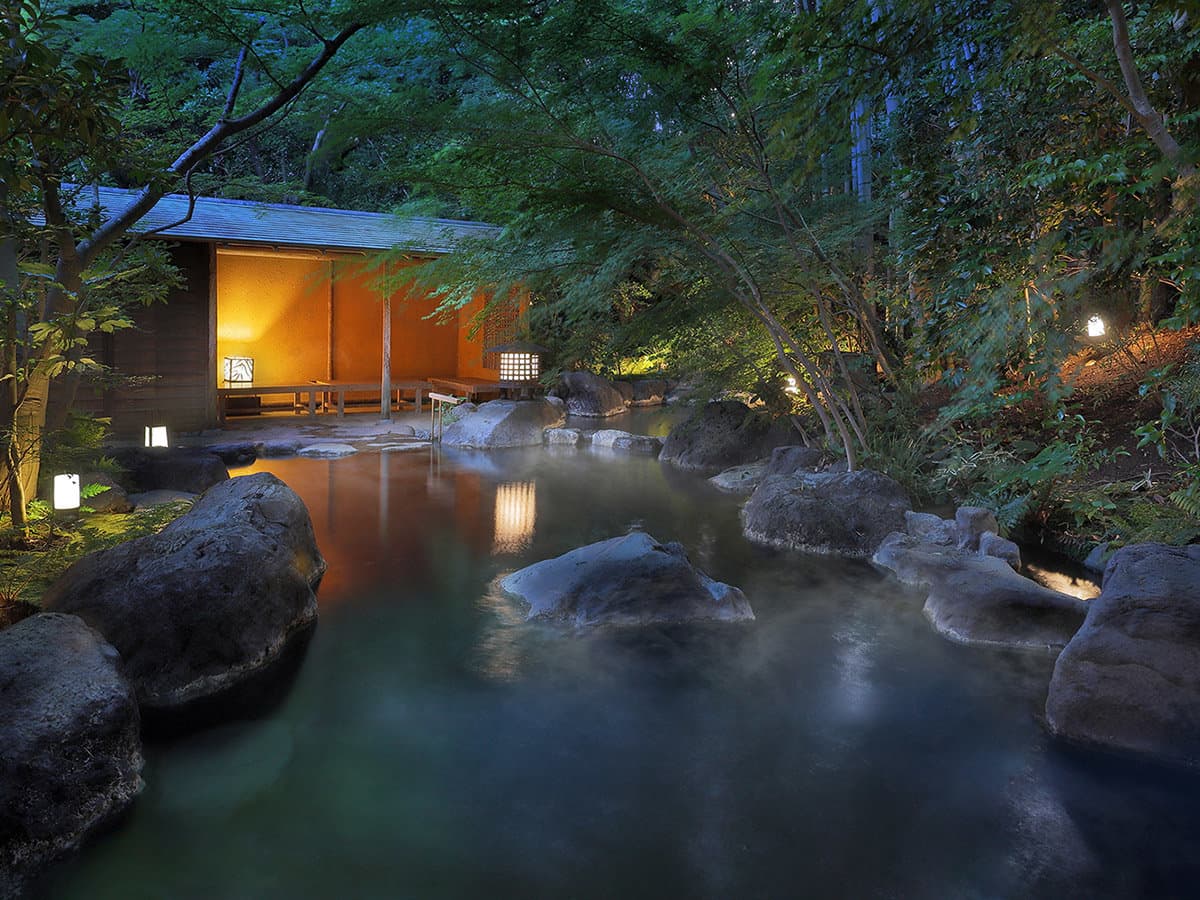
Chiketei Yagyu-no-Sho — Highest-Rated (from $429/night)
The name Chiketei (竹庭) means "bamboo garden," and the setting earns it: 15 rooms arranged within a mature grove, morning light filtering through green canes onto paper screens. With a 10.0 rating across 44 reviews in our database, this is the highest-rated inn in the Shuzenji selection — a rare score that holds across every metric.
The kaiseki here is the signature. The multi-course dinner sequences through the peninsula's seasonal vocabulary: sakura shrimp from Suruga Bay in spring, bamboo shoots from the surrounding grove, kinmedai (golden eye snapper) from deep Sagami waters in autumn and winter, freshly grated Amagi wasabi served year-round.
Tattoo policy has not been confirmed — contact the inn directly before booking. Chiketei Yagyu-no-Sho is the pick for couples who want the quietest possible garden setting combined with the best food in this selection.
Ochiairo — Registered Cultural Property in Yugashima (from $500/night)
A word on location first: Ochiairo sits in Yugashima, a quieter hot spring village approximately 30 minutes up the Kano River from Shuzenji Station by taxi — not in central Shuzenji. That extra distance is worth framing as a feature. Yugashima is where Nobel laureate Yasunari Kawabata stayed repeatedly during the 1920s while writing "The Izu Dancer" at the nearby Yumotokan; the surrounding valley carries that literary gravity.
Ochiairo itself — now operating simply as Ochiairo, having dropped the "Murakami" family name from its public-facing branding — was founded in 1874 at the point where two rivers converge. The name comes from "ochiau," a Japanese word for rendezvous or confluence. Several of its palatial timber structures are designated Nationally Registered Tangible Cultural Properties. Writers including Kawabata himself and modernist Motojiro Kajii stayed here during the Taisho period.
Tattooed guests may use the private in-room baths; the communal baths are not accessible for visible tattoos. For travellers who want deep heritage architecture and maximum quiet, this is the standard.
Tip
Yugashima note: Ochiairo and Asebino are in Yugashima — 30 minutes up the Kano River from Shuzenji Station by taxi. Both inns can arrange transfers. If you are combining central Shuzenji sightseeing with a Yugashima stay, allow extra time and budget for the journey.
Tanigawa-no-Yu Asebino — All 18 Rooms with Private Rotenburo (from $385/night)
Also in the Yugashima area — about 30 minutes from Shuzenji Station — Asebino (谷川の湯, "valley river hot spring") is built around a single clear proposition: every one of its 18 rooms has a private open-air rotenburo. Not a selection of rooms, not an upgrade. All 18. You soak outdoors, forest above you, the sound of a stream below, mountain air in your face.
On IKYU, the property scores 4.88 for Onsen & Bath and 4.84 for Service — the kind of sub-scores that suggest consistency rather than occasional excellence. Our database rating of 9.6 across 413 reviews confirms it. The trade-off is location: Yugashima is a detour from central Shuzenji, and you will want a car or taxi rather than a walk from the station.
Tattoo policy is not confirmed — contact the inn directly. Asebino is the pick for travellers who want private rotenburo as the primary reason for the stay.
SORA Togetsuso Kinryu — Temple-View Open-Air Bath (from $284/night)
SORA is the entry point for the luxury tier in this selection, and it earns the classification honestly. The property's open-air bath is positioned to frame a direct sight line to Shuzen-ji Temple — the "Open Air Bath of Light," designed by space designer Hisanobu Tsujimura. The hillside site covers roughly 2.6 hectares at the centre of Shuzenji Onsen, with four open-air baths including private-rental options.
Location is central, which matters: you can walk the bamboo path, cross the red bridges, and return to the inn on foot. In spring, cherry blossoms are visible from rooms on the hillside. The inn appeared in the Japanese TV drama "The Full-Time Wife Escapist," which will mean nothing to most international guests but drove significant domestic attention — worth mentioning as a signal of its photogenic quality.
Tattoo policy has not been confirmed; contact the inn before booking. At around $284 upward, SORA is the most accessible luxury option for couples who want a central Shuzenji address.
Yuyado Sagasawakan — Kano River Soundtrack (from $434/night)
All 22 rooms at Sagasawakan overlook the Kano River, and the private open-air baths are positioned so the river runs below you as you soak. That specific combination — water visible, water audible — is what reviewers return to again and again. The inn has 11 separate hot spring baths in total, fed by an alkaline simple spring (単純アルカリ温泉). A free shuttle runs between the inn and Shuzenji Station, which is roughly 20 minutes away.
There is no founding date or heritage designation we can verify for Sagasawakan, so we will not invent one. What is clear from the reviews is that the river setting is the thing — if you are choosing between this and an interior-facing room elsewhere, the Kano River view deserves the premium.
Tattoo policy is not confirmed — contact the inn directly.
Mid-Range Shuzenji Ryokans: Heritage and History from $179/night
 Pin to Pinterest
Arai Ryokan — 15 Buildings, Registered Cultural Properties (from $230/night)
Arai Ryokan was founded in 1872 — the fifth year of Meiji — and has been absorbing history ever since. In 1998, 15 of its structures received formal designation as Nationally Registered Tangible Cultural Properties, spanning buildings from the Meiji, Taisho, Showa, and Heisei eras across approximately 10,000 square metres. The complex is less a single building than a small village of architecturally significant structures.
The Tenpyo Daiyoku, the Great Bath, is the centrepiece. Nihonga painter Yasuda Yukihiko — who left over 70 paintings at the inn during his long friendship with the third-generation owner — designed it in cypress over three years, with construction beginning in 1931 and completing in 1934. The intention was to recreate the aesthetic of the Tenpyo era, the 8th-century Nara period considered one of the high points of Japanese court culture. The bath itself is a registered cultural property.
The guest register reads like a literary roll-call: painters Yokoyama Taikan and Kobayashi Kokei; writers Ryunosuke Akutagawa and Kyoka Izumi. Its 28 rooms sit along the river in central Shuzenji. Tattooed guests may use the private in-room baths; public communal baths are not accessible for visible tattoos. Arai Ryokan is the clearest choice for architecture and arts enthusiasts who want cultural property depth without the top-tier price tag.
Yu-Kairo Kikuya — Where Soseki Nearly Died (from $179/night)
In the summer of 1910, Natsume Soseki came to Kikuya to rest. On August 17, he collapsed with a massive gastric haemorrhage, briefly losing consciousness on the floor of the Ume-no-Ma — the Plum Room. The episode, which became known as the "Shuzenji no Taikan" (Catastrophe at Shuzenji), marked the closest he came to death before dying of kidney disease six years later. He wrote about the experience in his essay "Omoidasu Koto Nado" (Reminiscences), turning a near-death in a provincial inn into some of his most introspective prose.
The Ume-no-Ma is now preserved as the Soseki Room. Guests can view it.
The inn itself has a history stretching over 380 years — the name "Yu-Kairo" (湯回廊) means "corridor of baths," a reference to the covered walkways connecting the various bathing facilities, which reviewers consistently call one of the best design features of the property. With 3,174 reviews in our database, Kikuya has the highest review volume of any inn in this selection by a wide margin — useful confidence for first-time ryokan guests who want evidence of track record. From around $179 per night it is also the lowest entry point in the mid-range tier.
Tattoo policy has not been confirmed for the communal baths — contact the inn directly before booking.
Value Pick in Shuzenji: Tattoo-Friendly Public Baths from $184/night
Sanshi Suimei — Covered Tattoos Allowed in Public Baths (from $184/night)
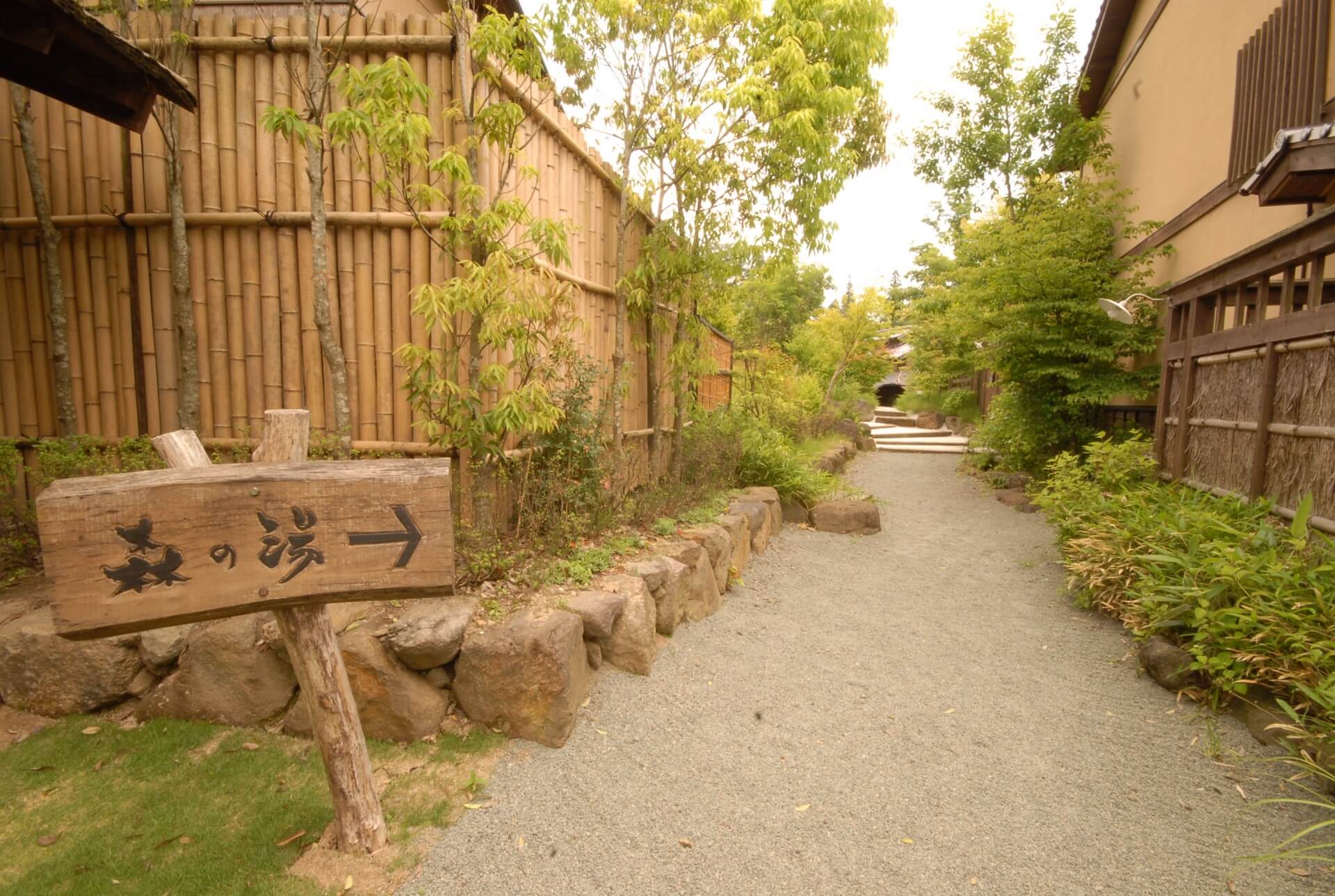
The single most important thing to say about Sanshi Suimei is also the rarest piece of information in this guide: covered tattoos are permitted in the communal Mori-no-Yu (Forest Bath) complex. That is a confirmed policy in our database, and it is the only inn in this Shuzenji selection where tattooed guests can access public baths at all, even with cover-up.
Every room also has a private open-air onsen on the terrace, so the private-bath option exists regardless. The Mori-no-Yu adds large indoor and outdoor communal baths plus a sauna, all fed by a simple sulfur spring. With 48 rooms, Sanshi Suimei is the largest property in this guide — operated under the Laforet Hotels & Resorts brand, which gives it more of a resort feel than the intimate boutique inns elsewhere in the list. Some rooms on clear days have a chance of framing Mt Fuji on the horizon, though conditions vary and we would not book specifically for that.
Dog-friendly rooms are available. At from $184 per night, Sanshi Suimei is also the most accessible price point in the selection. The trade-off is atmosphere: you are getting a well-run resort ryokan rather than a heritage inn. That is a reasonable exchange if the public-bath access is your priority.
For the full Japan-wide breakdown of tattoo-accessible ryokans and onsen, see our private onsen guide for tattooed travellers.
Shuzenji vs Hakone: How to Choose
Choose Shuzenji if the experience you are after is quiet, walkable, and historically layered. The bamboo path, the temple, the five bridges, and the Tokko-no-Yu spring form a loop you can do in two hours on foot — then you retire to an inn where the building itself is the attraction. If you are booking Asaba or Arai Ryokan specifically, nothing in Hakone competes with those properties' particular combination of heritage and ceremony. Shuzenji also wins on transport simplicity: the JR Odoriko runs direct from Tokyo Station with no transfer, which matters if you are arriving with luggage. Solo travellers and literary-minded visitors tend to feel at home here in a way that Hakone's more activity-oriented infrastructure does not quite replicate.
Choose Hakone if Mt Fuji views are a fixed requirement — on a clear day, the lake views from Hakone are the views you came to Japan for, and Shuzenji cannot offer them. Hakone also has the Romancecar from Shinjuku, more frequent services, and a wider roster of outdoor activities: the ropeway over Owakudani, the Open-Air Museum, the lake. For a two-night trip pairing mountains and coast, Hakone makes logical sense as the first night before continuing east. Or consider best ryokans in Atami, the livelier resort town 45 minutes north along the coast — Atami has a different energy again, less contemplative and more festive, which suits some travellers far better.
Getting There, When to Go, and What to Eat
Tokyo to Shuzenji: Two Routes
The direct option is the JR Odoriko limited express from Tokyo Station to Shuzenji Station — approximately 2 hours and 8 minutes. JR Pass holders should note a 550 yen supplement for the Izuhakone Railway section between Mishima and Shuzenji; the Odoriko uses Izuhakone Railway tracks for that final stretch. Current schedules are available on the JR Odoriko timetable.
The faster option on paper is the Tokaido Shinkansen (Hikari or Kodama) from Tokyo to Mishima — about 45 minutes — then the Izuhakone Railway Sunzu Line from Mishima to Shuzenji, another 35 minutes. Total train time is roughly 1 hour 20 minutes, though you add transfer time and the Shinkansen requires a separate booking. From Shuzenji Station, the onsen town is 5–10 minutes by local bus or taxi.
Yugashima inns — Ochiairo and Asebino — require a further 30 minutes from Shuzenji Station. Factor in the taxi cost and extra journey time when planning; both inns can arrange private transfers on request.
A day trip from Tokyo is viable. The bamboo path, Shuzen-ji Temple, the bridges, and Tokko-no-Yu fit comfortably into 3–4 hours of walking. But the ryokan experience — an evening private bath, kaiseki dinner, morning bath before breakfast — requires an overnight stay. If you are already booking a room, the overnight is the reason to go.
When to Go and How Far Ahead to Book
Autumn is the most visually dramatic season. Shuzenji Nature Park's maple forest has over 1,000 trees, illuminated at night during the Momiji Matsuri (autumn leaf festival) in late November to early December. The bamboo grove alongside gold and red maples is the image most associated with the town in photography. Asaba, Arai Ryokan, and other smaller inns book out 3–6 months ahead for those autumn weekend dates; mid-range properties like SORA and Kikuya generally have availability 4–6 weeks out except during Golden Week, the koyo peak, and New Year.
Spring brings cherry blossoms along the Katsura River — SORA's hillside position makes it particularly well-placed for blossom views. Winter is the quietest and most atmospheric season, with the steaming outdoor baths a genuine pleasure when the air is cold. Summer heat is moderated by the Amagi mountain elevation.
What You Will Eat: Kinmedai, Wasabi, Kaiseki
The fish to know is kinmedai, the golden eye snapper caught in the deep waters of Suruga Bay and off the Izu coast. It appears on kaiseki menus simmered in soy (nitsuke), grilled with salt, or as sashimi, and has the kind of fatty richness that justifies the position it holds in Izu cuisine. Paired with freshly grated Amagi wasabi — grown in the cold mountain spring water of the range above the peninsula, a cultivation tradition stretching back over a century — the combination is one of those regional pairings worth making a note of before you arrive.
Kaiseki at the inn is the evening structure: private bath before dinner, a multi-course meal that sequences through whatever the peninsula is producing that season, then a second soak before sleep. Breakfast repeats the ritual. That rhythm is the argument for spending two nights rather than one.
 Pin to Pinterest
For most trips to Shuzenji, the clearest picks are: Asaba for the flagship heritage stay; Chiketei Yagyu-no-Sho for the highest-rated quiet experience with the best food; Arai Ryokan and Kikuya for cultural depth at mid-range prices; and Sanshi Suimei for the widest tattoo accommodation. Browse the full inventory of Izu Peninsula ryokans — 28 inns across the peninsula — to compare options beyond Shuzenji.
Ready to book?
Book one of these top picks
Compare live availability and prices across booking sites.



Chiketei Yagyu-no-Sho
竹庭 柳生の庄
Izu·Luxury
from US$429 · per person · per nightfrom ≈ US$858 total for 2 guests
Arai Ryokan
新井旅館
Izu·Mid-Range
from US$230 · per person · per nightfrom ≈ US$460 total for 2 guests
Yu-Kairo Kikuya
湯回廊 菊屋
Izu·Luxury
from US$179 · per person · per nightfrom ≈ US$358 total for 2 guests
Sanshi Suimei
修善寺温泉 山紫水明
Izu·Luxury
from US$184 · per person · per nightfrom ≈ US$368 total for 2 guests
Booking links may earn us a commission at no extra cost to you.
FAQ
Frequently asked questions
Which Shuzenji ryokan is best for tattooed guests?+
All 9 Shuzenji ryokans in this guide have private in-room onsen, which means tattooed guests can soak without restriction in their own room's bath regardless of the inn's public-bath policy. Sanshi Suimei goes further and allows covered tattoos in its communal Mori-no-Yu baths — the only inn in this selection with that policy. Asaba, Arai Ryokan, and Ochiairo list "private baths only" (public communal baths are not accessible for tattooed guests). For the five remaining inns, contact the inn directly before booking.
Is Asaba worth the price (from $600/night)?+
Asaba is worth the price if you are treating Shuzenji as the centrepiece of your Japan trip rather than a detour. The inn has operated continuously since 1484, earned three Michelin Keys in 2025, and was the first Japanese ryokan to join Relais & Chateaux in 1989. The private Noh stage above the carp pond is genuinely unlike anything else in Japanese hospitality. If budget is the constraint, Arai Ryokan or Yu-Kairo Kikuya offer verified cultural depth at a fraction of the price.
How far is Shuzenji from Tokyo, and how do you get there?+
Shuzenji is approximately 2 hours 8 minutes from Tokyo Station on the JR Odoriko limited express (direct; JR Pass holders pay a 550 yen supplement for the Izuhakone Railway section). Alternatively, take the Tokaido Shinkansen to Mishima (about 45 minutes) then the Izuhakone Railway Sunzu Line to Shuzenji (about 35 minutes) — roughly 1 hour 20 minutes of travel plus transfer time. From Shuzenji Station, a local bus or taxi takes 5–10 minutes to the onsen town centre.
Is Shuzenji better than Hakone?+
It depends on what you are after. Choose Shuzenji for a quieter, walkable town with 1,200 years of history, literary associations (Soseki, the Kamakura Shogunate), and inns like Asaba or Arai Ryokan that cannot be replicated elsewhere. Choose Hakone for Mt Fuji views, more frequent transport connections from Tokyo, and outdoor activities such as the ropeway and Open-Air Museum. Many travellers combine both on a longer Izu Peninsula trip.
Can I book Shuzenji ryokans in English via Agoda or Trip.com?+
Yes. All 9 inns in this guide are bookable through English-language OTA platforms. Agoda and Trip.com carry the widest coverage; Booking.com and Expedia are available for several properties. Booking buttons for each inn are linked throughout the article. For Asaba specifically, availability is limited — book 3–6 months ahead for autumn and weekend dates.
Is Shuzenji worth a day trip, or should I stay overnight?+
A day trip covers the highlights — the bamboo path (Chikurin-no-Komichi), Shuzen-ji Temple, the red Katsura River bridges, and the symbolic Tokko-no-Yu spring — in 3–4 hours. But the ryokan experience (an evening kaiseki dinner, a pre-dinner private bath, and a second soak before breakfast the next morning) requires an overnight stay. If you are already booking a ryokan, the overnight is the reason to go.
What are Ochiairo and Asebino, and why are they listed under Shuzenji?+
Ochiairo and Tanigawa-no-Yu Asebino are located in Yugashima Onsen, a quieter hot spring village approximately 30 minutes up the Kano River from Shuzenji Station — not in central Shuzenji. They are grouped here because they share the same station access point and are commonly included in Shuzenji travel planning. Both require a taxi or reserved transfer from the station; factor in the extra time and cost when planning.
Still deciding?
Browse ryokans across JapanBooking.com