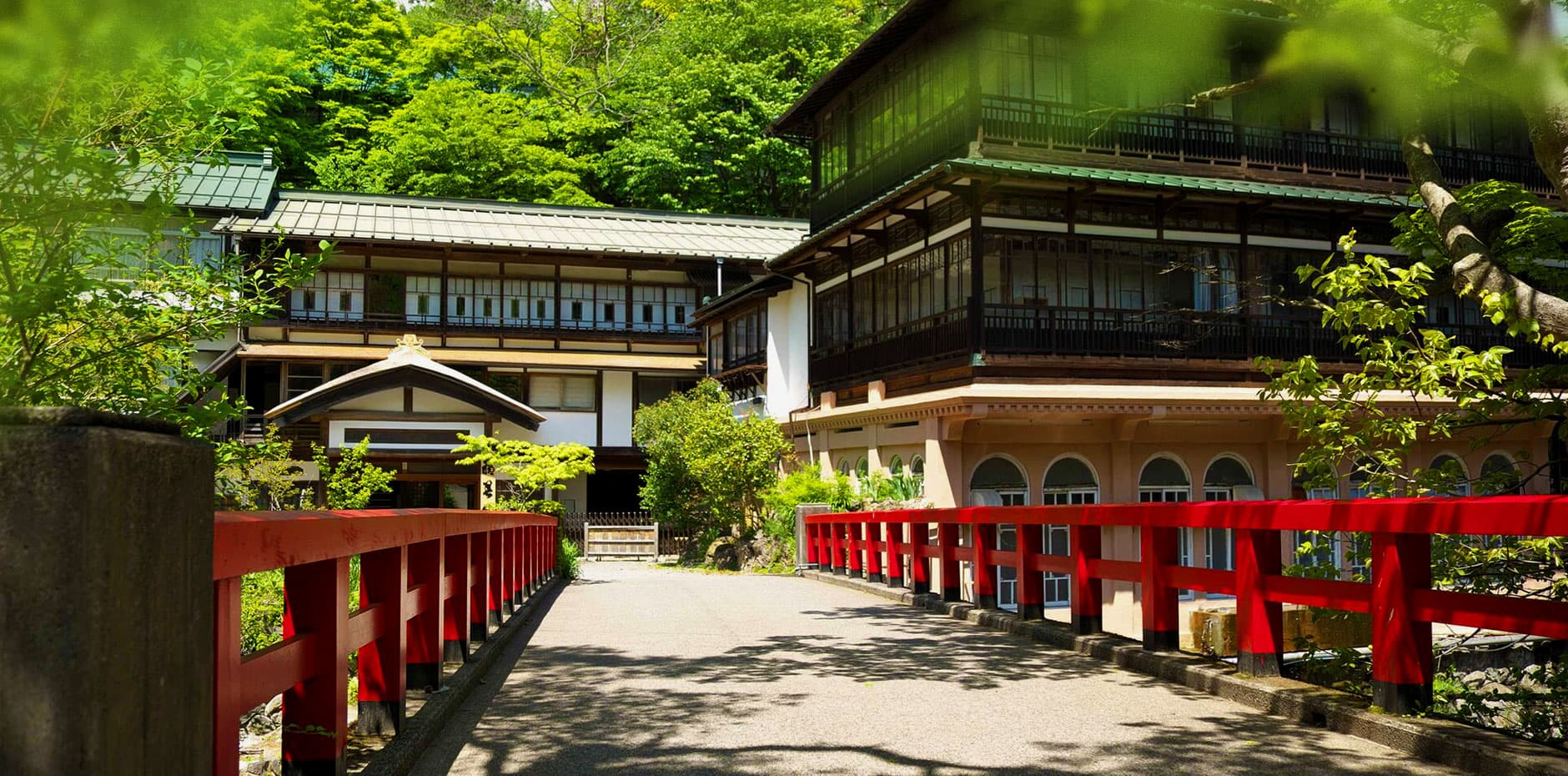
Comparaison rapide
3 sélections| Ryokan | À partir de | Note | Réserver |
|---|---|---|---|
 | à partir de ≈439 €/pers./nuit≈ 878 € pour 2 | 9.5 89 avis | Réserver sur Booking.com |
 | à partir de ≈439 €/pers./nuit≈ 878 € pour 2 | 9.6 67 avis | Réserver sur Booking.com |
 | à partir de ≈527 €/pers./nuit≈ 1 054 € pour 2 | 9.4 13 avis | Réserver sur Agoda |
Asaba
Izu
Les prix indiqués sont des tarifs de départ approximatifs par personne et par nuit. Nous pouvons percevoir une commission sur les réservations.
Un ryokan est une auberge japonaise traditionnelle — l'hébergement ; un onsen est un bain de source chaude naturelle — l'eau. Beaucoup de ryokan ont un onsen, mais aucun des deux n'exige l'autre. Dans les villes thermales de notre base de données, nous signalons exactement quelles auberges alimentent de véritables sources chaudes — de célèbres ryokan de Kyoto comme le Hiiragiya n'en ont aucune, le piège de réservation précis que ce guide démêle.
Les voyageurs qui préparent leur premier voyage au Japon utilisent souvent ryokan et onsen comme synonymes. Ce sont deux choses différentes. L'un est un lieu où dormir. L'autre est un type d'eau dans laquelle se baigner. Les deux se chevauchent si souvent que la confusion est compréhensible — mais si vous réservez la mauvaise combinaison, vous pouvez vous retrouver dans un ryokan sans aucun bain thermal, ou payer un pass journée onsen alors que l'auberge d'à côté l'inclut dans le tarif de la chambre.
Ce guide trace une ligne claire entre les deux, explique où ils se recoupent, et vous donne le vocabulaire de réservation pour trouver exactement la configuration souhaitée.
TL;DR — La réponse en 30 secondes
- Un ryokan (旅館) est une auberge japonaise traditionnelle — tatamis, futons, dîner kaiseki, exploitation familiale multigénérationnelle. C'est l'hébergement.
- Un onsen (温泉) est un bain thermal minéral naturel — alimenté par une source volcanique, encadré par la loi japonaise de 1948 sur les onsens, qui fixe une température d'émergence minimum de 25°C OU la présence d'au moins l'un des 19 minéraux désignés au-dessus d'un seuil de concentration. C'est l'eau.
- La plupart des ryokans de luxe DISPOSENT d'un onsen, mais pas tous. Les ryokans historiques du centre de Kyoto comme Hiiragiya n'en ont pas.
- Les onsens existent indépendamment des ryokans : bains publics à la journée, établissements municipaux (Beppu en compte plus de 100), onsens de stations de ski.
- La question décisive à la réservation : « Est-ce kakenagashi (掛け流し, source libre) ou junkan (循環, recirculé) ? » Une réception parlant japonais vous donnera une réponse claire.
Qu'est-ce qu'un ryokan ?
Un ryokan est une auberge japonaise traditionnelle — l'hébergement lui-même. Les caractéristiques sont stables depuis l'époque d'Edo (1603-1868), lorsque le réseau routier national et l'essor du tōji (voyage thermal thérapeutique) ont stimulé la demande de hatago — les ancêtres directs du ryokan moderne : sols en tatami, portes coulissantes en papier shoji, futons dressés chaque soir (pas de lit occidental), dîner kaiseki en plusieurs plats servi en chambre ou dans une salle privée, petit-déjeuner japonais le matin, et un nombre restreint de chambres — typiquement 8 à 40 — exploitées par une seule famille sur plusieurs générations.
Le plus ancien ryokan en activité continue au Japon est le Nishiyama Onsen Keiunkan à Yamanashi, fondé en 705 et reconnu par le Guinness World Records en 2011 comme le plus ancien hôtel du monde — plus de 1 300 ans d'exploitation continue, géré par 52 générations de la même famille jusqu'en 2017. La forme est plus ancienne que la langue japonaise moderne.
Un ryokan peut exister n'importe où au Japon. Il ne nécessite pas de source thermale. Un ryokan du quartier de Gion à Kyoto qui puise son eau de bain dans le réseau municipal reste un ryokan — simplement, ce n'est pas un ryokan thermal.
Pour la séquence complète d'un séjour ryokan, notre guide de l'expérience ryokan japonais 2026 détaille chaque étape.
Qu'est-ce qu'un onsen ?
Un onsen est un bain thermal naturel. Le mot signifie littéralement « source chaude ». Selon la loi de 1948 sur les onsens, l'eau doit émerger du sol à 25°C ou plus, OU contenir au moins l'un des 19 composants minéraux désignés au-dessus d'un seuil réglementaire. C'est le standard du ministère japonais de la Santé.
Le Japon compte environ 27 000 sources thermales alimentant environ 3 000 établissements onsen, la concentration la plus dense au monde. L'eau est classée en 11 types minéraux (soufre, chlorure de sodium, sulfate, fer, carbonate, acide, alcalin, radon, hydrogène sulfuré, thermal simple, divers), chaque catégorie portant sa propre tradition de bain et son profil thérapeutique réputé.
Un onsen peut exister sous plusieurs formes : à l'intérieur d'un ryokan, comme établissement public à la journée (¥500 à ¥1 500 l'entrée), comme bain municipal (Beppu exploite plus de 100 onsens publics, certains bains de quartier facturant seulement ¥100 à ¥300), ou comme installation de station de ski. La comparaison des 25 villes thermales désignées figure dans notre guide des onsens par région du Japon.
L'un peut-il exister sans l'autre ?
Oui, dans les deux sens.
Un ryokan sans onsen. La plupart des ryokans du centre de Kyoto — Hiiragiya, Tawaraya, Seikoro — sont des auberges historiques qui puisent l'eau de bain dans le réseau municipal, souvent dans un baquet en cyprès hinoki. Il n'y a pas de source thermale volcanique sous le centre de Kyoto. Ces établissements sont sans ambiguïté des ryokans, mais ce ne sont pas des ryokans thermaux.
Un onsen sans ryokan. Les onsens publics à la journée (appelés higaeri onsen) opèrent dans chaque ville thermale. Le quartier des sept « enfers » de Beppu compte des dizaines de bains municipaux où l'on paie ¥200 à ¥500 ; le pass officiel jigoku-meguri couvrant les sept enfers (visite seulement) coûte ¥2 400. Le Sai-no-Kawara Roten-buro de Kusatsu — un bain extérieur de 500 m² en tête du parc Sainokawara — est ouvert à quiconque possède un ticket journée à ¥600. Les stations de ski de Niseko, Hakuba et Zao exploitent des onsens d'après-ski.
Le cas le plus courant — et la source de la plupart des confusions — est le ryokan thermal : un ryokan disposant d'un onsen sur place, inclus dans le tarif de la chambre. C'est ce que la plupart des voyageurs occidentaux imaginent. C'est l'objet de notre pilier meilleurs ryokans avec onsen privé.
Tip
La question décisive à la réservation : demandez si le bain est kakenagashi 掛け流し (à débit libre, continuellement renouvelé depuis la source — l'étalon-or) ou junkan 循環 (recirculé, possiblement chauffé, possiblement issu d'une eau non thermale). Kakenagashi confirme une véritable source thermale. Junkan n'exclut pas forcément un établissement — les hôtels onsen du centre de Tokyo utilisent souvent du junkan car la source est trop profonde — mais la réponse vous dit ce que vous obtenez réellement.
Comment trouver un ryokan avec onsen
Trois raccourcis fiables pour resserrer la recherche :
1. Réservez dans l'une des 25 villes thermales. Hakone, Kusatsu, Beppu, Yufuin, Kurokawa, Kinosaki, Noboribetsu, Ginzan, Shirahone, Zao, Atami, Ibusuki, Naruko, Arima, Nikko, Wakura, Dogo, Tamatsukuri, Unzen, Akiu, Gero, Ginzan-Onsen, Izu et quelques autres. Pratiquement chaque ryokan situé dans ces limites est un ryokan thermal.
2. Filtrez « onsen privé » pour une baignoire en chambre ou réservable. La configuration la plus luxueuse est le kashikiri-buro (bain privé sur réservation, généralement gratuit pour 45 minutes) ou un rotenburo en chambre (bain extérieur privé attenant à votre chambre). Gora Kadan à Hakone, Asaba à Izu Shuzenji, Yamamizuki à Kurokawa.
3. Vérifiez le classement chimique de l'eau. Si la chimie compte pour vous — soufre pour la peau, fer pour la circulation, alcalin pour le toucher soyeux « bijin-no-yu » — notre guide des onsens par type d'eau regroupe plus de 30 ryokans selon les 11 catégories minérales officielles.
Différences d'étiquette
Le côté hébergement et le côté bain ont des coutumes distinctes.
Étiquette ryokan : on retire ses chaussures à l'entrée (genkan), on enfile des chaussons fournis, on revêt un yukata (croisé gauche-sur-droite ; droite-sur-gauche est réservé aux défunts). On salue la nakai-san. On s'assoit en seiza ou en tailleur pour le kaiseki. Pas de pourboire en règle générale.
Étiquette onsen : on se lave entièrement aux stations de douche AVANT d'entrer dans le bain — savon et shampoing ne touchent jamais l'eau. La petite serviette ne touche pas l'eau — pliée sur la tête ou posée sur le rebord. On entre nu ; les vestiaires sont mixtes par genre. Ni éclaboussures, ni nage, ni cheveux dans l'eau. Les tatouages restent partiellement restreints — voir notre guide d'étiquette onsen pour étrangers et notre registre des ryokans tatouages-friendly 2026.
Synthèse
Si vous ne retenez qu'une chose : le ryokan est le bâtiment et le service ; l'onsen est la source d'eau. Ils se recoupent dans environ 70 % des cas, mais les 30 % restants sont là où les voyageurs se trompent de réservation.
Si vous voulez les deux, réservez dans une ville thermale reconnue et confirmez « kakenagashi » avant de payer. Si vous voulez l'expérience ryokan historique de Kyoto sans attendre d'eau thermale, c'est un choix parfaitement valide. Si vous voulez seulement le bain, les onsens à la journée dans l'une des 25 villes vous offriront le bain pour moins de ¥1 500. Une fois le bâtiment séparé de l'eau, vous pouvez réserver exactement l'expérience que vous voulez.
Prêt à réserver ?
Réservez l'un de ces ryokans favoris
Comparez les disponibilités et les tarifs en direct sur les sites de réservation.
à partir de ≈439 € · par personne et par nuità partir de ≈ 878 € au total pour 2 personnes



Hiiragiya Ryokan
柊家旅館
Kyoto·Luxe
à partir de ≈439 € · par personne et par nuità partir de ≈ 878 € au total pour 2 personnes
Asaba
あさば
Izu·Luxe
à partir de ≈527 € · par personne et par nuità partir de ≈ 1 054 € au total pour 2 personnes
Les liens de réservation peuvent générer une commission sans coût supplémentaire.
Le versant hébergement et le versant bain obéissent à deux ensembles de codes distincts, que les voyageurs confondent parfois. Voici la répartition honnête.
L'étiquette côté ryokan concerne le lieu et le personnel. Vous retirez vos chaussures à l'entrée (genkan) et enfilez les chaussons fournis. Vous passez un yukata (peignoir de coton) — croisez le pan gauche sur le droit ; le droit sur le gauche est réservé aux défunts. Vous saluez votre nakai-san (la personne attachée à votre chambre) lorsqu'elle apporte le thé. Vous vous asseyez en seiza ou en tailleur pour le dîner kaiseki. Vous ne mangez ni ne buvez dans votre chambre en dehors des repas, sauf invitation. Vous ne laissez un petit pourboire sous enveloppe que dans les maisons du plus haut niveau (la plupart des ryokans refusent explicitement les pourboires — dans le doute, abstenez-vous).
L'étiquette côté onsen concerne l'eau. Vous vous lavez soigneusement le corps aux postes de douche AVANT d'entrer dans le bain — savon et shampoing n'entrent jamais dans l'eau de trempage. Votre petite serviette ne touche jamais l'eau — pliez-la sur votre tête ou posez-la sur le rebord. Vous entrez nu ; les vestiaires séparés par genre rendent le maillot de bain sans objet. Pas d'éclaboussures, pas de nage, pas de cheveux dans l'eau. Les tatouages restent partiellement restreints dans de nombreux établissements — consultez notre guide de l'étiquette onsen pour les étrangers et notre registre 2026 des ryokans accueillant les tatouages pour le paysage des politiques dans les ryokans que nous suivons.
Les deux systèmes d'étiquette sont indépendants. On peut enfreindre l'étiquette du ryokan sans violer les règles de l'onsen (par exemple porter son yukata croisé à l'envers au dîner — gênant mais sans gravité). On peut enfreindre l'étiquette de l'onsen sans violer les règles du ryokan (par exemple tremper sa serviette dans l'eau d'un bain public à la journée sans ryokan attenant). Savoir quel ensemble s'applique à quelle situation évite les erreurs les plus courantes des premiers séjours.
Putting It Together
Si vous ne devez retenir qu'une chose : le ryokan, c'est le bâtiment et le service ; l'onsen, c'est la source d'eau. Les deux se recoupent dans environ 70 % des cas — la plupart des ryokans situés dans les villes thermales sont des onsen ryokans, et la plupart des hébergements de ces villes sont des ryokans — mais ce sont les 30 % restants qui piègent les voyageurs ayant réservé la mauvaise configuration.
Si vous voulez les deux, réservez dans une ville d'onsen reconnue et confirmez le « kakenagashi » avant de payer. Si vous voulez l'expérience du ryokan historique de Kyoto sans en attendre une eau d'onsen, c'est un choix parfaitement valable — ne soyez simplement pas surpris que le bain soit une cuve de cyprès chauffée plutôt qu'une source volcanique. Si vous ne voulez que le bain, sans la structure d'un séjour de plusieurs nuits en ryokan, les onsens à la journée de n'importe laquelle des 25 villes vous offriront le trempage pour moins de 1 500 ¥.
La terminologie cesse d'être déroutante dès que l'on sépare le bâtiment de l'eau. Une fois cette distinction acquise, vous pouvez réserver exactement l'expérience que vous cherchez.
Prêt à réserver ?
Réservez l'un de ces ryokans favoris
Comparez les disponibilités et les tarifs en direct sur les sites de réservation.
à partir de ≈439 € · par personne et par nuità partir de ≈ 878 € au total pour 2 personnes
Hiiragiya Ryokan
柊家旅館
Kyoto·Luxe
à partir de ≈439 € · par personne et par nuità partir de ≈ 878 € au total pour 2 personnes
Asaba
あさば
Izu·Luxe
à partir de ≈527 € · par personne et par nuità partir de ≈ 1 054 € au total pour 2 personnes
Les liens de réservation peuvent générer une commission sans coût supplémentaire.
FAQ
Questions fréquentes
Un ryokan et un onsen, c'est la même chose ?+
Non. Un ryokan est une auberge japonaise traditionnelle (l'hébergement), tandis qu'un onsen est un bain thermal minéral naturel (l'eau). Ils se recoupent souvent — la plupart des ryokans des 25 villes thermales du Japon disposent d'onsens — mais ce ne sont pas des synonymes. Un ryokan du centre de Kyoto utilise généralement un baquet en cyprès avec de l'eau chaude ordinaire, pas un onsen.
Tous les ryokans ont-ils un onsen ?+
Non. Beaucoup de ryokans célèbres, surtout les ryokans historiques du centre de Kyoto comme Hiiragiya, Tawaraya et Seikoro, n'ont pas de bain thermal car il n'y a pas de source volcanique sous le centre-ville. Ces établissements restent sans ambiguïté des ryokans, mais devraient être décrits comme « ryokans sans onsen ».
Peut-on visiter un onsen sans séjourner dans un ryokan ?+
Oui. Chacune des 25 villes thermales du Japon exploite des bains publics à la journée (higaeri onsen) facturant ¥200 à ¥1 500 l'entrée sans aucun hébergement requis. Beppu compte plus de 100 bains municipaux ; le Sai-no-Kawara de Kusatsu est ouvert à quiconque possède un ticket journée ; les stations de ski de Niseko, Hakuba et Zao exploitent des onsens d'après-ski sans chambres attenantes.
Quelle est la différence entre kakenagashi et junkan ?+
Kakenagashi (掛け流し) signifie à débit libre — l'eau est continuellement renouvelée depuis la source naturelle et non recirculée. C'est l'étalon-or. Junkan (循環) signifie recirculé — l'eau est filtrée et réchauffée plutôt que renouvelée. Junkan n'est pas forcément inférieur (les hôtels onsen du centre de Tokyo l'utilisent car la source est trop profonde), mais kakenagashi confirme que vous obtenez de l'eau thermale fraîche venue directement de la source.
Comment trouver un ryokan avec onsen ?+
Trois raccourcis fiables : (1) réservez dans l'une des 25 villes thermales désignées du Japon — pratiquement chaque ryokan dans leurs limites est un ryokan thermal ; (2) filtrez « onsen privé » ou « rotenburo en chambre » pour un kashikiri ou un bain en chambre ; (3) confirmez que l'établissement annonce « kakenagashi » pour garantir une eau de source authentique.
L'étiquette onsen est-elle la même que l'étiquette ryokan ?+
Non — ce sont deux systèmes distincts. L'étiquette ryokan régit l'espace intérieur et l'interaction avec le personnel : chaussures retirées à l'entrée, yukata croisé gauche-sur-droite, dîner en chambre à heure fixe, pas de pourboire. L'étiquette onsen régit le bain : nettoyage complet avant l'entrée, jamais de savon ou de serviette dans l'eau, nudité en vestiaires séparés par genre, ni éclaboussures ni nage. Les deux ensembles sont bien codifiés et faciles à apprendre.
Vous hésitez encore ?
Voir les ryokans au JaponBooking.com