본문으로 건너뛰기
일본 오션뷰 료칸 추천 9선 (2026년 완벽 가이드): 이즈, 벳푸, 시라하마, 홋카이도
RickardA / Wikimedia Commons
여행 계획|May 2026|18 min read

일본 오션뷰 료칸 추천 9선 (2026년 완벽 가이드): 이즈, 벳푸, 시라하마, 홋카이도

글: Sora Matsuda·창간 에디터 · 료칸 특파원·검증 방법

빠른 비교

6 picks

Prices shown are approximate starting rates per person per night. We may earn a commission on bookings.

There's a specific kind of quiet that happens when you lower yourself into a cypress-scented rotenburo and the Pacific fills the entire horizon in front of you. No walls. No other guests. Just you, volcanic mineral water at 41°C, and the sound of waves somewhere below. Finding the best ryokan with ocean view in Japan is the reason the booking decisions that lead you there matter so much — and why a vague "sea view room" listing can produce such different results from property to property.

We've reviewed 283 ryokans across Japan, including properties on the Izu Peninsula, Beppu Bay, Kinko Bay in Kagoshima, and the Noto Peninsula's Nanao Bay. This guide cuts through the vague "sea view room" listings to tell you which properties actually deliver the view from the bath — not just from a window — and which regions suit your timeline, budget, and circumstances.

One thing to understand before you start booking: ryokan pricing in Japan is per person per night, always including dinner and breakfast. A ¥30,000 listing means ¥30,000 per person, which puts a couple at ¥60,000 per night. That's the standard, and it's important context for every price in this guide.

The other thing that will save you a bad booking: there's a critical difference between "ocean view room" and "ocean view bath." We'll cover that distinction right away.

[INTERNAL_LINK: /blog/first-time-ryokan-guide | New to ryokans? Start with our first-timer's guide] before reading this one. If you're already familiar with ryokan basics and want to know which coastal property to book, read on.

---

What "ocean view" actually means at a ryokan (read this first)

When a ryokan listing says "ocean view," it could mean any of three completely different configurations. Knowing which you're booking changes the price, the tattoo implications, and the entire experience.

Type A: In-room private rotenburo with sea view (客室露天風呂付き, kashitsu roten buro tsuki). This is the gold standard. An outdoor hot spring bath — usually 1.5 to 3 tatami mats in size — sits directly off your tatami room, and it faces the sea. You can use it at 2 a.m. in your yukata without passing another soul. Properties like Atami Sekaie and Hotel Tenzankaku Kaiyutei in Shirahama are built around this: every single room has one.

Type B: Communal outdoor rotenburo with sea view. A shared open-air bath — sometimes impressive in scale, sometimes crowded — where you soak alongside other guests with the ocean in the background. Suginoi Hotel in Beppu has a 4,000-square-meter communal bath of this type: vast, but not private.

Type C: Kashikiri (貸切風呂, reserved private bath). A communal-sized bath that you book exclusively for your group, usually 45–60 minutes, for a fee of ¥3,000–5,000. It's a practical middle option at properties without in-room rotenburo.

The trap that catches most first-time bookers: some listings show a beautiful room window with a sea panorama, but the bath itself faces an interior courtyard or garden. The "ocean view" is technically accurate — from the room — but you won't be seeing the sea while you soak. To avoid this, look for photos specifically showing the bath space and its view, not just the room window. In Japanese listings, the phrase 客室露天風呂 海側 (in-room outdoor bath, ocean-facing) is the one to look for.

On Booking.com and Trip.com, the tactic is: filter for "private bath" rooms first, then open the photo gallery and look specifically for bath-side images. If the property only shows room-window sea views and the bath photos face a wall, that's your answer. On [Rakuten Travel (Japanese inventory)](https://travel.rakuten.co.jp/), search 客室露天風呂付き (in-room open-air bath) combined with 海側 (ocean-facing) for the most reliable results.

Tip

Tip: The terms "umiburo" or "kaiyoburo" sometimes appear in property marketing copy to describe sea-view baths — but they are not standardized search filters on Rakuten or Jalan. Stick to 客室露天風呂付き + 海側 for accurate filtered searches on Japanese platforms.

[INTERNAL_LINK: /blog/onsen-etiquette-foreigners | Onsen etiquette for first-timers] [INTERNAL_LINK: /blog/tattoo-friendly-ryokans | Tattoo-friendly ryokans in Japan — full guide]

---

Izu Peninsula & Atami — best ocean view ryokans near Tokyo

Atami sits 35–50 minutes from Tokyo on the Shinkansen — no transfer, no taxi drama, just step off and find your ryokan shuttle waiting [verified visitatami.com 2026-05-30]. That proximity makes it the default first coastal ryokan for Tokyo-based travelers, and the city has leaned into it: the hillside above Sagami Bay is dense with ryokans, many of them purpose-built with Pacific-facing rooms.

The coastline here is dramatic rather than gentle — volcanic cliffs, choppy open Pacific, gray-green water that shifts in color with the season. In January and February, storm surf and low clouds give the view a wild quality that the manicured aesthetics of the ryokan interior only heighten by contrast. August is the other extreme: hot, crowded, and priced accordingly.

For the Izu Peninsula proper, count on 80–90 minutes from Tokyo via the Odoriko limited express to Shimoda or the Saphir Odoriko to Izu. West Izu (Nishi-Izu, where Dogashima is) takes about 2 hours 40 minutes total with a local bus connection — commit to the journey and you'll have earned the view.

English-friendliness reality check: Atami hotels that cater to international tourists rate about 2/5 — staff speak limited English, but translation apps handle check-in well enough. South Izu drops to 1/5: a genuine language barrier. Properties at the luxury tier (¥45,000+) trend toward 3–4/5 with English-capable staff.

Atami Sekaie

Every one of Sekaie's 25 rooms comes with a private open-air rotenburo facing the Pacific. The spring is a sulfate-chloride type, colorless and silky, and the bath decks are positioned to maximize the horizon line — you're not looking at a railing, you're looking at ocean. Prices run ¥46,200–¥173,300/person including dinner and breakfast [verified selected-ryokan.com 2026-05-30]. That starting rate is ¥16,500 higher per person than Kagaya in Wakura (from ¥29,700) — the difference is that Sekaie guarantees a private rotenburo in all 25 rooms, while Kagaya's private baths are limited to just 6 of its 232 rooms. Smoke-free throughout.

The honest trade-off: 25 rooms is small enough to feel intimate but large enough that you're not at a truly boutique ryokan. Kaiseki dinner quality is strong but not the standout at this price point — you're paying primarily for the room and the view.

- Bath type: Private in-room rotenburo (all rooms), Pacific-facing

- Tattoo policy: Private bath only — no restriction in your own room

- English-friendliness: 2–3/5 (bookable in English via Booking.com, Agoda, and Japanican; on-site staff English unconfirmed)

- Access: 45 min from Tokyo by Shinkansen + 5-min shuttle

[CTA: Check rates at Atami Sekaie on Trip.com] [CTA: Compare on Booking.com]

[INTERNAL_LINK: /destinations/atami | Atami ryokan area guide] [INTERNAL_LINK: /best-ryokans/atami | All recommended ryokans in Atami]

Dogashima New Ginsui (West Izu)

All 123 rooms face the ocean, the property was named among Japan's "100 Best Sunsets," and prices start at ¥19,800/person with meals included [verified selected-ryokan.com 2026-05-30] — making this one of the best-value ocean view ryokans in the Izu region. Founded in 1973, it's not a young property, and the communal bath infrastructure shows its era, but the sunsets over the open Pacific are the real reason people return.

The important caveat: there are no in-room private rotenburo here. You soak in the shared outdoor bath, and whatever tattoo policy applies, you're in it with other guests. The dinner is a buffet format with complimentary draft beer — good fun, not kaiseki ceremony. Know what you're booking.

- Bath type: Shared communal outdoor bath, ocean-facing (all rooms ocean view)

- Tattoo policy: Communal bath — confirm directly before booking

- English-friendliness: 2/5

- Access: ~2h 40m from Tokyo (Shinkansen to Mishima + local connection)

[CTA: Check rates at Dogashima New Ginsui on Booking.com]

[INTERNAL_LINK: /destinations/izu | Izu Peninsula ryokan guide]

---

Beppu & Oita — all-room ocean views on Kyushu's bay

Beppu is Japan's hot spring capital by volume — more hot spring water and more spring sources than anywhere else in the country [verified selected-ryokan.com / Beppu Onsen City 2026-05-30]. The city sits on Beppu Bay, and its hillside ryokans face west, which means the sunset views are among the most reliably spectacular in Japan. On clear evenings the bay turns a flat, burnished orange that the outdoor rotenburo frames like a painting.

Getting there from Fukuoka: 1 hour 51 minutes to 2 hours 5 minutes by the Sonic Limited Express from Hakata Station, at ¥5,680 [verified japantrain.net 2026-05-30]. Departures run every 30 minutes. Flying to Oita Airport and taking the 45-minute airport bus is faster if you're coming from Tokyo.

Tip

Seasonal warning: Beppu is in an active typhoon corridor. The [Japan Meteorological Agency](https://www.jma.go.jp/jma/indexe.html) tracks typhoon season from May through November, with peak risk in August and September. If you're booking a Kyushu coastal ryokan in that window, take out travel insurance that covers typhoon cancellation. October is the sweet spot: post-typhoon risk, pre-winter, noticeably lower rates than peak summer.

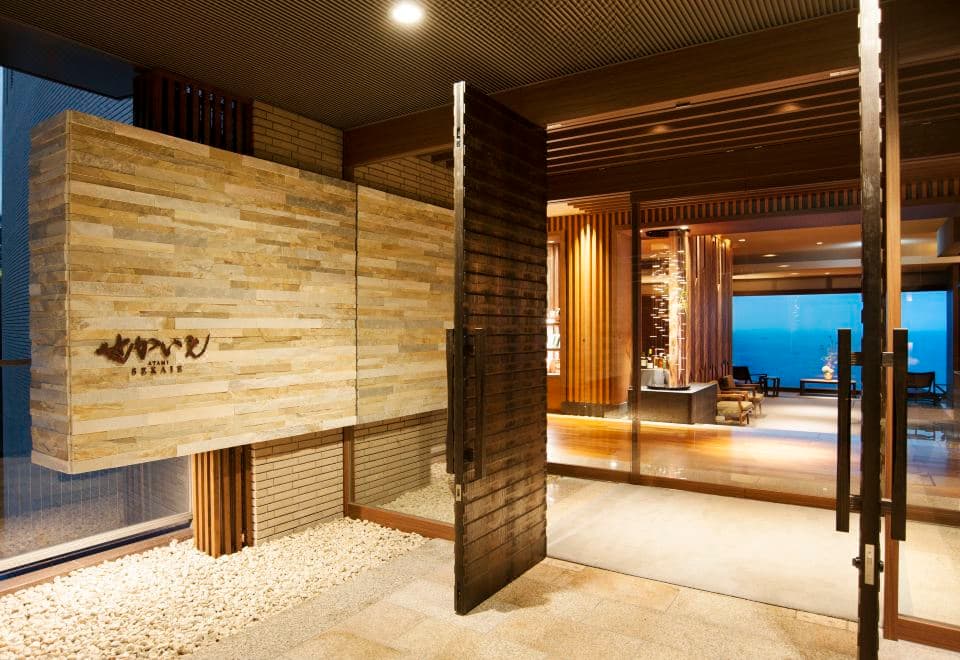
AMANE RESORT SEIKAI

Seikai is consistently listed as Beppu's most prominent ocean-view ryokan, and with all 60 rooms featuring private open-air baths facing the bay, that reputation is earned. The spring is a chloride type, known for the "bijin-no-yu" (beauty water) effect on skin. Prices run ¥30,800–¥120,500/person with meals [verified selected-ryokan.com 2026-05-30], which spans a wide range — the entry-level rooms are good value for what you get.

There's also a communal outdoor rotenburo facing the sea for those who want the social soak alongside the private option. The communal bath, as at virtually every Japanese ryokan, maintains a tattoo ban.

- Bath type: Private in-room rotenburo (all 60 rooms) + communal sea-view rotenburo

- Tattoo policy: No restriction in your private room bath; ban in communal

- English-friendliness: 3/5

- Access: 45 min by bus from Oita Airport; ~2h from Fukuoka Hakata

[CTA: Check rates at AMANE RESORT SEIKAI on Trip.com] [CTA: Compare on Booking.com]

[INTERNAL_LINK: /destinations/beppu | Beppu ryokan area guide] [INTERNAL_LINK: /best-ryokans/beppu | All recommended ryokans in Beppu]

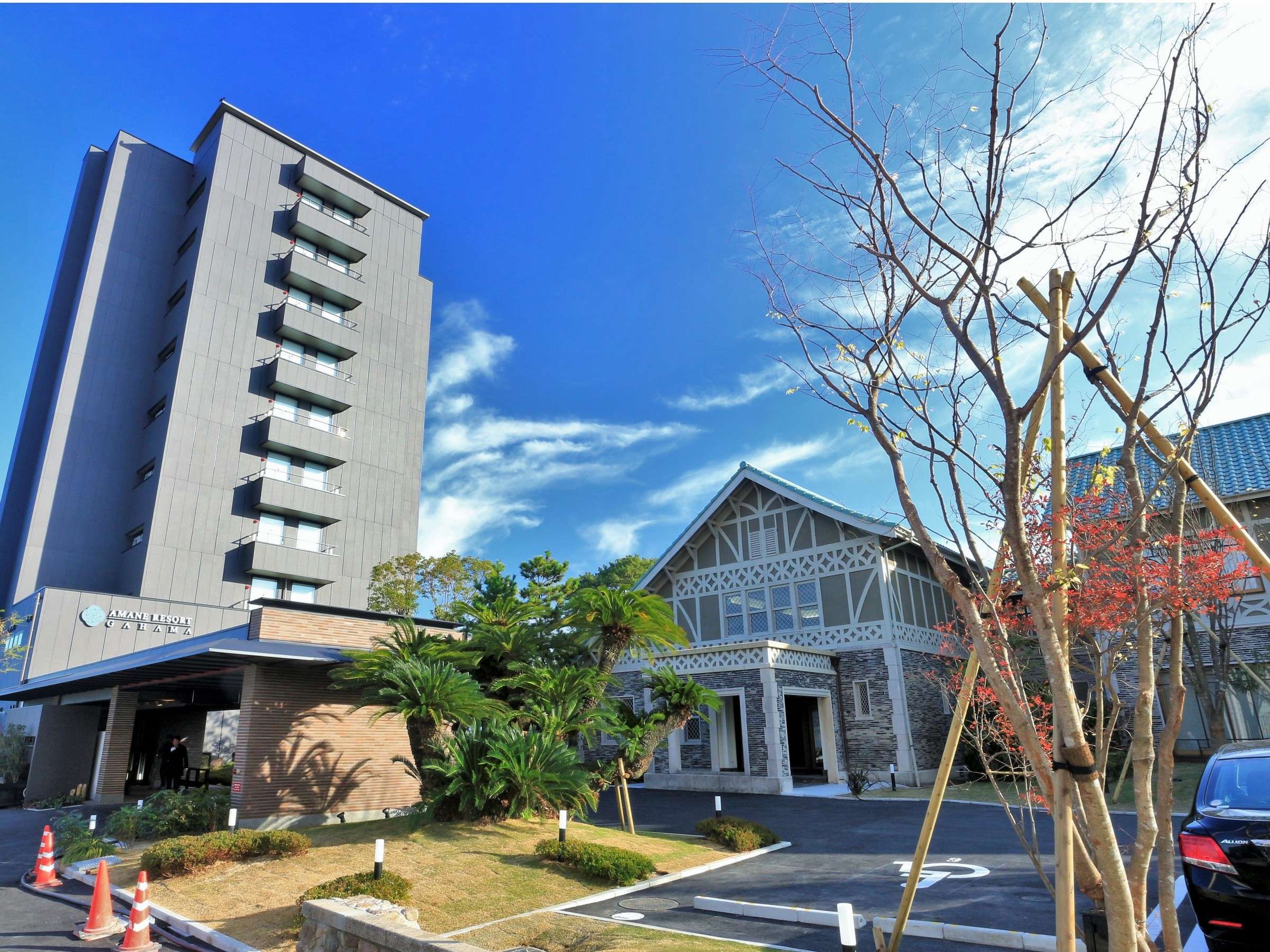
Amane Resort GAHAMA

If Seikai is the hillside pick, GAHAMA is Beppu's beachfront alternative. All 31 rooms have private onsen baths, the property sits on over 11,000 square meters of oceanfront grounds, and select rooms come with private pools rather than just rotenburo. Sleep here and you'll notice it — the sound of the sea carries through the room at night in a way that an elevated hillside property simply can't replicate. Less panoramic sweep, more immediate presence at the water.

Prices run ¥41,800–¥107,300/person with meals [verified selected-ryokan.com 2026-05-30]. The seven room categories include the Seaside Maisonette at 85 square meters, which is the pick for couples who want the pool-terrace-sea combination. The on-site café-bar is a practical detail at this price point — you're not leaving the property for drinks.

- Bath type: Private in-room bath (all 31 rooms); select rooms with open-air rotenburo; beachfront private pools in select rooms

- Tattoo policy: Private baths noted as tattoo-accessible [verified selected-ryokan.com 2026-05-30]

- English-friendliness: 3/5 (available on Booking.com, Klook, Expedia)

- Access: ~4.4 km from Beppu Station; 45 min from Oita Airport

[CTA: Check rates at Amane Resort GAHAMA on Booking.com] [CTA: Compare on Trip.com]

Suginoi Hotel

If Seikai is the intimate choice, Suginoi is the grand spectacle. 647 rooms, a 4,000-square-meter outdoor communal bath overlooking the bay, and a history going back to 1944. The communal bath — one of the largest open-air onsen in Japan — gives the kind of panoramic view that a private room bath can't match in sheer scale. You're soaking in something vast.

The honest trade-offs: at this size, it's more hotel than ryokan in atmosphere, the communal baths will almost certainly maintain a tattoo ban, and your kaiseki dinner may feel mass-produced compared to a 25-room property. But for someone who wants the Beppu bay view experience without spending ¥80,000/person, rooms start at ¥15,600/person with meals [verified selected-ryokan.com 2026-05-30] — a real entry point.

- Bath type: 4,000 sq m communal outdoor bath (bay view) + select rooms with private bath; 1 kashikiri rental bath (¥3,850–4,400/60 min)

- Tattoo policy: Communal bath — ban likely; kashikiri rental bath is your tattoo-accessible option, confirm ahead

- English-friendliness: 2/5

- Access: 50 min by bus from Oita Airport

[CTA: Check rates at Suginoi Hotel on Trip.com]

---

Ibusuki — sand baths, Kinko Bay, and the southern Kagoshima coast

Ibusuki's main draw isn't technically the onsen — it's the sunamushi, the volcanic sand bath. Guests in cotton yukatas are buried up to the neck in naturally heated black sand on the beach, their bodies warming from below as the Pacific laps a few meters away. It's absurd and wonderful, and it's only here. [INTERNAL_LINK: /destinations/ibusuki | Ibusuki area guide]

The views across Kinko Bay to Sakurajima — an active volcano that visibly exhales ash on bad days — are the most dramatic coastal backdrop in this guide. On a clear morning from a sea-facing room, you get the volcano, the bay, the fishing boats, and the red sunrise. It's a lot.

Getting there from Fukuoka takes about 3.5 hours total: Shinkansen to Kagoshima-Chuo (~1 hour 20 minutes), then the Ibusuki Makurazaki Line train to Ibusuki (~1 hour). There's also a scenic express called the Ibusuki-no-Tamatebako that makes the trip in about 55 minutes from Kagoshima-Chuo if you want to arrive in style.

On typhoons: same risk profile as Beppu — active corridor through summer. Cherry blossoms in Ibusuki arrive earlier than anywhere else in Japan (late March), with corresponding price surcharges. The optimal window is April–May or October–November.

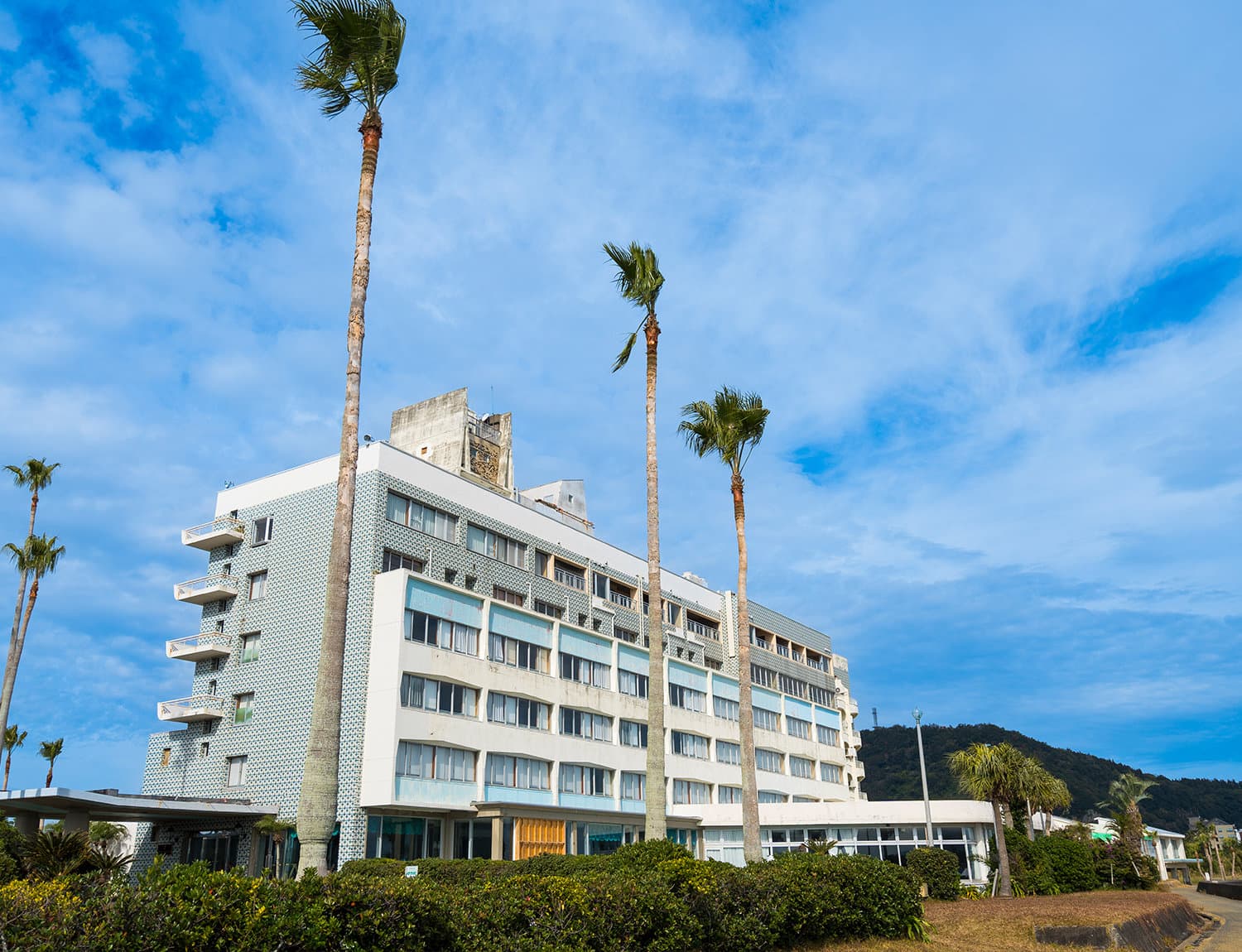
Ibusuki Seaside Hotel

The Seaside Hotel is the practical pick for most travelers: 103 rooms spanning a genuine budget-to-mid-range price band (¥13,200–¥35,200/person with meals) [verified selected-ryokan.com 2026-05-30], direct access to the Saraku Sand Bath Hall for the sunamushi experience, and ocean-facing rooms for the Kinko Bay sunrise. Four rooms have private open-air rotenburo, and there's a kashikiri rental bath at ¥3,300/60 minutes for tattoo-bearing guests who want a private soak.

The downside of being the most accessible property in the region is predictable: it's large, busy, and the kaiseki at the lower price tiers leans functional rather than exceptional. Book the private bath room category if you can stretch to it — the Sakurajima-facing rotenburo at sunrise is worth the upgrade. At peak periods (Obon in August, cherry blossom in late March), the property fills quickly. The hallways on upper floors stay noticeably quieter than those near the elevator banks. October is when the crowds thin and the rates drop.

The sand bath itself has no tattoo policy issue — guests are buried to the neck in their yukata outdoors. It's the one Ibusuki experience that bypasses the communal onsen question entirely.

- Bath type: 4 rooms with private open-air rotenburo (Sakurajima-facing); 1 kashikiri rental bath (¥3,300/60 min); shared communal bath

- Tattoo policy: No restriction in private bath or kashikiri; communal ban applies

- English-friendliness: 2/5

- Access: ~55 min from Kagoshima-Chuo via Ibusuki-no-Tamatebako express

[CTA: Check rates at Ibusuki Seaside Hotel on Trip.com] [CTA: Compare on Booking.com]

[INTERNAL_LINK: /best-ryokans/ibusuki | All recommended ryokans in Ibusuki]

---

Shirahama — Kansai's coastal classic

Shirahama is the rare Japanese beach that actually looks like a beach — white sand, warm shallow water, an approachable Pacific. It's a deliberate contrast to the dramatic volcanic coastlines of Izu and Ibusuki. The onsen here also carry serious historical weight: Shirahama is one of Japan's three oldest hot springs, alongside Arima in Hyogo and Dogo in Ehime, with records of its springs going back over 1,300 years [verified Japan National Tourism Organization 2026-05-30].

From Kansai, take the Kuroshio Limited Express from Shin-Osaka: about 2 hours 15–30 minutes to Shirahama Station, fare ¥5,080, 16 services daily [verified osakastation.com 2026-05-30]. It's a practical two-night extension of a Kyoto or Osaka trip, easy enough that you can plan it around existing travel.

Avoid Golden Week (late April–early May) and Obon (mid-August) — Shirahama is extremely popular with domestic Japanese tourists and the beach-town atmosphere disappears entirely under the crowds. October through November is the sweet spot: mild, quiet, and noticeably cheaper.

Hotel Tenzankaku Kaiyutei

Twenty-four rooms, all of them with private open-air rotenburo, all of them facing the ocean. At ¥19,800–¥45,700/person with meals [verified selected-ryokan.com 2026-05-30], Tenzankaku Kaiyutei offers the full private-rotenburo-with-sea-view experience at rates that undercut most Atami equivalents. The spring is a hydrogen carbonate type — softer on the skin than the chloride springs common elsewhere on this list. Two rooms also have indoor private baths in addition to the open-air option.

For tattooed travelers, this property is explicitly listed as welcoming via private bath rooms — one of the cleaner confirmations in this guide. The boutique scale means early booking is important; 24 rooms fill faster than you'd expect.

- Bath type: Private open-air rotenburo (all 24 rooms), ocean-facing; 2 rooms also with indoor bath

- Tattoo policy: Explicitly tattoo-welcoming for private bath users [verified selected-ryokan.com 2026-05-30]

- English-friendliness: 2/5 (bookable via Booking.com, Trip.com, Klook)

- Access: 20-min shuttle from Shirahama Station

[CTA: Check rates at Hotel Tenzankaku Kaiyutei on Trip.com] [CTA: Compare on Booking.com]

Hotel Sanrakuso

Shirahama's largest mid-range property at 98 rooms, positioned directly facing Shirarahama white sand beach. Fifteen of the 98 rooms have in-room private open-air rotenburo with sea views; the premium 9th-floor Mashirano rooms offer the most unobstructed panorama. Prices run ¥18,200–¥49,500/person with meals [verified selected-ryokan.com 2026-05-30], and kaiseki dinner is served in-suite — a detail that matters when you don't want to put on formal clothes after a bath.

- Bath type: 15 rooms with private open-air rotenburo (ocean view); shared communal bath

- Tattoo policy: Private bath rooms are tattoo-welcoming [verified selected-ryokan.com 2026-05-30]

- English-friendliness: 2/5

- Access: 20-min bus from Shirahama Station

[CTA: Check rates at Hotel Sanrakuso on Booking.com]

Kishu Shirahama Onsen Musashi

The largest property in Shirahama at 148 rooms, Musashi has a rooftop communal onsen with open ocean views and is a one-minute walk from Shirarahama Beach. Founded in 1950, it covers a wider price range than either Tenzankaku or Sanrakuso: ¥18,700–¥93,000/person with meals [verified selected-ryokan.com 2026-05-30], with three semi-open-air hot spring bath rooms and two kashikiri rental baths (¥3,300/45 minutes) for tattooed guests.

The rooftop position is what earns Musashi its place on this list: from that elevation, you're looking directly out over the Pacific without the beach-level obstructions that limit the view from the ground-floor communal baths at Sanrakuso. On a clear evening, the white sand of Shirarahama curves below you while the horizon stretches flat to the west. It's a proper ocean panorama, not a glance at the water between buildings. English speakers can book through Booking.com or the property's own English-language site at yado-musashi.co.jp/en/.

- Bath type: 3 rooms with semi-open-air hot spring bath; 2 kashikiri rental baths (¥3,300/45 min); rooftop onsen (communal, ocean view)

- Tattoo policy: Private bath rooms tattoo-welcoming [verified selected-ryokan.com 2026-05-30]

- English-friendliness: 3/5 (official English site + Booking.com)

- Access: 1-minute walk to Shirarahama Beach; 20-min bus from Shirahama Station

[CTA: Check rates at Kishu Shirahama Onsen Musashi on Booking.com]

[INTERNAL_LINK: /destinations/shirahama | Shirahama ryokan area guide]

---

Wakura Onsen — Noto Peninsula's sunset jewel

Wakura sits at the inner curve of the Noto Peninsula, on Nanao Bay — a protected inlet rather than open ocean. The water is calm enough on still evenings to act like a mirror: the sky turns gold, and a second gold sky appears below it on the bay surface. It's a different kind of coastal view than anything else on this list, more contemplative than dramatic.

From Kanazawa — which is 2.5 hours from Tokyo on the Hokuriku Shinkansen — the Noto Kagaribi Limited Express reaches Wakura Onsen in about 58 minutes, fare ¥2,230 [verified kanazawastation.com 2026-05-30]. Most ryokans here run free shuttles from the station. Wakura is the least English-friendly region in this guide (1–2/5), so download a Japanese phrasebook app before you arrive, or use Google Translate's camera function for menus and signs.

The snowcrab season (November–March) is the peak experience window here. Zuwaigani, the snow crab species dominant in the Sea of Japan, arrives in Wakura kaiseki menus from November and the combination of crab, mirror-bay sunsets, and sulfurous onsen steam is unlike anything else in the Sea of Japan corridor. It's also peak pricing — plan accordingly.

Kagaya

Kagaya has been ranked Japan's number-one ryokan for more than 30 consecutive years in industry surveys [verified selected-ryokan.com 2026-05-30]. That statistic has been repeated so often it risks becoming meaningless — but spend an evening here and you understand how a property sustains that reputation. Founded in 1906, Kagaya operates with a staff-to-guest ratio that means someone is always around before you know you need them. Japanese emperors have stayed here. The 18th–20th floor Hamarikyu executive rooms offer full Nanao Bay panoramas, and the spring water has been flowing from the same source for 1,200 years.

With 232 rooms, it's a large property by ryokan standards, and only 6 rooms have private open-air baths. The communal baths, with sea views, are spectacular — but communal, with the tattoo implications that carries.

Prices run ¥29,700–¥124,300/person with meals [verified selected-ryokan.com 2026-05-30].

Note: The Noto Peninsula experienced a significant earthquake in January 2024. As of our research date (May 2026), Kagaya is listed as operational on major booking platforms — but verify current status directly before booking.

- Bath type: 6 rooms with private open-air bath; large communal baths with Nanao Bay views

- Tattoo policy: Private bath rooms are tattoo-accessible; communal ban standard

- English-friendliness: 2/5 (Booking.com and Agoda carry this property with English interface)

- Access: ~1 hr by Noto Kagaribi Limited Express from Kanazawa + free shuttle

[CTA: Check rates at Kagaya on Booking.com]

[INTERNAL_LINK: /destinations/wakura-onsen | Wakura Onsen area guide] [INTERNAL_LINK: /destinations/kanazawa | Kanazawa travel guide]

---

Hakodate & Noboribetsu — Hokkaido's best ocean view ryokans

Hokkaido is the only region in this guide with no typhoon season — a meaningful advantage for summer bookings. It's also the only region where the winter months deliver something completely unreplicable: outdoor baths in falling snow, with the sea visible through the steam on one side and snow-covered ground on the other. Between November and March, the Hokkaido snowcrab season (zuwaigani, peak November–March [verified eat-hokkaido.com 2026-05-30]) means kaiseki dinners centered on crab that you won't eat better anywhere.

Getting to Hakodate: about 4 hours from Tokyo on the Hokkaido Shinkansen. Noboribetsu is easier to reach from Sapporo — 1 hour 14 minutes by the Hokuto Limited Express, fare ¥5,410 [verified domingo.ne.jp 2026-05-30].

The two sub-areas here serve different travelers: Hakodate is a city with history, morning markets, and a famous hillside night view — your ryokan stay connects to other things to do. Noboribetsu is a dedicated onsen town with a volcanic "hell valley" (Jigokudani) 15 minutes from the coastal properties, a wilder, more atmospheric setting.

Heiseikan Shiosaitei (Hakodate)

The largest property at Yunokawa Onsen (161 rooms), with the useful distinction that 42 of those rooms have private sea-view open-air baths. Prices run ¥14,500–¥32,000/person with meals [verified selected-ryokan.com 2026-05-30] — one of the most accessible price points for a private-rotenburo ocean view experience in Japan. The spring is a chloride type, and the property sits directly beside the sea: in winter, you can watch the fishing boat lights from your bath at night.

Yunokawa Onsen is one of Hokkaido's three major hot spring towns, with a history dating to the Muromachi period.

- Bath type: 42 rooms with private sea-view open-air rotenburo; large communal ocean-view bath

- Tattoo policy: Private bath rooms are tattoo-accessible [verified selected-ryokan.com 2026-05-30]

- English-friendliness: 3/5 (Hakodate is a well-developed tourist city; Booking.com, Agoda, Japanican all available)

- Access: 8-min bus from Hakodate Airport

[CTA: Check rates at Heiseikan Shiosaitei on Booking.com] [CTA: Compare on Trip.com]

Kappo Ryokan Wakamatsu (Hakodate)

Wakamatsu holds a Michelin Star (Michelin Guide Hokkaido), was founded in 1922, and in 1954 hosted Emperor Hirohito [verified selected-ryokan.com 2026-05-30]. All 22 rooms face the Tsugaru Channel, and the property's fame in summer centers on ikasashi — raw squid caught the same day, arranged with ceremonial precision on a lacquer tray. It's one of the most historically significant small ryokans in Japan.

The practical limitation: there are no in-room private rotenburo here. All bathing is communal, and the tattoo policy for that communal bath is unconfirmed but almost certainly banning. This is a property you book for the Michelin cuisine and the imperial pedigree, not for private-bath ocean views.

Prices run ¥26,400–¥112,200/person with meals [verified selected-ryokan.com 2026-05-30].

- Bath type: Communal hot spring bath with Tsugaru Channel views (no in-room private rotenburo)

- Tattoo policy: Communal bath — policy unconfirmed; likely banned. Not recommended for tattooed guests without direct confirmation

- English-friendliness: 2/5

- Access: 8-min bus from Hakodate Airport + 2-min walk

[CTA: Check rates at Kappo Ryokan Wakamatsu on Booking.com]

Kokoro no Resort Umi no Bettei Furukawa (Noboribetsu)

Noboribetsu's coastal pick is a smaller, quieter property than the Hakodate pair: 28 rooms, all facing the sea, beachfront positioning that puts you steps from the water. The kaiseki here leans heavily on Hokkaido seafood — the same cold-water produce (sea urchin, king crab, scallops) that makes the region's fishing ports worth visiting. Prices run approximately ¥40,000–¥80,000/person with meals [third-party estimate — verify current rates directly, as official per-person pricing was unconfirmed at research date]. Private rental baths are available for groups wanting exclusive use.

The reason to choose this over the Hakodate properties: Noboribetsu's Jigokudani — the volcanic "hell valley" with its sulfurous steam vents and rust-colored mineral flows — is 15 minutes away. You can spend an hour walking the valley boardwalks and return to a seaside soak before dinner. That combination of volcanic landscape and coastal ryokan isn't available in Hakodate.

- Bath type: Private rental baths; communal bath with full ocean panorama facing the sea

- Tattoo policy: Private rental baths noted as available; communal bath policy unconfirmed — confirm directly before booking

- English-friendliness: 2/5 (available on KAYAK, Klook, Japanican, IKYU.com)

- Access: 5-min drive from Noboribetsu Station; ~1h 15m from Sapporo by Hokuto Limited Express

[CTA: Check rates at Kokoro no Resort Umi no Bettei Furukawa on Klook or Japanican]

[INTERNAL_LINK: /destinations/hakodate | Hakodate ryokan guide] [INTERNAL_LINK: /destinations/noboribetsu | Noboribetsu guide]

---

Pricing breakdown: what to budget for an ocean view ryokan in Japan

The single most common confusion among first-time bookers: ryokan prices in Japan are per person per night, and they include dinner and breakfast. Always. A couple booking a ¥30,000/person room pays ¥60,000 total for the night — that covers two full kaiseki dinners (usually 8–12 courses), breakfast, unlimited use of onsen facilities, and the room. The comparison point isn't a budget hotel; it's a hotel plus two restaurant meals.

Budget tier: ¥15,000–25,000/person (~$100–$165) [verified japan-guide.com / MATCHA 2026-05-30]. Communal sea-view rotenburo, tatami room, functional kaiseki with local fish. The trade-off: shared baths mean tattoo policies apply, and view quality from the bath is less guaranteed. Suginoi Hotel in Beppu (from ¥15,600) and Heiseikan Shiosaitei in Hakodate (from ¥14,500) are the strongest budget picks with ocean baths in this guide.

Mid-range: ¥25,000–45,000/person (~$165–$300). This is where in-room private rotenburo start appearing consistently. Dogashima New Ginsui (from ¥19,800) sits at the accessible end; Hotel Tenzankaku Kaiyutei in Shirahama (from ¥19,800 up to ¥45,700) and AMANE RESORT SEIKAI in Beppu (from ¥30,800) sit in the comfortable mid-range. This is the recommended entry point for the full private ocean-view rotenburo experience.

Luxury: ¥45,000+/person (~$300 and up). Guaranteed in-room private rotenburo with premium sea view, premium kaiseki, more likely English-capable staff. Atami Sekaie starts at ¥46,200 and climbs to ¥173,300; Amane Resort GAHAMA in Beppu runs ¥41,800–¥107,300; Kagaya in Wakura reaches ¥124,300. At this level, the kaiseki quality and room design become part of what you're paying for, not just the view.

Seasonal surcharges to anticipate:

- Golden Week (April 29–May 5): +20–40%, domestic travel peaks

- Obon (mid-August): highest domestic demand of the year at coastal properties

- Cherry blossom (late March–early April): prices can double at premium properties; book 3–6 months ahead

- Snowcrab season in Hokkaido/Wakura (November–March): dinner upgrade adds ¥5,000–15,000/person

- New Year (December 28–January 4): +30–50%, some luxury properties book out a year ahead

October–November is the value window across most regions: post-typhoon for Kyushu properties, pre-peak for Hokkaido, autumn foliage without cherry blossom price inflation.

[INTERNAL_LINK: /ryokans?view=ocean | Browse all ocean view ryokans] [INTERNAL_LINK: /blog/ryokan-pricing-guide | Complete ryokan pricing guide]

---

Tattoo policy at ocean view ryokans: the honest reality

That pricing breakdown covers the financial side — but for tattooed travelers, there's a second filter that overrides price and view quality entirely.

Communal rotenburo across Japan enforce a near-universal tattoo ban — even the most scenic ones, even at international-facing properties. This is deeply rooted in cultural association with organized crime and is unlikely to change in the near term.

The good news is structural: this problem has a clean solution that also happens to be the best possible ocean view experience. Booking a room with an in-room private rotenburo eliminates the issue entirely. You're the only user. There are no other guests, no signs, no policy conversations. Just your private outdoor bath and the sea.

Tip

Tip: An in-room private rotenburo costs more than a communal-bath room at the same property — typically ¥5,000–15,000/person more per night. It also gives you the full 2 a.m. soak, the privacy, and the freedom. For tattooed travelers, it's simply the correct booking choice.

The middle option — kashikiri (reserved communal bath) — has genuinely variable policy. Some properties allow tattoos during private reservation windows because no other guests are present; others still say no. Always confirm in writing via Trip.com messaging or the property's own website before booking. Look for 刺青OK or タトゥーOK in the property's own FAQ.

One exception worth knowing: the sand bath (sunamushi) at Ibusuki is conducted outdoors in a yukata, with guests buried to the neck in volcanic sand. There is no tattoo policy issue here — the bath is the beach, and you're dressed.

[INTERNAL_LINK: /blog/tattoo-friendly-ryokans | Tattoo-friendly ryokans — region-specific guide] [INTERNAL_LINK: /ryokans?feature=tattooFriendly&view=ocean | Browse ocean view ryokans with private bath (tattoo-accessible)]

---

How to book: platform guide for ocean view ryokans in Japan

For an English-language interface, start with Trip.com (strongest Asia-Pacific inventory, app deals sometimes 10–25% cheaper than other platforms) or Booking.com (most familiar cancellation policies for Western travelers, free cancellation standard on most ryokan listings). Our database of 283 Japanese ryokans pulls from both — Trip.com covers 217+ properties, Booking.com covers 206+.

For luxury properties at the ¥45,000+ tier, [IKYU.com](https://www.ikyu.com/en/) is worth a separate check. It's a curated premium Japanese booking platform with inventory that often doesn't appear on Booking.com or Trip.com — particularly useful for booking Kagaya, Atami Sekaie, and boutique properties under 20 rooms that don't maintain Western-platform listings.

For properties that never appear on Western platforms, the Japanese booking sites hold significant inventory. [Rakuten Travel (Japanese inventory)](https://travel.rakuten.co.jp/) lists properties not found anywhere else — use your browser's automatic translation, or navigate to their English interface directly. Japanican (run by JTB, Japan's largest travel agency) is another source for rural and specialty ryokans.

The most important step to verify the view is actually from the bath: on any platform, open the photo gallery and look specifically for photos of the bath space and what it faces — not photos of the room interior or the room's window view. If a property only shows you scenic window shots and no bath photos, email them directly and ask for a photo of the bath orientation before you book.

Booking lead times matter more here than almost anywhere in travel:

- Peak dates (Golden Week, New Year, snowcrab season): 3–6 months ahead

- Shoulder season (October, February outside snowcrab peak): 2–4 weeks usually sufficient

- Luxury properties (10–20 rooms): fill fastest regardless of season

Tip

Tip: Trip.com's app sometimes surfaces last-minute deals on the same mid-range ocean view properties. If your dates are flexible, check 2–3 weeks before travel — sudden availability appears more often than you'd expect, especially at 30–40-room properties that have had a group cancellation.

[INTERNAL_LINK: /blog/how-to-book-ryokan | Step-by-step ryokan booking guide] [INTERNAL_LINK: /blog/first-time-ryokan-guide | First-time ryokan guide]

---

Which region has the best ocean view ryokans in Japan for you?

A quick-reference guide if you're still deciding:

| Your Priority | Best Region | Why | |---|---|---| | Closest to Tokyo | Izu / Atami | 35–90 min from central Tokyo | | Closest to Osaka / Kyoto | Shirahama | ~2.5 hr by express train | | Best sunset views | Beppu | West-facing bay, reliably spectacular evenings | | Most dramatic volcanic backdrop | Ibusuki | Sakurajima across Kinko Bay | | Winter snow + sea experience | Hakodate / Noboribetsu | Hokkaido winter only | | Best snowcrab kaiseki | Wakura or Noboribetsu | November–March season | | Private rotenburo, tattoo-accessible | Any region | Prioritize properties where all rooms have in-room bath | | Best English-friendliness | Hakodate (3/5) | Most tourist-developed coastal city in this guide | | Best value for private rotenburo | Shirahama (Tenzankaku Kaiyutei) | From ¥19,800/person, all rooms private bath |

If you're making your first coastal ryokan trip and want a single recommendation: Atami for the Tokyo connection and the Pacific drama, or Shirahama for the Kansai connection and the historic springs. Both have strong options across mid-range and luxury tiers, and both are reliable enough that a less-than-perfect booking won't ruin the experience.

[INTERNAL_LINK: /ryokans?view=ocean | Full ocean view ryokan database] [INTERNAL_LINK: /destinations | All Japan ryokan destinations]

---

Frequently asked questions

What is the difference between a private onsen and a rotenburo at a ryokan?

A rotenburo (露天風呂) simply means an outdoor bath — it can be private or communal. A private onsen (客室露天風呂) is an outdoor bath attached exclusively to your room. The best ocean view ryokans combine both: a private rotenburo off your tatami room that faces the sea, which you can use any time without encountering other guests. Communal rotenburo are shared and nearly always ban tattoos; private in-room rotenburo have no such restriction because you're the only user. The terms are related but not interchangeable — always check which configuration you're booking.

Which ryokans in Japan have ocean view onsen?

The strongest concentrations are in Izu/Atami (near Tokyo, rugged Pacific coastline), Beppu (Kyushu, west-facing bay, all-rooms ocean view at several properties), Ibusuki (Kinko Bay with Sakurajima backdrop), Shirahama (Kansai coast, white sand, 1,300-year-old springs), Wakura Onsen (Noto Peninsula, mirror-bay sunsets), and Hakodate/Noboribetsu in Hokkaido (winter snow-sea experience). Specific verified properties from our database are covered region by region above.

How much does a ryokan with ocean view cost per night in Japan?

Prices are per person and include dinner and breakfast — a couple pays double the listed rate. Budget ocean view stays begin around ¥15,000–25,000/person (~$100–$165): communal sea-view bath, tatami room, basic kaiseki. Mid-range with in-room private rotenburo typically runs ¥25,000–45,000/person (~$165–$300) — this is the recommended entry point for the private sea-view bath experience. Luxury properties with guaranteed unobstructed sea-view private baths start at ¥45,000+/person (~$300+), with top-end rooms at places like Kagaya reaching ¥124,300/person [verified selected-ryokan.com 2026-05-30].

Can you go to a ryokan onsen with tattoos in Japan?

At communal ocean view baths, tattoos are banned at virtually every ryokan in Japan — even at outdoor rotenburo with spectacular sea views. The practical solution: book a room with an in-room private rotenburo. You're the sole user, and tattoo policies don't apply. Kashikiri (reserved communal baths) have variable policies — some allow tattoos during private reservation windows, many still don't. Always confirm in writing with the property, not via the OTA listing, before you book. The sand bath at Ibusuki is an exception: it's outdoors, conducted in a yukata, and has no tattoo issue.

What does "kaiseki" mean at a ryokan?

Kaiseki (懐石) is a multi-course Japanese dinner — typically 8–12 dishes featuring local, seasonal ingredients. At coastal ryokans it usually centers on fresh seafood: sashimi platters, whole grilled fish, steamed shellfish, seasonal preparations specific to the region. In Hokkaido from November through March, snowcrab dominates. In Hakodate's summer, squid (ika) is the centerpiece. Kaiseki is included in your nightly rate and is usually served in your room or a private dining room. It represents the culinary highlight of a ryokan stay and is a primary reason coastal ryokans in prime fishing areas cost what they do.

How far in advance should I book an ocean view ryokan in Japan?

For peak periods — Golden Week (late April–early May), New Year (late December–early January), cherry blossom (late March–April), and snowcrab season in Hokkaido and Wakura (November–March) — book 3–6 months ahead. Good ocean view ryokans often have only 10–30 rooms and the most desirable room categories (private rotenburo, top-floor sea-view) sell out first. Shoulder season stays (October, early November, February outside snowcrab peak) can usually be booked 2–4 weeks out. Trip.com's app sometimes surfaces last-minute availability at 1–2 weeks out if your dates are flexible.

Are there ocean view ryokans near Tokyo?

Yes — Atami is 35–50 minutes from Tokyo by Shinkansen [verified visitatami.com 2026-05-30], with dozens of sea-view properties on the hillside above Sagami Bay. The Izu Peninsula is 80–90 minutes via the Odoriko or Saphir Odoriko limited express, with more dramatic Pacific coastline views and a less crowded atmosphere. West Izu (Nishi-Izu, Dogashima area) takes about 2 hours 40 minutes total but offers some of the best sunsets on the peninsula. Both regions work well as 2-night extensions of a Tokyo trip without needing to rearrange your entire Japan itinerary.

What is the best region in Japan for a seaside ryokan stay?

It depends on what you're optimizing for. For Tokyo access and Pacific drama: Izu or Atami. For volcanic bay views unlike anywhere else in Japan: Ibusuki. For west-facing sunset panoramas over a city bay: Beppu. For winter snow-and-sea atmosphere and snowcrab kaiseki: Hokkaido (Hakodate or Noboribetsu). For calm mirror-water sunsets and Japan's most celebrated ryokan institution: Wakura Onsen on the Noto Peninsula. If you can only go once, the Izu/Atami corridor offers the widest range of price tiers and most reliable English-friendly booking infrastructure — a reasonable first choice before you develop stronger regional preferences.

편백나무 향기 감도는 노천탕(露天風呂)에 몸을 담그면 눈앞에 태평양이 가득 펼쳐집니다. 담장도 없고, 다른 투숙객도 없이, 오직 41℃의 온천수와 저 아래에서 들려오는 파도 소리뿐입니다. 일본 오션뷰 료칸을 찾는 이유가 바로 이 순간을 위해서인 만큼, 예약 결정 하나하나가 그만큼 중요합니다. 그리고 막연한 '바다 전망 객실' 표기 하나가 숙소마다 얼마나 다른 결과를 낳는지도 잘 아실 겁니다.

저희는 이즈 반도, 벳푸만(別府湾), 가고시마 긴코만(錦江湾), 노토 반도 나나오만(七尾湾) 등을 포함해 일본 전국 283개 료칸을 조사했습니다. 이 가이드는 애매한 '바다 전망 객실' 표기를 명확히 해석하고, 단순히 창문으로만이 아니라 욕조에 들어앉아 바다를 바라볼 수 있는 숙소가 어디인지, 그리고 각 지역이 여러분의 일정·예산·상황에 어떻게 맞는지를 짚어드립니다.

예약을 시작하기 전 반드시 알아두실 것이 있습니다. 일본 료칸의 가격은 1박 1인 기준이며, 항상 석식과 조식이 포함됩니다. ¥30,000 표기는 1인당 1박 요금으로, 커플이 1박하면 합계 ¥60,000(약 28만 원)입니다. 이것이 업계 표준이며, 이 가이드의 모든 요금은 이를 기준으로 표기합니다.

잘못된 예약을 피하는 또 하나의 핵심: '오션뷰 객실'과 '오션뷰 욕실'은 전혀 다른 개념입니다. 이 차이는 바로 아래에서 설명드리겠습니다.

[INTERNAL_LINK: /blog/first-time-ryokan-guide | 료칸이 처음이신가요? 초보자 가이드를 먼저 읽어보세요] 이미 료칸의 기본을 알고 계시고 어떤 해안 숙소를 예약할지 알고 싶으시다면 계속 읽어주세요.

---

료칸에서 '오션뷰'가 진짜 의미하는 것 (먼저 확인하세요)

료칸 예약 사이트에서 '오션뷰'라고 표기되어 있다면, 실제로는 세 가지 완전히 다른 구성 중 하나를 의미할 수 있습니다. 어느 것을 예약하느냐에 따라 요금, 문신 정책, 전체 숙박 경험이 달라집니다.

A 유형: 객실 전용 노천탕(바다 전망) (일본어: 客室露天風呂付き, 카시쓰 로텐부로 쓰키). 최상의 선택입니다. 다다미 객실에 직접 연결된 실외 온천 욕조 — 보통 다다미 1.5~3장 크기 — 가 바다를 향해 놓여 있습니다. 새벽 2시에 유카타를 입고 다른 투숙객과 마주치지 않고 혼자 입욕할 수 있습니다. 아타미 세카이에(熱海 姥小島)와 시라하마 텐잔카쿠 카이유테이(白浜 天山閣 海游亭)는 이를 핵심 가치로 삼아, 전 객실에 이 시설을 갖추고 있습니다.

B 유형: 공용 노천탕(바다 전망). 여러 투숙객이 함께 이용하는 실외 대욕장으로, 바다를 배경으로 입욕합니다. 규모가 인상적인 경우도 있지만 붐빌 수 있습니다. 벳푸의 스기노이 호텔에는 4,000㎡ 규모의 공용 대욕장이 있는데, 광활하지만 프라이빗하지는 않습니다.

C 유형: 가시키리 (貸切風呂, 전세욕). 내 팀만 단독으로 사용할 수 있는 공용 사이즈의 욕조로, 보통 45~60분, ¥3,000~5,000의 추가 요금이 발생합니다. 객실 전용 노천탕이 없는 숙소에서 활용 가능한 현실적인 절충안입니다.

처음 예약하는 분들이 가장 많이 빠지는 함정: 일부 숙소는 객실의 큰 창문에서 보이는 바다 파노라마 사진을 보여주지만, 욕실 자체는 안마당이나 정원을 향하고 있습니다. '오션뷰'라는 표현이 기술적으로 틀린 말은 아니지만 — 객실 창문 기준으로 — 입욕 중에는 바다가 보이지 않습니다. 이를 피하려면 객실 창문 사진이 아닌, 욕실 공간과 그 전망을 보여주는 사진을 찾으세요. 일본어 예약 사이트에서는 '客室露天風呂 海側'(객실 노천탕, 바다 방향)라는 검색어가 가장 정확합니다.

Booking.com과 Trip.com에서는 먼저 '전용 욕실' 또는 '프라이빗 배스' 필터를 적용하고, 사진 갤러리에서 욕실 방향을 확인하는 것이 좋습니다. 숙소가 바다 전망 창문 사진만 보여주고 욕실 사진은 벽을 향하고 있다면, 그것이 답입니다. [라쿠텐 트래블 (일본어 버전)](https://travel.rakuten.co.jp/)에서는 '客室露天風呂付き'(객실 노천탕 포함)와 '海側'(바다 방향)를 조합 검색하면 가장 정확한 결과를 얻을 수 있습니다.

Tip

팁: '우미부로(海風呂)'나 '카이요부로(海洋風呂)' 같은 표현이 숙소 홍보 문구에 등장하기도 하지만, 라쿠텐 트래블이나 자란(Jalan)의 표준 검색 필터로 등록되어 있지 않습니다. 일본어 플랫폼에서는 반드시 '客室露天風呂付き' + '海側' 조합으로 검색하세요.

[INTERNAL_LINK: /blog/onsen-etiquette-foreigners | 온천 에티켓 가이드] [INTERNAL_LINK: /blog/tattoo-friendly-ryokans | 일본 문신 가능 료칸 — 완벽 가이드]

---

이즈 반도 & 아타미 — 도쿄에서 가장 가까운 오션뷰 료칸

아타미(熱海)는 도쿄에서 신칸센으로 35~50분 거리로, 환승도 없고 택시도 필요 없습니다 [출처 확인 visitatami.com 2026-05-30]. 이 접근성 덕분에 도쿄를 거점으로 하는 여행자들이 첫 번째 해안 료칸으로 가장 많이 찾는 곳이며, 사가미만(相模湾) 위 산비탈에는 태평양 전망으로 특화된 료칸들이 즐비합니다.

이곳의 해안선은 온화하기보다는 드라마틱합니다. 화산이 만든 절벽, 거칠게 넘실대는 태평양, 계절마다 색이 바뀌는 청회색 바다. 1~2월에는 폭풍과 낮은 구름이 야성적인 풍경을 만들고, 료칸 내부의 세련된 분위기와 대비를 이룹니다. 8월은 반대 극단으로 덥고, 붐비고, 요금도 최고조에 달합니다.

이즈 반도 본체로 가려면 도쿄에서 '오도리코'나 '사파이어 오도리코' 특급을 타고 80~90분. 서이즈(니시이즈, 도가시마 방면)는 지방 버스 연결까지 포함해 약 2시간 40분이 소요됩니다.

영어 대응 실태: 국제 관광객에 익숙한 아타미 숙소의 영어 대응 수준은 5점 만점에 2점 정도입니다. 직원 영어 실력은 제한적이지만 번역 앱으로 체크인은 충분히 가능합니다. 남이즈는 1/5으로 언어 장벽이 높습니다. ¥45,000 이상 고급 숙소에는 영어 가능 직원이 있는 경우가 많아 3~4/5 수준입니다.

아타미 세카이에 (Atami Sekaie)

세카이에의 전 25개 객실 모두 태평양을 향한 전용 노천탕을 갖추고 있습니다. 수질은 황산염·염화물 온천으로 무색투명하고 부드럽습니다. 욕조 덱은 수평선을 최대한 바라볼 수 있도록 설계되어, 난간 너머 바다를 보는 게 아니라 바다 그 자체가 시야를 채웁니다. 요금은 1인 1박 ¥46,200~¥173,300(식사 포함) [출처 확인 selected-ryokan.com 2026-05-30]입니다. 이 시작 요금은 와쿠라 온센 가가야(加賀屋, ¥29,700~)보다 1인당 ¥16,500 높습니다. 차이는 명확합니다. 세카이에는 전 25개 객실 모두에 전용 노천탕을 보장하지만, 가가야의 232개 객실 중 전용 욕실이 있는 객실은 단 6개뿐입니다. 전 관 금연.

솔직히 말씀드리면: 25개 객실은 친밀한 분위기를 낼 만큼 작지만, 진정한 부티크 료칸이라 하기엔 조금 큽니다. 가이세키(懐石) 석식 품질은 수준급이지만 이 가격대에서 단연 돋보이는 수준은 아닙니다. 요금의 대부분은 객실과 전망에 대한 대가입니다.

- 욕실 유형: 전용 객실 노천탕(전 객실), 태평양 방향

- 문신 정책: 전용 욕실이므로 제한 없음

- 영어 대응: 2~3/5 (Booking.com, Agoda, Japanican에서 영어 예약 가능; 현장 직원 영어 수준 미확인)

- 교통: 도쿄에서 신칸센 45분 + 셔틀 5분

[CTA: Trip.com에서 아타미 세카이에 요금 확인] [CTA: Booking.com에서 비교하기]

[INTERNAL_LINK: /destinations/atami | 아타미 료칸 지역 가이드] [INTERNAL_LINK: /best-ryokans/atami | 아타미 추천 료칸 전체 목록]

도가시마 뉴 긴스이 (Dogashima New Ginsui, 서이즈)

전 123개 객실이 바다를 향하고 있으며, 일본 '100대 일몰 명소'에 이름을 올린 풍경을 자랑합니다. 요금은 1인 ¥19,800~(식사 포함) [출처 확인 selected-ryokan.com 2026-05-30]으로, 이즈 지역에서 성가비 최고의 오션뷰 료칸 중 하나입니다. 1973년에 창업한 유서 깊은 숙소로, 공용 욕장 시설은 그 시대의 흔적을 담고 있지만, 태평양 위로 지는 석양이야말로 재방문 손님들이 돌아오는 진짜 이유입니다.

중요한 주의사항: 객실 전용 노천탕은 없습니다. 입욕은 공용 실외 대욕장만 가능하며, 문신 정책도 다른 투숙객과 같은 조건이 적용됩니다. 석식은 뷔페 형식으로 생맥주 무료 서비스가 있어 분위기가 좋지만, 가이세키의 격식은 없습니다. 예약 전 기대치를 확인하세요.

- 욕실 유형: 공용 실외 대욕장(바다 방향, 전 객실 오션뷰)

- 문신 정책: 공용 대욕장 — 예약 전 직접 확인 필요

- 영어 대응: 2/5

- 교통: 도쿄에서 약 2시간 40분 (신칸센으로 미시마까지 + 지역 연결편)

[CTA: Booking.com에서 도가시마 뉴 긴스이 요금 확인]

[INTERNAL_LINK: /destinations/izu | 이즈 반도 료칸 가이드]

---

벳푸 & 오이타 — 규슈 해안 만(灣)의 전 객실 오션뷰 온천

벳푸(別府)는 용출량과 원천 수 모두 일본 최대의 온천 도시입니다 [출처 확인 selected-ryokan.com / 벳푸시 2026-05-30]. 벳푸만에 면한 산비탈 료칸들은 서쪽을 향하고 있어, 일본에서 가장 안정적으로 황홀한 일몰 풍경을 감상할 수 있습니다. 맑은 저녁이면 만(灣)이 황금빛으로 물들고, 노천탕이 그 풍경을 한 폭의 그림처럼 담아냅니다.

후쿠오카에서의 이동: 하카타역에서 '소닉 특급'으로 1시간 51분~2시간 5분, 요금 ¥5,680 [출처 확인 japantrain.net 2026-05-30]. 30분 간격으로 출발합니다. 도쿄에서 오신다면 오이타 공항으로 비행 후 45분 버스가 더 빠른 경로입니다.

Tip

계절 주의사항: 벳푸는 태풍 경로 위에 있습니다. [일본 기상청](https://www.jma.go.jp/jma/indexe.html)에 따르면 태풍 시즌은 5월~11월이며, 8~9월이 가장 위험합니다. 이 기간 규슈 해안 료칸을 예약하신다면 태풍 취소를 보장하는 여행 보험 가입을 권장합니다. 10월은 이상적인 시기로 태풍 위험은 줄고 겨울은 아직 오지 않았으며, 성수기 대비 요금도 눈에 띄게 낮습니다.

AMANE RESORT SEIKAI

세카이는 벳푸의 대표적인 오션뷰 료칸으로 꾸준히 꼽히며, 전 60개 객실 모두 만을 향한 전용 노천탕을 갖추고 있어 그 명성이 설득력 있습니다. 수질은 염화물 온천으로, 피부를 매끄럽게 하는 '미인의 탕(美人の湯)' 효과로 유명합니다. 요금은 1인 1박 ¥30,800~¥120,500(식사 포함) [출처 확인 selected-ryokan.com 2026-05-30]으로, 폭넓은 구간을 커버합니다. 입문 급 객실도 가성비가 좋습니다.

바다를 향한 공용 노천 대욕장도 있어 프라이빗 입욕과 대형 공용욕을 모두 즐길 수 있습니다. 공용 욕장은 일본의 거의 모든 료칸과 마찬가지로 문신을 금지합니다.

- 욕실 유형: 전용 객실 노천탕(전 60개 객실) + 해경 공용 노천 대욕장

- 문신 정책: 전용 욕실은 제한 없음; 공용 대욕장 문신 금지

- 영어 대응: 3/5

- 교통: 오이타 공항에서 버스 45분; 후쿠오카 하카타에서 약 2시간

[CTA: Trip.com에서 AMANE RESORT SEIKAI 요금 확인] [CTA: Booking.com에서 비교하기]

[INTERNAL_LINK: /destinations/beppu | 벳푸 료칸 지역 가이드] [INTERNAL_LINK: /best-ryokans/beppu | 벳푸 추천 료칸 전체 목록]

Amane Resort GAHAMA

세카이가 산비탈의 선택지라면, GAHAMA는 벳푸의 비치프런트 대안입니다. 전 31개 객실에 전용 온천 욕실이 있고, 11,000㎡ 이상의 해안 부지에 위치하며, 일부 객실에는 노천탕 대신 프라이빗 풀이 딸려 있습니다. 이곳에서 하룻밤을 보내면 밤중에 파도 소리가 객실로 스며드는 것을 느낄 수 있습니다 — 이는 산 위에 있는 숙소에서는 절대 경험할 수 없는 감각입니다. 파노라마 뷰보다는 바다의 생생한 존재감이 가득합니다.

요금은 1인 1박 ¥41,800~¥107,300(식사 포함) [출처 확인 selected-ryokan.com 2026-05-30]. 7가지 객실 유형 중, 85㎡의 '씨사이드 메종넷'은 풀·테라스·바다 뷰 세 가지를 모두 원하는 커플에게 최적입니다. 이 가격대에 온사이트 카페바가 있다는 것도 실용적인 장점이며, 음료 때문에 외출할 필요가 없습니다.

- 욕실 유형: 전 31개 객실 전용 온천 욕실; 일부 객실 실외 노천탕; 일부 객실 해변 프라이빗 풀

- 문신 정책: 전용 욕실 문신 이용 가능으로 명시 [출처 확인 selected-ryokan.com 2026-05-30]

- 영어 대응: 3/5 (Booking.com, Klook, Expedia에서 예약 가능)

- 교통: 벳푸역에서 약 4.4km; 오이타 공항에서 45분

[CTA: Booking.com에서 Amane Resort GAHAMA 요금 확인] [CTA: Trip.com에서 비교하기]

스기노이 호텔 (Suginoi Hotel)

세카이가 아늑한 선택지라면, 스기노이는 웅장한 스펙터클입니다. 647개 객실, 해안을 내려다보는 4,000㎡의 실외 공용 대욕장, 1944년부터 이어온 역사. 공용 대욕장 — 일본 최대급 실외 온천 중 하나 — 은 어떤 전용 욕실도 견줄 수 없는 광대한 파노라마를 선사합니다. 거대한 풍경 속에 몸을 담그는 체험입니다.

솔직히 말씀드리면: 이 규모에서는 료칸보다 대형 리조트 호텔에 가까운 분위기이며, 공용 욕장은 거의 확실히 문신을 금지합니다. 25개 객실 규모의 숙소와 비교하면 가이세키 석식은 단체 급식 느낌이 날 수 있습니다. 하지만 1인당 ¥80,000을 쓰지 않고도 벳푸만 뷰를 즐기고 싶다면, 객실 요금 ¥15,600~(식사 포함) [출처 확인 selected-ryokan.com 2026-05-30]은 실질적인 입문 선택지입니다.

- 욕실 유형: 4,000㎡ 공용 실외 대욕장(만 전망) + 일부 객실 전용 욕실; 가시키리 1실(¥3,850~4,400/60분)

- 문신 정책: 공용 대욕장 — 금지 가능성 높음; 가시키리가 문신 투숙객의 대안, 사전 확인 필요

- 영어 대응: 2/5

- 교통: 오이타 공항에서 버스 50분

[CTA: Trip.com에서 스기노이 호텔 요금 확인]

---

이부스키 — 모래찜질 온천, 긴코만, 가고시마 남단 해안

이부스키(指宿)의 핵심 매력은 엄밀히 말하면 온천이 아니라 스나무시(砂蒸, 모래찜질 목욕)입니다. 면 유카타를 입은 투숙객들이 자연스럽게 데워진 검은 해변 모래 속에 목까지 묻혀, 불과 몇 미터 앞 태평양의 파도 소리를 들으며 몸을 달굽니다. 황당하고도 멋진, 오직 이곳에서만 가능한 체험입니다. [INTERNAL_LINK: /destinations/ibusuki | 이부스키 지역 가이드]

긴코만 너머로 바라보이는 사쿠라지마(桜島) — 나쁜 날에는 눈에 보일 정도로 화산재를 내뿜는 활화산 — 는 이 가이드에서 가장 극적인 해안 배경입니다. 맑은 아침 바다 전망 객실에서 바라보면 화산, 만, 어선, 붉은 일출이 한꺼번에 눈에 들어옵니다.

후쿠오카에서의 이동은 총 약 3시간 30분: 신칸센으로 가고시마 추오역까지(약 1시간 20분), 이후 이부스키 마쿠라자키선으로 이부스키까지(약 1시간). '이부스키노 타마테바코'라는 관광 특급을 이용하면 가고시마 추오에서 약 55분 만에 도착합니다.

태풍에 대하여: 벳푸와 동일한 위험 조건 — 여름에는 활발한 태풍 경로입니다. 이부스키의 벚꽃은 일본 어느 곳보다 일찍 핍니다(3월 하순), 그에 맞춰 요금도 오릅니다. 최적 시기는 4~5월 또는 10~11월입니다.

이부스키 시사이드 호텔 (Ibusuki Seaside Hotel)

대부분의 여행자에게 가장 현실적인 선택지입니다. 103개 객실로 실질적인 경제형~중급 가격대(¥13,200~¥35,200/인, 식사 포함) [출처 확인 selected-ryokan.com 2026-05-30]를 커버하고, 사라쿠 모래찜질 회관으로 직접 연결되며, 긴코만의 일출을 바라볼 수 있는 바다 전망 객실을 갖추고 있습니다. 4개 객실에는 전용 노천탕이, 문신 있는 투숙객을 위한 가시키리 욕실(¥3,300/60분)도 있습니다.

이 지역에서 가장 예약하기 쉬운 숙소인 만큼, 예상되는 단점도 있습니다. 규모가 크고, 붐비며, 저가대 가이세키는 격식보다 실용성에 치우칩니다. 예산이 허락한다면 사쿠라지마 방향 노천탕 객실을 선택하세요 — 일출 때의 풍경은 업그레이드 가격을 충분히 보상해 줍니다. 성수기(8월 오본, 3월 하순 벚꽃 시즌)에는 빠르게 매진됩니다. 엘리베이터에서 먼 고층 복도 쪽이 상당히 조용합니다. 10월은 혼잡도 줄고 요금도 낮아집니다.

모래찜질 목욕은 문신 정책 문제가 전혀 없습니다 — 투숙객들이 유카타를 입고 야외 모래 속에 누워 있으므로, 공용 온천 관련 규정이 완전히 적용되지 않습니다.

- 욕실 유형: 사쿠라지마 방향 전용 노천탕 4개 객실; 가시키리 1실(¥3,300/60분); 공용 대욕장

- 문신 정책: 전용 욕실 및 가시키리는 제한 없음; 공용 대욕장 금지

- 영어 대응: 2/5

- 교통: 가고시마 추오에서 '이부스키노 타마테바코' 약 55분

[CTA: Trip.com에서 이부스키 시사이드 호텔 요금 확인] [CTA: Booking.com에서 비교하기]

[INTERNAL_LINK: /best-ryokans/ibusuki | 이부스키 추천 료칸 전체 목록]

---

시라하마 — 간사이의 클래식 해변 온천

시라하마(白浜)는 일본에서 진짜 해변처럼 보이는 드문 장소입니다 — 흰 모래사장, 따뜻하고 얕은 바닷물, 걷기 좋은 해안선. 이즈와 이부스키의 화산 해안선과는 의도적인 대조를 이룹니다. 이곳 온천의 역사적 무게도 상당합니다. 시라하마는 효고현 아리마, 에히메현 도고와 함께 일본 3대 고탕 중 하나로, 기록상 1,300년 이상의 역사를 가지고 있습니다 [출처 확인 JNTO 2026-05-30].

간사이에서의 이동: 신오사카에서 '쿠로시오' 특급으로 시라하마역까지 약 2시간 15~30분, 요금 ¥5,080, 하루 16편 운행 [출처 확인 osakastation.com 2026-05-30]. 교토·오사카 여행에 2박 연장 코스로 계획하기에 충분히 편리한 거리입니다.

골든위크(4월 말~5월 초)와 오본(8월 중순)은 피하세요 — 시라하마는 국내 여행자들에게 매우 인기 있어 이 시기에는 해변 소도시의 여유로운 분위기가 사라집니다. 10~11월이 최적 시기입니다. 쾌적하고 한산하며 요금도 눈에 띄게 낮습니다.

텐잔카쿠 카이유테이 (Hotel Tenzankaku Kaiyutei)

24개 객실, 모두 전용 노천탕, 모두 바다 방향. 요금은 1인 1박 ¥19,800~¥45,700(식사 포함) [출처 확인 selected-ryokan.com 2026-05-30]으로, 텐잔카쿠 카이유테이는 대부분의 아타미 동급 숙소보다 낮은 요금으로 전용 노천탕+오션뷰 체험을 제공합니다. 수질은 탄산수소염 온천으로, 이 목록의 다른 숙소에 많은 염화물 온천보다 피부에 더 부드럽습니다. 2개 객실에는 노천탕에 더해 실내 전용 욕실도 갖추고 있습니다.

문신 있는 여행자에게 이 숙소는 이 가이드에서 가장 명확하게 확인된 사례 중 하나입니다 — 전용 욕실 이용 투숙객의 문신을 명시적으로 환영합니다. 부티크 규모인 만큼 조기 예약이 중요하며, 24개 객실은 생각보다 빨리 매진됩니다.

- 욕실 유형: 전 24개 객실 바다 방향 전용 노천탕; 2개 객실은 실내 욕실도 추가로 갖춤

- 문신 정책: 전용 욕실 이용자에 대해 명시적 문신 환영 확인 [출처 확인 selected-ryokan.com 2026-05-30]

- 영어 대응: 2/5 (Booking.com, Trip.com, Klook에서 예약 가능)

- 교통: 시라하마역에서 셔틀 20분

[CTA: Trip.com에서 텐잔카쿠 카이유테이 요금 확인] [CTA: Booking.com에서 비교하기]

산라쿠소 (Hotel Sanrakuso)

시라하마 최대 중급 숙소로 98개 객실을 보유하며, 시라라하마 백사장을 정면으로 마주합니다. 98개 중 15개 객실에 바다 전망 전용 노천탕이 있으며, 최상층인 9층 '마시라노' 객실이 가장 탁 트인 파노라마를 자랑합니다. 요금은 1인 1박 ¥18,200~¥49,500(식사 포함) [출처 확인 selected-ryokan.com 2026-05-30]. 가이세키 석식은 객실에서 제공되어 목욕 후 정장을 갖추지 않아도 됩니다.

- 욕실 유형: 15개 객실 전용 노천탕(오션뷰); 공용 대욕장

- 문신 정책: 전용 욕실 객실 문신 환영 [출처 확인 selected-ryokan.com 2026-05-30]

- 영어 대응: 2/5

- 교통: 시라하마역에서 버스 20분

[CTA: Booking.com에서 산라쿠소 요금 확인]

기슈 시라하마 온센 무사시 (Kishu Shirahama Onsen Musashi)

시라하마 최대 규모인 148개 객실의 무사시는 루프탑 공용 온천에서 태평양을 바라볼 수 있으며, 시라라하마 해변에서 도보 1분 거리입니다. 1950년 창업, 텐잔카쿠나 산라쿠소보다 더 넓은 가격대를 커버합니다: 1인 1박 ¥18,700~¥93,000(식사 포함) [출처 확인 selected-ryokan.com 2026-05-30]. 반노천 온천 욕실 객실 3개와 문신 있는 투숙객을 위한 가시키리 2실(¥3,300/45분)도 있습니다.

루프탑 위치야말로 무사시가 이 목록에 오른 이유입니다. 그 높이에서 보면, 산라쿠소 지상층 공용욕장에서 건물 사이로 아슬아슬하게 보이던 태평양이 아무런 방해 없이 펼쳐집니다. 맑은 저녁이면 시라라하마의 흰 모래가 발아래에서 호를 그리고, 수평선은 서쪽으로 끝없이 뻗어 있습니다. 건물 사이로 바다를 살짝 보는 게 아니라, 진정한 해양 파노라마입니다. 영어 사용자는 Booking.com이나 숙소 공식 영어 사이트 yado-musashi.co.jp/en/에서 예약 가능합니다.

- 욕실 유형: 반노천 온천 욕실 객실 3개; 가시키리 2실(¥3,300/45분); 루프탑 온천(공용, 오션뷰)

- 문신 정책: 전용 욕실 객실 문신 환영 [출처 확인 selected-ryokan.com 2026-05-30]

- 영어 대응: 3/5 (공식 영어 사이트 + Booking.com)

- 교통: 시라라하마 해변까지 도보 1분; 시라하마역에서 버스 20분

[CTA: Booking.com에서 기슈 시라하마 온센 무사시 요금 확인]

[INTERNAL_LINK: /destinations/shirahama | 시라하마 료칸 지역 가이드]

---

와쿠라 온센 — 노토 반도의 노을 보석

와쿠라(和倉)는 노토 반도 안쪽 나나오만(七尾湾) — 외해가 아닌 잔잔한 내만에 자리합니다. 바람 없는 저녁 수면은 거울처럼 고요해 황금빛 하늘이 만 수면에 그대로 비칩니다. 이 가이드의 다른 어떤 곳과도 다른, 드라마틱하기보다는 명상적인 해안 풍경입니다.

가나자와(金沢)에서 출발 — 가나자와는 도쿄에서 호쿠리쿠 신칸센으로 2시간 30분 — '노토 카가리비' 특급으로 와쿠라 온센까지 약 58분, 요금 ¥2,230 [출처 확인 kanazawastation.com 2026-05-30]. 대부분의 료칸이 역에서 무료 셔틀을 운영합니다. 와쿠라는 이 가이드에서 영어 친화도가 가장 낮은 지역입니다(1~2/5). 출발 전 일본어 회화 앱을 다운로드하거나, 메뉴와 표지판 확인에 Google 번역 카메라 기능을 활용하세요.

설게잡이 시즌(11~3월)이 이곳의 최절정 체험 기간입니다. 일본해를 대표하는 대게(ズワイガニ, 즈와이가니)가 11월부터 와쿠라의 가이세키 상에 오르기 시작하며, 게 요리·거울만 노을·유황 온천 김의 조합은 일본해 연안만의 독특한 체험입니다. 요금도 최고조에 달하므로 미리 계획하세요.

가가야 (Kagaya, 加賀屋)

가가야는 업계 조사에서 30년 연속 일본 1위 료칸으로 선정되었습니다 [출처 확인 selected-ryokan.com 2026-05-30]. 너무 자주 반복되어 진부하게 들릴 수 있는 통계지만, 실제로 이곳에서 하루 저녁을 보내면 어떻게 이 명성이 유지되는지 이해하게 됩니다. 1906년 창업, 직원 대 투숙객 비율이 매우 높아 필요를 느끼기 전에 이미 서비스가 제공됩니다. 역대 일왕이 숙박한 곳이기도 합니다. 18~20층 '하마리큐' 행정 객실에서 나나오만 전경을 조망할 수 있으며, 1,200년간 같은 수원에서 흐르는 온천수가 지금도 그대로 흐릅니다.

료칸 기준으로는 대형인 232개 객실 중 전용 노천탕이 있는 객실은 단 6개입니다. 바다 전망 공용 대욕장은 장관이지만 — 공용인 만큼 문신 정책도 적용됩니다.

요금은 1인 1박 ¥29,700~¥124,300(식사 포함) [출처 확인 selected-ryokan.com 2026-05-30].

참고: 노토 반도는 2024년 1월 강진을 겪었습니다. 조사 기준일(2026년 5월) 현재 가가야는 주요 예약 플랫폼에 영업 중으로 표시되어 있으나, 예약 전 현재 상황을 직접 확인하시기 바랍니다.

- 욕실 유형: 전용 노천탕 객실 6개; 나나오만 전망 공용 대욕장

- 문신 정책: 전용 욕실 객실은 문신 이용 가능; 공용 대욕장 금지

- 영어 대응: 2/5 (Booking.com, Agoda에서 영어 인터페이스 제공)

- 교통: 가나자와에서 노토 특급 약 1시간 + 무료 셔틀

[CTA: Booking.com에서 가가야 요금 확인]

[INTERNAL_LINK: /destinations/wakura-onsen | 와쿠라 온센 지역 가이드] [INTERNAL_LINK: /destinations/kanazawa | 가나자와(金沢) 여행 가이드]

---

하코다테 & 노보리베쓰 — 홋카이도 최고의 오션뷰 료칸

홋카이도는 이 가이드에서 태풍 시즌이 없는 유일한 지역입니다 — 여름 예약에 있어 중요한 이점입니다. 또한 겨울에는 어디서도 복제할 수 없는 체험이 기다리고 있습니다. 눈이 내리는 가운데 노천탕에 몸을 담그면, 한쪽에는 바다가, 다른 쪽에는 설경이 펼쳐집니다. 11~3월에는 홋카이도 대게 시즌(즈와이가니, 피크 11~3월 [출처 확인 eat-hokkaido.com 2026-05-30])으로 가이세키 석식이 게 중심으로 구성되며, 이 게 맛은 일본 어디에서도 따라올 수 없습니다.

하코다테(函館)까지: 도쿄에서 홋카이도 신칸센으로 약 4시간. 노보리베쓰(登別)는 삿포로에서 이동이 더 편리합니다 — '호쿠토' 특급으로 1시간 14분, 요금 ¥5,410 [출처 확인 domingo.ne.jp 2026-05-30].

두 지역은 서로 다른 여행자에게 적합합니다. 하코다테는 역사, 아침 시장, 유명한 야경이 있는 도시로, 료칸 숙박과 다른 관광을 연계할 수 있습니다. 노보리베쓰는 전용 온천 마을로, 15분 거리에 지고쿠다니(地獄谷, 유황 분화구 계곡)라는 더 야성적이고 분위기 있는 명소가 있습니다.

헤이세이칸 시오사이테이 (Heiseikan Shiosaitei, 하코다테)

유노카와 온센(湯の川温泉)에서 가장 큰 161개 객실 규모의 숙소로, 이 중 42개 객실에 바다 전망 전용 노천탕이 있습니다. 요금은 1인 1박 ¥14,500~¥32,000(식사 포함) [출처 확인 selected-ryokan.com 2026-05-30] — 일본에서 이 가격대에 전용 노천탕과 바다 전망을 동시에 갖추는 숙소는 드물어, 가성비 측면에서 강력한 선택지입니다. 수질은 염화물 온천으로, 숙소가 바닷가에 바로 붙어 있어 겨울 밤 욕실에서 어선의 불빛을 바라볼 수 있습니다.

유노카와 온센은 무로마치 시대까지 역사를 거슬러 올라가는 홋카이도 3대 온천 중 하나입니다.

- 욕실 유형: 42개 바다 전망 전용 노천탕 객실; 공용 오션뷰 대욕장

- 문신 정책: 전용 욕실 객실 문신 이용 가능 [출처 확인 selected-ryokan.com 2026-05-30]

- 영어 대응: 3/5 (하코다테는 관광 인프라가 잘 갖춰져 있으며, Booking.com, Agoda, Japanican 모두 이용 가능)

- 교통: 하코다테 공항에서 버스 8분

[CTA: Booking.com에서 헤이세이칸 시오사이테이 요금 확인] [CTA: Trip.com에서 비교하기]

갓포 료칸 와카마쓰 (Kappo Ryokan Wakamatsu, 하코다테)

미쉐린 1스타(미쉐린 가이드 홋카이도), 1922년 창업, 1954년 쇼와 일왕을 맞이한 유서 깊은 숙소입니다 [출처 확인 selected-ryokan.com 2026-05-30]. 전 22개 객실이 쓰가루 해협을 향하고 있으며, 여름 명물은 당일 잡은 오징어를 활어회로 내는 이카사시(いか刺し) — 옻칠 쟁반 위에 격식 있게 올려진 투명한 흰 살 오징어. 일본에서 역사적 가치가 가장 높은 소규모 료칸 중 하나입니다.

현실적인 한계: 객실 전용 노천탕은 없습니다. 모든 입욕은 공용 욕장을 이용해야 하며, 문신 정책은 미확인이지만 거의 확실히 금지입니다. 이곳은 미쉐린 수준의 요리와 황실의 역사를 즐기기 위한 숙소이지, 전용 욕실 오션뷰를 위한 곳이 아닙니다.

요금은 1인 1박 ¥26,400~¥112,200(식사 포함) [출처 확인 selected-ryokan.com 2026-05-30].

- 욕실 유형: 쓰가루 해협 전망 공용 온천 대욕장 (객실 전용 노천탕 없음)

- 문신 정책: 공용 대욕장 — 정책 미확인; 금지 가능성 높음. 문신 있는 투숙객은 직접 확인 없이는 예약 비권장

- 영어 대응: 2/5

- 교통: 하코다테 공항에서 버스 8분 + 도보 2분

[CTA: Booking.com에서 갓포 료칸 와카마쓰 요금 확인]

고코로노 리조트 우미노 벳테이 후루카와 (Kokoro no Resort Umi no Bettei Furukawa, 노보리베쓰)

하코다테의 두 숙소에 비해 규모가 작고 조용한 28개 객실의 료칸으로, 전 객실이 바다를 향하며, 해변 바로 앞에 위치해 바다까지 불과 몇 걸음입니다. 가이세키는 홋카이도 해산물 — 같은 차가운 바다가 키워낸 성게, 킹크랩, 가리비 — 에 집중합니다. 요금은 1인 약 ¥40,000~¥80,000(식사 포함, 제3자 추산 — 공식 1인 요금은 조사 시점에 미확인, 숙소에 직접 확인 바람). 그룹 전용으로 전세욕 이용 가능합니다.

하코다테 숙소 대신 이곳을 선택하는 이유: 노보리베쓰의 지고쿠다니 — 유황 분화구와 녹슨빛 광물수가 흐르는 화산 계곡 — 가 15분 거리에 있습니다. 계곡 산책로를 한 시간 걷고 돌아와 저녁 전에 해변 온천에 몸을 담그는 것. 이 화산 풍경과 해안 료칸의 조합은 하코다테에서는 경험할 수 없습니다.

- 욕실 유형: 전세욕 이용 가능; 바다 파노라마 공용 대욕장

- 문신 정책: 전세욕 이용 가능으로 명시; 공용 대욕장 정책 미확인 — 예약 전 직접 확인 필요

- 영어 대응: 2/5 (KAYAK, Klook, Japanican, IKYU.com에서 이용 가능)

- 교통: 노보리베쓰역에서 차로 5분; 삿포로에서 호쿠토 특급으로 약 1시간 15분

[CTA: Klook 또는 Japanican에서 고코로노 리조트 우미노 벳테이 후루카와 요금 확인]

[INTERNAL_LINK: /destinations/hakodate | 하코다테 료칸 가이드] [INTERNAL_LINK: /destinations/noboribetsu | 노보리베쓰 가이드]

---

요금 분석: 일본 오션뷰 료칸 예산 세우기

처음 예약하는 분들이 가장 많이 혼동하는 부분: 일본 료칸 요금은 1인 1박 기준이며, 항상 석식과 조식이 포함됩니다. 예외 없이. 커플이 ¥30,000/인 객실을 예약하면 당일 합계 ¥60,000입니다 — 여기에는 2인분의 가이세키 석식(보통 8~12코스), 조식, 온천 시설 무제한 이용, 객실이 포함됩니다. 비즈니스 호텔과 비교하는 게 아니라, '호텔 + 레스토랑 저녁 식사 2회 + 조식 2회'의 패키지 가격으로 이해하시면 됩니다.

경제형: 1인 ¥15,000~25,000 (약 $100~$165) [출처 확인 japan-guide.com / MATCHA 2026-05-30]. 공용 오션뷰 노천탕, 다다미 객실, 현지 생선 중심의 기본 가이세키. 타협: 공용 욕장이므로 문신 정책이 적용되고, 욕조에서의 오션뷰는 보장되지 않습니다. 이 가이드에서 해경 욕장 경제형 최고 픽은 벳푸 스기노이 호텔(¥15,600~)과 하코다테 헤이세이칸 시오사이테이(¥14,500~)입니다.

중급형: 1인 ¥25,000~45,000 (약 $165~$300). 이 구간부터 객실 전용 노천탕이 꾸준히 나타납니다. 도가시마 뉴 긴스이(¥19,800~)가 실속 있는 시작점이며, 시라하마 텐잔카쿠 카이유테이(¥19,800~¥45,700)와 AMANE RESORT SEIKAI(¥30,800~)가 중급 핵심 구간에 위치합니다. 전용 오션뷰 노천탕 체험을 위한 권장 입문 포인트입니다.

고급형: 1인 ¥45,000 이상 (약 $300 이상). 전용 노천탕과 탁 트인 바다 전망 보장, 가이세키 품질과 객실 디자인도 요금의 일부. 아타미 세카이에 ¥46,200~¥173,300, 벳푸 Amane Resort GAHAMA ¥41,800~¥107,300, 와쿠라 온센 가가야 최고 ¥124,300.

시즌별 요금 할증 예상:

- 골든위크 (4월 29일~5월 5일): +20~40%, 국내 여행 수요 최고조

- 오본 (8월 중순): 해안 숙소 연중 최고 국내 수요

- 벚꽃 시즌 (3월 하순~4월 초): 고급 숙소 2배도 가능; 3~6개월 전 예약 필수

- 홋카이도/와쿠라 대게 시즌 (11~3월): 게 요리 업그레이드로 1인당 ¥5,000~15,000 추가

- 신정 연휴 (12월 28일~1월 4일): +30~50%; 일부 고급 숙소 1년 전 매진

10~11월이 대부분의 지역에서 가성비 좋은 시기입니다. 규슈 태풍 시즌 이후, 홋카이도 성수기 이전, 단풍이 아름다우면서도 벚꽃 시즌 같은 가격 급등은 없습니다.

[INTERNAL_LINK: /ryokans?view=ocean | 오션뷰 료칸 전체 보기] [INTERNAL_LINK: /blog/ryokan-pricing-guide | 료칸 요금 완벽 가이드]

---

오션뷰 료칸의 문신 정책: 솔직한 현실

위에서 요금 부분을 살펴봤지만, 문신 있는 여행자에게는 요금과 전망보다 먼저 확인해야 할 조건이 있습니다.

일본 전국 공용 노천탕은 사실상 전부 문신을 금지합니다 — 아무리 경치가 좋아도, 심지어 국제 여행자 대상 숙소라도 마찬가지입니다. 이는 조직범죄와의 깊은 문화적 연관에서 비롯된 것으로, 단기간에 바뀌기 어렵습니다.

좋은 소식은 해결책이 명확하고, 동시에 최고의 오션뷰 체험이기도 하다는 것입니다. 객실 전용 노천탕이 딸린 객실을 예약하면 문제가 완전히 해결됩니다. 사용자는 여러분 혼자뿐입니다. 다른 투숙객도, 안내 문구도, 정책 확인도 없습니다. 오직 개인 실외 욕조와 바다뿐입니다.

Tip

팁: 같은 숙소 내에서 객실 전용 노천탕 객실은 공용 욕장 객실보다 보통 1인당 ¥5,000~15,000 더 비쌉니다. 그 대신 새벽 2시의 입욕, 프라이버시, 자유로움이 따라옵니다. 문신 있는 여행자에게는 이것이 올바른 선택입니다.

중간 선택지인 가시키리(전세욕, 예약제 공용 욕조)는 숙소마다 정책이 다릅니다. 예약 시간 동안 다른 투숙객이 없다는 이유로 문신을 허용하는 숙소도 있고, 여전히 거절하는 곳도 많습니다. 예약 전 반드시 Trip.com 메시지나 숙소 공식 웹사이트를 통해 서면으로 확인하세요. 숙소 FAQ에서 「刺青OK」 또는 「タトゥーOK」 문구를 찾아보세요.

알아두면 좋은 예외: 이부스키의 스나무시(모래찜질 목욕)는 유카타를 입은 채로 야외 모래 속에 들어가는 형식입니다. 여기에는 문신 정책 문제가 전혀 없습니다.

[INTERNAL_LINK: /blog/tattoo-friendly-ryokans | 문신 가능 료칸 — 지역별 가이드] [INTERNAL_LINK: /ryokans?feature=tattooFriendly&view=ocean | 전용 욕실 있는 오션뷰 료칸 검색 (문신 가능)]

---

예약 방법: 플랫폼별 실용 가이드

영어 인터페이스로 예약하려면 Trip.com(아시아태평양 최대 재고, 앱 가격이 타 플랫폼 대비 10~25% 저렴한 경우 있음)이나 Booking.com(취소 정책이 명확하고, 대부분의 료칸 리스팅에 무료 취소 제공)을 먼저 확인하세요. 당사의 283개 일본 료칸 데이터베이스는 두 플랫폼 모두 연동됩니다 — Trip.com은 217개 이상, Booking.com은 206개 이상 커버.

¥45,000 이상 고급 숙소에는 [IKYU.com](https://www.ikyu.com/en/) 별도 확인을 권장합니다. 큐레이션된 고급 일본 예약 플랫폼으로, Booking.com이나 Trip.com에 없는 재고가 있는 경우가 많습니다 — 가가야, 아타미 세카이에, 서양 플랫폼에 등록하지 않은 20실 이하 부티크 료칸 예약에 특히 유용합니다.

서양 플랫폼에 전혀 나오지 않는 숙소를 위해서는 일본어 예약 사이트에 상당한 재고가 있습니다. [라쿠텐 트래블 (일본어 버전)](https://travel.rakuten.co.jp/)에는 다른 곳에서 찾을 수 없는 숙소가 많습니다 — 브라우저 자동 번역을 이용하거나 영어 인터페이스로 직접 이동하세요. JTB 계열의 Japanican도 시골 및 특수 료칸 예약에 좋은 선택입니다.

욕조에서의 전망을 사전에 확인하는 가장 중요한 방법: 어떤 플랫폼이든 사진 갤러리를 열어 욕실 공간과 그 앞의 전망을 담은 사진을 찾으세요 — 객실 내부 사진이나 창문 뷰 사진이 아닙니다. 숙소가 바다 전망 창문 사진만 보여주고 욕실 사진에서 벽만 보인다면, 그것이 답입니다. 확실하지 않으면 예약 전 직접 이메일을 보내 욕조 방향 사진을 요청하세요.

예약 선행 기간도 매우 중요합니다:

- 성수기 (골든위크, 신정, 대게 시즌): 3~6개월 전

- 어깨 시즌 (10월, 대게 성수기 외 2월): 보통 2~4주 전이면 충분

- 고급 숙소 (10~20실): 시즌 관계없이 가장 빨리 매진

Tip

팁: Trip.com 앱은 중급 오션뷰 숙소에서 직전 할인 요금을 표시하는 경우가 있습니다. 날짜 조정이 가능하다면 출발 2~3주 전에 확인해 보세요 — 30~40실 규모의 숙소에서 단체 취소로 갑자기 빈 방이 나오는 경우가 생각보다 자주 있습니다.

[INTERNAL_LINK: /blog/how-to-book-ryokan | 료칸 예약 단계별 가이드] [INTERNAL_LINK: /blog/first-time-ryokan-guide | 초보자 료칸 가이드]

---

어느 지역이 나에게 맞을까요?

아직 고민 중이시라면 이 빠른 참고표를 확인하세요.

| 우선 사항 | 추천 지역 | 이유 | |---|---|---| | 도쿄에서 가장 가까운 곳 | 이즈 / 아타미 | 도쿄 중심에서 35~90분 | | 오사카 / 교토에서 가장 가까운 곳 | 시라하마 | 특급으로 약 2.5시간 | | 최고의 일몰 전망 | 벳푸 | 서향 만, 안정적으로 아름다운 저녁 | | 가장 극적인 화산 배경 | 이부스키 | 긴코만 너머 사쿠라지마 | | 겨울 설경 + 바다 체험 | 하코다테 / 노보리베쓰 | 홋카이도 겨울 한정 | | 최고의 대게 가이세키 | 와쿠라 또는 노보리베쓰 | 11~3월 시즌 | | 전용 노천탕 + 문신 가능 | 어느 지역이나 | 전 객실 전용 욕실 보유 숙소 우선 선택 | | 영어 대응 최우수 | 하코다테 (3/5) | 이 가이드에서 관광 인프라가 가장 발달한 해안 도시 | | 전용 노천탕 최고 가성비 | 시라하마 (텐잔카쿠 카이유테이) | ¥19,800~/인, 전 객실 전용 욕실 |

처음으로 해안 료칸 여행을 계획 중이시고 딱 하나만 추천해 달라 하신다면: 도쿄 접근성과 태평양의 박력을 원하신다면 아타미, 간사이 접근성과 천년의 온천을 원하신다면 시라하마입니다. 두 지역 모두 중고급 가격대에 신뢰할 수 있는 선택지가 풍부하고, 예약이 완벽하지 않아도 여행 전체를 망치지 않을 만큼 기반이 탄탄합니다.

[INTERNAL_LINK: /ryokans?view=ocean | 오션뷰 료칸 전체 데이터베이스] [INTERNAL_LINK: /destinations | 일본 료칸 전체 목적지]

---

자주 묻는 질문

료칸에서 '프라이빗 온천'과 '노천탕'의 차이는 무엇인가요?

노천탕(露天風呂, 로텐부로)은 단순히 야외 욕탕을 의미합니다 — 전용일 수도, 공용일 수도 있습니다. 객실 전용 노천탕(客室露天風呂, 카시쓰 로텐부로)은 해당 객실에만 전속으로 딸린 야외 온천 욕조입니다. 최고의 오션뷰 료칸은 두 가지를 결합합니다. 다다미 객실에 연결되어 바다를 향한 전용 노천탕으로, 언제든 다른 투숙객을 만나지 않고 이용할 수 있습니다. 공용 노천탕은 거의 항상 문신을 금지하지만, 객실 전용 노천탕은 사용자가 혼자이므로 그런 제한이 없습니다. 두 용어는 연관되어 있지만 동일하지 않으므로, 예약 전 반드시 어느 구성인지 확인하세요.

일본 어느 료칸에 오션뷰 온천이 있나요?

가장 집중된 지역은 이즈/아타미(도쿄 근교, 거친 태평양 해안선), 벳푸(규슈, 서향 만, 복수의 숙소 전 객실 오션뷰), 이부스키(긴코만과 사쿠라지마 배경), 시라하마(간사이 해안, 흰 모래, 1,300년 이상의 온천 역사), 와쿠라 온센(노토 반도, 거울 같은 만의 노을), 하코다테/노보리베쓰(홋카이도, 겨울 설해 체험)입니다. 각 지역별로 검증된 구체적인 숙소는 위에서 지역별로 소개했습니다.

일본 오션뷰 료칸의 1박 요금은 얼마인가요?

요금은 1인 기준이며 석식과 조식이 포함됩니다 — 2인이면 표기 요금의 두 배가 합계 요금입니다. 경제형 오션뷰는 1인 약 ¥15,000~25,000(약 $100~$165)부터 시작합니다. 공용 바다 전망 욕장, 다다미 객실, 기본 가이세키. 객실 전용 노천탕이 있는 중급형은 통상 1인 ¥25,000~45,000(약 $165~$300) — 이것이 전용 바다 전망 욕실 체험의 권장 입문 포인트입니다. 탁 트인 바다 전망 전용 욕실이 보장된 고급 숙소는 1인 ¥45,000 이상(약 $300+)부터 시작하며, 가가야 최상위 객실은 1인 ¥124,300에 달합니다 [출처 확인 selected-ryokan.com 2026-05-30].

일본에서 문신이 있어도 료칸 온천에 입욕할 수 있나요?

공용 오션뷰 욕장에서는 사실상 일본의 모든 료칸이 문신을 금지합니다 — 경치가 아무리 좋아도 예외는 없습니다. 실용적인 해결책: 객실 전용 노천탕이 있는 객실을 예약하면 됩니다. 사용자가 혼자이므로 문신 정책이 적용되지 않습니다. 가시키리(전세욕, 예약제 공용 욕조)는 정책이 다양하므로 사전 확인이 필요합니다. 반드시 OTA 리스팅이 아닌 숙소와 직접 서면으로 확인하세요. 이부스키의 스나무시는 예외입니다. 야외에서 유카타를 입고 모래 속에 들어가므로 문신 정책 문제가 없습니다.

료칸에서 '가이세키'란 무엇을 의미하나요?

가이세키(懐石)는 현지 제철 식재료를 활용한 다코스 일본 요리 코스로, 보통 8~12가지 요리로 구성됩니다. 해안 료칸에서는 신선한 해산물 — 회 모둠, 통생선 구이, 찐 조개류, 지역 특산 계절 요리 — 이 중심입니다. 홋카이도에서는 11~3월에 대게가 주인공이 됩니다. 하코다테 여름에는 오징어(이카)가 명물입니다. 가이세키는 숙박비에 포함되며, 보통 객실이나 프라이빗 다이닝 룸에서 제공됩니다. 최고의 어항 근처 해안 료칸의 가이세키 품질이 요금에 반영되며, 이것이 높은 가격의 이유 중 하나입니다.

일본 오션뷰 료칸은 얼마나 미리 예약해야 하나요?

성수기 — 골든위크(4월 말~5월 초), 신정(12월 말~1월 초), 벚꽃 시즌(3월 말~4월), 홋카이도와 와쿠라 대게 시즌(11~3월) — 에는 3~6개월 전 예약이 필요합니다. 좋은 오션뷰 료칸은 10~30개 객실 규모가 많고, 가장 인기 있는 객실 유형(전용 노천탕, 최상층 바다 전망)이 먼저 매진됩니다. 어깨 시즌(10월, 대게 성수기 외 2월)은 보통 2~4주 전 예약이면 충분합니다. 날짜 조정이 가능하다면 Trip.com 앱에서 출발 1~2주 전 직전 빈 방이 나오는 경우가 있습니다.

도쿄 근처에 오션뷰 료칸이 있나요?

네 — 아타미는 신칸센으로 도쿄에서 35~50분 거리입니다 [출처 확인 visitatami.com 2026-05-30]. 사가미만 위 산비탈에 수십 개의 바다 전망 숙소가 모여 있습니다. 이즈 반도는 오도리코나 사파이어 오도리코 특급으로 80~90분이며, 더 드라마틱한 태평양 해안선과 한적한 분위기를 자랑합니다. 서이즈(니시이즈, 도가시마 지역)는 합계 약 2시간 40분이 걸리지만, 반도 최고의 일몰 중 하나를 만날 수 있습니다. 두 지역 모두 도쿄 여행의 2박 연장으로 계획하기 쉬우며, 전체 일본 일정을 바꿀 필요가 없습니다.

일본에서 해안 료칸 숙박에 가장 좋은 지역은 어디인가요?

무엇을 추구하느냐에 따라 다릅니다. 도쿄 접근성과 태평양의 박력: 이즈 또는 아타미. 화산 만 풍경: 이부스키(긴코만과 사쿠라지마). 서향 도시만 석양 파노라마: 벳푸. 겨울 설해 분위기와 대게 가이세키: 홋카이도(하코다테 또는 노보리베쓰). 잔잔한 거울 노을과 일본 최고의 료칸 기관: 노토 반도 와쿠라 온센. 단 한 번만 가야 한다면, 이즈/아타미 코리도가 가장 넓은 가격대와 가장 잘 갖춰진 영어 친화적 예약 인프라를 제공해, 더 강한 지역 취향이 생기기 전의 첫 선택으로 무난합니다.

예약 준비되셨나요?

Find Your Ryokan

Browse our curated collection of traditional ryokans. Filter by region, price, and amenities.

탐색 시작하기