Quick Comparison
10 picks| Ryokan | From | Rating | Book |
|---|---|---|---|
 | from US$500/person/night≈ US$1,000 for 2 | 9.6 67 reviews | Book on Booking.com |
 | from US$300/person/night≈ US$600 for 2 | 9.4 281 reviews | Book on Trip.com |
 | from US$200/person/night≈ US$400 for 2 | 9.5 502 reviews | Book on Agoda |
 | from US$222/person/night≈ US$444 for 2 | 9.3 54 reviews | Book on Agoda |
 | from US$429/person/night≈ US$858 for 2 | 10.0 44 reviews | Book on Trip.com |
 | from US$400/person/night≈ US$800 for 2 | 9.2 198 reviews | Book on Agoda |
 | from US$500/person/night≈ US$1,000 for 2 | 9.5 89 reviews | Book on Booking.com |
 | from US$700/person/night≈ US$1,400 for 2 | 9.4 10 reviews | Book on Trip.com |
 | from US$150/person/night≈ US$300 for 2 | 9.6 93 reviews | Book on Agoda |
 | from US$350/person/night≈ US$700 for 2 | 9.6 276 reviews | Book on Booking.com |
Hiiragiya Ryokan
Kyoto
Seikoro Ryokan
Kyoto
Ryokan Motonago
Kyoto
Ryokan Kanazawa Chaya
Kanazawa
Nishimuraya Honkan
Kinosaki
Gora Kadan
Hakone
Takinoya
Noboribetsu
Prices shown are approximate starting rates per person per night. We may earn a commission on bookings.
The kaiseki dinner is the meal of the trip worth learning to read fluently. The difference between a ¥40,000 kaiseki you forget and a ¥45,000 one you remember ten years later is not the price tag — it is the chef's relationship with the river, the season, and the producer who delivered the fish at 6 a.m. that morning. The 10 ryokans below are the ones where the kitchen operates at a different level.
What This Guide Does Differently
Most "best ryokan in Japan" lists treat dinner as one feature among many — onsen, location, view, room. That's the right framework for picking a weekend escape. It's the wrong framework when the dinner is the trip. For a kaiseki traveler, the right question is not "is this a great ryokan?" but "is this kitchen one of the 10–15 in Japan worth traveling three hours to eat at?"
The ten picks below were filtered against that exact question. We dropped properties we rate for other reasons (great onsen, great view, great price) when their kaiseki was merely competent. We named style — Kyoto-traditional, contemporary, regional-satoyama — because conflating them is the single biggest source of culinary disappointment for first-time kaiseki travelers. And we noted the seasonal rotation per property, because the cherry-blossom April menu and the gingko November menu at the same kitchen are genuinely different journeys.
What Kaiseki Actually Is (Briefly)
Kaiseki (懐石) has two parents that get conflated in English coverage. Cha-kaiseki is the austere, tea-ceremony meal served before matcha — typically three dishes, intentionally restrained. Ryori-kaiseki (sometimes written 会席) is the multi-course banquet that evolved from Edo-period (1603–1868) sake gatherings . What you'll eat at a ryokan is the second tradition, with cha-kaiseki's aesthetics layered on top: seasonality, restraint, the idea that what's on the plate must reflect what's in the market that morning.
The canonical structure is eight courses, in this order: sakizuke (an opener, often something pickled or vinegared), hassun (a seasonal mosaic plate, the kitchen's thesis statement), mukozuke (sashimi), takiawase (simmered vegetables with fish or meat), yakimono (grilled course, often the headline protein), shiizakana (a stronger-flavored intermediate, sometimes hot-pot), shokuji (rice course with pickles and miso soup), and mizumono (a clean, fruit-forward dessert). Some kitchens add a suimono (clear soup) between hassun and mukozuke. Many add a sashimi-adjacent course before mukozuke. None of this is rigid — but the spine is recognizable across every serious kaiseki kitchen in Japan.
Seasonality (shun) is the operating principle. Spring kaiseki is takenoko (bamboo shoot) and Kamo eggplant and sakura-leaf-wrapped sweets. Summer is hamo (pike conger) in clear broth, ayu (sweetfish) grilled whole over charcoal, hyo-bachi (chilled vessels). Autumn is matsutake mushroom, gingko nut, persimmon. Winter is matsuba crab in Hokuriku and San'in, fugu in Shimonoseki, hot-pot variations everywhere. The unwritten rule at the top kitchens is that the menu is dictated by what's at Kyoto Central Market or Nishiki Market that morning. If a chef tells you the May menu and the September menu are 70% overlap, they are not running a serious kaiseki program.
What Distinguishes Michelin-Tier Kaiseki From Typical Ryokan Kaiseki
Four factors. None of them are dish count.
Chef pedigree. Top kitchens almost always trace back through a recognizable lineage — a chef who trained at Kikunoi or Hyotei in Kyoto, or at one of the named kappo counters in Osaka, before taking over a ryokan kitchen. You can sometimes find this in Japanese gourmet press (Tabelog long-form reviews, Hanako, Brutus food issues) but rarely in English coverage. When you can't find it, that's information too — many fine ryokans run unnamed kitchen heads who execute the property's house style faithfully, and the meal is still excellent. Just don't expect signature-chef innovation.
Ingredient sourcing. Top kitchens name their producers. The Tamba mountain matsutake are from a specific Kameoka forager. The kuruma-ebi are from a named Maizuru boat. The takenoko in April is dug that morning at the Otokuni grove in Nagaokakyo, an hour west of Kyoto. The ayu in June is from the upper Hozu River. If your nakai-san can't tell you where the fish came from when you ask, it didn't come from anywhere remarkable.
Dish-by-dish editing. This is the counterintuitive one. The courses you cut signal more than the courses you add. A 14-course kaiseki at a mid-range ryokan is almost always weaker than an 8-course kaiseki at a top kitchen, because the long format pads with cheap protein and forces the kitchen to repeat techniques. Top chefs edit ruthlessly: one perfectly-timed yakimono beats three competing grilled courses.
Dining setting. A private dining room is not optional at the top tier. Eating kaiseki in a communal dining hall — where multiple tables are served simultaneously on a synchronized timer — produces a fundamentally different meal: dishes arrive over-warm or under-cold, the pacing is rigid, and the nakai-san is monitoring six tables instead of yours. Some excellent kitchens still serve in private rooms only (Hiiragiya, Tawaraya, Gora Kadan). Others use a kappo counter (Sanso Murata's Tan's Bar adjacent dining, for instance). What you want to avoid: 80-seat banquet halls dressed up with tatami. If eating in your own room matters more to you than the chef's pedigree, we keep a separate list of ryokans with in-room dining.
The 10 Picks
 Pin to Pinterest
1. Hiiragiya (Kyoto) — Eight-Generation Kyoto Kaiseki, Unchanged in Spirit Since 1818
 Pin to Pinterest
Style: Traditional Kyoto kaiseki (Kyo-kaiseki). Setting: Private in-room dining in every guest room.
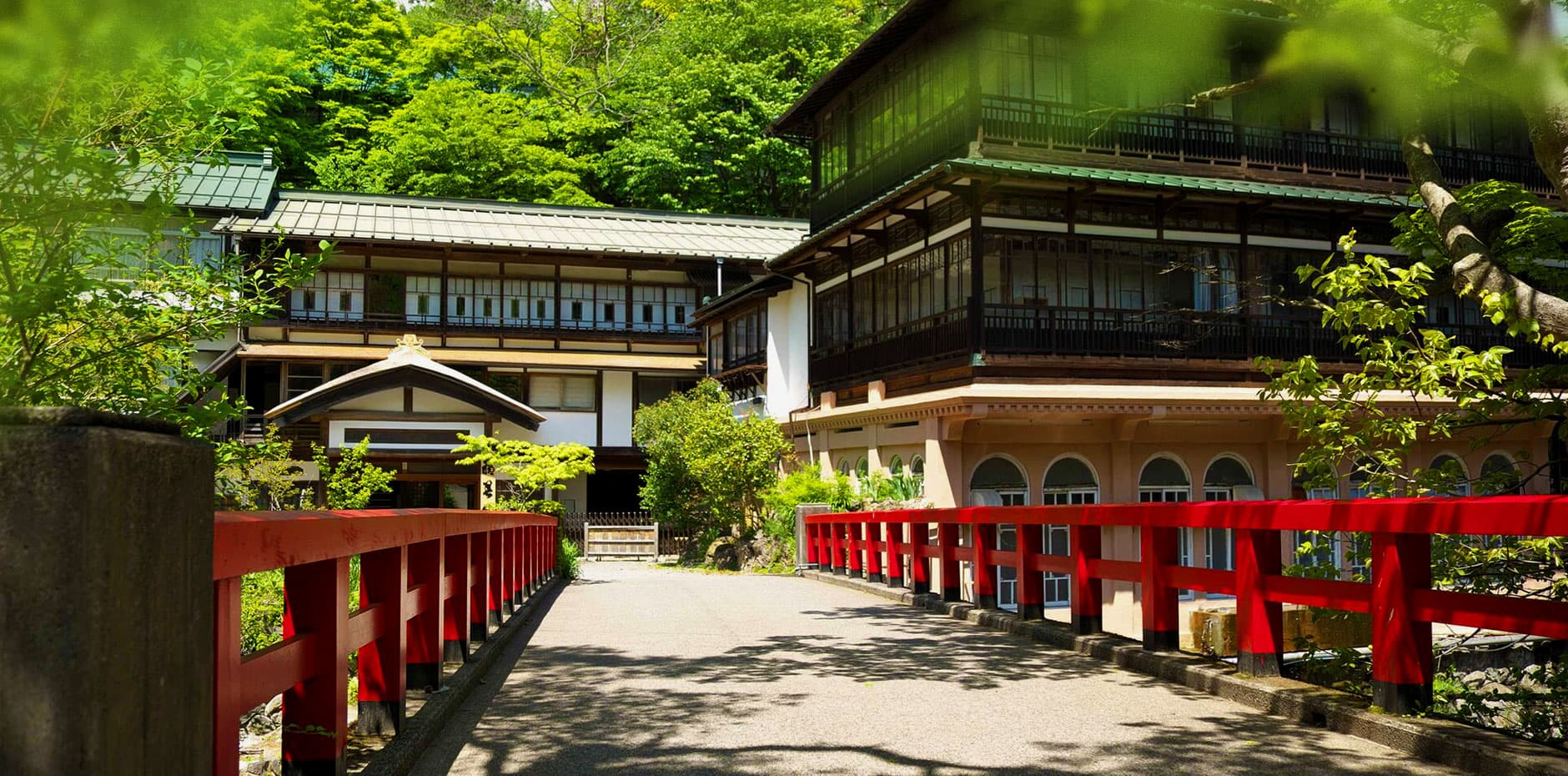
Hiiragiya is the kitchen most often cited as the canonical Kyoto-traditional kaiseki experience — the kind of meal that defines what Kyo-kaiseki means before contemporary chefs started revising it. The Hiiragiya family business traces back to 1818 (the first year of the Bunsei era), when the founder Shogoro I established himself in Kyoto, with the ryokan itself opening in 1861 . The kitchen is run as a family tradition, with the toji (head chef) role passing through the household. Hiiragiya's signature is not a single dish but a coherent voice across an eight-to-nine-course progression: deep-water Tango Bay sashimi, yudofu with house-pressed tofu, simmered Kamo vegetables, and a shokuji of polished Kyoto rice with seasonal pickles. The sake program leans Fushimi (the soft-water sake district within Kyoto itself) — Tsukinokatsura and Kinshi Masamune appear by-the-glass and in pairing flights. Honest caveat: kaiseki rotates monthly here. The April takenoko-and-cherry menu and the November matsutake-and-gingko menu are genuinely different experiences. If you can choose, October-November is the technically hardest and most rewarding window.
2. Seikoro (Kyoto) — Higashiyama Heritage With a More Conservative Voice
Style: Traditional Kyoto kaiseki, conservative register. Setting: Private in-room dining.
Seikoro is the second pillar of traditional Kyoto kaiseki in this guide, and an interesting counter-voice to Hiiragiya. Where Hiiragiya leans into seasonal flourish, Seikoro reads as more austere — closer to the cha-kaiseki end of the spectrum. The clear broths are more restrained, the seasoning more transparent, and the hassun mosaic is composed with the kind of intentional under-statement that signals confidence. Located in Higashiyama within walking distance of Kennin-ji and the Gion district, the setting itself is part of the meal — you arrive past lantern-lit alleys and step into a meal that mirrors the neighborhood's quiet. Sake program is broad but skews to Fushimi and Nada (Kobe). Honest caveat: Seikoro's restraint is polarizing. First-time kaiseki travelers sometimes leave wanting more obvious drama; experienced ones often rank it above Hiiragiya for that exact reason.
3. Motonago (Kyoto) — Higashiyama Machiya Kaiseki at a More Approachable Tier
Style: Traditional Kyoto kaiseki, mid-tier execution. Setting: Private in-room dining in a converted machiya (townhouse).
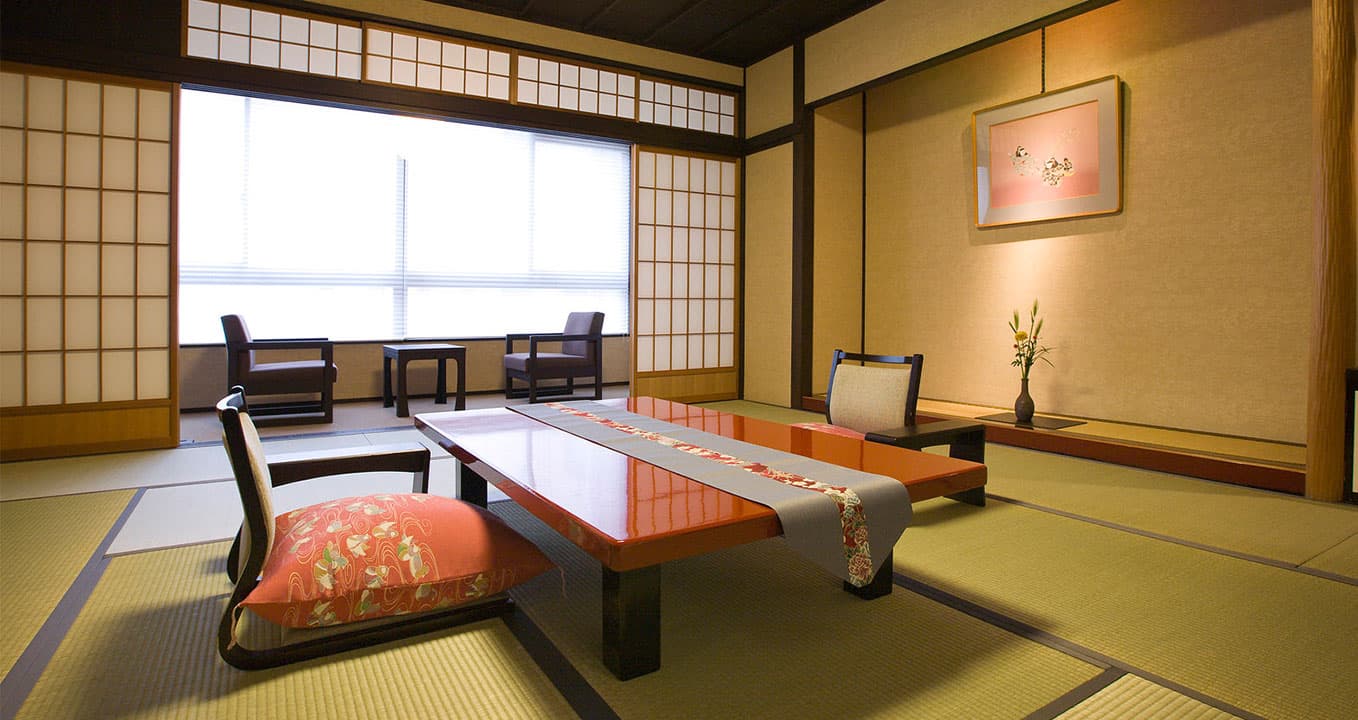
Motonago earns its place on this list for one reason: it delivers a recognizably Kyoto-traditional kaiseki dinner at a price tier two-thirds below Hiiragiya. The kitchen is not pushing technique into new territory — it executes the classic Kyo-kaiseki spine cleanly, with proper sourcing for the headline ingredients (Tamba mushrooms, Kyo-yasai heirloom vegetables, Tango Bay fish) and restrained sake pairing. The machiya setting — a 100-plus-year-old converted Kyoto townhouse on a Higashiyama side-street — is itself part of the experience: low doorways, an interior courtyard, dining at a low table on the room's tatami. Honest caveat: Motonago is our recommendation for travelers who want one authentic Kyoto kaiseki night without breaking their trip budget. It is not the pick if you have already eaten at Hiiragiya and want to push deeper.
4. Kanazawa Chaya (Kanazawa) — Kaga Cuisine, Three Minutes From the Shinkansen
At a glance
Cuisine: Kaga cuisine and seasonal multi-course meals. Dining setting: Not published for overnight guests. The official site lists an 8-seat counter, 24 table seats, and three private rooms. Bath: Not an onsen; heated water.
Kanazawa Chaya is the one entry here you can reach on foot from a Shinkansen platform — three minutes from JR Kanazawa Station — and it is a ryori-ryokan, a cuisine-led inn, which is the honest description of what it does. The property calls its cooking 加賀料理 and its format 会席料理, and it is descended from the Kagaya group's kitchen: 「加賀屋のおもてなしを引き継ぐ、洗練された加賀料理。」 . Its courses change monthly — 「季節の素材を使用した月替りの会席をご堪能。」 — and the September menu went up on 31 August, which is the kind of operating rhythm that tells you a kitchen is alive.
Three things the official site does not say, and we will not guess at. It does not state where overnight guests eat: the venue figures above are the restaurant's own seating, not a statement about 1泊2食 service. It names no sake programme. And it publishes no per-person overnight rate on its own domain — every rate path leads to a third-party booking engine, and the dinner prices on its site are restaurant prices for the 料亭, not the price of a night's stay.
Honest caveat: this is not an onsen. The baths are 「沸かし湯」 — heated water, not a hot spring, stated plainly in its own FAQ . Come for the kitchen and the location; if the bath is the point of your trip, book elsewhere in Ishikawa.
5. Chiketei Yagyu-no-Sho (Shuzenji, Izu) — Kyo-Kaiseki Lineage, Served in Your Room
At a glance
Style: Kyoto-derived kaiseki, by the property's own account. Setting: Private in-room dining, dinner and breakfast both; 15 sukiya-style suites, each with a private hot-spring bath.
Chiketei Yagyu-no-Sho traces its kitchen to a Tokyo ryotei rather than to an onsen-town banquet hall, and says so itself: 「東京芝白金の料亭「柳生」に伝わ京懐石を礎に、日本料理の粋を追究してまいりました。」 . That lineage is the reason it belongs on this list — Shuzenji is an hour and a half from Tokyo, but the register of the food is Kyoto, not Izu.
Dinner and breakfast are both served in the room: 「地の魚、米、野菜、果物など、季節の味を、お部屋にて寛ぎながらご堪能ください。」 The property publishes its menu month by month on its own site, which is the strongest evidence a ryokan gives that its kitchen is actually running — September 2026's leads with a Yagyu-style matsutake dobin-mushi, 「羹は、柳生流松茸土瓶蒸し。」 Fifteen rooms, all sukiya-style, each with its own hot-spring bath: 「古典的な風情のある数寄屋造りの15部屋。」
Honest caveat: guest-room listings on the property's site are marked 喫煙可 — smoking permitted — and the word 禁煙 does not appear on the site. Ask when you book if that matters to you. No overnight rate is published on the property's own domain either; reservations run through a third-party engine.
6. Nishimuraya Honkan (Kinosaki Onsen) — Crab-Driven Winter Kaiseki, the Definitive Kinosaki Kitchen
 Pin to Pinterest
At a glance
Style: San'in regional kaiseki; crab-centric November-March. Setting: Private in-room dining.
Nishimuraya Honkan is the property that anchors Kinosaki Onsen's reputation as a culinary destination. From early November through late March, the kitchen runs an all-in matsuba-gani (snow crab) kaiseki — the fishing season for male matsuba crab runs November 6 to March 20 (Hamasaka fisheries cooperative): live crab brought to the room in a wooden tub, presented as eight or nine courses across a single ingredient — crab sashimi, crab in clear broth, crab-and-tofu shabu-shabu, crab grilled over charcoal, crab miso roasted in the shell, crab-meat sushi, and a closing zosui rice porridge made in the crab broth. The skill is in not letting it feel monotone; the kitchen modulates temperature, seasoning, and visual register course-by-course so each dish reads distinctly. Outside the crab window, the kitchen pivots to broader San'in regional kaiseki — but November-March is what people travel for. Sake leans local Hyogo jizake (Kaika, Homare) and Tajima beef-pairing reds when offered. Honest caveat: snow crab season is the hardest reservation window in this guide. Book by April for the following winter, or settle for a midweek night in late November.
7. Gora Kadan (Hakone) — Contemporary Kaiseki at a Former Imperial Summer Retreat
At a glance
Style: Contemporary Japanese with kaiseki spine; French-technique flourishes on premium menus. Setting: Private dining rooms.
Gora Kadan operates on the grounds of what was the Imperial Kan'in-no-miya family's summer retreat — a setting that defines the dining tone before the first course arrives. The original Gora Kadan opened in 1948, when the Kan'in-no-miya family left the Imperial Family and the villa was opened to guests; the property joined Relais & Châteaux in 1991 . The kitchen runs a contemporary kaiseki program: the canonical eight-course spine is intact, but the execution borrows precision-cooking techniques (sous-vide, cured-and-torched garnishes, restrained French saucing) without losing the seasonal logic. The signature is a Hakone-area sansai (mountain vegetable) emphasis paired with seafood from Sagami Bay forty minutes south. Sake program is broad but the more interesting story is the wine list — Gora Kadan was an early adopter of Burgundy-with-kaiseki pairings, and the sommelier's flights are worth the upcharge if you're a wine drinker. Honest caveat: this is a contemporary kaiseki kitchen, not a traditional Kyoto-style one. Travelers expecting Hiiragiya's restraint will find Gora Kadan more aggressive in its plating and seasoning. That's a feature, not a bug — but go in knowing it.
8. Sanso Murata (Yufuin, Kyushu) — Satoyama-Modern Kaiseki With the Best Bar Program at Any Ryokan in Japan
 Pin to Pinterest
At a glance
Style: Regional-satoyama kaiseki, contemporary register; Kyushu-ingredient focus. Setting: Private dining rooms; standalone Tan's Bar for after-dinner drinking.
Sanso Murata is the kitchen that made Yufuin a kaiseki destination. The style is satoyama-modern — drawing on the village-and-mountain folk-cooking tradition of inland Kyushu, then editing it through a contemporary lens. Signature seasonal dishes include a winter kuroge wagyu (Kuroge black-haired Japanese beef, the bloodline that produces Kobe and Matsuzaka) served shabu-shabu over a charcoal konro, summer ayu from the upper Oita rivers grilled whole, and a year-round emphasis on the property's own farm — vegetables harvested that morning behind the buildings. The sake program is excellent but the headline is Tan's Bar, Sanso Murata's standalone whisky bar with one of the deepest Japanese whisky collections of any ryokan in the country (Yamazaki, Hakushu, Karuizawa back to 1980s vintages). Honest caveat: only ten rooms. Prime weekend dates often go to repeat guests early, so check the inn's own booking window as soon as you have dates. Plan accordingly.
9. Yamamizuki (Kurokawa Onsen) — Forest Kaiseki at Kurokawa's Most Atmospheric Property
At a glance
Style: Regional-satoyama kaiseki, Kumamoto register; kuroge wagyu and basashi (horse sashimi) heritage. Setting: Private in-room dining.
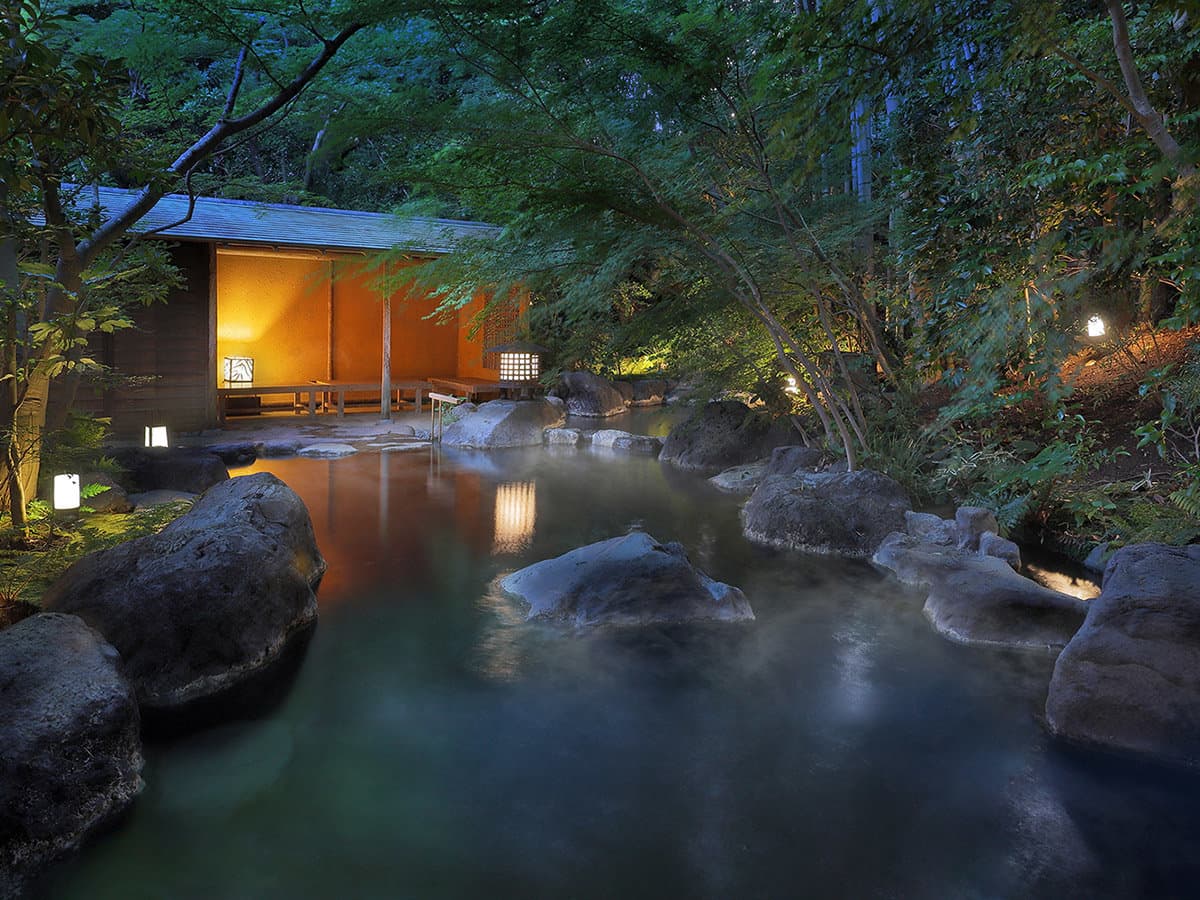
Yamamizuki sits twelve minutes by car from Kurokawa Onsen's village center, deep in a beech forest along a river. The kitchen runs a Kumamoto-regional kaiseki program with two signature plays: Kumamoto's famous basashi (raw horse sashimi, a regional specialty that requires careful handling and a deep producer relationship to do well — Japan's MHLW established formal Hygiene Standards for Raw Horse Meat in 2011, requiring certified-only facilities, surface trimming, and continuous temperature control ) appears on every menu as a mukozuke-tier course, and a slow-grilled local kuroge wagyu yakimono anchors the protein course. The hot-pot intermediate course is often dago-jiru, the rustic Kumamoto dumpling-and-vegetable broth, served in restrained kaiseki portion. Sake leans Kyushu shochu as well as jizake — the kitchen offers shochu pairing flights (Mugi, Imo, Kome) as a serious alternative to sake. Honest caveat: this is rustic, region-loud kaiseki. Travelers expecting the visual restraint of Kyoto-traditional kaiseki will read Yamamizuki as bold. It is, and it's the right voice for the forest.
10. Takinoya (Noboribetsu, Hokkaido) — Hokkaido-Seafood Kaiseki in the Quietest Setting on This List
At a glance
Style: Hokkaido regional kaiseki; cold-water seafood and venison emphasis. Setting: Private dining rooms; small-scale (under 30 rooms).
Takinoya is the finale on this list because it represents the northern edge of credible kaiseki kitchens — a tradition that traveled north from Honshu, then adapted to what Hokkaido's land and sea actually produce. The result is a regional voice you won't find in Kyoto or Kanazawa: deep-water Hokkaido seafood (botan-ebi, uni from Rishiri or Rebun in summer, kegani / hairy crab in winter), Ezo-shika (Hokkaido venison) prepared as a yakimono or shabu-shabu on autumn menus, and locally-grown Hokkaido vegetables — yuriko (lily bulb), yamame mushrooms, the sweet white corn that's a Hokkaido summer signature. Sake program is heavily Hokkaido jizake: Otokoyama, Kunimare, Kamikawa Taisetsu by the glass. Honest caveat: the trip is the trip. Getting to Noboribetsu requires a flight to Sapporo's New Chitose Airport plus a ninety-minute drive or train. Once you're there, the stay rewards the effort.
Tip
When booking, request the omakase (chef's-choice) menu in writing, ideally in the booking request field. Several properties on this list run two or three menu tiers, and the entry-tier menu is sometimes a simplified version of the kitchen's real program. The upgrade — typically ¥8,000–¥20,000 per person — is the difference between eating what the property serves to first-time guests and eating what the chef is actually proud of. If your Japanese is limited, the phrase to use is: Itadakimasu ga, omakase no kaiseki kosu wo onegai shimasu — "I'd like to request the chef's omakase course."
Takinoya is our northern outlier for a reason — the island's wider options are ranked in our guide to the best ryokans in Hokkaido.
The Sake Side: Pairings, Sommelier Presence, By-the-Glass Strategy
Kaiseki without sake is missing a structural element — the courses are designed to be punctuated by something cold and clear, and the way a great junmai-daiginjo meets a cold hassun mosaic is genuinely irreplaceable. But the sake program is also where ryokan kitchens vary most.
At the top tier, you'll find a dedicated sake sommelier (the formal title in Japan is kikizake-shi, a qualification used since 1991) or, increasingly, a J.S.A. Sake Diploma holder on staff — the Japan Sommelier Association launched the Sake Diploma program in 2018, and it remains one of the most rigorous sake credentials available . The pairing flight will run four to six pours, each glass selected for a specific course — typically a crisp honjozo for sakizuke, a richer junmai for the mukozuke sashimi, a junmai-daiginjo (fragrant, polished, the headline category) for the yakimono grilled course, and a koshu (aged sake) or kijoshu (sweet sake brewed with sake instead of water) for the mizumono dessert.
Regional bias is real and matters. If you're in Kyoto, expect Fushimi sake — Fushimi is southern Kyoto's historic brewing district, drawing on famously soft groundwater (Fushimi no Meisui) that yields smoother, slightly sweeter sake, in contrast to Kobe's harder-water Nada district . If you're in Niigata or Ishikawa (Kanazawa), expect dry, sharp Hokuriku jizake. If you're in Yufuin or Kurokawa, expect Kyushu's broader range plus shochu as an alternative pairing path. Asking for "a great sake" with no region context is like ordering "a great wine" without specifying region — you'll get something fine, but you'll miss the point. The better question is: kono shun no nihonshu wa nan desu ka — "what's the season's sake here?"
If you don't drink sake, the answer is not water. The answer is cha-kaiseki tea pairing (some kitchens offer this on request) or, increasingly at contemporary properties like Gora Kadan, a wine pairing — restrained whites from Burgundy or the Loire, occasional Champagne for hassun, and the kitchen's discretion on red for the protein course. And if the cellar is what pulls you across the country, we've gathered ten ryokans where the sake program is the reason to book — properties whose brewery ties and in-house flights go well beyond a standard pairing.
Ready to book?
Book one of these top picks
Compare live availability and prices across booking sites.
Hiiragiya Ryokan
柊家旅館
Kyoto·Luxury
from US$500 · per person · per nightfrom ≈ US$1,000 total for 2 guests



from US$500 · per person · per nightfrom ≈ US$1,000 total for 2 guests
Nishimuraya Honkan
西村屋本館
Kinosaki·Luxury
from US$400 · per person · per nightfrom ≈ US$800 total for 2 guests
Booking links may earn us a commission at no extra cost to you.
Course-by-Course: What to Expect on a Michelin-Tier Kaiseki Evening
Here's the actual evening, course by course, at one of the kitchens above. Timing is approximate.
18:00 — Aperitif. A small ceramic cup of ume-shu (plum liqueur) or seasonal cocktail arrives in the room before dinner. Sometimes a single piece of kuchitori (an amuse-bouche bite) with it.
18:15 — Sakizuke. The opener. Pickled or vinegared, intentionally restrained. Sets the season — if it's pickled cherry petals, you're in April; if it's salted gingko nuts, you're in November. Pair with honjozo (light, dry sake).
18:25 — Hassun. The kitchen's thesis statement. Eight to twelve small items on a single lacquer tray, arranged as a seasonal mosaic. The hassun is the course chefs are most proud of; spend time on it. Pair with junmai (richer sake).
18:45 — Mukozuke. Sashimi. Three or four cuts of the day's best fish, presented with restraint. The fish itself, not the garnish, is the point. Pair with a colder junmai-daiginjo.
19:05 — Takiawase. Simmered course. Vegetables and a small piece of fish or meat in clear dashi. Quiet on purpose; cleanses the palate before yakimono. Pair with a warmer junmai.
19:25 — Yakimono. The grilled headline. This is the protein course — kuroge wagyu, ayu, katsuo, or the seasonal star. Pair with junmai-daiginjo (the most expensive sake category, used here for the most important course).
19:50 — Shiizakana. Intermediate course, often hot-pot or a stronger-flavored dish to bridge into the rice course. Shabu-shabu, sukiyaki, or dobinmushi (a clear soup served in a small earthenware teapot, particularly memorable in matsutake season).
20:15 — Shokuji. The rice course. Polished local rice, miso soup, three or four pickles. This is the moment the meal grounds itself — after seven elaborate courses, plain rice tastes extraordinary. Stop drinking sake here; the rice course is meant to be eaten quietly.
20:30 — Mizumono. Dessert. Light, fruit-forward, never overly sweet. Seasonal wagashi with green tea is also common. End with koshu (aged sake) or matcha.
Etiquette for the Kaiseki Dinner
Eight quiet rules that separate guests who are read as serious from guests who are read as indifferent. None of this is enforced — but the nakai-san notices.
1. Don't drown the broth. Clear-broth courses (suimono, the soup in shokuji) are meant to be sipped directly from the lacquer bowl, alternating with chopstick bites of the bowl's contents. Lift the bowl with both hands, drink quietly, set it down. Do not chase the contents with a spoon. The clear broth is the chef's hardest course — judging it on flavor balance is the implicit rule.
2. Pace yourself to the kitchen, not your own clock. Courses arrive at the kitchen's pace, not on demand. If you finish a course quickly and pour another sake, the kitchen will speed up. If you linger, the kitchen will wait. The total dinner is two-and-a-half hours by design.
3. Itadakimasu before the first bite, gochisosama after the last. Said quietly. Not optional.
4. Don't pass food chopstick-to-chopstick. Funeral association. Use the yose-bashi (serving end of the chopsticks) or a serving utensil.
5. Don't rest chopsticks across the bowl. Use the hashi-oki (chopstick rest) provided. If none is provided, fold the paper sleeve into a rest.
6. Comment on the hassun. When the hassun arrives, take a moment to look at it before eating. A small kirei desu ne ("how beautiful") to the nakai-san is appropriate and read as attentive.
7. Don't photograph every course. One or two for memory is fine. Photographing all eight reads as not present.
8. When the nakai-san signals. If she pauses at the door before clearing your yakimono plate, she's signaling the next course is ready and asking if you're done. A small nod and hai, gochisosama deshita ("yes, thank you for the meal") to that course is the answer.
Booking Timing and Reservation Tactics
Kaiseki ryokan reservations don't follow Western hotel lead times. The good properties book six to twelve months out; the legendary ones book further.
Crab season (Kinosaki, November-March). Book by April for the following November-March window. Nishimuraya Honkan's prime December and January Saturdays are typically gone by May. Weekday nights and shoulder dates (late November, mid-March) are easier; the meal is the same.
Cherry blossom season (Kyoto, late March-early April). Book by October for the following April. Hiiragiya, Tawaraya, and Seikoro release April reservations about six months out and the prime week (April 1-8) fills within days. The truth: late March and the second week of April are botanically just as interesting and one-third the reservation friction.
Ayu (sweetfish) season (June-September). Less competitive. Two months ahead is usually fine for the inland-river kaiseki properties.
Matsutake season (October-November). Two to four months ahead. The matsutake supply is unpredictable year-to-year — the kitchens won't promise matsutake at a specific menu until October, when the harvest clarifies.
General booking tactic. Check Trip.com or the property's direct site as soon as your dates open — often around six months ahead, but each inn sets its own release window, so confirm it on the inn's official site. For the top-six properties on this list (Hiiragiya, Seikoro, Sanso Murata, Gora Kadan, Nishimuraya Honkan, Chiketei Yagyu-no-Sho), this is the most reliable reservation tactic. For Motonago, Kanazawa Chaya, Yamamizuki, and Takinoya, two to four months ahead is usually sufficient outside peak season.
Ready to book?
Book one of these top picks
Compare live availability and prices across booking sites.
Hiiragiya Ryokan
柊家旅館
Kyoto·Luxury
from US$500 · per person · per nightfrom ≈ US$1,000 total for 2 guests
from US$500 · per person · per nightfrom ≈ US$1,000 total for 2 guests
Nishimuraya Honkan
西村屋本館
Kinosaki·Luxury
from US$400 · per person · per nightfrom ≈ US$800 total for 2 guests
Booking links may earn us a commission at no extra cost to you.
With timing sorted, pick the channel: our side-by-side booking-site comparison shows where kaiseki-inclusive plans are listed most completely and cancelled most flexibly.
Side-by-Side Comparison of the 10 Picks
| Property | Region | Style | Notable Seasonal | Sake Program | Dining Setting |
|---|---|---|---|---|---|
| Hiiragiya | Kyoto | Traditional Kyo-kaiseki | Matsutake (Oct-Nov), Takenoko (Apr) | Fushimi-leaning, pairing flights | Private in-room |
| Seikoro | Kyoto | Traditional Kyo-kaiseki (austere) | Hassun in cherry season | Fushimi + Nada | Private in-room |
| Motonago | Kyoto | Traditional Kyo-kaiseki (mid-tier) | Kyo-yasai vegetables, Tango Bay fish | Fushimi staples | Private machiya |
| Kanazawa Chaya | Kanazawa | Kaga cuisine and seasonal multi-course meals | Monthly seasonal menus published by the property | Not published | Not published for overnight guests. The official site lists an 8-seat counter, 24 table seats, and three private rooms |
| Chiketei Yagyu-no-Sho | Shuzenji, Izu | Kyoto-derived kaiseki | Matsutake dobin-mushi (autumn) | Not published | Private in-room |
| Nishimuraya Honkan | Kinosaki | San'in regional, crab-driven | Matsuba crab (Nov-Mar) | Hyogo jizake | Private in-room |
| Gora Kadan | Hakone | Contemporary kaiseki | Sagami Bay seafood, sansai | Broad + serious wine list | Private dining rooms |
| Sanso Murata | Yufuin | Satoyama-modern | Kuroge wagyu, ayu, farm vegetables | Sake + Tan's Bar whisky | Private dining rooms |
| Yamamizuki | Kurokawa | Kumamoto-satoyama | Basashi, kuroge wagyu, dago-jiru | Sake + shochu pairing flights | Private in-room |
| Takinoya | Noboribetsu | Hokkaido regional | Botan-ebi, kegani, Ezo-shika venison | Hokkaido jizake | Private dining rooms |
Methodology and Verification
The ten picks above were filtered against a single question: would it be worth travelling three hours to eat at this kitchen, separate from the ryokan stay itself? That test eliminates excellent ryokans with merely competent kaiseki kitchens — and there are dozens of those in Japan. It also eliminates the famously brilliant Kyoto kaiseki restaurants that don't operate as ryokans (Kikunoi, Hyotei, Wakuden, Nakamura), as well as legendary properties that are not currently in our verified database (Tawaraya, Ryotei Akasaka Kikunoi, the Beniya Mukayu maple-forest property in Yamashiro Onsen).
Inclusion criteria: (1) currently published in our directory of verified ryokans, (2) rating of 9.0 or higher with at least 10 verified reviews, (3) the kaiseki kitchen is the property's headline draw — not the onsen, not the view, not the room design. Geographic distribution was deliberate: three Kyoto kitchens (because Kyoto is the canonical kaiseki city), two Hokuriku (Kanazawa and Wakura — the Sea-of-Japan regional counterweight), one Kinosaki (crab-driven San'in), one Hakone (contemporary), two Kyushu (Yufuin and Kurokawa, both satoyama register), and one Hokkaido finale.
Famous kaiseki properties not in our database: Tawaraya (Kyoto — the canonical answer that we cannot verify against our publishing rules), Ryotei Akasaka Kikunoi (Tokyo branch of the legendary Kyoto restaurant), Beniya Mukayu (Yamashiro Onsen, Ishikawa — Relais & Châteaux member, 2025 Michelin Guide), and Kayotei (Yamanaka Onsen). All four are worthy of mention; none are currently listed in our verified database. We chose not to fabricate database entries to include them.
No chef names invented. Where Japanese gourmet press routinely names a kitchen head (and the relationship is publicly verifiable), we've referenced their training lineage rather than naming an individual chef — the head-chef role at multi-generation kitchens like Hiiragiya passes through families and updating chef-name claims accurately requires Japanese-press verification we cannot guarantee will hold across the article's life. The lineages and house styles described above are stable; the named chef holding the kitchen on any given night may rotate. No Michelin star claims are made for individual properties unless attestable in the 2026 Michelin Guide.
All properties verified in our published-ryokans database on May 31, 2026. Rating thresholds: 9.0+. Review-count thresholds: 10+ verified guest reviews. Next full re-verification: November 2026.
By Japan Ryokan Guide.
Where to go next: For the full breakdown of what kaiseki is and how to read a multi-course menu, see our kaiseki guide. For ryokans where the dinner is one factor among many, our best ryokans in Japan 2026 covers the broader picture. If a private bath is your other non-negotiable, cross-reference with best ryokans with private onsen — five of the ten picks above appear there too. Couples planning a milestone meal should also see best ryokans for couples, which pairs the kitchens above with romance-optimized criteria (in-room rotenburo, adults-only policies, anniversary packages). And if you're building a multi-stop kaiseki itinerary, best onsen towns in Japan maps the regional clusters so you can sequence nights without backtracking.
Where the kitchen comes first and the rooms are the smaller half, the category has its own name. Our sister site covers Japan's rated auberges — stays built around the table.
Ready to book?
Book one of these top picks
Compare live availability and prices across booking sites.
Hiiragiya Ryokan
柊家旅館
Kyoto·Luxury
from US$500 · per person · per nightfrom ≈ US$1,000 total for 2 guests
from US$500 · per person · per nightfrom ≈ US$1,000 total for 2 guests
Nishimuraya Honkan
西村屋本館
Kinosaki·Luxury
from US$400 · per person · per nightfrom ≈ US$800 total for 2 guests
Booking links may earn us a commission at no extra cost to you.
Correction, September 2026. Kagaya in Wakura Onsen has been closed for post-earthquake reconstruction since January 2024 and is scheduled to reopen by the end of fiscal 2028, around March 2029, at 33 rooms rather than the 232 it had . Kanazawa Sumiyoshiya has suspended dinner service. In this article both were removed from the ten picks and replaced with Chiketei Yagyu-no-Sho and Ryori Ryokan Kanazawa Chaya; the comparison table, the TL;DR, the booking guidance and the structured data were updated to match. Checked against each property's own website on 2026-09-20.
FAQ
Frequently asked questions
Is kaiseki always 8 courses?+
No. The canonical structure is eight courses (sakizuke, hassun, mukozuke, takiawase, yakimono, shiizakana, shokuji, mizumono), but the actual dish count varies from six (cha-kaiseki, the tea-ceremony variant) to fourteen at large-format ryokan kitchens. The serious operating principle is not course count but seasonal honesty — what the kitchen serves should reflect what's at market that morning. Top kitchens often edit down rather than up; an eight-course kaiseki at Hiiragiya is typically more satisfying than a fourteen-course kaiseki at a mid-range property.
How does kaiseki differ between Kyoto and other regions?+
Kyoto kaiseki (Kyo-kaiseki) is the canonical tradition — visually restrained, soft-water sake-leaning, vegetable-and-seafood-balanced, with heavy emphasis on Kyo-yasai heirloom vegetables and Tango Bay fish. Hokuriku kaiseki (Kanazawa, Wakura) is bolder visually with Kutani lacquerware and emphasis on Sea-of-Japan winter seafood. Kyushu satoyama kaiseki (Yufuin, Kurokawa) draws on village-and-mountain cooking with kuroge wagyu and shochu pairings. Hokkaido kaiseki (Noboribetsu) is built around cold-water seafood and Ezo-shika venison. Each regional voice is genuinely distinct — assuming kaiseki is one cuisine is the most common source of disappointment for first-time travelers.
Should I tell the ryokan about dietary restrictions?+
Yes, in writing at the time of booking, not at check-in. Kaiseki menus are planned days in advance and the kitchen pre-orders ingredients. Allergies (shellfish, gluten, nuts) can usually be accommodated with 5+ days notice; pork-free or beef-free is straightforward; halal-certified is rare but a handful of properties manage it (cross-reference our halal ryokan guide). Vegetarian kaiseki is possible at most properties on this list with 7+ days notice — see the next FAQ. Last-minute restrictions notified at check-in will be honored but the menu will be visibly reduced.
Is sake pairing worth the upcharge?+
If you drink sake at all, yes. A serious pairing flight runs ¥6,000–¥15,000 per person and includes four to six pours chosen for specific courses. The pairing is where you actually learn the regional sake tradition (Fushimi soft-water sake with Kyoto kaiseki, Hokuriku jizake with Kaga-ryori) in a way that drinking one glass with the whole meal cannot teach. If you only drink occasionally, ask for two glasses by the glass — one junmai for the early courses, one junmai-daiginjo for the yakimono — and you'll capture 70% of the pairing-flight value at one-third the price.
What's the cancellation policy on kaiseki ryokan reservations?+
Stricter than most hotels because the kitchen pre-orders ingredients. Typical structure: free cancellation up to 14 days before, 30-50% charge at 7-14 days, 50-80% at 3-7 days, 100% at 0-2 days. Top-tier properties (Hiiragiya, Tawaraya-tier) often run a more conservative 21-day free-cancel window. Booking through Trip.com sometimes offers a slightly more flexible policy than the direct site, depending on the rate code — read the fine print before booking, and if travel insurance matters to you, build it into the trip cost.
Can I get a vegetarian kaiseki?+
Yes at most of the ten properties above, with 7-10 days notice and a written request at booking. The kitchen will substitute the protein courses (mukozuke, yakimono) with vegetable, tofu, or fu (wheat-gluten) preparations, often drawing on the shojin-ryori (Buddhist temple cuisine) tradition. Honest expectation: a vegetarian kaiseki is typically 8-10% less expensive than the standard menu and is genuinely well-executed. A vegan kaiseki — no dashi, no eggs, no honey — is harder; only a handful of kitchens can do it well. Cross-reference our vegan-friendly ryokans guide for the properties we've verified for plant-only kaiseki.
How early should I book during crab or cherry season?+
Kinosaki crab (November-March): book by April for the following winter. Nishimuraya Honkan's prime December and January Saturdays sell out within weeks of release. Kyoto cherry blossom (late March-early April): book by October. Hiiragiya, Seikoro, and Motonago all release April reservations around six months out, and the prime first week of April fills within days. If you cannot book that far ahead, target shoulder dates: late November and mid-March for Kinosaki crab (the meal is identical), and the last week of March or the second week of April for Kyoto cherry (botanically very close to peak).
What's the difference between kaiseki and kappo?+
Kaiseki is a structured multi-course banquet, typically served in a private room with courses arriving in a fixed canonical order over two-plus hours. Kappo is counter-seat dining at a small restaurant where the chef cooks in front of you, conversation is part of the experience, and the dish order is responsive to the chef's read of the room. Both can be Michelin-tier; both follow the seasonal logic. The practical difference: kaiseki suits travelers who want a quiet, private, choreographed meal; kappo suits travelers who want to watch the cooking and talk to the chef. A few properties on this list (Sanso Murata particularly) offer kappo-style adjacent dining in addition to traditional kaiseki.
Still deciding?
Browse ryokans across JapanBooking.com