62분 분량2026년 6월 업데이트
*Rates and programs verified for the 2026–2027 New Year period.*
At 11 PM on December 31, a tray arrives at your door: a lacquered bowl of toshikoshi soba, the broth still steaming. Somewhere below, on the river, you can hear it — the low, rhythmic toll of a temple bell beginning its count toward 108. The outdoor rotenburo is calling. The snow is already on the pines. Choosing the best ryokan for New Year in Japan is a different decision from a standard onsen booking — the season has its own rituals, its own meal structure, and its own booking timeline that catches most travelers off guard. Most travel articles about Japan during New Year tell you to stay away — the crowds, the closed restaurants, the inflated prices. That advice misses the point entirely. If you have a ryokan booked, Oshogatsu is not an obstacle. It is the experience. Every cultural thread of the holiday period — the bells, the ceremonial food, the first sunrise, the shrine visit — runs directly through the ryokan stay. This guide is for travelers who have already decided they want to be in Japan for New Year and are now working out where to go and which ryokan to book. You'll find seven specific properties across six onsen areas, with honest scorecards covering price, English support, tattoo policy, and shrine access. You'll also find a hatsumode table, a realistic booking timeline, and a rescue plan if December 31 inventory is already gone. These picks are drawn from a verified database of 293 ryokan across 30 onsen areas in Japan — the same properties that populate this site's the best season to visit a ryokan. New Year availability moves fast; check each property's booking page directly for current plans. ---
What Actually Happens at a Japanese Ryokan During New Year
If you're searching for the best ryokan for New Year in Japan, knowing what the holiday actually looks like inside a property is the first step. Oshogatsu — Japan's New Year — runs from January 1 through 3, with the lead-up period from December 28 onward treated as year-end preparation. For Japanese families, this is the most significant holiday of the year, a time of ritual, rest, and returning home. Foreigners sometimes experience it as a logistical complication. At a well-run ryokan, it unfolds as something else: a slow, structured ceremony you get to inhabit. Toshikoshi soba arrives on December 31, typically served in the evening before midnight. The tradition dates to the mid-Edo period — surveys show roughly 70% of Japanese people eat buckwheat noodles on New Year's Eve (Just One Cookbook). The noodles are long and thin, symbolizing longevity; their ease of cutting symbolizes leaving the year's difficulties behind. One thing to know: finishing the bowl matters. Leaving noodles is considered bad luck. Then comes joya no kane. Temple bells across Japan ring 108 times on New Year's Eve — 107 strikes before midnight and one final toll to ring in the New Year (Wikipedia — Joya no Kane). The 108 rings represent the 108 earthly desires in Buddhist teaching, each stroke a small act of purification. Whether you hear this from your outdoor bath or walk to a nearby temple depends on the onsen area you choose — and that choice is worth making deliberately. Nikko is the standout: three separate temples begin their ceremonies at 11 PM on December 31. New Year's morning opens with osechi-ryori — the tiered lacquered boxes (jubako) that are one of Japan's oldest New Year food traditions. Each compartment carries meaning: kuromame (black soybeans) represent hard work and good health; kazunoko (herring roe) signals fertility and family prosperity; datemaki (sweet rolled omelette) symbolizes learning; ebi (shrimp) wishes long life (Japanese Cultural Center of Hawaii). The flavors skew sweet, preserved, and briny — quite different from kaiseki. As a foreign traveler, treat osechi as a cultural tasting flight, not your main meal. Your full kaiseki dinner the night before remains the centerpiece. Alongside the osechi arrives ozoni — a mochi rice-cake soup whose ingredients shift by region — and otoso, a spiced sake served at breakfast that Kinnotake Resort in Hakone, among others, includes automatically without extra charge. Displayed somewhere in the lobby or dining room you'll spot the kagami mochi: two round rice cakes stacked with a bitter orange on top, their circular shape referencing the sacred mirror of Shinto tradition. If you're staying in Hakone on January 2 or 3, walk to the roadside and watch the Hakone Ekiden relay race pass through — one of Japan's most-watched New Year sports events, run annually since 1920. For a deeper primer on ryokan etiquette and what to expect on your first stay, see the first-time ryokan guide.

---
Hatsumode by Onsen Area: Which Town Gets You Closest to a Famous Shrine
Hatsumode — the first shrine or temple visit of the New Year, traditionally made sometime between January 1 and 3 — is one of those rituals that sounds simple and lands hard. Meiji Jingu in Tokyo draws approximately 3 million visitors in three days, with queue times of up to three hours to reach the main shrine (Activity Japan). Hatsumode at an onsen town shrine takes twenty minutes and feels like it belongs to you. The ritual for visitors is the same as for Japanese worshippers: toss a coin into the offertory box, bow twice, clap twice, bow once. Shrines are open to all visitors regardless of religious background. Omikuji fortune slips (¥100–200) and omamori protective charms (¥500–1,000) are sold at stalls and are culturally appropriate for anyone to take home. Both are cash-only.
| Onsen Area | Nearest Shrine / Temple | Distance / Transport | Key New Year Event | Joya no Kane | Notes |
|---|---|---|---|---|---|
| Hakone | Hakone Jinja — lakeside torii on Lake Ashi; 1,250+ years old | 10–20 min taxi or shuttle from most ryokan | ~1,000 midnight fireworks reflected on Lake Ashi | Heard from many ryokan; attend at Gora-area temples | Strong English signage; fireworks shuttle from Hakone Yumoto Station |
| Nikko | Nikko Toshogu (UNESCO WH) + Futarasan-jinja + Rinnoji | 15–30 min bus or taxi from Yumoto/Kinugawa Onsen | 6 AM Jan 1 prayer service at Toshogu; complimentary sake at Futarasan | Three separate temple ceremonies begin 11 PM Dec 31 | Most layered joya no kane experience of any onsen area |
| Kinosaki | Onsenji Temple — reached via Mt. Daishi ropeway | 15 min walk + ropeway from town center | Dezomeshiki fire brigade parade early January | Community bells at Onsenji | Visit Kinosaki official site fully in English |
| Kusatsu | Kusatsu Jinja within the onsen town | 5–10 min walk from all ryokan | Yumomi ceremony at Netsunoyu — 6x daily, ¥700, year-round including New Year | Komakino-do Temple in town | Less English signage on the street than Hakone |
| Arima | Local Arima Tenjin Shrine; Sumiyoshi Taisha (Osaka) 30 min | 5 min walk local; 30 min by train to Sumiyoshi | Proximity to major Kansai hatsumode sites; Taiko no Yu ¥500 NYE surcharge Jan 1–3 | Local community bells | Strong option for Kansai-based travelers |
| Noboribetsu | Noboribetsu Kumano Shrine in town; Hokkaido Shrine (Sapporo) 1 hr | Local shrine 5 min walk; Sapporo 1 hr by JR | Edo-period New Year Festival at Date Jidaimura Jan 1–3: free sake, lion dances, traditional games | Local community bells | Town is domestically focused; English at major hotels only |
| Ginzan | Small local shrines in Obanazawa (40 min by bus) | 40 min bus to Oishida Station area | Snow-town atmosphere is the main draw; no major hatsumode shrine nearby | Local community bells | Book via international platform; limited English on-site |
Tip
Timing tip: Mid-morning on January 1 or anytime on January 2 are the sweet spots for onsen-town hatsumode. Avoid the midnight rush on December 31 unless you specifically want the electric atmosphere — at major shrines, it's shoulder-to-shoulder from 10 PM onward. January 2 is meaningfully quieter and the shrines are still fully dressed for the New Year.
---
The 7 Best Ryokans for New Year in Japan
These picks span roughly $120–$900 per person per night at normal-season rates and cover travelers based in Tokyo (Hakone, Kusatsu, Nikko), Kansai (Arima, Kinosaki), Hokkaido (Noboribetsu), and Tohoku/Nagano (Ginzan). New Year plans carry a surcharge on top of base rates — the only verified figure from a named property's official booking page is Hakone Ginyu's +¥14,300 per person on top of the standard nightly rate for December 31–January 3. Use that as your reference point; other properties will vary. Each pick below includes a scorecard so you can compare at a glance. New Year inventory for the most popular properties opens in September–October and sells out within weeks. Booking via Trip.com, Booking.com, or Expedia gives non-Japanese speakers English-language customer support and clear cancellation terms — advantages worth having at these price points. ---
Hakone Ginyu (箱根吟遊) — Hakone, Best for Tokyo-Based Travelers

Scorecard - Area: Hakone, Kanagawa — Explore Hakone ryokans - Normal-season price: $400–$900 per person per night (inc. two meals) - New Year surcharge: +¥14,300 per person on top of C-rate nightly price for Dec 31–Jan 3 [verified, Hakone Ginyu official reservation page] - New Year program: Toshikoshi soba Dec 31; osechi-ryori Jan 1 breakfast; otoso sake; hatsumode transport arrangements - English-friendly: Yes - Tattoo policy: All 20 rooms have private open-air baths — communal-bath tattoo restrictions are irrelevant - Onsen type: Multiple spring types; private open-air baths in every room - Nearest hatsumode: Hakone Shrine on Lake Ashi (~20 min taxi); midnight fireworks visible from the lake - Rating: 9.3/10 (124 reviews) Hakone Ginyu sits on a cliff face above the Hayakawa Valley, about three minutes from Miyanoshita Station, with every one of its 20 rooms arranged so the private rotenburo faces the valley and, on clear mornings, Mount Fuji. The property works for New Year specifically because of geography: Hakone Shrine's midnight fireworks — around 1,000 shells launched over Lake Ashi at the stroke of midnight, reflected on the water — are accessible by shuttle from Hakone Yumoto Station without a car. Then on January 2 and 3, the Hakone Ekiden relay race passes through the area, one of Japan's most-watched New Year sports events and something you can watch roadside before returning to soak. The surcharge here — the only property in this guide with a verified, named figure — is ¥14,300 per person on top of the base rate. That covers the New Year meal program and cultural activities. For context: Kinnotake Resort, a nearby Hakone ryokan with a documented New Year program, charges ¥2,000 per person for optional activities like calligraphy and hanetsuki, ¥7,000 for a hakama photo session, and includes mochi-pounding and Ekiden TV viewing at no extra cost [Kinnotake Resort official New Year page]. These figures give you a reference for what "New Year programming" actually costs to produce. The honest downside: with only 20 rooms and a strong reputation among repeat guests, Hakone Ginyu books out fast. If you're reading this in November, check availability immediately.
---
Nishimuraya Honkan (西村屋本館) — Kinosaki Onsen, Best for Snow-Crab Kaiseki
Scorecard - Area: Kinosaki Onsen, Hyogo — Explore Kinosaki ryokans - Normal-season price: $400–$900 per person per night (inc. two meals) - New Year plan: Carries a seasonal premium; verify current program and pricing on booking page - New Year program: Winter kaiseki centered on matsuba-gani (snow crab) and Tajima beef; access to all seven public soto-yu bathhouses; osechi on Jan 1 - English-friendly: Yes - Tattoo policy: Private open-air bath available in the Honjin-no-Ma suite; confirm public bathhouse policy before booking - Onsen type: Sodium chloride spring; plus passes to 7 distinct public soto-yu - Nearest hatsumode: Onsenji Temple via Mt. Daishi ropeway, 15 min walk + ropeway from town center - Rating: 9.2/10 (198 reviews) Nishimuraya Honkan was founded in 1860, making it one of the older operating ryokan in the Kansai region. It's also a Relais & Châteaux member and Michelin-recommended — the kind of property that earns both labels without needing to remind you. What makes it the right New Year pick is the timing: matsuba-gani, the local name for snow crab caught off the Sea of Japan coast, peaks exactly in winter. A kaiseki course built around matsuba-gani in January at Kinosaki is about as good as Japanese hot-spring dining gets. Kinosaki's infrastructure strengthens the case. The town's seven public bathhouses (soto-yu) all operate year-round, and guests of Nishimuraya Honkan receive a free meguri pass to visit all of them. Walking the bathhouse circuit in a ryokan yukata and hanten jacket through falling snow, wooden geta clacking on the stone paths along the Otani River, is one of those experiences that earns its cliché. January averages 126 cm of snowfall in Kinosaki — the scenery is not guaranteed, but it's reliably likely [Visit Kinosaki — official]. In early January, the Dezomeshiki fire brigade parade moves through town, firefighters in traditional gear performing a water hose display over the river. It's a photogenic local ritual, not a tourist production. Getting there from Osaka or Kyoto is direct — the Konotori limited express takes about 2.5 to 3 hours.
---
Naraya (奈良屋) — Kusatsu Onsen, Best for Japan's Most Acidic Healing Waters
Scorecard - Area: Kusatsu Onsen, Gunma — Explore Kusatsu ryokans - Normal-season price: $350–$700 per person per night (inc. two meals) - New Year plan: Carries a seasonal premium; verify on booking page — no verified English-language New Year package program confirmed at time of writing - New Year program: Toshikoshi soba and osechi standard at most Kusatsu ryokan; Yumomi ceremony at Netsunoyu runs 6x daily year-round (¥700) [Deep Japan — verified] - English-friendly: Yes - Tattoo policy: Semi-open-air private baths available in the Sen'yutei wing - Onsen type: Strongly acidic sulfur spring, pH 2.0 — among Japan's most concentrated natural hot springs - Nearest hatsumode: Kosenji Temple steps from the Yubatake hot-spring field; Kusatsu Jinja 5–10 min walk - Rating: 9.0/10 (310 reviews) Naraya has been drawing water from the Shirahata-no-Yu source — Kusatsu's oldest — since 1877. The Sen'yutei wing's maisonette rooms sit above the steaming Yubatake, the wide open-air hot-spring field at the center of town, making Naraya the only lodging in Kusatsu with that particular view. A dedicated yumori artisan tends the spring daily, which is a title that exists at exactly the number of properties you'd expect it to: very few. Kusatsu's spring chemistry is the real draw here. At pH 2.0, the sulfur water is among the most acidic naturally occurring hot springs in Japan — noticeably different to soak in, with a tingling quality that regular onsen travelers describe as intensely clean-feeling. At Netsunoyu, the covered performance space near the Yubatake, the Yumomi ceremony runs six times daily throughout New Year: women in traditional dress paddle long wooden boards through the water to cool it before bathing, accompanied by folk songs. Admission is ¥700 and remains available through the holiday period. One practical note: Kusatsu has no direct Shinkansen connection. Getting there from Tokyo takes about three hours via JR and bus. During the New Year transport crunch (December 29–January 4, Shinkansen and long-distance buses are heavily booked), plan this leg carefully and book train tickets alongside the ryokan.
---
Tocen Goshobo (陶泉 御所坊) — Arima Onsen, Best for Kansai-Based Travelers
Scorecard - Area: Arima Onsen, Hyogo — Explore Arima ryokans - Normal-season price: $235–$600 per person per night (inc. two meals) - New Year plan: Carries a seasonal premium; verify on booking page - New Year program: Osechi-ryori, toshikoshi soba Dec 31, Kobe beef kaiseki dinner; Taiko no Yu nearby adds ¥500 surcharge per person Jan 1–3 [Hankyu Railway — verified] - English-friendly: Yes - Tattoo policy: Private bathing options available; confirm communal-bath policy directly - Onsen type: Two spring types — kinsen (iron-rich golden water) and ginsen (radium/carbonic acid silver water) - Nearest hatsumode: Yunojinja Shrine and Onsenji Temple in Arima's old town lanes (5 min walk); Sumiyoshi Taisha (Osaka, 30 min by train) - Rating: Not yet rated in database Tocen Goshobo is one of the oldest ryokan in Japan, with over 800 years of history beside the Taki River in Arima — referenced in historical records that place Arima's hot springs among the oldest in Japan, first documented in the Nihon Shoki in 720 AD. The property has 20 rooms and something that most ryokan brochures can't quite convey: a sense of scale that actually fits the narrow stone lanes of old Arima town. Walking from the gate to the entrance takes about thirty seconds, with the Taki River audible below. The building settles into its surroundings rather than announcing itself. Those waters are what make Arima distinctive in the Kansai region. Kinsen, the golden spring, gets its amber color from dissolved iron and salt — the same minerals that stain the stonework around the baths a deep ochre over time. You notice the color before you notice the warmth. Ginsen, the silver spring, runs colorless and rich in radium and carbonic acid, producing a lighter, slightly effervescent sensation that sits in contrast to kinsen's dense heat. Finding both spring characters at the same property is rare; most onsen destinations commit to one type and build around it. The honest caveat for Tocen Goshobo: rooms in the older sections of the building can feel their age relative to what the nightly rate suggests. The cultural weight and spring quality are real, but guests expecting a fully renovated luxury interior — the kind you'd find at FUFU Nikko or Hakone Ginyu — may want to manage expectations. For Kansai-based travelers, the location holds. Thirty minutes from Kobe, easily reachable from Osaka and Kyoto, and with Sumiyoshi Taisha — one of Japan's most significant hatsumode sites — accessible by train in 30 minutes. The local Yunojinja Shrine is five minutes on foot when you want something quieter. ---
Dai-ichi Takimotokan (第一滝本館) — Noboribetsu, Hokkaido Winter at a Manageable Price

Scorecard - Area: Noboribetsu Onsen, Hokkaido — Explore Noboribetsu ryokans - Normal-season price: $120–$350 per person per night (inc. two meals) — lowest price tier in this guide - New Year plan: Carries a seasonal premium; verify on booking page - New Year program: Osechi and toshikoshi soba standard; Noboribetsu Date Jidaimura Edo New Year Festival Jan 1–3 nearby — free sake, amazake, lion dances, tosenkyo game [LIVE JAPAN — verified] - English-friendly: Yes (listed on international platforms) - Tattoo policy: Large communal baths — confirm tattoo policy directly with the property before booking - Onsen type: 35 pools across 1,500 sqm fed by multiple natural spring types (sulfur, iron, salt, and alum among them) - Nearest hatsumode: Yukake Jizo shrine in onsen town (5 min); Hokkaido Shrine in Sapporo (1 hr by JR) - Rating: Not yet rated in database In January, with Hokkaido snow blanketing the valley, the contrast between the sulfurous grey steam rising from Jigokudani and the white snowpack directly below is striking — and it's visible from the property grounds. Dai-ichi Takimotokan has been operating since 1858 and grown into something closer to an onsen resort complex than a traditional ryokan: 393 rooms, a 1,500-square-meter bathing floor, 35 pools fed by multiple distinct spring types. It sits at the edge of Jigokudani, the "hell valley" geothermal crater where steam vents year-round. If your criterion is Hokkaido winter at a manageable price, Dai-ichi is the answer. Normal-season rates start around $120 per person per night including meals — meaningfully lower than the Hakone and Kinosaki luxury tier. New Year plans carry a premium above that base, but the starting point makes it accessible for travelers who want deep Hokkaido winter without the Hakone price tag. The tradeoff is scale: with 393 rooms, Dai-ichi Takimotokan is large enough that the experience feels more resort than intimate inn. The communal baths are where the money is spent. The Noboribetsu Date Historic Village (Jidaimura), a five-minute walk from most ryokan in town, runs an Edo-period New Year Festival from January 1 through 3 with free sake, amazake, lion dances, and tosenkyo (traditional fan-tossing). This is a low-key, well-curated cultural program that most foreign visitors completely miss. ---
FUFU Nikko (ふふ 日光) — Nikko, Best for UNESCO World Heritage Hatsumode
Scorecard - Area: Nikko, Tochigi — Explore Nikko ryokans - Normal-season price: $400–$900 per person per night (inc. two meals) - New Year plan: Carries a seasonal premium; verify on booking page - New Year program: Toshikoshi soba Dec 31; osechi-ryori Jan 1 breakfast; otoso sake; proximity to Toshogu 6 AM prayer service Jan 1 and three temple joya no kane Dec 31 - English-friendly: Yes - Tattoo policy: Every suite has a private in-room hot-spring bath — communal-bath tattoo policy is a non-issue - Onsen type: Private in-room onsen baths in all 24 suites; alkaline simple spring (Yumoto-type waters nearby) - Nearest hatsumode: Nikko Toshogu Shrine — UNESCO World Heritage, 6 AM New Year prayer service Jan 1 [Nikko Official Guide — verified] - Rating: 9.1/10 (310 reviews) FUFU Nikko is an all-suite luxury property (24 suites), adjacent to the Tamozawa Imperial Villa and within walking distance of the UNESCO World Heritage shrine complex that makes Nikko one of Japan's most architecturally dense sites. Each suite has a private hot-spring bath — which matters for New Year when you want the option of soaking at 11:30 PM in silence before the bells start. What separates Nikko from the other areas in this guide is the sheer density of New Year ritual. Three separate temples begin their joya no kane ceremonies at 11 PM on December 31: Nikkosan Rinnoji, Nikkosan Chuzenji, and Nikkosan Onsenji [Nikko Official Guide]. You can attend one, walk to another, or listen from your ryokan as the bells overlap across the valley. At Nikko Futarasan-jinja, complimentary local sake is offered during New Year prayers. At 6 AM on January 1, the Toshogu Shrine opens its New Year prayer service — probably the most historically significant hatsumode in eastern Japan after Meiji Jingu, with a fraction of the crowds. The practical note: Nikko is about two hours from Tokyo by Tobu Limited Express. English support at smaller inns in the area is limited; FUFU Nikko's listing on international platforms gives you the support infrastructure for a high-stakes booking. See our broader guide on winter onsen stays for context on the Kanto-area options. ---
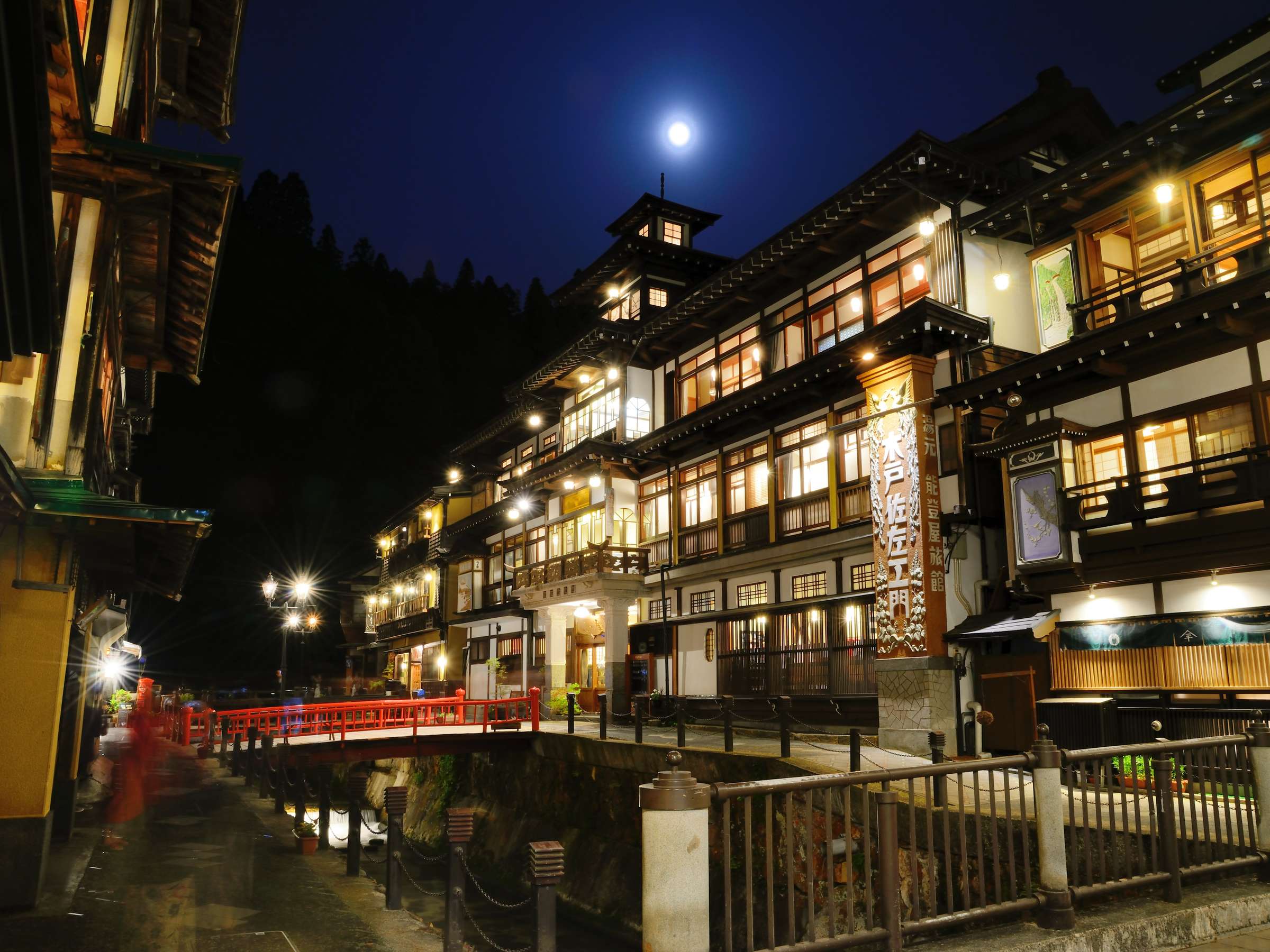
Notoya Ryokan (能登屋旅館) — Ginzan Onsen, the Snow-Globe Pick
Scorecard - Area: Ginzan Onsen, Yamagata — Explore Ginzan ryokans - Normal-season price: $250–$500 per person per night (inc. two meals) - New Year plan: Carries a seasonal premium; verify on booking page - New Year program: Osechi-ryori and toshikoshi soba standard; atmospheric gas-lit riverfront snow scenery is the main event - English-friendly: No — book via an English-language booking platform (Trip.com, Booking.com); expect limited English on-site - Tattoo policy: Reservable private family bath available; ask about communal-bath policy at time of booking - Onsen type: Sodium chloride sulfate spring; three indoor/outdoor baths plus reservable family bath - Nearest hatsumode: Small local shrines in Obanazawa (40 min by bus); no major shrine nearby - Rating: Not yet rated in database Notoya Ryokan is the most photographed building at Ginzan Onsen — its ornate, six-story Taisho-era wooden facade rising above the gas-lit riverfront is the image most people associate with "quintessential Japanese onsen town in winter." That recognition is earned. The building is a registered tangible cultural property, and it looks exactly like what it is: over a century of continuous ryokan history, built in an architectural style that peaked in the 1920s and was never repeated at this scale. January is Ginzan's peak snow month, with deep, reliable winter snowfall blanketing the narrow valley. The town has no chain hotels, no souvenir shops selling keyrings, and virtually no tourist infrastructure beyond the ryokan and a handful of eating spots. At New Year, when the rest of Japan is navigating the Oshogatsu crowds, Ginzan is quiet in a way that feels specific. Gas lanterns reflect on the river ice. The bells you hear come from local village shrines, not the amplified ceremony of a major temple. The tradeoff is practical: English is limited on-site. Getting here requires a 40-minute bus ride from Oishida Station, itself a JR journey from major Tohoku cities. There is no major hatsumode shrine within easy reach. This is the pick for travelers who want the snow-town atmosphere over the cultural-ritual density — and who are comfortable navigating a Japanese-language environment for the duration of their stay. ---
How to book the best New Year ryokan in Japan (and what happens if you wait)
The hard truth: December 31 check-in at a quality ryokan is effectively sold out 2–4 months in advance. For the 2027 New Year period, the booking window opens roughly June–September 2026. Most Jalan.net and Rakuten Travel New Year plans post in September–October, and the most reviewed properties on those platforms fill within days [Japan Travel Pros; Tripadvisor Japan Travel Forum community consensus]. For non-Japanese speakers using Trip.com, Booking.com, or Expedia, inventory typically becomes visible three to six months out. Set a search alert and check regularly in September — don't wait for October. The price premium at New Year is real and worth understanding clearly. The only verified surcharge figure from a named property's official booking page is Hakone Ginyu: +¥14,300 per person on top of the standard C-rate nightly price for December 31 through January 3 [Hakone Ginyu official reservation page]. That covers the New Year meal program and cultural activities. Saturday and national holiday rates across all ryokan categories already run 20–40% above midweek base rates [Ryokan Finder 2026 Cost Guide]; New Year stacks a further premium on top of that. What the premium buys you concretely: toshikoshi soba, osechi-ryori at breakfast, otoso sake, cultural activities (calligraphy, mochi-pounding), and enhanced kaiseki courses. Avoid any source that quotes a 2x–3x multiplier without citing a specific property — that figure is not property-verified.
Tip
Cancellation risk: Many premium ryokan charge 50–100% cancellation fees from 7 to 30 days before arrival. At ¥50,000+ per person, this is a meaningful sum. Book with a credit card that includes trip cancellation protection, or purchase a standalone travel insurance policy that specifically covers non-refundable accommodation. The cancellation terms are displayed on Trip.com and Booking.com before you confirm — read them before paying.
Book transport at the same time as the ryokan. Shinkansen and limited express trains are heavily booked December 29 through January 4. For Kusatsu especially (no direct Shinkansen), secure the JR + bus leg the moment the ryokan is confirmed. For more on ryokan booking windows generally, see ryokan booking tips.
예약 준비되셨나요?
인기 료칸 중에서 예약하기
세 가지 예약 플랫폼의 실시간 객실 상황과 가격을 비교해보세요.
예약 링크를 통해 수수료가 발생할 수 있으나 추가 비용은 없습니다.
---
Already too late? What to do if New Year plans are sold out
If you're reading this in November or December and the December 31 inventory is gone at your target properties, you have more options than the sold-out screen suggests. Shift dates. December 30 check-in is the insider move. You arrive before the crowds, the onsen is noticeably quieter on the 30th, and you're already in position for the bells on December 31 and the full January 1 program. December 30 is often available when December 31 is fully booked, and at a lower rate. You still get everything: toshikoshi soba that evening, joya no kane, osechi on New Year's morning, hatsumode on January 1.
Tip
December 30 check-in is the insider move: you arrive before the crowds, the onsen is at its quietest, and you're already in place for everything that follows.
Try onsen towns with less competitive New Year inventory. Nikko, for instance, has less international demand than Hakone or Kinosaki and still delivers the densest joya no kane experience of any area in this guide. Ginzan Onsen in Yamagata is particularly overlooked by international travelers — the snow-town atmosphere is the main event, not the shrine access. These are not consolation prizes; they're different experiences, each with a genuine New Year character. Watch for cancellations. Cancellations at major ryokan do appear, sometimes two to four weeks out as guests revise plans. Check Trip.com's "last available" filters. If you read Japanese, set an alert on Jalan.net. The window is narrow but real. Extend to January 2–3 check-in. After the midnight peak, January 2 inventory opens up considerably. You still receive osechi-ryori, hatsumode access, and much quieter onsen conditions. Rates for January 2–3 tend to be 20–30% lower than the December 31 peak night. City ryokan as a hybrid. When onsen towns are fully booked, a Tokyo or Kyoto machiya inn near a major shrine gives you hatsumode access on foot and the ryokan experience without the transport scramble. Yasaka Shrine in Kyoto holds the Okera Mairi ceremony on New Year's Eve — visitors light a hemp rope from the sacred fire and carry it home to start their New Year's ozoni. It's a uniquely atmospheric experience for a city-based stay. For broader seasonal booking advice, see best season to visit a ryokan and when to book your Japan trip. ---
What to pack for a New Year ryokan stay
The ryokan supplies yukata (light cotton robe) and a hanten (padded jacket) for wearing around the property and into town. Wear the left side over the right — right-over-left is the funeral convention and staff will gently correct you, but it's worth knowing before you walk through the lobby. - Slip-on sandals or slippers — ryokan provides geta (wooden clogs) or zori, but your own lightweight slip-ons make late-night rotenburo trips easier in snow and ice - Warm base layers — air temperature in January at Hakone, Kinosaki, or Ginzan can drop well below freezing; you'll want thermal underlayers for outdoor onsen, where the water may be 40°C while the air is −3°C - Cash for hatsumode — omikuji fortune slips (¥100–200), omamori protective charms (¥500–1,000), and ema wooden wishing plaques (¥500–1,000) are sold at shrine stalls and are cash-only; ATMs at convenience stores are the easiest source - Small daypack — for carrying hatsumode items, a thermos, and a camera on shrine visits - Charged phone — for the midnight countdown; also useful for translation apps at shrines with limited English signage A note on onsen rules: shower fully at the washing station before entering any communal bath, keep hair pinned up and away from the water, and leave phones and cameras at the edge. If your property has a communal bath and you have tattoos, verify the policy before arrival — it's listed in each scorecard above, and the tattoo-friendly ryokans guide covers this in more depth.
Tip
The outdoor rotenburo at midnight on December 31 is one of the more surreal experiences available to travelers in Japan. Ask your ryokan whether they keep it open past 11 PM on New Year's Eve — most do, but hours vary.
---
Finding the best ryokan for New Year in Japan rewards planning — and it rewards picking the area before you pick the property. Tokyo-based travelers default to Hakone, with Kusatsu or Nikko as strong alternatives. Kansai-based travelers choose between Arima (closer, more accessible) and Kinosaki (more immersive, better snow). Hokkaido in winter belongs to Noboribetsu. The snow-town experience without the crowds points to Ginzan in Yamagata. All seven properties here are drawn from a verified database of 293 ryokan across 30 onsen areas — browse the full inventory for each area to find availability that matches your dates and budget.
*요금 및 프로그램은 2026–2027년 신년 시즌 기준으로 검증되었습니다.*
12월 31일 밤 11시, 객실 문 앞에 쟁반 하나가 놓입니다. 옻칠 그릇에 담긴 도시코시 소바(해넘이 소바) — 국물에서 아직 김이 피어오릅니다. 강 아래 어딘가에서 절의 범종 소리가 낮고 묵직하게 울리기 시작합니다. 108번을 향한 첫 번째 타종입니다. 야외 노천탕이 기다리고, 소나무 위에는 이미 눈이 쌓여 있습니다. 신년에 일본 최고의 료칸을 예약하는 일은 일반적인 온천 예약과는 전혀 다른 결정입니다. 이 시즌에는 고유한 의례, 고유한 식사 구성, 그리고 대부분의 여행자가 놓치고 마는 예약 타이밍이 존재하기 때문입니다. 신년 일본 여행을 다루는 기사 대부분이 '피하라'고 말합니다 — 인파, 문 닫힌 식당, 치솟는 숙박비. 하지만 그 조언은 핵심을 완전히 비껴갑니다. 료칸 예약을 마친 상태라면, 오쇼가쓰는 장애물이 아닙니다. 오쇼가쓰 자체가 바로 그 경험입니다. 명절의 모든 문화적 실이 — 제야의 종, 의례 음식, 첫 해돋이, 첫 참배(하쓰모데 初詣) — 료칸 체험과 직결되어 있습니다. 이 가이드는 신년에 일본에 있기로 마음먹었지만, 어디서 어떤 료칸을 예약할지 고민 중인 여행자를 위한 것입니다. 온천 지역 6곳에 걸친 7개 숙소를 가격, 영어 소통, 타투 정책, 신사 접근성의 항목으로 솔직하게 정리했습니다. 하쓰모데 지역별 비교표, 현실적인 예약 타임라인, 12월 31일 객실이 이미 마감됐을 때의 대안도 담았습니다. 이 선정은 전국 30개 온천 지역 293개 료칸으로 구성된 검증 데이터베이스에서 뽑은 것으로, 이 사이트의 료칸 방문 최적 시즌 페이지와 동일한 숙소들입니다. 신년 객실은 빠르게 소진됩니다. 각 숙소의 예약 페이지에서 최신 플랜을 직접 확인하세요. ---
일본 료칸의 신년, 실제로는 어떻게 펼쳐질까
신년 일본 최고의 료칸을 검색 중이라면, 숙소 안에서 명절이 실제로 어떤 모습인지 파악하는 것이 첫걸음입니다. 오쇼가쓰 — 일본의 신년 — 는 1월 1일부터 3일까지 이어지며, 12월 28일부터 연말 준비 기간으로 여겨집니다. 일본 가족들에게 이 시기는 연중 가장 중요한 명절로, 의례와 휴식, 귀향의 시간입니다. 외국인 여행자 눈에는 때로 복잡한 일정 관리처럼 보이기도 합니다. 하지만 잘 운영되는 료칸에서라면 전혀 다른 경험이 됩니다. 느리고 구조적인 의식 안에 직접 들어앉는 시간입니다. 도시코시 소바(해넘이 소바) 는 12월 31일 저녁, 자정 전에 제공됩니다. 이 전통은 에도 시대 중기까지 거슬러 올라가며, 일본인의 약 70%가 섣달그믐에 메밀국수를 먹는다는 조사 결과가 있습니다 (Just One Cookbook). 길고 가는 면은 장수를 상징하고, 쉽게 끊어지는 성질은 한 해의 고생과 이별을 뜻합니다. 한 가지 알아 두세요. 그릇을 비우는 것이 중요합니다. 면을 남기면 불운을 부른다고 여겨집니다. 그다음은 제야의 종(조야노카네 除夜の鐘)입니다. 섣달그믐 밤, 일본 전역의 사찰 종이 108번 울립니다 — 자정 전 107번, 새해를 맞는 마지막 한 번 (Wikipedia — Joya no Kane). 108번의 타종은 불교에서 말하는 108가지 번뇌를 하나씩 씻어 내는 정화의 행위입니다. 야외 노천탕에 몸을 담근 채 이 소리를 듣느냐, 아니면 근처 사찰까지 걸어가 직접 듣느냐는 온천 지역 선택에 달려 있습니다 — 그 선택은 신중하게 할 만합니다. 닛코가 단연 으뜸입니다. 세 개의 사찰이 12월 31일 밤 11시에 각기 의식을 시작합니다. 새해 아침에는 오세치 요리(오세치 료리 おせち料理) 가 등장합니다 — 층층이 쌓인 옻칠 찬합(주바코 重箱) 안에 담긴, 일본에서 가장 오래된 설음식 전통 중 하나입니다. 각 칸에는 저마다 의미가 담겨 있습니다. 구로마메(검은 콩)는 성실한 노력과 건강을, 가즈노코(청어 알)는 자손 번창을, 다테마키(달콤한 말이 오믈렛)는 학문 성취를, 에비(새우)는 장수를 기원합니다 (Japanese Cultural Center of Hawaii). 맛은 달고 절여지고 짭조름한 편으로, 가이세키(懐石)와는 상당히 다릅니다. 외국인 여행자라면 오세치를 메인 식사가 아니라 문화 시식 코스로 즐기는 것이 좋습니다. 전날 저녁의 풀코스 가이세키가 식사의 핵심입니다. 오세치와 함께 오조니(떡국), 그리고 오토소라는 향신료 청주도 나옵니다 — 하코네의 킨노타케 리조트 등 일부 숙소는 이를 별도 요금 없이 제공합니다. 로비나 식당 어딘가에는 가가미 모치가 전시되어 있습니다. 둥근 떡 두 개를 쌓고 위에 쓴 귤을 올린 것으로, 원형은 신토 전통의 신성한 거울을 상징합니다. 1월 2일이나 3일에 하코네에 머문다면, 도로변에 나가 하코네 에키덴 계주 경기가 지나가는 것을 구경해 보세요. 1920년부터 매년 열리는 일본에서 가장 많이 시청되는 신년 스포츠 행사 중 하나입니다. 료칸 예절과 첫 방문에서 기대할 수 있는 것들에 대한 더 깊은 안내는 료칸 처음 방문 가이드를 참조하세요.

---
온천 지역별 하쓰모데 비교: 어느 마을이 유명 신사에 가장 가까운가
하쓰모데(첫 참배, 初詣) — 새해 들어 처음으로 신사나 사찰을 참배하는 것으로, 전통적으로 1월 1일부터 3일 사이에 이루어집니다 — 는 단순해 보이지만 깊은 인상을 남기는 의례입니다. 도쿄의 메이지 신궁은 3일간 약 300만 명이 찾으며, 본전까지 줄 서는 데만 최대 3시간이 걸리기도 합니다 (Activity Japan). 온천 마을 신사에서의 하쓰모데는 20분이면 충분하고, 마치 자신만의 것처럼 느껴집니다. 참배 방식은 일본인과 동일합니다. 동전을 헌금함에 던지고, 두 번 절하고, 두 번 손뼉을 치고, 한 번 더 절합니다. 신사는 종교적 배경에 관계없이 모든 방문객에게 개방되어 있습니다. 오미쿠지(운세 뽑기, ¥100–200)와 오마모리(부적, ¥500–1,000)는 가판대에서 판매되며 누구나 기념품으로 가져갈 수 있습니다. 모두 현금 결제만 가능합니다.
| 온천 지역 | 가장 가까운 신사/사찰 | 거리/교통 | 주요 신년 행사 | 제야의 종 | 비고 |
|---|---|---|---|---|---|
| 하코네 | 하코네 신사 — 아시노코 호숫가 도리이; 1,250년 이상의 역사 | 대부분의 료칸에서 택시 또는 셔틀 10–20분 | 아시노코 호수에 반사되는 자정 불꽃놀이 약 1,000발 | 많은 료칸에서 들림; 고라 지역 사찰에서 직접 참여 가능 | 영어 안내판 충실; 하코네유모토역에서 불꽃놀이 셔틀 운행 |
| 닛코 | 닛코 도쇼구(유네스코 세계유산) + 후타라산 신사 + 린노지 | 유모토/키누가와 온천에서 버스 또는 택시 15–30분 | 1월 1일 오전 6시 도쇼구 신년 기도 행사; 후타라산 신사에서 무료 청주 제공 | 세 개의 사찰이 12월 31일 밤 11시부터 각기 의식 시작 | 이 가이드에서 제야의 종 체험이 가장 풍성한 지역 |
| 키노사키 | 온센지 사찰 — 다이시산 로프웨이를 타고 올라감 | 마을 중심에서 도보 15분 + 로프웨이 | 1월 초 소방대 퍼레이드 데조메시키 | 온센지에서 마을 범종 타종 | 키노사키 공식 사이트 영어 완벽 지원 |
| 쿠사쓰 | 온천 마을 내 쿠사쓰 신사 | 모든 료칸에서 도보 5–10분 | 네쓰노유에서 유모미 의식 — 하루 6회, ¥700, 신년 포함 연중 운영 | 마을 내 코마키노도 사찰 | 하코네에 비해 마을 내 영어 안내판 적음 |
| 아리마 | 마을 내 아리마 덴진 신사; 스미요시 타이샤(오사카) 30분 | 도보 5분; 스미요시 타이샤는 전철 30분 | 간사이 주요 하쓰모데 명소 접근 용이; 타이코노유 1월 1–3일 1인당 ¥500 추가 요금 | 마을 지역 범종 타종 | 간사이 거점 여행자에게 적합 |
| 노보리베쓰 | 마을 내 노보리베쓰 구마노 신사; 홋카이도 신궁(삿포로) 1시간 | 마을 신사 도보 5분; 삿포로 JR 1시간 | 다테 지다이무라에서 에도 신년 축제 1월 1–3일: 청주 무료 제공, 사자춤, 전통 놀이 | 마을 지역 범종 타종 | 국내 여행자 중심; 주요 호텔에서만 영어 대응 |
| 긴잔 | 오바나자와 인근 작은 마을 신사들(버스 40분) | 오이시다역 방면 버스 40분 | 설경 분위기가 핵심; 가까운 주요 하쓰모데 신사 없음 | 마을 지역 범종 타종 | 국제 예약 플랫폼 이용 권장; 현장 영어 대응 제한적 |
Tip
타이밍 팁: 1월 1일 오전 10–11시 또는 1월 2일 하루 종일이 온천 마을 하쓰모데의 최적 시간대입니다. 12월 31일 자정 무렵의 들뜬 분위기를 원하지 않는다면 야간 몰림은 피하세요 — 주요 신사는 오후 10시부터 어깨를 맞댈 정도로 붐빕니다. 1월 2일은 훨씬 한산하면서도 신사는 여전히 신년 장식으로 가득합니다.
---
신년 일본 료칸 베스트 7
이 선정은 일반 시즌 기준 1인 1박 약 $120–$900(약 ₩165,000–₩1,240,000) 수준의 숙소들로, 도쿄 근교 여행자(하코네, 쿠사쓰, 닛코), 간사이 여행자(아리마, 키노사키), 홋카이도 여행자(노보리베쓰), 도호쿠·나가노 여행자(긴잔)를 모두 아우릅니다. 신년 플랜은 기본 요금에 추가 요금이 붙습니다 — 숙소 공식 예약 페이지에서 확인된 유일한 검증 수치는 하코네 긴유의 12월 31일–1월 3일 1인당 +¥14,300(약 ₩138,000)입니다. 이를 기준점으로 삼으세요. 다른 숙소는 달라질 수 있습니다. 각 추천 숙소에는 한눈에 비교할 수 있는 스코어카드를 포함했습니다. 가장 인기 있는 숙소의 신년 객실은 9월–10월에 풀리자마자 몇 주 안에 마감됩니다. Trip.com, Booking.com, Expedia를 통해 예약하면 비일본어권 여행자도 영어 고객 지원과 명확한 취소 조건을 활용할 수 있습니다 — 이 가격대에서는 그 자체로 큰 장점입니다. ---
하코네 긴유 (箱根吟遊) — 하코네, 도쿄 출발 여행자에게 최적

스코어카드 - 지역: 하코네, 가나가와 — 하코네 료칸 보기 - 일반 시즌 요금: 1인 1박 $400–$900 (2식 포함) - 신년 추가 요금: 12월 31일–1월 3일 기준 C-rate 1박 요금에 1인당 +¥14,300(약 ₩138,000) 추가 [하코네 긴유 공식 예약 페이지 검증] - 신년 프로그램: 12월 31일 도시코시 소바; 1월 1일 오세치 요리 조식; 오토소 청주; 하쓰모데 이동 지원 - 영어 대응: 가능 - 타투 정책: 전 객실 20실 모두 전용 야외 노천탕 보유 — 공용욕장 타투 제한 무관 - 온천 유형: 복수 원천; 전 객실 전용 야외 노천탕 - 가장 가까운 하쓰모데: 아시노코 호숫가 하코네 신사 (택시 약 20분); 호수 위 자정 불꽃놀이 감상 가능 - 평점: 9.3/10 (124건 리뷰) 하코네 긴유는 하야카와 계곡 위 절벽에 자리하며, 미야노시타역에서 약 3분 거리입니다. 20개의 객실 모두 전용 노천탕이 계곡과 — 맑은 날 아침이면 — 후지산을 향해 열려 있습니다. 신년에 특히 이 숙소가 빛나는 이유는 지리적 이점에 있습니다. 하코네 신사의 자정 불꽃놀이 — 자정 직전 아시노코 호수 위로 약 1,000발이 터지며 수면에 반사됩니다 — 는 차 없이 하코네유모토역 셔틀만으로 접근할 수 있습니다. 1월 2일과 3일에는 하코네 에키덴 계주 경기가 이 지역을 지나가는데, 일본에서 가장 많이 시청되는 신년 스포츠 행사 중 하나로, 도로변에서 구경한 뒤 돌아와 온천을 즐길 수 있습니다. 이 가이드에서 공식 예약 페이지를 통해 검증된 유일한 숙소인 이곳의 추가 요금은 기본 요금 외 1인당 ¥14,300입니다. 이 금액에는 신년 식사 프로그램과 문화 체험이 포함됩니다. 참고로, 인근 하코네 료칸 킨노타케 리조트는 서예와 하네쓰키 등 선택 활동에 1인당 ¥2,000, 하카마 사진 촬영에 ¥7,000을 청구하는 반면, 모치 찧기와 에키덴 TV 시청은 무료로 포함하고 있습니다 [킨노타케 리조트 공식 신년 페이지]. 이 수치들이 "신년 프로그램"을 운영하는 데 실제로 드는 비용의 기준점이 됩니다. 솔직히 말하는 단점: 객실이 20개뿐이고 단골 투숙객 사이에서 평판이 높은 만큼 예약이 빠르게 찹니다. 11월에 이 글을 읽고 있다면 지금 당장 가능 여부를 확인하세요.
---
니시무라야 혼칸 (西村屋本館) — 키노사키 온천, 눈 게 가이세키에 최적
스코어카드 - 지역: 키노사키 온천, 효고 — 키노사키 료칸 보기 - 일반 시즌 요금: 1인 1박 $400–$900 (2식 포함) - 신년 플랜: 시즌 프리미엄 적용; 현재 프로그램 및 요금은 예약 페이지에서 확인 요망 - 신년 프로그램: 마쓰바가니(눈 게)와 다지마 와규 중심의 겨울 가이세키; 마을 내 공동 외탕(소토유) 7개소 이용권; 1월 1일 오세치 요리 - 영어 대응: 가능 - 타투 정책: 혼진노마 스위트에 전용 야외 노천탕 있음; 공동욕장 정책은 예약 전 확인 요망 - 온천 유형: 나트륨 염화물 온천; 마을 7개 소토유 이용권 포함 - 가장 가까운 하쓰모데: 다이시산 로프웨이를 타고 오르는 온센지 사찰, 마을 중심에서 도보 15분 + 로프웨이 - 평점: 9.2/10 (198건 리뷰) 니시무라야 혼칸은 1860년에 창업한, 간사이 지역에서도 역사가 오래된 료칸 중 하나입니다. 르레 & 샤토 회원이자 미슐랭 추천 숙소이기도 합니다 — 두 가지 타이틀을 굳이 자랑하지 않아도 납득이 가는 곳입니다. 신년에 이 숙소가 최선인 이유는 타이밍에 있습니다. 마쓰바가니, 즉 동해에서 잡히는 눈 게는 겨울이 제철입니다. 1월 키노사키에서 마쓰바가니를 중심으로 구성된 가이세키 코스는 일본 온천 식사 중 최고 수준이라 해도 과언이 아닙니다. 키노사키의 마을 인프라도 이 선택을 뒷받침합니다. 마을의 공동 외탕 7개소는 연중 운영되며, 니시무라야 혼칸 투숙객은 모든 외탕을 자유롭게 이용할 수 있는 무료 메구리 패스를 받습니다. 유카타와 한텐 방한 조끼를 입고, 오타니강 돌길 위로 게타 소리를 내며 눈 속에서 외탕 순회를 하는 경험은, 진부하다고들 하지만 실제로 해 보면 그 말이 맞는다는 것을 알게 됩니다. 1월 키노사키의 평균 적설량은 126cm — 절경이 보장되지는 않지만, 확률이 높은 편입니다 [Visit Kinosaki 공식]. 1월 초에는 데조메시키 소방대 퍼레이드가 마을을 지납니다. 전통 복장을 한 소방관들이 강 위로 소방 호스 시범을 보이는 행사로, 관광용 연출이 아닌 마을의 진짜 의례입니다. 오사카나 교토에서 가는 방법은 간단합니다 — 코노토리 특급열차로 약 2시간 30분에서 3시간이면 도착합니다.
---
나라야 (奈良屋) — 쿠사쓰 온천, 일본 최고 산성 치유 온천에 최적
스코어카드 - 지역: 쿠사쓰 온천, 군마 — 쿠사쓰 료칸 보기 - 일반 시즌 요금: 1인 1박 $350–$700 (2식 포함) - 신년 플랜: 시즌 프리미엄 적용; 예약 페이지 확인 요망 — 집필 시점 기준 영어 신년 패키지 프로그램 미확인 - 신년 프로그램: 도시코시 소바 및 오세치 요리는 쿠사쓰 대부분의 료칸 표준 제공; 네쓰노유 유모미 의식 연중 하루 6회 운영 (¥700) [Deep Japan 검증] - 영어 대응: 가능 - 타투 정책: 센유테이 별관에 반야외 전용 노천탕 있음 - 온천 유형: 강산성 유황 온천, pH 2.0 — 일본 최고 수준의 고농축 자연 온천 - 가장 가까운 하쓰모데: 유바타케 온천 광장 바로 옆 코세이지 사찰; 쿠사쓰 신사 도보 5–10분 - 평점: 9.0/10 (310건 리뷰) 나라야는 1877년부터 쿠사쓰의 가장 오래된 원천인 시라하타노유에서 물을 끌어올리고 있습니다. 센유테이 별관의 메종네트 객실은 마을 중심부의 넓은 야외 온천 광장 유바타케 위에 자리해, 나라야를 쿠사쓰에서 그 특별한 전망을 가진 유일한 숙소로 만들어 줍니다. 전담 유모리(온천 장인)가 매일 원천을 관리하는데, 이는 정말 극소수의 숙소에만 존재하는 직함입니다. 쿠사쓰의 온천 성분이 진짜 이 숙소의 매력입니다. pH 2.0의 유황천은 일본에서 가장 산성이 강한 자연 온천 중 하나로, 들어가면 확연히 다른 느낌이 납니다. 온천 경험이 많은 여행자들이 '강렬하게 깨끗한 느낌'이라 묘사하는, 독특한 따끔거림이 있습니다. 유바타케 인근의 실내 공연장 네쓰노유에서는 신년 기간에도 유모미 의식이 하루 6회 진행됩니다. 전통 복장을 한 여성들이 긴 나무판으로 뜨거운 온천수를 저어 식히며 민요를 부르는 의식으로, 입장료는 ¥700이며 명절 기간에도 운영합니다. 실용적인 주의사항 하나: 쿠사쓰는 신칸센 직행 노선이 없습니다. 도쿄에서 JR과 버스를 타면 약 3시간이 걸립니다. 신년 교통 혼잡 기간(12월 29일–1월 4일, 신칸센과 장거리 버스는 예약이 빡빡합니다)에는 이 구간을 미리 꼼꼼히 계획하고, 료칸과 동시에 기차표를 예약하세요.
---
도센 고쇼보 (陶泉 御所坊) — 아리마 온천, 간사이 거점 여행자에게 최적
스코어카드 - 지역: 아리마 온천, 효고 — 아리마 료칸 보기 - 일반 시즌 요금: 1인 1박 $235–$600 (2식 포함) - 신년 플랜: 시즌 프리미엄 적용; 예약 페이지 확인 요망 - 신년 프로그램: 오세치 요리, 12월 31일 도시코시 소바, 고베 와규 가이세키 디너; 인근 타이코노유 1월 1–3일 1인당 ¥500 추가 요금 [한큐 철도 검증] - 영어 대응: 가능 - 타투 정책: 전용 욕실 옵션 있음; 공동욕장 정책은 직접 확인 요망 - 온천 유형: 두 가지 원천 — 킨센(철분 풍부한 황금빛 온천)과 긴센(라듐/탄산 은빛 온천) - 가장 가까운 하쓰모데: 아리마 구도심 골목의 유노지마 신사 및 온센지 사찰 (도보 5분); 스미요시 타이샤(오사카, 전철 30분) - 평점: 데이터베이스 미등록 도센 고쇼보는 일본에서 가장 역사가 오래된 료칸 중 하나로, 타키강 옆에서 800년 넘게 이어져 온 역사를 지니고 있습니다. 아리마 온천은 720년 《일본서기》에 처음 기록된 일본 최고(最古) 온천 중 하나입니다. 객실 20개, 그리고 대부분의 료칸 팸플릿이 전달하기 어려운 무언가가 있습니다 — 아리마 구도심의 좁은 돌길과 딱 맞아 떨어지는 규모감입니다. 정문에서 입구까지 걷는 시간은 30초 남짓이며, 발아래로는 타키강 물소리가 들립니다. 건물은 자신을 알리기보다 주변에 녹아들어 있습니다. 아리마를 간사이에서 독보적으로 만드는 것은 바로 이 온천수입니다. 킨센은 용해된 철분과 소금 성분 덕분에 호박빛을 띠며 — 세월이 쌓이면 욕탕 주변 석재가 짙은 황토색으로 물드는 바로 그 성분입니다. 색부터 먼저 눈에 들어오고, 그다음에 온기가 느껴집니다. 긴센은 무색 투명하지만 라듐과 탄산이 풍부해 킨센의 묵직한 열기와 대조적으로 가볍고 살짝 탄산감 있는 느낌을 줍니다. 한 숙소에서 두 가지 원천 성격을 모두 경험할 수 있다는 것은 드문 일입니다. 대부분의 온천지는 한 종류에 집중해 그것을 중심으로 모든 것을 구성합니다. 도센 고쇼보에 대한 솔직한 주의사항: 건물의 오래된 구역 객실은 1박 요금에 비해 노후한 느낌을 줄 수 있습니다. 문화적 무게와 온천 품질은 진짜이지만, 후후 닛코나 하코네 긴유 같은 완전 리노베이션된 럭셔리 인테리어를 기대하는 분들은 기대를 조절하는 것이 좋습니다. 간사이 거점 여행자에게는 입지가 결정적입니다. 고베에서 30분, 오사카·교토에서도 쉽게 접근 가능하고, 일본에서 가장 중요한 하쓰모데 명소 중 하나인 스미요시 타이샤까지 전철로 30분이면 됩니다. 조용한 참배를 원한다면 도보 5분 거리의 유노지마 신사도 있습니다. ---
다이이치 다키모토칸 (第一滝本館) — 노보리베쓰, 합리적인 가격의 홋카이도 겨울

스코어카드 - 지역: 노보리베쓰 온천, 홋카이도 — 노보리베쓰 료칸 보기 - 일반 시즌 요금: 1인 1박 $120–$350 (2식 포함) — 이 가이드에서 가장 저렴한 가격대 - 신년 플랜: 시즌 프리미엄 적용; 예약 페이지 확인 요망 - 신년 프로그램: 오세치 및 도시코시 소바 기본 제공; 인근 노보리베쓰 다테 지다이무라 에도 신년 축제 1월 1–3일 — 청주 무료, 아마자케, 사자춤, 도센쿄 게임 [LIVE JAPAN 검증] - 영어 대응: 가능 (국제 플랫폼 등재) - 타투 정책: 대형 공동욕장 — 예약 전 숙소에 직접 타투 정책 확인 요망 - 온천 유형: 여러 자연 원천(유황, 철분, 소금, 명반 등)에서 공급받는 1,500㎡ 규모 35개 욕탕 - 가장 가까운 하쓰모데: 온천 마을 내 유카케 지조 신사 (도보 5분); 삿포로 홋카이도 신궁 (JR 1시간) - 평점: 데이터베이스 미등록 1월, 홋카이도 눈이 계곡을 뒤덮을 때, 지고쿠다니에서 피어오르는 유황 회색 증기와 그 아래 흰 설경의 대비는 압도적입니다 — 숙소 부지에서도 볼 수 있습니다. 다이이치 다키모토칸은 1858년부터 운영을 시작해, 전통 료칸이라기보다 온천 리조트 복합 시설에 가까운 규모로 성장했습니다. 객실 393개, 1,500㎡의 욕장, 여러 원천에서 공급받는 35개의 욕탕. 연중 증기가 피어오르는 지열 분화구인 지고쿠다니 '지옥 계곡' 바로 옆에 자리합니다. 홋카이도 겨울을 합리적인 가격으로 즐기고 싶다면, 다이이치가 정답입니다. 일반 시즌 요금은 2식 포함 1인당 약 $120부터 시작 — 하코네나 키노사키 럭셔리 급에 비해 확연히 저렴합니다. 신년 플랜에는 그 기본 요금 위로 추가 요금이 붙지만, 출발선 자체가 낮아 하코네 가격 없이 깊은 홋카이도 겨울을 원하는 여행자에게 접근 가능합니다. 트레이드오프는 규모입니다. 393개 객실을 갖춘 다이이치 다키모토칸은 아늑한 여관보다 리조트에 가까운 경험을 줍니다. 공동욕장에 가장 많은 공을 들입니다. 마을 내 대부분의 료칸에서 도보 5분 거리에 있는 노보리베쓰 다테 역사 마을(지다이무라)에서는 1월 1일부터 3일까지 에도 시대 신년 축제가 열립니다 — 청주와 아마자케 무료 제공, 사자춤, 도센쿄(전통 부채 던지기 놀이). 외국인 여행자 대부분이 놓치고 가는, 소박하지만 잘 기획된 문화 프로그램입니다. ---
후후 닛코 (ふふ 日光) — 닛코, 유네스코 세계유산 하쓰모데에 최적
스코어카드 - 지역: 닛코, 도치기 — 닛코 료칸 보기 - 일반 시즌 요금: 1인 1박 $400–$900 (2식 포함) - 신년 플랜: 시즌 프리미엄 적용; 예약 페이지 확인 요망 - 신년 프로그램: 12월 31일 도시코시 소바; 1월 1일 오세치 요리 조식; 오토소 청주; 1월 1일 도쇼구 오전 6시 신년 기도 행사 및 12월 31일 사찰 제야의 종 지근거리 - 영어 대응: 가능 - 타투 정책: 전 스위트 24실 모두 객실 내 전용 온천욕탕 — 공동욕장 타투 정책 무관 - 온천 유형: 전 24개 스위트 객실 내 전용 온천; 알칼리성 단순 온천 (유모토 계열 수질) - 가장 가까운 하쓰모데: 닛코 도쇼구 신사 — 유네스코 세계유산, 1월 1일 오전 6시 신년 기도 행사 [닛코 공식 가이드 검증] - 평점: 9.1/10 (310건 리뷰) 후후 닛코는 올스위트 럭셔리 숙소로(24개 스위트), 다모자와 이궁 옆에 위치하며 닛코를 일본에서 건축적으로 가장 밀도 높은 곳으로 만드는 유네스코 세계유산 신사 구역까지 도보권입니다. 각 스위트에는 전용 온천욕탕이 있습니다 — 제야의 종이 울리기 전, 밤 11시 30분에 조용히 온천을 즐기는 옵션이 있다는 점이 신년에 특히 중요합니다. 닛코가 이 가이드의 다른 지역과 구별되는 것은 신년 의례의 밀도입니다. 12월 31일 밤 11시부터 닛코산 린노지, 닛코산 주젠지, 닛코산 온센지 세 개의 사찰이 각기 제야의 종 의식을 시작합니다 [닛코 공식 가이드]. 하나에 참석하고 다음으로 걸어가거나, 료칸에서 계곡 너머로 겹쳐 울리는 종소리를 들을 수도 있습니다. 닛코 후타라산 신사에서는 신년 기도 중 지역 청주가 무료로 제공됩니다. 1월 1일 오전 6시, 도쇼구 신사는 신년 기도 행사를 엽니다 — 메이지 신궁 다음으로 동일본에서 역사적으로 가장 의미 깊은 하쓰모데이며, 인파는 훨씬 적습니다. 실용적인 메모: 닛코는 도부 특급으로 도쿄에서 약 2시간 거리입니다. 지역 내 소규모 여관의 영어 대응은 제한적입니다. 후후 닛코는 국제 플랫폼에 등재되어 있어 고가 예약에 필요한 지원 인프라를 갖추고 있습니다. 간토 지역 옵션 전반에 대한 맥락은 겨울 온천 여행 가이드를 참조하세요. ---
노토야 료칸 (能登屋旅館) — 긴잔 온천, 설경 동화 같은 선택
스코어카드 - 지역: 긴잔 온천, 야마가타 — 긴잔 료칸 보기 - 일반 시즌 요금: 1인 1박 $250–$500 (2식 포함) - 신년 플랜: 시즌 프리미엄 적용; 예약 페이지 확인 요망 - 신년 프로그램: 오세치 요리 및 도시코시 소바 기본 제공; 가스등 빛이 어우러진 강변 설경이 핵심 - 영어 대응: 불가 — Trip.com, Booking.com 등 영어 예약 플랫폼 이용 권장; 현장 영어 대응 제한적 - 타투 정책: 예약제 전용 가족탕 있음; 예약 시 공동욕장 정책 문의 요망 - 온천 유형: 나트륨 염화물 황산염 온천; 실내외 욕탕 3개 + 예약제 가족탕 - 가장 가까운 하쓰모데: 오바나자와 인근 작은 마을 신사들 (버스 40분); 가까운 대형 신사 없음 - 평점: 데이터베이스 미등록 노토야 료칸은 긴잔 온천에서 가장 많이 사진에 담히는 건물입니다. 가스등 빛나는 강변 위로 솟아오른, 다이쇼 시대의 화려한 6층 목조 외관은 많은 이들이 '겨울 일본 온천 마을의 전형'으로 떠올리는 바로 그 이미지입니다. 그 명성은 당연합니다. 이 건물은 국가 유형 문화재로 등록되어 있으며, 1920년대에 전성기를 맞이하고 그 규모로는 다시 지어지지 않은 건축 양식 그대로, 한 세기 넘는 료칸 역사를 담고 있습니다. 1월은 긴잔의 적설 절정기로, 좁은 계곡을 두텁고 안정적인 눈이 뒤덮습니다. 마을에는 체인 호텔도, 열쇠고리를 파는 기념품 가게도, 료칸과 몇 곳의 식당을 제외하면 관광 인프라가 거의 없습니다. 일본 전체가 오쇼가쓰 인파로 북적일 때, 긴잔은 특유의 고요함 속에 있습니다. 가스 랜턴 빛이 강 얼음 위에 반사됩니다. 들리는 종소리는 대형 사찰의 증폭된 의식이 아니라, 마을 신사의 소리입니다. 트레이드오프는 현실적입니다. 현장 영어가 제한적이며, 오이시다역에서 버스로 40분, 거기까지 또 도호쿠 주요 도시에서 JR을 타야 합니다. 가까운 대형 하쓰모데 신사도 없습니다. 이곳은 문화 의례보다 설경 분위기를 원하는 여행자, 그리고 체류 내내 일본어 환경을 자연스럽게 헤쳐나갈 수 있는 여행자를 위한 선택입니다. ---
신년 일본 최고의 료칸 예약 방법 (그리고 늦었을 때 일어나는 일)
냉정한 현실: 12월 31일 체크인이 가능한 고품질 료칸은 2–4개월 전에 사실상 마감됩니다. 2027년 신년의 경우, 예약 창은 대략 2026년 6월–9월에 열립니다. Jalan.net과 라쿠텐 트래블의 신년 플랜 대부분이 9월–10월에 게시되며, 리뷰가 많은 인기 숙소는 며칠 만에 마감됩니다 [Japan Travel Pros; Tripadvisor Japan Travel Forum 커뮤니티 공통 의견]. Trip.com, Booking.com, Expedia를 이용하는 비일본어권 여행자의 경우, 객실 재고는 보통 3–6개월 전부터 보이기 시작합니다. 검색 알림을 설정해 두고 9월부터 정기적으로 확인하세요 — 10월을 기다리지 마세요. 신년의 요금 프리미엄은 실재하며, 명확히 이해할 필요가 있습니다. 숙소 공식 예약 페이지에서 확인된 유일한 검증 수치는 하코네 긴유입니다. 12월 31일–1월 3일 기준 표준 C-rate 1박 요금에 1인당 +¥14,300(약 ₩138,000) [하코네 긴유 공식 예약 페이지]. 이 금액에 신년 식사 프로그램과 문화 활동이 포함됩니다. 일반 시즌 요금에도 이미 토요일 및 공휴일 기준 20–40% 할증이 붙고 [Ryokan Finder 2026 비용 가이드], 신년은 그 위로 추가 프리미엄이 쌓입니다. 프리미엄으로 얻는 것은 구체적입니다. 도시코시 소바, 오세치 요리 조식, 오토소 청주, 문화 활동(서예, 모치 찧기), 그리고 강화된 가이세키 코스. 특정 숙소를 인용하지 않고 막연히 '2–3배' 배수를 제시하는 정보는 피하세요 — 그 수치는 숙소가 검증한 것이 아닙니다.
Tip
취소 위험: 많은 프리미엄 료칸이 체크인 7–30일 전부터 50–100% 취소 수수료를 부과합니다. 1인당 ¥50,000 이상이라면 적지 않은 금액입니다. 여행 취소 보험이 포함된 신용카드로 예약하거나, 환불 불가 숙박을 보장하는 단독 여행보험을 구매하세요. 취소 조건은 Trip.com과 Booking.com 결제 확인 전에 표시됩니다 — 결제 후가 아니라 결제 전에 꼭 읽으세요.
교통편도 료칸과 동시에 예약하세요. 신칸센과 특급열차는 12월 29일–1월 4일 예약이 빡빡합니다. 특히 쿠사쓰(신칸센 직행 없음)는 료칸 확정과 동시에 JR + 버스 구간을 확보하세요. 료칸 예약 창 전반에 대한 더 자세한 내용은 료칸 예약 팁을 참조하세요.
예약 준비되셨나요?
인기 료칸 중에서 예약하기
세 가지 예약 플랫폼의 실시간 객실 상황과 가격을 비교해보세요.
예약 링크를 통해 수수료가 발생할 수 있으나 추가 비용은 없습니다.
---
너무 늦었다면? 신년 플랜이 마감됐을 때 대처법
11월이나 12월에 이 글을 읽고 있는데 원하는 숙소의 12월 31일 객실이 이미 마감됐더라도, 마감 화면이 전부는 아닙니다. 날짜를 당기세요. 12월 30일 체크인이 알고 보면 최선입니다. 인파가 몰리기 전에 도착하고, 30일에는 온천이 눈에 띄게 한산하며, 12월 31일 제야의 종과 1월 1일 전체 프로그램을 위해 이미 자리를 잡고 있습니다. 12월 31일이 만석일 때 12월 30일은 종종 비어 있고, 요금도 낮습니다. 그래도 원하는 것은 모두 누릴 수 있습니다. 저녁의 도시코시 소바, 제야의 종, 새해 아침 오세치, 1월 1일 하쓰모데까지.
Tip
12월 30일 체크인이 진짜 고수의 선택입니다. 인파 전에 도착하고, 온천은 가장 한산하며, 이후 모든 것이 이미 준비된 상태입니다.
신년 경쟁이 덜한 온천 지역을 시도해 보세요. 예를 들어 닛코는 하코네나 키노사키보다 국제 수요가 적으면서도 이 가이드에서 가장 풍성한 제야의 종 체험을 제공합니다. 야마가타의 긴잔 온천은 국제 여행자에게 특히 잘 알려지지 않은 곳입니다 — 핵심은 설경 분위기이지 신사 접근성이 아닙니다. 이것들은 차선책이 아닙니다. 각각 진정한 신년 분위기를 가진, 다른 성격의 체험입니다. 취소 객실을 노려보세요. 주요 료칸에서 취소 객실이 나오는 경우가 있습니다. 체크인 2–4주 전에 일정을 바꾸는 투숙객들 때문입니다. Trip.com의 '막판 예약 가능' 필터를 확인하세요. 일본어가 된다면 Jalan.net에 알림을 설정하세요. 창은 좁지만 실제로 존재합니다. 1월 2–3일 체크인으로 연장하세요. 자정 피크가 지나면 1월 2일부터 객실 여유가 생깁니다. 오세치 요리, 하쓰모데 접근, 한결 여유로운 온천 환경을 여전히 누릴 수 있습니다. 1월 2–3일 요금은 12월 31일 피크 대비 20–30% 저렴한 경향이 있습니다. 도시 료칸을 혼합 선택으로 활용하세요. 온천 마을이 전부 마감됐다면, 주요 신사 근처의 도쿄나 교토 마치야 여관이 도보 하쓰모데와 료칸 체험을 함께 제공합니다. 교토의 야사카 신사는 섣달그믐에 오케라 마이리 의식을 거행합니다 — 방문객들이 신성한 불에서 삼 줄기에 불을 붙여 집으로 들고 가, 새해 오조니를 끓이는 불씨로 씁니다. 도시 체류로는 독보적인 분위기를 연출합니다. 더 넓은 시즌 예약 조언은 료칸 방문 최적 시즌 및 일본 여행 예약 시기를 참조하세요. ---
신년 료칸 체류 준비물 챙기기
료칸에서 유카타(얇은 면 로브)와 한텐(누빔 방한 조끼)을 제공합니다. 왼쪽 옷깃이 오른쪽 위로 오도록 입으세요 — 오른쪽이 위로 오는 것은 장례 방식이라 직원이 조용히 고쳐 드리겠지만, 로비를 걷기 전에 미리 알아 두면 좋습니다. - 슬립온 샌들 또는 슬리퍼 — 료칸에서 게타(나막신)나 조리를 제공하지만, 개인 슬립온이 있으면 눈길과 빙판에서의 심야 노천탕 이동이 편합니다 - 기능성 내의 — 1월 하코네, 키노사키, 긴잔의 기온은 영하로 내려갈 수 있습니다. 야외 온천에서는 수온이 40°C여도 기온이 -3°C일 수 있으니 보온 속옷이 필요합니다 - 하쓰모데용 현금 — 오미쿠지(¥100–200), 오마모리(¥500–1,000), 에마 나무 소원판(¥500–1,000)은 신사 가판대에서 현금만 받습니다; 편의점 ATM이 가장 가까운 현금 인출처 - 작은 배낭 — 하쓰모데 기념품, 보온병, 카메라를 담아 신사를 돌아다닐 때 유용합니다 - 충전된 휴대폰 — 자정 카운트다운에; 영어 안내판이 적은 신사에서 번역 앱도 유용합니다 온천 예절 한 가지: 공용욕장 입수 전 세신대에서 반드시 몸을 충분히 씻고, 머리카락은 핀으로 올려 물에 닿지 않도록 하며, 휴대폰과 카메라는 욕탕 밖에 두세요. 공용욕장이 있는 숙소에서 타투가 있는 경우, 입실 전에 정책을 확인하세요 — 각 스코어카드에 명시되어 있으며, 타투 허용 료칸 가이드에 더 자세한 내용이 있습니다.
Tip
12월 31일 자정의 야외 노천탕은 일본 여행에서 경험할 수 있는 가장 초현실적인 순간 중 하나입니다. 섣달그믐 밤 11시 이후에도 노천탕을 운영하는지 미리 숙소에 문의하세요 — 대부분 운영하지만 영업시간은 숙소마다 다릅니다.
---
신년 일본 최고의 료칸을 찾는 일은 계획에 보답하는 경험입니다 — 숙소보다 지역을 먼저 결정하는 것이 핵심입니다. 도쿄 거점 여행자의 기본 선택은 하코네이며, 쿠사쓰나 닛코도 강력한 대안입니다. 간사이 여행자는 아리마(더 가깝고 접근 편리)와 키노사키(더 몰입감 있고 눈이 더 많이 옴) 사이에서 선택합니다. 홋카이도 겨울은 노보리베쓰가 정답입니다. 인파 없는 설경 체험을 원한다면 야마가타의 긴잔을 택하세요. 여기 소개된 7개 숙소는 전국 30개 온천 지역 293개 료칸의 검증 데이터베이스에서 선정된 것입니다 — 각 지역의 전체 목록을 둘러보며 날짜와 예산에 맞는 객실을 찾아보세요.
FAQ
자주 묻는 질문
Are ryokan onsen open on New Year's Day?+
Yes — most onsen at ryokan remain open throughout the New Year period, December 31 through January 3. Hours may shift slightly on January 1 (opening at 8 AM instead of 6 AM to allow staff time for their own New Year rituals), and outdoor rotenburo hours vary by property. Ask your specific ryokan about late-night hours on December 31 if you plan an after-midnight soak. Convenience stores nationwide stay open 24/7 if you need anything during the holiday.
How much more expensive is a ryokan during New Year?+
The premium varies significantly by property. The only verified figure from a named property's official booking page is Hakone Ginyu: +¥14,300 per person on top of the standard nightly rate for December 31–January 3 [Hakone Ginyu official]. Normal-season rates already carry a 20–40% surcharge on Saturday and national holiday nights [Ryokan Finder 2026]; New Year stacks further on top. What the premium buys is tangible: osechi-ryori, toshikoshi soba, otoso sake, and cultural programming (calligraphy, mochi-making). Avoid any source quoting a blanket "2x–3x" multiplier without citing a specific property — that figure is not property-verified.
What is osechi-ryori and will I actually enjoy it?+
Osechi-ryori is a set of traditional New Year dishes served in tiered lacquered boxes (jubako). Each item carries symbolic meaning: black soybeans (kuromame) for hard work and health, herring roe (kazunoko) for family prosperity, sweet rolled omelette (datemaki) for learning, shrimp (ebi) for long life [Japanese Cultural Center of Hawaii]. The flavors lean sweet, preserved, and briny — quite different from kaiseki. You will not go hungry: your full kaiseki dinner the night before remains the main meal. Treat osechi as a cultural tasting experience rather than breakfast.
How far in advance do I need to book?+
Top ryokan December 31 plans sell out 2–4 months in advance. October and November may already be too late for the most popular Hakone and Kinosaki properties. But good inventory remains in areas with lower international demand — Nikko, Ginzan — where December 30 check-in is often available when December 31 is sold out and delivers the full cultural experience. See the "Already Too Late?" section above.
Which area is best for New Year based in Tokyo?+
Hakone is the default: 90 minutes by Romancecar from Shinjuku, Mt. Fuji views on clear mornings, midnight fireworks over Lake Ashi, and the Hakone Ekiden race on January 2 and 3. Kusatsu Onsen is the alternative for spring-quality obsessives (about 3 hours via JR and bus) — no Shinkansen, so book transport early. Nikko rewards travelers who prioritize the hatsumode experience: UNESCO Toshogu Shrine's 6 AM January 1 prayer service and three temple bell ceremonies on December 31.
Which area is best for New Year based in Kyoto or Osaka?+
Arima Onsen is the closest option (30 minutes from Kobe, easy from Osaka and Kyoto) with the bonus of unique kinsen and ginsen spring chemistry and proximity to Sumiyoshi Taisha — one of Japan's most significant hatsumode sites — by train in 30 minutes. Kinosaki Onsen is the more immersive choice: a direct limited express of 2.5 to 3 hours from Osaka or Kyoto, seven public bathhouses, heavy snow in January, and matsuba crab at peak season.
Can I attend joya no kane (temple bell ringing)?+
It depends on the area. Nikko is the clear standout: three separate temples begin their ceremonies at 11 PM on December 31 — Nikkosan Rinnoji, Nikkosan Chuzenji, and Nikkosan Onsenji [Nikko Official Guide]. You can walk between them. In Kinosaki, the community bell at Onsenji Temple is walkable from all ryokan. In Kusatsu, Komakino-do Temple rings within the town. Many ryokan pipe in the NHK national broadcast so you can hear the bells from your room or the common area.
Can I do hatsumode from an onsen town?+
Yes — every area in this guide has at least one shrine or temple within walking distance. The advantage over city hatsumode is dramatic: Meiji Jingu in Tokyo sees 3 million visitors in three days with queue times up to three hours [Activity Japan]. Hatsumode at Hakone Shrine or Kinosaki's Onsenji takes 20 to 30 minutes. See the hatsumode table above for specifics per area.
What if I have tattoos?+
Tattoo policies vary per property and are noted in each scorecard. The clearest solution: any property with a private in-room bath effectively removes the communal-bath question. Four of the seven picks in this guide — Hakone Ginyu, Nishimuraya Honkan (Honjin-no-Ma suite), FUFU Nikko, and Tocen Goshobo — have private bathing options. For comprehensive tattoo policy guidance across all ryokan, see the tattoo-friendly ryokans guide. Never assume — verify before booking.
Do ryokan have English-speaking staff during New Year?+
Properties listed on Trip.com, Booking.com, and Expedia generally have at least basic English communication capability. Dedicated English-speaking staff varies. Hakone, Kinosaki, and Nikko (FUFU) have the strongest English infrastructure in this guide. Noboribetsu is more limited outside major hotels. Notoya Ryokan at Ginzan has limited English on-site — book via an English-language platform and use translation apps for in-person communication. The scorecards above note each property's English-friendliness rating.
Is it safe to book a ¥50,000+ per person stay with strict cancellation policies?+
The risk is real. Many premium ryokan charge 50–100% cancellation fees from 7 to 30 days before arrival. At ¥50,000+ per person for two people, you are potentially risking ¥100,000 or more. Mitigation: book with a credit card that includes trip cancellation protection, or purchase a standalone travel insurance policy that covers non-refundable accommodation. Cancellation terms are displayed on Trip.com and Booking.com before you confirm — read the policy carefully at booking, not after.
Which nights matter most culturally?+
December 31 is the peak cultural night (toshikoshi soba, joya no kane, the midnight moment) and carries the highest surcharge. January 1 delivers osechi, otoso, hatsumode, and the quieter first-morning-of-the-year atmosphere. December 30 is the insider move: you settle in before the crowds, the onsen is at its quietest, and you're in place for everything that follows. If you can only do one night beyond December 31, add December 30 rather than January 2. January 2 and 3 are calmer and often 20–30% cheaper than the peak night — still worth it for the Hakone Ekiden viewing and lingering osechi breakfasts.
What does a typical New Year's Day at a ryokan look like?+
Wake early for the first onsen soak of the New Year. New Year's breakfast arrives with osechi-ryori, ozoni mochi soup, and otoso spiced sake. Mid-morning: walk or shuttle to the nearest shrine for hatsumode — toss a coin, pull an omikuji fortune slip, consider an omamori charm. Return to the ryokan. A second onsen soak in the afternoon. Evening: full kaiseki dinner. In Hakone on January 2 and 3, roadside Ekiden race viewing replaces the afternoon soak as the activity. The pace is deliberately slow. That's the point. ---
신년에도 료칸 온천을 이용할 수 있나요?+
네 — 대부분의 료칸 온천은 12월 31일부터 1월 3일까지 신년 기간 내내 운영됩니다. 1월 1일에는 직원들의 신년 의식 참여를 위해 개장 시간이 오전 6시에서 오전 8시로 약간 바뀔 수 있으며, 야외 노천탕 운영 시간은 숙소마다 다릅니다. 자정 이후 온천을 계획 중이라면 12월 31일 심야 운영 여부를 미리 문의하세요. 전국 편의점은 명절 기간에도 24시간 운영합니다.
신년에 료칸 요금이 얼마나 더 비싼가요?+
프리미엄은 숙소마다 상당히 다릅니다. 숙소 공식 예약 페이지에서 확인된 유일한 수치는 하코네 긴유입니다. 12월 31일–1월 3일 표준 1박 요금에 1인당 +¥14,300(약 ₩138,000) [하코네 긴유 공식]. 일반 시즌 요금에도 이미 토요일 및 공휴일 기준 20–40% 할증이 붙고 [Ryokan Finder 2026], 신년은 그 위로 추가 프리미엄이 쌓입니다. 프리미엄으로 얻는 것은 실질적입니다. 오세치 요리, 도시코시 소바, 오토소 청주, 그리고 서예·모치 만들기 같은 문화 프로그램. 특정 숙소 인용 없이 막연히 '2–3배' 배수를 제시하는 정보는 피하세요.
오세치 요리란 무엇이며, 실제로 맛있게 먹을 수 있나요?+
오세치 요리는 층층 옻칠 찬합(주바코)에 담긴 전통 설음식 모음입니다. 각 재료에는 상징적 의미가 있습니다. 구로마메(검은 콩)는 건강과 노력을, 가즈노코(청어 알)는 자손 번창을, 다테마키(달콤한 말이 오믈렛)는 학문 성취를, 에비(새우)는 장수를 기원합니다 [Japanese Cultural Center of Hawaii]. 맛은 달고 절여지고 짭조름한 편으로 가이세키와는 다릅니다. 배가 고프지는 않습니다. 전날 저녁의 풀코스 가이세키가 메인 식사이므로, 오세치는 문화 시식으로 접근하세요.
얼마나 미리 예약해야 하나요?+
인기 료칸의 12월 31일 플랜은 2–4개월 전에 마감됩니다. 하코네와 키노사키 인기 숙소는 10–11월이 이미 너무 늦을 수 있습니다. 하지만 국제 수요가 적은 지역 — 닛코, 긴잔 — 에는 좋은 객실이 남아 있으며, 12월 31일이 마감됐을 때 12월 30일 체크인이 가능한 경우가 많고, 그것만으로도 온전한 문화 체험을 할 수 있습니다. 위의 '이미 늦었다면' 섹션을 참조하세요.
도쿄 거점 신년에 어느 지역이 가장 좋나요?+
하코네가 기본입니다. 신주쿠에서 로망스카로 90분, 맑은 날 아침 후지산 조망, 아시노코 호수 자정 불꽃놀이, 1월 2일·3일 하코네 에키덴 경주. 온천 성분에 집착하는 분이라면 쿠사쓰 온천이 대안입니다(JR과 버스로 약 3시간) — 신칸센이 없으니 교통편을 먼저 예약하세요. 하쓰모데 체험을 우선시한다면 닛코가 최고입니다. 유네스코 도쇼구 신사의 1월 1일 오전 6시 기도 행사와 12월 31일 사찰 제야의 종 세 개.
교토·오사카 거점 신년에 어느 지역이 가장 좋나요?+
아리마 온천이 가장 가까운 선택입니다(고베에서 30분, 오사카·교토에서도 용이). 독특한 킨센·긴센 수질과 전철 30분 거리의 스미요시 타이샤 — 일본에서 가장 중요한 하쓰모데 명소 중 하나 — 가 보너스입니다. 더 몰입감 있는 체험을 원한다면 키노사키 온천이 낫습니다. 오사카·교토에서 직행 특급으로 2시간 30분–3시간, 공동 외탕 7개소, 1월에 많은 적설량, 마쓰바 게 제철.
제야의 종(조야노카네) 타종 의식에 참여할 수 있나요?+
지역에 따라 다릅니다. 닛코가 단연 으뜸입니다. 12월 31일 밤 11시부터 닛코산 린노지, 닛코산 주젠지, 닛코산 온센지 세 개의 사찰이 각기 의식을 시작합니다 [닛코 공식 가이드]. 걸어서 이동할 수 있습니다. 키노사키에서는 온센지 사찰의 마을 범종이 모든 료칸에서 도보권입니다. 쿠사쓰에서는 마을 내 코마키노도 사찰이 타종합니다. 많은 료칸이 NHK 전국 방송을 틀어 두어 객실이나 공용 공간에서 종소리를 들을 수 있습니다.
온천 마을에서 하쓰모데를 할 수 있나요?+
네 — 이 가이드의 모든 지역에 도보권 신사나 사찰이 최소 하나 이상 있습니다. 도시 하쓰모데와의 차이는 극적입니다. 도쿄 메이지 신궁은 3일간 약 300만 명이 몰리며 줄이 최대 3시간이나 됩니다 [Activity Japan]. 하코네 신사나 키노사키 온센지에서의 하쓰모데는 20–30분이면 충분합니다. 지역별 세부 내용은 위의 하쓰모데 비교표를 참조하세요.
타투가 있으면 어떻게 하나요?+
타투 정책은 숙소마다 다르며 각 스코어카드에 명시되어 있습니다. 가장 깔끔한 해결책은 객실 내 전용 욕탕이 있는 숙소를 선택하는 것입니다. 이 가이드의 7개 숙소 중 4곳 — 하코네 긴유, 니시무라야 혼칸(혼진노마 스위트), 후후 닛코, 도센 고쇼보 — 에 전용 입욕 옵션이 있습니다. 전체 료칸 타투 정책 안내는 타투 허용 료칸 가이드를 참조하세요. 절대 추측하지 말고 예약 전 반드시 확인하세요.
신년 기간 료칸에 영어 구사 직원이 있나요?+
Trip.com, Booking.com, Expedia에 등재된 숙소는 대체로 기본적인 영어 소통이 가능합니다. 전담 영어 구사 직원은 숙소마다 다릅니다. 이 가이드에서 하코네, 키노사키, 닛코(후후)의 영어 인프라가 가장 강합니다. 노보리베쓰는 대형 호텔 외에는 제한적입니다. 긴잔의 노토야 료칸은 현장 영어가 제한적이므로 영어 플랫폼으로 예약하고 현장에서는 번역 앱을 활용하세요. 각 스코어카드에 영어 대응 수준이 표시되어 있습니다.
1인당 ¥50,000 이상의 엄격한 취소 정책 숙소를 예약해도 안전한가요?+
위험은 실재합니다. 많은 프리미엄 료칸이 체크인 7–30일 전부터 50–100% 취소 수수료를 부과합니다. 2인 기준 1인당 ¥50,000 이상이라면 ¥100,000 이상을 잃을 수 있습니다. 대책: 여행 취소 보험이 포함된 신용카드로 예약하거나, 환불 불가 숙박을 보장하는 단독 여행보험을 구매하세요. 취소 조건은 Trip.com과 Booking.com 결제 확인 전에 표시됩니다 — 예약 후가 아니라 예약 시에 꼼꼼히 읽으세요.
문화적으로 가장 중요한 밤은 언제인가요?+
12월 31일이 가장 중요한 문화적 절정입니다(도시코시 소바, 제야의 종, 자정의 순간). 추가 요금도 가장 높습니다. 1월 1일에는 오세치, 오토소, 하쓰모데, 그리고 새해 첫 아침의 고요한 분위기가 펼쳐집니다. 12월 30일은 진짜 고수의 선택입니다. 인파 전에 자리를 잡고, 온천이 가장 한산하며, 이후 모든 것을 대비한 위치입니다. 12월 31일 이후에 하루를 더한다면 1월 2일보다 12월 30일을 추가하는 것이 낫습니다. 1월 2일·3일은 피크 대비 20–30% 저렴하고 — 하코네 에키덴 관람과 한가로운 오세치 조식을 즐기기에 여전히 충분합니다.
신년 료칸의 하루는 어떻게 흘러가나요?+
이른 아침, 새해 첫 온천 입욕. 오세치 요리, 오조니(떡국), 오토소 향신료 청주와 함께 조식. 오전 10–11시: 가장 가까운 신사로 도보 또는 셔틀 이동해 하쓰모데 — 동전 던지기, 오미쿠지 운세 뽑기, 오마모리 부적 고려. 료칸으로 귀환 후 오후 온천. 저녁: 풀코스 가이세키 디너. 하코네에서는 1월 2일·3일에 오후 에키덴 경주 도로변 관람이 낮 온천을 대신합니다. 페이스는 의도적으로 느립니다. 그것이 핵심입니다. ---