約62分で読めます最終更新:2026年6月
*Rates and programs verified for the 2026–2027 New Year period.*
At 11 PM on December 31, a tray arrives at your door: a lacquered bowl of toshikoshi soba, the broth still steaming. Somewhere below, on the river, you can hear it — the low, rhythmic toll of a temple bell beginning its count toward 108. The outdoor rotenburo is calling. The snow is already on the pines. Choosing the best ryokan for New Year in Japan is a different decision from a standard onsen booking — the season has its own rituals, its own meal structure, and its own booking timeline that catches most travelers off guard. Most travel articles about Japan during New Year tell you to stay away — the crowds, the closed restaurants, the inflated prices. That advice misses the point entirely. If you have a ryokan booked, Oshogatsu is not an obstacle. It is the experience. Every cultural thread of the holiday period — the bells, the ceremonial food, the first sunrise, the shrine visit — runs directly through the ryokan stay. This guide is for travelers who have already decided they want to be in Japan for New Year and are now working out where to go and which ryokan to book. You'll find seven specific properties across six onsen areas, with honest scorecards covering price, English support, tattoo policy, and shrine access. You'll also find a hatsumode table, a realistic booking timeline, and a rescue plan if December 31 inventory is already gone. These picks are drawn from a verified database of 293 ryokan across 30 onsen areas in Japan — the same properties that populate this site's the best season to visit a ryokan. New Year availability moves fast; check each property's booking page directly for current plans. ---
What Actually Happens at a Japanese Ryokan During New Year
If you're searching for the best ryokan for New Year in Japan, knowing what the holiday actually looks like inside a property is the first step. Oshogatsu — Japan's New Year — runs from January 1 through 3, with the lead-up period from December 28 onward treated as year-end preparation. For Japanese families, this is the most significant holiday of the year, a time of ritual, rest, and returning home. Foreigners sometimes experience it as a logistical complication. At a well-run ryokan, it unfolds as something else: a slow, structured ceremony you get to inhabit. Toshikoshi soba arrives on December 31, typically served in the evening before midnight. The tradition dates to the mid-Edo period — surveys show roughly 70% of Japanese people eat buckwheat noodles on New Year's Eve (Just One Cookbook). The noodles are long and thin, symbolizing longevity; their ease of cutting symbolizes leaving the year's difficulties behind. One thing to know: finishing the bowl matters. Leaving noodles is considered bad luck. Then comes joya no kane. Temple bells across Japan ring 108 times on New Year's Eve — 107 strikes before midnight and one final toll to ring in the New Year (Wikipedia — Joya no Kane). The 108 rings represent the 108 earthly desires in Buddhist teaching, each stroke a small act of purification. Whether you hear this from your outdoor bath or walk to a nearby temple depends on the onsen area you choose — and that choice is worth making deliberately. Nikko is the standout: three separate temples begin their ceremonies at 11 PM on December 31. New Year's morning opens with osechi-ryori — the tiered lacquered boxes (jubako) that are one of Japan's oldest New Year food traditions. Each compartment carries meaning: kuromame (black soybeans) represent hard work and good health; kazunoko (herring roe) signals fertility and family prosperity; datemaki (sweet rolled omelette) symbolizes learning; ebi (shrimp) wishes long life (Japanese Cultural Center of Hawaii). The flavors skew sweet, preserved, and briny — quite different from kaiseki. As a foreign traveler, treat osechi as a cultural tasting flight, not your main meal. Your full kaiseki dinner the night before remains the centerpiece. Alongside the osechi arrives ozoni — a mochi rice-cake soup whose ingredients shift by region — and otoso, a spiced sake served at breakfast that Kinnotake Resort in Hakone, among others, includes automatically without extra charge. Displayed somewhere in the lobby or dining room you'll spot the kagami mochi: two round rice cakes stacked with a bitter orange on top, their circular shape referencing the sacred mirror of Shinto tradition. If you're staying in Hakone on January 2 or 3, walk to the roadside and watch the Hakone Ekiden relay race pass through — one of Japan's most-watched New Year sports events, run annually since 1920. For a deeper primer on ryokan etiquette and what to expect on your first stay, see the first-time ryokan guide.

---
Hatsumode by Onsen Area: Which Town Gets You Closest to a Famous Shrine
Hatsumode — the first shrine or temple visit of the New Year, traditionally made sometime between January 1 and 3 — is one of those rituals that sounds simple and lands hard. Meiji Jingu in Tokyo draws approximately 3 million visitors in three days, with queue times of up to three hours to reach the main shrine (Activity Japan). Hatsumode at an onsen town shrine takes twenty minutes and feels like it belongs to you. The ritual for visitors is the same as for Japanese worshippers: toss a coin into the offertory box, bow twice, clap twice, bow once. Shrines are open to all visitors regardless of religious background. Omikuji fortune slips (¥100–200) and omamori protective charms (¥500–1,000) are sold at stalls and are culturally appropriate for anyone to take home. Both are cash-only.
| Onsen Area | Nearest Shrine / Temple | Distance / Transport | Key New Year Event | Joya no Kane | Notes |
|---|---|---|---|---|---|
| Hakone | Hakone Jinja — lakeside torii on Lake Ashi; 1,250+ years old | 10–20 min taxi or shuttle from most ryokan | ~1,000 midnight fireworks reflected on Lake Ashi | Heard from many ryokan; attend at Gora-area temples | Strong English signage; fireworks shuttle from Hakone Yumoto Station |
| Nikko | Nikko Toshogu (UNESCO WH) + Futarasan-jinja + Rinnoji | 15–30 min bus or taxi from Yumoto/Kinugawa Onsen | 6 AM Jan 1 prayer service at Toshogu; complimentary sake at Futarasan | Three separate temple ceremonies begin 11 PM Dec 31 | Most layered joya no kane experience of any onsen area |
| Kinosaki | Onsenji Temple — reached via Mt. Daishi ropeway | 15 min walk + ropeway from town center | Dezomeshiki fire brigade parade early January | Community bells at Onsenji | Visit Kinosaki official site fully in English |
| Kusatsu | Kusatsu Jinja within the onsen town | 5–10 min walk from all ryokan | Yumomi ceremony at Netsunoyu — 6x daily, ¥700, year-round including New Year | Komakino-do Temple in town | Less English signage on the street than Hakone |
| Arima | Local Arima Tenjin Shrine; Sumiyoshi Taisha (Osaka) 30 min | 5 min walk local; 30 min by train to Sumiyoshi | Proximity to major Kansai hatsumode sites; Taiko no Yu ¥500 NYE surcharge Jan 1–3 | Local community bells | Strong option for Kansai-based travelers |
| Noboribetsu | Noboribetsu Kumano Shrine in town; Hokkaido Shrine (Sapporo) 1 hr | Local shrine 5 min walk; Sapporo 1 hr by JR | Edo-period New Year Festival at Date Jidaimura Jan 1–3: free sake, lion dances, traditional games | Local community bells | Town is domestically focused; English at major hotels only |
| Ginzan | Small local shrines in Obanazawa (40 min by bus) | 40 min bus to Oishida Station area | Snow-town atmosphere is the main draw; no major hatsumode shrine nearby | Local community bells | Book via international platform; limited English on-site |
Tip
Timing tip: Mid-morning on January 1 or anytime on January 2 are the sweet spots for onsen-town hatsumode. Avoid the midnight rush on December 31 unless you specifically want the electric atmosphere — at major shrines, it's shoulder-to-shoulder from 10 PM onward. January 2 is meaningfully quieter and the shrines are still fully dressed for the New Year.
---
The 7 Best Ryokans for New Year in Japan
These picks span roughly $120–$900 per person per night at normal-season rates and cover travelers based in Tokyo (Hakone, Kusatsu, Nikko), Kansai (Arima, Kinosaki), Hokkaido (Noboribetsu), and Tohoku/Nagano (Ginzan). New Year plans carry a surcharge on top of base rates — the only verified figure from a named property's official booking page is Hakone Ginyu's +¥14,300 per person on top of the standard nightly rate for December 31–January 3. Use that as your reference point; other properties will vary. Each pick below includes a scorecard so you can compare at a glance. New Year inventory for the most popular properties opens in September–October and sells out within weeks. Booking via Trip.com, Booking.com, or Expedia gives non-Japanese speakers English-language customer support and clear cancellation terms — advantages worth having at these price points. ---
Hakone Ginyu (箱根吟遊) — Hakone, Best for Tokyo-Based Travelers

Scorecard - Area: Hakone, Kanagawa — Explore Hakone ryokans - Normal-season price: $400–$900 per person per night (inc. two meals) - New Year surcharge: +¥14,300 per person on top of C-rate nightly price for Dec 31–Jan 3 [verified, Hakone Ginyu official reservation page] - New Year program: Toshikoshi soba Dec 31; osechi-ryori Jan 1 breakfast; otoso sake; hatsumode transport arrangements - English-friendly: Yes - Tattoo policy: All 20 rooms have private open-air baths — communal-bath tattoo restrictions are irrelevant - Onsen type: Multiple spring types; private open-air baths in every room - Nearest hatsumode: Hakone Shrine on Lake Ashi (~20 min taxi); midnight fireworks visible from the lake - Rating: 9.3/10 (124 reviews) Hakone Ginyu sits on a cliff face above the Hayakawa Valley, about three minutes from Miyanoshita Station, with every one of its 20 rooms arranged so the private rotenburo faces the valley and, on clear mornings, Mount Fuji. The property works for New Year specifically because of geography: Hakone Shrine's midnight fireworks — around 1,000 shells launched over Lake Ashi at the stroke of midnight, reflected on the water — are accessible by shuttle from Hakone Yumoto Station without a car. Then on January 2 and 3, the Hakone Ekiden relay race passes through the area, one of Japan's most-watched New Year sports events and something you can watch roadside before returning to soak. The surcharge here — the only property in this guide with a verified, named figure — is ¥14,300 per person on top of the base rate. That covers the New Year meal program and cultural activities. For context: Kinnotake Resort, a nearby Hakone ryokan with a documented New Year program, charges ¥2,000 per person for optional activities like calligraphy and hanetsuki, ¥7,000 for a hakama photo session, and includes mochi-pounding and Ekiden TV viewing at no extra cost [Kinnotake Resort official New Year page]. These figures give you a reference for what "New Year programming" actually costs to produce. The honest downside: with only 20 rooms and a strong reputation among repeat guests, Hakone Ginyu books out fast. If you're reading this in November, check availability immediately.
---
Nishimuraya Honkan (西村屋本館) — Kinosaki Onsen, Best for Snow-Crab Kaiseki
Scorecard - Area: Kinosaki Onsen, Hyogo — Explore Kinosaki ryokans - Normal-season price: $400–$900 per person per night (inc. two meals) - New Year plan: Carries a seasonal premium; verify current program and pricing on booking page - New Year program: Winter kaiseki centered on matsuba-gani (snow crab) and Tajima beef; access to all seven public soto-yu bathhouses; osechi on Jan 1 - English-friendly: Yes - Tattoo policy: Private open-air bath available in the Honjin-no-Ma suite; confirm public bathhouse policy before booking - Onsen type: Sodium chloride spring; plus passes to 7 distinct public soto-yu - Nearest hatsumode: Onsenji Temple via Mt. Daishi ropeway, 15 min walk + ropeway from town center - Rating: 9.2/10 (198 reviews) Nishimuraya Honkan was founded in 1860, making it one of the older operating ryokan in the Kansai region. It's also a Relais & Châteaux member and Michelin-recommended — the kind of property that earns both labels without needing to remind you. What makes it the right New Year pick is the timing: matsuba-gani, the local name for snow crab caught off the Sea of Japan coast, peaks exactly in winter. A kaiseki course built around matsuba-gani in January at Kinosaki is about as good as Japanese hot-spring dining gets. Kinosaki's infrastructure strengthens the case. The town's seven public bathhouses (soto-yu) all operate year-round, and guests of Nishimuraya Honkan receive a free meguri pass to visit all of them. Walking the bathhouse circuit in a ryokan yukata and hanten jacket through falling snow, wooden geta clacking on the stone paths along the Otani River, is one of those experiences that earns its cliché. January averages 126 cm of snowfall in Kinosaki — the scenery is not guaranteed, but it's reliably likely [Visit Kinosaki — official]. In early January, the Dezomeshiki fire brigade parade moves through town, firefighters in traditional gear performing a water hose display over the river. It's a photogenic local ritual, not a tourist production. Getting there from Osaka or Kyoto is direct — the Konotori limited express takes about 2.5 to 3 hours.
---
Naraya (奈良屋) — Kusatsu Onsen, Best for Japan's Most Acidic Healing Waters
Scorecard - Area: Kusatsu Onsen, Gunma — Explore Kusatsu ryokans - Normal-season price: $350–$700 per person per night (inc. two meals) - New Year plan: Carries a seasonal premium; verify on booking page — no verified English-language New Year package program confirmed at time of writing - New Year program: Toshikoshi soba and osechi standard at most Kusatsu ryokan; Yumomi ceremony at Netsunoyu runs 6x daily year-round (¥700) [Deep Japan — verified] - English-friendly: Yes - Tattoo policy: Semi-open-air private baths available in the Sen'yutei wing - Onsen type: Strongly acidic sulfur spring, pH 2.0 — among Japan's most concentrated natural hot springs - Nearest hatsumode: Kosenji Temple steps from the Yubatake hot-spring field; Kusatsu Jinja 5–10 min walk - Rating: 9.0/10 (310 reviews) Naraya has been drawing water from the Shirahata-no-Yu source — Kusatsu's oldest — since 1877. The Sen'yutei wing's maisonette rooms sit above the steaming Yubatake, the wide open-air hot-spring field at the center of town, making Naraya the only lodging in Kusatsu with that particular view. A dedicated yumori artisan tends the spring daily, which is a title that exists at exactly the number of properties you'd expect it to: very few. Kusatsu's spring chemistry is the real draw here. At pH 2.0, the sulfur water is among the most acidic naturally occurring hot springs in Japan — noticeably different to soak in, with a tingling quality that regular onsen travelers describe as intensely clean-feeling. At Netsunoyu, the covered performance space near the Yubatake, the Yumomi ceremony runs six times daily throughout New Year: women in traditional dress paddle long wooden boards through the water to cool it before bathing, accompanied by folk songs. Admission is ¥700 and remains available through the holiday period. One practical note: Kusatsu has no direct Shinkansen connection. Getting there from Tokyo takes about three hours via JR and bus. During the New Year transport crunch (December 29–January 4, Shinkansen and long-distance buses are heavily booked), plan this leg carefully and book train tickets alongside the ryokan.
---
Tocen Goshobo (陶泉 御所坊) — Arima Onsen, Best for Kansai-Based Travelers
Scorecard - Area: Arima Onsen, Hyogo — Explore Arima ryokans - Normal-season price: $235–$600 per person per night (inc. two meals) - New Year plan: Carries a seasonal premium; verify on booking page - New Year program: Osechi-ryori, toshikoshi soba Dec 31, Kobe beef kaiseki dinner; Taiko no Yu nearby adds ¥500 surcharge per person Jan 1–3 [Hankyu Railway — verified] - English-friendly: Yes - Tattoo policy: Private bathing options available; confirm communal-bath policy directly - Onsen type: Two spring types — kinsen (iron-rich golden water) and ginsen (radium/carbonic acid silver water) - Nearest hatsumode: Yunojinja Shrine and Onsenji Temple in Arima's old town lanes (5 min walk); Sumiyoshi Taisha (Osaka, 30 min by train) - Rating: Not yet rated in database Tocen Goshobo is one of the oldest ryokan in Japan, with over 800 years of history beside the Taki River in Arima — referenced in historical records that place Arima's hot springs among the oldest in Japan, first documented in the Nihon Shoki in 720 AD. The property has 20 rooms and something that most ryokan brochures can't quite convey: a sense of scale that actually fits the narrow stone lanes of old Arima town. Walking from the gate to the entrance takes about thirty seconds, with the Taki River audible below. The building settles into its surroundings rather than announcing itself. Those waters are what make Arima distinctive in the Kansai region. Kinsen, the golden spring, gets its amber color from dissolved iron and salt — the same minerals that stain the stonework around the baths a deep ochre over time. You notice the color before you notice the warmth. Ginsen, the silver spring, runs colorless and rich in radium and carbonic acid, producing a lighter, slightly effervescent sensation that sits in contrast to kinsen's dense heat. Finding both spring characters at the same property is rare; most onsen destinations commit to one type and build around it. The honest caveat for Tocen Goshobo: rooms in the older sections of the building can feel their age relative to what the nightly rate suggests. The cultural weight and spring quality are real, but guests expecting a fully renovated luxury interior — the kind you'd find at FUFU Nikko or Hakone Ginyu — may want to manage expectations. For Kansai-based travelers, the location holds. Thirty minutes from Kobe, easily reachable from Osaka and Kyoto, and with Sumiyoshi Taisha — one of Japan's most significant hatsumode sites — accessible by train in 30 minutes. The local Yunojinja Shrine is five minutes on foot when you want something quieter. ---
Dai-ichi Takimotokan (第一滝本館) — Noboribetsu, Hokkaido Winter at a Manageable Price

Scorecard - Area: Noboribetsu Onsen, Hokkaido — Explore Noboribetsu ryokans - Normal-season price: $120–$350 per person per night (inc. two meals) — lowest price tier in this guide - New Year plan: Carries a seasonal premium; verify on booking page - New Year program: Osechi and toshikoshi soba standard; Noboribetsu Date Jidaimura Edo New Year Festival Jan 1–3 nearby — free sake, amazake, lion dances, tosenkyo game [LIVE JAPAN — verified] - English-friendly: Yes (listed on international platforms) - Tattoo policy: Large communal baths — confirm tattoo policy directly with the property before booking - Onsen type: 35 pools across 1,500 sqm fed by multiple natural spring types (sulfur, iron, salt, and alum among them) - Nearest hatsumode: Yukake Jizo shrine in onsen town (5 min); Hokkaido Shrine in Sapporo (1 hr by JR) - Rating: Not yet rated in database In January, with Hokkaido snow blanketing the valley, the contrast between the sulfurous grey steam rising from Jigokudani and the white snowpack directly below is striking — and it's visible from the property grounds. Dai-ichi Takimotokan has been operating since 1858 and grown into something closer to an onsen resort complex than a traditional ryokan: 393 rooms, a 1,500-square-meter bathing floor, 35 pools fed by multiple distinct spring types. It sits at the edge of Jigokudani, the "hell valley" geothermal crater where steam vents year-round. If your criterion is Hokkaido winter at a manageable price, Dai-ichi is the answer. Normal-season rates start around $120 per person per night including meals — meaningfully lower than the Hakone and Kinosaki luxury tier. New Year plans carry a premium above that base, but the starting point makes it accessible for travelers who want deep Hokkaido winter without the Hakone price tag. The tradeoff is scale: with 393 rooms, Dai-ichi Takimotokan is large enough that the experience feels more resort than intimate inn. The communal baths are where the money is spent. The Noboribetsu Date Historic Village (Jidaimura), a five-minute walk from most ryokan in town, runs an Edo-period New Year Festival from January 1 through 3 with free sake, amazake, lion dances, and tosenkyo (traditional fan-tossing). This is a low-key, well-curated cultural program that most foreign visitors completely miss. ---
FUFU Nikko (ふふ 日光) — Nikko, Best for UNESCO World Heritage Hatsumode
Scorecard - Area: Nikko, Tochigi — Explore Nikko ryokans - Normal-season price: $400–$900 per person per night (inc. two meals) - New Year plan: Carries a seasonal premium; verify on booking page - New Year program: Toshikoshi soba Dec 31; osechi-ryori Jan 1 breakfast; otoso sake; proximity to Toshogu 6 AM prayer service Jan 1 and three temple joya no kane Dec 31 - English-friendly: Yes - Tattoo policy: Every suite has a private in-room hot-spring bath — communal-bath tattoo policy is a non-issue - Onsen type: Private in-room onsen baths in all 24 suites; alkaline simple spring (Yumoto-type waters nearby) - Nearest hatsumode: Nikko Toshogu Shrine — UNESCO World Heritage, 6 AM New Year prayer service Jan 1 [Nikko Official Guide — verified] - Rating: 9.1/10 (310 reviews) FUFU Nikko is an all-suite luxury property (24 suites), adjacent to the Tamozawa Imperial Villa and within walking distance of the UNESCO World Heritage shrine complex that makes Nikko one of Japan's most architecturally dense sites. Each suite has a private hot-spring bath — which matters for New Year when you want the option of soaking at 11:30 PM in silence before the bells start. What separates Nikko from the other areas in this guide is the sheer density of New Year ritual. Three separate temples begin their joya no kane ceremonies at 11 PM on December 31: Nikkosan Rinnoji, Nikkosan Chuzenji, and Nikkosan Onsenji [Nikko Official Guide]. You can attend one, walk to another, or listen from your ryokan as the bells overlap across the valley. At Nikko Futarasan-jinja, complimentary local sake is offered during New Year prayers. At 6 AM on January 1, the Toshogu Shrine opens its New Year prayer service — probably the most historically significant hatsumode in eastern Japan after Meiji Jingu, with a fraction of the crowds. The practical note: Nikko is about two hours from Tokyo by Tobu Limited Express. English support at smaller inns in the area is limited; FUFU Nikko's listing on international platforms gives you the support infrastructure for a high-stakes booking. See our broader guide on winter onsen stays for context on the Kanto-area options. ---
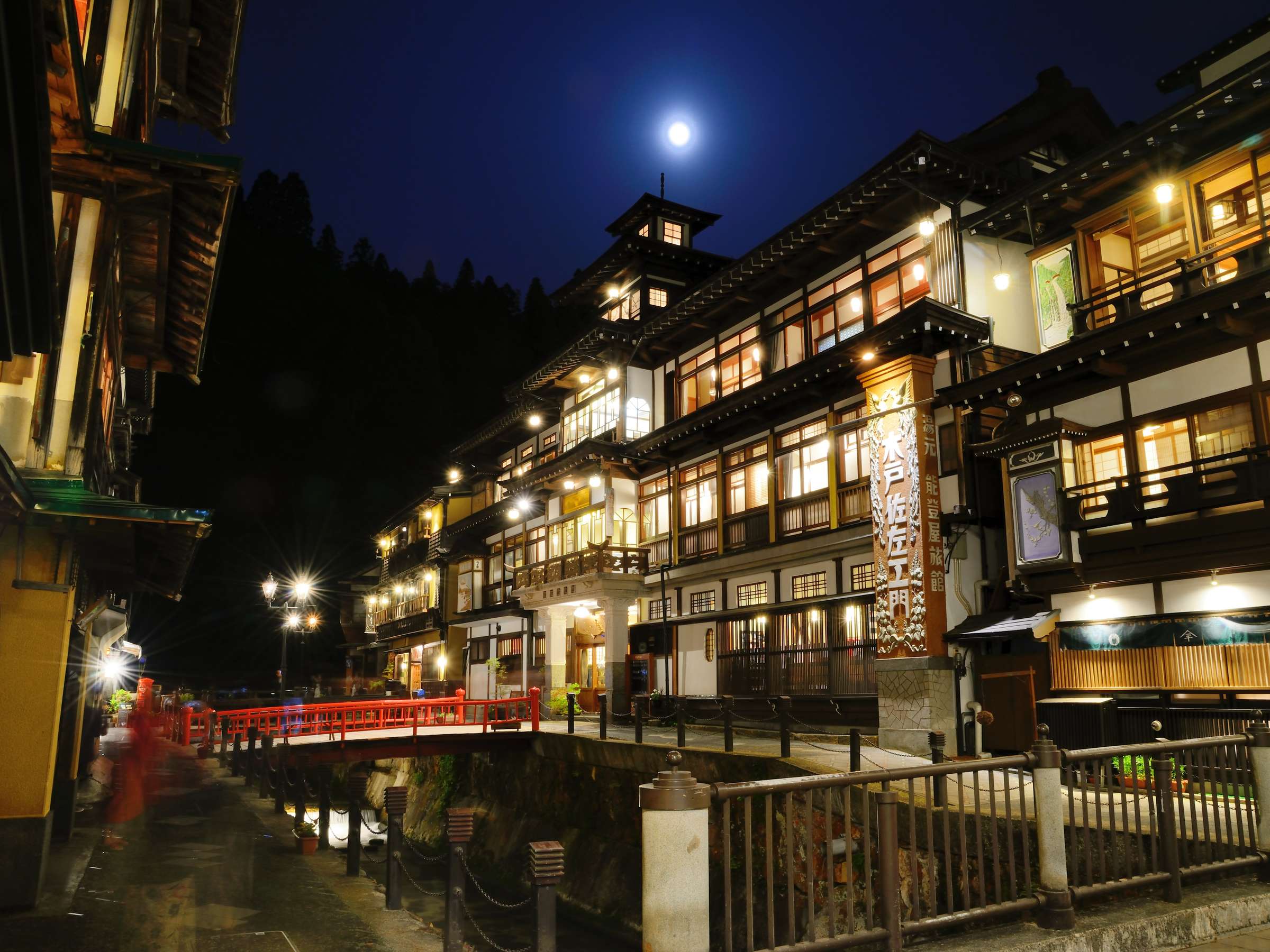
Notoya Ryokan (能登屋旅館) — Ginzan Onsen, the Snow-Globe Pick
Scorecard - Area: Ginzan Onsen, Yamagata — Explore Ginzan ryokans - Normal-season price: $250–$500 per person per night (inc. two meals) - New Year plan: Carries a seasonal premium; verify on booking page - New Year program: Osechi-ryori and toshikoshi soba standard; atmospheric gas-lit riverfront snow scenery is the main event - English-friendly: No — book via an English-language booking platform (Trip.com, Booking.com); expect limited English on-site - Tattoo policy: Reservable private family bath available; ask about communal-bath policy at time of booking - Onsen type: Sodium chloride sulfate spring; three indoor/outdoor baths plus reservable family bath - Nearest hatsumode: Small local shrines in Obanazawa (40 min by bus); no major shrine nearby - Rating: Not yet rated in database Notoya Ryokan is the most photographed building at Ginzan Onsen — its ornate, six-story Taisho-era wooden facade rising above the gas-lit riverfront is the image most people associate with "quintessential Japanese onsen town in winter." That recognition is earned. The building is a registered tangible cultural property, and it looks exactly like what it is: over a century of continuous ryokan history, built in an architectural style that peaked in the 1920s and was never repeated at this scale. January is Ginzan's peak snow month, with deep, reliable winter snowfall blanketing the narrow valley. The town has no chain hotels, no souvenir shops selling keyrings, and virtually no tourist infrastructure beyond the ryokan and a handful of eating spots. At New Year, when the rest of Japan is navigating the Oshogatsu crowds, Ginzan is quiet in a way that feels specific. Gas lanterns reflect on the river ice. The bells you hear come from local village shrines, not the amplified ceremony of a major temple. The tradeoff is practical: English is limited on-site. Getting here requires a 40-minute bus ride from Oishida Station, itself a JR journey from major Tohoku cities. There is no major hatsumode shrine within easy reach. This is the pick for travelers who want the snow-town atmosphere over the cultural-ritual density — and who are comfortable navigating a Japanese-language environment for the duration of their stay. ---
How to book the best New Year ryokan in Japan (and what happens if you wait)
The hard truth: December 31 check-in at a quality ryokan is effectively sold out 2–4 months in advance. For the 2027 New Year period, the booking window opens roughly June–September 2026. Most Jalan.net and Rakuten Travel New Year plans post in September–October, and the most reviewed properties on those platforms fill within days [Japan Travel Pros; Tripadvisor Japan Travel Forum community consensus]. For non-Japanese speakers using Trip.com, Booking.com, or Expedia, inventory typically becomes visible three to six months out. Set a search alert and check regularly in September — don't wait for October. The price premium at New Year is real and worth understanding clearly. The only verified surcharge figure from a named property's official booking page is Hakone Ginyu: +¥14,300 per person on top of the standard C-rate nightly price for December 31 through January 3 [Hakone Ginyu official reservation page]. That covers the New Year meal program and cultural activities. Saturday and national holiday rates across all ryokan categories already run 20–40% above midweek base rates [Ryokan Finder 2026 Cost Guide]; New Year stacks a further premium on top of that. What the premium buys you concretely: toshikoshi soba, osechi-ryori at breakfast, otoso sake, cultural activities (calligraphy, mochi-pounding), and enhanced kaiseki courses. Avoid any source that quotes a 2x–3x multiplier without citing a specific property — that figure is not property-verified.
Tip
Cancellation risk: Many premium ryokan charge 50–100% cancellation fees from 7 to 30 days before arrival. At ¥50,000+ per person, this is a meaningful sum. Book with a credit card that includes trip cancellation protection, or purchase a standalone travel insurance policy that specifically covers non-refundable accommodation. The cancellation terms are displayed on Trip.com and Booking.com before you confirm — read them before paying.
Book transport at the same time as the ryokan. Shinkansen and limited express trains are heavily booked December 29 through January 4. For Kusatsu especially (no direct Shinkansen), secure the JR + bus leg the moment the ryokan is confirmed. For more on ryokan booking windows generally, see ryokan booking tips.
ご予約はこちら
人気の旅館から選んで予約
3つの予約サイトの空室・価格を見比べてください。
予約リンク経由で手数料が発生する場合がありますが、追加費用はかかりません。
---
Already too late? What to do if New Year plans are sold out
If you're reading this in November or December and the December 31 inventory is gone at your target properties, you have more options than the sold-out screen suggests. Shift dates. December 30 check-in is the insider move. You arrive before the crowds, the onsen is noticeably quieter on the 30th, and you're already in position for the bells on December 31 and the full January 1 program. December 30 is often available when December 31 is fully booked, and at a lower rate. You still get everything: toshikoshi soba that evening, joya no kane, osechi on New Year's morning, hatsumode on January 1.
Tip
December 30 check-in is the insider move: you arrive before the crowds, the onsen is at its quietest, and you're already in place for everything that follows.
Try onsen towns with less competitive New Year inventory. Nikko, for instance, has less international demand than Hakone or Kinosaki and still delivers the densest joya no kane experience of any area in this guide. Ginzan Onsen in Yamagata is particularly overlooked by international travelers — the snow-town atmosphere is the main event, not the shrine access. These are not consolation prizes; they're different experiences, each with a genuine New Year character. Watch for cancellations. Cancellations at major ryokan do appear, sometimes two to four weeks out as guests revise plans. Check Trip.com's "last available" filters. If you read Japanese, set an alert on Jalan.net. The window is narrow but real. Extend to January 2–3 check-in. After the midnight peak, January 2 inventory opens up considerably. You still receive osechi-ryori, hatsumode access, and much quieter onsen conditions. Rates for January 2–3 tend to be 20–30% lower than the December 31 peak night. City ryokan as a hybrid. When onsen towns are fully booked, a Tokyo or Kyoto machiya inn near a major shrine gives you hatsumode access on foot and the ryokan experience without the transport scramble. Yasaka Shrine in Kyoto holds the Okera Mairi ceremony on New Year's Eve — visitors light a hemp rope from the sacred fire and carry it home to start their New Year's ozoni. It's a uniquely atmospheric experience for a city-based stay. For broader seasonal booking advice, see best season to visit a ryokan and when to book your Japan trip. ---
What to pack for a New Year ryokan stay
The ryokan supplies yukata (light cotton robe) and a hanten (padded jacket) for wearing around the property and into town. Wear the left side over the right — right-over-left is the funeral convention and staff will gently correct you, but it's worth knowing before you walk through the lobby. - Slip-on sandals or slippers — ryokan provides geta (wooden clogs) or zori, but your own lightweight slip-ons make late-night rotenburo trips easier in snow and ice - Warm base layers — air temperature in January at Hakone, Kinosaki, or Ginzan can drop well below freezing; you'll want thermal underlayers for outdoor onsen, where the water may be 40°C while the air is −3°C - Cash for hatsumode — omikuji fortune slips (¥100–200), omamori protective charms (¥500–1,000), and ema wooden wishing plaques (¥500–1,000) are sold at shrine stalls and are cash-only; ATMs at convenience stores are the easiest source - Small daypack — for carrying hatsumode items, a thermos, and a camera on shrine visits - Charged phone — for the midnight countdown; also useful for translation apps at shrines with limited English signage A note on onsen rules: shower fully at the washing station before entering any communal bath, keep hair pinned up and away from the water, and leave phones and cameras at the edge. If your property has a communal bath and you have tattoos, verify the policy before arrival — it's listed in each scorecard above, and the tattoo-friendly ryokans guide covers this in more depth.
Tip
The outdoor rotenburo at midnight on December 31 is one of the more surreal experiences available to travelers in Japan. Ask your ryokan whether they keep it open past 11 PM on New Year's Eve — most do, but hours vary.
---
Finding the best ryokan for New Year in Japan rewards planning — and it rewards picking the area before you pick the property. Tokyo-based travelers default to Hakone, with Kusatsu or Nikko as strong alternatives. Kansai-based travelers choose between Arima (closer, more accessible) and Kinosaki (more immersive, better snow). Hokkaido in winter belongs to Noboribetsu. The snow-town experience without the crowds points to Ginzan in Yamagata. All seven properties here are drawn from a verified database of 293 ryokan across 30 onsen areas — browse the full inventory for each area to find availability that matches your dates and budget.
*料金・プランは2026〜2027年お正月シーズンの確認済み情報です。*
12月31日の午後11時、部屋のドアがそっとノックされる。年越しそばが漆の椀に盛られて届く——まだ湯気が立っている。遠くで、川の向こうで、除夜の鐘が鳴り始める。低く、一定のリズムで、108回を数えていく。露天風呂が待っている。松の枝にはもう雪が積もっている。お正月に旅館を選ぶというのは、通常の温泉予約とはまったく違う決断だ。この時期には固有の儀式があり、固有の食の組み立てがあり、多くの旅人が不意を突かれる固有の予約タイミングがある。 「日本のお正月は混雑するから行かないほうがいい」という情報をよく見かける。しかしそのアドバイスは的外れだ。旅館を予約してさえいれば、お正月は障害ではなく体験そのものになる。年越しの鐘、ハレの料理、初日の出、初詣——正月という行事のすべての文化的な糸は、旅館の滞在を軸に結ばれているからだ。 このガイドは、「日本でお正月を過ごすと決めた。あとはどこに行き、どの旅館を予約するかだ」という方のためのものだ。6つの温泉エリアにまたがる7軒の具体的な旅館を紹介し、料金・英語対応・タトゥーポリシー・初詣へのアクセスを正直な採点表でまとめる。初詣エリア別早見表、現実的な予約タイムライン、そして12月31日の在庫が売り切れていた場合の対処法も盛り込んでいる。 このガイドで紹介する旅館はすべて、全国30の温泉エリア・293軒を収録した当サイトの検証済みデータベースから選出している——旅館の旬の時期を知るのガイドに登場する宿と同じものだ。お正月の空室は動きが早い。最新プランの確認は各旅館の予約ページで直接行ってほしい。 ---
旅館のお正月——実際に何が起きるのか
日本でお正月に旅館を探すなら、まずその時期に旅館の中で何が起きるのかを知っておきたい。お正月は1月1日から3日までが正式な期間で、12月28日以降の年末は準備期間として扱われる。日本の家族にとって最も重要な祝日であり、儀式・休息・帰省の時期だ。外国人旅行者にとっては物流上の難所に見えることもある。しかし、きちんと運営された旅館ではまったく違う体験になる——ゆっくりと、丁寧に組み立てられた「儀式」の中に自分が入り込む感覚だ。 年越しそばは12月31日の夜、深夜0時前に提供されるのが慣わしだ。この習慣は江戸中期に遡り、現在も日本人の約70%が大晦日に蕎麦を食べるという調査結果がある(Just One Cookbook)。細く長いそばは長寿を象徴し、切れやすい性質は「過去の苦労を断ち切る」ことを意味する。一つ知っておくべきこと——食べ残しは縁起が悪いとされている。 続いて除夜の鐘。大晦日の夜、全国の寺院の鐘が108回打たれる——107回を午前0時までに打ち、最後の1回で新年を迎える(Wikipedia — 除夜の鐘)。108回は仏教における108の煩悩を表し、一打ごとに小さな浄化の作法となっている。露天風呂に浸かりながら聞くか、近くの寺院まで歩いて行くかは、選んだ温泉エリアによる——そしてこの選択は意識的に行う価値がある。日光が群を抜く理由はここにある。12月31日の午後11時から、3つの寺院が別々に除夜の鐘の儀式を始めるのだ。 元日の朝はおせち料理から始まる。重箱(じゅばこ)に詰められた、日本最古の正月食の伝統の一つだ。各段には意味がある。黒豆は勤勉と健康、数の子(にしんの卵)は豊穣と家族繁栄、伊達巻は学問、海老は長寿を表す(Japanese Cultural Center of Hawaii)。味わいは甘く、保存的で、磯の風味が立つ——懐石料理とはまったく違う。外国人旅行者には、おせちを文化的なテイスティングフライトとして楽しむことをすすめる。前夜のフルコース懐石が食事のメインであることには変わりない。おせちと並んで出されるのが雑煮——餅入りの汁物で具材は地域によって異なる——とお屠蘇(おとそ)だ。お屠蘇は元日の朝食に提供されるスパイス入りのお酒で、箱根の金乃竹リゾートなど一部の旅館では追加料金なしで自動的に供される。 ロビーや食事処のどこかには必ず鏡餅が飾られている。丸い餅を2段に重ね、上に橙(だいだい)を乗せた形は、神道の神聖な鏡をかたどっている。1月2日・3日に箱根に滞在しているなら、道路沿いに立って箱根駅伝のランナーが通り過ぎるのを眺めてみてほしい——1920年から毎年続く、日本で最も視聴率の高い正月スポーツの一つだ。 旅館のマナーや初めての滞在で知っておきたいことは旅館初心者ガイドで詳しく解説している。

---
初詣エリア別早見表:温泉地ごとの神社・寺院アクセス比較
初詣——新年の最初の参拝。1月1日から3日の間に訪れるのが慣わしだが、実際に行ってみると思いのほか深く刺さる体験になる。東京の明治神宮には3日間でおよそ300万人が訪れ、本殿まで最大3時間待ちになることもある(Activity Japan)。温泉地の神社での初詣なら20分で済む——しかも、その場所が自分のものであるかのような感覚で。 参拝の作法は日本人と同じだ。賽銭箱に硬貨を入れ、二拝二拍手一拝。神社は宗教的背景を問わずすべての人に開かれている。おみくじ(100〜200円)やお守り(500〜1,000円)は授与所で販売されており、外国人が買って帰っても何ら問題ない。どちらも現金のみ。
| 温泉エリア | 最寄りの神社・寺院 | 距離・移動手段 | 主なお正月行事 | 除夜の鐘 | 備考 |
|---|---|---|---|---|---|
| 箱根 | 箱根神社——芦ノ湖畔の水中鳥居、創建1,250年以上 | 多くの旅館からタクシーまたはシャトルで10〜20分 | 芦ノ湖上で打ち上げられる約1,000発の花火が湖面に映える | 旅館の部屋から鐘の音が届く宿多数。強羅エリアの寺院でも参加可能 | 英語案内充実。花火シャトルあり(箱根湯本駅発) |
| 日光 | 日光東照宮(世界遺産)+二荒山神社+輪王寺 | 湯元・鬼怒川温泉からバスまたはタクシーで15〜30分 | 1月1日午前6時、東照宮の元旦祭。二荒山神社で振る舞い酒あり | 12月31日午後11時から3つの寺院で順次始まる | このガイドで最も重層的な除夜の鐘体験 |
| 城崎 | 温泉寺——大師山ロープウェイでアクセス | 中心街から徒歩15分+ロープウェイ | 1月上旬に消防出初め式 | 温泉寺でコミュニティの鐘 | 城崎の公式サイトは英語対応 |
| 草津 | 草津神社——温泉街の中に位置する | すべての旅館から徒歩5〜10分 | 熱乃湯でのゆもみ実演——年中無休で1日6回開催、700円 | 町内の胡麻木堂で除夜の鐘 | 街中の英語案内は箱根より少なめ |
| 有馬 | 有馬天神社(地元)、住吉大社(大阪、電車30分) | 地元神社まで徒歩5分。住吉大社へは電車30分 | 関西の主要初詣スポットへのアクセス良好。1月1〜3日は太閤の湯に500円/人の加算あり | 地域コミュニティの鐘 | 関西在住者に強くおすすめ |
| 登別 | 登別熊野大社(町内)、北海道神宮(札幌、JR1時間) | 地元神社まで徒歩5分。北海道神宮へはJRで1時間 | 伊達時代村で江戸時代の正月祭(1月1〜3日)——振る舞い酒・甘酒・獅子舞・投扇興など | 地域コミュニティの鐘 | 町のインフラは国内客メイン。大型ホテル以外は英語対応に限りあり |
| 銀山 | 小さな地元の神社(小野田駅周辺、バスで40分) | バスで40分 | 雪景色の町並みが最大の魅力。近くに大きな初詣神社はない | 地元集落の鐘 | 国際系プラットフォームで予約を。現地英語対応は限定的 |
Tip
タイミングのコツ: 1月1日の午前中、または1月2日はどの時間帯でも、温泉地の初詣にはちょうどよい。12月31日の夜中に行きたいなら、その熱狂的な雰囲気を求めて——ただし大きな神社は午後10時から肩がぶつかり合うほどの混雑になる。1月2日は明らかに静かで、それでも神社はまだ正月の装いのままだ。
---
お正月に泊まりたい旅館7選
紹介する7軒は、通常シーズンの料金で1泊1名あたりおよそ1万5,000円〜13万円(2食付き)の幅をカバーし、東京発(箱根・草津・日光)、関西発(有馬・城崎)、北海道(登別)、東北・信州(銀山)の旅人に対応している。お正月プランは通常料金に上乗せされる。名前入りの公式予約ページから確認できた唯一の数字は箱根吟遊の1泊1名あたり+14,300円(12月31日〜1月3日の通常料金に加算)だ。これを基準にしてほしい——他の旅館の上乗せ額はそれぞれ異なる。各宿には採点表を付けているので一目で比較できる。 人気の旅館のお正月在庫は9〜10月に公開され、数週間で完売することが多い。Trip.com・Booking.com・Expediaでの予約は日本語が得意でない方にも英語サポートと明確なキャンセル条件が提供される——この価格帯では大きなメリットだ。 ---
箱根吟遊(Hakone Ginyu) — 箱根、東京発のファーストチョイス

採点表 - エリア: 箱根(神奈川県) — 箱根の旅館を探す - 通常シーズン料金: 1泊1名 $400〜$900(2食付き) - お正月上乗せ: 12月31日〜1月3日、通常料金に1名あたり+14,300円(箱根吟遊公式予約ページ確認済み) - お正月プログラム: 12月31日に年越しそば、1月1日朝におせち料理、お屠蘇、初詣への送迎手配 - 英語対応: あり - タトゥーポリシー: 全20室に専用露天風呂——大浴場のタトゥー制限は関係なし - 泉質: 複数泉質。全室に露天の専用風呂 - 最寄りの初詣: 芦ノ湖畔の箱根神社(タクシーで約20分)。深夜に湖上で打ち上げ花火 - 評価: 9.3/10(124件のレビュー) 箱根吟遊は早川渓谷を見下ろす崖の上に立ち、宮ノ下駅から約3分。20室すべての専用露天風呂が渓谷に向かって開き、晴れた朝には富士山が顔を出す。お正月に選ぶ理由の一つは地理的な条件だ。箱根神社の深夜花火——深夜0時の芦ノ湖上での約1,000発——は車なしでも箱根湯本駅からのシャトルでアクセスできる。そして1月2・3日には箱根駅伝のランナーがこのエリアを走り抜け、道路沿いで観戦してから湯に戻るという過ごし方ができる。 このガイドで唯一、公式ページで確認された上乗せ額は1名あたり+14,300円。これはお正月の食事プログラムと文化体験のコストを含む。参考として——同じ箱根にある金乃竹リゾートでは書き初めや羽根突きなどのオプション体験が1名2,000円、袴の記念撮影が7,000円で、餅つきや駅伝TV観戦は無料で提供されている(金乃竹リゾート公式お正月ページ)。「お正月プログラム」の実際のコスト感として参考にしてほしい。 正直なデメリット:20室という小規模で、リピーターからの支持も厚いため予約は早い。11月以降にこのページを読んでいるなら、今すぐ空室を確認すること。
---
西村屋本館(Nishimuraya Honkan) — 城崎温泉、松葉蟹の懐石に泊まる
採点表 - エリア: 城崎温泉(兵庫県) — 城崎の旅館を探す - 通常シーズン料金: 1泊1名 $400〜$900(2食付き) - お正月プラン: 季節の上乗せあり。現在のプランと料金は予約ページで確認 - お正月プログラム: 松葉蟹と但馬牛を中心とした冬の懐石。城崎の外湯7軒すべての入浴権付き。1月1日におせち料理 - 英語対応: あり - タトゥーポリシー: 本陣の間スイートに専用露天風呂あり。外湯のタトゥーポリシーは事前に確認を - 泉質: 塩化物泉。外湯7軒(外湯めぐり)の利用券付き - 最寄りの初詣: 温泉寺——大師山ロープウェイ経由(町中心部から徒歩15分+ロープウェイ) - 評価: 9.2/10(198件のレビュー) 西村屋本館は1860年創業。関西では指折りの老舗旅館の一つで、ルレ・エ・シャトー会員かつミシュラン推薦——どちらの肩書きもことさら前に出さずにいられる宿だ。お正月に選ぶ理由は旬のタイミングにある。日本海で水揚げされる松葉蟹は冬がまさに最盛期。1月の城崎で松葉蟹の会席を食べるのは、温泉地の食の中でも最高峰の体験の一つだ。 城崎のインフラも後押しする。町の外湯7軒は年中無休で稼働し、西村屋本館の宿泊者には全軒無料の外湯めぐり券が渡される。浴衣に半纏を羽織り、大谿川沿いの石畳を下駄の音を立てながら雪の中を歩いて外湯を回る——この体験はきちんとその場所に刻まれる。城崎の1月の平均積雪は126cm——雪景色は保証されないが、統計的にはほぼ期待していい(城崎公式サイト)。 1月上旬には消防出初め式が行われ、伝統装束の消防士たちが川の上で放水演技を披露する。観光向けではなく、地域の本物の行事だ。大阪・京都からのアクセスはコウノトリ号(特急)で約2時間半〜3時間と直通。
---
奈良屋(Naraya) — 草津温泉、日本一の強酸性湯に浸かる
採点表 - エリア: 草津温泉(群馬県) — 草津の旅館を探す - 通常シーズン料金: 1泊1名 $350〜$700(2食付き) - お正月プラン: 季節の上乗せあり。予約ページで確認。英語版の正月プラン詳細は執筆時点では未確認 - お正月プログラム: 草津の多くの旅館と同様、年越しそばとおせちは標準。熱乃湯でのゆもみ実演は年中1日6回(700円)(Deep Japan 確認済み) - 英語対応: あり - タトゥーポリシー: 千客万来棟(せんゆうてい)に半露天の専用浴室あり - 泉質: 強酸性硫黄泉(pH 2.0)——日本でも有数の高濃度天然温泉 - 最寄りの初詣: 湯畑そばの光泉寺、草津神社(徒歩5〜10分) - 評価: 9.0/10(310件のレビュー) 奈良屋は草津最古の源泉・白旗の湯から湯を引き、1877年の創業以来その歴史を刻んでいる。千客万来棟のメゾネット客室は、町の中心に広がる湯けむり立つ湯畑を見下ろす位置にある——この眺めを持つ宿は草津でここだけだ。湯守の職人が日々泉源を管理しており、そういう肩書きが存在する旅館の数は、想像通り、ほとんどない。 草津の泉質がこの宿の本質だ。pH 2.0の硫黄泉は日本でも最も酸性度の高い天然温泉の一つ——入浴した感覚が明らかに違う。ピリピリした刺激を、温泉慣れした旅人たちは「ものすごくきれいになる感じ」と表現する。湯畑そばの熱乃湯では、年中無休・1日6回のゆもみ実演が正月期間も続く。浴衣姿の女性たちが長い木板で湯をかき混ぜて温度を下げる作業を、民謡に合わせて披露する。観覧料700円で、年末年始も通常通り入場できる。 一つ実務的な注意点:草津温泉には新幹線の直通駅がない。東京からはJRとバスを乗り継いで約3時間かかる。帰省ラッシュの時期(12月29日〜1月4日は新幹線と長距離バスが混み合う)、この区間の交通手段は旅館の予約と同時に確保することを強くすすめる。
---
陶泉 御所坊(Tocen Goshobo) — 有馬温泉、関西発のベストチョイス
採点表 - エリア: 有馬温泉(兵庫県) — 有馬の旅館を探す - 通常シーズン料金: 1泊1名 $235〜$600(2食付き) - お正月プラン: 季節の上乗せあり。予約ページで確認 - お正月プログラム: おせち料理・12月31日の年越しそば・神戸牛の懐石。近隣の太閤の湯は1月1〜3日に1名500円の加算(阪急電鉄 確認済み) - 英語対応: あり - タトゥーポリシー: 専用浴室あり。大浴場のポリシーは直接確認を - 泉質: 金泉(鉄分豊富な黄金色の湯)と銀泉(ラジウム・炭酸泉の透明な湯)の2種 - 最寄りの初詣: 有馬の古い町並みの中に湯泉神社と温泉寺(徒歩5分)。電車30分で住吉大社(大阪) - 評価: データベース未採点 陶泉 御所坊は有馬・滝川のほとりに800年以上の歴史を持つ、日本で最も古い旅館の一つだ。有馬の温泉は『日本書紀』(720年)にも記されており、日本で最も古い温泉地の一つとして歴史書に名を刻む。客室は20室で、旅館のパンフレットではなかなか伝わらないものを持っている——古い有馬の石畳の路地に実際に馴染む「スケール感」だ。門から玄関までおよそ30秒。下に流れる滝川の音が聞こえる。建物は自ら存在を主張するのではなく、その場所に溶け込んでいる。 この宿を関西で際立たせるのが泉質だ。金泉は溶け込んだ鉄分と塩分によって琥珀色をしている——浴槽の縁を長年かけて深い黄土色に染め上げるのと同じミネラルだ。温かさより先に色が目に入る。銀泉は無色透明でラジウムと炭酸を豊富に含み、金泉の濃厚な熱さとは対照的な、軽くわずかに炭酸の効いた感触がある。同じ宿で2種類の泉質を楽しめる場所はそれほど多くない。ほとんどの温泉地は一つの泉質を中心に成り立っているからだ。 正直に言っておくべきことがある:御所坊の古い棟の客室は、宿泊料金の水準と比べると内装の経年感を感じる部分がある。文化的な重みと泉質は本物だが、ふふ日光や箱根吟遊のような全面改装されたラグジュアリーな内装を期待している方は期待値を調整しておいてほしい。それでも関西の拠点からなら立地は揺るがない。神戸から30分、大阪・京都からも無理なく来られ、日本有数の初詣スポットである住吉大社には電車で30分。静かに参拝したい日は、歩いて5分の湯泉神社で。 ---
第一滝本館(Dai-ichi Takimotokan) — 登別、北海道の冬を手が届く価格で

採点表 - エリア: 登別温泉(北海道) — 登別の旅館を探す - 通常シーズン料金: 1泊1名 $120〜$350(2食付き)——このガイドで最も低い価格帯 - お正月プラン: 季節の上乗せあり。予約ページで確認 - お正月プログラム: おせちと年越しそばは標準。近隣の伊達時代村で江戸時代の正月祭(1月1〜3日)——振る舞い酒・甘酒・獅子舞・投扇興(LIVE JAPAN 確認済み) - 英語対応: あり(国際系プラットフォームに掲載) - タトゥーポリシー: 大型の大浴場あり——タトゥーポリシーは事前に宿に直接確認すること - 泉質: 硫黄・鉄・食塩・みょうばんなど複数泉質から湧く35の浴槽、1,500平方メートルの浴場 - 最寄りの初詣: 温泉街内の湯かけ地蔵(徒歩5分)。北海道神宮(JRで1時間・札幌) - 評価: データベース未採点 1月、北海道の雪が谷を覆うころ、地獄谷から立ち上る灰白色の硫黄の湯煙と、その真下に積もった真っ白な雪のコントラストが目に焼き付く——宿の敷地からも見える光景だ。第一滝本館は1858年から続く老舗で、今では伝統旅館というよりも温泉リゾート複合施設に近い規模に育っている:客室393室、浴場面積1,500平方メートル、複数の異なる泉質から湧く35の浴槽。その傍らには年中噴気を上げる地熱火口「地獄谷」がある。 北海道の冬を手が届く価格で体験したいならここが答えだ。通常シーズンは1泊1名2食付きで$120前後から——箱根や城崎のラグジュアリー層よりも大幅に低い。お正月プランはその料金に上乗せされるが、その出発点の低さが、箱根の価格を出したくない旅人にとって北海道の深い冬を可能にする。トレードオフはスケールだ:393室という規模は、体験が「こぢんまりした宿」というよりも「リゾート」の色合いを帯びることを意味する。宿の真価は大浴場にある。 登別伊達時代村(日登別伊達時代村)は、ほとんどの温泉街の旅館から徒歩5分ほどの場所で、1月1〜3日に江戸時代の正月祭を開催する。振る舞い酒・甘酒・獅子舞・投扇興(とうせんきょう)などが楽しめる、外国人旅行者のほとんどが存在すら知らない、素朴でよく作られた文化プログラムだ。 ---
ふふ 日光(FUFU Nikko) — 日光、世界遺産での初詣に泊まる
採点表 - エリア: 日光(栃木県) — 日光の旅館を探す - 通常シーズン料金: 1泊1名 $400〜$900(2食付き) - お正月プラン: 季節の上乗せあり。予約ページで確認 - お正月プログラム: 12月31日に年越しそば、1月1日朝におせち料理、お屠蘇。東照宮の1月1日午前6時の歳旦祭、12月31日の三寺院の除夜の鐘へのアクセス - 英語対応: あり - タトゥーポリシー: 全スイートに専用温泉風呂——大浴場のタトゥーポリシーは問題なし - 泉質: 全24スイートに専用温泉浴室(アルカリ性単純泉、湯元系の湯) - 最寄りの初詣: 日光東照宮(世界遺産)——東日本有数の初詣スポット。1月1日午前6時の歳旦祭(日光公式ガイド 確認済み) - 評価: 9.1/10(310件のレビュー) ふふ 日光は全室スイートのラグジュアリー旅館(24スイート)。田母沢御用邸に隣接し、ユネスコ世界遺産の社寺建築群まで徒歩圏内という、日本でも屈指の建築密度を誇るエリアに立つ。各スイートには専用の温泉浴室がある——これは深夜0時の鐘が鳴り始める前に、午後11時半に静かに湯に浸かりたいというお正月の文脈で特に意味を持つ。 このガイドの他のエリアと比べて日光が際立つのは、お正月の儀式の密度だ。12月31日午後11時から、3つの寺院が順に除夜の鐘を鳴らし始める——日光山輪王寺、日光山中禅寺、日光山温泉寺(日光公式ガイド)。一つ参拝して次へ歩いてもいいし、旅館の部屋から複数の鐘の音が谷越しに重なるのを聞いていてもいい。二荒山神社では元日の参拝中に地酒の振る舞いがある。1月1日午前6時、東照宮で歳旦祭が始まる——明治神宮に次ぐ東日本有数の格式を持つ初詣で、あちらとは比べ物にならないほど空いている。 実務的なメモ:日光は東武特急で東京から約2時間。エリアの小規模な宿は英語サポートが限られることが多い。ふふ 日光が国際系プラットフォームに掲載されている点が、高額予約での安心感につながる。関東エリアの選択肢全体については冬の温泉旅ガイドもあわせてどうぞ。 ---
能登屋旅館(Notoya Ryokan) — 銀山温泉、雪の中の時間旅行
採点表 - エリア: 銀山温泉(山形県) — 銀山の旅館を探す - 通常シーズン料金: 1泊1名 $250〜$500(2食付き) - お正月プラン: 季節の上乗せあり。予約ページで確認 - お正月プログラム: おせちと年越しそばは標準。ガス灯に照らされた雪の川沿い風景がメインイベント - 英語対応: なし——Trip.com・Booking.comなどの英語系プラットフォームで予約すること。現地の英語対応は限定的 - タトゥーポリシー: 貸切家族風呂あり(要予約)。大浴場のポリシーは予約時に確認を - 泉質: 塩化物硫酸塩泉。内湯・露天計3カ所と貸切家族風呂 - 最寄りの初詣: 小野田駅周辺の小さな地元の神社(バスで40分)。近くに大きな神社はなし - 評価: データベース未採点 能登屋旅館は銀山温泉で最も多く撮影されている建物だ。ガス灯の灯る川沿いに立つ大正時代の豪華な6階建て木造建築——多くの人が「日本の温泉街」として思い浮かべるイメージそのものだ。その認知は本物に根ざしている。この建物は登録有形文化財であり、まさにそれが何であるかのように見える:1920年代に頂点を迎え、二度と同じ規模では建てられなかった建築様式による、100年以上の旅館の歴史だ。 1月は銀山の積雪がピークを迎え、深い雪が狭い谷を覆う。町にチェーンのホテルはなく、キーホルダーを売る土産物屋もなく、旅館と数軒の飲食店以外の観光インフラはほぼない。日本中がお正月の人波をかき分けているときに、銀山だけが特別な静けさを持っている。ガス灯が凍った川面に映る。聞こえる鐘の音は大きな寺院の拡声されたものではなく、地元の集落の鐘だ。 トレードオフは現実的だ:現地の英語対応は限られている。ここへ来るには大石田駅からバスで40分かかり、その大石田駅自体が東北の主要都市からJRでさらにかかる。大きな初詣神社も近くにない。これは、文化的な儀式の密度よりも雪の町並みの雰囲気を求める旅人のための選択だ——そして滞在中ずっと日本語環境をナビゲートすることに抵抗のない人の。 ---
お正月の旅館予約術——そして待ちすぎたときの対処法
厳しい現実を先に言う。12月31日チェックインの人気旅館は、2〜4ヶ月前に実質的に完売する。 2027年のお正月期間であれば予約窓口は2026年6月〜9月に開く。じゃらんや楽天トラベルのお正月プランは9〜10月に出揃い、レビュー数の多い人気宿はその数日以内に埋まる(Japan Travel Pros・Tripadvisor Japan旅行フォーラムのコミュニティ情報より)。 Trip.com・Booking.com・Expediaで探す場合、在庫が表示されるのは通常3〜6ヶ月前から。9月にアラートをセットし、定期的に確認することを。10月まで待ってはいけない。 お正月の価格上乗せは実在し、正確に理解しておく価値がある。公式予約ページで確認できた唯一の名前入りの数字は箱根吟遊だ:12月31日〜1月3日の通常C料金に1名あたり+14,300円(箱根吟遊公式予約ページ)。これは正月の食事プログラムと文化体験のコストを含む。全旅館のベースレートには土曜・祝日料金ですでに20〜40%の上乗せがある(Ryokan Finder 2026 価格ガイド)。お正月はそこへさらに乗ってくる。上乗せで実際に得られるもの:年越しそば、おせち料理(朝食)、お屠蘇、文化体験(書き初め・餅つき)、充実した懐石コース。「2〜3倍になる」という情報が特定の旅館名なしに書かれているなら、それは検証されていない数字だ。信用しないこと。
Tip
キャンセル料のリスク: 多くの高級旅館は到着7〜30日前から50〜100%のキャンセル料を課す。1名50,000円以上なら、2名で100,000円以上のリスクになる。旅行取消保証付きのクレジットカード、あるいは非払い戻しの宿泊をカバーする旅行保険への加入を強くすすめる。Trip.comとBooking.comでは確定前にキャンセル条件が表示される——支払う前に必ず読むこと。
交通も旅館と同時に予約すること。12月29日〜1月4日は新幹線・特急ともに激しく混み合う。特に草津(新幹線直通なし)は旅館確定の瞬間にJR+バスの手配を済ませること。 旅館の予約タイミングについて全般的なアドバイスは旅館予約のコツで詳しく解説している。
ご予約はこちら
人気の旅館から選んで予約
3つの予約サイトの空室・価格を見比べてください。
予約リンク経由で手数料が発生する場合がありますが、追加費用はかかりません。
---
間に合わなかった場合——12月31日が売り切れていたら
11月・12月にこのページを読んでいて、狙っていた旅館の12月31日が完売していても、選択肢はまだある。 日程をずらす。 12月30日チェックインが通(つう)の選択だ。混雑が来る前に到着し、30日は温泉が静かで、31日の鐘と1月1日の全プログラムに向けてすでに宿の中にいる。12月31日が満室の日でも30日は空いていることが多く、しかも料金が低い。それでも得られるもの:その夜の年越しそば、除夜の鐘、元日のおせち、初詣——すべて揃っている。
Tip
12月30日チェックインが通の選択: 混雑が来る前に到着し、温泉は最も静かで、その後に続くすべての体験に向けて準備が整っている。
お正月の争奪戦が比較的緩い温泉地を選ぶ。 たとえば日光は箱根や城崎ほど国際需要が高くなく、それでもこのガイドで最も重層的な除夜の鐘体験を提供する。山形の銀山温泉は外国人旅行者に特に見落とされているエリア——雪の町並みの雰囲気がメインで、神社へのアクセスではなく。これらは慰め賞ではない。それぞれに本物のお正月の個性を持つ、別の体験だ。 キャンセル待ちを狙う。 大型旅館のキャンセルは、旅程を変更するゲストが増える2〜4週前に出ることがある。Trip.comの「残りわずか」フィルターを確認してほしい。日本語が読めるならじゃらんでアラートを設定する。窓は狭いが確かに開く。 1月2〜3日チェックインに延ばす。 深夜0時のピークを過ぎると、1月2日の在庫は大きく開く。それでもおせち料理・初詣・静かな温泉は全部ある。1月2〜3日の料金は12月31日のピーク夜より20〜30%低い傾向がある。 都市型旅館をハイブリッドとして使う。 温泉地が完売しているときは、大きな神社の近くに立つ東京や京都の町家旅館という選択もある。初詣へは歩いて行けて、交通の混雑もない。京都の八坂神社では大晦日の夜に「をけら詣り」が行われ、参拝者が神聖な火から麻縄に火をもらって持ち帰り、元日のお雑煮を炊く。都市滞在ならではの、特別な雰囲気だ。 季節別の予約アドバイスは旅館のベストシーズンと予約のコツも参照してほしい。 ---
お正月の旅館滞在——持ち物チェックリスト
旅館では浴衣(綿の湯上り着)と半纏(ふちのある厚手の上着)が用意される。着付けの基本として左前は死装束の着方——スタッフが優しく直してくれるが、ロビーを歩く前に知っておくといい。右前(左の前身頃が上)が正しい。 - スリッポン型のサンダルまたはスリッパ — 旅館は下駄や草履を用意してくれるが、雪や氷の上での深夜の露天風呂への移動は自分のものが楽 - 温かいインナー — 箱根・城崎・銀山の1月の気温は氷点下を下回ることがある。気温がマイナス3℃でもお湯が40℃の露天風呂では保温インナーがあって正解 - 初詣用の現金 — おみくじ(100〜200円)・お守り(500〜1,000円)・絵馬(500〜1,000円)は境内の授与所での現金払いのみ。コンビニのATMが最も便利 - 小さめのデイパック — 初詣のお守り類・水筒・カメラを入れて - 充電したスマートフォン — カウントダウンの深夜と、英語案内の少ない神社での翻訳アプリ用に 温泉のルールについて一点:どの大浴場に入る前も洗い場でしっかり体を洗うこと。髪は束ねてお湯にかからないように。スマートフォンとカメラは脱衣所に置いてきて。タトゥーがあり大浴場がある旅館を選ぶなら、到着前にポリシーを確認すること——各採点表に記載があり、タトゥーフレンドリーな旅館ガイドでより詳しく解説している。
Tip
12月31日深夜の露天風呂は、日本で旅行者が体験できる中でも有数の非現実的な体験の一つだ。 旅館に「大晦日の夜11時以降も露天風呂を開けておくか」と事前に聞いておこう——ほとんどの宿は開けているが、時間は宿によって異なる。
---
日本のお正月に泊まる旅館を選ぶには計画が必要だ——そして旅館を選ぶ前にエリアを選ぶことが大事だ。東京発なら箱根がデフォルトで、草津か日光が有力な代替。関西発なら有馬(距離が近く、アクセスしやすい)か城崎(より没入感が高く、雪も多い)かを選ぶ。北海道の冬は登別。人波を避けた雪の町並み体験なら山形の銀山。ここで紹介した7軒はすべて、全国30の温泉エリア・293軒のデータベースから検証したものだ——各エリアの全在庫を見て、自分の日程と予算に合う宿を探してほしい。
FAQ
よくあるご質問
Are ryokan onsen open on New Year's Day?+
Yes — most onsen at ryokan remain open throughout the New Year period, December 31 through January 3. Hours may shift slightly on January 1 (opening at 8 AM instead of 6 AM to allow staff time for their own New Year rituals), and outdoor rotenburo hours vary by property. Ask your specific ryokan about late-night hours on December 31 if you plan an after-midnight soak. Convenience stores nationwide stay open 24/7 if you need anything during the holiday.
How much more expensive is a ryokan during New Year?+
The premium varies significantly by property. The only verified figure from a named property's official booking page is Hakone Ginyu: +¥14,300 per person on top of the standard nightly rate for December 31–January 3 [Hakone Ginyu official]. Normal-season rates already carry a 20–40% surcharge on Saturday and national holiday nights [Ryokan Finder 2026]; New Year stacks further on top. What the premium buys is tangible: osechi-ryori, toshikoshi soba, otoso sake, and cultural programming (calligraphy, mochi-making). Avoid any source quoting a blanket "2x–3x" multiplier without citing a specific property — that figure is not property-verified.
What is osechi-ryori and will I actually enjoy it?+
Osechi-ryori is a set of traditional New Year dishes served in tiered lacquered boxes (jubako). Each item carries symbolic meaning: black soybeans (kuromame) for hard work and health, herring roe (kazunoko) for family prosperity, sweet rolled omelette (datemaki) for learning, shrimp (ebi) for long life [Japanese Cultural Center of Hawaii]. The flavors lean sweet, preserved, and briny — quite different from kaiseki. You will not go hungry: your full kaiseki dinner the night before remains the main meal. Treat osechi as a cultural tasting experience rather than breakfast.
How far in advance do I need to book?+
Top ryokan December 31 plans sell out 2–4 months in advance. October and November may already be too late for the most popular Hakone and Kinosaki properties. But good inventory remains in areas with lower international demand — Nikko, Ginzan — where December 30 check-in is often available when December 31 is sold out and delivers the full cultural experience. See the "Already Too Late?" section above.
Which area is best for New Year based in Tokyo?+
Hakone is the default: 90 minutes by Romancecar from Shinjuku, Mt. Fuji views on clear mornings, midnight fireworks over Lake Ashi, and the Hakone Ekiden race on January 2 and 3. Kusatsu Onsen is the alternative for spring-quality obsessives (about 3 hours via JR and bus) — no Shinkansen, so book transport early. Nikko rewards travelers who prioritize the hatsumode experience: UNESCO Toshogu Shrine's 6 AM January 1 prayer service and three temple bell ceremonies on December 31.
Which area is best for New Year based in Kyoto or Osaka?+
Arima Onsen is the closest option (30 minutes from Kobe, easy from Osaka and Kyoto) with the bonus of unique kinsen and ginsen spring chemistry and proximity to Sumiyoshi Taisha — one of Japan's most significant hatsumode sites — by train in 30 minutes. Kinosaki Onsen is the more immersive choice: a direct limited express of 2.5 to 3 hours from Osaka or Kyoto, seven public bathhouses, heavy snow in January, and matsuba crab at peak season.
Can I attend joya no kane (temple bell ringing)?+
It depends on the area. Nikko is the clear standout: three separate temples begin their ceremonies at 11 PM on December 31 — Nikkosan Rinnoji, Nikkosan Chuzenji, and Nikkosan Onsenji [Nikko Official Guide]. You can walk between them. In Kinosaki, the community bell at Onsenji Temple is walkable from all ryokan. In Kusatsu, Komakino-do Temple rings within the town. Many ryokan pipe in the NHK national broadcast so you can hear the bells from your room or the common area.
Can I do hatsumode from an onsen town?+
Yes — every area in this guide has at least one shrine or temple within walking distance. The advantage over city hatsumode is dramatic: Meiji Jingu in Tokyo sees 3 million visitors in three days with queue times up to three hours [Activity Japan]. Hatsumode at Hakone Shrine or Kinosaki's Onsenji takes 20 to 30 minutes. See the hatsumode table above for specifics per area.
What if I have tattoos?+
Tattoo policies vary per property and are noted in each scorecard. The clearest solution: any property with a private in-room bath effectively removes the communal-bath question. Four of the seven picks in this guide — Hakone Ginyu, Nishimuraya Honkan (Honjin-no-Ma suite), FUFU Nikko, and Tocen Goshobo — have private bathing options. For comprehensive tattoo policy guidance across all ryokan, see the tattoo-friendly ryokans guide. Never assume — verify before booking.
Do ryokan have English-speaking staff during New Year?+
Properties listed on Trip.com, Booking.com, and Expedia generally have at least basic English communication capability. Dedicated English-speaking staff varies. Hakone, Kinosaki, and Nikko (FUFU) have the strongest English infrastructure in this guide. Noboribetsu is more limited outside major hotels. Notoya Ryokan at Ginzan has limited English on-site — book via an English-language platform and use translation apps for in-person communication. The scorecards above note each property's English-friendliness rating.
Is it safe to book a ¥50,000+ per person stay with strict cancellation policies?+
The risk is real. Many premium ryokan charge 50–100% cancellation fees from 7 to 30 days before arrival. At ¥50,000+ per person for two people, you are potentially risking ¥100,000 or more. Mitigation: book with a credit card that includes trip cancellation protection, or purchase a standalone travel insurance policy that covers non-refundable accommodation. Cancellation terms are displayed on Trip.com and Booking.com before you confirm — read the policy carefully at booking, not after.
Which nights matter most culturally?+
December 31 is the peak cultural night (toshikoshi soba, joya no kane, the midnight moment) and carries the highest surcharge. January 1 delivers osechi, otoso, hatsumode, and the quieter first-morning-of-the-year atmosphere. December 30 is the insider move: you settle in before the crowds, the onsen is at its quietest, and you're in place for everything that follows. If you can only do one night beyond December 31, add December 30 rather than January 2. January 2 and 3 are calmer and often 20–30% cheaper than the peak night — still worth it for the Hakone Ekiden viewing and lingering osechi breakfasts.
What does a typical New Year's Day at a ryokan look like?+
Wake early for the first onsen soak of the New Year. New Year's breakfast arrives with osechi-ryori, ozoni mochi soup, and otoso spiced sake. Mid-morning: walk or shuttle to the nearest shrine for hatsumode — toss a coin, pull an omikuji fortune slip, consider an omamori charm. Return to the ryokan. A second onsen soak in the afternoon. Evening: full kaiseki dinner. In Hakone on January 2 and 3, roadside Ekiden race viewing replaces the afternoon soak as the activity. The pace is deliberately slow. That's the point. ---
元日に旅館の温泉は入れますか?+
はい——多くの旅館では12月31日から1月3日の間、温泉は通常通り営業しています。1月1日は開始が午前6時から午前8時に遅くなることがあります(スタッフが自分たちのお正月の儀式を行う時間を確保するため)。露天風呂の時間は宿によって異なります。12月31日の深夜以降に入浴したい場合は、その旅館に事前に確認してください。コンビニは全国で24時間365日営業しています。
お正月の旅館は通常よりどれくらい高い?+
上乗せ幅は宿によって大きく異なります。名前入りの公式予約ページで確認できた唯一の数字は箱根吟遊:12月31日〜1月3日の通常料金に1名あたり+14,300円(箱根吟遊公式ページ)。全旅館の通常シーズン料金にはすでに土曜・祝日料金として20〜40%の加算があり(Ryokan Finder 2026)、お正月はそこにさらに乗ります。上乗せで得られるものは具体的:おせち料理・年越しそば・お屠蘇・文化体験(書き初め・餅つき)。特定の宿名なしに「2〜3倍になる」と書かれているソースは信用しないことをすすめます。
おせち料理とは何ですか?食べられるか不安です+
おせち料理は重箱に詰められた伝統的なお正月料理です。各品目には意味があります:黒豆は勤勉と健康、数の子は家族の繁栄、伊達巻は学問、海老は長寿(Japanese Cultural Center of Hawaii)。味は甘く、保存的で、磯の風味が立ちます——懐石とはまったく違う味わいです。前夜の懐石が食事のメインであることには変わりなく、おせちはお腹が空く食事というより文化的な体験として捉えるのがいいでしょう。
何ヶ月前に予約すればいい?+
人気旅館の12月31日プランは2〜4ヶ月前に完売します。10月・11月はすでに手遅れのことがある(特に箱根と城崎の人気宿)。ただし国際需要が低めのエリア——日光・銀山——では12月31日が完売でも12月30日チェックインが空いていることが多く、正月の文化体験はすべて享受できます。上記の「間に合わなかった場合」のセクションも参照してください。
東京発でお正月に最適なエリアはどこ?+
箱根がデフォルトの選択です:新宿からロマンスカーで90分、晴れた朝の富士山の眺め、芦ノ湖上の深夜花火、1月2・3日の箱根駅伝。泉質にこだわるなら草津温泉(JRとバスで約3時間、新幹線直通なし——交通の早期手配が必須)。初詣体験を最優先するなら日光:世界遺産・東照宮の1月1日午前6時の歳旦祭と、12月31日の3寺院の除夜の鐘。
京都・大阪発でお正月に最適なエリアはどこ?+
有馬温泉が最も近い選択肢です(神戸から30分、大阪・京都からも無理なく)。金泉・銀泉という2種の個性的な泉質と、電車で30分の住吉大社(日本有数の初詣スポット)へのアクセスが強み。城崎温泉はより没入感の強い選択です:大阪・京都から特急で2時間半〜3時間の直通、外湯7軒、1月の豊富な降雪、そして旬の松葉蟹。
除夜の鐘に参加できますか?+
エリアによります。日光が圧倒的な選択肢です:12月31日午後11時から3つの寺院が順に除夜の鐘を鳴らし始めます——日光山輪王寺・日光山中禅寺・日光山温泉寺(日光公式ガイド)。寺院を歩いて回ることもできます。城崎では温泉寺の地域の鐘が全旅館から徒歩圏内。草津では胡麻木堂が町内で除夜の鐘を鳴らします。多くの旅館ではNHKの全国放送が流れ、部屋やラウンジでも鐘の音を聞けます。
温泉地から初詣に行けますか?+
はい——このガイドのすべてのエリアに、徒歩圏内に少なくとも一つの神社か寺院があります。都市部との差は歴然としています:明治神宮には3日間で300万人が訪れ、最大3時間並ぶことになります(Activity Japan)。箱根神社や城崎の温泉寺への初詣なら20〜30分で済みます。エリア別の詳細は上記の初詣表を参照してください。
タトゥーがあっても泊まれますか?+
タトゥーポリシーは宿によって異なり、各採点表に記載してあります。最も明確な解決策:専用の客室内浴室がある宿を選ぶことで大浴場の問題を回避できます。このガイドの7軒のうち4軒——箱根吟遊・西村屋本館(本陣の間)・ふふ日光・陶泉 御所坊——に専用浴室オプションがあります。全旅館のタトゥーポリシーの詳細はタトゥーフレンドリーな旅館ガイドで。絶対に思い込みで判断しないこと——必ず事前に確認を。
旅館のスタッフはお正月でも英語に対応していますか?+
Trip.com・Booking.com・Expedia掲載の宿は少なくとも基本的な英語での対応が可能です。英語堪能なスタッフの配置は宿によって異なります。英語対応が最も充実しているのは、このガイドでは箱根・城崎・日光(ふふ)の各宿です。登別は大型ホテル以外は限定的。銀山の能登屋旅館は現地英語対応が限られています——英語系プラットフォームで予約し、現地では翻訳アプリを活用してください。各採点表に英語対応の評価を記載しています。
1泊1名5万円超、キャンセルが厳しい予約は安全ですか?+
リスクは本物です。多くの高級旅館は到着7〜30日前から50〜100%のキャンセル料を課します。2名で1名5万円超なら、キャンセルで10万円以上失う可能性があります。対策:旅行取消保証付きのクレジットカードで支払うか、非払い戻しの宿泊をカバーする旅行保険に加入する。Trip.comとBooking.comでは確定前にキャンセル条件が表示されます——支払いの前に必ず読んでください。
正月に特に重要な日はいつ?+
12月31日が文化的にも金額的にもピーク(年越しそば・除夜の鐘・深夜の瞬間)。1月1日はおせち・お屠蘇・初詣・新年の朝の静けさ。12月30日は通の選択:混雑前に落ち着いて到着し、温泉が最も静かで、その後のすべてに備えられる。12月31日以外でもう一泊足すなら、1月2日よりも12月30日を足す方がいい。1月2〜3日はピーク夜より20〜30%低い料金で、それでも箱根駅伝観戦やゆっくりしたおせちの朝食を楽しめる。
旅館での元日、一日の流れは?+
早起きして新年最初の温泉。元日の朝食はおせち料理・お雑煮・お屠蘇で始まる。午前中、近くの神社まで歩くかシャトルに乗って初詣へ——賽銭を入れ、おみくじを引き、お守りを選ぶ。旅館に戻る。午後に二度目の入浴。夜は懐石料理のフルコース。箱根に1月2・3日いるなら、午後の入浴の代わりに道路沿いで箱根駅伝の観戦も。ペースはひたすらゆっくりだ。それがこの旅の本質だから。 ---