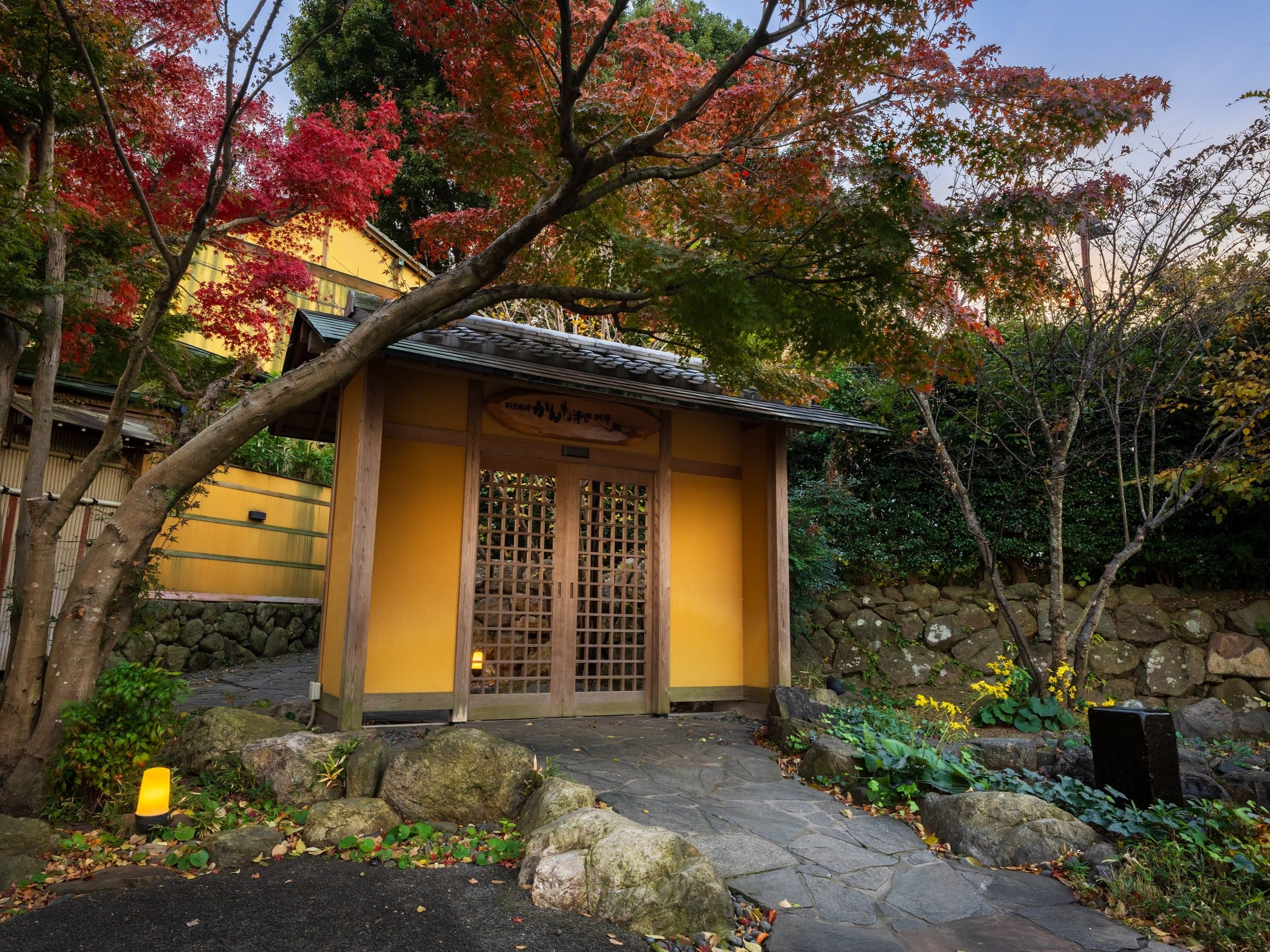
At 5:42am in late November, Kannawa was already steaming. I'd walked out of my ryokan in a yukata, the thermometer reading 4°C, and every drainage grate on the slope was breathing white columns of vapor into the cedars. A woman in her seventies passed with a plastic basket and nodded once. Forty meters uphill the public bath was already open and the queue was three locals and me. That is the actual texture of Beppu — not a postcard town, a working onsen city of 110,000 that discharges more hot water than anywhere else in Japan.
That early-morning ordinariness is the reason to choose Beppu over the Pinterest-friendlier alternatives nearby. Yufuin (25 minutes uphill by bus) is prettier in photographs; Beppu is the only one where the bathing infrastructure is the city — 2,300+ source springs and roughly 130,000 tons per day of hot water, the largest commercial volume on Earth after Yellowstone ([JNTO Beppu Onsen](https://www.japan.travel/en/spot/716/)). [verified JNTO 2026-05-07] Last verified: May 2026.
I've stayed at four of the eight ryokans on this list and visited the other four for tea, lunch, or onsen day-passes between 2018 and 2026. This is the sixth installment of our best-ryokans-by-area series after Hakone, Kyoto, Takayama, Yufuin, and Miyajima — and the only one where the *zone* you sleep in matters more than the property itself.
This guide ranks eight ryokans across the eight historic onsen districts (別府八湯 Beppu Hatto), with the Yufuin-vs-Beppu answer next, the jigoku tour caveat most blogs skip, and the practical Sonic-from-Fukuoka logistics. If you're new to ryokan culture, our [what to expect on your first ryokan stay](/en/blog/first-time-ryokan-guide) guide covers the basics so this article can focus on what makes Beppu specifically different.
The best ryokan in Beppu is [Kai Beppu](/en/ryokans/beppu-kai) — Hoshino Resorts' 70-room boutique onsen hotel celebrating the city's vibrant onsen culture with a rooftop hot spring plaza overlooking Beppu Bay. Couples seeking oceanfront in-room rotenburo book [Amane Resort Seikai](/en/ryokans/beppu-seikai), heritage seekers go to [Sanso Kannawa-en](/en/ryokans/beppu-kannawaen) in the steam district, and families fit best at the bucket-list terrace bath of [Suginoi Hotel](/en/ryokans/beppu-suginoi).
Tip
**Disclosure:** Japan Ryokan Guide earns a commission when you book through partner links. We don't accept payment from ryokans for inclusion or placement — every property here was selected on merit. Site editorially independent of Hoshino Resorts, ORIX Hotels & Resorts, and any property mentioned. The commission keeps the directory free in six languages.
Quick-Compare: 8 Beppu Ryokans at a Glance
| # | Ryokan | Tier | From (USD) | Rooms | Zone | Best For | |---|---|---|---|---|---|---| | 1 | [Kai Beppu](/en/ryokans/beppu-kai) | Luxury | $300 | 70 | Beppu (station-side) | First-time luxury onsen culture | | 2 | [Amane Resort Seikai](/en/ryokans/beppu-seikai) | Luxury | $250 | 79 | Kamegawa coastline | Couples wanting oceanfront in-room rotenburo | | 3 | [Sanso Kannawa-en](/en/ryokans/beppu-kannawaen) | Luxury | $350 | 18 | Kannawa | Heritage seekers and Noh-stage kaiseki | | 4 | [Beppu Showoen](/en/ryokans/beppu-showoen) | Luxury | $400 | 11 | Kankaiji hilltop | Detached-cottage privacy on a 6,000-tsubo estate | | 5 | [Suginoi Hotel](/en/ryokans/beppu-suginoi) | Mid | $120 | 647 | Kankaiji ridge | Bucket-list Tana-Yu terrace bath and family scale | | 6 | [Hotel Shiragiku](/en/ryokans/beppu-shiragiku) | Mid | $150 | 111 | Beppu (station-side) | Michelin-starred kaiseki near JR Beppu | | 7 | [Hana Beppu](/en/ryokans/beppu-hanabeppu) | Mid | $150 | 63 | Beppu (station-side) | Boutique 5-Star ryokan 6 minutes from the station | | 8 | [Yusai no Yado Bokai](/en/ryokans/beppu-bokai) | Mid | $130 | 50 | Beppu (station-side) | Best value with private onsen near the station |
Beppu vs Yufuin: which to base in (and the surprise answer)
Yes — Beppu is the right base for travelers prioritizing onsen variety, and Yufuin is the right add-on for atmosphere. The honest answer most forum debates eventually land on is *one night each*, with Beppu first and Yufuin second. Beppu produces 2,300+ hot spring sources across eight distinct bathing zones (Beppu Hatto), offering sand, mud, steam, and mineral baths in a way no other Japanese town matches. Yufuin is smaller, prettier, and quieter in the evening, which makes it the better farewell.
The surprise is how short the bus ride is. The highway bus takes 25 minutes door-to-door from Beppu Kitahama to Yufuin; the Kamenoi local bus runs about 50 minutes. If you only have one night, choose Beppu — the volume of bathing options is genuinely unmatched. If you have two, sleep in Beppu first (gritty, geological, alive) and Yufuin second (boutique, scenic, calm). Our companion guide on [how Yufuin's quieter mountain ryokans differ](/en/blog/best-ryokans-yufuin) covers the second-night picks in the same per-property depth.
The hidden truth: Beppu's ordinary-city aesthetic is the feature, not the bug. Yufuin's marketing photography dominates Pinterest because Yufuin was rebuilt as a resort town in the 1970s. Beppu was never rebuilt; it has been a working bath city for 1,300 years. Sleep in it for a night and the *gritty plus geothermal* combination becomes the entire reason you came.
Beppu Hatto explained: the 8 onsen zones and which to sleep in
Beppu Hatto (別府八湯) refers to the city's eight historic onsen districts: Beppu (station-side, convenient), Kannawa (steam vents and the jigoku tour), Myoban (sulfur and mineral crystals), Kankaiji (hilltop with Beppu Bay views), Hamawaki (oldest, the birthplace), Horita (quiet rural bath culture), Shibaseki (rustic, near the Blood Pond Hell), and Kamegawa (coastline and sand baths). Each zone has a different water chemistry — choose the zone first, then the property. [verified Beppu City 2026-05-07] ([Beppu City Tourism — Eight Kinds of Onsen](https://enjoyonsen.city.beppu-jp.com/travel-tips/eight-kind-of-onsen/))
Most "best ryokans in Beppu" articles list properties alphabetically or by price. The Beppu-specific move is to choose the district first, because the eight zones genuinely have different waters, smells, and evening atmospheres.
Kannawa (鉄輪) is where the steam comes from. Drainage vents push white columns of vapor into the air every morning; the eight jigoku sit a 90-minute walking loop apart; *jigoku-mushi* steam-cooking is the local specialty. Sleep here for the geological theater — Sanso Kannawa-en is the heritage pick, Hyotan Onsen the public bath two minutes from the jigoku gate.
Kankaiji (観海寺) is the hilltop ridge over Beppu Bay. Water is simple alkaline; views are the headline. Sleep here for the Tana-Yu terrace bath at Suginoi or the detached-cottage privacy of Beppu Showoen.
Beppu (Eki) — the station-side zone is the convenient pick. Within ten minutes of JR Beppu Station you have Kai Beppu, Hana Beppu, Hotel Shiragiku, Bokai, and the 1879 Takegawara Onsen public bath. Sleep here if you arrive late by Sonic and want izakaya nightlife.
Kamegawa (亀川) is the coast. The Beppu Beach Sand Spa runs here, an honest alternative to Ibusuki. Amane Resort Seikai sits on the Kamegawa coastline with every room facing the bay.
Myoban (明礬) is the sulfur and *yunohana* district — milky waters, ammonia-edged steam, thatched harvest huts. Most Myoban ryokans are smaller and harder to book in English; the [broader Beppu area guide](/en/area/beppu) covers the zone in detail. Hamawaki (浜脇), Horita (堀田), and Shibaseki (柴石) are smaller districts — worth a day-pass for bath-hopping, not worth choosing as your overnight base.
Tip
**Zone-pick rule of thumb:** Kannawa for jigoku and steam atmosphere, Kankaiji for views and luxury, Beppu Station for transit convenience and izakaya nightlife, Kamegawa for oceanfront rooms, Myoban for sulfur day-trips. Decide the zone before the property — the eight chemistries genuinely differ, and Beppu's 2,300-source density makes a zone choice the most consequential decision of your trip.
How we picked these 8 ryokans
We screened every operating ryokan and ryokan-style hotel in Beppu against five criteria: verified source-water onsen, English-readable booking or English-capable front desk, public price transparency, 200+ reviews averaging 4.0+ across two platforms, and meaningful authenticity in one of the eight Beppu Hatto districts. Eight properties cleared the bar — four luxury, four mid-range — and they're the eight we recommend without hedging.
No ryokan on this list paid to be included. Properties are drawn from our database of 224 vetted ryokans across 25 onsen destinations. The peer post — [best ryokans in Miyajima](/en/blog/best-ryokans-miyajima) — covers the Setouchi side of the same trip.
Beppu ryokans range from about $130 per person per night at family-run mid-tier properties (Bokai) to $900 at the luxury detached-cottage tier (Showoen). Mid-range with kaiseki and onsen typically costs $150–$400; luxury picks $300–$900. Beppu has more sub-$200 inventory than Yufuin — one reason we recommend it as the first night of a two-night Oita combo.
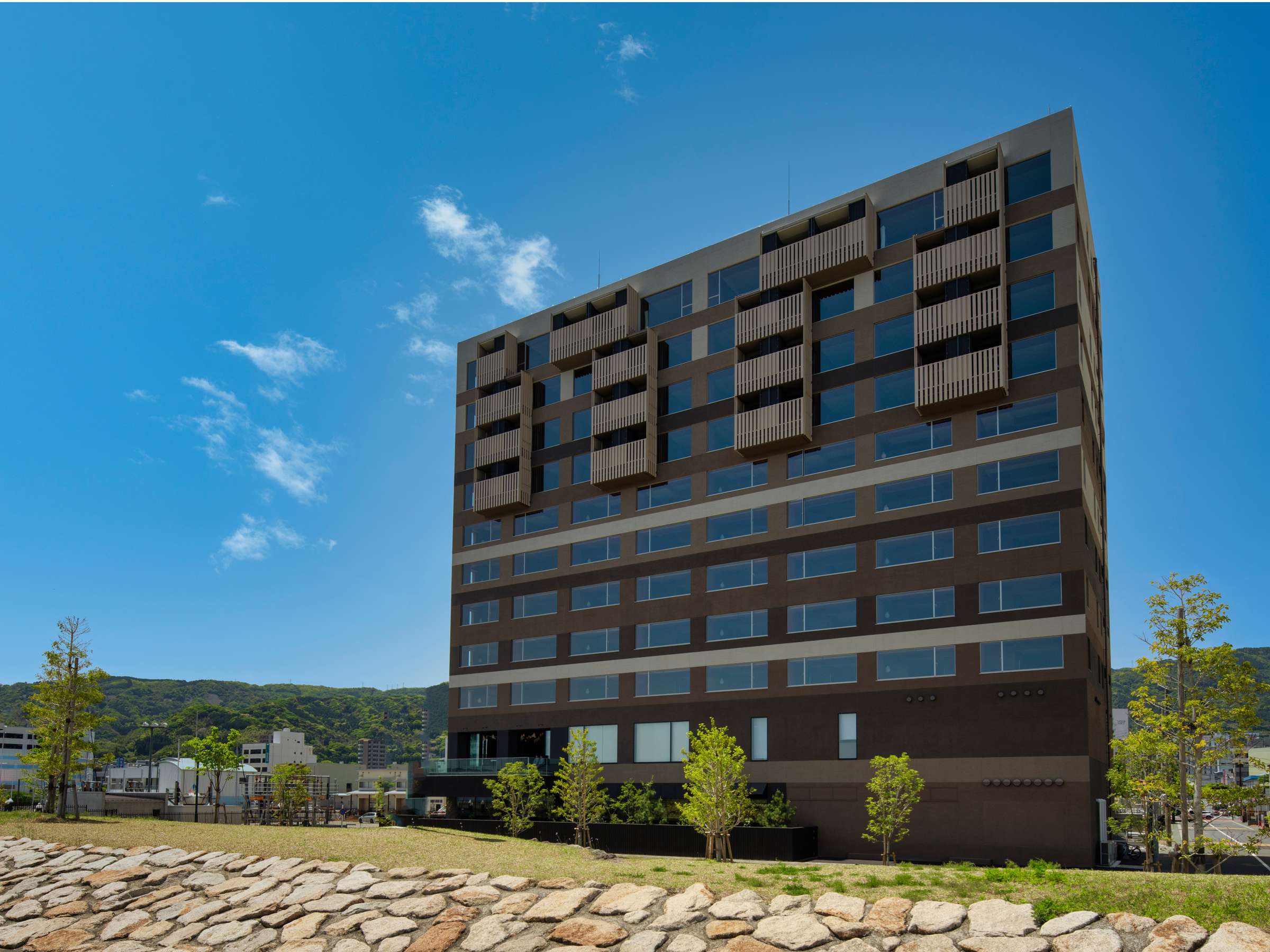
1. Kai Beppu — Best for first-time luxury onsen culture
Best for First-time visitors who want the cultural framework explained — Hoshino Resorts' Kai brand specializes in this.
At a glance 70 rooms · ~$300–$600 USD · Beppu zone (station-side, Kitahama waterfront) · 5-min taxi from JR Beppu Station, 50-min bus from Oita Airport.
Onsen Sodium chloride waters from a Beppu source. The signature "Yu-no-Hiroba" hot spring plaza sits at the center, with a rooftop open-air bath looking toward Beppu Bay. No in-room rotenburo; bathing is communal in the Hoshino style. (See our [refresher on onsen etiquette](/en/blog/onsen-etiquette-foreigners) before your first soak.)
Kaiseki Bungo beef and Seki-saba (Bungo Channel mackerel) lead the menu in a contemporary kaiseki framework that's more accessible to first-timers than Showoen or Kannawa-en. Breakfast features the Yu-no-Hana Tsubo mineral-broth tray.
Standout Kai's on-site cultural program — a nightly Bungo-Kagura performance based on Oita's regional dance, plus a free guided intro to the eight Beppu Hatto districts that walks you through each zone's water chemistry. This is the one property where the programming explicitly teaches you Beppu before you go bath-hopping. Kai Beppu sits comfortably in our [nationwide luxury ryokan rankings](/en/blog/luxury-ryokans-japan).
Honest trade-off No private in-room onsen — if rotenburo-in-the-room is your priority, book Seikai or Showoen. Station-side means a 15-minute taxi to Kannawa rather than walking distance. Rates run $300–$600 per person per night with two meals [approximate; verify current availability]. You can [see Kai Beppu room types and rates](/en/ryokans/beppu-kai) on our directory page.
Tip
**Yu-no-Hiroba sunset booking trick** — request the rooftop open-air slot at check-in for ~30 minutes before sunset (the bath rotates between men's and women's daily, so check the schedule card). The east-facing bay turns brass about forty minutes before sunset and the city below switches its lights on block by block. Most guests miss this and end up bathing after dinner in the dark.
2. Amane Resort Seikai — Best for oceanfront private rotenburo rooms
Best for Couples and tattooed travelers who want a private open-air bath in the room with the bay straight ahead.
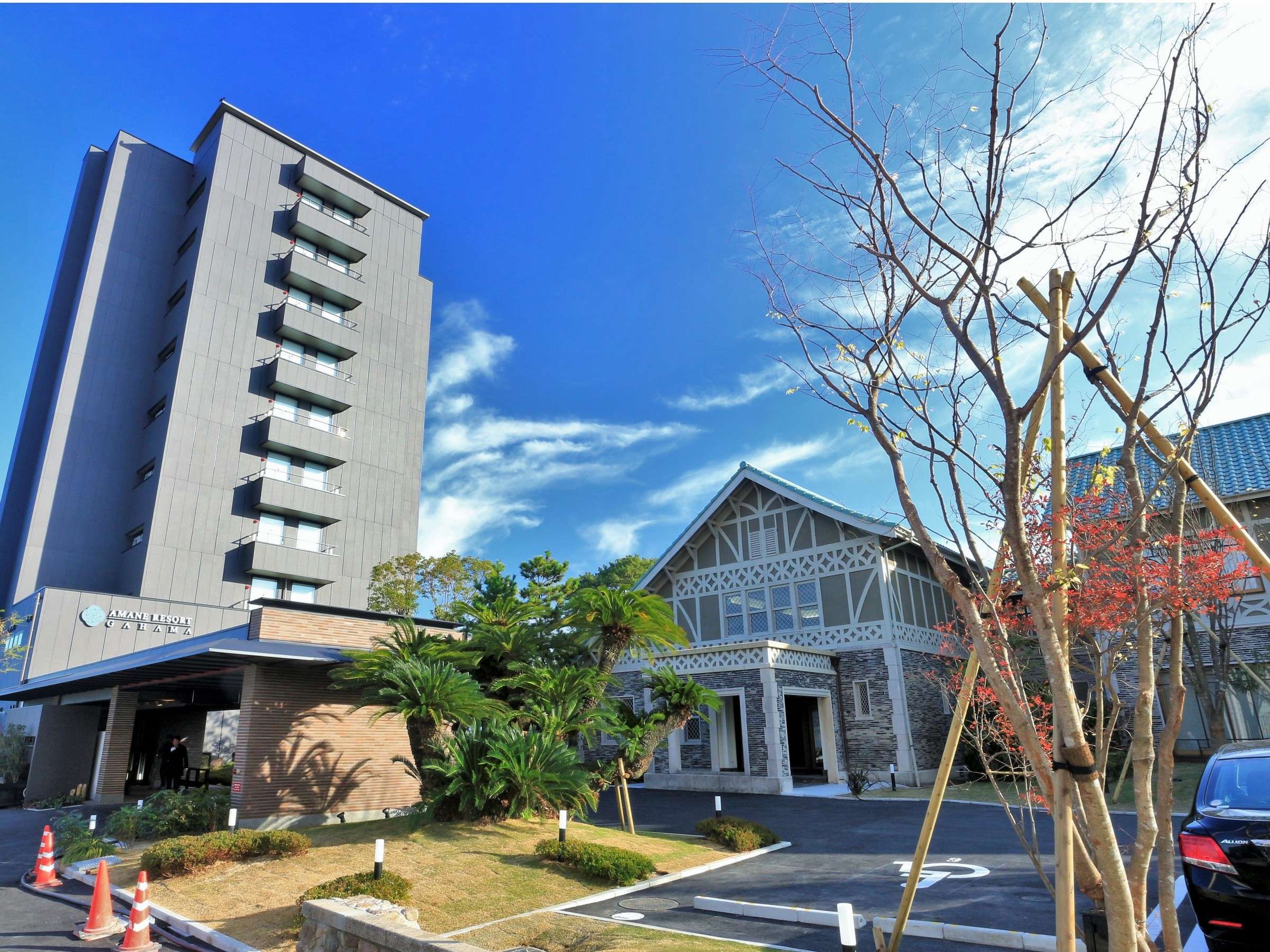
At a glance 79 rooms · ~$250–$600 USD · Kamegawa coastline · 10-min taxi from JR Beppu Station, 30-min bus from Oita Airport.
Onsen Every guest room has a private open-air rotenburo overlooking Beppu Bay — a handful of lower-floor suites have "zero-meter" baths flush with the high-tide line. Public baths are also available, with separate kashikiri (private) bookings. Tattoos are a non-issue because the in-room bath solves it.
Kaiseki Bungo beef and the morning's catch from Beppu Bay, served in the room or private dining alcoves. Kabosu citrus from Oita — sharper and more aromatic than yuzu — is the local accent across the meal.
Standout The structural premise is *every room is the bath*. There is no walk to a public area for the view; you slide open the deck and the bay is the bath. Sunrise (Beppu faces east) is showtime — the bath fills with steam and the sun rises directly into the rotenburo frame between October and March.
Honest trade-off Kamegawa is 10 minutes from JR Beppu Station by taxi — budget for the transfer. Strict tattoo coverage in the public baths, but the in-room rotenburo is yours. Rates run $250–$600 per person per night with two meals [approximate; verify current availability]. You can [see Amane Resort Seikai oceanfront rooms](/en/ryokans/beppu-seikai) on our directory.
3. Sanso Kannawa-en — Best for heritage and Noh-stage kaiseki
Best for Travelers who want the most traditional ryokan experience in Beppu and are comfortable with limited English service.
At a glance 18 rooms · ~$350–$800 USD · Kannawa zone (the steam district) · 20-min taxi from JR Beppu Station, 35-min bus from Oita Airport.
Onsen Rare cobalt-blue waters from the property's own Kannawa source, presented in stone tubs amongst moss-covered grounds. Several suites have in-room rotenburo, with reservable kashikiri baths at check-in. Alkaline-leaning with subtle silica — softer on skin than Myoban's milky-white sulfur.
Kaiseki Old-school traditional. Bungo beef, Seki-saba, and seasonal vegetables steamed jigoku-mushi style over the property's own vents. Service is in-room and unhurried.
Standout Kannawa-en sits on its own steam vents and incorporates a private Noh stage on the grounds — performances are occasionally held during peak seasons, with the bath's vapor drifting across the lacquered boards. At dawn in November the steam rises straight off the moss in the garden. This is the heritage pick and arguably the most photographed ryokan interior in Beppu, and it [sits alongside our broader luxury ryokan picks](/en/blog/luxury-ryokans-japan).
Honest trade-off English service is limited; book by email and allow 48 hours during peak season. Luggage transfer from JR Beppu Station via Yamato Takkyubin (next-day, ~2,000 JPY per bag) is the cleanest arrival logistic. Rates run $350–$800 per person per night with two meals [approximate; verify current availability]. You can [see Sanso Kannawa-en suites](/en/ryokans/beppu-kannawaen) on our directory.
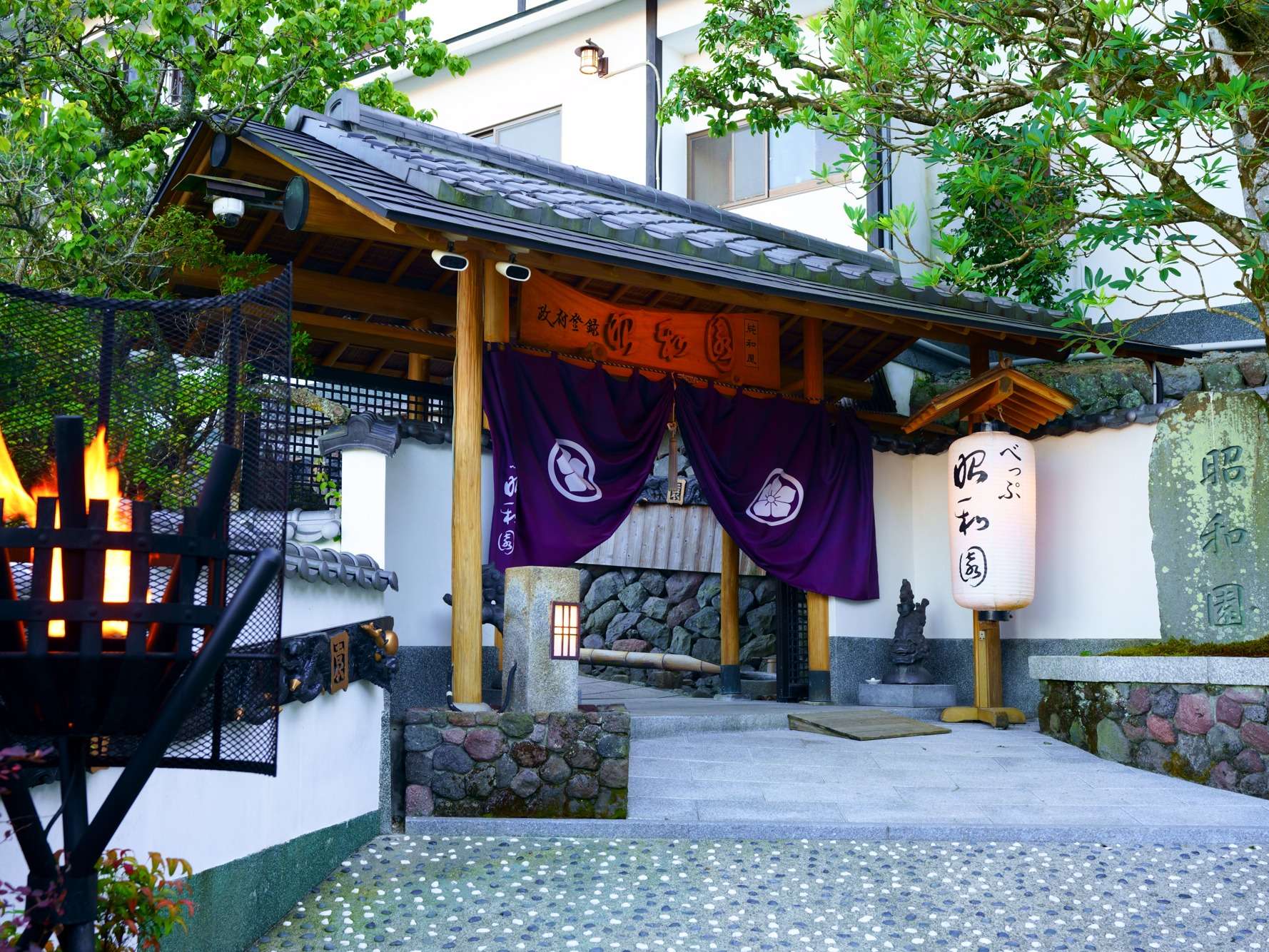
4. Beppu Showoen — Best for villa-style privacy on a 6,000-tsubo estate
Best for Honeymooners and milestone-trip travelers who want the highest-tier privacy and don't want to share a property with more than 22 other guests.
At a glance 11 rooms · ~$400–$900 USD · Kankaiji hilltop · 15-min taxi from JR Beppu Station, 50-min bus from Oita Airport.
Onsen Each of the 11 detached cottages has its own private rotenburo — sodium-chloride waters from a Kankaiji source, fed gensen-kakenagashi (free-flowing, no recirculation). A wooden bathhouse near the central garden is the main public bath. Tattoos are a non-issue at the in-room bath.
Kaiseki The most refined kaiseki on this list, served in your villa rather than a dining room. Bungo beef appears in three forms across a typical dinner. Kabosu citrus, Seki-saba, and oguni mushroom from the Aso highlands round out a profoundly local menu.
Standout Eleven detached cottages spread across a 6,000-tsubo (≈19,800 m²) former gold mine estate — gardens dense enough that you may not see another guest the entire stay. The Meiji-era main building was preserved during the conversion, with a Noh-style cultural building used for occasional private performances.
Honest trade-off The most expensive property on the list; bookings open 12 months ahead for spring and autumn. English service is limited. This is a property to enter once and not leave for 24 hours. Rates run $400–$900 per person per night with two meals [approximate; verify current availability]. You can [check Beppu Showoen detached cottages](/en/ryokans/beppu-showoen) on our directory.
5. Suginoi Hotel — Best for the Tana-Yu terrace bath and family scale
Best for First-time onsen-goers nervous about ryokan etiquette, families with kids, and the bucket-list infinity-bath photograph.
At a glance 647 rooms · ~$120–$350 USD · Kankaiji ridge · 10-min taxi from JR Beppu Station with free shuttle from the station and Oita Airport.
Onsen Tana-Yu (棚湯) — "shelf bath" — is a five-tiered open-air infinity-style onsen looking down over Beppu Bay. It's the most-photographed bath in Kyushu, and each terrace sits at a different height so the bay horizon stays visible from every tier. Sodium chloride from a Kankaiji source. Aqua Garden is a separate swimsuit-on family bath with a fountain show. [verified Suginoi 2026-05-07] ([Suginoi Hotel — Tana-Yu](https://global-suginoi.orixhotelsandresorts.com/LUC2ORISUG/cdata/luc2orisug_4_jaen.html))
Kaiseki Suginoi is technically a hotel, not a ryokan; the standard package is a buffet ("Seeds" or "Hana Restaurant") rather than a private kaiseki. A formal kaiseki upgrade is bookable for ~¥4,000 extra per person. The buffet is famously good for kid-friendly variety.
Standout The Tana-Yu terrace — full stop. On the third of the five terraces forty minutes before sunset, Beppu Bay flattens into a brass sheet while the city lights below switch on block by block. One of the rare baths in Japan that lives up to the marketing photo. Suginoi is also one of [our top family-friendly ryokan picks](/en/blog/ryokan-with-kids) for the bowling, arcade, and indoor pool.
Honest trade-off A 647-room resort, not a small artisan ryokan. The bath is the bucket-list item; the room is hotel-normal. Couples seeking a quiet kaiseki retreat should pick Kai Beppu, Showoen, or Kannawa-en instead. Rates run $120–$350 per person per night room-only or with buffet [approximate; verify current availability]. You can [see Suginoi Hotel's Tana-Yu terrace rooms](/en/ryokans/beppu-suginoi) on our directory.
Tip
**Tana-Yu rotation hack** — Tana-Yu's 5-tier terrace alternates between men's and women's bath nightly, and the bay-side terraces face the city while the back-side terraces face the woods. Check the rotation card at the front desk on arrival and plan your sunset bath around the bay-side schedule. Most guests don't realize this and end up on the woods-side at sunset; the difference is the entire reason to book here.
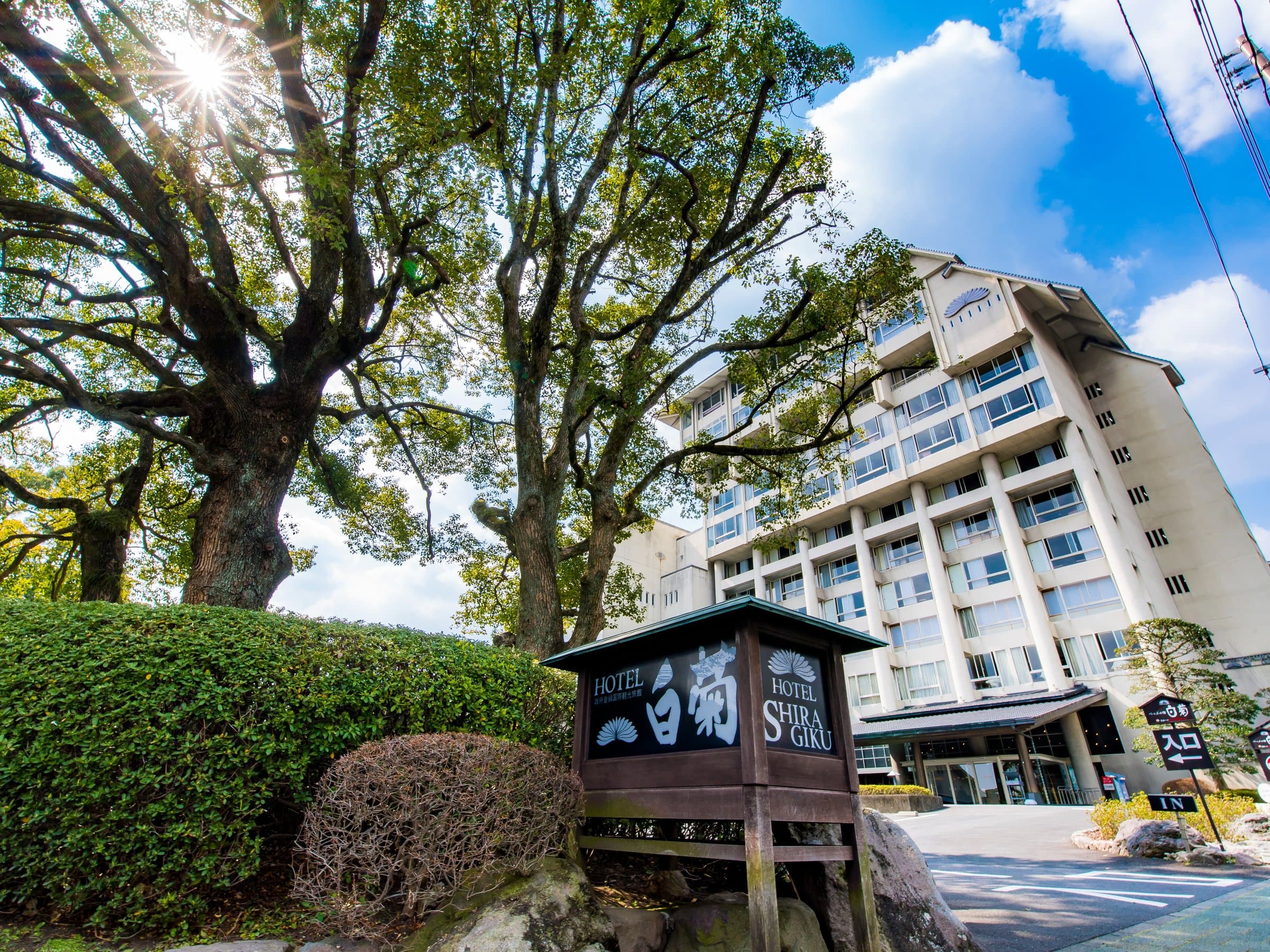
6. Hotel Shiragiku — Best for Michelin-starred kaiseki near the station
Best for Food-first travelers who want the city's most decorated kaiseki kitchen with station-walking access.
At a glance 111 rooms · ~$150–$400 USD · Beppu zone (station-side) · 8-min walk from JR Beppu Station, 50-min bus from Oita Airport.
Onsen Two grand garden public baths — an indoor onsen and an outdoor rotenburo amongst landscaped maples — drawn from a Beppu source. Several suites have in-room private baths. The garden bath is one of the few station-area baths that genuinely feels like a destination soak rather than a hotel amenity.
Kaiseki Shiragiku earns Michelin attention for a multi-course progression of Bungo beef, Seki-saba sashimi, kabosu-cured fish, and seasonal jigoku-mushi steamed vegetables. Breakfast is a [proper Japanese ryokan breakfast spread](/en/blog/japanese-breakfast-ryokan) served in the dining hall.
Standout Shiragiku is closer to a grand-onsen hotel than a 10-room artisan ryokan, but the kaiseki kitchen punches at the level of the smaller Kannawa luxury properties while being eight minutes from JR Beppu. For travelers prioritizing food and access over heritage atmosphere, this is the sharpest mid-tier pick.
Honest trade-off The 111-room scale means service is professional rather than personal. Garden baths are excellent, but rooms vary in quality across the wings — request a renovated room when booking. Rates run $150–$400 per person per night with two meals [approximate; verify current availability]. You can [see Hotel Shiragiku Michelin kaiseki rates](/en/ryokans/beppu-shiragiku) on our directory.
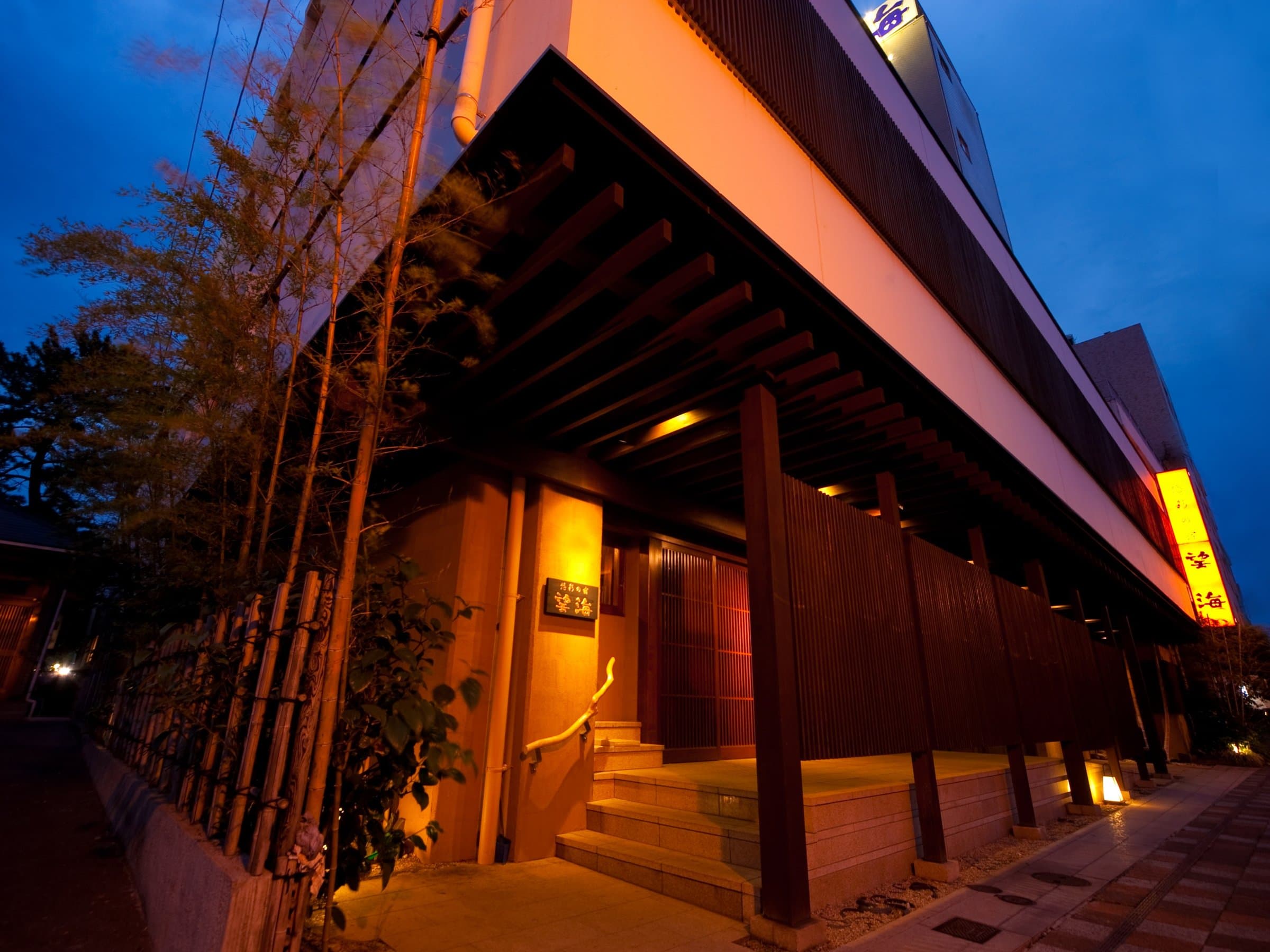
7. Hana Beppu — Best for boutique mid-range 6 minutes from JR Beppu
Best for Couples and small groups wanting a 5-Star-classified ryokan at mid-range pricing without resort-hotel scale.
At a glance 63 rooms · ~$150–$400 USD · Beppu zone (station-side) · 6-min walk from JR Beppu Station, 50-min bus from Oita Airport.
Onsen Bamboo-and-camellia-themed bathing — public indoor and outdoor baths plus reservable kashikiri private baths, with select rooms offering in-room private baths. Beppu source, sodium-chloride-leaning, gensen-kakenagashi at the public bath. Tattoo policy is accommodating in the kashikiri baths.
Kaiseki Bungo beef, Seki-saba, and an in-room jigoku-mushi steam basket option — guests steam-cook seasonal vegetables and fish at the table using the property's own steam line. The most accessible jigoku-mushi experience on the list.
Standout Awarded the Japan Ryokan & Hotel Cooperative Association's 5-Star Ryokan classification, Hana Beppu combines the formal-traditional aesthetic (bamboo, camellia, tatami suites) with mid-range pricing and a 6-minute walk to JR Beppu. Station access plus 5-Star service tier is genuinely uncommon in Beppu.
Honest trade-off Station-side is convenient but lacks Kannawa's steam-vent atmosphere or Kankaiji's bay-view drama — bus or taxi to those zones during the day. Rates run $150–$400 per person per night with two meals [approximate; verify current availability]. You can [browse Hana Beppu's bamboo-and-camellia rooms](/en/ryokans/beppu-hanabeppu) on our directory.
8. Yusai no Yado Bokai — Best value with private onsen near the station
Best for Mid-range travelers who want a private in-room bath without paying luxury rates, with station-walking convenience.
At a glance 50 rooms · ~$130–$300 USD · Beppu zone (station-side) · 10-min walk from JR Beppu Station, 50-min bus from Oita Airport.
Onsen Bokai operates its own hot spring source on the property — a real differentiator at this price — and several rooms have private in-room baths from that source. The public bath is smaller and more domestic-feeling than Shiragiku or Hana Beppu, part of its charm. Tattoo policy is accommodating across the private baths.
Kaiseki Family-run, using Beppu Bay seafood — sashimi from the morning's catch, Seki-aji when in season, Bungo beef in the standard upgrades. Generous rather than refined, in the mode where the same person who served you tea is laying out your futon at 9pm.
Standout Bokai is the best value private-onsen ryokan in Beppu, full stop, at around $130 per person with two meals. Own-source hot spring, in-room private bath options, family-run service, and a 10-minute walk to JR Beppu Station is structurally hard to find at this price. For travelers trying to [stretch a tight ryokan budget](/en/blog/budget-ryokan-tips), this is the pick that frees the saved money for a second night in Yufuin.
Honest trade-off The 50-room family-run scale means service is personal but operationally less polished than the grand-hotel tier. The station-side location lacks Kannawa's atmosphere or Kankaiji's views. Rates run $130–$300 per person per night with two meals [approximate; verify current availability]. You can [see Yusai no Yado Bokai rates from $130](/en/ryokans/beppu-bokai) on our directory.
The Beppu jigoku tour: the honest take most blogs don't write
The Beppu jigoku-meguri (Hells Tour) costs ¥2,200 for all seven officially designated hells and takes 2–3 hours. The hells reach about 98°C and are explicitly viewing-only — you cannot soak in any of them. Most first-time visitors don't realize this until they arrive. The structural insight: book a Kannawa ryokan or use Hyotan Onsen (two minutes from the ticket gate) for the actual bathing, and treat the jigoku as 90 minutes of geothermal scenery rather than a bath day.
The seven designated jigoku are Umi-jigoku (Sea Hell, cobalt blue), Chinoike-jigoku (Blood Pond, iron-red), Tatsumaki-jigoku (a geyser), Shiraike-jigoku (White Pond), Kamado-jigoku (Cooking Pot), Oniishibozu-jigoku (bubbling gray mud), and Oniyama-jigoku (with caged crocodiles). Yama-jigoku (a small zoo) is separate and skippable.
The locals' itinerary, condensed: Umi-jigoku and Chinoike-jigoku are the two unmissable ones — both natural, both the source of the photos. Tatsumaki-jigoku is worth waiting for the geyser cycle (every 30–40 minutes). Skip Oniyama-jigoku entirely — the caged crocodiles consistently draw "overrated" reviews — and budget 90 minutes total rather than the half-day most articles suggest. Then walk two minutes to Hyotan Onsen: three Michelin Green Guide stars, a 10-meter waterfall bath, and an indoor sand bath ([JNTO Hells of Beppu](https://www.japan.travel/en/spot/713/)). [verified JNTO 2026-05-07]
The other Kannawa thing worth your time is *jigoku-mushi* steam cooking. At the Jigoku Mushi Kobo Kannawa public workshop, ¥600 buys 8 minutes of vent steam to cook eggs, sweet potato, or vegetables in a bamboo basket over a stone *jigokugama* — a technique documented since the Kamakura period via Ippen Shonin ([Beppu City — Jigoku-mushi guide](https://enjoyonsen.city.beppu-jp.com/food-and-shopping/jigoku-mushi-gourmet-guide-beppus-heavenly-steams/)). [verified Beppu City 2026-05-07] Sweet potato comes out caramelized at the cut edges in a way a kitchen oven cannot replicate, because the steam carries trace minerals.
Tip
**Tattoo-friendly playbook** — Beppu is the most tattoo-tolerant onsen city in Japan, with 100+ facilities accepting tattoos. Hyotan Onsen accepts tattoos, all kashikiri (private) baths at the listed ryokans are unconditionally tattoo-friendly, and the in-room rotenburo at Seikai, Showoen, Kannawa-en suites, Hana Beppu, and Bokai bypass the question entirely. For a deeper city-by-city breakdown, see our guide to [private-bath stays for tattooed travelers](/en/blog/tattoo-friendly-ryokans).
Sand baths, mushiyu, and the hot-spring volume context
Beppu's two genuinely unique experiences alongside jigoku-mushi are the sand bath (砂湯 sunayu) and the steam bath (蒸し湯 mushiyu) — both bookable a la carte at public bath facilities.
The sand bath is what it sounds like: attendants bury you to the neck in volcanic sand heated from below by spring water, dose is ten minutes. The Beppu version comes in two flavors. Takegawara Onsen (built 1879, a registered Tangible Cultural Property of Japan) is the indoor architectural one — ¥1,500 walk-in, photogenic, crowded ([JNTO Takegawara](https://www.japan.travel/en/spot/389/)). [verified JNTO 2026-05-07] Beppu Beach Sand Spa at Kamegawa is the outdoor coastal one, same ¥1,500, on the actual beach with wave audio replacing the wood-creak, rarely on tour-bus circuits. Kamegawa is the experience; Takegawara is the photograph. Both are a meaningfully closer alternative than detouring to Ibusuki.
The mushiyu (steam bath) tradition is concentrated up in Myoban — acidic sulfurous water locals call *shampoo-no-yu* because it leaves hair almost squeaky. Kannawa Mushiyu, near the Kannawa bus stop, is a 700-year-old herbal-steam-bath where you lie on tatami over a steam vent draped in medicinal herbs (sekishobu, sweet flag) — ¥510 walk-in, 8 minutes, one of the oldest continuously operating baths in Japan.
The context for all of this is volume. Beppu produces approximately 130,000 tons of hot spring water per day across 2,300+ sources — first in Japan, second globally after Yellowstone, which is non-commercial. Atami, often perceived as Japan's number-one onsen city, runs roughly one-fifth of Beppu's source count. The bathing infrastructure is the densest commercial onsen geology on the planet — the structural reason to base here. [Beppu's onsen reign supreme on our master list](/en/blog/best-onsen-towns-japan) of Japan's top onsen towns.
Getting to Beppu: Oita Airport, Sonic from Fukuoka, and the Yufuin combo
Beppu has two clean access routes from outside Kyushu, plus a short domestic loop with Yufuin.
From Tokyo or Osaka: 90-minute direct flight to Oita Airport (OIT), then the airport limousine bus to Beppu Station — about 45 minutes for ¥1,500. JAL and ANA fly Haneda–Oita several times daily.
From Fukuoka: the JR Sonic limited express runs Hakata to Beppu in about 2 hours 5 minutes for ¥6,000 reserved (covered by the JR Pass and Northern Kyushu rail pass). The Sonic departs roughly twice an hour. Connect from Fukuoka Airport (FUK) via local train to Hakata. Total airport-to-Beppu in around 3 hours. Many travelers fly into Fukuoka and out of Oita.
Yufuin combo: the Kamenoi highway bus runs Beppu Station to Yufuin Station in about 50 minutes, or 25 minutes from Beppu Kitahama on the express service. The structurally best plan: one night Beppu followed by one night Yufuin, with the bus transfer mid-morning on day two. The Sonic does *not* stop in Yufuin — Yufuin is on the JR Kyudai Line via the slower Yufuin no Mori.
Within Beppu: the local Kamenoi/Oita Kotsu bus runs every 15–30 minutes between JR Beppu Station, Kannawa, and the jigoku gate; ¥330 one-way, ¥1,200 day-pass. The Kannawa loop bus (Hells Tour bus) is a separate sightseeing service that hits all seven jigoku in 2.5 hours from Beppu Station.
Tip
**Yufuin combo plan** — the structurally best 2-night Oita itinerary is one night in Beppu (Kannawa or station-side) followed by one night in Yufuin. The Kamenoi Bus takes 25–50 minutes between the two depending on service type. Use Yamato Takkyubin to forward your suitcase from Beppu to Yufuin (around 1,400 JPY same-day or next-day) so you arrive in Yufuin with only an overnight bag. See [how Yufuin's quieter mountain ryokans differ](/en/blog/best-ryokans-yufuin) for the second-night picks.
Best time of year to stay at a Beppu ryokan
Beppu is a year-round destination — unlike Yufuin or Hakone, the bathing infrastructure is the city, not the season. Four windows reward different priorities.
Late November to early December for steam season. Cold air against 98°C jigoku produces the most photogenic steam columns of the year — Kannawa alleys at 6am between November 20 and December 10 are visually the strongest moment to be in Beppu.
Mid-February for plum bloom at Nakayama-no-ike. The small plum park 30 minutes from JR Beppu Station blooms two weeks before mainland Honshu, one of the earliest visible spring signals in Japan. February is also the cheapest month at most of the eight properties.
Late May through June for shoulder pricing and lush hillsides. The Kankaiji and Myoban hillsides turn the deepest green between June rains. Crowds are thin and prices run 20% below peak.
Avoid Golden Week (May 3–5) and Obon week (around August 13–16) — holiday surcharges and books-out-four-months-early. August is humid but not unworkable; Beppu's coastal breeze is more forgiving than inland Yufuin. Per JNTO's tourism statistics, inbound visitor numbers have been climbing through 2025–2026 ([JNTO statistics](https://statistics.jnto.go.jp/en/graph/)), and Beppu's mid-tier ryokans now book out 60–90 days ahead during spring and autumn. [verified JNTO 2026-05-07]
Tip
**Korean tourists frame Beppu's culture differently** — Korean travelers have historically been the largest single foreign-tourist segment to Beppu (Ritsumeikan academic study put the share at 53–74% in 2001–2002, and Busan-Fukuoka short-haul plus direct Oita flights mean Korean coach tours remain heavy through 2026). What this means practically: most large ryokans (Suginoi, Shiragiku, Hana Beppu) have native Korean signage and Korean-language menus, the hells tour pamphlets are typically printed in Korean before English, and weekend availability in spring and autumn is tighter due to short-haul Korean group bookings. Book midweek if you can.
Beppu ryokan FAQ
Should I stay in Beppu or Yufuin for an onsen ryokan?
Both, if you have two nights — Beppu first for jigoku and bath variety, then Yufuin for atmosphere and Mt. Yufu views. They're 25–50 minutes apart by bus. If you only have one night, choose Beppu for the volume of bathing options.
How many days do you need in Beppu?
One night for the jigoku tour and a single ryokan soak; two nights to bath-hop across multiple zones. Most travelers fold a Yufuin overnight into the second night rather than staying two nights in Beppu itself.
What is the best area to stay in Beppu?
Kannawa for steam atmosphere and jigoku walking distance, Beppu Station for transit and izakaya nightlife, Kankaiji for sea-view luxury and the Tana-Yu terrace at Suginoi, Kamegawa for oceanfront in-room rotenburo at Seikai. Choose the zone first.
Which Beppu ryokans have private in-room onsen (rotenburo)?
Amane Resort Seikai (every room), Beppu Showoen (all 11 cottages), Sanso Kannawa-en (suites), Hana Beppu (select rooms), and Yusai no Yado Bokai (select rooms). Kai Beppu and Suginoi do not offer in-room private baths.
Are Beppu ryokans tattoo-friendly?
Beppu is the most tattoo-tolerant onsen city in Japan; over 100 facilities accept tattoos including Hyotan Onsen. Any ryokan with kashikiri baths or in-room rotenburo bypasses the question entirely. Larger properties may request visible tattoos be covered in public baths. See our [private-bath stays for tattooed travelers](/en/blog/tattoo-friendly-ryokans) guide.
Is the Beppu jigoku-meguri (Hells Tour) worth it?
Yes for first-timers, with caveats. The ¥2,200 combination ticket covers all seven hells in 2–3 hours, but the hells are viewing-only at 98°C — you cannot soak in any of them. Prioritize Umi-jigoku and Chinoike-jigoku; skip Oniyama-jigoku; then walk two minutes to Hyotan Onsen for the actual bathing.
What is the cheapest ryokan in Beppu?
Yusai no Yado Bokai from around $130 per person per night with two meals — family-run, own hot spring source, select rooms with private in-room baths. Suginoi Hotel offers room-only or buffet rates from around $120 if you don't need a traditional kaiseki.
How do I get to Beppu from Tokyo or Fukuoka?
From Tokyo: 90-minute direct flight to Oita Airport, then 45-minute limousine bus. From Fukuoka: JR Sonic limited express runs Hakata to Beppu in about 2 hours, twice an hour, covered by the JR Pass. From Yufuin: 25–50 minutes by Kamenoi Bus.
What is jigoku-mushi (地獄蒸し) and where do I try it?
Jigoku-mushi is steam-cooking ingredients in a bamboo basket over a natural geothermal vent — a Kannawa specialty documented since the Kamakura period. The Jigoku Mushi Kobo Kannawa public workshop is ¥600 walk-in. Hana Beppu offers an in-room steam basket option, and Sanso Kannawa-en incorporates the technique into its kaiseki.
Final thoughts: choose your zone, then your ryokan
The case for Beppu over Yufuin is structural rather than aesthetic. Yufuin photographs better; Beppu lives more interestingly. The 2,300 hot spring sources, the eight Beppu Hatto zones, the 130,000 tons of daily discharge, and the jigoku theater on suburban streets add up to a working onsen city you can move through rather than a postcard you visit. Choose the zone first — Kannawa for steam, Kankaiji for views, Beppu Station for access, Kamegawa for oceanfront — and the property second.
Kai Beppu for first-time luxury onsen culture. Amane Resort Seikai for oceanfront in-room rotenburo. Sanso Kannawa-en for heritage and Noh-stage kaiseki in the steam district. Beppu Showoen for villa-style privacy on a 6,000-tsubo estate. Suginoi Hotel for the bucket-list Tana-Yu terrace bath and family scale. Hotel Shiragiku for Michelin-starred kaiseki near the station. Hana Beppu for boutique 5-Star service 6 minutes from JR Beppu. Yusai no Yado Bokai for the best private-onsen value at $130.
The zone matters as much as the property. A November steam-season night in Kannawa is a different trip from a sunrise oceanfront soak at Seikai or a Tana-Yu sunset at Suginoi. When you're ready, jump to the individual ryokan pages linked above; if Beppu is one stop in a longer Kyushu trip, the companion guides on the [best ryokans in Yufuin](/en/blog/best-ryokans-yufuin) and the [broader Beppu area guide](/en/area/beppu) round out the route. *We re-verify pricing, opening hours, and onsen status every 90 days. Last check: 2026-05-07.*
11월 말 새벽 5시 42분, 간나와(鉄輪)는 이미 김을 뿜어내고 있었습니다. 저는 료칸을 나와 유카타 차림으로 걷고 있었고, 온도계는 4°C를 가리키고 있었습니다. 비탈길의 모든 배수구가 삼나무 숲을 향해 흰 수증기 기둥을 토해 내고 있었습니다. 70대 여성 한 분이 플라스틱 바구니를 들고 지나가며 한 번 고개를 끄덕였습니다. 40m 위쪽 공중 욕탕은 이미 문을 열었고, 줄은 동네 주민 셋과 저 한 명이 전부였습니다. 그것이 벳푸의 진짜 질감입니다 — 엽서 속 마을이 아니라, 일본 어느 지역보다 많은 온천수를 토해 내는 인구 11만의 살아 있는 온천 도시입니다.
이 새벽의 평범함이야말로 핀터레스트 친화적인 이웃 도시들 대신 벳푸를 선택해야 하는 이유입니다. 유후인(버스로 25분 위쪽)이 사진 속에서는 더 예쁩니다. 하지만 벳푸는 도시 자체가 입욕 인프라인 유일한 곳입니다 — 2,300개가 넘는 원천 수와 하루 약 13만 톤의 온천수, 비상업 온천인 옐로스톤을 제외하면 지구상에서 가장 큰 상업적 분출량입니다 ([JNTO 벳푸 온천](https://www.japan.travel/en/spot/716/)). [출처 확인 2026-05-07] 마지막 확인일: 2026년 5월.
저는 이 리스트의 료칸 8곳 중 4곳에 직접 묵었고, 나머지 4곳은 2018년부터 2026년 사이에 차 한 잔, 점심, 또는 온천 데이패스를 이유로 다녀왔습니다. 이번 글은 하코네, 교토, 다카야마, 유후인, 미야지마에 이은 지역별 베스트 료칸 시리즈의 여섯 번째이자, 료칸 그 자체보다 *어느 지구에서 자느냐*가 더 중요한 유일한 도시입니다.
이 가이드에서는 벳푸 핫토(別府八湯)라는 8개의 역사적 온천 지구에 걸쳐 료칸 8곳을 순위 매기고, 유후인 vs 벳푸의 답을 바로 다음에 정리하며, 대부분의 블로그가 건너뛰는 지옥 투어의 주의 사항과 후쿠오카발 소닉(Sonic) 특급의 현실적인 동선까지 함께 다룹니다. 료칸 문화가 처음이라면, [첫 료칸 숙박 시 알아둘 점](/ko/blog/first-time-ryokan-guide) 가이드에서 기본을 다루고 있어, 이 글은 벳푸만의 다른 점에 집중할 수 있습니다.
벳푸 최고의 료칸은 [카이 벳푸](/ko/ryokans/beppu-kai)입니다 — 호시노 리조트의 70실 규모 부티크 온천 호텔로, 벳푸 만(別府湾)을 내려다보는 옥상 온천 광장과 함께 이 도시의 활기찬 온천 문화를 풍부하게 담아내고 있습니다. 바다에 면한 객실 노천탕(객실 노천탕)을 원하는 커플은 [아마네 리조트 세이카이](/ko/ryokans/beppu-seikai)를 예약하고, 헤리티지를 좇는 여행자는 증기 지구의 [산소 간나와엔](/ko/ryokans/beppu-kannawaen)으로 가며, 가족 단위 여행자는 버킷 리스트급 테라스 욕탕을 갖춘 [스기노이 호텔](/ko/ryokans/beppu-suginoi)이 가장 잘 맞습니다.
Tip
**고지 사항:** Japan Ryokan Guide는 제휴 링크를 통해 예약이 발생하면 수수료를 받습니다. 다만 료칸으로부터 게재나 노출 대가를 받지 않으며, 이 글의 모든 숙소는 오직 품질만으로 선정했습니다. 이 사이트는 호시노 리조트, ORIX Hotels & Resorts, 그리고 언급된 어떤 숙소와도 편집상 독립적으로 운영됩니다. 이 수수료가 6개 언어로 무료 디렉터리를 운영할 수 있게 해 줍니다.
한눈에 비교: 벳푸 료칸 8곳 요약
| # | 료칸 | 등급 | 가격(USD) | 객실 수 | 지구 | 적합 대상 | |---|---|---|---|---|---|---| | 1 | [카이 벳푸](/ko/ryokans/beppu-kai) | 럭셔리 | $300 | 70 | 벳푸(역 인근) | 첫 럭셔리 온천 문화 체험 | | 2 | [아마네 리조트 세이카이](/ko/ryokans/beppu-seikai) | 럭셔리 | $250 | 79 | 가메가와 해안 | 바다에 면한 객실 노천탕을 원하는 커플 | | 3 | [산소 간나와엔](/ko/ryokans/beppu-kannawaen) | 럭셔리 | $350 | 18 | 간나와(鉄輪) | 헤리티지와 노(能) 무대 가이세키 | | 4 | [벳푸 쇼와엔](/ko/ryokans/beppu-showoen) | 럭셔리 | $400 | 11 | 간카이지(観海寺) 언덕 | 6,000평 부지의 독립 코티지 프라이버시 | | 5 | [스기노이 호텔](/ko/ryokans/beppu-suginoi) | 중급 | $120 | 647 | 간카이지 능선 | 버킷 리스트급 다나유 테라스 욕탕과 가족 규모 | | 6 | [호텔 시라기쿠](/ko/ryokans/beppu-shiragiku) | 중급 | $150 | 111 | 벳푸(역 인근) | JR 벳푸 인근 미슐랭 가이세키 | | 7 | [하나 벳푸](/ko/ryokans/beppu-hanabeppu) | 중급 | $150 | 63 | 벳푸(역 인근) | 역에서 6분 거리의 5성급 부티크 료칸 | | 8 | [유사이노야도 보카이](/ko/ryokans/beppu-bokai) | 중급 | $130 | 50 | 벳푸(역 인근) | 역 인근에서 객실 온천을 갖춘 최고 가성비 |
벳푸 vs 유후인: 어디를 베이스로 삼을까(그리고 의외의 답)
그렇습니다 — 온천 다양성을 우선시한다면 벳푸가 베이스로 적합하고, 분위기를 더하기 위해서라면 유후인을 추가 일정으로 잡는 것이 맞습니다. 대부분의 포럼 토론이 결국 도달하는 솔직한 답은 *각각 1박씩*, 벳푸를 먼저, 유후인을 두 번째로 두는 동선입니다. 벳푸는 8개의 서로 다른 입욕 지구(벳푸 핫토)에 걸쳐 2,300개 이상의 원천을 보유하며, 모래, 진흙, 증기, 미네랄 욕을 일본의 다른 어떤 도시와도 견줄 수 없는 방식으로 제공합니다. 유후인은 더 작고, 더 예쁘고, 저녁이 조용해서 마지막 밤으로 더 어울립니다.
의외인 점은 버스 이동 시간이 짧다는 것입니다. 고속버스로 벳푸 기타하마(北浜)에서 유후인까지 도어 투 도어 25분, 가메노이(亀の井) 일반 노선버스는 약 50분이 걸립니다. 1박만 가능하다면 벳푸를 고르세요 — 입욕 옵션의 양적 우위가 진정으로 독보적입니다. 2박이라면 벳푸에서 먼저(거칠고, 지질학적이고, 살아 있는) 자고 유후인에서 두 번째 밤(부티크하고, 풍경이 좋고, 차분한)을 보내세요. 동반 가이드인 [유후인의 더 조용한 산속 료칸은 어떻게 다른가](/ko/blog/best-ryokans-yufuin)에서 둘째 밤 추천 숙소를 같은 깊이로 다룹니다.
숨겨진 진실: 벳푸의 평범한 도시 미감은 결함이 아니라 특징입니다. 유후인의 마케팅 사진이 핀터레스트를 점령하는 이유는 유후인이 1970년대에 리조트 타운으로 다시 지어졌기 때문입니다. 벳푸는 다시 지어진 적이 없습니다. 1,300년 동안 살아 있는 입욕 도시였습니다. 한 밤만 그곳에서 자 보면 *거칠면서도 지열이 살아 있는* 그 조합이 여행을 결심한 이유 그 자체가 됩니다.
벳푸 핫토 정리: 8개 온천 지구와 어디서 잘지
벳푸 핫토(別府八湯)는 이 도시의 8개 역사적인 온천 지구를 가리킵니다: 벳푸(역 인근, 편리), 간나와(鉄輪)(증기 분출구와 지옥(地獄) 투어), 묘반(明礬)(유황과 미네랄 결정), 간카이지(観海寺)(언덕 위 벳푸 만 전망), 하마와키(浜脇)(가장 오래된, 발상지), 호리타(堀田)(조용한 시골 입욕 문화), 시바세키(柴石)(소박한, 지옥(地獄) 중 치노이케 인근), 가메가와(亀川)(해안과 모래찜질). 각 지구의 수질이 다르므로 — 지구를 먼저 정하고, 그다음에 숙소를 정하세요. [출처 확인 2026-05-07] ([벳푸시 관광 — 8가지 온천](https://enjoyonsen.city.beppu-jp.com/travel-tips/eight-kind-of-onsen/))
대부분의 "벳푸 베스트 료칸" 글은 숙소를 알파벳순이나 가격순으로 나열합니다. 하지만 벳푸 특유의 정공법은 지구를 먼저 고르는 것입니다. 8개 지구의 수질, 냄새, 저녁의 분위기가 진정으로 다르기 때문입니다.
간나와(鉄輪) 는 증기가 솟아오르는 곳입니다. 매일 아침 배수구가 흰 수증기 기둥을 공기 중으로 밀어 올리고, 8곳의 지옥(地獄)은 90분 도보 루프 안에 펼쳐져 있으며, *지고쿠무시*(지옥찜) 증기 조리가 이곳의 명물입니다. 지질학적 극장을 보려면 여기에서 자세요 — 산소 간나와엔이 헤리티지 픽이고, 효탄 온천(ひょうたん温泉)은 지옥(地獄) 입구에서 2분 거리의 공중 욕탕입니다.
간카이지(観海寺) 는 벳푸 만 위 능선의 언덕입니다. 수질은 단순 알칼리성이고, 메인 매력은 전망입니다. 스기노이의 다나유 테라스 욕탕이나 벳푸 쇼와엔의 독립 코티지 프라이버시를 위해 이곳에서 자세요.
벳푸(에키) — 역 인근 지구 는 편의성 픽입니다. JR 벳푸역에서 도보 10분 안에 카이 벳푸, 하나 벳푸, 호텔 시라기쿠, 보카이, 그리고 1879년에 세워진 다케가와라(竹瓦) 온천 공중 욕탕이 있습니다. 소닉으로 늦게 도착해서 이자카야 야간을 즐기고 싶다면 여기서 자세요.
가메가와(亀川) 는 해안입니다. 이부스키의 정직한 대안인 벳푸 비치 모래찜질 스파가 여기에서 운영됩니다. 아마네 리조트 세이카이는 가메가와 해안에 자리하며 모든 객실이 만을 향하고 있습니다.
묘반(明礬) 은 유황과 *유노하나*(湯の花) 지구입니다 — 유백색 물, 암모니아 끝맛이 있는 증기, 초가지붕 채취 오두막. 묘반의 료칸은 대부분 작고 영문 예약이 어려우며, [더 폭넓은 벳푸 지역 가이드](/ko/area/beppu)에서 자세히 다룹니다. 하마와키(浜脇), 호리타(堀田), 시바세키(柴石) 는 더 작은 지구입니다 — 욕탕 순례용 데이패스로는 가치 있지만, 베이스로 삼기에는 적합하지 않습니다.
Tip
**지구 선택 요령:** 지옥(地獄)과 증기 분위기는 간나와, 전망과 럭셔리는 간카이지, 교통 편의와 이자카야 야간은 벳푸역, 바다에 면한 객실은 가메가와, 유황 당일치기는 묘반. 숙소보다 지구를 먼저 정하세요 — 8가지 수질이 진정으로 다르고, 벳푸의 2,300개 원천 밀도는 지구 선택을 여행에서 가장 결정적인 결정으로 만듭니다.
이 8곳을 어떻게 골랐는가
벳푸에서 운영 중인 모든 료칸과 료칸 스타일 호텔을 다섯 가지 기준으로 검증했습니다. 검증된 원천 수의 온천, 영문 예약 가능 또는 영어 응대가 가능한 프런트, 가격 공개 투명성, 두 플랫폼 평균 4.0 이상에 200건 이상의 리뷰, 그리고 8개 벳푸 핫토 지구 중 한 곳에서의 의미 있는 진정성. 8곳이 기준을 통과했습니다 — 럭셔리 4곳, 중급 4곳 — 그리고 망설임 없이 이 8곳을 추천합니다.
이 리스트의 어떤 료칸도 대가를 지불하고 들어오지 않았습니다. 25개 온천 지역에 걸쳐 224곳을 검증한 우리 데이터베이스에서 선정했습니다. 자매 글인 [미야지마 베스트 료칸](/ko/blog/best-ryokans-miyajima)은 같은 여행의 세토우치 쪽을 다룹니다.
벳푸 료칸의 가격은 가족 경영 중급 숙소(보카이)의 1인 1박 약 130달러부터 럭셔리 독립 코티지 등급(쇼와엔)의 약 900달러까지 분포합니다. 가이세키와 온천이 포함된 중급 숙소는 보통 150~400달러, 럭셔리 픽은 300~900달러입니다. 벳푸는 유후인보다 200달러 미만 객실 재고가 더 많습니다 — 우리가 2박 오이타 콤보의 첫째 밤으로 벳푸를 추천하는 이유 중 하나입니다.
1. 카이 벳푸 — 첫 럭셔리 온천 문화 체험에 최고
적합 대상 문화적 맥락을 설명받기를 원하는 첫 방문자 — 호시노 리조트의 카이(界) 브랜드는 이 부분에 특화되어 있습니다.
한눈에 70실 · 약 300~600달러 · 벳푸 지구(역 인근, 기타하마 워터프론트) · JR 벳푸역에서 택시 5분, 오이타 공항에서 버스 50분.
온천 벳푸 원천에서 끌어올린 염화나트륨 수질입니다. 시그니처인 "유노히로바(湯の広場)" 온천 광장이 중심에 자리하며, 벳푸 만을 향한 옥상 노천탕을 갖추고 있습니다. 객실 노천탕은 없습니다. 호시노 스타일에 따라 입욕은 공용입니다. (첫 입욕 전에 [온천 예절 정리](/ko/blog/onsen-etiquette-foreigners) 글을 한 번 훑어보세요.)
가이세키 분고규(豊後牛)와 세키사바(関さば)(분고 수도의 고등어)가 컨템퍼러리 가이세키 구성의 메인을 이루며, 쇼와엔이나 간나와엔보다 첫 방문자에게 더 친숙합니다. 조식에는 "유노하나 츠보" 미네랄 국물 트레이가 포함됩니다.
돋보이는 점 카이의 자체 문화 프로그램 — 오이타 지역의 향토 무용에 기반한 매일 밤의 분고카구라(豊後神楽) 공연, 그리고 8개 벳푸 핫토 지구를 안내하면서 각 지구의 수질을 짚어 주는 무료 가이드 투어. 욕탕 순례 전에 벳푸를 정식으로 가르쳐 주는 유일한 숙소입니다. 카이 벳푸는 우리의 [전국 럭셔리 료칸 랭킹](/ko/blog/luxury-ryokans-japan)에서도 안정적인 자리를 차지합니다.
솔직한 단점 객실 전용 온천은 없습니다 — 객실 안의 노천탕이 우선이라면 세이카이나 쇼와엔을 예약하세요. 역 인근이라는 건 간나와까지 도보가 아니라 택시로 15분 걸린다는 뜻입니다. 요금은 2식 포함 1인 1박 300~600달러 수준입니다 [추정치, 현재 가능 여부 확인 필요]. 디렉터리 페이지에서 [카이 벳푸의 객실 타입과 요금](/ko/ryokans/beppu-kai)을 확인할 수 있습니다.
Tip
**유노히로바 노을 예약 팁** — 체크인 시 옥상 노천탕을 노을 약 30분 전 슬롯으로 요청하세요(욕탕은 매일 남탕과 여탕이 교대로 바뀌므로 안내 카드를 확인하세요). 동쪽으로 트인 만은 노을 약 40분 전부터 구릿빛으로 변하고, 그 아래 도시는 블록 단위로 불을 켜기 시작합니다. 대부분의 손님은 이걸 놓치고 저녁 식사 후 어둠 속에서 입욕합니다.
2. 아마네 리조트 세이카이 — 바다에 면한 객실 노천탕의 베스트
적합 대상 객실 안에서 만이 정면으로 펼쳐지는 노천탕을 원하는 커플과 타투 여행자.
한눈에 79실 · 약 250~600달러 · 가메가와 해안 · JR 벳푸역에서 택시 10분, 오이타 공항에서 버스 30분.
온천 모든 객실에 벳푸 만을 내려다보는 객실 노천탕(객실 노천탕)이 있고, 저층 일부 스위트는 만조 라인과 같은 높이의 "제로 미터" 욕탕을 갖추고 있습니다. 공용 욕탕도 함께 운영되며, 가시키리(貸切, 단체 전세) 개별 예약도 가능합니다. 객실 욕탕이 해결해 주기 때문에 타투는 문제가 되지 않습니다.
가이세키 분고규와 그날 아침 벳푸 만에서 잡힌 해산물을 객실 또는 개별 다이닝 알코브에서 제공합니다. 오이타산 가보스 감귤 — 유자보다 날카롭고 향이 더 진한 — 이 식사 전반에 지역적 액센트를 더합니다.
돋보이는 점 구조적인 전제는 *모든 객실 자체가 욕탕*이라는 점입니다. 전망을 보려고 공용 공간으로 걸어 나갈 필요가 없습니다. 데크를 미닫이로 열면 만이 곧 욕탕이 됩니다. 벳푸가 동쪽을 향하기에 일출이 하이라이트입니다 — 욕탕에 김이 차오르고, 10월부터 3월 사이에는 태양이 노천탕 프레임 정중앙으로 떠오릅니다.
솔직한 단점 가메가와는 JR 벳푸역에서 택시로 10분 거리이므로 이동 비용을 예산에 포함하세요. 공용 욕탕에서는 타투 가림 정책이 엄격하지만, 객실 노천탕은 온전히 여러분의 것입니다. 요금은 2식 포함 1인 1박 250~600달러 수준입니다 [추정치, 현재 가능 여부 확인 필요]. 디렉터리에서 [아마네 리조트 세이카이의 바다에 면한 객실](/ko/ryokans/beppu-seikai)을 확인할 수 있습니다.
3. 산소 간나와엔 — 헤리티지와 노(能) 무대 가이세키의 베스트
적합 대상 벳푸에서 가장 정통적인 료칸 경험을 원하면서 제한된 영어 서비스를 받아들일 수 있는 여행자.
한눈에 18실 · 약 350~800달러 · 간나와 지구(증기 지구) · JR 벳푸역에서 택시 20분, 오이타 공항에서 버스 35분.
온천 숙소 자체의 간나와 원천에서 끌어올린 희귀한 코발트블루 수질을, 이끼로 덮인 정원 사이의 돌 욕조에서 즐길 수 있습니다. 일부 스위트는 객실 노천탕을 갖추며, 체크인 시 가시키리(貸切, 단체 전세) 욕탕을 예약할 수 있습니다. 알칼리성에 가까운 미세한 실리카 성분이 있어 묘반의 유백색 유황 수보다 피부에 부드럽습니다.
가이세키 정통 올드 스쿨 스타일. 분고규, 세키사바, 그리고 숙소 자체의 분출구 위에서 지고쿠무시 방식으로 찐 제철 채소가 등장합니다. 서비스는 객실에서 느긋하게 진행됩니다.
돋보이는 점 간나와엔은 자체 증기 분출구 위에 자리 잡고 있고, 부지 안에 사설 노(能) 무대를 갖추고 있습니다 — 성수기에는 가끔 공연이 열리며, 욕탕의 수증기가 옻칠된 무대 위로 흘러갑니다. 11월의 새벽이면 정원 이끼에서 곧장 김이 피어오릅니다. 헤리티지 픽이자, 어쩌면 벳푸에서 가장 많이 사진에 담긴 료칸 인테리어이며, [더 폭넓은 럭셔리 료칸 추천](/ko/blog/luxury-ryokans-japan) 안에도 함께 자리합니다.
솔직한 단점 영어 서비스는 제한적입니다. 이메일로 예약하고 성수기에는 48시간 응답을 감안하세요. JR 벳푸역에서 야마토 다큐빈(ヤマト宅急便)으로 짐을 다음 날 도착(약 가방당 2,000엔)으로 보내는 것이 가장 깔끔한 도착 동선입니다. 요금은 2식 포함 1인 1박 350~800달러 수준입니다 [추정치, 현재 가능 여부 확인 필요]. 디렉터리에서 [산소 간나와엔의 스위트](/ko/ryokans/beppu-kannawaen)를 확인할 수 있습니다.
4. 벳푸 쇼와엔 — 6,000평 부지 빌라 스타일 프라이버시의 베스트
적합 대상 신혼여행이나 인생 이벤트 여행에서 최고 수준의 프라이버시를 원하고, 22명 이상의 다른 손님과 같은 숙소를 공유하고 싶지 않은 분.
한눈에 11실 · 약 400~900달러 · 간카이지(観海寺) 언덕 · JR 벳푸역에서 택시 15분, 오이타 공항에서 버스 50분.
온천 11개의 독립 코티지 각각에 자체 노천탕(객실 노천탕)이 있습니다 — 간카이지 원천의 염화나트륨 수질을 겐센 가케나가시(源泉かけ流し, 순환 없이 원천수 그대로) 방식으로 공급합니다. 중앙 정원 인근의 목조 욕탕이 메인 공용 욕탕입니다. 객실 욕탕에서 타투는 문제가 되지 않습니다.
가이세키 이 리스트에서 가장 정제된 가이세키로, 다이닝 룸이 아니라 빌라에서 제공됩니다. 일반적인 저녁 한 끼에 분고규가 세 가지 형태로 등장합니다. 가보스 감귤, 세키사바, 그리고 아소 고원의 오구니 버섯이 깊이 있는 지역적 메뉴를 완성합니다.
돋보이는 점 6,000평(약 19,800㎡)에 달하는 옛 금광 부지에 11개의 독립 코티지가 펼쳐져 있습니다 — 정원이 우거져 머무르는 동안 다른 손님을 한 번도 마주치지 않을 수도 있습니다. 메이지 시대 본관이 보존되었으며, 노(能) 양식의 문화 건물에서는 가끔 사설 공연이 열립니다.
솔직한 단점 이 리스트에서 가장 비싼 숙소이며, 봄과 가을 예약 창은 12개월 전부터 열립니다. 영어 서비스는 제한적입니다. 한 번 들어가면 24시간 동안 나오지 않을 숙소입니다. 요금은 2식 포함 1인 1박 400~900달러 수준입니다 [추정치, 현재 가능 여부 확인 필요]. 디렉터리에서 [벳푸 쇼와엔 독립 코티지](/ko/ryokans/beppu-showoen)를 확인할 수 있습니다.
5. 스기노이 호텔 — 다나유 테라스 욕탕과 가족 규모의 베스트
적합 대상 료칸 예절이 부담스러운 첫 온천 입욕자, 어린 자녀와 함께하는 가족, 그리고 버킷 리스트급 인피니티 욕탕 사진을 노리는 분.
한눈에 647실 · 약 120~350달러 · 간카이지 능선 · JR 벳푸역에서 택시 10분, 역과 오이타 공항에서 무료 셔틀 운행.
온천 다나유(棚湯) — "선반 욕탕" — 는 벳푸 만을 내려다보는 5단 인피니티 스타일 노천탕입니다. 규슈에서 가장 많이 사진에 담긴 욕탕이며, 각 단의 높이가 달라 모든 단에서 만의 수평선이 보입니다. 간카이지 원천의 염화나트륨 수질입니다. 별도의 수영복 착용 가족 욕탕인 아쿠아 가든은 분수 쇼를 갖추고 있습니다. [출처 확인 2026-05-07] ([스기노이 호텔 — 다나유](https://global-suginoi.orixhotelsandresorts.com/LUC2ORISUG/cdata/luc2orisug_4_jaen.html))
가이세키 스기노이는 엄밀히 말해 료칸이 아니라 호텔이므로, 표준 패키지는 가이세키가 아니라 뷔페("Seeds" 또는 "Hana Restaurant")입니다. 정식 가이세키 업그레이드는 1인당 약 4,000엔 추가로 예약할 수 있습니다. 뷔페는 아이 입맛에 맞는 다양함으로 유명합니다.
돋보이는 점 다나유 테라스 — 그게 전부입니다. 5개 단 중 세 번째 단에서 노을 40분 전쯤이면, 벳푸 만이 구릿빛 시트처럼 평평해지고 그 아래 도시는 블록 단위로 불을 켜기 시작합니다. 마케팅 사진을 진짜로 살아 내는 일본 내 드문 욕탕 중 하나입니다. 스기노이는 또한 볼링장, 게임 센터, 실내 수영장 덕분에 [가족 친화적 료칸 추천](/ko/blog/ryokan-with-kids)에서도 상위에 있습니다.
솔직한 단점 작은 장인 료칸이 아니라 647실 규모의 리조트입니다. 욕탕은 버킷 리스트급이지만, 객실은 일반적인 호텔 수준입니다. 조용한 가이세키 은신처를 찾는 커플은 카이 벳푸, 쇼와엔, 또는 간나와엔을 선택해야 합니다. 요금은 객실만 또는 뷔페 포함 1인 1박 120~350달러 수준입니다 [추정치, 현재 가능 여부 확인 필요]. 디렉터리에서 [스기노이 호텔 다나유 테라스 객실](/ko/ryokans/beppu-suginoi)을 확인할 수 있습니다.
Tip
**다나유 로테이션 팁** — 다나유의 5단 테라스는 매일 밤 남탕과 여탕이 교대로 바뀌고, 만 쪽 테라스는 도시를, 뒤쪽 테라스는 숲을 향합니다. 도착 시 프런트의 로테이션 카드를 확인하고 노을 입욕을 만 쪽 일정에 맞춰 짜세요. 대부분의 손님이 이걸 모르고 노을 시간에 숲 쪽에 들어갑니다. 그 차이가 여기를 예약해야 하는 이유 그 자체입니다.
6. 호텔 시라기쿠 — 역 인근 미슐랭 가이세키의 베스트
적합 대상 도보권에서 도시의 가장 많이 평가받은 가이세키 키친을 원하는 푸드 우선 여행자.
한눈에 111실 · 약 150~400달러 · 벳푸 지구(역 인근) · JR 벳푸역에서 도보 8분, 오이타 공항에서 버스 50분.
온천 두 개의 정원 대욕장 — 실내 온천과, 단풍나무 사이의 야외 노천탕(노천탕) — 을 벳푸 원천에서 공급합니다. 일부 스위트는 객실 전용 욕탕을 갖춥니다. 정원 욕탕은 호텔 부대시설이라기보다 진정으로 목적지로서의 입욕이 되는, 역 인근에서 흔치 않은 곳입니다.
가이세키 시라기쿠는 분고규, 세키사바 사시미, 가보스에 절인 생선, 그리고 제철 지고쿠무시 찜 채소가 이어지는 다단 코스로 미슐랭의 주목을 받습니다. 조식은 다이닝 홀에서 [정통 일본식 료칸 조식 상차림](/ko/blog/japanese-breakfast-ryokan)으로 제공됩니다.
돋보이는 점 시라기쿠는 객실 10개의 장인 료칸보다는 그랜드 온천 호텔에 가깝지만, 가이세키 키친의 수준은 더 작은 간나와 럭셔리 숙소들과 어깨를 나란히 하면서도 JR 벳푸역에서 도보 8분 거리에 있습니다. 헤리티지 분위기보다 음식과 접근성을 우선하는 여행자에게는 가장 날카로운 중급 픽입니다.
솔직한 단점 111실 규모이기 때문에 서비스는 개인적이라기보다 전문적입니다. 정원 욕탕은 훌륭하지만, 객실 품질은 동(棟)별로 편차가 있으니 예약 시 리노베이션된 객실을 요청하세요. 요금은 2식 포함 1인 1박 150~400달러 수준입니다 [추정치, 현재 가능 여부 확인 필요]. 디렉터리에서 [호텔 시라기쿠의 미슐랭 가이세키 요금](/ko/ryokans/beppu-shiragiku)을 확인할 수 있습니다.
7. 하나 벳푸 — JR 벳푸에서 도보 6분 부티크 중급의 베스트
적합 대상 리조트 호텔 규모가 아닌 5성급 등급의 료칸을 중급 가격대에 원하는 커플과 소그룹.
한눈에 63실 · 약 150~400달러 · 벳푸 지구(역 인근) · JR 벳푸역에서 도보 6분, 오이타 공항에서 버스 50분.
온천 대나무와 동백 테마의 입욕 — 실내·외 공용 욕탕과 함께 예약제 가시키리(貸切, 단체 전세) 개별 욕탕을 운영하며, 일부 객실은 객실 전용 욕탕을 제공합니다. 벳푸 원천, 염화나트륨 계열, 공용 욕탕은 겐센 가케나가시 방식입니다. 가시키리 욕탕에서는 타투 정책이 수용적입니다.
가이세키 분고규, 세키사바, 그리고 객실 내 지고쿠무시 증기 바구니 옵션 — 손님이 숙소 자체의 증기 라인을 이용해 제철 채소와 생선을 식탁 위에서 직접 쪄 먹습니다. 이 리스트에서 가장 접근하기 쉬운 지고쿠무시 체험입니다.
돋보이는 점 일본료칸협동조합의 5성급 료칸 인증을 받은 하나 벳푸는 정통 전통 미감(대나무, 동백, 다다미 스위트)에 중급 가격대와 JR 벳푸 도보 6분 입지를 결합합니다. 역 접근성에 5성급 서비스 등급을 더한 조합은 벳푸에서 진정으로 흔치 않습니다.
솔직한 단점 역 인근은 편리하지만 간나와의 증기 분출구 분위기나 간카이지의 만 전망 드라마는 부족합니다 — 그 지구는 낮 시간 버스나 택시로 다녀와야 합니다. 요금은 2식 포함 1인 1박 150~400달러 수준입니다 [추정치, 현재 가능 여부 확인 필요]. 디렉터리에서 [하나 벳푸의 대나무·동백 객실](/ko/ryokans/beppu-hanabeppu)을 둘러볼 수 있습니다.
8. 유사이노야도 보카이 — 역 인근 객실 온천 가성비 베스트
적합 대상 럭셔리 가격을 내지 않으면서 객실 전용 욕탕을 원하고, 도보로 역에 갈 수 있는 위치를 바라는 중급 여행자.
한눈에 50실 · 약 130~300달러 · 벳푸 지구(역 인근) · JR 벳푸역에서 도보 10분, 오이타 공항에서 버스 50분.
온천 보카이는 부지 내에서 자체 온천 원천을 운영합니다 — 이 가격대에서 진짜 차별점입니다 — 그리고 일부 객실에 그 원천을 사용하는 객실 전용 욕탕을 갖췄습니다. 공용 욕탕은 시라기쿠나 하나 벳푸보다 작고 가정적인 분위기인데, 그 자체가 매력입니다. 객실 욕탕 전반에서 타투 정책은 수용적입니다.
가이세키 가족 경영, 벳푸 만 해산물을 사용 — 그날 아침 잡힌 사시미, 제철의 세키아지(関アジ), 표준 업그레이드의 분고규. 정제됨보다는 푸근함의 모드로, 차를 내준 그 사람이 밤 9시에 이불을 깔아 줍니다.
돋보이는 점 보카이는 벳푸 최고의 객실 온천 가성비 료칸입니다, 의심의 여지 없이, 1인 2식 포함 약 130달러부터. 자체 원천 온천, 객실 전용 욕탕 옵션, 가족 경영 서비스, 그리고 JR 벳푸역에서 도보 10분이라는 조합은 이 가격대에서 구조적으로 찾기 어렵습니다. [빠듯한 료칸 예산을 늘리는 법](/ko/blog/budget-ryokan-tips)을 시도하는 여행자에게 이 픽은 절약한 돈을 유후인의 둘째 밤으로 풀어 줄 선택지입니다.
솔직한 단점 50실 규모의 가족 경영이라는 건 서비스가 개인적이지만 그랜드 호텔 등급보다 운영적으로는 덜 매끄럽다는 뜻입니다. 역 인근 입지는 간나와의 분위기나 간카이지의 전망이 부족합니다. 요금은 2식 포함 1인 1박 130~300달러 수준입니다 [추정치, 현재 가능 여부 확인 필요]. 디렉터리에서 [유사이노야도 보카이 130달러부터의 요금](/ko/ryokans/beppu-bokai)을 확인할 수 있습니다.
벳푸 지옥(地獄) 투어: 대부분의 블로그가 쓰지 않는 솔직한 시각
벳푸 지옥 메구리(地獄めぐり, 지옥 순례)는 7개 공식 지옥 전부에 2,200엔이며, 2~3시간이 걸립니다. 지옥(地獄)은 약 98°C에 이르고, 명시적으로 관람만 가능합니다 — 어디에서도 입욕은 할 수 없습니다. 대부분의 첫 방문자는 도착해서야 이 사실을 알게 됩니다. 구조적인 통찰: 간나와의 료칸을 예약하거나 효탄 온천(매표소에서 도보 2분)을 실제 입욕에 활용하고, 지옥(地獄)은 입욕 일정이 아니라 90분짜리 지열 풍경으로 대하세요.
7개의 공식 지옥은 우미지고쿠(海地獄, 코발트블루의 바다 지옥), 치노이케지고쿠(血の池地獄, 철분이 붉은 피의 못 지옥), 다쓰마키지고쿠(龍巻地獄, 간헐천), 시라이케지고쿠(白池地獄, 흰 못), 가마도지고쿠(かまど地獄, 가마솥), 오니이시보즈지고쿠(鬼石坊主地獄, 부글거리는 회색 진흙), 오니야마지고쿠(鬼山地獄, 우리에 갇힌 악어). 야마지고쿠(山地獄, 작은 동물원)는 별도이고 건너뛰어도 됩니다.
현지인 동선을 압축하면 이렇습니다: 우미지고쿠와 치노이케지고쿠가 절대 빼놓을 수 없는 두 곳입니다 — 둘 다 자연 지옥(地獄)이고, 그 사진들의 출처입니다. 다쓰마키지고쿠는 간헐천 주기(30~40분마다)를 기다릴 가치가 있습니다. 오니야마지고쿠는 통째로 건너뛰세요 — 우리에 갇힌 악어들은 지속적으로 "기대 이하"라는 리뷰를 받습니다 — 그리고 대부분의 글이 권하는 반나절이 아니라 총 90분으로 잡으세요. 그다음 도보 2분이면 효탄 온천입니다 : 미슐랭 그린 가이드 별 셋, 10m 폭포 욕탕, 그리고 실내 모래찜질을 갖춘 곳입니다 ([JNTO 벳푸의 지옥들](https://www.japan.travel/en/spot/713/)). [출처 확인 2026-05-07]
간나와에서 시간을 들일 가치가 있는 또 하나는 *지고쿠무시* 증기 조리입니다. 지고쿠무시 코보 간나와(地獄蒸し工房 鉄輪) 공공 워크숍에서는 600엔으로 8분간 분출구 증기를 받아 대나무 바구니 위에서 달걀, 고구마, 채소를 돌제(石製) *지고쿠가마(地獄釜)*에서 조리할 수 있습니다 — 가마쿠라 시대 잇펜 쇼닌(一遍上人) 이래 기록된 기법입니다 ([벳푸시 — 지고쿠무시 가이드](https://enjoyonsen.city.beppu-jp.com/food-and-shopping/jigoku-mushi-gourmet-guide-beppus-heavenly-steams/)). [출처 확인 2026-05-07] 고구마는 자른 가장자리가 캐러멜라이즈된 상태로 나와서 부엌 오븐으로는 재현할 수 없는 결과를 보여 줍니다. 증기에 미량 미네랄이 함께 실리기 때문입니다.
Tip
**타투 친화 플레이북** — 벳푸는 일본에서 가장 타투 수용도가 높은 온천 도시로, 100개 이상의 시설이 타투를 받아들입니다. 효탄 온천은 타투를 수용하고, 위 료칸들의 모든 가시키리(貸切, 단체 전세) 욕탕은 무조건 타투 친화적이며, 세이카이, 쇼와엔, 간나와엔 스위트, 하나 벳푸, 보카이의 객실 노천탕은 그 질문 자체를 무력화합니다. 도시별로 더 깊이 있는 정리는 [타투 여행자를 위한 객실 욕탕 숙소](/ko/blog/tattoo-friendly-ryokans) 가이드를 참고하세요.
모래찜질, 무시유(蒸し湯), 그리고 온천 분출량의 맥락
지고쿠무시와 더불어 벳푸의 진정으로 독특한 두 체험은 모래찜질(砂湯, 사유) 과 무시유(蒸し湯, 증기 욕) 입니다 — 둘 다 공중 욕탕 시설에서 단품으로 예약할 수 있습니다.
모래찜질은 말 그대로입니다. 직원이 원천 수로 아래에서 가열된 화산모래에 손님을 목까지 묻어 주며, 시간은 10분입니다. 벳푸 버전은 두 가지 형태로 나옵니다. 다케가와라 온천(竹瓦温泉) (1879년 창업, 일본 등록 유형문화재)은 실내 건축물 쪽 — 1,500엔 워크인, 사진이 잘 나오고, 붐빕니다 ([JNTO 다케가와라](https://www.japan.travel/en/spot/389/)). [출처 확인 2026-05-07] 가메가와의 벳푸 비치 모래찜질 스파 는 야외 해안 쪽으로, 같은 1,500엔에 실제 해변에서 나무 삐걱임 대신 파도 소리를 곁들이며, 관광버스 코스에는 거의 들어가지 않습니다. 가메가와는 체험이고, 다케가와라는 사진입니다. 두 곳 모두 이부스키까지 우회하는 것보다 의미 있게 가까운 대안입니다.
무시유 전통은 묘반(明礬) 위쪽에 집중되어 있습니다 — 산성 유황 수가 머리카락을 거의 뽀드득거릴 만큼 깨끗하게 만들어 주민들은 *샴푸노유*(シャンプーの湯)라고 부릅니다. 간나와 버스 정류장 인근의 간나와 무시유(鉄輪蒸し湯) 는 700년 전통의 약초 증기 욕탕으로, 약초(석창포, 세키쇼부)를 덮은 증기 분출구 위 다다미에 누우며 — 510엔 워크인, 8분, 일본에서 가장 오래 운영되는 욕탕 중 하나입니다.
이 모든 것의 맥락은 분출량입니다. 벳푸는 2,300개가 넘는 원천에서 하루 약 13만 톤의 온천수를 토해 냅니다 — 일본 1위, 비상업 온천인 옐로스톤을 제외하면 세계 2위. 일본 최고의 온천 도시로 흔히 인식되는 아타미는 벳푸 원천 수의 약 1/5에 불과합니다. 입욕 인프라가 지구상에서 가장 밀도 높은 상업적 온천 지질학이며 — 이곳을 베이스로 삼아야 하는 구조적인 이유입니다. [벳푸의 온천은 일본 최고 온천 도시 종합 리스트에서도](/ko/blog/best-onsen-towns-japan) 최상위에 군림합니다.
벳푸 가는 길: 오이타 공항, 후쿠오카발 소닉, 그리고 유후인 콤보
벳푸는 규슈 외부에서 들어오는 두 가지 깔끔한 접근 루트와 유후인을 묶는 짧은 국내 루프를 갖고 있습니다.
도쿄 또는 오사카에서: 오이타 공항(OIT)까지 90분 직항 후 공항 리무진 버스로 벳푸역까지 — 약 45분, 1,500엔. JAL과 ANA가 하네다–오이타를 매일 여러 편 운항합니다.
후쿠오카에서: JR 소닉(Sonic) 특급이 하카타에서 벳푸까지 약 2시간 5분, 지정석 6,000엔에 운행합니다(JR 패스와 북규슈 레일 패스 적용). 소닉은 시간당 약 두 차례 출발합니다. 후쿠오카 공항(FUK)에서는 보통 열차로 하카타까지 환승합니다. 공항에서 벳푸까지 총 약 3시간. 많은 여행자가 후쿠오카로 들어와 오이타로 나가는 동선을 짭니다.
유후인 콤보: 가메노이 고속버스가 벳푸역과 유후인역 사이를 약 50분, 또는 벳푸 기타하마(北浜)에서 25분의 급행 서비스로 운행합니다. 구조적으로 가장 좋은 플랜은 벳푸 1박 후 유후인 1박, 둘째 날 오전 중 버스 환승입니다. 소닉은 유후인에 *서지 않습니다* — 유후인은 더 느린 유후인노모리(ゆふいんの森)를 통한 JR 규다이(久大) 본선 위에 있습니다.
벳푸 시내: 가메노이/오이타 교통 노선버스가 JR 벳푸역, 간나와, 지옥(地獄) 입구 사이를 15~30분 간격으로 운행하며, 편도 330엔, 1일권 1,200엔입니다. 간나와 루프 버스(지옥 투어 버스)는 벳푸역에서 7곳의 지옥(地獄)을 2.5시간 동안 도는 별도의 관광 서비스입니다.
Tip
**유후인 콤보 플랜** — 구조적으로 가장 좋은 2박 오이타 일정은 벳푸 1박(간나와 또는 역 인근) 후 유후인 1박입니다. 가메노이 버스가 두 도시 사이를 서비스 종류에 따라 25~50분에 운행합니다. 야마토 다큐빈을 이용해 짐을 벳푸에서 유후인으로 미리 보내면(당일 또는 다음 날 약 1,400엔) 오버나이트 가방 하나만 들고 유후인에 도착할 수 있습니다. 둘째 밤 추천은 [유후인의 더 조용한 산속 료칸은 어떻게 다른가](/ko/blog/best-ryokans-yufuin)에서 확인하세요.
벳푸 료칸을 즐기기 가장 좋은 시기
벳푸는 연중 여행지입니다 — 유후인이나 하코네와 달리 입욕 인프라가 계절이 아니라 도시 그 자체이기 때문입니다. 네 가지 시기가 각기 다른 우선순위를 보상합니다.
11월 말~12월 초의 증기 시즌. 차가운 공기가 98°C 지옥(地獄)과 만나면 한 해 중 가장 사진이 잘 나오는 증기 기둥이 만들어집니다 — 11월 20일에서 12월 10일 사이 새벽 6시의 간나와 골목은 시각적으로 벳푸에 머무를 가장 강력한 순간입니다.
나카야마노이케(中山の池)의 매화 절정인 2월 중순. JR 벳푸역에서 30분 거리의 작은 매화 공원이 혼슈 본토보다 2주 일찍 피어, 일본에서 가장 빠른 봄의 시각적 신호 중 하나입니다. 2월은 또 8개 숙소 중 대부분에서 가장 저렴한 달이기도 합니다.
5월 말부터 6월까지의 비수기 가격과 푸른 산비탈. 간카이지와 묘반 산비탈은 6월 장마 사이에 가장 깊은 녹색을 띱니다. 인파는 적고 가격은 성수기 대비 약 20% 낮아집니다.
골든 위크(5월 3~5일) 와 오봉(약 8월 13~16일) 는 피하세요 — 휴일 할증과 4개월 전 매진. 8월은 습하지만 아예 못 갈 수준은 아닙니다. 벳푸의 해풍이 내륙 유후인보다 더 너그럽기 때문입니다. JNTO 관광 통계에 따르면 인바운드 방문객 수는 2025~2026년 동안 꾸준히 상승해 왔으며 ([JNTO 통계](https://statistics.jnto.go.jp/en/graph/)), 벳푸의 중급 료칸들은 이제 봄과 가을에 60~90일 전부터 매진됩니다. [출처 확인 2026-05-07]
Tip
**한국 여행자가 벳푸 문화를 받아들이는 방식은 다릅니다** — 한국 여행자는 역사적으로 벳푸의 가장 큰 단일 외국인 관광객 세그먼트였습니다(리쓰메이칸 학술 연구는 2001~2002년 당시 그 비율을 53~74%로 집계했고, 부산-후쿠오카 단거리 노선과 오이타 직항편 덕분에 한국 단체 관광은 2026년에도 여전히 중심을 차지합니다). 실용적으로 보면: 대부분의 큰 료칸(스기노이, 시라기쿠, 하나 벳푸)은 한국어 표지판과 한국어 메뉴를 갖추고 있고, 지옥 투어 팸플릿은 보통 영어보다 한국어로 먼저 인쇄되며, 봄과 가을의 주말 객실은 단거리 한국 단체 예약으로 더 빨리 매진됩니다. 가능하다면 평일에 예약하는 것을 강력 추천합니다.
벳푸 료칸 FAQ
온천 료칸을 위해 벳푸와 유후인 중 어디에 묵어야 할까요?
2박이 가능하다면 둘 다입니다 — 벳푸를 먼저, 지옥(地獄)과 입욕 다양성을 위해, 그다음 유후인을 분위기와 유후산(由布岳) 전망을 위해. 두 도시는 버스로 25~50분 거리입니다. 1박만 가능하다면, 입욕 옵션의 양 때문에 벳푸를 선택하세요.
벳푸에는 며칠이 필요한가요?
지옥 투어와 단일 료칸 입욕에는 1박, 여러 지구를 욕탕 순례하려면 2박. 대부분의 여행자는 벳푸에서 2박을 채우기보다는 둘째 밤을 유후인 1박으로 묶습니다.
벳푸에서 묵기 가장 좋은 지역은 어디인가요?
증기 분위기와 도보권 지옥(地獄)은 간나와, 교통과 이자카야 야간은 벳푸역, 바다 전망 럭셔리와 스기노이의 다나유 테라스는 간카이지, 세이카이의 바다에 면한 객실 노천탕은 가메가와. 지구를 먼저 정하세요.
객실 노천탕(객실 노천탕)을 갖춘 벳푸 료칸은 어디인가요?
아마네 리조트 세이카이(전 객실), 벳푸 쇼와엔(전 11개 코티지), 산소 간나와엔(스위트), 하나 벳푸(일부 객실), 유사이노야도 보카이(일부 객실). 카이 벳푸와 스기노이는 객실 전용 욕탕을 제공하지 않습니다.
벳푸 료칸은 타투 친화적인가요?
벳푸는 일본에서 가장 타투 수용도가 높은 온천 도시로, 효탄 온천을 포함해 100개 이상의 시설이 타투를 받아들입니다. 가시키리(貸切, 단체 전세) 욕탕이나 객실 노천탕을 갖춘 어떤 료칸도 그 질문 자체를 무력화합니다. 더 큰 숙소는 공용 욕탕에서 보이는 타투를 가려 달라고 요청할 수 있습니다. [타투 여행자를 위한 객실 욕탕 숙소](/ko/blog/tattoo-friendly-ryokans) 가이드를 참고하세요.
벳푸 지옥 메구리(지옥 순례)는 갈 만한가요?
첫 방문자에게는 그렇습니다, 단 주의가 필요합니다. 2,200엔의 종합 티켓이 7개 지옥(地獄) 전부를 2~3시간에 걸쳐 커버하지만, 지옥(地獄)은 98°C로 관람 전용 — 어디에서도 입욕할 수 없습니다. 우미지고쿠와 치노이케지고쿠를 우선하고, 오니야마지고쿠는 건너뛰며, 그다음 도보 2분 거리의 효탄 온천에서 실제 입욕을 즐기세요.
벳푸에서 가장 저렴한 료칸은 어디인가요?
유사이노야도 보카이가 2식 포함 1인 1박 약 130달러부터입니다 — 가족 경영, 자체 온천 원천, 일부 객실의 객실 전용 욕탕. 정통 가이세키가 필요 없다면 스기노이 호텔이 객실만 또는 뷔페 요금으로 약 120달러부터 제공합니다.
도쿄나 후쿠오카에서 벳푸로 어떻게 가나요?
도쿄에서: 오이타 공항까지 90분 직항 후 45분 리무진 버스. 후쿠오카에서: JR 소닉 특급이 하카타에서 벳푸까지 약 2시간, 시간당 두 편, JR 패스 적용. 유후인에서: 가메노이 버스로 25~50분.
지고쿠무시(地獄蒸し)는 무엇이고 어디에서 체험하나요?
지고쿠무시는 천연 지열 분출구 위 대나무 바구니에서 재료를 찌는 조리법입니다 — 가마쿠라 시대 이래 기록된 간나와의 명물입니다. 지고쿠무시 코보 간나와 공공 워크숍은 600엔 워크인입니다. 하나 벳푸는 객실 내 증기 바구니 옵션을 제공하고, 산소 간나와엔은 이 기법을 가이세키에 녹여 냅니다.
마무리: 지구를 먼저, 그다음에 료칸을
벳푸를 유후인보다 우선하는 근거는 미적이라기보다 구조적입니다. 유후인은 사진이 더 잘 나오고, 벳푸는 더 흥미롭게 살아갑니다. 2,300개의 원천, 8개의 벳푸 핫토 지구, 일일 13만 톤의 분출량, 그리고 교외 거리에 펼쳐진 지옥(地獄)의 극장은 합쳐져 엽서로 들르는 곳이 아니라 통과하며 머무를 수 있는 살아 있는 온천 도시를 만들어 냅니다. 지구를 먼저 정하세요 — 증기는 간나와, 전망은 간카이지, 접근성은 벳푸역, 바다에 면한 객실은 가메가와 — 그다음에 숙소를 정하세요.
카이 벳푸는 첫 럭셔리 온천 문화 체험. 아마네 리조트 세이카이는 바다에 면한 객실 노천탕. 산소 간나와엔은 증기 지구의 헤리티지와 노(能) 무대 가이세키. 벳푸 쇼와엔은 6,000평 부지의 빌라 스타일 프라이버시. 스기노이 호텔은 버킷 리스트급 다나유 테라스 욕탕과 가족 규모. 호텔 시라기쿠는 역 인근 미슐랭 가이세키. 하나 벳푸는 JR 벳푸에서 도보 6분 5성급 부티크. 유사이노야도 보카이는 130달러부터의 객실 온천 가성비 베스트.
지구는 숙소만큼 중요합니다. 11월 증기 시즌 간나와의 밤은 세이카이의 바다에 면한 일출 입욕이나 스기노이의 다나유 노을과는 전혀 다른 여행입니다. 준비가 되었다면 위에 링크된 개별 료칸 페이지로 이동하세요. 벳푸가 더 긴 규슈 여행의 한 정거장이라면, [유후인 베스트 료칸](/ko/blog/best-ryokans-yufuin) 동반 가이드와 [더 폭넓은 벳푸 지역 가이드](/ko/area/beppu)가 동선을 마무리해 줄 것입니다. *우리는 가격, 영업 시간, 온천 상태를 90일마다 재검증합니다. 마지막 확인: 2026-05-07.*
Ready to book?
Find Your Ryokan
Browse our curated collection of traditional ryokans. Filter by region, price, and amenities.
탐색 시작하기