본문으로 건너뛰기
미야지마 료칸: 바다 위 도리이 전망! 엄선된 7곳
Wikimedia Commons
여행 계획|May 2026|8 min read

미야지마 료칸: 바다 위 도리이 전망! 엄선된 7곳

At 5:25pm on a Tuesday in November, the second-to-last day-tripper ferry pulled away from Miyajima with most of that afternoon's crowd on board. Within forty minutes, Omotesando — the souvenir street that had been shoulder-to-shoulder at lunch — was nearly empty. By 6pm I was walking back toward Itsukushima Shrine in a yukata and wooden geta, with three sika deer dozing on the seawall and the floodlit floating torii throwing a copper reflection across glassy water. There was nobody else in the frame.

That ninety-minute window between the last day ferry and dinner is the actual reason to book a ryokan on Miyajima. Day-trippers see the island between 10am and 5pm — busiest hours, fullest paths, longest queues. Ryokan guests see it from 5pm to 10am the next morning. It's a different island, and choosing where to sleep on it is the single biggest decision you can make about your Hiroshima trip. Last verified: May 2026.

Over the past four years I've stayed at five of the seven ryokans on this list — including two consecutive nights at Iwaso during the November maple peak — and the picks below reflect that direct experience, not desk research. This is the fifth installment of our best-ryokans-by-area series after Hakone, Kyoto, Takayama, and Yufuin.

This guide ranks seven ryokans across luxury, mid-range, and budget tiers — with honest weaknesses for each, the tide-and-check-in trick that no other guide explains, and the practical Hiroshima-to-island logistics most travelers underestimate. If you're new to ryokan culture entirely, our what to expect on your first ryokan stay guide covers the basics so this article can focus on what makes Miyajima specifically different.

The best ryokan in Miyajima is Iwaso — a 168-year-old luxury inn 4 minutes from Itsukushima Shrine with radium onsen baths, traditional Setouchi kaiseki, and a Momijidani garden setting. Budget travelers should book Sakuraya for boutique style under $200, sea-view seekers go to Jukeiso, and families fit best at Miyajima Grand Hotel Arimoto.

Tip

Disclosure: Japan Ryokan Guide earns a commission when you book through partner links. We don't accept payment from ryokans for inclusion or placement — every property here was selected on merit. The commission keeps the directory free in six languages.

Quick-Compare: 7 Miyajima Ryokans at a Glance

| # | Ryokan | Tier | From (USD) | Rooms | Walk to Shrine | Best For | |---|---|---|---|---|---|---| | 1 | Iwaso | Luxury | $350 | 41 | 4 min | First-timers wanting the historic onsen ryokan experience | | 2 | Jukeiso | Luxury | $280 | 30 | 15 min | Couples seeking sea views and torii sunsets | | 3 | Arimoto | Mid | $180 | 57 | 3 min | Groups and oyster-kaiseki hunters | | 4 | Itsukushima Iroha | Mid | $200 | 18 | 5 min | Couples wanting rooftop torii views | | 5 | Miyajima Seaside Hotel | Budget | $100 | 44 | 20 min | Families needing Western beds | | 6 | Sakuraya | Budget | $120 | 10 | 10 min | Boutique under-$300 stays | | 7 | Mikuniya | Budget | $50 | 8 | 5 min | Backpackers prioritizing the island over the kaiseki |

Why stay overnight on Miyajima instead of Hiroshima

Yes — staying overnight on Miyajima is the single biggest upgrade you can make to a Hiroshima trip. After the last group ferries leave around 5pm, day-trippers vanish and the island becomes yours: illuminated torii reflections until 11pm, deer roaming the empty shrine forecourt, and a 6am sunrise walk to the floating gate before any boats arrive. Day trips miss every one of these.

Most readers arrive at Miyajima from a Hiroshima Peace Memorial Park morning — the typical itinerary pairs the two on the same day, then transfers to a ryokan in Miyajima for the evening. The structural quiet of the island after 5pm is what makes that option dramatically better than commuting back to a Hiroshima hotel.

There is no 24-hour conbini on Miyajima. Roughly 90% of restaurants and shops on Omotesando close by 5pm, the same hour the day-tripper ferries fill up. Between 5pm and dawn, the only places still open are a handful of izakaya near the pier and the ryokans themselves — which is why a one-night-two-meals plan (一泊二食) is effectively mandatory rather than optional. The kaiseki dinner isn't an upsell; it's how you eat that night.

This structural quiet creates the experience that no day-trip article can sell you on. Itsukushima Shrine has been on the [UNESCO World Heritage list](https://whc.unesco.org/en/list/776/) since 1996 — recognized for what UNESCO calls a trinity of sea, shrine, and mountain backdrop. JNTO's official [Itsukushima Shinto Shrine page](https://www.japan.travel/en/world-heritage/itsukushima-shinto-shrine/) frames the same trinity for international visitors. [verified Source 2026-05-07] During the day you see the trinity through 10,000 other phones. Between 5pm and 10am, you mostly see it alone. JNTO data through November 2025 shows Japan welcomed over 39 million international visitors that year, and the Hiroshima–Miyajima corridor absorbed a significant share ([JNTO statistics](https://statistics.jnto.go.jp/en/graph/)). [verified Source 2026-05-07] The overnight is how you opt out of the daytime crush.

Tip

Plan your first evening for the 5pm to 6:30pm window. Day-trip ferries leave between 4 and 5pm, and that's when the island gets cinematic. Drop bags at your ryokan, change into yukata, and walk back to the shrine corridor before dinner service starts at 6pm. You'll have the lit torii almost to yourself.

How we picked these 7 ryokans

We screened every operating ryokan and ryokan-style hotel on Miyajima against four criteria: walking distance to Itsukushima Shrine or the ferry terminal, on-site bathing (public bath or in-room rotenburo), kaiseki centered on Setouchi seafood, and English-readable booking. Seven properties cleared the bar — three luxury, two mid-range, two budget — and they're the seven we recommend without hedging. Most picks are within five minutes of the Five-storied Pagoda (Gojunoto) and Senjokaku, the two architectural landmarks above the shrine forecourt.

No ryokan on this list paid to be included. Properties are drawn from our database of 224 vetted ryokans across 25 onsen destinations, ranked by lived experience and amenity data. For broader pricing context, our how Miyajima pricing compares to other onsen towns guide breaks down typical kaiseki ryokan rates across Japan.

A quick orientation on the price tiers you'll see below. Miyajima ryokans range from about $50 per night for a guesthouse bunk at Mikuniya to $900 per night for luxury suites at Iwaso. Mid-range traditional ryokans with kaiseki and onsen typically cost $200–$500 per person per night. Expect to pay 20–30% more than mainland Hiroshima for the privilege of being on the island. Most guests we hear from say it's worth it — for one night.

1. Iwaso — Best for first-time luxury ryokan-goers

Best for Couples on a milestone trip — the experience is theatrical, the service is quiet.

At a glance 41 rooms · ~$350–$900 USD · Founded 1854 · 4-min walk from Itsukushima Shrine through Momijidani Park.

Onsen Natural radium hot spring water in two indoor public baths plus reservable private *kashikiri* baths. Several main-building suites have an in-room private onsen (rotenburo) — the highest-tier option for a Miyajima ryokan with private onsen. (See our refresher on onsen etiquette before your first soak.)

Kaiseki Hiroshima-leaning Setouchi cuisine: anago (saltwater eel) prepared two ways, seasonal sashimi from the Inland Sea, and Hiroshima oysters in season. Breakfast is a proper multi-tray Japanese spread served in your room.

Standout Founded in 1854, Iwaso is the oldest ryokan on Miyajima and tucked into Momijidani Park at the base of Mount Misen. The annex (Hanare) and standalone cottages sit further into the maple forest, where deer wander past the windows in the early morning. Iwaso sits comfortably in the same league as the historic Hakone properties; if you're piecing together a multi-stop trip, our best ryokans in Hakone guide and our nationwide luxury ryokan rankings make natural companion reads.

Honest trade-off The cheapest rooms face inland with no view to speak of, and in foliage season the Momijidani-side rooms book out eight months ahead. If your dates are firm and those rooms are gone, ask for the annex (Bekkan) — same garden access, often released later. Rates run $350–$900 per person per night with two meals [approximate; verify current availability]. You can see Iwaso's room types and rates on our directory page.

Tip

Iwaso's Momijidani-side rooms book up eight months ahead for mid-November foliage. If you can't get them, request the annex (Bekkan) rooms — same garden access, often released later in the booking window. Booking by direct email in English is accepted; allow 48 hours for a reply during peak season.

2. Miyajima Seaside Hotel Jukeiso — Best for sea-view luxury and torii sunsets

Best for Couples and photographers who want the floating torii framed in their bedroom window at sunset.

At a glance 30 rooms · ~$280–$700 USD · Hilltop position about 1 km southwest of the ferry terminal · 15-min walk (or free shuttle) to Itsukushima Shrine.

Onsen Public and reservable private baths face the Seto Inland Sea, with the women's open-air rotenburo angled to catch the torii. *Kashikiri* private bookings are available for tattooed guests or couples who want the torii view alone.

Kaiseki Setouchi-classical: sashimi from the morning's catch, grilled seabream, anago in autumn, kaki in winter. Service is unhurried in the way only a 30-room ryokan can manage.

Standout Every guest room has a floor-to-ceiling window onto the Seto Inland Sea — and, framed dead center in many of those windows, the floating torii of Itsukushima Shrine. At high tide, around sunset, that view is the single most cinematic ryokan experience on the island. A complimentary shuttle runs between the ferry terminal and the property.

Honest trade-off The hilltop position that produces the view also produces stairs and inclines on the property. Guests with mobility constraints should request a lower-floor room and confirm step counts at booking. Sea-view rooms cost 20–30% more than inland-facing ones, and at sunset there is no contest worth the saving. Rates run $280–$700 per person per night with two meals [approximate; verify current availability]. You can check Jukeiso availability on our directory.

3. Miyajima Grand Hotel Arimoto — Best for oyster kaiseki and groups

Best for Groups of four-plus and oyster-hunters arriving in kaki season (November–February).

At a glance 57 rooms across multiple wings · ~$180–$500 USD · 3-min walk from Itsukushima Shrine · free shuttle from the ferry terminal.

Onsen A proper outdoor onsen with a view of the Inland Sea, plus indoor public baths. *Kashikiri* private baths are bookable at check-in for tattooed guests.

Kaiseki Per the prefecture's [official Dive Hiroshima guide](https://dive-hiroshima.com/en/feature/kaki-season/), kaki are at their peak November through February, with the Hiroshima Oyster Festival held in early February. [verified Source 2026-05-07] In late January I sat down to a kaiseki opening of three Hiroshima oysters served three ways — raw with ponzu, grilled in the half-shell, and battered into a single perfect kaki-furai — followed by a kaki no dote-nabe (oyster miso hotpot) cooked tableside. Off oyster season, the menu pivots to anago, Setouchi seabream, and conger eel sashimi. Breakfast is a proper Japanese ryokan breakfast spread served in a communal dining hall rather than in-room.

Standout The largest traditional-style hotel on Miyajima, with the scale to handle multi-generation groups and shorter lead times than Iwaso or Jukeiso. The oyster-forward kaiseki in season is the single best food experience on the island.

Honest trade-off Arimoto is closer to a large traditional hotel than a small artisan ryokan. Service is professional rather than personal, and the in-house ambience is more resort than retreat. For groups of four or more, that's an advantage; for honeymooners, less so. Rates run $180–$500 per person per night with two meals [approximate; verify current availability]. The full breakdown lives on our Miyajima Grand Hotel Arimoto room details page.

Tip

Visiting between December and February? Request the kaki no dote-nabe (oyster miso hotpot) add-on at booking. It's not always on the standard kaiseki and is the single best way to taste Hiroshima's signature ingredient — sweet oysters simmered in a miso ring around the hotpot, with tofu and seasonal vegetables added as the broth thickens.

4. Itsukushima Iroha — Best for couples on a mid-range budget

Best for Couples wanting central, photogenic, and walkable without paying full luxury rates.

At a glance 18 rooms · ~$200–$500 USD · Dead center on Omotesando · 5-min walk from both Itsukushima Shrine and the ferry terminal.

Onsen A rooftop public bath looks out across the Inland Sea toward the torii, with a sunset window that alternates between the men's and women's bath on a daily rotation. No in-room rotenburo at this property. Tattoo policy on the rooftop bath is generally accommodating — confirm by email when booking.

Kaiseki Served in private alcoves rather than in-room — slightly less intimate than Iwaso's in-room service, but the food itself is strong, leaning into anago and Setouchi seafood with a few modern presentations. Rooms range from compact tatami doubles to larger tatami suites with private bathrooms.

Standout The rooftop onsen alternation is the entire reason to book Iroha: on the right schedule, you're soaking in mineral-rich water with the floating torii lit up in the foreground. Combined with the Omotesando location, this is the obvious mid-range pick for a Miyajima ryokan first-timer.

Honest trade-off Central means central. If your room faces Omotesando, you'll hear the late dinner crowd until around 9pm; rooms on the upper floors and the back of the building are quieter. Rates run $200–$500 per person per night with two meals [approximate; verify current availability]. You can see Itsukushima Iroha tatami suites on our directory.

Tip

The Iroha rooftop onsen has separated men's and women's hours, and the floating-torii sunset view alternates between them. Check the rotation card in your room at check-in and plan your soak around the schedule. Most guests miss this and end up with the inland-facing view at sunset; the difference between the two is the entire reason to book here.

5. Miyajima Seaside Hotel — Best for families and mixed-style travelers

Best for Families with school-age kids who want the ryokan experience without insisting that everyone sleep on a futon.

At a glance 44 rooms · ~$100–$280 USD · Oceanfront, short shuttle ride from the ferry terminal · 20-min walk along the seafront to Itsukushima Shrine. Don't confuse this with Jukeiso — they share part of a name only.

Onsen Sea-view public bath with decent rotation between indoor and outdoor sections. There's no in-room private onsen here.

Kaiseki Competent rather than spectacular — about what you'd expect from a 44-room property at this price tier. The dining accommodates picky eaters, and there's a karaoke room for the post-dinner stretch when the kids are still wired.

Standout Both Japanese tatami rooms and Western-style rooms with beds. Rooms are larger than the boutique alternatives. Free parking on the mainland side is a real advantage for guests who arrive by car before taking the ferry; very few Miyajima ryokans offer this.

Honest trade-off If you came for the historic-ryokan atmosphere with creaking wooden floors and a 160-year-old garden, this is a comfortable hotel that happens to serve Japanese food, not a heritage property. For an architectural ryokan experience on a budget, Sakuraya is closer to the brief. Rates run $100–$280 per person per night with two meals [approximate; verify current availability]. You can book the Miyajima Seaside Hotel through our directory.

6. Sakuraya — Best boutique ryokan under $300

Best for Travelers who want a small, family-run ryokan in Miyajima with home-style kaiseki rather than resort polish.

At a glance 10 rooms · ~$120–$280 USD · Near the waterfront · 10-min walk from Itsukushima Shrine.

Onsen No natural onsen — the ryokan uses a heated communal bath rather than a mineral hot spring. This is the main concession at this price tier.

Kaiseki Generous rather than refined. Expect three or four small Setouchi dishes — sashimi, simmered vegetables, grilled fish — followed by a hotpot or a substantial main, then rice, miso, and pickles. In oyster season the menu adds Hiroshima kaki to the spread.

Standout The owner cooks much of the dinner. The futons are laid out by the same person who served you tea on arrival. Around 11pm on my second stay at Sakuraya I heard a soft thump against the wooden veranda — a young sika deer nosing around for the senbei wrapper I hadn't left out, because the front desk had warned me at check-in not to. Hatsukaichi has prohibited feeding the deer since 2008 and they are still hopeful. That's the kind of stay this is.

Honest trade-off No natural onsen, and only ten rooms means it books out quickly for foliage and oyster-season weekends. The room style is genuinely traditional — futon on tatami, no Western beds — which is the experience but also the deal-breaker for some travelers. Need to stretch a tight ryokan budget further? Our budget-ryokan tactics article goes deeper. Rates run $120–$280 per person per night with two meals [approximate; verify current availability]. You can browse Sakuraya's 10 boutique rooms on our directory page.

7. Miyajima Guest House Mikuniya — Best budget option under $150

Best for Backpackers and budget travelers who came to Miyajima for the island, not the kaiseki.

At a glance 8 rooms · ~$50–$150 USD · 5-min walk to both Itsukushima Shrine and Daisho-in Temple · traditional Japanese house with a small garden.

Onsen A heated bath rather than a true mineral spring. Shared bathrooms throughout. Tattoo policy is generally accepting.

Kaiseki None — guests typically eat at the few izakaya near the pier or pick up bento before the last ferry from the mainland. Breakfast is a la carte rather than a multi-course tray.

Standout For backpackers and budget travelers, Mikuniya at $50 a bunk is the cheapest place to stay on Miyajima island, full stop. Rooms split between private tatami spaces with futons and shared dormitory accommodations. At 5:50am on my last morning here I walked five minutes to the seabed exposed by low tide, and apart from a single photographer setting up a tripod, the empty sand under the floating torii was mine for thirty minutes — the kind of moment you only get from sleeping on the island. The staff are unusually helpful with island-tour suggestions and the 6am tide-walk timing.

If you're trying to compare Miyajima with Japan's top onsen destinations beyond Miyajima, Mikuniya's pricing is in line with budget guesthouses in Kinosaki or Nozawa Onsen — but the location next to a UNESCO World Heritage site is the differential.

Honest trade-off Shared bathrooms and a hostel atmosphere — fine if you came for the island, less fine if you came for the kaiseki and the in-room dinner service. The eight-room scale means it books out for foliage weekends faster than the larger properties. Rates run $50–$150 per person per night, room-only or breakfast-only [approximate; verify current availability]. You can see Mikuniya guesthouse rates from $50 on our directory.

How to choose: Momijidani, port-side, or hilltop?

Miyajima is small enough that no ryokan is meaningfully far from anywhere — the whole inhabited stretch is a forty-minute walk end to end — but the three micro-locations do create different stays.

Momijidani (Iwaso, near Mount Misen): primeval forest setting, three minutes from the shrine through the maple valley. Best for autumn foliage, mountain hiking access via the Daisho-in trail, and travelers prioritizing atmosphere over sea views. You won't see the torii from your room, but you'll walk to it through the most beautiful approach on the island.

Port-side and Omotesando (Iroha, Sakuraya, Mikuniya, Arimoto): the historic core. Easy walking access to the shrine, the shopping street, restaurants, and the ferry terminal. Best for first-timers who want to maximize what they can do on foot and minimize transit logistics. The trade-off is daytime crowds outside your door — though they vanish after 5pm.

Hilltop and seafront (Jukeiso, Miyajima Seaside Hotel): elevated views and sea access, with shuttle service to the ferry terminal and a fifteen- to twenty-minute walk (or shuttle) to the shrine. Best for sea-view sunsets, families wanting space, and travelers happy to trade walking convenience for the photograph from the bath. For a deeper Miyajima orientation beyond ryokans, see our full Miyajima area guide.

Tide tables: why your check-in date matters more than your check-in time

High tide on Miyajima typically peaks twice daily (~6am and ~6pm in spring), with tide levels above 250 cm fully submerging the floating torii's base. For the iconic photo, check the [Get Hiroshima tide tables](https://gethiroshima.com/museums-attractions/miyajima-tide-times/) and choose check-in dates when peak high tide falls during daylight hours, ideally late afternoon. [verified Source 2026-05-07]

Most Miyajima guides tell you to "check the tides." Almost none tell you to plan your booking date around them. The Itsukushima torii floats at high tide and stands on dry seabed at low tide, and the difference is dramatic — they are essentially two different photographs of two different shrines. The tide window shifts by about 50 minutes per day, which means a single overnight stay only gets you one of the two unless your timing is right.

The rule of thumb: a tide level of 250cm or more produces the floating effect (water laps the base of the torii pillars and reflects on the shrine corridor). A level of 100cm or less exposes the seabed and lets you walk to the gate's base. Anything in between is a partial. Check yours before booking, not after. Low tide on a Saturday morning means sharing the seabed with 200 other people; low tide on a Tuesday before 8am is genuinely empty.

The ryokan strategy that follows from this is the part nobody writes about. Book a night where you arrive at high tide and depart at low tide, or vice versa. Arrive in the late afternoon at high tide for the floating sunset; sleep over; walk to the gate's base on dry sand the next morning at 6am. That's the full Miyajima experience in one overnight, and it's a function of which date you book, not which ryokan. For travelers piecing together a luxury Japan tour, this same date-aware booking logic applies to any tide-dependent destination.

Tip

If you only have one tide window: prioritize high tide for the floating photo. Low-tide torii walking is fun but the iconic shot is the one with reflections. Aim for a check-in within two hours of a high tide of 250cm or more — sunset high tides between October and February are generally the most photogenic.

Getting to Miyajima: ferry, JR Pass, and the last boat

The route from Hiroshima Station to your ryokan on Miyajima is straightforward, and the JR Pass covers most of it.

Four steps, in order:

1. From Hiroshima Station, take the JR Sanyo Line to Miyajimaguchi Station — about 25 minutes, around 420 JPY, JR Pass valid. 2. Walk five minutes from the station to the ferry terminal at the water's edge. 3. Board the JR Miyajima Ferry (10 minutes, around 200 JPY, JR Pass valid). The competing Matsudai Kisen ferry runs the same route at the same fare but is not JR-Pass-covered. 4. From the Miyajima pier, walk 10–15 minutes along the seafront to Itsukushima Shrine — most ryokans on this list are within that same stretch, or offer free shuttles from the pier.

The last JR ferry leaves Miyajima at 10:14pm, with no service again until roughly 5:45am ([JR Miyajima Ferry timetable](https://jr-miyajimaferry.co.jp/en/timetable/)). [verified Source 2026-05-07] The timetable is irrelevant for the night you stay, but matters on the day you arrive and the day you leave. That 5:45am first boat is also why ryokan guests own the sunrise tide-walk: by the time the first day-trippers land, you've had ninety minutes alone on the seabed.

Visitor tax and luggage logistics. Since October 2023, every visitor over preschool age pays a [100 JPY visitor tax](https://another1000years-miyajima.jp/en/visitortax/index.html) at the ferry, collected by the boat operator and routed to Hatsukaichi City for environmental and shrine maintenance. A 500 JPY annual pass is available if you're returning. [verified Source 2026-05-07]

Luggage logistics matter more than most travelers expect. Coin lockers at Miyajimaguchi terminal are limited and fill up by mid-morning in peak season. The cleaner solution is to forward your big suitcase from a Hiroshima station hotel to your ryokan via Yamato Takkyubin (next-day delivery, around 2,000 JPY per bag), arriving on the island with only an overnight bag.

Tip

Buy a JR Pass before arriving in Japan if you're doing Tokyo–Kyoto–Hiroshima — the Hiroshima-to-Miyajimaguchi train AND the JR ferry are both included. The non-JR Matsudai Kisen ferry runs the same route at the same fare but charges separately. With the pass, you board both legs without buying a ticket.

What to eat beyond kaiseki: oysters, anago, and momiji manju

Miyajima has three signature foods, and you should try all three across an overnight stay.

Hiroshima oysters (kaki) are the headline. Per [Dive Hiroshima](https://dive-hiroshima.com/en/feature/kaki-season/), peak season runs November to February, and the Miyajima Oyster Festival is held in early February. Inside that window, every ryokan on this list incorporates kaki into the kaiseki — Arimoto goes hardest. The standalone experience worth slotting into a daytime walk is Yakigaki no Hayashi, the wood-fired grilled-oyster shop on Omotesando.

Anago-meshi (saltwater eel rice bowl) is the Miyajima local specialty alongside kaki. Most ryokan kaiseki includes anago in some form during autumn; the standalone version, served as a bowl of rice topped with sliced grilled eel, is the lunch to order before you board the ferry home. Ueno, near Miyajimaguchi station, runs the most famous anago-meshi counter in the prefecture.

Momiji manju are the souvenir food: maple-leaf-shaped sponge cakes filled with red bean, custard, or matcha cream, sold along Omotesando. Practical note: do not eat any of these outside on the island. Per the [Miyajima Tourist Association](https://www.miyajima.or.jp/english/pickup/heritage.html), the deer are wild and habituated to people; they will headbutt children for paper bags and have been known to eat wallets, ferry tickets, and maps. [verified Source 2026-05-07] Eat indoors or in your ryokan.

Tip

Deer warning: Miyajima deer are not Nara deer. They roam freely and have learned to associate paper bags with food. Do not eat outside, do not feed them, and never wave a map or ticket at face level — they will grab it. They're generally docile, but rutting season (October–November) brings more headbutts. Keep snacks zipped inside bags.

Best time of year to stay at a Miyajima ryokan

The four-season picture, in priority order for a one-night stay.

Mid-November for Momijidani autumn foliage. Iwaso's Momijidani-side rooms are the bullseye — the maple canopy turns electric orange around the second and third weeks of November, and the property's location inside the park means the foliage is your view. Book by July at the latest for these dates; late bookings rarely succeed.

Late January to early February for peak Hiroshima oysters. The kaiseki gets noticeably better at every property on this list during the kaki window, and Arimoto's oyster-forward menu is the single best food experience on the island. The trade-off is cold ferry crossings and shorter daylight; bring a coat and front-load your sightseeing into the morning. The Hiroshima Oyster Festival in early February is worth timing around.

Late March to early April for cherry blossoms. Tahoto Pagoda above Itsukushima Shrine is set inside a small grove of weeping cherries, and the contrast against the vermilion shrine is extraordinary. Book three to four months ahead.

Avoid August (humidity, crowds, jellyfish) and Golden Week (May 3–5) (holiday surcharges, books out four months early). Late May, June, September, and early December are the under-rated shoulder windows — fewer crowds, mid-tide schedules, and easier last-minute availability. Worth scanning everything else worth doing on Miyajima when you pick your dates.

Tip

Skip the ropeway crowds and walk down via Daisho-in Temple instead. The 1-hour descent through cedar forest, tucked-away shrines, and the rope-tied 'Henjokutsu' cave is one of Miyajima's quietest experiences — and you've already paid for the Miyajima Ropeway up. Mount Misen tops out at 535m, and the Daisho-in trail bypasses the ropeway-line bottleneck most day-trippers queue in.

Miyajima ryokan FAQ

Is it worth staying overnight on Miyajima instead of Hiroshima?

Yes, for one night, almost universally. The post-5pm island — illuminated torii, empty shrine corridor, deer at dusk — is the trip's most memorable hour and is invisible from a day trip. If you have only one night and want city nightlife, stay in Hiroshima. If you want the UNESCO experience without the daytime crush, stay on the island.

Do I need one night on Miyajima or two?

One night is plenty for the post-5pm window — you arrive in the late afternoon, get the lit torii and dinner, sleep over, and catch the sunrise tide walk before any day-tripper boats arrive. Book two nights only if you're hiking Mount Misen and visiting the Hiroshima Peace Memorial Park on the same trip; the extra evening lets you split those into separate days without rushing.

Which Miyajima ryokans have private in-room onsen (rotenburo)?

Iwaso's main-building suites have an in-room private onsen (rotenburo) — the only true ryokan in Miyajima with private onsen at the suite tier. For lower-cost private bathing, Iwaso, Arimoto, and Jukeiso all offer reservable *kashikiri* private baths bookable at check-in. Most other properties on the island use shared public baths only.

What is the cheapest ryokan on Miyajima?

Miyajima Guest House Mikuniya, from around $50 per night for a dorm bunk and roughly $80–$150 for a private tatami room. For a full ryokan experience with kaiseki dinner included, Sakuraya from $120 per person is the budget floor.

Which Miyajima ryokan has views of the floating torii from the room?

Jukeiso (sea-view rooms framing the torii directly), Itsukushima Iroha (rooftop onsen view, alternating by gender rotation), and select sea-facing rooms at Arimoto. Iwaso faces Momijidani Park and does not have a torii view from the rooms — the trade-off for being in the maple forest.

Do Miyajima ryokans have onsen / hot springs?

Most on this list do, but Miyajima itself isn't a major onsen destination. Iwaso has natural radium hot spring baths; Arimoto and Jukeiso have hot-spring-style outdoor and indoor baths; Iroha and the Seaside Hotel use heated mineral baths; Sakuraya and Mikuniya use heated communal baths rather than mineral onsen. If onsen is the priority, choose Iwaso or Arimoto.

Where exactly are these ryokans located?

Three are in or near the historic core (Iroha on Omotesando, Sakuraya near the waterfront, Mikuniya near Daisho-in Temple), one in Momijidani Park (Iwaso), one near the shrine (Arimoto), and two on the outer seafront (Jukeiso on the hilltop, Miyajima Seaside Hotel along the coast). All are within twenty minutes of Itsukushima Shrine on foot or by free shuttle.

Are Miyajima ryokans tattoo-friendly?

Policies vary. Iroha and Mikuniya are generally accepting. Iwaso and Arimoto request that visible tattoos be covered or that guests use private *kashikiri* baths, which are bookable at check-in for a small surcharge. Always email ahead — Japanese ryokans appreciate the heads-up and many will accommodate with a private bath reservation if asked.

What is the dress code for a Miyajima ryokan?

Casual day clothes for arrival and dinner. Your ryokan provides a yukata (cotton robe) and wooden geta on arrival, which are acceptable in public areas, the onsen, and on short walks around the island. Many guests wear yukata to the illuminated torii after dinner — the lanterns and the wooden footwear on the stone street is part of the experience.

What's the best month to stay at a Miyajima ryokan?

Mid-November for Momijidani autumn colors at Iwaso, late January through early February for peak oyster season at Arimoto, or late March to early April for cherry blossoms at Tahoto Pagoda. Avoid August (humidity) and Golden Week (May 3–5, holiday surcharges).

Final thoughts: sleeping in the shadow of the floating torii

The case for an overnight on Miyajima is structural rather than aspirational. The island runs on day-tripper time during the day and ryokan-guest time at night, and choosing where to sleep is how you choose which version of Miyajima you see. Iwaso for first-timers wanting the historic luxury benchmark. Jukeiso for sea-view sunsets framed in the room. Arimoto for oyster kaiseki and group-friendly scale. Iroha for couples on a mid-range budget who want the Omotesando location. Miyajima Seaside Hotel for families wanting Western beds. Sakuraya for the boutique, family-run experience under $300. Mikuniya for the budget traveler who came for the island, not the kaiseki.

The dates matter as much as the property. A November foliage night at Iwaso is a different trip from a late-January oyster night at Arimoto. Cross-check tide tables, kaki season, and your own foliage or sakura preferences before you commit.

When you're ready, jump to the individual ryokan pages linked above. If Miyajima is one stop in a longer trip, our guides to Japan's top onsen destinations and the best ryokans in Hakone round out the route.

11월 어느 화요일 오후 5시 25분, 미야지마에서 마지막에서 두 번째 당일치기 페리가 그날 오후의 인파 대부분을 태우고 떠났습니다. 40분도 지나지 않아 점심시간에는 어깨가 부딪힐 정도로 붐비던 기념품 거리 오모테산도(表参道)는 거의 텅 비어 있었습니다. 오후 6시, 저는 유카타에 게다(나막신)를 신고 이쓰쿠시마 신사 쪽으로 다시 걸어가고 있었습니다. 방파제 위에서는 사슴 세 마리가 졸고 있었고, 조명이 켜진 바다에 떠 있는 도리이는 거울 같은 수면 위로 구릿빛 그림자를 드리우고 있었습니다. 그 풍경 안에 다른 사람은 한 명도 없었습니다.

마지막 당일 페리와 저녁 식사 사이의 그 90분이야말로 미야지마에서 료칸을 예약해야 하는 진짜 이유입니다. 당일치기 여행자들은 오전 10시부터 오후 5시까지의 섬을 봅니다. 가장 붐비는 시간, 가장 빽빽한 길, 가장 긴 줄. 료칸 손님은 오후 5시부터 다음 날 오전 10시까지의 섬을 봅니다. 완전히 다른 섬이고, 어디에서 잘지 정하는 일은 히로시마 여행에서 내릴 수 있는 가장 중요한 결정입니다. 마지막 확인일: 2026년 5월.

지난 4년간 저는 이 리스트에 있는 7곳 중 5곳에 직접 묵었습니다. 11월 단풍 절정기에는 이와소(岩惣)에서 이틀 연속으로 머무르기도 했습니다. 아래 추천은 책상 위 조사가 아니라 그 직접 경험을 바탕으로 합니다. 하코네, 교토, 다카야마, 유후인에 이은 지역별 베스트 료칸 시리즈의 다섯 번째 글입니다.

이 가이드에서는 럭셔리·중급·저예산 세 등급에 걸쳐 7곳의 료칸을 순위별로 소개합니다. 각각의 솔직한 단점, 다른 어떤 가이드도 설명하지 않는 조수와 체크인 타이밍의 비결, 그리고 대부분의 여행자가 과소평가하는 히로시마-미야지마 이동 동선의 현실적인 팁까지 모두 다룹니다. 료칸 문화 자체가 처음이라면 첫 료칸 숙박 시 알아둘 점 가이드에서 기본을 다지고 오세요. 그래야 이 글에서 미야지마만의 다른 점에 집중할 수 있습니다.

미야지마 최고의 료칸은 이와소입니다. 168년 역사를 자랑하는 럭셔리 료칸으로, 이쓰쿠시마 신사에서 도보 4분 거리에 있으며 라듐 온천, 정통 세토우치 가이세키, 모미지다니 공원의 자연 환경을 갖췄습니다. 저예산 여행자라면 200달러 이하의 부티크 스타일 사쿠라야를, 바다 전망을 원한다면 주케이소를, 가족 여행이라면 미야지마 그랜드 호텔 아리모토가 가장 잘 맞습니다.

Tip

고지 사항: Japan Ryokan Guide는 제휴 링크를 통해 예약이 발생하면 수수료를 받습니다. 다만 료칸으로부터 게재나 노출 대가를 받지 않으며, 이 글의 모든 숙소는 오직 품질만으로 선정했습니다. 이 수수료가 6개 언어로 무료 디렉터리를 운영할 수 있게 해 줍니다.

한눈에 비교: 미야지마 료칸 7곳 요약

| # | 료칸 | 등급 | 가격(USD) | 객실 수 | 신사까지 도보 | 적합 대상 | |---|---|---|---|---|---|---| | 1 | 이와소 | 럭셔리 | $350 | 41 | 4분 | 정통 온천 료칸 경험을 원하는 첫 방문자 | | 2 | 주케이소 | 럭셔리 | $280 | 30 | 15분 | 바다 전망과 도리이 노을을 즐기려는 커플 | | 3 | 아리모토 | 중급 | $180 | 57 | 3분 | 단체 여행자와 굴 가이세키 마니아 | | 4 | 이쓰쿠시마 이로하 | 중급 | $200 | 18 | 5분 | 옥상 도리이 전망을 원하는 커플 | | 5 | 미야지마 시사이드 호텔 | 저예산 | $100 | 44 | 20분 | 침대가 필요한 가족 여행자 | | 6 | 사쿠라야 | 저예산 | $120 | 10 | 10분 | 300달러 이하 부티크 숙박 | | 7 | 미쿠니야 | 저예산 | $50 | 8 | 5분 | 가이세키보다 섬 자체를 우선하는 백패커 |

히로시마가 아니라 미야지마에서 자야 하는 이유

그렇습니다. 미야지마에서 1박 하는 것은 히로시마 여행에서 할 수 있는 가장 큰 업그레이드입니다. 오후 5시경 단체 페리가 마지막으로 빠져나가면 당일 여행자들은 사라지고 섬은 온전히 여러분의 것이 됩니다. 밤 11시까지 비치는 도리이의 반사, 텅 빈 신사 앞 광장을 거니는 사슴들, 그리고 어떤 배도 도착하기 전인 새벽 6시의 도리이 산책. 당일치기로는 이 모든 것을 놓칩니다.

대부분의 독자는 히로시마 평화기념공원의 오전 일정 후 미야지마로 이동합니다. 가장 흔한 동선이 두 곳을 같은 날 묶고 저녁에는 미야지마의 료칸으로 이동하는 것이죠. 오후 5시 이후의 구조적인 고요함이야말로 히로시마 호텔로 다시 돌아가는 것보다 이 동선을 압도적으로 좋은 선택지로 만드는 이유입니다.

미야지마에는 24시간 편의점이 없습니다. 오모테산도의 식당과 가게 중 약 90%가 오후 5시면 문을 닫습니다. 같은 시각 당일치기 페리는 사람들로 가득 찹니다. 오후 5시부터 새벽 사이에 영업하는 곳은 부두 근처 이자카야 몇 곳과 료칸 자체뿐입니다. 그래서 1박 2식(一泊二食) 플랜은 선택이 아니라 사실상 필수입니다. 가이세키 저녁은 옵션 추가가 아니라 그날 밤 식사 그 자체입니다.

이 구조적인 고요함이 어떤 당일치기 기사도 팔 수 없는 경험을 만들어 줍니다. 이쓰쿠시마 신사는 1996년부터 [유네스코 세계유산 목록](https://whc.unesco.org/en/list/776/)에 등재되어 있으며, 유네스코는 이를 바다·신사·산이라는 3요소의 결합으로 평가하고 있습니다. 일본 국가관광국(JNTO)의 공식 [이쓰쿠시마 신사 페이지](https://www.japan.travel/en/world-heritage/itsukushima-shinto-shrine/) 역시 외국인 방문객을 향해 같은 3요소를 강조하고 있습니다. [출처 확인 2026-05-07] 낮에는 그 풍경을 다른 1만 명의 휴대폰 너머로 보게 됩니다. 오후 5시부터 오전 10시 사이라면 대부분 혼자 그 풍경을 봅니다. 2025년 11월까지의 JNTO 데이터에 따르면, 일본은 그해 3,900만 명이 넘는 외국인 관광객을 맞이했고, 히로시마-미야지마 동선은 그중 상당한 비중을 흡수했습니다([JNTO 통계](https://statistics.jnto.go.jp/en/graph/)). [출처 확인 2026-05-07] 1박을 하면 낮의 인파에서 빠져나올 수 있습니다.

Tip

도착 첫 저녁의 골든타임은 오후 5시부터 6시 30분 사이로 잡으세요. 당일치기 페리는 오후 4시에서 5시 사이에 출발하고, 그때부터 섬은 영화 같은 분위기로 바뀝니다. 료칸에 짐을 풀고 유카타로 갈아입은 뒤 6시 저녁 식사가 시작되기 전에 신사 회랑까지 다녀오세요. 조명이 켜진 도리이를 거의 독차지할 수 있습니다.

이 7곳을 어떻게 골랐는가

미야지마에서 운영 중인 모든 료칸과 료칸 스타일 호텔을 네 가지 기준으로 검증했습니다. 이쓰쿠시마 신사 또는 페리 터미널까지의 도보 거리, 자체 욕탕(대욕장 또는 객실 노천탕), 세토우치 해산물 중심의 가이세키, 그리고 영어로 예약 가능한 시스템. 이 기준을 모두 통과한 7곳을 — 럭셔리 3곳, 중급 2곳, 저예산 2곳 — 망설임 없이 추천합니다. 대부분의 추천 숙소는 신사 앞 광장 위쪽의 두 건축 명소인 오중탑(고주노토)과 센조카쿠(千畳閣)에서 도보 5분 이내 거리에 있습니다.

이 리스트의 어떤 료칸도 대가를 지불하고 들어오지 않았습니다. 25개 온천 지역에 걸쳐 224곳을 검증한 우리 데이터베이스에서, 실제 숙박 경험과 시설 데이터를 기준으로 순위를 매겼습니다. 더 폭넓은 가격 비교를 원한다면 미야지마 가격이 다른 온천 마을과 어떻게 비교되는지 가이드에서 일본 전역의 일반적인 가이세키 료칸 요금을 정리해 두었습니다.

아래에 등장할 가격 등급에 대해 짧게 안내하겠습니다. 미야지마 료칸의 가격대는 미쿠니야 게스트하우스 도미토리 1박 약 50달러부터 이와소 럭셔리 스위트 1박 약 900달러까지 폭넓게 분포합니다. 가이세키와 온천이 포함된 중급 전통 료칸은 1인 1박 200~500달러가 일반적입니다. 섬에 머무는 특권 때문에 본토 히로시마보다 20~30% 더 비싸다고 보시면 됩니다. 우리에게 후기를 보내주신 대부분의 손님은 — 적어도 하룻밤만큼은 — 그 값어치를 한다고 말합니다.

1. 이와소(岩惣) — 럭셔리 료칸이 처음인 분에게 최고

적합 대상 기념일 여행을 떠나는 커플. 경험은 극적이고 서비스는 잔잔합니다.

한눈에 41실 · 약 350~900달러 · 1854년 창업 · 모미지다니 공원을 지나 이쓰쿠시마 신사까지 도보 4분.

온천 천연 라듐 온천수를 사용하는 실내 대욕장 두 곳과 예약제 가시키리(貸切, 단체 전세) 개별 욕탕을 운영합니다. 본관 일부 스위트는 객실 전용 노천탕(로텐부로)을 갖추고 있는데, 이는 미야지마에서 객실 전용 온천을 갖춘 료칸 중 최상급 옵션입니다. (첫 입욕 전에 온천 예절 정리 글을 한 번 훑어보세요.)

가이세키 히로시마 색이 진한 세토우치 요리. 두 가지 방식으로 조리한 아나고(붕장어), 세토 내해의 제철 사시미, 제철의 히로시마 굴이 등장합니다. 조식은 객실에서 제대로 차려 내는 정통 일본식 다단 상차림입니다.

돋보이는 점 1854년에 창업한 이와소는 미야지마에서 가장 오래된 료칸으로, 미센산(弥山) 기슭의 모미지다니 공원 안쪽에 자리 잡고 있습니다. 별관(하나레)과 독채 코티지는 단풍나무 숲 더 깊숙한 곳에 있어 이른 아침이면 사슴이 창문 앞을 어슬렁거립니다. 이와소는 하코네의 역사적 명문 료칸들과 같은 격에 자리합니다. 여러 도시를 묶는 일정을 짜고 있다면, 하코네 베스트 료칸 가이드와 전국 럭셔리 료칸 랭킹을 함께 읽으면 좋습니다.

솔직한 단점 가장 저렴한 객실은 안쪽을 향하고 있어 사실상 전망이 없으며, 단풍 시즌의 모미지다니 쪽 객실은 8개월 전부터 매진됩니다. 일정이 고정되어 있고 그 객실들이 이미 다 찼다면, 별관(베칸) 객실을 문의해 보세요. 같은 정원 동선을 누리면서 예약이 더 늦게 풀리는 경우가 많습니다. 요금은 2식 포함 1인 1박 350~900달러 수준입니다 [추정치, 현재 가능 여부 확인 필요]. 디렉터리 페이지에서 이와소의 객실 타입과 요금을 확인할 수 있습니다.

Tip

이와소의 모미지다니 쪽 객실은 11월 중순 단풍을 위해 8개월 전부터 매진됩니다. 그 객실을 잡지 못했다면 별관(베칸) 객실을 요청하세요. 같은 정원 동선이지만 예약 윈도우 후반에 풀리는 경우가 많습니다. 영문 직접 이메일 예약도 받습니다. 성수기에는 답신까지 48시간 정도 기다려야 합니다.

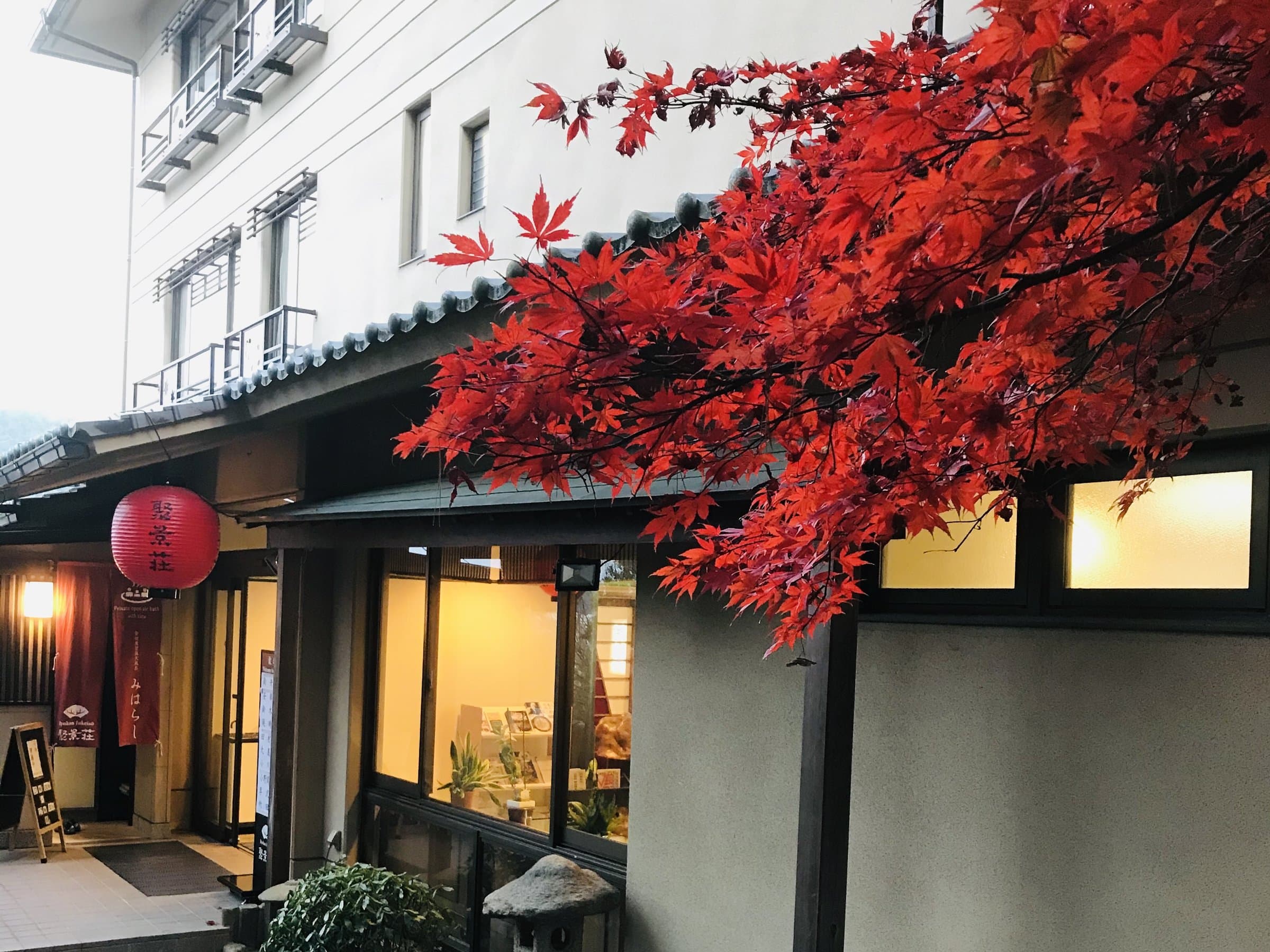
2. 미야지마 시사이드 호텔 주케이소(聚景荘) — 바다 전망 럭셔리와 도리이 노을의 베스트

적합 대상 침실 창에 노을 무렵의 바다에 떠 있는 도리이를 담고 싶은 커플과 사진 애호가.

한눈에 30실 · 약 280~700달러 · 페리 터미널에서 남서쪽으로 약 1km 떨어진 언덕 위 입지 · 이쓰쿠시마 신사까지 도보 15분(또는 무료 셔틀).

온천 대욕장과 예약제 개별 욕탕 모두 세토 내해를 향해 있으며, 여성 노천탕(로텐부로)은 도리이를 담을 수 있는 각도로 설계되었습니다. 가시키리 개별 예약은 타투가 있는 손님이나 도리이 전망을 둘이서만 즐기고 싶은 커플도 이용할 수 있습니다.

가이세키 정통 세토우치 스타일. 그날 아침 잡힌 사시미, 구운 도미, 가을의 아나고, 겨울의 굴까지. 30실 규모의 료칸만이 가능한 여유로운 서비스가 인상적입니다.

돋보이는 점 모든 객실에 천장부터 바닥까지 이어지는 통창이 있고, 그 창문 한가운데 이쓰쿠시마 신사의 바다에 떠 있는 도리이가 액자처럼 잡힙니다. 만조 시간대의 노을은 섬에서 가장 영화적인 료칸 경험입니다. 페리 터미널과 숙소 사이에는 무료 셔틀이 운행됩니다.

솔직한 단점 그 전망을 만들어 주는 언덕 위 입지가 동시에 계단과 경사로를 만들어 냅니다. 이동에 제약이 있는 손님은 저층 객실을 요청하고 예약 시 계단 수를 확인해 두세요. 바다 전망 객실은 안쪽 객실보다 20~30% 비싸지만, 노을 시간만큼은 그 가격 차를 아낄 이유가 없습니다. 요금은 2식 포함 1인 1박 280~700달러 수준입니다 [추정치, 현재 가능 여부 확인 필요]. 디렉터리에서 주케이소 예약 가능 여부를 확인할 수 있습니다.

3. 미야지마 그랜드 호텔 아리모토(有もと) — 굴 가이세키와 단체 여행에 최고

적합 대상 4인 이상 단체 여행자와 굴 시즌(11월~2월)에 도착하는 굴 마니아.

한눈에 여러 동에 걸친 57실 · 약 180~500달러 · 이쓰쿠시마 신사까지 도보 3분 · 페리 터미널 무료 셔틀 운영.

온천 세토 내해 전망의 정통 노천탕과 실내 대욕장이 있습니다. 타투 손님은 체크인 시 가시키리 개별 욕탕을 예약할 수 있습니다.

가이세키 히로시마현의 [공식 다이브 히로시마 가이드](https://dive-hiroshima.com/en/feature/kaki-season/)에 따르면 굴은 11월부터 2월까지가 절정이며, 2월 초에는 히로시마 굴 축제가 열립니다. [출처 확인 2026-05-07] 1월 말, 저는 히로시마 굴 세 가지 변주로 시작하는 가이세키 코스를 받았습니다. 폰즈를 곁들인 생굴, 반쯤 덮은 껍질째 구운 굴, 완벽하게 튀겨낸 가키후라이(굴튀김) 한 알. 이어서 테이블 위에서 끓이는 가키 노 도테나베(굴 미소 전골)가 나왔습니다. 굴 시즌이 아니면 메뉴는 아나고, 세토우치 도미, 갯장어 사시미 쪽으로 옮겨 갑니다. 조식은 정통 일본식 료칸 조식 상차림으로, 객실이 아닌 공용 식당에서 제공됩니다.

돋보이는 점 미야지마에서 가장 큰 전통 스타일 호텔로, 다세대 단체 여행과 짧은 리드 타임을 모두 소화할 수 있습니다. 이와소나 주케이소보다 예약 여유가 있습니다. 굴 시즌의 굴 중심 가이세키는 섬에서 단연 최고의 식사 경험입니다.

솔직한 단점 아리모토는 작은 장인의 료칸이라기보다는 큰 전통 호텔에 더 가깝습니다. 서비스는 개인적이라기보다 전문적이며, 분위기도 은신처보다는 리조트 쪽입니다. 4인 이상 단체에는 장점이지만, 신혼여행에는 그만큼 매력이 덜할 수 있습니다. 요금은 2식 포함 1인 1박 180~500달러 수준입니다 [추정치, 현재 가능 여부 확인 필요]. 자세한 내용은 미야지마 그랜드 호텔 아리모토 객실 정보 페이지에서 확인할 수 있습니다.

Tip

12월에서 2월 사이 방문하시나요? 예약 시 가키 노 도테나베(굴 미소 전골) 추가를 요청하세요. 기본 가이세키에 항상 포함되는 것은 아니지만, 히로시마의 대표 식재료를 맛볼 수 있는 가장 좋은 방법입니다. 전골 가장자리에 미소를 둥글게 발라 그 안에서 단맛 도는 굴을 끓이고, 국물이 진해지면 두부와 제철 채소를 넣습니다.

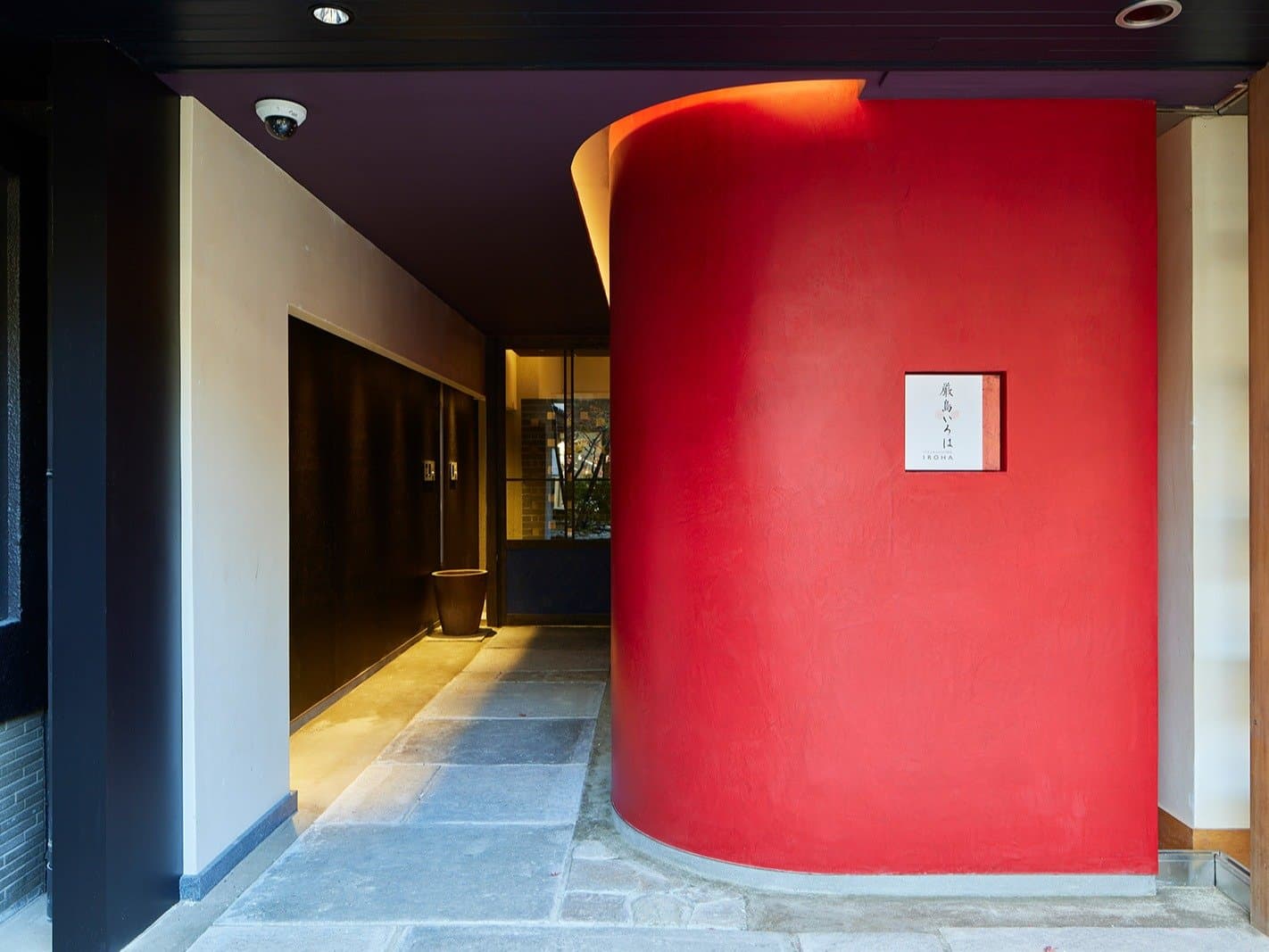
4. 이쓰쿠시마 이로하 — 중급 예산 커플에게 최고

적합 대상 럭셔리 풀 가격을 내지 않으면서 중심부, 사진 잘 나오는 곳, 도보로 다닐 수 있는 위치를 원하는 커플.

한눈에 18실 · 약 200~500달러 · 오모테산도의 정중앙 · 이쓰쿠시마 신사와 페리 터미널 모두 도보 5분.

온천 옥상 대욕장에서 세토 내해 너머 도리이가 보이며, 노을 시간대는 남탕과 여탕이 매일 교차로 바뀝니다. 객실 전용 노천탕은 없습니다. 옥상 욕탕의 타투 정책은 비교적 관대한 편이지만, 예약 시 이메일로 확인해 두세요.

가이세키 객실이 아니라 별도의 개별 알코브에서 제공됩니다. 이와소의 객실 식사보다는 살짝 덜 친밀하지만, 음식 자체는 강합니다. 아나고와 세토우치 해산물을 중심으로 모던한 표현이 일부 더해진 구성입니다. 객실은 콤팩트한 다다미 더블부터 개별 욕실을 갖춘 더 넓은 다다미 스위트까지 다양합니다.

돋보이는 점 옥상 온천의 남녀 교대가 이로하를 예약해야 하는 핵심 이유입니다. 일정이 잘 맞으면 미네랄 수에 몸을 담근 채 정면으로 조명이 켜진 바다에 떠 있는 도리이를 마주하게 됩니다. 오모테산도 입지까지 더하면, 미야지마 료칸이 처음인 사람에게 가장 명확한 중급 선택지입니다.

솔직한 단점 중심부라는 건 말 그대로 중심부라는 뜻입니다. 객실이 오모테산도 쪽을 향하면 밤 9시쯤까지 늦은 저녁 손님 소리가 들립니다. 위층과 건물 안쪽 객실이 더 조용합니다. 요금은 2식 포함 1인 1박 200~500달러 수준입니다 [추정치, 현재 가능 여부 확인 필요]. 디렉터리에서 이쓰쿠시마 이로하 다다미 스위트를 확인하세요.

Tip

이로하의 옥상 온천은 남녀 시간이 분리되어 있고, 바다에 떠 있는 도리이의 노을 전망이 두 욕탕을 오가며 교대됩니다. 체크인 후 객실의 로테이션 안내 카드를 확인하고 입욕 시간을 짜세요. 대부분의 손님이 이걸 놓치고 노을 시간에 안쪽 전망 욕탕에 들어갑니다. 두 전망의 차이가 이로하를 예약할 가장 큰 이유입니다.

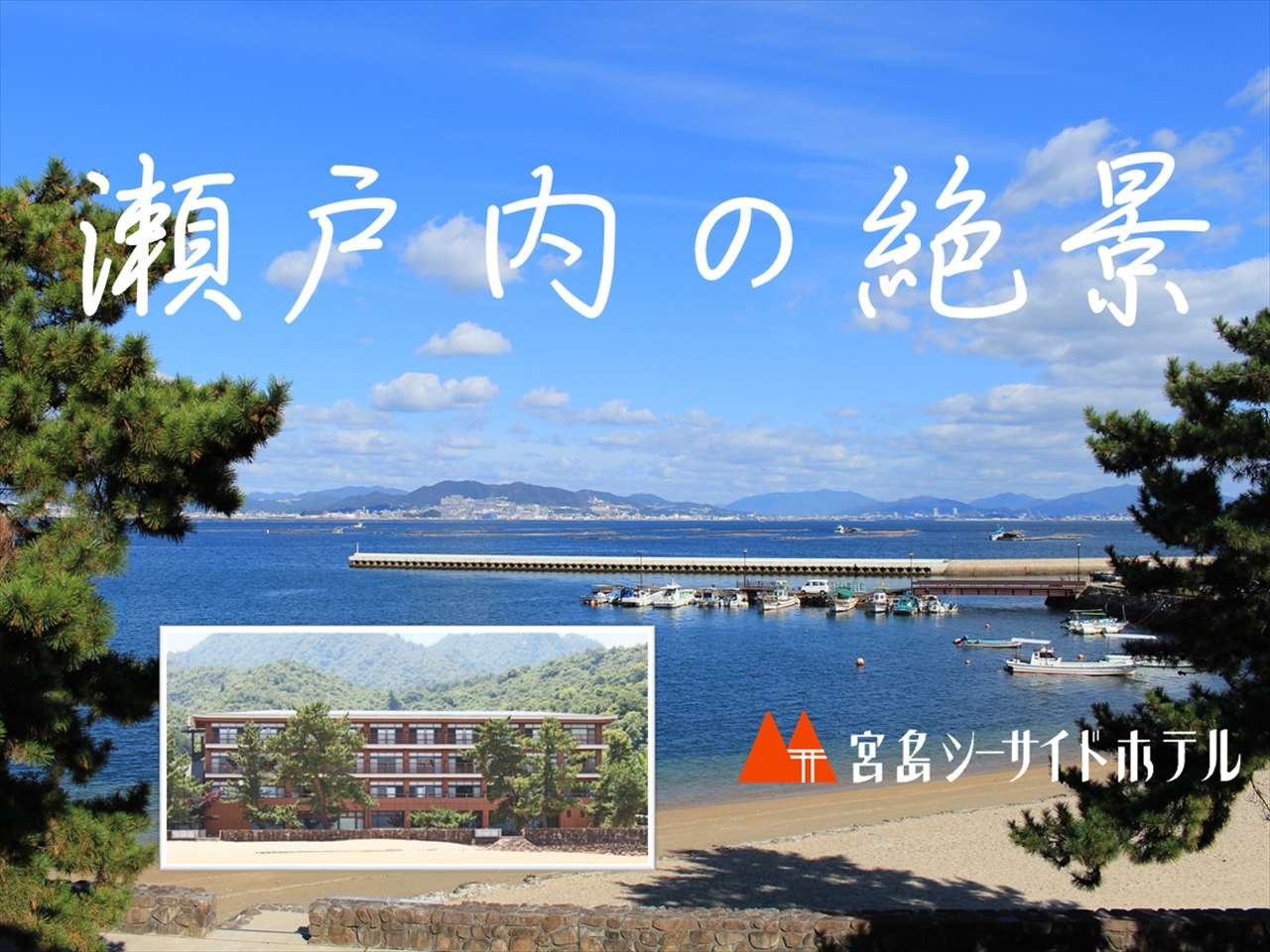
5. 미야지마 시사이드 호텔 — 가족과 혼합 스타일 여행자에게 최고

적합 대상 가족 모두에게 이불 잠을 강요하지 않으면서 료칸 경험은 누리고 싶은, 학령기 자녀를 둔 가족.

한눈에 44실 · 약 100~280달러 · 해변가, 페리 터미널에서 짧은 셔틀 거리 · 해안을 따라 이쓰쿠시마 신사까지 도보 20분. 주케이소와 혼동하지 마세요. 이름의 일부만 같습니다.

온천 바다 전망의 대욕장에서 실내와 실외를 적당히 오갈 수 있습니다. 객실 전용 온천은 없습니다.

가이세키 화려하기보다는 견실한 편으로, 이 가격대의 44실 규모 숙소에서 기대할 만한 수준입니다. 식사는 입맛이 까다로운 손님도 챙기며, 저녁 식사 후 아이들이 아직 흥분이 가시지 않았을 때 들를 수 있는 노래방 룸도 있습니다.

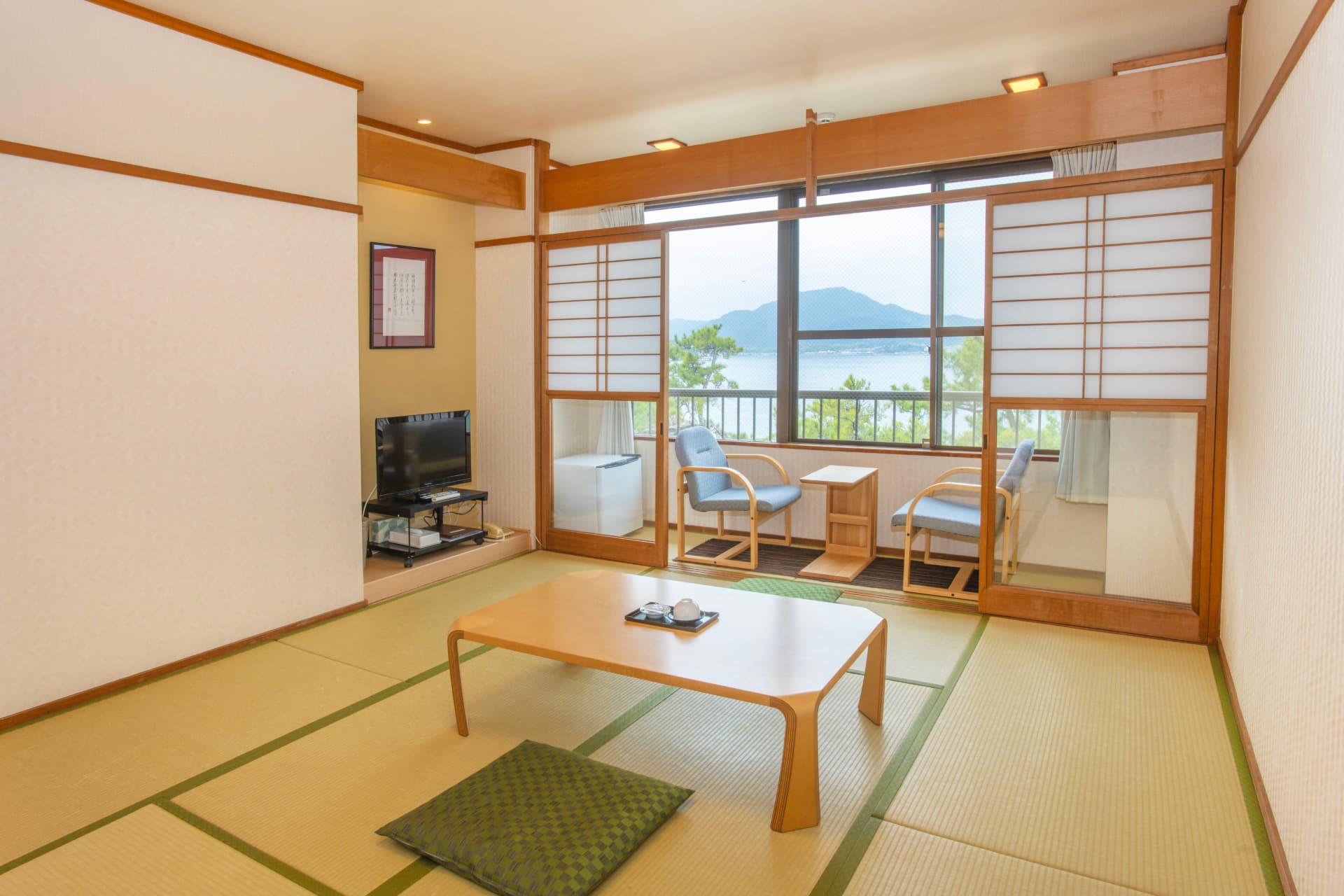
돋보이는 점 일본식 다다미 객실과 침대가 있는 서양식 객실을 모두 갖췄으며, 부티크 대안들보다 객실 자체가 넓습니다. 페리에 차를 싣기 전에 본토 쪽에 무료 주차할 수 있다는 점은 자동차로 도착하는 손님에게 큰 강점입니다. 미야지마 료칸 중 이를 제공하는 곳은 매우 드뭅니다.

솔직한 단점 삐걱이는 나무 마루와 160년 된 정원이 있는 역사적인 료칸 분위기를 기대했다면, 여기는 일본식 식사를 내는 편안한 호텔이지 헤리티지 숙소는 아닙니다. 예산 안에서 건축적으로도 료칸다운 경험을 원한다면 사쿠라야가 더 가깝습니다. 요금은 2식 포함 1인 1박 100~280달러 수준입니다 [추정치, 현재 가능 여부 확인 필요]. 디렉터리에서 미야지마 시사이드 호텔 예약을 확인할 수 있습니다.

6. 사쿠라야 — 300달러 이하 부티크 료칸의 최고

적합 대상 리조트적인 깔끔함보다는 가정식 가이세키를 내는 작은 가족 경영 료칸을 원하는 여행자.

한눈에 10실 · 약 120~280달러 · 해변가 인근 · 이쓰쿠시마 신사까지 도보 10분.

온천 천연 온천은 없습니다. 미네랄 온천이 아니라 가열식 공용 욕탕을 사용합니다. 이 가격대의 가장 큰 양보 지점입니다.

가이세키 세련됨보다 풍성함. 세토우치의 작은 요리 서너 가지 — 사시미, 채소 조림, 구운 생선 — 다음에 전골이나 든든한 메인 한 접시, 그 뒤에 밥과 미소 된장국, 츠케모노가 따라옵니다. 굴 시즌에는 히로시마 굴이 상에 더해집니다.

돋보이는 점 저녁의 상당 부분을 주인이 직접 요리합니다. 도착했을 때 차를 내준 그 사람이 그날 밤 이불도 깔아 줍니다. 사쿠라야에서의 두 번째 숙박, 밤 11시쯤 마룻바닥 베란다에서 부드러운 충돌음이 들렸습니다. 어린 사슴이 — 체크인 때 프런트가 절대 밖에 두지 말라고 일러 둔 — 센베 봉투 냄새를 맡으러 온 것이었습니다. 하쓰카이치시는 2008년부터 사슴 먹이 주기를 금지했지만, 사슴들은 여전히 기대를 버리지 않습니다. 이런 게 이곳의 분위기입니다.

솔직한 단점 천연 온천이 없고, 객실이 10실뿐이라는 건 단풍 시즌과 굴 시즌 주말이면 빨리 매진된다는 뜻입니다. 객실 스타일은 진짜로 전통적입니다. 다다미 위 이불, 서양식 침대 없음 — 그게 핵심 경험이지만 동시에 어떤 여행자에게는 결정적 단점이 됩니다. 빠듯한 료칸 예산을 늘리는 법이 더 필요하면 저예산 료칸 전술 글에서 더 깊이 다룹니다. 요금은 2식 포함 1인 1박 120~280달러 수준입니다 [추정치, 현재 가능 여부 확인 필요]. 디렉터리 페이지에서 사쿠라야의 10실 부티크 객실을 둘러볼 수 있습니다.

7. 미야지마 게스트 하우스 미쿠니야 — 150달러 이하 저예산 베스트

적합 대상 가이세키가 아니라 섬 그 자체를 보러 미야지마에 온 백패커와 저예산 여행자.

한눈에 8실 · 약 50~150달러 · 이쓰쿠시마 신사와 다이쇼인 사찰 모두 도보 5분 · 작은 정원이 있는 전통 일본 가옥.

온천 진짜 미네랄 온천이 아니라 가열식 욕탕입니다. 욕실은 모두 공용입니다. 타투 정책은 일반적으로 수용적입니다.

가이세키 없습니다. 손님은 보통 부두 근처 이자카야에서 식사하거나 본토 쪽 마지막 페리 전에 도시락을 챙겨 옵니다. 조식도 다단 트레이가 아니라 단품 메뉴입니다.

돋보이는 점 백패커와 저예산 여행자에게는 도미토리 1박 50달러의 미쿠니야가 미야지마섬에서 가장 저렴한 숙소입니다. 단, 이게 끝입니다. 객실은 이불을 깐 개인 다다미실과 공용 도미토리 형태로 나뉩니다. 마지막 날 새벽 5시 50분, 저는 5분을 걸어 간조에 드러난 갯바닥까지 갔습니다. 삼각대를 세우는 사진작가 한 명을 빼면, 바다에 떠 있는 도리이 아래의 빈 모래는 30분간 온전히 제 것이었습니다. 섬에서 자야만 만날 수 있는 순간입니다. 직원들은 섬 투어 추천과 새벽 6시 도리이 산책 타이밍에 대해 유난히 친절합니다.

미야지마를 넘어 일본의 대표 온천 도시들과 비교하고 있다면, 미쿠니야의 가격대는 기노사키나 노자와 온천의 저예산 게스트하우스와 비슷한 수준입니다. 다만 유네스코 세계유산 바로 옆이라는 입지가 차이를 만듭니다.

솔직한 단점 공용 욕실과 호스텔 분위기. 섬을 보러 왔다면 괜찮지만, 가이세키와 객실 식사 서비스를 보러 왔다면 그렇지 않습니다. 8실 규모이기 때문에 단풍 주말에는 더 큰 숙소들보다 빨리 매진됩니다. 요금은 객실만 또는 조식만 1인 1박 50~150달러 수준입니다 [추정치, 현재 가능 여부 확인 필요]. 디렉터리에서 미쿠니야 게스트하우스 50달러부터를 확인할 수 있습니다.

어떻게 고를까: 모미지다니, 항구 옆, 언덕 위?

미야지마는 어떤 료칸에서도 어디든 멀지 않을 만큼 작은 섬입니다. 사람이 사는 구역 끝에서 끝까지 도보 40분이면 충분합니다. 그래도 세 곳의 미세 입지는 서로 다른 숙박 경험을 만들어 냅니다.

모미지다니(이와소, 미센산 인근): 원시림에 가까운 환경, 단풍 골짜기를 지나 신사까지 도보 3분. 가을 단풍, 다이쇼인 트레일을 통한 산행 접근, 그리고 바다 전망보다 분위기를 우선하는 여행자에게 최고입니다. 객실에서 도리이는 보이지 않지만, 섬에서 가장 아름다운 접근로를 따라 신사로 걸어가게 됩니다.

항구 옆과 오모테산도(이로하, 사쿠라야, 미쿠니야, 아리모토): 역사적인 중심지. 신사, 쇼핑 거리, 식당, 페리 터미널까지 모두 도보로 쉽게 갈 수 있습니다. 도보로 최대한 많은 일을 처리하면서 이동 동선을 최소화하고 싶은 첫 방문자에게 최고입니다. 단점은 낮 시간 문 앞의 인파지만, 오후 5시 이후엔 모두 사라집니다.

언덕 위와 해안가(주케이소, 미야지마 시사이드 호텔): 높은 곳에서 바라보는 전망과 바다 접근, 페리 터미널 셔틀 서비스, 신사까지 도보 15~20분(또는 셔틀). 바다 전망의 노을, 공간이 필요한 가족, 그리고 도보 편의를 욕탕에서 얻는 사진 한 장과 맞바꿔도 좋다는 여행자에게 최고입니다. 료칸을 넘어선 미야지마 안내가 필요하면 전체 미야지마 지역 가이드를 참고하세요.

조수 시간표: 체크인 시각보다 체크인 날짜가 더 중요한 이유

미야지마의 만조는 보통 하루 두 번 절정에 이르며(봄철 기준 대략 오전 6시·오후 6시), 조위 250cm 이상이면 바다에 떠 있는 도리이의 기둥 밑동이 완전히 잠깁니다. 상징적인 사진을 위해서는 [Get Hiroshima 조수 시간표](https://gethiroshima.com/museums-attractions/miyajima-tide-times/)를 확인하고, 만조의 절정이 햇빛이 있는 시간대 — 이상적으로는 늦은 오후 — 와 겹치는 날짜를 골라 체크인하세요. [출처 확인 2026-05-07]

대부분의 미야지마 가이드는 "조수를 확인하세요"라고 말합니다. 하지만 그 조수에 맞춰 예약 날짜를 짜라고 말하는 곳은 거의 없습니다. 이쓰쿠시마의 도리이는 만조에는 바다 위에 떠 있고, 간조에는 마른 해저 위에 서 있습니다. 그 차이는 극적이어서 — 사실상 두 개의 다른 신사를 두 장의 다른 사진으로 찍는 것과 같습니다. 조수 윈도우는 하루에 약 50분씩 이동하기 때문에, 1박 숙박 한 번으로 두 풍경을 모두 보려면 타이밍이 정확해야 합니다.

경험칙은 이렇습니다. 조위 250cm 이상이면 떠 있는 효과가 만들어집니다(물이 도리이 기둥 밑동을 핥고 신사 회랑에 비칩니다). 조위 100cm 이하이면 해저가 드러나 도리이 기둥 아래까지 걸어갈 수 있습니다. 그 사이 어떤 수치든 부분적인 풍경입니다. 예약하기 전에 확인하세요. 토요일 오전의 간조는 200명과 함께 모래밭을 나누는 일이지만, 화요일 오전 8시 이전의 간조는 진짜로 텅 빈 모래밭입니다.

여기서 따라오는 료칸 전략이 다른 곳에선 잘 안 다루는 부분입니다. 만조에 도착해 간조에 출발하거나, 그 반대 일정으로 1박을 잡으세요. 늦은 오후 만조에 도착해 도리이가 떠 있는 노을을 보고, 자고, 다음 날 새벽 6시 마른 모래 위로 도리이 기둥 아래까지 걸어갑니다. 이게 1박으로 누리는 미야지마 풀 코스이며, 어느 료칸을 고르느냐가 아니라 어느 날짜를 예약하느냐의 문제입니다. 일본 럭셔리 일정을 짜는 여행자라면, 이 날짜 인식 예약 논리는 조수에 영향을 받는 모든 목적지에 똑같이 적용됩니다.

Tip

조수 윈도우가 한 번뿐이라면 떠 있는 사진을 위해 만조를 우선하세요. 간조의 도리이 산책도 즐겁지만, 상징적인 한 컷은 반사가 있는 그 장면입니다. 조위 250cm 이상의 만조 시각에서 두 시간 이내로 체크인을 맞추세요. 10월부터 2월 사이의 노을 만조가 일반적으로 가장 사진이 잘 나오는 구간입니다.

미야지마 가는 길: 페리, JR 패스, 그리고 막배

히로시마역에서 미야지마의 료칸까지 가는 길은 단순하며, JR 패스가 거의 모든 구간을 커버합니다.

순서대로 4단계입니다.

1. 히로시마역에서 JR 산요선을 타고 미야지마구치역까지 갑니다. 약 25분, 약 420엔, JR 패스 사용 가능. 2. 역에서 도보 5분으로 바닷가의 페리 터미널에 도착합니다. 3. JR 미야지마 페리에 탑승합니다(10분, 약 200엔, JR 패스 사용 가능). 같은 항로의 마쓰다이키센 페리는 운임이 같지만 JR 패스 적용 대상이 아닙니다. 4. 미야지마 부두에서 해안을 따라 도보 10~15분이면 이쓰쿠시마 신사에 도착합니다. 이 리스트의 대부분 료칸은 그 동선 안에 있거나 부두 무료 셔틀을 운영합니다.

미야지마발 마지막 JR 페리는 밤 10시 14분에 출발하며, 다음 운항은 새벽 5시 45분쯤이 되어서야 시작됩니다([JR 미야지마 페리 시간표](https://jr-miyajimaferry.co.jp/en/timetable/)). [출처 확인 2026-05-07] 숙박하는 날 밤에는 시간표가 의미 없지만, 도착하는 날과 떠나는 날에는 중요합니다. 그 새벽 5시 45분 첫 배가 바로 료칸 손님이 일출 조수 산책을 독차지할 수 있는 이유입니다. 첫 당일치기 손님이 도착할 무렵, 여러분은 이미 90분 동안 해저를 혼자 걷고 있는 것입니다.

입도세와 짐 동선. 2023년 10월부터 미취학 연령을 넘은 모든 방문객은 페리에서 [100엔 입도세](https://another1000years-miyajima.jp/en/visitortax/index.html)를 납부합니다. 페리 회사가 징수해 환경 및 신사 유지 비용으로 하쓰카이치시에 전달됩니다. 자주 방문한다면 500엔의 연간 패스도 이용할 수 있습니다. [출처 확인 2026-05-07]

짐 동선은 여행자들이 생각하는 것보다 훨씬 중요합니다. 미야지마구치 터미널의 코인 로커는 수가 한정적이며, 성수기에는 오전 중에 다 차 버립니다. 더 깔끔한 해법은 히로시마역 호텔에서 큰 캐리어를 야마토 다쿠큐빈으로 료칸까지 미리 보내는 것입니다(다음 날 배송, 가방당 약 2,000엔). 그러면 1박용 가방만 들고 섬에 도착할 수 있습니다.

Tip

도쿄-교토-히로시마 일정이라면 일본 입국 전에 JR 패스를 사두세요. 히로시마-미야지마구치 열차와 JR 페리가 모두 포함됩니다. 비-JR인 마쓰다이키센 페리는 같은 항로를 같은 운임으로 운항하지만 별도 결제입니다. 패스가 있으면 두 구간 모두 표를 사지 않고 탑승할 수 있습니다.

가이세키 너머 무엇을 먹을까: 굴, 아나고, 모미지 만주

미야지마에는 시그니처 음식이 세 가지 있고, 1박 동안 셋 다 맛보는 게 좋습니다.

히로시마 굴(가키)이 메인입니다. [다이브 히로시마](https://dive-hiroshima.com/en/feature/kaki-season/)에 따르면 절정 시즌은 11월부터 2월까지이며, 미야지마 굴 축제는 2월 초에 열립니다. 이 시즌 안에서는 이 리스트의 모든 료칸이 가이세키에 굴을 통합합니다. 그중 가장 강하게 미는 곳은 아리모토입니다. 낮 시간 산책에 끼워 넣을 만한 단품 경험은 오모테산도의 장작구이 굴 전문점 야키가키노 하야시(焼がきのはやし)입니다.

아나고메시(붕장어 덮밥)는 굴과 함께 미야지마의 향토 명물입니다. 가을 가이세키에는 대부분 어떤 형태로든 아나고가 들어갑니다. 단품으로 즐기는 정통판은 흰밥 위에 슬라이스한 구운 장어를 얹은 한 그릇 — 페리를 타고 돌아오기 전 점심으로 시켜야 할 메뉴입니다. 미야지마구치역 근처의 우에노(うえの)가 현 내에서 가장 유명한 아나고메시 가게입니다.

모미지 만주(紅葉饅頭)는 기념 음식입니다. 단풍잎 모양의 카스텔라에 팥, 커스터드, 말차 크림을 채운 것으로 오모테산도를 따라 판매됩니다. 실용 팁: 섬에서는 절대 야외에서 먹지 마세요. [미야지마 관광협회](https://www.miyajima.or.jp/english/pickup/heritage.html)에 따르면 사슴은 야생이며 사람에게 익숙해져 있어, 종이봉투 때문에 어린이를 들이받기도 하고 지갑, 페리 티켓, 지도까지 먹은 사례가 있습니다. [출처 확인 2026-05-07] 실내나 료칸에서 드세요.

Tip

사슴 주의: 미야지마 사슴은 나라 사슴이 아닙니다. 자유롭게 돌아다니며, 종이봉투를 음식과 연결 짓는 법을 배웠습니다. 야외에서 음식을 먹지 말고, 먹이를 주지 마세요. 절대 지도나 티켓을 얼굴 높이에서 흔들지 마세요. 그대로 낚아챕니다. 평소엔 온순하지만, 발정기(10~11월)에는 박치기가 잦아집니다. 간식은 가방 안에 단단히 넣어 두세요.

미야지마 료칸 숙박에 가장 좋은 시기

1박 기준으로 우선순위에 따라 정리한 사계절 그림입니다.

11월 중순, 모미지다니의 가을 단풍. 이와소의 모미지다니 쪽 객실이 정중앙입니다. 단풍은 11월 둘째 주에서 셋째 주에 가장 강렬한 주황빛으로 물들고, 이와소는 공원 안쪽에 있어 그 단풍이 그대로 객실 풍경이 됩니다. 그 날짜라면 늦어도 7월 안에 예약하세요. 막판 예약은 거의 성공하지 못합니다.

1월 말부터 2월 초, 히로시마 굴 절정 시즌. 굴 시즌이 되면 이 리스트의 모든 숙소에서 가이세키 수준이 눈에 띄게 올라갑니다. 그중 아리모토의 굴 중심 메뉴가 섬에서 단연 최고의 식사 경험입니다. 단점은 차가운 페리 항해와 짧은 일조 시간입니다. 코트를 챙기고 관광은 오전에 몰아서 잡으세요. 2월 초의 히로시마 굴 축제에 맞추는 것도 가치가 있습니다.

3월 말부터 4월 초, 벚꽃. 이쓰쿠시마 신사 위쪽의 다호토(多宝塔) 주변에는 작은 수양벚나무 군락이 있고, 주홍빛 신사와의 대비가 압도적입니다. 3~4개월 전에 예약하세요.

8월(습기, 인파, 해파리)과 골든위크(5월 3~5일)는 피하세요. 휴일 할증이 붙고, 4개월 전부터 매진됩니다. 5월 말, 6월, 9월, 12월 초가 저평가된 어깨 시즌입니다. 인파가 적고, 조수 일정도 무난하며, 막판 예약 가능성도 높습니다. 날짜를 정할 때는 미야지마에서 할 수 있는 다른 모든 것도 함께 살펴볼 만합니다.

Tip

케이블카 인파를 피해 다이쇼인 사찰을 통해 내려오세요. 삼나무 숲, 숨어 있는 사당, 밧줄로 묶인 '헨조쿠츠(遍照窟)' 동굴을 지나는 1시간 하산길은 미야지마에서 가장 조용한 경험 중 하나입니다 — 이미 미야지마 케이블카 올라가는 비용은 냈으니까요. 미센산은 해발 535m이며, 다이쇼인 트레일은 대부분의 당일 여행자들이 줄을 서는 케이블카 병목 구간을 우회합니다.

미야지마 료칸 FAQ

히로시마가 아니라 미야지마에서 1박 하는 게 가치가 있나요?

네, 1박이라면 거의 예외 없이 그렇습니다. 오후 5시 이후의 섬 — 조명이 켜진 도리이, 텅 빈 신사 회랑, 해 질 녘의 사슴들 — 은 여행에서 가장 기억에 남는 한 시간이고, 당일치기에서는 보이지 않습니다. 1박만 가능한데 도시 야경을 원한다면 히로시마에 머무세요. 낮의 인파 없이 유네스코 경험을 누리고 싶다면 섬에서 자세요.

미야지마는 1박이 충분한가요, 2박이 필요한가요?

오후 5시 이후의 윈도우만이라면 1박이면 충분합니다. 늦은 오후에 도착해서 조명이 켜진 도리이와 저녁을 즐기고, 자고, 당일치기 배가 도착하기 전 일출 조수 산책을 합니다. 같은 일정에서 미센산 산행과 히로시마 평화기념공원을 함께 한다면 2박을 잡으세요. 추가 저녁이 두 일정을 서두르지 않고 분리해 줍니다.

객실 전용 노천탕(로텐부로)이 있는 미야지마 료칸은 어디인가요?

이와소의 본관 스위트가 객실 전용 노천탕을 갖추고 있습니다. 미야지마에서 스위트 등급의 객실 전용 온천을 갖춘 유일한 정통 료칸입니다. 더 합리적인 가격대의 개별 입욕을 원한다면 이와소·아리모토·주케이소 모두 체크인 시 예약 가능한 가시키리 개별 욕탕을 운영합니다. 그 외 대부분의 숙소는 공용 대욕장만 이용 가능합니다.

미야지마에서 가장 저렴한 료칸은 어디인가요?

미야지마 게스트 하우스 미쿠니야로, 도미토리 1박 약 50달러부터, 개별 다다미실은 약 80~150달러부터입니다. 가이세키 저녁이 포함된 풀 료칸 경험으로는 1인 120달러부터 시작하는 사쿠라야가 저예산의 바닥선입니다.

객실에서 바다에 떠 있는 도리이가 보이는 미야지마 료칸은 어디인가요?

주케이소(객실에 도리이가 정면으로 잡히는 바다 전망 객실), 이쓰쿠시마 이로하(옥상 온천 전망, 성별 로테이션 교대), 그리고 아리모토의 일부 바다 쪽 객실입니다. 이와소는 모미지다니 공원을 향해 있어 객실에서는 도리이가 보이지 않습니다. 단풍 숲 안에 자리한 대가입니다.

미야지마 료칸에 온천이 있나요?

이 리스트의 대부분 료칸에 있지만, 미야지마 자체가 큰 온천 도시는 아닙니다. 이와소는 천연 라듐 온천 욕탕을 갖추고 있고, 아리모토와 주케이소는 온천 스타일의 노천 및 실내 욕탕이 있습니다. 이로하와 시사이드 호텔은 가열식 미네랄 욕탕을 사용하며, 사쿠라야와 미쿠니야는 미네랄 온천이 아닌 가열식 공용 욕탕입니다. 온천이 최우선이라면 이와소 또는 아리모토를 고르세요.

이 료칸들은 정확히 어디에 있나요?

3곳은 역사적 중심지 또는 그 인근(이로하는 오모테산도, 사쿠라야는 해변가, 미쿠니야는 다이쇼인 사찰 근처)에, 1곳은 모미지다니 공원 안(이와소), 1곳은 신사 인근(아리모토), 그리고 2곳은 외곽 해안가(주케이소는 언덕 위, 미야지마 시사이드 호텔은 해안을 따라)에 있습니다. 모두 도보 또는 무료 셔틀로 이쓰쿠시마 신사에서 20분 이내입니다.

미야지마 료칸은 타투에 관대한가요?

정책은 료칸마다 다릅니다. 이로하와 미쿠니야는 일반적으로 수용적입니다. 이와소와 아리모토는 보이는 타투를 가리거나 가시키리 개별 욕탕(체크인 시 소액 추가요금으로 예약 가능) 이용을 요청합니다. 가능한 한 미리 이메일로 문의하세요. 일본 료칸은 이런 사전 알림을 환영하며, 요청하면 개별 욕탕 예약으로 맞춰 주는 곳이 많습니다.

미야지마 료칸에 드레스 코드가 있나요?

도착과 저녁 식사에는 캐주얼한 평상복이면 충분합니다. 료칸이 도착 시 유카타(면 가운)와 게다(나막신)를 제공하며, 공용 공간, 온천, 그리고 섬 안의 짧은 산책에서 입을 수 있습니다. 많은 손님이 저녁 후 조명이 켜진 도리이를 보러 갈 때 유카타를 입습니다. 등롱과 돌길 위의 나무 신발 소리도 그 경험의 일부입니다.

미야지마 료칸 숙박에 가장 좋은 달은 언제인가요?

11월 중순은 이와소에서 모미지다니 단풍을, 1월 말~2월 초는 아리모토에서 굴 시즌 절정을, 3월 말~4월 초는 다호토 주변의 벚꽃을 즐길 수 있는 최고의 시기입니다. 8월(습기)과 골든위크(5월 3~5일, 휴일 할증)는 피하세요.

마무리: 바다에 떠 있는 도리이 그늘에서 자는 일

미야지마에서 1박 하라는 주장은 감성적이라기보다 구조적인 것입니다. 이 섬은 낮에는 당일치기 시간으로, 밤에는 료칸 손님 시간으로 돌아갑니다. 어디서 자느냐를 정하는 일은 곧 어떤 미야지마를 볼지 정하는 일입니다. 이와소 — 역사적 럭셔리의 기준점을 원하는 첫 방문자에게. 주케이소 — 객실 창에 담기는 바다 전망의 노을. 아리모토 — 굴 가이세키와 단체 친화적 규모. 이로하 — 오모테산도 입지를 원하는 중급 예산 커플에게. 미야지마 시사이드 호텔 — 침대가 필요한 가족에게. 사쿠라야 — 300달러 이하 부티크 가족 경영 경험. 미쿠니야 — 가이세키가 아니라 섬을 보러 온 저예산 여행자에게.

날짜는 숙소만큼이나 중요합니다. 11월 단풍 밤의 이와소와 1월 말 굴 밤의 아리모토는 완전히 다른 여행입니다. 예약하기 전에 조수 시간표, 굴 시즌, 그리고 본인의 단풍 또는 사쿠라 선호를 교차로 확인하세요.

준비가 되었다면 위에 링크된 개별 료칸 페이지로 바로 넘어가세요. 미야지마가 더 긴 일정의 한 정거장이라면, 일본 대표 온천 도시 가이드하코네 베스트 료칸 가이드가 동선을 마무리해 줍니다.

FAQ

Frequently asked questions

Is it worth staying overnight on Miyajima instead of Hiroshima?+

Yes, staying overnight on Miyajima is a significant upgrade to a Hiroshima trip. After 5pm, day-trippers leave, and the island transforms, offering illuminated torii reflections until 11pm, deer roaming empty shrine forecourts, and a peaceful 6am sunrise walk to the floating gate before crowds arrive. This unique, quiet experience is entirely missed by day trips.

What is the best ryokan in Miyajima for first-time luxury travelers?+

Iwaso is recommended as the best luxury ryokan for first-timers. Founded in 1854, it's a 168-year-old inn located 4 minutes from Itsukushima Shrine in Momijidani Park. It offers radium onsen baths and traditional Setouchi kaiseki. Rates typically range from $350–$900 per person per night, including two meals, providing a theatrical and historic experience.

How do I get to Miyajima from Hiroshima Station?+

From Hiroshima Station, take the JR Sanyo Line to Miyajimaguchi Station, a 25-minute trip costing around 420 JPY (JR Pass valid). Walk five minutes to the ferry terminal, then board the JR Miyajima Ferry for a 10-minute ride (200 JPY, JR Pass valid). From Miyajima pier, most ryokans are within a 10-15 minute walk or offer free shuttles.

Which Miyajima ryokans offer views of the floating torii from the room?+

Jukeiso offers direct views of the floating torii from its sea-view rooms. Itsukushima Iroha provides a rooftop onsen view of the torii, which alternates between men's and women's bath times. Select sea-facing rooms at Miyajima Grand Hotel Arimoto also offer torii views. Iwaso, located in Momijidani Park, does not have torii views from its rooms.

When is the best time of year to visit Miyajima for a ryokan stay?+

Mid-November is ideal for Momijidani autumn foliage, especially at Iwaso. Late January to early February is best for peak Hiroshima oysters, with Arimoto offering excellent oyster kaiseki. Late March to early April provides beautiful cherry blossoms around Tahoto Pagoda. Avoid August due to humidity and crowds, and Golden Week (May 3–5) due to surcharges and high demand.

히로시마에서 숙박하는 것보다 미야지마에서 숙박하는 것이 더 좋을까요?+

네, 미야지마에서 숙박하는 것은 히로시마 여행의 질을 크게 높여줍니다. 오후 5시 이후 당일치기 관광객들이 떠나면 섬은 완전히 다른 모습으로 변하며, 밤 11시까지 조명 켜진 도리이 반영, 텅 빈 신사 마당을 거니는 사슴, 그리고 인파가 몰려들기 전 평화로운 오전 6시 물 위에 떠 있는 도리이 산책을 즐길 수 있습니다. 이 독특하고 고요한 경험은 당일치기 여행으로는 절대 경험할 수 없습니다.

미야지마에서 럭셔리 료칸을 처음 경험하는 분들께 가장 추천하는 곳은 어디인가요?+

처음 료칸을 이용하는 고급 여행객에게는 이와소(Iwaso)를 추천합니다. 1854년에 설립된 168년 된 여관으로, 모미지다니 공원 내 이쓰쿠시마 신사에서 4분 거리에 위치해 있습니다. 라듐 온천탕과 전통 세토우치 가이세키를 제공합니다. 1인당 1박에 $350~$900 정도이며, 두 끼 식사가 포함되어 극적이고 역사적인 경험을 선사합니다.

히로시마역에서 미야지마까지 어떻게 가나요?+

히로시마역에서 JR 산요선을 타고 미야지마구치역까지 25분 정도 소요되며, 요금은 약 420엔입니다(JR 패스 사용 가능). 페리 터미널까지 도보 5분 이동 후, JR 미야지마 페리를 타고 10분간 이동합니다(200엔, JR 패스 사용 가능). 미야지마 부두에서 대부분의 료칸은 도보 10~15분 거리이거나 무료 셔틀을 제공합니다.

미야지마 료칸 중 객실에서 물 위에 떠 있는 도리이 뷰를 볼 수 있는 곳은 어디인가요?+

주케이소(Jukeiso)는 바다 전망 객실에서 물 위에 떠 있는 도리이를 직접 볼 수 있습니다. 이쓰쿠시마 이로하(Itsukushima Iroha)는 옥상 온천에서 도리이 뷰를 제공하며, 남녀 이용 시간이 교대로 운영됩니다. 미야지마 그랜드 호텔 아리모토(Miyajima Grand Hotel Arimoto)의 일부 바다 전망 객실에서도 도리이 뷰를 볼 수 있습니다. 모미지다니 공원에 위치한 이와소(Iwaso)는 객실에서 도리이 뷰를 볼 수 없습니다.

료칸 숙박을 위해 미야지마를 방문하기 가장 좋은 시기는 언제인가요?+

11월 중순은 모미지다니 단풍을 즐기기에 이상적이며, 특히 이와소에서 좋습니다. 1월 말부터 2월 초는 히로시마 굴이 가장 맛있는 시기로, 아리모토는 훌륭한 굴 가이세키를 제공합니다. 3월 말부터 4월 초에는 다호토 파고다 주변의 아름다운 벚꽃을 볼 수 있습니다. 8월은 습하고 인파가 많으니 피하는 것이 좋고, 골든 위크(5월 3일~5일)는 추가 요금과 높은 수요로 인해 피하는 것이 좋습니다.

예약 준비되셨나요?

인기 료칸 중에서 예약하기

세 가지 예약 플랫폼의 실시간 객실 상황과 가격을 비교해보세요.

예약 링크를 통해 수수료가 발생할 수 있으나 추가 비용은 없습니다.