79분 분량2026년 6월 업데이트
빠른 비교
10곳 선정| 료칸 | 시작가 | 평점 | 특징 | 예약 |
|---|---|---|---|---|
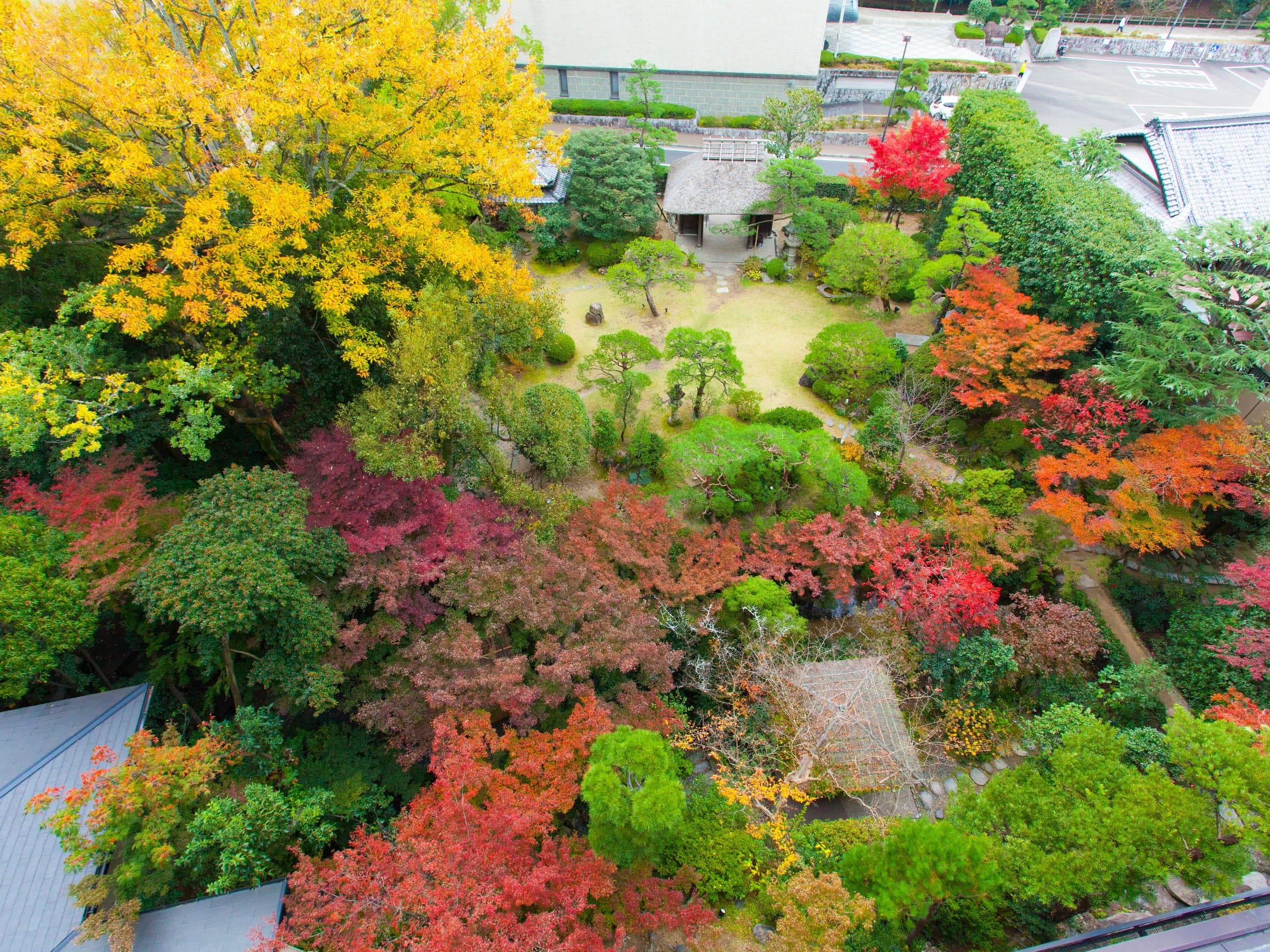
| $160부터 | 9.6 리뷰 116건 | 영어 OK온천 | Trip.com에서 예약 | |
| $350부터 | 9.6 리뷰 14건 | 영어 OK전세 온천 | Trip.com에서 예약 | |
![]() Yamatoya Besso Dogo | $250부터 | 9.1 리뷰 43건 | 영어 OK전세 온천 | Trip.com에서 예약 |
![]() Dogo Miyu Dogo | $280부터 | 9.4 리뷰 10건 | 영어 OK전세 온천 | Trip.com에서 예약 |
![]() Dogokan Dogo | $200부터 | 9.2 리뷰 71건 | 영어 OK전세 온천 | Trip.com에서 예약 |
![]() Yamatoya Honten Dogo | $180부터 | 9.5 리뷰 141건 | 영어 OK온천 | Trip.com에서 예약 |
| $200부터 | 9.2 리뷰 88건 | 영어 OK전세 온천 | Trip.com에서 예약 | |
![]() Chaharu Dogo | $100부터 | 8.5 리뷰 66건 | 영어 OK온천 | Trip.com에서 예약 |
| $100부터 | 9.6 리뷰 361건 | 영어 OK온천 | Trip.com에서 예약 | |
| $80부터 | 9.0 리뷰 39건 | 영어 OK온천 | Trip.com에서 예약 |

Yamatoya Besso
Dogo

Dogo Miyu
Dogo

Dogokan
Dogo

Yamatoya Honten
Dogo

Chaharu
Dogo
표시된 가격은 1인 1박 기준 시작가의 근사치입니다. 예약 시 당사이트가 수수료를 받을 수 있습니다.
Japan recorded its first documented onsen in Dogo. The *Man'yoshu* poetry anthology of 759 CE and the *Kojiki* chronicle of 712 CE both name the spring at Dogo as among the oldest in the nation — a bathing tradition stretching back more than 3,000 years. That is the deepest documented hot-spring pedigree in the country, and it still runs beneath the same district in Matsuyama where you will be booking a room. Last verified: May 25, 2026.
At the center of this district stands the Dogo Onsen Honkan, a labyrinthine three-story wooden bathhouse built in 1894 during the Meiji era. It is the bathhouse Hayao Miyazaki of Studio Ghibli visited in 2001 and cited as the architectural inspiration for Yubaba's spirit-world bathhouse in *Spirited Away* (2001). It is also the only public bathhouse in Japan to have served an Emperor — the private Yushinden bath chamber built for Emperor Meiji in 1899 still stands, now accessible to the public for a ¥1,500 entry tier.
The Honkan closed in January 2020 for a major preservation project — a ¥3.2 billion structural renovation of the 130-year-old Meiji-era timber frame. The Dogo Onsen Honkan fully reopened on December 12, 2024. The renovation restored the original architecture while adding accessible ramps, expanded foreign-visitor facilities, and an English-language audio guide . Competitor articles have not updated to reflect this. We have.
For Soseki Natsume readers: his 1906 novel *Botchan* is set partly in Matsuyama, and the protagonist bathes at Dogo Onsen routinely. The tram line running from Matsuyama Station to Dogo Onsen today — the Botchan Ressha — is named after the character. For the full list of hotels in Dogo Onsen across price tiers, see our complete Dogo accommodations directory.

The best ryokan in Dogo Onsen is Funaya — founded 1627, Japan's Imperial Family and Natsume Soseki among its historical guests, a Noh-stage garden, and a two-minute walk to the Honkan. For total private-onsen luxury with every suite featuring its own rotenburo, Bettei Oborozukiyo is the most exclusive property in Dogo (19 suites, adults-only). For panoramic city views from a rooftop bath steps from the Honkan, Chaharu offers the best mid-range value. For every-room private outdoor bath at a 2018 opening, Dogo Miyu is the modern-luxury pick.
Tip
Disclosure: Japan Ryokan Guide earns a commission when you book through partner links. No ryokan paid to be included or ranked. Prices shown are per-room per-night, two people, half-board (dinner + breakfast), based on published rack rates as of May 2026.
Honkan Reopens 2024: What Changed After the 5-Year Renovation
The Dogo Onsen Honkan is fully open as of December 12, 2024. After a ¥3.2 billion preservation project spanning nearly five years, the 1894 Meiji-era wooden bathhouse has been structurally restored and upgraded for contemporary visitors .
Key changes introduced with the reopening:
- Full architectural restoration — the original cypress-and-timber Meiji frame, the three-story turret, and the Shinto-inspired decorative elements have been preserved in their pre-closure state. The building received no modern-aesthetic alteration. - Accessible ramps — new accessible pathways installed throughout for wheelchair users and guests with limited mobility. - Expanded foreign-visitor facilities — multilingual signage updated throughout; coin lockers added in the entrance lobby. - English-language audio guide — QR-code activated audio tour now available on personal smartphones, covering the bathhouse history, the Yushinden Imperial chamber, and the Meiji-era legacy connecting the building to Soseki Natsume's *Botchan*. - Increased non-bathing tour capacity — the upper-floor heritage tour (which includes the Yushinden viewing corridor) now runs more frequently and can be booked online. - No reservation required for standard bathing entry — the Honkan remains walk-in, daily from 6:00 AM to 11:00 PM.
Entry fees (post-renovation, verified May 2026): Day bath ¥460 (ground-floor Kami-no-Yu public bath) · ¥1,250 (includes upper-floor Bocchan-no-ma room and 2F corridor) · ¥1,500 (includes the Yushinden Imperial chamber viewing). Towel rental ¥50; towel purchase ¥200.
Tip
Best time to visit the Honkan: Early morning (6:00–8:00 AM) before tour groups arrive. The pre-dawn soaking atmosphere in the stone Kami-no-Yu bath — originally reserved for nobility — is the experience most guidebooks skip.
Quick-Compare: 15 Dogo Onsen Ryokans at a Glance
| # | Ryokan | Tier | From (USD) | Walk to Honkan | Best For |
|---|---|---|---|---|---|
| 1 | Funaya | Luxury ¥¥¥¥ | $160 | 2 min | Heritage + Imperial-guest legacy |
| 2 | Bettei Oborozukiyo | Ultra ¥¥¥¥¥ | $350 | 8 min | Private rotenburo every suite |
| 3 | Yamatoya Besso | Luxury ¥¥¥¥ | $250 | 5 min | Personal attendant + craft beer |
| 4 | Dogo Miyu | Luxury ¥¥¥¥ | $280 | 5 min | Every room private outdoor onsen |
| 5 | Dogokan | Luxury ¥¥¥ | $200 | 7 min | Kisho Kurokawa design + hilltop views |
| 6 | Yamatoya Honten | Luxury ¥¥¥ | $180 | 3 min | 1868 founding + in-house Noh stage |
| 7 | Yachiyo | Mid-Luxury ¥¥¥ | $200 | 7 min | All 34 rooms private open-air bath |
| 8 | Chaharu | Mid ¥¥ | $100 | 5 min | Rooftop panoramic bath + best value |
| 9 | Hotel Kowakuen Haruka | Mid ¥¥ | $100 | 1 min | Direct elevator to Honkan |
| 10 | Oku-Dogo Ichiyutei | Mid ¥¥ | $130 | 20 min | Forest onsen retreat, Oku-Dogo district |
| 11 | Seiryuso | Mid ¥¥ | $110 | 10 min | Quiet hillside + natural spring garden |
| 12 | Tarumi Honkan | Mid ¥¥ | $120 | 6 min | Family-run traditional inn near Honkan |
| 13 | Old England Dogo Yamanote Hotel | Budget-mid ¥–¥¥ | $80 | 4 min | British-Japanese heritage + budget value |
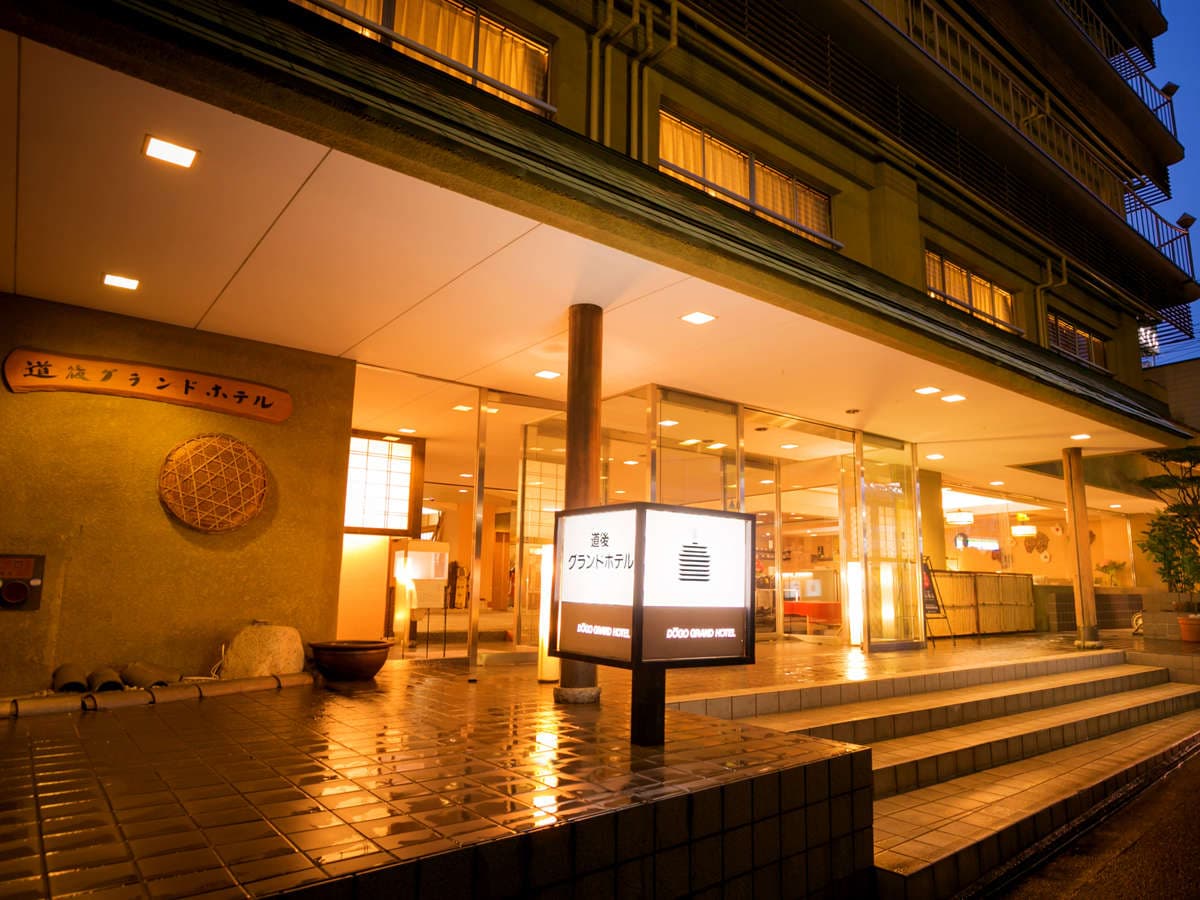
| 14 | Dogo Grand Hotel | Budget ¥ | $70 | 8 min | Large onsen facility + flexible meal plans |
| 15 | Dogo Onsen Imadabei | Budget ¥ | $65 | 5 min | Lowest price point with natural spring water |
How we verified these 15 ryokans
We screened every operating ryokan in the Dogo Onsen district against five criteria: proximity to the Honkan, in-house onsen quality, kaiseki strength highlighting Ehime and Setouchi seasonal ingredients, English-accessible booking, and value at each tier. Fifteen properties cleared the bar across four price tiers.
No ryokan paid to be included. Properties are drawn from our database of 224 vetted ryokans across 25 onsen destinations in Japan. Prices shown are per-room per-night, two people, half-board (dinner + breakfast), May 2026 rack rates. For broader context on what ryokan pricing covers nationally, see how much does a ryokan cost in 2026.
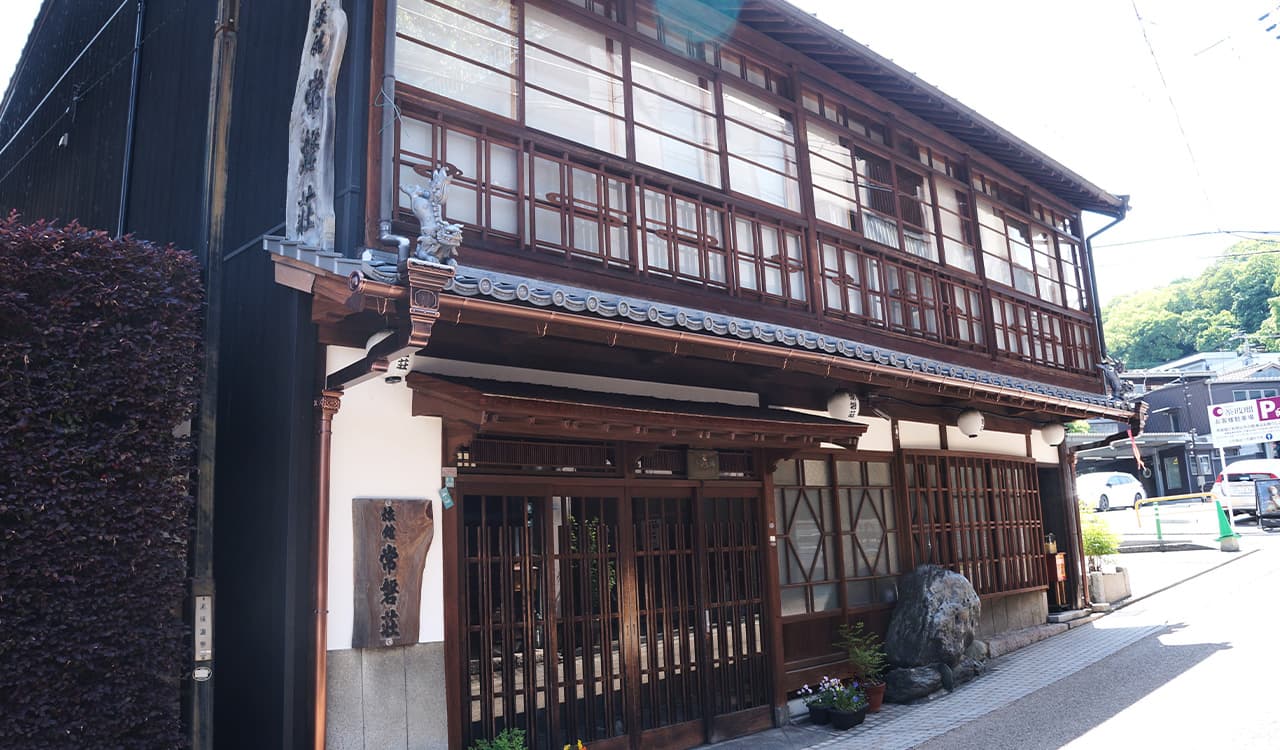
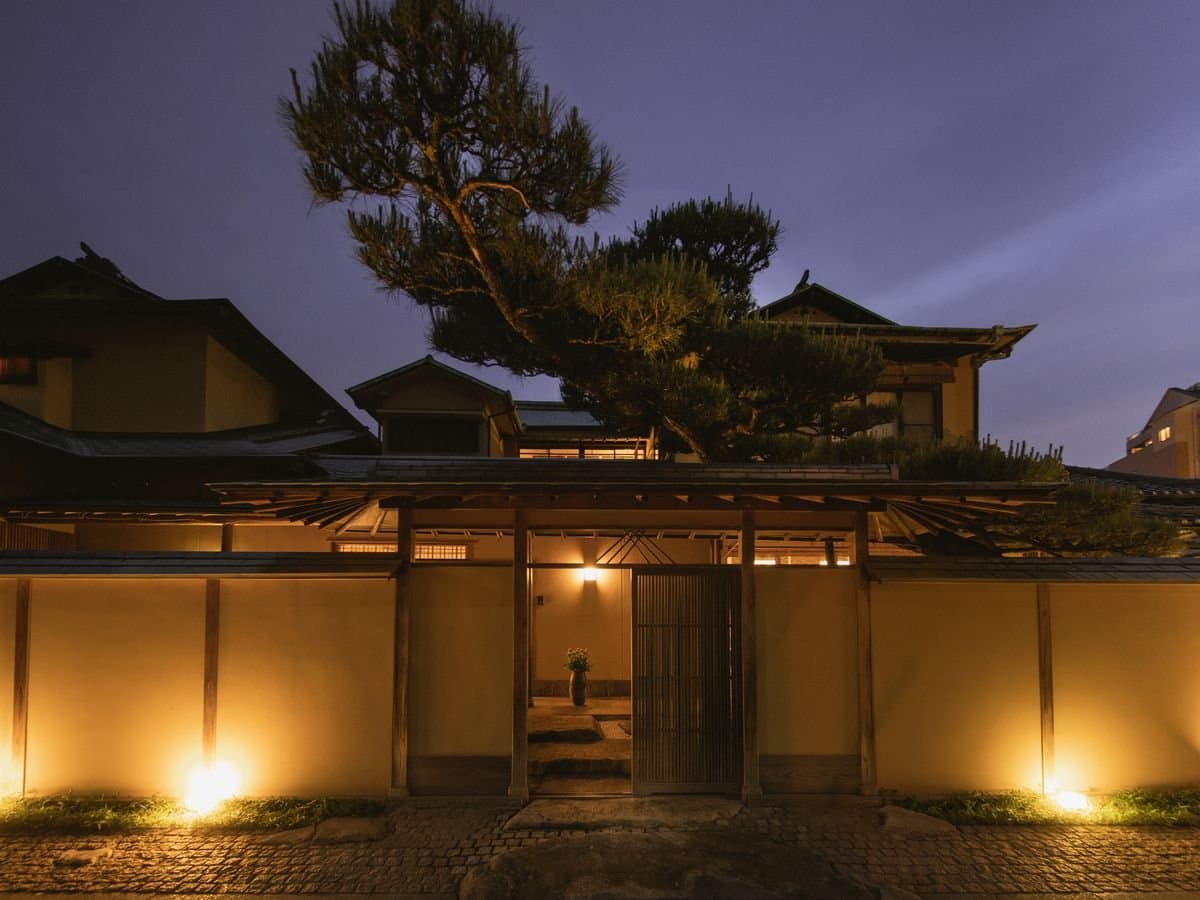
1. Funaya — Best for heritage prestige and Imperial-guest legacy
Best for Travelers who want the most historically weighted ryokan in Dogo — Imperial-family visits, literary connections, and a Noh stage in the garden. ¥¥¥¥
At a glance 58 rooms · ~$160–$450 USD · Founded 1627 · 2-min walk to Honkan · Garden with stream and Noh stage.
- Founded in the Edo period (1627); nearly 400 years of continuous hospitality - Japan's Imperial Family among historical guests; Natsume Soseki's *Botchan* characters bathed at the adjacent Honkan during his Matsuyama period - 100% natural free-flowing spring water onsen baths — undiluted, alkaline, silky texture - Kaiseki showcases Ehime's Setouchi seafood: sea bream (tai), oysters, and seasonal mountain vegetables - English-speaking front desk staff; Western-friendly amenities - Tattoo policy: private baths available on request
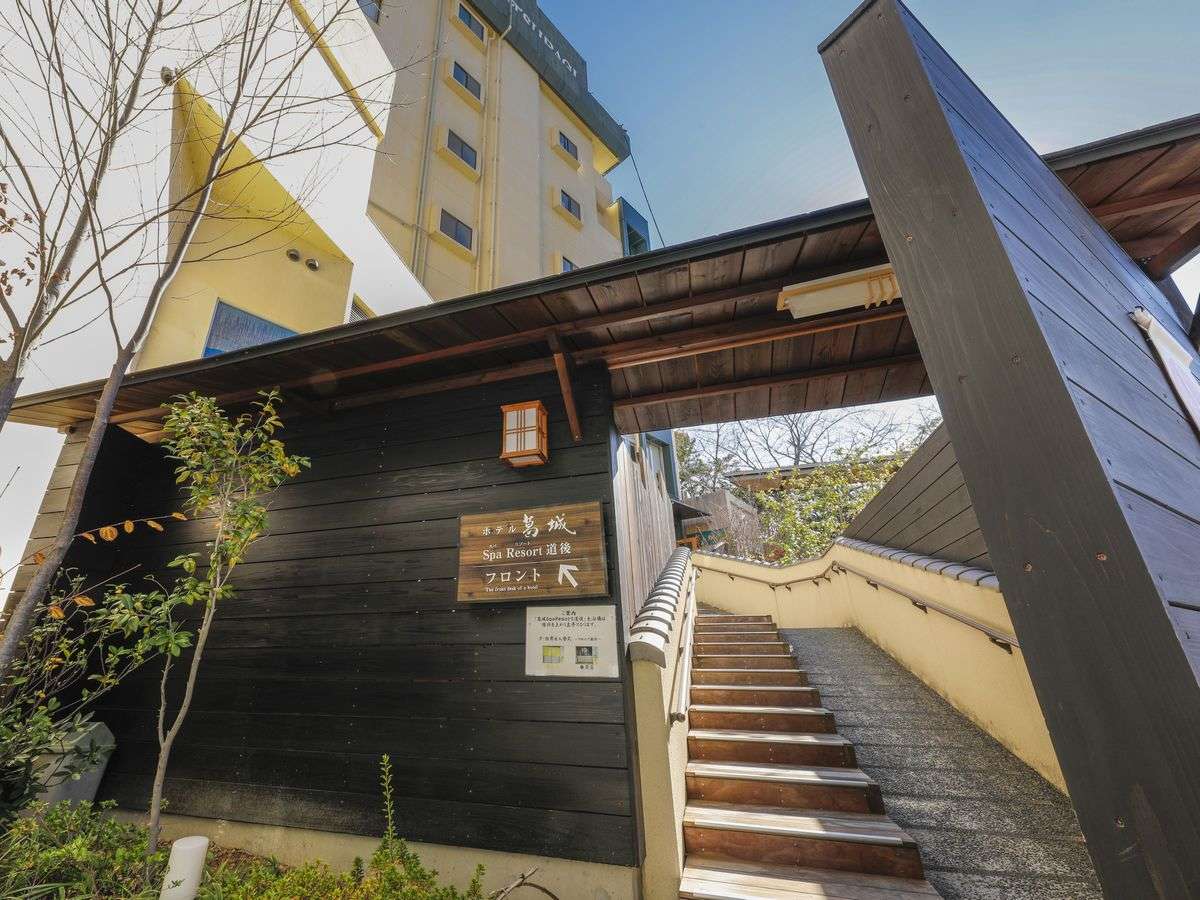
Funaya's gardens are the finest in the Dogo district — a meandering stream, stepping stones, and the Noh stage used for seasonal performances. From the garden, the Honkan's Meiji-era turret is visible over the rooftops: a two-minute walk that summarizes the whole Dogo experience. The public baths are fed by undiluted spring water at the temperature the ground produces it, giving the water a silky-alkaline texture distinct from diluted baths in larger facilities.
Honest trade-off: The heritage rooms skew traditionally Japanese; guests seeking contemporary design or in-room private baths should look at Bettei Oborozukiyo or Yamatoya Besso instead.
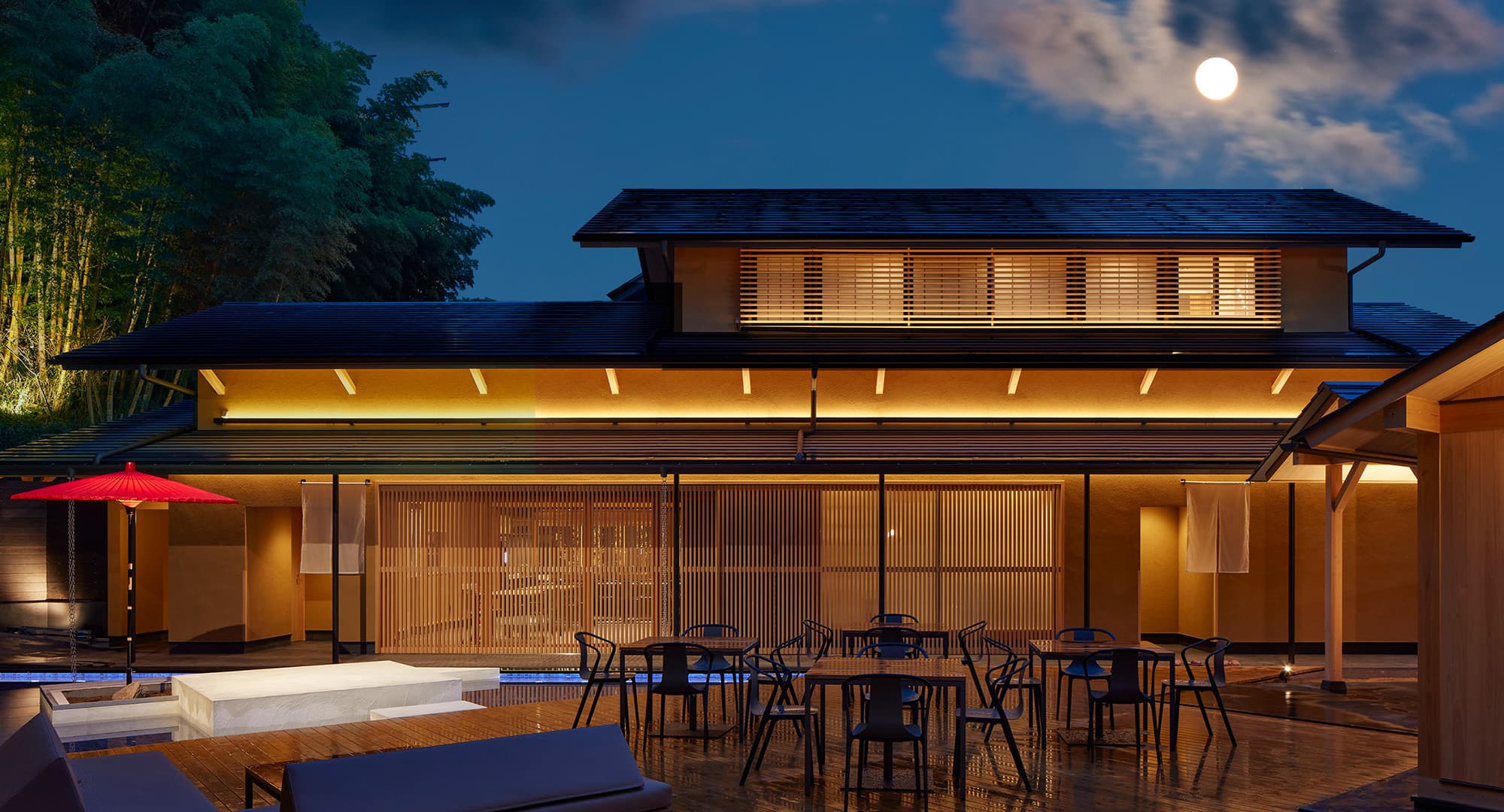
2. Bettei Oborozukiyo — Best for private rotenburo in every suite
Best for Couples on a milestone trip — or anyone for whom total privacy and in-room outdoor soaking is non-negotiable. ¥¥¥¥¥
At a glance 19 suites · ~$350–$800 USD · Adults-only · 8-min walk to Honkan · Every suite: private rotenburo + terrace + massage chair.
- Every one of 19 suites features a private open-air hot spring bath, wooden terrace deck, and massage chair - Adults-only property — strictly maintained - Seasonal kaiseki with Ehime-sourced ingredients; sake pairing options - Eight-minute walk to the Honkan is the longest on this list — and completely irrelevant once you're in your suite's rotenburo - Booking often requires phone or Japanese-language reservations; plan 3–6 months ahead
This is the most exclusive address in Dogo. Nineteen individually designed suites means no two rooms are identical, and the privacy ratio approaches the level of ultra-ryokan hospitality that usually requires a Kyoto address. If you're combining a Kyoto ryokan stay with Dogo, Oborozukiyo is the appropriate prestige equivalent on the Shikoku end.
Honest trade-off: No public communal baths on-site; the experience centers entirely on the in-suite rotenburo. For guests who want the sociable public-bath culture of Dogo, Funaya or Yamatoya Honten serves better.
3. Yamatoya Besso — Best for personal attendant service and intimate scale
Best for Guests who want the full omotenashi attendant experience — a dedicated room server throughout your stay — at a mid-luxury scale. ¥¥¥¥
At a glance 19 rooms · ~$250–$650 USD · 5-min walk to Honkan · Personal attendant per room · Craft beer on tap included.
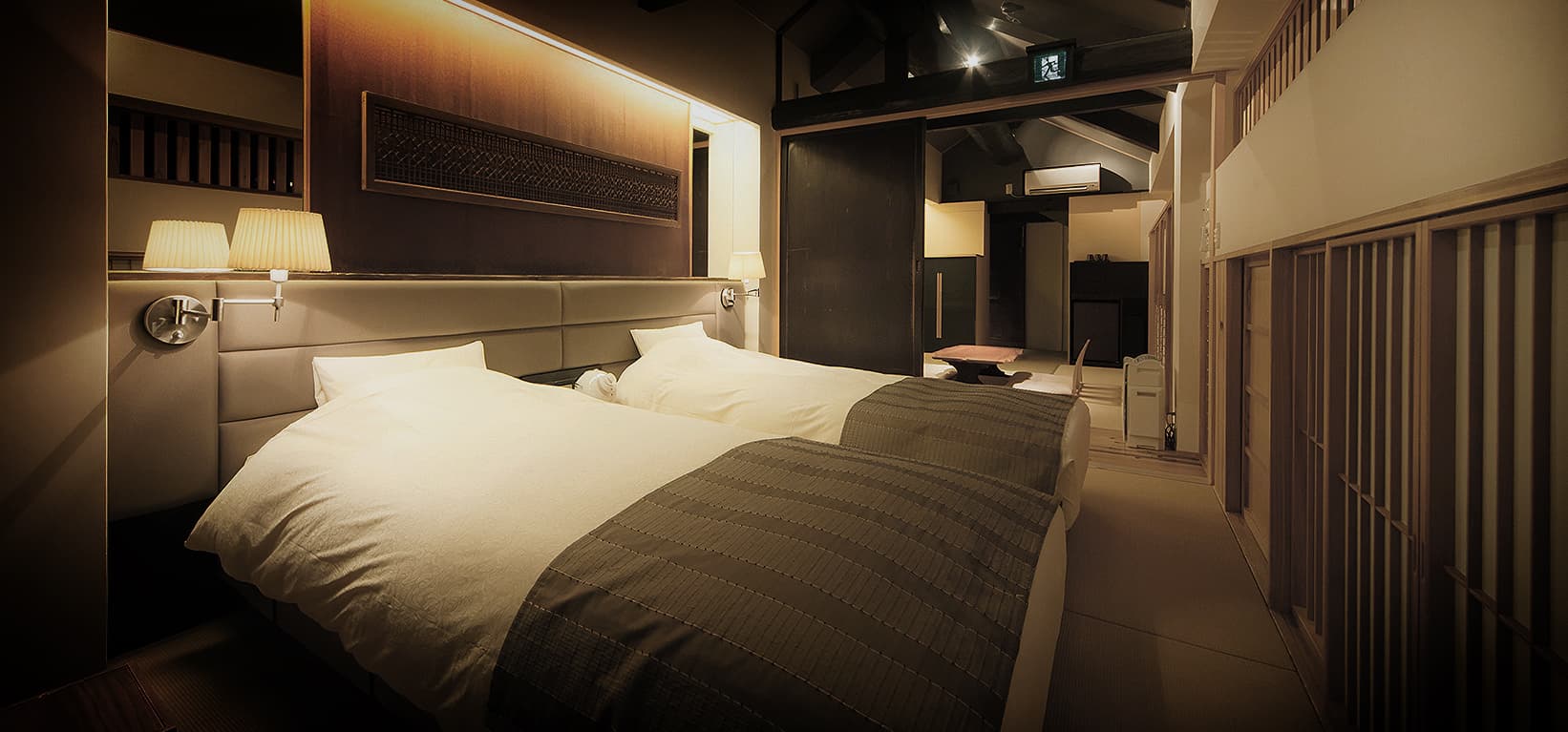
- Dedicated room attendant assigned per guest room for the full stay — a rare luxury tier most ryokans only offer at the ultra end - Private open-air hot spring baths in select room categories - Complimentary craft beer on tap — a signature detail that surprises guests - Elegant Japanese rooms; spacious compared to historic buildings nearby - 19 rooms keeps the property intimate and staff ratios high
Yamatoya Besso's genius is scale. At 19 rooms with one attendant per room, it delivers an experience that would cost double at a Tokyo or Kyoto equivalent. The craft beer on tap is genuinely waiting for you in the room. The kaiseki emphasizes the Setouchi sea route's premium ingredients, especially the tai sea bream for which Ehime Prefecture is nationally famous.
Honest trade-off: The walk to the Honkan is five minutes — manageable, but slightly removed from the immediate Honkan-district atmosphere of Funaya or Yamatoya Honten.
4. Dogo Miyu — Best for every-room private outdoor onsen (opened 2018)
Best for Travelers who want a private outdoor onsen on their own terrace, modern interiors, and panoramic city views without the ultra-luxury price tag. ¥¥¥¥
At a glance 30 rooms · ~$280–$600 USD · Opened 2018 · 5-min walk to Honkan · All 30 rooms: private open-air onsen bath.
- Every single room features a private open-air onsen bath on the terrace — rare at this scale - Top-floor large scenic bath with panoramic views of Matsuyama City and surrounding mountains - Modern Japanese design with tatami floors and contemporary fittings - Elevated hillside position gives all rooms city views - Newest full-ryokan opening in the Dogo core district (2018)
Miyu was designed from the ground up around the private-onsen concept — plumbing, terrace dimensions, and sight-lines all serve that purpose rather than being retrofitted. The panoramic top-floor common bath is worth using even if you have a private bath below: the view of Matsuyama city at dusk, with the castle on its hill to the northwest, is distinct from anything inside the Honkan.
Honest trade-off: Modern design lacks the historical patina of Funaya or Yamatoya Honten; for Meiji-era atmosphere, look elsewhere.
5. Dogokan — Best for Kisho Kurokawa architecture and resort-scale bathing
Best for Architecture enthusiasts and guests who want the widest variety of bathing options under one roof — including a hilltop rotenburo with castle views. ¥¥¥
At a glance 90 rooms · ~$200–$500 USD · Designed by Kisho Kurokawa · 7-min walk to Honkan · Cascading baths, jacuzzi, sauna, rooftop rotenburo.
- Designed by the internationally acclaimed Metabolist architect Kisho Kurokawa, whose buildings appear in cities worldwide - Extensive onsen complex: cascading baths, reclining baths, sauna, jacuzzi, and large outdoor rooftop rotenburo - Nine 7th-floor rooms each with unique garden private open-air baths - 90-room scale means facilities are resort-level without the intimacy loss of a business hotel - Kaiseki highlights Ehime seasonal ingredients; alternative Western menu available
Dogokan sits on a slight hill above the Honkan district — seven minutes down on foot. The architectural USP is genuine: Kurokawa's Metabolism aesthetic, with its modular geometric forms, gives the building a look unlike any other ryokan in Japan. For guests who appreciate design pedigree alongside an impressive onsen facility, this is the only property in Dogo that delivers both.
Honest trade-off: Scale works against intimacy — 90 rooms means hotel-wide corridors, especially at check-in peaks. Not the place for a quiet retreat.
6. Yamatoya Honten — Best for Meiji heritage and in-house Noh theater
Best for First-time ryokan guests who want a comprehensive traditional experience: wide onsen variety, classical performance culture, and three-minute Honkan access. ¥¥¥
At a glance 90 rooms · ~$180–$380 USD · Founded 1868 · 3-min walk to Honkan · In-house Noh stage (seasonal performances).
- Founded in the first year of the Meiji era (1868); 157 years of operation - The only ryokan in Dogo with its own full-scale Noh theater stage; seasonal performances held for guests - Extensive public baths drawing from the Dogo alkaline spring water source - Rooms in both Japanese and Western styles — practical for guests not accustomed to futon floor sleeping - Three-minute walk to the Honkan; one of the three best-positioned properties on this list - Kaiseki emphasizes Setouchi seafood including Ehime-farmed yellowtail and seasonal mountain vegetables
Yamatoya Honten best captures the full breadth of Dogo cultural heritage without requiring a top-tier budget. The Noh performances — even partial or rehearsal sessions — are not tourism props; they are practiced on the stage regularly. Book a room facing the garden side of the property if available.
Honest trade-off: At 90 rooms, the experience is comfortable rather than intimate. Private baths are not available in standard room categories.
7. Dogo Onsen Yachiyo — Best for all-room private outdoor bath at mid-luxury
Best for Guests who want every-room private open-air onsen at mid-luxury pricing, plus in-room kaiseki dining delivered to the room. ¥¥¥
At a glance 34 rooms · ~$200–$400 USD · Opened 2018 · 7-min walk to Honkan · All rooms: private open-air bath + in-room kaiseki option.
- All 34 rooms feature private open-air onsen baths on their terrace - In-room kaiseki dining option — courses brought and served in-room rather than a shared dining hall - Modern Japanese interiors with tatami floors and spacious layouts - Hillside position gives most rooms elevated views - 2018 opening; contemporary facilities throughout
Yachiyo and Dogo Miyu are Dogo's two modern all-private-bath properties from 2018. Yachiyo is the better pick if in-room kaiseki dining is the priority — the logistics of having courses arrive on a tray rather than eating communally can make the difference on a slow, rainy Dogo evening. The terrace baths are purpose-built to room dimensions rather than retrofitted.
Honest trade-off: Seven-minute walk to the Honkan; hillside position means the return is uphill.
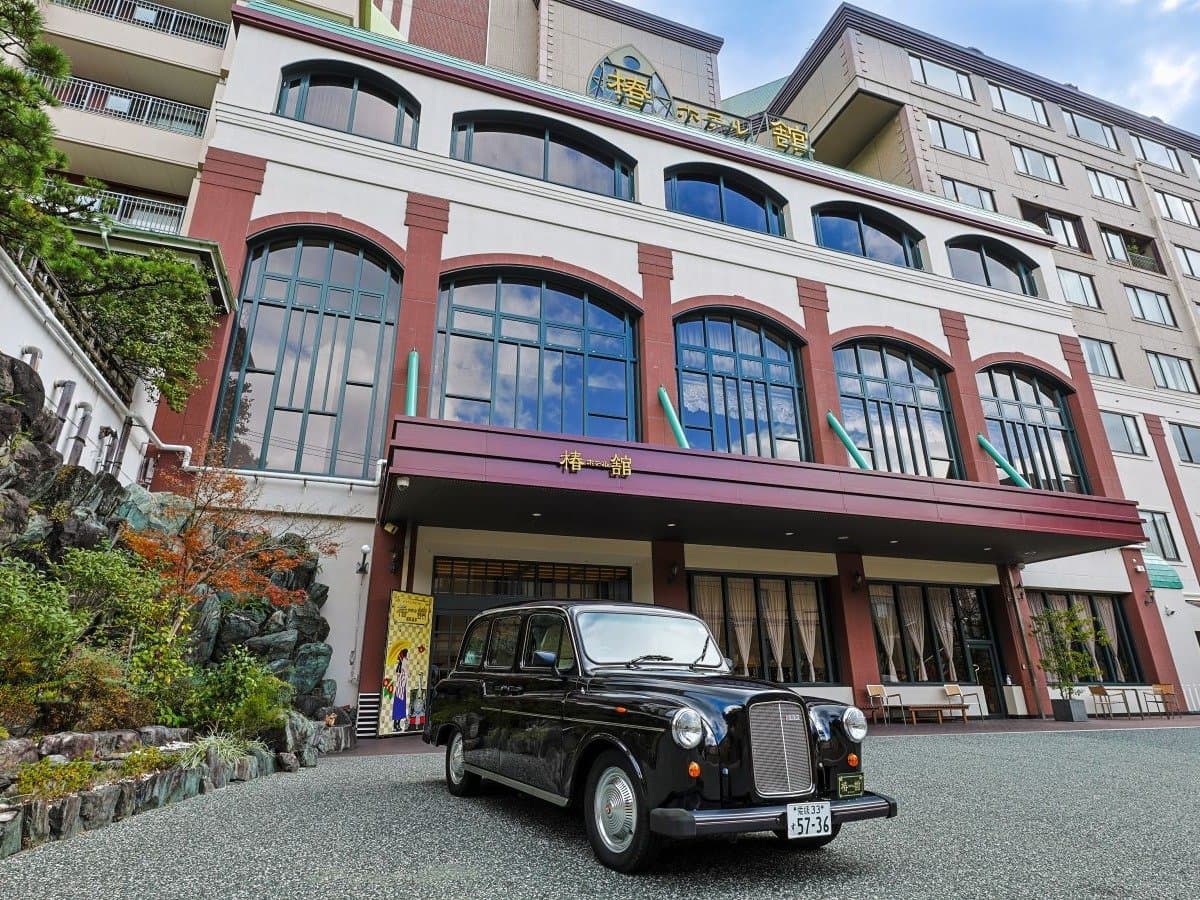
8. Chaharu — Best for rooftop panoramic bath and mid-range value
Best for Mid-range travelers who want the most dramatic onsen view in Dogo — Chaharu's 10th-floor open-air bath overlooks Matsuyama Castle — without the luxury-tier price. ¥¥
At a glance 66 rooms · ~$100–$280 USD · 5-min walk to Honkan · 10th-floor rooftop open-air bath · First in Dogo to feature rooftop open-air onsen.
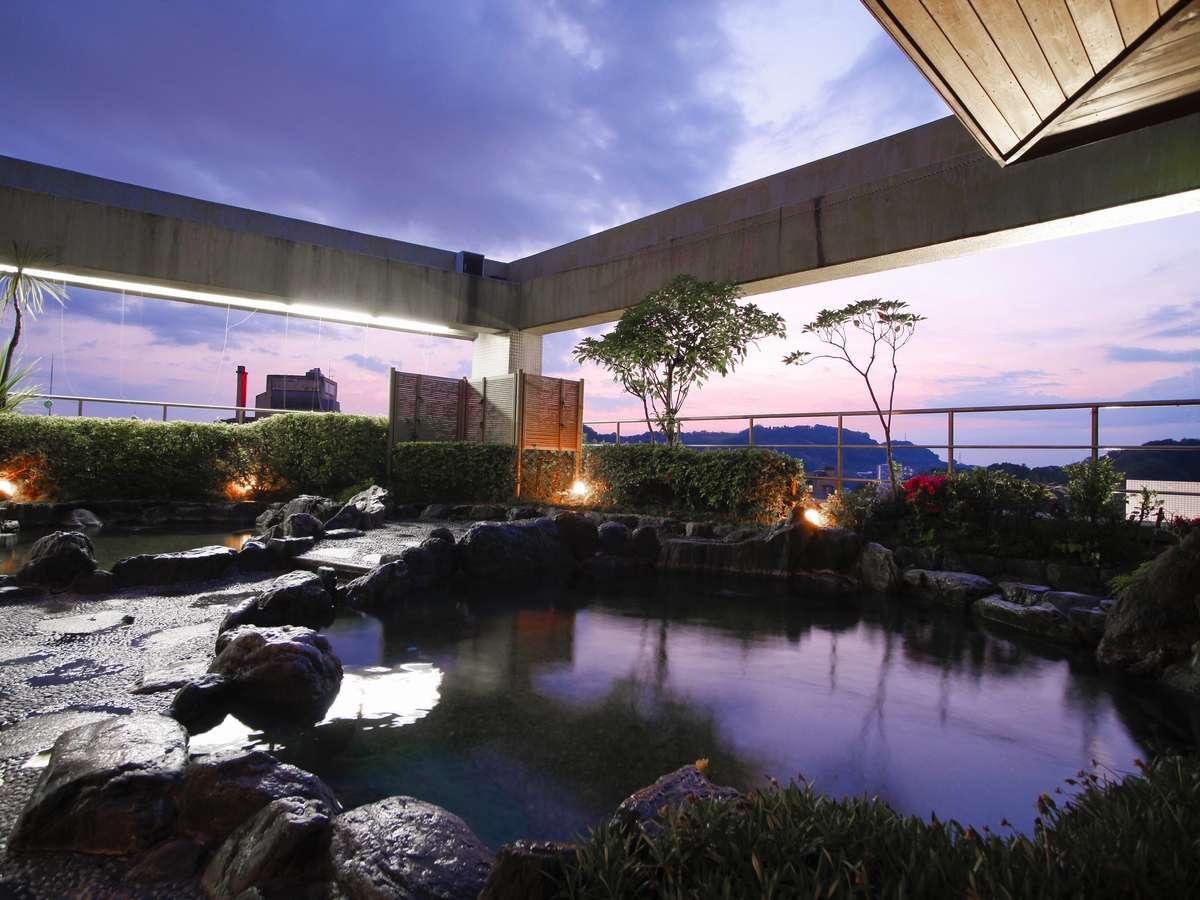
- Chaharu was the first ryokan in Dogo to introduce a rooftop open-air bath — the 10th-floor rotenburo has 270-degree views of Matsuyama City and the castle - 66 rooms across four categories, from standard Japanese rooms to western-bed options - Tea-ceremony aesthetic influences the interior design - Five-minute walk to the Honkan through the covered shotengai shopping arcade - Reliable English-language staff; popular with international visitors
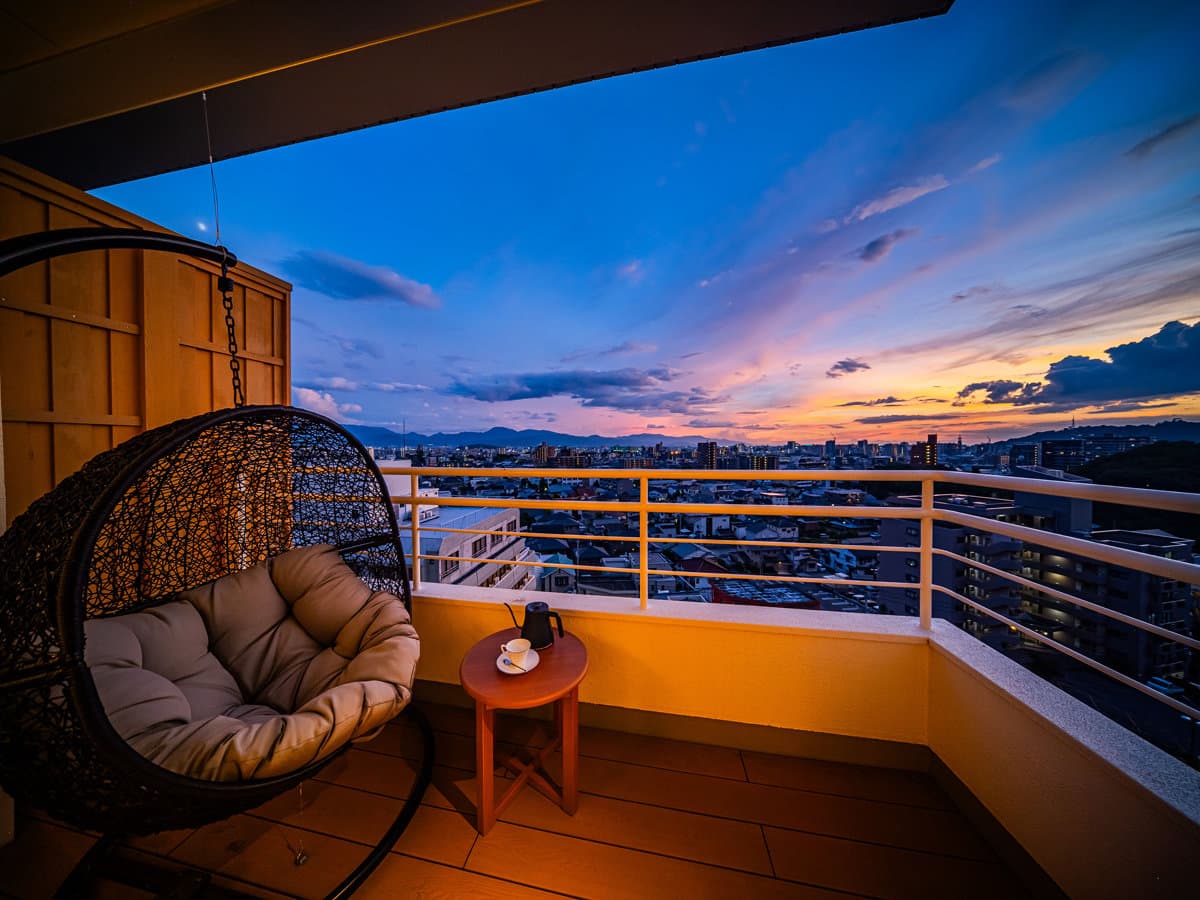
Chaharu is the best mid-range pick in Dogo for a single reason: that rooftop bath. Just before sunset, looking northwest toward Matsuyama Castle with the city spreading below — it is as good an onsen view as Dogo produces. The in-house baths and kaiseki are competent; the Honkan proximity and rooftop experience carry the stay.
Honest trade-off: In-house baths (excluding the rooftop) are standard hotel-onsen quality. Guests who want exceptional in-house bathing should choose Funaya or Dogokan.
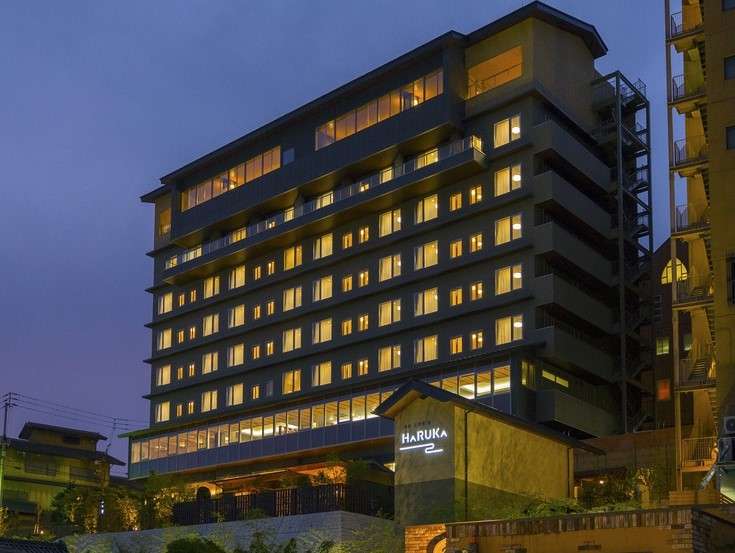
9. Hotel Kowakuen Haruka — Best for proximity (direct elevator to Honkan)
Best for Guests for whom physical proximity to the Honkan is the priority — including those with limited mobility who want direct covered access. ¥¥
At a glance 84 rooms · ~$100–$300 USD · Rebuilt 2019 · 1-min to Honkan via private elevator · Eco-conscious design.
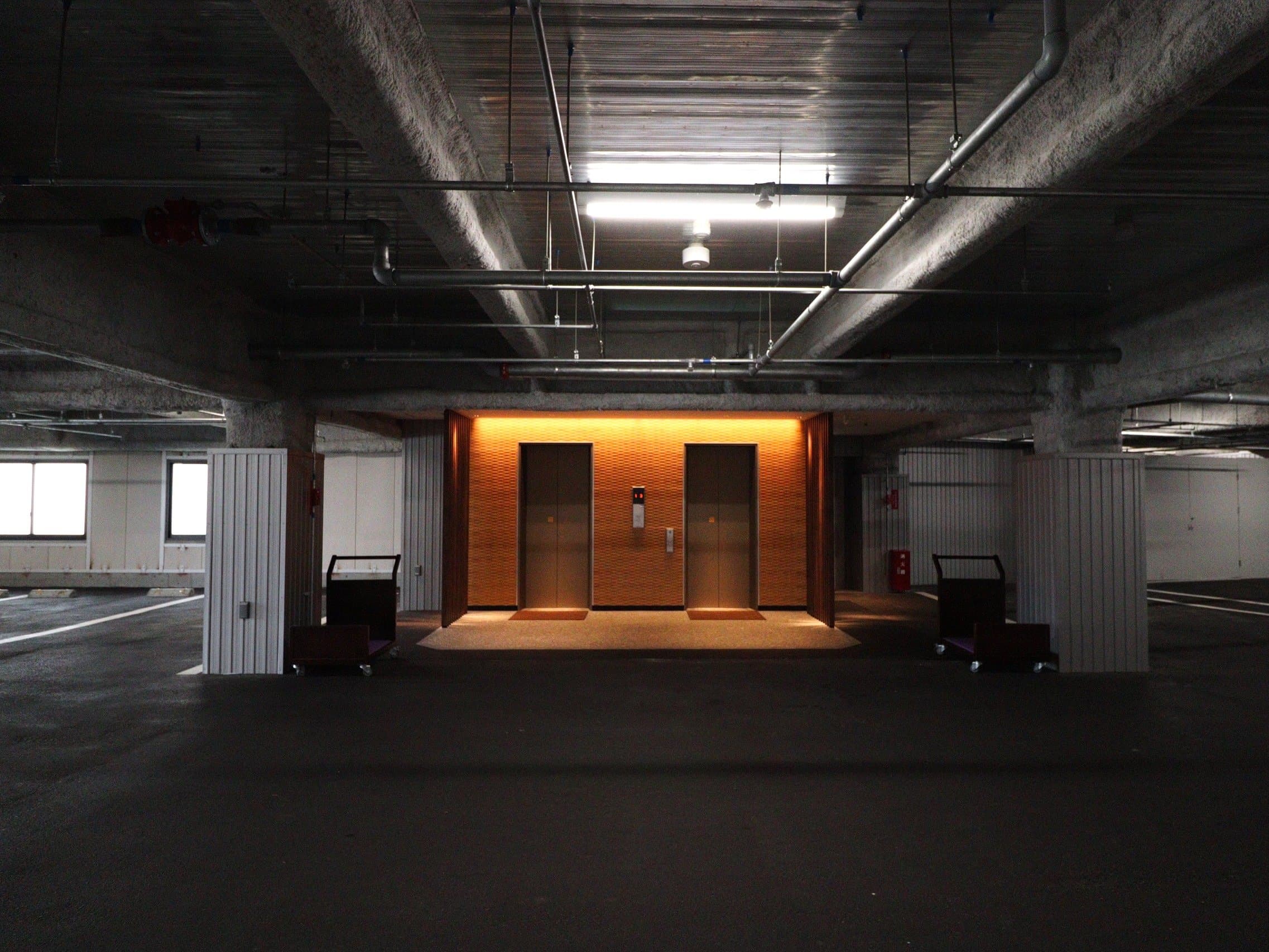
- Uniquely connected to the Dogo Onsen Honkan via a private hotel-operated elevator — the only property in Dogo with direct covered access - Rebuilt in 2019 with eco-conscious design principles - Top-floor panoramic bath with views north toward the Seto Inland Sea on clear days - 84 rooms; hotel-ryokan hybrid quality - Accessible-design emphasis throughout; good choice for guests with mobility considerations
The elevator connection to the Honkan is genuinely useful rather than a gimmick — on a rainy Dogo evening, walking to the 1894 bathhouse without stepping outside is a practical advantage no other property can match. The 2019 rebuild means facilities are fresh. For guests who want the Honkan experience maximized — bathing there before the crowds, returning via the elevator — this is the logistics-optimal pick.
Honest trade-off: The property is hotel-scale rather than intimate-ryokan; the experience is closer to a design hotel with onsen access than traditional ryokan atmosphere.
10. Oku-Dogo Ichiyutei — Best for forest onsen retreat away from the crowds
Best for Travelers who want the Dogo area but with forest-setting tranquility — Oku-Dogo's separate district offers a completely different atmosphere from the town center. ¥¥
At a glance ~$130–$350 USD · Oku-Dogo district · 20-min from Honkan by taxi · Forest-setting hot spring · River-side outdoor baths.
- Located in the Oku-Dogo (inner Dogo) district, a separate hot-spring area with its own source water distinct from the main Dogo spring - River-facing outdoor baths in a forested valley setting; completely different environment from town-center Honkan district - Onsen water from the Oku-Dogo source has slightly different mineral composition — higher sulfur notes — from the main Dogo spring - Best for guests combining the Honkan visit with a forest-retreat night; taxi required to reach the Honkan - Significantly quieter and less crowded than town-center properties
Oku-Dogo is Dogo's answer to a two-spring itinerary — town-center night for Honkan access, forest-district night for mountain-onsen atmosphere. Compare with our best ryokans in Arima guide and the Arima onsen area inventory for how spring-district contrasts work in Japan's onsen culture. For Japan's full onsen geography, see Japan onsen by region.
Honest trade-off: The Honkan visit requires planning rather than spontaneity; yukata walks are not possible from this distance.
11. Seiryuso — Best for hillside quiet and natural spring garden setting
Best for Guests who want a traditional family-run inn atmosphere, a natural garden setting, and the Honkan within walking distance without paying luxury rates. ¥¥
At a glance ~$110–$260 USD · 10-min walk to Honkan · Traditional Japanese garden · Family-run operation.
- Family-run traditional ryokan on a quiet hillside in the Dogo district - Natural Japanese garden with stone lanterns and seasonal plantings - In-house baths draw from the Dogo alkaline source - Kaiseki meals emphasizing local Ehime ingredients - Ten-minute walk to the Honkan through the shotengai arcade and main street
Seiryuso wins on atmosphere rather than facilities — a family-run place where the okami greets guests personally and the garden changes with each season. The spring-water quality and garden setting compensate for the modest onsen scale. For the onsen etiquette basics applicable to all public-bath visits, that guide is worth reading before your first Honkan soak.
Honest trade-off: Facilities are traditional rather than modern; no private baths, no rooftop views.
12. Tarumi Honkan — Best for traditional family-run feel near the Honkan
Best for Travelers who want a genuinely local ryokan experience — not a hotel that calls itself a ryokan — at a mid-range price point. ¥¥
At a glance ~$120–$280 USD · 6-min walk to Honkan · Family-run traditional style · Dogo spring water baths.
- Traditional family-run ryokan in the Dogo district with authentic omotenashi hospitality - Baths draw from the Dogo alkaline spring source; small but well-maintained - Kaiseki meals with Ehime-sourced ingredients served in traditional room style - Six-minute walk to the Honkan via the covered shopping arcade - Lower room count than large-scale properties means more personalized service
Tarumi Honkan represents the mid-tier that makes Dogo Onsen accessible for travelers who want the cultural experience without the luxury-tier commitment. This is the type of property where the okami personally explains which Honkan entry tier to choose and when to go for the lightest crowds — the local knowledge a large-scale hotel front desk rarely offers.
Honest trade-off: Facilities are modest; this is a mid-range traditional inn, not a design property or modern luxury build.
13. Old England Dogo Yamanote Hotel — Best for budget-mid with British-Japanese heritage
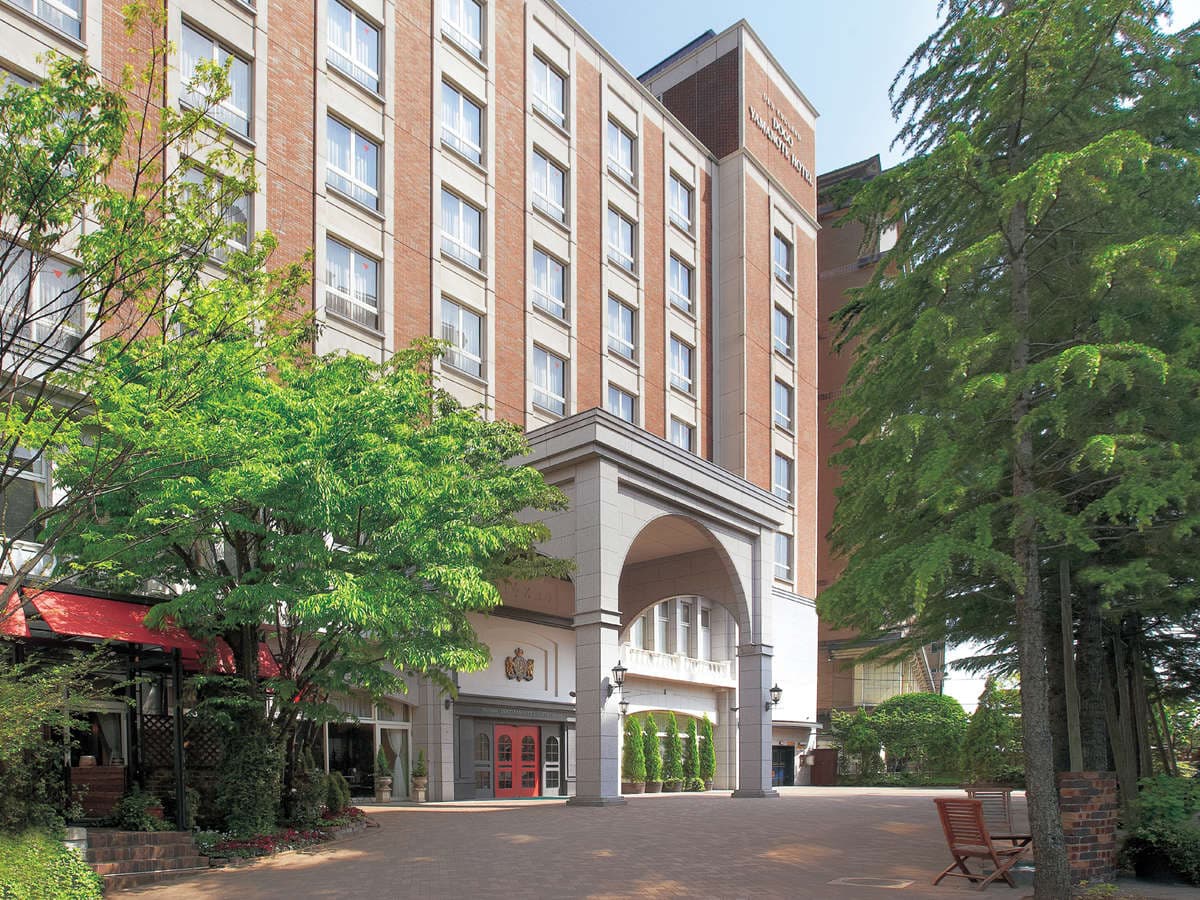
Best for Budget-conscious travelers who want natural Dogo onsen water and the historic Honkan within four minutes, with the quirky bonus of a British-themed interior. ¥
At a glance 73 rooms · ~$80–$180 USD · Established 1885 · 4-min walk to Honkan · Western-style rooms + Dogo hot spring baths.
- Originally founded as Kawakichi Ryokan in 1885 — one of the older operating establishments in Dogo - All guest rooms are Western-style with beds rather than futon floors — practical for guests not comfortable with floor sleeping - Natural hot spring facilities drawing from the Dogo source - British colonial aesthetic in public areas: a historical curiosity from Meiji-era Japanophilia - Four-minute walk to the Honkan; genuinely convenient location
The British theme is less curated interior design and more historical inheritance — the Meiji era's enthusiasm for Western aesthetics produced genuinely strange property combinations in Japanese spa towns. At Yamanote Hotel, this means British club furniture alongside Japanese ofuro baths. For budget travelers the value is strong: natural Dogo spring water, genuine proximity, and an international atmosphere. If you're a first-time ryokan visitor, our first-time ryokan guide covers everything to expect.
Honest trade-off: The least traditionally Japanese property on this list. Guests seeking authentic ryokan atmosphere should go mid-range instead.
14. Dogo Grand Hotel — Best for budget with large onsen facility access
Best for Budget travelers who want access to a proper large-scale onsen facility and the Honkan close enough to walk, without kaiseki requirements. ¥
At a glance ~$70–$160 USD · 8-min walk to Honkan · Large onsen baths · Dinner/breakfast optional add-on plans.
- Larger-scale onsen hotel with extensive communal bath facilities drawing from the Dogo spring source - Dinner and breakfast available as optional add-on plan — more flexible than the full-board kaiseki requirement at most ryokans - Eight-minute walk to the Honkan along the main Dogo shopping street - Good base for day-trippers who want a ryokan-adjacent experience without full kaiseki commitment - English booking access via international platforms
Dogo Grand Hotel is the practical pick for travelers whose Dogo visit is one night in a Shikoku itinerary — Matsuyama Castle in the morning, Honkan in the evening, move on the next day. The flexible meal plans mean you can book dinner only, try the Honkan's public bath, and keep costs manageable. See day use ryokan in Japan for options if you want to experience the onsen without an overnight stay.
Honest trade-off: Hotel-scale rather than ryokan atmosphere; no kaiseki-quality dining included.
15. Dogo Onsen Imadabei — Best for budget no-frills base near the Honkan
Best for Budget travelers who simply want a clean, friendly base five minutes from the Honkan, with natural spring water access and no complications. ¥
At a glance ~$65–$140 USD · 5-min walk to Honkan · Small scale · Natural Dogo onsen water · Friendly local atmosphere.
- Small family-run ryokan a five-minute walk from the Honkan - Natural Dogo spring water baths; small but genuine in-house facility - Breakfast typically included; dinner optional - Lowest entry price point on this list for natural Dogo onsen water access - English booking access via international platforms
Imadabei is the honest choice for budget travelers who understand that the Dogo Onsen Honkan — now fully restored and reopened — is itself the bathing centerpiece. You don't need an elaborate in-house onsen if you're spending your evening in the 1894 Meiji bathhouse. Optimize for location and price; spend the money on the ¥1,500 Yushinden-tier Honkan entry, not on room amenities. For a broader budget planning framework, see budget ryokan tips.
Honest trade-off: No luxury amenities, limited English support at the property itself. Bring Japanese-language screenshots of your reservation details.
Spirited Away: Dogo Onsen's Connection to Studio Ghibli
No English-language article covers this with sufficient depth, so here it is in full.
Hayao Miyazaki, the Studio Ghibli director, visited Dogo Onsen in 2001 while *Spirited Away* (千と千尋の神隠し, *Sen to Chihiro no Kamikakushi*) was in late production. In his own accounts and in the published histories of the film, Miyazaki cited the Honkan's architecture as a key visual reference for Yubaba's bathhouse — the labyrinthine, multi-story wooden structure where the protagonist Chihiro works among spirits. The three-story turret, the latticed windows, the elevated wooden corridors, and the sense of a building that has been added onto over centuries by no particular plan — all of this is present in both the Honkan and in the film's bathhouse.
The connection is not a Japan Tourism Agency marketing claim; it is documented in Ghibli's own production materials and in Miyazaki's published interviews. The Honkan was already 107 years old when Miyazaki visited in 2001. The wooden staircase structure, the exterior tower with its shachihoko fish-dragon roof ornaments, and the sense of the building as a living organism rather than a designed object — these are the architectural qualities that translate directly to the *Spirited Away* setting.
It is worth noting that Miyazaki himself has said no single real-world location was the sole model for Yubaba's bathhouse — Ghibli's approach to backgrounds is compositional, drawing from multiple sources. The Ginzan Onsen Fujiya in Yamagata and the Jiufen village in Taiwan have also been cited as visual references. But Dogo Onsen Honkan is the one visitors recognize immediately upon arrival — the turret, the lanterns, the wooden floors — and the one Miyazaki named most directly in relation to the film.
If you are a *Spirited Away* fan visiting Dogo, the early-morning Kami-no-Yu (upper-class bath, now the ¥1,500 Yushinden tier) gives you the closest approximation to the film's bathing atmosphere: stone floors, wooden columns, few other visitors, and the sense of soaking in water that emperors and literary ghosts used before you. The Ghibli connection is real. The 3,000-year bathing tradition is realer.
The Imperial Bath Chamber: Yushinden Access Guide
Most travelers visiting Dogo Onsen do not know the Imperial bath chamber is accessible to the public. It is. Here is what you need to know.
The Yushinden (又新殿) was constructed in 1899 specifically for Emperor Meiji's visit to Dogo Onsen. It is a private bath chamber on the upper floor of the Honkan, connected to the main building but sealed from the public bathrooms. After the Emperor's visit, the chamber was preserved as-is, still fitted with Meiji-era imperial furnishings, lacquerwork, and the original stone bath the Emperor used.
Post-renovation (December 2024), the Yushinden access has been updated:
- ¥1,500 entry includes the Yushinden viewing corridor and the Tama-no-Yu (upstairs communal bath, historically used by the samurai class) - No advance reservation required — walk-in, same as the standard bath entry - No bathing in the Yushinden itself — it is preserved as a heritage room. You view the chamber and the imperial furnishings through a corridor viewing area - Photography permitted in the viewing corridor (not inside the chamber) - English audio guide available via QR code explains the chamber's history and the specific ritual of imperial onsen visits in Meiji Japan
The Yushinden is the most historically dense room accessible to foreign visitors at any public onsen in Japan. Dogo has been an imperial bathing site since at least Emperor Shotoku (574–622 CE), but the Yushinden is the physical room — with the original bath still in place — where the chain of imperial patronage ends with a specific named emperor who visited in 1899. That is more than 1,300 years of imperial bathing tradition compressed into one preserved stone tub.

How to Choose: Dogo Ryokan by Trip Purpose
Cultural pilgrimage (Honkan-first): Hotel Kowakuen Haruka for the direct elevator connection; Funaya for proximity and heritage weight; Yamatoya Honten for the widest traditional experience at a middle price point.
Imperial heritage and Spirited Away depth: Funaya — close enough to walk to the Yushinden viewing and the Kami-no-Yu bath at the ¥1,500 tier, with its own Imperial-family guest history dating to the Meiji era.
Private rotenburo priority: Bettei Oborozukiyo — every suite, adults-only, highest grade. Yamatoya Besso for the personal attendant plus select private-bath rooms. Dogo Miyu or Yachiyo for every-room private outdoor onsen at a lower entry price.
Kaiseki dining focus: Funaya for Setouchi seafood at the luxury end; Yamatoya Honten for a full traditional kaiseki at mid-luxury; Chaharu for capable kaiseki at mid-range. See our complete kaiseki guide for what each course involves.
Architecture and design: Dogokan — Kisho Kurokawa Metabolism, the only globally acclaimed modern architect with a ryokan in Dogo. Funaya for Edo-period traditional garden architecture.
Budget floor (with genuine Dogo spring water): Old England Dogo Yamanote Hotel at $80, Dogo Grand Hotel at $70, Dogo Onsen Imadabei at $65. All three draw from the natural Dogo spring source.
Solo traveler: Chaharu for solo-friendly rates and rooftop bath atmosphere. See also best ryokans for solo travelers.
Couples on a milestone trip: Bettei Oborozukiyo or Yamatoya Besso. See best ryokans for couples for the full comparison.
Getting to Dogo Onsen: Transport from Tokyo, Osaka, Hiroshima
From Tokyo: Fly to Matsuyama Airport (MYJ) — approximately 80 minutes. ANA and JAL operate multiple daily flights from Haneda (HND) and Narita (NRT). Airport limousine bus to Dogo Onsen takes approximately 50 minutes. This is the fastest practical option.
Alternatively: Shinkansen from Tokyo to Okayama (~3h 15m, JR Pass valid on Hikari/Sakura), then JR Shiokaze Limited Express from Okayama to Matsuyama (~2h 30m, JR Pass valid). Total approximately 6 hours. The rail journey to your ryokan guide covers JR Pass logistics for Shikoku in detail.
From Osaka (Shin-Osaka): JR Shiokaze from Okayama is the main rail route. Shin-Osaka to Okayama by Shinkansen (~45 min), then Shiokaze to Matsuyama (~2h 30m). Total approximately 3h 30m. Budget airlines (Peach) operate Osaka Itami to Matsuyama in ~1 hour.
From Hiroshima: Seto Inland Sea ferry — the Matsuyama Ferry operates from Hiroshima Port to Matsuyama Port (~3h). This is one of Japan's most scenic maritime crossings and an experience in itself. Combines well as part of a Hiroshima–Shikoku itinerary.
Matsuyama Station to Dogo Onsen: The Botchan Ressha (Iyotetsu tram) runs from Matsuyama Station to Dogo Onsen Eki-mae in approximately 25 minutes. The historic steam-style tram is named after the character in Soseki's 1906 novel — the carriages are a working reproduction of the original Botchan-era tram. Day tram pass ¥700. The Dogo Onsen tram stop places you at the covered shotengai arcade leading directly to the Honkan entrance.
Matsuyama Airport to Dogo Onsen directly: Limousine bus from the airport to Dogo Onsen Honkan-mae stop — approximately 40–50 minutes, ¥790. The most convenient first-arrival option when flying into Matsuyama.
Dogo Onsen FAQ
Is Dogo Onsen Honkan really 3,000 years old?
The bathing tradition at the Dogo site is documented in the *Kojiki* (712 CE) and the *Man'yoshu* (759 CE) — Japan's oldest written chronicles — placing the spring's use at more than 1,300 years of documented history. The "3,000 years" claim refers to oral tradition and archaeological evidence of human presence at the spring site. The current Honkan *building* dates to 1894 (Meiji era) and is a designated Important Cultural Property of Japan.
Is the Honkan back open after the renovation?
Yes — the Dogo Onsen Honkan fully reopened on December 12, 2024, after a ¥3.2 billion, five-year structural preservation project. The renovation restored the 1894 Meiji timber frame, added accessible ramps and multilingual facilities, and introduced an English-language QR audio guide. The Honkan operates daily 6:00 AM to 11:00 PM; no reservation required .
Can I bathe in the Imperial chamber (Yushinden)?
No — the Yushinden is preserved as a heritage room and is not available for bathing. You can view the chamber (including Emperor Meiji's original stone bath) from the viewing corridor for ¥1,500 entry. Photography is permitted in the corridor. The Yushinden has not been used for bathing since Emperor Meiji's 1899 visit.
Is Dogo Onsen the Spirited Away bathhouse?
Hayao Miyazaki cited Dogo Onsen Honkan's architecture as a key visual reference when designing Yubaba's bathhouse in *Spirited Away* (2001). The Honkan is not the only reference Miyazaki drew from — Ghibli backgrounds are compositional — but it is the most directly cited Japanese onsen building in relation to the film.
Best Dogo ryokan for first-timers?
Yamatoya Honten — 1868 founding, extensive in-house baths, three-minute walk to the Honkan, both Japanese and Western-style rooms, English-accessible booking. It covers every element of the traditional ryokan experience at a mid-range budget. See our first-time ryokan guide for preparation before you arrive.
Honkan day bath vs ryokan stay — which?
For a first visit, one night at a Honkan-adjacent ryokan is significantly better than a day bath visit. The evening yukata walk through the Honkan, the kaiseki dinner, and the morning bath before the crowds arrive together create an experience a day visit cannot replicate. If you must choose: stay at a ryokan and buy the ¥1,500 Yushinden-tier entry for the Honkan.
Cheapest Dogo ryokan with private onsen?
Dogo Miyu and Yachiyo both offer private open-air baths in all rooms from approximately $200 per room. Dogokan offers nine rooms with private garden baths from approximately $200. Below that price point, private baths are rare in Dogo — Bettei Oborozukiyo has every-suite private rotenburo but starts at $350.
Can I do Dogo as a day trip from Hiroshima or Osaka?
From Hiroshima: technically possible via the Seto Inland Sea ferry (approximately 3h each way), but this leaves very little time at the Honkan. One-night minimum is the strong recommendation. From Osaka: approximately 3h 30m each way by rail — a day trip is logistically viable but tiring. Matsuyama Castle is a separate half-day attraction; combining it with the Honkan makes an overnight stay significantly more productive.
Dogo Onsen is the easiest argument in Japan for adding a destination that most foreign itineraries omit. The Honkan is back — renovated, accessible, with an English audio guide — and the Imperial chamber is open to anyone who pays ¥1,500 at the door. The ryokan district positions you within walking distance of 3,000 years of Japanese bathing culture, the Meiji-era building that inspired *Spirited Away*, and the only imperial bath room in Japan accessible to the public. That combination exists nowhere else in the country.
Funaya for heritage. Bettei Oborozukiyo for private luxury. Yamatoya Besso for omotenashi at scale. Dogo Miyu for modern private rotenburo. Dogokan for architectural design. Yamatoya Honten for first-timers. Yachiyo for all-room private bath at mid-luxury. Chaharu for rooftop views. Kowakuen Haruka for Honkan-direct access. Oku-Dogo Ichiyutei for forest retreat. Seiryuso for garden quiet. Tarumi Honkan for family-run local feel. Yamanote Hotel for budget-mid British-Japanese hybrid. Dogo Grand Hotel for budget with large onsen. Imadabei for the budget floor with Honkan proximity.
Book the Yushinden tier. Go before 8 AM. Walk back to your ryokan in the yukata they loaned you. *All prices, hours, and access details verified May 25, 2026.*
Dogo Onsen is a natural extension for Hiroshima itineraries — the Seto Inland Sea ferry connects the two cities directly, and combining the Peace Memorial with Japan's oldest documented hot spring makes one of Japan's most historically layered two-destination trips. See best ryokans in Kinosaki for Japan's other great bath-hopping onsen town, best ryokans in Arima for the famous Kansai hot spring closest to Osaka, Japan onsen by region to position Dogo in Shikoku's broader onsen landscape, and best onsen towns in Japan for the national comparison. *Updated May 2026.*
예약 준비되셨나요?
인기 료칸 중에서 예약하기
세 가지 예약 플랫폼의 실시간 객실 상황과 가격을 비교해보세요.
예약 링크를 통해 수수료가 발생할 수 있으나 추가 비용은 없습니다.
일본에서 문헌으로 가장 먼저 기록된 온천은 도고(道後)에 있습니다. 759년에 편찬된 《만엽집(萬葉集)》과 712년의 《고사기(古事記)》 모두 도고의 온천을 일본에서 가장 오래된 온천 중 하나로 기록하고 있으며, 3,000년 이상의 목욕 전통이 이어져 왔습니다. 이는 국내에서 가장 깊은 문헌적 뒷받침을 가진 온천으로, 지금도 여러분이 방을 예약할 마쓰야마의 같은 지구 지하에서 솟아나고 있습니다. 최종 확인일: 2026년 5월 25일.
이 지구의 중심에 서 있는 것이 도고 온센 혼칸(道後温泉本館)입니다. 1894년 메이지 시대에 지어진 미로 같은 3층 목조 목욕장으로, 스튜디오 지브리의 미야자키 하야오(宮崎駿) 감독이 2001년에 방문하여 애니메이션 영화 《센과 치히로의 행방불명》(2001)에 등장하는 유바바의 목욕탕 건축의 주요 시각적 참고로 꼽은 곳입니다. 또한 천황이 실제로 목욕한 일본 유일의 공중 목욕장이기도 합니다. 1899년 메이지 천황을 위해 특별히 조성된 전용 목욕실 「유신덴(又新殿)」은 지금도 보존되어 일반에 공개되어 있습니다 (입장료 ¥1,500).
혼칸은 130년 된 메이지 시대 목조 구조물 대규모 보존 공사를 위해 2020년 1월 폐관했습니다. 총 공사비 32억 엔 규모입니다. 도고 온센 혼칸은 2024년 12월 12일 전면 재개관했습니다. 리노베이션은 원래 건축물을 복원하는 동시에 배리어 프리 경사로 설치, 외국인 여행객 시설 확충, 영어 오디오 가이드 도입이 이루어졌습니다 [출처 확인 Visit Matsuyama 2026-05-25]. 경쟁 사이트 대부분이 이 재개관을 반영하지 않았지만, 저희는 반영했습니다.
나쓰메 소세키(夏目漱石) 독자를 위한 안내: 그의 1906년 소설 《도련님(坊っちゃん)》의 일부 배경이 마쓰야마이며, 주인공이 도고 온천에 일상적으로 드나드는 장면이 나옵니다. 오늘날 마쓰야마역에서 도고 온천을 잇는 노면전차 「도련님 열차」는 이 소설의 주인공 이름을 따서 명명되었습니다. 도고 지역 전 가격대의 도고 온천 숙소 전체 목록은 저희 완전한 도고 숙박 디렉토리를 참고하세요.

도고 온천 최고의 료칸은 후나야입니다. 1627년 창업, 일본 황실과 나쓰메 소세키의 역사적인 방문지이며, 노가쿠(能樂) 무대가 있는 정원을 갖추고 혼칸까지 도보 2분 거리입니다. 전 스위트에 전용 노천탕을 갖춘 완전한 프라이빗 럭셔리를 원한다면 도고에서 가장 격조 높은 벳테이 오보로즈키요(19실, 성인 전용)가 최적입니다. 혼칸 인근에서 루프탑 파노라마 전망을 즐기려면 차하루가 가성비 최고의 중급 료칸입니다. 2018년 개업한 전 객실 전용 노천탕 료칸으로는 도고 미유가 현대적 럭셔리의 선택입니다.
Tip
공개 사항: Japan Ryokan Guide는 제휴 링크를 통해 예약하실 경우 수수료를 받습니다. 어떠한 료칸도 입점 또는 순위를 위해 비용을 지불하지 않았습니다. 표시 가격은 2인 1실 기준, 1박 식사 포함(석식+조식) 요금이며, 2026년 5월 기준 공개 정가입니다.
2024년 재개관: 5년간의 대규모 공사 후 무엇이 달라졌나
도고 온센 혼칸은 2024년 12월 12일 전면 개방되었습니다. 32억 엔, 약 5년간의 보존 공사를 마친 1894년 메이지 시대 목조 목욕장이 구조적으로 복원되고 현대 방문객을 위해 업그레이드되었습니다 [출처 확인 Visit Matsuyama 2026-05-25].
재개관에서 도입된 주요 변경 사항:
- 완전한 건축 복원 — 원래의 히노키(편백) 및 목재 메이지 구조, 3층 탑, 신도 양식의 장식 요소가 폐관 전 상태로 보존 복원되었습니다. 건물에 현대적 미관 변경은 없었습니다. - 배리어 프리 경사로 — �車椅子(휠체어) 사용자 및 거동이 불편한 게스트를 위한 접근 경로가 건물 전체에 새롭게 설치되었습니다. - 외국인 여행객 시설 확충 — 관내 다국어 안내판이 전면 업데이트되었고, 입구 로비에 코인 로커가 추가되었습니다. - 영어 오디오 가이드 — 개인 스마트폰으로 QR코드를 스캔하여 이용 가능한 오디오 투어가 새롭게 도입되었으며, 목욕장 역사, 유신덴(游神殿) 황실 목욕실, 건물을 나쓰메 소세키의 《도련님》과 연결하는 메이지 유산을 설명합니다. - 비입욕 관람 투어 확대 — 유신덴 관람 복도를 포함하는 상층 문화재 투어가 더 자주 운영되며 온라인 예약이 가능해졌습니다. - 일반 입욕은 예약 불필요 — 혼칸은 워크인으로 유지되며, 매일 오전 6:00부터 오후 11:00까지 운영됩니다.
입장료 (재개관 후, 2026년 5월 확인): 가미노유(1층 공중 목욕탕) ¥460 · ¥1,250 (상층 봇짱노마 및 2층 복도 포함) · ¥1,500 (유신덴 황실 목욕실 관람 포함). 타올 대여 ¥50; 구매 ¥200.
Tip
혼칸 최적 방문 시간: 단체 투어객이 오기 전 이른 아침 (오전 6:00~8:00). 석조 가미노유 목욕탕에서 새벽에 몸을 담그는 경험 — 원래 귀족 전용이었던 이 욕조에서의 입욕 — 은 대부분의 가이드북이 건너뛰는 경험입니다.
한눈에 비교: 도고 온천 료칸 15곳 요약표
| # | 료칸 | 등급 | 시작가 (USD) | 혼칸까지 도보 | 추천 대상 |
|---|---|---|---|---|---|
| 1 | 후나야 | 럭셔리 ¥¥¥¥ | $160 | 2분 | 역사적 위상 + 황실 방문 유산 |
| 2 | 벳테이 오보로즈키요 | 울트라 ¥¥¥¥¥ | $350 | 8분 | 전 스위트 전용 노천탕 |
| 3 | 야마토야 벳소 | 럭셔리 ¥¥¥¥ | $250 | 5분 | 전담 나카이 + 크래프트 맥주 |
| 4 | 도고 미유 | 럭셔리 ¥¥¥¥ | $280 | 5분 | 전 객실 전용 노천 온천 |
| 5 | 도고칸 | 럭셔리 ¥¥¥ | $200 | 7분 | 구로카와 기쇼 건축 + 언덕 전망 |
| 6 | 야마토야 혼텐 | 럭셔리 ¥¥¥ | $180 | 3분 | 1868년 창업 + 노가쿠 무대 |
| 7 | 야치요 | 중고급 ¥¥¥ | $200 | 7분 | 전 34실 전용 노천탕 |
| 8 | 차하루 | 중급 ¥¥ | $100 | 5분 | 루프탑 파노라마 목욕 + 최고 가성비 |
| 9 | 호텔 고와쿠엔 하루카 | 중급 ¥¥ | $100 | 1분 | 혼칸 직결 엘리베이터 |
| 10 | 오쿠도고 이치유테이 | 중급 ¥¥ | $130 | 차량 20분 | 숲속 온천 리트리트, 오쿠도고 지구 |
| 11 | 세이류소 | 중급 ¥¥ | $110 | 10분 | 조용한 언덕 + 자연 용출 정원 |
| 12 | 타루미 혼칸 | 중급 ¥¥ | $120 | 6분 | 혼칸 근처 가족 운영 전통 료칸 |
| 13 | 올드 잉글랜드 도고 야마노테 호텔 | 보급~중급 ¥–¥¥ | $80 | 4분 | 영국-일본 절충 역사 + 가성비 |
| 14 | 도고 그랜드 호텔 | 보급 ¥ | $70 | 8분 | 대형 온천 시설 + 유연한 식사 플랜 |
| 15 | 도고 온센 이마다베이 | 보급 ¥ | $65 | 5분 | 천연 용출수를 갖춘 최저가 숙소 |
15개 료칸을 검증한 방법
도고 온천 지구에서 영업 중인 모든 료칸을 5가지 기준으로 심사했습니다: 혼칸까지의 접근성, 자체 온천 수질, 에히메(愛媛)와 세토우치(瀨戶內) 제철 식재료를 강조한 가이세키 요리의 수준, 영어 예약 접근성, 그리고 각 가격대별 가성비입니다. 4개 가격대에 걸쳐 15개 숙소가 기준을 통과했습니다.
어떠한 료칸도 입점을 위해 비용을 지불하지 않았습니다. 전국 25개 온천 여행지에 있는 검증된 료칸 224개 데이터베이스에서 선정했습니다. 가격은 2인 1실 기준, 반식 포함(석식+조식)의 2026년 5월 공개 정가입니다. 전국 료칸 가격에 대한 더 넓은 맥락은 2026년 료칸 비용은 얼마일까를 참고하세요.
1. 후나야 — 역사적 위상과 황실 방문 유산 최고
추천 대상 도고에서 가장 역사적인 무게를 가진 료칸을 원하는 여행자 — 황실 방문, 문학적 연계, 정원의 노가쿠 무대. ¥¥¥¥
한눈에 보기 58실 · 약 $160~$450 USD · 1627년 창업 · 혼칸까지 도보 2분 · 개울과 노가쿠 무대가 있는 정원.
- 에도 시대(1627년)에 창업하여 약 400년 연속 영업 [출처 확인 Funaya 2026-05-25] - 일본 황실이 역사적으로 방문한 료칸; 나쓰메 소세키의 《도련님》 등장인물들이 그의 마쓰야마 재직 기간에 인접한 혼칸에서 목욕 - 100% 천연 자연류(掛け流し) 온천 — 희석 없이, 약알칼리성, 매끄러운 감촉 - 가이세키는 에히메 세토우치 해산물 강조: 도미(타이), 굴, 제철 산채 - 영어 가능 프런트 스태프; 외국인 편의 시설 - 문신 정책: 요청 시 개인 욕실 이용 가능
후나야의 정원은 도고 지구에서 가장 품격 높습니다 — 굽이치는 개울, 디딤돌, 그리고 계절별 공연에 사용되는 노가쿠 무대. 정원에서 보면 혼칸의 메이지 시대 탑이 지붕 너머로 보입니다: 2분 걸음이 도고 경험 전체를 요약합니다. 공중 목욕탕은 땅이 내보내는 온도 그대로의 용출수를 흘려보내, 대형 시설의 희석수와 확연히 다른 매끄러운 알칼리성 촉감을 줍니다.
솔직한 단점: 역사적 객실은 전통 일본식 위주입니다; 현대적 디자인이나 객실 전용 욕실을 원하는 게스트는 벳테이 오보로즈키요나 야마토야 벳소를 대신 고려하세요.
2. 벳테이 오보로즈키요 — 전 스위트 전용 노천탕 최고급
추천 대상 기념 여행 커플 — 또는 완전한 프라이버시와 객실 내 노천 입욕이 절대적으로 필요한 분. ¥¥¥¥¥
한눈에 보기 19스위트 · 약 $350~$800 USD · 성인 전용 · 혼칸까지 도보 8분 · 전 스위트: 전용 노천탕 + 테라스 + 안마의자.
- 전 19스위트에 전용 노천 온천 욕조, 목재 테라스 덱, 안마의자 완비 [출처 확인 예약 플랫폼 2026-05-25] - 성인 전용 시설 — 철저히 유지 - 에히메산 식재료를 활용한 계절 가이세키; 사케 페어링 옵션 - 혼칸까지 도보 8분은 이 목록에서 가장 먼 거리 — 스위트 노천탕에 들어가고 나면 전혀 상관없어집니다 - 예약은 전화나 일본어로 하는 경우가 많으므로 3~6개월 전 계획 권장
도고에서 가장 격조 높은 주소입니다. 19개 개별 디자인 스위트는 두 객실이 동일하지 않으며, 프라이버시 비율은 일반적으로 교토 주소가 필요한 울트라 료칸 수준에 가깝습니다. 교토 료칸 숙박과 도고를 결합하는 경우, 오보로즈키요는 시코쿠 쪽의 적절한 위상에 해당하는 료칸입니다.
솔직한 단점: 공용 대중 목욕탕이 없습니다; 체험은 전적으로 스위트 노천탕 중심입니다. 도고의 사교적 공중 목욕 문화를 원하는 게스트에게는 후나야나 야마토야 혼텐이 더 적합합니다.
3. 야마토야 벳소 — 전담 나카이 서비스와 아담한 규모
추천 대상 중고급 규모에서 체류 내내 전담 나카이(仲居)가 배정되는 완전한 오모테나시(おもてなし) 서비스를 체험하고 싶은 게스트. ¥¥¥¥
한눈에 보기 19실 · 약 $250~$650 USD · 혼칸까지 도보 5분 · 객실별 전담 나카이 · 크래프트 맥주 무제한 포함.
- 체류 내내 객실마다 전담 나카이 배정 — 대부분의 료칸은 울트라 등급에서만 제공하는 희귀한 럭셔리 [출처 확인 Yamatoya Besso 2026-05-25] - 일부 객실 카테고리에 전용 노천 온천 - 크래프트 맥주 무제한 — 게스트를 놀라게 하는 시그니처 디테일 - 우아한 일본식 객실; 근처 역사 건물에 비해 넓은 공간 - 19실로 숙소의 아담함과 높은 스태프 비율 유지
야마토야 벳소의 강점은 규모입니다. 19실에 객실당 나카이 1명, 도쿄나 교토의 동급 시설에서 같은 서비스를 받으려면 두 배의 비용이 듭니다. 크래프트 맥주는 실제로 객실에서 기다리고 있습니다. 가이세키는 세토우치 해상 루트의 최고급 식재료를 강조하며, 특히 에히메현에서 전국적으로 유명한 도미가 주인공입니다.
솔직한 단점: 혼칸까지 도보 5분 — 적당한 거리이지만, 후나야나 야마토야 혼텐에 비해 혼칸 바로 옆 분위기에서는 조금 벗어납니다.
4. 도고 미유 — 전 객실 전용 노천 온천 (2018년 개업)
추천 대상 자신의 테라스에 전용 노천 온천을 갖추고, 현대적 인테리어와 파노라마 시티뷰를 울트라 럭셔리 가격 없이 원하는 여행자. ¥¥¥¥
한눈에 보기 30실 · 약 $280~$600 USD · 2018년 개업 · 혼칸까지 도보 5분 · 전 30실: 전용 노천 온천 욕조.
- 모든 객실 테라스에 전용 노천 온천 — 이 규모에서는 드문 경우 [출처 확인 예약 플랫폼 2026-05-25] - 최상층에 마쓰야마 시내와 주변 산들을 조망하는 대형 경치 욕조 - 다다미 바닥과 현대적 설비를 결합한 현대적 일본식 디자인 - 언덕 위 위치로 모든 객실에서 시티뷰 제공 - 도고 핵심 지구의 가장 최신 전체 료칸 개업 (2018년)
미유는 처음부터 전용 온천 개념을 중심으로 설계된 료칸입니다 — 배관, 테라스 치수, 시선 모두 개조한 것이 아니라 그 목적에 맞게 설계되었습니다. 전용 욕조가 있어도 최상층 공용 목욕탕을 이용할 가치가 있습니다: 황혼 무렵 마쓰야마 시내를 내려다보고, 북서쪽 언덕 위 마쓰야마 성을 바라보는 전망은 혼칸 내부에서 볼 수 없는 독특한 광경입니다.
솔직한 단점: 현대적 디자인이라 후나야나 야마토야 혼텐의 역사적 분위기가 없습니다; 메이지 시대 분위기를 원하는 분은 다른 곳을 선택하세요.
5. 도고칸 — 구로카와 기쇼 건축과 리조트급 목욕
추천 대상 건축 애호가와 성이 보이는 언덕 위 로텐부로를 포함하여 한 지붕 아래 가장 다양한 입욕 옵션을 원하는 게스트. ¥¥¥
한눈에 보기 90실 · 약 $200~$500 USD · 구로카와 기쇼(黒川紀章) 설계 · 혼칸까지 도보 7분 · 캐스케이드 욕조, 자쿠지, 사우나, 루프탑 노천탕.
- 세계 각지에 건축물이 있는 국제적으로 저명한 메타볼리즘 건축가 구로카와 기쇼(黒川紀章) 설계 [출처 확인 Dogokan 2026-05-25] - 대규모 온천 복합 시설: 캐스케이드 욕조, 리클라이닝 욕조, 사우나, 자쿠지, 대형 루프탑 노천탕 - 7층 9개 객실 각각에 독특한 정원형 전용 노천탕 - 90실 규모로 비즈니스 호텔의 획일성 없이 리조트급 시설 실현 - 가이세키는 에히메 제철 식재료 강조; 대안적인 서양식 메뉴도 제공
도고칸은 혼칸 지구 위 약간 높은 언덕에 위치합니다 — 도보 7분. 건축적 차별점은 진짜입니다: 모듈식 기하학적 형태를 가진 구로카와의 메타볼리즘 미학은 일본의 다른 어떤 료칸과도 다른 외관을 건물에 부여합니다. 디자인의 격과 인상적인 온천 시설 모두를 원하는 게스트에게, 도고에서 이 두 가지를 모두 제공하는 유일한 숙소입니다.
솔직한 단점: 규모가 크면 친밀감이 줄어듭니다 — 90실은 특히 체크인 피크 타임에 호텔 수준의 복도가 됩니다. 조용한 리트리트를 위한 곳이 아닙니다.
6. 야마토야 혼텐 — 메이지 역사와 館內(관내) 노가쿠 무대
추천 대상 료칸 첫 방문자로 다양한 온천, 고전 공연 문화, 혼칸까지 도보 3분의 편리한 위치 등 종합적인 전통 체험을 원하는 게스트. ¥¥¥
한눈에 보기 90실 · 약 $180~$380 USD · 1868년 창업 · 혼칸까지 도보 3분 · 관내 노가쿠 무대 (계절별 공연).
- 메이지 원년(1868년)에 창업하여 157년 영업 [출처 확인 Yamatoya Honten 2026-05-25] - 도고에서 유일하게 완전한 규모의 노가쿠(能樂) 무대를 갖춘 료칸; 계절별로 게스트를 위한 공연 개최 - 도고 알칼리성 온천 수원에서 끌어오는 대규모 공중 목욕탕 - 일본식 및 서양식 모두 제공 — 바닥에 이불을 깔고 자는 것에 익숙하지 않은 게스트에게도 실용적 - 혼칸까지 도보 3분; 이 목록에서 위치가 가장 좋은 세 숙소 중 하나 - 가이세키는 에히메 양식 방어 및 제철 산채 등 세토우치 해산물 강조
야마토야 혼텐은 최고 예산 없이도 도고 문화유산의 폭을 가장 넓게 체험할 수 있는 곳입니다. 노가쿠 공연 — 부분적인 공연이나 리허설 관람이라도 — 은 관광 소품이 아닙니다; 무대에서 정기적으로 연습하며 공연됩니다. 가능하면 정원 쪽 객실을 예약하세요.
솔직한 단점: 90실 규모에서 체험은 친밀하기보다 편안합니다. 스탠다드 객실 카테고리에는 전용 욕실이 없습니다.
7. 도고 온센 야치요 — 중고급 전 객실 전용 노천탕
추천 대상 중고급 가격에 전 객실 전용 노천 온천을 갖추고, 객실 내에서 가이세키 식사를 즐기고 싶은 게스트. ¥¥¥
한눈에 보기 34실 · 약 $200~$400 USD · 2018년 개업 · 혼칸까지 도보 7분 · 전 객실: 전용 노천탕 + 객실 내 가이세키 옵션.
- 전 34개 객실 테라스에 전용 노천 온천 [출처 확인 예약 플랫폼 2026-05-25] - 객실 내 가이세키 식사 옵션 — 공용 식당 대신 코스가 객실로 배달되어 제공 - 다다미 바닥과 넓은 레이아웃의 현대적 일본식 인테리어 - 언덕 위치로 대부분의 객실에서 높은 곳의 전망 제공 - 2018년 개업; 전관 현대적 시설
야치요와 도고 미유는 도고의 2018년 동시 개업한 현대적 전 객실 전용 욕조 료칸 2곳입니다. 객실 내 가이세키 식사가 우선이라면 야치요가 더 낫습니다 — 빗속 도고의 느린 저녁, 트레이에 코스 요리가 배달되는 것이 공용 식당에서 먹는 것과 차이를 만들 수 있습니다. 테라스 욕조는 개조된 것이 아니라 객실 치수에 맞게 목적 설계되었습니다.
솔직한 단점: 혼칸까지 도보 7분; 언덕 위치로 귀로는 오르막길입니다.
8. 차하루 — 루프탑 파노라마 목욕과 중급 최고 가성비
추천 대상 럭셔리 가격 없이 도고에서 가장 극적인 온천 전망 — 차하루 10층 노천탕은 마쓰야마 성을 조망 — 을 원하는 중급 여행자. ¥¥
한눈에 보기 66실 · 약 $100~$280 USD · 혼칸까지 도보 5분 · 10층 루프탑 노천탕 · 도고 최초의 루프탑 노천 온천.
- 차하루는 도고에서 처음으로 루프탑 노천탕을 도입한 료칸 — 10층 로텐부로(露天風呂)에서 마쓰야마 시내와 성이 270도로 보입니다 [출처 확인 Chaharu 2026-05-25] - 스탠다드 일본식 객실부터 서양식 침대까지 4개 카테고리 66실 - 인테리어 디자인에 다도 미학 영향 - 지붕 덮인 쇼텐가이(商店街) 쇼핑 아케이드를 통해 혼칸까지 도보 5분 - 믿을 수 있는 영어 직원; 외국인 방문객에게 인기
차하루가 도고 중급에서 최고 가성비인 이유는 단 하나: 루프탑 목욕탕입니다. 일몰 직전, 마쓰야마 성을 향해 북서쪽을 바라보며 도시가 아래로 펼쳐지는 광경 — 도고가 만들어내는 최고의 온천 전망입니다. 관내 목욕탕과 가이세키는 수준급이며, 혼칸 근접성과 루프탑 체험이 숙박을 완성합니다.
솔직한 단점: 관내 목욕탕 (루프탑 제외)은 표준 호텔 온천 품질입니다. 탁월한 관내 입욕을 원하는 게스트는 후나야나 도고칸을 선택해야 합니다.
9. 호텔 고와쿠엔 하루카 — 혼칸 직결 엘리베이터로 최근접
추천 대상 혼칸과의 물리적 근접성을 최우선으로 하는 게스트 — 이동이 불편하여 직접 실내 연결을 원하는 분 포함. ¥¥
한눈에 보기 84실 · 약 $100~$300 USD · 2019년 재건 · 전용 엘리베이터로 혼칸까지 1분 · 친환경 설계.
- 호텔 전용 엘리베이터로 도고 온센 혼칸과 독점 연결 — 도고에서 직접 실내 연결 통로가 있는 유일한 숙소 [출처 확인 Hotel Kowakuen Haruka 2026-05-25] - 2019년 친환경 설계 원칙으로 재건 - 최상층 파노라마 목욕탕에서 맑은 날 북쪽 세토 내해(瀨戶內海) 전망 - 84실; 호텔-료칸 하이브리드 품질 - 전체적인 배리어 프리 설계 강조; 이동에 제약이 있는 게스트에게 좋은 선택
혼칸으로의 엘리베이터 연결은 실용적인 편의 — 비 오는 도고의 저녁, 밖에 나가지 않고 1894년 목욕장으로 걸어 들어갈 수 있는 것은 다른 어떤 숙소도 제공할 수 없는 실질적 이점입니다. 2019년 재건으로 시설이 새롭습니다. 혼칸 체험을 극대화하고 싶은 게스트 — 혼잡 전에 입욕하고 엘리베이터로 귀환 — 에게 물류적으로 최적의 선택입니다.
솔직한 단점: 시설이 호텔 규모라 친밀한 료칸보다는 온천 입장이 있는 디자인 호텔에 가까운 체험입니다.
10. 오쿠도고 이치유테이 — 혼잡에서 벗어난 숲속 온천
추천 대상 도고 지역이지만 시내 중심과 전혀 다른 숲의 정적을 원하는 여행자 — 오쿠도고의 별도 지구는 완전히 다른 분위기를 제공합니다. ¥¥
한눈에 보기 약 $130~$350 USD · 오쿠도고 지구 · 혼칸에서 택시 20분 · 숲속 온천 · 강변 노천탕.
- 주요 도고 온천과 다른 자체 수원을 가진 독립된 온천 구역 오쿠도고(奥道後) 지구에 위치 [출처 확인 오쿠도고 관광청 2026-05-25] - 울창한 계곡의 강을 바라보는 노천탕; 시내 중심 혼칸 지구와 완전히 다른 환경 - 오쿠도고 수원 온천수는 광물 조성이 주요 도고 온천과 약간 달리 — 유황 성분 높음 - 혼칸 방문과 숲속 리트리트 하룻밤을 결합하는 게스트에게 최적; 혼칸 방문 시 택시 필요 - 시내 중심 숙소보다 훨씬 조용하고 혼잡하지 않음
오쿠도고는 도고에서 두 개의 온천을 즐기는 여정의 답입니다 — 혼칸 접근을 위해 시내 중심에서 하룻밤, 산속 온천 분위기를 위해 숲 지구에서 하룻밤. 일본 온천 문화에서 온천 지구 간 대조가 어떻게 작동하는지는 아리마 온천 료칸 가이드를 참고하세요. 일본의 전체 온천 지리는 지역별 일본 온천을 참고하세요.
솔직한 단점: 혼칸 방문은 즉흥적이 아닌 계획이 필요합니다; 이 거리에서 유카타(浴衣) 산책은 불가능합니다.
11. 세이류소 — 언덕의 정적과 자연 용출 정원
추천 대상 전통 가족 운영 료칸 분위기, 자연 정원 환경, 그리고 럭셔리 요금 없이 혼칸까지 걸어갈 수 있는 위치를 원하는 게스트. ¥¥
한눈에 보기 약 $110~$260 USD · 혼칸까지 도보 10분 · 전통 일본식 정원 · 가족 운영.
- 도고 지구의 조용한 언덕에 위치한 가족 운영 전통 료칸 [출처 확인 예약 플랫폼 2026-05-25] - 석등롱(石燈籠)과 제철 식물이 있는 자연 일본식 정원 - 관내 목욕탕은 도고 알칼리성 수원에서 끌어옴 - 지역 에히메 식재료 강조 가이세키 - 쇼텐가이 아케이드와 대로를 통해 혼칸까지 도보 10분
세이류소는 시설보다 분위기로 승부합니다 — 가족 운영으로 오카미(女将)가 직접 게스트를 맞이하고 정원은 계절마다 바뀝니다. 온천 수질과 정원 환경이 소박한 규모를 보완합니다. 모든 공중 목욕 방문에 적용되는 온천 에티켓 기초는 처음 혼칸에 들어가기 전에 읽어볼 가치가 있습니다.
솔직한 단점: 시설이 전통적이고 현대적이지 않습니다; 전용 욕실 없음, 루프탑 전망 없음.
12. 타루미 혼칸 — 혼칸 근처 전통 가족 경영 료칸
추천 대상 자신을 료칸이라고 부르는 호텔이 아닌, 진짜 지역 료칸 체험을 중급 가격에 원하는 여행자. ¥¥
한눈에 보기 약 $120~$280 USD · 혼칸까지 도보 6분 · 가족 운영 전통 스타일 · 도고 온천 욕조.
- 정통 오모테나시 환대를 갖춘 도고 지구의 가족 운영 전통 료칸 [출처 확인 예약 플랫폼 2026-05-25] - 도고 알칼리성 온천 수원에서 끌어오는 욕조; 규모는 작지만 잘 관리됨 - 에히메산 식재료로 만든 가이세키를 전통 객실 스타일로 제공 - 지붕 덮인 쇼핑 아케이드를 통해 혼칸까지 도보 6분 - 대형 시설보다 객실 수가 적어 더 개인화된 서비스 제공
타루미 혼칸은 문화 체험 의향이 있지만 럭셔리 투자가 어려운 여행자에게 도고 온천의 접근성을 실현하는 중급을 대표합니다. 바로 이런 숙소에서 오카미가 어떤 혼칸 입장 티어를 선택해야 하는지, 언제 방문하면 가장 한산한지 직접 알려주는 로컬 지식을 얻을 수 있습니다 — 대형 호텔 프런트에서는 거의 제공하지 않는 정보입니다.
솔직한 단점: 시설이 소박합니다; 이것은 중급 전통 료칸이지, 디자인 물건이나 현대적 럭셔리 건물이 아닙니다.
13. 올드 잉글랜드 도고 야마노테 호텔 — 영국-일본 절충 역사 가성비
추천 대상 천연 도고 온천과 혼칸 4분 거리를 원하는 예산 절약 여행자, 영국식 인테리어라는 독특한 보너스 포함. ¥
한눈에 보기 73실 · 약 $80~$180 USD · 1885년 설립 · 혼칸까지 도보 4분 · 서양식 객실 + 도고 온천.
- 원래 1885년 가와키치 료칸(川吉旅館)으로 설립 — 도고에서 가장 오래된 영업 시설 중 하나 [출처 확인 Yamanote Hotel 2026-05-25] - 모든 게스트 객실은 이불 바닥 대신 침대가 있는 서양식 — 바닥 잠자리에 익숙하지 않은 게스트에게 실용적 - 도고 수원에서 끌어오는 천연 온천 시설 - 공용 공간의 영국 식민지 미학: 메이지 시대 서양 미학 열풍의 역사적 유산 - 혼칸까지 도보 4분; 진정으로 편리한 위치
영국 테마는 큐레이션된 인테리어 디자인이라기보다 역사적 유산의 계승입니다 — 메이지 시대의 서양 미학에 대한 열정이 일본 온천 마을에서 진정으로 독특한 시설 조합을 만들어냈습니다. 야마노테 호텔에서는 영국 클럽 가구 옆에 일본식 오후로(お風呂)가 있습니다. 예산 여행자에게 가치는 강합니다: 천연 도고 온천수, 진정한 근접성, 국제적인 분위기. 료칸이 처음이라면 처음 료칸 가이드에서 예상할 수 있는 모든 것을 다룹니다.
솔직한 단점: 이 목록에서 전통 일본식 분위기가 가장 적은 숙소입니다. 정통 료칸 분위기를 원하는 게스트는 대신 중급을 선택하세요.
14. 도고 그랜드 호텔 — 대형 온천 시설이 있는 예산 숙소
추천 대상 제대로 된 대형 온천 시설과 걸어갈 수 있는 혼칸을 원하는 예산 여행자, 가이세키 의무 없이. ¥
한눈에 보기 약 $70~$160 USD · 혼칸까지 도보 8분 · 대형 온천 욕조 · 석식/조식 선택 추가 플랜.
- 도고 온천 수원에서 끌어오는 광범위한 공용 욕조 시설을 갖춘 대규모 온천 호텔 [출처 확인 예약 플랫폼 2026-05-25] - 석식과 조식을 선택적 추가 플랜으로 제공 — 대부분의 료칸보다 더 유연 - 도고 쇼핑 대로를 따라 혼칸까지 도보 8분 - 전체 가이세키 의무 없이 료칸에 가까운 체험을 원하는 당일치기 여행자에게 좋은 기반 - 국제 플랫폼을 통해 영어로 예약 가능
도고 그랜드 호텔은 시코쿠 일정 중 도고에서 하룻밤 숙박하는 여행자 — 오전 마쓰야마 성, 저녁 혼칸, 다음 날 이동 — 에게 실용적인 선택입니다. 유연한 식사 플랜으로 석식만 예약하고, 혼칸 공중 목욕탕을 즐기며 비용을 관리할 수 있습니다. 숙박 없이 온천을 체험하는 옵션은 일본 당일치기 료칸을 참고하세요.
솔직한 단점: 료칸 분위기보다 호텔 규모입니다; 가이세키 수준의 식사가 포함되어 있지 않습니다.
15. 도고 온센 이마다베이 — 혼칸 근처 예산 최저가 기지
추천 대상 혼칸 5분 거리의 깨끗하고 친근한 베이스와 천연 온천수 접근, 복잡함 없이 원하는 예산 여행자. ¥
한눈에 보기 약 $65~$140 USD · 혼칸까지 도보 5분 · 소규모 · 천연 도고 온천수 · 친근한 로컬 분위기.
- 혼칸에서 도보 5분 거리의 소규모 가족 운영 료칸 [출처 확인 예약 플랫폼 2026-05-25] - 천연 도고 온천수 욕조; 규모는 작지만 진짜 자체 시설 - 보통 조식 포함; 석식 선택 가능 - 이 목록에서 천연 도고 온천수를 즐길 수 있는 최저 가격대 - 국제 플랫폼을 통해 영어로 예약 가능
이마다베이는 도고 온센 혼칸 — 이제 전면 복원 재개관 — 이 입욕의 주인공이라는 것을 이해하는 예산 여행자를 위한 솔직한 선택입니다. 저녁을 1894년 메이지 목욕장에서 보낼 것이라면 정교한 관내 온천은 필요하지 않습니다. 위치와 가격을 최적화하고, 절약한 돈을 객실 편의 시설이 아니라 혼칸 ¥1,500 유신덴 티어 입장에 쓰세요. 더 넓은 예산 계획 프레임워크는 예산 료칸 팁을 참고하세요.
솔직한 단점: 럭셔리 편의 시설 없음, 시설 자체의 영어 지원 제한. 예약 상세 정보를 일본어 스크린샷으로 가져오세요.
센과 치히로: 도고 온천과 스튜디오 지브리의 연관성
어떤 영어 기사도 이것을 충분히 깊이 다루지 않으므로, 여기서 전부 설명합니다.
스튜디오 지브리의 감독 미야자키 하야오(宮崎駿)는 《센과 치히로의 행방불명》(千と千尋の神隠し)이 후반 제작 단계에 있던 2001년에 도고 온천을 방문했습니다. 그 자신의 설명과 영화의 출판된 제작 역사에서 미야자키는 혼칸의 건축물을 유바바의 목욕탕 — 주인공 치히로가 정령들 사이에서 일하는 미로 같은 다층 목조 건물 — 의 주요 시각적 참고로 꼽았습니다. 3층 탑, 격자 창문, 높은 곳의 목재 복도, 그리고 특별한 계획 없이 수백 년에 걸쳐 증축된 건물의 느낌 — 이 모든 것이 혼칸과 영화의 목욕탕 모두에 존재합니다.
이 연관성은 일본 관광청의 마케팅 주장이 아닙니다; 지브리 자체 제작 자료와 미야자키의 출판된 인터뷰에 문서화되어 있습니다. 미야자키가 2001년에 방문했을 때 혼칸은 이미 107년의 역사를 갖고 있었습니다. 목제 계단 구조, 샤치호코(鯱) 물고기-용 지붕 장식이 있는 외부 탑, 그리고 설계된 물건이 아닌 살아있는 유기체로서의 건물의 느낌 — 이것들이 《센과 치히로》 배경으로 직접 번역된 건축적 특질입니다.
미야자키 자신이 유바바의 목욕탕의 유일한 실제 장소는 없다고 말한 점은 언급할 가치가 있습니다 — 지브리의 배경 접근 방식은 여러 출처에서 가져오는 합성적 방식입니다. 야마가타의 긴잔 온센 후지야와 대만의 지우펀 마을도 시각적 참고로 인용되었습니다. 그러나 도고 온센 혼칸은 방문객들이 도착하는 순간 바로 알아보는 곳입니다 — 탑, 등롱, 목재 바닥 — 그리고 미야자키가 영화와 관련하여 가장 직접적으로 이름을 언급한 곳입니다.
《센과 치히로》 팬으로 도고를 방문한다면, 이른 아침 가미노유(현재 ¥1,500 유신덴 티어)가 영화의 목욕 분위기에 가장 가까운 경험을 제공합니다: 석재 바닥, 목재 기둥, 다른 방문객이 거의 없는 상태, 그리고 천황과 문학적 유령들이 당신 이전에 사용한 물에 몸을 담그는 느낌. 지브리의 연관성은 진짜입니다. 3,000년 목욕 전통은 더욱 진짜입니다.
황실 목욕실: 유신덴 입장 가이드
도고 온천을 방문하는 대부분의 여행자는 황실 목욕실이 일반에 공개되어 있다는 것을 모릅니다. 공개되어 있습니다. 알아야 할 내용은 다음과 같습니다.
유신덴(又新殿)은 메이지 천황(明治天皇)의 도고 온천 방문을 위해 1899년에 특별히 건설되었습니다. 혼칸 상층의 전용 목욕실로, 본관과 연결되어 있지만 일반 욕실과는 분리되어 있습니다. 천황의 방문 이후, 욕실은 원래 상태로 보존되어 메이지 시대 황실 가구, 옻칠 공예품, 천황이 사용한 원래 석조 욕조가 여전히 유지되고 있습니다.
재개관 후 (2024년 12월), 유신덴 입장이 업데이트되었습니다:
- ¥1,500 입장료에 유신덴 관람 복도와 다마노유(역사적으로 무사 계급이 사용한 상층 공용 욕탕)가 포함됩니다 - 사전 예약 불필요 — 일반 입욕과 동일하게 워크인 - 유신덴 내 목욕 불가 — 문화재 보존 시설로 지정. 복도 관람 구역에서 욕실과 황실 가구를 관람 - 관람 복도에서 사진 촬영 가능 (욕실 내부는 불가) - 영어 오디오 가이드는 QR코드로 이용 가능하며, 욕실 역사와 메이지 일본 황실 온천 행차의 특정 의례를 설명합니다 [출처 확인 Visit Matsuyama 2026-05-25]
유신덴은 일본의 어떤 공중 온천에서도 외국인 방문객이 접근할 수 있는 역사적 밀도가 가장 높은 방입니다. 도고는 적어도 쇼토쿠 천황(聖德天皇, 574~622년 CE)부터 황실 목욕지였지만, 유신덴은 특정 이름이 붙은 천황 — 1899년에 방문 — 으로 황실 후원의 사슬이 끝나는 실물 공간입니다. 그 원래 욕조가 여전히 제자리에 있습니다. 1,300년 이상의 황실 목욕 전통이 하나의 보존된 석조 욕조에 압축되어 있습니다.

어떻게 선택할까: 여행 목적별 도고 료칸
문화적 순례 (혼칸 우선): 호텔 고와쿠엔 하루카 직결 엘리베이터; 후나야 근접성과 역사적 무게; 야마토야 혼텐 중간 가격대에 가장 넓은 전통 체험.
황실 유산과 센과 치히로 심층: 후나야 — 유신덴 관람과 가미노유 ¥1,500 티어까지 걸어갈 수 있을 만큼 가깝고, 자체적으로도 메이지 시대로 거슬러 올라가는 황실 방문 역사가 있습니다.
전용 노천탕 우선: 벳테이 오보로즈키요 — 전 스위트, 성인 전용, 최고 등급. 야마토야 벳소 전담 나카이와 일부 전용 욕실. 도고 미유 또는 야치요 더 낮은 시작 가격에 전 객실 노천 온천.
가이세키 식사 중시: 후나야는 럭셔리 엔드의 세토우치 해산물; 야마토야 혼텐은 중고급의 전통 가이세키; 차하루는 중급 수준의 가이세키. 각 코스가 무엇을 포함하는지는 완전한 가이세키 가이드를 참고하세요.
건축 및 디자인: 도고칸 — 구로카와 기쇼 메타볼리즘, 도고에 건물이 있는 유일하게 세계적으로 저명한 현대 건축가. 후나야 에도 시대 전통 정원 건축.
예산 하한선 (천연 도고 온천수 포함): 올드 잉글랜드 도고 야마노테 호텔 $80부터, 도고 그랜드 호텔 $70부터, 도고 온센 이마다베이 $65부터. 세 곳 모두 천연 도고 온천 수원에서 끌어옵니다.
솔로 여행자: 차하루 솔로 친화적 요금과 루프탑 목욕 분위기. 솔로 여행자 최고의 료칸도 참고하세요.
기념일 커플: 벳테이 오보로즈키요 또는 야마토야 벳소. 전체 비교는 커플에게 최고의 료칸을 참고하세요.
도고 온천 가는 법: 도쿄, 오사카, 히로시마에서 교통 안내
도쿄에서: 마쓰야마 공항(MYJ)까지 비행 약 80분. ANA와 JAL이 하네다(HND)와 나리타(NRT)에서 매일 여러 편 운항합니다. 공항 리무진 버스로 도고 온천까지 약 50분. 가장 빠른 실용적 옵션입니다.
대안: 신칸센으로 도쿄에서 오카야마까지 (약 3시간 15분, JR 패스 히카리/사쿠라 유효), 오카야마에서 JR 시오카제(潮風) 특급으로 마쓰야마까지 (약 2시간 30분, JR 패스 유효). 총 약 6시간. 도쿄역에서 료칸까지 가는 방법 가이드에서 시코쿠 JR 패스 물류를 자세히 설명합니다.
오사카 (신오사카)에서: 오카야마 경유 JR 시오카제가 주요 철도 노선입니다. 신오사카에서 신칸센으로 오카야마까지 (약 45분), 시오카제로 마쓰야마까지 (약 2시간 30분). 총 약 3시간 30분. 저가 항공 (피치 항공)이 오사카 이타미에서 마쓰야마까지 약 1시간에 운항합니다.
히로시마에서: 세토 내해 페리 — 마쓰야마 페리가 히로시마 항에서 마쓰야마 항까지 운항 (약 3시간). 이것은 일본에서 가장 경치 좋은 해상 노선 중 하나로 그 자체가 하나의 체험입니다. 히로시마-시코쿠 일정의 일부로 잘 어울립니다.
마쓰야마역에서 도고 온천까지: 도련님 열차(坊っちゃん列車) (이요테쓰 노면전차)가 마쓰야마역에서 도고 온센 에키마에까지 약 25분에 운행합니다. 역사적인 증기 스타일 노면전차는 소세키의 1906년 소설 속 인물 이름을 딴 것 — 객차는 원래 도련님 시대 전차의 현대적 재현입니다. 하루 전차 패스 ¥700. 도고 온천 노면전차 정류장에서 혼칸 입구로 직접 이어지는 지붕 덮인 쇼텐가이 아케이드로 들어갈 수 있습니다.
마쓰야마 공항에서 도고 온천 직행: 공항에서 도고 온센 혼칸마에 정류장까지 리무진 버스로 약 40~50분, ¥790. 마쓰야마로 비행할 때 가장 편리한 첫 이동 옵션입니다.
도고 온천 FAQ
도고 온센 혼칸이 정말 3,000년 역사가 있나요?
도고 사이트의 목욕 전통은 일본 최고의 기록물인 《고사기》(712년 CE)와 《만엽집》(759년 CE)에 기록되어 있어 1,300년 이상의 문헌 역사가 있습니다. "3,000년" 주장은 구전 전통과 온천 사이트에서의 인간 존재에 대한 고고학적 증거를 말합니다. 현재의 혼칸 *건물*은 1894년 (메이지 시대)에 지어진 것으로 일본의 중요문화재로 지정되어 있습니다.
혼칸이 리노베이션 후 다시 개관했나요?
네 — 도고 온센 혼칸은 32억 엔, 약 5년간의 구조적 보존 공사를 마치고 2024년 12월 12일에 전면 재개관했습니다. 리노베이션은 1894년 메이지 목조 프레임을 복원하고, 배리어 프리 경사로와 다국어 시설을 추가했으며, 영어 QR 오디오 가이드를 도입했습니다. 혼칸은 매일 오전 6:00부터 오후 11:00까지 운영되며 예약이 필요하지 않습니다 [출처 확인 Visit Matsuyama 2026-05-25].
황실 목욕실 (유신덴)에서 목욕할 수 있나요?
아니요 — 유신덴은 문화유산으로 보존되어 목욕은 불가합니다. ¥1,500 입장료로 관람 복도에서 욕실 (메이지 천황의 원래 석조 욕조 포함)을 볼 수 있습니다. 복도에서 사진 촬영이 허용됩니다. 유신덴은 메이지 천황의 1899년 방문 이후 목욕에 사용된 적이 없습니다.
도고 온천이 센과 치히로 목욕탕인가요?
미야자키 하야오는 《센과 치히로의 행방불명》(2001)의 유바바의 목욕탕을 설계할 때 도고 온센 혼칸의 건축물을 주요 시각적 참고로 꼽았습니다. 혼칸이 미야자키가 참고한 유일한 것은 아닙니다 — 지브리의 배경은 합성적입니다 — 하지만 영화와 관련하여 가장 직접적으로 언급된 일본 온천 건물입니다.
도고 온천 초보자에게 최고의 료칸은?
야마토야 혼텐 — 1868년 창업, 광범위한 관내 목욕탕, 혼칸까지 도보 3분, 일본식 및 서양식 객실 모두 제공, 영어 예약 가능. 중간 예산으로 전통 료칸 체험의 모든 요소를 갖추고 있습니다. 도착 전 준비는 료칸 처음 가이드를 참고하세요.
혼칸 당일 목욕 vs 료칸 숙박 — 어느 쪽이 나은가요?
처음 방문이라면 혼칸 인접 료칸에서의 하룻밤이 당일 목욕 방문보다 훨씬 낫습니다. 저녁 유카타 산책으로 혼칸, 가이세키 저녁 식사, 그리고 혼잡해지기 전 아침 목욕 — 이 셋이 합쳐져 당일 방문이 복제할 수 없는 체험을 만듭니다. 선택해야 한다면: 료칸에 머물고 혼칸의 ¥1,500 유신덴 티어 입장권을 구입하세요.
가장 저렴한 도고 개인 온천 료칸은?
도고 미유와 야치요 모두 전 객실에 전용 노천탕이 있으며, 객실당 약 $200부터 시작합니다. 도고칸은 전용 정원 목욕탕이 있는 9개 객실이 약 $200부터 있습니다. 그 가격대 이하에서는 도고에서 전용 목욕탕이 드뭅니다 — 벳테이 오보로즈키요는 전 스위트에 전용 노천탕이 있지만 $350부터 시작합니다.
히로시마나 오사카에서 도고 당일치기가 가능한가요?
히로시마에서: 세토 내해 페리를 통해 기술적으로는 가능하지만 (각각 약 3시간), 혼칸에서 시간이 매우 제한됩니다. 최소 1박을 강력히 권장합니다. 오사카에서: 철도로 각각 약 3시간 30분 — 당일치기는 물류적으로 가능하지만 피곤합니다. 마쓰야마 성은 별도의 반나절 관광지입니다; 혼칸과 결합하면 하룻밤 숙박이 훨씬 더 생산적입니다.
도고 온천은 대부분의 외국인 일정이 빠뜨리는 목적지를 추가하기 위한 일본에서 가장 쉬운 설득입니다. 혼칸이 돌아왔습니다 — 복원되고, 접근성이 갖춰졌으며, 영어 오디오 가이드 완비 — 그리고 황실 목욕실은 문에서 ¥1,500을 지불하는 누구나 입장할 수 있습니다. 료칸 지구는 3,000년의 일본 목욕 문화, 《센과 치히로》에 영감을 준 메이지 시대 건물, 그리고 일본에서 일반에 공개된 유일한 황실 목욕실에 도보 거리 내에 위치합니다. 그 조합은 일본의 어디에도 존재하지 않습니다.
후나야는 역사를 위해. 벳테이 오보로즈키요는 프라이빗 럭셔리를 위해. 야마토야 벳소는 규모 있는 오모테나시를 위해. 도고 미유는 현대적 전용 노천탕을 위해. 도고칸은 건축 디자인을 위해. 야마토야 혼텐은 첫 방문자를 위해. 야치요는 중고급 전 객실 전용 욕조를 위해. 차하루는 루프탑 전망을 위해. 고와쿠엔 하루카는 혼칸 직결 입장을 위해. 오쿠도고 이치유테이는 숲속 리트리트를 위해. 세이류소는 정원의 정적을 위해. 타루미 혼칸은 가족 운영 로컬 감성을 위해. 야마노테 호텔은 예산 영국-일본 절충을 위해. 도고 그랜드 호텔은 예산으로 대형 온천을 위해. 이마다베이는 혼칸 근접성의 예산 최저가를 위해.
유신덴 티어를 구입하세요. 오전 8시 전에 가세요. 빌려준 유카타 입고 걸어 돌아오세요. *모든 가격, 영업 시간, 입장 세부 사항은 2026년 5월 25일 확인했습니다.*
도고 온천은 히로시마 일정의 자연스러운 연장입니다 — 세토 내해 페리가 두 도시를 직접 연결하며, 평화기념관과 일본에서 문헌으로 기록된 가장 오래된 온천을 결합하면 일본에서 역사적으로 가장 층위 있는 2개 도시 여행이 됩니다. 일본의 또 다른 온천 마을 배스호핑에 대해서는 기노사키 최고의 료칸, 오사카에서 가장 가까운 유명한 간사이 온천에 대해서는 아리마 최고의 료칸, 시코쿠의 온천 풍경에서 도고의 위치에 대해서는 지역별 일본 온천, 전국 비교에 대해서는 일본 최고의 온천 마을을 참고하세요. *2026년 5월 업데이트.*