約80分で読めます最終更新:2026年6月
クイック比較
10選| 旅館 | 料金 | 評価 | 特徴 | 予約 |
|---|---|---|---|---|
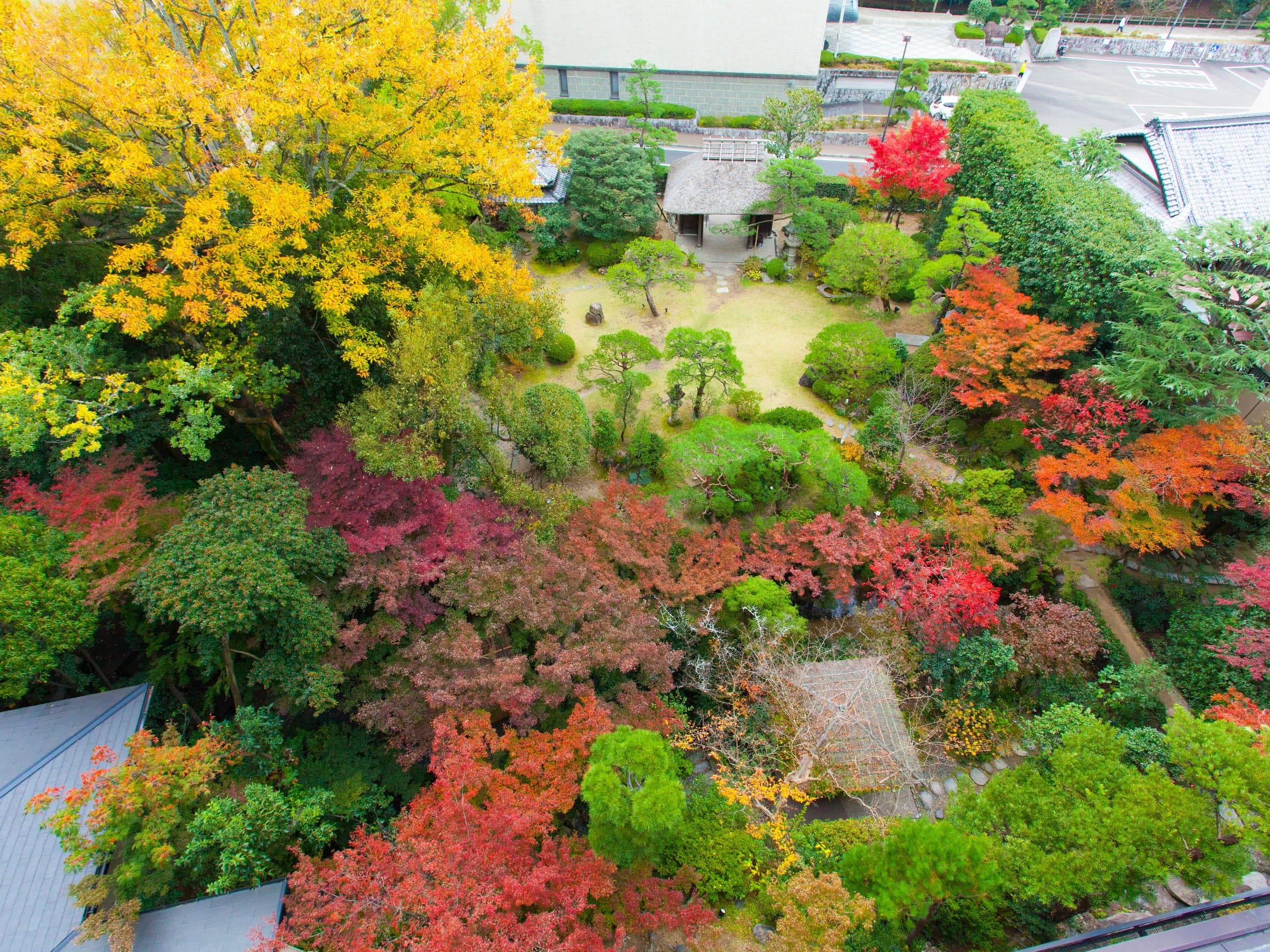
| $160〜 | 9.6 口コミ116件 | 英語OK温泉 | Trip.comで予約 | |
| $350〜 | 9.6 口コミ14件 | 英語OK貸切温泉 | Trip.comで予約 | |
![]() Yamatoya Besso Dogo | $250〜 | 9.1 口コミ43件 | 英語OK貸切温泉 | Trip.comで予約 |
![]() Dogo Miyu Dogo | $280〜 | 9.4 口コミ10件 | 英語OK貸切温泉 | Trip.comで予約 |
![]() Dogokan Dogo | $200〜 | 9.2 口コミ71件 | 英語OK貸切温泉 | Trip.comで予約 |
![]() Yamatoya Honten Dogo | $180〜 | 9.5 口コミ141件 | 英語OK温泉 | Trip.comで予約 |
| $200〜 | 9.2 口コミ88件 | 英語OK貸切温泉 | Trip.comで予約 | |
![]() Chaharu Dogo | $100〜 | 8.5 口コミ66件 | 英語OK温泉 | Trip.comで予約 |
| $100〜 | 9.6 口コミ361件 | 英語OK温泉 | Trip.comで予約 | |
| $80〜 | 9.0 口コミ39件 | 英語OK温泉 | Trip.comで予約 |

Yamatoya Besso
Dogo

Dogo Miyu
Dogo

Dogokan
Dogo

Yamatoya Honten
Dogo

Chaharu
Dogo
表示価格は1名1泊あたりの目安です。当サイト経由のご予約で手数料を受け取る場合があります。
Japan recorded its first documented onsen in Dogo. The *Man'yoshu* poetry anthology of 759 CE and the *Kojiki* chronicle of 712 CE both name the spring at Dogo as among the oldest in the nation — a bathing tradition stretching back more than 3,000 years. That is the deepest documented hot-spring pedigree in the country, and it still runs beneath the same district in Matsuyama where you will be booking a room. Last verified: May 25, 2026.
At the center of this district stands the Dogo Onsen Honkan, a labyrinthine three-story wooden bathhouse built in 1894 during the Meiji era. It is the bathhouse Hayao Miyazaki of Studio Ghibli visited in 2001 and cited as the architectural inspiration for Yubaba's spirit-world bathhouse in *Spirited Away* (2001). It is also the only public bathhouse in Japan to have served an Emperor — the private Yushinden bath chamber built for Emperor Meiji in 1899 still stands, now accessible to the public for a ¥1,500 entry tier.
The Honkan closed in January 2020 for a major preservation project — a ¥3.2 billion structural renovation of the 130-year-old Meiji-era timber frame. The Dogo Onsen Honkan fully reopened on December 12, 2024. The renovation restored the original architecture while adding accessible ramps, expanded foreign-visitor facilities, and an English-language audio guide . Competitor articles have not updated to reflect this. We have.
For Soseki Natsume readers: his 1906 novel *Botchan* is set partly in Matsuyama, and the protagonist bathes at Dogo Onsen routinely. The tram line running from Matsuyama Station to Dogo Onsen today — the Botchan Ressha — is named after the character. For the full list of hotels in Dogo Onsen across price tiers, see our complete Dogo accommodations directory.

The best ryokan in Dogo Onsen is Funaya — founded 1627, Japan's Imperial Family and Natsume Soseki among its historical guests, a Noh-stage garden, and a two-minute walk to the Honkan. For total private-onsen luxury with every suite featuring its own rotenburo, Bettei Oborozukiyo is the most exclusive property in Dogo (19 suites, adults-only). For panoramic city views from a rooftop bath steps from the Honkan, Chaharu offers the best mid-range value. For every-room private outdoor bath at a 2018 opening, Dogo Miyu is the modern-luxury pick.
Tip
Disclosure: Japan Ryokan Guide earns a commission when you book through partner links. No ryokan paid to be included or ranked. Prices shown are per-room per-night, two people, half-board (dinner + breakfast), based on published rack rates as of May 2026.
Honkan Reopens 2024: What Changed After the 5-Year Renovation
The Dogo Onsen Honkan is fully open as of December 12, 2024. After a ¥3.2 billion preservation project spanning nearly five years, the 1894 Meiji-era wooden bathhouse has been structurally restored and upgraded for contemporary visitors .
Key changes introduced with the reopening:
- Full architectural restoration — the original cypress-and-timber Meiji frame, the three-story turret, and the Shinto-inspired decorative elements have been preserved in their pre-closure state. The building received no modern-aesthetic alteration. - Accessible ramps — new accessible pathways installed throughout for wheelchair users and guests with limited mobility. - Expanded foreign-visitor facilities — multilingual signage updated throughout; coin lockers added in the entrance lobby. - English-language audio guide — QR-code activated audio tour now available on personal smartphones, covering the bathhouse history, the Yushinden Imperial chamber, and the Meiji-era legacy connecting the building to Soseki Natsume's *Botchan*. - Increased non-bathing tour capacity — the upper-floor heritage tour (which includes the Yushinden viewing corridor) now runs more frequently and can be booked online. - No reservation required for standard bathing entry — the Honkan remains walk-in, daily from 6:00 AM to 11:00 PM.
Entry fees (post-renovation, verified May 2026): Day bath ¥460 (ground-floor Kami-no-Yu public bath) · ¥1,250 (includes upper-floor Bocchan-no-ma room and 2F corridor) · ¥1,500 (includes the Yushinden Imperial chamber viewing). Towel rental ¥50; towel purchase ¥200.
Tip
Best time to visit the Honkan: Early morning (6:00–8:00 AM) before tour groups arrive. The pre-dawn soaking atmosphere in the stone Kami-no-Yu bath — originally reserved for nobility — is the experience most guidebooks skip.
Quick-Compare: 15 Dogo Onsen Ryokans at a Glance
| # | Ryokan | Tier | From (USD) | Walk to Honkan | Best For |
|---|---|---|---|---|---|
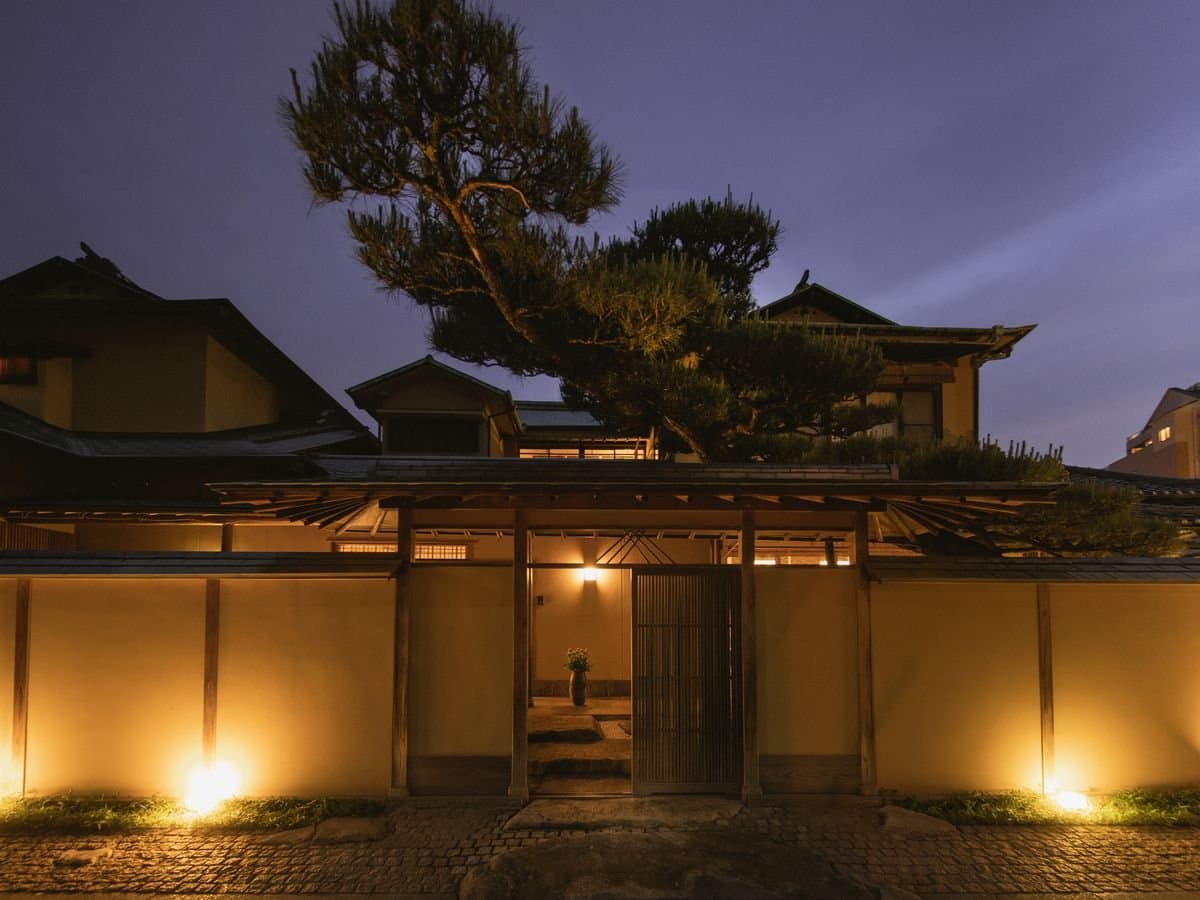
| 1 | Funaya | Luxury ¥¥¥¥ | $160 | 2 min | Heritage + Imperial-guest legacy |
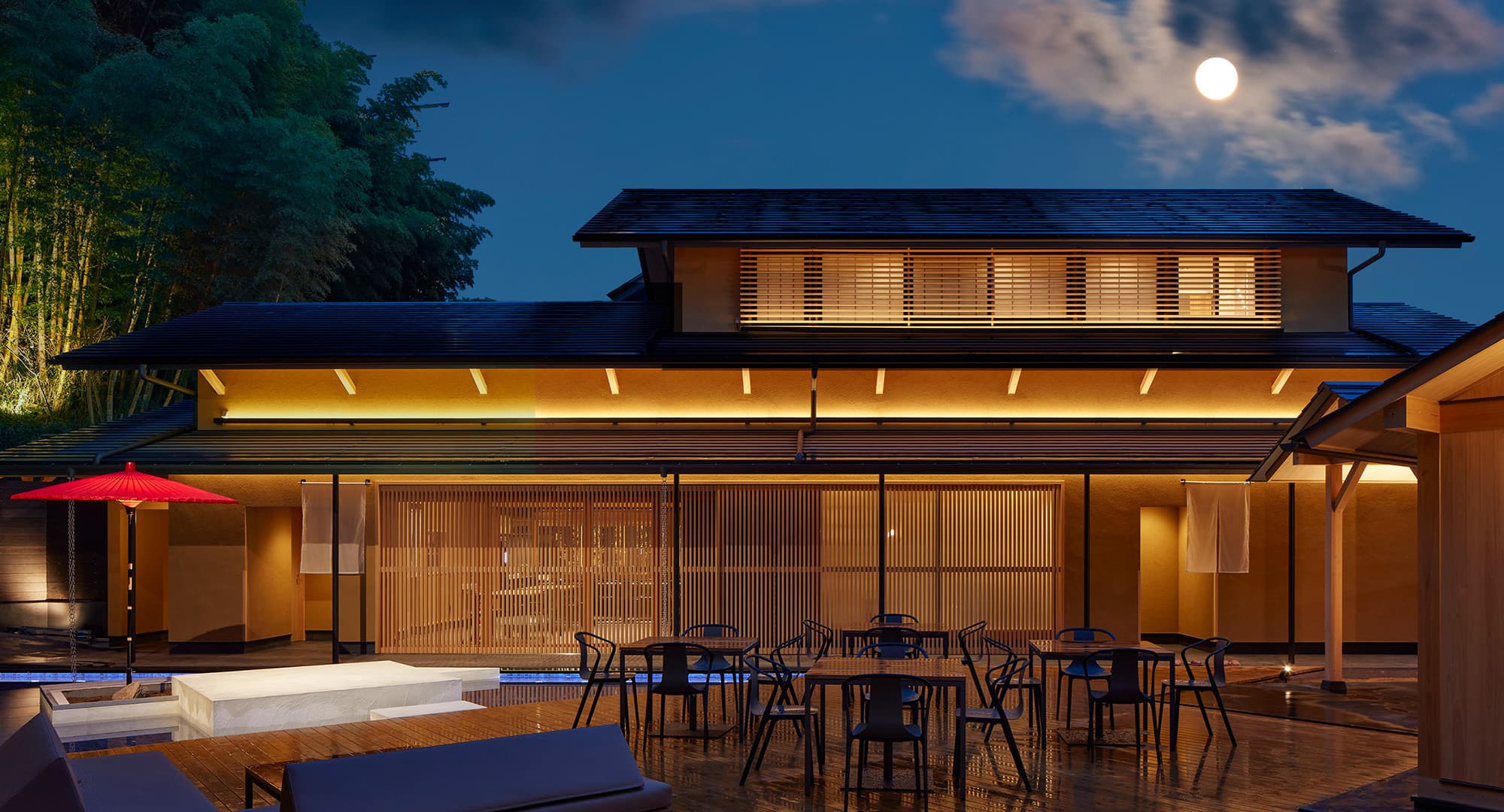
| 2 | Bettei Oborozukiyo | Ultra ¥¥¥¥¥ | $350 | 8 min | Private rotenburo every suite |
| 3 | Yamatoya Besso | Luxury ¥¥¥¥ | $250 | 5 min | Personal attendant + craft beer |
| 4 | Dogo Miyu | Luxury ¥¥¥¥ | $280 | 5 min | Every room private outdoor onsen |
| 5 | Dogokan | Luxury ¥¥¥ | $200 | 7 min | Kisho Kurokawa design + hilltop views |
| 6 | Yamatoya Honten | Luxury ¥¥¥ | $180 | 3 min | 1868 founding + in-house Noh stage |
| 7 | Yachiyo | Mid-Luxury ¥¥¥ | $200 | 7 min | All 34 rooms private open-air bath |
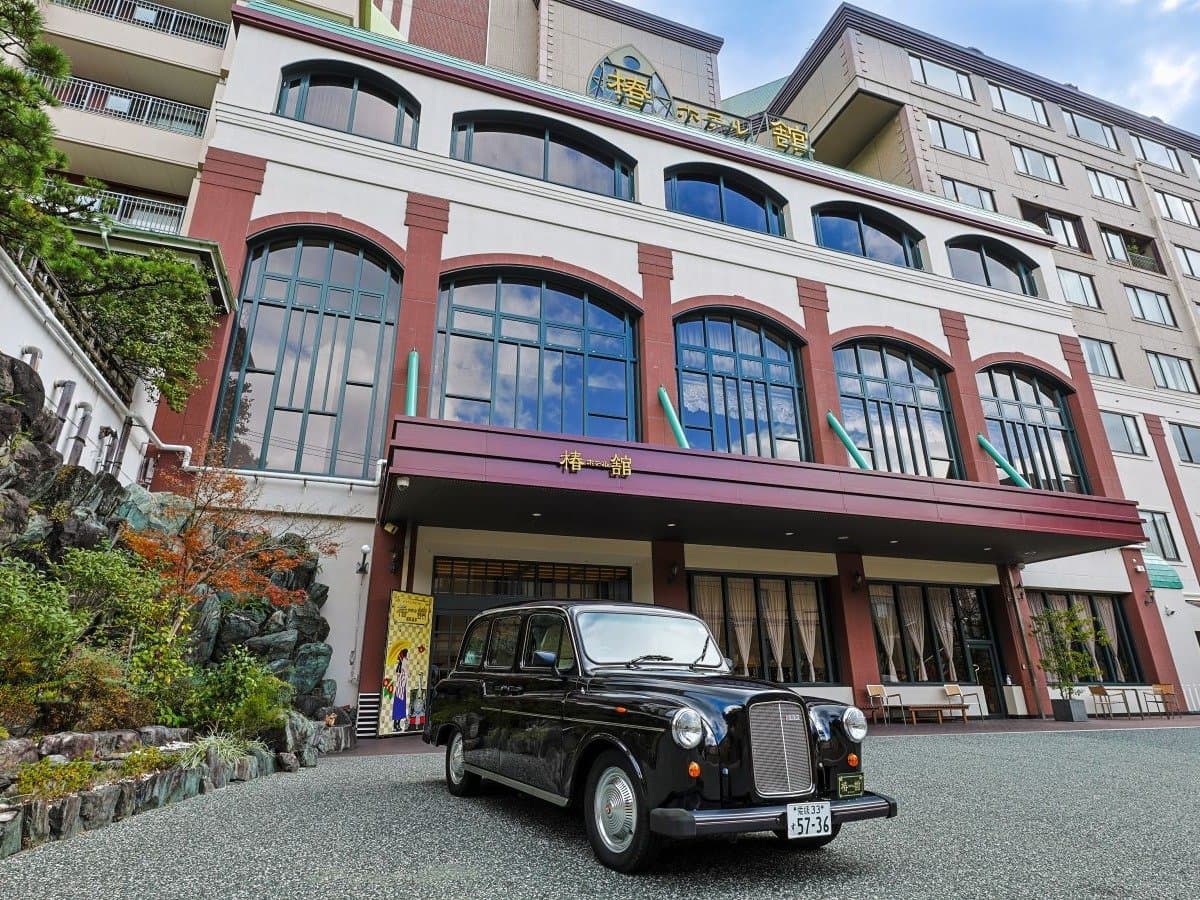
| 8 | Chaharu | Mid ¥¥ | $100 | 5 min | Rooftop panoramic bath + best value |
| 9 | Hotel Kowakuen Haruka | Mid ¥¥ | $100 | 1 min | Direct elevator to Honkan |
| 10 | Oku-Dogo Ichiyutei | Mid ¥¥ | $130 | 20 min | Forest onsen retreat, Oku-Dogo district |
| 11 | Seiryuso | Mid ¥¥ | $110 | 10 min | Quiet hillside + natural spring garden |
| 12 | Tarumi Honkan | Mid ¥¥ | $120 | 6 min | Family-run traditional inn near Honkan |
| 13 | Old England Dogo Yamanote Hotel | Budget-mid ¥–¥¥ | $80 | 4 min | British-Japanese heritage + budget value |
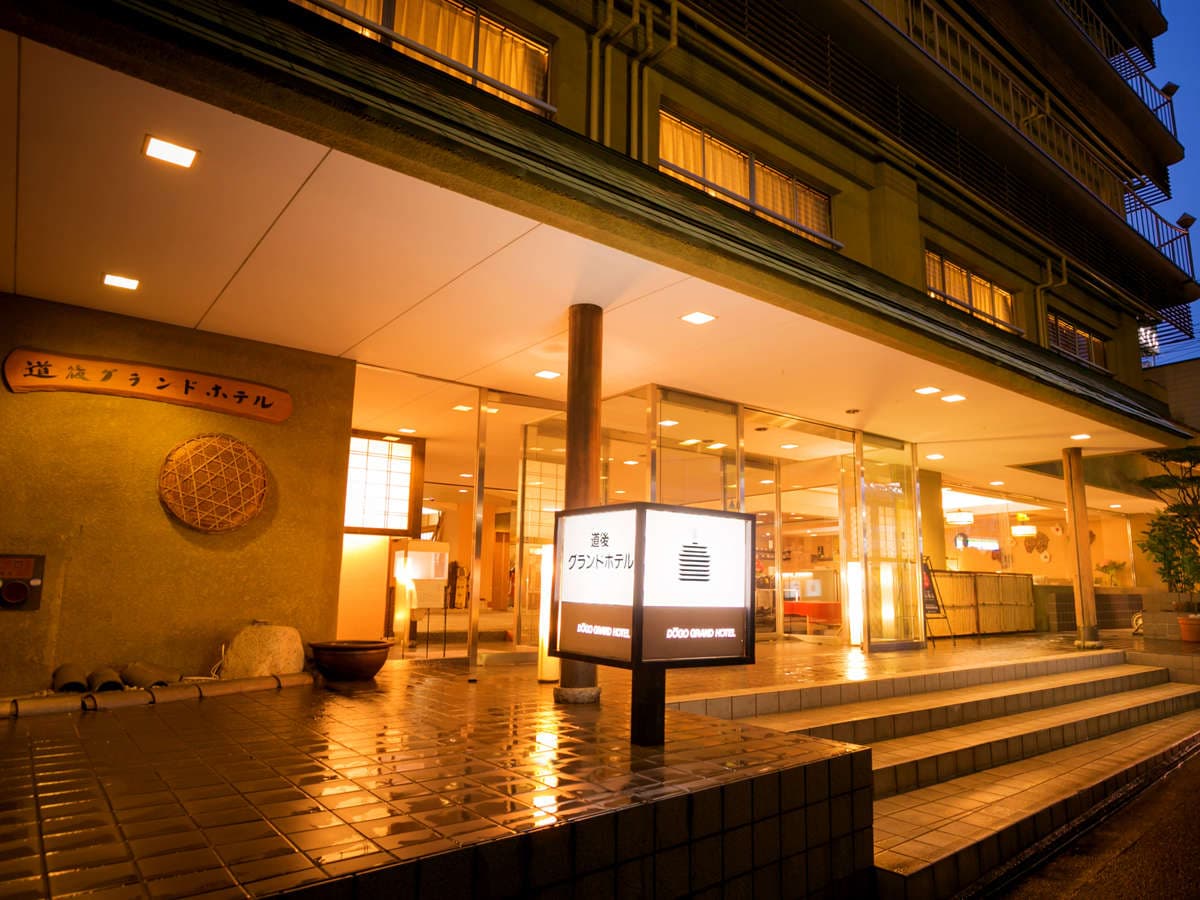
| 14 | Dogo Grand Hotel | Budget ¥ | $70 | 8 min | Large onsen facility + flexible meal plans |
| 15 | Dogo Onsen Imadabei | Budget ¥ | $65 | 5 min | Lowest price point with natural spring water |
How we verified these 15 ryokans
We screened every operating ryokan in the Dogo Onsen district against five criteria: proximity to the Honkan, in-house onsen quality, kaiseki strength highlighting Ehime and Setouchi seasonal ingredients, English-accessible booking, and value at each tier. Fifteen properties cleared the bar across four price tiers.
No ryokan paid to be included. Properties are drawn from our database of 224 vetted ryokans across 25 onsen destinations in Japan. Prices shown are per-room per-night, two people, half-board (dinner + breakfast), May 2026 rack rates. For broader context on what ryokan pricing covers nationally, see how much does a ryokan cost in 2026.
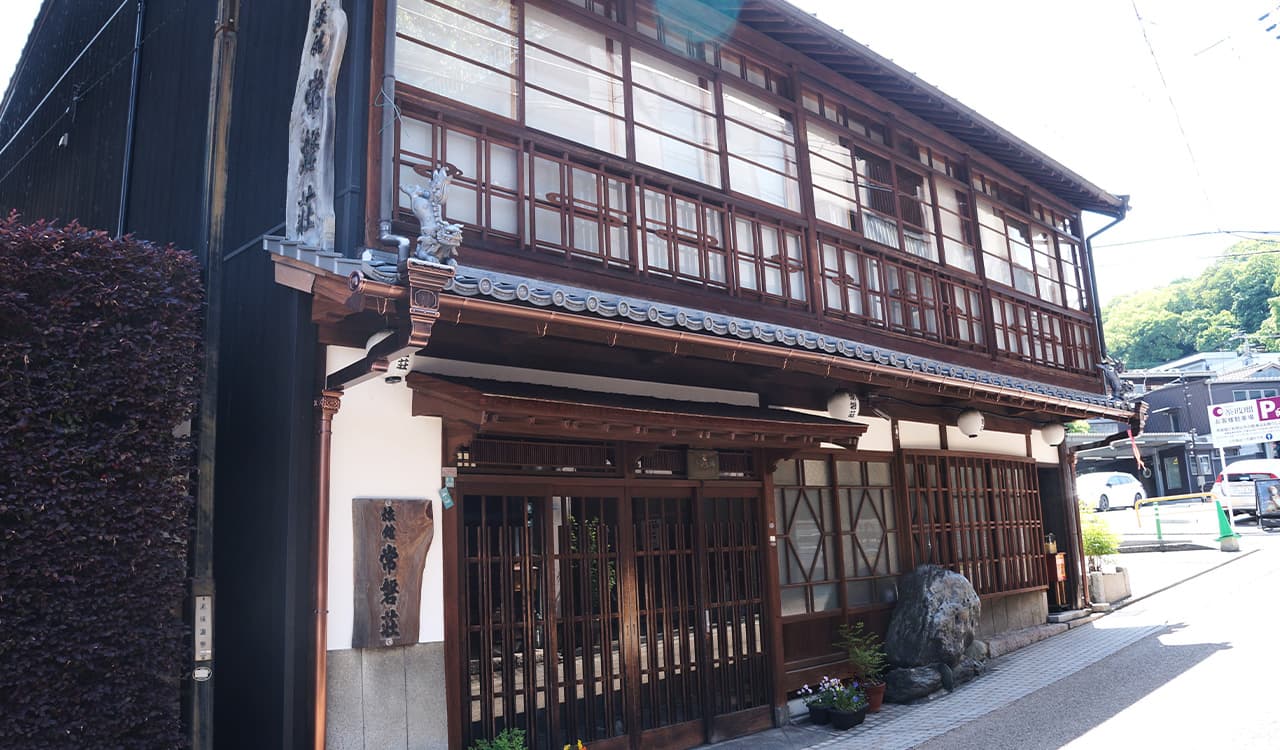
1. Funaya — Best for heritage prestige and Imperial-guest legacy
Best for Travelers who want the most historically weighted ryokan in Dogo — Imperial-family visits, literary connections, and a Noh stage in the garden. ¥¥¥¥
At a glance 58 rooms · ~$160–$450 USD · Founded 1627 · 2-min walk to Honkan · Garden with stream and Noh stage.
- Founded in the Edo period (1627); nearly 400 years of continuous hospitality - Japan's Imperial Family among historical guests; Natsume Soseki's *Botchan* characters bathed at the adjacent Honkan during his Matsuyama period - 100% natural free-flowing spring water onsen baths — undiluted, alkaline, silky texture - Kaiseki showcases Ehime's Setouchi seafood: sea bream (tai), oysters, and seasonal mountain vegetables - English-speaking front desk staff; Western-friendly amenities - Tattoo policy: private baths available on request
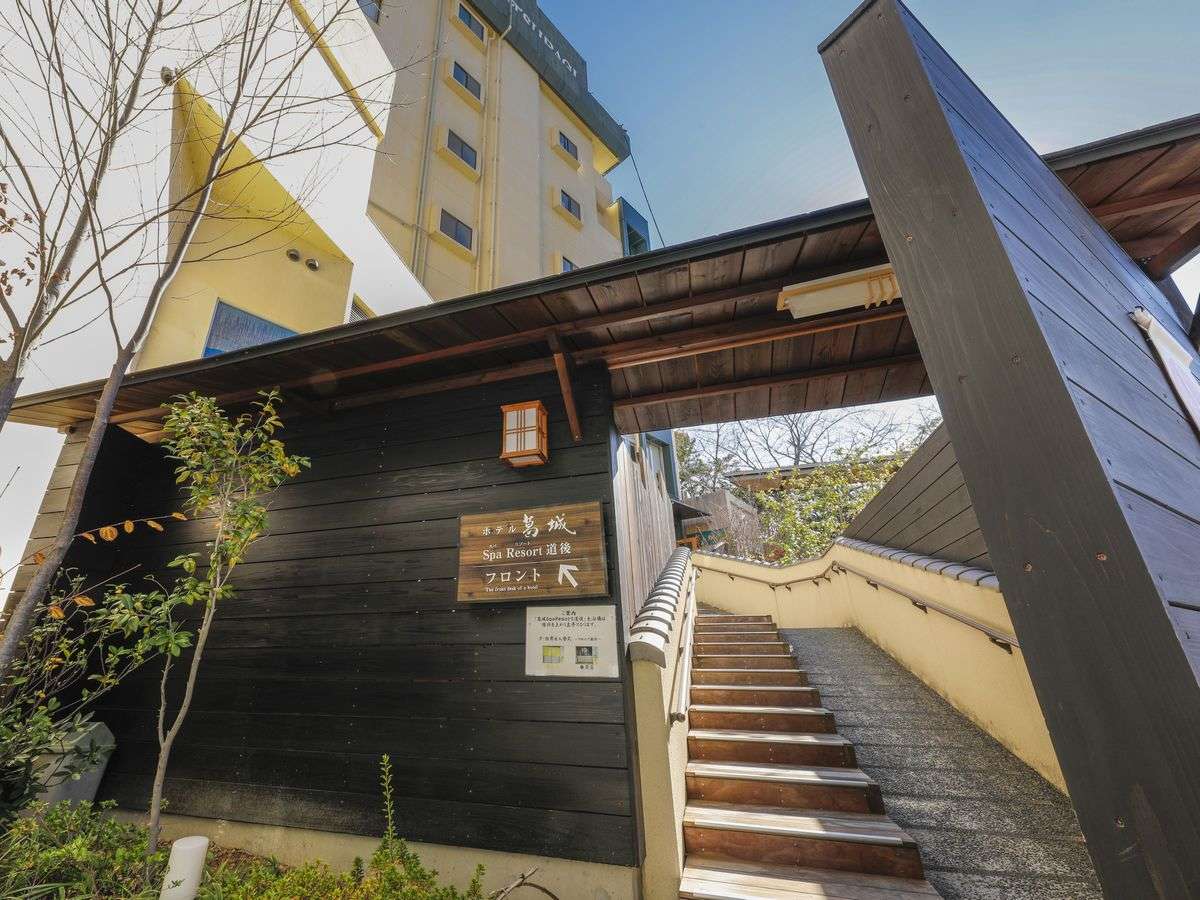
Funaya's gardens are the finest in the Dogo district — a meandering stream, stepping stones, and the Noh stage used for seasonal performances. From the garden, the Honkan's Meiji-era turret is visible over the rooftops: a two-minute walk that summarizes the whole Dogo experience. The public baths are fed by undiluted spring water at the temperature the ground produces it, giving the water a silky-alkaline texture distinct from diluted baths in larger facilities.
Honest trade-off: The heritage rooms skew traditionally Japanese; guests seeking contemporary design or in-room private baths should look at Bettei Oborozukiyo or Yamatoya Besso instead.
2. Bettei Oborozukiyo — Best for private rotenburo in every suite
Best for Couples on a milestone trip — or anyone for whom total privacy and in-room outdoor soaking is non-negotiable. ¥¥¥¥¥
At a glance 19 suites · ~$350–$800 USD · Adults-only · 8-min walk to Honkan · Every suite: private rotenburo + terrace + massage chair.
- Every one of 19 suites features a private open-air hot spring bath, wooden terrace deck, and massage chair - Adults-only property — strictly maintained - Seasonal kaiseki with Ehime-sourced ingredients; sake pairing options - Eight-minute walk to the Honkan is the longest on this list — and completely irrelevant once you're in your suite's rotenburo - Booking often requires phone or Japanese-language reservations; plan 3–6 months ahead
This is the most exclusive address in Dogo. Nineteen individually designed suites means no two rooms are identical, and the privacy ratio approaches the level of ultra-ryokan hospitality that usually requires a Kyoto address. If you're combining a Kyoto ryokan stay with Dogo, Oborozukiyo is the appropriate prestige equivalent on the Shikoku end.
Honest trade-off: No public communal baths on-site; the experience centers entirely on the in-suite rotenburo. For guests who want the sociable public-bath culture of Dogo, Funaya or Yamatoya Honten serves better.
3. Yamatoya Besso — Best for personal attendant service and intimate scale
Best for Guests who want the full omotenashi attendant experience — a dedicated room server throughout your stay — at a mid-luxury scale. ¥¥¥¥
At a glance 19 rooms · ~$250–$650 USD · 5-min walk to Honkan · Personal attendant per room · Craft beer on tap included.
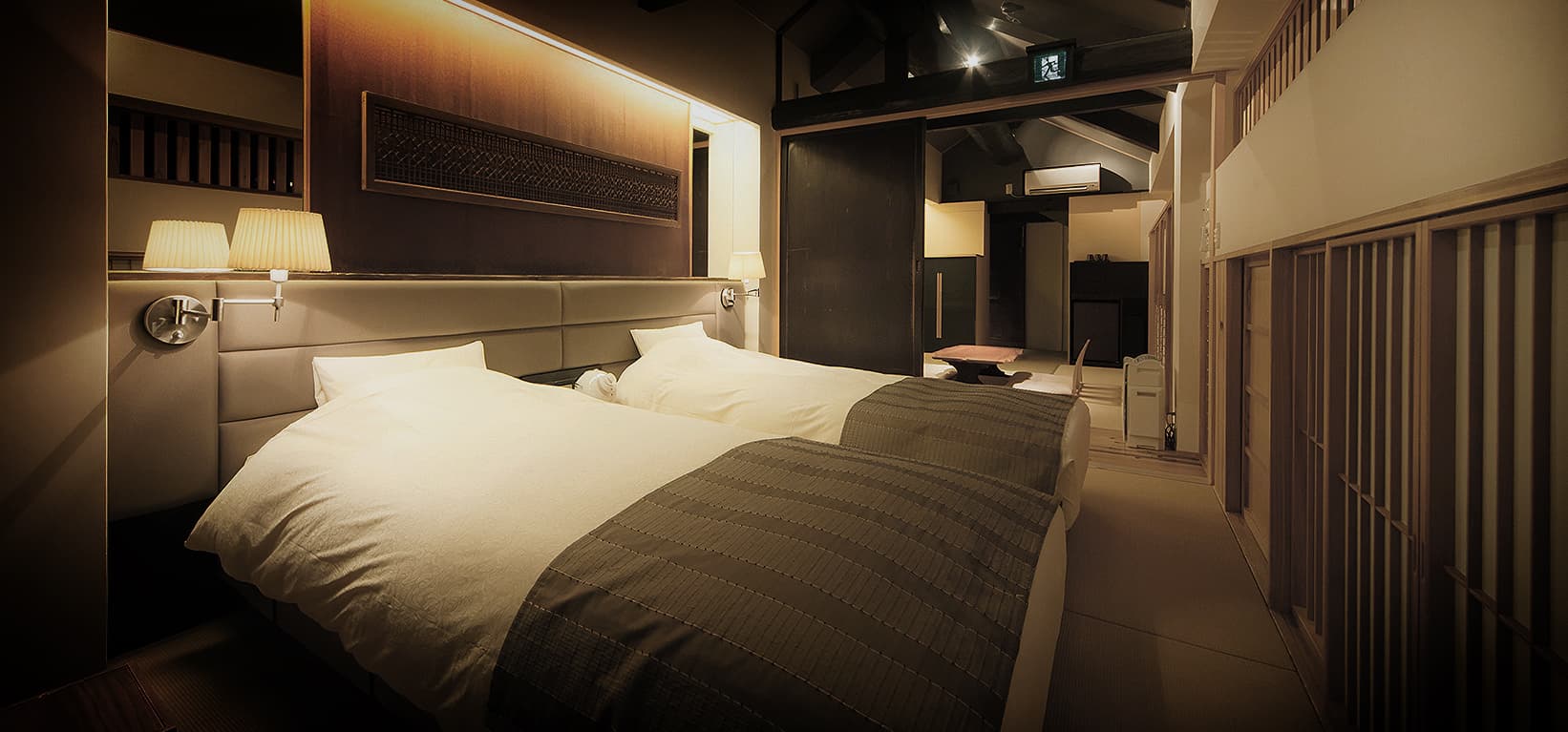
- Dedicated room attendant assigned per guest room for the full stay — a rare luxury tier most ryokans only offer at the ultra end - Private open-air hot spring baths in select room categories - Complimentary craft beer on tap — a signature detail that surprises guests - Elegant Japanese rooms; spacious compared to historic buildings nearby - 19 rooms keeps the property intimate and staff ratios high
Yamatoya Besso's genius is scale. At 19 rooms with one attendant per room, it delivers an experience that would cost double at a Tokyo or Kyoto equivalent. The craft beer on tap is genuinely waiting for you in the room. The kaiseki emphasizes the Setouchi sea route's premium ingredients, especially the tai sea bream for which Ehime Prefecture is nationally famous.
Honest trade-off: The walk to the Honkan is five minutes — manageable, but slightly removed from the immediate Honkan-district atmosphere of Funaya or Yamatoya Honten.
4. Dogo Miyu — Best for every-room private outdoor onsen (opened 2018)
Best for Travelers who want a private outdoor onsen on their own terrace, modern interiors, and panoramic city views without the ultra-luxury price tag. ¥¥¥¥
At a glance 30 rooms · ~$280–$600 USD · Opened 2018 · 5-min walk to Honkan · All 30 rooms: private open-air onsen bath.
- Every single room features a private open-air onsen bath on the terrace — rare at this scale - Top-floor large scenic bath with panoramic views of Matsuyama City and surrounding mountains - Modern Japanese design with tatami floors and contemporary fittings - Elevated hillside position gives all rooms city views - Newest full-ryokan opening in the Dogo core district (2018)
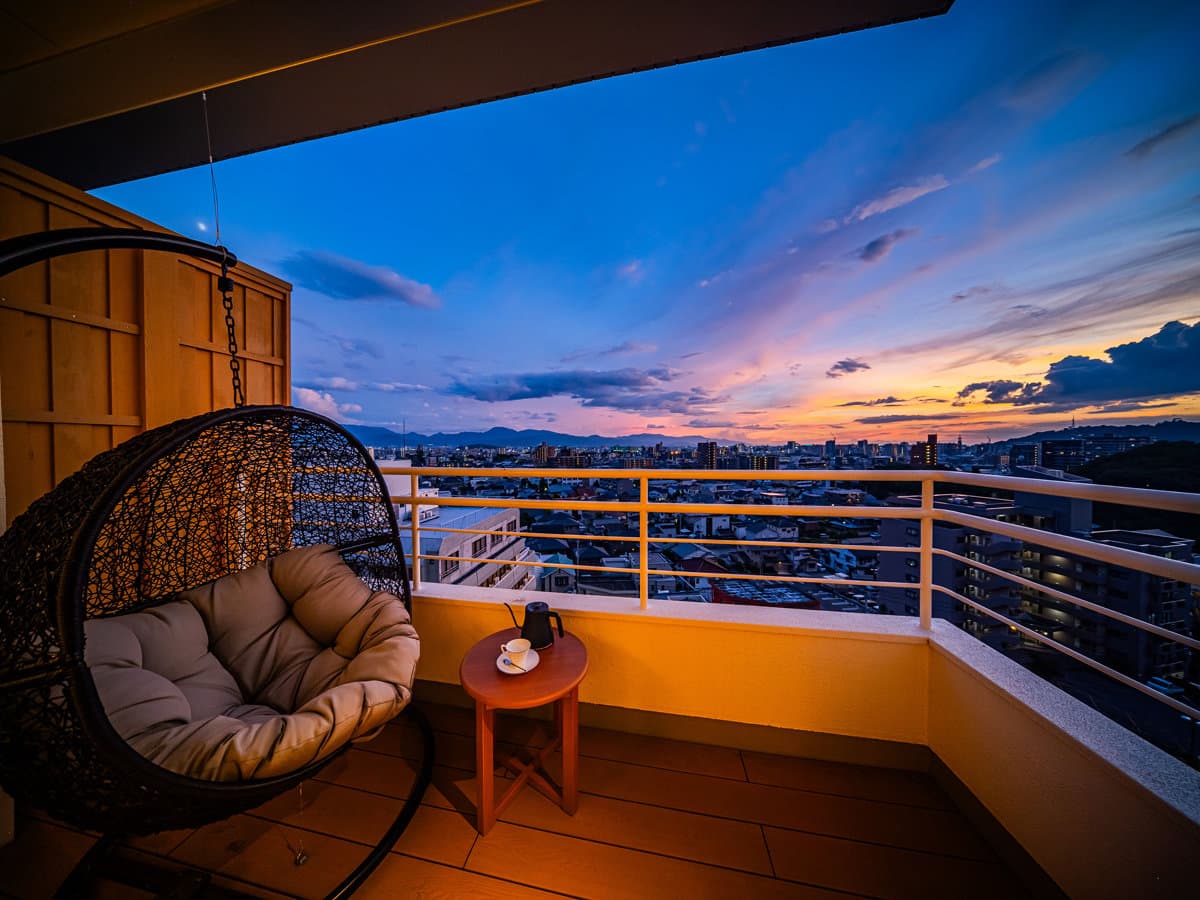
Miyu was designed from the ground up around the private-onsen concept — plumbing, terrace dimensions, and sight-lines all serve that purpose rather than being retrofitted. The panoramic top-floor common bath is worth using even if you have a private bath below: the view of Matsuyama city at dusk, with the castle on its hill to the northwest, is distinct from anything inside the Honkan.
Honest trade-off: Modern design lacks the historical patina of Funaya or Yamatoya Honten; for Meiji-era atmosphere, look elsewhere.
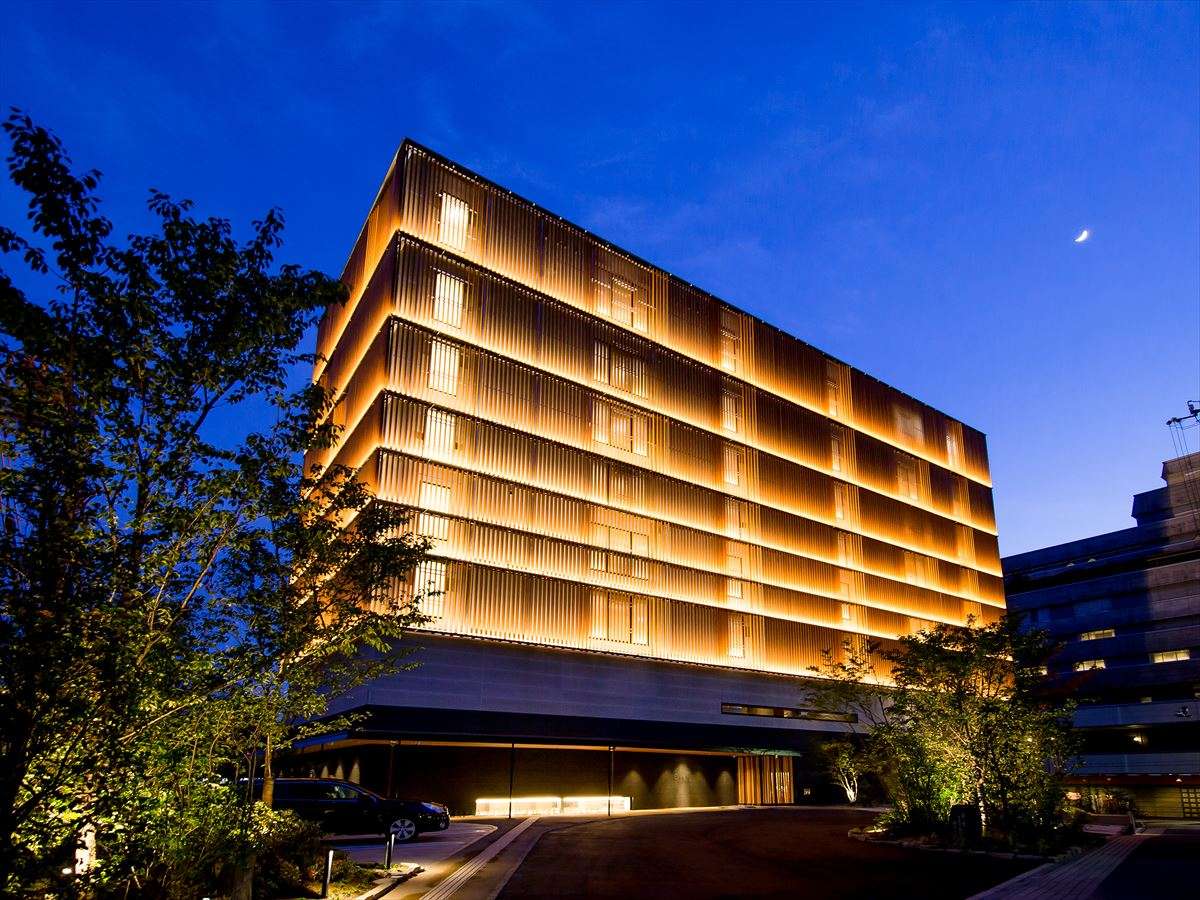
5. Dogokan — Best for Kisho Kurokawa architecture and resort-scale bathing
Best for Architecture enthusiasts and guests who want the widest variety of bathing options under one roof — including a hilltop rotenburo with castle views. ¥¥¥
At a glance 90 rooms · ~$200–$500 USD · Designed by Kisho Kurokawa · 7-min walk to Honkan · Cascading baths, jacuzzi, sauna, rooftop rotenburo.
- Designed by the internationally acclaimed Metabolist architect Kisho Kurokawa, whose buildings appear in cities worldwide - Extensive onsen complex: cascading baths, reclining baths, sauna, jacuzzi, and large outdoor rooftop rotenburo - Nine 7th-floor rooms each with unique garden private open-air baths - 90-room scale means facilities are resort-level without the intimacy loss of a business hotel - Kaiseki highlights Ehime seasonal ingredients; alternative Western menu available
Dogokan sits on a slight hill above the Honkan district — seven minutes down on foot. The architectural USP is genuine: Kurokawa's Metabolism aesthetic, with its modular geometric forms, gives the building a look unlike any other ryokan in Japan. For guests who appreciate design pedigree alongside an impressive onsen facility, this is the only property in Dogo that delivers both.
Honest trade-off: Scale works against intimacy — 90 rooms means hotel-wide corridors, especially at check-in peaks. Not the place for a quiet retreat.
6. Yamatoya Honten — Best for Meiji heritage and in-house Noh theater
Best for First-time ryokan guests who want a comprehensive traditional experience: wide onsen variety, classical performance culture, and three-minute Honkan access. ¥¥¥
At a glance 90 rooms · ~$180–$380 USD · Founded 1868 · 3-min walk to Honkan · In-house Noh stage (seasonal performances).
- Founded in the first year of the Meiji era (1868); 157 years of operation - The only ryokan in Dogo with its own full-scale Noh theater stage; seasonal performances held for guests - Extensive public baths drawing from the Dogo alkaline spring water source - Rooms in both Japanese and Western styles — practical for guests not accustomed to futon floor sleeping - Three-minute walk to the Honkan; one of the three best-positioned properties on this list - Kaiseki emphasizes Setouchi seafood including Ehime-farmed yellowtail and seasonal mountain vegetables
Yamatoya Honten best captures the full breadth of Dogo cultural heritage without requiring a top-tier budget. The Noh performances — even partial or rehearsal sessions — are not tourism props; they are practiced on the stage regularly. Book a room facing the garden side of the property if available.
Honest trade-off: At 90 rooms, the experience is comfortable rather than intimate. Private baths are not available in standard room categories.
7. Dogo Onsen Yachiyo — Best for all-room private outdoor bath at mid-luxury
Best for Guests who want every-room private open-air onsen at mid-luxury pricing, plus in-room kaiseki dining delivered to the room. ¥¥¥
At a glance 34 rooms · ~$200–$400 USD · Opened 2018 · 7-min walk to Honkan · All rooms: private open-air bath + in-room kaiseki option.
- All 34 rooms feature private open-air onsen baths on their terrace - In-room kaiseki dining option — courses brought and served in-room rather than a shared dining hall - Modern Japanese interiors with tatami floors and spacious layouts - Hillside position gives most rooms elevated views - 2018 opening; contemporary facilities throughout
Yachiyo and Dogo Miyu are Dogo's two modern all-private-bath properties from 2018. Yachiyo is the better pick if in-room kaiseki dining is the priority — the logistics of having courses arrive on a tray rather than eating communally can make the difference on a slow, rainy Dogo evening. The terrace baths are purpose-built to room dimensions rather than retrofitted.
Honest trade-off: Seven-minute walk to the Honkan; hillside position means the return is uphill.
8. Chaharu — Best for rooftop panoramic bath and mid-range value
Best for Mid-range travelers who want the most dramatic onsen view in Dogo — Chaharu's 10th-floor open-air bath overlooks Matsuyama Castle — without the luxury-tier price. ¥¥
At a glance 66 rooms · ~$100–$280 USD · 5-min walk to Honkan · 10th-floor rooftop open-air bath · First in Dogo to feature rooftop open-air onsen.
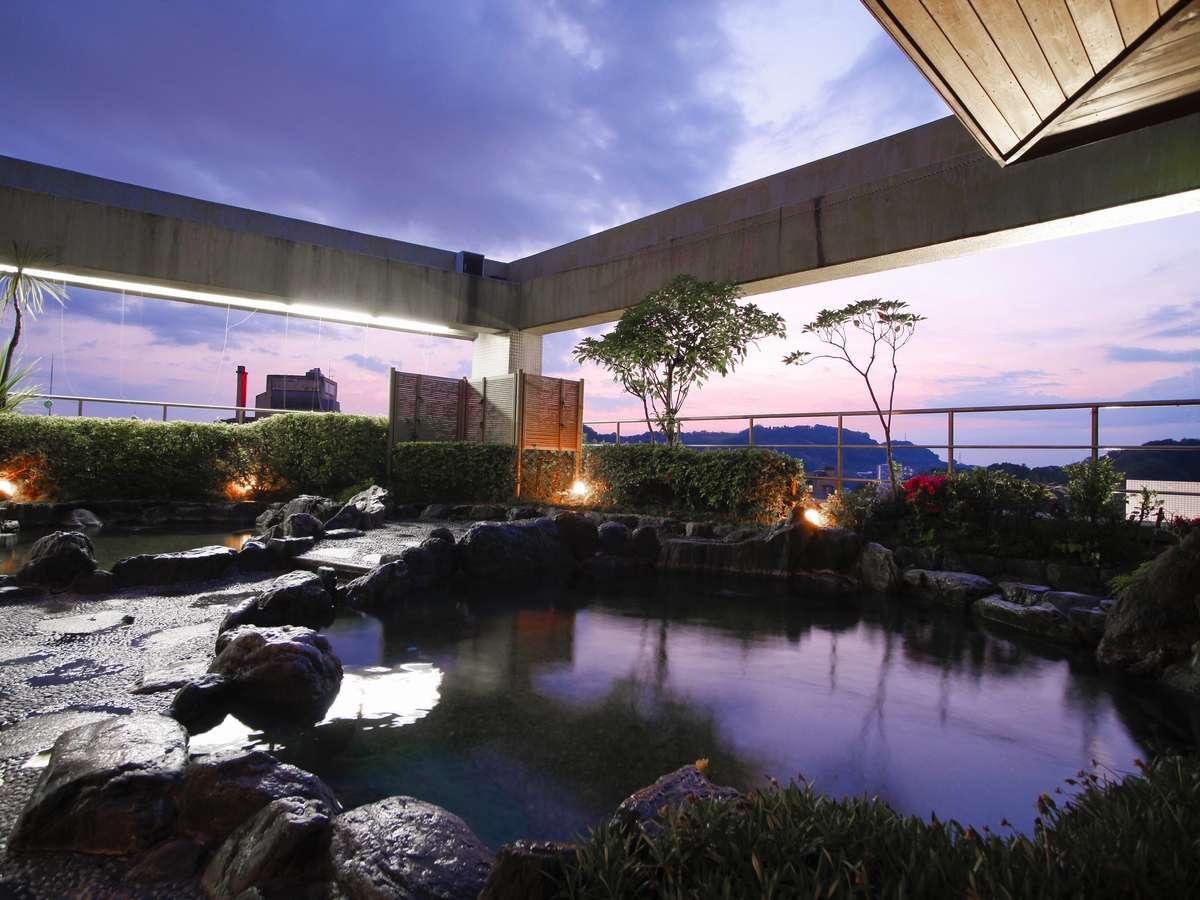
- Chaharu was the first ryokan in Dogo to introduce a rooftop open-air bath — the 10th-floor rotenburo has 270-degree views of Matsuyama City and the castle - 66 rooms across four categories, from standard Japanese rooms to western-bed options - Tea-ceremony aesthetic influences the interior design - Five-minute walk to the Honkan through the covered shotengai shopping arcade - Reliable English-language staff; popular with international visitors
Chaharu is the best mid-range pick in Dogo for a single reason: that rooftop bath. Just before sunset, looking northwest toward Matsuyama Castle with the city spreading below — it is as good an onsen view as Dogo produces. The in-house baths and kaiseki are competent; the Honkan proximity and rooftop experience carry the stay.
Honest trade-off: In-house baths (excluding the rooftop) are standard hotel-onsen quality. Guests who want exceptional in-house bathing should choose Funaya or Dogokan.
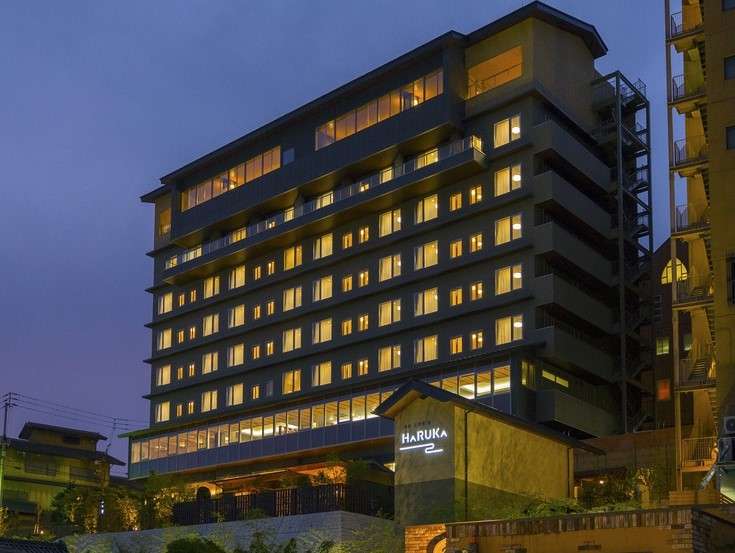
9. Hotel Kowakuen Haruka — Best for proximity (direct elevator to Honkan)
Best for Guests for whom physical proximity to the Honkan is the priority — including those with limited mobility who want direct covered access. ¥¥
At a glance 84 rooms · ~$100–$300 USD · Rebuilt 2019 · 1-min to Honkan via private elevator · Eco-conscious design.
- Uniquely connected to the Dogo Onsen Honkan via a private hotel-operated elevator — the only property in Dogo with direct covered access - Rebuilt in 2019 with eco-conscious design principles - Top-floor panoramic bath with views north toward the Seto Inland Sea on clear days - 84 rooms; hotel-ryokan hybrid quality - Accessible-design emphasis throughout; good choice for guests with mobility considerations
The elevator connection to the Honkan is genuinely useful rather than a gimmick — on a rainy Dogo evening, walking to the 1894 bathhouse without stepping outside is a practical advantage no other property can match. The 2019 rebuild means facilities are fresh. For guests who want the Honkan experience maximized — bathing there before the crowds, returning via the elevator — this is the logistics-optimal pick.
Honest trade-off: The property is hotel-scale rather than intimate-ryokan; the experience is closer to a design hotel with onsen access than traditional ryokan atmosphere.
10. Oku-Dogo Ichiyutei — Best for forest onsen retreat away from the crowds
Best for Travelers who want the Dogo area but with forest-setting tranquility — Oku-Dogo's separate district offers a completely different atmosphere from the town center. ¥¥
At a glance ~$130–$350 USD · Oku-Dogo district · 20-min from Honkan by taxi · Forest-setting hot spring · River-side outdoor baths.
- Located in the Oku-Dogo (inner Dogo) district, a separate hot-spring area with its own source water distinct from the main Dogo spring - River-facing outdoor baths in a forested valley setting; completely different environment from town-center Honkan district - Onsen water from the Oku-Dogo source has slightly different mineral composition — higher sulfur notes — from the main Dogo spring - Best for guests combining the Honkan visit with a forest-retreat night; taxi required to reach the Honkan - Significantly quieter and less crowded than town-center properties
Oku-Dogo is Dogo's answer to a two-spring itinerary — town-center night for Honkan access, forest-district night for mountain-onsen atmosphere. Compare with our best ryokans in Arima guide and the Arima onsen area inventory for how spring-district contrasts work in Japan's onsen culture. For Japan's full onsen geography, see Japan onsen by region.
Honest trade-off: The Honkan visit requires planning rather than spontaneity; yukata walks are not possible from this distance.
11. Seiryuso — Best for hillside quiet and natural spring garden setting
Best for Guests who want a traditional family-run inn atmosphere, a natural garden setting, and the Honkan within walking distance without paying luxury rates. ¥¥
At a glance ~$110–$260 USD · 10-min walk to Honkan · Traditional Japanese garden · Family-run operation.
- Family-run traditional ryokan on a quiet hillside in the Dogo district - Natural Japanese garden with stone lanterns and seasonal plantings - In-house baths draw from the Dogo alkaline source - Kaiseki meals emphasizing local Ehime ingredients - Ten-minute walk to the Honkan through the shotengai arcade and main street
Seiryuso wins on atmosphere rather than facilities — a family-run place where the okami greets guests personally and the garden changes with each season. The spring-water quality and garden setting compensate for the modest onsen scale. For the onsen etiquette basics applicable to all public-bath visits, that guide is worth reading before your first Honkan soak.
Honest trade-off: Facilities are traditional rather than modern; no private baths, no rooftop views.
12. Tarumi Honkan — Best for traditional family-run feel near the Honkan
Best for Travelers who want a genuinely local ryokan experience — not a hotel that calls itself a ryokan — at a mid-range price point. ¥¥
At a glance ~$120–$280 USD · 6-min walk to Honkan · Family-run traditional style · Dogo spring water baths.
- Traditional family-run ryokan in the Dogo district with authentic omotenashi hospitality - Baths draw from the Dogo alkaline spring source; small but well-maintained - Kaiseki meals with Ehime-sourced ingredients served in traditional room style - Six-minute walk to the Honkan via the covered shopping arcade - Lower room count than large-scale properties means more personalized service
Tarumi Honkan represents the mid-tier that makes Dogo Onsen accessible for travelers who want the cultural experience without the luxury-tier commitment. This is the type of property where the okami personally explains which Honkan entry tier to choose and when to go for the lightest crowds — the local knowledge a large-scale hotel front desk rarely offers.
Honest trade-off: Facilities are modest; this is a mid-range traditional inn, not a design property or modern luxury build.
13. Old England Dogo Yamanote Hotel — Best for budget-mid with British-Japanese heritage
Best for Budget-conscious travelers who want natural Dogo onsen water and the historic Honkan within four minutes, with the quirky bonus of a British-themed interior. ¥
At a glance 73 rooms · ~$80–$180 USD · Established 1885 · 4-min walk to Honkan · Western-style rooms + Dogo hot spring baths.
- Originally founded as Kawakichi Ryokan in 1885 — one of the older operating establishments in Dogo - All guest rooms are Western-style with beds rather than futon floors — practical for guests not comfortable with floor sleeping - Natural hot spring facilities drawing from the Dogo source - British colonial aesthetic in public areas: a historical curiosity from Meiji-era Japanophilia - Four-minute walk to the Honkan; genuinely convenient location
The British theme is less curated interior design and more historical inheritance — the Meiji era's enthusiasm for Western aesthetics produced genuinely strange property combinations in Japanese spa towns. At Yamanote Hotel, this means British club furniture alongside Japanese ofuro baths. For budget travelers the value is strong: natural Dogo spring water, genuine proximity, and an international atmosphere. If you're a first-time ryokan visitor, our first-time ryokan guide covers everything to expect.
Honest trade-off: The least traditionally Japanese property on this list. Guests seeking authentic ryokan atmosphere should go mid-range instead.
14. Dogo Grand Hotel — Best for budget with large onsen facility access
Best for Budget travelers who want access to a proper large-scale onsen facility and the Honkan close enough to walk, without kaiseki requirements. ¥
At a glance ~$70–$160 USD · 8-min walk to Honkan · Large onsen baths · Dinner/breakfast optional add-on plans.
- Larger-scale onsen hotel with extensive communal bath facilities drawing from the Dogo spring source - Dinner and breakfast available as optional add-on plan — more flexible than the full-board kaiseki requirement at most ryokans - Eight-minute walk to the Honkan along the main Dogo shopping street - Good base for day-trippers who want a ryokan-adjacent experience without full kaiseki commitment - English booking access via international platforms
Dogo Grand Hotel is the practical pick for travelers whose Dogo visit is one night in a Shikoku itinerary — Matsuyama Castle in the morning, Honkan in the evening, move on the next day. The flexible meal plans mean you can book dinner only, try the Honkan's public bath, and keep costs manageable. See day use ryokan in Japan for options if you want to experience the onsen without an overnight stay.
Honest trade-off: Hotel-scale rather than ryokan atmosphere; no kaiseki-quality dining included.
15. Dogo Onsen Imadabei — Best for budget no-frills base near the Honkan
Best for Budget travelers who simply want a clean, friendly base five minutes from the Honkan, with natural spring water access and no complications. ¥
At a glance ~$65–$140 USD · 5-min walk to Honkan · Small scale · Natural Dogo onsen water · Friendly local atmosphere.
- Small family-run ryokan a five-minute walk from the Honkan - Natural Dogo spring water baths; small but genuine in-house facility - Breakfast typically included; dinner optional - Lowest entry price point on this list for natural Dogo onsen water access - English booking access via international platforms
Imadabei is the honest choice for budget travelers who understand that the Dogo Onsen Honkan — now fully restored and reopened — is itself the bathing centerpiece. You don't need an elaborate in-house onsen if you're spending your evening in the 1894 Meiji bathhouse. Optimize for location and price; spend the money on the ¥1,500 Yushinden-tier Honkan entry, not on room amenities. For a broader budget planning framework, see budget ryokan tips.
Honest trade-off: No luxury amenities, limited English support at the property itself. Bring Japanese-language screenshots of your reservation details.
Spirited Away: Dogo Onsen's Connection to Studio Ghibli
No English-language article covers this with sufficient depth, so here it is in full.
Hayao Miyazaki, the Studio Ghibli director, visited Dogo Onsen in 2001 while *Spirited Away* (千と千尋の神隠し, *Sen to Chihiro no Kamikakushi*) was in late production. In his own accounts and in the published histories of the film, Miyazaki cited the Honkan's architecture as a key visual reference for Yubaba's bathhouse — the labyrinthine, multi-story wooden structure where the protagonist Chihiro works among spirits. The three-story turret, the latticed windows, the elevated wooden corridors, and the sense of a building that has been added onto over centuries by no particular plan — all of this is present in both the Honkan and in the film's bathhouse.
The connection is not a Japan Tourism Agency marketing claim; it is documented in Ghibli's own production materials and in Miyazaki's published interviews. The Honkan was already 107 years old when Miyazaki visited in 2001. The wooden staircase structure, the exterior tower with its shachihoko fish-dragon roof ornaments, and the sense of the building as a living organism rather than a designed object — these are the architectural qualities that translate directly to the *Spirited Away* setting.
It is worth noting that Miyazaki himself has said no single real-world location was the sole model for Yubaba's bathhouse — Ghibli's approach to backgrounds is compositional, drawing from multiple sources. The Ginzan Onsen Fujiya in Yamagata and the Jiufen village in Taiwan have also been cited as visual references. But Dogo Onsen Honkan is the one visitors recognize immediately upon arrival — the turret, the lanterns, the wooden floors — and the one Miyazaki named most directly in relation to the film.
If you are a *Spirited Away* fan visiting Dogo, the early-morning Kami-no-Yu (upper-class bath, now the ¥1,500 Yushinden tier) gives you the closest approximation to the film's bathing atmosphere: stone floors, wooden columns, few other visitors, and the sense of soaking in water that emperors and literary ghosts used before you. The Ghibli connection is real. The 3,000-year bathing tradition is realer.
The Imperial Bath Chamber: Yushinden Access Guide
Most travelers visiting Dogo Onsen do not know the Imperial bath chamber is accessible to the public. It is. Here is what you need to know.
The Yushinden (又新殿) was constructed in 1899 specifically for Emperor Meiji's visit to Dogo Onsen. It is a private bath chamber on the upper floor of the Honkan, connected to the main building but sealed from the public bathrooms. After the Emperor's visit, the chamber was preserved as-is, still fitted with Meiji-era imperial furnishings, lacquerwork, and the original stone bath the Emperor used.
Post-renovation (December 2024), the Yushinden access has been updated:
- ¥1,500 entry includes the Yushinden viewing corridor and the Tama-no-Yu (upstairs communal bath, historically used by the samurai class) - No advance reservation required — walk-in, same as the standard bath entry - No bathing in the Yushinden itself — it is preserved as a heritage room. You view the chamber and the imperial furnishings through a corridor viewing area - Photography permitted in the viewing corridor (not inside the chamber) - English audio guide available via QR code explains the chamber's history and the specific ritual of imperial onsen visits in Meiji Japan
The Yushinden is the most historically dense room accessible to foreign visitors at any public onsen in Japan. Dogo has been an imperial bathing site since at least Emperor Shotoku (574–622 CE), but the Yushinden is the physical room — with the original bath still in place — where the chain of imperial patronage ends with a specific named emperor who visited in 1899. That is more than 1,300 years of imperial bathing tradition compressed into one preserved stone tub.

How to Choose: Dogo Ryokan by Trip Purpose
Cultural pilgrimage (Honkan-first): Hotel Kowakuen Haruka for the direct elevator connection; Funaya for proximity and heritage weight; Yamatoya Honten for the widest traditional experience at a middle price point.
Imperial heritage and Spirited Away depth: Funaya — close enough to walk to the Yushinden viewing and the Kami-no-Yu bath at the ¥1,500 tier, with its own Imperial-family guest history dating to the Meiji era.
Private rotenburo priority: Bettei Oborozukiyo — every suite, adults-only, highest grade. Yamatoya Besso for the personal attendant plus select private-bath rooms. Dogo Miyu or Yachiyo for every-room private outdoor onsen at a lower entry price.
Kaiseki dining focus: Funaya for Setouchi seafood at the luxury end; Yamatoya Honten for a full traditional kaiseki at mid-luxury; Chaharu for capable kaiseki at mid-range. See our complete kaiseki guide for what each course involves.
Architecture and design: Dogokan — Kisho Kurokawa Metabolism, the only globally acclaimed modern architect with a ryokan in Dogo. Funaya for Edo-period traditional garden architecture.
Budget floor (with genuine Dogo spring water): Old England Dogo Yamanote Hotel at $80, Dogo Grand Hotel at $70, Dogo Onsen Imadabei at $65. All three draw from the natural Dogo spring source.
Solo traveler: Chaharu for solo-friendly rates and rooftop bath atmosphere. See also best ryokans for solo travelers.
Couples on a milestone trip: Bettei Oborozukiyo or Yamatoya Besso. See best ryokans for couples for the full comparison.
Getting to Dogo Onsen: Transport from Tokyo, Osaka, Hiroshima
From Tokyo: Fly to Matsuyama Airport (MYJ) — approximately 80 minutes. ANA and JAL operate multiple daily flights from Haneda (HND) and Narita (NRT). Airport limousine bus to Dogo Onsen takes approximately 50 minutes. This is the fastest practical option.
Alternatively: Shinkansen from Tokyo to Okayama (~3h 15m, JR Pass valid on Hikari/Sakura), then JR Shiokaze Limited Express from Okayama to Matsuyama (~2h 30m, JR Pass valid). Total approximately 6 hours. The rail journey to your ryokan guide covers JR Pass logistics for Shikoku in detail.
From Osaka (Shin-Osaka): JR Shiokaze from Okayama is the main rail route. Shin-Osaka to Okayama by Shinkansen (~45 min), then Shiokaze to Matsuyama (~2h 30m). Total approximately 3h 30m. Budget airlines (Peach) operate Osaka Itami to Matsuyama in ~1 hour.
From Hiroshima: Seto Inland Sea ferry — the Matsuyama Ferry operates from Hiroshima Port to Matsuyama Port (~3h). This is one of Japan's most scenic maritime crossings and an experience in itself. Combines well as part of a Hiroshima–Shikoku itinerary.
Matsuyama Station to Dogo Onsen: The Botchan Ressha (Iyotetsu tram) runs from Matsuyama Station to Dogo Onsen Eki-mae in approximately 25 minutes. The historic steam-style tram is named after the character in Soseki's 1906 novel — the carriages are a working reproduction of the original Botchan-era tram. Day tram pass ¥700. The Dogo Onsen tram stop places you at the covered shotengai arcade leading directly to the Honkan entrance.
Matsuyama Airport to Dogo Onsen directly: Limousine bus from the airport to Dogo Onsen Honkan-mae stop — approximately 40–50 minutes, ¥790. The most convenient first-arrival option when flying into Matsuyama.
Dogo Onsen FAQ
Is Dogo Onsen Honkan really 3,000 years old?
The bathing tradition at the Dogo site is documented in the *Kojiki* (712 CE) and the *Man'yoshu* (759 CE) — Japan's oldest written chronicles — placing the spring's use at more than 1,300 years of documented history. The "3,000 years" claim refers to oral tradition and archaeological evidence of human presence at the spring site. The current Honkan *building* dates to 1894 (Meiji era) and is a designated Important Cultural Property of Japan.
Is the Honkan back open after the renovation?
Yes — the Dogo Onsen Honkan fully reopened on December 12, 2024, after a ¥3.2 billion, five-year structural preservation project. The renovation restored the 1894 Meiji timber frame, added accessible ramps and multilingual facilities, and introduced an English-language QR audio guide. The Honkan operates daily 6:00 AM to 11:00 PM; no reservation required .
Can I bathe in the Imperial chamber (Yushinden)?
No — the Yushinden is preserved as a heritage room and is not available for bathing. You can view the chamber (including Emperor Meiji's original stone bath) from the viewing corridor for ¥1,500 entry. Photography is permitted in the corridor. The Yushinden has not been used for bathing since Emperor Meiji's 1899 visit.
Is Dogo Onsen the Spirited Away bathhouse?
Hayao Miyazaki cited Dogo Onsen Honkan's architecture as a key visual reference when designing Yubaba's bathhouse in *Spirited Away* (2001). The Honkan is not the only reference Miyazaki drew from — Ghibli backgrounds are compositional — but it is the most directly cited Japanese onsen building in relation to the film.
Best Dogo ryokan for first-timers?
Yamatoya Honten — 1868 founding, extensive in-house baths, three-minute walk to the Honkan, both Japanese and Western-style rooms, English-accessible booking. It covers every element of the traditional ryokan experience at a mid-range budget. See our first-time ryokan guide for preparation before you arrive.
Honkan day bath vs ryokan stay — which?
For a first visit, one night at a Honkan-adjacent ryokan is significantly better than a day bath visit. The evening yukata walk through the Honkan, the kaiseki dinner, and the morning bath before the crowds arrive together create an experience a day visit cannot replicate. If you must choose: stay at a ryokan and buy the ¥1,500 Yushinden-tier entry for the Honkan.
Cheapest Dogo ryokan with private onsen?
Dogo Miyu and Yachiyo both offer private open-air baths in all rooms from approximately $200 per room. Dogokan offers nine rooms with private garden baths from approximately $200. Below that price point, private baths are rare in Dogo — Bettei Oborozukiyo has every-suite private rotenburo but starts at $350.
Can I do Dogo as a day trip from Hiroshima or Osaka?
From Hiroshima: technically possible via the Seto Inland Sea ferry (approximately 3h each way), but this leaves very little time at the Honkan. One-night minimum is the strong recommendation. From Osaka: approximately 3h 30m each way by rail — a day trip is logistically viable but tiring. Matsuyama Castle is a separate half-day attraction; combining it with the Honkan makes an overnight stay significantly more productive.
Dogo Onsen is the easiest argument in Japan for adding a destination that most foreign itineraries omit. The Honkan is back — renovated, accessible, with an English audio guide — and the Imperial chamber is open to anyone who pays ¥1,500 at the door. The ryokan district positions you within walking distance of 3,000 years of Japanese bathing culture, the Meiji-era building that inspired *Spirited Away*, and the only imperial bath room in Japan accessible to the public. That combination exists nowhere else in the country.
Funaya for heritage. Bettei Oborozukiyo for private luxury. Yamatoya Besso for omotenashi at scale. Dogo Miyu for modern private rotenburo. Dogokan for architectural design. Yamatoya Honten for first-timers. Yachiyo for all-room private bath at mid-luxury. Chaharu for rooftop views. Kowakuen Haruka for Honkan-direct access. Oku-Dogo Ichiyutei for forest retreat. Seiryuso for garden quiet. Tarumi Honkan for family-run local feel. Yamanote Hotel for budget-mid British-Japanese hybrid. Dogo Grand Hotel for budget with large onsen. Imadabei for the budget floor with Honkan proximity.
Book the Yushinden tier. Go before 8 AM. Walk back to your ryokan in the yukata they loaned you. *All prices, hours, and access details verified May 25, 2026.*
Dogo Onsen is a natural extension for Hiroshima itineraries — the Seto Inland Sea ferry connects the two cities directly, and combining the Peace Memorial with Japan's oldest documented hot spring makes one of Japan's most historically layered two-destination trips. See best ryokans in Kinosaki for Japan's other great bath-hopping onsen town, best ryokans in Arima for the famous Kansai hot spring closest to Osaka, Japan onsen by region to position Dogo in Shikoku's broader onsen landscape, and best onsen towns in Japan for the national comparison. *Updated May 2026.*
ご予約はこちら
人気の旅館から選んで予約
3つの予約サイトの空室・価格を見比べてください。
予約リンク経由で手数料が発生する場合がありますが、追加費用はかかりません。
日本最古の文献に記された温泉は道後にあります。759年編纂の『万葉集』と712年編纂の『古事記』はともに道後の湯を日本最古の温泉のひとつとして記録しており、3000年以上にわたる入浴の歴史が紡がれています。これは国内で最も深い文献的裏付けを持つ温泉であり、今もあなたが宿を取る松山の同じ地区の地下に湧き続けています。最終確認日:2026年5月25日。
この地区の中心に立つのが道後温泉本館です。1894年(明治27年)に建てられた迷路のような三層の木造浴場で、スタジオジブリの宮崎駿監督が2001年に訪れ、映画『千と千尋の神隠し』(2001年)に登場する湯屋の建築的インスピレーションとして挙げた場所として知られています。また、天皇が実際に入浴した日本唯一の公衆浴場でもあります。1899年に明治天皇のために設けられた専用浴室「游神殿」は今も現存し、一般公開されています(入浴見学料1,500円)。
本館は130年の歴史を持つ明治時代の木造建築の大規模保存工事のため、2020年1月に閉館しました。総工費32億円の改修プロジェクトです。道後温泉本館は2024年12月12日に全面リニューアルオープンしました。 リニューアルでは元の建築を復元しつつ、バリアフリースロープの設置、外国人向け施設の拡充、英語音声ガイドの導入が行われました [出典確認済み Visit Matsuyama 2026-05-25]。競合サイトの多くはこのリニューアルを反映していませんが、本サイトは最新情報をお届けします。
夏目漱石の小説『坊っちゃん』(1906年)は松山を舞台にしており、主人公が道後温泉に日常的に通う描写があります。今日、松山駅から道後温泉を結ぶ路面電車「坊っちゃん列車」はこの作品にちなんで命名されています。道後エリアの全価格帯の道後温泉のホテル・旅館一覧は当サイトの宿泊ディレクトリをご覧ください。

道後温泉でもっとも格格のある旅館はふなやです。1627年創業、皇族や夏目漱石ゆかりの歴史的な旅館で、能舞台がある庭園と本館まで徒歩2分の好立地を誇ります。全スイートに専用露天風呂を備えた究極のプライベート湯宿なら、道後でもっとも格式高い別邸 朧月夜(19室、大人専用)が最適です。本館まで徒歩圏内で屋上からのパノラマ眺望を楽しむなら、茶玻瑠がコストパフォーマンス最高のミドルレンジ旅館です。2018年開業で全室に専用露天風呂を備えた現代的な高級旅館なら道後 みゆがおすすめです。
Tip
開示事項: Japan Ryokan Guideはパートナーリンク経由でご予約いただいた場合にコミッションを受け取ります。掲載・ランキングに対して旅館側からの費用は一切いただいていません。表示料金は2名1室・2食付き(夕食+朝食)の1泊料金で、2026年5月時点の公表料金に基づきます。
2024年リニューアル:5年間の大改修で何が変わったか
道後温泉本館は2024年12月12日に全面オープンしました。 約5年にわたる32億円の保存工事を経て、1894年明治時代の木造浴場は構造的に修復され、現代の利用者向けに機能強化されました [出典確認済み Visit Matsuyama 2026-05-25]。
リニューアルで導入された主な変更点:
- 建築の完全復元 — 明治時代のひのき・木材の骨格、三層の塔屋、神道的な装飾要素が閉館前の状態に復元されました。建物に現代的な意匠変更は加えられていません。 - バリアフリースロープ — 車椅子利用者や移動に制限のある方のために、施設全体に新しいアクセスルートが整備されました。 - 外国人向け施設の拡充 — 館内の多言語サインが更新され、入口ロビーにコインロッカーが追加されました。 - 英語音声ガイド — スマートフォンで利用できるQRコード式の音声ガイドが新設され、浴場の歴史、游神殿、漱石の『坊っちゃん』につながる明治の遺産を紹介しています。 - 非入浴見学ツアーの拡充 — 游神殿見学コリドーを含む上階の文化財見学ツアーの開催頻度が増え、オンライン事前予約も可能になりました。 - 通常入浴は予約不要 — 本館は引き続きウォークイン対応で、毎日午前6時〜午後11時営業です。
入浴料金(リニューアル後、2026年5月確認): 神の湯(1階大浴場)460円 · 坊っちゃんの間・2階廊下付き1,250円 · 游神殿見学付き1,500円。タオルレンタル50円、タオル販売200円。
Tip
本館に訪れるベストタイム: 団体客が来る前の早朝(午前6〜8時)。石造りの神の湯での夜明け前の入浴体験は——かつて貴族専用だったこの浴槽での湯浴みは——多くのガイドブックが見落とすほどの体験です。
一目でわかる比較:道後温泉旅館15軒早見表
| # | 旅館名 | グレード | 料金目安(USD) | 本館まで | おすすめ |
|---|---|---|---|---|---|
| 1 | ふなや | 高級 ¥¥¥¥ | $160〜 | 徒歩2分 | 歴史・皇室ゆかりの宿 |
| 2 | 別邸 朧月夜 | 最高級 ¥¥¥¥¥ | $350〜 | 徒歩8分 | 全室専用露天風呂 |
| 3 | 道後やまとや別荘 | 高級 ¥¥¥¥ | $250〜 | 徒歩5分 | 専属仲居+クラフトビール |
| 4 | 道後 みゆ | 高級 ¥¥¥¥ | $280〜 | 徒歩5分 | 全室専用露天風呂(2018年開業) |
| 5 | 道後館 | 高級 ¥¥¥ | $200〜 | 徒歩7分 | 黒川紀章設計+丘上からの眺望 |
| 6 | 道後やまとや本店 | 高級 ¥¥¥ | $180〜 | 徒歩3分 | 1868年創業+能舞台 |
| 7 | やちよ | 中高級 ¥¥¥ | $200〜 | 徒歩7分 | 全34室専用露天風呂 |
| 8 | 茶玻瑠 | 中級 ¥¥ | $100〜 | 徒歩5分 | 屋上パノラマ露天風呂+最高コスパ |
| 9 | ホテル古湧園 遥 | 中級 ¥¥ | $100〜 | 徒歩1分 | 本館直結エレベーター |
| 10 | 奥道後 壱湯の守 | 中級 ¥¥ | $130〜 | 車20分 | 森の中の温泉、奥道後 |
| 11 | 清龍荘 | 中級 ¥¥ | $110〜 | 徒歩10分 | 静かな高台+自然湧出の庭 |
| 12 | たるみ本館 | 中級 ¥¥ | $120〜 | 徒歩6分 | 家族経営の老舗温泉旅館 |
| 13 | オールドイングランド道後山の手ホテル | リーズナブル〜中級 ¥–¥¥ | $80〜 | 徒歩4分 | 和洋折衷の歴史的建物 |
| 14 | 道後グランドホテル | リーズナブル ¥ | $70〜 | 徒歩8分 | 大浴場+食事プラン自由選択 |
| 15 | 道後温泉 今大浴 | リーズナブル ¥ | $65〜 | 徒歩5分 | 本館近くの最低価格帯 |
15軒の選定基準について
道後温泉エリアで営業する旅館すべてを対象に、5つの基準で審査しました。本館へのアクセス、自家温泉の質、愛媛・瀬戸内の旬食材を活かした懐石料理の水準、英語でのご予約対応、各価格帯でのコストパフォーマンスです。4つの価格帯にわたって15軒が基準を満たしました。
掲載・ランキングに対して旅館側からの費用は一切いただいていません。全国25の温泉地にある検証済み旅館224軒のデータベースから厳選しています。料金は2名1室・2食付きの1泊料金で、2026年5月時点の公表料金です。全国的な旅館料金の参考として2026年の旅館の宿泊費もご覧ください。
1. ふなや — 歴史の格と皇室ゆかりの宿
おすすめの方 道後でもっとも歴史の重みを持つ旅館をお求めの方。皇族の御来訪、文学的な縁、そして庭園の能舞台。¥¥¥¥
概要 58室 · 約$160〜$450 · 1627年創業 · 本館まで徒歩2分 · 清流と能舞台のある庭園。
- 江戸時代(1627年)創業。約400年にわたり休まず営業を続けています [出典確認済み Funaya 2026-05-25] - 皇族が歴史的に宿泊された旅館。夏目漱石の『坊っちゃん』に登場する人物たちも、漱石の松山在任中に隣接する本館で入浴しました - 100%天然掛け流し温泉。希釈なしのアルカリ性でなめらかな肌ざわりが特徴 - 懐石では愛媛・瀬戸内の海の幸を強調:鯛、牡蠣、季節の山菜 - 英語対応フロントスタッフ在籍、外国人向けアメニティ完備 - タトゥーポリシー:要望次第でプライベートバス利用可能
ふなやの庭園は道後エリアでもっとも格調高く、せせらぎ、飛び石、そして季節の公演に使われる能舞台が設けられています。庭園から眺めると、本館の明治時代の塔屋が屋根越しに見えます。徒歩2分という距離が道後の体験をすべて語っています。大浴場には温泉が大地の温度のまま掛け流され、大規模施設の希釈湯とは一線を画すなめらかなアルカリ性の湯ざわりです。
正直なトレードオフ: 歴史的な客室は和風が基本です。現代的なデザインや客室専用露天風呂を求める方は、別邸 朧月夜ややまとや別荘をご検討ください。
2. 別邸 朧月夜 — 全室専用露天風呂の最高級宿
おすすめの方 記念日旅行のカップル、あるいは完全なプライバシーと客室での露天入浴を絶対条件とする方。¥¥¥¥¥
概要 19スイート · 約$350〜$800 · 大人専用 · 本館まで徒歩8分 · 全スイート:専用露天風呂+テラス+マッサージチェア。
- 全19スイートに専用露天風呂、木製テラスデッキ、マッサージチェアを完備 [出典確認済み 各予約サイト 2026-05-25] - 大人専用施設 — 徹底管理 - 愛媛産食材を使った季節の懐石、日本酒ペアリングオプションあり - 本館まで徒歩8分はこのリストで最も遠いですが、スイートの露天風呂に入ってしまえばまったく関係ありません - 予約は電話または日本語での対応が必要なことが多いため、3〜6ヶ月前からの計画をおすすめします
道後で最も格式の高い宿です。19室それぞれが独自のデザインで、プライバシーの質は通常なら京都のアドレスを必要とする超高級旅館レベルです。京都の旅館滞在と道後を組み合わせる場合、朧月夜は四国側での相応の格式を持つ宿です。
正直なトレードオフ: 共用大浴場はありません。体験はすべてスイートの露天風呂が中心です。道後の賑やかな銭湯文化を楽しみたい方はふなやや道後やまとや本店のほうが向いています。
3. 道後やまとや別荘 — 専属仲居サービスと小規模のおもてなし
おすすめの方 中高級の規模で、滞在中を通して担当仲居が付く、本物のおもてなしサービスを体験したい方。¥¥¥¥
概要 19室 · 約$250〜$650 · 本館まで徒歩5分 · 客室ごとの専属仲居 · クラフトビール飲み放題付き。
- 滞在中を通じて担当仲居が付く——多くの旅館が超高級帯のみで提供するレアなサービス [出典確認済み Yamatoya Besso 2026-05-25] - 一部の客室タイプに専用露天風呂あり - クラフトビール飲み放題——驚かれるが確かなサービスです - ゆったりとした和室、近隣の歴史的建物と比べても広めの造り - 19室という小規模が高いスタッフ比率を生み出しています
道後やまとや別荘の強みは規模にあります。19室で各部屋に仲居1名、東京や京都の同水準で同じサービスを受けようとすれば2倍の費用がかかります。クラフトビールは本当に客室でお待ちしています。懐石は瀬戸内の上質な食材を重視し、とくに全国的に名高い愛媛の鯛が主役です。
正直なトレードオフ: 本館まで徒歩5分——問題ない距離ですが、ふなやや道後やまとや本店と比べると本館直近の雰囲気からは少し外れます。
4. 道後 みゆ — 全室露天風呂付き(2018年開業)
おすすめの方 自分専用のテラス露天風呂と現代的な内装、超高級価格帯なしで松山の絶景を楽しみたい方。¥¥¥¥
概要 30室 · 約$280〜$600 · 2018年開業 · 本館まで徒歩5分 · 全30室:専用露天風呂付き。
- 全室テラスに専用露天風呂——この規模では珍しい [出典確認済み 各予約サイト 2026-05-25] - 最上階に松山市街と山々を見渡すパノラマ大浴場あり - 畳の床と現代的な設備を組み合わせた和モダンデザイン - 高台の立地で全室から市街を望む - 道後中心エリアで最も新しいフル旅館(2018年)
みゆは最初から専用露天風呂のコンセプトで設計された宿です——配管、テラスの寸法、視線のすべてがその目的を果たすように設計されており、後から改修して付け加えたものではありません。最上階の共用大浴場は、専用風呂があっても使う価値があります。夕暮れ時に松山市街を見下ろし、北西の丘の上に松山城を望む眺めは、本館の浴場とはまた違う格別の景色です。
正直なトレードオフ: 現代的なデザインのため、ふなやや道後やまとや本店のような歴史的な雰囲気はありません。明治時代の空気感を求める方は他の旅館をご検討ください。
5. 道後館 — 黒川紀章設計のリゾート規模の湯浴み
おすすめの方 建築に関心のある方、あるいは城が見える丘の上の露天風呂を含め、一か所で最も多様な湯浴みを楽しみたい方。¥¥¥
概要 90室 · 約$200〜$500 · 黒川紀章設計 · 本館まで徒歩7分 · カスケード風呂・ジャクジー・サウナ・屋上露天風呂。
- 世界各地に建築を持つ国際的なメタボリズム建築家・黒川紀章が設計 [出典確認済み Dogokan 2026-05-25] - 充実した温泉施設:カスケード風呂、寝湯、サウナ、ジャクジー、大型屋上露天風呂 - 7階の9室それぞれに独自の露天庭園風呂付き - 90室規模でビジネスホテルのような画一性なく、リゾート水準の施設を実現 - 懐石では愛媛の旬食材を強調、洋食メニューもあり
道後館は本館地区の少し高い丘の上に位置し、本館まで徒歩7分です。建築としての独自性は本物です——モジュラーで幾何学的な形態を持つ黒川のメタボリズム美学は、他のどの旅館とも異なる外観をこの建物に与えています。デザインの格と充実した温泉施設の両方を求めるゲストにとって、道後でそれを両立させる唯一の宿です。
正直なトレードオフ: 規模が大きい分、親密感は薄れます——90室は特にチェックインのピーク時に廊下がホテルのようになりがちです。静かな隠れ宿には向きません。
6. 道後やまとや本店 — 明治の歴史と能舞台の老舗
おすすめの方 旅館初心者で、多様な温泉、古典的な芸能文化、本館まで徒歩3分という好立地を兼ね備えた総合的な旅館体験をお求めの方。¥¥¥
概要 90室 · 約$180〜$380 · 1868年創業 · 本館まで徒歩3分 · 自社能舞台(季節公演あり)。
- 明治元年(1868年)創業、157年の歴史 [出典確認済み Yamatoya Honten 2026-05-25] - 道後で唯一、本格的な能舞台を持つ旅館。季節ごとにゲスト向けの公演が開催されます - 道後のアルカリ泉を引いた広い大浴場 - 和室・洋室の両タイプあり——床に布団を敷いて寝ることに慣れていないゲストにも実用的です - 本館まで徒歩3分、このリストで最も近い旅館のひとつ - 懐石では瀬戸内の海の幸——愛媛産のブリや季節の山菜を主役に
道後やまとや本店は、最高価格帯を必要とせずに道後の文化的な豊かさを最も広く体験できる宿です。能の公演——部分的な演目や稽古の見学であっても——は観光目的のショーではなく、舞台で日常的に稽古されています。可能であれば庭園側の客室をご予約ください。
正直なトレードオフ: 90室規模のため、体験は親密というより快適です。スタンダードカテゴリには専用浴室はありません。
7. 道後温泉 やちよ — 中高級全室専用露天風呂付き
おすすめの方 中高級価格帯で全室に専用露天風呂が付き、部屋食の懐石も楽しみたい方。¥¥¥
概要 34室 · 約$200〜$400 · 2018年開業 · 本館まで徒歩7分 · 全室専用露天風呂+部屋食オプション。
- 全34室のテラスに専用露天風呂付き [出典確認済み 各予約サイト 2026-05-25] - 部屋食懐石オプションあり——共用食事処ではなく、客室にコースが提供されます - 畳の床と広めのレイアウトが特徴の和モダンインテリア - 高台の立地で大半の客室から眺望あり - 2018年開業、全施設が現代的
やちよと道後みゆは、道後の2018年開業の現代的な全室専用風呂旅館の2軒です。部屋食懐石を優先するなら、やちよが上です。雨の道後の夜に、料理のコースが客室のトレイで運ばれてくる体験は格別です。テラスの風呂は客室の寸法に合わせて設計されており、後付けではありません。
正直なトレードオフ: 本館まで徒歩7分、高台のため帰路は上り坂になります。
8. 茶玻瑠 — 屋上パノラマ露天風呂とコスパ最高の中級旅館
おすすめの方 道後でもっとも劇的な温泉の眺めを高級価格帯なしで楽しみたい中級旅行者。茶玻瑠の10階屋上露天風呂から松山城を望めます。¥¥
概要 66室 · 約$100〜$280 · 本館まで徒歩5分 · 10階屋上露天風呂 · 道後初の屋上露天風呂。
- 道後で初めて屋上露天風呂を導入した旅館——10階の露天風呂から松山市街と松山城を270度の眺望 [出典確認済み Chaharu 2026-05-25] - スタンダード和室から洋室まで4つのカテゴリで66室 - インテリアデザインに茶道の美意識が反映されています - 本館まで、屋根付きの商店街アーケードを通って徒歩5分 - 英語対応スタッフが充実、外国人旅行者に人気
茶玻瑠がコスパ最高の中級旅館である理由は、その屋上風呂に尽きます。日没直前、北西の松山城を見渡しながら、街が眼下に広がる眺め——これは道後が提供できる最高の温泉の景色です。館内の浴場と懐石は水準以上。本館への近さと屋上の体験が滞在を引き上げています。
正直なトレードオフ: 屋上以外の館内大浴場は標準的なホテル温泉レベルです。浴場の水準を最優先するならふなやや道後館をお選びください。
9. ホテル古湧園 遥 — 本館直結エレベーターで最短アクセス
おすすめの方 本館への物理的なアクセスを最優先する方——移動に制限がある方で屋根付き直通アクセスを希望する方にも。¥¥
概要 84室 · 約$100〜$300 · 2019年改築 · 専用エレベーターで本館まで1分 · エコロジカルデザイン。
- ホテル専用エレベーターで道後温泉本館と直結——道後でこの施設を持つ唯一の宿 [出典確認済み Hotel Kowakuen Haruka 2026-05-25] - 2019年にエコロジカルデザインの思想で改築 - 最上階のパノラマ大浴場は晴れた日に北の瀬戸内海を望む - 84室、ホテル旅館ハイブリッドの品質 - 全体的なバリアフリー設計。移動に制限のある方に最適
本館へのエレベーター連絡は実用的です——雨の道後の夜に、外に出ることなく1894年の浴場に入れるのは他のどの宿も敵わない利点です。2019年改築のため施設はフレッシュです。本館体験を最大化したい方——混雑前に入浴し、エレベーターで戻る——に、ロジスティクス上最適な宿です。
正直なトレードオフ: ホテル規模のため、伝統的な旅館の雰囲気よりも温泉アクセスのあるデザインホテルに近い体験になります。
10. 奥道後 壱湯の守 — 喧騒を離れた森の温泉
おすすめの方 道後エリアに泊まりながら、中心地とはまったく異なる森の静寂を求める方。奥道後の別天地です。¥¥
概要 約$130〜$350 · 奥道後エリア · 本館まで車で20分 · 森の温泉 · 川沿い露天風呂。
- 道後中心の湯元とは別の源泉を持つ、別個の温泉エリア「奥道後」に立地 [出典確認済み 奥道後観光協会 2026-05-25] - 森の谷あいに川を眺める露天風呂。道後中心部の本館地区とはまったく異なる環境 - 奥道後源泉は本道後の湯と鉱物組成が若干異なり、硫黄分が高め - 本館訪問と組み合わせた宿泊が最適。タクシーが必要 - 中心部の宿よりも格段に静かで混んでいない
奥道後は、道後を二つの泉質で楽しむ旅の答えです——本館アクセスのために中心部に一泊、山の温泉の雰囲気のために奥道後に一泊。日本の温泉地での泉質の使い分けについては有馬温泉の旅館ガイドでも詳しく紹介しています。日本の温泉地理全体については地域別日本の温泉をご覧ください。
正直なトレードオフ: 本館訪問には事前の計画が必要で、この距離から浴衣で散歩というわけにはいきません。
11. 清龍荘 — 高台の静けさと自然湧出の庭園温泉
おすすめの方 家族経営の老舗旅館の雰囲気、自然の庭園環境、高級料金なしで本館まで歩いて行ける立地を求める方。¥¥
概要 約$110〜$260 · 本館まで徒歩10分 · 日本庭園 · 家族経営。
- 道後の静かな高台に立つ家族経営の老舗旅館 [出典確認済み 各予約サイト 2026-05-25] - 石灯籠と季節の草木を配した自然の日本庭園 - 道後のアルカリ泉を引いた自家浴場 - 地元愛媛食材を使った懐石 - 商店街と大通りを通って本館まで徒歩10分
清龍荘は設備よりも雰囲気で選ばれる宿です——女将が直接ゲストを出迎え、庭園は季節ごとに変わります。温泉の水質と庭園の趣が、こぢんまりとした規模を補っています。公衆浴場でのすべての入浴に適用される温泉マナーの基礎は、本館での初めての入浴前に読んでおく価値があります。
正直なトレードオフ: 設備は伝統的で現代的ではありません。専用浴室なし、屋上の眺望もありません。
12. たるみ本館 — 本館近くの家族経営の老舗旅館
おすすめの方 旅館を名乗るホテルではなく、本物の地元旅館体験を中価格帯で求める旅行者。¥¥
概要 約$120〜$280 · 本館まで徒歩6分 · 家族経営の昔ながらのスタイル · 道後温泉の湯。
- 道後エリアの正真正銘のおもてなしを持つ家族経営の老舗旅館 [出典確認済み 各予約サイト 2026-05-25] - 道後アルカリ泉を引いた浴場。小ぶりながら丁寧に整備されています - 懐石では愛媛産食材を使い、伝統的な客室スタイルで提供 - 屋根付きの商店街を通って本館まで徒歩6分 - 大規模施設より客室数が少ないため、より個人的なサービスを提供
たるみ本館は道後温泉へのアクセスを高級価格帯なしで実現する中価格帯を代表する宿です。女将が本館のどの入浴コースを選ぶべきか、どの時間帯が空いているかを個人的に教えてくれるような宿——大規模ホテルのフロントデスクではめったに得られないローカルな知恵です。
正直なトレードオフ: 設備は質素。これはデザイン旅館でも現代的な高級施設でもなく、中価格帯の老舗旅館です。
13. オールドイングランド道後山の手ホテル — 和洋折衷の歴史的施設
おすすめの方 自然の道後温泉と本館まで徒歩4分のアクセスを求める予算重視の旅行者。英国テイストのインテリアというユニークなボーナス付き。¥
概要 73室 · 約$80〜$180 · 1885年創業 · 本館まで徒歩4分 · 洋室+道後温泉の湯。
- 元は1885年創業の川吉旅館として開業——道後で最も古い営業施設のひとつ [出典確認済み Yamanote Hotel 2026-05-25] - 全客室は畳での床寝でなくベッドの洋室——床寝に慣れていないゲストに実用的 - 道後源泉を引いた天然温泉施設 - パブリックエリアに英国コロニアルの意匠:明治時代の西洋への情熱から生まれた歴史的な奇観 - 本館まで徒歩4分、便利な立地
英国テーマはキュレーションされたインテリアデザインというよりも、歴史的な遺産です——西洋的美学への熱意を持った明治時代が、日本の温泉地に確かに独特の施設の組み合わせを生み出しました。山の手ホテルでは、英国クラブの調度品と和風の浴室が共存しています。予算旅行者にとって価値は高く、道後の天然温泉、好立地、国際的な雰囲気が揃います。旅館初心者の方は旅館デビューガイドで事前に準備しておくことをおすすめします。
正直なトレードオフ: このリストで最も「和」の雰囲気が薄い宿です。本物の旅館の雰囲気を求める方は中価格帯をご検討ください。
14. 道後グランドホテル — 予算重視で大浴場あり
おすすめの方 大規模な温泉施設と本館まで歩いて行ける場所を予算内で求める旅行者。懐石は不要。¥
概要 約$70〜$160 · 本館まで徒歩8分 · 大浴場 · 夕食・朝食オプション。
- 道後源泉を引いた広い共用浴場を備えた大規模温泉ホテル [出典確認済み 各予約サイト 2026-05-25] - 夕食・朝食をオプションで追加——ほとんどの旅館の2食付き必須より柔軟 - 道後の商店街メインストリートを通って本館まで徒歩8分 - 懐石にこだわらず旅館に近い体験を1泊でしたい旅行者に最適 - 国際予約プラットフォームから英語で予約可能
道後グランドホテルは、四国周遊の旅程の中で道後に1泊する旅行者に最適な現実的な選択肢です——午前中に松山城、夜に本館、翌日移動。食事プランが柔軟なので、夕食のみ予約して本館の公衆浴場も楽しみ、費用を抑えることができます。宿泊なしで温泉を体験するオプションについては日帰り入浴できる旅館もご覧ください。
正直なトレードオフ: 旅館の雰囲気よりホテル規模です。懐石クオリティの食事は含まれていません。
15. 道後温泉 今大浴 — 本館近くの予算重視のシンプルな宿
おすすめの方 本館まで徒歩5分の清潔でアットホームな宿と天然温泉へのアクセスを求める、余計なものを必要としない予算旅行者。¥
概要 約$65〜$140 · 本館まで徒歩5分 · 小規模 · 道後天然温泉 · アットホームな雰囲気。
- 本館から徒歩5分の小規模な家族経営旅館 [出典確認済み 各予約サイト 2026-05-25] - 道後天然温泉の浴場。小ぶりながら本物の自家温泉 - 朝食付きが通常。夕食はオプション - このリストで天然道後温泉水が楽しめる最低価格帯 - 国際予約プラットフォームから英語で予約可能
今大浴は、道後温泉本館——今や全面リニューアルオープン——が入浴の主役であることを理解した予算旅行者のための正直な選択です。1894年の明治浴場で夜を過ごすのなら、館内の充実した温泉は必要ありません。場所と価格を優先し、浮いたお金を室内アメニティではなく本館の1,500円コース(游神殿付き)に充てましょう。広い予算計画のフレームワークについては予算旅館のコツをご覧ください。
正直なトレードオフ: 高級アメニティなし、施設でのサポートは日本語が中心です。予約の詳細をスクリーンショットで日本語で持参することをおすすめします。
千と千尋:道後温泉とスタジオジブリのつながり
英語のどのサイトもこのテーマを十分に扱っていないので、ここで詳しく説明します。
スタジオジブリの監督・宮崎駿は、『千と千尋の神隠し』(千と千尋の神隠し)の製作終盤であった2001年に道後温泉を訪れました。彼自身の発言と映画の制作史によると、宮崎監督は本館の建築を、主人公の千尋が精霊たちの中で働く油屋——迷路のような複数階建ての木造建築——の主要なビジュアル参照として挙げています。三層の塔屋、格子窓、高い位置の木造回廊、そして特定の計画もなく長い年月をかけて増築されてきた建物の感覚——これらはすべて本館と映画の湯屋の両方に存在します。
このつながりは観光庁のマーケティングの主張ではありません。ジブリ自身の制作資料と宮崎監督の出版されたインタビューで文書化されています。宮崎監督が2001年に訪れたとき、本館はすでに107年の歴史を持っていました。木造の階段構造、鯱の屋根飾りを持つ外部の塔、そして設計されたオブジェクトではなく生きた有機体としての建物の感覚——これらが『千と千尋の神隠し』の舞台に直接翻訳された建築的特質です。
宮崎監督自身、湯婆婆の湯屋の唯一のモデルとなる実在の場所はないと述べていることは付記しておく価値があります——ジブリの背景に対するアプローチは複数のソースから構成されます。山形県の銀山温泉藤屋と台湾の九份の村もビジュアル参照として挙げられています。しかし道後温泉本館は、到着した瞬間に観光客が認識する場所です——塔屋、提灯、木の床——そして宮崎監督が映画に関連して最も直接的に名前を挙げた場所でもあります。
道後を訪れる『千と千尋の神隠し』のファンにとって、早朝の神の湯(現在の1,500円コース游神殿付き)が映画の入浴の雰囲気にもっとも近い体験を提供します。石の床、木の柱、他の入浴客もほぼおらず、皇族や文学の亡霊たちが先に使っていた水に浸かっているという感覚。ジブリのつながりは本物です。3000年の入浴の伝統はさらに本物です。
游神殿(皇室専用浴室)へのアクセスガイド
道後温泉を訪れる旅行者の多くが、皇室専用浴室が一般公開されていることを知りません。でも公開されています。知っておくべきことをお伝えします。
游神殿(又新殿)は、明治天皇の道後温泉ご来訪のために1899年に特別に建設されました。本館の上階にある専用浴室で、本棟につながっていますが一般の浴場からは隔てられています。天皇のご来訪後、游神殿は明治時代の皇室調度品、漆工芸、天皇が使用された石風呂がそのまま保存されています。
リニューアル後(2024年12月)、游神殿へのアクセスは更新されています:
- 1,500円の入浴料に游神殿見学コリドーと玉の湯(歴史的に武家が使用した上階の共用浴場)が含まれます - 事前予約不要 — 通常入浴と同じく当日ウォークイン対応です - 游神殿での入浴はできません — 文化財として保存されています。廊下の見学エリアから部屋と皇室調度品を観覧します - 見学コリドーでの撮影可能(浴室内は不可) - 英語音声ガイド QRコードで利用可能。浴室の歴史と明治日本における皇室温泉行幸の特別な儀式を説明しています [出典確認済み Visit Matsuyama 2026-05-25]
游神殿は、日本のどの公衆浴場でも外国人旅行者がアクセスできるもっとも歴史的密度の高い部屋です。道後は少なくとも聖徳天皇(574〜622年)から皇室の湯治地でしたが、游神殿は1899年に訪れた特定の天皇によって皇室のご来訪の連鎖が終わる、現物の部屋です。石風呂も今もそのまま残っています。1300年以上の皇室湯治の伝統が、ひとつの保存された浴槽に凝縮されています。

目的別おすすめ:道後旅館の選び方
文化的巡礼(本館優先): ホテル古湧園 遥(直結エレベーター)、ふなや(近距離と歴史の重み)、道後やまとや本店(中価格帯で最も幅広い伝統体験)。
皇室の歴史と千と千尋の深掘り: ふなや — 1,500円コースで游神殿と神の湯に徒歩で行けるほど近く、宿自体も明治時代まで遡る皇族のご来訪の歴史を持ちます。
専用露天風呂最優先: 別邸 朧月夜 — 全スイート、大人専用、最高グレード。道後やまとや別荘は専属仲居付きで一部客室に専用風呂あり。道後みゆややちよは低価格帯で全室専用露天風呂。
懐石重視: 高級帯では瀬戸内の海の幸を使ったふなやの懐石。中高級帯では本格的な懐石を楽しめる道後やまとや本店。中価格帯では茶玻瑠。各コースの内容は懐石料理ガイドをご参照ください。
建築・デザイン: 道後館 — 黒川紀章のメタボリズム、世界的に著名な現代建築家が道後に遺した唯一の旅館。ふなやは江戸時代の伝統的な庭園建築。
予算の床(本物の道後温泉水付き): オールドイングランド道後山の手ホテル$80〜、道後グランドホテル$70〜、道後温泉 今大浴$65〜。3軒とも道後の天然温泉水を引いています。
ひとり旅: 茶玻瑠はひとり旅に嬉しい料金設定と屋上風呂の雰囲気。ひとり旅におすすめの旅館もご覧ください。
記念日カップル: 別邸 朧月夜か道後やまとや別荘。詳しくはカップルにおすすめの旅館をご覧ください。
道後温泉へのアクセス:東京・大阪・広島からの交通
東京から: 松山空港(MYJ)へのフライトで約80分。ANAとJALが羽田(HND)・成田(NRT)から毎日複数便運航しています。空港リムジンバスで道後温泉まで約50分。最速の現実的な選択肢です。
別ルートとして:東京から新幹線で岡山まで(約3時間15分、ひかり・さくらはJRパス有効)、岡山からJR特急しおかぜで松山まで(約2時間30分、JRパス有効)。合計約6時間。東京駅から旅館へのアクセスでは四国のJRパスの利用方法を詳しく解説しています。
大阪(新大阪)から: 岡山経由のJRしおかぜが主要鉄道ルートです。新大阪から新幹線で岡山まで(約45分)、しおかぜで松山まで(約2時間30分)。合計約3時間30分。格安航空会社(Peach)の大阪伊丹〜松山便なら約1時間。
広島から: 瀬戸内海フェリー——松山フェリーが広島港〜松山港を運航(約3時間)。日本で最も景色のいい航路のひとつで、それ自体が体験です。広島〜四国の旅程の一部として最適です。
松山駅から道後温泉へ: 坊っちゃん列車(伊予鉄路面電車)が松山駅から道後温泉駅前まで約25分で運行しています。歴史的な蒸気機関車風の路面電車は、漱石の1906年の小説にちなんで命名されています——車両は往年の坊っちゃん時代の電車を現代的に復元したものです。一日電車パス700円。道後温泉の電停から屋根付きの商店街を通り、本館入口に直接到着します。
松山空港から道後温泉直行: 空港から道後温泉本館前停留所行きのリムジンバスで約40〜50分、790円。飛行機で松山入りする際の最も便利な最初の移動手段です。
道後温泉 よくある質問
道後温泉本館は本当に3000年の歴史があるのですか?
道後の湯の記録は日本最古の文書である『古事記』(712年)と『万葉集』(759年)に残されており、1300年以上の文献的な歴史があります。「3000年」の表現は口承の伝統と湧出地点での人間の存在を示す考古学的証拠に基づきます。現存する本館の建物は1894年(明治27年)建築で、国の重要文化財に指定されています。
改修後、本館は再開しましたか?
はい——道後温泉本館は2024年12月12日に32億円・約5年間の構造保存工事を経て全面リニューアルオープンしました。リニューアルでは1894年の明治木造建築を修復し、バリアフリースロープと多言語施設を整備し、英語QR音声ガイドを導入しました。本館は毎日午前6時〜午後11時営業、予約不要です [出典確認済み Visit Matsuyama 2026-05-25]。
游神殿(皇室専用浴室)で入浴できますか?
いいえ——游神殿は文化財として保存されており、入浴はできません。1,500円の入場料で、見学コリドーから游神殿(明治天皇が使用された石風呂を含む)を観覧できます。写真撮影はコリドーで可能です。游神殿は1899年の明治天皇のご来訪以来、入浴に使用されていません。
道後温泉は千と千尋の湯屋のモデルですか?
宮崎駿監督は道後温泉本館の建築を、『千と千尋の神隠し』(2001年)に登場する湯婆婆の湯屋を設計する際の主要なビジュアル参照として挙げています。本館は宮崎監督が参照した唯一の建物ではありません——ジブリの背景は複数のソースから構成されます——しかし映画との関連で最も直接的に名前を挙げた日本の温泉建築です。
旅館初心者にもっともおすすめの道後の宿は?
道後やまとや本店 — 1868年創業、広い自家温泉、本館まで徒歩3分、和室・洋室の両タイプあり、英語予約対応。伝統的な旅館体験のあらゆる要素を中価格帯でカバーしています。到着前の準備には旅館デビューガイドをご覧ください。
本館の日帰り入浴と旅館宿泊、どちらがいいですか?
初めての訪問なら、本館に近い旅館での一泊が日帰り入浴より格段に豊かな体験です。夕方の浴衣散歩で本館へ、懐石の夕食、そして混雑前の朝風呂——これらが揃って、日帰りでは再現できない体験が生まれます。どちらかを選ぶなら:旅館に泊まり、本館では1,500円の游神殿付きコースを選んでください。
専用温泉付きのもっとも安い道後旅館は?
道後みゆとやちよはともに全室に専用露天風呂があり、1室約$200〜からです。道後館は専用庭園風呂付きの9室が約$200〜からあります。その価格帯より下では、道後での専用風呂はほとんど見られません——別邸 朧月夜は全スイートに専用露天風呂がありますが$350〜からです。
広島や大阪から道後への日帰りは可能ですか?
広島から:瀬戸内海フェリーで各方向約3時間。日帰りは技術的には可能ですが、本館での時間は非常に限られます。最低一泊がおすすめです。大阪から:鉄道で各方向約3時間30分——日帰りは交通面では可能ですが疲れます。松山城は半日観光スポット。本館と組み合わせると一泊が格段に有意義になります。
道後温泉は、多くの外国人旅行者が訪問リストに入れていない目的地として、日本で最も簡単に追加を説得できる場所です。本館は戻ってきました——改修され、バリアフリーになり、英語音声ガイドも完備——そして游神殿は扉で1,500円を支払えば誰でも入れます。旅館街からは3000年の日本の入浴文化、『千と千尋の神隠し』のインスピレーションとなった明治時代の建物、そして日本で一般公開されている唯一の皇室浴室に徒歩圏内でアクセスできます。その組み合わせは日本のどこにも存在しません。
ふなやなら歴史の重み。別邸 朧月夜ならプライベートな贅沢。道後やまとや別荘なら至れり尽くせりのおもてなし。道後みゆなら現代的な専用露天風呂。道後館なら建築的なデザイン。道後やまとや本店なら旅館初心者に。やちよなら中高級全室専用風呂。茶玻瑠なら屋上の眺め。古湧園 遥なら本館直結アクセス。奥道後 壱湯の守なら森の隠れ家。清龍荘なら庭園の静けさ。たるみ本館なら家族経営の地元感。山の手ホテルなら予算重視の和洋折衷。道後グランドホテルなら予算重視で大浴場あり。今大浴なら最低価格帯で本館近く。
游神殿コースを選んでください。午前8時前に行ってください。旅館が貸してくれた浴衣で帰ってきてください。*料金・営業時間・アクセス詳細はすべて2026年5月25日時点で確認済みです。*
道後温泉は広島旅程の自然な延長線上にあります——瀬戸内海フェリーが2つの都市を直接結んでおり、平和記念館と日本最古の文献温泉を組み合わせることで、日本で最も歴史的に奥深い2都市旅行のひとつが実現します。日本のもうひとつの湯めぐりの温泉地については城崎温泉のベスト旅館を、大阪に最も近い名湯については有馬温泉のベスト旅館を、四国の温泉の全体像については地域別日本の温泉を、全国比較については日本のベスト温泉地をご覧ください。*2026年5月更新。*
ご予約はこちら
人気の旅館から選んで予約
3つの予約サイトの空室・価格を見比べてください。
予約リンク経由で手数料が発生する場合がありますが、追加費用はかかりません。