メインコンテンツへスキップ
城崎温泉の旅館おすすめ15選:宿泊確認済み料金・外湯巡り・蟹会席完全ガイド(2026年5月更新)
Wikimedia Commons
旅の計画|May 2026|8 min read

城崎温泉の旅館おすすめ15選:宿泊確認済み料金・外湯巡り・蟹会席完全ガイド(2026年5月更新)

At 9:40 PM on a Tuesday in February, I left Ichino-yu with my hair still damp and the river already gone glassy. The willows along the Otani-gawa were lit from underneath in that strange green-gold glow you only see in Kinosaki between October and March. The geta clack on the stone bridge is the soundtrack of this town. I passed maybe forty other guests doing exactly the same loop, all in different ryokan-pattern *yukata*, and nobody was on a phone. Last verified: May 24, 2026.

That is the actual reason to book a ryokan in Kinosaki Onsen. The town runs on one unbroken ritual: check in by 3 PM, bathe briefly in the *uchiyu* (your ryokan's private bath), change into the yukata your ryokan provides, and walk between the seven public bathhouses (the *sotoyu*) until your fingertips go pruney. The ryokan is the costume room; the town is the stage. That model has held since the priest Dochi Shonin reportedly summoned the waters at what is now Mandara-yu in 720 A.D. [verified Visit Kinosaki 2026-05-24].

Kinosaki is also the most tattoo-progressive onsen town in Japan — all six currently operating public sotoyu allow tattoos with no cover-up requirement — and the crab capital of the Kansai onsen circuit. *Matsuba-gani* (snow crab) season runs November 6 to March 31 by statute, and most ryokans serve whole-crab kaiseki plans that deliver serious seafood for serious money.

I have stayed at four of the fifteen ryokans on this list and visited a fifth for dinner. Where I haven't slept the night, I say so. This is the expanded 2026 edition: fifteen picks (up from nine), with a crab-season pricing table, tattoo policy matrix, full sotoyu breakdown, and a How to Choose section by trip purpose. New to ryokans? Our first-time ryokan guide covers the basics so this article can focus on what makes Kinosaki specifically different.

The best ryokan in Kinosaki Onsen is Nishimuraya Honkan — a 165-year-old Relais & Châteaux property with two natural hot-spring baths, *matsuba-gani* and Tajima-beef *kaiseki*, and a level of *okami*-led service the other inns rarely match. For resort-scale luxury with a private *rotenburo*, Nishimuraya Hotel Shogetsutei is unmatched in the town. Mikiya wins on literary and cultural-property heritage. The best fully tattoo-friendly pick on the list is Yamamotoya — 350 years old with a riverside location and its own craft-beer brewery. Budget travelers should book Kinosaki-no-Yado under $180 with the free *yumepa* sotoyu pass included.

Tip

Disclosure: Japan Ryokan Guide earns a commission when you book through partner links. We don't accept payment from ryokans for inclusion or placement — every property here was selected on merit. Prices shown are per-room per-night, two people, half-board (dinner + breakfast), based on published rack rates as of May 2026; crab-season supplements are additional.

Quick-Compare: 15 Kinosaki Ryokans at a Glance

| # | Ryokan | Tier | From (USD) | Walk to Station | Best For | |---|---|---|---|---|---| | 1 | Nishimuraya Honkan | Luxury ¥¥¥¥ | $400 | 7 min | Milestone luxury + Relais & Châteaux | | 2 | Nishimuraya Hotel Shogetsutei | Luxury ¥¥¥¥ | $250 | Shuttle | Resort-scale + private rotenburo | | 3 | Mikiya | Luxury ¥¥¥ | $300 | 4 min | Literary heritage (Shiga Naoya) | | 4 | Yutouya Ryokan | Luxury ¥¥¥¥ | $250 | 6 min | Genroku-era 6,500 sqm architecture | | 5 | Onishiya Suishoen | Luxury ¥¥¥¥ | $220 | 5 min | Noh-stage central garden | | 6 | Yamamotoya | Mid ¥¥¥ | $200 | 3 min | 350-year river inn + fully tattoo-friendly | | 7 | Kobayashiya | Mid ¥¥ | $150 | 3 min | 3 private baths in a 9-room inn | | 8 | Tajimaya | Mid ¥¥ | $130 | 5 min | Best mid-range crab + wagyu kaiseki | | 9 | Tsutaya Ryokan | Mid ¥¥ | $120 | 8 min | Bakumatsu history under $280 | | 10 | Sennen-no-Yu Koman | Mid ¥¥ | $100 | 6 min | Founding-family lineage since 717 A.D. | | 11 | Tsukimotoya | Mid ¥¥ | $130 | 5 min | Michelin-noted quiet-center ryokan | | 12 | Sensui | Mid ¥¥ | $150 | 7 min | 3 free private open-air baths | | 13 | Koyado En | Mid ¥¥ | $140 | 3 min | Adults-only auberge + Tajima beef | | 14 | Kawaguchiya Honkan | Budget-mid ¥–¥¥ | $90 | 4 min | Budget riverside with kaiseki | | 15 | Kinosaki-no-Yado | Budget ¥ | $80 | 5 min | Budget floor: kaiseki + yumepa included |

Why Kinosaki is different: the town that bathes together

Kinosaki Onsen is a 1,300-year-old hot-spring town in northern Hyogo where ryokan guests walk between seven public bathhouses (*sotoyu*) in *yukata* and *geta*, eating *kaiseki* at the inn and bathing across the whole town — all on the same included pass. No other Japanese onsen destination is structured this way. In Hakone and Kusatsu, the ryokan competes with the town for your evening; in Kinosaki, the ryokan deliberately outsources the bathing to the town.

JNTO ranks Kinosaki among the top onsen destinations of the Kansai region [verified JNTO 2026-05-24]. The town is one kilometer end to end, walkable in fifteen minutes, built around the Otani River canal. Every ryokan on this list issues a yumepa at check-in, valid until 1 PM on departure day, for free entry to all currently operating sotoyu. The pass alone retails for ¥1,500 — included with every booking regardless of room rate. This is why even the most expensive ryokan in town has modest in-house baths: you're meant to use the *uchiyu* briefly, then put on the yukata and go out like everyone else.

Kinosaki is also the most tattoo-progressive onsen town in Japan: all public sotoyu allow tattoos of any size, no cover-up required [verified Visit Kinosaki 2026-05-24]. Against Japan's best onsen towns, Kinosaki runs 10–15% below Hakone luxury rates and offers a town experience no other destination replicates. For a Kansai itinerary with Kyoto — which has no natural hot springs — Kinosaki at 2h 30m by direct Limited Express is the natural onsen extension.

Tip

The post-checkout bath trick. The yumepa pass is valid until 1 PM on the day you leave, not 10 AM as most blogs claim. After breakfast, drop your bag at the front desk, change back into the yukata one last time, and hit one or two final sotoyu before catching the noon Konotori back to Osaka. Most guests miss this entirely and leave hours of paid bathing on the table.

How we verified these 15 ryokans

We screened every operating ryokan in Kinosaki against five criteria: station walking distance, in-house bath quality and tattoo policy, *kaiseki* strength (especially the matsuba-gani winter menu), English-accessible booking, and value at each tier. Fifteen properties cleared the bar — five luxury, seven mid-range, two budget. No ryokan paid to be included. Properties are drawn from our database of 224 vetted ryokans across 25 onsen destinations.

Four of the fifteen I have personally stayed at; two I visited for dinner; nine are verified through published sources and direct booking-platform checks conducted in May 2026. Where I stayed, I say so explicitly. Prices shown are per-room per-night, two people, half-board (dinner + breakfast), May 2026 rack rates. Crab-season supplements are additional. For broader pricing context, how Kinosaki compares nationally is worth reading before you book.

1. Nishimuraya Honkan — Best for milestone luxury and Relais & Châteaux service

Best for Couples on a milestone trip — okami-led service is theatrical, kaiseki is the best food experience in northern Hyogo. ¥¥¥¥

At a glance 34 rooms · ~$400–$900 USD · 165 years · 7-min walk from station · 2-min to Goshono-yu and Mandara-yu.

- Relais & Châteaux membership confirmed [verified Relais & Châteaux 2026-05-24] - Two in-house hot-spring baths plus one reservable *kashikiri* private bath - Tattoo policy: private bath only; communal baths require cover-up - *Matsuba-gani* kaiseki plan Nov 6–Mar 31; whole-crab supplement from ¥25,000 per person - Yumepa included; 7-min walk to Goshono-yu (largest outdoor rotenburo in the sotoyu network)

I stayed here in late February. The kaiseki opened with raw *kobashira* and a grilled matsuba-gani tail resting on pickled persimmon. The okami's tableside service — pouring sake without asking, then withdrawing — is the thing travel writers try to describe and can't quite land. Book eight months ahead for November opening-weekend dates.

Honest trade-off: Base-rate rooms lack private bathroom facilities in the heritage layout. Confirmed at booking.

Check availability at Nishimuraya Honkan →

Tip

Honkan's matsuba-gani-season rooms book out eight months ahead. If you can't get them, ask about Nishimuraya Hotel Shogetsutei's forest-garden resort (same family, 5-min shuttle, private rotenburo available).

2. Nishimuraya Hotel Shogetsutei — Best for resort-scale luxury with private spa rooms

Best for Travelers who want luxury Kinosaki with in-room *rotenburo* and resort amenities — pool, spa, gym — that the heritage ryokans cannot offer. ¥¥¥¥

At a glance 98 rooms · ~$250–$600 USD · 50,000 sqm forest-garden · 5-min shuttle from station.

- Large public baths plus suites with private rotenburo overlooking the forest garden - Tattoo policy: private bath only; communal baths require cover-up - Pool, spa, gym, and three dining venues — formal kaiseki, modern à la carte, lobby lounge - Free shuttle to canal-core sotoyu cluster; yumepa included - The only Kinosaki ryokan with a complete onsen evening possible without leaving the property

For guests who want private outdoor soaking without Honkan's per-night premium, Shogetsutei's suite-with-rotenburo at $250–$350 is the value case. Elderly guests, families with young children, and mobility-restricted travelers benefit most from the resort infrastructure.

Honest trade-off: Shuttle dependency makes the sotoyu feel like an excursion rather than a front-door walk. Central-location seekers should look at Yutouya or Kobayashiya.

Check availability at Nishimuraya Hotel Shogetsutei →

3. Mikiya — Best for literary heritage and 300-year cultural property charm

Best for Readers and travelers who want to sleep inside a registered cultural property where Japanese literary history was made. ¥¥¥

At a glance 16 rooms · ~$300–$700 USD · 300+ years · Registered cultural property · 4-min from station · 1-min to Ichino-yu.

- Two indoor baths plus one *kashikiri* private bath; hot-spring source from the same feed as the sotoyu - Tattoo policy: cover-up in communal; allowed in private kashikiri bath - Shiga Naoya wrote *At Kinosaki* (城の崎にて, 1917) recovering at this inn — foundational Japanese modernist text - *Matsuba-gani* plan from November 6 among the strongest mid-luxury crab kaiseki in town - Private dining rooms with views into the inner garden

I stayed in January — snow on the garden stone, the communal bath empty at 6 AM, the building creaking in ways that feel deliberate. The in-house kaiseki is a grade above what the price suggests.

Honest trade-off: 300-year-old buildings have cold drafts in the bathrooms. That's the point — but not for everyone.

Check availability at Mikiya →

4. Yutouya Ryokan — Best for sprawling Genroku-era architecture

Best for Architecture enthusiasts who want to sleep inside a 6,500 sqm compound continuously expanded for 330 years. ¥¥¥¥

At a glance 48 rooms across five connected buildings · ~$250–$600 USD · Founded 1688 (Genroku era) · 6,500 sqm heritage garden · 6-min from station · 3-min to Goshono-yu.

- Multiple in-house baths including a *kashikiri* family bath fitting four guests - Tattoo policy: not allowed in any in-house bath; sotoyu accessible via yumepa - Full-format kaiseki in private dining rooms; matsuba-gani plan leans classical: sashimi, grilled, kani-suki, vinegared, rice with crab broth - Largest room inventory among central heritage ryokans; group bookings possible

The connected corridors between five buildings — different floor levels, sudden beams, a garden appearing through unexpected windows — feel like a compound that grew organically over centuries. This is the most architecturally complex building you can sleep in at a Kinosaki onsen price.

Honest trade-off: Strictest tattoo policy on this list. Tattooed guests do all communal soaking in the sotoyu — accessible via yumepa, but not in the ryokan itself.

Check availability at Yutouya Ryokan →

5. Onishiya Suishoen — Best for Noh-stage garden and theatrical aesthetic

Best for Travelers seeking a dramatic central garden with torchlit Noh stage — a theatrical aesthetic different from the heritage-corridor inns. ¥¥¥¥

At a glance ~30 rooms · ~$220–$500 USD · 5-min from station · Noh-stage garden · indoor and outdoor in-house baths.

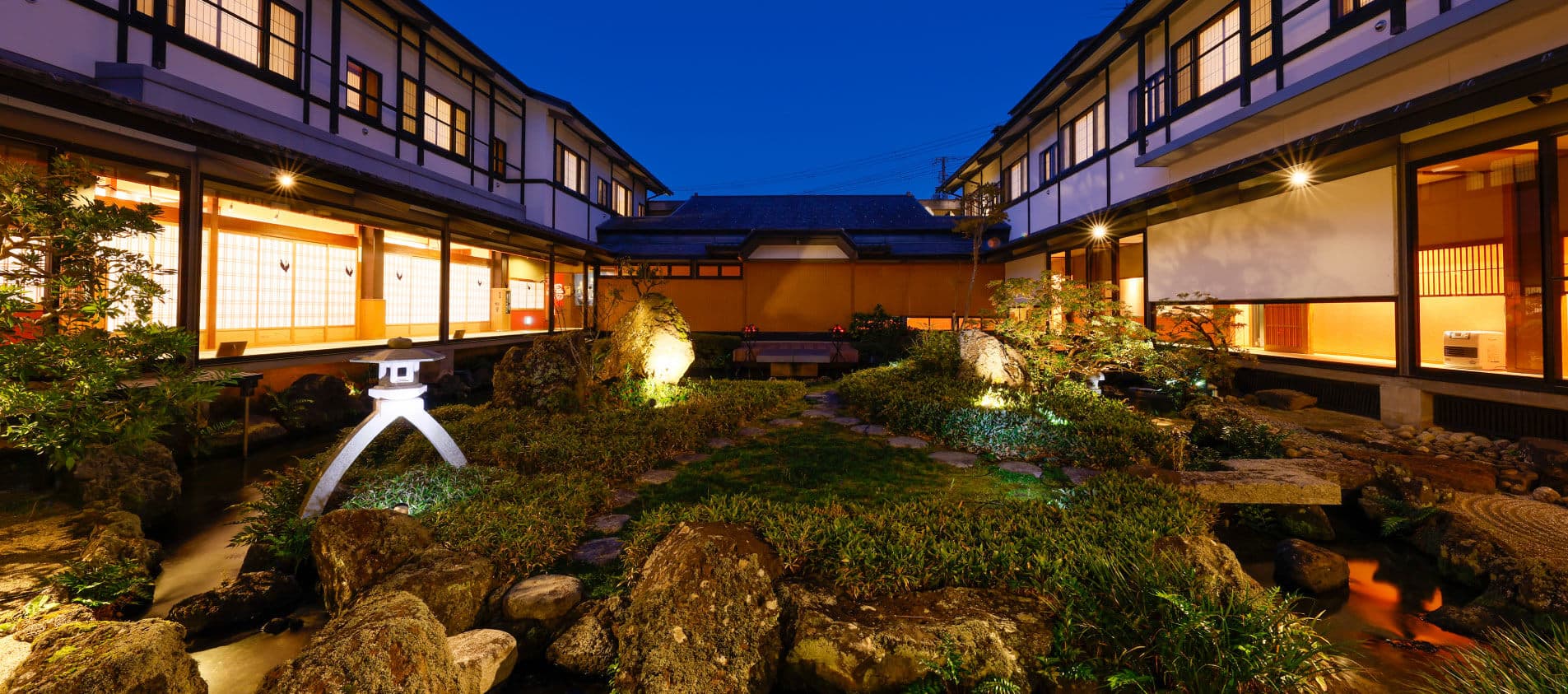
- Central garden with stone stream, torches, and Noh performance stage — most visually striking interior in Kinosaki - Indoor and outdoor in-house baths; free station shuttle; free WiFi and parking - Full kaiseki service; matsuba-gani plan November 6–March 31; Tajima wagyu year-round - Rated 4.8 stars on Visit Kinosaki's official platform [verified Visit Kinosaki 2026-05-24] - Tattoo policy: check in-house bath policy directly before booking

I visited for dinner but did not stay; the kaiseki course featured Tajima wagyu, *amadai* (tilefish), and a local sanbaizu vinegared course. English reviews are sparser than the Nishimuraya properties.

Honest trade-off: Confirm tattoo policy and current availability directly by email before booking.

Check availability at Onishiya Suishoen →

6. Yamamotoya — Best for 350-year riverside heritage and full tattoo-friendly access

Best for Tattooed travelers who want full communal-bath access in a historically significant mid-upper canal-side inn with its own craft-beer brewery. ¥¥¥

At a glance ~26 rooms · ~$200–$450 USD · 350+ years · riverside canal location · 3-min from station.

- Fully tattoo-friendly in all in-house baths — the only mid-upper ryokan on this list with no cover-up requirement [verified TattooFriendlyOnsen.com 2026-05-24] - Otani River-facing rooms with willow-canal views; direct canal-side position - On-site craft-beer micro-brewery: four styles including a Red Ale formulated for matsuba-gani pairing - Full kaiseki service; matsuba-gani plan November 6; Tajima beef year-round; yumepa included

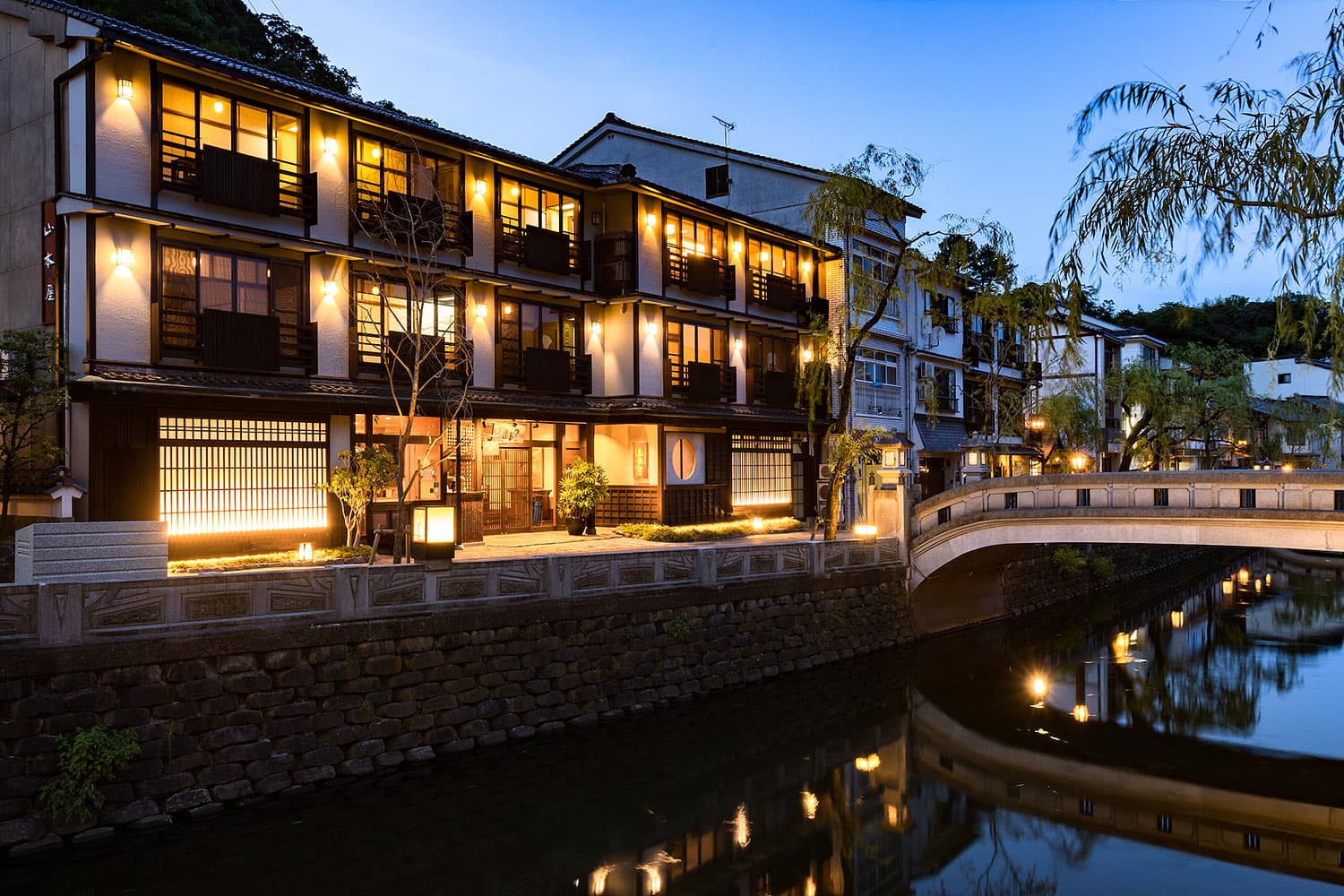
I stayed here in November. The Red Ale's slight iron-and-caramel note cuts grilled matsuba-gani fat in a way sake doesn't always manage. The riverside rooms — facing the illuminated willows directly — are the best sleeping position in Kinosaki for the canal-at-night experience.

Honest trade-off: Rooms aren't as architecturally distinguished as Mikiya or Yutouya. The USP is location + full tattoo access + brewery.

Check availability at Yamamotoya →

7. Kobayashiya — Best for boutique mid-range with three private baths

Best for Couples who want cultural-property heritage at a mid-range price with three reservable private baths in a 9-room inn. ¥¥

At a glance 9 rooms · ~$150–$350 USD · Renovated registered cultural property · 3-min from station · 2-min to Mandara-yu.

- Three reservable *kashikiri* private baths — highest private-bath-to-room ratio on this list (1 per 3 rooms) - Tattoo policy: private baths universally accessible; communal bath requires cover-up - Artisan communal bath in lacquered wood; hot-spring source-fed - Modern-leaning kaiseki with fortnightly rotating menu; matsuba-gani plan from November competitively priced

Nine rooms means the okami knows your dinner preference before you sit down. The three private baths — two indoor, one small rotenburo — give a genuinely private hot-spring soak even if the communal bath requires cover-up.

Honest trade-off: Nine rooms means near-zero availability if you book late — two months ahead minimum even for weekdays.

Check availability at Kobayashiya →

Tip

When booking matsuba-gani plans, request the *kani-suki* (crab sukiyaki) variant rather than the standard sashimi-grill-hotpot. The broth at the end — rich with crab roe and dashi — is the best part of the meal, and it's what the town's okami eat when they eat together.

8. Tajimaya — Best for crab-and-Tajima-beef kaiseki on a mid-range budget

Best for Food-first travelers who want serious matsuba-gani and Tajima beef at the same table without paying Honkan rates. ¥¥

At a glance 22 rooms · ~$130–$300 USD · Canal-side · 5-min from station · 1-min to Ichino-yu.

- Tattoo policy: cover-up in communal; *kashikiri* private bath available - Two in-house baths plus one reservable private bath; hot-spring source-fed; yumepa included - Tajima-gyu wagyu sourcing documented by Visit Hyogo [verified Visit HYOGO 2026-05-24] — the foundation lineage for Kobe, Matsusaka, and Omi beef - Canal-side location; 1-min walk to Ichino-yu cave bath

I stayed at Tajimaya in late February. A single sumibi-grilled cube of A5 Tajima beef; the okami's grandfather had a framed lineage chart going back to a 1939 cow named Tajiri-go. The crab and the beef arriving together at mid-range price is the best-value meal on this list.

Honest trade-off: The building is comfortable but not architecturally special — the kaiseki is the reason.

Check availability at Tajimaya →

9. Tsutaya Ryokan — Best for Bakumatsu history at a mid-range price

Best for History travelers who want to sleep where Bakumatsu-era political refugees once hid, at the lowest mid-tier price. ¥¥

At a glance 16 rooms · ~$120–$280 USD · Wooden three-story · Bakumatsu-era heritage · 8-min from station · 3-min to Yanagi-yu.

- Tattoo policy: cover-up in communal and private baths; sotoyu accessible via yumepa - One in-house indoor bath plus one *kashikiri* bath; hot-spring source-fed - Honest kaiseki: Tajima beef and Sea-of-Japan seafood; matsuba-gani plan from November - Katsura Kogoro (Kido Takayoshi), architect of the Meiji Restoration, reportedly hid here during Bakumatsu-era pursuit

Three-story wooden construction, low-beam corridors, and the Bakumatsu backstory create a sense of historical weight the mid-range price doesn't telegraph. Yanagi-yu at 3 minutes is one of the quieter sotoyu on the circuit.

Honest trade-off: 8-minute walk is fine for the circuit but slightly isolating. In-house bath is modest.

Check availability at Tsutaya Ryokan →

10. Sennen-no-Yu Koman — Best for the founding-family story since 717 A.D.

Best for Travelers who want to stay with the family that, by tradition, founded Kinosaki Onsen — at a mid-range price. ¥¥

At a glance 28 rooms · ~$100–$250 USD · *Sukiya*-style architecture · lineage to 717 A.D. · 6-min from station · 2-min to Mandara-yu.

- Tattoo policy: cover-up in communal baths; private family bath available - Two large in-house baths plus one reservable family bath; men's outdoor rotenburo among the largest in-house baths here - Full kaiseki with Sea-of-Japan emphasis — winter monkfish (*anko nabe*), spring firefly squid (*hotaru-ika*), matsuba-gani plan from November - 28 rooms — good availability year-round except crab-season weekends

Koman quietly leans on its own bath rather than pushing guests outward — the men's outdoor rotenburo is genuinely large. The founding-717-A.D. narrative and the in-house bath scale are the twin USPs.

Honest trade-off: Sukiya aesthetic is subtle — don't book expecting heritage-building drama. Narrative and bath size are the selling points.

Check availability at Sennen-no-Yu Koman →

11. Tsukimotoya — Best for Michelin-noted quiet-center ryokan at a mid-range price

Best for Travelers who want a Michelin-noted traditional ryokan at a mid-range price without the theatrical overhead of a Relais & Châteaux property. ¥¥

At a glance ~18 rooms · ~$130–$300 USD · Michelin Guide Hyogo 2016 'Pleasant Lodging' · 5-min from station · central-town location.

- Tattoo policy: verify in-house bath policy directly; sotoyu accessible via yumepa - 100% hot-spring source water in in-house bath; open 6 AM–midnight - Full kaiseki service; matsuba-gani plan from November; Tajima beef year-round - Central-but-quiet location: one street back from the Otani-gawa canal crowds

The Michelin "Pleasant Lodging" signal: not a luxury spectacle, not a budget compromise — a well-run traditional inn doing the fundamentals (food, bath, service) at a very high level. Guest reviews consistently highlight kaiseki quality relative to price.

Honest trade-off: No age, literary, or founding narrative. The USP is quality-to-price ratio.

Check availability at Tsukimotoya →

12. Sensui — Best for three complimentary private open-air baths

Best for Guests who want maximum private open-air bath access — three free *kashikiri rotenburo* — without paying Shogetsutei suite rates. ¥¥

At a glance ~20 rooms · ~$150–$350 USD · 7-min from station · free station shuttle · three private open-air baths.

- Three free private open-air baths — highest complimentary private-bath count on this list [verified Visit Kinosaki 2026-05-24] - Tattoo policy: private baths accessible; verify communal bath policy directly - Two communal baths plus three free private rotenburo; hot-spring source-fed throughout; free shuttle - Full kaiseki; matsuba-gani plan November 6–March 31

Sensui solves a specific problem: private outdoor soaking in natural hot-spring water without booking a luxury suite. Three private baths free to use (no time-based surcharge at most hours) is unusual in mid-range Kinosaki, where most ryokans charge for kashikiri access.

Honest trade-off: 7-min walk is farthest from the sotoyu core for this price tier; architecture is functional rather than heritage.

Check availability at Sensui →

13. Koyado En — Best adults-only auberge with Tajima-beef focus

Best for Couples or adult travelers who want an adults-only atmosphere with premium Tajima-beef kaiseki and private bath intimacy. ¥¥

At a glance 8 rooms · ~$140–$350 USD · Adults-only (13+) · 3-min from station · private hot-spring baths.

- Adults-only policy — the only explicitly adults-only ryokan on this list - Tattoo policy: private baths accessible for tattooed guests - Premium Tajima-beef course dinner as the dining flagship — focused on fewer preparations of higher-grade meat - Afternoon happy hour with sparkling plum wine and sake; café and restaurant dining format

Koyado En opened in 2013 as an explicit counter-proposal to the large-ryokan format: eight rooms, no children's noise, premium beef program, private baths for intimacy. It functions like a French auberge that has absorbed ryokan DNA. For couples uncomfortable in large communal onsen settings, this is the structural solution.

Honest trade-off: Eight rooms means very limited availability — book three months ahead minimum for any weekend.

Check availability at Koyado En →

14. Kawaguchiya Honkan — Best budget-mid pick with riverside location

Best for Budget-minded travelers who want kaiseki included and a canal-side location at prices that undercut most mid-range picks above. ¥–¥¥

At a glance ~25 rooms · ~$90–$220 USD · 4-min from station · free station pick-up · Otani River-side location.

- Tattoo policy: cover-up required; sotoyu accessible via yumepa - Free station pick-up — useful for guests arriving with luggage on crab-season weekends - Half-board kaiseki plans from ~$140–$180; matsuba-gani plan from November - Practical laundry facilities — one of the few Kinosaki ryokans catering structurally to longer stays - English-friendly booking; consistent positive reviews on Expedia and Booking.com [verified 2026-05-24]

The $90–$120 rack-rate rooms don't include dinner, but half-board plans from ~$140 are solid value. Free station pick-up is a practical differentiator for heavy-luggage arrivals.

Honest trade-off: Building is comfortable but not architecturally notable. Rooms go early in crab season.

Check availability at Kawaguchiya Honkan →

15. Kinosaki-no-Yado — Best budget pick under $180 with kaiseki and yumepa included

Best for Solo travelers and budget-first couples who came for the sotoyu and the yukata walk, not for in-room kaiseki theater. ¥

At a glance 12 rooms · ~$80–$180 USD · 5-min from station · half-board kaiseki and yumepa included at base rate.

- Tattoo policy: cover-up in in-house bath; full sotoyu access via yumepa - Genuine half-board kaiseki at base rate — not a buffet: three to five Tajima-region courses, a hotpot or grilled main, rice and miso - Yumepa included — the same pass Nishimuraya Honkan guests get; the most expensive perk in town, free regardless of room rate - Matsuba-gani whole-crab plan available November–March at a supplement smaller than mid-range ryokans

The financial logic: the yumepa that Nishimuraya Honkan charges $400/night to include is included here at $80. The kaiseki is a fraction of Mikiya's, but it's real kaiseki, plated properly.

Honest trade-off: 12 rooms means extremely limited availability; book 2–3 months ahead even for weekdays in crab season. Rooms are basic and small.

Check availability at Kinosaki-no-Yado →

The 7 sotoyu bath ritual: how to plan your bathhouse circuit

Kinosaki has seven public bathhouses (*sotoyu*), each with a different theme and architecture: Satono-yu, Ichino-yu, Goshono-yu, Mandara-yu, Yanagi-yu, Jizo-yu, and Kono-yu. Ryokan guests receive a free *yumepa* pass valid from check-in until 1 PM on departure day. The full circuit is roughly 2 km — a leisurely 90-minute walk excluding bathing time.

Critical 2026 update: Satono-yu has been closed since 2024 for renovation, with no public reopening date [verified Visit Kinosaki 2026-05-24]. Competing blogs still say "all seven" — they're wrong. Plan around the six currently operating sotoyu.

Ichino-yu — the most photographed sotoyu, with a famous cave bath carved into rock. Longest lines 7–9 PM weekends; go after 9 PM.

Goshono-yu — Imperial-Palace-style bath with the largest outdoor rotenburo in the network. Best before 7 PM or after 9:30 PM.

Mandara-yu — the spiritual birthplace of Kinosaki (Dochi Shonin, 720 A.D.). Two minutes from Goshono-yu, smaller, quieter, almost always uncrowded. Start here.

Yanagi-yu — the willow-themed short-soak bath. Best for a quick 20-minute stop between longer soaks.

Jizo-yu — family-friendly sotoyu near the station cluster. Gentler temperatures, most accessible from the station-end ryokans.

Kono-yu — far north end of town, near the ropeway. The only sotoyu that opens at 7 AM (all others open at 3 PM) — the essential fact for guests with a morning checkout needing one final soak.

For the full bathing etiquette primer, our onsen etiquette guide covers the complete protocol. Japan Tourism Agency documents Onsenji Temple as Kinosaki's official guardian temple [verified Japan Tourism Agency 2026-05-24].

Tip

Optimal first-night sotoyu circuit: Skip Goshono-yu (peak crowds 7–9 PM) and start with Mandara-yu (the spiritual origin, uncrowded). Walk to Yanagi-yu for a short soak. Then circle back to Ichino-yu after 9 PM for the cave bath without the weekend line. Three baths, 2 km of yukata walking, done by 10:30 PM.

Kani-kaiseki seasonal pricing: crab season tiers and which ryokan serves which

Matsuba-gani (snow crab) season runs November 6 to March 31, 2026–27, by statute. JNTO confirms the window and that male snow crabs are landed at Tajima-region ports including Kasumi [verified JNTO 2026-05-24]. Most ryokans offer whole-crab multi-course *kaiseki* at ¥18,000–¥30,000 per person supplement on top of room rate.

| Crab Type | Season | Supplement (per person) | Which Ryokans | |---|---|---|---| | Matsuba-gani (snow crab) | Nov 6–Mar 31 | ¥18,000–¥30,000 | All 15 ryokans on this list | | Tarabagani (king crab) | Year-round (imported) | ¥25,000–¥45,000 | Honkan, Shogetsutei, Yutouya (on request) | | Beni-zuwai-gani (red snow crab) | Oct–Nov + Mar–Apr | ¥10,000–¥15,000 | Select mid-range in shoulder season |

Price math: A $250 base-rate Kobayashiya room becomes ~$650–$700 for two with the matsuba-gani upgrade (¥18,000–¥20,000 per person). Honkan at $400 + ¥25,000 supplement reaches $950–$1,100 for two.

Best value window: Early-to-mid November — full-grade crabs, ryokan rates 10–20% below February peak, lighter crowds. Target the second weekend in November. For atmosphere — snow on willows, still canal reflections — target mid-January after the New Year surcharge (December 29–January 4) ends. Outside crab season, Tajima beef is the headliner — pair with best winter onsen or a private-onsen stay.

Tattoo policy matrix: which Kinosaki ryokans allow tattoos where

Kinosaki is one of Japan's most tattoo-progressive onsen towns. The public sotoyu are universally open to tattooed guests — no cover-up required at any of the six operating sotoyu [verified Visit Kinosaki 2026-05-24]. Ryokan in-house policies vary.

| Ryokan | Communal In-House Bath | Private Kashikiri Bath | Sotoyu via Yumepa | |---|---|---|---| | Nishimuraya Honkan | Cover-up required | Allowed | Fully allowed | | Nishimuraya Shogetsutei | Cover-up required | Allowed | Fully allowed | | Mikiya | Cover-up required | Allowed | Fully allowed | | Yutouya Ryokan | Not allowed | Not allowed | Fully allowed | | Onishiya Suishoen | Confirm directly | Confirm directly | Fully allowed | | Yamamotoya | Fully allowed | Fully allowed | Fully allowed | | Kobayashiya | Cover-up required | Allowed | Fully allowed | | Tajimaya | Cover-up required | Allowed | Fully allowed | | Tsutaya Ryokan | Cover-up required | Cover-up required | Fully allowed | | Sennen-no-Yu Koman | Cover-up required | Allowed | Fully allowed | | Tsukimotoya | Confirm directly | Confirm directly | Fully allowed | | Sensui | Confirm directly | Allowed | Fully allowed | | Koyado En | N/A | Allowed | Fully allowed | | Kawaguchiya Honkan | Cover-up required | Cover-up required | Fully allowed | | Kinosaki-no-Yado | Cover-up required | N/A | Fully allowed |

Key takeaway: Yamamotoya is the only mid-upper ryokan with confirmed full communal-bath tattoo access. Every ryokan issues a yumepa, so the full sotoyu circuit is accessible regardless of in-house policy. For national context, our tattoo-friendly ryokans guide benchmarks Kinosaki against Hakone, Beppu, and Kusatsu.

How to choose your Kinosaki ryokan: by trip purpose, budget, and season

Milestone couples: Nishimuraya Honkan for theatrical okami service. Shogetsutei for private rotenburo suite. Mikiya for intimate literary heritage. Koyado En for adults-only auberge with wagyu and wine.

First-time Japan travelers: Kobayashiya (9 rooms, high staff-to-guest ratio, three private baths) or Sennen-no-Yu Koman (28 rooms, large in-house bath, lower-pressure environment).

Families with children: Nishimuraya Hotel Shogetsutei (resort scale, pool, shuttle) or Sennen-no-Yu Koman (family kashikiri bath for four).

Crab focus (Nov–Mar): Nishimuraya Honkan for the definitive kaiseki experience; Tajimaya for mid-range crab-and-wagyu; Kinosaki-no-Yado for crab on a budget. Book by August for November opening weekend.

Tattooed travelers: Yamamotoya for full communal-bath access. Any pick on this list for full sotoyu access — the public baths are universally tattoo-friendly.

Budget under $200 with kaiseki: Kinosaki-no-Yado ($80–$180) or Kawaguchiya Honkan ($90–$220). Both include yumepa. Step up to Koman ($100–$250) for more rooms and a larger bath.

Kinosaki vs Hakone: Kinosaki for Kansai itineraries — unique sotoyu structure, crab season, tattoo-friendly public baths, 2h 30m from Kyoto. Hakone for Tokyo itineraries — 1h 30m from Shinjuku, higher luxury ceiling, Mt. Fuji views. See our Hakone guide for the direct comparison and Arima Onsen for the Kobe-region alternative.

Yukata, geta, and sozoro-aruki: the town as a stage

Kinosaki's signature ritual, *sozoro-aruki* ("leisurely strolling with no destination"), is the town's official guest experience: every shop, bar, and restaurant welcomes guests in ryokan-issued yukata [verified Visit Kinosaki 2026-05-24]. This is not a costume hour — it is the dress code from check-in to checkout.

Your ryokan provides a yukata (sized small/medium/large — ask at check-in), a *haori* outer jacket for cold evenings, and wooden geta sandals. Mikiya, Yutouya, and Tsutaya offer a choice of three or four yukata patterns. Walk heel-to-toe like sneakers and you'll crack a toe within 200 meters; shuffle with weight on the ball of the foot and the rhythm becomes automatic by night two.

The town formalized the walk with a *Bunya* stamp campaign: participating Yunosato-dori shops issue a small lapel-stamp when you stop in wearing yukata — collect five and get a souvenir at the tourism office. The willow-lined Otani-gawa with night illumination runs late October through late March, dusk to about 11 PM — the iconic Kinosaki photograph.

Tip

Geta walking. Wear the *tabi* socks your ryokan provides — barefoot geta on cold November stone causes blisters within 200 meters. Pack thin merino socks if you have wide feet (ryokan tabi run small). New geta benefit from a ten-minute breaking-in walk on tatami before the first stone-street outing.

Getting to Kinosaki: Konotori Limited Express, JR Pass, and the last train

Take the JR Limited Express Konotori from Shin-Osaka to Kinosaki Onsen Station — about 2 hours 40 minutes, ¥6,140 unreserved, JR Pass valid. From Kyoto, the Limited Express Hashidate/Kinosaki runs directly in about 2 hours 30 minutes for ¥4,500 unreserved, also JR Pass valid. From Tokyo, Shinkansen to Kyoto then transfer — total roughly 4 hours. The JR Kansai Wide Pass covers the Konotori and all Limited Express trains in Kansai for a flat fee — ideal for Kyoto + Osaka + Kinosaki combinations.

Four steps from Shin-Osaka:

1. Board the JR Limited Express Konotori (こうのとり) bound for Kinosaki Onsen — ~2h 40m, JR Pass valid, runs roughly hourly. 2. Reserve your seat the morning of arrival in Japan at any Midori-no-madoguchi — in crab season, trains sell out 3 days ahead on weekends. 3. Arrive at Kinosaki Onsen Station — the platform exits directly onto the canal-walking street. 4. Walk to your ryokan. Kobayashiya is 3 minutes; Honkan is 7 minutes. Shogetsutei and Sensui run free shuttles if you call ahead.

The last evening Konotori back to Shin-Osaka leaves around 18:30 — the #1 logistical surprise. Kinosaki is structurally a one- or two-night commitment. Japan welcomed a record 42.7 million international visitors in 2025 [verified Nippon.com 2026-05-24] — book ryokans 6–8 months ahead for any Saturday in November–February.

Tip

JR Pass timing. The Konotori from Shin-Osaka is JR Pass and JR Kansai Wide Pass valid, but the last train back is around 18:30 — meaning a Kinosaki stay is structurally a one- or two-night commitment, not a day trip. Book the return leg before you arrive.

Best time of year to visit Kinosaki Onsen

Mid-November for matsuba-gani opening week. The 2026–27 season opens November 6 — value sweet spot: full-grade crabs, willow lights on, rates 10–20% below February, lighter crowds. Book by August for the second-November weekend.

Mid-January after New Year week. January 5–25 is atmospherically the best time in Kinosaki — snow on willows, still canal, post-holiday crowd lull. Avoid December 29–January 4 (holiday surcharges).

Late February for peak crab season. Biggest crabs, deepest snow, highest prices, longest lines. Book six months ahead for any Saturday.

Late March to mid-July for Tajima beef and shoulder pricing. Cheapest, quietest stretch. Combine with a day trip to Izushi castle town or Genbudo Cave.

Avoid late July through early September — Sea-of-Japan humidity makes the bath circuit unpleasant, willow lighting is off. Avoid Golden Week (May 3–5) for holiday surcharges. Check the Kinosaki area guide when picking exact dates.

Kinosaki Onsen ryokan FAQ

Which is the best ryokan in Kinosaki Onsen?

Nishimuraya Honkan — Relais & Châteaux, 165 years, the best kaiseki in northern Hyogo. Mid-range: Mikiya for literary heritage, Kobayashiya for three private baths. Fully tattoo-friendly: Yamamotoya. Under $180 with kaiseki and yumepa: Kinosaki-no-Yado.

Are tattoos allowed at Kinosaki Onsen?

Yes — all six operating sotoyu permit tattoos of any size with no cover-up, making Kinosaki the most tattoo-friendly onsen town in Japan [verified Visit Kinosaki 2026-05-24]. Yamamotoya allows tattoos in its in-house communal baths too. Other ryokans require cover-up in communal baths but allow tattoos in private *kashikiri* baths. Yutouya is the most conservative. See the tattoo matrix above for the full per-ryokan breakdown.

When is crab season at Kinosaki?

Matsuba-gani season runs November 6 to March 31 by statute. Best value: early-to-mid November — full-grade crabs, prices 10–20% below February peak, lighter crowds. Book opening week by August.

Do I need to leave my ryokan to use the sotoyu?

Yes — the sotoyu are public townhouses separate from your ryokan's in-house bath. Every ryokan issues a yumepa for free entry. Satono-yu remains closed for renovation (no reopening date as of May 2026) — plan your circuit around the six currently operating sotoyu.

Kinosaki vs Hakone — which is better?

Kinosaki for Kansai itineraries: unique 7-sotoyu structure, crab season, tattoo-friendly public baths, 2h 30m from Kyoto. Hakone for Tokyo itineraries: 1h 30m from Shinjuku, higher luxury ceiling, Mt. Fuji views. See our Hakone guide.

Cheapest Kinosaki ryokan with private onsen?

Kobayashiya ($150–$350) with three reservable private baths. Sensui ($150–$350) with three free private open-air baths. Koyado En ($140–$350) for adults-only private-bath access.

How long should I stay in Kinosaki?

One night covers kaiseki and three or four sotoyu. Two nights covers all six operating baths, two different kaiseki menus, and the post-checkout morning soak. Three nights makes sense in matsuba-gani season or combined with Izushi castle town.

Can I do Kinosaki as a day trip?

Technically yes — the sotoyu cost ¥1,500 each for day visitors. But the last Konotori back to Shin-Osaka leaves around 18:30, before the most atmospheric sotoyu hours. One night minimum is the practical recommendation.

Final thoughts: fifteen ryokans in a town one kilometer long

The case for a Kinosaki ryokan is structural rather than aspirational. The town is one kilometer long, the six operating sotoyu form a single circuit, the yumepa turns every booking into a town-wide bath ticket, and the entire commercial district expects you in the yukata your ryokan loaned you. Choosing where to sleep is how you choose which Kinosaki you see.

Honkan for milestone luxury. Shogetsutei for private rotenburo. Mikiya for literary heritage. Yutouya for Genroku architecture. Onishiya Suishoen for the Noh-stage garden. Yamamotoya for 350-year canal-side + full tattoo access. Kobayashiya for three private baths at mid-range. Tajimaya for crab-and-wagyu. Tsutaya for Bakumatsu history. Koman for the founding-family story. Tsukimotoya for Michelin-noted quiet-center value. Sensui for three free private open-air baths. Koyado En for adults-only auberge. Kawaguchiya Honkan for budget-mid riverside. Kinosaki-no-Yado for the budget floor with kaiseki and yumepa included.

Remember the post-checkout window: the yumepa is valid until 1 PM on departure day — a final two-bath morning loop most guides will let you forget. See the full Kinosaki Onsen area guide when you're ready to book. *All prices, hours, and access details verified May 24, 2026.*

Kinosaki is the natural onsen extension for Kyoto and Osaka itineraries. Kyoto has no natural hot springs — Kinosaki at 2h 30m direct is the closest full onsen-town experience for a Kansai trip. Pair one Kyoto city night with one or two Kinosaki ryokan nights for the canonical Kansai extension. See our Kyoto ryokan guide, best ryokans for couples, luxury private onsen, and Japan onsen by region to position Kinosaki in your wider itinerary.

2月の火曜日、午後9時40分、一の湯を出ると、まだ髪が濡れていて、川はすでに鏡のように静まり返っていました。大谿川沿いの柳は、10月から3月の城崎でしか見られないあの不思議な黄緑色の光で下から照らされていました。石橋に響く下駄の音が、この町の音色です。すれ違ったのは、おそらく40人ほどの宿泊客。それぞれ違う旅館の柄の浴衣をまとい、誰ひとりスマートフォンを見ていませんでした。最終確認:2026年5月24日。

城崎温泉の旅館を予約すべき理由は、まさにここにあります。この町は一つのゆるぎない習わしで動いています。午後3時までにチェックインし、旅館の内湯で簡単に温まり、旅館が用意した浴衣に着替えて、7つの外湯を指先がふやけるまで渡り歩く。旅館は衣装室であり、町そのものが舞台なのです。この様式は、720年に道智上人が現在の「まんだら湯」の地に温泉を見出したとされるときから受け継がれています[出典確認済み Visit Kinosaki 2026-05-24]。

城崎はまた、日本でもっともタトゥーに寛容な温泉地です。現在営業中の6つの外湯はすべて、タトゥーを隠さなくとも入浴できます。そして、関西の温泉地における蟹の聖地でもあります。松葉蟹(ズワイガニ)のシーズンは法令により11月6日から3月31日と定められており、ほとんどの旅館は丸ごと一杯の蟹会席プランを提供しています。本物の海の味を、それ相応の値段で。

私はこのリストの旅館のうち4軒に実際に宿泊し、1軒は夕食のみ訪問しました。宿泊していない場合は、その旨を明記しています。これは2026年版の大幅拡充版です:15軒(旧版9軒から増加)、蟹シーズン別料金表、タトゥーポリシー一覧、外湯詳細案内、目的別の選び方セクションを新たに追加しました。旅館初心者の方は、まずこちらの初めての旅館ガイドで基礎知識を確認のうえ、城崎ならではの魅力に特化した本記事をお読みください。

城崎温泉の旅館でもっともおすすめなのは西村屋本館です。165年の歴史を持つルレ・エ・シャトー加盟の旅館で、2つの天然温泉浴場、松葉蟹と但馬牛の懐石料理、そして他の旅館ではなかなか得られない女将主導の接客が光ります。リゾート規模の高級感と露天風呂付き客室なら、西村屋ホテル招月庭が城崎随一です。三木屋は文学的・文化財的価値で際立ちます。タトゥーに完全対応している旅館としては、山本屋が最良の選択です。350年の歴史を持つ川沿いの宿で、クラフトビールの醸造所も構えています。予算重視の方には、城崎の宿を。外湯無料パス「湯女パス」込みで1室1泊1万5千円以下から泊まれます。

Tip

【開示事項】 Japan Ryokan Guideは、パートナーリンク経由のご予約から手数料を受け取っています。旅館から掲載料や掲載順位への対価は一切受け取っておらず、すべての旅館はメリットに基づいて選定されています。掲載料金は2026年5月時点の公表定価を基準に、1室2名・夕朝食付きの1泊料金(税抜き)で表示しています。蟹シーズンの追加料金は別途かかります。

一覧比較:城崎温泉の旅館15選

| # | 旅館 | グレード | 料金目安(USD) | 駅からの徒歩 | おすすめポイント | |---|---|---|---|---|---| | 1 | 西村屋本館 | 高級 ¥¥¥¥ | $400〜 | 7分 | 節目の記念旅行 + ルレ・エ・シャトー | | 2 | 西村屋ホテル招月庭 | 高級 ¥¥¥¥ | $250〜 | シャトル | リゾート規模 + 露天風呂付き客室 | | 3 | 三木屋 | 高級 ¥¥¥ | $300〜 | 4分 | 文学的な文化財(志賀直哉) | | 4 | 湯登屋旅館 | 高級 ¥¥¥¥ | $250〜 | 6分 | 元禄期の6,500㎡の建築 | | 5 | 鬼石山水苑 | 高級 ¥¥¥¥ | $220〜 | 5分 | 能舞台のある中庭 | | 6 | 山本屋 | 中級 ¥¥¥ | $200〜 | 3分 | 350年の川沿いの老舗 + タトゥー完全可 | | 7 | 小林屋 | 中級 ¥¥ | $150〜 | 3分 | 9室の宿に3つの貸切風呂 | | 8 | 但馬屋 | 中級 ¥¥ | $130〜 | 5分 | 中級価格帯最高の蟹・和牛懐石 | | 9 | 蔦屋旅館 | 中級 ¥¥ | $120〜 | 8分 | 280ドル以下の幕末の歴史 | | 10 | 千年の湯古まん | 中級 ¥¥ | $100〜 | 6分 | 717年創業の由緒ある家系 | | 11 | 月元屋 | 中級 ¥¥ | $130〜 | 5分 | ミシュラン掲載の閑静な中心部の旅館 | | 12 | 泉翠 | 中級 ¥¥ | $150〜 | 7分 | 無料の露天貸切風呂3つ | | 13 | 小宿縁 | 中級 ¥¥ | $140〜 | 3分 | 大人専用オーベルジュ + 但馬牛 | | 14 | 川口屋本館 | エコノミー〜中級 ¥〜¥¥ | $90〜 | 4分 | 川沿いのリーズナブルな懐石宿 | | 15 | 城崎の宿 | エコノミー ¥ | $80〜 | 5分 | 1万5千円以下の懐石・湯女パス付きの最安宿 |

城崎が特別な理由:町全体で湯を楽しむ仕組み

城崎温泉は兵庫県北部に位置する1,300年の歴史を持つ温泉地で、宿泊客は浴衣と下駄姿で7つの外湯を渡り歩きながら、旅館で懐石料理を楽しみ、同じパス一枚で町全体の湯を堪能できます。日本の温泉地でこのような仕組みを持つのは、城崎だけです。箱根や草津では旅館と町が夜の時間を奪い合いますが、城崎では旅館が意図的に「湯の場」を町に開放しています。

JNTOは城崎を関西屈指の温泉地として評価しています[出典確認済み JNTO 2026-05-24]。大谿川の流れに沿って一直線に広がる全長1kmの町は、徒歩15分で端から端まで歩けます。このリストのすべての旅館はチェックイン時に「湯女パス」を発行し、退館日の午後1時まで現在営業中の全外湯に無料で入浴できます。パス単体の定価は1,500円ですが、いかなる料金帯の予約でも無料で付属します。城崎の旅館の内湯が質素なのはこのためです。浴衣を着て、みんなと一緒に外へ出るのが城崎の流儀なのです。

さらに城崎は、日本でもっともタトゥーに寛容な温泉地でもあります。現在営業中の6つの外湯は、どこもタトゥーを隠さずに入れます[出典確認済み Visit Kinosaki 2026-05-24]。日本の名湯ランキングと比べると、城崎の高級旅館の料金は箱根より10〜15%程度リーズナブルで、他の温泉地にはない「町体験」が得られます。温泉のない京都からは直通特急で2時間30分。関西旅行の自然な拡張先として最適です。

Tip

チェックアウト後の外湯活用術。 湯女パスは多くのブログが主張するチェックアウト時刻(午前10時)ではなく、退館日の午後1時まで有効です。朝食後に荷物をフロントに預け、もう一度浴衣に着替えて、最後にもう1〜2軒の外湯を楽しんでから、正午ごろのこうのとりに乗って大阪に戻りましょう。ほとんどの宿泊客はこれを知らず、何時間分もの温泉を使わずに帰ってしまっています。

15軒の選定基準

城崎で営業しているすべての旅館を5つの基準でスクリーニングしました:駅からの徒歩距離、内湯の質とタトゥーポリシー、懐石の水準(特に冬の松葉蟹メニュー)、英語での予約対応、各価格帯でのコストパフォーマンス。15軒が基準を満たしました(高級5軒、中級7軒、エコノミー2軒)。掲載料は一切受け取っていません。宿泊施設は25の温泉地・224軒の審査済み旅館データベースから選定しています。

15軒のうち4軒には私自身が宿泊し、2軒は夕食のみ訪問、残る9軒は2026年5月に実施した公開情報調査と予約プラットフォームの確認によって検証済みです。宿泊した宿については、そう明記しています。料金は2026年5月の定価に基づき、1室2名・夕朝食付きの1泊料金(税抜き)で表示しています。蟹シーズンの追加料金は別途かかります。より広い料金比較の参考として、城崎の料金が全国水準とどう違うかも予約前にご覧ください。

1. 西村屋本館 — 節目の記念旅行と最高の接客

こんな方に 節目の旅行を楽しむカップル。女将主導の演出ある接客、兵庫県北部随一の懐石料理。¥¥¥¥

概要 34室・約400〜900ドル・創業165年・駅から徒歩7分・御所の湯・まんだら湯まで2分。

- ルレ・エ・シャトー加盟確認済み[出典確認済み Relais & Châteaux 2026-05-24] - 天然温泉の内湯2ヶ所 + 予約制貸切風呂1ヶ所 - タトゥーポリシー:貸切風呂のみ可、大浴場は隠蔽が必要 - 松葉蟹会席プラン:11月6日〜3月31日、蟹追加料金は1名あたり25,000円〜 - 湯女パス付き;御所の湯(外湯最大の露天風呂)まで徒歩7分

2月末に宿泊しました。懐石料理は、生の小柱と焼き松葉蟹の尻尾を柿の酢漬けに添えた一品から始まりました。女将の卓上サービス — 何も言わず酒を注いで、静かに引いていく — は、旅行ライターが言葉にしようとしてうまく伝えられないものです。11月の解禁初週末の日程は、8ヶ月前から予約が必要です。

正直なトレードオフ: 歴史ある建築の都合上、ベーシックタイプの客室には独立した浴室設備がありません。予約時に確認済みです。

西村屋本館の空室を確認する →

Tip

本館の松葉蟹シーズンの客室は8ヶ月前から埋まります。予約が取れない場合は、西村屋ホテル招月庭の森の庭園リゾート(同系列、シャトルで5分、露天貸切風呂あり)をご検討ください。

2. 西村屋ホテル招月庭 — リゾート規模の高級感と露天温泉付き客室

こんな方に 客室露天風呂とプール・スパ・ジムなどのリゾート施設を備えた高級城崎旅行を求める方。歴史的な旅館では対応できないニーズに応えます。¥¥¥¥

概要 98室・約250〜600ドル・5万㎡の森の庭園・駅からシャトルで5分。

- 大浴場に加え、森の庭園を望む露天風呂付きスイートあり - タトゥーポリシー:貸切風呂のみ可、大浴場は隠蔽が必要 - プール・スパ・ジム・3つのダイニング(正統派懐石・モダンアラカルト・ロビーラウンジ) - 川沿いの外湯へ無料シャトル運行;湯女パス付き - 施設内だけで外湯の夜を完結できる、城崎唯一の旅館

リゾート規模の露天風呂を本館ほどの料金を払わずに楽しみたい方へ。露天風呂付きスイートは250〜350ドルで、コストパフォーマンスの高い選択肢です。高齢のゲスト、小さなお子様連れのご家族、移動に制限のある方は、リゾートの設備が特に役立ちます。

正直なトレードオフ: シャトル依存のため、外湯への外出が「遠出」に感じられます。中心部の旅館(湯登屋旅館や小林屋など)を希望する方は要検討。

西村屋ホテル招月庭の空室を確認する →

3. 三木屋 — 文学の遺産と300年の文化財

こんな方に 日本文学史に刻まれた登録有形文化財の旅館に宿泊したい読書家・旅行者。¥¥¥

概要 16室・約300〜700ドル・創業300年以上・登録有形文化財・駅から4分・一の湯まで1分。

- 内湯2ヶ所(男女別)+貸切風呂1ヶ所;外湯と同じ源泉 - タトゥーポリシー:大浴場は隠蔽が必要、貸切風呂は可 - 志賀直哉が『城の崎にて』(1917年)をここで療養しながら執筆 — 日本近代文学の礎となる作品 - 11月6日からの松葉蟹プランは、高級中価格帯で城崎最高水準の蟹懐石 - 内庭を望む個室ダイニング

1月に宿泊しました。庭石に雪が積もり、大浴場は朝6時に誰もおらず、建物は意図的とも思えるきしみ音を立てていました。内湯の懐石料理は、価格以上のクオリティでした。

正直なトレードオフ: 築300年の建物の浴室は隙間風があります。それが醍醐味ですが、万人向けではありません。

三木屋の空室を確認する →

4. 湯登屋旅館 — 元禄期の壮大な建築群

こんな方に 330年にわたって増築された6,500㎡の複合建築の中で眠りたい建築ファン。¥¥¥¥

概要 5棟続きの48室・約250〜600ドル・1688年(元禄期)創業・6,500㎡の歴史的な庭園・駅から6分・御所の湯まで3分。

- 内湯複数あり、4名まで入れる家族用貸切風呂を含む - タトゥーポリシー:内湯のいずれも不可;外湯は湯女パスで利用可 - 個室ダイニングで本格懐石;松葉蟹プランは正統派:刺身、焼き、蟹すき、酢の物、蟹だし雑炊 - 中心部の歴史的旅館の中で最大の客室数;団体予約可能

5棟をつなぐ渡り廊下 — 床の高さが変わり、突然の梁、思いがけない窓から庭が現れる — は、何世紀にもわたって有機的に育った建築そのものです。城崎温泉の価格帯で宿泊できる、もっとも建築的に複雑な建物です。

正直なトレードオフ: リスト内でもっとも厳格なタトゥーポリシー。タトゥーのある方は外湯のみでの入浴となります(湯女パスで全外湯利用可)。

湯登屋旅館の空室を確認する →

5. 鬼石山水苑 — 能舞台の中庭と劇的な美学

こんな方に 炎のともる能舞台を持つ中庭という、歴史的な旅館の廊下とは一味違う演劇的な空間を求める方。¥¥¥¥

概要 約30室・約220〜500ドル・駅から5分・能舞台の中庭・内湯(室内・露天あり)。

- 石の流れと松明、能の舞台を持つ中庭 — 城崎で視覚的にもっとも印象的な内装 - 室内・露天内湯あり;無料シャトル・無料WiFi・駐車場 - 懐石料理フル対応;松葉蟹プランは11月6日〜3月31日;但馬和牛は通年 - Visit Kinosaki公式プラットフォームで星4.8の評価[出典確認済み Visit Kinosaki 2026-05-24] - タトゥーポリシー:予約前に内湯ポリシーを直接確認してください

夕食のみの訪問でしたが、懐石は但馬和牛、甘鯛、地元の三杯酢コースが供されました。英語のレビューは西村屋系列と比べると少なめです。

正直なトレードオフ: タトゥーポリシーと現在の予約状況については、予約前にメールで直接確認してください。

鬼石山水苑の空室を確認する →

6. 山本屋 — 350年の川沿いの老舗とタトゥー完全可の入浴環境

こんな方に タトゥーがあっても大浴場を自由に利用したい方。歴史ある中上級の運河沿いの旅館で、クラフトビールの醸造所も備えています。¥¥¥

概要 約26室・約200〜450ドル・創業350年以上・大谿川沿い・駅から3分。

- 全内湯でタトゥー完全可 — 隠蔽不要で大浴場を使える、リスト内唯一の中上級旅館[出典確認済み TattooFriendlyOnsen.com 2026-05-24] - 柳と運河を望む大谿川側の客室;運河沿いの立地 - 館内クラフトビール醸造所:松葉蟹に合わせたレッドエールを含む4種類 - 懐石料理フル対応;松葉蟹プランは11月6日から;但馬牛は通年;湯女パス付き

11月に宿泊しました。レッドエールのほんのりとした鉄とキャラメルの風味が、焼き松葉蟹の脂をきれいに切ってくれる。日本酒ではなかなかできない仕事です。川沿いの客室 — 直接、夜の運河と灯されたばかりの柳を望む — は、夜の城崎運河を体感するための最高の寝床です。

正直なトレードオフ: 客室は三木屋や湯登屋旅館ほど建築的な個性はありません。この宿の魅力は立地・タトゥー完全可・醸造所です。

山本屋の空室を確認する →

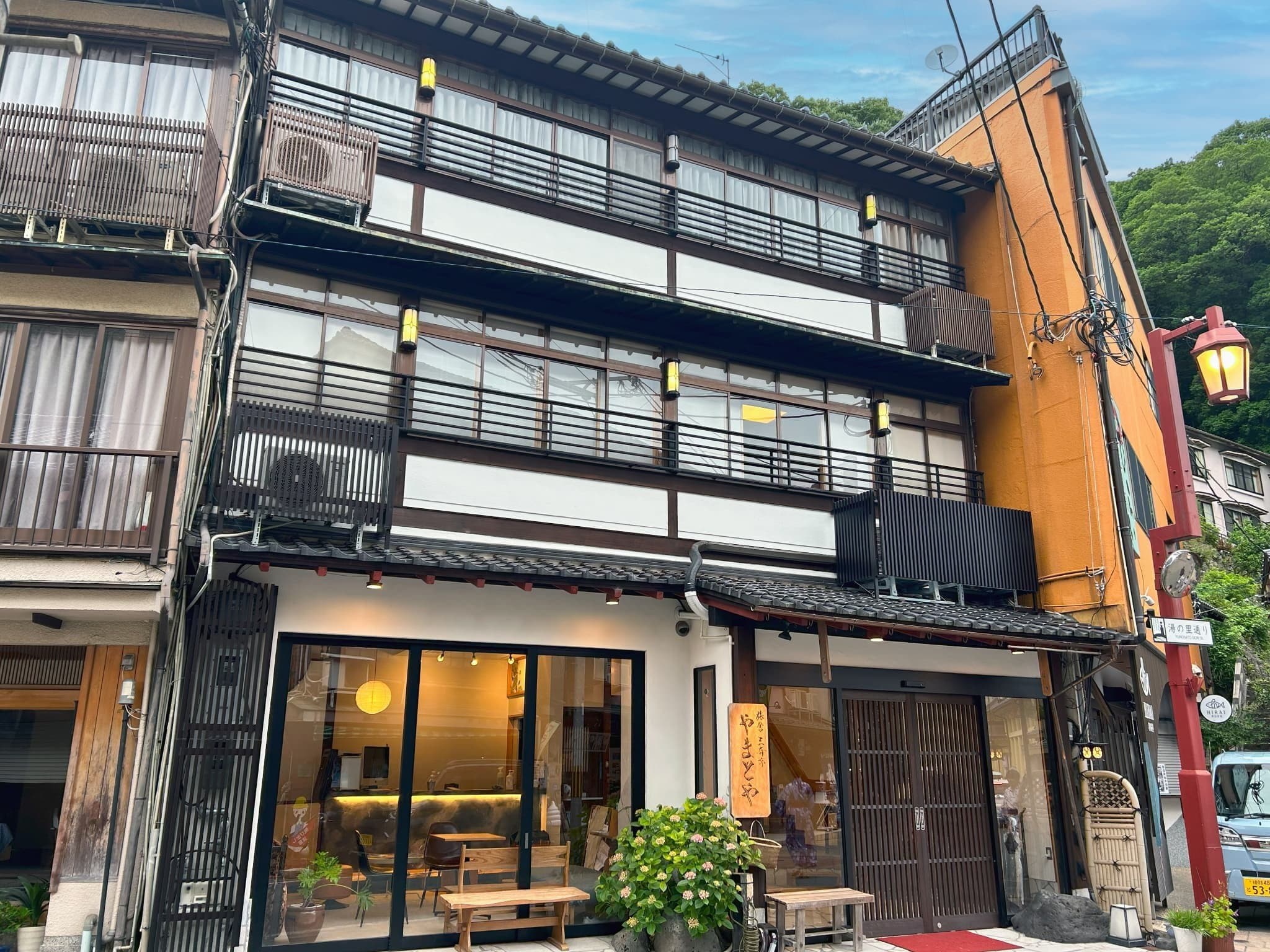
7. 小林屋 — 3つの貸切風呂を持つ9室のブティック旅館

こんな方に 9室の小さな旅館で3つの貸切風呂を独占しながら、文化財の趣を中価格帯で楽しみたいカップル。¥¥

概要 9室・約150〜350ドル・改修済み登録有形文化財・駅から3分・まんだら湯まで2分。

- 3つの予約制貸切風呂 — リスト内最高の客室比率(3室に1つ) - タトゥーポリシー:貸切風呂は全員可、大浴場は隠蔽が必要 - 漆塗りの木造大浴場;源泉かけ流し - 2週間ごとに内容が変わる趣向を凝らした懐石;松葉蟹プランは11月から競争力のある料金設定

9室なので、食事の前に女将さんがすでにあなたの好みを知っています。3つの貸切風呂(内湯2ヶ所・小さな露天1ヶ所)があれば、大浴場が隠蔽を求めるポリシーでも、純粋にプライベートな温泉入浴が楽しめます。

正直なトレードオフ: 9室のため予約が早く埋まります。平日でも最低2ヶ月前から予約が必要です。

小林屋の空室を確認する →

Tip

松葉蟹プランを予約する際は、通常の刺身・焼き・鍋ではなく、「蟹すき」のバリエーションをリクエストしてください。最後の締めの出汁 — 蟹の内子と鰹だしが溶け合ったもの — がこの料理の真骨頂です。これは城崎の女将さんたちが集まって食べるときに選ぶ一品です。

8. 但馬屋 — 中価格帯で楽しむ蟹と但馬牛の懐石

こんな方に 西村屋本館の料金を払わずに、本格的な松葉蟹と但馬牛を同じテーブルで楽しみたい食通。¥¥

概要 22室・約130〜300ドル・運河沿い・駅から5分・一の湯まで1分。

- タトゥーポリシー:大浴場は隠蔽が必要、貸切風呂あり - 内湯2ヶ所+予約制貸切風呂1ヶ所;源泉かけ流し;湯女パス付き - Visit HYOGOが認定した但馬牛の仕入れ元[出典確認済み Visit HYOGO 2026-05-24] — 神戸牛・松阪牛・近江牛の基幹となる品種 - 運河沿いの立地;一の湯の岩風呂まで徒歩1分

2月末に宿泊しました。炭火で焼かれたA5但馬牛の一口サイズの角切り;女将のお祖父様のフレームに収まった家系図は、1939年生まれの「田尻号」という雌牛まで遡っていました。中価格帯でありながら蟹と牛肉が一緒に出てくるのは、リスト内で最高のコスパの食事体験です。

正直なトレードオフ: 建物は快適ですが建築的な見どころはありません。懐石料理が訪れる理由です。

但馬屋の空室を確認する →

9. 蔦屋旅館 — 中価格帯で泊まる幕末の歴史

こんな方に 幕末の志士たちが身を潜めたと伝わる宿に、中価格帯の最安値で宿泊したい歴史好き。¥¥

概要 16室・約120〜280ドル・木造3階建て・幕末の遺構・駅から8分・柳湯まで3分。

- タトゥーポリシー:大浴場・貸切風呂ともに隠蔽が必要;外湯は湯女パスで利用可 - 内湯1ヶ所+貸切風呂1ヶ所;源泉かけ流し - 誠実な懐石:但馬牛と日本海の海鮮;松葉蟹プランは11月から - 幕末の動乱期、木戸孝允(桂小五郎)が追っ手を逃れてここに身を潜めたと伝わる

木造3階建て、低い梁の廊下、幕末の歴史 — 中価格帯の料金からは想像できない歴史の重みを感じられます。3分の距離にある柳湯は、外湯の中でも比較的静かな湯処です。

正直なトレードオフ: 8分の徒歩は外湯巡りには問題ありませんが、中心部から若干離れた印象があります。内湯は小ぢんまりしています。

蔦屋旅館の空室を確認する →

10. 千年の湯古まん — 717年創業の由緒ある家系の宿

こんな方に 伝承によれば城崎温泉を創始した家系の宿に、中価格帯で宿泊したい方。¥¥

概要 28室・約100〜250ドル・数寄屋造り・717年創業の家系に連なる・駅から6分・まんだら湯まで2分。

- タトゥーポリシー:大浴場は隠蔽が必要、家族風呂あり - 大浴場2ヶ所+予約制家族風呂1ヶ所;男性用露天風呂は館内最大級 - 懐石は日本海の旬に重点:冬のあんこう鍋、春のホタルイカ、11月からの松葉蟹プラン - 28室で年間を通じて予約しやすい(蟹シーズンの週末を除く)

古まんは男性用露天風呂の充実を独自の魅力としています。717年創業の伝承と館内の湯の規模が、この宿の二つの柱です。

正直なトレードオフ: 数寄屋造りの美学は控えめです。歴史的な建築の迫力を求める方には向きません。物語と湯の規模が売りです。

千年の湯古まんの空室を確認する →

11. 月元屋 — ミシュラン掲載の閑静な中心部の旅館

こんな方に ルレ・エ・シャトーのような劇的な演出なしに、中価格帯でミシュラン掲載の伝統的な旅館体験を求める方。¥¥

概要 約18室・約130〜300ドル・ミシュランガイド兵庫2016年版「快適な宿」掲載・駅から5分・中心部の閑静な立地。

- タトゥーポリシー:内湯ポリシーは直接確認;外湯は湯女パスで利用可 - 内湯は100%源泉かけ流し;午前6時〜深夜0時営業 - 懐石料理フル対応;松葉蟹プランは11月から;但馬牛は通年 - 大谿川の賑わいから一本入った、閑静な中心部の立地

ミシュランの「快適な宿」の印が意味するもの:豪華な演出でもなく、予算の妥協でもなく、基本(料理・湯・接客)を非常に高い水準で丁寧に提供する旅館です。価格に対して懐石の質が高いという評価が、ゲストのレビューで一貫しています。

正直なトレードオフ: 歴史・文学・創業の物語はありません。この宿の魅力は、価格に対するクオリティの比率です。

月元屋の空室を確認する →

12. 泉翠 — 3つの無料露天貸切風呂

こんな方に 招月庭のスイート料金を払わずに、露天温泉の貸切入浴を最大限に楽しみたい方(無料の露天貸切風呂3ヶ所)。¥¥

概要 約20室・約150〜350ドル・駅から7分・無料シャトル・露天貸切風呂3ヶ所。

- 無料の露天貸切風呂3ヶ所 — リスト内で無料貸切風呂の数が最多[出典確認済み Visit Kinosaki 2026-05-24] - タトゥーポリシー:貸切風呂は可;大浴場ポリシーは直接確認 - 大浴場2ヶ所+無料露天貸切風呂3ヶ所;全て源泉かけ流し;無料シャトルあり - 懐石料理フル対応;松葉蟹プランは11月6日〜3月31日

泉翠は特定のニーズに応えます:高級スイートを予約しなくても、天然温泉の露天貸切入浴が楽しめること。ほとんどの中価格帯の城崎旅館では貸切風呂に追加料金がかかりますが、ここでは3ヶ所が無料(多くの時間帯で時間制の追加料金なし)で使えるのは珍しい設定です。

正直なトレードオフ: この価格帯で外湯の中心から7分は最遠です;建築は機能的で歴史的な味わいはありません。

泉翠の空室を確認する →

13. 小宿縁 — 但馬牛フォーカスの大人専用オーベルジュ

こんな方に 大人専用の空間で、プレミアムな但馬牛懐石と貸切風呂の親密な時間を求めるカップル・大人旅行者。¥¥

概要 8室・約140〜350ドル・大人専用(13歳以上)・駅から3分・源泉かけ流し貸切風呂。

- 大人専用ポリシー — リスト内唯一の完全大人専用旅館 - タトゥーポリシー:タトゥーのある方も貸切風呂を利用可 - プレミアム但馬牛コースを食事の核に — 少ない品数で高品質の肉に集中 - 午後のハッピーアワー(梅酒スパークリング・日本酒);カフェ・レストランスタイルのダイニング

小宿縁は2013年に、大型旅館様式への明確なアンチテーゼとして開業しました:8室、子どもの声なし、プレミアム牛プログラム、プライベートな貸切風呂。日本旅館のDNAを吸収したフランスのオーベルジュのように機能します。大型の共同温泉に苦手意識を持つカップルには、構造的な解決策となる宿です。

正直なトレードオフ: 8室のため予約が埋まりやすく、週末は最低3ヶ月前から予約が必要です。

小宿縁の空室を確認する →

14. 川口屋本館 — 川沿いの中〜エコノミー価格帯の宿

こんな方に 上記の中価格帯の多くの旅館より安い料金で、懐石料理と運河沿いの立地を求める予算重視の旅行者。¥〜¥¥

概要 約25室・約90〜220ドル・駅から4分・無料送迎あり・大谿川沿い。

- タトゥーポリシー:隠蔽が必要;外湯は湯女パスで利用可 - 無料駅送迎あり — 蟹シーズンの週末に荷物を持って到着するゲストに便利 - 夕朝食付きプランは約140〜180ドル;松葉蟹プランは11月から - 長期滞在に対応した実用的なコインランドリー — 長期滞在に配慮している城崎の旅館の中でも稀な設備 - 英語対応の予約;ExpediaとBooking.comで安定した好評価[出典確認済み 2026-05-24]

ベーシックの90〜120ドルの客室は夕食を含みませんが、約140ドルからの夕朝食付きプランはしっかりとしたコスパです。無料送迎は重い荷物で到着する場合の実用的な差別化要素です。

正直なトレードオフ: 建物は快適ですが建築的な見どころはありません。蟹シーズンは早めに埋まります。

川口屋本館の空室を確認する →

15. 城崎の宿 — 懐石と湯女パス付きで1泊180ドル以下の最安宿

こんな方に 外湯巡りと浴衣散歩のために来た、予算重視のひとり旅・カップル。客室内の懐石の演出にはこだわらない方。¥

概要 12室・約80〜180ドル・駅から5分・懐石夕朝食と湯女パスがベースレートに含まれる。

- タトゥーポリシー:内湯は隠蔽が必要;湯女パスで全外湯利用可 - ベースレートに本格的な夕朝食付き懐石 — ビュッフェではありません:但馬エリアの食材を使った3〜5品+鍋か焼き物のメイン、ご飯と味噌汁 - 湯女パス付き — 西村屋本館のゲストと同じパス;1泊の料金に関わらず、町で最も価値ある特典が無料 - 松葉蟹の丸ごと1杯プランは11月〜3月に追加料金で対応;中価格帯の旅館より追加料金が小さめ

経済的な構造はシンプルです:西村屋本館が1泊400ドルで提供する湯女パスが、ここでは80ドルから付いてきます。懐石は三木屋の数分の一ですが、本物の懐石を適切に盛り付けて出してくれます。

正直なトレードオフ: 12室のため予約が非常に埋まりやすく、蟹シーズンの平日でも2〜3ヶ月前から予約が必要です。客室はシンプルで小ぢんまりしています。

城崎の宿の空室を確認する →

7つの外湯を巡る:湯めぐりの計画術

城崎には7つの外湯があり、それぞれ異なるテーマと建築を持っています:さとの湯、一の湯、御所の湯、まんだら湯、柳湯、地蔵湯、鴻の湯。 宿泊客はチェックインから退館日の午後1時まで有効な湯女パスを受け取ります。全外湯を回るルートは約2km — 入浴時間を除いて、のんびり歩いても90分ほどです。

2026年の重要情報: さとの湯は2024年から改修工事のため閉鎖中で、現時点で再開時期は未定です[出典確認済み Visit Kinosaki 2026-05-24]。「全7つ」と書いているブログはまだ多くありますが、間違いです。現在営業中の6外湯でルートを組んでください。

一の湯 — もっとも撮影されている外湯で、岩を掘り抜いた洞窟風呂が名物。週末の午後7〜9時は行列が最長;午後9時以降を狙ってください。

御所の湯 — 御所風の構えで、外湯ネットワーク最大の露天風呂を持ちます。午後7時前または午後9時30分以降がベスト。

まんだら湯 — 城崎温泉の精神的な発祥地(道智上人、720年)。御所の湯から徒歩2分、小ぢんまりして静か、ほぼいつでも混雑していません。最初に入るのに最適です。

柳湯 — 柳をテーマにした短時間入浴向けの湯処。長い湯の合間に20分ほど立ち寄るのに最適です。

地蔵湯 — 駅周辺の家族向け外湯。温度がやや低めで、駅寄りの旅館からもアクセスしやすい。

鴻の湯 — 町の北端、ロープウェイ近くにあります。朝7時から営業している唯一の外湯(他は全て午後3時から)— 朝のチェックアウト前に最後の一湯を求めるゲストにとって必須の情報です。

入浴マナーの詳細については、温泉エチケットガイドをご覧ください。観光庁は城崎の守護寺として温泉寺(おんせんじ)を公認しています[出典確認済み Japan Tourism Agency 2026-05-24]。

Tip

初日夜の外湯巡り最適ルート: まず御所の湯(午後7〜9時はピーク)を飛ばし、まんだら湯(精神的な発祥地、空いている)から始める。柳湯で短めに入浴。その後、一の湯に午後9時以降に戻ると、週末の行列なしに洞窟風呂を楽しめます。3湯、浴衣で2kmの散歩、午後10時30分には終了。

蟹会席の料金体系:蟹シーズン別価格と各旅館の提供内容

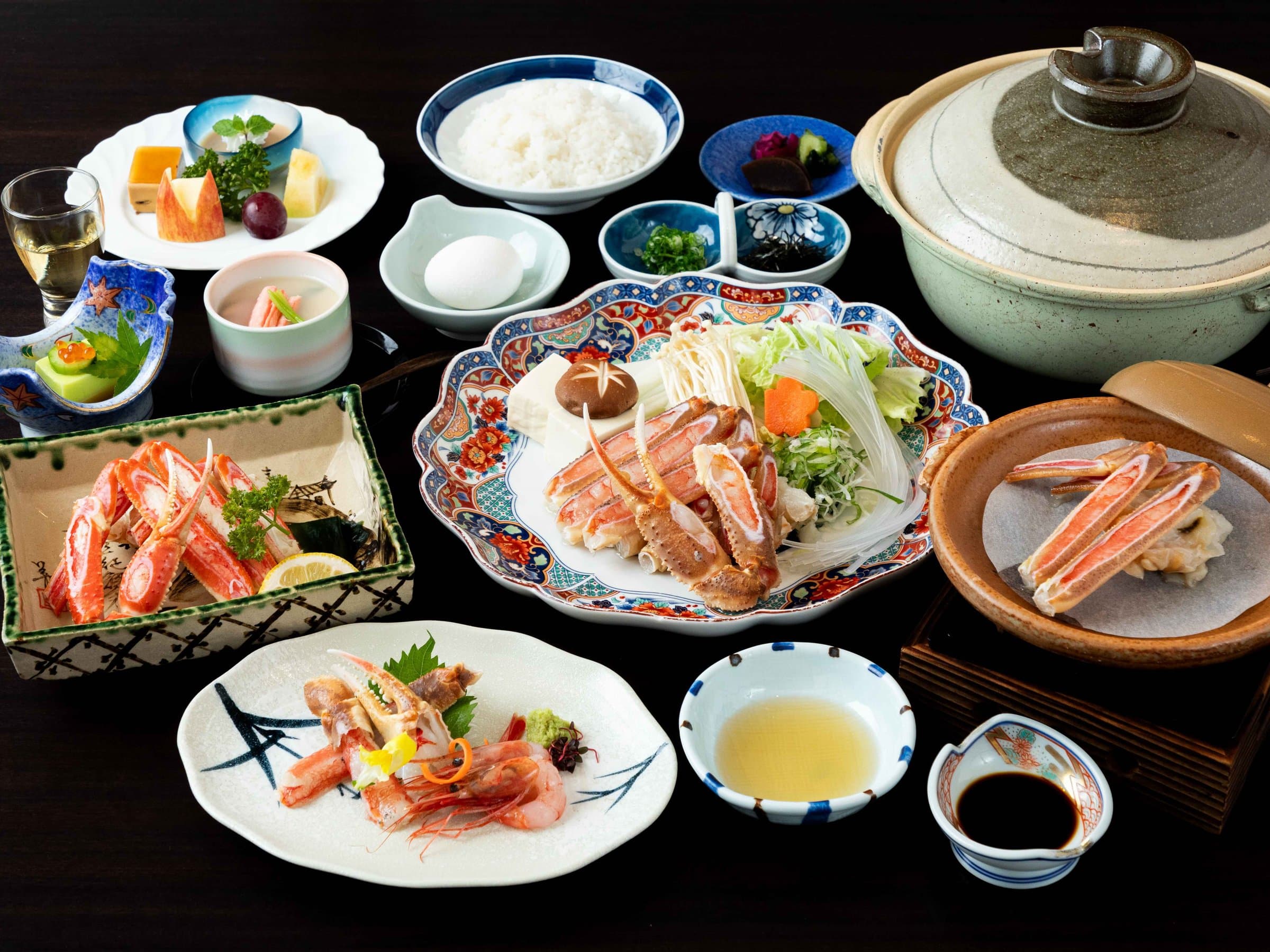
松葉蟹(ズワイガニ)のシーズンは法令により2026〜27年の11月6日から3月31日まで。 JNTOはこの期間と、香住など但馬地方の各港でオスのズワイガニが水揚げされることを確認しています[出典確認済み JNTO 2026-05-24]。ほとんどの旅館は室料の追加として1名あたり18,000〜30,000円の丸ごと蟹の多品目懐石コースを提供しています。

| 蟹の種類 | シーズン | 追加料金(1名) | 提供旅館 | |---|---|---|---| | 松葉蟹(ズワイガニ) | 11月6日〜3月31日 | 18,000〜30,000円 | リスト内全15軒 | | タラバガニ(輸入) | 通年 | 25,000〜45,000円 | 西村屋本館、招月庭、湯登屋旅館(要リクエスト) | | 紅ずわいがに | 10〜11月 + 3〜4月 | 10,000〜15,000円 | 一部の中価格帯(肩シーズン) |

料金試算: 小林屋の250ドルのベース料金は、松葉蟹のアップグレード(1名18,000〜20,000円)で2名合計約650〜700ドルになります。西村屋本館の400ドル+25,000円の追加料金は、2名合計で950〜1,100ドルに達します。

お得な時期: 11月初〜中旬 — 規格品の蟹、柳の電飾が点灯、料金は2月のピークより10〜20%安く、混雑も少ない。11月の第2週末を狙ってください。風情を優先するなら — 柳に雪、静かな運河の水面 — は、年末年始料金(12月29日〜1月4日)が終わった1月中旬以降が最高です。蟹シーズン以外は但馬牛がメインになります — 冬の温泉おすすめ貸切風呂の宿と組み合わせてどうぞ。

タトゥーポリシー一覧:城崎の旅館でタトゥーが使える浴場

城崎はタトゥーに対してもっとも寛容な温泉地のひとつです。外湯はすべて — 現在営業中の6ヶ所の外湯はいずれも — タトゥーのあるゲストを受け入れています(隠蔽不要)[出典確認済み Visit Kinosaki 2026-05-24]。旅館の内湯のポリシーはそれぞれ異なります。

| 旅館 | 大浴場(内湯) | 貸切風呂(内湯) | 外湯(湯女パス) | |---|---|---|---| | 西村屋本館 | 隠蔽が必要 | 可 | 完全可 | | 西村屋ホテル招月庭 | 隠蔽が必要 | 可 | 完全可 | | 三木屋 | 隠蔽が必要 | 可 | 完全可 | | 湯登屋旅館 | 不可 | 不可 | 完全可 | | 鬼石山水苑 | 直接確認 | 直接確認 | 完全可 | | 山本屋 | 完全可 | 完全可 | 完全可 | | 小林屋 | 隠蔽が必要 | 可 | 完全可 | | 但馬屋 | 隠蔽が必要 | 可 | 完全可 | | 蔦屋旅館 | 隠蔽が必要 | 隠蔽が必要 | 完全可 | | 千年の湯古まん | 隠蔽が必要 | 可 | 完全可 | | 月元屋 | 直接確認 | 直接確認 | 完全可 | | 泉翠 | 直接確認 | 可 | 完全可 | | 小宿縁 | 該当なし | 可 | 完全可 | | 川口屋本館 | 隠蔽が必要 | 隠蔽が必要 | 完全可 | | 城崎の宿 | 隠蔽が必要 | 該当なし | 完全可 |

重要なポイント: 山本屋が、大浴場でのタトゥー完全可が確認されている唯一の中上級旅館です。すべての旅館が湯女パスを発行するため、内湯のポリシーに関わらず全外湯の回路が利用できます。全国比較については、タトゥーOKの旅館ガイドで箱根・別府・草津との比較をご覧ください。

旅館の選び方:目的・予算・季節から選ぶ

節目のカップル: 演劇的な接客には西村屋本館。プライベートな露天風呂スイートには招月庭。親密な文学的遺産には三木屋。和牛とワインで大人専用の時間には小宿縁。

日本初訪問の旅行者: 小林屋(9室・高いスタッフ対ゲスト比・貸切風呂3つ)または千年の湯古まん(28室・大型内湯・プレッシャーの少ない環境)。

子連れファミリー: 西村屋ホテル招月庭(リゾート規模・プール・シャトル)または千年の湯古まん(4名対応の家族貸切風呂)。

蟹重視(11月〜3月): 決定版の懐石体験には西村屋本館;中価格帯の蟹と和牛には但馬屋;予算内の蟹には城崎の宿。11月初週末の予約は8月までに。

タトゥーのある旅行者: 大浴場完全可には山本屋。リスト内の全旅館で外湯への全アクセスが可能(公衆浴場は全てタトゥー歓迎)。

懐石付き200ドル以下: 城崎の宿(80〜180ドル)または川口屋本館(90〜220ドル)。いずれも湯女パス付き。予算に余裕があれば古まん(100〜250ドル)で客室数が増え、湯も広い。

城崎vs箱根: 関西旅行(大阪・京都)なら城崎 — 独自の外湯の仕組み・蟹シーズン・タトゥー歓迎の外湯・京都から2時間30分。東京旅行なら箱根 — 新宿から1時間30分・より高い高級度・富士山の眺め。詳細は箱根ガイド有馬温泉(神戸周辺のオルタナティブ)をご覧ください。

浴衣・下駄・そぞろ歩き:町を舞台にする

城崎独自の習わし、「そぞろ歩き」(あてのない気ままな散策)は、町の公式なゲスト体験です。ショップ、バー、レストランのすべてが旅館の浴衣で訪れるゲストを歓迎します[出典確認済み Visit Kinosaki 2026-05-24]。これは衣装タイムではなく、チェックインからチェックアウトまでのドレスコードです。

旅館では浴衣(S/M/Lから選択 — チェックイン時に申し出てください)、寒い夜のための羽織、そして下駄を用意しています。三木屋・湯登屋旅館・蔦屋旅館では3〜4種類の柄から選べます。スニーカーのように踵で歩くと200m以内に指を痛めます;土踏まずに重心をかけてすり足で歩くと、2日目の夜にはリズムが自然に身につきます。

この街歩きは「ぶんや」スタンプラリーとして公式化されています。参加店である湯の里通りの商店に浴衣姿で立ち寄ると小さなスタンプが押してもらえ、5つ集めると観光案内所でお土産がもらえます。大谿川沿いの柳の夜間ライトアップは10月下旬から3月下旬まで、日没から午後11時ごろまで — 城崎のアイコニックな写真として知られています。

Tip

下駄の歩き方。 旅館が用意した足袋を必ず着用してください — 11月の石畳を素足の下駄で歩くと、200m以内に水ぶくれができます。足幅が広い方は薄手のメリノウールソックスを持参してください(旅館の足袋は小さめ)。新しい下駄は、最初に石畳へ出る前に畳の上で10分ほど慣らし歩きをするのがおすすめです。

城崎へのアクセス:こうのとり特急・JRパス・最終電車

新大阪から特急こうのとりで城崎温泉駅へ — 所要時間約2時間40分、自由席6,140円、JRパス利用可。 京都からは特急はしだて・きのさき直通で約2時間30分、自由席4,500円、こちらもJRパス利用可。東京からは新幹線で京都まで乗り継ぎ — 合計約4時間。JR関西ワイドパスはこうのとりと関西全域の特急を定額でカバー — 京都・大阪・城崎の組み合わせに最適です。

新大阪からの4ステップ:

1. 特急こうのとり(こうのとり)に乗車、城崎温泉行き — 約2時間40分、JRパス有効、ほぼ1時間ごとに運行。 2. 日本到着当日の朝に緑の窓口で座席指定を。蟹シーズンは週末の3日前に満席になります。 3. 城崎温泉駅に到着 — ホームを出るとすぐ運河沿いの通りです。 4. 旅館まで歩く。小林屋は3分、西村屋本館は7分。招月庭と泉翠は事前に電話すれば無料シャトルが来ます。

新大阪方面に戻る最終のこうのとりは18時30分ごろ出発 — 旅行者が一番驚く情報です。城崎は構造的に1泊か2泊前提の旅先です。2025年に日本を訪れた訪日外国人は過去最多の4,270万人[出典確認済み Nippon.com 2026-05-24]に上り — 11月〜2月のいかなる土曜日でも、6〜8ヶ月前からの予約が必要です。

Tip

JRパスのタイミング。 新大阪発のこうのとりはJRパスとJR関西ワイドパスが使えますが、帰りの最終は18時30分ごろ — つまり城崎での滞在は構造的に1泊か2泊前提で、日帰りには向いていません。帰りの便は到着前に予約しておきましょう。

城崎温泉の訪問時期

松葉蟹解禁の11月中旬。 2026〜27年シーズンは11月6日解禁 — お得な時期:規格品の蟹、柳の電飾が点灯、料金は2月より10〜20%安く、混雑も少ない。11月第2週末を目標に、8月までに予約を。

年末年始明けの1月中旬。 1月5〜25日は城崎で最も雰囲気がいい時期 — 柳に雪、静かな運河、年明けの人出の落ち着き。12月29日〜1月4日(年末年始料金)は避けましょう。

蟹シーズンピークの2月末。 最大の蟹、最も深い雪、最高値、最長の行列。いかなる土曜日でも半年前からの予約が必要です。

但馬牛と肩シーズン料金の3月末〜7月中旬。 最も安く静かな時期。出石城下町や玄武洞への日帰り旅行と組み合わせて。

7月末〜9月初旬は避けましょう — 日本海側の湿度で湯めぐりが不快になります。柳の電飾も消えています。ゴールデンウィーク(5月3〜5日)は混雑・料金上昇で避けるのが賢明です。日程を決める際は、城崎エリアガイドをご確認ください。

城崎温泉旅館 よくある質問

城崎温泉でおすすめの旅館はどこですか?

西村屋本館 — ルレ・エ・シャトー、創業165年、兵庫県北部で最高の懐石。中価格帯:文学的遺産の三木屋、貸切風呂3つの小林屋。タトゥー完全可:山本屋。懐石と湯女パス付きで180ドル以下:城崎の宿。

タトゥーがあっても城崎温泉の外湯に入れますか?

はい — 現在営業中の6つの外湯すべてが、どんなサイズのタトゥーでも隠蔽なしで入浴可能で、城崎は日本でもっともタトゥーに寛容な温泉地です[出典確認済み Visit Kinosaki 2026-05-24]。山本屋は館内の大浴場でもタトゥー可。他の旅館は大浴場では隠蔽が必要ですが、貸切風呂ではタトゥーが許可されています。湯登屋旅館がもっとも保守的なポリシーです。詳細は上記のタトゥーポリシー一覧をご参照ください。

松葉蟹のシーズンはいつですか?

松葉蟹シーズンは法令により11月6日から3月31日まで。お得な時期は11月初〜中旬 — 規格品の蟹、料金はピークの2月より10〜20%安く、混雑も少ない。11月の初週を予約するなら8月までに。

外湯に入るには旅館から出なければなりませんか?

はい — 外湯は旅館の内湯とは別の公衆浴場です。すべての旅館が湯女パスを発行し、無料で入れます。さとの湯は改修工事のため閉鎖中(2026年5月現在、再開日未定)— ルートは現在営業中の6外湯で組んでください。

城崎と箱根、どちらがいいですか?

関西旅程(京都・大阪)なら城崎:独自の7外湯の仕組み、蟹シーズン、タトゥー歓迎の外湯、京都から2時間30分。東京旅程なら箱根:新宿から1時間30分、より高い高級度、富士山の眺め。箱根ガイドをご覧ください。

貸切温泉付きで一番安い城崎の旅館は?

小林屋(150〜350ドル、予約制貸切風呂3つ)。泉翠(150〜350ドル、無料の露天貸切風呂3つ)。小宿縁(140〜350ドル、大人専用の貸切風呂)。

城崎には何泊すべきですか?

1泊で懐石と3〜4軒の外湯を体験できます。2泊で現在営業中の全6外湯、2種類の懐石メニュー、チェックアウト後の朝の入浴も楽しめます。松葉蟹シーズンや出石城下町との組み合わせなら3泊が充実します。

城崎温泉は日帰りできますか?

技術的には可能です — 日帰り入浴は外湯1ヶ所1,500円。ただし大阪方面への最終こうのとりが18時30分ごろ出発するため、もっとも雰囲気のある外湯の時間帯に間に合いません。最低1泊が実用的な推奨です。

最後に:1kmの町に宿る15軒

城崎の旅館を選ぶ理由は、あこがれではなく構造にあります。全長1kmの町に6つの外湯が一本の回路を作り、湯女パスは全ての予約を町全体の入浴券に変え、商店街の全店舗が旅館から借りた浴衣姿のゲストを当然のように迎えます。どこに泊まるかが、どの城崎を見るかになります。

西村屋本館は節目の贅沢に。招月庭は露天風呂付き客室に。三木屋は文学的遺産に。湯登屋旅館は元禄の建築に。鬼石山水苑は能舞台の庭に。山本屋は350年の川沿い+タトゥー完全可に。小林屋は中価格帯の貸切風呂3つに。但馬屋は蟹と和牛に。蔦屋は幕末の歴史に。古まんは創業の家系の物語に。月元屋はミシュラン掲載の静かな中心部の宿に。泉翠は無料の露天貸切風呂3つに。小宿縁は大人専用オーベルジュに。川口屋本館は川沿いのエコノミー〜中級に。城崎の宿は懐石と湯女パス付きの最安フロアに。

チェックアウト後の時間をお忘れなく:湯女パスは退館日の午後1時まで有効です — ほとんどのガイドが忘れさせる、最後の2湯の朝の締めくくりです。予約の際は城崎温泉エリアガイドをご確認ください。*全ての料金・営業時間・アクセス情報は2026年5月24日現在の確認済み情報です。*

城崎温泉は京都・大阪の旅程における自然な温泉の延長先です。 京都に天然温泉はありません — 直通特急で2時間30分の城崎が、関西旅行でもっとも近い本格的な温泉地体験を提供します。京都の市街地に1泊し、城崎の旅館に1〜2泊組み合わせるのが、関西旅行の定番の拡張です。京都の旅館ガイドカップル向けおすすめ旅館高級貸切温泉地域別日本の温泉ガイドも参考に、城崎を旅程全体の中で位置づけてください。

FAQ

Frequently asked questions

Which is the best ryokan in Kinosaki Onsen?+

Nishimuraya Honkan is the top pick — a Relais & Châteaux property with 165 years of history, two natural hot-spring baths, and the best matsuba-gani and Tajima-beef kaiseki in town. For mid-range, Mikiya for literary heritage or Kobayashiya for three private baths. For fully tattoo-friendly, Yamamotoya. Under $180 with kaiseki and yumepa, Kinosaki-no-Yado.

Are tattoos allowed at Kinosaki Onsen's public baths?+

Yes — all six currently operating sotoyu permit tattoos of any size with no cover-up requirement, making Kinosaki the most tattoo-friendly onsen town in Japan (verified May 2026). Yamamotoya ryokan also allows tattoos in its in-house communal baths. Other ryokans require cover-up in communal baths but allow tattoos in private kashikiri baths. See the full tattoo policy matrix in the article.

When is matsuba-gani (crab) season in Kinosaki Onsen?+

Matsuba-gani season runs November 6 to March 31 by statute. The best value window is early-to-mid November — full-grade crabs, prices 10-20% below February peak, lighter crowds. February has the largest crabs and the most atmospheric snow but also the highest prices. Book November opening week by August at the latest.

Are all 7 sotoyu currently open in Kinosaki?+

No. Satono-yu has been closed since 2024 for renovation, with no public reopening date confirmed as of May 2026. The other six — Ichino-yu, Goshono-yu, Mandara-yu, Yanagi-yu, Jizo-yu, and Kono-yu — are operating. Most competing articles still claim all seven are open; that is incorrect for any 2026 trip.

How much does a ryokan in Kinosaki Onsen cost per night?+

Budget half-board from $80 (Kinosaki-no-Yado), mid-range $100-$350 (Tsutaya, Tajimaya, Kobayashiya, Koman, Tsukimotoya, Sensui), mid-upper $140-$450 (Yamamotoya, Koyado En, Kawaguchiya), luxury $220-$900 (Honkan, Shogetsutei, Mikiya, Yutouya, Onishiya Suishoen). Crab season adds $120-$200 per person supplement — turning a $250 base rate into roughly $700 for two.

Can I do Kinosaki Onsen as a day trip from Osaka or Kyoto?+

Technically possible but not recommended. The last Konotori back to Shin-Osaka leaves around 18:30 — before the most atmospheric sotoyu hours. The kaiseki dinner is a 2-3 hour sit-down. The yukata-walking and willow-lit canal experience is primarily an evening event. One night minimum is strongly recommended; two nights lets you cover all six operating sotoyu comfortably.

What is sozoro-aruki?+

Sozoro-aruki (ぶらり歩き) means 'leisurely strolling with no destination' — the formal name for the yukata-and-geta canal walk that is the defining Kinosaki guest experience. Every ryokan issues yukata, haori jacket, and geta at check-in. Every shop and restaurant along Yunosato-dori is set up for yukata-wearing guests. It is not optional; it is the town's operating system.

Is Kinosaki or Hakone better for a first onsen trip?+

Kinosaki for Kansai-based itineraries (Osaka/Kyoto): unique 7-sotoyu structure, lower base prices, crab season, tattoo-friendly public baths. Hakone for Tokyo-based itineraries: 1h 30m from Shinjuku, higher luxury ceiling, Mt. Fuji views, more properties. Both are excellent first onsen destinations. For luxury couples from Tokyo, Hakone; for first-time ryokan travelers wanting the fullest town-culture experience, Kinosaki.

城崎温泉でおすすめの旅館はどこですか?+

西村屋本館が最有力です — ルレ・エ・シャトー加盟、創業165年、松葉蟹と但馬牛の懐石は城崎随一。中価格帯なら文学的遺産の三木屋、貸切風呂3つの小林屋。タトゥー完全可なら山本屋。懐石と湯女パス付きで180ドル以下なら城崎の宿です。

城崎温泉の外湯でタトゥーは許可されていますか?+

はい — 現在営業中の6つの外湯はすべて、どんなサイズのタトゥーでも隠蔽なしで入浴でき、城崎は日本でもっともタトゥーに寛容な温泉地です(2026年5月確認済み)。山本屋は館内大浴場でもタトゥー可。他の旅館は大浴場では隠蔽が必要ですが、貸切風呂ではタトゥーが許可されています。詳細はタトゥーポリシー一覧をご参照ください。

城崎温泉の松葉蟹シーズンはいつですか?+

松葉蟹シーズンは法令により11月6日から3月31日まで。お得な時期は11月初〜中旬 — 規格品の蟹、料金はピークの2月より10〜20%安く、混雑も少ない。2月は蟹が最大で雪景色の雰囲気は最高ですが料金も最高。11月の初週を予約するなら8月までに。

城崎の7つの外湯は現在すべて営業していますか?+

いいえ。さとの湯は2024年から改修工事のため閉鎖中で、2026年5月現在再開日は未定です。残り6つ(一の湯、御所の湯、まんだら湯、柳湯、地蔵湯、鴻の湯)は営業中。多くの競合記事がいまだ全7つ開いていると記載していますが、2026年の旅行にはそれは誤りです。

城崎温泉の旅館の宿泊料金はいくらですか?+

エコノミー夕朝食付きで80ドルから(城崎の宿)、中価格帯は100〜350ドル(蔦屋、但馬屋、小林屋、古まん、月元屋、泉翠)、中上級は140〜450ドル(山本屋、小宿縁、川口屋)、高級は220〜900ドル(西村屋本館、招月庭、三木屋、湯登屋旅館、鬼石山水苑)。蟹シーズンは1名あたり120〜200ドルの追加料金がかかり、250ドルのベース料金が2名合計で約700ドルになる場合があります。

城崎温泉は大阪・京都からの日帰りで訪問できますか?+

技術的には可能ですが、おすすめしません。大阪方面への最終こうのとりが18時30分ごろ出発するため、外湯の最も雰囲気のある時間帯に間に合いません。懐石ディナーは2〜3時間かかります。浴衣で歩く柳のライトアップ体験は夜のメインイベントです。最低1泊を強くおすすめします。2泊あれば現在営業中の全6外湯を余裕をもって巡れます。

そぞろ歩きとは何ですか?+

そぞろ歩き(ぶらり歩き)とは「あてのないゆっくりとした散策」を意味し、城崎のゲスト体験を定義する浴衣・下駄での運河沿いの散策の公式名称です。すべての旅館はチェックイン時に浴衣・羽織・下駄を貸し出します。湯の里通り沿いのすべての商店やレストランが浴衣姿のゲストを受け入れる設えになっています。これは任意ではなく、この町の動作原理です。

初めての温泉旅行には城崎と箱根のどちらがいいですか?+

関西旅程(大阪・京都)なら城崎:独自の7外湯の仕組み・低めのベース料金・蟹シーズン・タトゥー歓迎の外湯。東京旅程なら箱根:新宿から1時間30分・より高い高級度・富士山の眺め・より多くの旅館。どちらも初めての温泉旅行に最適な場所です。東京発のカップルで贅沢を求めるなら箱根;初めての旅館体験で最高の町文化を求めるなら城崎です。

ご予約はこちら

人気の旅館から選んで予約

3つの予約サイトの空室・価格を見比べてください。

予約リンク経由で手数料が発生する場合がありますが、追加費用はかかりません。