メインコンテンツへスキップ
2026年版 有馬温泉の高級旅館9選:金泉と贅沢な滞在を叶える、専門家厳選の宿
Wikimedia Commons
旅の計画|May 2026|6 min read

2026年版 有馬温泉の高級旅館9選:金泉と贅沢な滞在を叶える、専門家厳選の宿

At 5:42pm on a Tuesday in March, the last Hankyu Bus from Sannomiya dropped its day-trippers at Arima Onsen Bus Terminal and turned around. Within twenty minutes, Yumotozaka — the cobblestone slope I had elbowed up at lunch — was almost empty. By 6:15pm I was walking back toward Tosen-jinja in a yukata, steam from the kinsen vents curling through paper-lantern light. The town smelled of toasted rice cracker and faintly sulphurous water. Nobody else was on the lane.

That ninety-minute window is the actual reason to book a ryokan in Arima. Day-trippers see the town between 11am and 5pm, when the Kin-no-Yu queue runs forty deep. Ryokan guests see it from 5pm to 10am the next morning. It is a different town, and choosing where to sleep is the single biggest decision you can make about a Kansai itinerary. Last verified: May 7, 2026.

I write the Kansai desk for Japan Ryokan Guide. I have stayed at four of the nine ryokans on this list across three trips since 2024, bathed in both kinsen (golden iron spring) and ginsen (silver radon-carbonate spring) at six of them. Where I have not slept the night, I say so. This is the seventh installment of our best-ryokans-by-area series after the floating-torii overnight at Miyajima, Hakone, Kyoto, Takayama, Yufuin and Kusatsu's sulfur waters.

This guide ranks nine ryokans across luxury, mid-range and budget tiers — with honest weaknesses for each, the kinsen-towel staining warning no English source spells out, and the structural reason day-trips from Osaka are the worst version of Arima. Our first-time ryokan guide covers the basics so this can focus on what makes Arima different.

The best ryokan in Arima Onsen is Nakanobo Zuien's adults-only retreat — a luxury inn with both kinsen and ginsen baths, Kobe beef kaiseki and a no-children policy across all 50 rooms. Heritage seekers should book Tocen Goshobo, an 800-year-old literary inn; design lovers want Gekkoen Korokan with its retro-modern stained-glass suites; budget travelers fit best at the modern, budget-friendly Maple Arima.

Tip

Disclosure: Japan Ryokan Guide earns a commission when you book through partner links. We do not accept payment from ryokans for inclusion or placement — every property here was selected on merit. Commission keeps the directory free in six languages.

Quick-Compare: 9 Arima Onsen Ryokans at a Glance

| # | Ryokan | Tier | From (USD) | Best For | |---|---|---|---|---| | 1 | Nakanobo Zuien | Luxury | $302 | Adults-only stays with both waters | | 2 | Tocen Goshobo | Luxury | $235 | 800-year heritage and literary kaiseki | | 3 | Gekkoen Korokan | Luxury | $350 | Retro-modern design and private rotenburo | | 4 | Hyoe Koyokaku | Mid | $200 | 700-year heritage at mid-range scale | | 5 | Taketoritei Maruyama | Mid | $250 | Intimate hillside kaiseki with both waters | | 6 | Gekkoen Yugetsusanso | Mid | $200 | Riverside scenery on a mid-range budget | | 7 | Negiya Ryofukaku | Mid | $150 | Maple-view rooms under $400 | | 8 | Arima Grand Hotel | Mid | $200 | Families and panoramic Mt. Rokko views | | 9 | Maple Arima | Budget | $100 | Budget-friendly modern stay with ginsen |

For broader pricing context across Japan's top onsen destinations, our ryokan cost-per-night guide breaks down typical kaiseki rates.

Why stay overnight in Arima instead of day-tripping from Osaka or Kobe

Yes — staying overnight in Arima is the single biggest upgrade you can make to a Kansai trip. After the last day-tripper buses leave around 5pm, Yumotozaka empties, the Kin-no-Yu queue dissolves, and the lantern-lit old town belongs to ryokan guests. Day-trippers get one rushed bath and a 90-minute ride home. Overnight guests get three to four bath sessions, a Kobe beef kaiseki, and a 6:30am soak with mountain mist over Mt. Rokko.

The math is straightforward. A day trip from Osaka costs roughly 2,800 yen for the round-trip Hankyu Bus plus 800 yen for Kin-no-Yu — and misses everything Arima was built for. Most luxury and mid-tier ryokans cost 30,000–80,000 yen per person, including Kobe beef kaiseki, breakfast and unlimited bath access. Why a ryokan beats a hotel is mostly an Arima argument.

The town is a narrow valley designed since the 8th century around overnight bathing and kaiseki dining ([Visit HYOGO 2026-05-07]). Public bathhouses close by 10pm and old-town shops shut around 6pm. Without a ryokan room you have nowhere to be after dinner — but with one, the corridor between Tosen-jinja and Taikobashi Bridge becomes the quietest hour of the day.

Pair the stay with our Kinosaki picks for a 2-stop Hyogo onsen circuit if you want crab kaiseki to balance the Kobe beef.

Kinsen vs Ginsen: Arima's two waters, explained

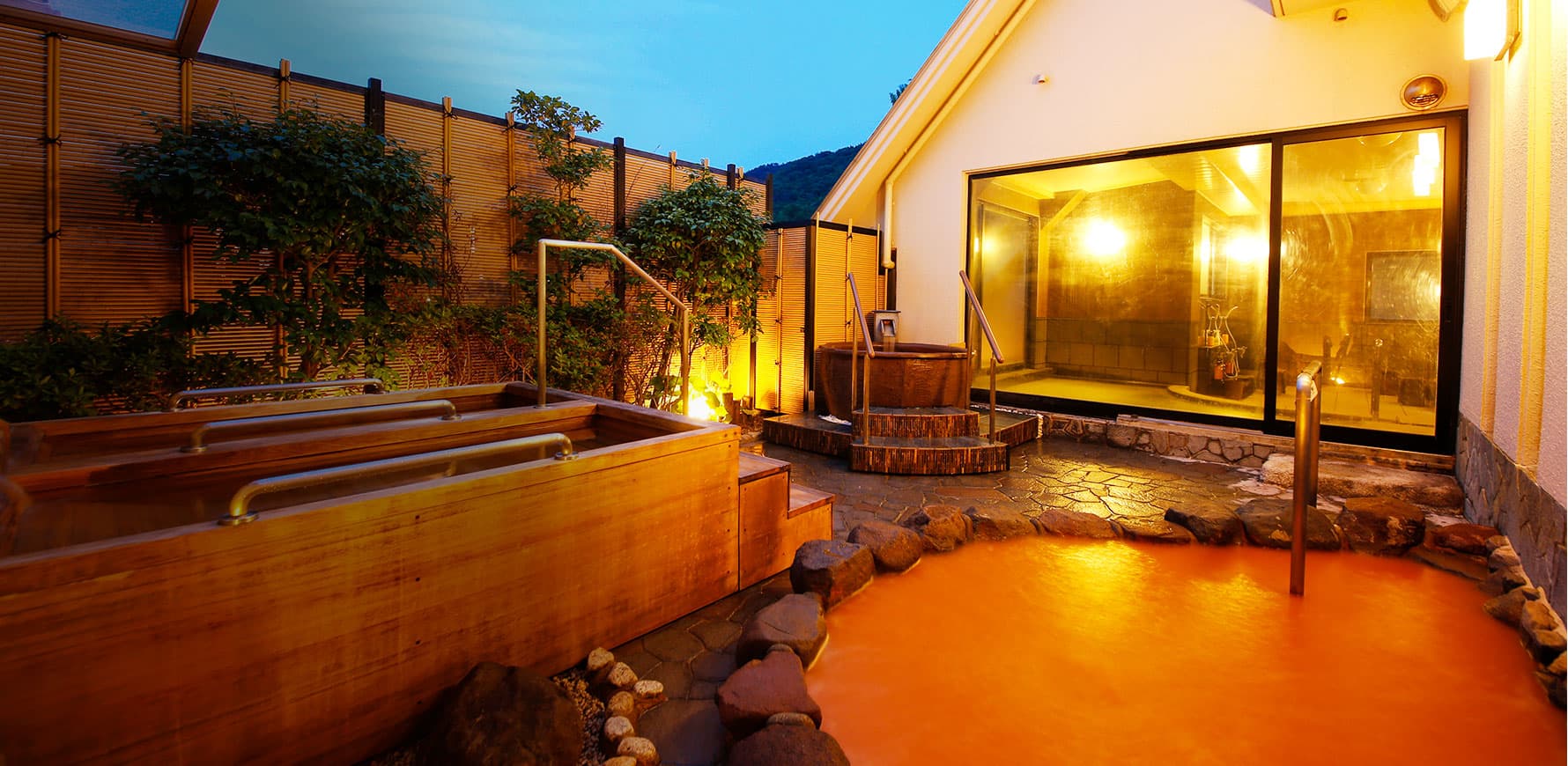
Kinsen (金泉, golden spring) is iron-and-salt water that oxidises rust-brown on contact with air, with roughly twice the salinity of seawater. Ginsen (銀泉, silver spring) is colourless and contains carbonic acid plus trace radon, lighter on the skin and globally rare. Most top Arima ryokans pipe both into separate baths so guests can compare in a single stay.

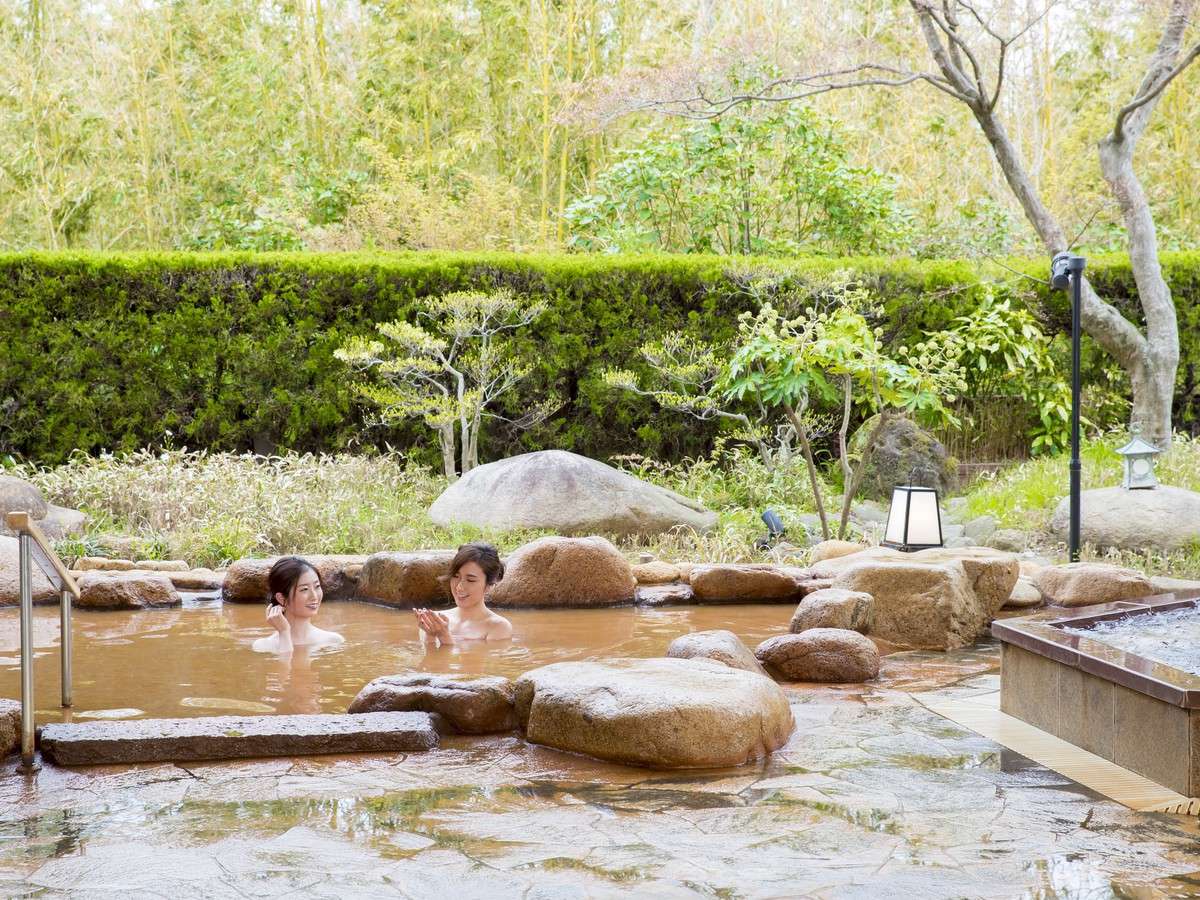
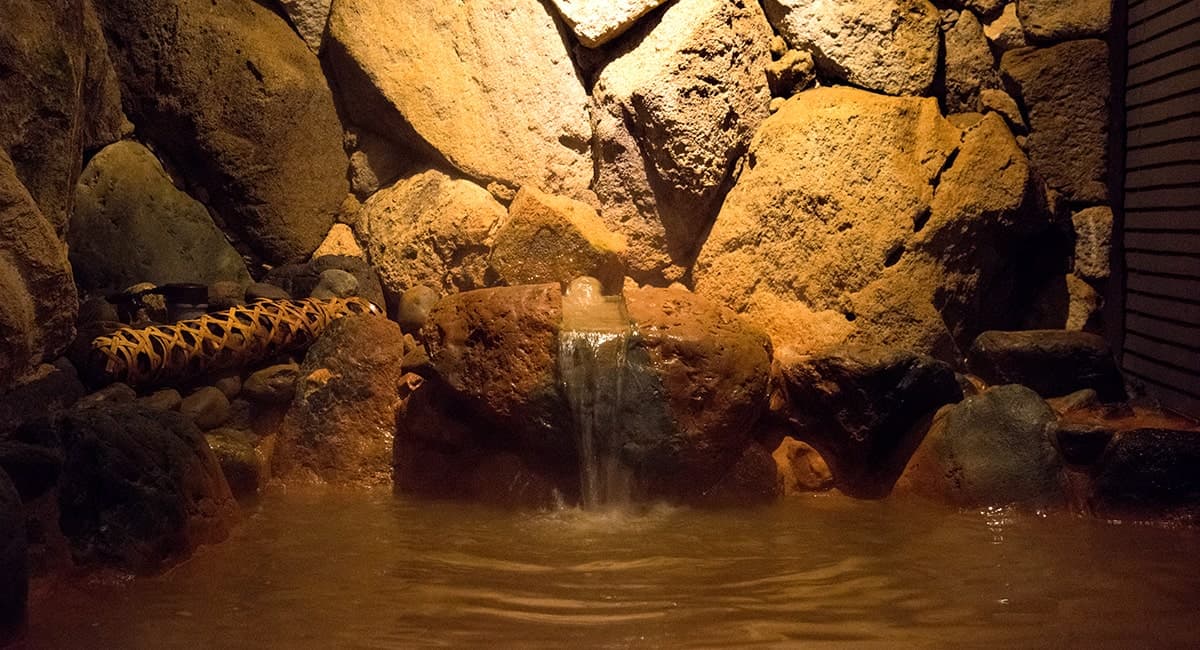
Kinsen is the photogenic one. Step out of a kinsen rotenburo and your skin glows pink-red for twenty minutes; salt residue tastes of ocean on the lips, and the water carries one of the highest salt concentrations of any hot spring in Japan ([Visit Arima Onsen 2026-05-07]). Geologically it is fossil seawater from a Philippine Plate subduction zone ([Nippon.com 2026-05-07]).

Ginsen is the one most travelers under-rate. The water looks like tap water for the first 90 seconds. Then carbonic acid bubbles cling to forearm hair like champagne, and a faint metallic tingle runs up the calves — the trace radon. Skin emerges silkier than salt-stiff. Carbonated radon springs of Arima's profile contain seven of the nine therapeutic mineral classes designated by Japan's Ministry of the Environment ([Visit HYOGO 2026-05-07]).

If you are flying across the world for an onsen, ginsen is the rarer water — the carbonated-plus-radon profile in a single bath is essentially globally unique to Arima. New to public bathing? Our onsen etiquette refresher for first-time foreign guests covers the towel rules.

Not every Arima ryokan offers both. Maple Arima pipes only ginsen. Tocen Goshobo's signature is its lithium-rich tansan sub-type. Nakanobo Zuien, Hyoe Koyokaku, Taketoritei Maruyama and Negiya Ryofukaku all offer both — check water type before you book.

Tip

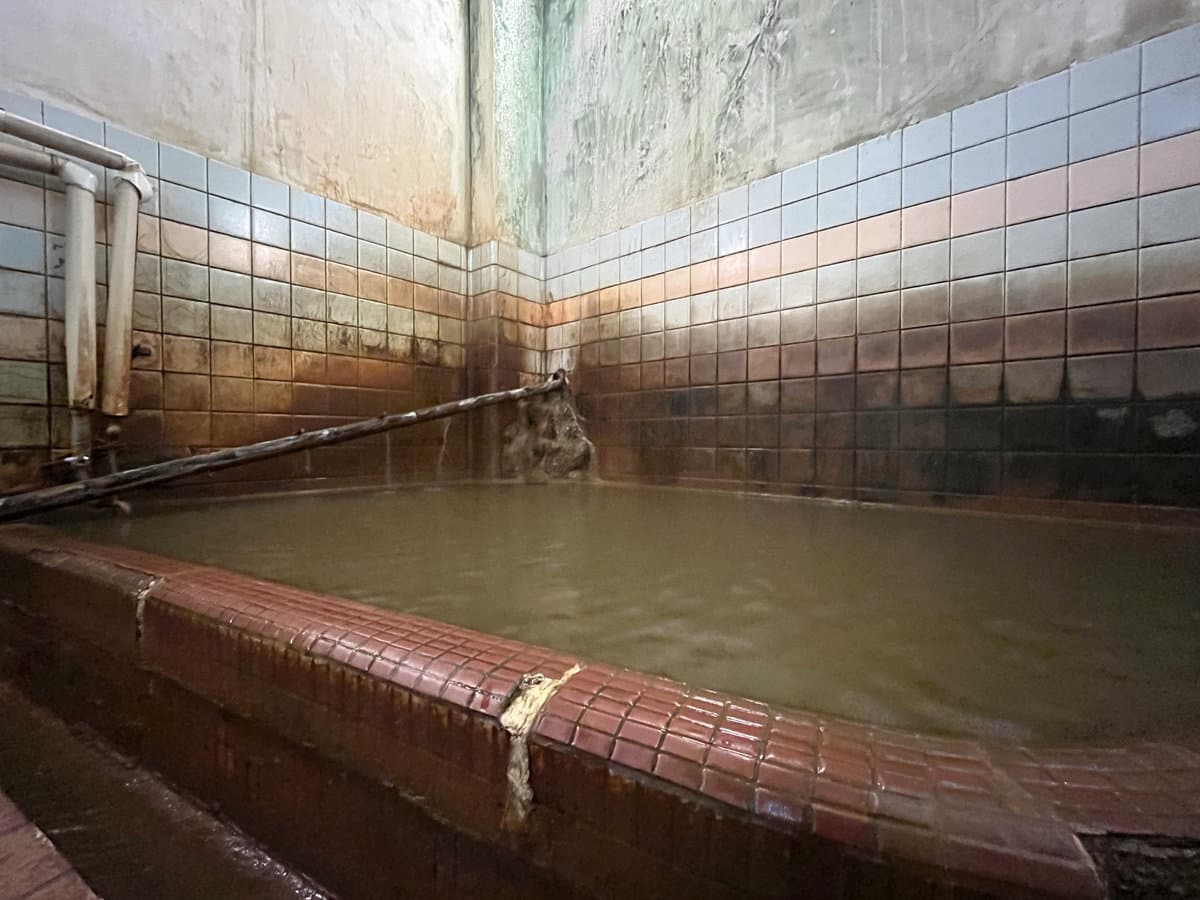
The kinsen towel will stain — that is normal. Iron in the gold spring permanently dyes light cotton ochre on contact. Most ryokans hand you a dark sacrificial towel, but English signage rarely explains why. Bring an old black or brown towel if you also want to dry off without ruining a hotel-grade one, and never wear a white yukata into a kinsen rotenburo. Local order: kinsen first (warming), ginsen after (carbonate finish).

How we picked these 9 ryokans

We screened every operating ryokan in Arima against five criteria: a verified on-site source for kinsen or ginsen, walking distance to Yumotozaka, kaiseki centred on certified Kobe beef or Hyogo wagyu, English-readable booking, and 200+ reviews averaging 4.0+ across two platforms. Nine properties cleared the bar.

No ryokan on this list paid to be included. Properties are drawn from our database of 224 vetted ryokans across 25 destinations. The peer post — best ryokans in Beppu — covers the Kyushu side, and our nationwide luxury ryokan rankings frame Arima against Hakone and Kyoto.

Arima ryokans range from about $100 per night at the modern budget tier (Maple Arima) to $900 at luxury suites with in-room kinsen rotenburo (Gekkoen Korokan, Nakanobo Zuien). Mid-range typically runs $200–$500; luxury $300–$900. Arima skews more expensive than Beppu or Kinosaki — the floor is roughly where Beppu's mid-tier ceiling sits.

1. Nakanobo Zuien — Best for adults-only luxury with both waters

Best for Couples and solo travelers prioritising silence and adults-only kinsen luxury.

At a glance 50 rooms · ~$302–$800 USD · Founded 1872 · 4-min walk from Yumotozaka · Water: kinsen + ginsen.

Onsen Two indoor public baths plus reservable kashikiri; select suites have an in-room kinsen rotenburo. Both waters are piped into separate halls so you can do the locals' kinsen-first, ginsen-finish order.

Kaiseki Hyogo-prefecture certified Kobe beef anchors the kaiseki — served as ishiyaki (stone-grilled) or shabu-shabu by season, in private dining alcoves rather than in-room.

Standout Adults-only across all 50 rooms — a no-children policy almost no other Arima ryokan enforces. At 7am on my December stay there was zero footsteps overhead and zero splashing, only the faint tick of the stove warming the breakfast room. For a milestone trip the silence is the product. Our adults-only and couples-friendly stays guide makes a natural companion.

Honest trade-off No children under 13. Cheapest rooms are mountain-side without a kinsen rotenburo; in-room kinsen suites book out 4–6 months ahead for November. If your dates are firm, request a standard suite plus a kashikiri at check-in. Rates run $302–$800 per person per night with two meals [approximate; verify current availability]. You can see Nakanobo Zuien's adults-only suite types on our directory.

Tip

Adults-only kinsen suites at Nakanobo Zuien sell out 6 months ahead for mid-November maple weeks. Set a calendar alert for May 1 if you want a Saturday in mid-November; the property opens that window to repeat guests first. If kinsen-suites are gone, book a standard suite and add a kashikiri at check-in — Nakanobo does not charge extra for kashikiri reservations.

2. Tocen Goshobo — Best for 800-year heritage and literary kaiseki

Best for Travelers who care about lineage — Goshobo has hosted writers and politicians since the Kamakura period.

At a glance 20 rooms · ~$235–$600 USD · Founded around 1191 · 2-min walk from Kin-no-Yu · Water: kinsen + tansan-sen (lithium-rich sub-type).

Onsen A private kinsen rotenburo (Tsukimi-no-Yu), an indoor kinsen bath, and a signature lithium-rich tansan bath that almost no other Arima ryokan offers. Kashikiri at check-in.

Kaiseki The standard plan opens with a Kobe beef tataki, moves through Inland Sea sashimi, and centres on a Kobe beef shabu-shabu over the property's own well water. Served in private sukiya-style dining rooms.

Standout Goshobo's founding date of 1191 makes it among Japan's oldest continuously operating ryokans. Junichiro Tanizaki, Yosano Akiko and Showa-era prime ministers signed the guest book before you got here. The lithium-rich tansan-sen is a sub-type you have not soaked in before. Our Japanese ryokan breakfast spread covers the morning side.

Honest trade-off The 800-year heritage building means wooden floors creak, stairs are steep, accessibility is limited. Rooms vary; some retain early-20th-century plaster, others were renovated in the 2010s. Confirm the room category at booking. Rates run $235–$600 per person per night with two meals [approximate; verify current availability]. You can browse Tocen Goshobo's heritage rooms on our directory.

3. Gekkoen Korokan — Best for retro-modern design and Mt. Rokko views

Best for Design-led couples who want stained-glass interiors, mountain views and an in-room rotenburo without sacrificing kaiseki.

At a glance 30 rooms · ~$350–$900 USD · 6-min walk from Yumotozaka · Water: kinsen + ginsen via shared rights with sister property Yugetsusanso.

Onsen Three bath halls including a Mt. Rokko-view rotenburo angled to catch the maple ridge at sunset. Top-tier rooms have private in-room kinsen baths; mid-tier rooms add reservable kashikiri.

Kaiseki The Full Moon Kaiseki pairs Kobe tenderloin with whole Ise lobster in season, served in-room or in alcoves. Marbling on the Kobe slice rendered against my fingertip when I picked it up for shabu-shabu — the visual signature of A5 Tajima beef. Of roughly 5,500 Tajima cattle slaughtered annually, only ~3,000 pass certification ([Kobe Beef Association 2026-05-07]).

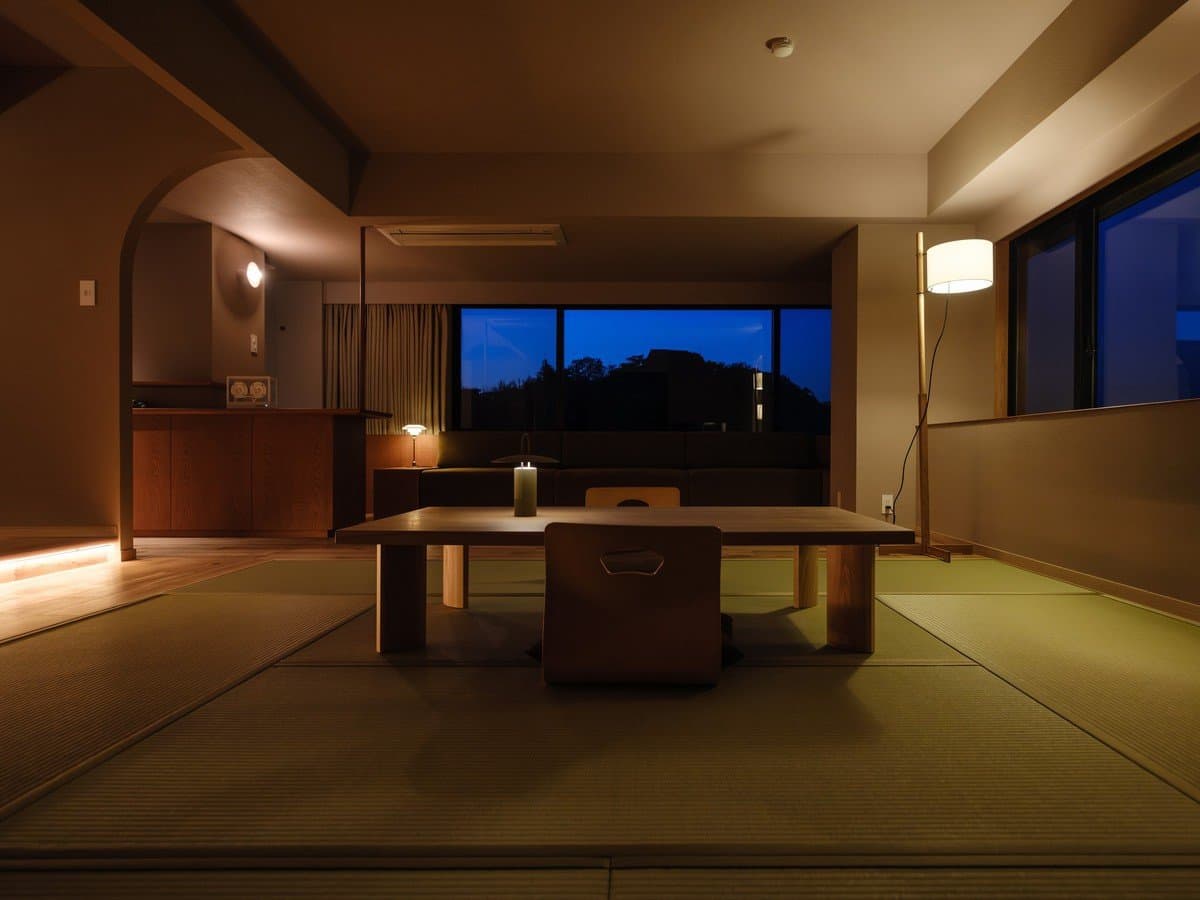
Standout Stained-glass accents, Showa-era retro-modern furniture, and a Mt. Rokko view almost no other Arima property delivers. If Nakanobo Zuien is the silent retreat and Goshobo is the museum, Korokan is the architectural showpiece.

Honest trade-off Hilltop position means stairs and inclines. Cheapest rooms face inland with limited mountain visibility and no in-room rotenburo; pay the upgrade for a Mt. Rokko-side room — the view from the bath is the reason to book here. Rates run $350–$900 per person per night with two meals [approximate; verify current availability]. You can check Gekkoen Korokan's stained-glass suites on our directory.

4. Hyoe Koyokaku — Best for 700-year heritage at mid-range scale

Best for First-time Arima visitors who want heritage credentials at a mid-range price point, with three distinct bath halls to explore.

At a glance 129 rooms · ~$200–$600 USD · Founded around 1336 · 3-min walk from Yumotozaka · Water: kinsen + ginsen.

Onsen Three separate complexes — Ichi-no-Yu, Ni-no-Yu and San-no-Yu — each with kinsen and ginsen sections, rotated by gender across morning and evening. A single overnight gives you all three. The most bath variety of any Arima property.

Kaiseki Hyogo wagyu by default with a certified Kobe beef supplement — 3,000–8,000 yen to swap the sirloin for an A5 fillet. Served in a communal dining hall rather than in-room.

Standout Run by the Hyoe family across 17 generations, this is the long-history mid-range pick. Structure an evening around variety — kinsen at Ichi-no-Yu before dinner, ginsen at Ni-no-Yu after, San-no-Yu's rotenburo at 6:30am.

Honest trade-off Peak weekends bring queues at popular bath halls, and the dining hall at full occupancy feels more banquet than kaiseki. For intimacy at this price, the intimate 29-room Taketoritei Maruyama is the alternative. Rates run $200–$600 per person per night with two meals [approximate; verify current availability]. You can see Hyoe Koyokaku's three bath halls on our directory.

5. Taketoritei Maruyama — Best for intimate hillside kaiseki with both waters

Best for Couples who want kashikiri private baths, both kinsen and ginsen, and a 29-room scale that keeps the corridors quiet.

At a glance 29 rooms · ~$250–$600 USD · Hillside · 8-min walk to Kin-no-Yu · Water: kinsen + ginsen.

Onsen Eight free reservable kashikiri baths plus public kinsen and ginsen halls — the highest kashikiri-to-room ratio in Arima. Select rooms have private open-air ginsen baths. Tattoo policy accommodated through kashikiri at no extra charge.

Kaiseki Hyogo wagyu standard with a Kobe beef upgrade; in-room dining is the default — the differentiator from Hyoe Koyokaku at the same tier. 9–11 courses anchored by a Kobe beef shabu-shabu or stone-grill main.

Standout Eight kashikiri baths effectively privatise your bathing for the whole stay — one before dinner, one after, one at 6:30am. For tattooed travelers and couples who want privacy without the in-room rotenburo cost, this is the most efficient pick.

Honest trade-off The hillside walk is uphill on the way back, which matters in summer humidity or after kaiseki. No shuttle; book a taxi from Arima Onsen station if mobility is a concern. The cheapest rooms have no private rotenburo. Rates run $250–$600 per person per night with two meals [approximate; verify current availability]. You can book Taketoritei Maruyama's kashikiri baths on our directory.

6. Gekkoen Yugetsusanso — Best for riverside scenery on a mid-range budget

Best for Travelers who want a small-scale riverside ryokan with kinsen access and Gekkoen design polish at half the Korokan price.

At a glance 16 rooms · ~$200–$500 USD · Riverside on the Taki River · 5-min walk from Yumotozaka · Water: kinsen.

Onsen Three bath areas including a kinsen rotenburo overlooking the Taki River. Reservable kashikiri at check-in. No on-site ginsen — cross to Kin-no-Yu (¥800) for the silver water.

Kaiseki Hyogo wagyu with a certified Kobe beef upgrade; in-room dining available for an additional supplement. The style leans toward sumiyaki (charcoal-grill) rather than shabu-shabu.

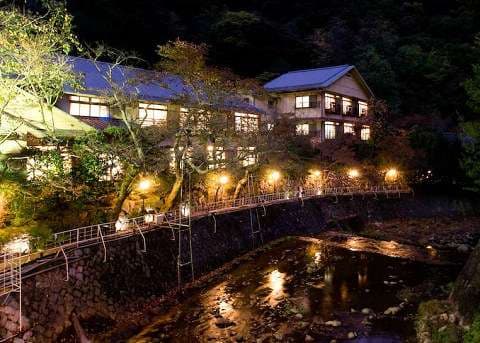
Standout The riverside setting is the differentiator. From the rotenburo you watch the Taki River fold around the slope and the maple ridge above; in November foliage drops directly into the water from the windows. At 16 rooms the scale is closer to a small luxury ryokan than the 30+ room Korokan one minute uphill.

Honest trade-off No on-site ginsen — kinsen-only, meaning an extra walk and ¥700 to Gin-no-Yu for the full two-waters experience. Riverside rooms are the ones to book; back rooms face the slope. Rates run $200–$500 per person per night with two meals [approximate; verify current availability]. You can see Gekkoen Yugetsusanso on the riverside on our directory.

7. Negiya Ryofukaku — Best for maple-view rooms under $400

Best for Couples who want a maple-framed view from the room, both waters on-site, and a price ceiling that rarely crosses $400.

At a glance 21 rooms · ~$150–$400 USD · Hillside · 6-min walk from Yumotozaka · Water: kinsen + ginsen.

Onsen Both kinsen and ginsen in separate baths plus reservable kashikiri private baths. Tattoo policy is accommodating via kashikiri reservation — confirm by email. The kinsen rotenburo faces the maple slope.

Kaiseki Hyogo wagyu with a Kobe beef upgrade plan; the Negiya house style adds a yuba (tofu skin) course that is not standard at most Arima ryokans, and the kaiseki usually runs 9 dishes.

Standout Maple-tree-framed rooms — the hillside position produces views that turn electric orange in mid-November. For the maple-tree-framed rooms of Negiya Ryofukaku at this price tier with both waters on-site, this is the best value pick on the list.

Honest trade-off Stairs both inside and on the approach. Cheapest rooms are mountain-facing without the maple view; for koyo, pay the upgrade for a maple-side room. Rates run $150–$400 per person per night with two meals [approximate; verify current availability]. You can check Negiya Ryofukaku's maple-side rooms on our directory.

8. Arima Grand Hotel — Best for families and panoramic Mt. Rokko views

Best for Families with school-age children and groups of four-plus who want Western-bed options, a seasonal outdoor pool, and the largest panoramic onsen in town.

At a glance 246 rooms · ~$200–$500 USD · Upper slope · 10-min walk (free shuttle) · Water: kinsen + ginsen.

Onsen A 9th-floor panoramic onsen with kinsen and ginsen baths overlooking the Mt. Rokko range — the largest bath complex of any Arima ryokan. Kashikiri at check-in. Tattoo policy generally tolerant.

Kaiseki Buffet and kaiseki options both available. Kaiseki includes Hyogo wagyu with a Kobe beef supplement; the buffet adds Kobe beef carving stations during peak season. Family plans include kid-friendly udon and karaage.

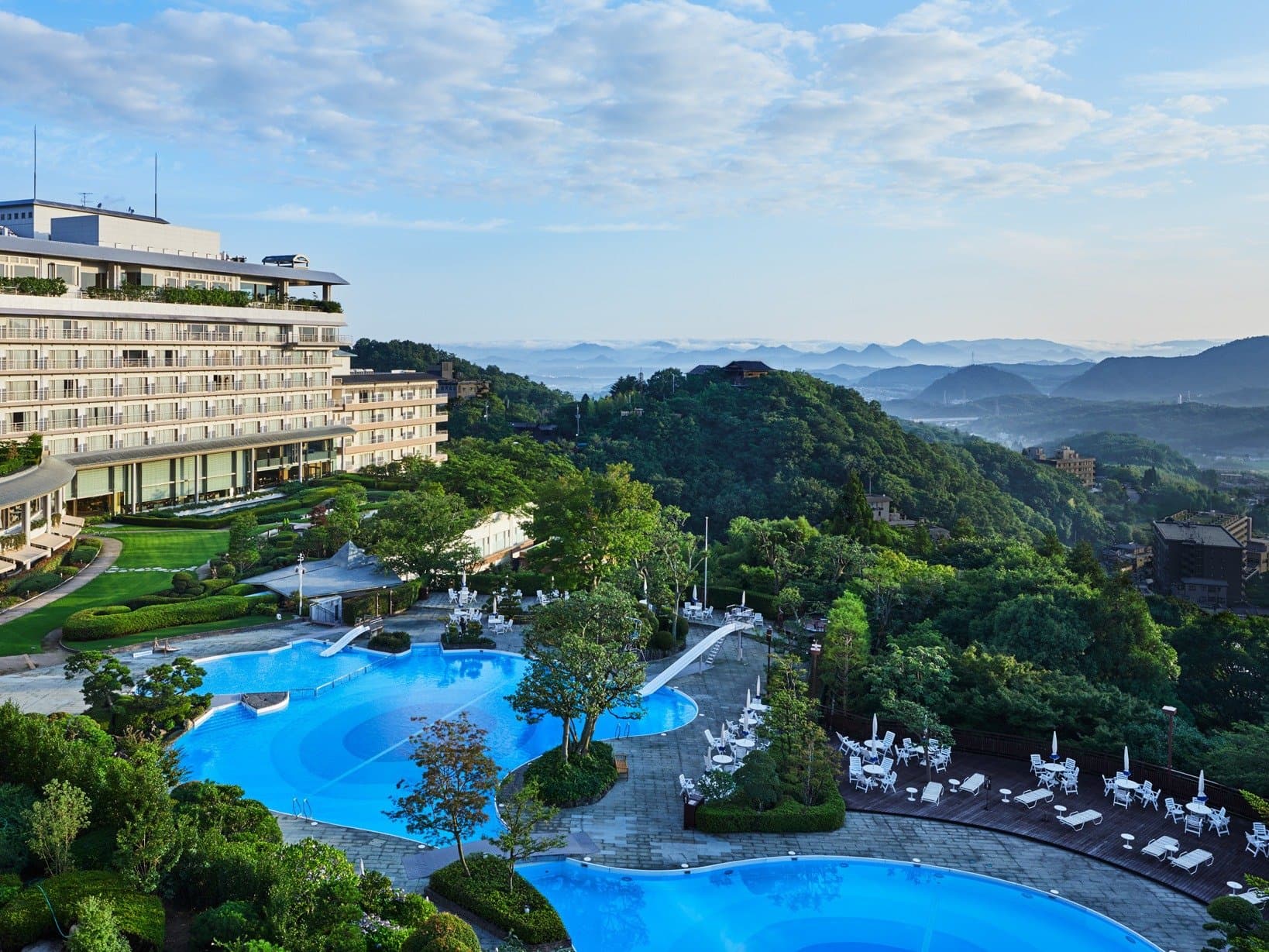
Standout Tatami and Western-bed rooms across 246 keys — the largest property in Arima, with scale for multi-generation groups. The seasonal outdoor pool (summer only) is the family draw, and the 9th-floor panoramic onsen is the single best mountain view from any bath in town. For Arima Grand Hotel for panoramic Mt. Rokko views at family scale, this is the easy pick.

Honest trade-off Closer to a large traditional hotel than a small artisan ryokan. Service is professional rather than personal; the ambience is more resort than retreat. For honeymooners chasing the historic atmosphere, Nakanobo Zuien or Goshobo is the brief. Rates run $200–$500 per person per night with two meals [approximate; verify current availability].

9. Maple Arima — Best budget-friendly modern stay with ginsen

Best for Budget travelers who want their own ginsen source and six bath types under $250 — research-verified, not stayed.

At a glance 64 rooms · ~$100–$250 USD · 7-min walk from Yumotozaka · Water: ginsen (own source).

Onsen Six bath types from the property's own ginsen source — indoor and outdoor rotenburo, jet baths and a sauna. No kinsen on-site; walk to Kin-no-Yu (¥800) for the gold spring. Tattoo policy generally tolerant.

Kaiseki Plans include kaiseki with a Kobe beef supplement at booking; standard plans use Hyogo wagyu. Dining is buffet or set-menu rather than multi-tray.

Standout For budget travelers, Maple Arima is the cheapest place to stay in Arima with a real on-site ginsen source — the only sub-$200 option that does not depend on the public bathhouses. Six bath types is double most mid-tier properties; modern Western-style rooms with private bathrooms. Free shuttle from Arima Onsen station. Practical budget ryokan tactics apply: book midweek, skip the kaiseki upgrade.

Honest trade-off No kinsen on-site, no in-room rotenburo, no historic atmosphere. Closer to a budget onsen hotel than a heritage property; buffet kaiseki is a meaningful step down. Research-verified, not stayed; details cross-checked against the official site May 7, 2026. Rates run $100–$250 per person per night with two meals [approximate; verify current availability]. You can browse Maple Arima from $100 on our directory.

Kobe beef kaiseki: what to expect on the 7-course tray

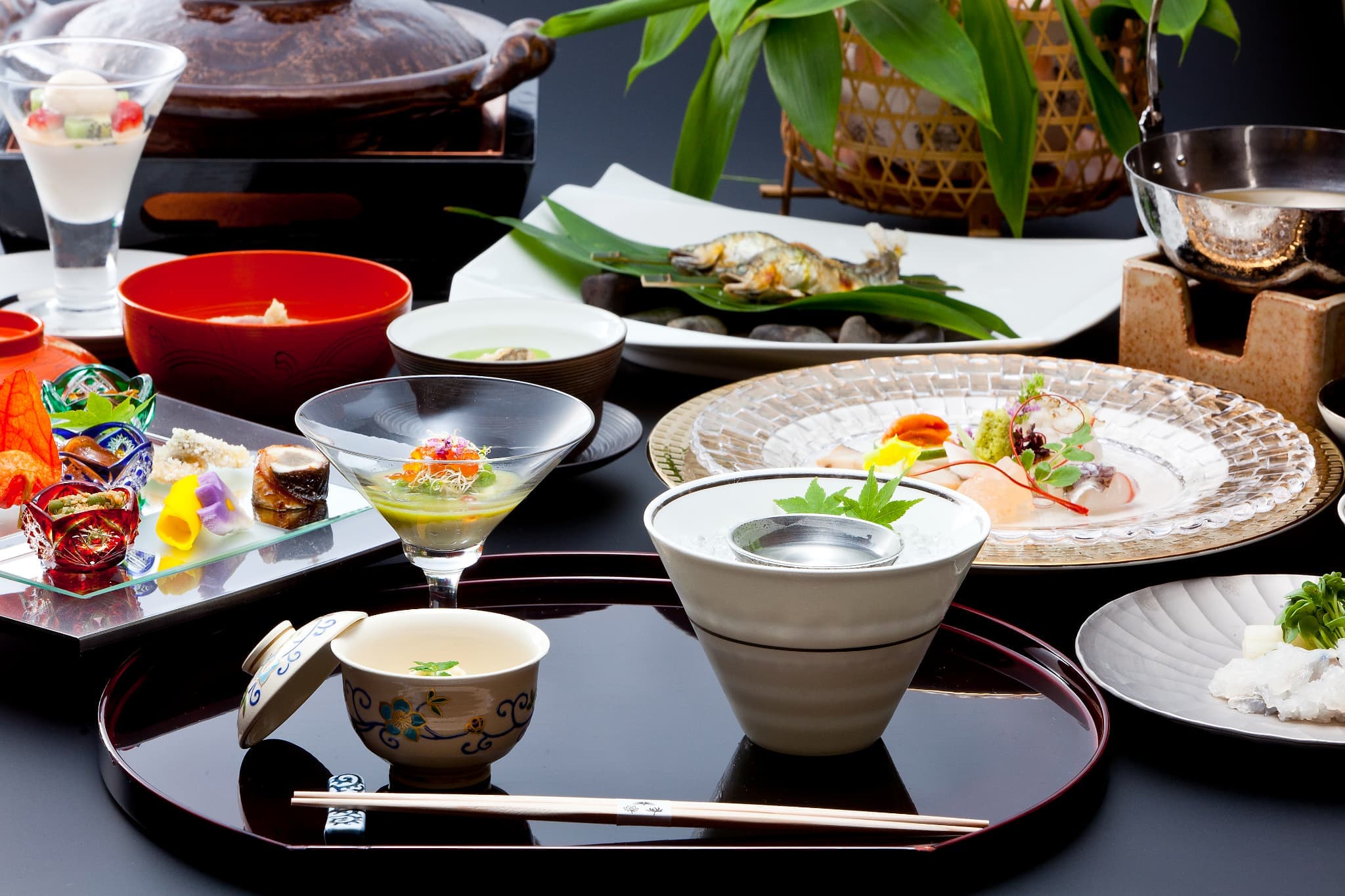
A typical Arima ryokan kaiseki runs 7–11 courses around a Kobe beef centrepiece — usually shabu-shabu, ishiyaki (stone grill) or sumiyaki (charcoal grill). Standard plans default to Hyogo wagyu; certified Kobe beef is almost always a 3,000–8,000 yen supplement. The supplement is worth it for the marbling difference.

Real Kobe beef on the kaiseki tray is identifiable before you taste it: marbling is so fine that A5 fat starts to render against your fingertip when you pick up a slice for shabu-shabu. Arima sits inside the Kobe beef production region, so most luxury and mid-tier ryokans list certified Kobe beef on their menus — but the default plan often serves Hyogo regional wagyu, which is excellent but not technically Kobe.

Nakanobo Zuien, Tocen Goshobo and Gekkoen Korokan generally include Kobe beef in the standard kaiseki at upper room tiers. Hyoe Koyokaku, Taketoritei Maruyama, Negiya Ryofukaku, Yugetsusanso, Arima Grand Hotel and Maple Arima default to Hyogo wagyu and offer Kobe beef as an upgrade. Ask for 'certified Kobe beef' (神戸ビーフ) by name at booking.

The seven-course pattern: opening sakizuke, Inland Sea sashimi, a clear soup, a charcoal-grilled fish, a Kobe beef main, a tempura or rice dish, miso soup with pickles, a small dessert. Vegetarian alternatives exist on request but require 7+ days lead time.

Tip

Request the Kobe beef supplement at booking, not at check-in. The 3,000–8,000 yen swap from default sirloin to an A5 certified Kobe fillet is the single highest-value upgrade for kaiseki-focused readers. Most ryokans need the supplement noted 3+ days ahead so the kitchen can sort the supply chain. Email the property with 神戸ビーフ・コース変更希望 in the subject line, or use the booking form's special-request field. At check-in is too late.

How to choose: old-town, hillside, or riverside?

Arima is small enough that no ryokan is far from anywhere — Yumotozaka end-to-end is a fifteen-minute walk — but the three micro-locations create different stays.

Old-town and Yumotozaka core (Tocen Goshobo, Hyoe Koyokaku, Nakanobo Zuien): the historic centre. Two-to-four-minute walks to Kin-no-Yu and Tosen-jinja, the most photogenic lantern-walk access, the highest density of tansan-senbei shops. Best for first-timers who want to maximise what they can do on foot. The trade-off is daytime crowds outside your door — though they vanish after 5pm.

Hillside (Taketoritei Maruyama, Negiya Ryofukaku, Arima Grand Hotel, Gekkoen Korokan): elevated views and a quieter atmosphere, with five-to-ten-minute walks to the old town. Best for maple-foliage views and travelers happy to trade walking convenience for the view from the bath. Mt. Rokko sunsets land best here.

Riverside (Gekkoen Yugetsusanso): the Taki River setting at the foot of the slope. Best for a smaller-scale stay with foliage dropping directly into the water in November. Cross-check the full Arima area guide and our best ryokans for couples when you pick dates.

The 5pm vanishing act: what changes when day-trippers leave

Buses arrive in waves between 11am and 3pm. By 5pm the last Hankyu service leaves, and the town empties over the next twenty minutes. This is the single best argument for booking a ryokan.

Before 5pm: Yumotozaka is shoulder-to-shoulder, Kin-no-Yu and Gin-no-Yu run thirty-minute queues. After 5pm: bath queues collapse to walk-in, the senbei shops pack up by 6pm, and the cobblestone slopes between Tosen-jinja and Taikobashi Bridge clear out. Paper lanterns switch on around 6:30pm; steam from the kinsen vents drifts through the lamplight, and you can hear the Taki River from the lanes for the first time all day.

A ryokan-issued yukata, a pair of geta, and a 30-minute loop — Tosen-jinja, Yumotozaka, Taikobashi Bridge, the Taiko-no-Ashiyu footbath — is the trip's defining 30 minutes. The lantern-lit version of Arima is only available to overnight guests, and it is the version Toyotomi Hideyoshi knew when he rebuilt the town in the 16th century after the 1581 fire ([Feel Kobe 2026-05-07]).

For the morning side: 6:30am at any upper-slope ryokan gives you mountain mist rolling off Mt. Rokko, an empty Kin-no-Yu queue at the 8am opening, and a Yumotozaka you can walk at your own pace before the 10:30am bus arrives. Most regulars book two nights for exactly this reason.

Not staying but still want to experience Arima's waters? Several ryokans on this list accept day-use hot spring ryokan visits during daytime hours — a good option if your itinerary won't stretch to an overnight.

Old-town walk: lanterns, Tansan water, and Toyotomi Hideyoshi

Arima's old town has been a hot-spring resort for at least 1,300 years, and the buildings you walk past date roughly to the 17th-century rebuild after Hideyoshi's interventions ([JNTO 2026-05-07]). Three short walks anchor an evening between dinner and bath.

The Yumotozaka loop. Walk down the slope past Mitsumori Honpo (since 1907) and the tansan-senbei stalls, and stop at the Tansan-sen public fountain — naturally carbonated mineral water bubbling out of the rock, the namesake of the carbonated rice cracker you have been smelling all day. Locals fill bottles from it.

Taiko-no-Ashiyu free footbath. Right outside Kin-no-Yu is Taiko-no-Ashiyu — a free outdoor kinsen footbath, plus Taiko-no-Insenba, a free drinking fountain where you can taste raw kinsen. Salty, mildly metallic, almost like weak miso broth. Most visitors queue inside Kin-no-Yu for 800 yen without realising the footbath outside is the same water, free, and almost always empty after 5pm ([Arima Onsen Tourism Association 2026-05-07]).

Tosen-jinja and Hideyoshi's heritage. Tosen-jinja sits at the top of Yumotozaka, dedicated in part to Toyotomi Hideyoshi, who rebuilt Arima after the 1581 fire. Stone monuments commemorate his wife Nene, after whom the Nene-no-michi back lane is named. The themed Taiko-no-Yu bath complex up the slope pumps from the same source as every ryokan here — the 2,750 yen admission is better spent on an extra kaiseki course.

Tip

Skip the Taiko-no-Yu Theme Park; do the free Taiko-no-Ashiyu footbath instead. The 26-bath Taiko-no-Yu (admission 2,750 yen weekday) opened in 2002 and pumps from the same source as every ryokan on this list. If you have already paid for a kinsen-and-ginsen ryokan, Taiko-no-Yu adds crowds, not water. The free outdoor Taiko-no-Ashiyu footbath outside Kin-no-Yu is the same kinsen, ten minutes of soak time, and almost always empty after 5pm. Spend the saved 2,750 yen on the Kobe beef supplement instead.

Getting to Arima: Hankyu bus, Hokushin Line, and the Mt. Rokko cable car

Arima is one of the easiest onsen towns to reach from a major city — three transit options, all under 90 minutes from Osaka and 30–60 minutes from Kobe.

1. Direct highway bus from Osaka. Hankyu Bus runs roughly hourly from Hankyu Umeda or Shin-Osaka to Arima Onsen Bus Terminal — 60 minutes, around 1,400 yen, no transfers. JR Bus runs a similar service. Recommended for arrival with luggage.

2. Train from Kobe-Sannomiya via the Hokushin Line. From Kobe-Sannomiya, subway one stop to Tanigami, transfer to the Hokushin Kyuko / Shintetsu Arima Line, ride to Arima-Onsen Station — 30 minutes total, around 940 yen. JR Pass does not cover the Shintetsu portion.

3. The scenic route: Mt. Rokko Cable Car + Rokko-Arima Ropeway. Take the Rokko Cable Car up Mt. Rokko (10 minutes), connect via the summit bus, then descend via the Rokko-Arima Ropeway (12 minutes). 75 minutes including transfers, and the gondola views over the Inland Sea on a clear day are the reason to do it once. The Arima-Rokko 1-Day Pass from Sannomiya bundles the route at around 2,560 yen.

From Tokyo: Shinkansen to Shin-Kobe (~2h45m), then a 30-minute taxi or the Hokushin Line. Pair with the broader Kansai onsen-towns landscape for a 4–5-day circuit, or jump south to the best ryokans in Yufuin on the Beppu side. For the full Kansai onsen landscape alongside every other region of Japan, see our complete Japan onsen destinations guide.

Tip

Take the bus in, take the ropeway out. The Hankyu Bus from Umeda is faster, cheaper and luggage-friendly for arrival — one seat, 60 minutes. The Mt. Rokko Cable Car + Arima Ropeway combo is the scenic descent, best done on the day you check out, when you have already dropped luggage. The Arima-Rokko 1-Day Pass (~2,560 yen from Sannomiya) covers both legs of the cable + ropeway loop, and you finish at Sannomiya for dinner without doubling back.

Best time of year to stay at an Arima ryokan

The four-season picture, in priority order for a one-night stay.

Mid-November for Zuihoji Park maples. The maple canopy turns electric orange in the second and third weeks of November, and the hillside ryokans (Negiya Ryofukaku, Taketoritei Maruyama, Korokan) frame the foliage from the room. Koyo peak inflates rates 30–50% and books out four to six months ahead — set a calendar alert for May 1.

Late January to early February for peak Kobe beef and Mt. Rokko snow. Winter wagyu is at its richest, the kaiseki upgrades noticeably across every property on this list, and Mt. Rokko occasionally dusts with snow visible from the panoramic baths. The Tenjin Matsuri ladle-pour ritual at Tosen-jinja on January 2 is the local festival worth timing around — free, 6am, ryokan-guest-only-feeling crowd.

Late March to early April for Zenpukuji cherry blossoms. The Zenpukuji grove behind the old town turns pale pink for about ten days. Pair with sakura at Himeji Castle for a Hyogo cherry circuit.

Avoid Golden Week (May 3–5) and Obon (mid-August) — holiday surcharges, books out four months early. Late May, June, September and early December are the under-rated shoulder windows: fewer crowds, rates 20–30% below peak.

Arima ryokan FAQ

Is it worth staying overnight in Arima Onsen instead of day-tripping from Osaka?

Yes — for one night, almost universally. Day-trippers see one bath and ride 90 minutes home. Overnight guests get the post-5pm lantern-lit lanes, three to four bath sessions, a Kobe beef kaiseki, and a 6:30am soak with Mt. Rokko mist.

What is the difference between kinsen and ginsen?

Kinsen (金泉) is iron-and-salt water that oxidises rust-brown on contact with air. Ginsen (銀泉) is colourless and contains carbonic acid plus trace radon, lighter on the skin and globally rarer. Locals soak kinsen first, ginsen after. Nakanobo Zuien, Hyoe Koyokaku, Taketoritei Maruyama and Negiya Ryofukaku pipe both.

How do I get to Arima Onsen from Osaka or Shin-Osaka?

Direct Hankyu Bus from Umeda or Shin-Osaka — 60 minutes, ~1,400 yen, no transfers. From Kobe-Sannomiya, subway to Tanigami, transfer to the Hokushin Line and Shintetsu Arima Line — 30 minutes, ~940 yen. JR Pass does not cover Shintetsu.

Which Arima ryokan is best for Kobe beef kaiseki?

Nakanobo Zuien, Tocen Goshobo and Gekkoen Korokan generally include certified Kobe beef in the standard kaiseki at upper room tiers. Hyoe Koyokaku, Taketoritei Maruyama, Negiya Ryofukaku and Arima Grand Hotel default to Hyogo wagyu and offer Kobe beef as a 3,000–8,000 yen upgrade.

Are there adults-only ryokans in Arima Onsen?

Yes — Nakanobo Zuien is the canonical adults-only luxury pick, no-children across all 50 rooms. Most other Arima ryokans accept families.

Are Arima ryokans tattoo-friendly?

Policy varies. Kin-no-Yu and Gin-no-Yu prohibit visible tattoos. Maple Arima and Arima Grand Hotel are tolerant in the public baths; Taketoritei Maruyama, Negiya Ryofukaku and Hyoe Koyokaku accommodate via reservable kashikiri at no extra charge.

Which Arima ryokans have private in-room rotenburo?

Nakanobo Zuien (kinsen suites), Gekkoen Korokan (top-tier) and Taketoritei Maruyama (open-air ginsen) are the three with true in-room rotenburo. Hyoe Koyokaku, Negiya Ryofukaku, Arima Grand Hotel and Yugetsusanso offer reservable kashikiri instead.

What is the cheapest ryokan in Arima Onsen?

Maple Arima from around $100 per person — the only sub-$200 option with its own on-site ginsen source. Expect $150 minimum for a full kaiseki plan. Arima lacks the $50 hostel tier of Kinosaki or Beppu.

Final thoughts: sleeping in Japan's oldest hot-spring town

The case for an overnight in Arima is structural rather than aspirational. The town runs on day-tripper time during the day and ryokan-guest time at night, and choosing where to sleep is how you choose which version of Arima you see. Nakanobo Zuien for adults-only luxury with both waters. Tocen Goshobo for 800-year heritage and literary kaiseki. Gekkoen Korokan for retro-modern design and Mt. Rokko views. Hyoe Koyokaku for 700-year heritage at mid-range scale. Taketoritei Maruyama for intimate kashikiri-rich kaiseki. Gekkoen Yugetsusanso for the riverside foliage trade. Negiya Ryofukaku for maple-view rooms under $400. Arima Grand Hotel for families and the 9th-floor panoramic onsen. Maple Arima for the budget floor with on-site ginsen.

Dates matter as much as property. A November maple weekend at Negiya Ryofukaku is a different trip from a late-January Kobe beef night at Nakanobo Zuien. Cross-check the koyo calendar and your tolerance for kinsen towel staining before you commit.

When you are ready, jump to the individual ryokan pages above, or browse all Arima ryokans on our area page. If Arima is one stop in a longer trip, pair it with Kinosaki Onsen for a 2-stop Hyogo onsen circuit — crab kaiseki on one side of the prefecture, gold and silver waters on the other. Arima is also one vertex of the Nihon Sandai Meisen — Japan's three great celebrated springs documented by Hayashi Razan in 1662. The other two are Kusatsu (most acidic water in Japan, full guide) and Gero Onsen (alkaline bijin-no-yu, the newest complete guide on site). *All prices, hours and access details verified May 7, 2026. Confirm Kobe beef supplements when booking.*

3月のある火曜日、午後5時42分。三宮発の阪急バスの最終便が、有馬温泉バスターミナルで日帰り客を降ろし、すぐに引き返していきました。それから20分も経たないうちに、昼にひしめき合いながら上った石畳の坂——湯本坂は、ほぼ無人になっていました。午後6時15分には、私は浴衣姿で湯泉神社のほうへ歩いて戻っていました。金泉の蒸気孔から立ちのぼる湯気が、提灯のあかりの中をくゆります。町には焼けた煎餅と、かすかに硫黄の混じった湯の香り。通りには、私のほかに誰もいませんでした。

この90分の窓こそが、有馬で旅館に泊まる本当の理由です。日帰り客が町を見るのは午前11時から午後5時——金の湯の行列が40人並ぶ時間帯です。一方、旅館の宿泊客が町を見るのは、午後5時から翌朝10時まで。まったく別の表情の町がそこにはあり、どこに泊まるかという選択は、関西の旅程のなかでもっとも大きな決断のひとつです。最終確認日:2026年5月7日。

私はJapan Ryokan Guideで関西デスクを担当しています。2024年以降の3度の取材旅で、このリストにある9軒のうち4軒に実際に宿泊し、6軒で金泉(鉄分を含む茶褐色の湯)と銀泉(無色透明の炭酸+ラドン泉)の両方を体験しました。泊まっていない宿については、その旨を明記しています。本記事は、海に浮かぶ大鳥居の宮島で過ごす一夜、箱根、京都、高山、由布院、そして硫黄の湯の草津に続く、エリア別おすすめ旅館シリーズの第7弾です。

このガイドでは、高級・中級・リーズナブルの3つの価格帯から有馬の旅館9軒をランク付けし、それぞれの正直な弱点、英語の情報源では誰も書いていない金泉のタオル染色の注意点、そして大阪からの日帰りが構造的に「もっとも残念な有馬体験」になる理由までお伝えします。旅館文化そのものが初めての方は、はじめての旅館宿泊ガイドで基礎を押さえてからお読みください。本記事では、有馬ならではのポイントに集中して解説します。

有馬温泉でいちばんの旅館は中の坊瑞苑の大人専用リトリートです ——金泉と銀泉の両方を備え、神戸ビーフ懐石を提供する高級旅館で、全50室が「お子様お断り」の大人専用ポリシーを徹底しています。歴史を求めるなら800年の文人宿、陶泉御所坊を、デザイン重視ならレトロモダンなステンドグラス・スイートを擁する月光園鴻朧館を、リーズナブル派にはモダンで使いやすいメープル有馬がもっとも合います。

Tip

開示事項: Japan Ryokan Guideは、提携リンクを経由してご予約いただいた際に手数料を受け取っています。掲載や順位については旅館側からの支払いを一切受け取っていません——本記事のすべての宿は、編集判断のみで選定しています。この手数料が、6言語で無料の旅館ディレクトリ運営を支えています。

一目でわかる比較表:有馬温泉の旅館9選

| # | 旅館 | 価格帯 | 1泊(USD) | こんな方に | |---|---|---|---|---| | 1 | 中の坊瑞苑 | 高級 | $302 | 金泉・銀泉の両方を楽しめる大人専用ステイ | | 2 | 陶泉御所坊 | 高級 | $235 | 800年の歴史と文人ゆかりの懐石 | | 3 | 月光園鴻朧館 | 高級 | $350 | レトロモダンなデザインと客室露天風呂 | | 4 | 兵衛向陽閣 | 中級 | $200 | 700年の歴史を中級スケールで | | 5 | 竹取亭円山 | 中級 | $250 | 金泉・銀泉ありの少人数・高台懐石 | | 6 | 月光園游月山荘 | 中級 | $200 | 川沿いの景観を中級予算で | | 7 | ねぎや陵楓閣 | 中級 | $150 | $400以下のもみじビュー客室 | | 8 | 有馬グランドホテル | 中級 | $200 | ご家族と六甲山パノラマビュー | | 9 | メープル有馬 | リーズナブル | $100 | 銀泉付きのモダンなリーズナブル宿 |

日本の代表的な温泉地全体の価格感を把握したい方には、旅館の1泊あたり料金ガイドで、典型的な懐石料金の内訳を解説しています。

なぜ大阪・神戸から日帰りせず、有馬で1泊すべきなのか

はい——有馬での宿泊は、関西旅行に加えられる単一最大のアップグレードです。 午後5時頃に最終の日帰りバスが出ると、湯本坂は人が引け、金の湯の行列も解け、提灯のあかりに包まれた古い町並みは旅館の宿泊客のものになります。日帰り客に許されるのはあわただしい1回の入浴と90分の帰路のみ。一泊する宿泊客は、3〜4回の入浴、神戸ビーフ懐石、そして六甲山に山霧のかかる午前6時30分の朝風呂までを手にできます。

計算はシンプルです。大阪からの日帰りなら、阪急バスの往復約2,800円に金の湯の入浴料800円を足した金額がかかり、それでも有馬がもともと備えている魅力のほぼすべてを取りこぼします。一方、高級〜中級の旅館はおよそ1人30,000〜80,000円——神戸ビーフ懐石、朝食、入浴し放題まですべて込み。なぜ旅館はホテルに勝るのかという問いは、ほぼ有馬のための議論です。

町は、8世紀以来「一泊と懐石」を前提に設計されてきた狭い谷あいに広がっています([Visit HYOGO 出典確認済み 2026-05-07])。公衆浴場は午後10時に閉まり、古い町並みの店舗もほぼ午後6時には店じまい。旅館の部屋がなければ、夕食後の居場所はどこにもありません——逆に部屋さえあれば、湯泉神社と太閤橋の間の路地は、1日でいちばん静かな時間に変わります。

蟹懐石を加えて神戸ビーフと組み合わせたいなら、2拠点で兵庫の温泉を回る城崎のおすすめ旅館も併せてどうぞ。

金泉と銀泉:有馬の二種の湯のちがい

金泉(金泉、ゴールデンスプリング)は鉄と塩を含む湯で、空気に触れると赤茶色に酸化します。塩分濃度は海水のおよそ2倍。銀泉(銀泉、シルバースプリング)は無色透明で、炭酸ガスと微量のラドンを含み、肌当たりが軽く、世界的にもまれな泉質です。有馬の主要旅館の多くは、両方の湯を別々の浴室に引き込んでおり、宿泊客は1度の滞在で飲み比べならぬ「入り比べ」ができます。

金泉は写真映えする湯です。金泉の露天風呂から出ると、肌は20分ほどピンク〜赤に染まり、唇に塩分の余韻が残ります。日本の温泉のなかでも最高水準の塩分濃度を誇る湯のひとつです([Visit Arima Onsen 出典確認済み 2026-05-07])。地質学的には、フィリピン海プレートの沈み込み帯から湧く「化石海水」とされています([Nippon.com 出典確認済み 2026-05-07])。

銀泉は、多くの旅行者が過小評価しがちな湯です。最初の90秒ほどは水道水のように見えますが、やがて炭酸の細かい泡が腕の毛にシャンパンのようにまとわりつき、ふくらはぎにわずかな金属的なしびれが走ります——これが微量のラドンです。出た後の肌は、塩でこわばる金泉とは対照的に、絹のようになめらか。有馬のような炭酸ラドン泉は、環境省が指定する9つの療養泉分類のうち7つを満たす、まれな組み合わせです([Visit HYOGO 出典確認済み 2026-05-07])。

世界の反対側から温泉のために飛んでくるなら、銀泉のほうが希少な湯です——「炭酸+ラドン」を1つの浴槽で満たすプロファイルは、事実上、世界的にも有馬だけのもの。公衆浴場が初めての方は、訪日客のための温泉マナーおさらいでタオルのルールをおさえておきましょう。

なお、有馬のすべての旅館が両方の湯を備えているわけではありません。メープル有馬は銀泉のみ、陶泉御所坊はリチウムを多く含む炭酸泉のサブタイプを看板にしています。中の坊瑞苑、兵衛向陽閣、竹取亭円山、ねぎや陵楓閣は両方の湯を備えています——予約前に泉質を確認しておきましょう。

Tip

金泉のタオルは染まります——これは正常です。 金泉に含まれる鉄分は、薄い綿のタオルを接触の瞬間に黄土色に染めてしまい、洗っても落ちません。多くの旅館は犠牲用の濃い色のタオルを用意してくれますが、英語の説明はほぼありません。ホテルのタオルを使い分けたい方は、黒や茶系の使い古したタオルを1枚持参するのがおすすめ。白い浴衣のまま金泉の露天風呂に入るのは禁物です。地元の入浴順は、金泉が先(湯あたり前のあたため)、銀泉が後(炭酸の仕上げ)。

選定基準:9軒はどう選んだか

有馬で営業中のすべての旅館を、5つの基準で精査しました。源泉が確認できる金泉または銀泉、湯本坂への徒歩距離、認証神戸ビーフまたは兵庫和牛を中心とした懐石、英語で読める予約、そして2つ以上のプラットフォームで200件以上のレビュー・平均4.0以上。条件をクリアしたのは9軒です。

このリストには、掲載料を支払った旅館は1軒もありません。全国25の温泉地で精査した224軒の旅館データベースから選んでいます。姉妹記事の別府のおすすめ旅館が九州側を、全国の高級旅館ランキングが箱根や京都との比較軸を補ってくれます。

有馬の旅館の料金は、モダンなリーズナブル帯(メープル有馬)で1泊100ドル前後から、客室金泉露天付きの高級スイート(月光園鴻朧館、中の坊瑞苑)で900ドルまで幅があります。 中級は通常200〜500ドル、高級は300〜900ドル。有馬は別府や城崎よりも全体に高めの価格帯——下限が、別府の中級帯の上限あたりに重なります。

1. 中の坊瑞苑 — 大人専用×両方の湯の高級宿として

こんな方に 静けさを最優先するカップルや一人旅、大人専用の金泉ラグジュアリーを求める方。

概要 客室50室・1泊1人あたり約302〜800ドル・1872年創業・湯本坂から徒歩4分・泉質:金泉+銀泉。

温泉 屋内大浴場2か所と予約制の貸切風呂、上位スイートには客室金泉露天風呂を完備。両方の湯が別々の浴室棟に引かれており、地元式の「金泉先・銀泉後」の入浴順を守ることができます。

懐石料理 兵庫県認証の神戸ビーフが懐石の主役。シーズンに応じて石焼きまたはしゃぶしゃぶで供され、客室食ではなくプライベートな食事処での提供です。

特筆すべき点 全50室が大人専用——他の有馬旅館ではほぼ見られない「お子様お断り」のポリシーを徹底しています。12月の宿泊では、午前7時に頭上の足音もゼロ、湯の音もゼロ、聞こえるのは朝食室のストーブが温まる微かな音だけ。記念旅行なら、この静寂こそが商品です。大人専用・カップル向けの旅館ガイドも併せてどうぞ。

正直なトレードオフ 13歳未満は宿泊不可。最安の客室は山側で客室金泉露天はありません。客室金泉露天付きスイートは、11月の予約は4〜6か月前から埋まります。日程を動かせない場合は、標準スイートを予約してチェックイン時に貸切風呂をリクエストするのが現実解です。料金は 1泊1人あたり2食付きで302〜800ドル [概算;最新の空室状況は要確認]。中の坊瑞苑の大人専用スイートはディレクトリページでご覧いただけます。

Tip

中の坊瑞苑の大人専用×客室金泉露天スイートは、11月中旬のもみじ週で6か月前に売り切れます。 11月の土曜を狙うなら、5月1日にカレンダーアラートを設定してください——同宿はその窓をリピーターに先行公開しています。客室金泉露天が取れない場合は、標準スイートを予約してチェックイン時に貸切風呂を追加しましょう——中の坊は貸切風呂の予約に追加料金をかけません。

2. 陶泉御所坊 — 800年の歴史と文人ゆかりの懐石に

こんな方に 由緒を重んじる旅行者へ——御所坊は鎌倉時代から作家や政治家を迎えてきた宿です。

概要 客室20室・1泊1人あたり約235〜600ドル・1191年頃創業・金の湯まで徒歩2分・泉質:金泉+炭酸泉(リチウム豊富なサブタイプ)。

温泉 貸切金泉露天「月見の湯」、屋内金泉、そして他の有馬旅館ではほぼ見られないリチウム豊富な炭酸風呂を看板に擁します。貸切はチェックイン時に予約。

懐石料理 標準プランは神戸ビーフのたたきに始まり、瀬戸内の刺身を経て、御所坊の自家井戸水で仕立てる神戸ビーフのしゃぶしゃぶへ。数寄屋造りの個室食事処で供されます。

特筆すべき点 御所坊の創業は1191年——日本でも屈指の「現役で営業を続ける」最古級の旅館です。谷崎潤一郎、与謝野晶子、そして昭和の歴代首相が、あなたより先に宿帳に名前を書き残してきました。リチウム豊富な炭酸泉は、ほとんどの方が浸かったことのないサブタイプ。朝食側は、本格的な日本旅館の朝食記事もどうぞ。

正直なトレードオフ 800年の歴史ある建築ゆえに、木の床はきしみ、階段は急で、バリアフリー対応は限られます。客室にはばらつきがあり、20世紀初頭の漆喰が残る部屋もあれば、2010年代に改装された部屋もあります——予約時に客室タイプを確認してください。料金は 1泊1人あたり2食付きで235〜600ドル [概算;最新の空室状況は要確認]。陶泉御所坊の歴史ある客室はディレクトリでご覧いただけます。

3. 月光園鴻朧館 — レトロモダンなデザインと六甲山ビューに

こんな方に ステンドグラスのインテリア、山の眺望、そして客室露天風呂を、懐石を犠牲にせずに楽しみたいデザイン志向のカップル。

概要 客室30室・1泊1人あたり約350〜900ドル・湯本坂から徒歩6分・泉質:姉妹館・游月山荘との共有権利による金泉+銀泉。

温泉 3つの浴室棟、うち1つは六甲山ビューの露天風呂で、夕暮れにもみじの稜線を切り取る角度に設計されています。最上位の客室には客室金泉露天風呂、中位の客室には予約制の貸切風呂が付きます。

懐石料理 看板の「満月懐石」は、神戸ビーフのヒレと旬の伊勢海老一尾を組み合わせ、客室または個室食事処で提供。しゃぶしゃぶ用に手に取った神戸ビーフは、指先の体温で霜降りの脂が解けはじめました——A5ランクの但馬牛の視覚的な特徴です。年間で出荷される但馬牛およそ5,500頭のうち、認証を通るのは約3,000頭にとどまります([神戸肉流通推進協議会 出典確認済み 2026-05-07])。

特筆すべき点 ステンドグラスのアクセント、昭和レトロモダンの家具、そして他の有馬旅館ではほぼ得られない六甲山の眺望。中の坊瑞苑が「静寂のリトリート」、御所坊が「博物館」だとすれば、鴻朧館は「建築のショールーム」と言えます。

正直なトレードオフ 高台立地ゆえに階段や坂が多めです。最安の客室は内陸向きで山の眺望が限定的、客室露天もありません——六甲山側の客室にアップグレードする価値は十分にあり、お風呂からの眺めこそが、ここに泊まる本当の理由です。料金は 1泊1人あたり2食付きで350〜900ドル [概算;最新の空室状況は要確認]。月光園鴻朧館のステンドグラス・スイートはディレクトリでご覧いただけます。

4. 兵衛向陽閣 — 700年の歴史を中級価格で

こんな方に 中級価格で歴史的な格を求める初訪問者、3つの異なる浴室棟をはしごしたい方。

概要 客室129室・1泊1人あたり約200〜600ドル・1336年頃創業・湯本坂から徒歩3分・泉質:金泉+銀泉。

温泉 「一の湯」「二の湯」「三の湯」と呼ばれる3つの浴室棟は、それぞれ金泉と銀泉のセクションを持ち、朝・夜で男女が入れ替わります。1泊で全3棟をめぐることが可能で、有馬の旅館のなかでは最大級のお風呂のバラエティです。

懐石料理 標準は兵庫和牛、認証神戸ビーフへのアップグレードはサーロインからA5ヒレへの差し替えで3,000〜8,000円。客室食ではなく共用の食事処での提供です。

特筆すべき点 兵衛家が17代にわたって守ってきた、長い歴史を持つ中級宿です。夜のスケジュールは「夕食前に一の湯で金泉、夕食後に二の湯で銀泉、午前6時30分に三の湯の露天風呂」と組むのが定番。

正直なトレードオフ 週末ピークには人気の浴室棟に行列ができ、満室時の食事処は懐石というより宴会の趣に近づきます。同価格帯で親密さを求めるなら、少人数29室の竹取亭円山が代替候補です。料金は 1泊1人あたり2食付きで200〜600ドル [概算;最新の空室状況は要確認]。兵衛向陽閣の3棟の浴室はディレクトリでご覧いただけます。

5. 竹取亭円山 — 金泉・銀泉ありの少人数・高台懐石に

こんな方に 貸切風呂、金泉と銀泉の両方、そして廊下が静かな29室規模を求めるカップル。

概要 客室29室・1泊1人あたり約250〜600ドル・高台・金の湯まで徒歩8分・泉質:金泉+銀泉。

温泉 無料で予約できる貸切風呂が8つに加え、金泉と銀泉の大浴場を完備——有馬で最高の「貸切風呂対客室比」です。一部の客室には専用の銀泉露天風呂を備え、タトゥーがある方も貸切風呂で追加料金なしに対応してもらえます。

懐石料理 標準は兵庫和牛、神戸ビーフへのアップグレード可。客室食が標準で——同価格帯の兵衛向陽閣との差別化点です。9〜11品の構成で、神戸ビーフのしゃぶしゃぶまたは石焼きが主菜の中心です。

特筆すべき点 8つの貸切風呂は、滞在中の入浴を実質的にプライベート化してくれます——夕食前に1回、夕食後に1回、午前6時30分に1回、と組み立てが可能です。タトゥーのある方や、客室露天のコストをかけずに静かな時間を確保したいカップルにとって、もっとも効率の良い選択肢です。

正直なトレードオフ 高台ゆえに帰り道は上り坂——夏の湿度のなかや懐石のあとには地味に響きます。シャトルはありませんので、移動に不安がある場合は有馬温泉駅からタクシーをご手配ください。最安の客室には専用露天はありません。料金は 1泊1人あたり2食付きで250〜600ドル [概算;最新の空室状況は要確認]。竹取亭円山の貸切風呂はディレクトリで予約可能です。

6. 月光園游月山荘 — 中級予算で川沿いの景観を

こんな方に 鴻朧館の半額前後で、月光園のデザイン感覚と金泉アクセスを備えた、小規模・川沿いの旅館を求める方。

概要 客室16室・1泊1人あたり約200〜500ドル・滝川沿い・湯本坂から徒歩5分・泉質:金泉。

温泉 滝川を見下ろす金泉露天風呂を含む3つの浴室。チェックイン時に貸切予約可。館内に銀泉はありませんので、銀泉のための入浴は金の湯(800円)への移動が必要です。

懐石料理 兵庫和牛、認証神戸ビーフへのアップグレード可。追加料金で客室食にも対応。スタイルはしゃぶしゃぶよりも炭火焼きに寄せた構成です。

特筆すべき点 川沿いの立地そのものが差別化点です。露天風呂からは、滝川が斜面に沿って曲がり、その上にもみじの稜線が広がる景色が見渡せます。11月には窓の外から、もみじの葉が直接川面に落ちていく場面に出会えます。客室16室の規模は、徒歩1分上の坂にある30室超の鴻朧館より、小規模な高級旅館に近い親密感を生みます。

正直なトレードオフ 館内に銀泉はありません——金泉のみで、両方の湯を体験するには銀の湯まで歩いて700円の追加が必要です。予約すべきは川沿いの客室で、奥側の客室は斜面向きです。料金は 1泊1人あたり2食付きで200〜500ドル [概算;最新の空室状況は要確認]。月光園游月山荘の川沿いビューはディレクトリでご覧いただけます。

7. ねぎや陵楓閣 — $400以下のもみじビュー客室に

こんな方に もみじを切り取る客室、館内に金泉と銀泉の両方、そして400ドルを越えにくい価格帯を求めるカップル。

概要 客室21室・1泊1人あたり約150〜400ドル・高台・湯本坂から徒歩6分・泉質:金泉+銀泉。

温泉 金泉と銀泉が別々の浴室にあり、加えて予約制の貸切風呂を完備。タトゥーへの対応は貸切風呂経由——予約時にメールで確認してください。金泉の露天風呂はもみじの斜面に向いています。

懐石料理 兵庫和牛、神戸ビーフへのアップグレードプラン可。ねぎや独自の構成として湯葉のお椀が入り、これは有馬の標準的な懐石ではあまり見られない一品。懐石は通常9品の構成です。

特筆すべき点 客室の窓がもみじを切り取る——高台の立地が、11月中旬には眩しいオレンジの景色を生み出します。両方の湯を備えたもみじが額縁になるねぎや陵楓閣の客室を、この価格帯で確保できる——リスト中もっともコスパの良い選択肢です。

正直なトレードオフ 館内・アプローチともに階段が多めです。最安の客室は山側でもみじビューはありません——紅葉時期はもみじ側へのアップグレードを推奨します。料金は 1泊1人あたり2食付きで150〜400ドル [概算;最新の空室状況は要確認]。ねぎや陵楓閣のもみじ側客室はディレクトリでご確認いただけます。

8. 有馬グランドホテル — ご家族と六甲山パノラマビューに

こんな方に 学齢期のお子様連れご家族、4名以上のグループ、洋室ベッドの選択肢、季節限定の屋外プール、そして町でいちばん大きなパノラマ温泉を求める方。

概要 客室246室・1泊1人あたり約200〜500ドル・上の斜面・徒歩10分(無料シャトルあり)・泉質:金泉+銀泉。

温泉 9階のパノラマ温泉は金泉と銀泉を備え、六甲山を一望——有馬の旅館で最大の浴場群です。チェックイン時に貸切予約可。タトゥーへの対応は概ね寛容です。

懐石料理 ビュッフェと懐石の両方を選択可能。懐石は兵庫和牛、神戸ビーフへのアップグレード可。ピーク期にはビュッフェに神戸ビーフのカービングステーションが加わります。ファミリープランには、お子様向けのうどんと唐揚げが付きます。

特筆すべき点 畳の和室と洋室ベッドの両方を、246室のスケールで提供——有馬で最大の宿で、3世代家族にも対応できる規模です。夏季限定の屋外プールはご家族の決め手で、9階のパノラマ温泉は、町のあらゆるお風呂のなかで「最高の山の眺め」と言える1つです。家族規模で動くなら、六甲山パノラマビューの有馬グランドホテルがもっとも分かりやすい選択肢です。

正直なトレードオフ 小規模な職人気質の旅館というより、大型の伝統スタイルホテルに近い存在です。サービスは個人的というよりプロフェッショナルで、館内の雰囲気は隠れ家というよりリゾート寄り。歴史的な情緒を求めるハネムーン旅なら、中の坊瑞苑または陶泉御所坊のほうが趣旨に合います。料金は 1泊1人あたり2食付きで200〜500ドル [概算;最新の空室状況は要確認]。

9. メープル有馬 — 銀泉付きのモダンなリーズナブル宿

こんな方に 自前の銀泉源と6種類のお風呂を、250ドル以下で楽しみたいリーズナブル派——リサーチ確認済み・未宿泊。

概要 客室64室・1泊1人あたり約100〜250ドル・湯本坂から徒歩7分・泉質:銀泉(自家源泉)。

温泉 自家源泉の銀泉から引いた6種類のお風呂——屋内・屋外露天、ジェットバス、サウナ。館内に金泉はありませんので、金泉のためには金の湯(800円)まで徒歩で移動します。タトゥーへの対応は概ね寛容です。

懐石料理 神戸ビーフのアップグレード付き懐石プランは予約時に追加可能、標準プランは兵庫和牛。料理スタイルは多段の御膳ではなくビュッフェまたはセットメニュー寄りです。

特筆すべき点 リーズナブル派にとって、メープル有馬は『有馬で本物の銀泉源を持つ最安の宿』であり、200ドル以下で公衆浴場頼みにならない唯一の選択肢です。 6種類のお風呂は中級宿の倍近く、客室はモダンな洋室で専用バスルーム付き。有馬温泉駅から無料シャトルあり。実用的なリーズナブル旅館のコツはそのまま当てはまります——平日に予約し、懐石アップグレードを見送りましょう。

正直なトレードオフ 館内に金泉はなく、客室露天もなく、歴史的な情緒もありません。歴史ある旅館というよりリーズナブルな温泉ホテルに近く、ビュッフェ懐石は明確なグレードダウンです。リサーチ確認済み・未宿泊で、詳細は2026年5月7日に公式サイトとクロスチェックしました。料金は 1泊1人あたり2食付きで100〜250ドル [概算;最新の空室状況は要確認]。メープル有馬を100ドルからディレクトリでご覧いただけます。

神戸ビーフ懐石:7品の御膳で待っているもの

有馬の旅館の典型的な懐石は、神戸ビーフを主役に7〜11品の構成——通常はしゃぶしゃぶ、石焼き、または炭火焼き。標準プランは兵庫和牛が既定で、認証神戸ビーフはほぼ必ず3,000〜8,000円のアップグレード扱いです。 この差額は、霜降りのちがいで十分にもとが取れます。

本物の神戸ビーフが懐石の御膳に乗ると、口に運ぶ前から見分けがつきます——霜降りが極めて細かく、しゃぶしゃぶ用の一切れを手に取った瞬間、A5の脂が指先の体温で滲みはじめます。有馬は神戸ビーフ生産地のなかにあるため、高級〜中級の旅館の多くがメニューに認証神戸ビーフを掲載しています——ただし標準プランは兵庫和牛であることが多く、これも美味ですが、厳密な意味での神戸ビーフではありません。

中の坊瑞苑、陶泉御所坊、月光園鴻朧館は、上位の客室タイプであれば標準懐石に神戸ビーフが含まれることが多めです。兵衛向陽閣、竹取亭円山、ねぎや陵楓閣、游月山荘、有馬グランドホテル、メープル有馬は、標準は兵庫和牛で、神戸ビーフはアップグレード扱い。予約時には「認証神戸ビーフ(神戸ビーフ)」と明記して伝えましょう。

7品の典型的な流れは、先付に始まり、瀬戸内の刺身、お吸い物、炭火焼きの魚、神戸ビーフの主菜、天ぷらまたはご飯物、香の物付きの味噌汁、小さな水菓子で締めくくられます。ベジタリアン対応も可能ですが、7日以上前の事前連絡が必要です。

Tip

神戸ビーフのアップグレードは、チェックイン時ではなく予約時に依頼しましょう。 標準のサーロインからA5認証神戸ビーフのヒレへ差し替える3,000〜8,000円のアップグレードは、懐石重視の読者にとって、もっとも費用対効果の高い1つです。ほとんどの旅館は、仕入れの調整に3日以上のリードタイムを必要とします。件名に「神戸ビーフ・コース変更希望」と書いて旅館にメールするか、予約フォームの特記事項欄をご活用ください。チェックイン時では、もう間に合いません。

宿の選び方:古い町並み・高台・川沿い、どれを選ぶ?

有馬は、どの旅館もどこからも実質的に遠くないほど小さな町です——湯本坂を端から端まで歩いても15分——ただし、3つのミクロ立地はそれぞれ異なる滞在体験を生み出します。

古い町並み・湯本坂の中心地(陶泉御所坊、兵衛向陽閣、中の坊瑞苑): 歴史的な中心地。金の湯と湯泉神社まで徒歩2〜4分、もっとも提灯映えする散策アクセス、炭酸せんべい店の密度が最高。徒歩でできることを最大化したい初訪問者に最適です。引き換えとなるのは、扉の外に広がる日中の混雑——ただし午後5時以降には消えます。

高台(竹取亭円山、ねぎや陵楓閣、有馬グランドホテル、月光園鴻朧館): 高い眺望と落ち着いた雰囲気、古い町並みまで徒歩5〜10分。もみじビューと「お風呂からの眺めのために徒歩の利便性を譲ってもよい」旅行者に最適。六甲山の夕景は、ここがいちばんよく決まります。

川沿い(月光園游月山荘): 斜面の足元、滝川沿いの立地。小規模で、11月にはもみじの葉が直接川面に落ちる景色を求める方に最適。日付選びの際は、有馬エリア完全ガイドカップルにおすすめの旅館もクロスチェックしてどうぞ。

午後5時の消失劇:日帰り客が去ったあとに変わるもの

バスは午前11時から午後3時のあいだに波状で到着します。午後5時には最終の阪急便が出発し、町はそこから20分かけて空になっていきます——これこそが、旅館を予約する単一最大の理由です。

午後5時より前:湯本坂は人と人の肩がぶつかり合い、金の湯と銀の湯には30分待ちの行列。午後5時以降:浴場の行列は飛び込みでも入れる程度に縮み、せんべい店は午後6時までに店じまいし、湯泉神社と太閤橋の間の石畳の坂もすっきりと開きます。提灯は午後6時30分頃に灯り、金泉の蒸気孔から立ちのぼる湯気が灯のあいだを流れ、滝川のせせらぎが、その日はじめて路地から聞こえるようになります。

旅館貸出の浴衣、下駄、そして湯泉神社→湯本坂→太閤橋→太閤の足湯の30分ループ——これが、有馬の1泊で「決定的な30分」になる時間帯です。提灯のあかりに包まれた有馬は、宿泊客にしか開かれない表情で、豊臣秀吉が1581年の火災後に16世紀の町を再建した時に見ていた有馬と、ほぼ同じ景色です([Feel Kobe 出典確認済み 2026-05-07])。

朝の側面はこうです:上の斜面のどの旅館でも、午前6時30分には六甲山から滑り降りる山霧、午前8時の金の湯開店時の空いた行列、午前10時30分にバスが到着する前のあなたのペースで歩ける湯本坂が手に入ります。常連客の多くが2泊で予約するのは、まさにこのためです。

宿泊の予定がなくても有馬の湯を体験したい方へ——このリストの旅館の多くは、日中に日帰り温泉旅館プランを受け付けています。1泊には予算が届かない場合の良い選択肢です。

古い町並みを歩く:提灯、炭酸水、そして豊臣秀吉

有馬の古い町並みは、少なくとも1,300年にわたって温泉地として続いてきました。あなたが今歩いている建物の多くは、秀吉の介入のあと、17世紀の再建期に遡るものです([JNTO 出典確認済み 2026-05-07])。夕食と入浴のあいだに楽しめる、3つの短い散策をご紹介します。

湯本坂のループ。 三津森本舗(1907年創業)と炭酸せんべいの屋台を抜けて坂を下り、炭酸泉の公共飲泉場に立ち寄りましょう——岩肌から湧き出す自然の天然炭酸水で、1日中嗅いでいたあの炭酸せんべいの語源そのもの。地元の人もここでボトルを満たします。

太閤の足湯(無料)。 金の湯のすぐ外には太閤の足湯——屋外の無料金泉足湯と、生の金泉を味わえる無料飲泉場「太閤の飲泉場」があります。塩気とかすかな金属感、薄い味噌汁のような味わい。多くの観光客は気づかずに金の湯で800円の行列に並びますが、外の足湯は同じ湯、無料、午後5時以降はほぼ無人——というのが実情です([有馬温泉観光協会 出典確認済み 2026-05-07])。

湯泉神社と秀吉の遺産。 湯泉神社は湯本坂の上にあり、1581年の火災後の有馬を再建した豊臣秀吉も併せて祀られています。石碑は妻のねね(北政所)にも捧げられ、ねねの小道はその名にちなんでいます。坂の上にあるテーマ型大型湯処「太閤の湯」は、ここの旅館と同じ源泉から湯を引いていますので、入館料2,750円は、懐石のもう一品に回したほうが価値があります。

Tip

太閤の湯テーマパークは飛ばし、無料の太閤の足湯にしましょう。 全26浴場の太閤の湯(平日入館料2,750円)は2002年開業で、このリストのどの旅館とも同じ源泉から湯を引いています。すでに金泉と銀泉の旅館に泊まっているなら、太閤の湯が増やしてくれるのは「お湯」ではなく「人混み」だけ。金の湯の外の太閤の足湯(無料)は同じ金泉、10分間の足湯時間、そして午後5時以降はほぼ無人。浮かせた2,750円は、神戸ビーフのアップグレードに回しましょう。

有馬へのアクセス:阪急バス、北神線、六甲ケーブル

有馬は、主要都市からもっとも行きやすい温泉地のひとつです——3つの交通手段、いずれも大阪から90分以内、神戸から30〜60分。

1. 大阪からの直行高速バス。 阪急バスは阪急梅田または新大阪から有馬温泉バスターミナルまでおよそ1時間に1本——所要60分、約1,400円、乗り換えなし。JRバスも同様の路線を運行しています。荷物ありでの到着におすすめです。

2. 神戸三宮から北神線経由の電車。 神戸三宮から地下鉄で1駅、谷上で北神急行/神戸電鉄有馬線に乗り換え、有馬温泉駅まで——合計30分、約940円。なお、JRパスは神戸電鉄区間をカバーしません。

3. 景観コース:六甲ケーブル+六甲有馬ロープウェー。 六甲ケーブルで六甲山の山上へ(10分)、山上のバスで連絡し、六甲有馬ロープウェーで下る(12分)。乗り換え込みで75分、晴れた日にはゴンドラから瀬戸内海まで望めます——一度はやっておく価値のある景観コースです。三宮発の「有馬・六甲1dayパス」がこのルートを約2,560円でカバーします。

東京から: 新幹線で新神戸まで(約2時間45分)、その後タクシーで30分か北神線で。広い視野で見るなら、関西の温泉地ランドスケープで4〜5日のサーキットを組むか、由布院のおすすめ旅館で別府側へ南下するのもよいでしょう。関西一帯と日本全8地域の温泉地を網羅した情報は、日本温泉地完全ガイドをご覧ください。

Tip

到着は阪急バス、帰りはロープウェー。 梅田からの阪急バスは、到着時には速く、安く、荷物にもやさしい——1席60分。六甲ケーブル+有馬ロープウェーの組み合わせは景観の下山ルートで、すでに荷物を預けたチェックアウト日にやるのが最適です。三宮発の「有馬・六甲1dayパス」(約2,560円)は、ケーブル+ロープウェーの両区間をカバーし、戻り道は三宮で夕食——回り道なしで完結します。

有馬の旅館に泊まるベストシーズン

1泊滞在の優先順位で見る、四季の見取り図です。

11月中旬:瑞宝寺公園のもみじ。 もみじは11月の第2〜第3週に眩しいオレンジへ染まり、高台の旅館(ねぎや陵楓閣、竹取亭円山、鴻朧館)が客室の窓から景色を切り取ります。紅葉ピークは料金を30〜50%押し上げ、4〜6か月前に埋まります——5月1日にカレンダーアラートを。

1月下旬〜2月上旬:神戸ビーフのピークと六甲山の雪。 冬の和牛は脂のコクが最高で、このリストのすべての宿で懐石の質感が一段引き上がります。六甲山が白くなる日もあり、パノラマ温泉から眺められます。湯泉神社の1月2日の天神祭・湯くみ儀式は、地元の祭りとしてタイミングを合わせる価値あり——無料、午前6時、宿泊客中心の落ち着いた雰囲気です。

3月下旬〜4月上旬:善福寺の桜。 古い町並みの裏手にある善福寺の桜が、約10日間ほど淡いピンクに染まります。姫路城の桜と組み合わせれば、兵庫の桜サーキットが組めます。

ゴールデンウィーク(5月3〜5日)と盆(8月中旬)は避ける ——休日割増があり、4か月前には満室になります。穴場は、5月下旬、6月、9月、12月上旬——人混みが減り、料金もピークから20〜30%安くなります。

有馬の旅館に関するFAQ

大阪から日帰りせず、有馬温泉に1泊する価値はありますか?

はい——1泊なら、ほぼ常に「ある」と言えます。日帰り客が見るのは1回の入浴と90分の帰路だけ。一泊する宿泊客は、午後5時以降の提灯のあかりに包まれた路地、3〜4回の入浴、神戸ビーフ懐石、そして六甲山の朝霧のなかでの午前6時30分の朝風呂までを手にできます。

金泉と銀泉のちがいは何ですか?

金泉(金泉)は鉄と塩を含む湯で、空気に触れると赤茶色に酸化します。銀泉(銀泉)は無色透明で、炭酸ガスと微量のラドンを含み、肌当たりが軽く、世界的に見てもまれな泉質です。地元の入浴順は金泉が先、銀泉が後。中の坊瑞苑、兵衛向陽閣、竹取亭円山、ねぎや陵楓閣が両方の湯を備えています。

大阪・新大阪から有馬温泉まではどう行きますか?

阪急バスが梅田または新大阪から直行——所要60分、約1,400円、乗り換えなし。神戸三宮からは地下鉄で谷上、北神線・神戸電鉄有馬線に乗り換え——所要30分、約940円。JRパスは神戸電鉄区間をカバーしません。

神戸ビーフ懐石にはどの有馬の旅館が向いていますか?

中の坊瑞苑、陶泉御所坊、月光園鴻朧館は、上位の客室タイプであれば標準懐石に認証神戸ビーフが含まれることが多めです。兵衛向陽閣、竹取亭円山、ねぎや陵楓閣、有馬グランドホテルは標準は兵庫和牛で、神戸ビーフは3,000〜8,000円のアップグレード扱いです。

有馬温泉に大人専用の旅館はありますか?

はい——中の坊瑞苑が代表的な大人専用の高級宿で、全50室が「お子様お断り」です。それ以外の有馬の旅館の多くは、ご家族の宿泊を受け入れています。

有馬の旅館はタトゥーフレンドリーですか?

方針は宿によって異なります。金の湯と銀の湯は、見えるタトゥーは不可です。メープル有馬と有馬グランドホテルは大浴場で寛容、竹取亭円山、ねぎや陵楓閣、兵衛向陽閣は、追加料金なしで予約できる貸切風呂で対応してもらえます。

客室露天風呂のある有馬の旅館はどこですか?

中の坊瑞苑(金泉スイート)、月光園鴻朧館(最上位)、竹取亭円山(屋外銀泉)の3軒が、本物の客室露天風呂を備えています。兵衛向陽閣、ねぎや陵楓閣、有馬グランドホテル、游月山荘は、その代わりに予約制の貸切風呂を提供しています。

有馬温泉でいちばんリーズナブルな旅館は?

メープル有馬で、1人100ドル前後から——館内に銀泉源を持つ唯一の200ドル以下の選択肢です。フル懐石プランなら、最低でも150ドルは見込んでください。有馬には、城崎や別府にあるような50ドル台のホステル帯はありません。

結びに:日本最古の温泉地で眠るということ

有馬での1泊を選ぶ理由は、憧れではなく構造的なものです。町は日中は日帰り客の時間で動き、夜は旅館宿泊客の時間で動く——どこに泊まるかで、見える有馬の顔が決まります。中の坊瑞苑は両方の湯の大人専用ラグジュアリーに。陶泉御所坊は800年の歴史と文人ゆかりの懐石に。月光園鴻朧館はレトロモダンなデザインと六甲山ビューに。兵衛向陽閣は700年の歴史を中級スケールで。竹取亭円山は貸切風呂を活かした少人数の懐石に。月光園游月山荘は川沿いの紅葉を楽しむ滞在に。ねぎや陵楓閣は400ドル以下のもみじビュー客室に。有馬グランドホテルはご家族と9階のパノラマ温泉に。メープル有馬は館内銀泉付きのリーズナブル下限として。

日付は、宿そのものと同じくらい重要です。11月のもみじ週末のねぎや陵楓閣と、1月下旬の中の坊瑞苑での神戸ビーフの夜は、まったく別の旅です。決定前に、紅葉カレンダーと、ご自身の金泉タオル染色への耐性をクロスチェックしておきましょう。

準備が整ったら、上記の各旅館ページへどうぞ。さらに広く眺めたいなら、エリアページの有馬の旅館一覧もどうぞ。有馬が長旅の中の1スポットなら、2拠点で兵庫の温泉を回る城崎温泉と組み合わせるのもおすすめ——蟹懐石が県の片側、金と銀の湯が反対側、というルートです。有馬は日本三名泉(林羅山1662年記録)の一角でもあります。残りの2泉:草津(日本一酸性の強い湯、完全ガイド)と下呂温泉(アルカリ性の美人湯、サイト最新完全ガイド)。*すべての料金・営業時間・アクセス情報は、2026年5月7日に確認済みです。神戸ビーフのアップグレードは予約時にご確認ください。*

FAQ

Frequently asked questions

Is it worth staying overnight in Arima Onsen instead of day-tripping from Osaka?+

Yes, staying overnight is the single biggest upgrade. Day-trippers see Arima between 11am and 5pm, missing the quiet, lantern-lit old town after 5pm. Overnight guests experience 3-4 bath sessions, a Kobe beef kaiseki, and a 6:30am soak with mountain mist, seeing a different version of the town.

What is the difference between Arima Onsen's kinsen and ginsen waters?+

Kinsen (golden spring) is iron-and-salt water that oxidizes rust-brown, with roughly twice the salinity of seawater. Ginsen (silver spring) is colorless, containing carbonic acid and trace radon, feeling lighter on the skin and globally rarer. Many top Arima ryokans like Nakanobo Zuien offer both for guests to compare.

How do I get to Arima Onsen from Osaka or Kobe?+

From Osaka, take a direct Hankyu Bus from Umeda or Shin-Osaka (60 minutes, ~1,400 yen). From Kobe-Sannomiya, take the subway to Tanigami, then transfer to the Hokushin Line and Shintetsu Arima Line (30 minutes, ~940 yen). The JR Pass does not cover the Shintetsu portion.

Which Arima ryokans offer certified Kobe beef kaiseki?+

Nakanobo Zuien, Tocen Goshobo, and Gekkoen Korokan generally include certified Kobe beef in their standard kaiseki at upper room tiers. Other ryokans like Hyoe Koyokaku, Taketoritei Maruyama, Negiya Ryofukaku, and Arima Grand Hotel offer it as a 3,000–8,000 yen upgrade from Hyogo wagyu.

Are there adults-only ryokans available in Arima Onsen?+

Yes, Nakanobo Zuien is the canonical adults-only luxury ryokan in Arima Onsen, enforcing a no-children policy across all 50 rooms. This ensures a silent retreat experience for couples and solo travelers. Most other Arima ryokans on the list accept families.

What is the most budget-friendly ryokan in Arima Onsen?+

Maple Arima is the cheapest ryokan, starting from around $100 per person, and is the only sub-$200 option with its own on-site ginsen source. It offers six bath types and modern Western-style rooms, though it lacks kinsen and a historic atmosphere.

大阪から日帰りではなく、有馬温泉に宿泊する方が良いですか?+

はい、宿泊することは最も大きなアップグレードです。日帰り客は午前11時から午後5時の間に有馬を訪れ、午後5時以降の静かで提灯が灯る古い町並みを見逃します。宿泊客は3〜4回の入浴、神戸牛の懐石料理、そして午前6時半の朝霧の中での入浴を体験し、町の異なる一面を見ることができます。

有馬温泉の金泉と銀泉は、どのような違いがありますか?+

金泉は鉄分と塩分を含み、酸化して赤褐色になります。塩分濃度は海水の約2倍です。銀泉は無色透明で、炭酸と微量のラドンを含み、肌触りが軽く、世界的にも珍しい泉質です。中の坊瑞苑のような多くの有馬のトップ旅館では、両方の温泉を提供しており、お客様が比較できます。

大阪や神戸から有馬温泉へは、どのように行けばよいですか?+

大阪からは、梅田または新大阪から直通の阪急バスをご利用ください(60分、約1,400円)。神戸三宮からは、地下鉄で谷上駅へ行き、北神線と神鉄有馬線に乗り換えます(30分、約940円)。JRパスは神鉄区間には適用されません。

認定神戸牛の懐石料理を提供している有馬の旅館はどこですか?+

中の坊瑞苑、陶泉御所坊、月光園鴻朧館では、通常、上位の客室プランで認定神戸牛を標準の懐石料理に含んでいます。兵衛向陽閣、竹取亭円山、ねぎや陵楓閣、有馬グランドホテルなどの他の旅館では、兵庫県産和牛からのアップグレードとして3,000円〜8,000円で提供しています。

有馬温泉に大人専用の旅館はありますか?+

はい、中の坊瑞苑は有馬温泉を代表する大人専用の高級旅館で、全50室で子供の宿泊を制限しています。これにより、カップルや一人旅のお客様に静かな滞在を提供しています。リストにある他の有馬の旅館のほとんどは、家族連れも受け入れています。

有馬温泉で最も予算に優しい旅館はどこですか?+

メープル有馬は、一人あたり約100ドルから宿泊できる最も安価な旅館で、敷地内に銀泉源を持つ200ドル以下の唯一の選択肢です。6種類の浴場とモダンな洋室を提供していますが、金泉や歴史的な雰囲気はありません。

ご予約はこちら

人気の旅館から選んで予約

3つの予約サイトの空室・価格を見比べてください。

予約リンク経由で手数料が発生する場合がありますが、追加費用はかかりません。