본문으로 건너뛰기
2026년 아리마 온천 료칸 베스트 9: 럭셔리 숙박 & 금천 온천
Wikimedia Commons
여행 계획|May 2026|6 min read

2026년 아리마 온천 료칸 베스트 9: 럭셔리 숙박 & 금천 온천

At 5:42pm on a Tuesday in March, the last Hankyu Bus from Sannomiya dropped its day-trippers at Arima Onsen Bus Terminal and turned around. Within twenty minutes, Yumotozaka — the cobblestone slope I had elbowed up at lunch — was almost empty. By 6:15pm I was walking back toward Tosen-jinja in a yukata, steam from the kinsen vents curling through paper-lantern light. The town smelled of toasted rice cracker and faintly sulphurous water. Nobody else was on the lane.

That ninety-minute window is the actual reason to book a ryokan in Arima. Day-trippers see the town between 11am and 5pm, when the Kin-no-Yu queue runs forty deep. Ryokan guests see it from 5pm to 10am the next morning. It is a different town, and choosing where to sleep is the single biggest decision you can make about a Kansai itinerary. Last verified: May 7, 2026.

I write the Kansai desk for Japan Ryokan Guide. I have stayed at four of the nine ryokans on this list across three trips since 2024, bathed in both kinsen (golden iron spring) and ginsen (silver radon-carbonate spring) at six of them. Where I have not slept the night, I say so. This is the seventh installment of our best-ryokans-by-area series after the floating-torii overnight at Miyajima, Hakone, Kyoto, Takayama, Yufuin and Kusatsu's sulfur waters.

This guide ranks nine ryokans across luxury, mid-range and budget tiers — with honest weaknesses for each, the kinsen-towel staining warning no English source spells out, and the structural reason day-trips from Osaka are the worst version of Arima. Our first-time ryokan guide covers the basics so this can focus on what makes Arima different.

The best ryokan in Arima Onsen is Nakanobo Zuien's adults-only retreat — a luxury inn with both kinsen and ginsen baths, Kobe beef kaiseki and a no-children policy across all 50 rooms. Heritage seekers should book Tocen Goshobo, an 800-year-old literary inn; design lovers want Gekkoen Korokan with its retro-modern stained-glass suites; budget travelers fit best at the modern, budget-friendly Maple Arima.

Tip

Disclosure: Japan Ryokan Guide earns a commission when you book through partner links. We do not accept payment from ryokans for inclusion or placement — every property here was selected on merit. Commission keeps the directory free in six languages.

Quick-Compare: 9 Arima Onsen Ryokans at a Glance

| # | Ryokan | Tier | From (USD) | Best For | |---|---|---|---|---| | 1 | Nakanobo Zuien | Luxury | $302 | Adults-only stays with both waters | | 2 | Tocen Goshobo | Luxury | $235 | 800-year heritage and literary kaiseki | | 3 | Gekkoen Korokan | Luxury | $350 | Retro-modern design and private rotenburo | | 4 | Hyoe Koyokaku | Mid | $200 | 700-year heritage at mid-range scale | | 5 | Taketoritei Maruyama | Mid | $250 | Intimate hillside kaiseki with both waters | | 6 | Gekkoen Yugetsusanso | Mid | $200 | Riverside scenery on a mid-range budget | | 7 | Negiya Ryofukaku | Mid | $150 | Maple-view rooms under $400 | | 8 | Arima Grand Hotel | Mid | $200 | Families and panoramic Mt. Rokko views | | 9 | Maple Arima | Budget | $100 | Budget-friendly modern stay with ginsen |

For broader pricing context across Japan's top onsen destinations, our ryokan cost-per-night guide breaks down typical kaiseki rates.

Why stay overnight in Arima instead of day-tripping from Osaka or Kobe

Yes — staying overnight in Arima is the single biggest upgrade you can make to a Kansai trip. After the last day-tripper buses leave around 5pm, Yumotozaka empties, the Kin-no-Yu queue dissolves, and the lantern-lit old town belongs to ryokan guests. Day-trippers get one rushed bath and a 90-minute ride home. Overnight guests get three to four bath sessions, a Kobe beef kaiseki, and a 6:30am soak with mountain mist over Mt. Rokko.

The math is straightforward. A day trip from Osaka costs roughly 2,800 yen for the round-trip Hankyu Bus plus 800 yen for Kin-no-Yu — and misses everything Arima was built for. Most luxury and mid-tier ryokans cost 30,000–80,000 yen per person, including Kobe beef kaiseki, breakfast and unlimited bath access. Why a ryokan beats a hotel is mostly an Arima argument.

The town is a narrow valley designed since the 8th century around overnight bathing and kaiseki dining ([Visit HYOGO 2026-05-07]). Public bathhouses close by 10pm and old-town shops shut around 6pm. Without a ryokan room you have nowhere to be after dinner — but with one, the corridor between Tosen-jinja and Taikobashi Bridge becomes the quietest hour of the day.

Pair the stay with our Kinosaki picks for a 2-stop Hyogo onsen circuit if you want crab kaiseki to balance the Kobe beef.

Kinsen vs Ginsen: Arima's two waters, explained

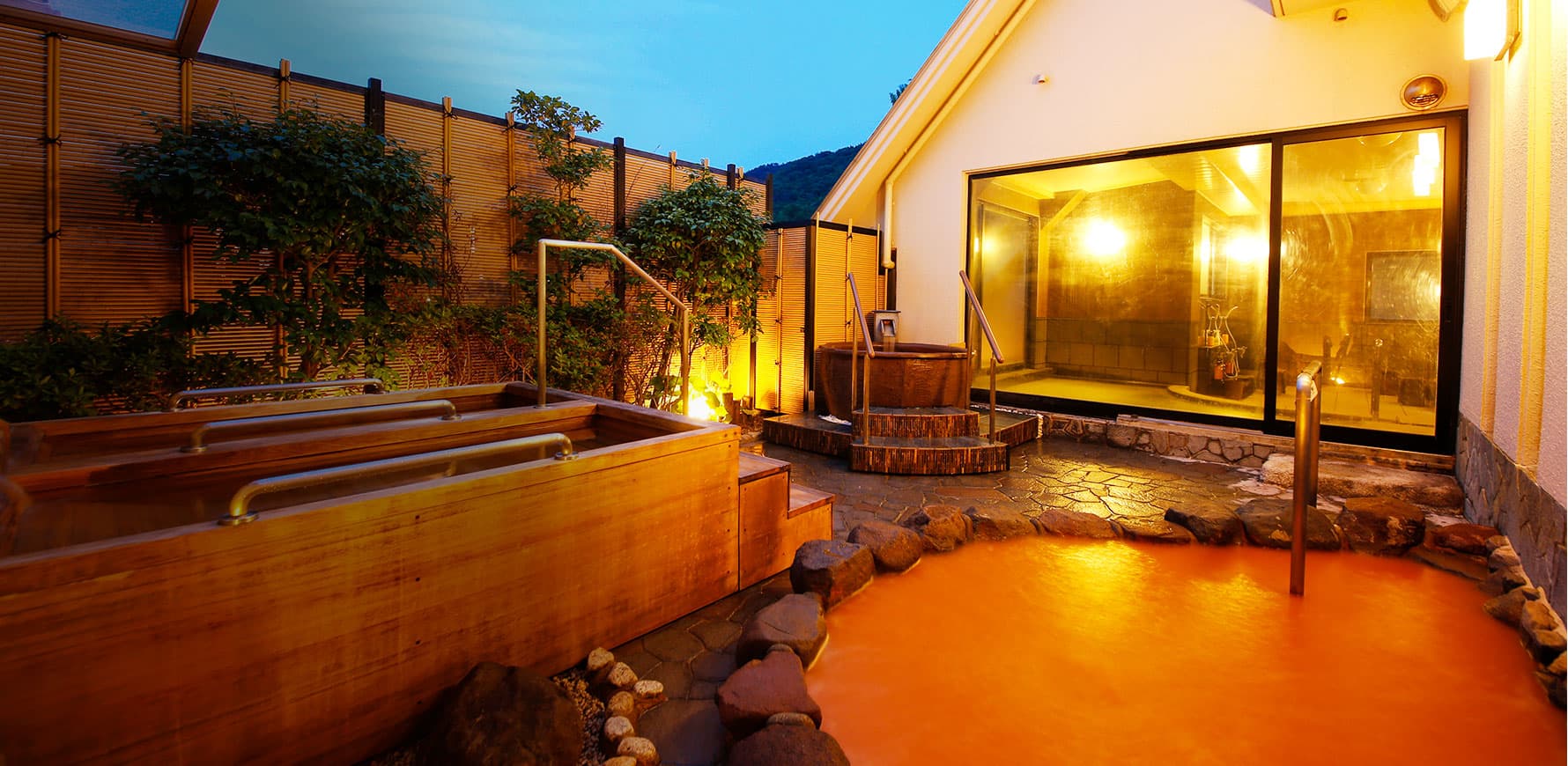
Kinsen (金泉, golden spring) is iron-and-salt water that oxidises rust-brown on contact with air, with roughly twice the salinity of seawater. Ginsen (銀泉, silver spring) is colourless and contains carbonic acid plus trace radon, lighter on the skin and globally rare. Most top Arima ryokans pipe both into separate baths so guests can compare in a single stay.

Kinsen is the photogenic one. Step out of a kinsen rotenburo and your skin glows pink-red for twenty minutes; salt residue tastes of ocean on the lips, and the water carries one of the highest salt concentrations of any hot spring in Japan ([Visit Arima Onsen 2026-05-07]). Geologically it is fossil seawater from a Philippine Plate subduction zone ([Nippon.com 2026-05-07]).

Ginsen is the one most travelers under-rate. The water looks like tap water for the first 90 seconds. Then carbonic acid bubbles cling to forearm hair like champagne, and a faint metallic tingle runs up the calves — the trace radon. Skin emerges silkier than salt-stiff. Carbonated radon springs of Arima's profile contain seven of the nine therapeutic mineral classes designated by Japan's Ministry of the Environment ([Visit HYOGO 2026-05-07]).

If you are flying across the world for an onsen, ginsen is the rarer water — the carbonated-plus-radon profile in a single bath is essentially globally unique to Arima. New to public bathing? Our onsen etiquette refresher for first-time foreign guests covers the towel rules.

Not every Arima ryokan offers both. Maple Arima pipes only ginsen. Tocen Goshobo's signature is its lithium-rich tansan sub-type. Nakanobo Zuien, Hyoe Koyokaku, Taketoritei Maruyama and Negiya Ryofukaku all offer both — check water type before you book.

Tip

The kinsen towel will stain — that is normal. Iron in the gold spring permanently dyes light cotton ochre on contact. Most ryokans hand you a dark sacrificial towel, but English signage rarely explains why. Bring an old black or brown towel if you also want to dry off without ruining a hotel-grade one, and never wear a white yukata into a kinsen rotenburo. Local order: kinsen first (warming), ginsen after (carbonate finish).

How we picked these 9 ryokans

We screened every operating ryokan in Arima against five criteria: a verified on-site source for kinsen or ginsen, walking distance to Yumotozaka, kaiseki centred on certified Kobe beef or Hyogo wagyu, English-readable booking, and 200+ reviews averaging 4.0+ across two platforms. Nine properties cleared the bar.

No ryokan on this list paid to be included. Properties are drawn from our database of 224 vetted ryokans across 25 destinations. The peer post — best ryokans in Beppu — covers the Kyushu side, and our nationwide luxury ryokan rankings frame Arima against Hakone and Kyoto.

Arima ryokans range from about $100 per night at the modern budget tier (Maple Arima) to $900 at luxury suites with in-room kinsen rotenburo (Gekkoen Korokan, Nakanobo Zuien). Mid-range typically runs $200–$500; luxury $300–$900. Arima skews more expensive than Beppu or Kinosaki — the floor is roughly where Beppu's mid-tier ceiling sits.

1. Nakanobo Zuien — Best for adults-only luxury with both waters

Best for Couples and solo travelers prioritising silence and adults-only kinsen luxury.

At a glance 50 rooms · ~$302–$800 USD · Founded 1872 · 4-min walk from Yumotozaka · Water: kinsen + ginsen.

Onsen Two indoor public baths plus reservable kashikiri; select suites have an in-room kinsen rotenburo. Both waters are piped into separate halls so you can do the locals' kinsen-first, ginsen-finish order.

Kaiseki Hyogo-prefecture certified Kobe beef anchors the kaiseki — served as ishiyaki (stone-grilled) or shabu-shabu by season, in private dining alcoves rather than in-room.

Standout Adults-only across all 50 rooms — a no-children policy almost no other Arima ryokan enforces. At 7am on my December stay there was zero footsteps overhead and zero splashing, only the faint tick of the stove warming the breakfast room. For a milestone trip the silence is the product. Our adults-only and couples-friendly stays guide makes a natural companion.

Honest trade-off No children under 13. Cheapest rooms are mountain-side without a kinsen rotenburo; in-room kinsen suites book out 4–6 months ahead for November. If your dates are firm, request a standard suite plus a kashikiri at check-in. Rates run $302–$800 per person per night with two meals [approximate; verify current availability]. You can see Nakanobo Zuien's adults-only suite types on our directory.

Tip

Adults-only kinsen suites at Nakanobo Zuien sell out 6 months ahead for mid-November maple weeks. Set a calendar alert for May 1 if you want a Saturday in mid-November; the property opens that window to repeat guests first. If kinsen-suites are gone, book a standard suite and add a kashikiri at check-in — Nakanobo does not charge extra for kashikiri reservations.

2. Tocen Goshobo — Best for 800-year heritage and literary kaiseki

Best for Travelers who care about lineage — Goshobo has hosted writers and politicians since the Kamakura period.

At a glance 20 rooms · ~$235–$600 USD · Founded around 1191 · 2-min walk from Kin-no-Yu · Water: kinsen + tansan-sen (lithium-rich sub-type).

Onsen A private kinsen rotenburo (Tsukimi-no-Yu), an indoor kinsen bath, and a signature lithium-rich tansan bath that almost no other Arima ryokan offers. Kashikiri at check-in.

Kaiseki The standard plan opens with a Kobe beef tataki, moves through Inland Sea sashimi, and centres on a Kobe beef shabu-shabu over the property's own well water. Served in private sukiya-style dining rooms.

Standout Goshobo's founding date of 1191 makes it among Japan's oldest continuously operating ryokans. Junichiro Tanizaki, Yosano Akiko and Showa-era prime ministers signed the guest book before you got here. The lithium-rich tansan-sen is a sub-type you have not soaked in before. Our Japanese ryokan breakfast spread covers the morning side.

Honest trade-off The 800-year heritage building means wooden floors creak, stairs are steep, accessibility is limited. Rooms vary; some retain early-20th-century plaster, others were renovated in the 2010s. Confirm the room category at booking. Rates run $235–$600 per person per night with two meals [approximate; verify current availability]. You can browse Tocen Goshobo's heritage rooms on our directory.

3. Gekkoen Korokan — Best for retro-modern design and Mt. Rokko views

Best for Design-led couples who want stained-glass interiors, mountain views and an in-room rotenburo without sacrificing kaiseki.

At a glance 30 rooms · ~$350–$900 USD · 6-min walk from Yumotozaka · Water: kinsen + ginsen via shared rights with sister property Yugetsusanso.

Onsen Three bath halls including a Mt. Rokko-view rotenburo angled to catch the maple ridge at sunset. Top-tier rooms have private in-room kinsen baths; mid-tier rooms add reservable kashikiri.

Kaiseki The Full Moon Kaiseki pairs Kobe tenderloin with whole Ise lobster in season, served in-room or in alcoves. Marbling on the Kobe slice rendered against my fingertip when I picked it up for shabu-shabu — the visual signature of A5 Tajima beef. Of roughly 5,500 Tajima cattle slaughtered annually, only ~3,000 pass certification ([Kobe Beef Association 2026-05-07]).

Standout Stained-glass accents, Showa-era retro-modern furniture, and a Mt. Rokko view almost no other Arima property delivers. If Nakanobo Zuien is the silent retreat and Goshobo is the museum, Korokan is the architectural showpiece.

Honest trade-off Hilltop position means stairs and inclines. Cheapest rooms face inland with limited mountain visibility and no in-room rotenburo; pay the upgrade for a Mt. Rokko-side room — the view from the bath is the reason to book here. Rates run $350–$900 per person per night with two meals [approximate; verify current availability]. You can check Gekkoen Korokan's stained-glass suites on our directory.

4. Hyoe Koyokaku — Best for 700-year heritage at mid-range scale

Best for First-time Arima visitors who want heritage credentials at a mid-range price point, with three distinct bath halls to explore.

At a glance 129 rooms · ~$200–$600 USD · Founded around 1336 · 3-min walk from Yumotozaka · Water: kinsen + ginsen.

Onsen Three separate complexes — Ichi-no-Yu, Ni-no-Yu and San-no-Yu — each with kinsen and ginsen sections, rotated by gender across morning and evening. A single overnight gives you all three. The most bath variety of any Arima property.

Kaiseki Hyogo wagyu by default with a certified Kobe beef supplement — 3,000–8,000 yen to swap the sirloin for an A5 fillet. Served in a communal dining hall rather than in-room.

Standout Run by the Hyoe family across 17 generations, this is the long-history mid-range pick. Structure an evening around variety — kinsen at Ichi-no-Yu before dinner, ginsen at Ni-no-Yu after, San-no-Yu's rotenburo at 6:30am.

Honest trade-off Peak weekends bring queues at popular bath halls, and the dining hall at full occupancy feels more banquet than kaiseki. For intimacy at this price, the intimate 29-room Taketoritei Maruyama is the alternative. Rates run $200–$600 per person per night with two meals [approximate; verify current availability]. You can see Hyoe Koyokaku's three bath halls on our directory.

5. Taketoritei Maruyama — Best for intimate hillside kaiseki with both waters

Best for Couples who want kashikiri private baths, both kinsen and ginsen, and a 29-room scale that keeps the corridors quiet.

At a glance 29 rooms · ~$250–$600 USD · Hillside · 8-min walk to Kin-no-Yu · Water: kinsen + ginsen.

Onsen Eight free reservable kashikiri baths plus public kinsen and ginsen halls — the highest kashikiri-to-room ratio in Arima. Select rooms have private open-air ginsen baths. Tattoo policy accommodated through kashikiri at no extra charge.

Kaiseki Hyogo wagyu standard with a Kobe beef upgrade; in-room dining is the default — the differentiator from Hyoe Koyokaku at the same tier. 9–11 courses anchored by a Kobe beef shabu-shabu or stone-grill main.

Standout Eight kashikiri baths effectively privatise your bathing for the whole stay — one before dinner, one after, one at 6:30am. For tattooed travelers and couples who want privacy without the in-room rotenburo cost, this is the most efficient pick.

Honest trade-off The hillside walk is uphill on the way back, which matters in summer humidity or after kaiseki. No shuttle; book a taxi from Arima Onsen station if mobility is a concern. The cheapest rooms have no private rotenburo. Rates run $250–$600 per person per night with two meals [approximate; verify current availability]. You can book Taketoritei Maruyama's kashikiri baths on our directory.

6. Gekkoen Yugetsusanso — Best for riverside scenery on a mid-range budget

Best for Travelers who want a small-scale riverside ryokan with kinsen access and Gekkoen design polish at half the Korokan price.

At a glance 16 rooms · ~$200–$500 USD · Riverside on the Taki River · 5-min walk from Yumotozaka · Water: kinsen.

Onsen Three bath areas including a kinsen rotenburo overlooking the Taki River. Reservable kashikiri at check-in. No on-site ginsen — cross to Kin-no-Yu (¥800) for the silver water.

Kaiseki Hyogo wagyu with a certified Kobe beef upgrade; in-room dining available for an additional supplement. The style leans toward sumiyaki (charcoal-grill) rather than shabu-shabu.

Standout The riverside setting is the differentiator. From the rotenburo you watch the Taki River fold around the slope and the maple ridge above; in November foliage drops directly into the water from the windows. At 16 rooms the scale is closer to a small luxury ryokan than the 30+ room Korokan one minute uphill.

Honest trade-off No on-site ginsen — kinsen-only, meaning an extra walk and ¥700 to Gin-no-Yu for the full two-waters experience. Riverside rooms are the ones to book; back rooms face the slope. Rates run $200–$500 per person per night with two meals [approximate; verify current availability]. You can see Gekkoen Yugetsusanso on the riverside on our directory.

7. Negiya Ryofukaku — Best for maple-view rooms under $400

Best for Couples who want a maple-framed view from the room, both waters on-site, and a price ceiling that rarely crosses $400.

At a glance 21 rooms · ~$150–$400 USD · Hillside · 6-min walk from Yumotozaka · Water: kinsen + ginsen.

Onsen Both kinsen and ginsen in separate baths plus reservable kashikiri private baths. Tattoo policy is accommodating via kashikiri reservation — confirm by email. The kinsen rotenburo faces the maple slope.

Kaiseki Hyogo wagyu with a Kobe beef upgrade plan; the Negiya house style adds a yuba (tofu skin) course that is not standard at most Arima ryokans, and the kaiseki usually runs 9 dishes.

Standout Maple-tree-framed rooms — the hillside position produces views that turn electric orange in mid-November. For the maple-tree-framed rooms of Negiya Ryofukaku at this price tier with both waters on-site, this is the best value pick on the list.

Honest trade-off Stairs both inside and on the approach. Cheapest rooms are mountain-facing without the maple view; for koyo, pay the upgrade for a maple-side room. Rates run $150–$400 per person per night with two meals [approximate; verify current availability]. You can check Negiya Ryofukaku's maple-side rooms on our directory.

8. Arima Grand Hotel — Best for families and panoramic Mt. Rokko views

Best for Families with school-age children and groups of four-plus who want Western-bed options, a seasonal outdoor pool, and the largest panoramic onsen in town.

At a glance 246 rooms · ~$200–$500 USD · Upper slope · 10-min walk (free shuttle) · Water: kinsen + ginsen.

Onsen A 9th-floor panoramic onsen with kinsen and ginsen baths overlooking the Mt. Rokko range — the largest bath complex of any Arima ryokan. Kashikiri at check-in. Tattoo policy generally tolerant.

Kaiseki Buffet and kaiseki options both available. Kaiseki includes Hyogo wagyu with a Kobe beef supplement; the buffet adds Kobe beef carving stations during peak season. Family plans include kid-friendly udon and karaage.

Standout Tatami and Western-bed rooms across 246 keys — the largest property in Arima, with scale for multi-generation groups. The seasonal outdoor pool (summer only) is the family draw, and the 9th-floor panoramic onsen is the single best mountain view from any bath in town. For Arima Grand Hotel for panoramic Mt. Rokko views at family scale, this is the easy pick.

Honest trade-off Closer to a large traditional hotel than a small artisan ryokan. Service is professional rather than personal; the ambience is more resort than retreat. For honeymooners chasing the historic atmosphere, Nakanobo Zuien or Goshobo is the brief. Rates run $200–$500 per person per night with two meals [approximate; verify current availability].

9. Maple Arima — Best budget-friendly modern stay with ginsen

Best for Budget travelers who want their own ginsen source and six bath types under $250 — research-verified, not stayed.

At a glance 64 rooms · ~$100–$250 USD · 7-min walk from Yumotozaka · Water: ginsen (own source).

Onsen Six bath types from the property's own ginsen source — indoor and outdoor rotenburo, jet baths and a sauna. No kinsen on-site; walk to Kin-no-Yu (¥800) for the gold spring. Tattoo policy generally tolerant.

Kaiseki Plans include kaiseki with a Kobe beef supplement at booking; standard plans use Hyogo wagyu. Dining is buffet or set-menu rather than multi-tray.

Standout For budget travelers, Maple Arima is the cheapest place to stay in Arima with a real on-site ginsen source — the only sub-$200 option that does not depend on the public bathhouses. Six bath types is double most mid-tier properties; modern Western-style rooms with private bathrooms. Free shuttle from Arima Onsen station. Practical budget ryokan tactics apply: book midweek, skip the kaiseki upgrade.

Honest trade-off No kinsen on-site, no in-room rotenburo, no historic atmosphere. Closer to a budget onsen hotel than a heritage property; buffet kaiseki is a meaningful step down. Research-verified, not stayed; details cross-checked against the official site May 7, 2026. Rates run $100–$250 per person per night with two meals [approximate; verify current availability]. You can browse Maple Arima from $100 on our directory.

Kobe beef kaiseki: what to expect on the 7-course tray

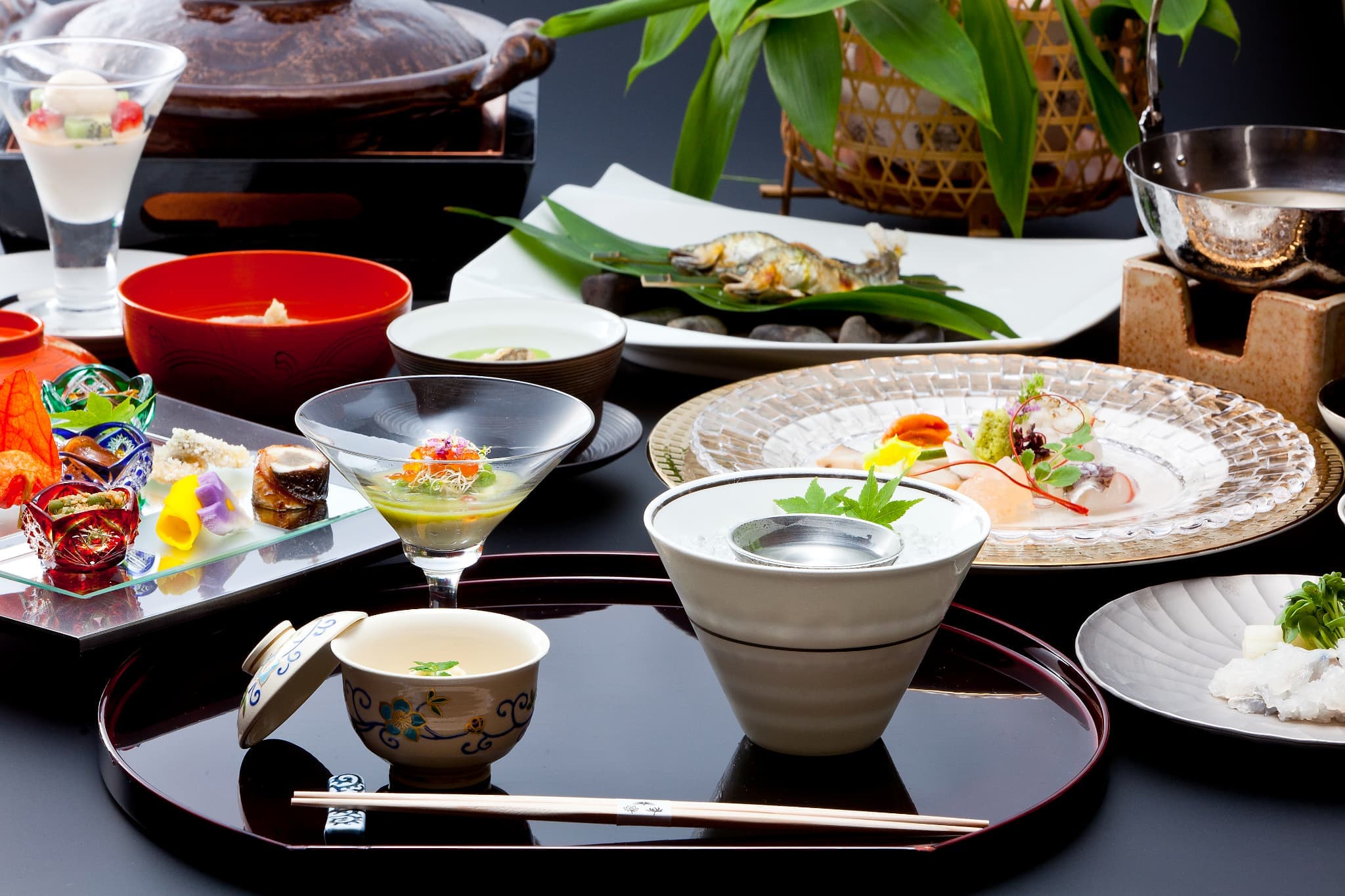
A typical Arima ryokan kaiseki runs 7–11 courses around a Kobe beef centrepiece — usually shabu-shabu, ishiyaki (stone grill) or sumiyaki (charcoal grill). Standard plans default to Hyogo wagyu; certified Kobe beef is almost always a 3,000–8,000 yen supplement. The supplement is worth it for the marbling difference.

Real Kobe beef on the kaiseki tray is identifiable before you taste it: marbling is so fine that A5 fat starts to render against your fingertip when you pick up a slice for shabu-shabu. Arima sits inside the Kobe beef production region, so most luxury and mid-tier ryokans list certified Kobe beef on their menus — but the default plan often serves Hyogo regional wagyu, which is excellent but not technically Kobe.

Nakanobo Zuien, Tocen Goshobo and Gekkoen Korokan generally include Kobe beef in the standard kaiseki at upper room tiers. Hyoe Koyokaku, Taketoritei Maruyama, Negiya Ryofukaku, Yugetsusanso, Arima Grand Hotel and Maple Arima default to Hyogo wagyu and offer Kobe beef as an upgrade. Ask for 'certified Kobe beef' (神戸ビーフ) by name at booking.

The seven-course pattern: opening sakizuke, Inland Sea sashimi, a clear soup, a charcoal-grilled fish, a Kobe beef main, a tempura or rice dish, miso soup with pickles, a small dessert. Vegetarian alternatives exist on request but require 7+ days lead time.

Tip

Request the Kobe beef supplement at booking, not at check-in. The 3,000–8,000 yen swap from default sirloin to an A5 certified Kobe fillet is the single highest-value upgrade for kaiseki-focused readers. Most ryokans need the supplement noted 3+ days ahead so the kitchen can sort the supply chain. Email the property with 神戸ビーフ・コース変更希望 in the subject line, or use the booking form's special-request field. At check-in is too late.

How to choose: old-town, hillside, or riverside?

Arima is small enough that no ryokan is far from anywhere — Yumotozaka end-to-end is a fifteen-minute walk — but the three micro-locations create different stays.

Old-town and Yumotozaka core (Tocen Goshobo, Hyoe Koyokaku, Nakanobo Zuien): the historic centre. Two-to-four-minute walks to Kin-no-Yu and Tosen-jinja, the most photogenic lantern-walk access, the highest density of tansan-senbei shops. Best for first-timers who want to maximise what they can do on foot. The trade-off is daytime crowds outside your door — though they vanish after 5pm.

Hillside (Taketoritei Maruyama, Negiya Ryofukaku, Arima Grand Hotel, Gekkoen Korokan): elevated views and a quieter atmosphere, with five-to-ten-minute walks to the old town. Best for maple-foliage views and travelers happy to trade walking convenience for the view from the bath. Mt. Rokko sunsets land best here.

Riverside (Gekkoen Yugetsusanso): the Taki River setting at the foot of the slope. Best for a smaller-scale stay with foliage dropping directly into the water in November. Cross-check the full Arima area guide and our best ryokans for couples when you pick dates.

The 5pm vanishing act: what changes when day-trippers leave

Buses arrive in waves between 11am and 3pm. By 5pm the last Hankyu service leaves, and the town empties over the next twenty minutes. This is the single best argument for booking a ryokan.

Before 5pm: Yumotozaka is shoulder-to-shoulder, Kin-no-Yu and Gin-no-Yu run thirty-minute queues. After 5pm: bath queues collapse to walk-in, the senbei shops pack up by 6pm, and the cobblestone slopes between Tosen-jinja and Taikobashi Bridge clear out. Paper lanterns switch on around 6:30pm; steam from the kinsen vents drifts through the lamplight, and you can hear the Taki River from the lanes for the first time all day.

A ryokan-issued yukata, a pair of geta, and a 30-minute loop — Tosen-jinja, Yumotozaka, Taikobashi Bridge, the Taiko-no-Ashiyu footbath — is the trip's defining 30 minutes. The lantern-lit version of Arima is only available to overnight guests, and it is the version Toyotomi Hideyoshi knew when he rebuilt the town in the 16th century after the 1581 fire ([Feel Kobe 2026-05-07]).

For the morning side: 6:30am at any upper-slope ryokan gives you mountain mist rolling off Mt. Rokko, an empty Kin-no-Yu queue at the 8am opening, and a Yumotozaka you can walk at your own pace before the 10:30am bus arrives. Most regulars book two nights for exactly this reason.

Not staying but still want to experience Arima's waters? Several ryokans on this list accept day-use hot spring ryokan visits during daytime hours — a good option if your itinerary won't stretch to an overnight.

Old-town walk: lanterns, Tansan water, and Toyotomi Hideyoshi

Arima's old town has been a hot-spring resort for at least 1,300 years, and the buildings you walk past date roughly to the 17th-century rebuild after Hideyoshi's interventions ([JNTO 2026-05-07]). Three short walks anchor an evening between dinner and bath.

The Yumotozaka loop. Walk down the slope past Mitsumori Honpo (since 1907) and the tansan-senbei stalls, and stop at the Tansan-sen public fountain — naturally carbonated mineral water bubbling out of the rock, the namesake of the carbonated rice cracker you have been smelling all day. Locals fill bottles from it.

Taiko-no-Ashiyu free footbath. Right outside Kin-no-Yu is Taiko-no-Ashiyu — a free outdoor kinsen footbath, plus Taiko-no-Insenba, a free drinking fountain where you can taste raw kinsen. Salty, mildly metallic, almost like weak miso broth. Most visitors queue inside Kin-no-Yu for 800 yen without realising the footbath outside is the same water, free, and almost always empty after 5pm ([Arima Onsen Tourism Association 2026-05-07]).

Tosen-jinja and Hideyoshi's heritage. Tosen-jinja sits at the top of Yumotozaka, dedicated in part to Toyotomi Hideyoshi, who rebuilt Arima after the 1581 fire. Stone monuments commemorate his wife Nene, after whom the Nene-no-michi back lane is named. The themed Taiko-no-Yu bath complex up the slope pumps from the same source as every ryokan here — the 2,750 yen admission is better spent on an extra kaiseki course.

Tip

Skip the Taiko-no-Yu Theme Park; do the free Taiko-no-Ashiyu footbath instead. The 26-bath Taiko-no-Yu (admission 2,750 yen weekday) opened in 2002 and pumps from the same source as every ryokan on this list. If you have already paid for a kinsen-and-ginsen ryokan, Taiko-no-Yu adds crowds, not water. The free outdoor Taiko-no-Ashiyu footbath outside Kin-no-Yu is the same kinsen, ten minutes of soak time, and almost always empty after 5pm. Spend the saved 2,750 yen on the Kobe beef supplement instead.

Getting to Arima: Hankyu bus, Hokushin Line, and the Mt. Rokko cable car

Arima is one of the easiest onsen towns to reach from a major city — three transit options, all under 90 minutes from Osaka and 30–60 minutes from Kobe.

1. Direct highway bus from Osaka. Hankyu Bus runs roughly hourly from Hankyu Umeda or Shin-Osaka to Arima Onsen Bus Terminal — 60 minutes, around 1,400 yen, no transfers. JR Bus runs a similar service. Recommended for arrival with luggage.

2. Train from Kobe-Sannomiya via the Hokushin Line. From Kobe-Sannomiya, subway one stop to Tanigami, transfer to the Hokushin Kyuko / Shintetsu Arima Line, ride to Arima-Onsen Station — 30 minutes total, around 940 yen. JR Pass does not cover the Shintetsu portion.

3. The scenic route: Mt. Rokko Cable Car + Rokko-Arima Ropeway. Take the Rokko Cable Car up Mt. Rokko (10 minutes), connect via the summit bus, then descend via the Rokko-Arima Ropeway (12 minutes). 75 minutes including transfers, and the gondola views over the Inland Sea on a clear day are the reason to do it once. The Arima-Rokko 1-Day Pass from Sannomiya bundles the route at around 2,560 yen.

From Tokyo: Shinkansen to Shin-Kobe (~2h45m), then a 30-minute taxi or the Hokushin Line. Pair with the broader Kansai onsen-towns landscape for a 4–5-day circuit, or jump south to the best ryokans in Yufuin on the Beppu side. For the full Kansai onsen landscape alongside every other region of Japan, see our complete Japan onsen destinations guide.

Tip

Take the bus in, take the ropeway out. The Hankyu Bus from Umeda is faster, cheaper and luggage-friendly for arrival — one seat, 60 minutes. The Mt. Rokko Cable Car + Arima Ropeway combo is the scenic descent, best done on the day you check out, when you have already dropped luggage. The Arima-Rokko 1-Day Pass (~2,560 yen from Sannomiya) covers both legs of the cable + ropeway loop, and you finish at Sannomiya for dinner without doubling back.

Best time of year to stay at an Arima ryokan

The four-season picture, in priority order for a one-night stay.

Mid-November for Zuihoji Park maples. The maple canopy turns electric orange in the second and third weeks of November, and the hillside ryokans (Negiya Ryofukaku, Taketoritei Maruyama, Korokan) frame the foliage from the room. Koyo peak inflates rates 30–50% and books out four to six months ahead — set a calendar alert for May 1.

Late January to early February for peak Kobe beef and Mt. Rokko snow. Winter wagyu is at its richest, the kaiseki upgrades noticeably across every property on this list, and Mt. Rokko occasionally dusts with snow visible from the panoramic baths. The Tenjin Matsuri ladle-pour ritual at Tosen-jinja on January 2 is the local festival worth timing around — free, 6am, ryokan-guest-only-feeling crowd.

Late March to early April for Zenpukuji cherry blossoms. The Zenpukuji grove behind the old town turns pale pink for about ten days. Pair with sakura at Himeji Castle for a Hyogo cherry circuit.

Avoid Golden Week (May 3–5) and Obon (mid-August) — holiday surcharges, books out four months early. Late May, June, September and early December are the under-rated shoulder windows: fewer crowds, rates 20–30% below peak.

Arima ryokan FAQ

Is it worth staying overnight in Arima Onsen instead of day-tripping from Osaka?

Yes — for one night, almost universally. Day-trippers see one bath and ride 90 minutes home. Overnight guests get the post-5pm lantern-lit lanes, three to four bath sessions, a Kobe beef kaiseki, and a 6:30am soak with Mt. Rokko mist.

What is the difference between kinsen and ginsen?

Kinsen (金泉) is iron-and-salt water that oxidises rust-brown on contact with air. Ginsen (銀泉) is colourless and contains carbonic acid plus trace radon, lighter on the skin and globally rarer. Locals soak kinsen first, ginsen after. Nakanobo Zuien, Hyoe Koyokaku, Taketoritei Maruyama and Negiya Ryofukaku pipe both.

How do I get to Arima Onsen from Osaka or Shin-Osaka?

Direct Hankyu Bus from Umeda or Shin-Osaka — 60 minutes, ~1,400 yen, no transfers. From Kobe-Sannomiya, subway to Tanigami, transfer to the Hokushin Line and Shintetsu Arima Line — 30 minutes, ~940 yen. JR Pass does not cover Shintetsu.

Which Arima ryokan is best for Kobe beef kaiseki?

Nakanobo Zuien, Tocen Goshobo and Gekkoen Korokan generally include certified Kobe beef in the standard kaiseki at upper room tiers. Hyoe Koyokaku, Taketoritei Maruyama, Negiya Ryofukaku and Arima Grand Hotel default to Hyogo wagyu and offer Kobe beef as a 3,000–8,000 yen upgrade.

Are there adults-only ryokans in Arima Onsen?

Yes — Nakanobo Zuien is the canonical adults-only luxury pick, no-children across all 50 rooms. Most other Arima ryokans accept families.

Are Arima ryokans tattoo-friendly?

Policy varies. Kin-no-Yu and Gin-no-Yu prohibit visible tattoos. Maple Arima and Arima Grand Hotel are tolerant in the public baths; Taketoritei Maruyama, Negiya Ryofukaku and Hyoe Koyokaku accommodate via reservable kashikiri at no extra charge.

Which Arima ryokans have private in-room rotenburo?

Nakanobo Zuien (kinsen suites), Gekkoen Korokan (top-tier) and Taketoritei Maruyama (open-air ginsen) are the three with true in-room rotenburo. Hyoe Koyokaku, Negiya Ryofukaku, Arima Grand Hotel and Yugetsusanso offer reservable kashikiri instead.

What is the cheapest ryokan in Arima Onsen?

Maple Arima from around $100 per person — the only sub-$200 option with its own on-site ginsen source. Expect $150 minimum for a full kaiseki plan. Arima lacks the $50 hostel tier of Kinosaki or Beppu.

Final thoughts: sleeping in Japan's oldest hot-spring town

The case for an overnight in Arima is structural rather than aspirational. The town runs on day-tripper time during the day and ryokan-guest time at night, and choosing where to sleep is how you choose which version of Arima you see. Nakanobo Zuien for adults-only luxury with both waters. Tocen Goshobo for 800-year heritage and literary kaiseki. Gekkoen Korokan for retro-modern design and Mt. Rokko views. Hyoe Koyokaku for 700-year heritage at mid-range scale. Taketoritei Maruyama for intimate kashikiri-rich kaiseki. Gekkoen Yugetsusanso for the riverside foliage trade. Negiya Ryofukaku for maple-view rooms under $400. Arima Grand Hotel for families and the 9th-floor panoramic onsen. Maple Arima for the budget floor with on-site ginsen.

Dates matter as much as property. A November maple weekend at Negiya Ryofukaku is a different trip from a late-January Kobe beef night at Nakanobo Zuien. Cross-check the koyo calendar and your tolerance for kinsen towel staining before you commit.

When you are ready, jump to the individual ryokan pages above, or browse all Arima ryokans on our area page. If Arima is one stop in a longer trip, pair it with Kinosaki Onsen for a 2-stop Hyogo onsen circuit — crab kaiseki on one side of the prefecture, gold and silver waters on the other. Arima is also one vertex of the Nihon Sandai Meisen — Japan's three great celebrated springs documented by Hayashi Razan in 1662. The other two are Kusatsu (most acidic water in Japan, full guide) and Gero Onsen (alkaline bijin-no-yu, the newest complete guide on site). *All prices, hours and access details verified May 7, 2026. Confirm Kobe beef supplements when booking.*

3월 어느 화요일 오후 5시 42분, 산노미야에서 출발한 마지막 한큐 버스가 당일치기 여행자들을 아리마 온천 버스 터미널에 내려놓고 발길을 돌렸습니다. 20분도 지나지 않아, 점심시간에 어깨를 부딪히며 올라갔던 자갈길 슬로프 유모토자카(湯本坂)는 거의 텅 비어 있었습니다. 오후 6시 15분, 저는 유카타 차림으로 도센진자(湯泉神社) 쪽으로 다시 걸어가고 있었고, 긴센(金泉) 분출구에서 피어오른 김이 종이 등롱 빛 사이로 감겨 올라갔습니다. 마을에서는 구운 쌀 센베 향과 옅은 유황 냄새가 났습니다. 골목에는 다른 사람이 한 명도 없었습니다.

그 90분의 윈도우야말로 아리마에서 료칸을 예약해야 하는 진짜 이유입니다. 당일치기 여행자들은 오전 11시부터 오후 5시까지의 마을, 긴노유(金の湯)에 40명 줄이 늘어선 마을을 봅니다. 료칸 손님은 오후 5시부터 다음 날 오전 10시까지의 마을을 봅니다. 그것은 다른 마을이고, 어디에서 잘지 정하는 일은 간사이 일정에서 내릴 수 있는 가장 큰 결정입니다. 마지막 확인일: 2026년 5월 7일.

저는 Japan Ryokan Guide의 간사이 데스크를 담당합니다. 2024년 이후 세 번의 여행에서 이 리스트의 9곳 중 4곳에 직접 묵었고, 그중 6곳에서 긴센(金泉, 철분이 풍부한 황금빛 온천)과 긴센(銀泉, 라돈·탄산 함유 은빛 온천) 두 가지 모두에 입욕했습니다. 직접 자지 않은 곳은 그렇다고 분명히 밝혔습니다. 이 글은 미야지마의 바다에 떠 있는 도리이 1박, 하코네, 교토, 다카야마, 유후인, 쿠사츠의 유황천에 이은 지역별 베스트 료칸 시리즈의 일곱 번째 글입니다.

이 가이드는 럭셔리·중급·저예산 세 등급에 걸쳐 9곳의 료칸을 순위로 정리합니다. 각 숙소의 솔직한 단점, 어떤 영문 자료도 제대로 설명하지 않는 긴센 수건 변색 경고, 그리고 오사카에서의 당일치기가 왜 아리마의 최악의 버전인지 그 구조적인 이유까지 다룹니다. 료칸 문화 자체가 처음이라면 첫 료칸 숙박 시 알아둘 점 가이드에서 기본을 다지고 오세요. 그래야 이 글에서 아리마만의 다른 점에 집중할 수 있습니다.

아리마 온천 최고의 료칸은 나카노보 즈이엔의 성인 전용 은신처입니다 — 긴센(金泉)과 긴센(銀泉) 두 온천, 고베규 가이세키, 그리고 50개 객실 전체에 적용되는 노 칠드런 정책을 갖춘 럭셔리 료칸입니다. 헤리티지를 중시하는 분에게는 800년 역사의 문학 료칸 도센 고쇼보를, 디자인 애호가에게는 레트로 모던 스테인드글라스 스위트의 게코엔 코로칸을, 저예산 여행자에게는 모던하고 합리적인 가격의 메이플 아리마를 권합니다.

Tip

고지 사항: Japan Ryokan Guide는 제휴 링크를 통해 예약이 발생하면 수수료를 받습니다. 다만 료칸으로부터 게재나 노출 대가를 받지 않으며, 이 글의 모든 숙소는 오직 품질만으로 선정했습니다. 이 수수료가 6개 언어로 무료 디렉터리를 운영할 수 있게 해 줍니다.

한눈에 비교: 아리마 온천 료칸 9곳 요약

| # | 료칸 | 등급 | 가격(USD부터) | 적합 대상 | |---|---|---|---|---| | 1 | 나카노보 즈이엔 | 럭셔리 | $302 | 두 온천을 갖춘 성인 전용 숙박 | | 2 | 도센 고쇼보 | 럭셔리 | $235 | 800년 헤리티지와 문학적 가이세키 | | 3 | 게코엔 코로칸 | 럭셔리 | $350 | 레트로 모던 디자인과 객실 전용 노천탕 | | 4 | 효에 코요카쿠 | 중급 | $200 | 중급 가격대의 700년 헤리티지 | | 5 | 다케토리테이 마루야마 | 중급 | $250 | 두 온천을 갖춘 인티미트한 언덕 위 가이세키 | | 6 | 게코엔 유게쓰산소 | 중급 | $200 | 중급 예산의 강변 풍경 | | 7 | 네기야 료후카쿠 | 중급 | $150 | 400달러 이하의 단풍 전망 객실 | | 8 | 아리마 그랜드 호텔 | 중급 | $200 | 가족과 롯코산 파노라마 전망 | | 9 | 메이플 아리마 | 저예산 | $100 | 긴센(銀泉)을 갖춘 합리적 가격의 모던 숙박 |

일본 대표 온천 도시들의 폭넓은 가격 비교는 료칸 1박 비용 가이드에서 일반적인 가이세키 요금을 정리해 두었습니다.

오사카·고베에서 당일치기가 아니라 아리마에서 1박 해야 하는 이유

그렇습니다. 아리마에서 1박 하는 것은 간사이 여행에서 할 수 있는 가장 큰 단일 업그레이드입니다. 오후 5시경 마지막 당일치기 버스들이 빠져나가면 유모토자카는 비고, 긴노유의 줄은 사라지며, 등롱이 켜진 옛 마을은 료칸 손님의 것이 됩니다. 당일치기 여행자는 서두른 입욕 한 번과 90분 귀가 길을 얻습니다. 1박 손님은 서너 차례의 입욕, 고베규 가이세키, 그리고 롯코산에 산안개가 깔린 새벽 6시 30분의 입욕을 얻습니다.

계산은 단순합니다. 오사카발 당일치기는 한큐 버스 왕복에 약 2,800엔, 긴노유에 800엔이 들고 — 아리마가 본래 세워진 목적의 모든 것을 놓칩니다. 럭셔리와 중급 료칸 대부분은 1인 30,000~80,000엔 수준이며, 여기에 고베규 가이세키, 조식, 무제한 입욕이 포함됩니다. 이 여행에서 호텔보다 료칸이 나은 이유는 거의 아리마용 논리입니다.

이 마을은 8세기부터 1박 입욕과 가이세키 식사를 중심으로 설계된 좁은 골짜기입니다([Visit HYOGO 2026-05-07]). 공중 욕탕은 오후 10시면 닫고, 옛 마을 상점은 오후 6시쯤 문을 닫습니다. 료칸 객실 없이는 저녁 식사 후 갈 곳이 없지만 — 객실이 있다면 도센진자와 다이코바시(太閤橋) 사이의 골목이 하루 중 가장 조용한 한 시간이 됩니다.

게를 곁들인 가이세키로 고베규의 균형을 맞추고 싶다면 기노사키 추천 료칸과 묶어 효고 2박 온천 코스로 짜 보세요.

긴센(金泉) vs 긴센(銀泉): 아리마의 두 온천 정리

긴센(金泉, 황금빛 온천)은 공기에 닿으면 녹슨 갈색으로 산화하는 철분과 염분의 온천수로, 염도가 바닷물의 약 두 배에 이릅니다. 긴센(銀泉, 은빛 온천)은 무색 투명하며 탄산과 미량의 라돈을 포함해 피부에 더 부드럽고, 세계적으로도 드뭅니다. 아리마의 상위권 료칸 대부분은 두 온천을 별도의 욕탕으로 끌어와, 손님이 한 번의 숙박에서 비교할 수 있게 합니다.

긴센(金泉)은 사진이 잘 나오는 쪽입니다. 긴센 노천탕에서 나오면 피부는 20분간 분홍빛이 도는 붉은색으로 빛나고, 입술에는 바다 같은 짠맛의 염분 잔재가 남습니다. 일본의 어떤 온천보다도 높은 수준의 염분 농도를 자랑합니다([Visit Arima Onsen 2026-05-07]). 지질학적으로는 필리핀 해 플레이트 섭입대에서 올라온 화석 해수입니다([Nippon.com 2026-05-07]).

긴센(銀泉)은 대부분의 여행자가 과소평가하는 쪽입니다. 처음 90초간은 수돗물처럼 보입니다. 그러다 탄산 거품이 샴페인처럼 팔뚝 털에 달라붙고, 미세한 금속성 저릿함이 종아리를 타고 올라옵니다 — 그것이 미량의 라돈입니다. 욕탕에서 나온 피부는 염분에 굳은 것과 달리 매끄럽습니다. 아리마 같은 프로필의 탄산·라돈 온천은 일본 환경성이 지정한 9가지 치료적 미네랄 분류 중 7가지를 포함합니다([Visit HYOGO 2026-05-07]).

온천 한 번을 위해 지구 반대편에서 날아온다면, 긴센(銀泉)이 더 희귀한 물입니다 — 한 욕탕에 탄산과 라돈을 동시에 갖춘 프로필은 사실상 세계적으로 아리마에서만 발견됩니다. 공중 입욕이 처음이라면 외국인 첫 방문자를 위한 온천 예절 정리 글에서 수건 사용법을 다룹니다.

모든 아리마 료칸이 두 온천을 모두 갖춘 것은 아닙니다. 메이플 아리마는 긴센(銀泉)만 끌어옵니다. 도센 고쇼보의 시그니처는 리튬 함량이 높은 탄산천 서브 타입입니다. 나카노보 즈이엔, 효에 코요카쿠, 다케토리테이 마루야마, 네기야 료후카쿠는 모두 두 온천을 모두 제공합니다 — 예약 전 수질을 꼭 확인하세요.

Tip

긴센(金泉) 수건은 변색됩니다 — 정상입니다. 황금 온천의 철분이 밝은 면에 닿으면 영구적인 황토색 얼룩을 남깁니다. 대부분의 료칸은 어두운 색의 일회용 수건을 내주지만, 영문 안내가 그 이유를 설명하는 경우는 드뭅니다. 호텔급 수건을 망치지 않고 몸을 닦고 싶다면 낡은 검은색·갈색 수건을 챙겨 가세요. 그리고 흰 유카타 차림으로 긴센 노천탕에 들어가지 마세요. 현지인의 순서는 긴센(金泉) 먼저(몸을 데우고), 긴센(銀泉) 나중에(탄산천으로 마무리)입니다.

이 9곳을 어떻게 골랐는가

아리마에서 운영 중인 모든 료칸을 다섯 가지 기준으로 검증했습니다. 긴센(金泉) 또는 긴센(銀泉)에 대한 검증된 자체 원천, 유모토자카까지의 도보 거리, 인증 고베규 또는 효고 와규 중심의 가이세키, 영어 예약 가능 여부, 그리고 두 플랫폼에서 평균 4.0 이상의 200건 이상 후기. 9개 숙소가 이 기준을 통과했습니다.

이 리스트에 대가를 지불하고 들어온 료칸은 없습니다. 25개 온천 지역에 걸쳐 224곳을 검증한 우리 데이터베이스에서 선정했습니다. 동일 시리즈의 벳푸 베스트 료칸 글이 규슈 쪽을 다루며, 전국 럭셔리 료칸 랭킹은 아리마를 하코네·교토와 비교한 큰 그림을 제공합니다.

아리마 료칸의 가격대는 모던 저예산 등급(메이플 아리마) 1박 약 100달러부터, 객실 전용 긴센(金泉) 노천탕을 갖춘 럭셔리 스위트(게코엔 코로칸, 나카노보 즈이엔) 900달러까지 폭넓게 분포합니다. 중급은 일반적으로 200~500달러, 럭셔리는 300~900달러 수준입니다. 아리마는 벳푸나 기노사키보다 비싼 편으로, 바닥선이 대략 벳푸 중급의 천장에 해당합니다.

1. 나카노보 즈이엔 — 두 온천을 갖춘 성인 전용 럭셔리에 최고

적합 대상 정적과 성인 전용 긴센 럭셔리를 우선시하는 커플과 솔로 여행자.

한눈에 50실 · 약 302~800달러 · 1872년 창업 · 유모토자카까지 도보 4분 · 수질: 긴센(金泉) + 긴센(銀泉).

온천 실내 공용 욕탕 두 곳에 더해 예약제 가시키리(貸切, 단체 전세) 욕탕을 운영하며, 일부 스위트는 객실 전용 긴센(金泉) 노천탕을 갖추고 있습니다. 두 온천이 별도의 홀로 끌려와 있어, 현지인의 긴센(金泉) 먼저, 긴센(銀泉) 마무리 순서를 그대로 따라갈 수 있습니다.

가이세키 효고현 인증 고베규가 가이세키의 중심입니다 — 시즌에 따라 이시야키(돌구이) 또는 샤브샤브로 제공되며, 객실이 아닌 개별 다이닝 알코브에서 차립니다.

돋보이는 점 50실 전체에 적용되는 성인 전용 정책 — 다른 어떤 아리마 료칸도 거의 따르지 않는 노 칠드런 정책입니다. 12월에 묵은 날 새벽 7시, 위층 발소리도 물 튀기는 소리도 전혀 없었고, 오직 조식실의 난로가 데워지는 희미한 째깍 소리뿐이었습니다. 기념일 여행에서는 그 정적이 곧 상품입니다. 성인 전용·커플 친화 료칸 가이드와 함께 읽으면 자연스럽게 이어집니다.

솔직한 단점 13세 미만 입실 불가. 가장 저렴한 객실은 산 쪽이며 객실 전용 긴센(金泉) 노천탕이 없습니다. 객실 전용 긴센 스위트는 11월 기준 4~6개월 전부터 매진됩니다. 일정이 고정되어 있다면 일반 스위트를 예약하고 체크인 시 가시키리를 추가로 요청하세요. 요금은 2식 포함 1인 1박 302~800달러 수준입니다 [추정치, 현재 가능 여부 확인 필요]. 디렉터리에서 나카노보 즈이엔의 성인 전용 스위트 타입을 확인할 수 있습니다.

Tip

나카노보 즈이엔의 성인 전용 긴센(金泉) 스위트는 11월 중순 단풍 주간을 위해 6개월 전부터 매진됩니다. 11월 중순 토요일을 원한다면 5월 1일에 캘린더 알람을 맞춰 두세요. 그 윈도우는 재방문 손님에게 먼저 열립니다. 긴센 스위트가 매진되었다면 일반 스위트를 잡고 체크인 시 가시키리를 추가하세요 — 나카노보는 가시키리 예약에 추가 요금을 받지 않습니다.

2. 도센 고쇼보 — 800년 헤리티지와 문학적 가이세키에 최고

적합 대상 가문의 계보를 중시하는 여행자 — 고쇼보는 가마쿠라 시대 이래 작가와 정치인을 맞이해 온 료칸입니다.

한눈에 20실 · 약 235~600달러 · 약 1191년 창업 · 긴노유까지 도보 2분 · 수질: 긴센(金泉) + 탄산천(リチウム 함량이 높은 서브 타입).

온천 객실 전용 긴센(金泉) 노천탕(쓰키미노유), 실내 긴센 욕탕, 그리고 다른 아리마 료칸이 거의 갖추지 않은 시그니처 리튬 함량 높은 탄산 욕탕이 있습니다. 체크인 시 가시키리 예약 가능.

가이세키 표준 플랜은 고베규 다타키로 시작해 세토 내해 사시미를 거쳐, 자체 우물물에 끓인 고베규 샤브샤브로 마무리합니다. 정통 스키야 양식의 개별 다이닝룸에서 제공됩니다.

돋보이는 점 1191년이라는 창업 연도는 고쇼보를 일본에서 가장 오래 이어진 료칸 중 하나로 만들어 줍니다. 다니자키 준이치로, 요사노 아키코, 쇼와 시대 총리들이 여러분보다 먼저 방명록에 서명했습니다. 리튬 함량 높은 탄산천은 아마 처음 입욕해 보는 서브 타입일 것입니다. 아침에 차려 내는 일본식 료칸 조식 상차림은 정통 일본식 료칸 조식 글에서 다룹니다.

솔직한 단점 800년 헤리티지 건물이라는 뜻은 마룻바닥이 삐걱이고, 계단이 가파르며, 접근성에 한계가 있다는 뜻입니다. 객실은 편차가 있어 — 일부는 20세기 초 회벽 그대로, 일부는 2010년대에 리노베이션되었습니다. 예약 시 객실 등급을 확인하세요. 요금은 2식 포함 1인 1박 235~600달러 수준입니다 [추정치, 현재 가능 여부 확인 필요]. 디렉터리에서 도센 고쇼보의 헤리티지 객실을 둘러볼 수 있습니다.

3. 게코엔 코로칸 — 레트로 모던 디자인과 롯코산 전망에 최고

적합 대상 가이세키를 양보하지 않으면서 스테인드글라스 인테리어, 산 전망, 객실 전용 노천탕을 원하는 디자인 지향 커플.

한눈에 30실 · 약 350~900달러 · 유모토자카까지 도보 6분 · 수질: 자매 시설 유게쓰산소와 공동 권리로 끌어오는 긴센(金泉) + 긴센(銀泉).

온천 세 개의 욕탕 홀이 있으며, 그중 하나는 해 질 녘 단풍 능선을 잡는 각도로 설계된 롯코산 전망 노천탕입니다. 최상위 객실은 객실 전용 긴센(金泉) 욕탕을 갖추고 있고, 중간 등급 객실에는 예약제 가시키리가 추가됩니다.

가이세키 풀 문 가이세키는 시즌에 따라 고베규 안심에 통이세 새우 한 마리를 곁들이며, 객실이나 알코브에서 차립니다. 샤브샤브를 위해 손가락 끝으로 집어 올린 고베규 슬라이스의 마블링이 그 자리에서 녹아 내렸습니다 — A5 다지마규의 시각적 시그니처입니다. 매년 도살되는 다지마 소 약 5,500마리 중 인증을 통과하는 것은 약 3,000마리에 불과합니다([Kobe Beef Association 2026-05-07]).

돋보이는 점 스테인드글라스 액센트, 쇼와 시대 레트로 모던 가구, 그리고 다른 아리마 숙소에서는 거의 만날 수 없는 롯코산 전망. 나카노보 즈이엔이 정적의 은신처고 고쇼보가 박물관이라면, 코로칸은 건축적 쇼피스입니다.

솔직한 단점 언덕 위 입지라는 건 계단과 경사로를 의미합니다. 가장 저렴한 객실은 안쪽을 향해 산 전망이 제한적이고 객실 전용 노천탕이 없습니다 — 롯코산 쪽 객실로 업그레이드 비용을 지불하세요. 욕탕에서의 그 전망이 여기를 예약하는 이유입니다. 요금은 2식 포함 1인 1박 350~900달러 수준입니다 [추정치, 현재 가능 여부 확인 필요]. 디렉터리에서 게코엔 코로칸의 스테인드글라스 스위트를 확인할 수 있습니다.

4. 효에 코요카쿠 — 중급 가격대의 700년 헤리티지에 최고

적합 대상 중급 가격대에서 헤리티지 자격을 원하면서 세 곳의 욕탕 홀을 모두 둘러보고 싶은 아리마 첫 방문자.

한눈에 129실 · 약 200~600달러 · 약 1336년 창업 · 유모토자카까지 도보 3분 · 수질: 긴센(金泉) + 긴센(銀泉).

온천 세 개의 별도 욕탕 단지 — 이치노유, 니노유, 산노유 — 각각 긴센(金泉)과 긴센(銀泉) 구역을 갖추고 있으며, 아침과 저녁에 성별이 교대로 바뀝니다. 1박만으로 세 곳을 모두 경험할 수 있습니다. 아리마에서 가장 다양한 입욕 옵션입니다.

가이세키 표준은 효고 와규이며, 인증 고베규로 업그레이드 시 3,000~8,000엔 추가 — 등심을 A5 안심으로 교체하는 옵션입니다. 객실이 아닌 공용 다이닝홀에서 제공됩니다.

돋보이는 점 효에 가문이 17대에 걸쳐 운영해 온 곳으로, 긴 역사를 갖춘 중급 선택지입니다. 저녁 일정을 다양성으로 짜 보세요 — 저녁 식사 전에 이치노유의 긴센, 식사 후에 니노유의 긴센(銀泉), 새벽 6시 30분에는 산노유의 노천탕.

솔직한 단점 성수기 주말에는 인기 욕탕 홀에 줄이 생기고, 만석의 다이닝홀은 가이세키보다 연회에 가깝게 느껴집니다. 같은 가격대에서 인티미트함을 원한다면 29실 규모의 인티미트한 다케토리테이 마루야마가 대안입니다. 요금은 2식 포함 1인 1박 200~600달러 수준입니다 [추정치, 현재 가능 여부 확인 필요]. 디렉터리에서 효에 코요카쿠의 세 욕탕 홀을 확인할 수 있습니다.

5. 다케토리테이 마루야마 — 두 온천을 갖춘 인티미트한 언덕 위 가이세키에 최고

적합 대상 가시키리 개별 욕탕, 긴센(金泉)과 긴센(銀泉) 두 온천, 그리고 복도가 조용한 29실 규모를 원하는 커플.

한눈에 29실 · 약 250~600달러 · 언덕 위 · 긴노유까지 도보 8분 · 수질: 긴센(金泉) + 긴센(銀泉).

온천 무료 예약제 가시키리 욕탕 8개에 더해 공용 긴센(金泉)·긴센(銀泉) 홀까지 — 아리마에서 가장 높은 객실 대비 가시키리 비율입니다. 일부 객실에는 객실 전용 긴센(銀泉) 노천탕이 있습니다. 타투 정책은 가시키리를 통해 추가 요금 없이 수용됩니다.

가이세키 표준은 효고 와규이며 고베규 업그레이드 가능. 객실에서 식사하는 것이 기본이며 — 같은 등급의 효에 코요카쿠와의 차별점입니다. 9~11코스로, 고베규 샤브샤브 또는 돌구이가 메인입니다.

돋보이는 점 8개의 가시키리는 사실상 숙박 내내 입욕을 사적인 시간으로 만들어 줍니다 — 저녁 식사 전 한 번, 식사 후 한 번, 새벽 6시 30분에 한 번. 객실 전용 노천탕 비용 없이 프라이버시를 원하는 타투 손님과 커플에게 가장 효율적인 선택입니다.

솔직한 단점 언덕 위 산책은 돌아오는 길이 오르막입니다. 여름의 습기 속에서나 가이세키 후에는 부담이 되며, 셔틀이 없습니다. 이동에 제약이 있다면 아리마 온천 역에서 택시를 잡으세요. 가장 저렴한 객실에는 객실 전용 노천탕이 없습니다. 요금은 2식 포함 1인 1박 250~600달러 수준입니다 [추정치, 현재 가능 여부 확인 필요]. 디렉터리에서 다케토리테이 마루야마의 가시키리 욕탕을 예약할 수 있습니다.

6. 게코엔 유게쓰산소 — 중급 예산의 강변 풍경에 최고

적합 대상 코로칸 가격의 절반으로 긴센(金泉) 입욕과 게코엔 디자인의 정제된 감각을 즐기고 싶은, 작은 규모의 강변 료칸을 찾는 여행자.

한눈에 16실 · 약 200~500달러 · 다키가와강(滝川) 강변 · 유모토자카까지 도보 5분 · 수질: 긴센(金泉).

온천 다키가와강을 내려다보는 긴센(金泉) 노천탕을 포함한 세 개의 욕탕 구역. 체크인 시 가시키리 예약 가능. 자체 긴센(銀泉)은 없습니다 — 은빛 물을 즐기려면 긴노유로 이동(800엔)해야 합니다.

가이세키 효고 와규에 인증 고베규 업그레이드 가능, 객실 식사는 추가 요금으로 선택 가능. 스타일은 샤브샤브보다 스미야키(숯불구이) 쪽으로 기울어 있습니다.

돋보이는 점 강변이라는 입지가 차별화 포인트입니다. 노천탕에서는 다키가와강이 비탈을 따라 휘어지는 모습과 위쪽 단풍 능선을 바라볼 수 있고, 11월에는 단풍이 창문에서 바로 강물 위로 떨어집니다. 16실이라는 규모는 1분 거리 위쪽의 30실 이상 코로칸보다 작은 럭셔리 료칸에 가까운 느낌입니다.

솔직한 단점 자체 긴센(銀泉)이 없습니다 — 긴센(金泉)만 운영하므로, 두 온천을 모두 경험하려면 긴노유까지 추가로 걸어가서 700엔을 내야 합니다. 객실은 강변 쪽으로 잡아야 합니다 — 뒤쪽 객실은 비탈을 향합니다. 요금은 2식 포함 1인 1박 200~500달러 수준입니다 [추정치, 현재 가능 여부 확인 필요]. 디렉터리에서 게코엔 유게쓰산소의 강변 풍경을 확인할 수 있습니다.

7. 네기야 료후카쿠 — 400달러 이하의 단풍 전망 객실에 최고

적합 대상 객실에서 단풍 액자 같은 전망, 자체 두 온천, 400달러를 거의 넘지 않는 가격 천장을 원하는 커플.

한눈에 21실 · 약 150~400달러 · 언덕 위 · 유모토자카까지 도보 6분 · 수질: 긴센(金泉) + 긴센(銀泉).

온천 긴센(金泉)과 긴센(銀泉)이 별도 욕탕에 끌려와 있으며, 예약제 가시키리 개별 욕탕도 운영합니다. 타투 정책은 가시키리 예약을 통해 수용적입니다 — 이메일로 확인하세요. 긴센(金泉) 노천탕은 단풍 비탈을 향합니다.

가이세키 효고 와규에 고베규 업그레이드 플랜 가능. 네기야 하우스 스타일은 대부분의 아리마 료칸에 표준이 아닌 유바(두부 껍질) 코스를 더하며, 가이세키는 보통 9접시 구성입니다.

돋보이는 점 단풍나무 액자 객실 — 언덕 위 입지가 11월 중순 전기 같은 주황빛으로 물든 전망을 만들어 냅니다. 자체 두 온천을 갖춘 이 가격대에서 네기야 료후카쿠의 단풍나무 액자 객실은 이 리스트의 가장 가성비 좋은 선택지입니다.

솔직한 단점 내부와 진입로 모두 계단이 있습니다. 가장 저렴한 객실은 산 쪽이라 단풍 전망이 없습니다 — 단풍을 위해서라면 단풍 쪽 객실로 업그레이드하세요. 요금은 2식 포함 1인 1박 150~400달러 수준입니다 [추정치, 현재 가능 여부 확인 필요]. 디렉터리에서 네기야 료후카쿠의 단풍 쪽 객실을 확인할 수 있습니다.

8. 아리마 그랜드 호텔 — 가족과 롯코산 파노라마 전망에 최고

적합 대상 학령기 자녀를 둔 가족과, 침대 옵션·시즌 야외 수영장·마을 최대 규모의 파노라마 온천을 원하는 4인 이상 단체.

한눈에 246실 · 약 200~500달러 · 위쪽 비탈 · 도보 10분(무료 셔틀) · 수질: 긴센(金泉) + 긴센(銀泉).

온천 9층 파노라마 온천에 긴센(金泉)과 긴센(銀泉) 욕탕이 있으며, 롯코산 능선을 내려다봅니다 — 아리마 료칸 중 최대 규모의 욕탕 단지입니다. 체크인 시 가시키리 예약 가능. 타투 정책은 일반적으로 관대한 편입니다.

가이세키 뷔페와 가이세키 옵션 모두 가능. 가이세키에는 효고 와규와 고베규 업그레이드가 포함되며, 뷔페는 성수기에 고베규 카빙 스테이션을 추가합니다. 가족 플랜에는 어린이용 우동과 가라아게가 포함됩니다.

돋보이는 점 다다미와 서양식 침대 객실이 246실 규모로 — 아리마에서 가장 큰 시설로 다세대 단체에 적합합니다. 시즌제 야외 수영장(여름 한정)은 가족 손님에게 매력적이며, 9층 파노라마 온천은 마을의 어느 욕탕보다도 산 전망이 가장 좋습니다. 가족 단위로 롯코산 파노라마 전망의 아리마 그랜드 호텔을 찾는다면 망설일 이유가 없습니다.

솔직한 단점 작은 장인의 료칸이라기보다 큰 전통 호텔에 더 가깝습니다. 서비스는 개인적이라기보다 전문적이며, 분위기도 은신처보다 리조트 쪽입니다. 역사적인 분위기를 좇는 신혼여행객이라면 나카노보 즈이엔이나 고쇼보가 더 적합합니다. 요금은 2식 포함 1인 1박 200~500달러 수준입니다 [추정치, 현재 가능 여부 확인 필요].

9. 메이플 아리마 — 긴센(銀泉)을 갖춘 합리적인 모던 숙박에 최고

적합 대상 자체 긴센(銀泉) 원천과 6가지 욕탕을 250달러 이하로 즐기고 싶은 저예산 여행자 — 직접 묵지 않고 자료로만 검증.

한눈에 64실 · 약 100~250달러 · 유모토자카까지 도보 7분 · 수질: 긴센(銀泉, 자체 원천).

온천 자체 긴센(銀泉) 원천에서 끌어오는 6가지 욕탕 — 실내·실외 노천탕, 제트 욕탕, 사우나. 자체 긴센(金泉)은 없으며, 황금 온천을 위해서는 긴노유까지 걸어가야 합니다(800엔). 타투 정책은 일반적으로 관대한 편입니다.

가이세키 예약 시 고베규 업그레이드를 추가할 수 있는 가이세키 플랜이 있으며, 표준 플랜은 효고 와규를 사용합니다. 식사는 다단 트레이가 아니라 뷔페 또는 세트 메뉴 형식입니다.

돋보이는 점 저예산 여행자에게 메이플 아리마는 자체 긴센(銀泉) 원천을 갖춘 아리마에서 가장 저렴한 숙소로 — 공중 욕탕에 의존하지 않는 200달러 이하의 유일한 옵션입니다. 6가지 욕탕은 대부분의 중급 시설보다 두 배 많고, 객실은 개인 욕실을 갖춘 모던 서양식입니다. 아리마 온천 역까지 무료 셔틀이 운행됩니다. 실용적인 저예산 료칸 전술이 적용됩니다 — 평일 예약, 가이세키 업그레이드 생략.

솔직한 단점 자체 긴센(金泉)이 없고, 객실 전용 노천탕도 없으며, 역사적 분위기도 없습니다. 헤리티지 숙소라기보다 저예산 온천 호텔에 더 가깝고, 뷔페 가이세키는 의미 있는 한 단계 후퇴입니다. 직접 묵지 않고 자료로 검증, 2026년 5월 7일 공식 사이트와 교차 확인. 요금은 2식 포함 1인 1박 100~250달러 수준입니다 [추정치, 현재 가능 여부 확인 필요]. 디렉터리에서 메이플 아리마 100달러부터를 확인할 수 있습니다.

고베규 가이세키: 7코스 트레이에서 기대할 것

아리마 료칸의 일반적인 가이세키는 고베규를 중심으로 7~11코스로 구성됩니다 — 보통 샤브샤브, 이시야키(돌구이) 또는 스미야키(숯불구이) 형태입니다. 표준 플랜은 효고 와규를 기본으로 하며, 인증 고베규는 거의 항상 3,000~8,000엔의 추가 옵션입니다. 마블링의 차이를 생각하면 추가할 가치가 있습니다.

진짜 고베규는 맛보기 전에도 가이세키 트레이 위에서 알아볼 수 있습니다 — 마블링이 너무 곱게 들어가 있어, 샤브샤브용 한 점을 집어 올리기만 해도 A5 지방이 손가락 끝에서 녹기 시작합니다. 아리마는 고베규 산지권 안에 있어 럭셔리·중급 료칸 대부분이 메뉴에 인증 고베규를 표기합니다 — 다만 표준 플랜에는 효고 지역 와규를 내는 경우가 많습니다. 효고 와규도 훌륭하지만, 기술적으로는 고베규가 아닙니다.

나카노보 즈이엔, 도센 고쇼보, 게코엔 코로칸은 일반적으로 상위 객실 등급에서 표준 가이세키에 고베규를 포함합니다. 효에 코요카쿠, 다케토리테이 마루야마, 네기야 료후카쿠, 유게쓰산소, 아리마 그랜드 호텔, 메이플 아리마는 효고 와규를 기본으로 하고 고베규를 업그레이드 옵션으로 제공합니다. 예약 시 '인증 고베규'(神戸ビーフ)를 명시해 요청하세요.

7코스 패턴은 다음과 같습니다 — 시작의 사키즈케, 세토 내해 사시미, 맑은 국, 숯불구이 생선, 고베규 메인, 튀김 또는 밥류, 미소 된장국과 츠케모노, 작은 디저트. 채식 대안도 요청 시 가능하지만 7일 이상의 사전 안내가 필요합니다.

Tip

고베규 업그레이드는 체크인 시가 아니라 예약 시 요청하세요. 기본 등심을 A5 인증 고베규 안심으로 바꾸는 3,000~8,000엔의 추가 비용은 가이세키 중심 독자에게 가장 가성비 높은 단일 업그레이드입니다. 대부분의 료칸은 주방이 공급망을 정리할 수 있도록 3일 이상 전에 알림을 받아야 합니다. 료칸에 이메일을 보낼 때는 제목에 '神戸ビーフ・コース変更希望'을 적거나, 예약 양식의 특별 요청란을 활용하세요. 체크인 시는 늦습니다.

어떻게 고를까: 옛 마을, 언덕 위, 강변?

아리마는 어떤 료칸에서도 어디든 멀지 않을 만큼 작은 마을입니다 — 유모토자카 끝에서 끝까지 도보 15분이면 충분합니다 — 그래도 세 곳의 미세 입지는 서로 다른 숙박 경험을 만들어 냅니다.

옛 마을과 유모토자카 중심부(도센 고쇼보, 효에 코요카쿠, 나카노보 즈이엔): 역사적 중심지. 긴노유와 도센진자까지 도보 2~4분, 가장 사진이 잘 나오는 등롱 산책 동선, 탄산센베 가게가 가장 밀집한 구역. 도보로 최대한 많은 일을 처리하고 싶은 첫 방문자에게 최고입니다. 단점은 낮 시간 문 앞의 인파지만, 오후 5시 이후엔 사라집니다.

언덕 위(다케토리테이 마루야마, 네기야 료후카쿠, 아리마 그랜드 호텔, 게코엔 코로칸): 높은 곳에서 바라보는 전망과 더 조용한 분위기, 옛 마을까지 도보 5~10분. 단풍 전망과, 도보 편의를 욕탕에서의 전망 한 장과 맞바꿔도 좋다는 여행자에게 최고입니다. 롯코산 노을은 여기서 가장 잘 떨어집니다.

강변(게코엔 유게쓰산소): 비탈 아래 다키가와강변 입지. 11월에 단풍이 직접 강물로 떨어지는, 작은 규모의 숙박을 원하는 분에게 최고입니다. 날짜를 정할 때는 아리마 전체 지역 가이드커플 베스트 료칸을 함께 살펴보세요.

오후 5시의 사라짐 의식: 당일치기 여행자가 떠난 뒤 무엇이 바뀌는가

버스는 오전 11시부터 오후 3시 사이에 파도처럼 도착합니다. 오후 5시면 마지막 한큐 노선이 떠나고, 마을은 그 후 20분에 걸쳐 비어 갑니다. 이것이 료칸을 예약해야 하는 가장 강력한 단일 논거입니다.

오후 5시 이전 — 유모토자카는 어깨가 부딪힐 만큼 붐비고, 긴노유와 긴노유에는 30분 줄이 늘어섭니다. 오후 5시 이후 — 욕탕 줄은 워크인 수준으로 줄고, 센베 가게는 6시면 정리에 들어가며, 도센진자와 다이코바시 사이의 자갈길 슬로프가 비어 갑니다. 종이 등롱은 6시 30분쯤 켜지고, 긴센(金泉) 분출구의 김이 등롱 빛 사이로 흘러내리며, 하루 종일 처음으로 골목에서 다키가와강 소리가 들립니다.

료칸에서 빌려준 유카타, 게다 한 켤레, 그리고 30분 코스 — 도센진자, 유모토자카, 다이코바시, 다이코노아시유 족탕 — 가 이 여행을 정의하는 30분입니다. 등롱이 켜진 아리마는 1박 손님만 누릴 수 있는 버전이며, 도요토미 히데요시가 1581년 화재 이후 16세기에 마을을 재건했을 때 알았던 그 버전이기도 합니다([Feel Kobe 2026-05-07]).

아침 쪽 — 위쪽 비탈의 어떤 료칸에서든 새벽 6시 30분이면 롯코산에서 굴러 내려오는 산안개, 8시 개장 시점의 텅 빈 긴노유 줄, 10시 30분 버스 도착 전 본인 페이스로 걸을 수 있는 유모토자카가 기다리고 있습니다. 대부분의 단골은 정확히 이런 이유로 2박을 잡습니다.

숙박 없이도 아리마 온천을 경험하고 싶다면, 이 목록의 여러 료칸이 낮 시간에 일일 온천 료칸 플랜을 운영합니다——1박 일정이 어려운 경우의 좋은 대안입니다.

옛 마을 산책: 등롱, 탄산수, 그리고 도요토미 히데요시

아리마의 옛 마을은 적어도 1,300년 동안 온천 휴양지였으며, 지금 여러분이 지나치는 건물들은 대략 17세기 히데요시의 개입 이후 재건된 시기로 거슬러 올라갑니다([JNTO 2026-05-07]). 저녁 식사와 입욕 사이를 채워 주는 짧은 산책 세 개가 있습니다.

유모토자카 루프. 미츠모리 본포(1907년 창업)와 탄산센베 가판을 지나 비탈을 내려가면, 탄산천 공용 분수가 나옵니다 — 바위에서 자연적으로 솟아오르는 탄산 미네랄수로, 하루 종일 맡았던 탄산 쌀 센베의 어원이 되는 물입니다. 현지인은 여기서 병에 물을 받아 갑니다.

다이코노아시유 무료 족탕. 긴노유 바로 바깥에는 다이코노아시유 — 무료 야외 긴센(金泉) 족탕 — 와 다이코노인센바, 즉 생 긴센(金泉)을 맛볼 수 있는 무료 음수대가 있습니다. 짠맛에 옅은 금속성, 묽은 미소 국에 가까운 맛입니다. 대부분의 방문객은 800엔을 내고 긴노유에 줄 서지만, 바깥의 족탕이 같은 물이고, 무료이며, 오후 5시 이후엔 거의 늘 비어 있다는 사실은 모릅니다([아리마 온천 관광협회 2026-05-07]).

도센진자와 히데요시의 유산. 도센진자는 유모토자카 정상에 자리하며, 일부는 1581년 화재 이후 아리마를 재건한 도요토미 히데요시에게 봉헌되어 있습니다. 그의 부인 네네를 기리는 석비가 있으며, 그 이름을 딴 네네노미치 골목길도 있습니다. 비탈 위쪽의 테마 욕탕 단지 다이코노유는 여기 모든 료칸과 같은 원천에서 물을 끌어옵니다 — 2,750엔의 입장료는 가이세키 추가 코스에 쓰는 편이 낫습니다.

Tip

다이코노유 테마파크는 건너뛰고, 무료 다이코노아시유 족탕을 이용하세요. 26개 욕탕을 갖춘 다이코노유(평일 입장료 2,750엔)는 2002년 개장했고, 이 리스트의 모든 료칸과 같은 원천에서 물을 끌어옵니다. 이미 긴센(金泉)·긴센(銀泉) 료칸 비용을 지불했다면, 다이코노유는 인파를 더해 줄 뿐 새로운 물을 더해 주지 않습니다. 긴노유 바깥의 무료 다이코노아시유 족탕은 같은 긴센(金泉)이고, 10분 입욕 시간이며, 오후 5시 이후엔 거의 항상 비어 있습니다. 아낀 2,750엔은 고베규 업그레이드에 쓰세요.

아리마 가는 길: 한큐 버스, 호쿠신선, 그리고 롯코산 케이블카

아리마는 대도시에서 가장 쉽게 닿을 수 있는 온천 마을 중 하나입니다 — 세 가지 교통 옵션 모두 오사카에서 90분 이내, 고베에서 30~60분이면 도착합니다.

1. 오사카발 직행 고속버스. 한큐 버스가 한큐 우메다 또는 신오사카에서 아리마 온천 버스 터미널까지 약 1시간 간격으로 운행합니다 — 60분, 약 1,400엔, 환승 없음. JR 버스도 비슷한 노선을 운행합니다. 짐을 들고 도착할 때 추천합니다.

2. 고베-산노미야에서 호쿠신선 경유 열차. 고베-산노미야에서 지하철로 한 정거장 떨어진 다니가미까지 간 뒤, 호쿠신큐코·신테츠 아리마선으로 환승해 아리마-온센역까지 — 총 30분, 약 940엔. JR 패스는 신테츠 구간을 커버하지 않습니다.

3. 풍경 코스: 롯코산 케이블카 + 롯코·아리마 로프웨이. 롯코 케이블카로 롯코산을 오르고(10분), 정상에서 버스로 환승한 뒤 롯코·아리마 로프웨이로 내려옵니다(12분). 환승 포함 75분이며, 맑은 날 곤돌라에서 보는 세토 내해 전망은 한 번쯤 해 볼 가치가 있습니다. 산노미야발 아리마-롯코 1일 패스는 이 노선을 약 2,560엔에 묶어 줍니다.

도쿄에서: 신칸센으로 신고베까지(약 2시간 45분), 이후 30분 택시 또는 호쿠신선. 더 폭넓은 간사이 온천 도시 풍경과 묶어 4~5일 코스를 짜거나, 벳푸 쪽 유후인 베스트 료칸으로 남쪽으로 내려가는 것도 좋습니다. 간사이 전역과 일본 모든 지역의 온천 목적지 전체 정보는 일본 온천 여행지 완전 가이드를 확인하세요.

Tip

들어올 때는 버스, 나갈 때는 로프웨이. 우메다발 한큐 버스는 도착 시점에 더 빠르고, 더 저렴하고, 짐 친화적입니다 — 한 좌석, 60분. 롯코 케이블카 + 아리마 로프웨이 조합은 풍경 좋은 하산 코스로, 짐을 이미 내린 체크아웃 날에 하기 좋습니다. 아리마-롯코 1일 패스(산노미야발 약 2,560엔)는 케이블카·로프웨이 양쪽 구간을 모두 커버하며, 종착이 산노미야라 되돌아가지 않고 그대로 저녁 식사로 이어집니다.

아리마 료칸 숙박에 가장 좋은 시기

1박 기준으로 우선순위에 따라 정리한 사계절 그림입니다.

즈이호지 공원 단풍을 위해 11월 중순. 단풍 캐노피는 11월 둘째 주와 셋째 주에 전기 같은 주황빛으로 물들고, 언덕 위 료칸(네기야 료후카쿠, 다케토리테이 마루야마, 코로칸)은 객실에서 그 단풍을 액자처럼 잡아 줍니다. 단풍 절정기에는 요금이 30~50% 오르고, 4~6개월 전부터 매진됩니다 — 5월 1일에 캘린더 알람을 맞춰 두세요.

고베규 절정과 롯코산 눈을 위해 1월 말~2월 초. 겨울 와규는 가장 풍부할 때이며, 이 리스트의 모든 료칸에서 가이세키 업그레이드가 눈에 띄게 강해집니다. 롯코산은 가끔 눈이 살짝 덮여 파노라마 욕탕에서 그 풍경을 볼 수 있습니다. 1월 2일 도센진자의 텐진 마츠리 헌수 의식은 시기를 맞출 만한 현지 축제입니다 — 무료, 새벽 6시, 료칸 손님 위주의 분위기.

젠푸쿠지 벚꽃을 위해 3월 말~4월 초. 옛 마을 뒤편의 젠푸쿠지 사찰 일대는 약 10일 동안 옅은 분홍빛으로 물듭니다. 효고 벚꽃 코스를 짠다면 히메지성 벚꽃과 묶어 보세요.

골든위크(5월 3~5일)와 오봉(8월 중순)은 피하세요 — 휴일 할증, 4개월 전부터 매진. 5월 말, 6월, 9월, 12월 초가 저평가된 어깨 시즌입니다 — 인파가 적고 요금도 절정 대비 20~30% 낮습니다.

아리마 료칸 FAQ

오사카에서 당일치기보다 아리마 온천에서 1박 하는 게 가치가 있나요?

네 — 1박이라면 거의 예외 없이 그렇습니다. 당일치기 여행자는 욕탕 한 번을 보고 90분 길을 돌아갑니다. 1박 손님은 오후 5시 이후 등롱이 켜진 골목, 서너 차례의 입욕, 고베규 가이세키, 그리고 롯코산 산안개와 함께하는 새벽 6시 30분의 입욕을 누립니다.

긴센(金泉)과 긴센(銀泉)의 차이는 무엇인가요?

긴센(金泉)은 공기에 닿으면 녹슨 갈색으로 산화하는 철분과 염분의 온천수입니다. 긴센(銀泉)은 무색이며 탄산과 미량의 라돈을 포함하고, 피부에 더 부드럽고 세계적으로 더 희귀합니다. 현지인은 긴센(金泉) 먼저, 긴센(銀泉) 나중에 입욕합니다. 나카노보 즈이엔, 효에 코요카쿠, 다케토리테이 마루야마, 네기야 료후카쿠가 두 온천을 모두 끌어옵니다.

오사카·신오사카에서 아리마 온천까지 어떻게 가나요?

우메다 또는 신오사카에서 한큐 버스 직행 — 60분, 약 1,400엔, 환승 없음. 고베-산노미야에서는 지하철로 다니가미까지 가서 호쿠신선과 신테츠 아리마선으로 환승 — 30분, 약 940엔. JR 패스는 신테츠 구간을 커버하지 않습니다.

고베규 가이세키에 가장 좋은 아리마 료칸은 어디인가요?

나카노보 즈이엔, 도센 고쇼보, 게코엔 코로칸은 일반적으로 상위 객실 등급의 표준 가이세키에 인증 고베규를 포함합니다. 효에 코요카쿠, 다케토리테이 마루야마, 네기야 료후카쿠, 아리마 그랜드 호텔은 효고 와규를 기본으로 하고 고베규를 3,000~8,000엔의 업그레이드 옵션으로 제공합니다.

아리마 온천에 성인 전용 료칸이 있나요?

네 — 나카노보 즈이엔이 정통 성인 전용 럭셔리 선택지로, 50실 전체에 노 칠드런 정책을 적용합니다. 그 외 아리마 료칸 대부분은 가족 손님을 받습니다.

아리마 료칸은 타투에 관대한가요?

정책은 료칸마다 다릅니다. 긴노유와 긴노유는 보이는 타투를 금지합니다. 메이플 아리마와 아리마 그랜드 호텔은 공용 욕탕에서 관대한 편이고, 다케토리테이 마루야마, 네기야 료후카쿠, 효에 코요카쿠는 추가 요금 없는 예약제 가시키리를 통해 수용합니다.

객실 전용 노천탕이 있는 아리마 료칸은 어디인가요?

나카노보 즈이엔(긴센 스위트), 게코엔 코로칸(최상위 등급), 다케토리테이 마루야마(객실 전용 긴센(銀泉) 노천탕)이 진짜 객실 전용 노천탕을 갖춘 세 곳입니다. 효에 코요카쿠, 네기야 료후카쿠, 아리마 그랜드 호텔, 유게쓰산소는 예약제 가시키리를 대신 제공합니다.

아리마 온천에서 가장 저렴한 료칸은 어디인가요?

메이플 아리마, 1인 약 100달러부터 — 자체 긴센(銀泉) 원천을 갖춘 200달러 이하의 유일한 옵션입니다. 풀 가이세키 플랜은 최소 150달러부터 시작합니다. 아리마에는 기노사키나 벳푸의 50달러 호스텔 등급이 없습니다.

마무리: 일본에서 가장 오래된 온천 마을에서 자는 일

아리마에서 1박 하라는 주장은 감성적이라기보다 구조적인 것입니다. 마을은 낮에는 당일치기 시간으로, 밤에는 료칸 손님 시간으로 돌아가며, 어디서 자느냐를 정하는 일이 곧 어떤 아리마를 볼지 정하는 일입니다. 나카노보 즈이엔 — 두 온천을 갖춘 성인 전용 럭셔리에. 도센 고쇼보 — 800년 헤리티지와 문학적 가이세키에. 게코엔 코로칸 — 레트로 모던 디자인과 롯코산 전망에. 효에 코요카쿠 — 중급 가격대의 700년 헤리티지에. 다케토리테이 마루야마 — 가시키리가 풍부한 인티미트한 가이세키에. 게코엔 유게쓰산소 — 강변 단풍 트레이드에. 네기야 료후카쿠 — 400달러 이하의 단풍 전망 객실에. 아리마 그랜드 호텔 — 가족과 9층 파노라마 온천에. 메이플 아리마 — 자체 긴센(銀泉)을 갖춘 저예산 바닥선에.

날짜는 숙소만큼 중요합니다. 11월 단풍 주말의 네기야 료후카쿠와 1월 말 고베규 밤의 나카노보 즈이엔은 완전히 다른 여행입니다. 단풍 캘린더와 본인의 긴센 수건 변색 내성을 교차로 확인하고 예약하세요.

준비가 되었다면 위에 링크된 개별 료칸 페이지로 바로 넘어가거나, 디렉터리에서 아리마 료칸 전체 보기를 둘러보세요. 아리마가 더 긴 여행의 한 정거장이라면, 기노사키 온천과 묶어 효고 2박 온천 코스로 짜 보세요 — 한쪽에는 게 가이세키, 다른 한쪽에는 황금과 은의 두 온천. 아리마는 또한 일본 삼대 명천(1662년 하야시 라잔 기록)의 한 축입니다. 나머지 두 명천: 쿠사쓰(일본 최고 산성 온천, 완전 가이드)와 게로 온천(알칼리성 미인탕, 사이트 최신 완전 가이드). *모든 가격, 운영 시간, 접근성 정보는 2026년 5월 7일 기준 확인되었습니다. 예약 시 고베규 업그레이드를 다시 확인하세요.*

FAQ

Frequently asked questions

Is it worth staying overnight in Arima Onsen instead of day-tripping from Osaka?+

Yes, staying overnight is the single biggest upgrade. Day-trippers see Arima between 11am and 5pm, missing the quiet, lantern-lit old town after 5pm. Overnight guests experience 3-4 bath sessions, a Kobe beef kaiseki, and a 6:30am soak with mountain mist, seeing a different version of the town.

What is the difference between Arima Onsen's kinsen and ginsen waters?+

Kinsen (golden spring) is iron-and-salt water that oxidizes rust-brown, with roughly twice the salinity of seawater. Ginsen (silver spring) is colorless, containing carbonic acid and trace radon, feeling lighter on the skin and globally rarer. Many top Arima ryokans like Nakanobo Zuien offer both for guests to compare.

How do I get to Arima Onsen from Osaka or Kobe?+

From Osaka, take a direct Hankyu Bus from Umeda or Shin-Osaka (60 minutes, ~1,400 yen). From Kobe-Sannomiya, take the subway to Tanigami, then transfer to the Hokushin Line and Shintetsu Arima Line (30 minutes, ~940 yen). The JR Pass does not cover the Shintetsu portion.

Which Arima ryokans offer certified Kobe beef kaiseki?+

Nakanobo Zuien, Tocen Goshobo, and Gekkoen Korokan generally include certified Kobe beef in their standard kaiseki at upper room tiers. Other ryokans like Hyoe Koyokaku, Taketoritei Maruyama, Negiya Ryofukaku, and Arima Grand Hotel offer it as a 3,000–8,000 yen upgrade from Hyogo wagyu.

Are there adults-only ryokans available in Arima Onsen?+

Yes, Nakanobo Zuien is the canonical adults-only luxury ryokan in Arima Onsen, enforcing a no-children policy across all 50 rooms. This ensures a silent retreat experience for couples and solo travelers. Most other Arima ryokans on the list accept families.

What is the most budget-friendly ryokan in Arima Onsen?+

Maple Arima is the cheapest ryokan, starting from around $100 per person, and is the only sub-$200 option with its own on-site ginsen source. It offers six bath types and modern Western-style rooms, though it lacks kinsen and a historic atmosphere.

오사카에서 아리마 온천으로 당일치기 여행을 하는 대신 1박을 하는 것이 더 가치 있을까요?+

네, 1박 숙박은 아리마 온천을 가장 잘 즐기는 방법입니다. 당일치기 여행객들은 오전 11시부터 오후 5시까지만 아리마를 보며, 오후 5시 이후의 조용하고 등불 밝힌 옛 거리를 놓칩니다. 1박 손님들은 3~4회의 온천욕, 고베규 가이세키, 그리고 오전 6시 30분에 산 안개 속에서 즐기는 온천욕으로 마을의 또 다른 모습을 경험합니다.

아리마 온천의 금천(킨센)과 은천(긴센) 물은 어떤 차이가 있나요?+

금천(킨센)은 철분과 염분을 함유한 물로, 산화되면 녹슨 갈색을 띠며 해수 염도의 약 두 배입니다. 은천(긴센)은 무색이며 탄산과 미량의 라돈을 포함하고 있어 피부에 더 가볍게 느껴지며 전 세계적으로 희귀합니다. 나카노보 즈이엔(Nakanobo Zuien)과 같은 많은 아리마 최고 료칸들은 손님들이 비교할 수 있도록 두 가지 모두를 제공합니다.

오사카나 고베에서 아리마 온천으로 어떻게 갈 수 있나요?+

오사카에서는 우메다 또는 신오사카에서 한큐 버스를 타고 직행으로 가실 수 있습니다 (60분, 약 1,400엔). 고베 산노미야에서는 지하철을 타고 타니가미역으로 이동한 후, 호쿠신선과 신테츠 아리마선으로 환승하시면 됩니다 (30분, 약 940엔). JR 패스로는 신테츠 구간을 이용할 수 없습니다.

아리마 료칸 중 공인된 고베규 가이세키를 제공하는 곳은 어디인가요?+

나카노보 즈이엔(Nakanobo Zuien), 토센 고쇼보(Tocen Goshobo), 겟코엔 코로칸(Gekkoen Korokan)은 일반적으로 상위 객실 등급의 표준 가이세키에 공인된 고베규를 포함합니다. 효에 코요카쿠(Hyoe Koyokaku), 타케토리테이 마루야마(Taketoritei Maruyama), 네기야 료후카쿠(Negiya Ryofukaku), 아리마 그랜드 호텔(Arima Grand Hotel)과 같은 다른 료칸들은 효고 와규에서 3,000~8,000엔을 추가하면 고베규로 업그레이드할 수 있습니다.

아리마 온천에 성인 전용 료칸이 있나요?+

네, 나카노보 즈이엔(Nakanobo Zuien)은 아리마 온천의 대표적인 성인 전용 럭셔리 료칸으로, 50개 모든 객실에 어린이 출입 금지 정책을 시행합니다. 이는 커플과 혼자 여행하는 분들에게 조용한 휴식 경험을 보장합니다. 목록에 있는 대부분의 다른 아리마 료칸들은 가족 단위 손님을 받습니다.

아리마 온천에서 가장 저렴한 료칸은 어디인가요?+

메이플 아리마(Maple Arima)는 1인당 약 100달러부터 시작하는 가장 저렴한 료칸이며, 자체 긴센(ginsen) 수원지를 가진 유일한 200달러 미만 옵션입니다. 6가지 유형의 온천탕과 현대적인 서양식 객실을 제공하지만, 킨센(kinsen)과 역사적인 분위기는 없습니다.

예약 준비되셨나요?

인기 료칸 중에서 예약하기

세 가지 예약 플랫폼의 실시간 객실 상황과 가격을 비교해보세요.

예약 링크를 통해 수수료가 발생할 수 있으나 추가 비용은 없습니다.