18分鐘閱讀更新於 2026年6月
For years, the standard advice in Western travel guides was simple: pregnant? Skip the onsen. Every listicle said the same thing, often citing a vague warning about 'Japanese rules' or 'traditional caution.' What almost none of them mentioned was that Japan's Ministry of the Environment quietly removed that advisory in 2014 — after determining the longstanding '♨ not recommended for pregnant women' warning, which had been in place for around 32 years, had no scientific basis to support it. The Japan Times and Japan Today both covered the change at the time.
That shift matters. It doesn't mean pregnant travelers should leap into any 44°C communal bath without a second thought — but it does mean the honest answer to 'can you go to an onsen while pregnant' is no longer a flat no. It's a more careful yes, with conditions, and those conditions are very manageable with the right ryokan.
This guide covers what the research actually shows, where the real risks sit, and which ryokans offer private in-room hot spring baths specifically suited to expecting guests — where you control the heat, the clock, and the door.
Is It Actually Safe? What the 2014 Advisory Change Means
The original Japanese advisory was precautionary rather than evidence-based. When the Ministry of the Environment revised its onsen guidelines in 2014 — reported by The Japan Times and Japan Today — it specifically removed the blanket warning for pregnant women on the grounds that no clinical data supported a prohibition on bathing during a healthy, uncomplicated pregnancy.
What science does flag is elevated core body temperature as a concern during pregnancy, particularly in the first trimester. Prolonged exposure to very hot water can raise your core temperature, and sustained hyperthermia during early organ development carries a theoretical risk. The key word is 'prolonged' — short dips in moderately heated water are a different matter from sitting in a 42°C communal bath for 30 minutes.
Current mainstream guidance, including from major obstetric bodies, suggests that avoiding a core temperature rise above roughly 39°C (102.2°F) is the practical benchmark. A 10-minute soak in water at or below 40°C, for a healthy pregnant woman who is well-hydrated and not in the third trimester, is unlikely to push body temperature to that threshold.
That said, every pregnancy is individual. The guidance here is general, and the only person positioned to give you specific clearance is your own obstetrician or midwife. If you have a high-risk pregnancy, any complication involving bleeding or contractions, placenta previa, or a condition that affects circulation or blood pressure, onsen bathing is not appropriate — full stop.
Tip
When to avoid onsen entirely during pregnancy: high-risk pregnancy classification, bleeding or spotting, uterine contractions, cervical incompetence, placenta previa, or any condition your care provider has flagged as a concern. When in doubt, ask your doctor before you book — not after you arrive.
The Real Risks (and How a Private Onsen Fixes Them)
Strip away the vague cultural caution and three concrete risks remain. Understanding each one also points directly to why private in-room onsen baths change the calculus considerably.
Overheating. This is the primary genuine concern. Public communal baths in Japan are often held at 41–43°C — hotter than most Western bathtubs. An in-room private bath lets you draw the temperature yourself. Aim for 38–40°C (100–104°F). Many newer ryokans offer adjustable feed from the source, and a thermometer costs almost nothing to pack.
Slipping. Wet stone floors, a changing center of gravity, and the lightheadedness that can come from moving in and out of hot water are a real combination. Communal bath areas tend to have more wet floor coverage and more foot traffic. A private bath in your room has a compact footprint, a handrail if the room is well-designed, and nobody else moving around. It's a meaningfully safer environment.
Dehydration. Soaking draws fluids. Communal baths create social pressure to stay in longer than you should, and the ambient steam can obscure how much you're sweating. In a private bath, you can keep a large glass of cold water at arm's reach, leave whenever you want, and nobody is timing you.
There is a fourth point worth naming: stress. Navigating a communal bathing environment while pregnant — particularly if it means undressing around strangers, worrying about whether another guest will object, or dealing with signage that still shows outdated warnings — is a real source of anxiety for some travelers. A private bath removes that entirely.
Tip
Practical safety checklist for onsen during pregnancy: - Get clearance from your doctor or midwife before your trip - Keep water at or below 40°C — carry a small thermometer if in doubt - Limit each session to around 10 minutes - Drink a large glass of water before and after every soak - Never bathe alone — have your partner or travel companion nearby - Sit on the bath edge for 60 seconds before getting up to avoid a head rush - Exit immediately if you feel dizzy, short of breath, or overheated - Kakenagashi (free-flowing fresh water) baths replenish continuously — still moderate your time
Pregnancy-Friendly Private-Onsen Ryokans
The ryokans below all offer private hot spring baths — either in-room or as a reservable private suite — which gives expecting guests control over the three key variables: temperature, session length, and privacy. None of these properties advertise specific maternity programs, and you should confirm current arrangements directly when booking. What they offer is the structural advantage: no communal floor, no shared water, no social pressure to stay in.
快速比較
精選6家| 旅館 | 起價 | 評分 | 特色 | 預訂 |
|---|---|---|---|---|
![]() Naraya Kusatsu | $350起 | 9.0 310則評價 | 英語OK包租溫泉 | 在Trip.com預訂 |
![]() FUFU Nikko Nikko | $400起 | 9.1 310則評價 | 英語OK包租溫泉 | 在Trip.com預訂 |
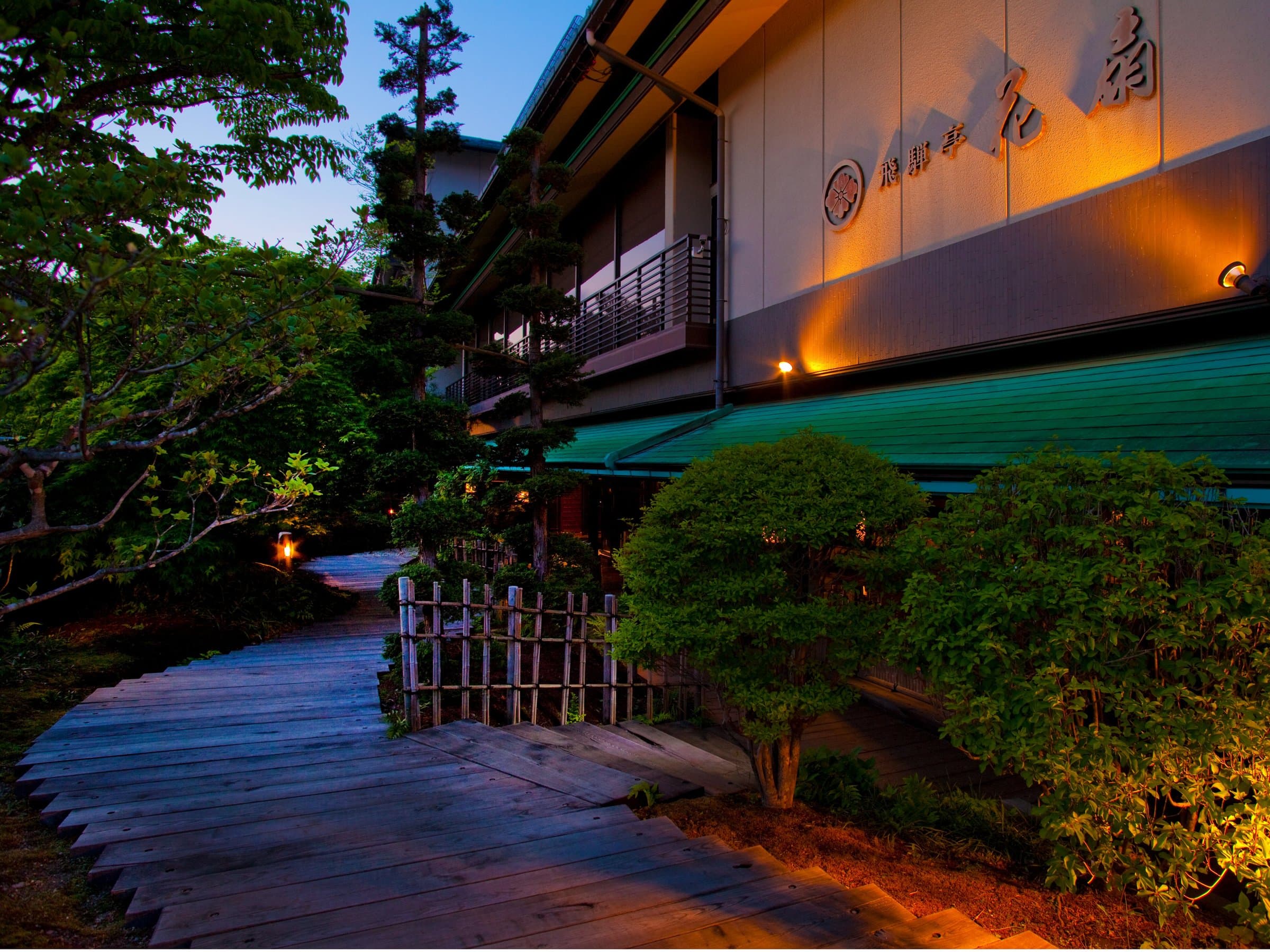
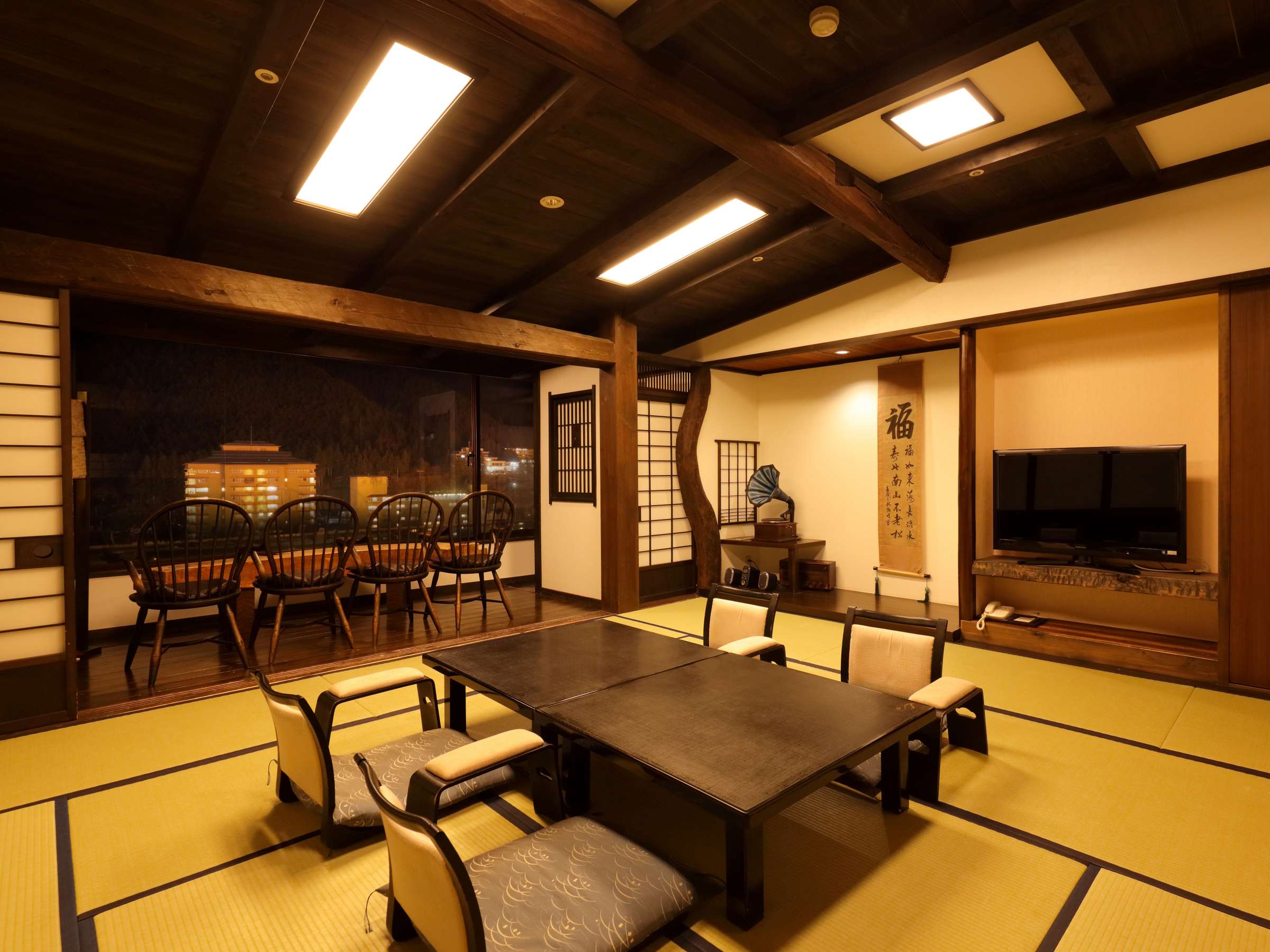
![]() Hidatei Hanaougi Takayama | $350起 | 9.0 520則評價 | 英語OK包租溫泉 | 在Trip.com預訂 |
![]() Sasara Gero | $200起 | 8.7 73則評價 | 英語OK包租溫泉 | 在Trip.com預訂 |
![]() Amane Resort Seikai Beppu | $250起 | 9.0 680則評價 | 英語OK包租溫泉 | 在Trip.com預訂 |
![]() Gyokuhokan Izu | $430起 | 9.4 6則評價 | 英語OK包租溫泉 | 在Trip.com預訂 |

Naraya
Kusatsu

FUFU Nikko
Nikko

Hidatei Hanaougi
Takayama

Sasara
Gero

Amane Resort Seikai
Beppu

Gyokuhokan
Izu
顯示價格為每人每晚的起價(約值)。透過本站預訂,我們可能獲得佣金。
Kusatsu Naraya — Kusatsu Onsen, Gunma
一目瞭然
Kusatsu is one of Japan's most celebrated onsen towns, and the source water here is acidic and famously hot — often delivered at 50°C or higher directly from the spring. That sounds alarming for a pregnant traveler, but Naraya's private in-room baths allow you to temper the water before you enter, and the ryokan sits on a quieter side of town away from the main tourist throng. What struck me most about Kusatsu's water is how visibly alive it is — sulfurous, faintly milky, and with a temperature that you feel immediately on your fingers before your foot is even in. In a private bath, that intensity becomes manageable rather than overwhelming: you control the mix, you set the clock, and the experience is yours alone. Kusatsu's yumomi tradition — the ceremonial paddle-stirring of water to cool it — is worth watching in town even if you're not soaking publicly.
Nikko Fufu — Nikko, Tochigi
一目瞭然
Fufu Nikko sits in the forested hills above the UNESCO World Heritage shrines, with each room or suite featuring its own private open-air bath drawn from the local spring. The setting does a lot of the work here — cedar, moss, and the sound of the river below — and the ryokan's adults-only policy means the overall atmosphere is calm in a way that matters when you're tired and carrying extra weight. The Nikko spring water is milder than Kusatsu, which makes it easier to manage temperature in the target range for pregnancy. One honest note: Fufu is a luxury property, and the price reflects that — but for an expecting traveler who wants complete privacy and a high-service environment without having to negotiate communal spaces, the premium earns its place.
Takayama Hanaougi — Takayama, Gifu
一目瞭然
Takayama is one of those Japanese towns that rewards slow movement — the old merchant quarter, the morning markets, the sake breweries — which makes it a natural fit for a trip where you're already inclined to take things at your own pace. Hanaougi offers private hot spring baths that draw from the area's sodium-bicarbonate-rich springs, a water type long associated with skin-softening effects and generally considered among the gentler mineral compositions in Japan's onsen lexicon. The ryokan's kaiseki dinners make use of Hida beef and local mountain vegetables — the kind of meal that reminds you why traveling while pregnant, albeit more cautiously, is still thoroughly worth doing. Book a room with an in-room bath rather than relying on reservable private facilities, especially in peak autumn season when availability tightens.
Gero Sasara — Gero Onsen, Gifu
一目瞭然
Gero Onsen has been ranked among Japan's top three onsen towns for centuries — a designation that says more about consistency than drama. The water is alkaline and soft, almost silky on contact, and the spring temperature at source is generally in a range that doesn't require significant tempering before it reaches an in-room bath. Sasara is on the quieter, more intimate end of Gero's accommodation spectrum, which suits a traveler who doesn't want to navigate a large ryokan hotel's communal corridors and shared spaces. The Hida River runs alongside the town, and from a private bath you get the ambient sound of it without the ambient crowd. One practical note: Gero is easily reached by limited express from Nagoya in about 90 minutes, which makes it a realistic add-on if you're building a gentler itinerary around existing urban bases.
Beppu Seikai — Beppu, Oita
一目瞭然
Beppu is Japan's most prolific onsen city by volume — around 100 million litres of water emerge from the ground every day, and the whole place smells of sulfur in a way that hits you the moment you leave the train station. Seikai is a traditionally minded ryokan that sits apart from Beppu's more touristic zones, with private baths that let you engage with that extraordinary geology on your own terms. The spring varieties around Beppu include some of the hottest in Japan, so temperature management in a private bath is particularly important here — you're drawing from a serious source. What I appreciate about Seikai is its lack of performance: the meals are careful, the rooms are simple in the right way, and nobody is trying to compete with Beppu's more theatrical properties. For an expecting traveler, that restraint is a feature.
Izu Gyokuhokan — Izu Peninsula, Shizuoka
一目瞭然
The Izu Peninsula is where Tokyo residents have gone to recover since the Edo period — close enough for a weekend, far enough to feel genuinely removed. Gyokuhokan is a long-established property on the peninsula's western coast, with the Pacific view doing the kind of work that no interior design can replicate. The onsen water here tends toward the sodium-chloride type, warming and circulatory, and the private baths are drawn fresh rather than recycled. For a pregnant traveler making a first trip to a Japanese ryokan, Izu is a practical entry point: the Shinkansen from Tokyo reaches Atami or Mishima in about 45 minutes, ryokan transfers are well-organized, and English service is more reliably available than in some of Japan's more remote onsen regions. The view of Suruga Bay from an in-room bath at dusk is the kind of thing you remember specifically rather than generically — the way the water goes orange before it goes dark.
Tip
A note on booking: When reserving any of these ryokans, mention your pregnancy at the time of booking rather than on arrival. Staff can then assign you a room with the easiest bathroom access, confirm the in-room bath setup in advance, and note any dietary adjustments needed for kaiseki — raw fish courses are standard and you'll want alternatives arranged ahead. A brief email in English is usually sufficient; most of these properties have handled international guests for years.
準備好預訂了嗎?
從這些精選旅館中預訂
比較三個預訂平臺的即時可用性和價格。
透過預訂連結可能產生佣金,但不會增加您的費用。
Japan's relationship with onsen is old and layered enough that the 2014 advisory change barely made a ripple in the travel press — which is part of why the outdated guidance keeps circulating. The honest position is this: for a healthy, low-risk pregnancy, a short soak in a well-tempered private bath is an experience you don't have to forfeit. The blanket prohibition was always more cultural habit than clinical evidence, and Japan's own health authorities recognized that a decade ago.
What you do want to forfeit is the communal bath, at least for this trip — not because the water itself is different, but because the private environment removes the practical risks that actually matter. Temperature control, safe footing, no pressure to stay in longer than is comfortable. The ryokans in this guide offer exactly that.
Check with your doctor. Book the private bath. Bring a thermometer and a large bottle of water. The onsen will still be extraordinary — possibly more so, when you have it entirely to yourself.
For a broader look at ryokans with private hot spring facilities across Japan, see our guide to ryokans with private onsen.
FAQ
常見問題
Can you go to an onsen while pregnant?+
Yes, with precautions. Soaking in an onsen is generally considered safe in moderation for a healthy, low-risk pregnancy. Keep water temperature at or below ~40°C, limit sessions to around 10 minutes, stay well hydrated, and never bathe alone. Always confirm with your own doctor or midwife first — and avoid onsen entirely if you have a high-risk pregnancy or any active complication.
Did Japan ban pregnant women from onsen?+
Japan had a long-standing advisory — the '♨ not recommended for pregnant women' warning that appeared on onsen signage and materials for around 32 years. In 2014, Japan's Ministry of the Environment removed this blanket advisory because it lacked scientific evidence, as reported by The Japan Times and Japan Today. It was not a legal ban, and the new guidance reflects that bathing is generally safe with sensible precautions.
What water temperature is safe for onsen during pregnancy?+
Most guidance points to 40°C (104°F) or below as a safe ceiling. The main concern is raising core body temperature too high, particularly in the first trimester when the embryo is most sensitive to heat. Keep sessions short — around 10 minutes — and step out immediately if you feel dizzy, overheated, or uncomfortable. Cooler baths (38–40°C) are preferable to the hotter ranges common in some Japanese onsen.
Is a private onsen better when pregnant?+
For most expecting guests, yes. A private in-room onsen lets you set the temperature yourself, limit how long you soak, and avoid crowded wet floors where slipping is a real risk. You're also not sharing water with other bathers. These are practical advantages regardless of which trimester you're in, and they're why many travel advisors point pregnant travelers specifically toward ryokans with kakenagashi (free-flowing, fresh water) private baths.
Which trimester is safest for onsen?+
Second trimester (weeks 13–27) is generally cited as the most comfortable time for warm bathing — morning sickness has typically eased and the pregnancy is stable. The first trimester carries the highest theoretical heat risk during organ development. The third trimester adds physical discomfort and a higher baseline core temperature. Whatever the stage, keep water temperature moderate, sessions short, and get your care provider's sign-off before you go.