10 min readUpdated June 2026
Quick Comparison
7 picks| Ryokan | From | Rating | Features | Book |
|---|---|---|---|---|
 | from $500 | 8.4 306 reviews | Private Onsen | Book on Agoda |
 | from $250 | 9.6 5 reviews | Private Onsen | Book on Agoda |
 Ginzanso Ginzan | from $200 | 9.5 37 reviews | EN OKPrivate Onsen | Book on Booking.com |
 Wakamatsuya Zao | from $200 | 9.6 40 reviews | Private Onsen | Book on Booking.com |
| from $250 | 9.4 43 reviews | Private Onsen | Book on Booking.com | |
 Kinosato Zao | from $200 | 9.5 39 reviews | Private Onsen | Book on Booking.com |
 | from $150 | 9.1 72 reviews | EN OKOnsen | Book on Booking.com |

Ginzanso
Ginzan
Wakamatsuya
Zao
Kinosato
Zao
Prices shown are approximate starting rates per person per night. We may earn a commission on bookings.
The best ryokans in Yamagata are Fujiya Inn and Notoya Ryokan in Ginzan Onsen for Taisho-era winter romance, and Wakamatsuya and Takamiya Miyamaso in Zao for sulphur springs and ski access. Yamagata is really two onsen trips in one prefecture: Ginzan is the photogenic gas-lamp valley everyone has seen on Instagram, and Zao is the bigger, higher, more sulphurous ski-and-soak resort an hour away. This guide ranks 16 real ryokans across both, with the prices, ratings and trade-offs that actually matter when you book.
I write japanryokanguide.com and I've stayed and soaked my way through both districts in winter and shoulder season. A quick orientation before the rankings: ryokan rates in Japan are quoted per person, per night, and almost always include dinner and breakfast — usually a multi-course kaiseki dinner. So a "$300" ryokan means roughly $600 for two people with two big meals, not a bare room. I keep that convention throughout (USD figures use ¥154 to the dollar). All prices, ratings and room counts below come straight from our live database, not marketing copy.
If you only have time for one valley, make it Ginzan — it's the flagship, and I've written a full Ginzan Onsen deep-dive for it. But Ginzan is the headline act, not the whole show. The point of *this* page is the wider prefecture: where Ginzan fits, why Zao is worth the detour, and how to string it together by train.
Yamagata's onsen geography in 60 seconds
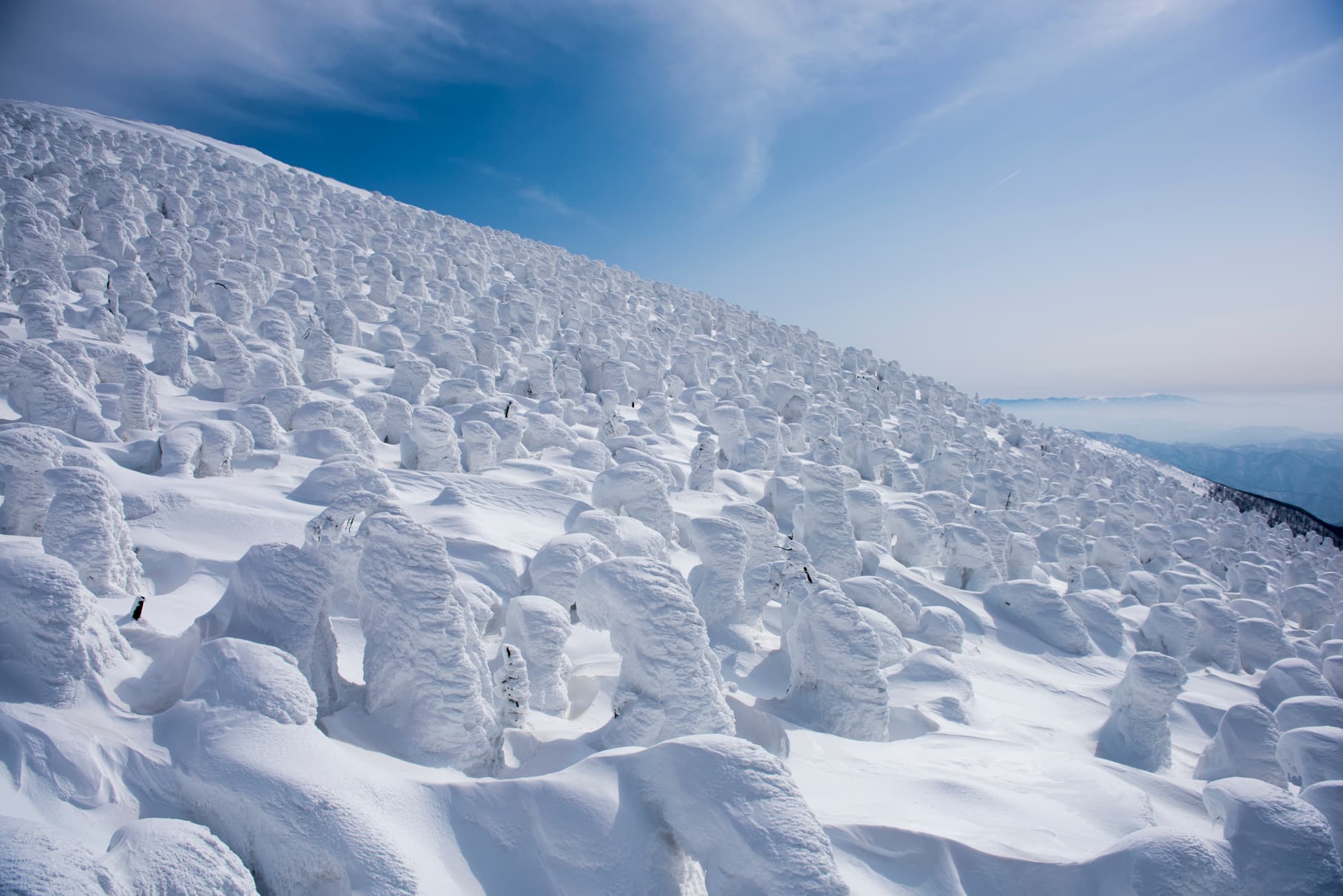
Ginzan Onsen (Obanazawa, north-central Yamagata) is the famous one: a single narrow river canyon lined with three- and four-storey wooden ryokan, lit by gas lamps after dark, buried in snow from December to March. It's tiny, romantic, and books out months ahead in winter. Zao Onsen (on the Yamagata City side, up the mountain) is the opposite energy — a sprawling ski resort sitting on roughly 1,900-year-old, strongly acidic milky sulphur springs, famous for the *juhyo* "snow monsters" (frost-caked trees) you ride a ropeway through in January and February.
Those are the two I rank in depth because they have proper ryokan to recommend. The prefecture has more onsen worth knowing about as orientation: Tendo (cherry trees, shogi-piece town, easy Shinkansen stop), Kaminoyama (castle-town onsen south of Yamagata City), Akayu in the Nanyo wine country, and remote, old-school Hijiori deep in the mountains. They're great, but I'm not naming specific properties there — stick to Ginzan and Zao and you've covered Yamagata's best stays. For the regional big picture, see Japan onsen by region and the best onsen towns in Japan.
Yamagata ryokan comparison: Ginzan vs Zao at a glance
Twelve of the sixteen, sorted so you can scan by district and budget. "From" is the lowest per-person rate with two meals; private onsen means the ryokan has a bookable private/family bath. Tattoo column is the house policy as it stands in our data.
| Ryokan | District | Tier | From (USD, pp w/ meals) | Private onsen | Tattoos | Best for |
|---|---|---|---|---|---|---|
| Fujiya Inn | Ginzan | Luxury | $500–900 | Yes | Private bath only | Design-led splurge |
| Notoya Ryokan | Ginzan | Luxury | $250–500 | Yes | Private bath only | The classic Ginzan photo |
| Honkan Kosekiya | Ginzan | Luxury | $300–600 | No | Not allowed | Heritage strip-front rooms |
| Ginzanso | Ginzan | Mid | $200–450 | Yes | Cover up | Families & first-timers |
| Kosekiya Bekkan | Ginzan | Mid | $250–500 | No | Cover up | Riverside in the heart of the strip |
| Takimikan | Ginzan | Mid | $200–400 | No | Ask ahead | Waterfall-view top of the village |
| Wakamatsuya | Zao | Luxury | $200–500 | Yes | Private bath only | Top-rated mountain kaiseki |
| Takamiya Miyamaso | Zao | Luxury | $250–550 | Yes | Private bath only | Historic name, many private baths |
| Kinosato | Zao | Luxury | $200–450 | Yes | Private bath only | Quiet luxury near the slopes |
| Omiya Ryokan | Zao | Mid | $150–400 | No | Cover up | Oldest house, strongest sulphur |
| Zao Shiki no Hotel | Zao | Mid | $120–300 | No | Cover up | Ski groups & families |
| Yoshidaya Ryokan | Zao | Budget | $80–200 | No | Cover up | Value base on the slope |
Ginzan Onsen — Yamagata's flagship winter village
Ginzan is small enough to walk end to end in ten minutes, which is exactly why it works: at dusk the gas lamps come on, snow piles on the wooden balconies, and the whole canyon looks like a film set. The flip side — book early. Winter weekends here sell out months out, and the village caps daytime crowds. Eight properties from our data, flagship-first.
Fujiya Inn (ginzan-fujiya) — the design splurge
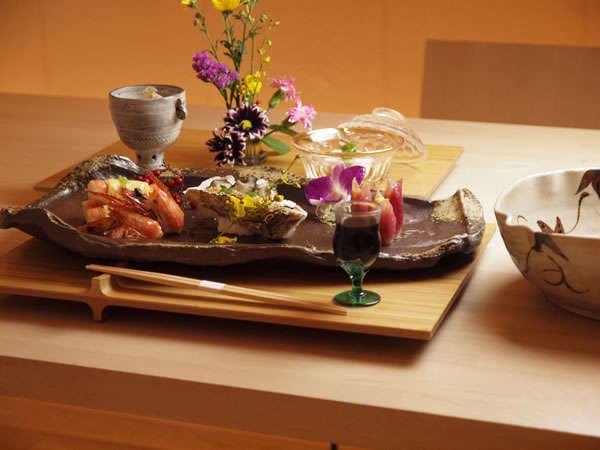
Fujiya is the architectural statement of the valley: a Kengo Kuma redesign tucked behind a historic facade, with bamboo-screen interiors and just 8 rooms. It's the priciest stay in this guide at $500–900 per person with meals, and it commits hard — private-bath-only bathing (no big shared tubs), so it's intimate rather than communal. The sample of guest reviews is too small for us to publish a meaningful star rating, so I'll be honest: you're buying the design and the scarcity, and it books out furthest ahead of anything in Ginzan. If a Kuma-designed room in the snow is the trip, this is it.
Notoya Ryokan (ginzan-notoya) — the classic Ginzan photo
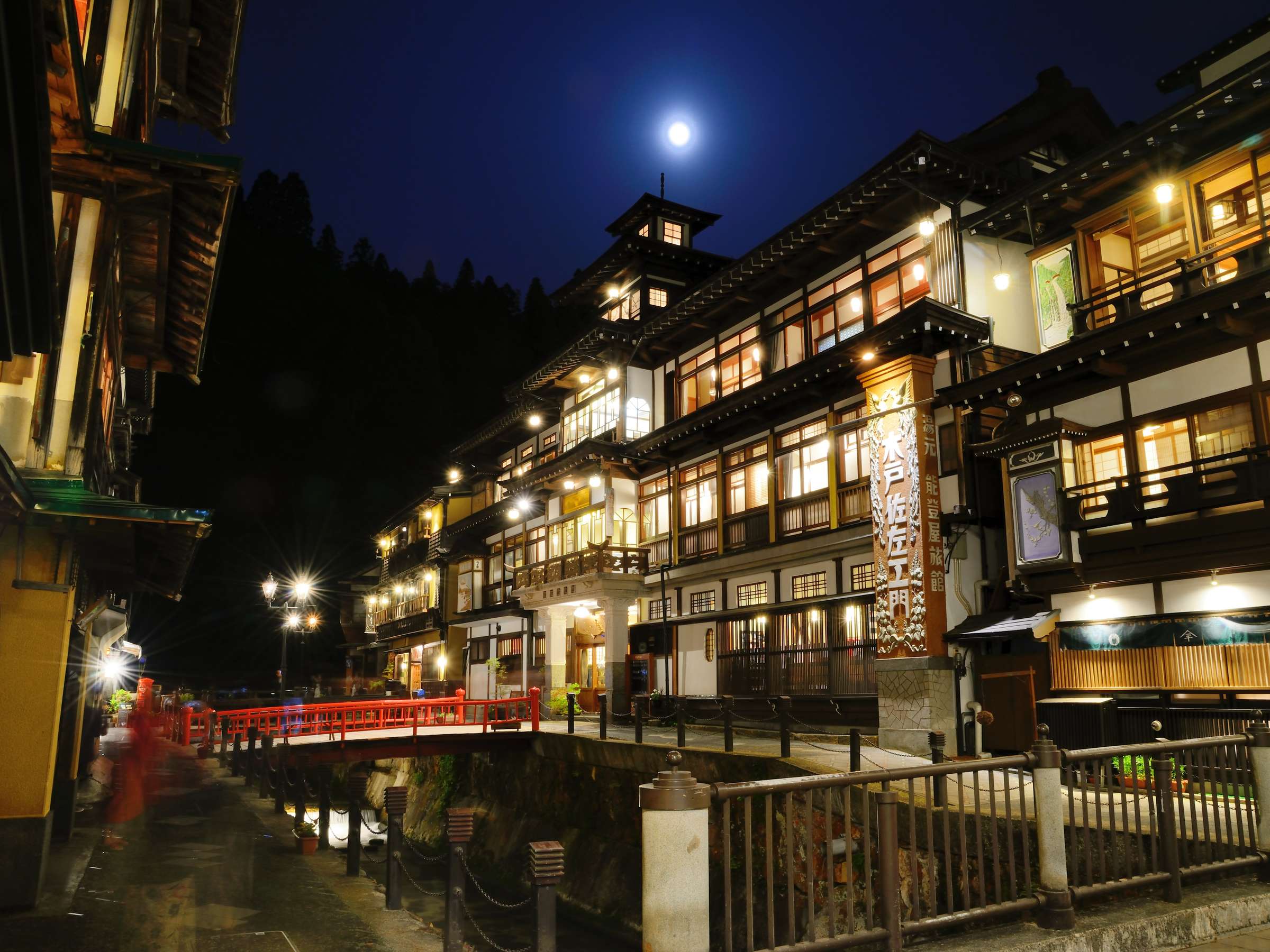
If you've seen one building from Ginzan, it's probably Notoya. Established in 1892, it's the ornate four-storey wooden landmark with *kote-e* plaster reliefs on the facade — the archetypal Ginzan photo subject. It rates 9.6 (a small sample of 5), has 15 rooms, private-bath-only bathing and a bookable private onsen. At $250–500 per person, it's the sweet spot of the village: genuine Meiji-era heritage without Fujiya's price tag. Ask for a river-facing room if you can.
Ginzanso (ginzan-ginzanso) — easiest for families & first-timers
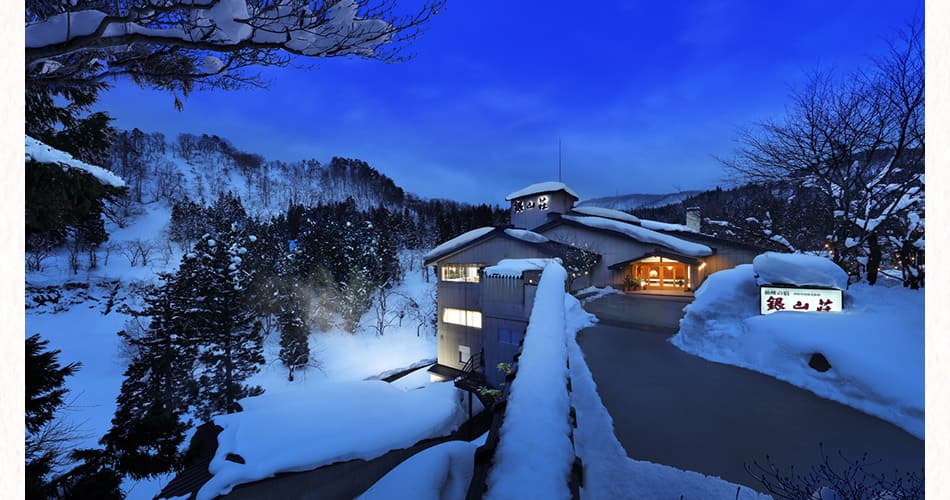
Ginzanso is the largest property in the valley (capacity around 200, 20 rooms), which makes it the most forgiving choice for families, first-time ryokan guests, and anyone who wants a proper big shared bath plus a private onsen on the side. It rates 9.5 across a healthier 37 reviews — the most-reviewed Ginzan stay here, so the score is the most trustworthy. Tattoos are fine if covered. At $200–450 per person it's the dependable mid-tier pick when the boutiques are booked out.
The rest of Ginzan — riverside, heritage and hilltop
Kosekiya Bekkan (`ginzan-kosekiya-bekkan`, $250–500, 14 rooms) is a riverside annex right in the heart of the strip and rates a glowing 9.9 — but only on 8 reviews, so treat that near-perfect score as promising rather than proven. Tattoos: cover up. Honkan Kosekiya (`ginzan-honkan-kosekiya`, $300–600, 10 rooms) is the heritage house front-and-center on the strip; note its policy is no tattoos at all, so skip it if that's a dealbreaker. Nagasawa Heihachi (`ginzan-nagasawa-heihachi`, $200–450, 9 rooms) is the one to book if a strong private rental bath matters most — that's its calling card, and it's private-bath-only. Kozankaku (`ginzan-kozankaku`, $180–400, 8 rooms) is the most affordable way into Ginzan with its own private onsen, cover-up tattoos OK. And Takimikan (`ginzan-takimikan`, $200–400, 14 rooms) sits at the very top of the hill with Shirogane Falls views — the best scenery in the village, though its tattoo policy isn't on file, so message ahead. None of those four carry enough reviews for a published rating, so I'm describing them on their merits, not a star number.
Tip
Ginzan booking reality: the village is tiny and demand is brutal December–February. Lock a room 3–6 months out for winter weekends, and consider a weeknight — the gas-lamp evening looks identical Tuesday or Saturday, but availability and price are far kinder midweek. Day-trippers are managed, so staying overnight is the only way to have the lit village to yourself after the last bus leaves.
Want the full breakdown of every Ginzan property, the day-tripper logistics, and which rooms face the river? That's all in the Ginzan Onsen ryokan guide and the Ginzan area hub.
Zao Onsen — sulphur springs, ski runs and snow monsters
Zao is the other half of Yamagata, and it's a completely different stay. It's a real ski resort up the mountain on the Yamagata City side, sitting on milky, strongly acidic sulphur springs that have been running for something like 1,900 years — the water is properly potent, great for skin, and you'll smell the egg-y sulphur in the air. In deep winter you ride the ropeway up through the *juhyo* "snow monsters," frost-and-snow-caked fir trees that look like a frozen army. Eight properties, luxury down to budget.
Wakamatsuya (zao-wakamatsuya) — the top-rated Zao stay
Wakamatsuya is the one I'd book first in Zao. It's the top-rated stay on the slope — 9.6 across 40 reviews, which is a solid, trustworthy sample — known for serious mountain kaiseki dinners and private onsen bathing. 20 rooms, private-bath-only, $200–500 per person with those big meals. It hits the sweet spot of refined-but-not-stuffy, and after a day on the snow the private sulphur bath plus a multi-course dinner is exactly the payoff you want.
Takamiya Miyamaso (zao-miyamaso-takamiya) — the historic name with many baths
Miyamaso is a historic Zao name, and the draw is the bathing: multiple private baths fed by the acidic sulphur spring, 17 rooms, private-bath-only. It rates 9.4 across 43 reviews — the largest review base of the Zao luxury trio, so the score is well-grounded. At $250–550 per person it's the priciest Zao option here, and you're paying for the bath variety and the pedigree. If soaking is the whole point of the trip, this is the one.
Kinosato (zao-kinosato) — quiet luxury near the slopes
Kinosato is the calmer luxury pick: 22 rooms, private onsen, private-bath-only bathing, rated 9.5 on 39 reviews. It sits in the same top bracket as Wakamatsuya and Miyamaso but reads quieter and more relaxed, and at $200–450 per person it's the value play of the three high-enders. A good choice if you want Zao's best soaking without the ski-crowd buzz.
Omiya Ryokan (zao-omiya-ryokan) — oldest house, strongest sulphur
For the most authentic old-Zao soak, Omiya is the pick. It's one of the oldest houses on the slope, founded in the 1700s, with strong sulphur baths that are the real deal. 32 rooms, rated 9.1 across a big 72 reviews (the most-reviewed Zao stay here), tattoos OK if covered, $150–400 per person. It's mid-tier on price but heritage-tier on character — the bath is the headline, not the décor.
Zao on a budget — modern hotel-ryokan to backpacker base
Zao is where Yamagata gets genuinely affordable. Zao Shiki no Hotel (`zao-shiki-no-hotel`, $120–300, 41 rooms, rated 9.3 on 49 reviews) is a modern onsen hotel-ryokan that's ideal for ski groups and families — more hotel comfort than tatami tradition, cover-up tattoos fine. Hotel Lucent Takamiya (`zao-lucent-takamiya`, $100–280, 60 rooms, 8.8 across a large 127 reviews) is the big, reliable mid-budget workhorse right by the slopes. Going lower, Yoshidaya Ryokan (`zao-yoshidaya`, $80–200, 24 rooms, 8.3 on 12 reviews) is a solid value base, and Takasagoya Ryokan (`zao-takasagoya`, $60–150, just 7 rooms) is the cheapest bed in this guide — a tiny, simple house with too few reviews for a rating, so go in expecting basic-but-honest rather than polished. Both budget houses are cover-up or unknown on tattoos.
Tip
Tattoo-friendly Yamagata: Ginzan and Zao both lean toward private-bath-only luxury stays (Fujiya, Notoya, Wakamatsuya, Miyamaso, Kinosato), which neatly sidesteps the issue — you bathe privately regardless of ink. Most mid and budget houses are "cover up" (a waterproof patch over a small tattoo is fine). The one to avoid if you have visible tattoos is Honkan Kosekiya, which is no-tattoo. When in doubt, a private rental bath is always the safe bet.
The full Zao rundown — ski-pass logistics, ropeway timing for the snow monsters, which baths are open to non-staying visitors — lives in the Zao Onsen ryokan guide and the Zao area hub.
When to go: timing Ginzan and Zao
These two valleys peak in different ways, so let your timing follow the one you care about most.
Ginzan = deep winter. The gas-lamp-and-snow look that makes Ginzan famous needs snow on the ground, which means late December through February, with January the safest bet for full coverage. It's gorgeous in autumn and quietly pretty in summer too, but you go to Ginzan in winter — that's the whole point. Zao = December to March for skiing, with the juhyo "snow monsters" at their best in late January and February when the frost build-up peaks; ride the ropeway up for them. Zao also has a genuinely good second season: autumn (mid-to-late October) ropeway foliage, when the mountain turns red and gold and you've got the baths largely to yourself. For more on cold-season soaking, see the best winter onsen in Japan.
Tip
Can you do both in one trip? Yes, and it's the ideal Yamagata itinerary: two nights Ginzan + two nights Zao in winter gives you the romance and the skiing. They're roughly two hours apart via Yamagata City, so plan a transfer day in the middle rather than trying to hop straight across.
Both villages also feature in our wider best ryokans in Tohoku guide, which adds Naruko, Akiu, Nyuto, and Hanamaki to the itinerary math.
Getting to Yamagata: the Yamagata Shinkansen
Yamagata is easier to reach than its remote-snow-village image suggests, because the Yamagata Shinkansen "Tsubasa" runs direct from Tokyo Station in roughly 2.5–3 hours. It's a "mini-Shinkansen" — it runs on the high-speed line as far as Fukushima, then switches onto narrower regional track, so it's a touch slower than the main bullet trains but still a single seamless ride with no transfers from Tokyo.
For Ginzan: take the Tsubasa to Oishida Station, then a local bus or hotel shuttle the rest of the way into the valley (many Ginzan ryokan run a pickup from Oishida — confirm when you book, especially in deep snow). For Zao: ride to Yamagata Station, then it's a bus up the mountain to Zao Onsen (around 40 minutes). Tendo and Kaminoyama are their own Tsubasa stops if you're adding a night.
The money point: the Tsubasa is JR-operated, so it's covered by the Japan Rail Pass (and the regional JR East passes). If you're already pass-shopping for a wider Japan trip, the maths can swing in your favour fast. I break down which pass actually pays off — and how the Yamagata Shinkansen fits the regional passes — in the Japan Rail Pass guide.
Tip
Reserve your Tsubasa seat. The Yamagata Shinkansen is shorter than the main bullet trains and fills up, especially in ski season and on weekends. Book a reserved seat rather than gambling on non-reserved cars — it's covered by the same pass, so there's no reason not to.
Yamagata ryokan FAQ
Ready to book?
Book one of these top picks
Compare live availability and prices across all three platforms.
Booking links may earn us a commission at no extra cost to you.
FAQ
Frequently asked questions
What is the best ryokan in Yamagata?+
It depends on the trip. For Ginzan Onsen's winter-romance village, Fujiya Inn (the Kengo Kuma design splurge, $500–900) and Notoya Ryokan (the iconic 1892 wooden landmark, $250–500, rated 9.6) lead. For Zao's sulphur springs and skiing, Wakamatsuya is the top-rated stay at 9.6 across 40 reviews. Pick the district first, then the ryokan.
Ginzan vs Zao — which onsen should I choose?+
Ginzan if you want the photogenic, romantic gas-lamp village buried in snow, and you don't need to ski — it's small, intimate and books out early. Zao if you want skiing, the milky acidic sulphur springs, and the juhyo snow monsters, with more rooms and budget options. They're about two hours apart, so committed onsen fans do both: Ginzan for the look, Zao for the soak and the slopes.
What are Zao's snow monsters and when can I see them?+
The 'snow monsters' (juhyo) are fir trees on the Zao mountain that get completely caked in frost and snow until they look like a frozen crowd. They form in deep winter and peak in late January and February. You ride the Zao Ropeway up to see them, and the resort lights them up at night on select dates. They're one of the main reasons to time a Zao trip for midwinter.
Which Yamagata ryokans are tattoo-friendly?+
The private-bath-only luxury stays sidestep the issue entirely — Fujiya, Notoya, Wakamatsuya, Takamiya Miyamaso and Kinosato all let you bathe privately regardless of ink. Most mid and budget houses (Ginzanso, Kosekiya Bekkan, Omiya, Zao Shiki no Hotel, Lucent Takamiya) are 'cover up,' meaning a small tattoo with a patch is fine. Honkan Kosekiya is the one no-tattoo house here.
How do I get to Yamagata from Tokyo?+
Take the Yamagata Shinkansen 'Tsubasa' direct from Tokyo Station — about 2.5–3 hours with no transfers. For Ginzan, ride to Oishida Station and take a bus or ryokan shuttle into the valley. For Zao, ride to Yamagata Station and catch the bus up the mountain (around 40 minutes). The Tsubasa is JR-operated, so the Japan Rail Pass covers it.
Does the Japan Rail Pass cover the Yamagata Shinkansen?+
Yes. The Yamagata Shinkansen 'Tsubasa' is operated by JR East, so it's covered by both the nationwide Japan Rail Pass and the relevant regional JR East passes. If you're already travelling on a pass it's a free ride to Yamagata; whether a pass pays off overall depends on your wider itinerary, which our rail pass guide breaks down.
When is the best time to visit Ginzan and Zao?+
Ginzan is a deep-winter trip — late December through February, with January the safest for full snow on the gas-lamp village. Zao's ski season runs December to March, with the snow monsters peaking in late January and February. Zao also shines in autumn (mid-to-late October) for ropeway foliage, when the baths are quiet and the mountain turns red and gold.
How much does a Yamagata ryokan cost?+
Rates are per person per night and include a kaiseki dinner and breakfast. Budget Zao stays like Takasagoya start around $60–150 and Yoshidaya $80–200. Mid-tier runs roughly $120–500 across both districts. Luxury tops out with Fujiya Inn in Ginzan at $500–900 per person. Remember a quoted figure is per person, so double it for a couple with two meals.
Do I need to book Ginzan ryokans in advance?+
Yes, especially in winter. Ginzan is a tiny village with limited rooms and huge demand from December to February, and the daytime visitor numbers are managed — so staying overnight is the only way to enjoy the lit village after the buses leave. Book three to six months ahead for winter weekends, and pick a weeknight for better availability and price.