Quick Comparison
10 picks| Ryokan | From | Rating | Book |
|---|---|---|---|
 | from US$157/person/night≈ US$314 for 2 | 9.7 237 reviews | Book on Trip.com |
 | from US$220/person/night≈ US$440 for 2 | 9.6 351 reviews | Book on Trip.com |
 | from US$500/person/night≈ US$1,000 for 2 | 9.5 89 reviews | Book on Booking.com |
 | from US$235/person/night≈ US$470 for 2 | 9.6 206 reviews | Book on Trip.com |
 | from US$460/person/night≈ US$920 for 2 | 9.7 51 reviews | Book on Agoda |
 | from US$89/person/night≈ US$178 for 2 | 9.6 41 reviews | Book on Trip.com |
 | from US$318/person/night≈ US$636 for 2 | 9.5 93 reviews | Book on Agoda |
 | from US$120/person/night≈ US$240 for 2 | 9.6 556 reviews | Book on Agoda |
 | from US$200/person/night≈ US$400 for 2 | 9.7 106 reviews | Book on Agoda |
 | from US$500/person/night≈ US$1,000 for 2 | 9.6 67 reviews | Book on Booking.com |
Yokikan
Izu
Tocen Goshobo
Arima
Sumihei Bettei Tokitotoki
Kinosaki
Shogetsu
Gero
Hinoharu Ryokan
Yufuin
Hiiragiya Ryokan
Kyoto
Prices shown are approximate starting rates per person per night. We may earn a commission on bookings.
A Japan babymoon is not simply a honeymoon with a pregnancy test added. It is a more deliberate trip—a chance to slow down before life accelerates in ways you cannot yet fully picture. The ryokan format fits the moment: arrive, change into a yukata (a light cotton robe) and let your world contract to one beautiful room, a private bath and a kaiseki dinner that does not require leaving the property.
The most practical question when planning a Japan ryokan babymoon is simple: Is Japan genuinely manageable when one of you is pregnant? Yes, if you choose carefully. The first nine inns in this guide have a verified private-onsen option, whether in the room or reservable for exclusive use. Hiiragiya is the exception: it is a historic Kyoto ryokan with English-speaking staff and private baths, but no private onsen. We have organized the choices by region, journey time from major transport hubs and the pregnancy-specific details most guides overlook.
For full advice on using an onsen during pregnancy—including temperature limits, Japan's 2014 Ministry of the Environment policy change and practical precautions—read our complete guide to onsen during pregnancy. This article focuses on which ryokans to book and why.
 Pin to Pinterest
Why a private onsen is the standard for a babymoon
Japan has thousands of ryokans. Most have communal onsen—large, gender-separated baths shared by guests. They can be wonderful on the right trip. A babymoon is not that trip.
Communal onsen are generally kept between 40 and 44°C, with no way for individual guests to lower the temperature. Leaving is not always immediate either: there is bathing etiquette to follow, a changing room to cross and often other guests around. When a pregnancy is visible in the second trimester, that setting may be neither practical nor comfortable.
A private rotenburo (an open-air bath attached to the room) or kashikiri (a bath reserved for exclusive use) removes those concerns. You can make the water cooler, leave whenever you choose and reach the bed within a few steps. With an in-room bath, there is no communal area to cross at all.
Another practical advantage is that most private-onsen ryokans on this list have a private_only tattoo policy, meaning communal bathing is either unavailable or unnecessary. Other guests' tattoo arrangements therefore have no bearing on your stay.
For temperature guidance, the ten-minute soaking rule and how Japanese obstetricians approach onsen use during pregnancy, see our onsen safety guide for pregnant travelers. If you already understand the safety considerations and want to compare inns by bath type and price, read our guide to ryokans with private onsen for couples.
How we chose: five criteria for a babymoon ryokan
This is not a generic list of good Japanese ryokans. We reviewed our database of 306 private-onsen inns with English-friendly staff using criteria tailored to what couples need on a babymoon, then included Hiiragiya as a clearly labeled non-onsen Kyoto alternative.
1. A confirmed private bathing option—a private onsen for the first nine inns, either as an in-room rotenburo or an exclusively reservable kashikiri. Hiiragiya has private non-onsen baths and is identified separately. 2. English-friendly staff—confirmed by the English-friendly field in our database. 3. Near a train or shinkansen station—reachable with a short walk or taxi ride from the railway, minimizing car use and transfer stress. 4. At least 30 verified reviews—enough feedback to give the rating useful weight. 5. Pregnancy-suitable features—at least one of the following: confirmed in-room or private dining, a quiet non-resort atmosphere, or ground-floor or elevator access.
The first nine inns passed the private-onsen filters. Hiiragiya was retained as a historic Kyoto ryokan with English-speaking staff, private non-onsen baths and in-room dining. You can browse every private-onsen ryokan in our database—306 English-friendly options—but these are the ten we recommend specifically for a babymoon.
The inns are grouped by region. Prices are per room, per night, in USD, taken from our database and subject to seasonal changes. Each listing links to the inn's full profile.
Near Tokyo: Atami, Izu and Hakone
For couples leaving Tokyo—or arriving through Narita or Haneda—the Izu Peninsula area has the strongest concentration of babymoon-friendly private-onsen ryokans within roughly 90 minutes of the city. Atami is 35 minutes from Tokyo by direct shinkansen. The Izu Peninsula takes about 90 minutes on the limited-express Odoriko. Hakone adds a scenic mountain-railway segment. There are no domestic flights or full days in transit.
What makes the Tokyo area particularly suitable is that these inns' cypress and stone baths are deliberately small, usually sized for one or two guests. You can keep the water cooler without negotiating anyone else's preferences, step onto the tatami within seconds and have the futon close at hand. That quick route from bath to bed is the practical difference between a private rotenburo and a shared bath during the second trimester.
1. Atami Kakurezato — Atami
Journey: Atami Station (JR Tokaido Shinkansen), ten minutes by taxi. No transfers from Tokyo Station.
Atami Kakurezato has eight rooms on a wooded slope above Sagami Bay, and its logistics are close to ideal for a babymoon. Board a Hikari or Kodama shinkansen at Tokyo Station, leave the train at Atami about 35 minutes later and take a ten-minute taxi. That is the entire journey.
The inn's official website confirms that each of its eight rooms has a private cypress bath supplied with natural hot-spring water. With only eight rooms, you are unlikely to share the property with a corporate group or large celebration; the atmosphere is reliably quiet. Its private_only tattoo policy points in the same direction.
One honest caveat: the property is on a slope, and the official site does not specify whether there is an elevator. If stairs may be difficult later in the second trimester, ask directly when booking. In-room kaiseki is also unconfirmed, so request it explicitly. Even with those questions, the easy journey, high rating and small room count make Atami Kakurezato the strongest place to begin this list.
Rating: 9.7 / 237 reviews · Price: $157–$600 per night · Rooms: 8
Tip
Tip: For more choices nearby, see our guide to the best ryokans in Atami.
 Pin to Pinterest
2. Yokikan — Izu Peninsula
Journey: Ito Station (JR Ito Line), 12 minutes by taxi. The limited-express Odoriko runs directly from Tokyo Station in about 100 minutes.
Yokikan is a 15-room ryokan in the northern Izu Peninsula, with one important booking detail confirmed by our research: only the Special Rooms—the upper category, measuring about 45–50 square meters—have a private in-room stone bath supplied with natural hot-spring water. Standard rooms do not. Book the Special Room category specifically or you will not have the private bath.
Those Special Rooms are well suited to a babymoon. Meals are served either in the room or in a private dining room, and the kaiseki features fresh Izu seafood in a seasonal multicourse menu. You need not leave the room for dinner, a detail that matters more than it sounds at the end of a long travel day.
The 351 reviews behind Yokikan's 9.6 rating provide more reassurance than most properties of this size can offer. The Izu Peninsula also receives fewer visitors than Hakone, giving it a noticeably quieter atmosphere.
One consideration: the Special Rooms are on the upper floor and may require stairs. Confirm accessibility when booking. The limited-express Odoriko runs directly, without a transfer, making the overall journey less demanding than the route to Hakone.
Rating: 9.6 / 351 reviews · Price: $220–$500 per night · Rooms: 15
3. Gora Kadan — Hakone
Journey: Gora Station (Hakone Tozan Railway), three minutes on foot. A complimentary Mercedes transfer from the station is available.
Gora Kadan stands on the grounds of a former Imperial Family summer villa, giving it a sense of permanence newer ryokans rarely match. The property descends a Hakone hillside in terraces, with 12 rooms featuring open-air hot-spring baths and another nine with panoramic views and spa tubs, plus a reservable private bath for all guests. In-room kaiseki is confirmed: nine courses served by the room attendant.
For this trip, the most important verified detail is the elevator. Guest reviews confirm that one is available. At a property built on a hillside, that is a meaningful advantage during the second trimester.
The trip from Tokyo takes about one hour and 45 minutes: shinkansen to Odawara, followed by the Hakone Tozan Railway to Gora. There are two transfers, but the connections are straightforward and well signposted. The complimentary pickup at Gora Station removes the need to find a taxi at the end. See our complete guide to Hakone ryokans for broader area context.
The broad $500–$1,200 nightly range reflects substantial differences between room types. This is the benchmark luxury choice near Tokyo. If the budget works, it is the most thoroughly verified property in the article: private bath, in-room kaiseki and elevator all confirmed, with no major unknowns.
Rating: 9.5 / 89 reviews · Price: $500–$1,200 per night · Rooms: 44
 Pin to Pinterest
Kansai: Arima Onsen and Kinosaki Onsen
Couples traveling through Osaka or Kobe have two excellent hot-spring towns within reach. Arima Onsen is 30–40 minutes from central Osaka by direct bus or train, making it one of Japan's most accessible major onsen destinations from an urban base. Kinosaki Onsen, about three hours from Osaka on the limited-express Kounotori, requires more time but rewards it with one of the country's most distinctive hot-spring towns: canals, willow trees and ryokans within walking distance of the station. See our guide to the best ryokans in Arima Onsen for a fuller overview.
Arima's iron-rich kinsen (gold spring) water has a deep rust color. Poured into a private cypress bath, it turns dark amber—the visible mineral chemistry that makes kinsen the rarer and more celebrated of Arima's two spring types. For a babymoon couple seeking a distinctly mineral hot-spring experience in complete privacy, a kinsen kashikiri bath is difficult to better.
4. Tocen Goshobo — Arima Onsen
Journey: Arima Onsen Station (Kobe Electric Railway), five minutes on foot.
Founded in 1191, Tocen Goshobo is Arima Onsen's oldest inn. That is more than a promotional line: the property has spent over 800 years refining its hospitality on the same hillside. Its kaiseki features Kobe beef, seafood from Akashiura and rice grown in Hyogo, with service available either in the guest room or a private dining room.
Arima has two chemically distinct waters: iron-rich, rust-colored kinsen (gold spring) and carbonated ginsen (silver spring). Tocen Goshobo uses kinsen, the rarer and more celebrated of the two. Private hot-spring baths supplied with kinsen are confirmed, including reservable kashikiri baths.
The five-minute walk from the station gives Tocen Goshobo the easiest station access of the Arima choices. With 20 rooms and prices of $235–$600, it is also the more accessible option on price. Its private_only tattoo policy means communal bathing is not required.
One caveat: because this is a historic building, official sources do not confirm an elevator. Request a ground-floor or otherwise accessible room when booking.
Rating: 9.6 / 206 reviews · Price: $235–$600 per night · Rooms: 20
5. Hashinoya Bekkan Ransui — Arima Onsen
Journey: Near Arima Onsen Station. Our database does not confirm the exact walking time, so ask the inn for route details when booking.
Ransui occupies a former private villa from the Meiji era and has only nine rooms. The property uses Arima's prized kinsen water in a private cypress bath that guests can reserve for exclusive use. In-room kaiseki is confirmed, with seasonal Kansai cooking that ranges from Matsuba crab in winter to Tamba matsutake mushrooms in autumn.
Nine rooms is precisely what makes Ransui appealing for a babymoon: at most, there will be eight other parties staying. There is no resort lobby, convention hall or likelihood of landing beside a large group that stays up late. The 9.7 rating is outstanding, though its base of 51 reviews is smaller than most entries here and should be weighed accordingly.
Prices start at $460 per night. Our database does not provide a current upper limit, so confirm the full rate when booking. Like Tocen Goshobo, Ransui is accessible from Osaka; a direct highway bus from Osaka Station takes roughly one hour and five minutes. From Tokyo, allow around 3.5–4 hours by shinkansen to Shin-Kobe and then local train or bus.
Rating: 9.7 / 51 reviews · Price: from $460 per night (confirm current upper rates when booking) · Rooms: 9
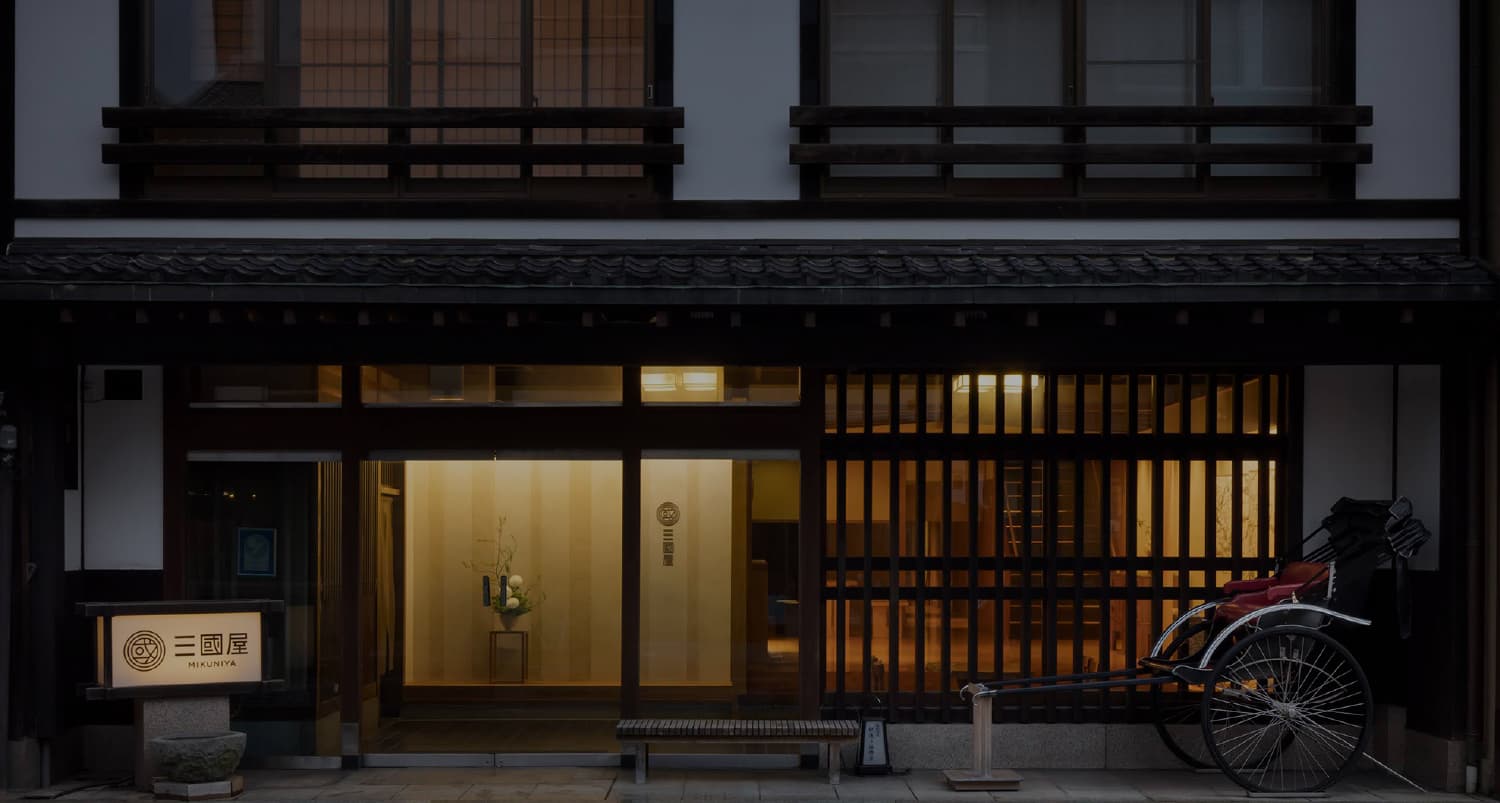
6. Mikuniya — Kinosaki Onsen
Journey: Kinosaki Onsen Station, followed by a short walk. Our database does not give the exact distance, so confirm it with the inn. Kinosaki is compact, and the station is central.
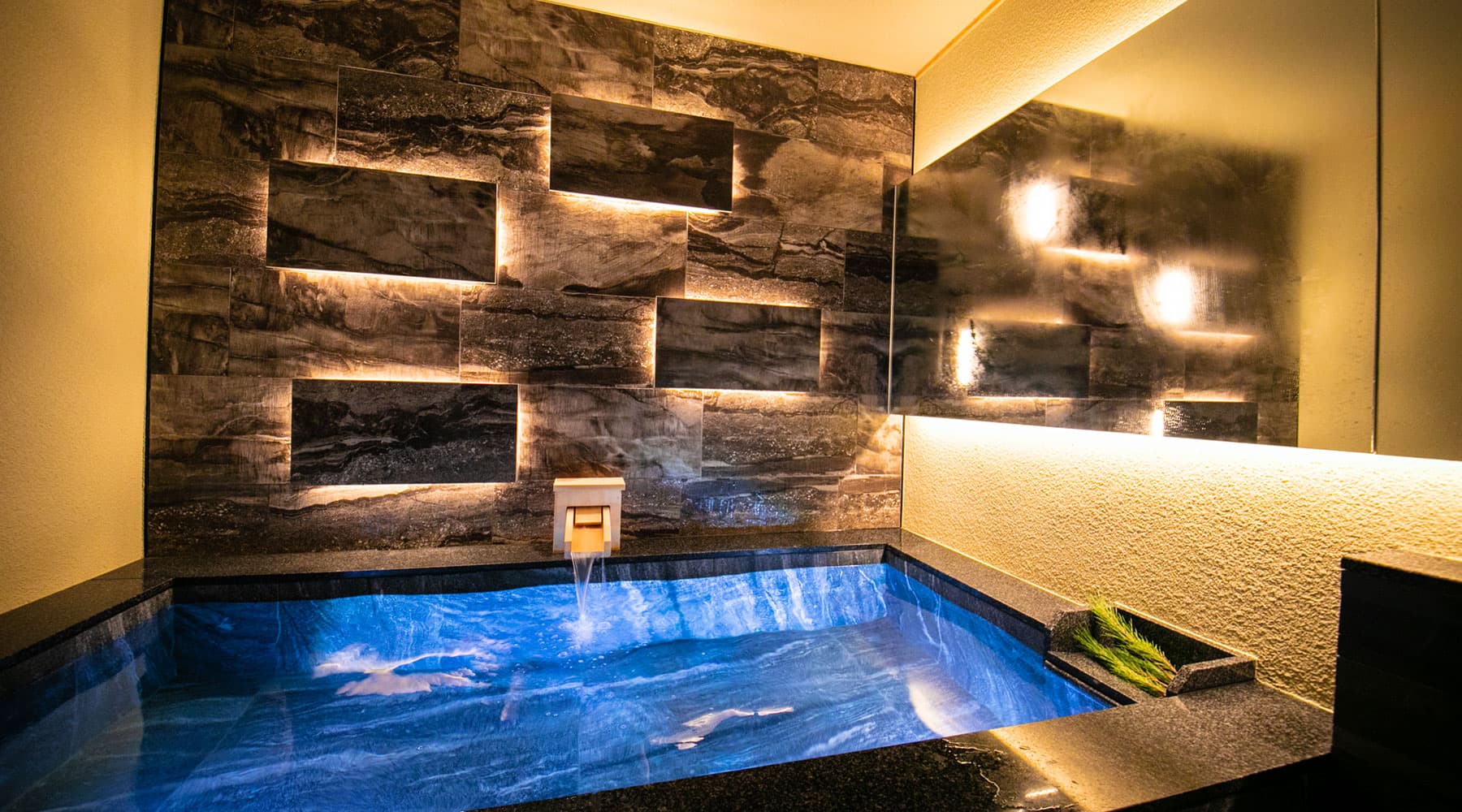
Mikuniya is the most affordable choice in this article, with prices starting at $89 per night. Its private-onsen setup is confirmed: the inn operates four private baths that can be reserved for exclusive use without an additional charge. Choose a time slot and the bath is entirely yours.
Kinosaki's willow-lined central canal provides the backdrop for the whole town. In the evening, guests walk between the seven public soto-yu bathhouses in yukata. Those public baths are optional for a pregnant traveler because a private bath is available at the inn. A slow, yukata-clad walk beside the canal remains manageable well into the second trimester and is one of the gentlest activities on a Japan babymoon.
The tattoo policy is marked unknown in our database. That is a secondary concern for a stay centered on private baths, but confirm it before booking if relevant. In-room kaiseki is also unconfirmed, so ask when reserving.
Read our guide to ryokans in Kinosaki Onsen for a complete overview of the town.
Rating: 9.6 / 41 reviews · Price: from $89 per night (peak-season rates will be higher) · Rooms: 11
 Pin to Pinterest
7. Sumihei Bettei Tokitotoki — Kinosaki Onsen
Journey: Kinosaki Onsen Station, followed by a short walk. Our database does not confirm the exact distance, so check with the inn.
If Mikuniya is Kinosaki's affordable choice, Tokitotoki is the luxury version. It has six rooms, making it the smallest property in this article. Two private baths—Gensenyu and Kisetsuyu—use continuously flowing spring water and can be reserved by one party at a time. With no more than six guest parties each night, privacy is close to assured.
The all-inclusive plan makes a babymoon considerably simpler, with dinner, breakfast and bathing included. Meals appear to be served in the inn's sky-lounge dining room rather than individual guest rooms; confirm room service if that matters to you.
Kinosaki is also Japan's most tattoo-friendly hot-spring town. Its seven public soto-yu bathhouses admit guests with tattoos, which is unusual in Japan. A travel partner with tattoos can therefore use the town baths without restriction if desired, while Tokitotoki's private baths remain available.
With rates starting at $318 per night, Tokitotoki sits comfortably in the mid-luxury range for Kinosaki. Its tattoo policy is listed as unknown in our database, so confirm it when booking. The journey from Osaka takes about three hours on the limited-express Kounotori.
Rating: 9.5 / 93 reviews · Price: from $318 per night · Rooms: 6
Mountains and Kyushu: Gero and Yufuin
These destinations require more planning than areas near Tokyo or Osaka. Gero Onsen sits in a river gorge in Gifu Prefecture, about 3.5 hours from Tokyo via Nagoya. Yufuin lies deep in the mountains of Oita Prefecture in Kyushu—roughly 7–8 hours from Tokyo by shinkansen and limited express, or about two hours from Fukuoka on the scenic Yufuin no Mori. Both justify the effort, but they are destinations in their own right rather than day trips. If you fly into Fukuoka, give Yufuin serious consideration. If your route crosses central Japan, Gero is the natural stop.
8. Shogetsu — Gero Onsen
Journey: Gero Station (JR limited-express Hida), ten minutes on foot. From Tokyo, take the Tokaido Shinkansen to Nagoya (about one hour and 40 minutes), then the Hida limited express to Gero (about one hour and 40 minutes).
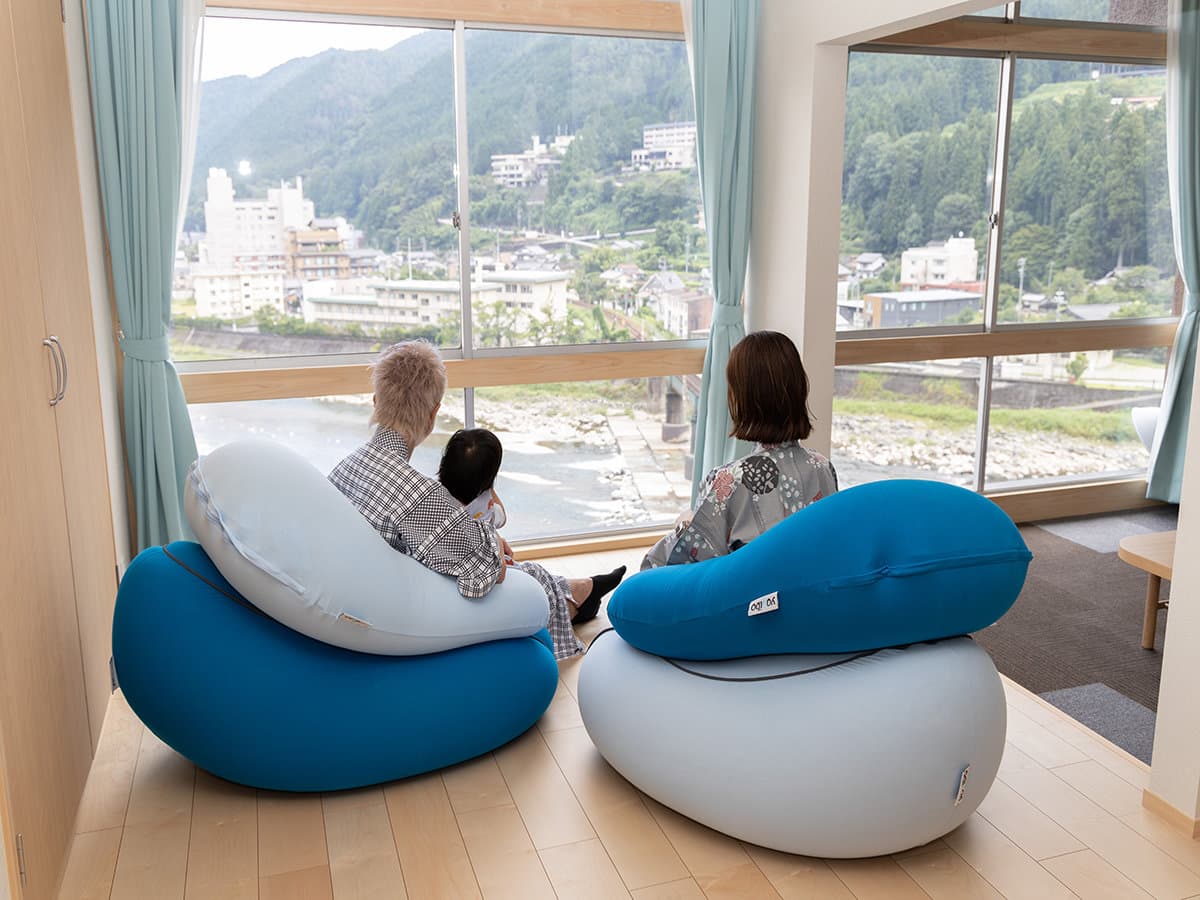
Gero Onsen follows the Hida River, with the town pressed into the gorge and the sound of water reaching many inns along the bank. This is a river-gorge town, not a coastal resort or broad mountain plateau, and its enclosed geography produces a particular kind of quiet that makes the shinkansen-and-express journey feel worthwhile.
Shogetsu has 556 reviews, the largest review count of any inn in this article and the figure that gives its 9.6 rating the strongest statistical weight. A score sustained across 556 stays reads almost like a consensus.
Its private-onsen arrangement is specific: five of the 72 rooms have in-room open-air baths, located on the fourth and fifth floors. Two reservable private baths, Wakaba and Momiji, are also available to all guests without an extra charge. When booking, request a fourth- or fifth-floor room with rotenburo, or confirm a private-bath time slot for your stay.
One point matters directly late in the second trimester: Shogetsu does not serve kaiseki in guest rooms. Dinner is served in a separate building containing 17 private sukiya-style dining rooms called Suikintei. You will need to walk there. The dining rooms are private rather than communal, but the short trip is worth considering if easy mobility is a priority.
See our guide to the best ryokans in Gero Onsen for a complete overview of the area.
Rating: 9.6 / 556 reviews · Price: $120–$350 per night · Rooms: 72
9. Hinoharu Ryokan — Yufuin
Journey: Yufuin Station, 15 minutes by taxi. The limited-express Yufuin no Mori from Hakata in Fukuoka takes about two hours and 15 minutes.
Yufuin feels almost structurally designed for couples. The town sits in a mountain basin beneath Mount Yufu, with Bungo Wagyu cattle grazing on the lower slopes, and the essential activities are eating, bathing and walking slowly. The mostly shaded, level path around Lake Kinrinko takes about 15 minutes from end to end, making it the kind of gentle second-trimester exercise that requires little planning.
Hinoharu has 11 rooms. The crucial detail is that only two have an in-room rotenburo. Guests in other rooms can reserve one of five natural hot-spring baths privately without an additional charge. If an in-room bath is central to your babymoon, book the rotenburo room type specifically. In-room kaiseki is confirmed, featuring seasonal Oita ingredients and Bungo Wagyu.
One source reports that the property has no elevator, so confirm the availability of a ground-floor room when booking. Yufuin regularly leads recommendations for the best onsen destinations for a Japan babymoon, and Hinoharu's 9.7 rating across 106 reviews supports the case.
At $200–$500 per night, Hinoharu is the more accessible Yufuin option on this list. If your budget extends further, Yufuin Souan Kosumosu—a 12-room inn with a private_only tattoo policy and past Michelin recognition—is another luxury option in the same area.
See our guide to the best ryokans in Yufuin for a complete overview of the area.
Rating: 9.7 / 106 reviews · Price: $200–$500 per night · Rooms: 11
 Pin to Pinterest
Kyoto: an urban ryokan for couples who prioritize culture
A Kyoto ryokan is a different proposition from staying in a hot-spring town. You are in a city, with public transport nearby and Nishiki Market within a pleasant walk. The appeal is cultural immersion rather than mountain seclusion. The tradeoff is straightforward: Kyoto involves more walking, visual stimulation and daily decisions than anywhere else on this list. For pure rest, choose an onsen town. For couples who want to feel the weight of Japanese history and are comfortable with gentle urban exploration during the second trimester, Kyoto offers its own kind of babymoon.
Hiiragiya has operated in central Kyoto since 1818. It is a historic ryokan with English-speaking staff, in-room kaiseki and private baths filled with heated groundwater from the property. These are not onsen baths: Hiiragiya's private-onsen flag is false. The water temperature can still be controlled, which is useful for a pregnant guest who needs to remain below 40°C. Shoji screens open toward a small inner garden, while two centuries of hosting writers, artists and foreign dignitaries have made the staff adept at handling specific requests.
10. Hiiragiya Ryokan — Kyoto
Journey: Kyoto Shiyakusho-mae Station. Confirm the exact walking route with the ryokan when booking.
Hiiragiya was founded in 1818. It is a registered Tangible Cultural Property, housed in a sukiya-style wooden building that has survived long enough to acquire a gravity of its own. Notable writers and artists have stayed here, and its two centuries of guest history form part of Japan's cultural record. In practical terms, the English-speaking staff are accustomed to guests with specific requirements, including dietary adjustments.
Each Hiiragiya room has a private bath filled with groundwater from the property. The distinction matters: this is not volcanic hot-spring water, and Hiiragiya does not have a private onsen. Kyoto lies in a basin without natural geothermal activity. Two additional reservable kashikiri baths are decorated by recognized craftspeople—one with stained glass by Sanchi Ogawa and another with porcelain by Rokubei Kiyomizu VI. They should be described as private baths, not private onsen.
Kaiseki is served in the room: an 11-course kyo-kaiseki menu adjusted weekly to reflect the produce at Nishiki Market, with tableware selected from Kyoto's pottery and lacquer traditions. There is no need to leave the room for dinner, and the central location keeps urban travel manageable.
One caveat: because Hiiragiya occupies a historic wooden building, elevator access is unconfirmed. At $500–$1,200 per night, it is a substantial luxury commitment. Confirm ground-floor accessibility when booking. This is the choice for couples who want a historic Kyoto ryokan with English-speaking staff and in-room dining, while understanding that it is not an onsen property.
Rating: 9.6 / 67 reviews · Price: $500–$1,200 per night · Rooms: 28
Quick comparison by area: journey, price and babymoon atmosphere
The right Japan babymoon destination depends as much on your arrival airport as on the cost of the inn. This table matches each area with its nearest transport hub, approximate journey time and overall character.
| Area | Gateway city | Journey from gateway | Train transfers | Price range (USD/night) | Babymoon atmosphere |
|---|---|---|---|---|---|
| Atami | Tokyo | ~35 min by shinkansen | 0 | $157–600 | Seafront, easiest journey |
| Izu (Ito) | Tokyo | ~90–100 min by limited express | 0–1 | $220–500 | Green peninsula, quiet |
| Hakone (Gora) | Tokyo | ~105 min + Tozan Railway | 1–2 | $500–1,200 | Mountainous, volcanic, scenic |
| Arima | Osaka/Kobe | ~60–90 min by bus or train | 1 | $235–600+ | Ancient springs, walkable town |
| Kinosaki | Osaka | ~3 hr by limited express | 1 | $89–318+ | Canals, most walkable |
| Gero | Nagoya | ~100 min by limited express | 1 | $120–350 | River gorge, strong value |
| Yufuin | Fukuoka | ~2 hr 15 min by limited express | 1 | $200–500 | Mountain basin, couple-oriented |
| Kyoto | City itself | Local transit from Kyoto Station | 0 | $500–1,200 | Culture first, urban ryokan |
Ready to book?
Book one of these top picks
Compare live availability and prices across booking sites.
from US$500 · per person · per nightfrom ≈ US$1,000 total for 2 guests



Atami Kakurezato
熱海の隠れ里
Atami·Luxury
from US$157 · per person · per nightfrom ≈ US$314 total for 2 guests
Mikuniya (Kokoro no Yado Mikuniya)
城崎温泉 心の宿 三國屋
Kinosaki·Mid-Range
from US$89 · per person · per nightfrom ≈ US$178 total for 2 guests
Booking links may earn us a commission at no extra cost to you.
Tip
Journey times are approximate and timetables can change. Check current schedules on JR East or the JR website before booking.
Planning a Japan babymoon: trimester, timing and booking lead time
Which trimester is best for a Japan babymoon?
The second trimester—weeks 14 to 28—is the commonly recommended window for leisure travel during pregnancy. The American College of Obstetricians and Gynecologists notes that mid-pregnancy is generally the easiest time to travel: energy often returns, morning sickness has usually improved and moving around remains comfortable. The risks of miscarriage and premature labor are also at their lowest. This is general travel guidance, not a substitute for your own obstetrician's approval of an international trip.
For onsen-specific safety guidance during those weeks, see our guide to onsen during pregnancy.
How far ahead should I book a babymoon ryokan in Japan?
For high-demand inns in this article—Gora Kadan, Hiiragiya and Hashinoya Bekkan Ransui—book six months ahead, ideally when the reservation window opens. Premium room types, especially rooms with a rotenburo, can sell out within hours during cherry-blossom season from late March through April, autumn foliage season in October and November, and Golden Week from late April into early May. For low-season trips in January, February, June or September, four to eight weeks is often enough.
For a two- or three-night babymoon based in one region, skip the JR Pass. Point-to-point shinkansen tickets are simpler and, for most itineraries described here, less expensive. If a journey exceeds 90 minutes, a Green Car upgrade can justify its price through wider seats, quieter carriages, easier boarding with luggage and more breathing room. Check the fare before buying.
Japan Railways and most metro systems provide pregnant passengers with a small pink heart badge called the Maternity Mark (マタニティマーク), free of charge and without requiring proof. Ask at a station service counter. It is a practical accessory: in a 2024 survey, 94% of Japanese respondents said they would give up their seat to someone wearing one. Attach it to your bag before boarding.
Two other points belong on your planning calendar:
- Travel insurance: Before departure, verify that your policy covers pregnancy complications overseas. Standard travel insurance often excludes pregnancy-related medical events after a specified week of gestation. - Peak travel periods: Golden Week in late April and early May, Obon in mid-August and New Year from late December into early January bring Japan's heaviest domestic travel. If your second-trimester window overlaps, book earlier and expect busy trains even in the Green Car.
What to ask when booking: an English checklist
Ryokan staff generally—and the English-friendly staff at these properties in particular—regularly handle dietary and accessibility requests. The most useful step is to tell the ryokan about the pregnancy in advance. That allows staff to adjust the kaiseki, room assignment and arrival logistics before your stay.
Confirm the following before paying a deposit. You can copy these questions into your reservation inquiry or email:
- “Does our room include a private in-room onsen (rotenburo), or can we reserve a kashikiri bath for exclusive use? We would like to confirm the exact arrangement.” - “Can we reach our room without using stairs, or is there an elevator to our floor? One guest is pregnant.” - “Can we have in-room kaiseki instead of dining in a separate room or building?” - “Is a shuttle or taxi available from the station? Can you confirm it for our arrival time?” - “One guest is pregnant and must avoid raw fish. Can the sashimi course be replaced with a cooked dish?” - “What is your cancellation policy if an unexpected pregnancy-related issue occurs?” - “Is early check-in available? Rest after the journey is important for us.”
Most inns on this list will answer these questions without surprise. Properties unable to handle an English-language email inquiry were not included.
Kaiseki during pregnancy: what to know
A standard kaiseki meal includes sashimi (raw fish), usually as the second or third course. Medical guidance from Western health authorities advises pregnant women to avoid raw fish because of the risk of Listeria. Japanese obstetricians may take a more permissive view because Japanese fish is high quality, often deep-frozen and associated with a low prevalence of Listeria.
The practical approach for an overseas babymoon traveler is simple: tell the ryokan before arrival that you are pregnant and ask for the sashimi course to be replaced with a cooked dish. Every English-friendly ryokan on this list regularly handles dietary requests, and this is a familiar one.
Two further details are worth raising:
- Sake is commonly offered with kaiseki or poured throughout dinner. Request alcohol-free alternatives in advance; nonalcoholic plum drinks, mugicha (barley tea) and yuzu juice are common substitutes. - High-mercury fish, including Pacific bluefin tuna (hon-maguro), bigeye tuna (mebachi) and golden snapper, occasionally appear in premium kaiseki. Japanese health guidance suggests limiting these fish to 80 grams per week during pregnancy. A simple booking note—“We would prefer lower-mercury fish where possible”—is sufficient.
One sentence in the booking email covers the essentials: “I am pregnant. Please replace raw-fish dishes with cooked alternatives and do not serve me alcohol.”
 Pin to Pinterest
These ten ryokans—all verified in our database and all English-friendly—capture what makes a carefully planned Japan ryokan babymoon worthwhile. Nine provide a verified private-onsen option. Hiiragiya instead offers a historic Kyoto stay with English-speaking staff and private non-onsen baths. The format does much of the work: one room, dinner brought to you and the soundscape of the place you chose. No complicated itinerary and no pressure to be anywhere else.
FAQ
Frequently asked questions
Is Japan a good babymoon destination?+
Yes. Japan works particularly well for couples who choose a ryokan with private bathing and straightforward rail access. A ryokan offers privacy, kaiseki dining and little need to leave the property. Destinations near Tokyo, including Atami at 35 minutes by shinkansen and Izu at roughly 90–100 minutes, avoid losing an entire day to travel.
Can you use an onsen while pregnant in Japan?+
Yes, if your doctor agrees. Guidance differs: Japan's environment ministry does not list pregnancy as a hot-spring contraindication, while ACOG advises avoiding hot tubs and saunas in early pregnancy. Keep soaks short and lukewarm, and get out at once if you feel unwell.
Which trimester is best for a Japan babymoon?+
The second trimester, weeks 14–28, is commonly recommended for leisure travel during pregnancy. Energy often returns, morning sickness has usually improved and moving around remains easier than later in pregnancy. Always consult your obstetrician before booking an international trip.
Is Hakone a good babymoon destination?+
Hakone is one of the best babymoon areas near Tokyo. Gora Kadan, a former Imperial Family summer villa, is the standout choice: it has private hot-spring bathing, nine-course kaiseki served in the room, a confirmed elevator and a complimentary transfer from Gora Station. The journey from Tokyo takes about one hour and 45 minutes, and prices are $500–$1,200 per night.
Are ryokans suitable during pregnancy?+
Ryokans can be very suitable if chosen carefully. Look for private bathing with controllable temperature, in-room or private dining, elevator or ground-floor access and English-friendly staff who can handle dietary requests such as replacing raw sashimi with cooked dishes. Nine inns in this guide have a private onsen confirmed in the database. Hiiragiya is the exception: it is an English-friendly historic Kyoto ryokan with private baths, but no private onsen.
Can pregnant women use private onsen baths?+
Yes, with your doctor's approval. A private bath lets you control the temperature and step out immediately, which a communal bath does not. There is no universal safe temperature or duration; guidance differs, especially in the first trimester.
How far ahead should I book a babymoon ryokan in Japan?+
For high-demand inns such as Gora Kadan, Hiiragiya and Hashinoya Bekkan Ransui, book when the reservation window opens, about six months ahead. Premium rooms with an in-room rotenburo can sell out quickly during cherry-blossom season, autumn foliage and Golden Week. Four to eight weeks is often enough for lower-demand periods in January, February, June or September.
Which foods should I avoid in a ryokan kaiseki while pregnant?+
Flag sashimi and other raw fish and request cooked alternatives when booking. Decline sake and ask for alcohol-free drinks such as mugicha or yuzu juice. High-mercury fish, including bluefin and bigeye tuna, may also appear in premium kaiseki; Japanese guidance suggests limiting these fish to 80 grams per week during pregnancy. Notify the ryokan before arrival with a simple message: “I am pregnant. Please replace raw-fish dishes with cooked alternatives and do not serve me alcohol.”
Still deciding?
Browse ryokans across JapanBooking.com