
A ryokan trip with older parents often comes down to one detail: a room with its own small open-air bath. For a parent who is self-conscious about a surgery scar, or who does not like the heat or the crowd of the public onsen, a private bath dissolves the whole problem — they can soak at their own pace, in their own time. That is the trip this guide is about: not the most luxurious ryokan, but the most comfortable one for the people you are taking.
Travelers across Asia have a word for this kind of journey — in Korea it is hyodo yeohaeng, a trip taken to honour and thank one's parents — and a ryokan suits it perfectly, if you book the right one. The trouble is that the features that make a ryokan magical for a young couple can make it hard for an older guest: deep floor-sitting, long polished corridors, a communal bath you undress for in front of strangers. Every one of those has a fix, and this guide is the checklist.
Start With a Private or In-Room Onsen
If you change one thing about how you would normally book, change this. A private onsen — either an in-room bath (kashitsuki-rotenburo) or a private bath you reserve for your family (kashikiri) — solves more problems for an older traveler than any other single feature. There is no undressing in front of strangers, which matters enormously to a generation that often finds the public bath uncomfortable, and matters practically to anyone with a scar, a stoma, or a tattoo. The bath is a few steps from the room, not down a corridor and a flight of stairs. The water is yours, so a soak can be short, slow, and unhurried, with family close by in case a hand is needed getting in or out. For the full picture of this format, see our guide to the best ryokans with private onsen.
 Pin to Pinterest
Make the Room Itself Easy
Two things tire older guests most in a traditional ryokan: sitting on and rising from the floor, and walking long distances inside the building. Both are bookable away. Many ryokan offer a bed-style (Western or twin) room, or will lay out a raised futon and provide a low table with legroom and chairs instead of floor cushions — just ask at the time of booking, in writing if you can. Request a room on the ground floor or near the elevator, and ideally close to both the entrance and the bath. If a parent uses a wheelchair or a cane, say so clearly when you reserve and ask specifically about step-free access, because a beautiful old inn may have a single unavoidable stair that a photo will never show. English-speaking staff make all of these requests far easier to confirm.
Dining In the Room, at Their Pace
A ryokan's multi-course kaiseki dinner is a highlight, but a long evening seated on a cushion in a communal hall can be hard work for an older body. The answer is heya-shoku — dinner and breakfast served in your own room — or, failing that, a private dining room with proper chairs. In-room dining lets parents eat in comfortable clothes, pause when they like, and retire the moment they are tired, with no walk back. When you book, mention any dietary needs and ask whether softer or smaller-portion preparations are possible; good kitchens handle this gracefully with notice. Our guide to ryokan meal plans explains how in-room dining and the meal options work.
 Pin to Pinterest
A Quick, Honest Word on Onsen and Health
Hot-spring bathing is gentle and genuinely good for circulation and stiff joints, but a few sensible rules matter more with age. Keep soaks to around ten minutes and step out to cool down rather than enduring the heat. Favour baths under about 42°C; many ryokan have a cooler bath or a private one you can temper. Drink water before and after, never bathe straight after a big meal or any alcohol, and stand up slowly to avoid a head-rush. Anyone with a heart condition, high or low blood pressure, or who is on related medication should have a quick word with their doctor before the trip — not because onsen are dangerous, but because a five-minute conversation removes the only real worry.
Tip
Build the itinerary slow. One ryokan as a single base for two or three nights beats a fast route that changes inns every night — older travelers feel the packing, the check-outs, and the transfers far more than the destinations. Choose an inn within a short taxi or walk of its station, and leave whole afternoons with nothing planned but a bath and a nap.
Ready to book?
More ryokan you can book
Compare live availability and prices across booking sites.

Hinoharu Ryokan
日の春旅館
Yufuin·Mid-Range
from US$200 · per person · per nightfrom ≈ US$400 total for 2 guests



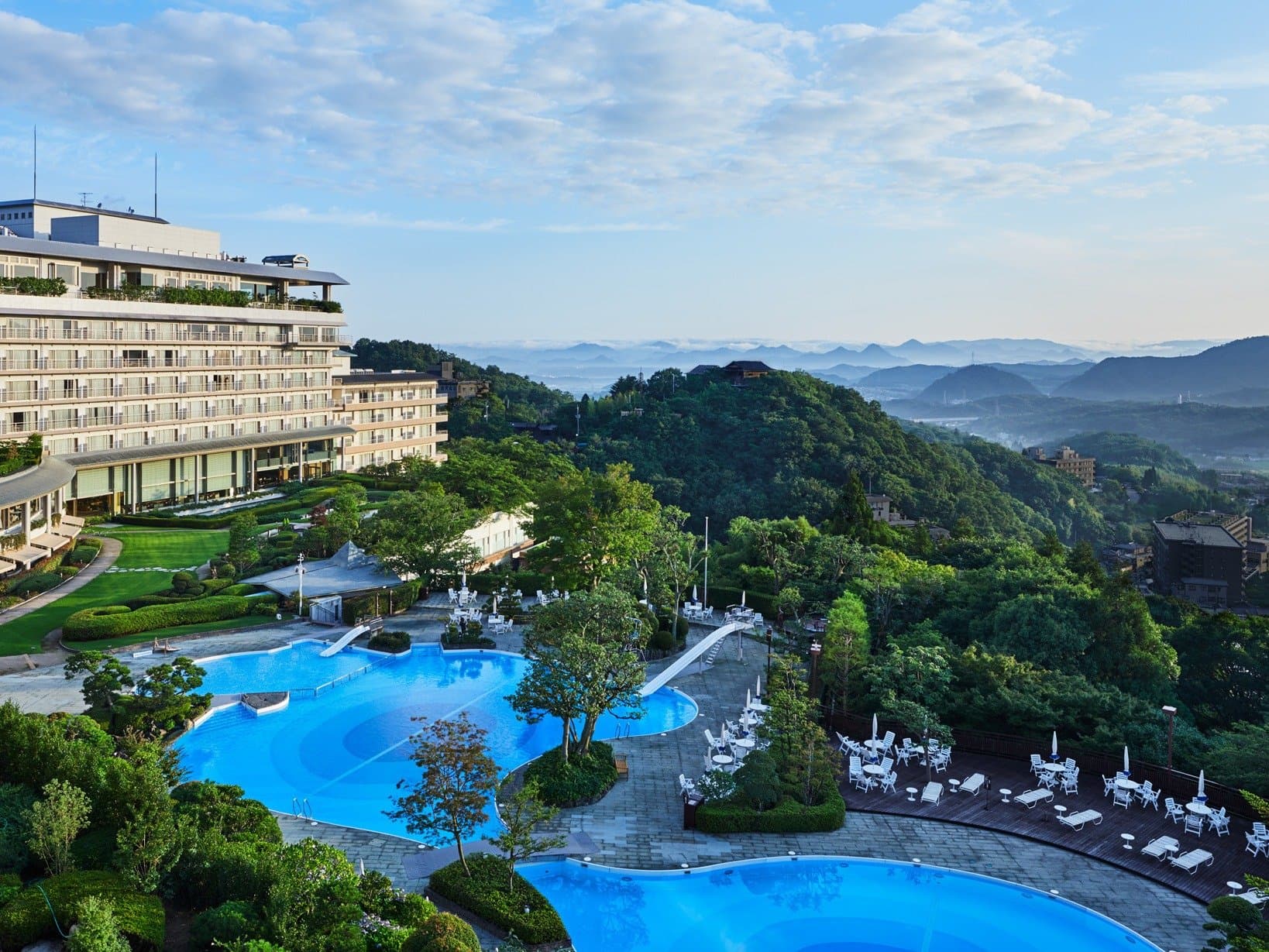
Arima Grand Hotel
有馬グランドホテル
Arima·Mid-Range
from US$200 · per person · per nightfrom ≈ US$400 total for 2 guests

Hotel Yoshimatsu
ホテル吟松
Ibusuki·Luxury
from US$200 · per person · per nightfrom ≈ US$400 total for 2 guests
Booking links may earn us a commission at no extra cost to you.
The Booking Checklist
Before you pay, confirm these, ideally in writing: a private or in-room onsen, or at minimum a reservable private bath; a bed-style room or raised futon with chairs if floor-sitting is hard; a ground-floor or elevator room near the bath and entrance; step-free access stated explicitly if mobility is limited; in-room or private-room dining; any dietary or soft-food needs; and a short, simple transfer from the station. If this is the family's first ryokan and you want to walk parents through what to expect — the yukata, the bath, the etiquette — send them our first-time ryokan guide before you go.
Find a Comfortable Ryokan for Your Parents
Filter our directory for ryokan with private and in-room onsen, near their station, with English-speaking staff — the features that turn a traditional inn into the gentle, generous trip your parents deserve.


