16分鐘閱讀更新於 2026年6月
The last time I tried to take my daughter into a communal onsen, she was two years old and completely fascinated by the steam. The attending staff were polite but firm: children under three were not permitted in the public bath. Fair enough. But we'd traveled four hours to this ryokan specifically to soak. We ended up in the room's tiny shower. That was the trip that convinced me to book only family ryokan with private onsen from then on.
Communal onsen etiquette is genuinely not built for families with young children. Public baths are gender-segregated, so parents of opposite sexes can't supervise together. Babies and toddlers are often turned away outright. Noise rules — no splashing, subdued voices — make small kids a source of visible anxiety for other guests. And if either parent has tattoos, they may be excluded from communal facilities entirely.
A private onsen solves all of this at once. You book the bath (or stay in a room that has one), your family soaks together, nobody else is there, and you set the schedule around nap times and dinner. For our family ryokan guide, I've collected the picks that give you the most room — in every sense.
Why a private onsen is the family answer
Let's be specific about what a private bath actually fixes.
Babies and toddlers are allowed. In most communal baths, children under three (sometimes under six) are prohibited. A kashikiri or in-room rotenburo is a private rental — the ryokan's communal policy simply doesn't apply. You confirm with the property at booking, but the answer is almost always yes.
There's no etiquette stress. No hushing a toddler who wants to splash. No anxious looks from other bathers when your child asks a question at full volume. The bath is yours. It runs at your pace.
Tattoos are a non-issue in private facilities. Japan's onsen tattoo bans exist to protect shared communal spaces. Lock the kashikiri door behind you and the policy becomes irrelevant. This matters for a lot of families — not just those with visible tattoos, but anyone who prefers not to navigate that conversation at the front desk.
And the whole family bathes together. The gender-segregated communal bath means a solo parent can only take children of one gender. Private baths end this problem entirely. Mum and Dad soak at the same time, kids in the middle, no coordination required.
Tip
When researching private onsen for families, you'll encounter two setups: an in-room rotenburo (an outdoor or semi-outdoor bath attached directly to your guest room, available any hour) and a kashikiri (a shared private bath reserved by your family for a time slot, usually 45–60 min). In-room rotenburo is the more flexible option for families with unpredictable schedules. Kashikiri baths are often larger and sometimes more dramatic in setting — worth the reservation slot if the ryokan offers them.
快速比較
精選7家| 旅館 | 起價 | 評分 | 特色 | 預訂 |
|---|---|---|---|---|
![]() Hanaougi Bettei Iiyama Takayama | $400起 | 9.2 290則評價 | 英語OK包租溫泉 | 在Trip.com預訂 |
![]() Hotel Otaki Nikko | $60起 | 8.0 340則評價 | 英語OK包租溫泉 | 在Trip.com預訂 |
![]() Yubatake Souan Kusatsu | $90起 | 8.5 120則評價 | 英語OK包租溫泉 | 在Trip.com預訂 |
![]() Kamenoi Besso Yufuin | $500起 | 9.2 5則評價 | 英語OK包租溫泉 | 在Trip.com預訂 |
![]() Nishimuraya Honkan Kinosaki | $400起 | 9.2 198則評價 | 英語OK包租溫泉 | 在Trip.com預訂 |
![]() Sasara Gero | $200起 | 8.7 73則評價 | 英語OK包租溫泉 | 在Trip.com預訂 |
| $500起 | 9.6 43則評價 | 英語OK包租溫泉 | 在Trip.com預訂 |

Hanaougi Bettei Iiyama
Takayama

Hotel Otaki
Nikko

Yubatake Souan
Kusatsu

Kamenoi Besso
Yufuin

Nishimuraya Honkan
Kinosaki

Sasara
Gero
顯示價格為每人每晚的起價(約值)。透過本站預訂,我們可能獲得佣金。
The verified family picks
Each ryokan below has a confirmed private onsen option — either in-room rotenburo or reservable kashikiri. I've noted the area and the general budget tier. What I cannot confirm from the outside: exact children's age minimums in the private bath, whether the private bath costs extra, or how many people fit comfortably. Confirm those specifics directly with the ryokan at booking — a brief email or phone call before you pay saves a lot of disappointment on arrival.
Takayama Iiyama — Old Town Takayama, Mountain Mid-Range
一目瞭然
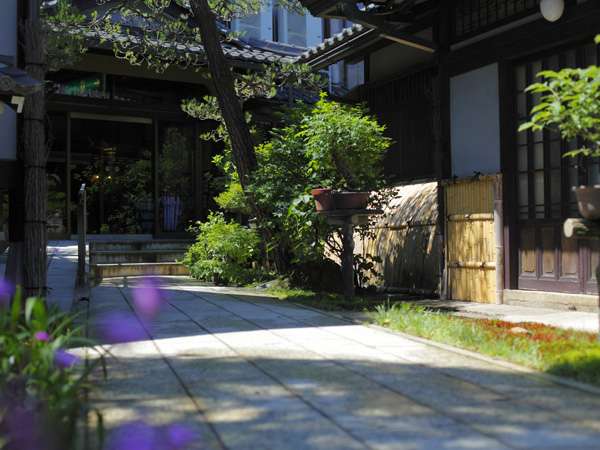
Takayama's preserved Edo merchant townscape is one of the most visually intact historic districts in Japan, and Iiyama sits inside it — a mid-range ryokan in a setting that would be reason enough to visit even without the onsen. The private bath here gives families something rare in the historic district: the chance to soak in natural hot spring water without leaving a space that genuinely feels like old Japan.
For families, the location is practical too. The Sanmachi Suji old town streets are walkable and flat — stroller-friendly in the way that mountain ryokans in the hills often aren't. The morning market runs daily just a short walk away, which means kids get to see actual produce being sold at dawn rather than eating a reconstructed one. The ryokan's family-friendly setup is solid; confirm specific kids' amenities and bath capacity at booking.
Nikko Otaki — Waterfalls and Cedar Forests, Off-Season Value
一目瞭然
Nikko is so dominated by the Toshogu shrine complex that travelers sometimes miss the wider valley — the rivers, the waterfalls, the cedar forest that UNESCO protected along with the shrines. Nikko Otaki puts families close to that quieter landscape, with a private onsen that tends to feel more genuinely remote than the price might suggest.
The area around Otaki is worth lingering in, particularly in autumn when the maples and larches turn. Kids who've been dragged around one too many shrine gates tend to respond well to a waterfall walk. The private bath here is the practical anchor: you return from the cedars, the small ones are tired, and you soak together rather than navigating the logistics of a gender-split communal. Honest note: Nikko can be heavily visited on weekends — consider a weekday arrival for a calmer experience.
Kusatsu Souan — Japan's Most Acidic Spring, Premium Seclusion
一目瞭然
Kusatsu is Japan's most celebrated onsen town, and the water earns that reputation: the spring is strongly acidic (pH around 2.1 in the famous Yubatake field), which gives it documented antimicrobial properties but also means the water is harsher on very young skin. That's the honest caveat for families. However, Kusatsu Souan is a smaller, quieter property that provides private baths where you control the soak duration — which makes it more manageable for children than a long communal dip.
The Yubatake — Kusatsu's central heat-field where the spring bubbles up through wooden channels — is genuinely dramatic and worth seeing with kids of any age, even non-bathers. Souan's ryokan character is calmer than the busy center; it draws couples and families specifically looking to avoid the crowds while still soaking in genuine Kusatsu water. At the premium tier, confirm room options and private bath sizes carefully before booking.
Yufuin Kamenoi Besso — Kyushu's Storybook Onsen Town, Heritage Premium
一目瞭然
Yufuin sits in a bowl-shaped valley with Mt. Yufu rising behind it — the kind of backdrop that makes every outdoor bath photograph look staged. Kamenoi Besso is one of the founding properties of modern Yufuin's ryokan culture; it opened as a cottage-style resort in the 1950s and helped establish the low-key, arts-and-nature aesthetic that now defines the town. The grounds contain a small museum, an art gallery, and a main house that has accumulated decades of quiet character.
For families, the cottage-style rooms with private baths are the draw. Children sleep in the same building as their parents without a long corridor between them, and the grounds are large enough to wander without supervision anxiety. Yufuin town itself is well set up for families — flat, walkable, with plenty of cafe stops and craft shops that hold kids' attention. This is a premium property; the private bath experience justifies the price, but confirm room configurations for larger families at booking.
Kinosaki Nishimuraya Honkan — Seven Public Bathhouses, One Private Escape
一目瞭然
Kinosaki Onsen runs on a unique model: guests receive a yukata, wooden geta sandals, and a bath passport to the town's seven public bathhouses, then pad through the willow-lined canal streets from bath to bath. It's a genuinely magical evening ritual for adults. For families with young children, the public bathhouse circuit is more complicated — bathhouse rules, timing, and the social environment of communal spaces across seven different buildings make it logistically heavy.
Nishimuraya Honkan is Kinosaki's most historic flagship property, operating since 1868. Its rooms with in-room private baths give families a base camp option: do one or two of the public baths when the children are settled with a grandparent or older sibling, and use the in-room bath the rest of the time. The ryokan's location on the main canal street means the atmosphere of Kinosaki — the lanterns, the yukata crowds, the clatter of wooden geta — is all around you without forcing participation. That balance is harder to find than it sounds.
Gero Sasara — Japan's Three Famous Onsen, Family Mid-Range
一目瞭然
Gero Onsen is one of Japan's three historically acclaimed hot spring towns — alongside Arima and Kusatsu — and it has a reputation that significantly outpaces its international tourist traffic. That relative quietness is an asset for families: the streets are calmer than Kinosaki, the atmosphere is local and unpretentious, and the water (a sodium bicarbonate spring known for its skin-smoothing effect) is gentle enough for children.
Sasara is a mid-range pick in Gero that provides private bath access without the premium-property price point. The Hida River runs alongside the town, and the area's connections to the Hida highland villages make it a good base for exploring rural Gifu on day trips. For families on a tighter budget who still want the private onsen experience, Gero Sasara is one of the stronger arguments against defaulting to a generic hotel. Confirm the private bath configuration and kids' policy directly — some properties in Gero reserve kashikiri baths for adults only in the evening hours.
Izu Abba Resorts — Peninsular Privacy, Accessible from Tokyo
一目瞭然
The Izu Peninsula is Tokyo families' closest onsen escape — two hours by Shinkansen to Atami, then a short local line south. Izu Abba Resorts takes a more resort-style approach than a traditional ryokan, which in practice means more flexibility on family logistics: room configurations tend to accommodate larger groups, and the general atmosphere is less strictly formal than a classic ryokan in a more remote location.
Private outdoor baths in Izu face the Pacific coastline or the forested hillside depending on the room — both are far more compelling than the words 'resort onsen' suggest. For first-time ryokan families who want the private bath experience without the pressure of deep ryokan etiquette protocols, Izu Abba is an accessible entry point. The flip side: it's a more Western-format experience than Kinosaki or Yufuin. Whether that's a pro or a con depends entirely on how much of the traditional ryokan ritual your family wants to navigate.
Tip
Booking checklist for family private onsen: (1) Ask whether children of your kids' specific ages are permitted in the private bath — not just 'is it family-friendly.' (2) Confirm bath capacity — in-room baths vary from two-person to four-person; a family of four may not fit in the smallest. (3) Check whether the private bath is included in the room rate or requires a separate booking fee. (4) If you want a kashikiri rather than an in-room bath, reserve your preferred time slot at booking — popular slots (pre-dinner, before bed) fill fast. (5) Traveling with a tattooed parent? Mention it directly when booking — private baths are almost universally fine, but confirming saves a front-desk conversation on arrival.
準備好預訂了嗎?
從這些精選旅館中預訂
比較三個預訂平臺的即時可用性和價格。
透過預訂連結可能產生佣金,但不會增加您的費用。
FAQ
常見問題
Can babies go in an onsen?+
Most ryokan communal baths prohibit infants and toddlers — the concern is sanitation and safety in shared water. A private onsen (in-room or kashikiri) is a different story: your family controls the bath, so many ryokans allow babies in private facilities. Always confirm the ryokan's specific policy when booking, as minimum ages vary.
Can families bathe together at a ryokan?+
Not in communal gender-segregated baths, which separate men and women (and typically ban children under a certain age from adult baths). A kashikiri (reserved private bath) or an in-room rotenburo solves this: the whole family — parents, small children, grandparents — bathes together with the door locked. This is the main reason families seek out private-bath ryokans.
What is a kashikiri family bath?+
Kashikiri means 'reserved exclusively' — a hot spring bath (often with an outdoor element) that a family books for a set time slot, typically 45 to 60 minutes. Unlike an in-room bath, kashikiri baths are usually larger, sometimes with a garden view, and are shared with nobody else during your slot. Most ryokans offer them free of charge or for a small reservation fee.
Are private onsen ryokans safe for kids?+
Yes, with normal supervision. Onsen water is hot — typically 40–42°C — so limit soaks to 5–10 minutes for young children and keep the water a few degrees cooler if the ryokan allows adjustment. Private baths let you control the environment entirely, which is safer and calmer than a crowded communal bath.
Do tattoo-bearing parents have to avoid family ryokans?+
Not if you're using a private bath. Tattoo restrictions in Japan apply almost exclusively to communal facilities. In a kashikiri or in-room rotenburo, the policy effectively doesn't matter — you are the only guests in the bath. Always confirm with the ryokan if you're unsure, but in practice private baths are accessible to tattooed guests at the vast majority of properties.