跳转到主要内容
日式旅馆住一晚要多少钱?2026年224家旅馆实价数据
Photo: Unsplash
guides|May 2026|10 min read

日式旅馆住一晚要多少钱?2026年224家旅馆实价数据

The word "ryokan" does a lot of heavy lifting. It covers a $35-a-night guesthouse in a converted fishing village and a $2,000-a-night hilltop villa where a private butler draws your cypress-wood bath before dinner. Both are genuine ryokans. Both are listed on Trip.com.

That 57× gap is why the simple question — *how much does a ryokan cost?* — never has a simple answer. The headline number: the median ryokan rate across 224 properties is $315 per person per night (¥48,500 at ¥154/USD) [Japan Ryokan Guide 224-property analysis, verified 2026-05-19]. If you have ¥50,000 per head to spend, you're right in the middle of the market — not splurging, not slumming. But if your budget is $120 or $600, what you actually get looks completely different depending on which of Japan's 25 onsen areas you choose.

This article maps every area, every price tier, and the features that come with each — so your budget decision is based on real numbers, not vague impressions.

Data: 224 published ryokans across 25 onsen areas, curated rate ranges verified against Trip.com and official property sites as of Q1 2026. Rates are per person per night and include dinner and breakfast at mid and luxury tiers (see the "What the Rate Includes" section below). The middle 50% of all properties sits between $200 and $425 [Japan Ryokan Guide 224-property analysis, verified 2026-05-19].

The 60-second answer: what a ryokan costs in 2026

If you only read one table in this article, make it this one.

TierPropertiesLow medianMidpoint medianHigh median
**Budget**31 (13.8%)$70 / ¥10,800$115 / ¥17,700$160 / ¥24,600
**Mid**99 (44.2%)$130 / ¥20,000$250 / ¥38,500$350 / ¥53,900
**Luxury**94 (42.0%)$280 / ¥43,100$450 / ¥69,300$600 / ¥92,400

[Japan Ryokan Guide 224-property analysis, verified 2026-05-19. USD/JPY: ¥154 (BOJ mid-rate proxy, May 2026). JPY figures rounded to ¥100.]

Three things to flag upfront. First, these rates are per person, not per room — a distinction every competitor article glosses over, and the main reason the same ryokan can look either expensive or cheap depending on which site you're reading. A $250 per-person rate for a couple is $500 per room — higher than a decent Shinjuku business hotel, but it includes a multi-course dinner and breakfast that would cost another $100–$200 on top at a hotel restaurant.

Second, the overall range in our database is $35 (K's House Ito Onsen, Izu) to $2,000 (Sanso Murata, Yufuin) [Japan Ryokan Guide 224-property analysis, verified 2026-05-19]. That 57× spread is not an anomaly — it reflects genuinely different categories of experience that happen to share a name.

Third, the mid-tier is where 44% of all properties live. At $250 median, it's the practical entry point for most foreign visitors: 91% of mid-tier ryokans are English-friendly, 43% include a private onsen, and a proper kaiseki dinner is standard [Japan Ryokan Guide 224-property analysis, verified 2026-05-19].

For strategies on finding the best budget deals, see our guide to [budget ryokan tips](/en/blog/budget-ryokan-tips).

How we built this dataset: 224 ryokans, 25 onsen areas

Before you trust a single number in this article, you should know exactly where it came from.

We built and refined a curated database of every ryokan listed on japanryokanguide.com — 224 properties, 25 onsen areas, 8 regions. Each property has a representative low and high USD nightly rate per person, manually verified against published rate cards on Trip.com and official ryokan sites. That verification was last completed in Q1 2026.

What this data is: a cross-section of published price ranges for 224 specific, named ryokans. It tells you what properties actually charge — by area, by tier, by feature set.

What this data is not: a live transactional database. We don't have daily-rate scrapes tied to specific travel dates. The per-property high and low rates reflect the full published range across room types and demand periods — they're the best honest proxy for seasonal variance we can offer without a real-time scrape pipeline.

Tip

**Methodology and limitations.** Price figures are drawn from japanryokanguide.com's curated database of 224 published ryokans across 25 onsen areas. Each ryokan has a representative low and high USD nightly rate per person, manually verified against published rate cards (Trip.com, official sites) as of Q1 2026. These are representative published ranges, not live transaction prices — actual rates on a specific date will vary. USD/JPY conversions use ¥154/USD (BOJ Tokyo mid-rate proxy, May 2026). Areas with n≤6 (Nara n=5, Ibusuki n=5, Shirahone n=6) are flagged with an asterisk — treat their medians as indicative rather than definitive. For real-time pricing on specific dates, consult Trip.com or the ryokan's official site. Sources: [Bank of Japan foreign exchange statistics](https://www.boj.or.jp/statistics/index.htm) | [Japan Tourism Agency accommodation survey](https://www.mlit.go.jp/kankocho/siryou/toukei/shukuhakutoukei.html)

A useful external calibration: the Japan Ryokan Association lists member ryokan rates spanning ¥5,000 to ¥119,000 per person [Japan Ryokan Association, verified 2026-05-19]. Our database runs slightly wider — $35 to $2,000 (approximately ¥5,400 to ¥308,000) — because it includes a handful of ultra-luxury non-JRA members and a few budget guesthouses that classify themselves as ryokans.

Foreign visitors now account for 14.8% of all ryokan guests, up from 9.9% in 2019 [Japan Tourism Agency inbound consumption survey 2024, via FindMyRyokan]. If you're reading this as a foreign traveler, the English-friendliness figures and the mid-tier data in this article are directly relevant to how your experience will go.

Ryokan prices by region and onsen area

The most useful thing our 224-property dataset does that no competitor article does: it gives you actual median prices for each of Japan's 25 main onsen areas — not vague labels like "affordable" or "splurge-worthy."

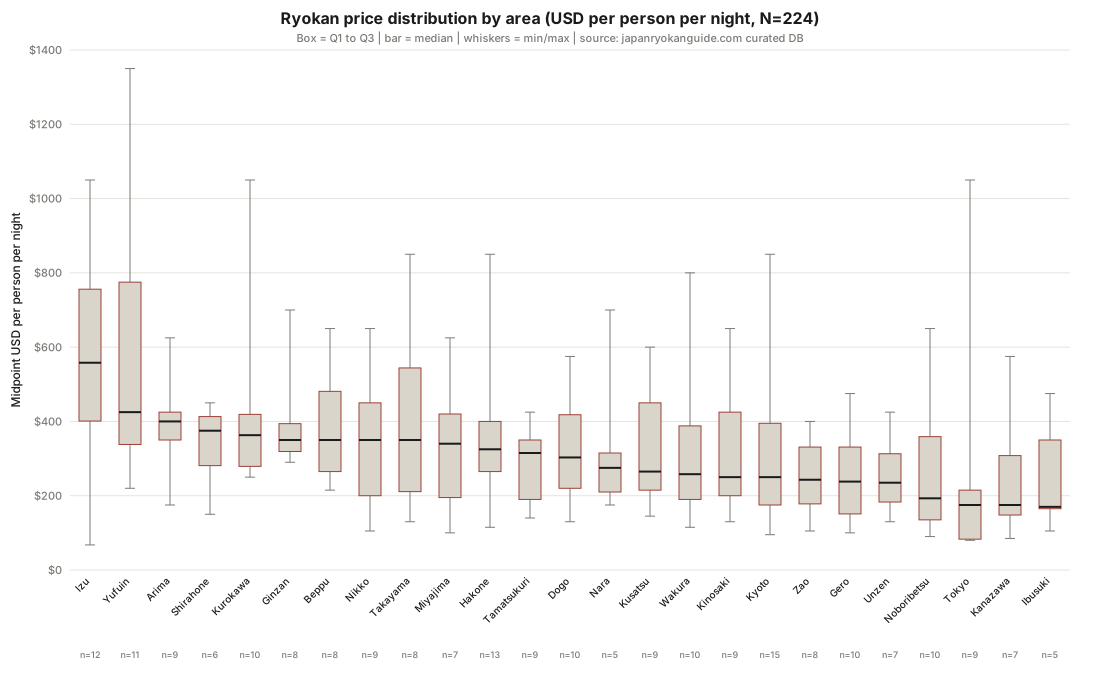
The range is wider than most travelers expect. Izu's average ryokan price is $558 per person per night — 3.3× Ibusuki's $170 [Japan Ryokan Guide 224-property analysis, verified 2026-05-19]. Both are genuine onsen destinations. The difference is density of luxury boutiques, proximity to major cities, and the concentration of high-end kaiseki operations.

图 1

Ryokan price distribution across 25 onsen areas

Box plot showing median, Q1, Q3, and min/max price range for 224 ryokans across 25 onsen areas, sorted by median descending. Izu has the highest median at $558; Ibusuki the lowest at $170.

来源: japanryokanguide.com curated database — 224 properties, Q1 2026

查看原始数据
Ryokan price distribution by onsen area — median, Q1, Q3, min, max (USD/person/night)
Onsen AreaMedian USDQ1 USDQ3 USDMin USDMax USD

Here's the full 25-area breakdown — the table you won't find anywhere else.

RankAreaRegionnPrice range (USD)Median (USD)Median (JPY)Tier mix (B/M/L)
1IzuChubu12$67–$1,050**$558**¥85,9001/6/5
2YufuinKyushu11$220–$1,350**$425**¥65,5000/4/7
3ArimaKansai9$175–$625**$400**¥61,6000/4/5
4Shirahone*Chubu6$150–$450**$375**¥57,8000/4/2
5KurokawaKyushu10$250–$1,050**$363**¥55,9000/4/6
6GinzanTohoku8$290–$700**$350**¥53,9000/5/3
7BeppuKyushu8$215–$650**$350**¥53,9000/4/4
8NikkoKanto9$105–$650**$350**¥53,9001/4/4
9TakayamaChubu8$130–$850**$350**¥53,9000/4/4
10MiyajimaChugoku7$100–$625**$340**¥52,4001/2/4
11HakoneKanto13$115–$850**$325**¥50,1002/5/6
12TamatsukuriChugoku9$140–$425**$315**¥48,5001/6/2
13DogoShikoku10$130–$575**$303**¥46,7001/6/3
14Nara*Kansai5$175–$700**$275**¥42,4000/4/1
15KusatsuKanto9$145–$600**$265**¥40,8001/4/4
16WakuraChubu10$115–$800**$258**¥39,7001/7/2
17KinosakiKansai9$130–$650**$250**¥38,5000/7/2
18KyotoKansai15$95–$850**$250**¥38,5002/7/6
19ZaoTohoku8$105–$400**$243**¥37,4001/6/1
20GeroChubu10$100–$475**$238**¥36,7001/6/3
21UnzenKyushu7$130–$425**$235**¥36,2001/5/1
22NoboribetsuHokkaido10$90–$650**$193**¥29,7002/5/3
23TokyoKanto9$80–$1,050**$175**¥27,0005/1/3
24KanazawaChubu7$85–$575**$175**¥27,0003/2/2
25Ibusuki*Kyushu5$105–$475**$170**¥26,2001/3/1

*Areas with n≤6 have wider confidence intervals — treat medians as indicative. [Japan Ryokan Guide 224-property analysis, verified 2026-05-19]

图 2

10 most expensive vs 10 most affordable onsen areas

Side-by-side horizontal bar chart comparing the 10 most expensive onsen areas (vermilion) and 10 most affordable (green). Izu leads at $558 median; Ibusuki sits at $170 median.

来源: japanryokanguide.com curated database — 224 properties, Q1 2026

查看原始数据
Most expensive vs most affordable onsen areas by median nightly rate (USD/person)
CategoryOnsen AreaMedian USDn

For a month-by-month timing guide to plan around price swings, see [our guide to best season for ryokan stays](/en/blog/best-season-ryokan).

The premium pocket: Izu, Yufuin, and Arima

These three areas account for a disproportionate share of Japan's luxury-tier ryokan inventory — and the pricing reflects it.

Izu (Shizuoka Prefecture, 2–3 hours from Tokyo) has 12 properties in our database, five of them luxury-tier. The coastal setting, direct Shinkansen access from Tokyo, and a cluster of boutique kaiseki operations have kept the average ryokan price elevated. The [Hakone area guide](/en/area/hakone) covers the accessible alternative at rank 11 ($325 median) — 13 properties spanning a full range from $115 to $850, close enough for Tokyo day-trippers who want a shorter trip.

Yufuin (Oita Prefecture) is the sharpest contrast in the data: 11 properties, seven of them luxury-tier, with a published range of $220 to $1,350. That ceiling is the widest of any area except Tokyo's anomalous $1,050 high (driven by one ultra-luxury urban ryokan). Yufuin's art-ryokan scene — small, often architect-designed properties with seasonal menus — drives prices up while the lack of large resort-scale hotels keeps volume low.

Arima (Hyogo Prefecture, 30 minutes from Osaka) carries the designation of one of Japan's three oldest onsen towns, alongside Dogo and Kusatsu. Nine properties, five luxury-tier. The proximity to Osaka and Kyoto makes it a frequent overnight add-on for international itineraries, which supports pricing above the national median.

Best value regions: Hokkaido, Tohoku, and Northern Kyushu

Budget doesn't have to mean compromise on the onsen experience. These regions offer the best price-to-experience ratio in the dataset.

Noboribetsu (Hokkaido, $193 median) is driven by large resort-style ryokans with multiple shared and semi-private bath facilities, kaiseki-style dinners at mid-tier prices, and the volcanic Jigokudani landscape nearby. Four of the top-10 widest pricing bands in the entire database are Noboribetsu properties — a signal that these big ryokans flex significantly between weekday and premium pricing. For travelers searching for cheap ryokan Japan options, Noboribetsu is the most reliable starting point in Hokkaido.

[Kusatsu onsen](/en/area/kusatsu) ($265 median, rank 15) is the strongest mid-range value proposition in Kanto. Its sulfuric acid springs — among the most acidic of any onsen in Japan, long attributed with medicinal properties — don't require a luxury price tag. One property, Yubatake Souan, starts at $90 and still delivers a private onsen.

[Kinosaki Onsen](/en/area/kinosaki) ($250 median, rank 17) is the Kansai value pick. Seven of its nine properties are mid-tier, giving you a traditional seven-bathhouse town experience with a yukata walk between outdoor baths for well under $300 per person. It's one of the few areas where the setting — a single preserved streetscape of willow-lined canals — is entirely free to access once you're checked in.

Ryokan cost by tier: what $115, $250, and $450 per night actually gets you

The median number matters, but the feature data is where budgeting decisions actually get made.

FeatureBudget (¥10k–¥24k)Mid (¥20k–¥54k)Luxury (¥43k–¥92k+)
Median low rate$70 / ¥10,800$130 / ¥20,000$280 / ¥43,100
Median midpoint rate**$115 / ¥17,700****$250 / ¥38,500****$450 / ¥69,300**
Median high rate$160 / ¥24,600$350 / ¥53,900$600 / ¥92,400
Private onsen10%43%81%
English-friendly65%**91%**84%
Vegetarian meals10%51%72%
Near train station71%65%57%
Halal meals0%0%0%
Avg room count24 rooms67 rooms41 rooms
Typical onsen setupShared large-bathShared + private mixPredominantly private
Kaiseki styleSimplified multi-courseFull multi-course kaisekiMulti-course kaiseki, often with local premium ingredients

[Japan Ryokan Guide 224-property analysis, verified 2026-05-19]

A few things in this table deserve attention.

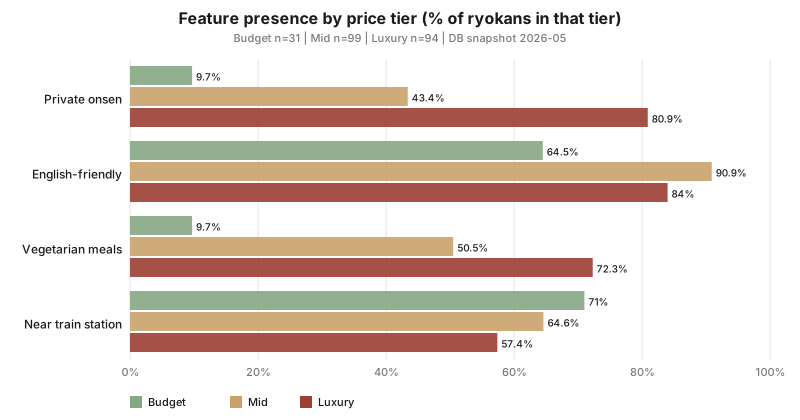
Private onsen is the feature with the steepest tier gradient: 10% at budget, 43% at mid, 81% at luxury — an 8× swing from budget to luxury [Japan Ryokan Guide 224-property analysis, verified 2026-05-19]. If a private onsen is non-negotiable, your realistic entry point is mid-tier, and even then it's not guaranteed. For properties where a private onsen is confirmed, see our dedicated list of [best ryokans with private onsen](/en/blog/best-ryokans-private-onsen).

English-friendliness peaks in mid-tier (91%), not luxury (84%) [Japan Ryokan Guide 224-property analysis, verified 2026-05-19]. This surprised us when we ran the numbers. The practical explanation: mid-tier properties in popular areas actively court international guests and invest in multilingual staff and translated menus. Many luxury ryokans — particularly the smaller boutique properties in Yufuin and Kurokawa — cater primarily to domestic high-net-worth guests and have less infrastructure for English-speaking visitors. Worth confirming before you book.

Halal meals: 0 of 224 properties [Japan Ryokan Guide 224-property analysis, verified 2026-05-19]. This is a real gap, not an oversight. The traditional kaiseki format — which uses dashi (fish-based stock) and often includes pork-based dishes — is structurally difficult to adapt. Muslim travelers should contact properties directly; some can prepare simpler vegetarian or seafood-only meals on request, but certification is not available in this dataset.

Station proximity inverts with price: budget ryokans are closest to train stations (71%), luxury are furthest (57%). Luxury properties trade transit convenience for remote valley settings — which means transport logistics for getting to and from the ryokan need to factor into your actual trip cost.

For our curated list of top luxury picks, see our [luxury ryokans in Japan](/en/blog/luxury-ryokans-japan) guide.

图 3

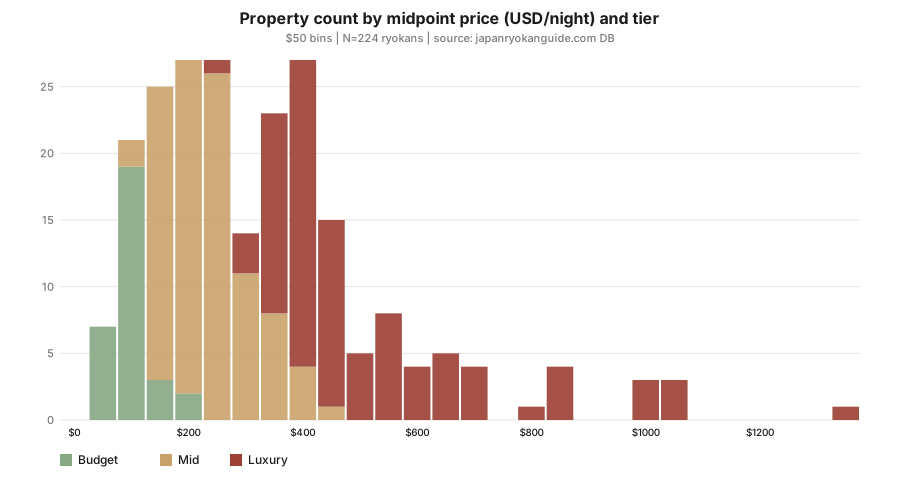
How many ryokans sit at each price point — by tier

Stacked histogram showing count of ryokans in $50 price bins from $0 to $1,400, colored by tier. Mid-tier dominates the $150–$350 range. Luxury properties extend into $400–$700 with a long tail above $800.

来源: japanryokanguide.com curated database — 224 properties, Q1 2026

查看原始数据
Count of ryokans by midpoint price bin ($50 intervals) and tier
Price bin (USD)Budget countMid countLuxury countTotal

图 4

Private onsen, English support, vegetarian meals, and station access — by tier

Horizontal grouped bar chart showing percentage of ryokans offering private onsen, English friendliness, vegetarian meals, and near-station location across budget, mid, and luxury tiers. Private onsen climbs from 10% in budget to 81% in luxury.

来源: japanryokanguide.com curated database — 224 properties, Q1 2026

Feature availability by price tier (% of properties)
FeatureBudget %Mid %Luxury %

A note on what the nightly rate includes

The trickiest part of comparing ryokan cost per night to hotel rates is what's inside the price. Budget tier is the variable one: some properties include a simplified multi-course dinner; others are room-only (yado-only plans). Always confirm before booking — the gap matters.

At mid and luxury tiers, the rate almost always folds in one night in a traditional tatami room with two meals — kaiseki dinner and a Japanese-style breakfast. Yukata, slippers, in-room green tea, and access to communal indoor and outdoor baths come standard. What stays *outside* the headline price varies more than you'd think — and that's what the next section covers.

Standalone kaiseki at a Kyoto restaurant runs ¥10,000–¥30,000 per person (drinks extra), and Michelin-starred kaiseki can hit ¥20,000–¥50,000+ [InsideKyoto.com kaiseki guide, verified 2026-05-19; Bespoke Discovery luxury dining guide, verified 2026-05-19]. So a mid-tier ryokan at $250/night with two kaiseki-grade meals embedded is structurally cheaper than dining out twice and paying for a hotel room separately.

[Browse mid-tier ryokans on Trip.com](https://www.trip.com/hotels/?allianceid=8201747&sid=RYOKAN_MIDTIER){rel="nofollow sponsored noopener"}

How much prices swing: the per-property band (peak vs off-peak)

图 5

Each ryokan's low vs high rate — the per-property pricing band

Scatter plot with each of 224 ryokans plotted by low rate on x-axis and high rate on y-axis. Dots above the parity diagonal indicate peak-premium. Budget properties cluster bottom-left; luxury top-right. Several luxury outliers extend to $1,350–$2,000 on the y-axis.

来源: japanryokanguide.com curated database — 224 properties, Q1 2026

查看原始数据
Sample of 25 ryokans showing per-property pricing band — low rate, high rate, and peak premium
PropertyTierLow (USD)High (USD)Peak premium

Across 224 properties, the median high rate is 2.4× the low rate [Japan Ryokan Guide 224-property analysis, verified 2026-05-19]. A ryokan that starts at $130 on a quiet February weekday will typically peak at around $312 during busy periods. That ratio holds remarkably consistent across tiers: the budget-tier swing median is +130%, luxury is +120% — both tiers flex by roughly 2.2–2.4× regardless of starting price.

The widest band we measured belongs to Dogashima New Ginsui in Izu: $100 to $400, a 300% intra-property swing [Japan Ryokan Guide 224-property analysis, verified 2026-05-19]. It's a mid-tier property — large enough to run weekday rack rates, premium enough to push aggressively on holiday weekends.

That dynamic helps explain a regional pattern worth knowing: four of the top-ten widest-banded properties cluster in Noboribetsu [Japan Ryokan Guide 224-property analysis, verified 2026-05-19]. Big resort-scale ryokans flex harder than small boutiques — they hold basic weekday inventory at one price and premium banquet-season packages at another, and the gap between those two is where the spread lives. Even the most price-stable property in the database still shows an 80% peak premium — there is no flat-rate ryokan in this dataset.

The table above shows the top-10 widest swings and a sample of specific properties. The full scatter (Figure 5) plots every property's low against its high so you can see exactly where your shortlisted ryokan sits relative to the field.

Tip

**Practical rule of thumb:** multiply any ryokan's published low rate by 2.4 to estimate what you might pay during peak demand periods. If a property lists $200 as its starting rate, build $480 into your budget for busy periods. For a real price on your specific dates, check Trip.com directly — published ranges are a guide, not a guarantee.

Hidden costs foreigners often miss

The rate you see at booking is rarely the final bill. Here's what adds on top — with specific amounts.

National consumption tax (10%) is already included in published rates on Trip.com, Booking.com, and official ryokan sites. No surprise here — it's baked in [TravelClassroom.net Japan Accommodation Tax Guide, verified 2026-05-19].

Onsen / bathing tax (入湯税) is typically ¥150 per person per night at most onsen towns, collected at checkout, not listed in online rates. Noboribetsu, Lake Akan, and some Izu properties charge ¥300. Yufuin charges ¥150–¥2,500 depending on the property's declared room rate [TravelClassroom.net Japan Bathing Tax Complete Guide 2026, verified 2026-05-19]. It sounds trivial — and for most stays it is — but the real surprise is that booking platforms don't mention it at all.

City and prefectural accommodation tax (宿泊税) is where the real variance hides. As of March 1, 2026, Kyoto operates a tiered system:

Kyoto room rate (per person)Accommodation tax
Under ¥6,000¥200
¥6,000–¥19,999¥400
¥20,000–¥49,999¥1,000
¥50,000–¥99,999¥4,000
¥100,000+¥10,000

[Japanspecialist.com — Kyoto hotel tax 2026, effective March 1, 2026]

At a luxury Kyoto ryokan charging ¥80,000 per person, that's ¥4,000 in accommodation tax per person per night, on top of everything else. 17 prefectures and cities now have some form of accommodation tax [MATCHA Japan Accommodation Tax Guide 2026, verified 2026-05-19]. Tokyo adds ¥100–¥200/person/night (none under ¥10,000/night); Osaka adds ¥200–¥500.

These government-set levies fund local infrastructure and you pay them on-site. The next category sits in a different bucket entirely — fees the property sets itself, not the prefecture.

Service charge is where individual ryokans have the most discretion. Many traditional ryokans add a 10–15% service charge (covering 24-hour service and the work of the room attendant, or *nakai*); ultra-luxury properties may bill 20–25%. This isn't a fixed legal rate — it varies property by property, and some budget and mid-tier ryokans fold it into the published per-person rate entirely. Confirm at booking [multiple travel publishers, industry practice consensus — not a legally mandated rate, verified 2026-05-19].

Room-upgrade supplements apply for premium rooms: detached villa, ocean-view, or oversized suite categories typically add 30–60% above the base rate. The published "from" price is the smallest room.

Drinks at dinner are almost never included in the MAP plan. Expect ¥2,000–¥5,000 per person if you order sake, beer, or shochu with your kaiseki dinner. High-end properties often charge markups on mid-market bottles.

Child pricing: children aged 3–12 typically pay 50–70% of the adult rate. Under-3 is usually free (no meals, shared futon).

Tip

**Always ask the ryokan to confirm the all-inclusive total per person before booking.** At luxury properties, the headline rate can understate the final bill by 20–30% once accommodation tax, service charge, and evening drinks are added. A worked example: a ¥80,000-per-person Kyoto ryokan that adds a ¥4,000 Kyoto accommodation tax, ¥150 onsen tax, and ¥10,000 separate service charge comes to ¥94,150 — 18% above the listed rate.

7 genuine bargains: private onsen + kaiseki under $120/night

Only 7 of 224 ryokans — 3.1% of the entire database — offer a private onsen for under $120 per person per night [Japan Ryokan Guide 224-property analysis, verified 2026-05-19]. These are genuinely rare. The list below is complete: there are no other properties in the database meeting this filter.

1. Hotel Otaki — Nikko, Tochigi Starting from $60 per person per night ($60–$150 published range), this is the cheapest private-onsen entry in the entire 224-property database [Japan Ryokan Guide 224-property analysis, verified 2026-05-19]. It's a budget-tier property in the temple forests of Nikko — austere rather than luxurious, but the private bath exists, the Nikko setting is one of Japan's most atmospheric, and the price-to-experience gap is real. Book well ahead for weekends.

[Check rates on Trip.com](https://www.trip.com/hotels/?allianceid=8201747&keyword=Hotel+Otaki+Nikko){rel="nofollow sponsored noopener"}

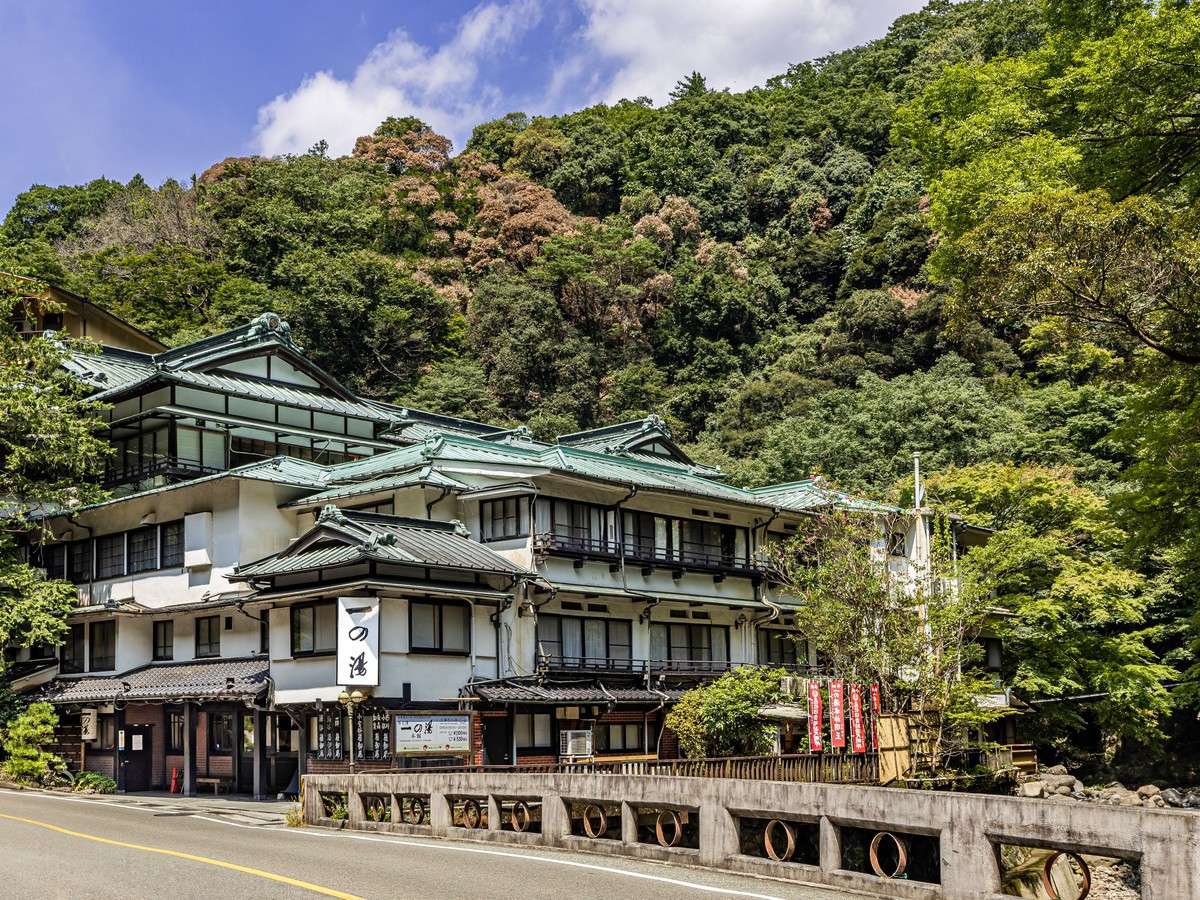
2. Ichinoyu Honkan — Hakone, Kanagawa $70–$160 per person — steps from Hakone-Yumoto station, which means you don't need a taxi from the train. Ichinoyu Honkan is a registered cultural property, built in 1630 and expanded through the Meiji era. The wooden corridors creak in exactly the way you hope they will. Private onsen here is a time-slot arrangement (kashikiri-buro), not an en-suite room, but it counts. See the full [Hakone onsen town](/en/area/hakone) guide for context.

[Check rates on Trip.com](https://www.trip.com/hotels/?allianceid=8201747&keyword=Ichinoyu+Honkan+Hakone){rel="nofollow sponsored noopener"}

3. Yubatake Souan — Kusatsu, Gunma $90–$200 per person — overlooks the yubatake, the famous hot-water field at the center of Kusatsu town where hot-spring water is cooled by wooden paddles before piped distribution. Kusatsu's waters are among the most acidic in Japan (pH around 2.1), which gives them a distinctive tingling quality. Yubatake Souan puts you directly above the source. See our [Kusatsu hot spring town](/en/area/kusatsu) guide for more properties.

[Check rates on Trip.com](https://www.trip.com/hotels/?allianceid=8201747&keyword=Yubatake+Souan+Kusatsu){rel="nofollow sponsored noopener"}

4. Shogetsu — Gero, Gifu $120–$350 per person — riverside setting in Gero, one of Japan's three historically designated great onsen towns (alongside Arima and Kusatsu). At the low end of this range, you're paying mid-tier money for a full kaiseki dinner, private access to the Hida River views from the rotenburo, and one of the most unpretentious onsen towns in Central Honshu. A solid cheap ryokan Japan option for the Gifu region.

[Check rates on Trip.com](https://www.trip.com/hotels/?allianceid=8201747&keyword=Shogetsu+Gero){rel="nofollow sponsored noopener"}

5. Takayama Ouan — Takayama, Gifu $120–$280 per person — Takayama's old merchant-town machiya (townhouse) aesthetic, a kaiseki menu that features Hida beef (the local wagyu), and a private onsen in the $120 low-season entry window. The old town itself is 15 minutes' walk, and the morning market near Jinya ruins sells local pickles and sake that pair well with the previous night's dinner.

[Check rates on Trip.com](https://www.trip.com/hotels/?allianceid=8201747&keyword=Takayama+Ouan){rel="nofollow sponsored noopener"}

6. Hoseikan — Tamatsukuri, Shimane $120–$350 per person — Tamatsukuri Onsen in Shimane Prefecture is known as Japan's "cosmetics spring" — an alkaline sodium bicarbonate spring said to soften and smooth skin after a single soak. Whether or not you believe the cosmetic claims, the water quality is genuinely distinctive, the town is quiet, and the average ryokan price here sits well below the national median. A strong pick if you're traveling through the San'in coast. [Kinosaki area](/en/area/kinosaki) is two hours north and worth adding to the same itinerary.

[Check rates on Trip.com](https://www.trip.com/hotels/?allianceid=8201747&keyword=Hoseikan+Tamatsukuri){rel="nofollow sponsored noopener"}

7. Unzen Kanko Hotel — Unzen, Nagasaki $120–$350 per person — the most architecturally unusual property on this list. Built in 1935 in a Western Colonial style during Unzen's era as a foreign resort destination, it has private onsen alongside the unusual hybrid of tatami rooms and European-style drawing rooms. The Unzen jigoku (volcanic hell vents) are a five-minute walk. [Beppu](/en/area/beppu) is three hours north, with a $350 median but budget-range options at the lower end of its $215 floor that approach this price tier.

[Check rates on Trip.com](https://www.trip.com/hotels/?allianceid=8201747&keyword=Unzen+Kanko+Hotel){rel="nofollow sponsored noopener"}

Tip

**These 7 properties fill up fast on weekends and during peak demand periods.** If your travel dates fall on a Friday or Saturday, book at least 3–4 weeks ahead. For weekday stays at budget and low-mid properties, 7–14 days lead time is usually sufficient. For tips on finding and securing cheap ryokan Japan deals, see our [budget ryokan guide](/en/blog/budget-ryokan-tips).

[Search All Available Ryokans on Trip.com](https://www.trip.com/hotels/?allianceid=8201747){rel="nofollow sponsored noopener"}

FAQ: ryokan prices in Japan

How much does a ryokan cost per night in Japan?

The median rate across our database of 224 ryokans is $315 per person per night (¥48,500 at ¥154/USD). Budget ryokans start from around $35–$120; mid-tier runs $130–$350; luxury is $280–$600+. The full range in our database is $35 to $2,000 per person [Japan Ryokan Guide 224-property analysis, verified 2026-05-19]. Ryokan rates are per person, not per room, and at mid and luxury tiers they typically include dinner and breakfast — which changes the value equation significantly compared to hotel pricing.

Is a ryokan more expensive than a hotel in Japan?

At the midpoint, yes — but ryokans include meals that hotel rates exclude. A $250 per-person ryokan rate covers a multi-course kaiseki dinner and a traditional Japanese breakfast. At a standalone Kyoto restaurant, a comparable kaiseki dinner costs ¥10,000–¥30,000 per person [InsideKyoto.com kaiseki guide, verified 2026-05-19]. Add breakfast and you're looking at $100–$200+ in restaurant costs on top of a hotel room rate. When you account for included meals, mid-tier ryokans are often comparable in total cost to a 4-star business hotel plus dining.

What is the cheapest ryokan in Japan with a private onsen?

Based on our database of 224 ryokans, Hotel Otaki in Nikko is the most affordable property with a private onsen — starting from around $60 per person per night. Only 7 of 224 ryokans (3.1%) offer a private onsen for under $120/night [Japan Ryokan Guide 224-property analysis, verified 2026-05-19]. Other options under $120 include Ichinoyu Honkan in Hakone ($70+) and Yubatake Souan in Kusatsu ($90+). Availability at these three properties in particular is limited — book early, especially for weekend stays.

How much more expensive are ryokans during peak season?

Across 224 properties, the median high rate is 2.4× the low rate [Japan Ryokan Guide 224-property analysis, verified 2026-05-19]. A property starting at $150 typically peaks around $360. The widest single-property band in the database is Dogashima New Ginsui in Izu: $100 to $400, a 300% peak premium. Even the most stable properties still show an 80% peak premium — there is no flat-rate ryokan in this dataset. For exact rates on your specific dates, check Trip.com directly — published ranges are indicative, not guaranteed.

Which onsen area has the best value ryokans?

For value — quality relative to price — [Kinosaki Onsen](/en/area/kinosaki) ($250 median), Gero ($238), and Noboribetsu ($193) consistently deliver mid-tier experiences below the national average. [Kusatsu onsen](/en/area/kusatsu) ($265) offers famous medicinal springs for under the national median of $315. For budget travelers willing to go off the tourist trail, Ibusuki ($170 median) in Kagoshima — known for its sand baths where guests are buried in naturally volcanic-heated black sand — has the lowest area median in the entire database. The [Hakone properties](/en/area/hakone) ($325 median) remain the best luxury-value pick for Tokyo visitors with limited travel time.

Where to go from here

So how much does a ryokan cost? The median $315 per person per night tells you where the market sits. The more useful number is the 57× spread — $35 to $2,000 — which tells you this is a genuinely stratified market where knowing your tier and your area matters more than knowing the average ryokan price.

For most first-time foreign visitors, the mid-tier is the right starting point: $130–$350 per person, 91% of properties English-friendly, 43% with private onsen, kaiseki dinner and breakfast included. The best mid-tier value areas are Kinosaki Onsen and Kusatsu onsen if you want authentic onsen towns; Hakone if you want easy access from Tokyo.

Budget travelers: Ibusuki, Noboribetsu, and the seven private-onsen-under-$120 properties above are your entry points. Book early — especially for weekends. These represent the best cheap ryokan Japan options in the entire database.

Splurge budget: Yufuin and Izu have the highest concentration of luxury boutiques. Expect to pay $425–$558 median and up. The kaiseki at the top end of this range is genuinely exceptional — multi-course meals built around seasonal ingredients that change monthly, presented by chefs who trained for years in the kaiseki tradition. The price is real. So is the gap between that dinner and anything you'll find outside a top-tier ryokan.

Only 7 properties in the entire 224-ryokan database offer a private onsen under $120/night. If that combination is your priority, act early — that window closes fast.

[Browse All 224 Ryokans by Area and Price Tier](/en/ryokans)

"旅馆"这个词承载的内涵,远比看上去复杂得多。它既可以是渔村古宅改造的每晚 $35 民宿,也可以是山顶别墅式旅馆——价格高达每晚 $2,000,私人管家会在晚餐前为你备好桧木浴桶。两者都是正宗的日式旅馆(日式旅馆,英文为 ryokan),也都在 Trip.com 上有售。

这 57 倍的价差,正是"日式旅馆到底要多少钱"这个看似简单的问题,从来没有简单答案的原因。先给出核心数字:224 家旅馆的人均每晚中位价为 $315(¥48,500,¥154/$1,截至 2026 年 5 月)[Japan Ryokan Guide 224-property analysis, verified 2026-05-19]。如果你人均预算在 ¥50,000 左右,你正好处于市场中间位置——既不算奢靡,也不算将就。但如果你的预算是 $120 或 $600,在日本 25 个温泉地区里,同样的钱能买到的体验差别会非常大。

本文梳理了每个地区、每个价位区间,以及对应的设施和服务——让你的预算决策建立在真实数字上,而不是模糊印象。

数据来源:25 个温泉地区共 224 家已发布旅馆,价格区间已根据 Trip.com 和各旅馆官网数据核实,截至 2026 年第一季度。价格为每人每晚,中高档价位包含晚餐和早餐(详见下文"价格包含哪些内容"一节)。所有旅馆中价格居中的 50% 分布在 $200 至 $425 之间 [Japan Ryokan Guide 224-property analysis, verified 2026-05-19]。

60 秒快速答案:2026 年旅馆住宿费用

如果你只看本文一张表,就看这张。

档次旅馆数量低价中位数中间价中位数高价中位数
**经济型**31 家(13.8%)$70 / ¥10,800$115 / ¥17,700$160 / ¥24,600
**中档**99 家(44.2%)$130 / ¥20,000$250 / ¥38,500$350 / ¥53,900
**豪华型**94 家(42.0%)$280 / ¥43,100$450 / ¥69,300$600 / ¥92,400

[Japan Ryokan Guide 224-property analysis, verified 2026-05-19. USD/JPY: ¥154(日本银行东京中间汇率参考,2026 年 5 月)。日元数字四舍五入至百位。]

有三点需要提前说清楚。

第一,价格按人计算,不是按房间。 几乎所有竞争对手的文章都含糊带过这一点,这也是同一家旅馆在不同平台上看起来忽贵忽便宜的主要原因。两人入住、每人 $250 的话,一间房就是 $500——比东京新宿的商务酒店贵,但这个价格已经包含了多道菜的怀石料理晚餐和早餐,这些在酒店餐厅另算得多花 $100–$200。

第二,本数据库的价格区间是 $35(伊豆 K's House Ito Onsen)到 $2,000(由布院 Sanso Murata) [Japan Ryokan Guide 224-property analysis, verified 2026-05-19]。57 倍的差距不是异常值——它真实反映了同一个名称下截然不同的体验类别。

第三,中档旅馆占所有旅馆的 44%。 以中位价 $250 计,这是大多数外国游客最实际的入门选择:91% 的中档旅馆对英语友好,43% 含独立温泉浴室,标准配备包含正式怀石料理晚餐 [Japan Ryokan Guide 224-property analysis, verified 2026-05-19]。

关于如何找到最划算的经济型旅馆,请参阅我们的 [经济型旅馆攻略](/zh/blog/budget-ryokan-tips)。

数据来源:224 家旅馆、25 个温泉地区

在你相信本文任何一个数字之前,你应该先了解数据是怎么来的。

我们建立并持续维护了一个收录 japanryokanguide.com 上所有旅馆的精选数据库——224 家旅馆,覆盖 25 个温泉地区、8 个大区。每家旅馆都有一个人均每晚的低价和高价(美元),已手动对照 Trip.com 和各旅馆官网公布的价格单进行核实,最近一次核实完成于 2026 年第一季度。

这份数据代表什么: 224 家具体旅馆的已公布价格区间横截面。它告诉你旅馆实际收费标准——按地区、按档次、按设施。

这份数据不代表什么: 它不是实时交易数据库。我们没有针对特定出行日期的每日价格抓取。每家旅馆的高低价反映的是跨房型和旺淡季的完整已公布区间——这是我们在没有实时抓取系统的情况下,能提供的最诚实的季节性价差参考。

Tip

**方法说明与局限性。** 价格数据来自 japanryokanguide.com 对 25 个温泉地区 224 家旅馆的精选数据库。每家旅馆均有一个人均每晚美元低价和高价,已手动对照已公布价格单(Trip.com、官网)核实,截至 2026 年第一季度。这些是代表性的已公布区间,不是实时交易价格——特定日期的实际价格会有出入。美元/日元换算采用 ¥154/USD(日本银行东京中间汇率参考,2026 年 5 月)。样本量 n≤6 的地区(奈良 n=5,指宿 n=5,白骨 n=6)已用星号标注——其中位数仅供参考,置信区间较宽。如需查询特定日期的实时价格,请直接查询 Trip.com 或旅馆官网。数据来源:[日本银行外汇统计](https://www.boj.or.jp/statistics/index.htm) | [日本观光厅住宿统计](https://www.mlit.go.jp/kankocho/siryou/toukei/shukuhakutoukei.html)

一个有用的外部参照:日本旅馆协会(Japan Ryokan Association)会员旅馆的人均价格区间为 ¥5,000 至 ¥119,000 [Japan Ryokan Association, verified 2026-05-19]。我们数据库的范围稍宽——$35 至 $2,000(约 ¥5,400 至 ¥308,000)——因为涵盖了少数不属于日本旅馆协会的超豪华旅馆和将自身归类为旅馆的经济型民宿。

外国游客目前占旅馆住客总数的 14.8%,高于 2019 年的 9.9% [Japan Tourism Agency inbound consumption survey 2024, via FindMyRyokan]。如果你是外国游客,本文中关于英语友好度的数据和中档旅馆的信息,与你的实际住宿体验直接相关。

按地区和温泉地统计的旅馆价格

我们 224 家旅馆数据集最大的价值,在于竞争对手文章都做不到的一点:为日本 25 个主要温泉地区提供实际中位价格——而不是"实惠"或"值得奢侈"之类的模糊标签。

价格区间比大多数游客预想的要宽很多。伊豆旅馆人均均价为每晚 $558——是指宿 $170 的 3.3 倍 [Japan Ryokan Guide 224-property analysis, verified 2026-05-19]。两地都是正宗的温泉目的地,差距来自奢华精品旅馆的集聚程度、与大城市的距离,以及高端怀石料理的集中度。

图 1

25 个温泉地区旅馆价格分布

Box plot showing median, Q1, Q3, and min/max price range for 224 ryokans across 25 onsen areas, sorted by median descending. Izu has the highest median at $558; Ibusuki the lowest at $170.

来源: japanryokanguide.com 精选数据库 — 224 家旅馆,2026 年第一季度

查看原始数据
Ryokan price distribution by onsen area — median, Q1, Q3, min, max (USD/person/night)
Onsen AreaMedian USDQ1 USDQ3 USDMin USDMax USD

以下是完整的 25 地区详情——这张表你在其他地方找不到。

排名地区大区样本量价格区间(美元)中位价(美元)中位价(日元)档次构成(经济/中档/豪华)
1伊豆中部12$67–$1,050**$558**¥85,9001/6/5
2由布院九州11$220–$1,350**$425**¥65,5000/4/7
3有马关西9$175–$625**$400**¥61,6000/4/5
4白骨*中部6$150–$450**$375**¥57,8000/4/2
5黑川九州10$250–$1,050**$363**¥55,9000/4/6
6银山东北8$290–$700**$350**¥53,9000/5/3
7别府九州8$215–$650**$350**¥53,9000/4/4
8日光关东9$105–$650**$350**¥53,9001/4/4
9高山中部8$130–$850**$350**¥53,9000/4/4
10宫岛中国地方7$100–$625**$340**¥52,4001/2/4
11箱根关东13$115–$850**$325**¥50,1002/5/6
12玉造中国地方9$140–$425**$315**¥48,5001/6/2
13道后四国10$130–$575**$303**¥46,7001/6/3
14奈良*关西5$175–$700**$275**¥42,4000/4/1
15草津关东9$145–$600**$265**¥40,8001/4/4
16和倉中部10$115–$800**$258**¥39,7001/7/2
17城崎关西9$130–$650**$250**¥38,5000/7/2
18京都关西15$95–$850**$250**¥38,5002/7/6
19藏王东北8$105–$400**$243**¥37,4001/6/1
20下吕中部10$100–$475**$238**¥36,7001/6/3
21云仙九州7$130–$425**$235**¥36,2001/5/1
22登别北海道10$90–$650**$193**¥29,7002/5/3
23东京关东9$80–$1,050**$175**¥27,0005/1/3
24金泽中部7$85–$575**$175**¥27,0003/2/2
25指宿*九州5$105–$475**$170**¥26,2001/3/1

*样本量 n≤6 的地区置信区间较宽,中位数仅供参考。 [Japan Ryokan Guide 224-property analysis, verified 2026-05-19]

图 2

价格最高的 10 个温泉地区 vs. 价格最亲民的 10 个温泉地区
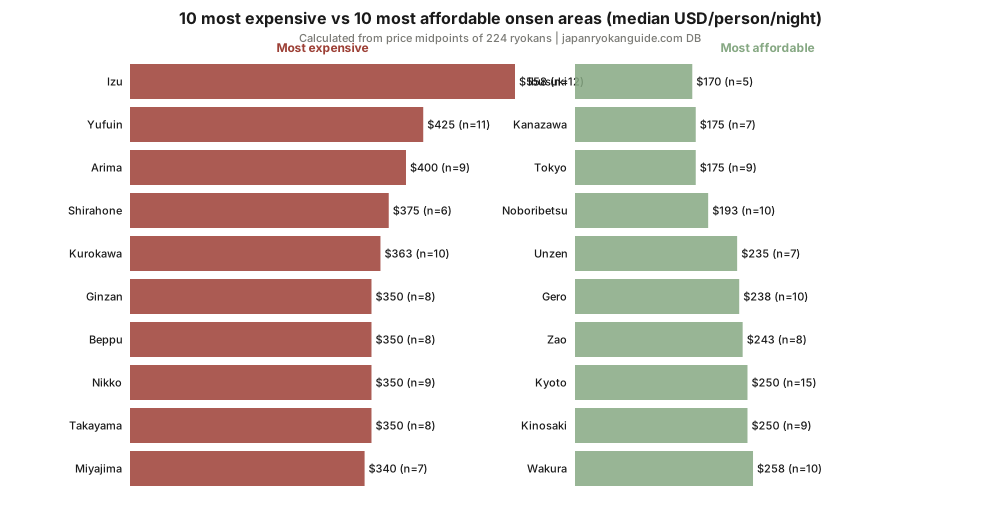
Side-by-side horizontal bar chart comparing the 10 most expensive onsen areas (vermilion) and 10 most affordable (green). Izu leads at $558 median; Ibusuki sits at $170 median.

来源: japanryokanguide.com 精选数据库 — 224 家旅馆,2026 年第一季度

查看原始数据
Most expensive vs most affordable onsen areas by median nightly rate (USD/person)
CategoryOnsen AreaMedian USDn

如需了解如何根据价格波动规律安排出行时间,请参阅 [最佳旅馆入住季节指南](/zh/blog/best-season-ryokan)。

高价集中带:伊豆、由布院、有马

这三个地区在日本豪华型旅馆库存中占据不成比例的份额,价格自然也反映了这一点。

伊豆(静冈县,距东京 2–3 小时)数据库中有 12 家旅馆,其中 5 家属于豪华型。滨海环境、从东京直达的新干线,以及精品怀石料理旅馆的集聚,共同推高了平均价格。[箱根地区指南](/zh/area/hakone) 介绍了排名第 11 位(中位价 $325)的替代选择——13 家旅馆,价格区间从 $115 到 $850 一应俱全,东京出行的游客无需长途奔波。

由布院(大分县)是数据中对比最鲜明的地区:11 家旅馆,其中 7 家豪华型,已公布价格区间 $220 至 $1,350。这个价格上限是所有地区中最高的(东京那个 $1,050 上限只是某一家超豪华城市旅馆拉高的异常值)。由布院的艺术旅馆风格——规模小、常由建筑师操刀设计、菜单随季节更换——推高了价格,而当地没有大型度假村式酒店也使整体容量偏低。

有马(兵库县,距大阪 30 分钟)是日本三大古老温泉町之一,与道后和草津并列。9 家旅馆,5 家豪华型。靠近大阪和京都,让它成为国际行程中常见的一日加夜顺路游目的地,这也支撑了高于全国中位数的价格。

超值地区:北海道、东北、北九州

预算有限不代表就要牺牲温泉体验。这些地区在整个数据集里提供了最好的性价比。

登别(北海道,中位价 $193)的价格受大型度假村式旅馆驱动——这类旅馆拥有多处公共和半私人浴场、中档价位的怀石风晚餐,以及附近壮观的地狱谷火山地貌。整个数据库中价格波动最大的前十名里,有四家都在登别——这说明这类大型旅馆在工作日和旺季之间的价格弹性非常大。对于想在北海道寻找平价旅馆的旅行者,登别是最可靠的起点。

[草津温泉](/zh/area/kusatsu)(中位价 $265,排名第 15)是关东地区性价比最强的中档选择。其硫磺酸泉是日本酸性最高的温泉之一(pH 约 2.1),长期被认为具有养生功效,无需支付豪华旅馆的价格就能体验。其中一家旅馆 Yubatake Souan 起价仅 $90,仍提供独立私汤。

[城崎温泉](/zh/area/kinosaki)(中位价 $250,排名第 17)是关西的超值之选。9 家旅馆中有 7 家属于中档,让你能以远低于 $300 的人均价格体验传统的七汤巡浴文化——穿着浴衣在户外露天浴场之间穿行。这里是少数入住后无需额外付费就能自由探索整条街区的温泉地之一——柳树成行的运河街景全程免费。

按档次拆解:$115、$250、$450 每晚分别能得到什么

中位数很重要,但真正支撑预算决策的是设施数据。

设施经济型(¥10k–¥24k)中档(¥20k–¥54k)豪华型(¥43k–¥92k+)
低价中位数$70 / ¥10,800$130 / ¥20,000$280 / ¥43,100
中间价中位数**$115 / ¥17,700****$250 / ¥38,500****$450 / ¥69,300**
高价中位数$160 / ¥24,600$350 / ¥53,900$600 / ¥92,400
独立私汤10%43%81%
英语友好65%**91%**84%
素食餐饮10%51%72%
邻近车站71%65%57%
清真餐饮0%0%0%
平均客房数24 间67 间41 间
温泉配置共用大浴场共用 + 独立混合以独立私汤为主
怀石料理风格简化多道菜完整多道怀石料理完整多道怀石料理,常用本地优质食材

[Japan Ryokan Guide 224-property analysis, verified 2026-05-19]

这张表里有几点值得特别关注。

独立私汤是档次梯度最陡的设施: 经济型 10%、中档 43%、豪华型 81%——从经济到豪华整整差 8 倍 [Japan Ryokan Guide 224-property analysis, verified 2026-05-19]。如果独立私汤是你的刚需,实际入门门槛是中档,即便如此也不是每家都有。关于已确认含独立私汤的旅馆,请参阅我们的专题推荐 [含独立私汤的精选旅馆](/zh/blog/best-ryokans-private-onsen)。

英语友好度在中档最高(91%),反而高于豪华型(84%) [Japan Ryokan Guide 224-property analysis, verified 2026-05-19]。这个结果起初让我们有点意外。实际解释是:热门地区的中档旅馆主动招揽国际游客,投入了多语种员工和翻译菜单。不少豪华旅馆——尤其是由布院和黑川的小型精品旅馆——主要面向国内高净值客群,对英语接待的基础设施投入有限。预订前最好先确认。

清真餐饮:224 家中零家提供 [Japan Ryokan Guide 224-property analysis, verified 2026-05-19]。这是真实的空缺,不是疏漏。传统怀石料理的格式——使用高汤(以鱼为基底)并常含猪肉类菜肴——从结构上就很难适配清真要求。穆斯林旅行者应直接联系旅馆;有些旅馆可应要求提供简单的素食或纯海鲜餐,但本数据集中无任何认证记录。

车站距离与价格成反比: 经济型旅馆离车站最近(71%),豪华型最远(57%)。豪华旅馆用交通便利换来了僻静山谷的环境——这意味着往返旅馆的交通费用需要计入实际旅行成本。

关于精选豪华旅馆推荐,请参阅 [日本豪华旅馆指南](/zh/blog/luxury-ryokans-japan)。

图 3

各价位旅馆数量分布——按档次

Stacked histogram showing count of ryokans in $50 price bins from $0 to $1,400, colored by tier. Mid-tier dominates the $150–$350 range. Luxury properties extend into $400–$700 with a long tail above $800.

来源: japanryokanguide.com 精选数据库 — 224 家旅馆,2026 年第一季度

查看原始数据
Count of ryokans by midpoint price bin ($50 intervals) and tier
Price bin (USD)Budget countMid countLuxury countTotal

图 4

独立私汤、英语支持、素食餐饮、邻站比例——按档次

Horizontal grouped bar chart showing percentage of ryokans offering private onsen, English friendliness, vegetarian meals, and near-station location across budget, mid, and luxury tiers. Private onsen climbs from 10% in budget to 81% in luxury.

来源: japanryokanguide.com 精选数据库 — 224 家旅馆,2026 年第一季度

Feature availability by price tier (% of properties)
FeatureBudget %Mid %Luxury %

关于价格包含哪些内容

拿旅馆每晚价格和酒店价格直接比较,最难的地方就在于价格里装的东西不一样。经济型档次最不统一: 有些旅馆含简化多道菜晚餐,有些只提供房间(素泊方案)。预订前一定要确认——这个差异真的很重要。

中档和豪华型档次,住宿费几乎总是包含:一晚榻榻米传统客房、两顿餐食(怀石料理晚餐和日式早餐)。浴衣、拖鞋、室内抹茶、室内外公共浴池的使用权均为标配。标价之外额外收费的项目比你想象的多——下一节详细说。

在京都单独享用一顿怀石料理,费用约为 ¥10,000–¥30,000/人(不含酒水),米其林星级怀石可达 ¥20,000–¥50,000 以上 [InsideKyoto.com kaiseki guide, verified 2026-05-19; Bespoke Discovery luxury dining guide, verified 2026-05-19]。因此,$250/晚含两顿怀石级别餐食的中档旅馆,在结构上比单独在外用餐两次加上酒店房费更划算。

[在 Trip.com 浏览中档旅馆](https://www.trip.com/hotels/?allianceid=8201747&sid=RYOKAN_MIDTIER){rel="nofollow sponsored noopener"}

价格波动幅度:每家旅馆的旺淡季价差

图 5

每家旅馆的低价与高价——旺淡季价差散点图
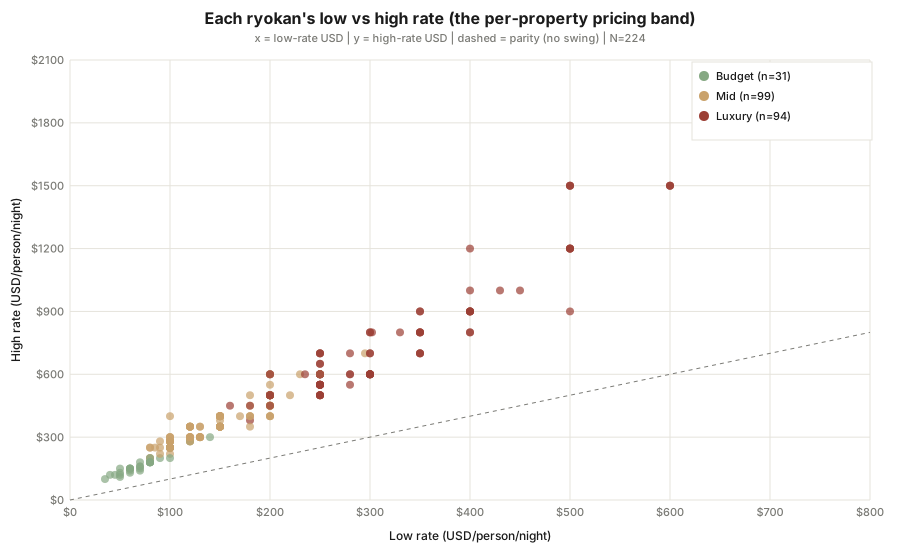
Scatter plot with each of 224 ryokans plotted by low rate on x-axis and high rate on y-axis. Dots above the parity diagonal indicate peak-premium. Budget properties cluster bottom-left; luxury top-right. Several luxury outliers extend to $1,350–$2,000 on the y-axis.

来源: japanryokanguide.com 精选数据库 — 224 家旅馆,2026 年第一季度

查看原始数据
Sample of 25 ryokans showing per-property pricing band — low rate, high rate, and peak premium
PropertyTierLow (USD)High (USD)Peak premium

在 224 家旅馆中,高价中位数是低价中位数的 2.4 倍 [Japan Ryokan Guide 224-property analysis, verified 2026-05-19]。一家淡季起价 $130 的旅馆,在旺季通常会涨到约 $312。这个比例在各档次间保持得相当稳定:经济型波动中位数约 +130%,豪华型约 +120%——两个档次的价格弹性基本都在 2.2–2.4 倍之间,与起始价格关系不大。

数据库中波动最大的旅馆是伊豆的 Dogashima New Ginsui:$100 到 $400,旺淡季内部价差高达 300% [Japan Ryokan Guide 224-property analysis, verified 2026-05-19]。它属于中档旅馆——规模足够大,可以在工作日执行低价策略,同时在节假日周末大幅溢价。

这一规律也解释了一个值得注意的地区现象:波动最大的前十名旅馆里,有四家集中在登别 [Japan Ryokan Guide 224-property analysis, verified 2026-05-19]。大型度假村式旅馆的价格弹性远大于精品小旅馆——它们用一个价格维持工作日基础库存,用另一个价格推出节假日宴会套餐,两者之间的价差就是波动幅度的来源。即便数据库中价格最稳定的旅馆,旺季溢价也有 80%——没有任何一家旅馆是全年一口价。

上表展示了波动最大的前十家旅馆和部分代表性旅馆。图 5 的散点图则把每家旅馆的低价对应高价都画了出来,让你清楚看到自己关注的旅馆在整体市场中的位置。

Tip

**实用经验法则:** 用旅馆公布的低价乘以 2.4,估算旺季高峰期的可能价格。如果一家旅馆标注起价 $200,就在旺季预算里预留 $480。如需查询具体出行日期的实际价格,请直接查询 Trip.com——公布的价格区间只是参考,不是保证。

外国游客容易忽略的隐性费用

预订时看到的价格,很少是最终账单。以下是会额外加收的费用——附具体金额。

全国消费税(10%) 已包含在 Trip.com、Booking.com 和旅馆官网公布的价格里。这一项不会有惊喜——已含税 [TravelClassroom.net Japan Accommodation Tax Guide, verified 2026-05-19]。

入汤税(入湯税) 大多数温泉町通常为每人每晚 ¥150,在退房时收取,不含在线价格中。登别、阿寒湖及部分伊豆旅馆收取 ¥300。由布院根据旅馆申报的房价不同,收取 ¥150–¥2,500 [TravelClassroom.net Japan Bathing Tax Complete Guide 2026, verified 2026-05-19]。金额虽小,但令人意外的是各大预订平台完全不提这件事。

城市和都道府县住宿税(宿泊税) 才是真正藏猫腻的地方。截至 2026 年 3 月 1 日,京都实行阶梯税制:

京都房价(每人)住宿税
¥6,000 以下¥200
¥6,000–¥19,999¥400
¥20,000–¥49,999¥1,000
¥50,000–¥99,999¥4,000
¥100,000 以上¥10,000

[Japanspecialist.com — Kyoto hotel tax 2026, effective March 1, 2026]

在一家每人收费 ¥80,000 的京都豪华旅馆,住宿税就要每人每晚 ¥4,000,还在其他费用之上。目前已有 17 个都道府县和城市实行了某种形式的住宿税 [MATCHA Japan Accommodation Tax Guide 2026, verified 2026-05-19]。东京每人每晚加收 ¥100–¥200(¥10,000/晚以下免征);大阪加收 ¥200–¥500。

这些政府征收的税款用于支持当地基础设施建设,在旅馆现场支付。下一类费用则完全不同——是旅馆自己定的,不是地方政府。

服务费 是各旅馆自主裁量空间最大的一项。许多传统旅馆会额外收取 10–15% 的服务费(含 24 小时服务和仲居,即客房服务员的工作报酬);超豪华旅馆可能收取 20–25%。这不是固定法定费率——按旅馆各有不同,部分经济型和中档旅馆已将服务费折入公布的人均价格。预订时务必确认 [multiple travel publishers, industry practice consensus — not a legally mandated rate, verified 2026-05-19]。

房型升级附加费 适用于高级客房:独栋别墅、海景房或超大套房类别通常比基础价格高出 30–60%。公布的"起价"对应的是最小的房型。

晚餐酒水 几乎从不包含在半膳方案中。如果在怀石料理晚餐中点清酒、啤酒或烧酒,预计每人需额外花费 ¥2,000–¥5,000。高端旅馆对中档价位酒水通常有较高加价。

儿童价格: 3–12 岁儿童通常按成人价的 50–70% 收费。3 岁以下一般免费(不含餐食,共用被褥)。

Tip

**预订前务必向旅馆确认每人的全包总价。** 豪华旅馆的标价在加上住宿税、服务费和晚餐酒水后,最终账单可能比标价高出 20–30%。举个具体例子:一家每人 ¥80,000 的京都旅馆,加上 ¥4,000 京都住宿税、¥150 入汤税和 ¥10,000 另计服务费,合计 ¥94,150——比标价高出 18%。

7 家真正的超值旅馆:私汤 + 怀石料理,每晚不超过 $120

224 家旅馆中,仅有 7 家——占全数据库 3.1%——能以每人每晚不超过 $120 提供独立私汤 [Japan Ryokan Guide 224-property analysis, verified 2026-05-19]。这真的很稀有。以下名单是完整列表:数据库中没有其他旅馆同时满足这两个条件。

1. Hotel Otaki — 日光,栃木县 起价 每人每晚 $60(公布区间 $60–$150),是整个 224 家数据库中价格最低的私汤旅馆 [Japan Ryokan Guide 224-property analysis, verified 2026-05-19]。这是日光神社寺院林区里的一家经济型旅馆——环境朴素,谈不上奢华,但私人浴室货真价实,日光的自然人文氛围是日本数一数二的,性价比的空间是真实存在的。周末需提前预订。

[在 Trip.com 查看价格](https://www.trip.com/hotels/?allianceid=8201747&keyword=Hotel+Otaki+Nikko){rel="nofollow sponsored noopener"}

2. Ichinoyu Honkan — 箱根,神奈川县 每人 $70–$160 — 就在箱根汤本站旁,下车不用打车。一之汤本馆是注册文化财产,建于 1630 年,江户至明治时期多次扩建。走在吱吱作响的木质走廊上,那种感觉正是你期待的。这里的私汤是时段制包租浴(包租浴),不是套间内设,但同样算数。完整背景请参阅 [箱根温泉町指南](/zh/area/hakone)。

[在 Trip.com 查看价格](https://www.trip.com/hotels/?allianceid=8201747&keyword=Ichinoyu+Honkan+Hakone){rel="nofollow sponsored noopener"}

3. Yubatake Souan — 草津,群马县 每人 $90–$200 — 俯瞰草津町中心的名景"汤畑"——温泉热水在这里通过木桨搅拌散热后再管道分流。草津温泉是日本酸性最强的温泉之一(pH 约 2.1),泡起来有一种独特的微微刺痛感。Yubatake Souan 就坐落在源头正上方。更多旅馆信息请参阅 [草津温泉地区指南](/zh/area/kusatsu)。

[在 Trip.com 查看价格](https://www.trip.com/hotels/?allianceid=8201747&keyword=Yubatake+Souan+Kusatsu){rel="nofollow sponsored noopener"}

4. Shogetsu — 下吕,岐阜县 每人 $120–$350 — 河畔环境,位于下吕温泉。下吕是日本历史上三大名泉之一(与有马、草津并列)。在这个价位的低端,你用中档的钱就能享受完整怀石料理晚餐、飞騨川河景露天风吕,以及本州中部最朴实无华的温泉街氛围。对于想在岐阜地区寻找平价旅馆的旅行者,这是个扎实的选择。

[在 Trip.com 查看价格](https://www.trip.com/hotels/?allianceid=8201747&keyword=Shogetsu+Gero){rel="nofollow sponsored noopener"}

5. Takayama Ouan — 高山,岐阜县 每人 $120–$280 — 高山老街的古商家(町家)风格,菜单主打飞騨牛(当地和牛),淡季入住价格低至 $120 就有独立私汤。古街距旅馆步行 15 分钟,陣屋遗址附近的早市出售本地泡菜和清酒,搭配前一晚的晚餐余韵绝配。

[在 Trip.com 查看价格](https://www.trip.com/hotels/?allianceid=8201747&keyword=Takayama+Ouan){rel="nofollow sponsored noopener"}

6. Hoseikan — 玉造,岛根县 每人 $120–$350 — 岛根县玉造温泉以"美肌之汤"著称——碱性碳酸氢钠温泉据说泡一次就能让皮肤变得柔滑细腻。不管你是否相信这个说法,水质确实与众不同,小镇环境清幽,当地旅馆均价远低于全国中位数。如果你行程经过山阴海岸,这是个优质选择。[城崎温泉地区](/zh/area/kinosaki) 在两小时车程以北,值得纳入同一行程。

[在 Trip.com 查看价格](https://www.trip.com/hotels/?allianceid=8201747&keyword=Hoseikan+Tamatsukuri){rel="nofollow sponsored noopener"}

7. Unzen Kanko Hotel — 云仙,长崎县 每人 $120–$350 — 这是名单里建筑风格最独特的旅馆。建于 1935 年,当时云仙正值外国度假胜地全盛期,旅馆采用西洋殖民地风格,私汤之外还融合了榻榻米客房与欧式沙龙的罕见混搭。云仙地狱(火山喷气孔群)步行五分钟可到。[别府](/zh/area/beppu) 在三小时车程以北,中位价 $350,但 $215 的价格下限中有些旅馆接近这个档次。

[在 Trip.com 查看价格](https://www.trip.com/hotels/?allianceid=8201747&keyword=Unzen+Kanko+Hotel){rel="nofollow sponsored noopener"}

Tip

**这 7 家旅馆在周末和旺季高峰期非常容易订满。** 如果你的出行日期在周五或周六,请至少提前 3–4 周预订。经济型和中档偏低旅馆的工作日入住,提前 7–14 天通常够用。关于如何找到日本平价旅馆的技巧,请参阅我们的 [经济型旅馆攻略](/zh/blog/budget-ryokan-tips)。

[在 Trip.com 浏览全部 224 家旅馆](https://www.trip.com/hotels/?allianceid=8201747){rel="nofollow sponsored noopener"}

常见问题:日本旅馆价格

日本旅馆一晚要多少钱?

我们 224 家旅馆数据库的人均每晚中位价为 $315(¥48,500,¥154/$1,截至 2026 年 5 月)。经济型旅馆起价约 $35–$120;中档区间为 $130–$350;豪华型为 $280–$600+。数据库完整价格区间为每人 $35 至 $2,000 [Japan Ryokan Guide 224-property analysis, verified 2026-05-19]。旅馆价格按人计算,不是按房间,中档和豪华型通常含晚餐和早餐——这与酒店定价逻辑差异很大,会显著改变性价比的评估方式。

旅馆比日本酒店贵吗?

按中间价格来看,是的——但旅馆含酒店不含的餐食。$250/人的旅馆价格包含多道菜的怀石料理晚餐和日式早餐。在京都单独吃一顿同等水准的怀石料理,费用约为 ¥10,000–¥30,000/人 [InsideKyoto.com kaiseki guide, verified 2026-05-19]。再加早餐,餐饮单独计算就要 $100–$200 以上,还不包含酒店房费。综合含餐因素,中档旅馆在总花费上往往与四星商务酒店加外出用餐持平。

日本带私汤的旅馆哪家最便宜?

根据我们 224 家旅馆的数据库,日光的 Hotel Otaki 是含私汤的最实惠旅馆,起价约每人每晚 $60。224 家旅馆中仅有 7 家(3.1%)以每晚不超过 $120/人的价格提供独立私汤 [Japan Ryokan Guide 224-property analysis, verified 2026-05-19]。其他 $120 以下的选项还有箱根的 Ichinoyu Honkan($70 起)和草津的 Yubatake Souan($90 起)。这三家的预订空间尤为有限——特别是周末,请尽早预订。

旺季旅馆价格会涨多少?

在 224 家旅馆中,高价中位数是低价中位数的 2.4 倍 [Japan Ryokan Guide 224-property analysis, verified 2026-05-19]。起价 $150 的旅馆,高峰期通常涨至约 $360。数据库中旺淡季价差最大的旅馆是伊豆的 Dogashima New Ginsui:$100 到 $400,峰值溢价 300%。即便是最稳定的旅馆,旺季溢价也有 80%——本数据集中没有任何全年一口价的旅馆。如需查询特定出行日期的准确价格,请直接查询 Trip.com——公布区间只是参考。

哪个温泉地区的旅馆性价比最高?

综合价格与品质来看,[城崎温泉](/zh/area/kinosaki)(中位价 $250)、下吕($238)和登别($193)的中档体验均低于全国均价。[草津温泉](/zh/area/kusatsu)($265)以全国中位价 $315 以下的价格提供著名的疗养温泉。对于愿意走出热门路线的经济型旅行者,鹿儿岛指宿(中位价 $170)是整个数据库中地区中位价最低的目的地——以独特的砂蒸浴闻名(游客被埋入由火山热能自然加热的黑色砂中)。[箱根旅馆](/zh/area/hakone)(中位价 $325)依然是时间有限的东京游客的最佳豪华性价比选择。

下一步怎么走

日式旅馆住一晚要多少钱?每人每晚中位价 $315 告诉你市场在哪里。更有用的数字是那个 57 倍的价差——$35 到 $2,000——它告诉你这是一个真正分层的市场,知道自己处于哪个档次、选哪个地区,比知道旅馆平均价格重要得多。

对于大多数第一次来日本的外国游客,中档是最合适的起点:每人 $130–$350,91% 的旅馆英语友好,43% 含独立私汤,含怀石料理晚餐和早餐。如果你想体验正宗温泉小镇,中档最超值的地区是城崎温泉和草津温泉;如果你想方便从东京出发,首选箱根。

预算有限的旅行者:指宿、登别,以及上面列出的七家私汤旅馆(每晚不超过 $120)是你的入门选项。提前订——尤其是周末。这些代表了整个数据库中日本平价旅馆的最佳选择。

大手笔预算:由布院和伊豆的豪华精品旅馆最为集中,预期支付中位价 $425–$558 甚至更高。这个价位顶端的怀石料理是真正卓越的体验——多道菜餐食围绕每月更换的当季食材构建,由经过多年怀石料理专业训练的厨师呈现。这个价格是真实的,那顿晚餐与任何非顶级旅馆能提供的差距也是真实的。

整个 224 家旅馆数据库中,仅有 7 家同时满足私汤与每晚不超过 $120/人的条件。如果这个组合是你的优先目标,请尽快行动——这个窗口很快就会关上。

[按地区和价格档次浏览全部 224 家旅馆](/zh/ryokans)

FAQ

Frequently asked questions

How much does a ryokan cost per night in Japan?+

The median rate across our database of 224 ryokans is **$315 per person per night** (¥48,500 at ¥154/USD). Budget ryokans start from around $35–$120; mid-tier runs $130–$350; luxury is $280–$600+. The full range in our database is $35 to $2,000 per person [Japan Ryokan Guide 224-property analysis, verified 2026-05-19]. Ryokan rates are per person, not per room, and at mid and luxury tiers they typically include dinner and breakfast — which changes the value equation significantly compared to hotel pricing.

Is a ryokan more expensive than a hotel in Japan?+

At the midpoint, yes — but ryokans include meals that hotel rates exclude. A $250 per-person ryokan rate covers a multi-course kaiseki dinner and a traditional Japanese breakfast. At a standalone Kyoto restaurant, a comparable kaiseki dinner costs ¥10,000–¥30,000 per person [InsideKyoto.com kaiseki guide, verified 2026-05-19]. Add breakfast and you're looking at $100–$200+ in restaurant costs on top of a hotel room rate. When you account for included meals, mid-tier ryokans are often comparable in total cost to a 4-star business hotel plus dining.

What is the cheapest ryokan in Japan with a private onsen?+

Based on our database of 224 ryokans, Hotel Otaki in Nikko is the most affordable property with a private onsen — starting from around $60 per person per night. Only 7 of 224 ryokans (3.1%) offer a private onsen for under $120/night [Japan Ryokan Guide 224-property analysis, verified 2026-05-19]. Other options under $120 include Ichinoyu Honkan in Hakone ($70+) and Yubatake Souan in Kusatsu ($90+). Availability at these three properties in particular is limited — book early, especially for weekend stays.

How much more expensive are ryokans during peak season?+

Across 224 properties, the median high rate is **2.4× the low rate** [Japan Ryokan Guide 224-property analysis, verified 2026-05-19]. A property starting at $150 typically peaks around $360. The widest single-property band in the database is Dogashima New Ginsui in Izu: $100 to $400, a 300% peak premium. Even the most stable properties still show an 80% peak premium — there is no flat-rate ryokan in this dataset. For exact rates on your specific dates, check Trip.com directly — published ranges are indicative, not guaranteed.

Which onsen area has the best value ryokans?+

For value — quality relative to price — [Kinosaki Onsen](/en/area/kinosaki) ($250 median), Gero ($238), and Noboribetsu ($193) consistently deliver mid-tier experiences below the national average. [Kusatsu onsen](/en/area/kusatsu) ($265) offers famous medicinal springs for under the national median of $315. For budget travelers willing to go off the tourist trail, Ibusuki ($170 median) in Kagoshima — known for its sand baths where guests are buried in naturally volcanic-heated black sand — has the lowest area median in the entire database. The [Hakone properties](/en/area/hakone) ($325 median) remain the best luxury-value pick for Tokyo visitors with limited travel time. ---

日本旅馆一晚要多少钱?+

我们 224 家旅馆数据库的人均每晚中位价为 **$315**(¥48,500,¥154/$1,截至 2026 年 5 月)。经济型旅馆起价约 $35–$120;中档区间为 $130–$350;豪华型为 $280–$600+。数据库完整价格区间为每人 $35 至 $2,000 [Japan Ryokan Guide 224-property analysis, verified 2026-05-19]。旅馆价格按人计算,不是按房间,中档和豪华型通常含晚餐和早餐——这与酒店定价逻辑差异很大,会显著改变性价比的评估方式。

旅馆比日本酒店贵吗?+

按中间价格来看,是的——但旅馆含酒店不含的餐食。$250/人的旅馆价格包含多道菜的怀石料理晚餐和日式早餐。在京都单独吃一顿同等水准的怀石料理,费用约为 ¥10,000–¥30,000/人 [InsideKyoto.com kaiseki guide, verified 2026-05-19]。再加早餐,餐饮单独计算就要 $100–$200 以上,还不包含酒店房费。综合含餐因素,中档旅馆在总花费上往往与四星商务酒店加外出用餐持平。

日本带私汤的旅馆哪家最便宜?+

根据我们 224 家旅馆的数据库,日光的 Hotel Otaki 是含私汤的最实惠旅馆,起价约每人每晚 $60。224 家旅馆中仅有 7 家(3.1%)以每晚不超过 $120/人的价格提供独立私汤 [Japan Ryokan Guide 224-property analysis, verified 2026-05-19]。其他 $120 以下的选项还有箱根的 Ichinoyu Honkan($70 起)和草津的 Yubatake Souan($90 起)。这三家的预订空间尤为有限——特别是周末,请尽早预订。

旺季旅馆价格会涨多少?+

在 224 家旅馆中,高价中位数是低价中位数的 **2.4 倍** [Japan Ryokan Guide 224-property analysis, verified 2026-05-19]。起价 $150 的旅馆,高峰期通常涨至约 $360。数据库中旺淡季价差最大的旅馆是伊豆的 Dogashima New Ginsui:$100 到 $400,峰值溢价 300%。即便是最稳定的旅馆,旺季溢价也有 80%——本数据集中没有任何全年一口价的旅馆。如需查询特定出行日期的准确价格,请直接查询 Trip.com——公布区间只是参考。

哪个温泉地区的旅馆性价比最高?+

综合价格与品质来看,[城崎温泉](/zh/area/kinosaki)(中位价 $250)、下吕($238)和登别($193)的中档体验均低于全国均价。[草津温泉](/zh/area/kusatsu)($265)以全国中位价 $315 以下的价格提供著名的疗养温泉。对于愿意走出热门路线的经济型旅行者,鹿儿岛指宿(中位价 $170)是整个数据库中地区中位价最低的目的地——以独特的砂蒸浴闻名(游客被埋入由火山热能自然加热的黑色砂中)。[箱根旅馆](/zh/area/hakone)(中位价 $325)依然是时间有限的东京游客的最佳豪华性价比选择。 ---

准备好预订了吗?

Find Your Ryokan

Browse our curated collection of traditional ryokans. Filter by region, price, and amenities.

开始探索