Quick Comparison
8 picks| Ryokan | From | Rating | Book |
|---|---|---|---|
 | from US$500/person/night≈ US$1,000 for 2 | 9.5 89 reviews | Book on Booking.com |
 | from US$400/person/night≈ US$800 for 2 | 9.3 124 reviews | Book on Booking.com |
 | from US$700/person/night≈ US$1,400 for 2 | 9.4 10 reviews | Book on Trip.com |
 | from US$500/person/night≈ US$1,000 for 2 | 9.2 5 reviews | Book on Trip.com |
 | from US$300/person/night≈ US$600 for 2 | 9.7 29 reviews | Book on Agoda |
 | from US$150/person/night≈ US$300 for 2 | 9.6 93 reviews | Book on Agoda |
 | from US$250/person/night≈ US$500 for 2 | 9.6 79 reviews | Book on Agoda |
 | from US$400/person/night≈ US$800 for 2 | 9.2 198 reviews | Book on Agoda |
Gora Kadan
Hakone
Hakone Ginyu
Hakone
Kamenoi Besso
Yufuin
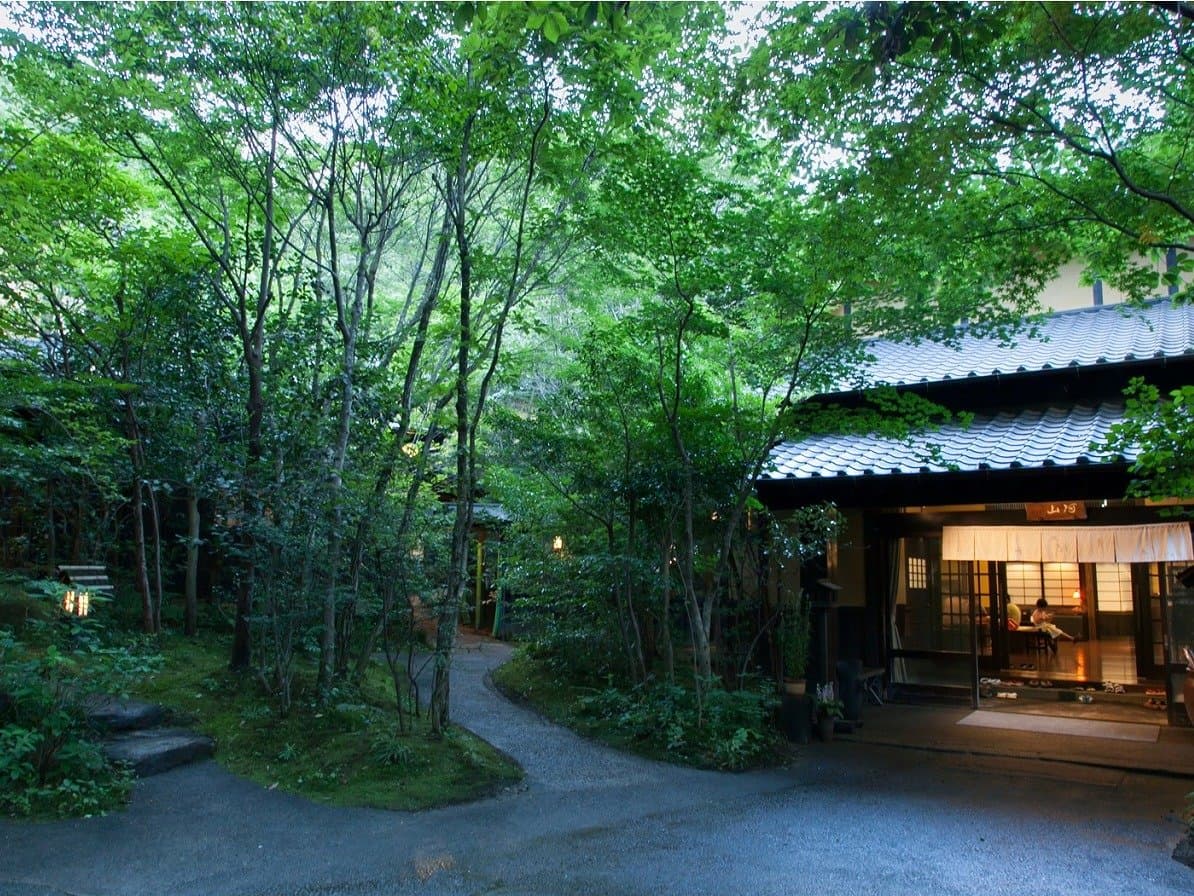
Ryokan Sanga
Kurokawa
Nishimuraya Honkan
Kinosaki
Prices shown are approximate starting rates per person per night. We may earn a commission on bookings.
The best ryokans for couples in Japan are those whose room, kaiseki, and private bath match how two people want to spend a quiet stay together. Our honeymoon-grade shortlist leads with Gora Kadan and Hakone Ginyu in Hakone, Beniya Mukayu in Yamashiro Onsen, and Atami Fufu near Tokyo, each offering private rotenburo bathing.
The rule is this: the right couples ryokan is not the most luxurious one. It is the one whose architecture, kaiseki, and private bath line up with how you and your partner actually want to spend a quiet thirty-six hours. The 12 picks below are our honeymoon-grade shortlist.
What's New in 2026
- Price re-verification (May 2026): All ryokan prices below have been re-checked via official sites and major OTAs. Gora Kadan open-air bath rooms verified at ¥90,000–¥160,000 per person; Hakone Ginyu re-confirmed at ¥42,500–¥65,000 per person .
- Kashikiri fee update: Reservable private baths at mid-range ryokans now typically run ¥2,500–¥5,000 per session (up from ¥2,000–¥3,000 in 2024), reflecting post-pandemic demand. Free kashikiri access is still standard at Hinoharu Ryokan (Yufuin) and Yufuin Gettouan .
- Atami couples boom: The Izu Atami area has seen a surge of adults-only ryokan openings in 2024–2025. Watei Kazekomichi and Atami Fufu (all 26 rooms with in-room rotenburo) are the two standout additions for couples .
- Kurokawa tegata pass price: The famous nyuyoku tegata bath-hopping pass in Kurokawa Onsen remains ¥1,500 in 2026 (updated from ¥1,300), valid for three baths from 28 participating ryokans .
- Beniya Mukayu recognition: Relais & Châteaux member and 2025 Michelin Guide listed. Yamashiro Onsen remains one of Japan's most credentialed romantic ryokan destinations .
- Hiiragiya status: Currently operating as normal. No renovation closures as of May 2026 .
| Ryokan | Region | Private bath | Price/person/night | Best for |
|---|---|---|---|---|
| Gora Kadan | Hakone | In-room rotenburo (most rooms) | ¥90,000–¥160,000 | Luxury honeymoon |
| Hakone Ginyu | Hakone | In-room rotenburo (all rooms) | ¥42,500–¥65,000 | Mountain views + privacy |
| Beniya Mukayu | Yamashiro Onsen | In-room rotenburo (all 16 rooms) | ¥80,000–¥130,000 | Proposal / milestone |
| Atami Fufu | Atami | In-room rotenburo (all 26 rooms) | ¥40,000–¥75,000 | Ocean-view rotenburo |
| Watei Kazekomichi | Atami | In-room rotenburo (all rooms) | ¥35,000–¥60,000 | Adults-only near Tokyo |
| Oyado Noshiyu | Kurokawa | Kashikiri (reservable) | ¥25,000–¥45,000 | Forest romance |
Why Ryokans Are the Ultimate Couples Experience
Western luxury resorts market romance through grand gestures — champagne on arrival, rose petals on the bed, sunset yacht cruises. Japanese ryokans take the opposite approach. Romance here lives in subtlety and attention to detail: the single perfect flower in the tokonoma alcove, the way your nakai-san remembers your tea preference from yesterday, the garden designed so that moonlight falls precisely on the stone lantern outside your window.
This quiet, deliberate beauty creates space for genuine connection. Without the distractions of television, room service menus, or resort activity schedules, couples in a ryokan tend to do something increasingly rare: they actually talk to each other. They sit on the engawa (veranda) and watch the light change. They soak in the bath without checking their phones. They eat a two-hour kaiseki dinner that becomes the most memorable meal of their relationship.
The shared experience of navigating onsen etiquette, sleeping on futons, and eating unfamiliar foods also creates a sense of adventure and complicity that strengthens bonds. You are not just on vacation together — you are exploring an entirely different way of being together.

Private Onsen: The Non-Negotiable for Couples
If there is one feature you should prioritize when booking a romantic ryokan, it is a kashikiri-buro (private bath) or, even better, a room with its own attached rotenburo (outdoor bath). Here is why:
Japan's onsen are traditionally gender-separated. In a standard ryokan, you and your partner will bathe at different times or in different baths. This is perfectly fine for a cultural experience, but it eliminates one of the most romantic aspects of onsen bathing: sharing the experience together.
A private bath solves this completely. Many upscale ryokans now offer rooms with their own outdoor hot spring bath on a private terrace or garden. You can bathe together at any hour, under the stars, with absolute privacy. Some are carved from natural rock, others are elegant hinoki (Japanese cypress) tubs that fill the air with a woodsy fragrance.
For couples on a tighter budget, reservable private baths (kashikiri-buro) are available at many mid-range ryokans for 45-60 minute sessions, typically at no extra charge or for a modest fee of ¥2,500–¥5,000. Book your slot at check-in — the most popular times (sunset and late evening) fill up fast. To filter for the exact setup you want before you reserve, our private onsen matrix breaks down which ryokans offer in-room rotenburo versus reservable kashikiri-buro.
| Ryokan | Region | In-room rotenburo | Adults-only | Price/person/night | Best for |
|---|---|---|---|---|---|
| Gora Kadan | Hakone | Yes (most rooms) | No | ¥90,000–¥160,000 | Luxury honeymoon |
| Hakone Ginyu | Hakone | Yes (all rooms) | No | ¥42,500–¥65,000 | Mountain views + privacy |
| Aura Tachibana | Hakone | Kashikiri only | No | ¥25,000–¥40,000 | Budget couples |
| Beniya Mukayu | Yamashiro Onsen | Yes (all 16 rooms) | No | ¥80,000–¥130,000 | Proposal / milestone |
| Kayotei | Yamanaka Onsen | Yes (select rooms) | No | ¥60,000–¥100,000 | Ultra-intimate (10 rooms) |
| Yufuin Tamanoyu | Yufuin | Yes (select rooms) | No | From ¥34,750 pp (breakfast) | Quiet Kyushu escape |
| Yufuin Musoen | Yufuin | Yes (all cottages) | No | ¥35,000–¥55,000 | Privacy seekers |
| Yufuin Gettouan | Yufuin | Yes (all 18 villas) | No | ¥38,000–¥70,000 | Villa-style seclusion |
| Watei Kazekomichi | Atami | Yes (all rooms) | Yes | ¥35,000–¥60,000 | Adults-only near Tokyo |
| Atami Fufu | Atami | Yes (all 26 rooms) | No | ¥40,000–¥75,000 | Ocean-view rotenburo |
| Oyado Noshiyu | Kurokawa | Kashikiri (reservable) | Yes | ¥25,000–¥45,000 | Forest romance |
| Miyama Sansou | Kurokawa | Yes (cottages) | No | ¥30,000–¥55,000 | Private cottage style |
Best Regions for a Romantic Ryokan Stay
Hakone — Classic Romance, Easy Access
Hakone is the most popular ryokan destination for couples, and for good reason. Just 90 minutes from Tokyo by Romance Car (yes, that is the actual name of the train — Odakyu's Limited Express from Shinjuku to Hakone-Yumoto runs the route in about 85 minutes without transfers ), it offers mountain scenery, art museums, lake cruises, and — on clear days — views of Mount Fuji. The density of excellent ryokans here is unmatched.
Top picks for couples:
- Gora Kadan — Established 1952 on the grounds of the Kan'in-no-miya imperial family summer villa, and the first Japan member of Relais & Châteaux (joined 1992) . The majority of rooms have a private open-air bath, and the kaiseki dinner is extraordinary. Rates run approximately ¥90,000–¥160,000 per person per night with two meals . Reservations open six months ahead and fill quickly for autumn foliage weekends.
- Hakone Ginyu — Perched on a mountainside with panoramic views, every room features a private rotenburo. More modern in design than traditional ryokans, it appeals to couples who want luxury without the full formality. Starting from approximately ¥42,500 per person based on double occupancy with two meals .
- Aura Tachibana — A more accessible option along the Hayakawa River, with a kashikiri-buro that sits directly over the rushing water. Around ¥25,000–¥40,000 per person. An excellent entry point for couples experiencing their first ryokan stay.
For couples where the Fuji view is the non-negotiable: our complete Mt. Fuji ryokan guide covers Kawaguchiko and Gotemba properties where the mountain fills every frame — including Kawaguchiko Fufu where all rooms have in-room rotenburo facing the mountain. For full property profiles, pricing and logistics across every Hakone option, see our Hakone couples ryokan guide.
Kyoto — Cultural Immersion for Two
Kyoto is where romance meets culture. The city's ryokans — see our Kyoto ryokan rankings for the full shortlist, and our national 2026 ryokan ranking for cross-region peers — tend to emphasize refinement and aesthetics over onsen (the city is not a natural hot spring area, though some ryokans pipe in onsen water). What Kyoto offers instead is proximity to temples, gardens, and the geisha district of Gion, all of which make for lasting couple's excursions.
Top picks for couples:
- Tawaraya — Often called the finest ryokan in Japan, Tawaraya was founded in 1709 during the Tokugawa shogunate and has been run by the same family for 12 generations . The level of service is almost supernatural in its attentiveness. Rooms start around ¥60,000 per person; reservations must be made months in advance.
- Hiiragiya — Tawaraya's neighbor and rival, equally historic and exquisite. The newer annex rooms blend modern comfort with traditional design. Around ¥50,000–¥80,000 per person. Currently operating as normal with no renovation closures as of May 2026 .
- Sumiya Kiho-an (Kameoka) — 30 minutes from central Kyoto by train, this ryokan in the Kameoka valley has rooms equipped with private open-air onsen baths. It offers the Kyoto cultural context with the thermal bath quality that city-center properties cannot match. Around ¥35,000–¥65,000 per person .
Kyoto's ryokan scene rewards deeper research than a single pick can capture — for a full breakdown across every price tier, from Tawaraya's stratospheric luxury to solid mid-range options walkable from Gion, see our complete Kyoto ryokan guide.
Yufuin — Quiet Sophistication
 Pin to Pinterest
Yufuin in Oita Prefecture (Kyushu) has cultivated a reputation as Japan's most charming small onsen town. Unlike the larger, more commercial hot spring resorts, Yufuin is defined by boutique ryokans, art galleries, and a serene lake (Kinrinko) with views of Mount Yufu. It draws a disproportionate number of couples and honeymooners, partly because the town's scale — 30 minutes on foot end to end — creates natural intimacy.
The main strip (Yufuin Floral Village and the lakeside walk) fills with day-trippers through late afternoon. By evening, the buses leave and the town returns to its ryokan guests. This rhythm — crowds during the day, serenity at night — is the Yufuin formula, and for couples it works perfectly. Browse the full directory of Yufuin ryokans and hotels — including modern onsen hotels for couples who want hotel-grade beds with ryokan-grade baths.
Top picks for couples:
- Yufuin Tamanoyu — Elegant rooms with private rotenburo overlooking rice paddies. The property feels like a private estate. From ¥34,750 per person per night (breakfast, official site, checked October 2026).
- Yufuin Musoen — Twelve standalone cottage rooms, each with its own garden and outdoor bath. Complete privacy and silence. Around ¥35,000–¥55,000 per person.
- Yufuin Gettouan — An 8.2-acre property with 18 independent villa-style rooms, each with a private open-air onsen bath looking out over trees, hills, and night sky. The villa format means no shared walls — a real asset for anniversary or honeymoon stays. Around ¥38,000–¥70,000 per person .
- Hinoharu Ryokan — An 11-room property with a 9.5+ rating on major booking platforms. Two rooms have attached rotenburo; all guests can reserve private kashikiri baths at no charge. Couples consistently rate the location 9.6 for a two-person trip .
Atami — Underrated Adults-Only Hub Near Tokyo
Atami (Shizuoka Prefecture) has quietly become one of Japan's strongest adults-only couples destinations. Just 35–50 minutes by Shinkansen from Tokyo — Kodama and select Hikari services on the Tokaido Shinkansen reach Atami Station in as little as 35 minutes from Tokyo Station — it delivers a full ryokan experience — genuine hot spring water, kaiseki dinners, and yukata evenings — at a significantly lower price point than Hakone.
The town sits above Sagami Bay, and the better ryokans face the ocean. At night, Atami's coast glitters with city lights far below while you soak in an in-room rotenburo on a hillside terrace. It is a different kind of romance from the mountain forests of Hakone — louder, more urban at the edges, but with moments of pure beauty when the bay fog rolls in at dawn.
Top picks for couples:
- Watei Kazekomichi — Adults-only across all rooms. Every guest room features a private open-air bath. The property positions itself explicitly as a honeymoon and anniversary retreat. Around ¥35,000–¥60,000 per person .
- Atami Fufu — All 26 suite rooms have in-room rotenburo where fresh hot spring water flows straight from the source. The Shinkansen delivers you to Atami Station in 45 minutes from Tokyo, then a 10-minute shuttle. Around ¥40,000–¥75,000 per person .
- Atami Sekaie — All rooms have open-air hot spring baths commanding a view of the ocean. The panorama from a hillside rotenburo on a clear winter night is one of the most cinematic experiences in any ryokan guide. Around ¥30,000–¥55,000 per person.
Atami is a strong pick for couples who want a Tokyo-accessible ryokan weekend without the Hakone price premium and without spending a full evening on a train.
Kurokawa Onsen — Forest Romance for Couples
Kurokawa (Kumamoto, Kyushu) is the ryokan world's most photogenic success story. Through the 1970s it was at risk of disappearing, until mid-1980s revival efforts — closely associated with Yamanoyado Shinmeikan's third-generation owner Tetsuya Goto and his collaborating innkeepers — reframed the entire town as a single ryokan where each inn is a room, each street a corridor, and each view part of one shared garden . They unified the aesthetic around dark wood and river stone, planted trees to hide any modern buildings, and created the nyuyoku tegata bath-hopping pass (¥1,500 in 2026, updated from ¥1,300 ). The result is a village that looks unchanged for two hundred years, where you can walk between baths in your yukata as the river rushes below wooden bridges.
For couples the specific draw is the atmosphere: lantern-lit stone paths, cave baths carved into riverside cliffs, and the general sense that nobody else in the world knows you are here. Kurokawa sits deep in the Kyushu mountains with no bullet train access — the remoteness is the product.
Top picks for couples:
- Oyado Noshiyu — The town's dedicated adults-only option (no children policy across all rooms). Indoor and outdoor baths can be reserved as private kashikiri. The property's wooden walkways and lantern lighting create a distinctly intimate atmosphere. Around ¥25,000–¥45,000 per person.
- Miyama Sansou — A compound of private cottages set between forest and paddy fields, each with its own onsen bath. The level of seclusion is exceptional even by Kurokawa standards. Around ¥30,000–¥55,000 per person.
For the tegata bath-hopping experience itself: the three baths most recommended for couples are Shinmeikan (riverside cave bath), Sanga (open-air terrace above the gorge), and Yamamizuki (forest rotenburo). All three accept the shared pass and are a short walk apart.
Kinosaki Onsen — Bath-Hopping for Two
 Pin to Pinterest
Kinosaki (Hyogo Prefecture) offers something no other onsen town has refined to the same degree: a choreographed couples evening. You check into your ryokan, change into the provided yukata and wooden geta sandals, and spend the next three hours doing what Kinosaki residents have done for over 1,300 years (records of the springs date to 720 AD) — walking the willow-lined canal between the town's seven public baths (Kouno-yu, Mandara-yu, Goshono-yu, Ichino-yu, Yanagi-yu, Jizou-yu, and Satono-yu), each with a different character and water temperature .
The town is small enough that you never need a map. Between baths you duck into shops for soft-serve ice cream in a paper cone, a pour of local Tajima sake, or a paper bag of crab croquettes eaten standing on a stone bridge. The sound of clacking geta on stone echoes off the traditional buildings. At night, in matching yukata, with steam rising from the canal, it is one of the most effortlessly romantic evenings in Japanese travel — and it requires almost no planning.
Your ryokan provides free access to all seven baths. Top pick for couples: Nishimuraya Honkan — the most elegant ryokan on the main street, with exceptional kaiseki and a private kashikiri that sits over the river. Around ¥30,000–¥55,000 per person. From November through March, upgrade to the crab kaiseki (kani ryori): a full matsuba crab dinner with sashimi, grilled legs, hot pot, and crab rice is a bucket-list meal for any couple traveling Japan in winter. Confirm availability and current pricing with the property .
Adults-Only Ryokans: What the Policy Actually Means
Adults-only (大人のみ / otona no mi) at a Japanese ryokan means no guests under a specified age — typically 13, sometimes 18. This is worth seeking out for couples because it changes the entire tone of a stay.
At an adults-only ryokan, the morning is silent. There are no footsteps running overhead at 6am, no splashing in the shared bath, no families gathering in the corridor. Dinner service is quieter. The shared onsen has a different energy. For a honeymoon or milestone anniversary, the peace itself is worth the slight premium these properties sometimes charge. We rank the best of these child-free stays nationwide in our dedicated adults-only ryokan guide.
The clearest adults-only options in this guide:
- Watei Kazekomichi (Atami) — Full adults-only, explicitly marketed to honeymoon and anniversary couples.
- Oyado Noshiyu (Kurokawa) — Adults-only in the center of Japan's most atmospheric onsen village.
- For Hakone, no adults-only ryokan dominates the market — the closest equivalent is booking a room in the private-rotenburo category at Gora Kadan or Hakone Ginyu, where the higher price point naturally creates a quieter, more adult-oriented guest mix.
A practical note: Japan's adults-only policies are strictly enforced. You cannot bring children on the assumption they will be allowed in. If you are traveling with family on a combined trip, book the adults-only nights at a separate property from the family-friendly stay.
For couples who prioritize private onsen even without an adults-only policy, the phrase to search in Japanese is 露天風呂付き客室 (rotenburo-tsuki kyakushitsu — rooms with attached outdoor baths). This filter on Jalan.net and Rakuten Travel surfaces the couples-optimized inventory faster than any English-language search.

Kaiseki Dinner: The Couples Meal of a Lifetime
 Pin to Pinterest
If the private onsen is the physical highlight of a romantic ryokan stay, kaiseki dinner is the emotional one. This multi-course traditional meal — typically 8 to 14 courses served over two hours, with a structure rooted in tea-ceremony cuisine (cha-kaiseki) that evolved during the Muromachi period and modernized through imperial court, Buddhist temple, and samurai household traditions — is an art form that engages every sense.
For couples, the key detail is in-room dining. Many ryokans serve kaiseki in your own room, with a nakai-san bringing each course individually, explaining the ingredients and seasonal significance, then disappearing until the next course is ready. You sit across from each other at a low table, trying dishes you have never encountered, sharing reactions, and watching the meal unfold like a slow, delicious performance.
The best couple's kaiseki experiences include seasonal surprises: firefly squid in spring, sweetfish in summer, matsutake mushroom in autumn, and fugu (blowfish) in winter. Many ryokans will accommodate dietary restrictions and allergies if notified in advance — email at least a week before arrival.
Some high-end ryokans also offer private dining rooms as an alternative to in-room service. These are often beautiful spaces overlooking a garden, with a dedicated server for your table alone. For a full breakdown of every course, seasonal ingredient rotation, and what to expect on your first kaiseki evening, see our kaiseki dining guide.
Tip
Anniversary and honeymoon surprises at Japanese ryokans work best with advance communication. When booking, email the property in English (most larger ryokans have English-capable front desk staff) and say something like: "We are celebrating our honeymoon / [X]th anniversary. Are there any special arrangements you can prepare?" Staff can arrange: a whole cake served at the end of kaiseki (the classic birthday/anniversary move), a flower arrangement in the room on arrival, sparkling wine waiting on the table, commemorative photos, late checkout, or a congratulatory card from the okami. None of this is guaranteed — Japanese hospitality responds to sincerity, not demands. But a politely worded request almost always results in at least one special touch. The okami (proprietress) often personally oversees these moments; at smaller ryokans, she may deliver the surprise herself .
Proposal-Worthy Ryokans
Planning to pop the question? A ryokan provides a setting so beautiful that it practically does the work for you. Here are the most proposal-worthy moments and places:
Gora Kadan, Hakone — Request the room with the outdoor bath facing the gorge. Propose at sunset while soaking in your private rotenburo as the mountains turn gold. Brief the staff in advance and they will time a congratulatory dessert for your return.
Beniya Mukayu, Yamashiro Onsen — This minimalist masterpiece in Ishikawa Prefecture is a Relais & Châteaux member and 2025 Michelin Guide-listed property — see our luxury ryokan ranking for more at this tier. All 16 rooms have private open-air hot spring baths facing a natural mountain garden of century-old cherry trees and red pines . The afternoon tea ceremony hosted by the owners creates a warm, intimate context for any evening proposal. In autumn, the forest view alone is enough to make someone say yes.
Kayotei, Yamanaka Onsen — A tiny, ultra-exclusive ryokan (just ten rooms) with a legendary okami who has been welcoming guests for decades. The intimate scale makes every moment feel personal and significant. At night, the garden lanterns reflect in the Kakusenkei gorge.
Kinosaki Nishimuraya Honkan — For a proposal woven into an evening stroll: walk the canal in yukata, and propose at one of the stone bridges after the second bath, when the day-trippers have gone and the lanterns are reflected in the willow-dark water.
For the proposal itself: the garden at night is the most reliably singular setting at any ryokan. Most gardens are accessible until around 10pm. Ask the front desk — they will nearly always say yes.
Budget-Friendly Options for Couples
Not every romantic ryokan stay needs to cost ¥100,000 a night. (Sea-facing destinations like Miyajima, where Itsukushima Shrine's floating torii is a 5-minute walk from select inns, often run 30-40% below Hakone for comparable luxury.) Here are strategies for experiencing ryokan romance on a more modest budget:
Choose weekday stays. Friday and Saturday nights command premium rates. A Tuesday or Wednesday night at the same ryokan can be 30-40% cheaper with identical service and food.
Look for "couples plans" (カップルプラン). Many ryokans offer specific packages for two that include private bath access, a bottle of sparkling wine, or late checkout. Search for these on Jalan.net or Ikyu.com — they are often not listed on English-language booking sites.
Consider smaller towns. The ryokans in Hakone and Kyoto carry a location premium. Equally beautiful (and sometimes superior) properties in less famous onsen towns like Kurokawa (Kumamoto), Kinosaki (Hyogo), or Nyuto (Akita) can cost half as much.
Book a room without a private bath and reserve a kashikiri instead. The room rate for a standard room without an attached bath might be ¥15,000-20,000 per person less than the premium suite. Add a ¥3,000 private bath reservation and you get a similar experience for significantly less.
Off-season travel. Late January, early February, and mid-June through early July tend to be the quietest — and cheapest — periods. You trade peak foliage or cherry blossoms for lower rates and empty baths, which arguably makes the experience even more intimate.
Muslim couples planning the stay: our halal ryokan Japan guide identifies the verified halal-kitchen properties with prayer room and qibla direction confirmation — the upstream planning that protects the romance.
Tip
When booking for two, confirm whether the quoted price is per person or per room. Most ryokans in Japan quote rates per person (一人あたり / hitori atari), which includes dinner and breakfast. A rate of ¥30,000 per person means ¥60,000 total for the couple. International booking sites sometimes display the per-room total, which can cause confusion.
Couples Ryokan by Price Tier: Quick Reference
The following price ranges are per person per night and include two meals (dinner and breakfast). These are the most reliable budget anchors as of May 2026.
Under ¥25,000 per person (approx. under $160 USD) This bracket requires realistic expectations: shared public baths are the norm, kaiseki will be simpler, and rooms are smaller. Genuinely romantic stays do exist here. Look at Hinoharu Ryokan (Yufuin) for free kashikiri access and exceptional reviews at this price point, or smaller Kinosaki properties where the public bath-hopping culture compensates for the lack of in-room facilities. The romance at this level is about the town, not the room.
¥25,000–¥45,000 per person (approx. $160–$290 USD) The sweet spot for first-time couples. At this level you can generally find a room with kashikiri access and a full multi-course kaiseki dinner. Aura Tachibana (Hakone), Oyado Noshiyu (Kurokawa), Miyama Sansou (Kurokawa), and Nishimuraya Honkan (Kinosaki) sit in this range. The experience is authentically ryokan; only the size of the private bath distinguishes it from higher tiers.
¥45,000–¥80,000 per person (approx. $290–$515 USD) At this level, in-room rotenburo becomes standard rather than exceptional. Kaiseki quality rises noticeably — this is where seasonal premium ingredients (Tajima beef, matsutake, live crab) start appearing routinely. Hakone Ginyu, Yufuin Tamanoyu, Atami Fufu, Sumiya Kiho-an, and Watei Kazekomichi operate here. This tier is where most experienced couples settle for a milestone stay.
Over ¥80,000 per person (approx. over $515 USD) At this tier, the property itself is the destination: former imperial retreats, Relais & Châteaux members, Michelin-listed kaiseki. Gora Kadan (Hakone), Beniya Mukayu (Yamashiro Onsen), and Kayotei (Yamanaka Onsen) occupy this space. The incremental improvement over ¥50k–70k is real — scale, exclusivity, the depth of the in-room experience, and the kind of invisible staff choreography that means things appear before you think to ask for them — but it is a narrowing return per yen. Worth it for once-in-a-lifetime trips; the tier below is excellent for everything else.
Making It Lasting
A few final touches that elevate a romantic ryokan stay from wonderful to extraordinary:
Arrive early. Check-in at most ryokans is 3:00 PM. Arriving on time gives you the full afternoon to explore, bathe, and settle in before dinner. The unhurried pace is essential to the experience.
Put your phones away. The ryokan is designed for presence and conversation. Take photos — then put the phone in the closet and forget about it. You will be amazed at how different the evening feels.
Try the matching yukata. There is something unexpectedly charming about wandering an onsen town in matching robes. It feels playful, slightly silly, and entirely romantic. Lean into it.
Order sake together. Ask your nakai-san to recommend a local sake to pair with dinner. Sharing a small ceramic flask of cold junmai ginjo while working through a kaiseki menu is one of life's great pleasures.
Book the kashikiri slot immediately at check-in. The sunset and late-evening slots (6–8pm and 9–11pm) fill on the day. Ask the front desk the moment you arrive.
Season tip for couples: The two most reliable windows for combining lower prices with full romantic atmosphere are late January to mid-February (winter silence, open baths in cold air, no peak-season crowds) and early November (foliage peak at many locations, still warm enough for outdoor rotenburo at night). Both windows book up at premium ryokans three to four months ahead.
A ryokan stay strips away the noise of daily life and replaces it with beauty, warmth, and care. For couples, this creates something rare and precious: uninterrupted time together in a setting of extraordinary beauty. Whether it is your honeymoon, your anniversary, or simply a Tuesday in February when you both needed to get away, a ryokan will remind you why you chose each other. Traveling with children next time? Our guide to family-friendly ryokans in Japan covers properties with connecting rooms, kid-safe onsen schedules, and kaiseki alternatives for younger guests.
Traveling solo instead? Two companion guides cover the same ground from the single-traveler angle: the 8 best ryokans for solo travelers in Japan and our shorter top-5 ryokan-for-solo-travelers picks — both account for the ohitori-sama supplement and the properties that actively welcome single guests.
Want total privacy as a couple? A room with its own onsen means no shared-bath schedule to coordinate and no strangers — just the two of you. See ryokans with a private onsen for couples.
Ready to book?
Book one of these top picks
Compare live availability and prices across booking sites.
from US$500 · per person · per nightfrom ≈ US$1,000 total for 2 guests



from US$400 · per person · per nightfrom ≈ US$800 total for 2 guests
Nishimuraya Honkan
西村屋本館
Kinosaki·Luxury
from US$400 · per person · per nightfrom ≈ US$800 total for 2 guests
Booking links may earn us a commission at no extra cost to you.
FAQ
Frequently asked questions
What is the best ryokan for couples in Japan?+
There is no single best ryokan for every couple — the right one matches your priorities for privacy, region, and budget. For a luxury honeymoon, Gora Kadan in Hakone (¥90,000–¥160,000 per person) leads with private open-air baths in most rooms. For a milestone or proposal, Beniya Mukayu in Yamashiro Onsen pairs a Relais & Châteaux setting with in-room rotenburo in all 16 rooms. For Tokyo-accessible value, Atami Fufu's 26 suites each have an in-room rotenburo at ¥40,000–¥75,000 per person.
What is the most important feature for couples when booking a romantic ryokan?+
The most important feature is a kashikiri-buro (private bath) or a room with its own attached rotenburo (outdoor bath). This allows couples to share the onsen experience together in privacy, unlike traditional gender-separated baths. Many upscale ryokans offer private outdoor hot springs, or mid-range options provide reservable private baths for ¥2,500–¥5,000 for 45-60 minute sessions.
Which regions are recommended for couples seeking a romantic ryokan experience?+
Hakone is popular for its proximity to Tokyo (90 minutes), mountain scenery, and high density of excellent ryokans, with options like Gora Kadan (¥90,000–¥160,000 per person). Kyoto offers cultural immersion near temples and Gion, with refined ryokans like Tawaraya (¥60,000 per person). Yufuin in Kyushu provides quiet sophistication with boutique ryokans and serene views of Mount Yufu.
What kind of dining experience can couples expect at a ryokan?+
Couples can expect a multi-course kaiseki dinner, typically 8 to 14 courses served over two hours. Many ryokans offer in-room dining, where a nakai-san brings each course individually, explaining its significance. This creates an intimate, shared experience without distractions. High-end ryokans may also offer beautiful private dining rooms overlooking a garden.
How can couples find budget-friendly options for a romantic ryokan stay?+
To save money, couples should consider weekday stays, which can be 30-40% cheaper than weekends. Looking for "couples plans" on Japanese booking sites like Jalan.net or Ikyu.com can also offer savings. Choosing ryokans in smaller, less famous onsen towns or booking a room without a private bath and reserving a kashikiri instead are also effective strategies.
What are some tips for making a ryokan stay lasting for couples?+
To enhance the experience, couples should arrive early for check-in at 3:00 PM to maximize their afternoon. It's recommended to put phones away to embrace the present moment and conversation. Trying the matching yukata and ordering local sake together to pair with dinner also adds to the unique and romantic atmosphere, creating lasting memories.
Which ryokans in Japan are adults-only and good for couples?+
The clearest adults-only options for couples are Watei Kazekomichi in Atami (Shizuoka) and Oyado Noshiyu in Kurokawa Onsen (Kumamoto). Both enforce a no-children policy across all rooms, creating the silence and privacy that make milestone stays — honeymoons, anniversaries, proposals — feel distinct. In Hakone, no dominant adults-only ryokan exists, but rooms with private rotenburo at Gora Kadan or Hakone Ginyu achieve a comparable atmosphere through their higher price point.
How much does a private onsen (kashikiri) cost at a Japanese ryokan in 2026?+
In 2026, kashikiri (reservable private bath) sessions at mid-range ryokans typically cost ¥2,500–¥5,000 for a 45–60 minute session, reflecting increased post-pandemic demand. Some premium ryokans include free kashikiri access for overnight guests — notably Hinoharu Ryokan in Yufuin. In-room rotenburo (private outdoor baths attached directly to guest rooms) carry a room-rate premium rather than a per-session fee; expect ¥15,000–¥30,000 more per person compared to a standard room at the same property.
Still deciding?
Browse ryokans across JapanBooking.com