約71分で読めます最終更新:2026年6月

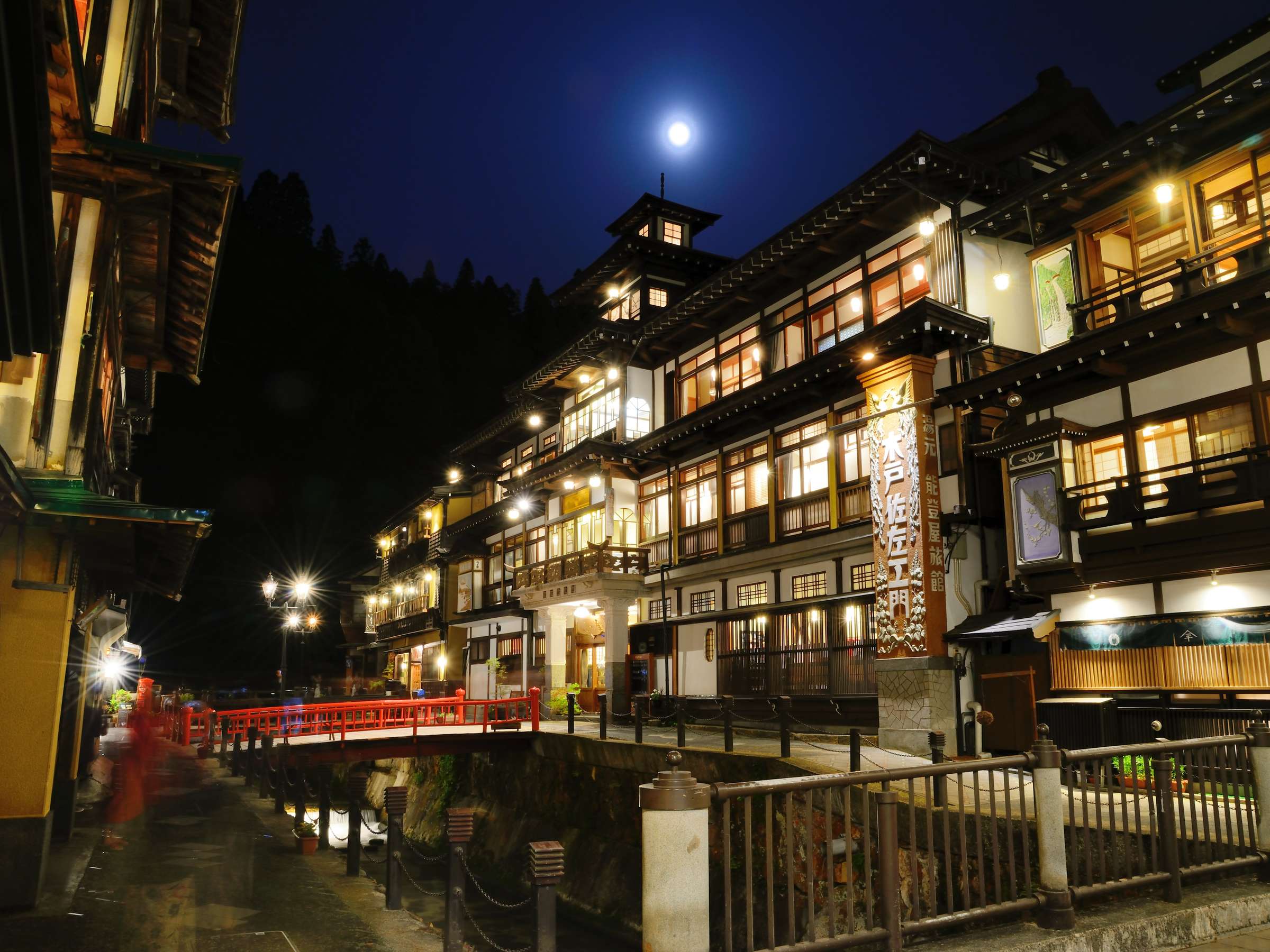
I was standing on the bridge at Ginzan Onsen at dusk when the gas lamps came on — one by one, the four-storey cedar facades shifting from grey to amber, the Ginzan River catching the reflection below, and the only sound the water moving over rocks. Nothing Hakone or Kyoto had prepared me for that. The best ryokans in Tohoku Japan don't fit either mold — and that's the whole point. Japan's northeastern region — six prefectures of volcanoes, gorges, and rice fields blanketed by real winter snow — has some of the country's most compelling hot-spring culture, and a fraction of the crowds. I first came here in autumn 2023 chasing Naruko Gorge's foliage and ended up staying three extra days.
Six areas. Six different vibes, water types, and price tiers: Ginzan, Naruko, Akiu, Nyuto, Zao, and Hanamaki. What you won't find here is a generic list of "amazing" inns with no prices. You'll find honest trade-offs, verified costs, and everything you need to actually book — including a first time at a Japanese ryokan orientation for anyone approaching this unfamiliar.
One honest caveat before we start: Tohoku takes longer to reach than Hakone, English support at some properties is thin, and winter closures are real. If you need maximum convenience, Hakone wins. If you want the deeper version of this tradition, read on.
---
Why choose Tohoku over Hakone or Kyoto?
The short answer is authenticity and water diversity — two things that get harder to find as international visitor numbers climb. Hakone's ryokans are excellent but increasingly designed for foreign guests; Kyoto's are priced accordingly. Tohoku has neither problem yet.
What it has instead: Ginzan Onsen's wooden Taisho-era buildings lit by actual gas lamps every evening, their reflections broken by the Ginzan River. Zao plateau's *juhyo* — fir trees encased in wind-driven ice, forming ghostly figures visible from January through February that don't exist anywhere else in Japan at this scale. And Naruko, where 8 of Japan's 10 officially classified spring water types bubble up from a single valley — a geothermal anomaly that no single Hakone resort can match [verified Tohoku Kanko official site / Nippon.com 2026].
The honest downside: getting from Tokyo to Ginzan takes over four hours door to inn. Nyuto Onsen's most famous property, Tsuru-no-yu, takes reservations by phone in Japanese, ideally six months out. Some Naruko properties have staff who speak no English at all. These aren't deal-breakers — they're the price of admission to an experience that most international visitors still haven't found. Check our winter onsen guide if season is your primary planning axis.
The ideal Tohoku traveler has already done Hakone and wants to go deeper. Or they're a winter-sports person who wants to ski Zao in the morning and soak in a sulfur bath by 4pm. Or they're simply someone who prefers empty corridors and a ryokan hostess in kimono who bows to them personally — not because it's a brand requirement, but because that's how it's done here.
---
Tohoku onsen areas at a glance: quick-compare table
If you're comparing the best ryokans in Tohoku Japan across budget, season, and logistics, this table is your decision matrix. All prices are per person with two meals (kaiseki dinner + Japanese breakfast) unless otherwise noted — the standard ryokan pricing model. Click any area name to jump to its section.
| Area | Vibe | Price/person (2 meals) | Best Season | Tokyo Access | English ★/5 | Tattoos |
|---|---|---|---|---|---|---|
| [Ginzan](#ginzan-onsen) | Taisho gaslit village | ¥18,700–¥68,000 | Winter / Autumn | ~4h 10min (Yamagata Shinkansen) | ★★★☆☆ | Varies — ask |
| [Naruko](#naruko-onsen) | Hot-spring diversity | ¥12,000–¥25,000 | Autumn foliage | ~2.5h (Tohoku Shinkansen) | ★★☆☆☆ | Varies — private baths available |
| [Akiu](#akiu-onsen) | City-close, first-timer friendly | ¥18,000–¥70,000 | Year-round | ~2.5h (Tohoku Shinkansen + bus) | ★★★★☆ | Some allow |
| [Nyuto (Tsuru-no-yu)](#nyuto-onsen) | Remote snow-buried onsen | ¥11,700–¥24,350 | Winter / Spring | ~3h (Akita Shinkansen) | ★☆☆☆☆ | Not recommended in shared baths |
| [Zao](#zao-onsen) | Ski + sulfur springs + snow monsters | ¥15,000–¥85,000 approx. | Winter (ski/juhyo) | ~3h (Yamagata Shinkansen) | ★★★☆☆ | Varies |
| [Hanamaki](#hanamaki-onsen) | Quiet, family-friendly, literary | ¥13,000–¥40,000 approx. | Summer / Autumn | ~2.5–3h (Tohoku Shinkansen) | ★★★☆☆ | Some allow |
Tip
Note: The JR EAST PASS (unified, launched March 14, 2026 — ¥35,000 for 5 days, ¥48,000–50,000 for 10 days) covers all five shinkansen lines serving these areas. Local buses and taxis from the shinkansen station to your ryokan are separate costs, typically ¥800–¥1,500 per leg.
---
Ginzan Onsen — The Taisho-era gas-lamp village {#ginzan-onsen}

Ginzan is Tohoku's most photographed onsen town, and the images aren't exaggerated. A dozen wooden inns — three and four storeys of weathered cedar and plaster — crowd both sides of a narrow river gorge, and when the gas lamps come on around dusk, the whole scene turns amber. The village is compact enough to walk end-to-end in eight minutes. There are no cars, no convenience stores visible from the main street, and the sound at night is the river over rocks and nothing else.
The hot springs were first discovered in the 1400s during silver mining operations — *ginzan* means silver mountain — but the current streetscape dates to the Taisho era (1912–1926), when wooden inns replaced the original structures after a flood. Notoya Ryokan, now 130 years old and designated a tangible cultural property, from ¥25,300/person , still operates in that original style: folk-house architecture, narrow corridors, futon on tatami. It's not glamorous in the contemporary sense. It's better than that.
Worth naming upfront: Ginzan is small. Ryokan-to-ryokan variety is limited compared to larger resort towns, the peak seasons get genuinely crowded on weekends, and the access from Tokyo is longer than competitors typically admit.
Best Ginzan ryokans by budget
Budget tier (from around ¥18,700/person): Entry-level rooms at Ginzan have shared indoor baths and simpler kaiseki. Notoya's lower-tier rooms sit in this range — you get the cultural property atmosphere at a lower price, accepting a small room and no private bath.
Mid-range (¥25,000–¥45,000/person): Most of the gas-lamp buildings fall here. Ginzanso is the largest property, most practical for first-timers, and has an English website plus good English-booking infrastructure. It's not the most intimate inn, but it's the easiest entry point.
Luxury (¥50,000–¥68,000+/person): Fujiya Inn, 8 rooms, private baths in 5 of its 8 rooms, designed by architect Kengo Kuma. It was listed in National Geographic in 2026. At this tier you're not just staying at an inn — you're staying inside a considered architectural work. Book six months out minimum.
See our full Ginzan Onsen ryokan guide and our Ginzan picks for in-depth property reviews.
Getting to Ginzan Onsen from Tokyo
Take the JR Yamagata Shinkansen (Tsubasa service) to Oishida Station — not Obanazawa, which appears on some older guides and is a separate local station requiring an additional connection. From Oishida, the Hanagasa Bus runs to Ginzan Onsen in approximately 40 minutes (¥1,000 one-way; roughly every two hours). Total realistic time from Tokyo Station: approximately 4 hours 10 minutes .
The JR EAST PASS covers the shinkansen leg; the bus is a separate ¥1,000 each way.
Winter restriction: From December 20 through March 1 (2025/2026 dates), private vehicles cannot enter the village. Guests arriving by car park at Taisho Romankan and take a paid shuttle into the village. Evening entry between 5pm and 8pm requires timed-entry tickets (approximately ¥1,200/person, bus included). Arriving by bus or on foot has no restriction. This isn't a nuisance — it's part of why the evening atmosphere is so quiet .
Booking urgency: Winter weekends fill 3–4 months ahead. Autumn (late October koyo peak) books 2–3 months out. Summer is quieter and roughly 20–30% cheaper.
---
Naruko Onsen — Japan's most diverse hot springs {#naruko-onsen}

Naruko Onsen sits in Miyagi Prefecture's interior, a cluster of five distinct onsen sub-villages spread across one narrow valley. What makes it remarkable isn't any single inn or scenic backdrop — it's the ground itself. 8 of Japan's 10 officially classified spring water types rise from Naruko's 400-odd springs , meaning you can soak in sulfur springs, sodium bicarbonate springs, iron springs, and hydrogen carbonate springs within a twenty-minute walk of each other. No other place in Japan offers this in one valley. Geologically, it's an anomaly.
Walking between the sub-villages in the rain, that variety becomes tangible: the sulfur smell shifts as you move from one spring zone to the next, sometimes faint, sometimes sharp enough to catch in your throat before you've reached the inn door.
Naruko is also Japan's kokeshi capital. The turned wooden dolls — cylindrical, minimalist, with a child's face on a painted body — have been crafted here for centuries, and you can visit workshops along the main street, watch the lathe turning and hear the clean scrape of tool on wood, and buy directly from the craftsperson. Most ryokan gift shops stock them too; I left with three, which is one more than I intended.
One caveat worth naming: English support here is low (★★☆☆☆). On-site communication at smaller inns can be mime-and-translate-app territory. Book in English through Trip.com or Booking.com and you'll be fine for the reservation; just manage expectations for the stay itself.
Getting to Naruko Onsen from Tokyo
An important update for 2026: the JR Rikuu-to Line between Naruko Onsen Station and Shinjo is currently suspended due to storm damage from 2024, with service expected to resume no earlier than 2027 . Do not rely on the local train into Naruko from the west.
The recommended route: Tohoku Shinkansen to Furukawa Station, then a local bus or highway bus connection to Naruko Onsen (approximately 30–40 minutes). Alternatively, the Miyako Highway Bus runs directly from Sendai Station (Bus Stop #24) to Naruko Onsen in roughly 90 minutes — a clean, no-transfer option if you're coming through Sendai anyway. Total time from Tokyo: approximately 2.5 hours.
The JR EAST PASS covers the shinkansen to Furukawa; local buses are separate.
Best Naruko ryokans by budget
Budget (from ¥12,000/person): Naruko Onsen Ryokan Kanshichiyu offers the lowest entry point in the area, with shared sulfur and sodium baths. Basic rooms, genuine old-fashioned atmosphere, cash-preferred.
Mid-range (¥18,000–¥25,000/person): Ryokan Ohnuma has an English website and is one of the more accessible properties for foreign guests. Naruko Onsen Yumoto Kissho, listed on Selected Ryokan, brings multiple spring types accessible on-property. The Naruko-cho area's five sub-villages (Naruko, Higashiyama, Nakayama, Kawatabi, Shingou) each have a distinct water character — worth asking which village your inn sits in when booking.
Foliage timing: Naruko Gorge autumn colors peak around early November (2026 forecast: approximately November 5) [verified Japan-Guide.com koyo 2026]. Parking fills by 10am during peak weekends; a seasonal shuttle from Naruko-Onsen Station to the gorge (10 minutes) is the sensible approach.
See all Naruko ryokans for the full property lineup.
---
Akiu Onsen — Sendai's backyard and best for first-timers {#akiu-onsen}

If someone asks me which Tohoku area to start with, I say Akiu. It's thirty minutes from Sendai by taxi, under an hour by public bus, and many large ryokans run a free shuttle from Sendai Station's east exit (reservation required). No secondary shinkansen line, no rural bus timing anxiety. You get off at Sendai, make one call to the inn, and you're soaking in a valley bath by evening.
What stays with me about that shuttle ride is how abruptly the city stops. Sendai's low-rise suburbs give way to rice paddies, then the road narrows into a cedar gorge and you can already smell the sulfur faintly through the window. By the time the bus pulls up to the ryokan entrance, you're fully somewhere else — and Sendai was forty minutes ago.
Akiu's water is a sodium-chloride spring classified as *bijin-yu* (beauty water) — the salt content creates the characteristic skin-softening effect that Akiu has been known for since the Date clan's time. The feudal lord Date Masamune reportedly used these baths; Hotel Sakan (Densho Sen-nen no Yado Sakan) claims lineage as his personal bath estate. From ¥24,000/person , it's a hybrid Japanese-Western property that's accessible for first-timers — Western-style beds available, staff with some English capability, easy online booking.
Standing in Akiu's outdoor rotenburo with steam rising over forested hills, knowing that Sendai's most powerful feudal lord considered this his private retreat, gives the place weight that a modern onsen resort can't manufacture.
There are few true budget options in Akiu. If cost is your primary concern, Naruko will serve you better.
Best Akiu ryokans by budget
Mid-range (¥18,000–¥30,000/person): Hotel Sakan is the practical anchor. Large enough to have English booking infrastructure, traditional enough to deliver the full ryokan sequence — yukata, multi-course kaiseki, communal bath, futon. Free shuttle from Sendai.
Premium (¥28,000–¥50,000/person): Kagaribi-no-Yu Ryokusuitei leads here — acclaimed Japanese garden, open-air bath, from approximately ¥14,300/person (per-person rate based on double occupancy; meal inclusions vary — confirm at booking) . Free shuttle from Sendai Station.
Luxury (¥50,000+/person): Saryo Soen, listed on Selected Ryokan, offers the intimate boutique experience: small room count, kaiseki with seasonal Miyagi ingredients, private rotenburo suites.
Akiu is also ideal for day-trippers from Sendai who want cherry blossoms in April (full bloom around April 10, 2026 forecast [verified LiveJapan 2026]) or a Matsushima boat cruise combined with an evening soak. See our best Akiu ryokans guide for the full breakdown.
---
Nyuto Onsen (Tsuru-no-yu) — Japan's most famous remote onsen {#nyuto-onsen}
There's one image that circulates endlessly in Japanese travel content: a thatched-roof building buried to its eaves in snow, white steam rising from an outdoor bath of milky water, dark pines behind. That's Tsuru-no-yu, and the photographs are honest. What they don't show is how hard it is to get a reservation.
Tsuru-no-yu sits in Akita Prefecture's Nyuto Onsenkyo — a cluster of seven inns across a heavily forested mountain valley, each with chemically distinct water. The yu-meguri tegata day-bath hopping pass lets you soak at all seven; it's worth doing even if you're staying at one. But the one everyone wants is Tsuru-no-yu, with its milky-white sulfur water, the outdoor mixed-gender bath (*konyoku*), and the five-room Honjin building under that famous thatched roof.
Prices at Tsuru-no-yu are lower than the fame would suggest: ¥11,700–¥24,350/person with two meals (tax included), depending on room type . The 2go-kan rooms at ¥11,700 are basic by any standard — small, communal, minimal. The Honjin thatched building at ¥15,550/person has only five rooms. The Shin-Honjin at ¥17,750–¥24,350 is the most comfortable tier. A winter heating surcharge of ¥1,320/room applies December through March.
The honest trade-offs are significant. English support is the lowest of all six areas (★☆☆☆☆). Tattoos in the shared outdoor bath are not accepted; the private rotenburo is often the better bath anyway, though it must be reserved in advance at additional cost. Winter road conditions can close access — always verify before travel.
How to book Tsuru-no-yu
This is where most foreign travelers get stuck. Tsuru-no-yu takes reservations primarily by phone (+81-187-46-2139, open 7:00–22:00 JST) and the inn's own English webpage confirms phone as the main channel. For peak winter dates, most reports from experienced travelers suggest booking as far in advance as possible — ideally six months or more [cross-referenced kanpai-japan.com + Travel Arrange Japan]. The "exactly 3 months at 9am" rule that circulates online is not confirmed on the official website; do not structure a trip around that specific claim.
Tip
If Tsuru-no-yu is fully booked: Kuroyu Onsen offers a similar remote atmosphere and accepts some online bookings (closed November through mid-April — check conditions before booking). Magoroku Onsen, rebranded in spring 2025 as Rokuan, accepts online booking via Agoda and has its own English site.
The Tsuru-no-yu Yamanoyado annex (phone: 0187-46-2100) operates separately and may have online availability through Japanican.
Getting there: JR Akita Shinkansen (Komachi service) to Tazawako Station, then bus approximately 40 minutes to the Nyuto Onsen area (Tsuru-no-yu provides pick-up from the Arupa Komakusa bus stop — call ahead with your arrival time). Total from Tokyo: approximately 3 hours. The JR EAST PASS covers the shinkansen leg.
---
Zao Onsen — Ski slopes, snow monsters, and acidic sulfur springs {#zao-onsen}

Zao Onsen sits at the base of a ski resort in Yamagata Prefecture, which makes it the only area in this guide where you can ride a gondola in the morning and reach the bath before lunch. The village itself is compact and functional rather than scenic — this is a working ski town, not a period streetscape. What it offers instead is a combination that's genuinely rare: 42 ski runs, a fully operational ski resort village, and one of Japan's most acidic sulfur springs within walking distance of the lifts.
Zao's spring water is an acidic sulfur-aluminum sulfate-chloride spring at approximately pH 1.3–1.6 , which makes it among the most acidic hot spring water in Japan. The water runs milky white, smells strongly of sulfur, and leaves white *Yu no Hana* mineral deposits on bath surfaces. After a day of skiing, stepping into that water — the immediate heat, the faint chemical bite on the skin — is the most effective reset I've found in a decade of Japan travel. The spring yields 15,000 liters per minute, so there's no shortage.
The singular draw for non-skiers is the juhyo — literally "tree ice," what the tourist boards translate as "snow monsters." From late December through late February, the plantation fir trees on Zao plateau accumulate wind-driven ice and snow until they become rounded, amorphous white forms. At dawn with blue light and no other humans around, the plateau looks like a different planet. The Zao Snow Monster Festival ran from December 27, 2025 through February 23, 2026 with illumination events on Friday, Saturday, and Sunday evenings . See the Zao Onsen official tourism site for current season dates.
For our best Zao ryokans deep-dive, and for winter planning more broadly, check our winter onsen guide.
Best Zao ryokans by budget
Budget (¥15,000–¥20,000/person): Pension-style guesthouses cluster near the ski lifts. Shared sulfur baths, basic kaiseki, functional rooms. Zao Onsen Omiya Ryokan has an English website and strong TripAdvisor ratings at this tier.
Mid-range (¥25,000–¥40,000/person): Miyamaso Takamiya (Takamiya Ryokan), first built in 1716, offers 9 natural hot spring baths in a traditional property 10 minutes' walk from the Zao Sky Cable . Tatami rooms with futon, kaiseki dinner, multiple indoor and outdoor sulfur baths.
Luxury (¥60,000–¥85,000/person approximate): The high-end ski-season properties at Zao push the ceiling up significantly. Prices at this tier are approximate — verify at booking, as ski-season surcharges apply.
Getting there: JR Yamagata Shinkansen (Tsubasa) to Yamagata Station, then bus approximately 40 minutes to Zao Onsen. Total from Tokyo: approximately 3 hours. The JR EAST PASS covers the shinkansen leg.
---
Hanamaki Onsen — Kenji Miyazawa country and best for families {#hanamaki-onsen}

Hanamaki doesn't appear in most Tohoku ryokan guides. That's a gap, not a judgment. Iwate Prefecture's main onsen town is the birthplace of Kenji Miyazawa (1896–1933), the poet-scientist whose children's stories (*Night on the Galactic Railroad*, *The Life of Gusko Budori*) remain among the most beloved in Japanese literature. The Miyazawa Kenji Memorial Museum is a short drive from the onsen district — a small, thoughtful space that gives the trip a dimension that pure onsen tourism rarely offers, and something no other area in this guide can match.
The hot springs here are varied and notably gentle. Hotel Shidotaira claims 20 types of baths fed by three pure spring lines — unusual even by Tohoku standards. Where Zao's water carries a chemical sharpness you can feel on your skin within thirty seconds, Hanamaki's springs are soft by comparison: the heat soaks in gradually and the water leaves no residue. For families with young children, or anyone with sensitive skin who found Zao's acidity bracing, that difference matters.
Spring deserves a separate mention. Kitakami Tenshochi — two kilometers of riverside cherry trees arching over a walking path, with a thousand trees in full bloom — peaks in mid-April and is one of the more arresting pieces of seasonal scenery in the Tohoku interior. Walking it in the morning, when the petals are still on the branches and the Kitakami River runs below, you understand why Miyazawa wrote the way he did about this landscape.
Getting there: JR Tohoku Shinkansen to Shin-Hanamaki Station, then a free guest shuttle bus (reservation required at most inns) or the public shuttle (approximately ¥2,900 one-way). Total from Tokyo: approximately 2.5–3 hours.
Best Hanamaki ryokans by budget
Budget (from approximately ¥11,650/person): Hotel Koyokan is the anchor property and the easiest entry point — ranked No.1 in Iwate Prefecture by Jalan.net's 2024 Best-Selling Hotel Award , with in-house hot springs, free WiFi, and straightforward English online booking. It's not an intimate boutique inn, but it's a solid, reliable, family-friendly property where nobody will make you feel lost. For solo travelers or families watching budget, this is the right call.
Mid-range (¥18,000–¥30,000/person): Hotel Shidotaira is the choice for bath variety — 20 types across three spring lines means you can rotate through sodium, sulfur, and carbonated baths across a single stay. The scenery from the upper-floor baths is strong in autumn. Mid-range options at Hanamaki generally include the full kaiseki dinner and Japanese breakfast; confirm meal inclusions at booking as formats vary.
Luxury (upper range, price approximate): Kashoen, built around 1960 and holder of a JTB Certificate of Commendation, is Hanamaki's high-end option — popular with Japanese couples for its hospitality reputation and traditional garden setting. Rates at this tier exceed the ¥40,000 upper bound noted in the comparison table; verify current pricing at booking as meal-included rates are not publicly confirmed [price unverified — contact property directly].
Hanamaki prices overall run approximately ¥13,000–¥40,000/person for the mid-tier range. Best seasons: late spring through autumn, with the Kitakami sakura as the spring anchor and gentle foliage in the ryokan gardens through October.
---
Tattoo policy in Tohoku ryokans: what you need to know
The default rule at most Japanese ryokans — Tohoku included — is that tattoos are not permitted in shared baths. This is a long-standing policy tied to historical associations between tattoos and organized crime, not a judgment of foreign travelers, but it affects access to the communal onsen experience that defines the ryokan stay.
The practical reality is more nuanced. Enforcement varies enormously. The kashikiri (private bath rental) is the standard workaround: most ryokans offer a private bath reserved for your exclusive use, typically ¥2,000–¥5,000 per session (usually 45–60 minutes). The private rotenburo is often the better bath anyway.
Per-area snapshot: - Akiu and Hanamaki have the most flexible policies of the six areas; several large properties explicitly allow tattooed guests in shared baths or have dedicated tattoo-friendly facilities. - Nyuto (Tsuru-no-yu) is the most restrictive — shared outdoor bath, no exceptions; private bath available but must be reserved in advance. - Ginzan, Naruko, and Zao vary by property. Ski resort environments like Zao tend to be more flexible. Ginzan's smaller inns are sometimes willing to arrange kashikiri quietly.
Booking strategy: Filter on Trip.com or Booking.com for "tattoo friendly" and then email or call the property before confirming — policies aren't always accurately labeled online. Our full tattoo-friendly ryokan guide maps out the specifics for individual properties.
---
Sample 3-night Tohoku ryokan circuit from Tokyo
This Tohoku ryokan circuit is designed around the JR EAST PASS and connects three distinct onsen experiences in a logical geographic arc. Book the ryokans first — their availability drives your dates, not the shinkansen schedule.
Night 1 — Naruko Onsen (~2.5h from Tokyo via Tohoku Shinkansen to Furukawa + bus): Arrive by late afternoon and soak in Naruko's spring diversity before kaiseki dinner. Spend the next morning at Naruko Gorge if foliage season; browse the kokeshi workshops either way. Depart by late morning.
Night 2 — Ginzan Onsen (~1.5h from Naruko via bus to Furukawa, then the Yamagata Shinkansen Tsubasa service to Oishida Station, then the Hanagasa Bus — 40 min — to the village): Arrive in time to see the gas lamps come on. Don't plan anything for the evening except walking the riverside street and your inn's bath. Morning at Ginzan is equally good — fewer day-trippers.
Night 3 — Zao Onsen or Akiu Onsen (~2h south from Ginzan area via Oishida back to Yamagata by shinkansen, then bus 40 min to Zao; or continue south toward Sendai for Akiu): Zao if it's winter and the ski/juhyo combination is the point. Akiu if you want the most comfortable final night and an easy return via Sendai (direct Tohoku Shinkansen back to Tokyo, ~1.5h from Sendai). A Sendai layover for dinner — try *gyutan* (grilled beef tongue), the city's signature dish — before the train is not a bad idea.
Budget estimate: ¥55,000–¥80,000/person for the three nights including two meals each, plus shinkansen (covered by JR EAST PASS if purchased) and local bus connections (approximately ¥3,000–¥5,000 total for three legs). For anyone planning a longer trip, extending to a 4-night Tohoku ryokan itinerary — adding Nyuto as Night 0 via the Akita Shinkansen — covers the full range of water types and atmospheres in one pass.
Tip
Extension option: Add Nyuto Onsen as Night 0 by taking the Akita Shinkansen the day before. See cherry blossom season ryokan planning if you're timing this for spring.
See how to get to ryokan from Tokyo for the step-by-step logistics.
---
How to book a Tohoku ryokan: lead times, platforms, and the JR Pass {#booking-tips}
The JR EAST PASS (unified, launched March 14, 2026, replacing the discontinued JR East Tohoku Area Pass) covers the Tohoku Shinkansen, Yamagata Shinkansen, Akita Shinkansen, Joetsu Shinkansen, and Hokuriku Shinkansen . For a 5-day Tohoku trip: ¥35,000. For 10 days: ¥48,000–¥50,000. Local buses and taxis from the shinkansen station to your ryokan are not covered — budget ¥800–¥1,500 per leg. See the JR East Tohoku Pass official page for current pricing.
Lead times by area and season:
- Tsuru-no-yu (Nyuto), winter: As far in advance as possible — six months is a reasonable target for peak dates. Phone reservation in Japanese required. - Ginzan, winter weekends: 3–4 months ahead. - Ginzan, autumn koyo: 2–3 months ahead. - Zao, ski season weekends: 2–3 months ahead. - Akiu, Hanamaki, Naruko (non-peak): 4–8 weeks is generally sufficient. Autumn weekends at Naruko book faster.
Best platforms:
- Trip.com has the widest Tohoku inventory in English and a straightforward booking interface. Best first stop for all six areas. - Booking.com (via Stay22) works well for Akiu and Hanamaki's larger properties; English reviews help with first-timer decisions. - Jalan / Rakuten Travel (Japanese-language) have the deepest rural coverage, including smaller inns that don't list elsewhere. Use Google Translate or a browser extension if you're comfortable navigating in Japanese.
Tip
Practical tip: Always book your Saturday night first. Mid-week nights and Sundays at most Tohoku ryokans rarely sell out; the Saturday night in peak season is the constraint. Lock that in, then fill the rest of your itinerary around it.
Seasonal pricing: Mid-week stays and shoulder seasons (June and September) typically run 20–30% below peak weekend rates. If flexibility exists, those months offer excellent value.
---
Frequently asked questions
What makes Tohoku ryokans different from Hakone or Kyoto?
Three things: fewer crowds (real immersion, not a managed cultural experience), water diversity (Naruko's 8 spring water types vs Hakone's one), and atmosphere that hasn't been optimized for foreign visitors. Ginzan's Taisho streetscape exists because it's the town's actual history, not a reconstruction for tourism. The trade-off is longer travel times and lower English coverage — a fair exchange for most travelers who've already done the easier destinations.
Which Tohoku onsen area is best for first-timers?
Akiu Onsen. It's 30 minutes from Sendai by taxi, has the highest English-friendliness rating of the six areas (★★★★☆), operates year-round with no seasonal road closures, and several properties offer free shuttles from Sendai Station. It delivers the full ryokan sequence — yukata, kaiseki, rotenburo — without the logistical complexity of more remote areas.
How long does it take to get from Tokyo to Ginzan, Nyuto, and Akiu?
Ginzan: approximately 4 hours 10 minutes (Yamagata Shinkansen to Oishida Station, then ~40-minute bus). Nyuto: approximately 3 hours (Akita Shinkansen to Tazawako Station, then ~40-minute bus). Akiu: approximately 2.5 hours total (Tohoku Shinkansen to Sendai, then 30-minute taxi or 50-minute bus).
What is the typical price range for a Tohoku ryokan with dinner and breakfast?
Budget: ¥12,000–¥15,000/person (Naruko, Nyuto's basic rooms). Mid-range: ¥18,000–¥35,000 (most areas, most properties). Luxury: ¥50,000–¥85,000 (Akiu, Zao, Ginzan top-end). All prices are per person with kaiseki dinner and Japanese breakfast included unless specifically noted otherwise.
Can I visit Tohoku ryokans if I have tattoos?
Yes, with planning. Shared baths prohibit tattoos at most properties, but nearly every ryokan offers private kashikiri bath rental (approximately ¥2,000–¥5,000 per session). Confirm the policy before booking. Akiu and Hanamaki have the most flexible shared-bath policies. See our full tattoo-friendly ryokan guide for property-level detail.
Which Tohoku ryokans have English-speaking staff or English booking?
Akiu (★★★★☆) is the strongest for English support. Ginzan, Zao, and Hanamaki (★★★☆☆) have mid-level English capability. Naruko (★★☆☆☆) and Nyuto/Tsuru-no-yu (★☆☆☆☆) are the hardest for English communication — use Trip.com or Booking.com in English for the booking step, even when on-site staff speak limited English.
Is Tohoku worth visiting in summer, or only in winter?
Both seasons are valid — they offer entirely different things. Winter is iconic: gas-lamp snow at Ginzan, juhyo ice formations at Zao, milky sulfur baths at Nyuto. Access is harder and prices are higher. Summer is quieter, 20–30% cheaper, and cooler than Tokyo. Autumn foliage at Naruko Gorge (peak around early November) is arguably the best single piece of scenery in Tohoku and is accessible in good weather with no road-closure risk.
What is the best 3–4 night ryokan circuit in Tohoku?
Night 1: Naruko Onsen (2.5h from Tokyo). Night 2: Ginzan Onsen (~1.5h from Naruko — bus to Furukawa, Yamagata Shinkansen to Oishida, then Hanagasa Bus). Night 3: Zao Onsen or Akiu Onsen. Optional Night 0: add Nyuto via the Akita Shinkansen for a 4-night version that covers the full range. The full circuit section above has the budget breakdown and JR EAST PASS notes.
Does the JR EAST PASS cover trains to Ginzan or Nyuto?
Yes, partially. The current JR EAST PASS (unified, March 2026) covers the Yamagata Shinkansen leg to Ginzan and the Akita Shinkansen leg to Nyuto/Tazawako. Local buses and taxis from the shinkansen station to the ryokan are not covered and typically cost ¥800–¥1,500 per leg. Note: the older JR East Tohoku Area Pass was discontinued March 13, 2026 and is no longer valid.
How far in advance do I need to book Tsuru-no-yu or Ginzan in winter?
For Tsuru-no-yu in winter, aim for as far in advance as possible — most experienced Japan travelers recommend six months or more for peak winter dates, since phone reservations (Japanese required) are the only channel and demand is high. For Ginzan winter weekends: 3–4 months ahead. For Ginzan autumn koyo: 2–3 months. Zao ski-season weekends: 2–3 months. Other areas and seasons: 4–8 weeks is usually fine.
---
Which Tohoku ryokan area is right for you?
Six areas, six different answers depending on what you're after:
- First-timer → Akiu. Easiest access, best English support, *bijin-yu* sodium-chloride water, year-round. - Atmosphere seeker → Ginzan. Nothing else looks like it at night in the snow. - Budget traveler → Naruko. Lowest prices, greatest spring water variety, kokeshi culture. - Remote escape → Nyuto/Tsuru-no-yu. The hardest to book, most rewarding to reach. - Ski + onsen → Zao. 42 runs plus one of Japan's most acidic baths. Same village. - Quiet / families → Hanamaki. Kenji Miyazawa heritage, gentle atmosphere, no crowds.
The three-night circuit — Naruko to Ginzan to Zao or Akiu — covers three of the best ryokans in Tohoku in one trip. It's a solid week's worth of the region, and it'll leave you with two or three areas still on the list for next time. Start with the comparison table above, lock in your Saturday night first, and browse all six on Trip.com to see what's available on your dates.

銀山温泉の橋の上に立っていたのは、ちょうど日が暮れようとしている時間でした。一つ、また一つとガス灯に火が入り、4階建ての杉板張りの建物が灰色から琥珀色に染まっていく。銀山川がその光を水面に映し、聞こえるのは岩の上を流れる水音だけ。箱根でも京都でも、あの静けさには出会えませんでした。東北の旅館は、どちらの型にもはまりません。それこそが、この地域の本質です。火山と渓谷と田んぼ、そして本物の冬の雪に覆われた6つの県。ここには国内屈指の温泉文化が根づいており、訪れる観光客の数は驚くほど少ない。2023年秋、鳴子峡の紅葉を目当てに訪れた私は、気がつけば3日余分に滞在していました。
6つのエリア。それぞれ異なる雰囲気、泉質、価格帯。銀山、鳴子、秋保、乳頭、蔵王、花巻。「素晴らしい旅館」と書いて値段は載せない、そんな一覧にはしていません。正直なトレードオフ、検証済みの宿泊費、実際に予約するために必要な情報をすべて載せています。旅館が初めての方には、はじめての旅館ガイドもご参照ください。
一つ正直にお伝えしておくと、東北は箱根よりアクセスに時間がかかります。一部の宿では英語対応が限られており、冬季の休業や通行規制も実際にあります。利便性を最優先するなら箱根に軍配が上がります。旅館という文化の深みを求めるなら、読み進めてください。
---
なぜ箱根や京都ではなく東北を選ぶのか?
一言で言えば、本物らしさと泉質の多様性。この二つは、国際観光客数が増えるにつれてどこでも手に入りにくくなっています。箱根の旅館は確かに水準が高いのですが、近年は外国人客を意識した設計が目立ってきました。京都の旅館はその分、宿泊費に反映されています。東北はまだ、どちらの問題も抱えていません。
この地域にあるのはこういうものです。銀山温泉では、大正時代の木造建築がガス灯の実炎に照らされ、毎晩同じ光景が繰り返されます。建物の輪郭が銀山川の水面に揺れる。蔵王高原の樹氷——風雪に包まれたアオモリトドマツが幽霊めいた白い塊になる——は、1月から2月にかけてしか見られない、この規模では日本に他に類を見ない光景です。そして鳴子。環境省が定める10種の泉質のうち8種が、ひとつの谷から湧き出しています。箱根のどの宿も、この地質学的な奇異さには太刀打ちできません [出典確認済み 東北観光公式サイト / Nippon.com 2026]。
正直に言うと不便な点もあります。東京から銀山温泉まで、ドア・ツー・宿でおよそ4時間以上かかります。乳頭温泉郷で最も知られた鶴の湯は、電話のみで予約を受け付けており、理想的には6ヶ月前から押さえる必要があります。鳴子の小さな宿では英語がまったく通じないスタッフもいます。これらは旅行の妨げにはなりません。ほとんどの外国人旅行者がまだ見つけていない体験への、いわば入場料です。季節から旅程を考えたい方は、冬の温泉ガイドもご覧ください。
東北に向いている旅行者は、すでに箱根を経験していてもっと深いところへ行きたい方。あるいは蔵王でスキーをして、午後4時には硫黄泉につかりたいという方。または、観光施設として設計されたからではなく、ここではそれが当たり前だからという理由で着物姿の女将が深くお辞儀をする旅館の廊下を好む方です。
---
東北温泉エリア早見表:比較一覧
予算、季節、アクセスの観点から東北の旅館を選ぶための比較表です。料金はすべて夕食(懐石)と朝食付きの1名分が基本です(旅館の標準的な料金体系)。エリア名をクリックすると該当セクションにジャンプできます。
| エリア | 雰囲気 | 料金(1名・2食付) | おすすめ季節 | 東京からのアクセス | 英語対応 ★/5 | タトゥー |
|---|---|---|---|---|---|---|
| [銀山](#ginzan-onsen) | 大正ロマン・ガス灯の宿場 | ¥18,700〜¥68,000 | 冬・秋 | 約4時間10分(山形新幹線) | ★★★☆☆ | 宿により異なる。事前確認を |
| [鳴子](#naruko-onsen) | 泉質の多様性 | ¥12,000〜¥25,000 | 秋の紅葉 | 約2時間30分(東北新幹線) | ★★☆☆☆ | 宿により異なる。貸切風呂利用可の宿あり |
| [秋保](#akiu-onsen) | 仙台近郊・初心者向け | ¥18,000〜¥70,000 | 通年 | 約2時間30分(東北新幹線+バス) | ★★★★☆ | 可の宿あり |
| [乳頭(鶴の湯)](#nyuto-onsen) | 雪深い秘湯 | ¥11,700〜¥24,350 | 冬・春 | 約3時間(秋田新幹線) | ★☆☆☆☆ | 共同浴場は不可。貸切風呂を推奨 |
| [蔵王](#zao-onsen) | スキー+樹氷+強酸性硫黄泉 | ¥15,000〜¥85,000前後 | 冬(スキー・樹氷) | 約3時間(山形新幹線) | ★★★☆☆ | 宿により異なる |
| [花巻](#hanamaki-onsen) | 静かで家族向け・文学の里 | ¥13,000〜¥40,000前後 | 夏・秋 | 約2時間30分〜3時間(東北新幹線) | ★★★☆☆ | 可の宿あり |
Tip
補足:JR EAST PASS(2026年3月14日に統合・刷新。5日間¥35,000、10日間¥48,000〜¥50,000)[出典確認済み JR東日本公式 2026-06-26] は、これら全エリアへの新幹線5路線に対応しています。新幹線駅から旅館までのローカルバスやタクシーは別途費用で、片道¥800〜¥1,500が目安です。
---
銀山温泉——大正浪漫のガス灯村 {#ginzan-onsen}

銀山温泉は東北でもっとも写真に撮られる温泉地ですが、写真は誇張ではありません。風雨にさらされた杉と漆喰の3〜4階建ての木造旅館が、狭い渓谷の両岸に並んでいます。日暮れとともにガス灯が灯ると、あたり一面が琥珀色に染まる。村の端から端まで歩いて8分ほどの小さな集落です。車も、表通りから見えるコンビニもなく、夜に聞こえるのは岩を流れる川の音だけです。
この温泉地の湯は1400年代の銀山採掘の頃に発見されました。「銀山」とは文字どおり銀の山を意味します。現在の街並みは大正時代(1912〜1926年)に水害で建物が流された後に再建されたものです。能登屋旅館は現在築130年を超え、国の登録有形文化財にも指定されています。1名¥25,300〜 [出典確認済み 選りすぐりの宿 2026-06-26]で、民家建築様式、細い廊下、畳に敷かれた布団という本来のスタイルを今も守っています。今風のきらびやかさはありませんが、それ以上のものがあります。
最初に言っておくと、銀山は小さな温泉地です。大きなリゾート地と比べると旅館の選択肢は限られており、繁忙期の週末は本当に混み合います。東京からのアクセスも、一般的なガイドが認めるよりやや時間がかかります。
銀山温泉のおすすめ旅館(予算別)
お手頃(¥18,700〜 / 1名): 銀山の入門価格帯は、共同内湯とシンプルな懐石の客室です。能登屋の下のクラスの客室がこのゾーンに入ります。有形文化財の雰囲気を低価格で味わえますが、部屋は小さく貸切風呂はありません。
中程度(¥25,000〜¥45,000 / 1名): ガス灯の建物が並ぶエリアの多くがこの価格帯です。銀山荘は集落内最大の宿で、初心者にもっとも実用的です。英語サイトを持ち、英語での予約環境も整っています。こぢんまりした宿とは言えませんが、敷居の低い入口です。
高級(¥50,000〜¥68,000以上 / 1名): 藤屋(8室)。8室のうち5室に専用貸切風呂があり、建築家・隈研吾が手がけた設計です。2026年にはナショナル・ジオグラフィックにも掲載されました。このグレードに泊まるのは、単に旅館に泊まることではなく、一つの建築作品の中に身を置くことです。最低でも6ヶ月前からの予約が必要です。
東京から銀山温泉へのアクセス
JR山形新幹線(つばさ)で大石田駅下車。古いガイドに記載されている尾花沢は別の在来線駅のため、乗り継ぎが必要になる点に注意してください。大石田駅から花笠バスで銀山温泉まで約40分(片道¥1,000。2時間に1本程度)。東京駅からのトータル所要時間は約4時間10分が現実的な目安です [出典確認済み Japan-Guide.com 2026-06-26]。
JR EAST PASSは新幹線区間をカバーしています。バス代は別途片道¥1,000です。
冬期の規制: 12月20日〜3月1日(2025/2026シーズンの日程)は、一般車両の村への乗り入れができません。車で来られる方は大正浪漫館に駐車し、有料シャトルで村内へ移動します。夕方5時〜8時の入村には時間指定入場券(約¥1,200 / 1名、バス代込み)が必要です。路線バスや徒歩での来訪には制限がありません。この規制があるからこそ、夜の静寂が保たれています [出典確認済み Japan-Guide.com + Zenbird.media 2026-06-26]。
予約の目安: 冬の週末は3〜4ヶ月前に満室になります。秋(10月下旬の紅葉ピーク)は2〜3ヶ月前。夏は空いており、料金も20〜30%ほど安くなります。
---
鳴子温泉——日本一泉質が多様な温泉郷 {#naruko-onsen}

鳴子温泉は宮城県の内陸部に位置し、一つの細い谷に5つの異なる温泉集落が点在しています。この温泉地の真の魅力は、特定の旅館にも絶景にもありません。その地面にあります。日本の環境省が定める10種の泉質のうち8種が鳴子の400を超える源泉から湧き出しています [出典確認済み 東北観光公式サイト + Nippon.com 2026-06-26]。硫黄泉、重曹泉、含鉄泉、炭酸水素塩泉を徒歩20分圏内で掛け持ちできる場所は、日本中探してもここしかありません。地質学的な奇跡と言っていいでしょう。
雨の日に集落の間を歩くと、その多様性がはっきりと感じられます。源泉ゾーンを移動するたびに硫黄の匂いが変化し、宿の入口に到着する前から鼻をつく濃さになることもあります。
鳴子はまた、こけしの里としても知られています。円筒形でシンプルな形状、子どもの顔が描かれた木の人形は、この地で何世紀にもわたって作られてきました。表通りの工房に立ち寄れば、ろくろが回り工具が木を削る音を聞きながら、職人から直接購入することができます。ほとんどの旅館の土産物コーナーにも置いてあります。気がつけば3つ買っていました。1つ多かったとは思っていません。
一点、正直に言っておくと、英語対応は低め(★★☆☆☆)です。小さな宿では身振り手振りと翻訳アプリが頼りになることもあります。予約はTrip.comやBooking.comの英語サイトで問題なくできますが、滞在中の英語コミュニケーションは期待値を調整しておくといいでしょう。
東京から鳴子温泉へのアクセス
2026年の重要情報として、JR陸羽東線の鳴子温泉〜新庄間は2024年の台風被害により現在運休中で、2027年以降の復旧見込みです [出典確認済み LiveJapan / Rome2rio 2026-06-26]。西側から在来線で鳴子に入る経路は現在使えませんのでご注意ください。
推奨ルートは、東北新幹線で古川駅下車後、路線バスまたは高速バスに乗り継ぎ鳴子温泉まで約30〜40分。あるいは、仙台駅バス乗り場24番から直通の宮交高速バスで約90分——仙台を経由するなら乗り換えなしの便利な選択肢です。東京からのトータル所要時間は約2時間30分です。
JR EAST PASSは古川までの新幹線区間をカバーしています。ローカルバスは別途費用です。
鳴子温泉のおすすめ旅館(予算別)
お手頃(¥12,000〜 / 1名): 鳴子温泉旅館・勘七湯はエリア内でもっとも入りやすい価格帯で、硫黄泉と重曹泉の共同浴場を備えています。シンプルな客室、本物の昔ながらの雰囲気、現金払いが基本です。
中程度(¥18,000〜¥25,000 / 1名): 旅館大沼は英語サイトがあり、外国人旅行者にも利用しやすい宿のひとつです。鳴子温泉湯元吉祥(選りすぐりの宿に掲載)では、館内で複数の泉質の湯を楽しむことができます。鳴子温泉郷の5つの集落(鳴子、東山、中山、川渡、鬼首)はそれぞれ泉質が異なりますので、予約の際にどの集落に宿が位置しているか確認しておくといいでしょう。
紅葉の時期: 鳴子峡の紅葉のピークは例年11月上旬(2026年予測:11月5日前後)[出典確認済み Japan-Guide.com koyo 2026]。ピーク週末は午前10時には駐車場が満車になります。鳴子温泉駅から峡谷へのシャトルバス(約10分)を使うのが現実的です。
鳴子温泉のすべての旅館は鳴子旅館一覧でご確認いただけます。
---
秋保温泉——仙台の奥座敷、旅館初心者にも安心 {#akiu-onsen}

東北でどこから始めるべきかと聞かれたら、秋保温泉と答えます。仙台からタクシーで30分、路線バスなら1時間以内。多くの大型旅館が仙台駅東口から無料のシャトルバスを運行しています(要予約)。新幹線の乗り換えも、地方バスの時刻に振り回されることもない。仙台に降り立ってから宿に電話一本入れるだけで、夕方には谷あいの露天風呂につかっていられます。
シャトルバスの車窓が記憶に残っています。都市から自然への切り替わりが、驚くほど唐突なのです。仙台の低層の住宅街が田んぼに変わり、道が細い杉の渓谷へと入ると、車窓越しにもう硫黄の匂いがかすかに漂ってきます。旅館の玄関に到着する頃には、仙台は完全に別世界のことになっています。
秋保の湯は塩化物泉で、美人の湯と呼ばれています。塩分が肌をなめらかにする効果で、伊達家の時代から名を馳せてきた温泉です。伊達政宗がこの湯を使ったとされており、仙台屋(伝承千年の宿 佐勘)は政宗の御殿湯を起源に持つと伝えています。¥24,000〜 [出典確認済み TripAdvisor / Kayak 2026-06-26]。洋室ベッドも選べる和洋折衷のスタイルで、英語のできるスタッフもおり、オンライン予約も簡単です。
森に囲まれた露天風呂に立ち、湯気の立ち上る先に木々を見ながら、仙台でもっとも強大な大名がここを私的な保養地にしていたことを思うと、近代的な温泉リゾートにはつくれない重みを感じます。
秋保には手頃な価格の宿が少ない点も正直に伝えておきます。予算を重視する方には鳴子の方が向いています。
秋保温泉のおすすめ旅館(予算別)
中程度(¥18,000〜¥30,000 / 1名): 佐勘が実用的な基準点となる宿です。英語での予約に対応できる規模と、旅館の一連の体験——浴衣、多品目の懐石、大浴場、布団——をすべて提供できる伝統を兼ね備えています。仙台からの無料シャトル運行あり。
上位中級(¥28,000〜¥50,000 / 1名): かがり火の湯 緑水亭が筆頭です。評判の高い日本庭園と露天風呂を備え、¥14,300〜(2名1室・1名分の料金。食事内容は宿泊プランにより異なりますので、予約時にご確認ください) [出典確認済み TripAdvisor 2026-06-26]。仙台駅からの無料シャトルあり。
高級(¥50,000以上 / 1名): 茶寮 宗園(選りすぐりの宿掲載)は客室数が少ないブティック系宿の体験を提供します。宮城の旬の食材を使った懐石と、露天風呂付きの客室が売りです。
秋保は仙台からの日帰りにも向いており、4月の桜(2026年の満開予測:4月10日前後 [出典確認済み LiveJapan 2026])や松島の遊覧船との組み合わせもおすすめです。詳しくは秋保温泉旅館ガイドをご覧ください。
---
乳頭温泉郷(鶴の湯)——日本で最も有名な秘湯 {#nyuto-onsen}
日本の温泉コンテンツに繰り返し登場する一枚の写真があります。茅葺きの建物が軒下まで雪に埋もれ、乳白色の露天風呂から白い湯気が立ち上り、後ろに黒い松が続いている。それが鶴の湯です。写真に偽りはありません。ただし、あの写真が映していないのは、予約がいかに難しいかという事実です。
鶴の湯は秋田県の乳頭温泉郷にあります。深い山の谷に7軒の宿が点在し、それぞれ泉質が異なります。湯めぐりてがた(日帰り入浴巡り)を使えば7軒すべてに入ることができ、宿泊者にも体験する価値があります。中でも誰もが憧れるのが鶴の湯。乳白色の硫黄泉、野天の混浴露天風呂(混浴)、そして茅葺きの本陣棟——5室しかない名物の建物——が目当てです。
鶴の湯の料金は、あの名声から想像するよりずっと抑えられています。2食付き・1名¥11,700〜¥24,350(税込)で、客室タイプにより異なります [出典確認済み 鶴の湯公式サイト 2026-06-26]。¥11,700の2号館の客室は共同利用でシンプルな作りです。茅葺きの本陣棟は1名¥15,550で5室のみ。新本陣は¥17,750〜¥24,350がもっとも快適なグレードです。12月〜3月は暖房費¥1,320 / 室が別途かかります。
正直なトレードオフも少なくありません。英語対応は6エリア中最低(★☆☆☆☆)です。共同の露天風呂はタトゥーのある方の入浴をお断りしています。貸切風呂は事前予約制で追加料金が必要ですが、実際のところ泉質は貸切も共同も変わりません。冬は道路状況によってアクセスが閉ざされることがありますので、来訪前に必ず確認を。
鶴の湯の予約方法
ここで多くの外国人旅行者が困ります。鶴の湯は電話での予約が基本です(+81-187-46-2139、受付時間7時〜22時 日本時間)。公式の英語ページでも電話が主な予約手段と案内されています。冬のピーク日程はできるだけ早く——理想的には6ヶ月以上前から予約するのが有経験者の間での共通認識です [参照 kanpai-japan.com + Travel Arrange Japan]。ネット上に広まっている「3ヶ月前の朝9時」ルールは公式サイトに記載がありませんので、それを前提に旅程を組まないようにしてください。
Tip
鶴の湯が満室の場合: 黒湯温泉も同様に秘湯の雰囲気があり、一部オンライン予約が可能です(11月〜4月中旬は休業。来訪前に必ず確認)。孫六温泉は2025年春に「鹿乃湯」にリブランドされており、Agodaからオンライン予約が可能で、英語サイトもあります。
鶴の湯 山の宿 別館(電話: 0187-46-2100)は別法人で運営されており、じゃぱにかんを通じてオンライン予約ができる場合があります。
アクセス: JR秋田新幹線(こまち)で田沢湖駅下車後、バスで乳頭温泉郷エリアまで約40分(鶴の湯はアルパこまくさバス停からの送迎あり。到着時刻を事前にお知らせください)。東京からのトータル所要時間は約3時間。JR EAST PASSは新幹線区間をカバーしています。
---
蔵王温泉——スキー場と樹氷と強酸性硫黄泉 {#zao-onsen}

蔵王温泉は山形県のスキーリゾートの麓に位置する、このガイドで唯一、午前中にゴンドラに乗って昼前に温泉に入れるエリアです。温泉街そのものはコンパクトで実用的な作り——大正時代の街並みではなく、現役のスキータウンです。その代わりに、他ではめったに見られない組み合わせを提供しています。42本のゲレンデ、完結したスキーリゾート街、そしてリフトから歩いて行ける距離にある日本屈指の強酸性硫黄泉です。
蔵王の湯は硫黄・アルミニウム硫酸塩・塩化物泉で、pH 1.3〜1.6 [出典確認済み 蔵王温泉新左衛門の湯FAQ 2026-06-26] という日本でも有数の強酸性です。湯は乳白色で強い硫黄臭があり、浴槽の表面に白い湯の花が付着します。スキーで体を使い切った後、その湯に入る——全身を包む熱さと、皮膚に感じる微かな刺激——は、10年間の日本旅行でいちばん効果的なリセットです。湧出量は毎分15,000リットルあるので枯れる心配はありません。
スキーをしない方への最大の魅力は樹氷です。12月下旬〜2月下旬にかけて、蔵王高原のアオモリトドマツが風雪を纏い続け、丸く不定形な白い塊になります。夜明け前、青い光の中に人影ひとつない高原は、別の惑星のように見えます。蔵王樹氷まつりは2025年12月27日〜2026年2月23日に開催され、金・土・日曜の夜にライトアップイベントがありました [出典確認済み Jasumo.com 2026-06-26]。最新シーズンの日程は蔵王温泉観光公式サイトをご確認ください。
蔵王温泉旅館詳細ガイドと冬の計画は冬の温泉ガイドもご参照ください。
蔵王温泉のおすすめ旅館(予算別)
お手頃(¥15,000〜¥20,000 / 1名): スキーリフト近くにペンション形式のゲストハウスが集まっています。共同の硫黄風呂、シンプルな懐石、機能的な客室。蔵王温泉おおみや旅館は英語サイトを持ち、TripAdvisorの評価も高いです。
中程度(¥25,000〜¥40,000 / 1名): みやまそう高見屋(高見屋旅館)は1716年創業。蔵王スカイケーブルから徒歩10分の伝統的な旅館で、9つの自然湧出温泉風呂を備えています [出典確認済み 選りすぐりの宿 / Booking.com 2026-06-26]。畳に布団の客室、懐石夕食、複数の内湯・露天風呂があります。
高級(¥60,000〜¥85,000前後 / 1名): スキーシーズンのハイエンド宿泊では相場が大きく上がります。このグレードは価格帯の目安ですので、予約時に必ず確認を。スキーシーズン料金が別途設定されていることがあります。
アクセス: JR山形新幹線(つばさ)で山形駅下車後、バスで蔵王温泉まで約40分。東京からのトータル所要時間は約3時間。JR EAST PASSは新幹線区間をカバーしています。
---
花巻温泉——宮沢賢治の里、家族旅行にも最適 {#hanamaki-onsen}

花巻温泉は、東北旅館ガイドの多くに載っていません。それは見落としであって、評価の低さではありません。岩手県の代表的な温泉地は、宮沢賢治(1896〜1933年)の生誕地です。彼の童話作品——『銀河鉄道の夜』『グスコーブドリの伝記』——は日本文学の中でも愛され続けています。宮沢賢治記念館は温泉地から車で少しのところにある、小さくも心のこもった施設で、温泉旅行に文学という奥行きを与えてくれます。このガイドの他の5エリアにはない体験です。
ここの温泉はバラエティに富み、肌あたりが柔らかいことで知られています。ホテル紫苑は3本の源泉から引いた20種類の浴槽を持つと謳っており、東北の標準でも珍しい設備です。蔵王の湯が皮膚に入って30秒で化学的な刺激を感じるのとは対照的に、花巻の湯は時間をかけて熱がしみ込んでいくようで、湯上がりに肌に何も残りません。小さなお子さん連れのご家族や、蔵王の酸性の強さが気になった方には、この違いは大きな意味を持ちます。
春についても触れておく必要があります。北上展勝地——川沿いの遊歩道を2キロにわたって覆う1,000本の桜並木——は4月中旬に見頃を迎え、東北内陸部でもとりわけ美しい季節の光景のひとつです。花びらがまだ枝に残る朝に歩くと、北上川を眼下に見ながら、宮沢賢治がなぜこの土地をあのように書いたのかが分かる気がします。
アクセス: JR東北新幹線で新花巻駅下車後、ほとんどの宿で無料ゲスト送迎バスを運行(要予約)、または有料シャトル(約¥2,900 / 片道)。東京からのトータル所要時間は約2時間30分〜3時間です。
花巻温泉のおすすめ旅館(予算別)
お手頃(約¥11,650〜 / 1名): ホテル紅葉館がこのエリアの基準点です。じゃらんnet 2024年年間ベストセレクション岩手県ランキング1位 [出典確認済み TripAdvisor 2026-06-26]。館内温泉、無料Wi-Fi、英語でのオンライン予約が可能です。こぢんまりしたブティック旅館ではありませんが、迷うことのない安定した家族向けの宿です。予算を意識されている方や一人旅の方には、ここが正解です。
中程度(¥18,000〜¥30,000 / 1名): 浴場の多様性を求めるなら、ホテル志戸平がおすすめです。3本の源泉から20種類の浴場というのは、一泊の中でナトリウム泉・硫黄泉・炭酸泉を回れるということです。上階の浴場から見る秋の眺めも見事。花巻の中程度の価格帯には懐石夕食と和朝食が含まれていることが多いですが、プランにより異なりますので予約時に確認を。
高級(価格帯の目安のみ): 佳松園(1960年頃創業、JTB旅館・ホテル感謝状受賞)が花巻のハイエンドです。おもてなしの評判と伝統的な庭園で、日本人カップルにも人気があります。このグレードの料金は比較表の上限¥40,000を超えることがありますので、現在の価格は直接宿にご確認ください [料金未確認——宿への直接問い合わせをお勧めします]。
花巻の宿泊費は中程度の価格帯でおよそ¥13,000〜¥40,000 / 1名が目安です。おすすめの季節は晩春から秋。北上展勝地の桜が春の目玉で、旅館の庭の紅葉は10月まで楽しめます。
---
東北の旅館とタトゥーポリシー:知っておくべきこと
日本のほとんどの旅館——東北も例外ではありません——では、共同浴場でのタトゥーを禁止しているのが標準的なルールです。これは暴力団との歴史的な関連から生まれたもので、外国人旅行者への偏見ではありませんが、旅館滞在の核心である大浴場の利用に影響します。
実際の運用はもっと細かく異なります。規制の厳しさは宿によって大きく違います。標準的な対処策は貸切風呂の利用です。多くの旅館で1セッション¥2,000〜¥5,000(45〜60分程度)で個室の浴室を借りることができます。泉質的には貸切の方が優れていることも少なくありません。
エリア別の状況: - 秋保・花巻は6エリア中もっとも柔軟なポリシーを持っています。共同浴場でのタトゥー入浴を明示的に許可する大型施設や、専用施設を備えた宿が複数あります。 - 乳頭(鶴の湯)は最も厳格です。野天の共同露天風呂は例外なし。貸切風呂は利用可能ですが、事前予約が必要です。 - 銀山・鳴子・蔵王は宿によって異なります。蔵王のようなスキーリゾート環境は比較的融通が利く傾向があります。銀山の小さな宿では、静かに貸切風呂を手配してもらえることがあります。
予約時の戦略: Trip.comやBooking.comで「タトゥーフレンドリー」フィルターを使い、予約確定前に宿にメールまたは電話で確認を取ることをおすすめします。オンライン上の表示と実際のポリシーが一致していないことがあります。個別の宿ごとの詳細はタトゥーフレンドリー旅館ガイドをご参照ください。
---
東京発・東北旅館3泊モデルコース
このモデルコースはJR EAST PASSを活用し、地理的に自然な弧を描きながら3つの温泉体験を組み合わせています。旅館の予約を先に確保し、その日程に合わせて新幹線を決めてください。
1泊目——鳴子温泉(東北新幹線で古川駅下車後バスで約2時間30分):午後に到着し、多様な泉質の湯につかってから懐石の夕食を。翌朝は紅葉シーズンなら鳴子峡へ。どの季節でもこけしの工房巡りは外せません。遅い午前中に出発。
2泊目——銀山温泉(鳴子からバスで古川駅に戻り、山形新幹線つばさで大石田駅、そこから花笠バスで40分):ガス灯が灯る時間に合わせて到着を。夕方はただ川沿いを歩いて、旅館の風呂に入るだけで十分です。翌朝の銀山も、日帰り客が少なく静かでいいものです。
3泊目——蔵王温泉または秋保温泉(銀山エリアから大石田駅に戻り山形新幹線で南下して蔵王へバス40分、または仙台方面に進んで秋保へ):冬でスキーや樹氷が目的なら蔵王。最終夜を快適に過ごして仙台から楽に帰りたいなら秋保(仙台から東北新幹線で東京まで約1時間30分)。仙台で夕食——牛タン焼きは仙台名物——を食べてから新幹線というのも悪くありません。
費用の目安: 2食付き3泊分で¥55,000〜¥80,000 / 1名。これにJR EAST PASS(利用の場合)と各区間のローカルバス代(合計約¥3,000〜¥5,000)が加わります。4泊に延ばす場合は、前日に秋田新幹線で乳頭温泉郷を「0泊目」として追加すると、泉質と雰囲気のフルセットを一度の旅で体験できます。
Tip
延長オプション: 秋田新幹線を使って前日に乳頭温泉郷を0泊目として追加。春に計画するなら桜シーズンの旅館プランニングもご覧ください。
東京からの旅館へのアクセス方法は東京駅から旅館へのアクセスガイドで詳しく解説しています。
---
東北旅館の予約方法:予約時期、予約サービス、JR PASSについて {#booking-tips}
JR EAST PASS(2026年3月14日に統合・刷新。廃止されたJR東日本東北エリアパスの後継)は、東北新幹線、山形新幹線、秋田新幹線、上越新幹線、北陸新幹線に対応しています [出典確認済み Japan-Guide.com 2026-06-26]。5日間で¥35,000、10日間で¥48,000〜¥50,000。新幹線駅から旅館へのローカルバスやタクシーは対象外で、片道¥800〜¥1,500が目安です。最新の料金はJR東日本東北パス公式ページでご確認ください。
エリア・季節別の予約目安:
- 鶴の湯(乳頭)、冬: できる限り早く——ピーク日程は6ヶ月前を目安に。電話での日本語予約が必要。 - 銀山、冬の週末: 3〜4ヶ月前。 - 銀山、秋の紅葉期: 2〜3ヶ月前。 - 蔵王、スキーシーズンの週末: 2〜3ヶ月前。 - 秋保・花巻・鳴子(閑散期): 4〜8週間前で概ね問題なし。鳴子の秋の週末は早めに埋まります。
おすすめの予約サービス:
- Trip.comは東北のラインナップが英語で一番充実しており、予約操作も分かりやすいです。6エリアすべて、まずここから探すのがおすすめです。 - Booking.com(Stay22経由)は秋保・花巻の大型旅館に向いています。英語のレビューが初心者の判断に役立ちます。 - じゃらん / 楽天トラベル(日本語サイト)は地方の小さな宿まで掲載数が多い。日本語サイトをブラウザ翻訳で閲覧できる方には、他にはない選択肢が見つかることがあります。
Tip
実用的なアドバイス: まず土曜日の夜から予約を押さえてください。平日や日曜日の夜は東北の旅館ではまず売り切れませんが、繁忙期の土曜日が制約になります。そこを確保してから、前後の日程を組み立てるのが正しい順序です。
季節別の料金: 平日の宿泊や端境期(6月・9月)は、繁忙期の週末比でおよそ20〜30%安くなります。日程に融通が利くなら、この時期は費用対効果が高いです。
---
よくある質問
東北の旅館は箱根や京都と何が違うのですか?
大きく3点あります。混雑が少ない(本物の没入感があり、演出された文化体験ではない)、泉質の多様性(鳴子の8種類の泉質 vs 箱根の1種類)、そして外国人向けに最適化されていない雰囲気です。銀山の大正時代の街並みが存在するのは、それがこの町の本来の歴史だからであり、観光用に復元されたものではありません。アクセスに時間がかかり英語対応も限られますが、すでに行きやすい目的地を経験した旅行者には、それに見合う体験です。
東北で旅館が初めての場合、どこから始めるとよいですか?
秋保温泉をおすすめします。仙台からタクシーで30分、6エリア中もっとも英語対応が充実しており(★★★★☆)、季節的な道路規制もなく通年営業、複数の宿が仙台駅からの無料シャトルを運行しています。浴衣・懐石・露天風呂という旅館の一連の体験が、複雑なアクセスを心配せずに楽しめます。
東京から銀山・乳頭・秋保への所要時間は?
銀山:約4時間10分(山形新幹線で大石田駅下車、バスで約40分)。乳頭:約3時間(秋田新幹線で田沢湖駅下車、バスで約40分)。秋保:約2時間30分(東北新幹線で仙台駅下車、タクシーで30分またはバスで50分)。
東北旅館の2食付き料金の相場は?
お手頃:¥12,000〜¥15,000 / 1名(鳴子、乳頭の基本客室)。中程度:¥18,000〜¥35,000(大半のエリア・宿)。高級:¥50,000〜¥85,000(秋保・蔵王・銀山の上位クラス)。特に記載がない場合、すべて懐石夕食と和朝食込みの1名料金です。
タトゥーがあっても東北の旅館に泊まれますか?
計画次第で問題ありません。ほとんどの宿では共同浴場でのタトゥー入浴を禁止していますが、ほぼすべての旅館が貸切風呂の利用(¥2,000〜¥5,000 / 1セッション)に対応しています。予約前にポリシーを必ず確認してください。秋保・花巻は共同浴場での対応がもっとも柔軟です。個別の宿ごとの詳細はタトゥーフレンドリー旅館ガイドをご覧ください。
英語対応がよい東北の旅館はどこですか?
秋保(★★★★☆)が英語対応で最高評価です。銀山・蔵王・花巻(★★★☆☆)は中程度。鳴子(★★☆☆☆)と乳頭/鶴の湯(★☆☆☆☆)は英語対応が難しいエリアです。現地スタッフの英語力が限られる場合でも、Trip.comやBooking.comの英語サイトで予約手続きは完結できます。
東北は夏でも楽しめますか、冬専門ですか?
どちらの季節も楽しめますが、提供するものはまったく異なります。冬は圧倒的です——銀山の雪のガス灯、蔵王の樹氷、乳頭の乳白色の硫黄泉。アクセスは難しくなり料金も上がります。夏は静かで東京より涼しく、料金も20〜30%安くなります。鳴子峡の紅葉(11月上旬がピーク)は東北内陸部で見られる最も見事な季節の景観で、道路規制リスクのない好天の時期に訪れることができます。
東北でおすすめの3〜4泊コースは?
1泊目:鳴子温泉(東京から約2時間30分)。2泊目:銀山温泉(鳴子から約1時間30分——バスで古川駅へ、山形新幹線で大石田駅、花笠バスで銀山へ)。3泊目:蔵王温泉または秋保温泉。オプション0泊目:秋田新幹線を使って乳頭温泉郷を加えると4泊版になり、泉質と雰囲気の全範囲をカバーできます。費用の内訳はモデルコースのセクションをご覧ください。
JR EAST PASSは銀山・乳頭への電車をカバーしていますか?
はい、一部カバーしています。現行のJR EAST PASS(2026年3月統合版)は、銀山温泉へのアクセスに使う山形新幹線区間と、乳頭・田沢湖への秋田新幹線区間をカバーしています。新幹線駅から旅館までのローカルバスやタクシーは対象外で、片道¥800〜¥1,500が目安です。なお、旧JR東日本東北エリアパスは2026年3月13日で廃止されており、現在は使用できません。
冬の鶴の湯・銀山はどのくらい前から予約すべきですか?
鶴の湯の冬はできる限り早く——ピーク冬日程は6ヶ月以上前からの予約が有経験者の共通認識です。電話での日本語予約が唯一の手段で、需要が高いためです。銀山の冬の週末:3〜4ヶ月前。銀山の秋の紅葉期:2〜3ヶ月前。蔵王スキーシーズンの週末:2〜3ヶ月前。それ以外のエリア・シーズンは4〜8週間前で概ね大丈夫です。
---
あなたに合う東北の温泉地は?
6つのエリア、目的によって6つの答えがあります。
- 旅館初心者→ 秋保温泉。アクセスが最も簡単で英語対応も充実、美人の湯(塩化物泉)、通年営業。 - 雰囲気を求める方→ 銀山温泉。雪の夜にあの景色は他にありません。 - 予算を抑えたい方→ 鳴子温泉。最も手頃な価格帯、最多の泉質種類、こけし文化。 - 秘湯を求める方→ 乳頭温泉郷(鶴の湯)。予約が最も難しく、たどり着いた時の感動も最大です。 - スキー+温泉→ 蔵王温泉。42本のゲレンデと日本屈指の強酸性泉が同じ村の中にあります。 - 静かに、家族で→ 花巻温泉。宮沢賢治の世界、穏やかな雰囲気、混雑とは無縁。
3泊モデルコース——鳴子→銀山→蔵王または秋保——は、東北でもっとも魅力的な3つの旅館体験を一度の旅でまとめて味わえます。この地方を十分に堪能できる行程ですが、旅を終えた後も2〜3エリアはリストに残るはずです。まず上の比較表から始めて、土曜日の夜を最初に押さえ、Trip.comで6エリアの空き状況を確認してみてください。
ご予約はこちら
人気の旅館から選んで予約
3つの予約サイトの空室・価格を見比べてください。
予約リンク経由で手数料が発生する場合がありますが、追加費用はかかりません。