快速比較
10 picks| 旅館 | 起價 | 評分 | 特色 | 預訂 |
|---|---|---|---|---|
FUFU Nikko Nikko | $400起 | 9.1 310 reviews | 英語OK包租溫泉 | 在Trip.com預訂 |
Bettei Sasane Nikko | $350起 | 9.2 85 reviews | 包租溫泉 | 在Trip.com預訂 |
Unzen Kyushu Hotel Unzen | $250起 | 9.7 71 reviews | 英語OK溫泉 | 在Trip.com預訂 |
| $100起 | 9.5 43 reviews | 溫泉 | 在Trip.com預訂 | |
Dai-ichi Takimotokan Noboribetsu | $120起 | 9.4 3,050 reviews | 英語OK溫泉 | 在Trip.com預訂 |
Naruko Hotel Naruko | $130起 | 8.0 14 reviews | 英語OK包租溫泉 | 在Trip.com預訂 |
Naraya Kusatsu | $350起 | 9.0 310 reviews | 英語OK包租溫泉 | 在Trip.com預訂 |
Tsutsujitei Kusatsu | $400起 | 9.3 45 reviews | 包租溫泉 | 在Trip.com預訂 |
Wakamatsuya Zao | $200起 | 9.6 40 reviews | 包租溫泉 | 在Trip.com預訂 |
| $250起 | 9.4 43 reviews | 包租溫泉 | 在Trip.com預訂 |
FUFU Nikko
Nikko
Bettei Sasane
Nikko
Unzen Kyushu Hotel
Unzen
Dai-ichi Takimotokan
Noboribetsu
Naruko Hotel
Naruko
Naraya
Kusatsu
Tsutsujitei
Kusatsu
Wakamatsuya
Zao
Prices shown are approximate starting rates per person per night. We may earn a commission on bookings.
Japanese travelers don't open a map first. They open a water-type chart (温泉成分表 — onsen seibun-hyō), the laminated analysis sheet that every licensed onsen displays in the bath's antechamber. Sulfur for joint pain. Alkaline for skin. Acidic for sterilization. Iron for fatigue. The destination follows the chemistry, not the other way around. This is the part of onsen culture that 20 years of English-language guides have skipped entirely — and the part that determines whether the bath you booked actually does what you came for.
Japan's 1948 Hot Spring Law (温泉法) sets a single, narrow definition for what can legally call itself an onsen: water emerging from underground at 25°C or higher, or containing one of 19 designated mineral compounds above a stated threshold. The Ministry of the Environment then sorts qualifying sources into 11 official therapeutic classifications based on which mineral dominates. Every bath has its classification printed on the spec sheet by law. This guide is the English-language map for using it — the 11 categories, the 30 verified ryokans that anchor each one, and a decision frame for matching the water to what your body is actually asking for.

Tip
Sister pillar: this guide pairs with our Japan onsen by region guide, which sorts the same 25 onsen towns by geography. Use region to plan the travel day; use water type to choose the bath. The two together are the 2D matrix Japanese travel agents have used for 70 years.
Japan's 11 Official Onsen Water Types (Ministry of Environment)
The classification below is the 泉質 (sensitsu) system codified by the Ministry of the Environment under the 1948 Hot Spring Law and revised in 2014. Every licensed bath is required to test annually and post its dominant classification. The famous-example column names the onsen town most commonly associated with that water type by Japanese domestic guides — these are the anchors most international travelers will recognise once they see the chemistry behind them.
| # | Classification | Japanese | English short name | Primary indication | Famous example |
|---|---|---|---|---|---|
| 1 | Simple thermal | 単純温泉 (tanjun-sen) | Simple thermal | General relaxation, autonomic balance | Hakone Yumoto, Gero |
| 2 | Chloride | 塩化物泉 (enkabutsu-sen) | Salt spring | Skin barrier, post-burn recovery, retains heat | Atami, Wakura, Ibusuki |
| 3 | Hydrogen carbonate | 炭酸水素塩泉 (tansansuiso-en-sen) | Bijin-no-yu / beauty water | Skin softening, mild exfoliation (alkaline) | Shirahone, Gero, Tamatsukuri |
| 4 | Sulfate | 硫酸塩泉 (ryūsan-en-sen) | Sulfate spring | Wound healing, arteriosclerosis | Yumura, Hokkawa, parts of Shirahone |
| 5 | Carbon dioxide | 二酸化炭素泉 (nisanka-tanso-sen) | Tansan / soda spring | Circulation boost, lower blood pressure | Nagayu (Ōita), Hyōtan (Beppu) |
| 6 | Iron-rich | 含鉄泉 (gantetsu-sen) | Iron spring | Anemia, post-fatigue recovery | Arima kinsen, Naruko |
| 7 | Sulfur | 硫黄泉 (iō-sen) | Sulfur spring | Chronic skin disease, joint pain | Nikkō Yumoto, Manza, Naruko |
| 8 | Acidic | 酸性泉 (sansei-sen) | Acidic spring | Skin sterilization, athlete's foot, atopic dermatitis | Kusatsu, Tamagawa, Zaō |
| 9 | Iodine | 含よう素泉 (gan-yōso-sen) | Iodine spring | Cholesterol, thyroid support (rare) | Tōgane (Chiba), parts of Kantō |
| 10 | Radon | 放射能泉 (hōshanō-sen) | Radon spring | Gout, chronic pain, immune modulation | Misasa (Tottori), Tamagawa overlap |
| 11 | Aluminum | 含アルミ泉 (gan-arumi-sen) | Aluminum spring | Acne, athlete's foot, sebum-rich skin | Tamagawa overlap, parts of Zaō |
How to read this in practice. Most onsen in Japan are not single-classification baths — a single source can carry two or three minerals in measurable quantity, and Japanese spec sheets stack the names (e.g. *塩化物・硫酸塩泉* = chloride-sulfate spring). The dominant mineral wins the headline, but the second name often tells you what the bath is actually known for locally. Below, we organize by the dominant category, with cross-references where overlaps matter.
Sulfur Onsen (硫黄泉) — Milky White, Volcanic Country
Sulfur onsen are the most easily recognised water type in Japan: the rotten-egg smell is unmistakable, the water is often opaque white or pale grey-green, and the sulfide ion concentration must exceed 2 mg/L for the bath to be classified iō-sen. The smell is hydrogen sulfide (H₂S) escaping from the dissolved sulfur — chemists used to dismiss it; Japanese folk medicine never did. Sulfur onsen carry a 1,200-year reputation as the standard treatment for chronic skin conditions (psoriasis, atopic dermatitis), muscle and joint pain, and rheumatic complaints. The German balneological literature backs the joint-pain claim with controlled trials. The skin-disease evidence is weaker but consistent enough that Japanese dermatologists still write referrals to sulfur-source ryokans for treatment-resistant atopic patients.
Sulfur onsen cluster around volcanically active regions: the Nikkō Yumoto plateau (Tochigi), Manza (Gunma — the highest-altitude sulfur source in Honshū at 1,800 m), Naruko (Miyagi — nine source types within a 5 km radius), and the Unzen sulphur ryokans (Nagasaki) — Jigoku (a literal volcanic crater whose name means "hell"). Sulfur water tarnishes silver jewelry within minutes; remove rings before bathing. Pregnant women and travelers with severe respiratory conditions should consult a doctor before extended soaks — the H₂S concentration can be enough to trigger reactions at the bath's edge. The standard etiquette is to soak for 10 minutes, rest 5, repeat twice — not the 30-minute marathon some travelers attempt.
| Ryokan | Area / source | Rating | Price tier | What makes it the sulfur pick |
|---|---|---|---|---|
| FUFU Nikko | Nikkō (Tochigi) | 9.1 | Luxury | All 24 suites with private hot-spring bath; sulfide source piped directly from Nikkō Yumoto plateau |
| Bettei Sasane | Kinugawa / Nikkō (Tochigi) | 9.2 | Luxury | 11 gorge-facing rooms each with semi-open-air sulfur bath; three private kashikiri options |
| Unzen Kyushu Hotel | Unzen (Nagasaki) | 9.7 | Luxury | 1917 colonial heritage hotel adjacent to Unzen Jigoku volcanic vents — top-rated sulfur stay in Kyūshū |
| Unzen Miyazaki Ryokan | Unzen (Nagasaki) | 9.5 | Mid | Family-run inn with the most visibly milky sulfur bath in central Unzen |
| Dai-ichi Takimotokan | Noboribetsu (Hokkaidō) | 9.4 | Mid | 35 baths fed by 7 source types including the strongest sulfur stream in the Jigokudani field — the single largest sulfur bath complex in Japan |
| Naruko Hotel | Naruko (Miyagi) | 8.0 | Mid | Three on-site sulfur springs whose mineral concentration shifts bath color from milky white to gunmetal grey across a single day |
FUFU Nikko (Nikkō, Tochigi) is the most refined way to experience the Nikkō Yumoto sulfur source without the dated communal-bath atmosphere of older Yumoto hotels. The resort sits adjacent to the Tamozawa Imperial Villa, with all 24 suites equipped with a private in-room sulfur bath fed directly from the plateau source. The bath water is the same Yumoto-derived mineral chemistry — milky pale-white with a clean H₂S note — but soaked in a Taishō-era-inspired private setting rather than a 1970s tile pool. The Setchu restaurant pairs the soak with a teppanyaki counter and a kaiseki room. For travelers who want the sulfur water without the 1980s onsen-hotel vibe, this is the canonical answer.
Bettei Sasane (Kinugawa, Tochigi) offers a different angle on the Nikkō area: not the plateau Yumoto sulfur, but the gentler Kinugawa river-gorge sulfur, blended with sodium chloride from the same valley aquifer. The 11 rooms all face the Kinugawa River and each has a semi-open-air bath. Three additional private kashikiri (reservation-only) baths sit at the property's edge above the gorge — booking one of them for sunset is the move. Owned and operated by the historic Wakatake-no-Sho group, Sasane is the sulfur ryokan most often recommended to first-time onsen travelers because the water is softer (lower H₂S, around 2.5 mg/L) and the bath etiquette is communicated in English by the front desk.
Unzen Kyushu Hotel (Unzen, Nagasaki) is the Kyūshū sulfur destination, built in 1917 as a Western-style heritage hotel for the colonial-era foreign trade community and still operating from the original frame. Unzen's water is among the most acidic-sulfurous in Japan after Kusatsu and Tamagawa — pH 2.0-2.5 with strong H₂S concentration — and the bath sits a few hundred metres from the Unzen Jigoku ("Unzen Hells"), the open-air steam vents that mark one of Japan's most active geothermal fields. The hotel's 9.7 rating is the highest of any property in this guide; the combination of heritage architecture, Nagasaki cuisine, and one of Japan's purest sulfur baths is unmatched in Kyūshū.
Unzen Miyazaki Ryokan (Unzen, Nagasaki) is the mid-tier alternative for travelers who want the same Unzen sulfur water without the heritage-hotel price. Family-run with around 20 rooms in central Unzen-onsen-machi, the bath is the most visibly milky in the village — the sulfide concentration is high enough that the water reads opaque cream-white in normal indoor light. The cuisine is home-style Nagasaki rather than refined kaiseki, which most travelers find a genuine plus after a day around the volcanic field.
Dai-ichi Takimotokan (Noboribetsu's 9-spring area, Hokkaidō) is the single largest sulfur bath complex in Japan: 35 baths drawn from 7 distinct source types, all under one roof, in continuous operation since 1858. The property is built directly beneath the Noboribetsu Jigokudani crater — the bath water travels less than 300 m from where it emerges from the earth. The sulfur baths share a wing with iron-rich, alum, and sodium chloride pools, which is why Dai-ichi is many Japanese travelers' "compare-the-water-types in one stay" pick. It is a mid-tier hotel, not a luxury ryokan, and the 3,050 reviews reflect a busier feel than the Nikkō or Unzen options. Worth it for the bath catalog alone.
Naruko Hotel (Naruko, Miyagi) sits on three private sulfur source springs whose mineral chemistry varies enough that the bath water visibly changes color over a day — milky on a high-sulfur morning, gunmetal grey by afternoon, near-clear by evening. The hotel is the 130-year-old anchor of Naruko Onsen, which is itself the Tōhoku region's most diverse onsen field (nine spring types within 5 km). The English-language website and bilingual front desk make Naruko Hotel the only practical sulfur option in Tōhoku for non-Japanese-speaking travelers, and it pairs naturally with our Naruko ryokans guide for the bath-hopping context.
Acidic Onsen (酸性泉) — pH 2.0 Kusatsu Pattern
Acidic onsen are rare globally and concentrated in Japan because they only form where volcanic gases dissolve into shallow groundwater — and Japan has the densest catalog of active stratovolcanoes in the temperate world. To qualify as sansei-sen, the water must have a free hydrogen ion (H⁺) concentration above 1 mg/kg, which translates to a pH below roughly 3.0. Kusatsu acidic-spring area — main source clocks in at pH 2.1; Tamagawa Onsen in Akita holds the national record at pH 1.05, acidic enough to dissolve a 1-yen coin in a few days. The chemistry is sterilizing: the low pH kills surface bacteria on contact, which is the basis for the centuries-old tradition of prescribing acidic baths for athlete's foot, eczema, and treatment-resistant skin infections.
Acidic water is also the most physically aggressive in this guide. Do not soak with open cuts or fresh shaving wounds — the sting is immediate and severe. Silver jewelry will tarnish; aluminum will be visibly etched after a single bath. Most acidic ryokans display the warning bilingually; the Kusatsu town tourism board now posts it at every public bathhouse. The compensating reward is the most therapeutically active water type in Japan. The Kusatsu Yumomi ceremony — where staff cool the 50°C+ source water by stirring it with long wooden paddles — exists because acidic source water enters the channel hot enough to scald, and diluting it with cold water would weaken the mineral concentration. Yumomi preserves the chemistry while making the bath tolerable.
| Ryokan | Area / source | Rating | Price tier | What makes it the acidic pick |
|---|---|---|---|---|
| Naraya | Kusatsu (Gunma) | 9.0 | Luxury | 1877-established inn drawing from Shirahata-no-Yu — the oldest documented Kusatsu source |
| Tsutsujitei | Kusatsu (Gunma) | 9.3 | Luxury | 10-room ultra-luxe retreat with two distinct Kusatsu acidic sources and in-room baths in all rooms |
| Wakamatsuya | Zaō (Yamagata) | 9.6 | Luxury | 1655 founding; private source from Zaō's pH 1.25-1.6 sulfur-acidic field |
| Takamiya Ryokan Miyamaso | Zaō (Yamagata) | 9.4 | Luxury | Three private acidic-sulfur source wells across 9 different baths — Zaō's oldest ryokan (1716) |
Naraya (Kusatsu, Gunma) sits one minute from Yubatake — the iconic hot water field at the centre of Kusatsu — and draws its bath water directly from Shirahata-no-Yu, the oldest of Kusatsu's six historical sources. The pH is 2.1; the bath water has the faintly chalky, slightly astringent feel that travelers either love immediately or take a stay to get used to. Founded 1877, Naraya is one of Kusatsu's most photographed wooden ryokans and the cuisine — Gunma wagyū kaiseki with the local konnyaku that is itself processed using alkaline lake water — is unusually strong for a mid-sized inn. The verified pick if you want Kusatsu's textbook acidic water without sacrificing dinner quality.
Tsutsujitei (Kusatsu, Gunma) is the way to soak in Kusatsu's acidic water in genuine privacy. Just 10 rooms — six in the renovated main building, four detached cottages — scattered across 5,000 tsubo (17,000 m²) of private forest with a 5-star ryokan certification. After the 2023 renovation every room has a private in-room hot spring bath fed by two distinct Kusatsu sources. The bath chemistry is the same pH 2.1 acidic that defines the town, but you bathe alone in a cedar tub at the temperature you choose. The full-course kaiseki is served one dish at a time in a private dining room. Complimentary shuttle from the Kusatsu bus terminal. This is the answer for the traveler who wants Kusatsu's water but not Kusatsu's crowds.
Wakamatsuya (Zao sulphur-spring area, Yamagata) is the elder of Zaō Onsen, established 1655 and run continuously by the same family for 12 generations. Zaō's water is the most acidic regularly bathed in by international visitors — pH 1.25-1.6 with both strong acid and sulfur loading — and it produces a distinctive milky pale-blue color that photographs as almost artificial. The ryokan has its own private source and uses the famously skin-stinging water for the indoor and outdoor baths. The kaiseki is the strongest in central Zaō village. In winter, the property pairs naturally with the Zaō snow-monster (juhyō) viewing tour from the gondola two minutes' walk away.
Takamiya Ryokan Miyamaso (Zaō, Yamagata) holds the title of oldest accommodation in Zaō Onsen (founded 1716) and runs three of its own private acidic-sulfur source wells, feeding nine different baths including a riverside open-air rotenburo and an artisan barrel bath. The water chemistry varies subtly between source wells, so guests can compare three Zaō acidic profiles in a single stay — closest to what Japanese bath connoisseurs (yu-tsuyo) come for. The Sukishabu-nabe dinner using premium Zaō beef is limited to four groups per night.
Tip
For all picks in Kusatsu including the historic Boun and the wooden Hotel 1913, see our full Kusatsu ryokans guide. For Zaō's ski-onsen combo properties, see best ryokans in Zaō.
Alkaline / Bijin-no-Yu Onsen (美人の湯) — Beauty Water Tradition
*Bijin-no-yu* ("beauty water") is not a Ministry of the Environment classification — it is a folk category that maps to a specific chemistry profile: hydrogen carbonate spring (炭酸水素塩泉) with a pH above 8.5, often above 9.0. The mineralogy works on skin two ways. The alkalinity gently emulsifies the keratin layer on the skin surface, which produces the famous silky, soap-like feel that has anchored 400 years of Japanese marketing around women's onsen travel. The dissolved hydrogen carbonate softens the cuticle of facial skin and is the mechanism behind the post-bath "glow" that Japanese cosmetic dermatologists have studied since the 1960s. The combined effect is the closest thing in nature to a gentle chemical exfoliant — without the dryness of a soap, because the source water also delivers calcium and magnesium that buffer against trans-epidermal water loss.
The major bijin-no-yu destinations sort roughly into three tiers. Gero Onsen alkaline ryokans (Gifu) holds the historical title — Confucian scholar Hayashi Razan named it one of Japan's three greatest onsen in the 17th century specifically for the silky feel of its pH 9.1-9.3 water. Shirahone Onsen milky-white ryokans (Nagano) is the alpine alternative — the milky-white color comes from calcium carbonate precipitating out at the bath temperature, and the water is slightly more sulfur-loaded than Gero. Tamatsukuri beauty-spring ryokans (Shimane) are the cosmetics-research destination — Shiseido has studied this water for skin hydration metrics. Yufuin (Ōita) rounds out the modern wellness positioning, with a silkier, less heavily mineralized water that suits travelers who find Shirahone's milky-white too dramatic for daily bathing.
| Ryokan | Area / pH | Rating | Price tier | What makes it the alkaline pick |
|---|---|---|---|---|
| Awanoyu Ryokan | Shirahone (Nagano) | 8.7 | Luxury | The iconic mixed-gender outdoor bath; milky-white calcium-bicarbonate water with visible carbonic bubbles |
| Yumoto Saito Ryokan | Shirahone (Nagano) | 9.2 | Luxury | Oldest inn in Shirahone (est. 1738) with proprietary source flowing since the Kamakura era |
| Yunoshimakan | Gero (Gifu) | 9.4 | Luxury | 1931 registered cultural property; Gero's pH 9.1-9.3 source piped to forest-hillside baths with valley views |
| Suimeikan | Gero (Gifu) | 9.4 | Luxury | Gero's landmark riverside ryokan with three separate bath wings and Noh-stage cultural programming |
| Yunosuke no Yado Chorakuen | Tamatsukuri (Shimane) | 9.3 | Luxury | Ryūgu-no-Yu — one of Japan's largest outdoor bijin-no-yu baths (120 tsubo) in a 30,000 m² Imperial-host garden |
| Shiraishiya | Tamatsukuri (Shimane) | 9.5 | Luxury | 1716 founding; three private alkaline baths and semi-open-air room baths above the Tamayu River |
| Hinoharu Ryokan | Yufuin (Ōita) | 9.7 | Mid | 11-room garden ryokan with free private alkaline baths and 9.7 rating — Yufuin's top-scored mid-tier stay |
Awanoyu Ryokan (Shirahone, Nagano) is the bath behind every photo you have seen of Shirahone. The vast mixed-gender outdoor pool — surrounded by birch forest and snow in winter — is the most-photographed onsen bath in alpine Japan. The water is milky white from calcium carbonate, faintly green-tinged, and infused with natural carbonic bubbles that cling visibly to skin. The chemistry is the classic Shirahone profile: alkaline pH 8.5+ with strong calcium-magnesium-bicarbonate loading and a sulfur secondary signature. Mixed-gender bathing is the historical norm here (women may wear a yu-amigi bath wrap, available at the entrance). Awanoyu's solo women-only bath is also available for travelers who prefer it.
Yumoto Saito Ryokan (Shirahone, Nagano) is the oldest inn in Shirahone, founded in 1738, with a proprietary hot spring source that has been documented as flowing continuously since the Kamakura period (1185-1333). The 9.2 rating reflects unusually consistent service for an inn this old — the family has run it for 11 generations. The bath water is from a slightly different source vein than Awanoyu's: less carbonic bubbling, more clearly milky, with a softer skin feel. For travelers who want the Shirahone alkaline water in a more reserved setting than Awanoyu's communal pool, this is the pick.
Yunoshimakan (Gero, Gifu) sits on a forested hillside in 50,000 m² of private grounds — a 1931 registered tangible cultural property where the Hida-valley alkaline source is piped to indoor and rotenburo baths with sweeping valley views. Gero is officially the bijin-no-yu of the three Razan-ranked onsen (alongside Kusatsu and Arima) precisely because the alkalinity is pronounced enough to feel silky to the touch within seconds of contact. The kaiseki here features Hida wagyū beef. Pairs naturally with a Takayama old-town day-trip the following morning.
Suimeikan (Gero, Gifu) is Gero's landmark grand ryokan, operating from the same Hida River frontage since 1932. Three separate bath wings draw from Gero's alkaline source — the largest is the indoor cedar bath that frames the river view through a single full-height glass wall. The Noh theater stage on the property hosts seasonal performances open to overnight guests. With 921 reviews, this is the most-booked Gero ryokan among international travelers — a good signal of service consistency and English friendliness.
Yunosuke no Yado Chorakuen (Tamatsukuri, Shimane) is the Imperial-pedigree property of Tamatsukuri Onsen — founded 1868, host to the Japanese Imperial family on multiple occasions, with the Ryūgu-no-Yu outdoor bath spanning 120 tsubo (about 400 m²) as the architectural centrepiece. Tamatsukuri is the textbook bijin-no-yu destination — Japan's largest cosmetics manufacturers research the water's hydration metrics here. The Shiraishi-cha tea ceremony and a free shuttle from Tamatsukuri Onsen Station round out the stay.
Shiraishiya (Tamatsukuri, Shimane) is the smaller, more personal Tamatsukuri alternative — founded 1716, with three types of natural hot spring baths and individual rooms offering semi-open-air private baths above the Tamayu River. The riverside setting is more atmospheric than Chorakuen's grand-hotel scale, and the staff are known for taking unusual care with first-time ryokan guests. Local crab and Shimane wagyū anchor the kaiseki menu.
Hinoharu Ryokan (Yufuin, Ōita) is the highest-rated mid-tier ryokan in Yufuin at 9.7 — an 11-room garden inn within easy walking distance of both Lake Kinrin and the main Yunotsubo Kaidō shopping street. Yufuin's water is gentler than Gero or Shirahone — alkaline-leaning but with a softer mineral profile that beginner bathers find more comfortable. Two of the rooms have private rotenburo, and all guests can reserve the free private baths at no additional charge. The smartest Yufuin pick for travelers who want bijin-no-yu without the heritage-luxury markup. Full Yufuin context in our best ryokans in Yufuin.
Iron Onsen (含鉄泉) — Arima Gold (金泉)
Iron onsen are the most visually distinctive water type in Japan. When the water emerges from underground it is clear and slightly metallic-tasting; on contact with atmospheric oxygen the dissolved ferrous iron (Fe²⁺) oxidizes to ferric iron (Fe³⁺) and precipitates out as rust-brown to orange-red particles. Within minutes of exposure, the bath water turns from clear to opaque ochre — the same chemistry that paints Japan's volcanic streams red. The Ministry of the Environment requires at least 20 mg/kg of total iron for an onsen to be classified gantetsu-sen. Iron baths are prescribed in Japanese folk medicine for anemia, post-fatigue recovery, and menstrual irregularity — claims the iron-saturated water arguably supports through transdermal absorption (the German balneological literature documents detectable serum-iron elevation after extended iron-bath cycles).
Arima Onsen (Hyōgo) is the world's most famous iron-onsen destination, and the local water has its own brand name: kinsen (金泉, "gold spring"). The kinsen is the iron-and-sodium-chloride water — opaque ochre-red, heavily mineralized, and notably hot at the source. Arima's second water type, ginsen (銀泉, "silver spring"), is the clear carbonate-radium water that sits in adjacent baths. Most Arima ryokans bath in both, and the protocol is to use ginsen first (gentler, refreshing) then kinsen (deep heat, mineral immersion). Iron will permanently stain light-colored swimwear or towels; the standard Arima ryokan provides dark-toned bath towels for kinsen use. Pregnant women and travelers on iron-supplement medication should consult a doctor — the transdermal iron load is real.
| Ryokan | Area | Rating | Price tier | What makes it the iron pick |
|---|---|---|---|---|
| Tocen Goshobo | Arima (Hyōgo) | 9.6 | Luxury | One of Japan's oldest ryokans (12th century, 800+ years), famous kinsen baths and Kobe beef kaiseki |
| Taketoritei Maruyama | Arima (Hyōgo) | 9.5 | Mid | Both kinsen and ginsen baths; select rooms with private outdoor ginsen tubs |
| Negiya Ryofukaku | Arima (Hyōgo) | 9.3 | Mid | Hillside autumn-maple setting; kinsen + private rental baths |
| Gekkoen Korokan | Arima (Hyōgo) | 9.3 | Luxury | Retro-modern luxury; top-floor VIP rooms with private open-air mountain-view baths |
Tocen Goshobo (Arima, Hyōgo) is one of the oldest continuously operating ryokans in Japan — the founding date is documented to the late 12th century, giving the inn over 800 years of bathing history at the kinsen source. Just 20 rooms in an intimate setting beside the Taki River, with literary cachet (the inn has hosted generations of Japanese novelists) and a Kobe beef kaiseki dinner that is among the strongest in Arima. The kinsen baths — drawn directly from the property's source — sit at a temperature kept just hot enough to feel the iron mineralization without scalding. Black bean tofu is the famous breakfast item. This is the textbook luxury answer to "which Arima ryokan should I book."
Taketoritei Maruyama (Arima, Hyōgo) is the ryokan that lets you compare both Arima water types side by side. Named after the *Tale of the Bamboo Cutter*, the property is perched on a hillside with sweeping views over the village, and the bath complex features both kinsen and ginsen baths from separate source wells. Select rooms have private outdoor ginsen (silver carbonate) tubs — the gentler of the two waters and the one most travelers prefer for evening soaking. Hot-iron kinsen for the morning, cool ginsen for the night. This is the most educational Arima stay for guests who want to feel the water-type difference directly.
Negiya Ryofukaku (Arima, Hyōgo) offers the kinsen water at a mid-tier price point that still delivers the autumn-maple hillside setting. 21 rooms spread across the forested slope, 6 with private rotenburo, and two additional bookable private baths. The autumn (mid-November) maple display is the strongest of any Arima ryokan, and the kaiseki uses Tajima beef from the same prefecture. The practical answer for travelers who want Arima Gold without a five-figure room rate.
Gekkoen Korokan (Arima, Hyōgo) is the retro-modern luxury sister of the larger Gekkoen Yugetsusanso. The interior design fuses traditional ryokan elements with stained glass accents and contemporary art, and the top-floor VIP rooms have private open-air baths with full mountain views. Guests share bath access with the sister property, doubling the bathing variety. The pick for the design-aware traveler who finds traditional Arima ryokan interiors too rustic.
Carbon Dioxide & Multi-Mineral Onsen (二酸化炭素泉) — The Beppu Pattern
CO₂ onsen — *tansan-sen* in Japanese — are the rarest single-classification water type in Japan. The Ministry of the Environment requires the water to contain at least 1,000 mg/kg of free dissolved CO₂. The signature is carbonic bubbles that cling to skin within minutes of soaking — a sensation that feels like champagne pressed against the body. The physiological effect is cardiovascular: the dissolved CO₂ enters the bloodstream transdermally and triggers peripheral vasodilation, which is why CO₂ baths are prescribed in both Japanese and German balneology for hypertension management, peripheral circulation disorders, and post-stroke rehabilitation. The paradox is that CO₂ source water is naturally cooler than other onsen types (35-38°C), but the vasodilation produces a stronger felt-warmth than a hotter water without CO₂ would deliver.
Beppu (Ōita) is the Japanese capital of multi-mineral onsen — 2,800 active source springs across the city representing all 11 official water classifications, including the rare CO₂ category at Nagayu Onsen (technically a Beppu-adjacent town with the country's purest tansan-sen). Beppu proper is also home to the "jigoku meguri" (Hell Tour) — eight non-bathing display springs that showcase different mineral compositions, including the cobalt-blue metasilicic-acid "Umi Jigoku" (Sea Hell) and the iron-rich "Chi-no-Ike Jigoku" (Blood Pond Hell). For travelers serious about water-type variety, Beppu is the single richest field in Japan.
| Ryokan | District / chemistry | Rating | Price tier | What makes it the Beppu pick |
|---|---|---|---|---|
| Sanso Kannawa-en | Kannawa (Beppu) | 9.2 | Luxury | Rare cobalt-blue metasilicic-acid water; cultural-property thatched estate; all rooms with private natural-flowing baths |
| Beppu Showoen | Kankaiji (Beppu) | 9.3 | Luxury | 11 detached cottages on a 20,000 m² former gold-mine estate; gold-vein source water |
| Kai Beppu | Central Beppu | 9.1 | Luxury | Hoshino Resorts' Yu-no-Hiroba (Hot Spring Plaza) celebrating Beppu's steam-culture identity; modern access to multiple source types |
Sanso Kannawa-en (Kannawa district, Beppu) is the answer for travelers who want the rarest water Beppu offers. The property sits in the Kannawa jigoku district — the part of Beppu where steam rises from manhole covers — and the bath water is a rare cobalt-blue metasilicic-acid profile that is unusual even by Beppu standards. The estate is a registered cultural property featuring a Noh theater stage and thatched-roof tea rooms in landscaped gardens. Every guest room has a private indoor and outdoor bath fed by 100% free-flowing natural hot spring water — the maximum-luxury version of source-direct onsen bathing. Teppanyaki Bungo wagyū is the kitchen highlight.
Beppu Showoen (Kankaiji district, Beppu) is the most secluded Beppu stay. Just 11 detached cottages on a 20,000 m² former gold-mine estate — each cottage has either a cypress indoor bath or a stone-built open-air bath fed by the property's gold-vein source water. The pure Japanese-style architecture, immaculate gardens, and in-cottage kaiseki delivery make this Beppu's answer to ultra-private luxury. The water is more iron-tinged than the Kannawa baths but less dramatically blue.
Kai Beppu (central Beppu) is the modern-design entry — Hoshino Resorts' Kai-brand ryokan reimagining Beppu's steam culture for contemporary travelers. The centrepiece is the Yu-no-Hiroba ("Hot Spring Plaza"), a dramatic communal bath space surrounded by art installations inspired by Beppu's steam landscape. 70 rooms with carefully curated local craft touches, jigoku-mushi (hell-steamed) cuisine, and original tezukuri craft workshops. The most English-friendly luxury Beppu stay and a better fit for first-time onsen travelers than the more traditional Kannawa properties.
Tip
Beppu's full ryokan catalog is in our best ryokans in Beppu. For the soda-bath traveler specifically, Nagayu Onsen (45 minutes inland from Beppu, no major English-friendly luxury inn) is where Japan's purest tansan-sen flows — worth a day-trip from a Beppu base.
Chloride Saltwater Onsen (塩化物泉) — Ibusuki Sand Bath & Coastal Soaking
Chloride onsen are the most common water type in Japan and the easiest to identify by feel: the water is noticeably salty, retains heat far longer than alkaline or simple springs, and leaves a faintly mineral-coated skin sensation after the bath. The Ministry of the Environment requires the water to contain at least 1,000 mg/kg of chloride ion for the *enkabutsu-sen* classification. The chemistry is similar to a mild Dead Sea brine: sodium chloride dominates, with subordinate calcium and magnesium. Japanese folk medicine prescribes chloride baths for post-burn skin recovery, post-surgical recovery, and cold-sensitive conditions — the salt content reinforces the skin barrier and the high heat retention extends the therapeutic warming effect for hours after bathing.
Ibusuki sand-bath ryokans (Kagoshima) is the most distinctive chloride destination because of its sand bath tradition (sunamushi). Volcanic groundwater heated by the same geothermal system that powers the chloride hot springs surfaces at the Ibusuki beach, warming the black sand to roughly 55°C. Visitors lie buried up to the neck for 10-15 minutes — the heat plus the weight of the sand produces a vasodilation and sweat response that Japanese sports doctors prescribe for chronic lower-back pain and muscle recovery. Ibusuki is the only place in Japan with bookable beach sand bath access; the sunamushi is included in most ryokan stays.
| Ryokan | Area | Rating | Price tier | What makes it the chloride pick |
|---|---|---|---|---|
| Hakusuikan | Ibusuki (Kagoshima) | 9.1 | Luxury | Ibusuki's flagship ryokan with massive Genroku Onsen hall and proprietary on-site sand bath |
| Hotel Yoshimatsu | Ibusuki (Kagoshima) | 9.6 | Luxury | Rooftop open-air baths with Kinkō Bay sunset views directly above the public sand bath beach |
Hakusuikan (Ibusuki, Kagoshima) is the flagship Ibusuki ryokan. The architectural centerpiece is Genroku Onsen, a vast bath hall adorned with Satsuma ceramic tile murals reflecting the prefecture's pottery tradition. The property has its own private sunamushi sand bath facility, meaning guests can soak in sand without going to the public beach. The chloride water is straightforward sodium-rich source water — the bath alone is worth the stay even before the sand-bath ritual. The most-recommended Ibusuki property in Japanese travel guides.
Hotel Yoshimatsu (Ibusuki, Kagoshima) sits directly above the famous Sunamushi Onsen sand bath beach — guests walk down to the public sand bath in five minutes and back to a rooftop open-air bath with sunset views over Kinkō Bay. The 9.6 rating reflects the rare combination of beach access, view-bath, and refined hospitality at a mid-luxury price. The sunset rooftop soak is the single most-photographed onsen view in Kyūshū.
Simple Thermal & Multi-Mineral Onsen (単純温泉) — Beginner-Friendly & Forest-Style
Simple thermal — *tanjun-sen* — is by far the most common single classification in Japan. The Ministry of the Environment definition is intentionally permissive: water above 25°C at the source with no single mineral concentration high enough to qualify for the more specific categories. In practice, simple thermal water is the gentlest in this guide. The mineral content is low enough that the skin reads no friction; the bath feel is closer to a warm-water spring than a chemically active onsen. Simple thermal is the standard recommendation for first-time onsen travelers, children and elderly bathers, and travelers with sensitive skin who cannot tolerate sulfur, acidic, or chloride bath chemistry. The trade-off is reduced therapeutic specificity — simple thermal is described as good for "general relaxation and autonomic nervous balance," which is real but less targeted than a dedicated mineral classification.
Simple thermal water dominates Hakone-Yumoto (the valley floor's most accessible bath district), parts of Naruko, all of Kurokawa Onsen where the village-wide *rotenburo-meguri* (outdoor bath pass) lets guests sample multiple simple-thermal sources in one evening, and the famously deep tōji (long-stay healing) tradition of Higashi-Naruko. For travelers who want one stay to combine three or four water types in a single bath catalog, simple-thermal-plus-others properties are the move.
| Ryokan | Area | Rating | Price tier | What makes it the multi-mineral pick |
|---|---|---|---|---|
| Takinoya | Noboribetsu (Hokkaidō) | 9.6 | Luxury | Refined kaiseki-focused luxury at the Jigokudani hill; multi-source bath access |
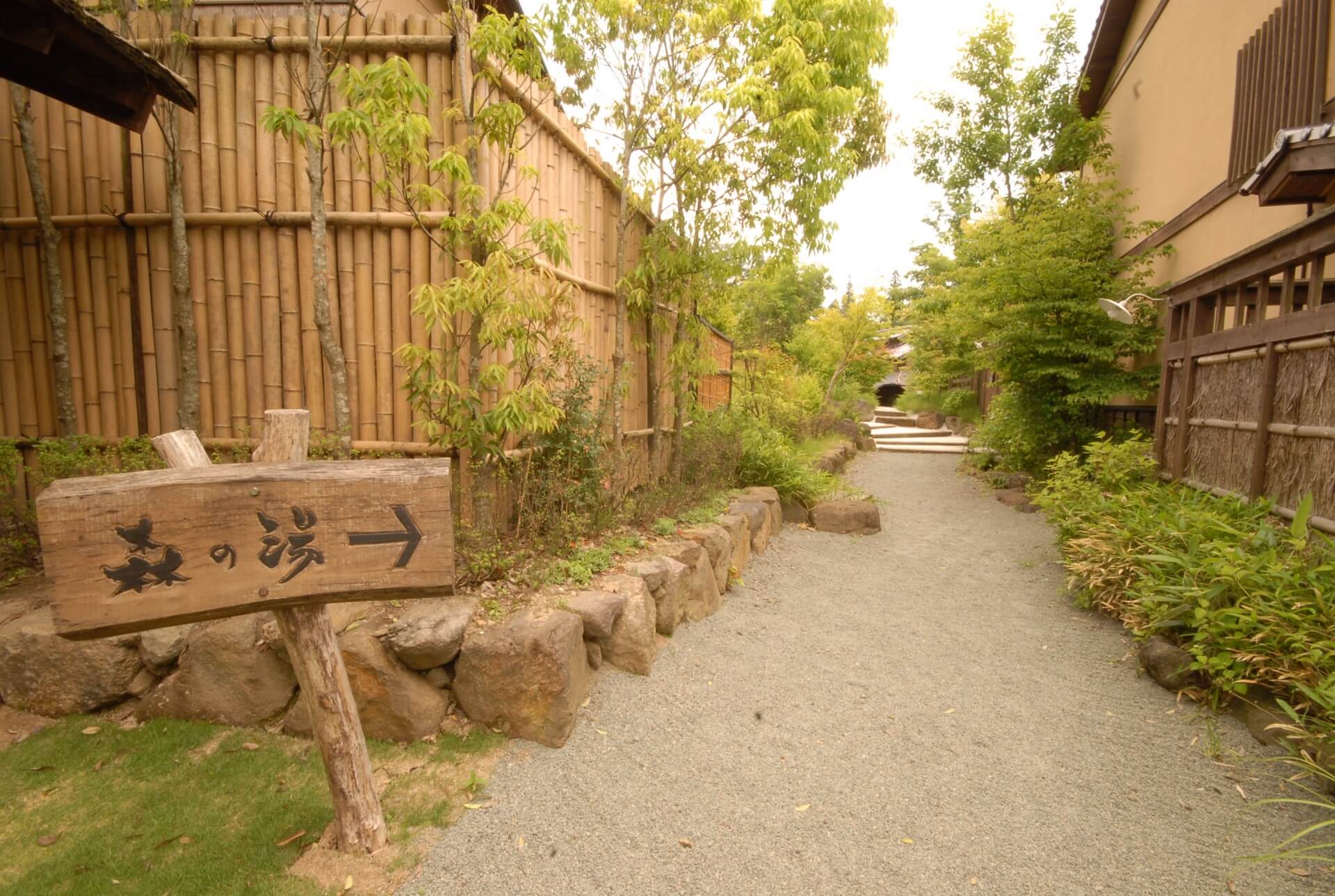
| Ryokan Ohnuma | Higashi-Naruko (Miyagi) | 9.4 | Mid | 270-year-old tōji (long-stay healing) inn with 8 distinct baths including the women-only Mori no Yu; fully bilingual |
| Yamabiko Ryokan | Kurokawa (Kumamoto) | 9.8 | Mid | Highest-rated property in Kurokawa village (9.8); multi-source simple-thermal pools in the village heart |
| Ryokan Sanga | Kurokawa (Kumamoto) | 9.6 | Luxury | Two distinct spring sources (Yakushi-no-Yu and Bihada-no-Yu) feeding a bamboo-grove mixed-gender bath |
Takinoya (Noboribetsu, Hokkaidō) is the luxury kaiseki-centric Noboribetsu Onsen stays pick. Where Dai-ichi Takimotokan emphasizes the bath catalog at scale, Takinoya emphasizes restraint — atmospheric outdoor baths carved into the hillside, world-class Hokkaidō kaiseki, and a smaller scale that suits travelers who came for the food as much as the soak. The bath water is multi-source from the same Jigokudani field as Dai-ichi but presented in a more refined architectural setting.
Ryokan Ohnuma (Higashi-Naruko, Miyagi) is the most respected tōji ryokan in Tōhoku — the traditional long-stay healing format where guests book 7-14 nights with simple home-style meals to soak through chronic conditions. Founded over 270 years ago and run by the Sugawara family for nine generations. The bath complex includes eight separate baths ranging from simple thermal to the historic mixed-gender Yakushi Sennin-buro. The fully bilingual website with detailed bathing-protocol guidance is rare for Tōhoku and makes Ohnuma the most accessible deep-onsen-tradition stay for international travelers in northern Japan.
Yamabiko Ryokan (Kurokawa, Kumamoto) holds a 9.8 guest rating — the highest in this guide — and sits in the heart of Kurokawa village with mountain and river views from the public indoor and outdoor baths. The water is the gentle simple-thermal profile that defines Kurokawa, ideal for travelers who plan to use the village's rotenburo-meguri pass to bath-hop through 20+ ryokan outdoor baths in one evening. The special suite Kura has a private bath for couples seeking maximum privacy.
Ryokan Sanga (Kurokawa, Kumamoto) is the forest-edge alternative — set apart from the main village in deep mountain forest, with two distinct spring sources (Yakushi-no-Yu for muscle relief and Bihada-no-Yu for skin softening). The highlight is the mixed-gender open-air bath surrounded by bamboo groves — one of Kurokawa's most architecturally beautiful onsen settings. Rooms range from the main building to a separate guest house, all with tranquil forest views.
Decision Frame: Which Water Type for Which Condition?
Here is how Japanese travel agents and onsen physicians match water type to traveler intent. This is not medical advice — it is the heuristic Japanese inbound tourism has used since the 1950s, when the Hot Spring Therapeutics Association first published its bathing-by-indication chart. If you have a serious condition, consult a doctor first; if you simply want the bath that best matches what you came for, this is the chart to start with.
| Goal / condition | Recommended water type | Best ryokan area | Skip if... |
|---|---|---|---|
| Skin beauty (everyday wellness) | Alkaline / hydrogen carbonate | Gero, Shirahone, Tamatsukuri, Yufuin | You have very dry skin — long alkaline soaks accelerate moisture loss |
| Muscle / joint pain | Sulfur | Nikkō Yumoto, Unzen, Manza | You have asthma or severe respiratory sensitivity to H₂S |
| Athlete's foot / treatment-resistant eczema | Acidic | Kusatsu, Zaō, Tamagawa | You have open cuts, fresh tattoos, or extreme skin sensitivity |
| Circulation / fatigue recovery | CO₂ or iron | Nagayu (near Beppu), Arima kinsen | You are pregnant or on iron supplementation (consult MD) |
| Cold sensitivity / heat retention | Chloride (saltwater) | Atami, Wakura, Ibusuki | You have high blood pressure — long heated soaks can spike systolic |
| First onsen experience ever | Simple thermal | Hakone Yumoto, Kurokawa, Yufuin | Never — start here, scale up to specific chemistry on future trips |
| Multi-day bath-hopping curiosity | Multi-source / nine-spring fields | Beppu, Noboribetsu, Naruko | You prefer one source and consistent chemistry across the stay |
| High blood pressure caution | Alkaline only; avoid acidic & very hot chloride | Yufuin, Gero | You are unsure — consult your doctor for any onsen with daily medication |
How to Read a Ryokan's Onsen Spec Sheet (温泉成分表)
Every licensed onsen in Japan is required by the 1948 Hot Spring Law to post a current chemical analysis sheet (温泉成分表 — *onsen seibun-hyō*) in plain view of the bath. The sheet is usually framed in the antechamber where you change out of your yukata. It is the only fully objective source of information about the water you are about to enter, and learning to read it takes maybe five minutes. No other English-language onsen guide explains this — which is strange, because Japanese travelers consult it every time they enter an unfamiliar bath.
Five fields to find on the spec sheet. First, 泉質 (sensitsu) — the classification name. This will be one of the 11 categories from the table above, sometimes a compound name (e.g. 含硫黄・ナトリウム・塩化物泉 = sulfur-sodium-chloride spring). Second, pH — written as a decimal between roughly 1.0 and 10.0. Anything below pH 3 is acidic-sterilizing; pH 7.5-8.5 is neutral-to-mild alkaline; pH 9+ is bijin-no-yu territory. Third, 湧出温度 (yūshutsu-ondo) — source emergence temperature in °C. Above 42°C the water is naturally bath-temperature; below 25°C it must be heated; cold-source onsen (under 20°C) require both heating and explicit labeling. Fourth, 適応症 (tekiōshō) — the official therapeutic indications, written in formal medical Japanese. Translation apps handle this acceptably; the list is short and predictable per water type. Fifth, 禁忌症 (kinki-shō) — contraindications, the conditions for which this water is officially not recommended. Always check this before extended soaks.
Two practical signals to look for. The phrase 源泉かけ流し (gensen kakenagashi) means "free-flowing source water" — the bath is fed continuously from the spring with no recirculation, the highest-grade onsen format. The phrase 塩素 (enso) means chlorine — if it appears on the spec sheet, the bath is using chlorination either for health-code compliance or because the source flow is too low for kakenagashi. Either is legal; gensen kakenagashi is the connoisseur's preference. Many luxury ryokans in this guide are gensen-kakenagashi; the inn will note it on the booking page if so.
Cross-Reference: Water Type by Region
Use the water-type framework above to choose what your body wants, then use the regional framework in our Japan onsen by region guide to figure out how to actually get there. The 2D matrix — water type × region — is how Japanese travel agents have designed onsen itineraries for 70 years. Add the seasonal layer from our best winter onsen guide for cold-month sulfur and acidic soaks, or our Japan summer ryokan guide for alpine alkaline destinations that stay cool when Kantō is humid. For first-time travelers we recommend the first time ryokan guide before booking any of the water types in this article.
FAQ
FAQ
Frequently asked questions
Which onsen is best for sensitive skin?+
Start with simple thermal (tanjun-sen) water — Hakone-Yumoto, Kurokawa, and central Yufuin all run gentle low-mineral source water that rarely triggers reactions. Avoid acidic (Kusatsu, Zaō, Tamagawa) on a first trip if your skin reacts to mild surface astringents. Sulfur (Nikkō Yumoto, Unzen) is medically prescribed for treatment-resistant atopic dermatitis but should be approached with shorter (5-10 minute) soaks initially. If you are unsure, ask the front desk for the spec sheet (温泉成分表) and check the kinki-shō (contraindications) field.
Can I bathe in acidic onsen with a cut?+
No. Kusatsu, Zaō, Tamagawa, and other acidic-classification baths (pH below 3) will sting immediately and severely on broken skin. The same applies to fresh shaving wounds and very recent tattoos. Cover small abrasions with waterproof bandages and wait at least 24 hours for any razor nicks. Skin sensitivity also varies — many Japanese travelers limit acidic soaks to 5-10 minutes per session because the cumulative sting builds even on intact skin.
What does the 'milky white' onsen color come from?+
Two different chemistries produce a milky-white onsen. Sulfur water becomes opaque from suspended sulfide particles (Nikkō Yumoto, Naruko, Manza), and bicarbonate water becomes opaque from calcium carbonate precipitating out at bath temperature (Shirahone). Both are completely natural and reversible — if you bottle the water and let it sit, sulfur particles eventually settle and bicarbonate dissolves back into solution. The bath water you see is the equilibrium state, not an additive.
Are alkaline onsen really better for skin?+
Within limits, yes. Alkaline water (pH 8.5+) gently emulsifies the keratin layer at the skin surface, producing the silky feel and mild exfoliation that defines bijin-no-yu (beauty water). Japanese cosmetic dermatologists have documented improved post-bath skin hydration after 7-10 day alkaline-bath cycles. The trade-off is that very long alkaline soaks accelerate trans-epidermal water loss in people with already-dry skin — the silky feeling can mask dehydration in progress. Apply moisturizer immediately after the bath, and limit any single session to 15-20 minutes.
Is radon onsen safe?+
Radon onsen (放射能泉) emit low-dose radon gas through the bath water, and the cumulative dose from a single 3-day stay is well below the threshold for any documented harm — multiple international medical reviews of Misasa Onsen (Tottori, the most famous Japanese radon source) have concluded the bath is safe for short visits. Pregnant women are universally advised against radon onsen by Japanese physicians, and travelers with active cancer should consult their oncologist. We do not feature any radon-classified ryokans in this guide because the verified English-friendly options are limited; Misasa is the canonical destination.
Which water type stays clearest in winter?+
Simple thermal and acidic onsen run the clearest year-round — the mineral chemistry that produces opacity (sulfur, bicarbonate) is relatively temperature-independent, so milky-white baths stay milky-white in winter as well. The water that visibly changes with cold weather is iron-rich kinsen — the dissolved iron oxidizes slightly faster in colder air, so the bath ochre intensifies in January-February at Arima. Photographers usually prefer the cold-month versions of milky-sulfur (Manza) and milky-bicarbonate (Shirahone) baths because the steam-against-cold-air contrast is most dramatic.
How long should I soak in sulfur vs alkaline?+
Sulfur: 10 minutes maximum per session, with a 5-minute rest, repeated twice — the H₂S concentration produces real cardiovascular load and longer single soaks risk light-headedness. Alkaline: 15-20 minutes per session, repeated once or twice — the silky feel is comfortable but trans-epidermal water loss accelerates beyond 25 minutes. Acidic: 5-10 minutes maximum at high concentration (Kusatsu, Zaō, Tamagawa) — the sterilizing effect is achieved quickly and the cumulative sting builds. Simple thermal: 20-30 minutes is comfortable for most bathers. Chloride: 15-25 minutes — the heat retention extends warmth for hours after the bath so longer single soaks are unnecessary.
Can I drink onsen water?+
Sometimes. A licensed onsen that meets drinking-water criteria can post a 飲泉所 (insen-jo) drinking station — usually a small spigot in the bath antechamber with a paper cup dispenser. Gero, Kusatsu (specific sources), Beppu (multiple sources), and several Tōhoku properties operate drinking stations. The water is treated for specific indications: alkaline drinking water for digestive comfort, sulfate water for liver function, iron water for anemia. Never drink from the bath itself — only from a labeled drinking station. Acidic and sulfur drinking waters are usually not available for consumption.
Which water type smells the strongest?+
Sulfur, by a wide margin. The hydrogen sulfide signature is detectable from 20+ metres at strong sources like Nikkō Yumoto, Manza, and the Unzen Jigoku field — most visitors smell the village before they see it. Acidic sulfur (Kusatsu, Tamagawa) is also pungent but less specifically rotten-egg. Iron, chloride, and CO₂ baths are essentially odorless. Alkaline bijin-no-yu has a faint mineral note but no strong signature. If you are sensitive to smell, plan a single sulfur stay early in your trip rather than backing them up over consecutive nights.
Mixed-mineral spring vs single-classification — which is better?+
Neither is universally better, and Japanese onsen experts (yu-tsuyo) prize both for different reasons. Single-classification baths give you the cleanest therapeutic signal — a pure sulfur soak does what sulfur is supposed to do. Mixed-mineral baths (Noboribetsu, Beppu, Naruko's nine-spring field) let you compare multiple chemistries in one stay, which is the highest-quality educational experience for first-time water-type travelers. The pragmatic recommendation: do a multi-source stay (Beppu or Noboribetsu) on your first water-type-focused trip, then return to specific single-classification onsen (Kusatsu for acidic, Arima for iron) on follow-up trips with a clearer sense of what your body actually responds to.
準備好預訂了嗎?
從這些精選旅館中預訂
比較三個預訂平台的即時可用性和價格。

Awanoyu Ryokan
泡の湯旅館
Shirahone·$$$

Tsutsujitei
つつじ亭
Kusatsu·$$$
透過預訂連結可能產生佣金,但不會增加您的費用。